Retail News CRM

Tag: traveling

  • ANZ Customers Set to Splash $280 Million on European Adventures This Summer!

    ANZ Customers Set to Splash $280 Million on European Adventures This Summer!

    Travel bookings among Australians have witnessed a remarkable upswing, with hotel and airline reservations soaring by 11% between January and May 2025. The Australia and New Zealand Banking Group (ANZ) anticipates that this momentum will lead to a projected $280 million in customer spending across Europe for the coming months of June, July, and August—a healthy 10% increase compared to the previous year.

    “The robust growth in early travel planning indicates that many of our customers are eager to explore Europe this year,” asserted Yiken Yang, ANZ’s managing director of everyday banking. While this spending may not reach the impressive $313 million peak seen in 2023, Yang is optimistic about the travel sector’s vibrant resurgence in 2025.

    As Australians shed the winter chill, they are increasingly gravitating toward exotic destinations, with Japan and Thailand emerging as favorite holiday spots. According to ANZ, there’s also a notable curiosity for travel within Asia and the Pacific, indicating a wider diversification in travel choices. “Aussies continue to switch out their winter with new travel experiences,” Yang remarked, reflecting a shift in traveler priorities.

    Interestingly, while European travel from ANZ customers experienced a dip in 2024, non-European destinations have seen a 3% increase in spending. Regions like Indonesia, New Zealand, Thailand, and Japan have captured the attention of holidaymakers, with Japan reflecting an impressive year-on-year growth of 32.4%. This surge has solidified Japan’s place among the top 10 travel destinations for ANZ customers, positioning it as a key player in the global tourism landscape.

    Questions & Answers

    How much is ANZ predicting for customer spending in Europe this summer?
    ANZ projects that customer spending in Europe will reach $280 million during the months of June, July, and August in 2025, marking a 10% increase from the previous year.

    Which destinations are gaining popularity among Australian travelers?
    Japan and Thailand are emerging as top holiday spots for Australians, with Japan reporting a significant 32.4% growth year-on-year.

    How does the travel spending in 2025 compare to 2024 and 2023?
    While spending in 2025 is expected to increase from 2024, it is not anticipated to surpass the peak of $313 million seen in 2023, indicating a growing optimism for the travel sector’s recovery.

  • Jetstar Asia to Close, Impacting 500 Jobs in the Singapore Airline Industry

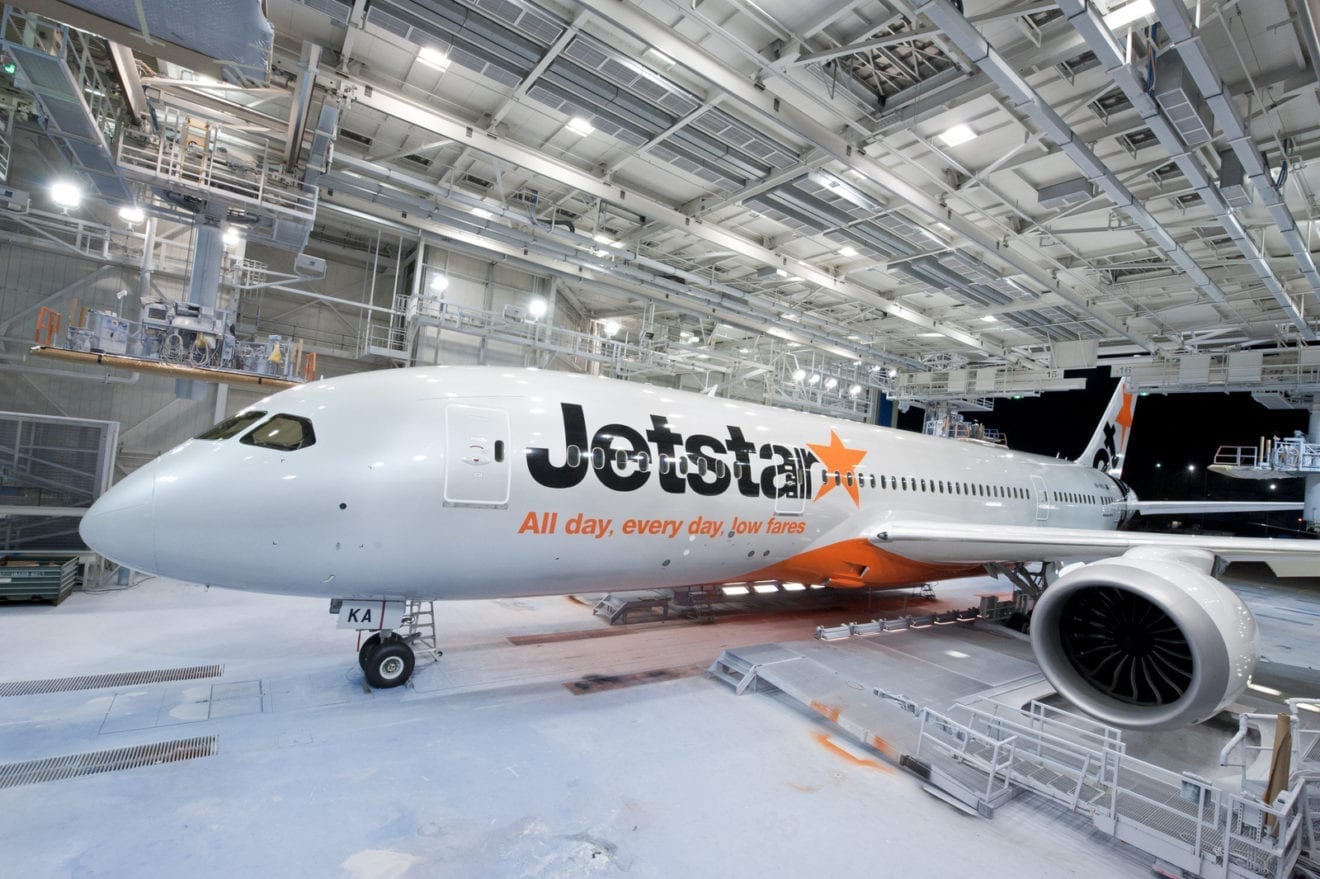
    Jetstar Asia to Close, Impacting 500 Jobs in the Singapore Airline Industry

    Australian airline Qantas has made the difficult decision to close its budget carrier, Jetstar Asia, effective July 31. This move comes in response to escalating operational costs, increased fees at Singapore’s Changi Airport, and fierce competition across the region.

    Operational Costs Taking Their Toll

    Jetstar Group Chief Executive Officer Stephanie Tully highlighted the widespread impact of rising costs on the airline’s operational framework. The recent hike in airport fees at Changi, implemented on April 1 as part of a S$3 billion (US$2.3 billion) upgrade, played a significant role in this challenging situation. “The airport fees are a part of that. That has had an impact on the business,” she stated, referencing comments made to Bloomberg.

    As Qantas Group Chief Executive Vanessa Hudson expressed, this is a heavy moment for the Jetstar Asia team. “We are incredibly proud of them. This is a very tough day for them. Despite their best efforts, we have seen some costs for Jetstar Asia’s suppliers rise by up to 200%, which has materially changed its cost base.”

    Staff Impact and Passenger Reassurance

    The closure will inevitably affect around 500 staff members, who will be offered redundancy benefits and assistance in finding new employment, as reported by AFP. Meanwhile, passengers whose flights have been canceled will be entitled to refunds, ensuring they are compensated as the airline winds down operations.

    Prior to the announcement, Jetstar Asia was projected to incur an underlying loss of A$35 million (US$23 million) this financial year, with Qantas owning 49% of the airline. The cancellation of operations means that the fleet of 13 A320 aircraft will soon be redeployed to Australia and New Zealand, creating over 100 local jobs.

    In a strategic move, Qantas noted that shutting down Jetstar Asia could generate up to A$500 million to bolster the group’s fleet renewal program. The decision was made in conjunction with Westbrook Investments, which holds a 51% stake in the regional carrier.

    While the closure is certainly a somber development, it raises some intriguing questions about the future of air travel in a region that continues to evolve rapidly.

    Questions & Answers

    Why is Qantas closing Jetstar Asia?
    Qantas is shutting down Jetstar Asia due to rising operational costs, increased airport fees at Changi Airport, and intense regional competition making it financially unviable to continue.

    What happens to the staff of Jetstar Asia?
    Approximately 500 employees will receive redundancy benefits and support in finding new jobs as the airline winds down its operations.

    How will affected passengers be compensated?
    Passengers whose flights are canceled will be offered refunds, ensuring they are financially protected during this transition.

  • Luxury airline plans to give select passengers a Vision Pro to use as in-flight entertainment

    Luxury airline plans to give select passengers a Vision Pro to use as in-flight entertainment

    At least one airline is planning on offering the Apple Vision Pro to some passengers as part of its in-flight entertainment offerings. Beond is a Maldivian airline that flies to five destinations and calls itself the world’s first “premium leisure airline” with business class service that includes gourmet meals, seats that fold down completely allowing passengers to sleep more comfortably during a flight, and soon, in-flight entertainment led by the Apple Vision Pro.

    In a press release dated Thursday, Beond said that it will start  offering the Vision Pro to select customers on its flights to the Maldives. Beond’s fleet has just doubled to two after the airline took possession of its second jet and in the middle of this year, it will start flights from Milan, Dubai, and Bangkok to the Maldives.

    Tero Taskila, Beond’s Chairman and CEO, said, “The Apple Vision Pro will transform the inflight entertainment experience, and we will be first to offer it to select passengers. In addition to our existing and ever-growing library of inflight content such as movies and games, Beond will showcase stunning resort destinations and activities in the Maldives. We are working now with partners in the Maldives to prepare truly amazing footage.”

    The executive continued, “The inflight experience will build anticipation for passengers before they arrive in the Maldives. Offering the Apple Vision Pro is another step in our vision of delivering a premium travel experience to our customers, from the start to finish of their journey. We’re proud to be the first airline to deploy the technology.” The press release didn’t mention how many Vision Pro units would be aboard each flight, nor did it mention how the airline would determine which passenger(s) would get the opportunity to don the headset.

    Now that Beond has become the first airline to announce plans to offer the Vision Pro to passengers, we could see the larger commercial airlines add the Vision Pro to their in-flight entertainment offerings. Considering the number of larger capacity planes that airlines could order the headset for, Apple could get a windfall.

  • Bamboo Airways set to downsize fleet

    Bamboo Airways set to downsize fleet

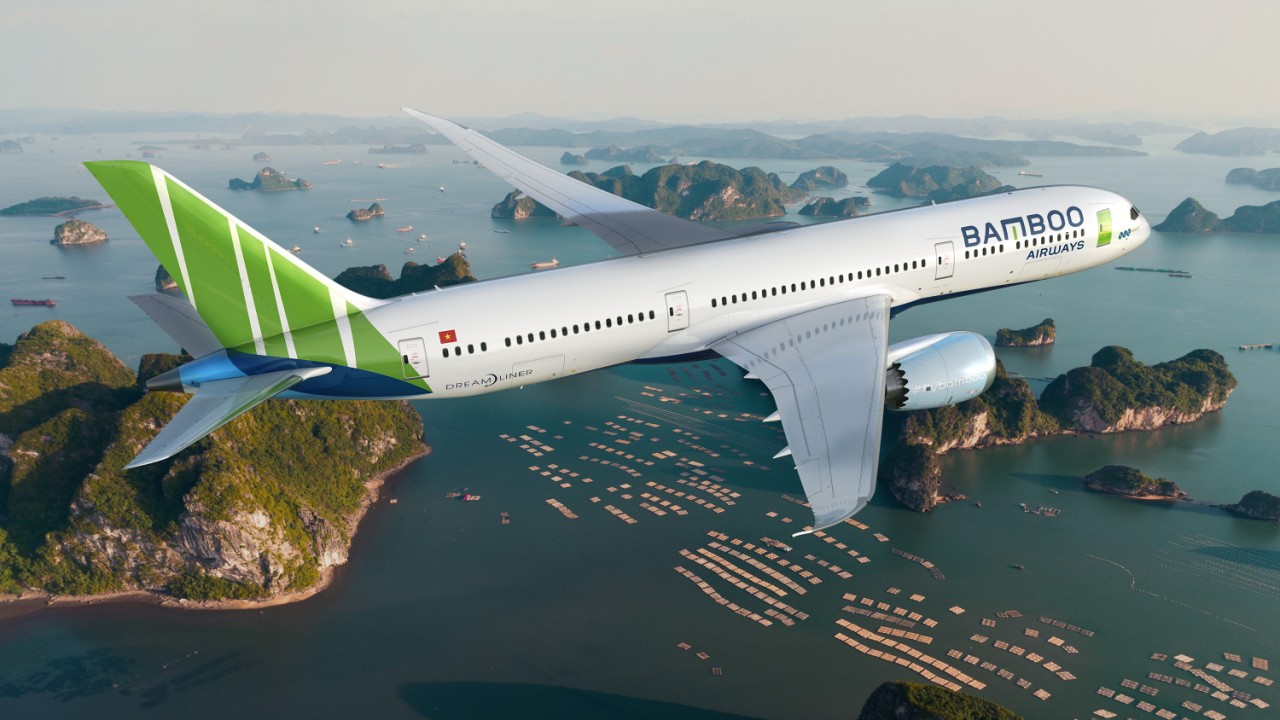
    After restructuring its flight network, Bamboo Airways has said it will also reduce the number of aircraft to lower costs.

    An executive at the airline said the restructuring in the past two months included discontinuing unprofitable routes.

    The airline has not yet announced the number or type of aircraft that will be grounded.

    According to German civil aviation database Planespotters, Bamboo Airways currently operates 23 aircraft, seven fewer than last year.

    It plans to seek approval from regulatory authorities to increase the size of its fleet to over 30 in future, though again, no concrete plans have been announced.

    In a recent report to the Ministry of Transport, the Civil Aviation Authority of Vietnam said it supports the expansion plan but added the airline needs to ensure it has the financial capacity, human resources, and aviation infrastructure.

    By flying three different aircraft – Airbus, Boeing, and Embraer – that do not allow interoperability, Bamboo Airways has additional costs in terms of hiring pilots, technicians, and training instructors for each of them.

    Many other Vietnamese carriers, such as Vietjet, Pacific Airlines, and Vietravel Airlines, only fly Airbus aircraft.

    All of Vietnam Airlines’ narrow-body aircraft are from Airbus, while its wide-body ones are a mix of Airbus and Boeing.

  • AirAsia Doubles Passengers In 2Q And Powers Capital A Growth

    AirAsia Doubles Passengers In 2Q And Powers Capital A Growth

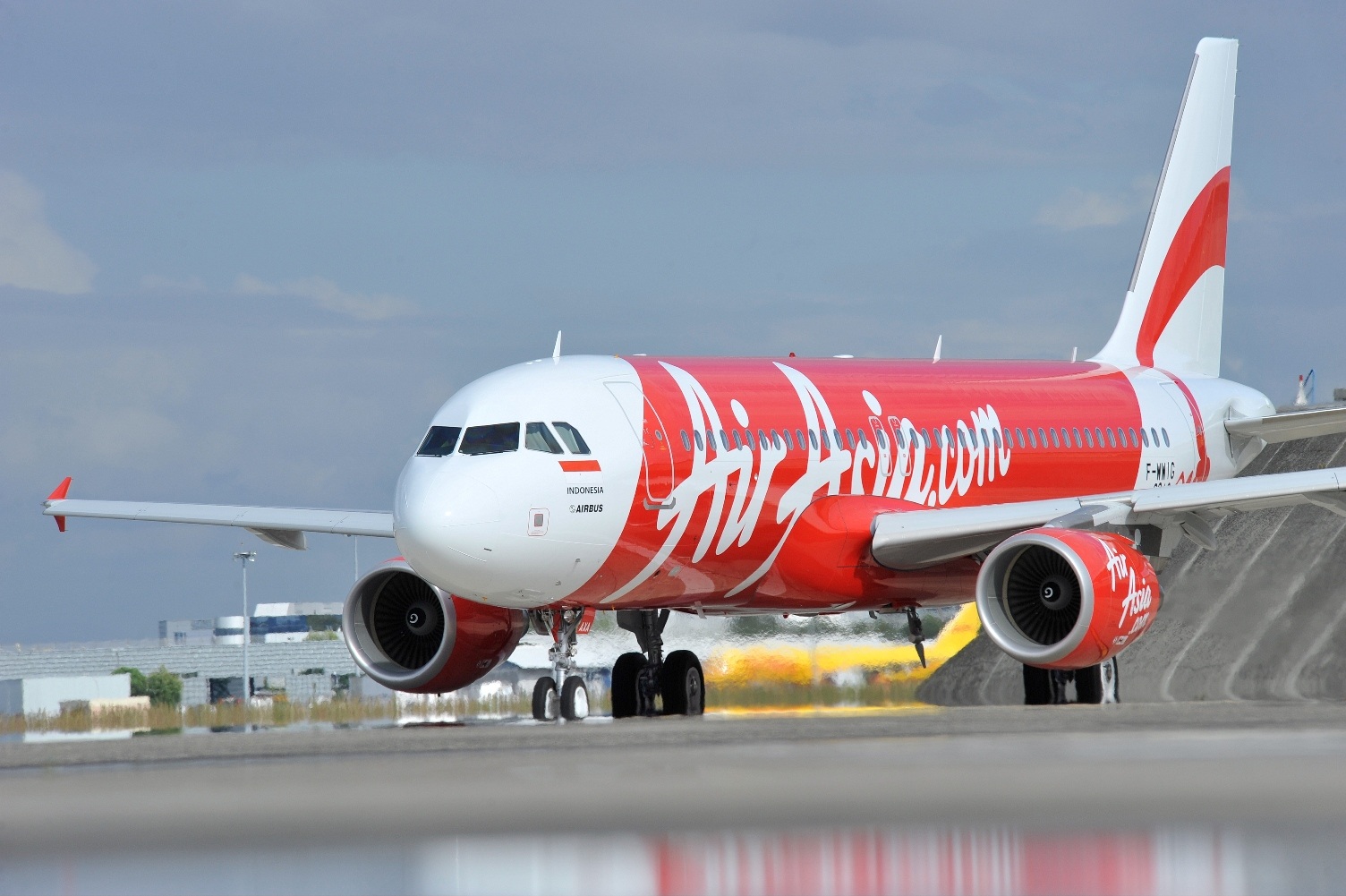
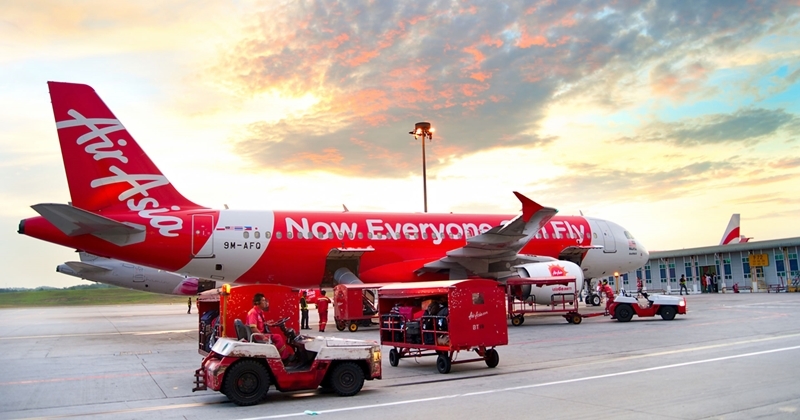
    Today Malaysia’s Capital A Berhad (Capital A) announced its operating statistics for the second quarter of its financial year 2023. The announcement details the performance of Capital A’s aviation, digital, logistics and aviation services segments from April 1st to June 30th, 2023 (2Q2023).

    With the operating segments so closely interconnected, a strong performance in Aviation drives equally strong performances throughout the Capital A group. That was certainly the case in 2Q when the four consolidated airlines virtually doubled the passengers carried in the same quarter last year.

    AirAsia Malaysia, AirAsia Thailand, AirAsia Indonesia and AirAsia Philippines carried 14.2 million passengers in 2Q, compared to 7.2 million in 2Q 2022. Across the aviation group, 16.2 million seats were available, and this capacity management resulted in a load factor of 88%, up from 82% last year.

    The consolidated AirAsia airlines operated 146 of their 166 activated aircraft and have now recovered to 73% of capacity and 74% of passengers carried compared to the pre-pandemic first half of 2019. The group operated 88,900 flight stages with an average length of 1,165 kilometers (724 miles) and, at the end of the quarter, was operating 146 aircraft from its total fleet of 210 aircraft.

    In terms of individual airlines and their share of group passenger traffic, AirAsia Malaysia (MAA) led the way with 6.45 million at a load factor of 87%, followed by AirAsia Thailand (TAA) with 4.64 million at 89%, AirAsia Philippines (PAA) with 1.63 million at 91% and AirAsia Indonesia (IAA) with 1.52 million at 84%.

    MAA used 66 aircraft to fly 40,385 stages, TAA used 44 to fly 28,475, PAA used 15 to fly 9,921, and IAA used 21 to fly 10,119. IAA had the longest average stage length of 1,433 kilometers (890 miles), followed by MAA, TAA and PAA with 908 kilometers (564 miles).

    Summarising the quarter, Capital A said the domestic performance was incredibly strong and the international market remained buoyant with favorable load factors. It added that more aircraft have now been allocated to international routes in response to the strong resurgence in demand.

    Capital A has three businesses in its Aviation services segment: Asia Digital Engineering (ADE), Santan and Ground Team Red (GTR), which each supply services to the operating airlines and external customers. ADE is the maintenance, repair and overhaul provider in the region.

    In 2Q, it completed 22 base maintenance checks, up from 12 in the same period last year, which was made possible by adding two additional maintenance lines in Senai, Malaysia. Its line maintenance activities grew by 179% year-on-year, with 98% performed on narrowbody aircraft and just 2% on widebodies.

    Santan is the group’s inflight service provider, selling 4.8 million units in 2Q, up 189% YoY. Among those, 98% were perishable and non-perishable food and beverage items, with the balance from sales of duty-free and merchandise products. Capital A said the surge in demand was directly attributable to the increase in flight frequencies and the higher number of passengers carried by the group’s airlines.

    GTR is the group’s affiliated ground handling services company, and in 2Q, it managed 37,000 flights, of which 94% were AirAsia branded, and handled 5.7 million passengers. GTR also managed 16,787 tonnes of cargo, up 39% YoY due to the increased belly hold capacity as more flights operated on domestic and international routes.

  • AirAsia Xpanding Services To China And Australia

    AirAsia Xpanding Services To China And Australia

    Australians have another way to get to Asia now AirAsia X restarted its Kuala Lumpur to the Gold Coast service yesterday. The nostalgic service retraced AirAsia X’s first-ever route, launched over 25 years ago.

    AirAsia X started the Kuala Lumpur to Queensland’s Gold Coast in November 2007, but it has been suspended for more than two years due to the pandemic restrictions. The Gold Coast is one of Australia’s premier tourist destinations for domestic and international travelers and has been one of AirAsia X’s most popular destinations.

    Radar24.com, flight D7200 departed Kuala Lumpur International Airport (KUL) on Friday at 23:43 for the 6,500 kilometers (4,000 miles) flight to the Gold Coast. The flight was operated by a nine-year-old Airbus A330-300, registration 9M-XXK and manufacturer serial number 1433.

    After 7:51 hours of flying, it landed at Gold Coast Airport (OOL) at 09:34 yesterday morning. The A330-300 was on the ground for just over two hours before departing at 11:36 and arriving back in Kuala Lumpur at 17:44. It then returned to Australia as flight D7288, arriving at Sydney Airport (SYD) at 09:45 this morning.

    Fleet data from ch-aviation.com shows that AirAsia X (AAX) has a fleet of thirteen A330-300s, with three inactive. The data shows it also has 20 Airbus A321XLRs, 15 A330-900neos, and one A330-300 on order.

    AirAsia X CEO Benyamin Ismail was on the flight. He said it was a crucial day for the airline that will “strengthen the ties between Malaysia and Australia.

    “The Gold Coast will always hold a special place in our hearts, and what makes this announcement even more of a major milestone is that AAX is now the only airline connecting Kuala Lumpur directly to the Gold Coast and to Queensland on the whole.

    “Our newest route now provides the most affordable and convenient air travel option for guests who want to explore one of Australia’s most popular tourist destinations and for Australians seeking to visit Malaysia or continue on throughout Asia with our vast global network, including to leisure favorites like Singapore, Thailand, Vietnam, India and more.”

    In March, AAX resumed flights from Kuala Lumpur to Shanghai and Hangzhou in China and restarted services to Beijing. Flight D7342 departed KUL on March 30th at 19:15 and landed at Beijing Daxing International Airport (PKX) at 00:55 on Friday. The Airbus A330-300, registration (M-XBF), left Beijing at 03:32 and, after a 5:49 hour flight, landed in Kuala Lumpur at 09:21.

    The route will operate twice weekly and will stimulate business travel and tourism in both directions. Now that China has resumed issuing tourist visas, AAX believes it will see a surge in demand for flights between KL and PKX. AirAsia X last operated the route on April 12th, 2020, although it operated in and out of Beijing Capital Airport (PEK).

    The airline plans to ramp up Beijing frequency to four flights weekly starting from June 1st to meet growing forecast demand. Beyond that, AAX is planning more expansion to more unique, less traveled destinations in China soon.

  • Cebu Pacific to launch Laoag flights in May

    Cebu Pacific to launch Laoag flights in May

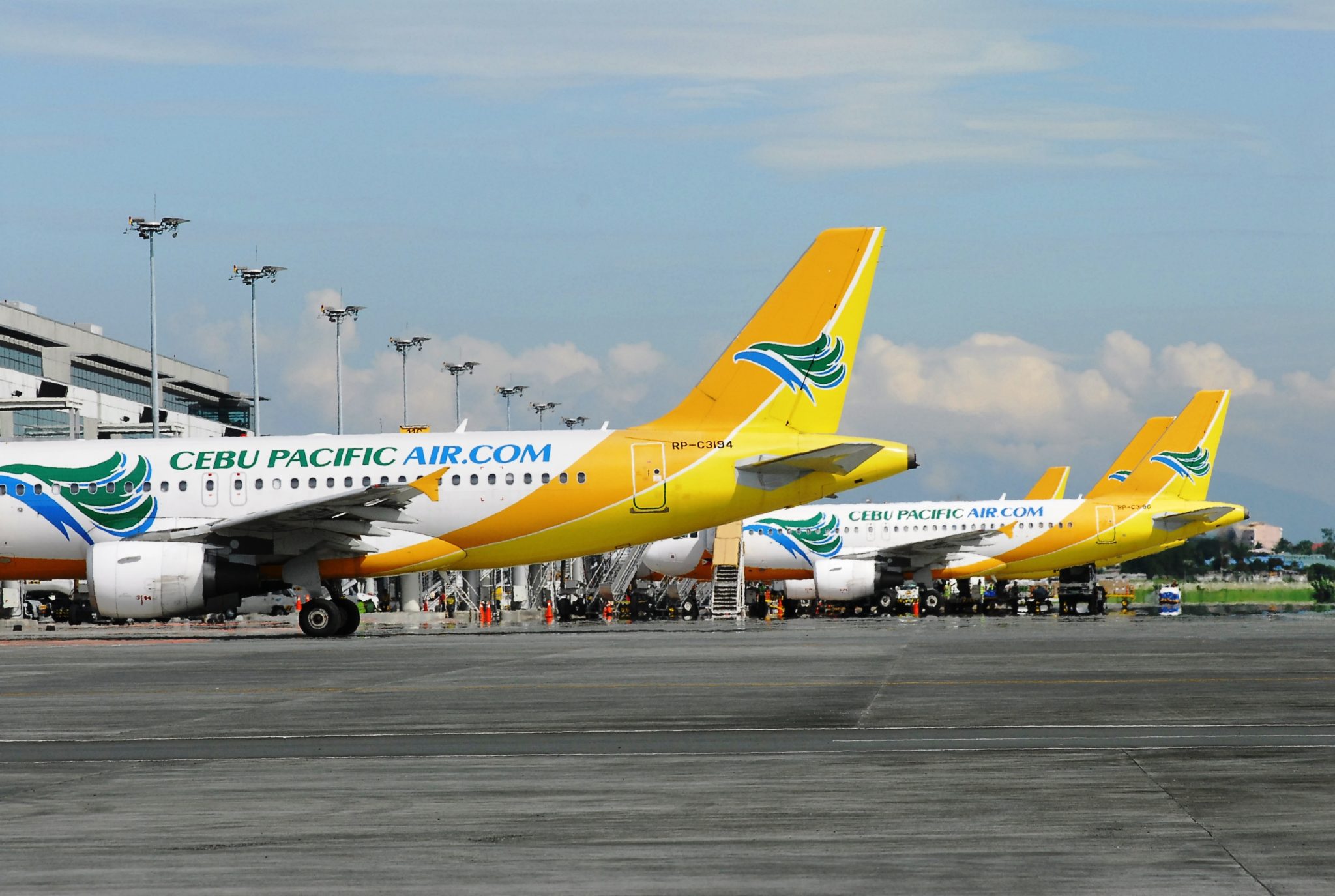
    Budget carrier Cebu Pacific is set to mount flights to the Ilocos Norte capital of Laoag starting May 22, making it the 35th domestic destination in the airline’s network.

    Cebu Pacific said flights from Manila to Laoag will be daily, as the airline seeks to tap travelers seeking to explore the Ilocos region.

    “Laoag plays a crucial role in preserving the country’s rich history and culture, and we are excited to finally be able to bring more Juans to this beautiful city,” President and Chief Commercial Officer Xander Lao said in a statement.

    “We hope the launch of the Laoag route will encourage more people to travel and experience the Ilocos region,” he added.

    The carrier reported a P14-billion net loss in 2022, marking an improvement from the P24.9-billion net loss incurred in the previous year as it cut its operating loss by about half to P11.4 billion.

    The company is set to add 11 more aircraft to its fleet this 2023, seeking to return to profitability within the first quarter of the year.

    Shares in Cebu Air Inc., which operates the carrier, were trading up by P0.05 or 0.12% at P41.70 apiece as of 11:59 a.m. on Wednesday.

  • AirAsia Malaysia Expands Flights to China

    AirAsia Malaysia Expands Flights to China

    AirAsia Malaysia (AK) has resumed flights to China and unveiled its plans for the country.

    The popular low cost carrier will resume four China destinations from two hubs – Kuala Lumpur and Kota Kinabalu to Macao, Shenzhen, Guangzhou and Kunming, with a total of 10 flights weekly and plans to increase the frequency by up to 27 flights weekly in March.

    The first flight to/from China recommenced on 10 February 2023 to/from Guangzhou with strong load factors both ways.

    Complementing the resumption of the short-haul destinations, AirAsia X Malaysia (D7) will reconnect Kuala Lumpur to Shanghai, Hangzhou and Chengdu with 10 flights weekly starting 1 March 2023.

    “China is an integral market for AirAsia Aviation Group, where we were the largest international low-cost carrier by capacity pre-pandemic,” said Riad Asmat, AirAsia Malaysia CEO. “Based on the impressive load factor of our inaugural flight to/from Guangzhou, the restart of our services will not only provide greater value and accessibility to essential travellers from Malaysia and tourists from China but will significantly boost tourism, trade and economic growth in both countries.”

    AirAsia Malaysia operates flights with Airbus A320 aircraft while AirAsia X Malaysia operates Airbus A330 aircraft featuring flatbed seats in its premium cabin.

    Benyamin Ismail, AirAsia X Malaysia CEO, said, “China will be our next primary market focus as we resume our growth strategy flying our most popular and profitable routes. We have witnessed tremendous success with our services to China in the past where we carried over 1.8 million guests to/from China in 2019 alone. We believe the recommencement of our services to China will be popular for business travellers, international students, those visiting family and relatives as well as stimulating regional demand between two large markets through great value airfares and services.”

    As the entry to China is currently limited to certain visas, travellers are advised to always check the very latest travel requirements of the country they are travelling to.

  • AirAsia X turns first profit since 2019, plans to double its A330s by mid-2023

    AirAsia X turns first profit since 2019, plans to double its A330s by mid-2023

    AirAsia X (AAX), the low-cost medium and long-haul airline of AirAsia Group, turned a net profit of RM25.1 million ($5.4 million), its first profit since 2019.  AirAsia X restarted its passenger operations in February 2022 and announced the completion of its 17-month-long debt restructuring scheme in March 2022.

    In its fifth quarter (5Q22) financial statement ending September 30, 2022, the airline outperformed a net loss of RM652.5 million ($142.6 million) posted in the previous quarter, recording a quarterly revenue of RM100.1 million ($218 million) in 5Q22.

    The airline almost tripled its cash balance to RM79.5 million ($17.3 million), up from RM25.1 million ($5.4 million) during the previous quarter.

    In a statement, the airline attributed its results to the recovery of key metrics and improved revenues across scheduled passengers, charter flights and ancillary revenues.

    “AAX is now well on track in its recovery path even as the airline is compelled to operate in a challenging operational environment dictated by high fuel prices and a weakened Malaysian Ringgit against the US Dollar,” Benyamin Ismail AirAsia X Malaysia CEO said.

    Ismail added: “While we are cautious of the strenuous operating conditions, we remain confident that the Company’s recovery is on the horizon, if not already within our reach.”    

    On the back of its positive 5Q22 results, AirAsia X has resumed previous scheduled passenger flights to Seoul, Delhi and Syndey.

    High demand for its mid-range network has also driven the airline to announce the return of its services to some of its popular destinations such as Melbourne, Perth, Auckland, Tokyo-Haneda, Hokkaido-Sapporo, Jeddah and Bali-Denpasar.

    Ismail also confirmed that demand on some short-haul routes (Kota Kinabalu and Kuching) exceeded the current available aircraft capacity during the quarter and that the airline will be reactivating more aircraft capacity.

    “We look forward to welcoming everyone back onboard with us as we rise up to meet the strong pent-up demand for medium haul air travel across Asia. Importantly I am also thrilled to confirm that we are reactivating more aircraft to service, bringing back furloughed staff by the first quarter of next year and are now recruiting new flight crew once again.”

    AirAsia X to double A330 aircraft by the first half of 2023 

    AAX currently operates a fleet of six A330s from a fleet of nine A330 aircraft.

    However, AAX expects to increase its operating fleet to 13 A330 aircraft by the first half of 2023 to meet strong consumer demand.

    Tunku Dato’ Mahmood Fawzy, Chairman of AirAsia X stated that the airline expects to reach more than 15 hours of aircraft utilization and introduce daily frequencies to its core markets for selected routes with high demand.

  • Trivago fined $44.7 million for misleading travellers

    Trivago fined $44.7 million for misleading travellers

    Online travel booking company Trivago has been ordered to pay $44.7 million in penalties by the Australian Federal Court for misleading consumers over hotel prices.

    The court found that in January 2020, the company deceived consumers through misleading misrepresentations of hotel room rates on its website and in television advertisements.

    Trivago had used an algorithm to determine which travel booking site paid the highest cost-per-click fee and highlighted them on its website.

    Between December 2016 and September 2019, the company admitted to receiving $58 million in cost-per-click fees from offers that weren’t the cheapest choice available for a given hotel. This had caused consumers to overpay on hotel booking sites, losing out on almost $38 million dollars.

    Australian Competition and Consumer Commission (ACCC) chair Gina Cass-Gottlieb said this penalty sends a strong message not just to Trivago, but to other comparison websites.

    “The way Trivago displayed its recommendations when consumers were searching for a hotel room, meant consumers were misled into thinking they were getting a great hotel deal when that was not the case.

    “Trivago also misleads consumers by using strike-through prices which gave them the false impression that Trivago’s rates represented a saving when in fact they often compared a standard room with a luxury room at the same hotel,” she said.

    Accommodation Association CEO Richard Munro welcomed the decision of the Federal Court and added: “After surviving Covid and closed borders, the harsh reality is that many of our members rely on a portion of their bookings generated through these platforms, and can find themselves stuck between a rock and a hard place.”

    He further encouraged Australian travellers to book directly with local accommodation providers or through local travel agents.

  • AirAsia Group loses appeal in airport case

    AirAsia Group loses appeal in airport case

    The Court of Appeal of Malaysia has dismissed attempts from AirAsia (AK, Kuala Lumpur Int’l) and AirAsia X (D7, Kuala Lumpur Int’l) to set aside a High Court ruling in favour summarily – without a full trial – of Malaysia Airports Holdings over outstanding passenger service charge (PSC) payments, Malaysia’s Daily Express and The Edge Markets reported.

    A three-member bench unanimously confirmed on March 3 that the High Court was correct in granting the state-run airport operator a summary judgement for a total of MYR41.55 million ringgit (USD9.95 million) against the two low-cost carriers, comprising the outstanding charges, late payment fees, and costs.

    The airlines had lodged three appeals each in an effort to strike out the rulings, and so the appeals court ordered them to pay additional costs of MYR10,000 (USD2,400) per appeal, totalling MYR60,000 (USD14,400).

    Malaysia Airports’ claim against AirAsia and its long-haul affiliate is for alleged unpaid passenger service facilities charges at the rate the Malaysian Aviation Commission (Mavcom) regulator set in 2016 and amended in 2017 and 2018.

    According to the plaintiff, the defendants had signed a contract on these fees and other conditions for the use of Kuala Lumpur Int’l Airport, rules that were also revised in 2017. The two carriers deny having accepted the terms of the contracts, however, claiming they had raised objections to the plaintiff but had been ignored.

    The Capital A (formerly AirAsia Group) airlines have argued that the rate for the charges in the current regulations is a ceiling rate, not a fixed rate, and that the amount payable was to have been negotiated between the parties.

    “We are of the opinion, and we agree with the findings of the learned High Court judge, that AirAsia’s actual dispute is not one between two aviation service providers but between AirAsia and [Mavcom] itself, because it is the commission that had prescribed the applicable PSC rate, and [Malaysia Airports] collects the same. Specifically, AirAsia’s actual dispute is against the decision of the commission to equalise the PSC rates” between Kuala Lumpur Int’l terminals one and two, the appeals court ruling said. “Accordingly, AirAsia should have addressed its PSC dispute by judicial review against the commission’s statutory decision to increase the rate.”

    AirAsia X has also been the target of a Malaysia Airports Holdings lawsuit initiated in October 2020 to demand payment of MYR78.16 million (USD18.7 million) in alleged lapsed charges related to the long-haul low-cost carrier’s debt restructuring scheme. Malaysia Airports is a secured creditor of AirAsia X, it has argued, so it should have been excluded from the carrier’s debt reshuffle. Nevertheless, the airline obtained court approval in December 2021 to restructure the debt.

  • AirAsia India unveils ‘FlyAhead’ service for fliers to take earlier flight

    AirAsia India unveils ‘FlyAhead’ service for fliers to take earlier flight

    AirAsia India has unveiled its new ancillary service, ‘FlyAhead’. With the ‘FlyAhead’ service, guests wishing to take an earlier flight will be able to seamlessly opt for this facility.

    The ‘FlyAhead’ service has been launched for a nominal fee of INR 1,500 for guests booked on standard fares and INR 500 for guests booked on Corporate and SME fares. Guests who reach the airport six hours or more prior to their scheduled flight departure can opt for the FlyAhead service at the AirAsia Airport Counter.

    Change fees, which are typically INR 3,000 would be waived for all guests opting for the AirAsia FlyAhead service and fare differences typically charged by airlines would also not be applicable.

    Speaking about the initiative, Dr. Ankur Garg, Chief Commercial Officer, AirAsia India, said: “AirAsia India has consistently developed innovative, future-proof solutions prioritizing the ease and comfort of our guests. Led by our core value of being ‘Guest Obsessed,’ our latest offering ‘FlyAhead’ is a new ancillary service which provides guests a flexible and convenient option to reach their destination ahead of schedule.”

  • AirAsia prepares regional routes to spur intra-Asean travel

    AirAsia prepares regional routes to spur intra-Asean travel

    AirAsia aims to spur intra-Asean travel with new regional routes, while Thai AirAsia hopes the Red War football match in July will drive demand from neighbors to Thailand.

    The company is working on new destinations in Thailand, Indonesia, and Malaysia to replace the Chinese market, said Tony Fernandes, chief executive of Capital A, formerly AirAsia Group, which also owns Thai AirAsia via the AirAsia Aviation Group.

    He said he already discussed with Thailand’s ministers regarding new international routes besides well-known destinations, such as Jakarta to Hua-Hin.

    However, the implementation in Thailand will largely depend on Covid-19 tests and other travel regulations which remain the most critical obstacle for the industry.

    Tassapon Bijleveld, executive chairman of Asia Aviation, the majority shareholder of Thai AirAsia (TAA), said the airline is preparing bundle packages for Manchester United and Liverpool football tournaments which combine match tickets and airline tickets.

    The game will attract a number of sports fans, particularly from neighboring countries as the viral situation should have subsided by July.

    He said every country in Southeast Asia has to cooperate to ensure seamless tourism which can help offset the lack of travelers from China, Japan, and South Korea who might resume international travel in the second half.

    TAA plans to operate international flights to Singapore, Malaysia, and Vietnam next month with a target of 70-80% load factor in order to avoid losses.

    He said travel regulations are the main concern for the airline as travel demand could not strongly rebound despite the reopening, so mandatory RT-PCR tests must be removed by the first half.

    “We have to get back to the real world. The government must be brave because the current viral situation is not that severe compared to the previous waves as more Thais are already inoculated,” Mr Tassapon said.

    Capital A also focuses on the growth of airasia Super App, its travel and lifestyle platform, which officially launched in Thailand on Monday.

    Varut Vutipongsatorn, country head of airasia Super App (Thailand), said it has built the foundation for the platform over the past year. This year it will expand business throughout the country, starting with the Northeast.

    The goals in Thailand are to add 1-2 new services each year, increasing air travel bookings as well as bundle packages between air tickets and hotels by 20 times and 40 times, respectively, within 2026.

    This year, food delivery will expand its service nationwide, while door-to-door delivery within each province under airasia Xpress and a ride-hailing taxi service will start from March.

  • AirAsia CEO says international travel will bounce back strongly despite omicron impact

    AirAsia CEO says international travel will bounce back strongly despite omicron impact

    International travel is likely to recover soon despite progress being slowed by the omicron variant, according to AirAsia chief executive Tony Fernandes.

    “I do believe that we’re at the beginning of the end,” he said “Squawk Box Asia” on Monday, noting that the recovery has already begun in earnest.

    “The good thing is, this time last year, we had no planes flying. Now, we’ve got a large chunk of our fleet flying domestic Malaysia, Thailand, and Indonesia,” he said, adding that demand has been “very, very robust.”

    International travel will get back to pre-Covid levels around six months after borders begin to reopen, he predicted and said he hopes borders will start to open again in March.

    After a flurry of announcements about quarantine-free travel in Asia last year, several countries including Thailand and India reinstated restrictions for some arrivals, as omicron drove up caseloads.

    Fernandes also acknowledged that China continues to be a “big question” in terms of reopening, given that the country is still pursuing its zero-Covid policy.

    Separately, Fernandes said the company’s ride-hailing business has done “incredibly well” and “far exceeded” expectations since its launch in August 2021.

    He said AirAsia’s strategy is “exactly the same” as the one it used when the company entered the low-cost airline market years ago — high efficiency that results in lower prices for consumers.

    As a late entrant, AirAsia Ride could observe what models were successful, and did not have to spend a lot of money on research, development or tech, he said. It also acquired part of Indonesian start-up Gojek’s Thailand operations.

    “The market is still very, very calm.”

  • Airfares lowest in five years

    Airfares lowest in five years

    Domestic airfares are at their lowest levels in five years as demand remains low. Hoa of the central Quang Nam Province said: “I had to pay only VND370,000 ($16.37) for a flight from Chu Lai (in the central provinces of Quang Nam) to HCMC, a rate I have not seen in the last five years.”

    Hoa in Hanoi said a return ticket between the capital and Phu Quoc Island is now around VND1.1 million while even several years ago the cheapest fare was only VND1.5 million.

    Thu, who runs a travel agency in Hanoi, said a one-way ticket for a flight between Hanoi or HCMC to some central provinces now costs VND314,000-450,000, the lowest in five years.

    “But the number of passengers is still very small, except on key routes like HCMC-Hanoi, HCMC-Da Nang and Hanoi-Da Nang.”

    Surveys by VnExpress found that fares from HCMC to the Central Highlands town of Da Lat and the central town of Nha Trang are VND358,000, and to some other destinations are VND483,000.

    Vietjet Air sells a one-way ticket for a flight between HCMC and Hanoi at VND544,000, and Vietnam Airlines and Bamboo Airways at VND1.1-1.8 million, down 15-20 percent from a year ago.

    Carriers said they have yet to attract many customers because people are still worried about the Covid-19 threat and the stringent air travel requirements.

    A Vietnam Airlines spokesperson said: “We have resumed flights on 38 domestic routes and six international one. The number of passengers is still low, but flights between HCMC and Da Nang, and between HCMC and Hanoi are 80 percent full”.

    Vietjet said it would resume flying on 48 domestic routes by Nov. 30. It currently offers free rapid Covid tests for passengers departing from HCMC and Hanoi.

    Recently the Civil Aviation Authority of Vietnam proposed the resumption of international flights to 15 countries and territories in four phases between now and July.

    Vietnam closed its doors to foreign tourists and canceled all international flights in March last year to contain Covid, since then allowing entry only for Vietnamese repatriates and foreign experts and highly-skilled workers.