Tag: trend

  • Who is Hong Kong’s new luxury shopper?

    Who is Hong Kong’s new luxury shopper?

    As one of Asia’s leading retail hubs, Hong Kong has long been a mecca for luxury shoppers. Despite being home to APAC’s most expensive retail real estate (second globally to New York City’s 5th Avenue), there’s a reason why large, sprawling luxury shopping malls continue to dominate in a crowded city.

    Hong Kongers will be glad to know, though, that it holds its own when it comes to homegrown luxury spending, which recently overtook foreign consumption at 55% of total purchases.

    This figure is staggering when considering the total population of Hong Kong is roughly 7.3 million people, less than a quarter of the 60 million visitors it hosts each year.

    For these locally based consumers, luxury isn’t a one-off, aspirational purchase — it’s an innate part of their lifestyle, which explains why 93% of shoppers intend to maintain or increase spending in luxury goods in the next five years.

    This holds true especially for the younger millennial shoppers who will be driving the majority of the growth going forward.

    Source: Think with Google

    The evolving nature of consumers is a common challenge for many marketers, and the luxury industry is no exception.

    The task at hand for brands in Hong Kong is to understand this distinct group of younger customers and the behaviors that shape their expectations when it comes making high-value purchases.

    A curious and demanding bunch

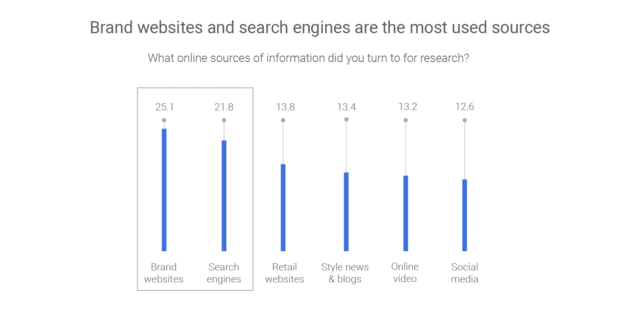
    Reportedly, 90% of luxury shoppers conduct research online before making a purchase, and brand websites and search engines are the two most popular sources people turn to. In fact, they’ve become the digital storefront for this generation of digital natives.
    Source: Think with Google

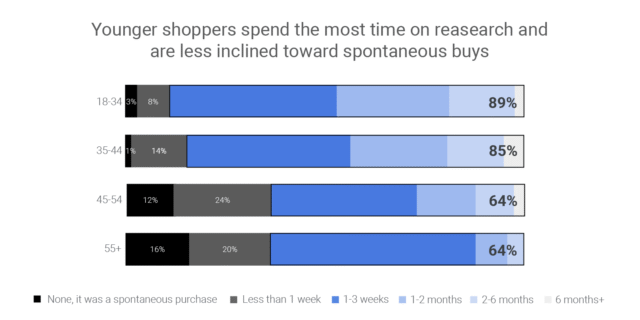
    Having grown up with readily available information online, millennial and Gen Z consumers spend more time on research than ever before.

    In fact, 89% of shoppers aged 18-34 spend up to three weeks researching a luxury purchase. And they’re not alone: 64% of consumers over 45 will spend the same amount of time on research leading up to a purchase.
    Source: Think with Google

    Retailers may have once treated online as a separate channel to physical stores, but this notion is quickly becoming outdated.

    Whether customers are online or offline is a distinction made by businesses, not consumers.

    Online and offline consumer behaviors are increasingly blurring, and the respective experiences need to follow suit, particularly when it comes to the inspiration and research phases.

    In short, consistency across the two worlds is key.

    It’s hard to imagine a luxury label leaving a customer linger unattended to in its boutique, so, by the same token, a customer should never be left unanswered or ignored on Google, YouTube, or social.

    More is more

    With a more exploratory consumer mindset, brand loyalty may be more elusive for brands targeting younger shoppers.

    Engaging potential millennial and Gen Z luxury shoppers constantly by trying to stay top of mind and being always on will be crucial to gaining consideration.

    In today’s environment of fast fashion and overnight style sensations — while couture brands used to produce two collections per year, they now produce five to six — one of every three consumers surveyed said they make luxury purchases to keep up with trends.

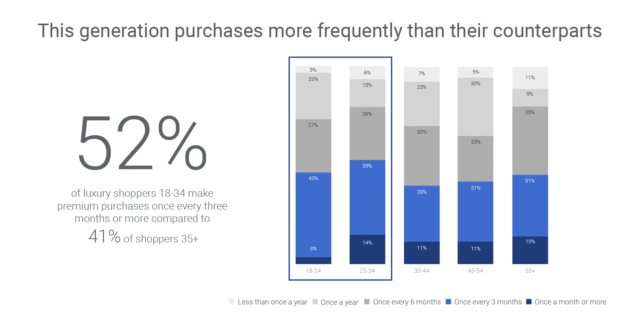
    The tendency to shop more often is evidenced among shoppers aged 18-34, of whom 52% reported making premium purchases once every three months, compared to just 41% of shoppers 35+ who did the same.
    Source: Think with Google

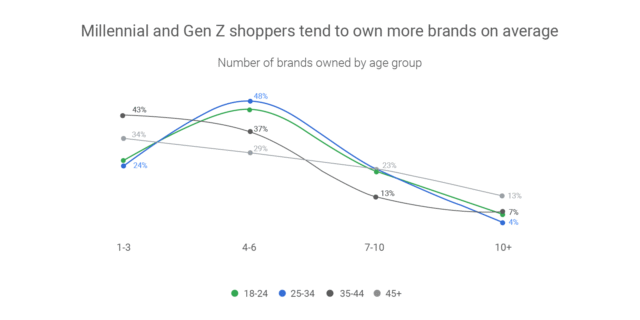
    In addition to a higher frequency of purchase, our research also shows that millennial and Gen Z shoppers are likely to consider a wider breadth of brands. On average, this group owned products from a repertoire of four to six brands; compared to more brand-loyal 35+ shoppers, who owned between one and three brands.
    Source: Think with Google

    Inspiring online with offline

    When it comes to in-store shopping, the aspects that customers value most are: 1) guaranteed authenticity, 2) the ability to touch and feel the product, and 3) personalized customer service.

    How might these values translate online? With 63% of people expecting the same high-touch brand experience online and offline, the challenge is to emulate these qualities and provide satisfying digital experiences.

    Offering free shipping on returns, for example, gives peace of mind to customers wary of counterfeit goods. Similarly, detailed product videos on the brand site or as a pillar of content on YouTube can help shoppers inspect items for quality while engaging them in a rich experience.

    Leveraging customer data, such as previous purchases, to create individualized interactions and recommendations is no longer a nice-to-have, but a must. Just as consumers expect personalized customer service in store, personalization is fundamental for designing a top-notch digital brand experience.

    Source: Think with Google
    The shopping experience begins online for Hong Kong’s luxury consumers.
    Search and brand sites are key because 90% of purchases are digitally influenced.

    Millennial and Gen Z consumers spend the most time on research, so it pays to provide as much information as possible to this group. They also purchase more frequently, and they consider more brands when they do so.

    To stay top of mind, brands should ensure that they are present at as many touch points as possible and that their media strategies are always on.

    Expectations for online shopping are growing higher by the day, and this is especially true for premium brands.

  • Vaping Maker Juul Sounds Out Asia for Expansion

    Vaping Maker Juul Sounds Out Asia for Expansion

    United States-based Juul Labs is exploring selling its compact vaping devices in Asia and has sounded out government officials in Indonesia, one of the world’s most smoker-friendly countries, although gaining approval there could face significant hurdles.

    Expansion into Asia would provide the fast-growing firm with new markets at a time when it faces increased regulatory scrutiny in the United States and Israel over the potential health risks of its products’ high nicotine content.

    Juul representatives held discussions with the Indonesian government last month about introducing its vaping devices, finance ministry officials said.

    Indonesia has one of the world’s highest rates of smoking among adults and teenage boys and imposes no penalties for selling cigarettes to minors. Its population of 260 million also makes it a highly attractive market for tobacco and vaping firms.

    A person familiar with Juul’s plans said executives for the San Francisco-based company are concerned authorities may be reluctant to grant approval due to likely opposition from the traditional tobacco industry, which provides much of the country’s tax revenue.

    Tobacco taxes accounted for nearly Rp 150 trillion ($10.2 billion) or about 11 percent of national tax revenue in 2017, government data showed. Each province also imposes taxes on cigarettes.

    Juul also worries its argument that vaping is healthier than smoking will not hold much sway in Indonesia, which is not as concerned as other countries about health issues, said the person, who declined to be identified as the discussions were not public.

    Juul representatives reached out to the Ministry of Finance to discuss how it would be taxed on any sales of devices there, the officials said.

    The government needs to examine the domestic e-cigarette market to determine how a foreign player such as Juul could hurt local small and labor-intensive e-cigarette firms, said Sunaryo, a senior official at the Directorate General of Customs and Excise.

    “We will need it to study it,” he said, adding that he was not sure Juul would comply with a regulation that requires e-cigarette devices and liquids to be sold separately.

    Juul also would need approval from the Food and Drug Monitoring Agency (BPOM). Officials at the agency said Juul had yet to be in touch.

    Other Asian countries the three-year-old firm is actively considering for expansion include India, South Korea and the Philippines, the person familiar with Juul’s plans said.

    In addition to Indonesia, Juul filed trademark applications for those countries between April and October this year, as well as in Malaysia and Singapore, according to a review. It opened its first Asia office in Singapore in July.

    So far Juul, currently valued at $16 billion, is available only in the United States, Canada, Britain and Israel. It has plans to enter Russia later this year.

    Juul said in that it is “proactively learning more” and engaging with local officials in Asia “to understand and hear their views.” It does not have immediate plans to launch in any Asian country, it said. Juul spokeswoman Victoria Davis declined to elaborate.

    A Taxing Question 

    Indonesia is one of only a handful of United Nations member states that has not signed on to the World Health Organization’s global treaty that sets standards for tobacco control.Roughly two-thirds of Indonesian men smoke tobacco daily, and more than 21 percent of boys aged 13-15 smoked cigarettes regularly, according to a WHO report last year.

    E-cigarettes, available in Indonesia since at least 2013, is a small but growing market. The customs office estimates that there are about 300 unsupervised liquid makers, known as brewers in Indonesia, producing various liquid products to more than 4,000 vape stores and 900,000 smokers.

    Philip Morris International, maker of Marlboro cigarettes, which now controls about a third of Indonesia’s market through its stake in Sampoerna, does not offer any of its noncombustible cigarette products in Indonesia.

    That includes its IQOS device, a heat-not-burn tobacco product, according to a company spokesman, who declined to comment on why it has not introduced the product.

    In October, the government imposed a 57 percent tax on e-cigarette liquids, on par with taxes on traditional cigarettes. But tax collection, particularly from smaller companies, is difficult in Indonesia and new rules are often ignored.

    Juul now commands a nearly 75 percent share of the US e-cigarette market, up from 13.6 percent in early 2017, according to a Wells Fargo analysis of Nielsen retail data.

    Its products, like most electronic cigarettes, vaporize a liquid containing nicotine. One Juul pod contains as much nicotine as a traditional pack of 20 cigarettes, according to the company’s US marketing.

    Juul liquid in the United States has a nicotine concentration of 59 milligrams per milliliter, much higher than the liquids typically sold in earlier versions of e-cigarettes and nearly three times the allowable limit in the European Union.

    In August, Israel banned Juul devices with nicotine concentration of more than 20 mg/mL, citing “a grave risk to public health.” Juul is appealing that decision and currently offers a lower nicotine-strength electronic cigarette in Israel.

    In September, the US Food and Drug Administration opened an investigation into Juul and other electronic cigarette companies, citing the rising number of teens who appear to be using Juul and other vaping devices. This week it is expected to issue a ban on fruit and candy-flavored e-cigarettes sold in convenience stores and gas stations.

    In its statement, Juul said its products are intended for adult use only, and that it aims to “improve the lives of the world’s one billion adult smokers” by providing an alternative to cigarettes.

  • J.Crew’s CEO Jim Brett is leaving the firm

    J.Crew’s CEO Jim Brett is leaving the firm

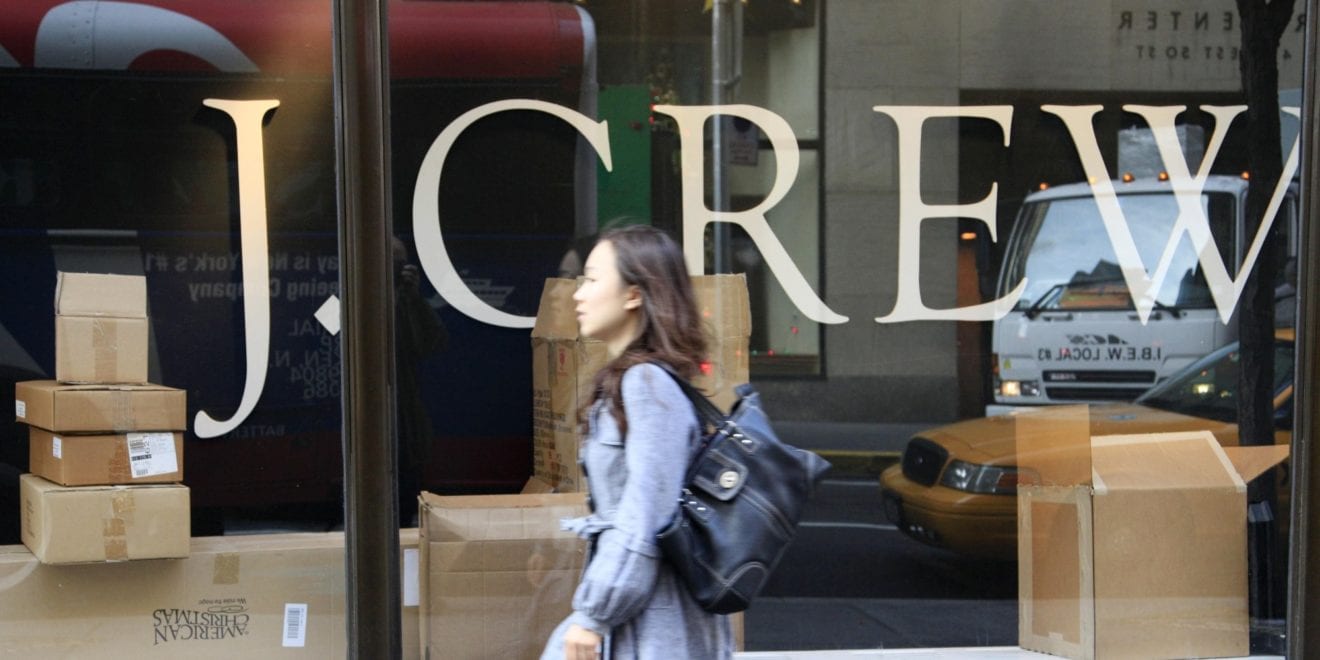
    J.Crew chief executive Jim Brett is exiting the company, the retailer said, and a committee of four executives will step in to manage operations until a replacement is found. The statement said the decision had been mutual between Brett and the board of directors.

    “Returning J.Crew to its iconic status required reinventing the brand to reflect the America of today with a more expansive, more inclusive fashion concept,” said Brett. “However, despite the recent brand relaunch already showing positive results, the board and I were unable to bridge our beliefs on how to continue to evolve all aspects of the company.”

    Brett will be replaced by four executives: chief operating officer Michael Nicholson, chief experience officer Adam Brotman, chief administrative officer Lynda Markoe and Libby Wadle, president of the Madewell brand.

    Brett joined the specialty retailer in July 2017, at a time when the company was struggling with looming debt payments and declining consumer sentiment toward the brand. Over the next year and a half, he overhauled the executive team, bringing in former colleagues from West Elm — where he was CEO — and URBN — where he worked at both Anthropologie and Urban Outfitters — to revamp the brand identity and restructure the business. In 2017, the company was able to bide a bit more time to implement a turnaround, negotiating with creditors to push back the maturity of $566.5 million in debt from 2019 to 2021.

    He lowered prices, launched new brands and tried to reposition J.Crew as an inclusivity-driven, one-for-all label not so tied down by its preppy heritage, especially as it had most recently been interpreted by agenda-setting designer Jenna Lyons.

    In a sharply worded email sent to senior staffers in July 2018, he dismissed Lyons’ work, which turned polarising near the end of her tenure, while laying out his own priorities.

    “PRETTY always sells. A glen plaid jacket with a graphic tee and camouflage pants is anything BUT pretty,” he said. “The new feminist fashion movement is enjoying the POWER of femininity (see latest Dior shows) vs. the last feminist movement which was about women finding power in dressing like men. Femininity is critical — pretty is critical — femininity is powerful. These things are in starch [sic] contrast to Jenna’s masculine, sexual and overtly aggressive J. Crew.”

    While Lyons’ vision had stopped resonating with consumers, Brett’s fix was viewed by some analysts as a watering down of the product. There were too many changes at once — from the introduction of a bare-bones loyalty programme to changes in fabric suppliers to the implementation of a marketplace — all with varying impact. He also continued to discount heavily, something many of J.Crew’s competitors are trying to move away from. Talk of a decline in morale also permeated Brett’s run, with multiple corporate-level employees leaving, including one of Brett’s own hires, chief marketing officer Vanessa Holden, who recently announced her departure.

    In the second quarter of 2018, the group — which also includes Madewell — reported that same-store sales rose 1 percent from a year earlier after 15 straight quarters of decline. Star performer Madewell, which drives about a fifth of sales, saw comps jump 28 percent. Total sales at the company were $588 million, up 3 percent from the same quarter in 2017. The company still experienced a net loss of $6 million, compared to a $19 million loss during the same period last year.

    Whether the company has managed to keep up the momentum will be revealed imminently, as third-quarter earnings are expected to be released this month. The period was marked by J.Crew’s official September relaunch, including the rollout of its #meetmycrew marketing campaign. Just this past week, J. Crew launched another brand, Nevereven, which is also being sold at multi-brand retailers such as Fred Segal in Los Angeles.

    But talk of the company giving up more of its corporate office space to Facebook and Instagram — which occupies the same building — and news of a “for rent” sign in the window its popular men’s concept shop, the Liquor Store, indicates that the J.Crew is still in cost-cutting mode.

  • Foreign names dominate Vietnam’s high-end home interiors market

    Foreign names dominate Vietnam’s high-end home interiors market

    Foreign home interior brands and designers are present in force and dominating the increasingly affluent Vietnamese market. Brands like Cassina, Badari Lighting, Cantori, Diemme Cucine, Formitalia, and Versace Home have entered the high-end interior market in recent years.

    According to the Vietnam Chamber of Commerce and Industry (VCCI), some 80 percent of luxury woodwork and interior decoration items is imported from Europe, with local players making up the small remaining portion. The market is valued at $2.5 billion.

    Ly Qui Trung, general director of AKA Furniture Group, said the expansion of the “middle and affluent class” has boosted demand for luxury interior items.

    “It is no wonder that many high-end international interior brands have started rushing into the Vietnamese market.”

    The middle and affluent class, categorized as those earning $714 a month or more, would double to 33 million, about a third of the population, between 2014 and 2020, the Nikkei Asian Review reported recently citing a study by the Boston Consulting Group.

    Market research firm Nielsen estimates the number of middle and affluent class Vietnamese to reach 44 million by 2020 and 95 million by 2030.

    Paolo Lemma, Italian trade commissioner to Vietnam, believes there will be higher demand for interior design items in future due to the booming real estate market.

    According to the HCMC Handicraft and Wood Industry Association (HAWA), woodwork furniture consumption last year was estimated at over $3.2 billion and that number is expected to reach $4 billion this year.

    Huynh Van Hanh, vice chairman of HAWA, said the industry’s average growth rate has been 8 percent in the last seven years, and his association encouraged domestic manufactures to enter this growing market.

    Trung said his company would seek to tap the growing high-end segment in future, and expected fierce competition between domestic and foreign brands.

    Last year Vietnam exported $8 billion worth of wood and forestry products and has a target of $9 billion this year.

  • High tech Nike NYC store opens

    High tech Nike NYC store opens

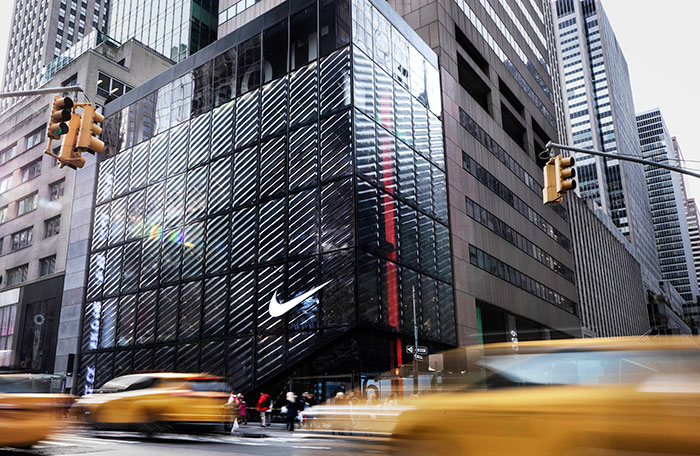
    Nike opened its newest Nike House of Innovation overnight, a 68,000sqft, six-storey store on Fifth Avenue.

    Nike NYC is described by the sportswear brand as a cross-category premium store, “the pinnacle expression of modern retail, representing the best of Nike global product, experiences and sport innovation”.

    “Nike NYC is designed to be a dynamic store environment, that is just as personal and responsive as digital,” said Heidi O’Neill, Nike Direct president. “This premium destination gives consumers an authentic, immersive and human connection to the Nike Brand.”

    The store is packed with technology, interactive experiential features and zones for both professional athletes and amateurs.

    Nike NYC uses the Nike App to create digitally connected journeys for consumers to discover, learn about and find the products they want quickly and easily. New and expanded Nike App in-store features include Shop the Look, Instant Checkout and updated functionalities with Scan to Try which the company says will give consumers greater opportunity to shop in-store displays, checkout in-store or request to try-on items throughout the store.

    The store is planned as something of a testbed for Nike’s digital service offerings which will “continue to evolve … giving NikePlus members even more choice in their shopping journey”.

    “Powered by digital commerce data and inspired by Nike’s newest retail concept, Nike Live, the ground floor of Nike NYC features the new Speed Shop – offering on-the-go access to the products local members know and love most,” the company said.

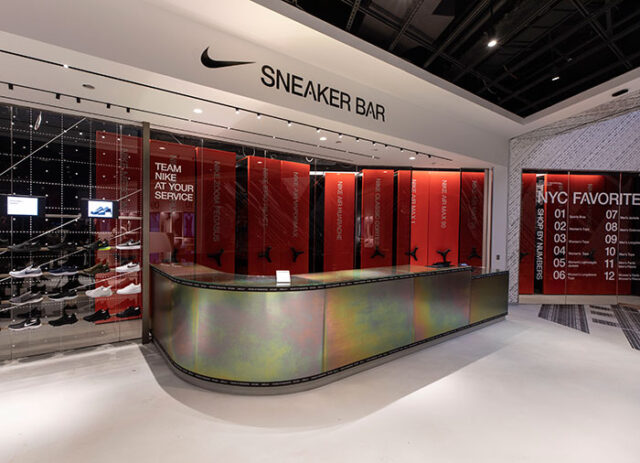
    Consumers can shop these curated New York City favourites alongside seasonal picks, visit the Nike Sneaker Bar or reserve items in the Nike App and pick them up in the Speed Shop digital lockers.

    On the fifth-floor is the Nike Expert Studio – the company’s first dedicated floor to provide even more personal service to NikePlus members, including bookable sessions with Nike Experts and the Nike by You Studio, offering members-only exclusive seasonal products, one-on-one styling sessions and even create personalised products.

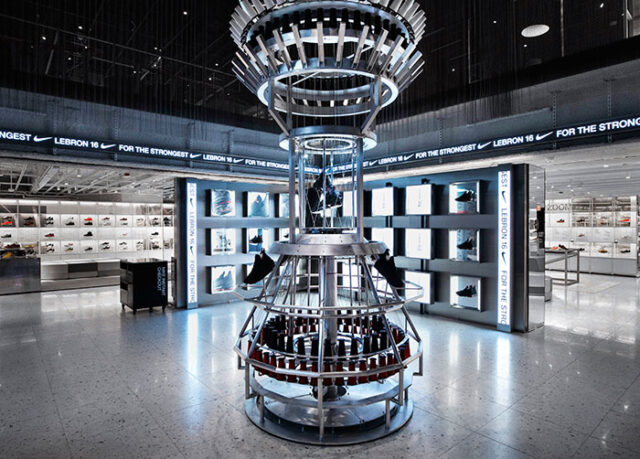
    Nike NYC features separate product floors for men, women and kids. On the fourth floor is the Nike Sneaker Lab, billed as home to the largest concentration of seasonally current Nike footwear anywhere in the world.

    The entrance to the store – dubbed the Nike Arena – showcases the most immersive seasonal and sport-inspired storytelling moments from the brand.

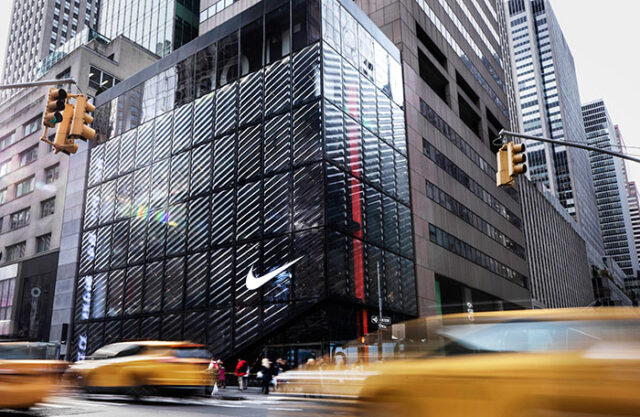
    The store’s exterior features slumped and carved glass designed to “reflect and create motion that mirrors the movement of athletes”, elevates the Nike Swoosh logo and reflects “the iconic aesthetic of Nike Air”.

    Technology at Nike NYC

    Here’s a quick rundown of the new and existing technology featuring in the new flagship:

    Shop the Look: By scanning a QR code on an in-store mannequin, consumers can browse every single item on the mannequin, check to see if their size is available in-store or online and see available colours. Then with just a tap, they can request for select products to be sent to a fitting room of their choice or receive the items from a store athlete at a designated pick-up spot.

    Nike Instant Checkout: Using Nike Scan, NikePlus members can skip the line and easily checkout from within their Nike App using stored or new payment methods. Members can scan the product(s) of their choice, check out like a traditional Nike App purchase and receive their payment receipt within the app. Nike Instant Checkout stations are positioned throughout Nike NYC so that shoppers can fold and bag products if they choose before leaving the store.

    Nike Scan to Try: While this technology was released earlier this year it has now been refined and expanded. After discovering any product in the store and scanning the item to learn more, shoppers can now simply tap “request to try-on” for various items. Requested products can then be collected at designated pick-up areas in Nike NYC, or they can be reserved to a fitting room location of the consumer’s choice.

    Nike Reserve: Using the Nike App, NikePlus members can reserve product at home to pick up in store. They can shop the product they want in the Nike App and then complete their purchase with an in-store athlete or with Nike Instant Checkout.

    Retail Home: When entering Nike NYC, members will gain access to an array of new features and content via their Nike App homepage.

    NikePlus Unlocks: NikePlus Member Unlocks are delivered through the Nike App to reward the best of Nike product, to deliver immersive brand experiences, to award activity achievements and to share partner rewards with members. Member Unlocks can be given directly from a Nike Expert in-store or targeted to consumers based on their sport and style interests. Select Member Unlocks may also be delivered to consumers outside of Nike NYC, which they can redeem in-store with an athlete.

    Product Concierge: If a product is unavailable in Nike NYC, an in-store staff member can search inventory across the entire marketplace – online or offline in Nike-owned stores, as well as its reseller network. If found, and available to ship or reserve, customers can have the item held at a local store or have it delivered. This service will be exclusively available on the fifth floor Nike Expert Studio Service Desk.

  • Palace set collaboration with Polo Ralph Lauren in Seoul

    Palace set collaboration with Polo Ralph Lauren in Seoul

    Streetwear label Palace and Polo Ralph Lauren, the luxury fashion brand, have brought their recent collaboration to Seoul after a show in London. The hotly anticipated crossover saw queues forming from the night before its Saturday morning release at the RL Garosu store to secure purchases of premium limited-edition items.

    Popular products included a Kickflip Polo Bear knit sweater and teddy bear, both of which were posted online within an hour of selling out at sizeable markups.

    Buyers were limited to purchases of one item per product and up to 10 products in total.

  • Foldable phone coming early 2019

    Foldable phone coming early 2019

    Samsung Electronics will make its foldable smartphone available by the first half of 2019, with initial shipments estimated at least at 1 million units, according to Koh Dong-jin, president of the IT and Mobile Communications division at the company.

    The comments were made Thursday in San Francisco on the day two of the Samsung Developer Conference, where he discussed the rollout of the new flagship phone with considerable confidence.

    “We will definitely introduce the phone before the end of the first quarter next year, although I cannot pin down the date at this moment,” he said. “And we will maintain the line each year.”

    His comments indicate that Samsung will be adding foldables to its existing two flagship lines, the Galaxy S – released most recently in February – and the Galaxy Note – released in the fall. But the foldables will be released in a limited number of countries, including Korea and the United States. Koh added that Samsung has yet to confirm the name of the lineup.

    Given Samsung’s status as the No.1 smartphone vendor in the world and the fact that its flagship models sell at least 1 million units, Samsung is gearing up to churn out over 1 million foldables from the outset “if the market reaction is positive,” he added.

    Koh’s meeting came a day after Samsung introduced the foldable phone. The company demonstrated what it calls the “Infinity Flex Display,” which measures 7.3 inches diagonally when the phone is open like a book. The screen is slightly larger than the largest smartphone screen and slightly smaller than those of a conventional tablet PCs.

    The company has so far declined to provide additional specifications, including thickness, weight and the battery power.

    “We showcased the display to show off Samsung having reached the stage of commercializing the device,” he said. “We have overcome several barriers, such as making the central hinge through the screen invisible. What remains to be done is working on the user interface to make it more concrete.”

    He went on to say that Samsung distributed the foldable device to developers before the event so that they could help in designing the best-possible user experience.

    Two months earlier, he met with Google CEO Sundai Pichai to launch a task force for foldable user experience.

    Beginning with foldables, Samsung is getting ready to revolutionize smartphone display form factors – to rollables as well as stretchables.

    “As much as foldables will have a huge technological impact, so will rollables and stretchables. That’s why we are studying them,” he said. “But the entire workforce is devoted to foldables at present.”

    Samsung has been grappling with declining sales and revenue from smartphone business. Operating profit for the division during the third quarter fell 29.8 percent year on year to 2.22 trillion won ($1.96 billion), while revenue slid 10 percent to 24.91 trillion won over the same period.

    Chinese rookie Huawei is rapidly catching up.

    Koh mentioned 5G connectivity, artificial intelligence and the Internet of Things as breakthrough technologies that will help Samsung compete.

    “While we have been maintaining leadership with 4G over the past decade, 5G, AI, IoT and augmented reality will offer a new opportunity in 2019.”

    He added that foldables will achieve another leap when such technologies become reality and are combined with the device.

    “Next year will be the 10th anniversary of Galaxy smartphones, and it’s very meaningful to me,” he said. “We will be coming up with an impressive Galaxy S10 as well.”

  • Singles’ Day boosts Korean brands

    Singles’ Day boosts Korean brands

    China’s massive Singles’ Day shopping spree provided a huge boost to Korean retailers, with some companies posting their highest sales figures ever. Since 2009, Chinese retail giant Alibaba Group has transformed Singles’ Day, which falls on Nov. 11, into an online shopping festival with large discounts offered for 24 hours.

    Other ecommerce giants like JD.com soon followed suit, making Singles’ Day into a Chinese version of Black Friday, although much bigger.

    At Alibaba, the number of transactions on Nov. 11 has steadily increased since the event began in 2009.

    Despite concerns that the ongoing trade war between the United States and China may have put a break on the income growth of middle-class Chinese consumers this year, Singles’ Day once again broke records.

    Chinese shoppers purchased a total of 213.5 billion yuan ($30.6 billion), worth of goods on Sunday, a 27 percent surge from last year’s record. The year-on-year growth rate was slower than last year’s 39.3 percent.

    Over 40 percent of shoppers made purchases from international brands, said Alibaba.

    Among the countries that sold products to Chinese customers on Sunday, Korea ranked third after Japan and the United States.

    Korea placed at No. 3 on the list in 2016, but fell two ranks last year after the deployment of the U.S.-led terminal high altitude area defense (Thaad) antimissile system. The incident soured relations between the two countries and provoked a boycott movement against domestic brands in China.

    The exact volume of Korean goods purchased on Sunday was not disclosed, but it was evident that the shopping spree had an impact on local companies, as some of them reported record-breaking figures on Monday.

    Food company Nongshim, famous for Shin Ramyun instant noodles, set a new record for Singles’ Day revenue since it launched online sales in China in 2013.

    The company sold 5 million yuan worth of instant noodles at ecommerce website Taobao on Sunday. This was a 25-percent increase compared to last year’s Singles’ Day and 10 times the average sales made at the Chinese ecommerce website per day.

    The No. 1 best seller for Nongshim was a multipack of its eight most famous noodle brands, including Shin Ramyun, Neoguri and Kimchi Ramyun.

    “We organized huge promotional events ahead of Singles’ Day, as well as collaborating with [social media influencers in China] to air live videos of cooking Shin Ramyun,” the company said.

    Eland Group’s Chinese office sold 444 million yuan worth of fashion goods through ecommerce website Tmall.

    Based on sales records, the fashion group focused on presenting a wide array of outerwear like coats and jackets. A padded jacket from its kid’s brand, Paw in Paw, sold over 20,000 units during Singles’ Day.

    Beauty companies also did well. At LG Household & Health Care, cosmetics sales increased 50 percent compared to last year’s Singles’ Day. Daily necessities jumped even higher by 73 percent year on year. Its brand, The History of Whoo, LG’s biggest success in China, sold 23 billion won ($20.2 million) worth of products, a 72 percent increase year on year.

    Although LG did not disclose the entire sales volume, the company spokesman said that “this year has set a record for Singles’ Day.”

    Rival Amorepacific unexpectedly set positive records as well. The company has been struggling after it lost Chinese consumers in the Thaad row. On Sunday, it generated 37 percent more sales compared to Nov. 11 last year. Several products from brands like Sulwhasoo and Laneige that were prepared for the Singles’ Day promotion sold out.

  • Baby Milo Launched Pets Collection Pop-Up Store

    Baby Milo Launched Pets Collection Pop-Up Store

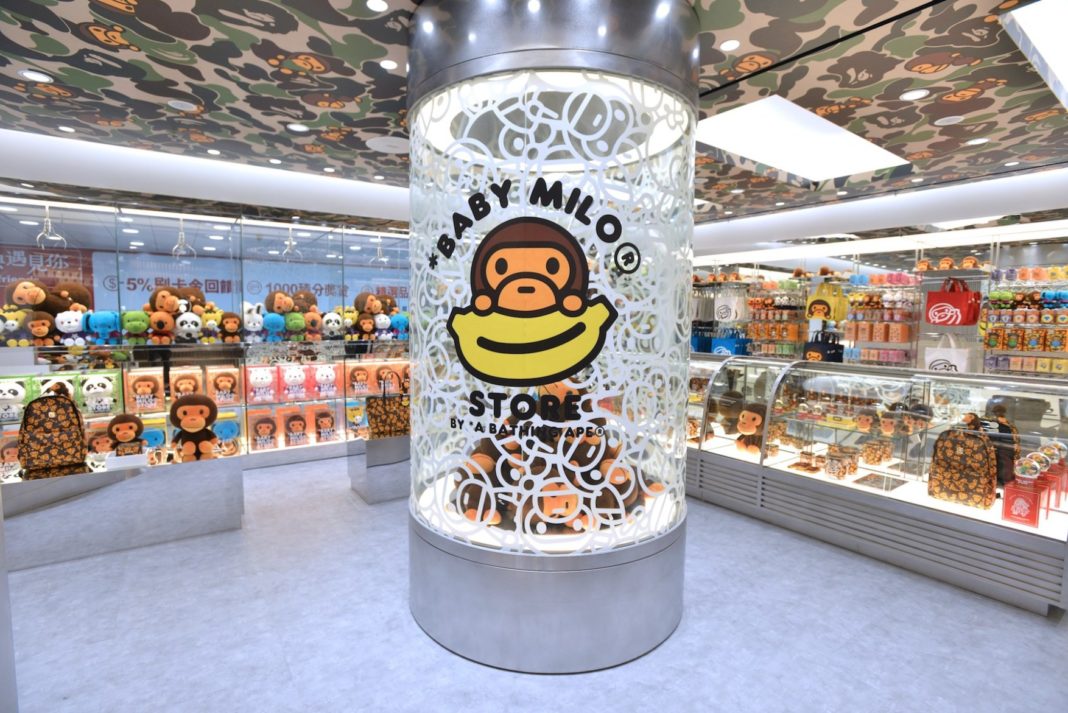
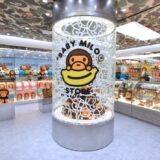
    Japanese apparel brand A Bathing Ape has opened a Baby Milo petwear pop-up in Hong Kong. The pop-up features a ball pool out front for canine friends to play in while attendant humans shop, as well as a quieter pet space out back. Also highlighted in-store is a Baby Milo dog tag engraving station and a flipbook photobooth.

    The pop-up is offering soft goods and toys for pets, including beds, chew toys, leashes, carry bags, and towels, among others.

    The pop-up will run until November 18 at 19 Old Bailey Street, Soho, from noon to 7pm.

    A Bathing Ape is owned by Hong Kong’s I.T Group.

  • Thailand’s green material Industry and the green building trend

    Thailand’s green material Industry and the green building trend

    In the midst of today’s environmental movement, green buildings (buildings designed to be environmentally friendly through more efficient use of resources) are popping up more and more in Thailand.

    Using data from green building credentialing bodies like the U.S. Green Business Council (USGBC), which developed the Leading in Energy & Environment Design (LEED), and the Thai Green Building Institute (TGBI), which developed Thailand’s Rating of Energy and Environment Sustainability (TREES), EIC found that the number of certified green buildings and buildings in the process of accreditation in Thailand has risen substantially, increasing from six buildings in 2007 to 243 buildings in 2015.

    With EIC’s estimate of 294 green buildings in 2016, the average annual growth rate for green buildings in Thailand is 54%. Thailand’s green building area increased from 40 thousand square meters in 2007 to 4.3 million square meters in 2015, and it is estimated that it will reach 5.0 million square meters by the end of 2016, pushing average growth to 71% per year (Figure 1).

    Green buildings in Thailand consist of office buildings (around 40%), retail stores and shops (around 30%), and other structures such as factories, residential buildings, hotels, and schools (around 30%) (Figure 2).

    Although the costs of building green are higher than construction costs for conventional buildings, it is the benefits they offer that are responsible for the expansion of green structures today.

    The average cost of building green in Thailand is 20,700 baht per square meter, which is about 5.2% higher than the average conventional building cost of 19,700 baht per square meter (Figure 3).

    This is because building green involves more restrictions in choosing materials and in designing building systems, as well as additional fees for obtaining LEED or TREES credentials. However, owners can gain both monetary and non-monetary advantages from green buildings. Monetary benefits include a decrease in building management expenses like electricity and water costs that can be reduced by 10% or around 90 baht per square meter per year, and up to about 21% or 180 baht per square meter per year by the fifth year after the completion of the project (Figure 4). These numbers are comparable to the decrease in energy costs of  well-known green building Energy Complex.

    The Energy Complex building contains 192 thousand square meters of utility space and has reduced building management costs per year by about 28 million baht, or about 146 baht per square meter per year.  Another monetary advantage for green building owners is increased rents. Rents for green buildings are around 30% higher than those of conventional buildings in the same area, or about 230 baht per square meter per month (Figure 4). Non-monetary benefits include significantly higher worker productivity in green buildings compared to conventional buildings, deduced from sick day records and illnesses caused by sick building syndrome.

  • China’s shoppers may take 10 years to step up

    China’s shoppers may take 10 years to step up

    Chinese policymakers are gung-ho to transition their economy away from investment and toward consumption, but that may not happen for another decade, new data shows.

    “Without a substantial intervention, we believe consumption’s share of China’s economy is unlikely to rise substantially before 2025,” The Demand Institute, a non-profit organization operated by The Conference Board and Nielsen, said in a new report.

    Private consumption as a share of gross domestic product (GDP) will average 28 percent from now until 2025, the think-tank said.

    To be sure, the mainland has long underperformed the global average in this regard as Beijing previously focused on export-led growth.

    Consumption as a share of GDP was 37 percent last year, according to the Brookings Institution, compared with around 70 percent in the U.S. and 60 percent in fellow emerging market, India.

    The indicator has only recently started to stabilize in recent years. Consumption relative to GDP declined 48 percentage points from 1952 to 2011, one of the longest and largest drops of any nation on record.

    Based on an examination of 167 countries between 1950 and 2011, the report found that nations with similar economic characteristics to China saw consumption remain flat relative to GDP for a considerable period following previous declines.

    China’s desire to rebalance its economy stems from the need to avoid the dreaded “middle-income trap,” in which developing countries are unable to graduate into high-income countries after achieving a certain level of per capita GDP.

    While many economists believe the economic transition is already underway, albeit at a gradual pace, they also expect it will take a while before consumption’s share of GDP spikes higher.

    “Only towards the end of decade, when the economy slows further to 5-6 percent, consumption’s share of GDP will become more important,” said Jian Chang, China economist at Barclays. “But we have seen investment slow significantly and I think total consumption as a share of GDP could near 50 percent this year.”

    Beijing’s strategic vision of boosting consumption was first outlined in 2011’s 12th Five-year Plan and since then, the government has unleashed a slew of measures, including raising wages and slashing import tariffs on high-demand goods.

    But The Demand Institute warns that the burden can’t rest on the government alone: “It is up to business to nurture the demand that policy unleashes, aligning goods and services with consumers’ shifting preferences.”

    Ensuring access to products and services via reliable distribution channels, satisfying demand across different income, regional and age groups as well as offering more financial services to support consumption are some of the factors that businesses can embrace, the report said.

  • As platinum gains popularity, more outlets set to come up

    As platinum gains popularity, more outlets set to come up

    As platinum gains popularity in India, the Platinum Guild India expects to see the number of outlets going up from 800 now to over 1200 by March 2016.

    Vaishali Banerjee, India Manager of Platinum Guild India, told that within a short span, India has become the fourth largest market for platinum jewellery in the world and this can only get bigger as more youth take to this precious metal.

    The growth in India has been particularly rapid in the past 5 years and has grown to over 5 tonnes last year as against about 400 kg in 2008. This speaks volumes of how young people are embracing Platinum jewellery, whose trade is getting extremely organised with big retail stores setting up exclusive zones for display of platinum jewellery, she said.

    What started with platinum couple bands has gradually gained with men’s jewellery spanning chains and bracelets and now has grown into the Evara range of bridal jewellery segment. Introduced about six months ago, it is gaining popularity as its charm is in co-existence with popular gold jewellery in India. Though gold jewellery is tops when it comes to bridal jewellery, a number of youngsters are taking to platinum jewellery, she said.

    Vaishali said, “We are pleased at the way Platinum Evara has been received by consumers and trade, as platinum symbolises love and resonates well with the new bride and groom. There is huge appeal for platinum amongst youngsters.”

    Varghese Alukka, Managing Director of Jos Alukkas Jewellery said, “From 34 stores in the southern market in the country, we are looking at growing this to 50 stores in the next two years.”

  • Hong Kong residential property prices reached record high in May

    Hong Kong residential property prices reached record high in May

    Residential property prices in Hong Kong reached a record high in May, increasing more than 20% compared with the same month last year.

    The growth in values continues despite the government’s series of property market cooling measures.

    The transaction volume of new homes reached over 8,700 for the first half of 2015, the data from the Rating and Valuation Department shows.

    According to an analysis by international real estate firm Knight Frank it is a result of strong housing demand, ample liquidity partly attributable to the previous rally in the Mainland and Hong Kong stock markets and the continual return of wealthy Mainland investors to the city’s residential sector.

    Amid positive market sentiment, property developers have been actively acquiring residential sites this year, in line with the government’s target to boost housing supply. In early July, a large residential site in So Kwun Wat in Tuen Mun, estimated to require an investment of up to HK$8 billion, was sold for HK$3.82202 billion, representing the second highest ever accommodation value in the area.

    During the third quarter of this year the Hong Kong government will release three residential sites for sale. It has indicated that additional land may be launched by the end of September, depending on the market situation and progress of preparatory work.

    ‘The annual private housing supply target of 19,000 flats is considered achievable this year. Despite the rising supply, we expect home prices to continue rising this year, as it will take time for the new sites to be developed into flats,’ the Knight Frank report concludes.

    Meanwhile in Greater China the Grade-A office market remained active in June, driven by continual expansion demand from Chinese financial institutions, most notably fund and asset management companies.

    Knight Frank believes that Grade-A office rents in Central will continue rising steadily in the second half of 2015.

    Last month, with rents in prime retail districts softening, mid-range retailers gained opportunities to enter high profile streets at lower rents. Retail sales are not expected to recover in the near term.

    Knight Frank says that prime retail rents will continue to come under downward pressure for the remainder of the year.

  • Hong Kong Is Key Link in Ivory Trade

    Hong Kong Is Key Link in Ivory Trade

    A new report from conservation group Save the Elephants shows Hong Kong has more ivory products for sale than any other city in the world. The group says the illegal export of these products to mainland China is undermining that government’s efforts to stop the ivory trade.

    According to the report released Thursday in Nairobi, researchers counted more than 30,000 ivory items on sale in Hong Kong in 72 different retail outlets. Most of the items are carved jewelry and figurines, sold to tourists at luxury hotels and shops.

    In Hong Kong, the sale of ivory from registered stocks is permitted by law, but export to mainland China is not.

    Illegal smuggling

    Researchers found 90 percent of the ivory being sold in Hong Kong is being bought by customers from the mainland. Much of it is then smuggled illegally into China.

    Save the Elephants founder Iain Douglas-Hamilton said the practice is damaging to China’s efforts to stop demand for elephant ivory.

    “I think the future of Africa’s elephants actually lie in the hands of China. Hong Kong is part of China, and it is undermining bans that are increasingly being deployed in China,” he said.

    Douglas-Hamilton said 100,000 elephants were killed across Africa for their ivory between 2010 and 2012. Most of the slaughter is driven by demand in Asia.

    Hong Kong has not legally imported ivory since 1990; new items are carved and sold from existing stocks.

    Although the report does not conclude that Hong Kong has been marketing illegal ivory, conservationists have suggested traders in the city may be slipping poached ivory into their stocks.

    Seized shipments

    Report lead researcher Esmond Martin said Hong Kong is a known transit point for illegal ivory, and notes authorities there have seized several large shipments from Africa.

    “With these large consignments being intercepted in Hong Kong, almost all of them, according to the government and to the research that we have carried out, is going to mainland China, almost all of it,” said Martin. “And this is an extremely important point. But the question to ask is how much is going through Hong Kong that is not being picked up? And that is we do not really know much about.”

    Martin said some of the larger shipments recently seized in Hong Kong originated from Kenya, Tanzania and Togo.

    He said corruption along the supply line, starting in the national parks where elephants live, remains one of the most pressing challenges to stopping the ivory trade.

  • Retail boosts SM Investments bottom line

    Retail boosts SM Investments bottom line

    SM Investments Corporation says its retail operations delivered solid 6.5 per cent growth in the first three months of 2015.

    Retail accounts for just 19 per cent of the diversified corporate’s business, with banking accounting for 41 per cent and property 40 per cent. The company delivered its first quarter results this week, reporting an 8.1 per cent increase in net income to P6.7 billion (US$150 million).

    “We are focused on expanding all our core businesses given the favorable economic outlook. Our expansion plans are geared towards meeting the needs of under-served customers across the country and to positioning ourselves to compete effectively in each of our growing markets,” SM president Harley T. Sy said in a statement to the Philippine Stock Exchange.

    SM Retail’s turnover in the quarter was P44.9 billion ($1 billion) and its profit rose 6.5 per cent to P1.3 billion ($29.1 million).

    The company opened 10 new stores in the quarter in the provinces of Luzon, Visayas and Mindanao. As at March 31, it operated 279 stores: 50 SM Stores, 40 SM Supermarkets, 43 SM Hypermarkets, 120 Savemores and 26 WalterMart stores.

    Property division SM Prime Holdings, which owns shopping centres amongst other assets, recorded P16.7 billion ($374 million) in revenue, up nine percent quarter-on-quarter. Its net income soared 176 per cent to P12.6 billion ($282.3 million), including an extraordinary gain of P7.4 billion ($165.8 million).

    SM Corp says its retail and commercial revenue grew 10 per cent to P9.4 billion ($210.6 million).