Tag: trend

  • Online Marketplaces India: Delivering fashion to the discerning masses

    Online Marketplaces India: Delivering fashion to the discerning masses

    The online fashion space in India is positively buzzing with private labels or brand partnerships. Recently, heritage American denim brand, Wrangler collaborated with Indian e-commerce giant, Flipkart to launch an exclusive sub-brand called Wrangler 20X. Myntra also launched its in-house plus size apparel brand, Sztori as well as House of Pataudi, an ethnic wear brand co-owned by Myntra, Exceed Entertainment and Bollywood actor Saif Ali Khan.

    Addressing Consumer Demand

    Wrangler 20X is targeted at the digitally-savvy youth who increasingly shop for fashion online and are seeking the perfect mix of trend and value. Gen Z are increasingly brand-aware and aspire to own brands with flaunt appeal. The denim brand aims to give them a brand that they would be proud to wear at prices they can afford.

    Known for democratising fashion across segments, the launch of both Sztori and House of Pataudi enables Myntra to go a step further and include profiles into the ambit of ‘fashion for all’. It champions inclusivity in fashion, evaluating and emphasising greater attention to styles, trends, designs, fit and fabric for plus sized apparel and fashion conscious consumers, in order to bring out the personality of the person wearing it.

    Sztori has been especially designed to suit a larger range of body shapes and sizes. It is essentially a designer wear in the plus size category, offering consumers the perfect fit and multiple style options. The apparel is made to suit plus size body types rather than prove to be a mere extension in size on existing profiles, thus breaking the existing age-old norm in the Indian market.

    Manohar Kamath, CXO and Head, Myntra Fashion Brands, says, “We are extremely delighted to announce the addition of Sztori to our portfolio of private brands. Plus size clothing is in great demand and it was time we offered something substantial in the category, opening up more avenues and possibilities for our customers.”

    The brand offers a range of products for men and women, including, tees, denims, tops, dresses and more in L to XXXXL (Large to 4 times Large) sizes. Shoppers can choose from over 225 styles and designs at prices ranging from Rs 799-Rs 1,999.

    Myntra identified a space opportunity in this segment and set out to design and develop merchandise under a new brand to cater to the category and make wearers look fashionable with multiple style options at affordable prices and opening new avenues in the industry.

    ‘House of Pataudi’ is a lifestyle brand for men and women that delivers fine taste and refinement to the discerning and the fashion conscious. Each piece not only exudes style but also narrates the rich story and history of the Pataudi heritage. The collection comprises traditional Indian wear, conceptualised inthe form of Rozana, every day wear with a contemporary ethnic touch; Jashn, festive finery with a regal charm; Riwayat, bespoke splendour for the classic Indian wedding; and a Special Edition, comprising collections inspired by the Pataudi trousseau.

    The range includes kurtas, sherwanis and Nehru jackets for men and kurta sets, lehengas and dresses for women. Products from House of Pataudi will be available exclusively on Myntra and Jabong, across a price range of Rs 1,500-Rs 15,000 for men and Rs ,000-Rs 20,000 for women. The brand’s design team has worked closely with Saif Ali Khan; inspired by his own personal style statement and has designed and perfected the line, modelling it on the Pataudi lineage and contemporary fashion preferences, to make it relatable for the modern fashion shopper. House of Pataudi is focused on changing the perception about ethnic dressing being limited only to festivals and occasions and bringing it back to everyday wear.

    Tapping the Market

    “Research estimates that the plus size segment will account for US$ 5 to 6 billion in the US$40 billion Indian online fashion apparel market, by 2020, which is approximately 10 to 12 percent of the overall market, making it an important proposition,” shares Manohar Kamath.

    Flipkart’s has aggressive plans to grow the fashion business and this maps well with Wrangler’s vision of meeting the needs of the young, online shopper. “We are delighted to partner with

    Flipkart on the launch of Wrangler 20X. The brand will be available exclusively on Flipkart and is designed for young, trend-aware digital citizens who aspire to buy Wrangler but are also looking for a more affordable value proposition. We look forward to working with Flipkart to make this a successful sub-brand of Wrangler,” comments Krishna Dorai, General Manager, Wrangler.

    Rishi Vasudev, Vice President, Flipkart Fashion says, “Men’s fashion is one of our fastest growing categories, where we have witnessed a 75 percent Y-o-Y growth, within which denims is one of the most successful categories. Crafted basis an understanding of what fashion shoppers are looking for, we are excited to launch Wrangler 20X, a denim-wear brand, from the house of Wrangler, exclusively on Flipkart Fashion. The range is specifically designed to off er the latest in fashion to the style conscious young men looking for the best in the value branded segment and we are sure, this range will be a massive hit, while it strengthens our men’s portfolio.”

    The Wrangler 20X collection features attractive style elements such as PU detailing on the pockets and belt loops, the shirts embrace printed designs with yarn-dyed fabrics and the tees receive a fresh colourful graphic spin. The sub-brand is currently available only for men.

    Ananth Narayanan, Ex-CEO, Myntra- Jabong, said, “We are clearly focused on a strong customer proposition and currently there is a huge gap in brand offerings in the ethnic wear space, especially for men. House of Pataudi is an ideal fit, being rich on tradition, heritage, design, and offers customers a slice of the world that we believe is lost, at price points that are highly affordable.”

  • Vegan fashion trend booming in Korea

    Vegan fashion trend booming in Korea

    Stroking down the plush set of colorful fibers, it is hard to tell they could be anything but fur. Hanging in the corner of an ethical fashion store in Dongdaemun, the fur-free fur coats and silk-free silk robes are soft and luxurious, but without the cost of brutality against animals. Striving to spare harm inflicted on animals for the sake of style, vegan fashion has been spreading in South Korea in recent years.

    The word “fake” does not fully describe the trend, as the garments are not purposed as second choice low-quality replacements. They are considered more of a fashionably ethical statement now, rejecting the use of animal materials or cruelty in obtaining them.

    Strictly speaking, vegan fashion is different from eco-friendly fashion, although the phrases are often used interchangeably. Something vegan may not necessarily follow best practices for the environment, or vice versa, but the two often go hand in hand.

    The international movement toward fashion going vegan began its rapid spread as many prominent luxury brands announced themselves “fur-free.” In October last year, Gucci went fur-free, followed by British fashion company Burberry in September this year. Other pricey labels, including Versace, Giorgio Armani, Tom Ford and Ralph Lauren have also declared moves to ban fur.

    Britain’s Stella McCartney — the second-generation animal rights activist daughter of Linda and the Beetles’ Paul McCartney — is believed to gotten the ball rolling in 2001, and currently stands as one of the leading eco-friendly fashion brands in the world. Now, slapping on the word “vegan” is a marketing strategy seemingly guaranteeing good sales.

    The vegan and similar fashion trends are more prevalent in the winter, as outdoor labels increasingly introduce items that either exclude animal materials or try to stick to ethical standards in using animal matters.

    A number of global outdoor companies, including The North Face, Adidas and Reebok, have launched “Responsible Down Standard” certified down coats this winter. RDS is a global standard developed in 2014 to ensure that down and feathers come from animals that have not been subjected to unnecessary harm. Local outdoor brand Black Yak also received RDS certification for all of its down coats released this year.

    Some brands have taken it a step further and developed artificial materials as replacements. The North Face introduced its own thermal filling, “V-Motion,” in 2016, and ‘”T-Ball” this year, whereas LG Fashion’s A.T.Corner presented as its 2018 winter centerpiece a mustang jacket with eco-fur lining inside.

    According to Galleria Department store, which held an eco-friendly fashion week at the end of last month, environmentally friendly garments, including animal-free ones, have increased by 20 percent compared to last year on the women’s fashion floor.

    GS Shopping, a TV shopping firm, exceeded its initial sales goals for RDS certified items, including Reebok’s heavy goose down long coat, which sold out in less than half an hour on the channel.

  • Culture complexes blooms in Asia

    Culture complexes blooms in Asia

    In recent years, the term “culture complex” has often been seen on social media. Postings showing people spending time at these spaces are shared often, attached with hashtags that read “culture life,” “leisure time” and “relaxation.” Culture complexes have risen as popular city destinations for young Seoulites. Buildings housing exhibition halls, cafes, restaurants and design shops bill themselves as culture complexes.

    According to last year’s “Where to Live,” a book by Yoo Hyun-joon, an architect and professor, the younger generation has been exhibiting their identities on social media by sharing the kind of clothes that they wear and the kind of food that they eat. Now, it is about the space — the kind of spaces where you spend your time.

    To satisfy such desires, culture complexes compete to house the trendiest tenants. What also matters is how well such culture complexes go with the neighborhoods they inhabit.

    The Wooran Foundation building in Seongsu-dong, eastern Seoul, is a case in point. The neighborhood is often referred to as the Brooklyn of Seoul, as young artists and hipsters have flocked to the old abandoned factories in the area.

    The new 12-story building stands out in the generally low-rise neighborhood. But the architectural design shares the Brooklyn mood with layers of gray concrete and an industrial mood.

    Cafe Dorrell, a Jeju Island import, on the first floor is one of the trendiest coffee franchises of 2018. The interior is decorated with skateboards, matching the young and hip atmosphere of the area.

    The culture complex has five halls for exhibitions and performances, ready to host all genres of artistic activities.

    Founded in 2014, the Wooran Foundation, is a cultural foundation that aims to create sustainable arts and culture ecosystem. President Chey Ki-Won is the younger sister of SK Group Chairman Chey Tae-Won.

    Some culture complexes serve as showrooms for companies. For example, Simmons Terrace showcases Simmons mattresses while the Monami Concept Store displays the brand’s stationery products.

    Flask Namsan in central Seoul is operated by Market m, a lifestyle design select shop. Located near Myeongdong, the first floor space features design products from interior decorations to furniture. Upstairs, visitors can relax with a cup of Moonshine Coffee from Australia.

    The cafe lounge on the third floor is a culture space for lectures, seminars and mentoring sessions. The yet-to-open upper part of the building, from the fourth to sixth floor rooftop, will house more showrooms and restaurants.

    “In Korea, we usually meet people at cafes and restaurants. While meeting friends, we can visit these shops and share our lifestyles. I get to know more about what others like and what I like, too,” Kim Ji-hye, an office worker her mid-20s in Seoul, said.

    “On the other hand, I sometimes wonder why these places call themselves culture complexes, when they are just spaces for businesses,” Kim said. “I feel like they should have something more than just sales.”

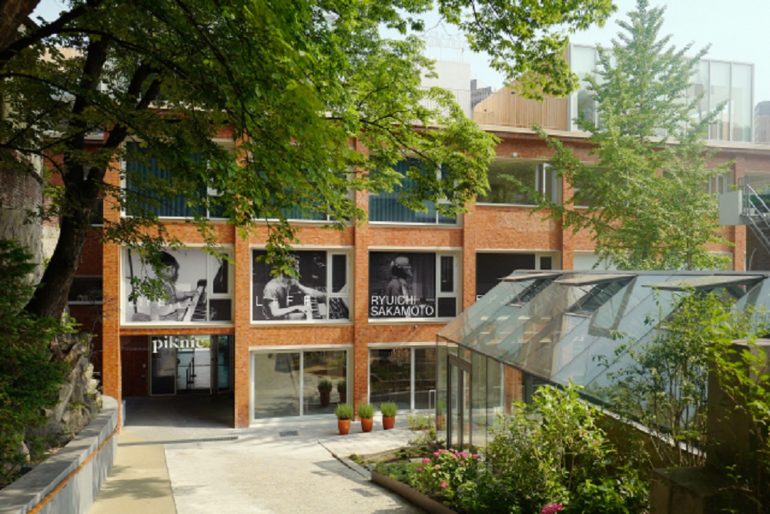
    Originally a pharmaceutical company building from the 1970s, Piknic, a culture complex in Hoehyeon-dong, central Seoul, houses Kafe Piknic, a cafe by day and tapas bar by night. Michelin-starred french restaurant Zero Complex is on the third floor.
    However, what has made Piknic a popularly recognized name is the exhibition space. Designer brand SJYP held a runway show here during the last Seoul Fashion Week. The space also hosted “Ryuichi Sakamoto: Life Life,” a media art exhibition of the life of the Japanese composer and musician.

    The culture space is currently holding “Jasper Morrison: Thingness,” an exhibition of work by the famed British industrial designer. After enjoying the exhibition, visitors can dine at the Kafe Piknic, sitting on a chair designed by Morrison.

  • Retailers to lose US$130 billion from card-not-present fraud: Juniper

    Retailers to lose US$130 billion from card-not-present fraud: Juniper

    Increasingly complex card-not-present fraud will cost retailers US$130 billion globally in digital sales over the next five years. A Juniper Research study predicts that retailers’ slow pace in keeping up with new fraud prevention requirements will allow cybercriminal practices to become more widespread as more and more consumers shop online. It observes that established point-of-sale vendors will need to move towards mobile POS technology in order to expand their reach into fresh markets and reduce their exposure to card-not-present fraud.

    “A layered fraud detection and prevention (FDP) solution naturally helps directly preventing fraud, but it also offers major gains in terms of recovering potentially lost revenue through false positives,” said the report’s author Steffen Sorrell. “This is something about which retailers remain undereducated, and has allowed fraudsters to capitalise on relatively low FDP spend”.

    An implication of the Juniper research is that a low understanding of FDP investment return is causing the low uptake of the technology. the report anticipates digital payment players will be spending $9.6 billion annually on FDP solutions by 2023.

  • How the retail industry has fared in 2018

    How the retail industry has fared in 2018

    The overall retail market in India 2018 stood at Rs 43,251 billion and is forecast to grow by 6.4 percent CAGR in 2018-2023. Retailing in India still predominantly takes place in physical stores and shopping behaviour between urban and rural consumers continues to be vastly different. Smaller independents (both grocery retailers and non-grocery specialists) continued to dominate the landscape they faced growing competition from modern outlets opening in out-of-town shopping centres and malls capturing the Tier II & III markets.

    This year, we witnessed modern retailers launch interesting payments schemes and effective pricing strategies to propel the sales. For example, leading retailer Future Group launched its payment wallet Future Pay which can be used in all its retail brand outlets. Retailers also capitalised on growing acceptance of modern retail by developing new marketing schemes and strategies to attract shoppers.

    Additionally, multi-channel strategies remained key for retailers as they are developed online platforms that are also smartphone and tablet compatible to drive Internet sales.

    Furthermore, retailers also increased their new private labels products. This is was done for certain grocery categories like: packaged foods, non-alcoholic drinks, beauty and personal care and home care products.

    Finally, subscription-based retailing practices started to pick up in 2018. Although still relatively niche, and limited only to urban India, the subscription-based model for beauty and personal care and consumer health became quite popular in metropolitan cities.

    What are the retail trends that are going to rule the roost in retail in 2019?

    – Retailing will continue to offer potential for grocery retailers. Convenience stores and forecourt retailers are likely to continue to see healthy growth rates as their format can meet the demands arising from changing lifestyles by offering more convenient shopping solutions, both in terms of location, business hours and product range.

    – Given the rising maturity of retailing in metros/urban areas, retailers have slowly started to focus on the semi-urban consumer base. This has resulted in the slow and steady urbanisation of shopping styles amongst semi-urban consumers.

    – As the labour crunch and high rentals continue to affect the retail landscape in India, hypermarkets are looking to ramp up investment on self-service technology and automation to reduce costs and improve customer experience. Some hypermarkets chains have implemented self-service kiosks at checkout counters, generally with positive results because of reduced waiting times. Investments have also been made into automated ordering systems, which has helped brands reduce storage space at outlets, hence control rental costs. This can be expected to grow during 2019 as well.

    – Furthermore supermarkets are likely to push the broadening of key product categories, such as organic fresh food, soft drinks and packaged food. They are also likely to further narrow the line between foodservice and grocery retailing, with the introduction and integration of new foodservice elements within their stores.

    – Non-grocery retailing will likely be impacted by the growth of internet retailing at the expense of specific store-based retailers and other non-store channels. Consumers are expected to increasingly shop and research products online, with the popularity of smartphones making mobile-optimised sites and shopping apps crucial in attracting consumers. Moreover, social media will be used more often to alert consumers to attractive price promotions and build interest in new product launches. Also, omni-channel strategies will remain key for non-grocery retailers.

    – Non-grocery retailers will increasingly integrate their online brand information with store inventory, as consumers expect to find the same products in both channels. Moreover, to minimise showrooming, players will also need compelling reasons for customers to buy their brands in store, whether in terms of product selection or price competitiveness.

    – The entry of Amazon and Flipkart could stimulate a much-needed increase in the competition, which will bring both opportunities and threats for existing food and drinks retailers in India. Amazon with ‘Amazon Pantry’ and Flipkart with ‘Flipkart Supermart’ eventually launched its online grocery business in 2018. Millennials and affluent consumers were encouraged to change from shopping in physical stores to online in 2018 with convenience and heavy discounts on offer. Also, with increasing investments from player such as Amazon who are expected to buy skate in Future Retail and PayTm who have partnered with BigBasket and Future Group to strengthen its online grocery business, the food and drinks internet retailing is expected to show tremendous growth in 2019.

  • ‘E-commerce share in India’s FMCG retail sales triples in 2 years’

    ‘E-commerce share in India’s FMCG retail sales triples in 2 years’

    Growing consumer trust and confidence in online buying has helped e-commerce platforms expand their share in India’s total FMCG retail sales by as much as three times, according to market researcher Nielsen. This has led to online purchase of a broader range of categories, with a particularly interesting upswing seen in fresh and packaged groceries, Nielsen said in a report.

    It further stated that global online grocery purchasing is up 15 percent in the last two years, leading to an estimated US$ 70 billion additional sales in online FMCG.

    The 2018 Nielsen Connected Commerce Report said e-commerce categories — travel (69 percent), fashion (66 percent), and IT and Mobile (63 percent) continue to account for the largest proportion of online transactions in the country.

    Interestingly, categories posting the most significant growth in e-commerce channel included packaged grocery (where 40 per cent of respondents said they made a purchase), fresh groceries, and baby and children products.

    “From tracking the e-commerce evolution in pioneering countries like South Korea where online sales now account for a staggering 20 percent of the total FMCG sector, we know that consumers follow a certain pattern of online shopping behaviour,” Sameer Shukla, Executive Director (Retail Measurement Services), Nielsen South Asia said.

    Travel, fashion and IT/ Mobile products are typical categories for first-time online shoppers and as their familiarisation, comfort and trust levels increase, their category repertoire expands into areas like beauty, personal care and baby products, he added.

    “… and then moves even wider afield to packaged and fresh grocery categories, and this is evidenced in the significant jump we’ve seen in online purchasing within grocery and food delivery in recent years,” he said.

    The report also revealed that consumers are more open to purchase packaged and fresh groceries online when they are offered certain purchasing options and quality assurances.

    About 60 percent of consumers pointed towards the need to offer and improve hassle-free refund, replacement experience as well as free cost delivery, which if offered, would boost their confidence to buy online with higher frequency.

  • Most Vietnamese graduates interested in startups: survey

    Most Vietnamese graduates interested in startups: survey

    About 75 percent of Vietnamese graduates have either started their own business or are interested in opening one. A survey released Tuesday by Navigos, a leading provider of executive search services in Vietnam, also found hat 52 percent of fresh graduates want to attempt a startup in the near future.

    One in five respondents, or 22 percent, said they have attempted a startup at least once before. Only 26 percent said that they have no plans for a start-up. The survey polled over 1,600 fresh graduates with less than two years of working experience.

    It found that a high number of fresh graduates are not satisfied with their current salaries, incentives and promotion opportunities.

    On a scale of five, they rated their satisfaction with salary at 2.95, and incentives at 2.99. Long-term development opportunities scored lowest at 2.88.

    Salaries and incentives are important factors for graduates in choosing their first jobs. Seventy percent of respondents selected “income and welfare policies” as one of the top criteria for job selection.

    Compatibility with personal strengths came second at 55 percent, while career prospects and opportunities for development come third and fourth at 53 percent and 52 percent respectively.

    The majority of fresh graduates, 34 percent, make VND5-7 million ($215-300) a month. Twenty-nine percent said their monthly salaries were VND7-10 million ($300-430). Only 12 percent made VND10 million ($430) or higher.

    The survey also found that candidates who are proficient in foreign languages have higher salaries. Only five percent of those whose jobs don’t require foreign language skills earn VND10 million ($430) or higher, while this figure is 37 percent among candidates who can speak another language.

    Young employees changed jobs more frequently, posing a retention challenge for employers. Eighty-one percent of the respondents said that “jumping jobs” helps them avoid wasting time on unsuitable or unsatisfactory positions.

    Forty-three percent claimed that switching jobs helped them gain diverse working experience and expand networks.

    Although young candidates value high salaries and benefit packages when choosing jobs, 57 percent said higher earnings was not the motivation for jumping jobs.

    Of the respondents who’d quit their jobs, 45 percent said the reason was personal plans like education or family issues.

    Four out of ten graduates said that they quit because they didn’t like their daily tasks, while almost one in four said they could not fit in with the corporate culture.

  • Owndays opens 2 new stores in Hong Kong

    Owndays opens 2 new stores in Hong Kong

    Following the opening of two stores in Tuen Mun and Tseung Kwan O in July, one in YOHO Mall in Yuen Long, one in Moko in Mong Kok in October, OWNDAYS HK opens its 5th and 6th store in Tsuen Wan and K11 respectively. The store in K11 is the biggest in HK. Located at the basement B2 floor, it covers a total of 1734 square feet. Aligning with the brand’s fashionable style and innovative concept, the spacious store features an open design allowing guests to choose frames freely and at the same time enjoying the videos shown on the LED Wall that are placed on the two sides of the store.

    In celebrating the grand opening of K11 store in Tsim Sha Tsui, a meaningful social platform contest to win a lifetime free eyeglasses rolled out on on 23 November. The contest aimed to collect user-generated visual content by customers playing with the stylish models available in HK. The content closed on 8th December with the announcement of the winners during a party. Alongside the exciting contest announcement, stylish and popular KOLs joined the event to interact with customers, together with a wide range of delicious treat and live hashtag printing service that opened to public throughout the weekend to make

    Owndays store opening aligned with the objective of the brand to create fun shopping destinations.

    OWNDAYS is an international optical retail concept founded in Tokyo, Japan. It currently has more than 120 stores in Japan and has successfully established stores in 10 overseas countries in Asia-Pacific.

    In consistency with the brand image, the retail concept is by an open shop front and extensive use of wooden panels aimed to create a sense of harmony. Display racks with mirrors are designed to accommodate the different collections of glasses and give customers the freedom to try them on in a relaxed shopping environment.

    OWNDAYS is characterized by a solid knowledge and professional skills. All staff is trained to process quality glasses within 20 minutes from optometry to delivery to ensure the best service. OWNDAYS lenses are manufactured by leading international lens makers and high index aspheric lenses come with UV protection and dust-resistant coating.

    OWNDAYS has a wide portfolio of products which include: Progressive Lenses, Polarised Lenses, Transitions Lenses, Colour Lenses, and PC Lenses. All glasses displayed in shop are original brands designed and manufactured by OWNDAYS. OWNDAYS’ brands range from stylish and fashionable to functional and are able to satisfy different customer profiles.


  • Le Eco Auctioning Beijing Mall on Taobao for RMB2.3B

    Le Eco Auctioning Beijing Mall on Taobao for RMB2.3B

    Chinese tech firm LeEco has put a Beijing shopping centre up for auction on Chinese e-commerce platform Taobao. Experiencing financial difficulties, yet determined to uphold its online trading practices, the firm has listed the 50,000sqm Beijing Shimao Gongsan Plaza at a reserve of RMB2.3 billion (US$334 million). The move follows legal action by mortgagor China Citic Bank against LeEco for failing to meet repayment obligations.

    The auction opens on Taobao’s distressed asset channel, which saw an 88 per cent rise in listings in October against the backdrop of China’s enormous bad debt market. Under supervision of the courts, the auction will start on January 7 at 10 am and run for 24 hours.

    The property was expected to sell last year to leading Chinese developer China Vanke, but was not traded due to unmatched expectations in price.

  • H&M to collaborate with EYTYS to launch a gender neutral collection

    H&M to collaborate with EYTYS to launch a gender neutral collection

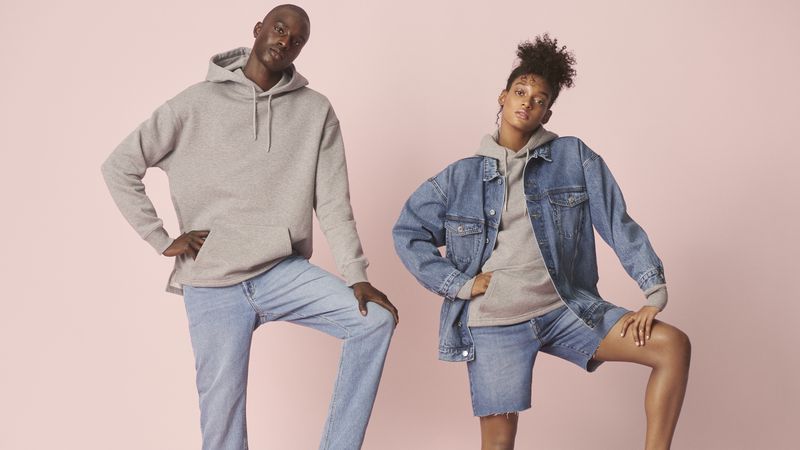
    ashion giant H&M has teamed up with Swedish streetwear brand Eytys to launch a gender neutral fashion collection that will go on sale in selected stores worldwide on January 24. The new unisex collection, which is being designed in collaboration with H&M, will feature footwear, apparel and accessories for men, women and kids.

    The footwear collection will include new takes on a number of Eytys’ signature chunky-soled styles and will come in custom-designed boxes decorated by painter Zoe Barcza.

    “With this collaboration, we hope to introduce the H&M customer to our design philosophy of robust and fuss-free design where function triumphs embellishment and style spans genders,” said Max Schiller, creative director at Eytys.

    “The collection is all about proportions – creating a distinct unisex silhouette by playing around with loose silhouettes and chunky architectural footwear. It’s the Eytys idea of a ‘generic’ look, one that is meant to elevate integrity, attitude and confidence.”

    According to H&M, the Eytys design approach and overall ethos are rooted in the digital age, but also in freedom from restraints based on gender or age.

    “Together the brands have extracted the core of Eytys DNA and developed a unisex collection featuring a no- fuss and fashion-forward range of shoes and clothes.”

    Schiller said H&M admired Eytys’ distinct look and initially approached the company with the idea of creating a shoe collection.

    But after initial brainstorming, it was decided to create a full gender neutral fashion collection – shoes, clothes and accessories – and enable customers to experience the whole brand aesthetic and ethos, he said.

  • Grandeur is likely to be Korea’s 2018 best-selling car

    Grandeur is likely to be Korea’s 2018 best-selling car

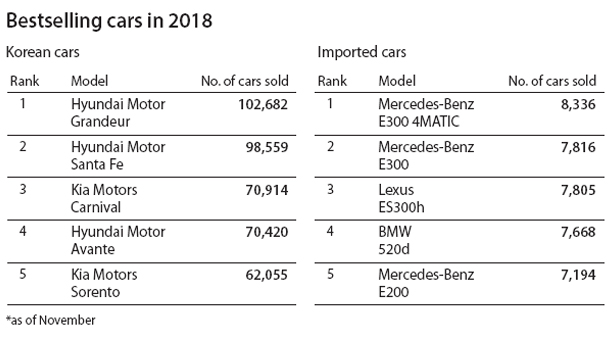
    As a result of its successful attempt to attract younger drivers with a new design and cost effectiveness, Hyundai Motor’s large Grandeur sedan is likely to be the best-selling car in Korea for a second consecutive year. Its hybrid engine largely contributed to the triumph.

    The Grandeur IG sold a total of 102,682 in Korea units as of the end of November, becoming the first and only model this year to surpass the 100,000 mark.

    The sales figure fell slightly, however, compared to the 123,000 units sold last year during the same period.

    Hyundai Motor said the Grandeur’s hybrid engine towed sales for the model. In November, a total of 2,302 Grandeur Hybrids have been sold, the highest monthly sales since its launch.

    Closely trailing behind in second is Hyundai Motor’s large Santa Fe SUV, which climbed up eight spots from No. 10 last year.

    Last year, the Santa Fe sold a total of 54,334 units in Korea. After launching a fully revamped version early this year and riding on a global trend to prefer SUVs, a total of 98,559 Santa Fes have been sold this year, according to the carmaker.

    With the Grandeur pulling in the younger generation, its midsize Sonata sedan is losing ground.

    The Sonata, which was either the bestseller or runner up for more than five consecutive years, tumbled to the third spot last year among all passenger cars in Korea.

    This year, the midsize sedan tumbled to sixth, selling a little more than 60,000 units.

    The top 10 spots were all taken by either Hyundai Motor or its smaller affiliate Kia Motors.

    The other three Korean carmakers – GM Korea, Renault Samsung Motors and SsangYong Motor – struggled to sell their cars to Korean consumers. Internal issues and a lack of new vehicles has largely contributed to the automaker’s struggle.

    SsangYong Motor’s best-selling model was the small Tivoli SUV, which sold a total of 39,330 units as of the end of November. GM Korea’s best-selling car was the compact Spark, which sold a total of 34,616 units during the same period. For Renault Samsung Motors, which didn’t launch any new passenger car model this year, its best-selling model was the QM6 SUV, which sold a total of 28,180 units as of November.

    It was Mercedes-Benz’s year when it came to imports. The E300 4MATIC line topped the ranks as of the end of November, selling 8,336 units followed by the E300 trim with 7,816 units.

    In the third spot was Lexus’ hybrid ES300h, which sold 7,805 units. BMW’s 520d, which was the most popular import last year, was hurt by the burning engine crisis over the summer and fell to fourth spot with 7,668 units in sales.

  • South Koreans spending more on Chinese online stores

    South Koreans spending more on Chinese online stores

    South Koreans are spending more at Chinese online stores, according to credit-card spending data. Purchase records from November 1-26, compiled by the big data centre at Shinhan Card, showed a 9.8 per cent increase from last year in the value of goods bought from overseas internet sites. The number of transactions was up 16.6 per cent year on year.

    Chinese online stores outperformed rivals from other countries. AliExpress took 9.5 per cent of the purchases, up from 6 per cent in 2016 and 6.1 per cent last year. It ranked second after Amazon’s 16.3 per cent.

    Taobao, another Chinese Internet shopping site, grew from 2.3 per cent in 2016 to 3.3 per cent last year and to 4.4 per cent this year, raising it to the third most-used overseas online marketplace. Alibaba made it to the top 10 for the first time this year with 1 per cent.

    The shift is stark when comparing the purchases during Black Friday in the US and Singles Day in China. This year, overseas shopping during Singles Day rose 35 per cent. Black Friday purchases stopped at a 9 per cent gain.

    Data showed 70.8 per cent of purchases during Singles’ Day were for goods priced up to 50,000 won (US$44.32). Shoppers in their 30s and 40s remained the biggest clients, but the number of those in their 20s increased 1.9 percentage points from last year.

  • Demand of women’s athleisure wear growing at a rapid pace globally : Lotto

    Demand of women’s athleisure wear growing at a rapid pace globally : Lotto

    Lotto Sport Italia S.P.A, a major name in international sports industry, is nothing less than a household name in India. The brand is manufactured, retailed and licensed by Sports Station Pvt Ltd (SSIPL) in India. The organization has been instrumental in the brilliant re-launch of the brand Lotto Sports in India, making it available across nation.

    According to Shivam Kataria, Vice President, SSIPL Retail, since Lotto has been in India from a very long period of time, either customers have grown up wearing the brand or are aspiring to wear it. “The brand awareness of Lotto is so strong in India that many customers instead of considering it as an Italian brand, think that it is an Indian brand.”

    Abroad, the brand is associated with football and tennis. But it gained its share of popularity in India in the running segment. Slowly and gradually as the Indian market followed international trends and inclined towards the athleisure segment from performance wear, Lotto has also changed its perspective.

    “The Athleisure market is poised to grow 15-20 percent year-on-year. Seeing the immense scope in the category going ahead, Lotto also started changing its outlook towards the market by expanding into the athleisure segment. However, the running segment, football and tennis shoes remain core to the brand,” states Kataria.

    Explaining it further, he says, “A majority of people across the globe have started participating in sports, not for competition but for their well-being, for interaction and for fun. They want sportswear which can be worn in the morning, afternoon and evening. They want to feel comfortable wearing the same shoes in office as well as to a club, and this is the major reason behind the rising demand of athleisure.”

    Another category which has seen a spike in demand at Lotto is women’s wear.

    “Currently, 30 percent revenue is coming from the women’s segment. We are targeting to close this year with 30 percent contribution from women customer including footwear and apparel,” asserts Kataria.

    Target Consumer

    The brand caters to modern-day consumers who consider fitness a lifestyle. It also focuses towards catering to the needs of serious sports enthusiasts. Lotto is also positioned as a brand, which delivers international standard sports merchandise to Indian sport enthusiasts.

    Omnichannel Strategy

    According to Kataria, there are two ways to go Omnichannel – to have your own website or to partner with various e-commerce players. “We have partnered with various e-commerce players as cost of customer acquisition is quite high with our portal.”

    “Omnichannel is still evolving in India and in the next six months to one year, the entire system around Omnichannel is expected to get cemented,” he explains. Going forward, Lotto is planning to introduce their own e-commerce portal.

    “Store integration from an Omnichannel perspective is underway and we can expect it to be fully functional in six months,” he states The brand, which has men’s footwear as the fastest moving category, gets 25 percent contribution to the overall revenue from online business.

    Future Plans

    At present, the brand has 36 EBOs across major locations in Delhi/ NCR, UP, Haryana, Maharashtra, West Bengal, MP, J&K, Uttrakhand and Gujarat. It has presence in over 200+ MBO’s including Sports Station, Reliance Footprints, Pantaloons, and leading e-com portals like Flipkart, Amazon, Snapdeal and Jabong.

    Elaborating on the expansion plans of the brand, Kataria reveals, “This fiscal, we are planning to open more 15 EBOs in North, East and South regions and add another 25-30 stores next fiscal. Our plan is to double the store count in one year’s time.”

    “In the next fiscal we will be adding 100 more SIS. We are also looking forward into new categories like bags, luggage and light fitness equipment,” he adds.

    At the same time, the brand is expanding the categories like women’s wear and apparel. According to Kataria, Tier I and Metro cities are where Lotto’s business is and Tier II and beyond is where its growth lies.

    The brand, which has been growing on 35-40 percent year-on-year, plans to grow at the same scale this fi scal too.

    “The same store sales growth has been flatish or slightly negative as compared to last year. However, we are expecting to see a good season from January onwards,” he says.

    The sportswear brand, which endorses the best of athletes in the sports arena including major names like Luca Toni, David Ferrer, Agnieszka Radwanska, Carla Suarez Navarro, Kevin Anderson and many more, is targeting Rs 150 crore plus revenue in India.

  • India’s Myntra launches Italian handbag brand Carpisa exclusively on its platform

    India’s Myntra launches Italian handbag brand Carpisa exclusively on its platform

    Myntra has announced the launch of Carpisa, the Italian brand known for its fine collection of handbags, suitcases, wallets and accessories, exclusively on its platform. The brand is being introduced to shoppers in India for the first time exclusively on Myntra, through a range of handbags, crafted for the modern and fashion-conscious women.

    Founded in 2001, Carpisa became one of the leading retailers in the bag, luggage and fashion accessory sector and holds celebrity actor Penelope Cruz as the brand ambassador. The brand is known for its designs, quality of products and above all, represents Italian culture and lifestyle.

    Catering to the affordable luxury segment, products from Carpisa are available at an average price of Rs 3,600, targeting women in the age group of 25-40 years from Sec A and Sec A+ categories in metros and Tier 1 cities.

    The handbags segment that Carpisa caters to in India is growing at a CAGR of over 15 percent, with an annual market potential of US$ 10 billion when combined with luggage and accessories.

    Speaking on the launch, Manohar Kamath, CXO and Head, Myntra Fashion Brands and Category Business, said, “We are delighted to announce the launch of Carpisa exclusively on Myntra. Shoppers in India are increasingly becoming brand and quality conscious and are exploring international brands and designs, clearly looking up to global styles and trends. As a leader in fashion ecommerce, we are focused on making the best of international brands accessible to our customers and Carpisa is the latest entrant, targeted at the fashion conscious women in India.”

    Francesco Pinto, Pianoforte Group International Expansion Director added, “We are extremely delighted to set foot in India in partnership with Myntra. India offers a huge growth opportunity for Carpisa, considering the size of the burgeoning fashion and lifestyle market. We are proud of this association with Myntra that builds a strong launchpad for Carpisa, while also giving the much needed initial thrust to take off.”

  • Thailand: fourth-most-profitable global tourism destination

    Thailand: fourth-most-profitable global tourism destination

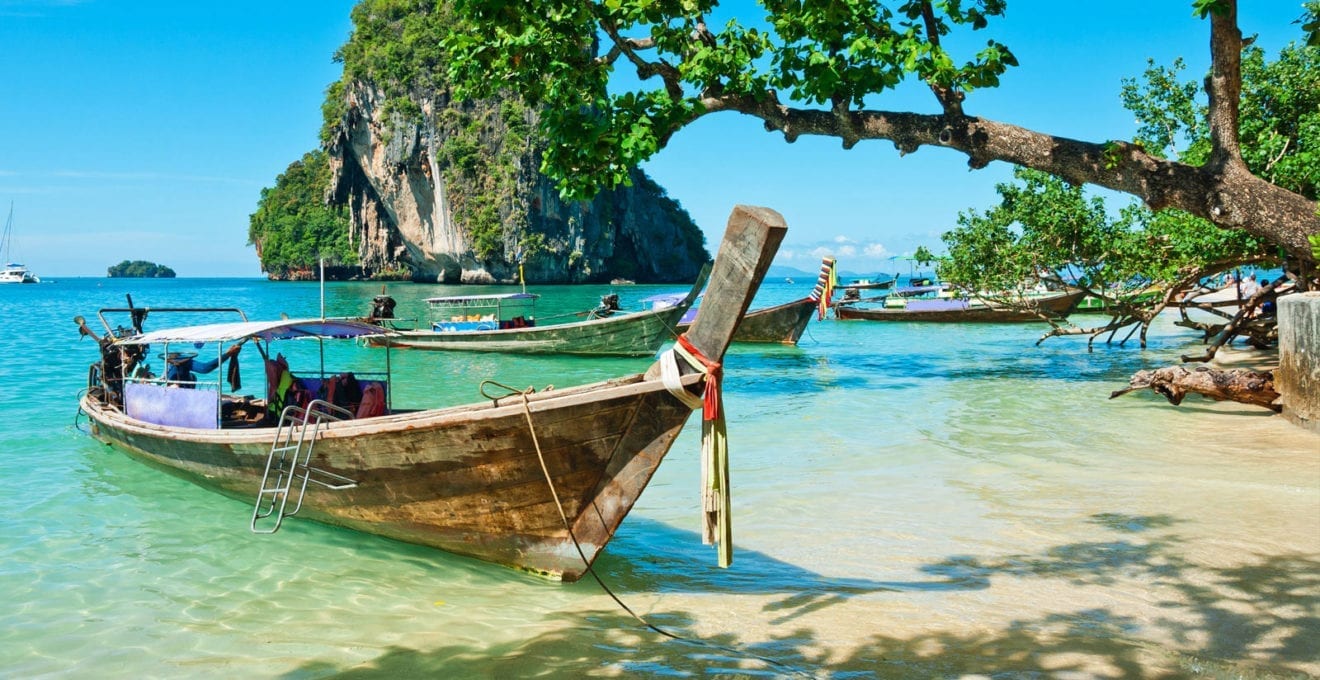
    According to the UN World Tourism Organization, Thailand outranks every other nation in Asia when it comes to tourism spend. Last year, it collected $57 billion in international tourism receipts, nearly doubling Macao ($36 billion), Japan ($34 billion), Hong Kong ($33 billion), and China ($33 billion).

    Globally, the only countries that out-earn Thailand in terms of tourism dollars are France ($61 billion), Spain ($68 billion), and the United States—which handily takes the gold medal, at $211 billion.

    It all comes down to volume. Foreign arrivals could hit 40 million next year, which is more than half the country’s population.

    “In Thailand, you’ve got something for everybody,” says Rebecca Mazzaro, a specialist for bespoke outfitter ATJ. “From the private island with the private villa to amazing street food meals that only cost a couple bucks, it has a diversity and variety that exists in few other markets. It’s no surprise lots of people are going—and spending,” she says.

    A Coming Luxury Boom

    Though gaps in the WTO’s data make it difficult to ascertain the per-visitor spend in each of these countries, given recent and forthcoming developments, that number is likely to be rising.

    “There’s no question that historically Bangkok—and Thailand in general—has always been perceived as a value destination,” says John Blanco, general manager of the forthcoming five-star Capella Bangkok. “But there has been a real effort to shift that perception.”

    Mastercard’s annual Global Destination Cities Index recently ranked Bangkok as the most-visited city in 2017 for the third year in a row.

    The study, based on undisclosed public data sources, rather than cardholder transactions, indicates that travelers shell out $173 for a day in the Thai capital, compared to $537 in Dubai or $286 in Singapore.

    This year, it forecasts travelers will spend an additional 14 percent more.

    By next year, the city will have gained even more opportunities to spend, such as superlative new resorts from Four Seasons, Rosewood, Mandarin Oriental, and Waldorf Astoria, plus a $1.6 billion Bal Harbour-esque mixed-use retail development called Icon Siam.

    “There’s a lot more meat on the bone now,” Blanco says of luxury offerings in the capital.

    Dino Michael, global head of Waldorf Astoria Hotels and Resorts, agrees. “We’ve been noticing the upscaling of Bangkok for a few years,” he tells Bloomberg. “The consumer has become more sophisticated; the dining scene has become more sophisticated.”

    Among Bangkok’s selling points, he says, are strong infrastructure and airlift, a “depth and breadth of tourists,” and an ingrained culture of hospitality. For tourists and brands thinking about charting the region, Michael adds, “It’s world renown—and an obvious starting point.”

    The Pitfalls of Popularity

    There may be a price to pay for popularity, particularly on Thailand’s beaches and islands.

    Already, throngs of partygoers on commercial yachts have done so much damage to the pristine marine ecosystem of Maya Bay—the picturesque backdrop to Leonardo DiCaprio’s 2000 film The Beach—that the area closed for four months earlier this year to recover.

    Unable to bounce back fast enough, it’s now being closed indefinitely. That follows similar measures in nearby Koh Khai and Koh Tachai islands, where coral was being destroyed at devastating rates.

    In Phuket, Mastercard’s 12th-most-visited destination in the world, there’s been a sharp decline in the local turtle population, correlated with the rise in beachside pollution. It’s led 70 hoteliers to band together to promote sustainability and encourage better etiquette among travelers.

    And in Thailand’s north, the dramatic growth of tourism has led to a sobering spike in unethical wildlife tourism, often centering around elephants and tigers.

    The capital, meanwhile, has stayed largely out of the way of these visitor-related troubles—perhaps because it’s hard(er) to justify bad behavior in a city with 40,000 Buddhist temples.

    “Of course, red light tourism is alive and well—like it or not,” says Catherine Heald, founder and chief executive of Asia outfitter Remote Lands. “But ultimately, tourism has really lifted the local economy.”

    At $57 billion a year, there’s no denying that.