Tag: trump

  • Trump’s Truth Social Teams Up with Crypto.com to Revolutionize Online Engagement through Prediction Markets

    Trump’s Truth Social Teams Up with Crypto.com to Revolutionize Online Engagement through Prediction Markets

    Donald Trump’s media company, Trump Media & Technology Group, is set to introduce a new dimension to online engagement through a partnership with Crypto.com. The alliance aims to merge social media, fintech, and prediction trading, a move that could potentially reshape the realm of online interaction.

    Expanding into Prediction Markets

    Trump Media & Technology Group, the organization responsible for the social media platform Truth Social, has recently divulged plans to venture into prediction markets. Leveraging an exclusive collaboration with Crypto.com Derivatives North America (CDNA) – a registered exchange and clearinghouse – Truth Social will pioneer a global first for social media platforms by integrating prediction markets into the user experience.

    The innovative product, dubbed “Truth Predict”, will provide a platform for users to prognosticate a broad spectrum of outcomes. Whether forecasting results of U.S elections or speculating on interest rate decisions, gold prices, inflation figures, or significant sporting events, users will be able to monitor these predictions in real time.

    Transforming Social Dialogue into Market Forecasts

    “Truth Predict will enable our committed users to delve into prediction markets with a reliable network, while also making use of our social media platform to offer entirely unique methods for discussing and comparing their forecasts,” commented Devin Nunes, Chairman and CEO of Trump Media.

    Having amassed over 3 billion dollars in financial assets and achieved a positive cash-flow in its first quarter after becoming a public entity, Trump Media appears to be well-prepared to expand its fintech objectives. Nunes emphasized that the integration epitomizes the company’s aim to “democratize information” and empower users to convert free speech into “actionable foresight.”

    Legally Compliant Approach

    The newly-developed feature will operate within a legally compliant framework courtesy of its partnership with Crypto.com’s CDNA unit. This will provide US users with lawful access to event contracts concerning politics, economics, and financial markets. CDNA’s regulated structure facilitates seamless participation for Truth Social users, effectively bridging the divide between social commentary and capital markets.

    Beta Testing and Global Expansion

    Truth Predict is set to undergo Beta testing on Truth Social ahead of a complete US launch. Upon satisfying regulatory requisites, Trump Media intends to introduce the service on a worldwide scale. If the launch proves successful, Truth Predict could signify the dawn of a new era in online user interaction, merging real-time opinion sharing, market sentiment, and financial involvement on one unified platform.

    Questions & Answers

    What is the primary objective of Trump Media’s partnership with Crypto.com?
    The main aim is to merge social media, fintech, and prediction trading, potentially redefining the online engagement landscape.

    What will the new product “Truth Predict” offer to the users?
    “Truth Predict” will enable users to forecast a wide range of outcomes and monitor these predictions in real time.

    What is the long-term plan for the launch of “Truth Predict”?
    After Beta testing on Truth Social and a full US launch, Trump Media plans to roll out the service globally, subject to regulatory compliance.

  • Vietnam And U.S. To Advance Trade Agreement Talks In Upcoming 2025 Meetings

    Vietnam And U.S. To Advance Trade Agreement Talks In Upcoming 2025 Meetings

    Vietnamese representatives are set to visit the United States in October and November 2025, with the goal of progressing discussions and finalizing a balanced trade agreement. Deputy Minister of Industry and Trade, Nguyen Sinh Nhat Tan, revealed this during a recent press conference, pointing out that Vietnam has been diligently working to expedite negotiation proceedings.

    Negotiation Principles and Goals

    The ongoing negotiations are being guided by principles of openness, constructiveness, equality, mutual respect, independence, self-reliance, and shared benefits. These principles consider the level of development of both nations. The ultimate aim is to foster stable and harmonious economic, trade, and investment relationships, in accordance with the Comprehensive Strategic Partnership between Vietnam and the U.S.

    End-of-Year Plans and Measures

    Bui Huy Son, Director of the Department of Planning, Finance and Enterprise Management at the Ministry of Industry and Trade (MoIT), stated the department is committed to meeting set targets and making new strides in the remaining months of the year. The MoIT is set to enforce a resolution from the Politburo that was issued on January 24, 2025, regarding international integration in a new context.

    Simultaneously, the MoIT is carefully observing changes in the U.S. tariff policy and is actively working with relevant authorities from both countries to identify and resolve emerging issues. This is in an effort to limit the risk of unfavorable trade measures being imposed on Vietnamese exports.

    Future Trade Negotiations

    The MoIT is prioritizing the commencement of Free Trade Agreement (FTA) discussions with the Southern Common Market (Mercosur) and the Gulf Cooperation Council (GCC) in the fourth quarter of 2025. It is also planning to initiate talks with Pakistan to broaden export opportunities, and aims to conclude FTA negotiations with the European Free Trade Association (EFTA) by the end of the year.

    Supporting Domestic Enterprises

    The MoIT is committed to addressing issues within domestic enterprises to decrease dependence on the FDI sector. It plans to continue working closely with businesses through regular consultations with industry associations and local authorities, thus providing timely policy advice to the Government and ensuring appropriate support.

    The department will also step up efforts around trade promotion, supply-demand connection, and product marketing to assist Vietnamese companies in reaching new customers and maintaining robust relations with traditional partners, especially in the U.S. market.

    The MoIT reiterated its commitment to enforcing origin-related regulations through inspections, licensing, and violation settlements, while also reinforcing supervision to combat trade remedy evasion and origin fraud.

    Questions & Answers

    What is the purpose of the Vietnamese delegation’s visit to the U.S. in late 2025?
    The delegation aims to progress discussions and finalize a reciprocal trade agreement with the United States.

    What principles guide the ongoing trade negotiations between Vietnam and the U.S.?
    The principles of openness, constructiveness, equality, mutual respect, independence, self-reliance, and shared benefits guide the negotiations, with the development levels of both nations taken into consideration.

    What are the MoIT’s plans for supporting domestic enterprises in Vietnam?
    The MoIT plans to address limitations within domestic enterprises, reduce reliance on the FDI sector, and work closely with businesses for regular consultations. The department also plans to intensify efforts around trade promotion, supply-demand connection, and product marketing.

  • Australian Beef Exports Surge Amid Us-china Trade Tensions: A Shift In Global Market Dynamics

    Australian Beef Exports Surge Amid Us-china Trade Tensions: A Shift In Global Market Dynamics

    The Australian beef industry has recently experienced a surge in exports to China, taking market share formerly held by the US. This shift has transpired in the wake of US President Donald Trump’s return to the White House and the ensuing trade tensions between the US and China. The shift of trade from the US to Australia has channelled hundreds of millions of dollars that were once funneled into the US cattle industry into Australian coffers.

    A Shift in Beef Trade

    US beef exports to China, which were valued at approximately A$182 million per month, experienced a significant decline when permits at several American meat facilities were allowed to expire by Beijing in March. This situation was further exacerbated by the trade war initiated by Trump. Other agricultural exports from the US to China have also taken a hit since Trump resumed power. The most notable among these is soybeans, with US farmers missing out on billions of dollars’ worth of exports in the current harvest season.

    In addition to these factors, US beef exports have generally been on a downward trend in recent years due to drought conditions shrinking the national cattle herd, leading to reduced production and record high prices. However, the slump in trade with China has been both more sudden and severe.

    According to Chinese trade data, the value of US beef exports to China dropped dramatically to just $12 million in July and $14 million in August, compared to $179 million and $189 million during the same period a year earlier.

    Australia’s Beef Boom

    Simultaneously, Australia has seen a surge in its beef exports to China. These shipments have soared from $212 million a month in the two years leading up to March to $335 million in July and $342 million in August. From April through August, US beef exports to China were valued at $587 million less than if trade had remained at the average levels from the previous two years. During this same period, Australian shipments were worth $474 million more.

    While Brazil, China’s largest beef supplier, has also increased its exports in recent months, Australia has reaped the most benefits due to its grain-fed beef, which most closely resembles US products.

    Matt Dalgleish, a meat and livestock analyst at Australian consultancy firm Episode 3, noted that this shift has been beneficial for Australia, helping to drive up cattle prices.

    The Future of Beef Trade

    Despite these changes, there is potential for US beef exports to rebound. Trade negotiations between Beijing and Washington could potentially end the current impasse, according to Joe Schuele, a spokesperson for the US Meat Export Federation.

    Even in the case of a trade agreement being reached, it could still take several years for the US to regain its former market share, according to Dalgleish. This is due in part to Australia’s beef production reaching an all-time high and its meat being significantly cheaper than that of the US.

    Adding another layer of complexity to the situation is an ongoing investigation by Beijing into beef imports, which could potentially result in trade restrictions to address a surplus of beef in China. The outcome of this investigation is expected to be released by November 26.

    Questions & Answers

    What caused the shift in beef exports from the US to Australia?
    This shift can be attributed to a combination of expired permits for American meat facilities, initiated trade war by President Donald Trump, and drought conditions in the US which led to reduced beef production.

    How has this shift impacted Australia’s economy?
    This shift has resulted in a boom for the Australian beef industry, driving up cattle prices and channeling hundreds of millions of dollars into the Australian economy.

    What could potentially alter the current state of beef trade?
    Potential changes in the beef trade could be prompted by the ongoing Beijing investigation into beef imports and the outcome of ongoing trade negotiations between the US and China.

  • Trump’s Visa Fee Changes Ignite Offshoring Discussions Among Leading American Tech Companies

    Trump’s Visa Fee Changes Ignite Offshoring Discussions Among Leading American Tech Companies

    U.S. President Donald Trump’s recent overhaul of the H-1B visa program is causing significant ripples across the tech sector, particularly in the recruitment strategies of U.S. firms that rely heavily on international talent. By introducing a staggering $100,000 fee for new applicants, the administration has unintentionally set off a wave of uncertainty among companies and tech entrepreneurs, leaving them scrambling to adapt their workforce plans.

    A Shift in Hiring Landscape

    While the hefty new fee applies solely to prospective applicants and not to current visa holders as initially communicated, this shift has already prompted leaders in the tech world to reconsider their hiring pipelines. “We’ve had conversations where corporate clients are saying this new fee is unmanageable, leading us to explore opportunities in other countries that can offer skilled talent more affordably,” noted Chris Thomas, an immigration attorney from Holland & Hart. Some of these discussions are taking place within the walls of Fortune 100 companies that are now rethinking their operational strategies in light of these changes.

    Statistics Reveal Deeper Concerns

    In 2024, approximately 141,000 new H-1B applications were approved, according to Pew Research. While Congress caps the new visa count at 65,000 annually, this cap can be bypassed for universities and certain categories, allowing for higher overall approvals—many of which are for computer-related positions. Even before the fee increase, companies were eyeing an expansion in India as a viable alternative; in fact, Accenture is reportedly looking to establish a new campus in Andhra Pradesh aimed at creating around 12,000 jobs. This strategic pivot underscores a growing tendency to favor markets with lower operational costs.

    Jobs vs. Visas: A Complex Debate

    Critics of the H-1B program argue it has kept wage growth stagnant and limited job opportunities for U.S. graduates, but the introduction of the new fee could paradoxically end up discouraging the very innovation it aims to foster. For many startups, the financial strain of the fee is an albatross around their necks. Sam Liang, the co-founder of AI company Otter.ai, pointed out that companies might feel compelled to cut back on H-1B hires, shifting instead toward outsourcing work to nations like India where operational costs are cheaper.

    Impact on Startups and Innovation

    While some commentators align with conservative views promoting the administration’s immigration crackdown, figures like Netflix co-founder Reed Hastings have expressed support for the new structure, arguing it could enhance the visa allocation process for top-tier jobs. However, venture capitalist Deedy Das warns that sweeping changes rarely yield positive outcomes and will likely hit startups hardest. “Big tech firms might absorb the cost easily, but it’s the smaller entities that could be pushed out of the market altogether,” he noted.

    The very essence of innovation is at stake as well: over 50% of U.S. startups valued at $1 billion or more have had immigrant founders, according to a 2022 report. As concerns mount, some startups are eyeing legal challenges to contest the imposition of these fees, betting that courts will intervene to mitigate the impact before hiring patterns are irreversibly altered. “If this goes unchallenged, we may see a decline in talent from around the globe,” remarked Bilal Zuberi, founder of Red Glass Ventures and a former H-1B visa holder. And indeed, the idea of losing a wealth of global talent is a poignant reminder of how interconnected the tech landscape has become.

    Questions & Answers

    What are the main changes to the H-1B visa program announced by President Trump?
    The newly introduced $100,000 fee applies exclusively to new applicants, raising substantial concerns among tech firms that rely on international talent for recruitment.

    How is the new fee impacting tech companies?
    Many companies are reconsidering their hiring strategies, with some expressing the need to explore recruitment in countries like India due to the financial burden imposed by the new fee.

    Why are startups particularly concerned about these changes?
    Startups typically operate on tighter budgets and face greater challenges absorbing the costs associated with the new visa fees, putting their ability to hire skilled workers at serious risk.

  • U.S. Tariffs Take a Toll on Financial Stocks: What You Need to Know

    U.S. Tariffs Take a Toll on Financial Stocks: What You Need to Know

    The recent imposition of a staggering 39 percent import tariff on Swiss products by the U.S. has sent ripples through the Swiss economy, and while banks and insurance firms may not be the immediate targets of these tariffs, the repercussions are making their presence felt across the financial landscape.

    The Swiss stock market experienced a notable downturn following the announcement, with the Swiss franc also sliding against both the euro and the dollar. However, the market’s slump cannot be attributed solely to U.S. tariffs. A public holiday closure on Friday meant that the Swiss stock exchange only now has the opportunity to reckon with negative shifts seen in the U.S. and European markets, which were already beleaguered by disappointing labor market data.

    As trading resumed, the Swiss Market Index (SMI) was down 0.7 percent at 11,755 points, a slight recovery from sharper declines earlier in the session. The Swiss Leader Index (SLI), which represents Switzerland’s 30 largest companies, was also down 0.65 percent at 1,956 points.

    Financial Stocks Feel the Squeeze

    Among the hardest-hit stocks in the SLI are those sensitive to economic fluctuations, with staffing company Adecco leading the pack with a 2.8 percent drop, followed by ABB at 1.5 percent and Sika down 1.6 percent. Financial stocks are not immune either, as seen with Julius Baer’s shares which fell by 2.3 percent to CHF 53.96, and UBS dipping 1.1 percent to CHF 30.11. Vontobel likewise succumbed to market pressures, declining 0.7 percent to CHF 59.00.

    In a spark of unexpected resilience, Partners Group staged a modest recovery, now just 0.3 percent lower at CHF 1,098.50, after plummeting to CHF 1,056 earlier in the day. In the insurance sector, the performance was mixed; with Swiss Re down by a mere 0.2 percent, Swiss Life holding steady, and Zurich Insurance seeing a small gain of 0.3 percent.

    Hope Flickers Amidst Uncertainty

    The media has described the tariffs as a “bludgeon,” “hammer,” or even “shock,” reflecting the heavy toll they have taken on both the Swiss economy and its political climate. For those who once viewed Donald Trump’s economic policies as a beacon of hope for liberalism, this swift about-face is undoubtedly causing reconsideration.

    Amidst the turmoil, there remains a glimmer of hope that ongoing negotiations could lead to a reduction in the tariff rate on Swiss imports, potentially aligning closer to the 15 percent rate that is applied to EU goods. In a world characterized by uncertainty, the prospect of such outcomes—though it often feels like catching smoke with bare hands—cannot be ruled out.

    Questions & Answers

    What impact will the U.S. tariffs have on the Swiss financial sector?
    Although Swiss banks and insurance companies aren’t the direct targets of the tariffs, the overall economic strain is expected to affect the financial sector indirectly.

    How did the Swiss stock market respond to the tariffs?
    The Swiss stock market faced immediate declines following the tariff announcement, with the SMI dropping 0.7 percent shortly after trading resumed.

    Is there potential for tariff reductions in the future?
    There is hope that ongoing discussions may lead to a reduction in tariff rates, possibly aligning with the rates imposed on EU goods.

  • Trump Ends Duty-Free Exemption for All Foreign Packages Starting August 29th: What Shoppers Need to Know

    Trump Ends Duty-Free Exemption for All Foreign Packages Starting August 29th: What Shoppers Need to Know

    In a significant shift in U.S. trade policy, the Biden administration has announced that duty-free shipping for low-value commercial packages from all countries will be suspended effective August 29. This move, aimed at curbing the influx of fentanyl precursor materials entering the U.S., underscores a broader strategy to tighten border controls and address issues related to illegal drug imports.

    Cracking Down on De Minimis Shipments

    The suspension of duty-free privileges specifically targets what are known as de minimis shipments, which allow small packages valued at $800 or less to enter the country without incurring tariffs. The White House’s decision reflects growing concerns over the soaring number of these shipments entering the U.S. over the past decade, creating loopholes that can be exploited by smugglers.

    The Implications for Retailers

    This change poses new challenges for retailers and e-commerce platforms that rely heavily on cross-border sales. As online shopping continues to gain momentum, especially in the wake of the COVID-19 pandemic, retailers must now navigate the complexities of increased shipping costs and regulatory scrutiny. While consumers may soon face higher prices, one can only hope their shopping carts don’t become the next treasure trove of tariffs!

    Addressing Tax Loopholes and Fentanyl Concerns

    In addition to combatting drug smuggling, the Biden administration is also targeting tax loopholes that have arisen in the digital marketplace. By imposing stricter regulations on de minimis shipments, officials aim to establish a level playing field for U.S. retailers, ensuring that reforms also contribute to broader fiscal goals.

    Looking Ahead

    The impending regulatory changes will not only reshape the landscape of international shipping but also prompt retailers to reevaluate their logistics strategies. The administration’s comprehensive approach signals a move toward greater accountability in global trade practices while advancing public safety measures.

    Questions & Answers

    How will the suspension of duty-free shipping affect consumers?
    Consumers are likely to see increased prices on low-value packages, as they will no longer benefit from duty-free shipping, making cross-border purchases less appealing.

    What are de minimis shipments?
    De minimis shipments refer to small packages valued at $800 or less that can enter the U.S. without incurring duties, often used to expedite e-commerce transactions.

    Why is this move significant for U.S. retailers?
    This policy is designed to mitigate unfair competition from international sellers who benefit from tax loopholes, ultimately aiming to create a more equitable market for U.S. businesses.

  • Trump Imposes Heavy Tariffs on Countries, Slapping 35% Duty on Canadian Imports

    Trump Imposes Heavy Tariffs on Countries, Slapping 35% Duty on Canadian Imports

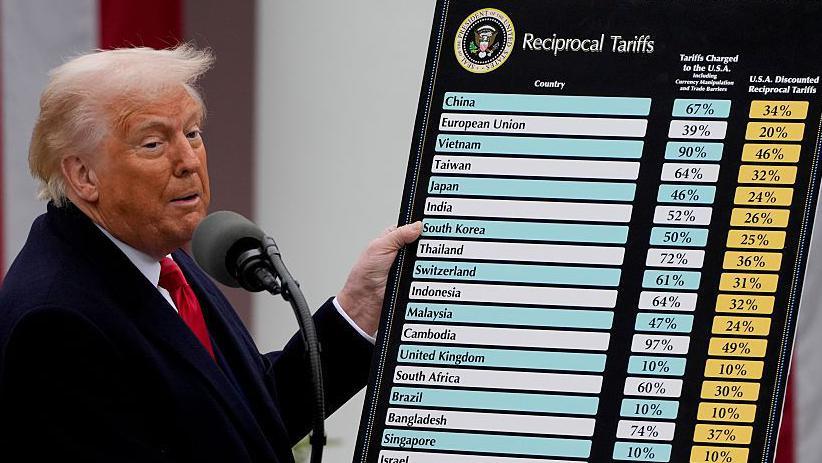
    In a bold move that echoes his unyielding stance on trade, President Trump has unveiled an executive order imposing new tariffs ranging from 10% to 41% on imports from 69 trading partners, just hours ahead of a critical deadline. This development places additional pressure on countries that have either failed to negotiate favorable terms or have offered what Trump deems insufficient trade concessions. As a blanket measure, goods from countries not specified will now face a 10% tariff rate.

    The reasoning behind this order stems from Trump’s assertion that many trading partners have not aligned adequately with U.S. economic and national-security interests, stating, “they have offered terms that, in my judgment, do not sufficiently address imbalances in our trading relationship.” It’s a strategy that could leave many retailers scratching their heads as they juggle the implications of these tariffs in the marketplace.

    In a notable shift regarding Canada, Trump announced a separate increase in tariffs on Canadian goods related to fentanyl to 35%, up from a previous 25%. This decision underscores a growing divide over cooperation on drug trafficking issues. In stark contrast, he has granted Mexico a respite from imminent higher tariffs, allowing an additional 90 days for discussions towards a comprehensive trade agreement.

    A U.S. official conveyed optimism about upcoming trade agreements, remarking, “We have some deals,” and adding that they wish to avoid jumping the gun in announcements. This wave of negotiations highlights the mixed landscape of international trade as relations with Canada and Mexico diverge significantly. While a summit telephone call between Trump and Mexican President Claudia Sheinbaum led to an agreement avoiding a 30% tariff increase on compliant goods, it seems that Canada’s diplomatic efforts fell short of expectations.

    Approximately 85% of all U.S. imports from Mexico meet the USMCA’s rules, thus evading a hefty 25% tariff tied to fentanyl concerns. Trump also confirmed that the U.S. intends to maintain a hefty 50% tariff on Mexican steel, aluminum, and copper, in addition to those on autos that don’t meet USMCA standards.

    A Deal with South Korea but Discord with India

    Meanwhile, South Korea has reached an agreement to accept a 15% tariff on automotive exports to the U.S., incentivized by a tantalizing pledge to invest $350 billion in U.S. projects selected by Trump. This deal contrasts sharply with India’s precarious position, where negotiations have stalled, and a potential 25% tariff looms due to disputes over agricultural market access, combined with threats surrounding India’s significant Russian oil imports.

    The mounting tariffs have begun to elicit reactions from consumers, with recent reports showing a rise in prices for home goods, recreational items, and clothing—an unwelcome trend many aren’t ready for. In June, the Commerce Department reported a 1.3% spike in home furnishings prices, with early indications that these tariffs are affecting consumers’ wallets more than just on paper.

    Controversy and Legal Challenges Ahead

    In a dramatic uptick, Trump targeted Brazil with a steep 50% tariff while also narrowing the categories exempt from these tariffs, further amplifying tensions with Latin America’s largest economy. As these trade policies unfold, they’re simultaneously landing in the crosshairs of judicial scrutiny, as federal appeals court judges question the legality of Trump’s reliance on the International Emergency Economic Powers Act for justifying these broad measures. Observers are eagerly awaiting developments as the court evaluates whether these tariffs violate executive authority.

    As the U.S. grapples with its trade relationships amid a growing deficit, both Treasury Secretary Scott Bessent and U.S. negotiators remain cautiously optimistic about a deal with China, which is teetering on a precarious deadline. With preliminary agreements already in the works, the real question is whether all parties can expedite negotiations before tensions flare again.

    Questions & Answers

    What key countries are affected by Trump’s new tariffs?
    The new tariffs target 69 trading partners, including heightened rates on Canadian goods and a separate arrangement with South Korea.

    How are these tariffs impacting consumer prices?
    Recent data indicates a rise in consumer goods prices, particularly in home furnishings and clothing, reflecting the economic influence of these tariffs.

    What legal challenges are surrounding Trump’s tariff initiatives?
    Judicial skepticism has emerged regarding Trump’s use of emergency powers to impose tariffs, with federal judges questioning the extent of his executive authority during ongoing legal proceedings.

  • Trump Announces Suspension of Duty-Free Exemption for Foreign Packages Starting August 29

    Trump Announces Suspension of Duty-Free Exemption for Foreign Packages Starting August 29

    In a significant development for international shipping, duty-free shipments to the U.S. for low-value commercial packages will come to a halt for all countries starting August 29, according to an announcement from the White House on Wednesday. This decision particularly affects the “de minimis” exemption, which had previously allowed packages valued under $800 to enter the U.S. without incurring customs duties.

    The move is part of a broader strategy by the Trump administration to address what it describes as rampant duty evasion, and it also targets the importation of synthetic opioids. The suspension of this exemption aims to crack down on the increasing flow of illicit drugs entering the country, a situation that has raised significant health and safety concerns.

    While industry stakeholders weigh the implications of this change, the new regulation might come as a surprise to many small businesses and shoppers who have enjoyed the ease of duty-free imports. It’s a stark reminder that even the smallest packages can bear hefty consequences in the complex world of international trade.

    Questions & Answers

    What is the “de minimis” exemption?
    The “de minimis” exemption allows low-value packages under $800 to be imported into the U.S. without incurring customs duties, simplifying the process for international shoppers and businesses.

    Why has the U.S. government decided to suspend this exemption?
    The suspension is aimed at combating duty evasion and addressing the influx of synthetic opioids, which poses serious public health risks.

    How might this affect businesses and consumers?
    Businesses that rely on international shipments for low-value products may see increased costs and delays due to the new regulations, while consumers could face higher prices or be deterred from purchasing goods from abroad.

  • US Tariffs Set to Launch on August 1: What Retailers Need to Know

    US Tariffs Set to Launch on August 1: What Retailers Need to Know

    The United States is on the verge of finalizing a series of trade agreements, with higher tariff rates set to be communicated to various countries by July 9, as announced by President Donald Trump on Sunday. These new tariffs are scheduled to come into effect on August 1.

    Trump Signals Tariff Changes Amid Trade Deals

    Trump’s announcement follows his earlier unveiling of a base tariff rate of 10% applicable to most nations, with additional duties that could soar to 50%. Initially scheduled for July 9, this new timeline offers countries a fleeting three-week pause to prepare.

    As reporters gathered before Trump returned from a weekend golf outing in New Jersey, he reiterated the August 1 deadline for higher tariffs, although it remains uncertain whether all tariff rates will rise simultaneously on that date.

    Commerce Secretary Confirms Rates in Flux

    To clarify, Commerce Secretary Howard Lutnick acknowledged that the elevated tariffs would indeed take effect on August 1, adding that Trump is actively negotiating the specific rates and agreements. Trump later posted on his Truth Social account, revealing that tariff notifications would start rolling out at noon ET on Monday.

    In a seemingly casual yet crucial update, U.S. Treasury Secretary Scott Bessent told CNN that several significant trade agreements would soon be announced, noting positive developments in discussions with the European Union.

    In a move reminiscent of a game of poker, Trump plans to send letters to about 100 smaller trading partners, primarily nations with limited trade ties to the U.S., informing them of the impending tariff hikes.

    Bessent warned, “President Trump’s going to be sending letters to some of our trading partners saying that if you don’t move things along, then on August 1 you will boomerang back to your April 2 tariff level.”

    Deadline Urgency and Future Negotiations

    The air is charged with anticipation as Kevin Hassett, director of the White House National Economic Council, expressed optimism about the potential for negotiations to extend beyond the deadline. “There are deadlines, and there are things that are close, and so maybe things will push back past the deadline,” he commented, leaving the ultimate decision in Trump’s hands.

    As the clock ticks closer to August, the outcome of these trade negotiations could reshape the landscape of global commerce, with far-reaching implications not just for the United States but also for its trading partners across Asia and beyond.

    Questions & Answers

    What is the significance of the August 1 tariff deadline?
    The August 1 deadline represents a critical turning point as the U.S. prepares to implement higher tariffs in the face of ongoing trade negotiations, impacting various trading partners.

    How are smaller countries reacting to the tariff notifications?
    Many smaller countries, which typically have limited trade with the U.S., are likely reassessing their strategies to avoid the escalating tariff rates and may seek to negotiate favorable terms quickly.

    What role do negotiations with the European Union play in this context?
    Negotiations with the European Union are pivotal, as the U.S. aims to finalize key trade agreements, potentially easing tensions and influencing broader trade relations.

  • PM Kicks Off $1.5B Trump Organization Hotel and Golf Project in Northern Vietnam

    PM Kicks Off $1.5B Trump Organization Hotel and Golf Project in Northern Vietnam

    The exciting development known as Trump International Hung Yen is set to transform over 990 hectares along the scenic Red River, encompassing seven communes in Khoai Chau District. This ambitious project will feature four distinct subzones, including a luxurious eco-residential area with a golf course for 3,500 residents, another eco-residential community with an ecological golf course for 1,800 residents, a bustling commercial and service urban zone designed to accommodate 29,700 residents, and vibrant green spaces featuring themed parks.

    With a whopping investment of nearly VND 40 trillion (over $1.5 billion), this project is on track for completion by the second quarter of 2029 and will operate under a 50-year license. The vision behind this endeavor is to unleash the full potential of the local area, leveraging its strategic position along the Red River tourism corridor that links Hung Yen with Hanoi and the broader northern region.

    Trump International Hung Yen marks a significant moment for Vietnam, positioning the country firmly on the global luxury real estate and resort stage. It symbolizes a robust confidence from international markets in Vietnam’s long-term potential in the high-end property sector while serving as a beacon of ambition and integration for both Hung Yen and Vietnam as a whole.

    During a recent groundbreaking ceremony, Prime Minister Chinh emphasized that this project showcases the faith foreign investors have in Vietnam—particularly American firms. Giants like Intel, Nike, Apple, Boeing, and Nvidia have ramped up their investments in the country, reflecting a broader confidence in Vietnam’s growth trajectory.

    This project promises to not only accelerate Hung Yen’s development but also enhance its international reputation. It is expected to introduce advanced management technologies, create job opportunities for local communities, and bolster the enduring relationship between Vietnam and the United States.

    Chinh directed relevant ministries and agencies to offer robust support to Hung Yen authorities and investors, aiming for a timely completion within two years, just in time for Vietnam to host the APEC 2027 Economic Leaders’ Week. He noted that elevating Hung Yen’s service industry would significantly deepen the Vietnam-U.S. partnership.

    The Prime Minister’s speech recalled U.S. President Donald Trump’s visits to Vietnam during his first term, which were met with warm enthusiasm from the Vietnamese people, reinforcing the strategic importance of their mutual relationship in fostering regional and global stability and growth.

    Acknowledging that the groundbreaking is merely the first step, Chinh pointed out the challenges ahead regarding land clearance and construction. He called on all stakeholders to work collaboratively to overcome obstacles and ensure both progress and quality.

    In a nod to the local community, he expressed gratitude to residents who have made sacrifices for the project’s success, urging continued support. He insisted that local authorities and investors safeguard people’s livelihoods and ensure resettlement areas offer enhanced living conditions.

    PM Chinh praised Hung Yen, historically known as Pho Hien, as a region of great cultural heritage and revolutionary spirit, once a thriving trading port second only to the capital. He expressed confidence in Hung Yen’s ability to leverage its rich legacy to achieve rapid progress across all sectors, aligning with the nation’s vision for a new era of growth.

    Dang Thanh Tam, Chairman of the Kinh Bac City Development Holding Corporation, assured that local contractors and partners would swiftly advance the project, aiming for completion within two years for the Trump Organization to take over its management. Eric Trump, Executive Vice President of the Trump Organization, echoed his enthusiasm for investing in one of the world’s most dynamic markets, emphasizing that this endeavor represents not just a notable project but a tribute to Vietnamese culture and a meaningful contribution to the future.

    The Chairman of the Hung Yen provincial People’s Committee, Tran Quoc Van, welcomed the Trump Organization’s investment, committing to facilitating land clearance, handling administrative processes efficiently, and collaborating closely with investors to swiftly tackle any issues that may arise.

    Questions & Answers

    What is the main purpose of the Trump International Hung Yen project?
    The project aims to unlock the area’s potential and promote economic growth, particularly by developing luxury residential spaces and enhancing the local tourism corridor.

    What is the expected completion date for this massive development?
    The project is scheduled for completion by the second quarter of 2029, with a targeted two-year timeline for key phases leading up to the APEC 2027 Economic Leaders’ Week.

    How does this project impact local residents?
    The project is expected to create job opportunities, enhance management technologies, and ensure the resettlement areas offer improved living conditions for those affected.

  • Trump Organization Secures Approval for $1.5B Hotel and Golf Development in Northern Vietnam

    Trump Organization Secures Approval for $1.5B Hotel and Golf Development in Northern Vietnam

    A vast urban, eco-tourism, and golf complex spanning 990 hectares in northern Vietnam’s Hung Yen Province has received the green light for a whopping $1.5 billion investment. This ambitious project, approved by Deputy Prime Minister Tran Hong Ha, promises to reshape the landscape of the area.

    Spanning the Green

    Nestled along the banks of the Red River, the project will feature not one, but two stunning golf courses with 36 and 18 holes, respectively. Beyond the greens, the expansive complex will include a vibrant residential area and an exciting theme park, ensuring a diverse range of activities for visitors and residents alike. With construction set to kick off in the second quarter and expected to conclude by 2029, the excitement around this development is palpable.

    Guiding Hands

    Hung Yen authorities are now in charge of selecting a developer while overseeing efficient land management. The Ministries of National Defense and Public Security will also provide guidance to ensure that security protocols are firmly in place, particularly regarding foreign ownership of housing.

    The project is the brainchild of a partnership between a subsidiary of Kinh Bac City, a renowned property developer, and The Trump Organization, the global business empire founded by former President Donald Trump. Known for their portfolio of hotels, golf courses, and commercial properties worldwide, The Trump Organization has a notable presence in Asia, with golf courses in Dubai, Indonesia, and Oman, as well as properties in South Korea, the Philippines, and India.

    Building Dreams

    Kinh Bac City, along with its subsidiaries, oversees over 5,000 hectares of industrial zones and 900 hectares of urban development, luring in more than $5 billion in foreign investments annually. The real estate market in Hung Yen, located just over 60 kilometers southeast of Hanoi, has recently become a hotspot for major developers, including Ecopark, Vinhomes, Masterise, and CapitaLand. Last year, the province achieved a record-breaking nearly $4 billion in foreign direct investment.

    With this ambitious development on the horizon, Hung Yen is poised to become a vibrant destination for both investors and tourism lovers, promising to bring a fresh dynamic to the region. Who knew that a golf course could pave the way for so much excitement?

    Questions & Answers

    What does the $1.5 billion project in Hung Yen include?
    The project encompasses a 990-hectare urban complex featuring two golf courses, a residential area, and a theme park, transforming the region’s tourism and living landscape.

    Who is responsible for overseeing the project’s development?
    Local Hung Yen authorities will select a developer and manage land resources, with guidance from the Ministries of National Defense and Public Security regarding security and foreign housing ownership.

    What is Kinh Bac City’s role in the project?
    Kinh Bac City, alongside its subsidiaries, is a key player in the development, managing substantial industrial and urban areas while attracting significant foreign investment and collaborating with The Trump Organization.

  • Eric Trump Accuses Banks of Sabotaging Retail Growth Strategies

    Eric Trump Accuses Banks of Sabotaging Retail Growth Strategies

    Eric Trump Advocates for Crypto Revolution at Token2049 in Dubai

    In a compelling presentation at the cryptocurrency forum Token2049, held in Dubai, Eric Trump, Executive Vice President of The Trump Organization, delivered a fervent endorsement of cryptocurrencies, highlighting significant flaws in traditional banking systems.

    Traditional Banking Under Fire

    Trump’s critique focused on the outdated financial transaction system known as SWIFT, which he argued operates at a sluggish pace compared to the rapid capabilities of cryptocurrency. He emphasized how blockchain technology allows for instantaneous cashless payments via smartphones, proclaiming that virtual currencies like Bitcoin render traditional banking “obsolete.”

    A Personal Struggle with Banking

    Sharing insights from his entrepreneurial experiences, Trump detailed the frustrations he encounters with conventional banking practices. “Every Friday, I trace wire transfers, and I know I’m not alone in this struggle,” he stated. He further condemned mainstream financial institutions, like JP Morgan Chase, for their rigid policies, expressing concerns about their power to freeze accounts and impact lives with minimal notice.

    Trump posited that such inefficiencies could lead to the extinction of major banks within the next decade if they fail to adapt. He claimed that the so-called “cancel culture,” which seeks to silence conservative voices, finds an ally in the traditional finance sector.

    Emphasizing Crypto Freedom

    Trump’s dynamic address resonated with the audience at Dubai’s Madinat Jumeirah, where he rallied support for the decentralized finance platform World Liberty Financial. “Crypto means freedom,” he asserted, as he encouraged attendees to embrace the potential of digital currencies. Despite a moment of silence when he acknowledged the U.S. dollar’s dominance, attendees applauded his vision for the future of financial freedom.

    Dubai’s Forward-Thinking Approach

    Acknowledging the efforts of Dubai and the Gulf Emirates in promoting digital currencies, Trump praised the region’s proactive stance on making cryptocurrency socially acceptable. His closing remarks underscored a mission intertwined with ideals of financial liberation.

    The next Token2049 summit is set to take place on October 1-2 in Singapore, marking a continuation of the global dialogue surrounding the future of digital finance.

    This passionate endorsement by Eric Trump highlights the ongoing shift in consumer trends toward cryptocurrencies, exemplifying a potential inflection point within the retail and financial sectors. As consumer demand for faster, more efficient methods of transaction continues to surge, the implications for traditional banking could be profound, shaping a new landscape for how transactions are handled in the future.

  • Can TikTok survive under Trump?

    Can TikTok survive under Trump?

    Whatever happens in the end – I mean, if TikTok gets banned in the US or not – many people will be disappointed. If TikTok gets banned in the Land of the free and the home of the brave, some will be concerned about the freedom of speech issue (and rightly so); but many will just mourn the loss of the 5-second funny cat videos.

    If TikTok does not get banned, many people will also be annoyed; they consider TikTok to be a soul-sucking Dementor’s Kiss, a kryptonite for the mind (I can relate to a certain degree).

    So, which one will it be? For the moment, it appears that TikTok is about to survive under Trump in the US. Well, well, well.

    TikTok’s outlook in the US has significantly brightened following Donald Trump’s re-election, according to industry experts and insiders, The South China Morning Post reports.

    Cameron Johnson, a senior partner at consultancy TidalWave Solutions, noted that the situation for TikTok now appears much more favorable.

    He believes that while the new Trump administration might still push for concessions like localizing data storage and management, an outright ban on the platform seems unlikely. Johnson suggested that TikTok’s role in shaping public sentiment may have played a part in Trump’s election success, which could discourage any drastic regulatory moves against the app.

    Johnson also pointed out that the decision to preserve TikTok could serve as a strategic asset for Trump in future negotiations with the Chinese government, potentially giving the US a stronger bargaining position.

    The valuation of ByteDance, the app’s Chinese parent company, has surged as a result.

    ByteDance recently valued itself at around $300 billion, marking one of its highest valuations despite the possibility of the looming US ban. The valuation was revealed in a new share buyback offer, suggesting that ByteDance expects continued growth even amid regulatory threats.

    The company’s valuation has been increasing over the past year. In October 2023, ByteDance valued itself at nearly $225 billion.

  • Trump takes one last shot at maiming Huawei before he leaves the White House this week

    Trump takes one last shot at maiming Huawei before he leaves the White House this week

    Even though President Donald Trump will be leaving the White House this coming Wednesday, he took the time to spank the Chinese phone and networking equipment manufacturer Huawei one last time. In May 2019, Trump cited security issues for his decision to put Huawei on the Entity List. This move prevented the firm from accessing its U.S. suppliers without permission from the Commerce Department. Despite this move which resulted in the loss of Google as a supplier, Huawei persevered; for a brief period of time this year, it was the top phone manufacturer on the planet in terms of shipments.

    Exactly one year to the day that it was placed on the Entity List, Huawei received another big blow from the Trump administration. Starting last September, any foundry manufacturing chips using American-sourced technology needs a license from the U.S. to ship to Huawei. The latter was the second-largest customer of the world’s largest foundry, TSMC, and was blocked from receiving cutting-edge chips that it had designed itself. The U.S. also browbeat its allies over the last few years in an attempt to prevent them from using Huawei’s networking equipment on their 5G networks.

    American lawmakers were quick to call Huawei a national security risk because of the company’s alleged tie to the Communist Chinese government. Concerns that Huawei’s phones and base stations contain backdoors used to spy on U.S. consumers and corporations have never been proven. The U.S. also banned rural carriers from using the Universal Service Fund (managed by the FCC) to purchase networking gear from Huawei and is forcing these firms to remove any Huawei equipment used in their networks.

    In the final days of the Trump administration, licenses allowing U.S. firms to sell to the Chinese manufacturer are being revoked and applications from U.S. suppliers to obtain such licenses are being rejected. Reuters has seen an email sent from the Semiconductor Industry Association (SIA) that documents the Commerce Department’s recent actions. In the email, the SIA notes that the Commerce Department had released “intents to deny a significant number of license requests for exports to Huawei and a revocation of at least one previously issued license.” The SIA email stated that a broad range of products was included in the latest action and many U.S. companies have been waiting months to hear whether they would be allowed to sell to Huawei. More than 150 license requests were pending amounting to $120 billion worth of goods and technology.

    Just last week, the Trump administration blacklisted Chinese phone manufacturer Xiaomi by demanding that U.S. investors divest themselves from any investments made in the company by November 11th, 2021.

  • Trump’s China Tech War Backfires On Automakers As Chips Run Short

    Trump’s China Tech War Backfires On Automakers As Chips Run Short

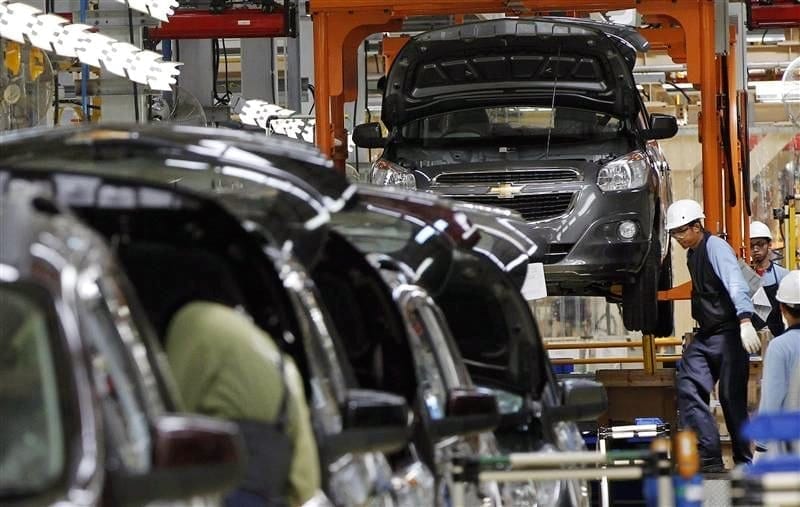
    Automakers around the world are shutting assembly lines because of a global shortage of semiconductors that in some cases has been exacerbated by the Trump administration’s actions against key Chinese chip factories, industry officials said.

    The shortage, which caught much of the industry off-guard and could continue for many months, is now causing Ford Motor Co, Subaru Corp and Toyota Motor Corp to curtail production in the United States.

    Automakers affected in other markets include Volkswagen, Nissan Motor Co Ltd and Fiat Chrysler Automobiles.

    The problems stem from a confluence of factors as auto manufacturers compete against the sprawling consumer electronics industry for chip supplies. Consumers have stocked up on laptops, gaming consoles and other electronic products during the pandemic, creating tight chip supplies throughout 2020.

    They have also bought more cars than industry officials expected last spring, further straining supplies.

    In at least one case, the shortage ties back to President Donald Trump’s policies aimed at curtailing technology transfers to China.

    One automaker moved chip production from China’s Semiconductor Manufacturing International, or SMIC, which was hit with U.S. government restrictions in December, to Taiwan Semiconductor Manufacturing Co in Taiwan, which in turn was overbooked, a person familiar with the matter said.

    Ford also will idle its Focus plant in Saarlouis, Germany, for a month starting next week because of chip shortages.

    An auto supplier confirmed TSMC has been unable to keep up with demand.

    “The systemic aspect of the crisis is giving us a headache,” said a supplier executive, who asked not to be identified. “In some cases, we find substitution parts that could make us independent from TSMC, only to discover that the alternative wafer manufacturer has no capacity available.”

    TSMC and SMIC did not immediately respond to requests for comment.

    On an earnings call with investors Thursday, TSMC Chief Executive C.C. Wei said there was a shortage of automotive chips made with “mature technology” and that it is working with customers “to mitigate the shortage impact.”

    It only takes the tiniest of chips to throw off production: a Ford plant in Kentucky that makes the Escape sport utility vehicle idled because of a shortage of a chip in the vehicle’s brake system, a union official in the plant said.

    Ford also will idle its Focus plant in Saarlouis, Germany, for a month starting next week because of chip shortages.

    The situation is unlikely to improve quickly, since all chips, whether bound for a laptop or a Lexus, start life as a silicon wafer that takes about 90 days to process into a chip.

    The chipmaking industry has always strained to keep up with sudden demand spikes. The factories that produce wafers cost tens of billions of dollars to build, and expanding their capacity can take up to a year for testing and qualifying complex tools.

    “The long and short of it is, demand is up about 50%. And there’s no asset-intensive industry like ours that has 50% capacity lying around,” said Mike Hogan, senior vice president at chip manufacturer GlobalFoundries and head of its automotive unit.