Retail News CRM

Tag: trump

  • Did Siri affected Biden or Trump with some votes?

    Did Siri affected Biden or Trump with some votes?

    Over the years we have knocked Apple for its failure to make Siri as good and accurate a digital helper as Google Assistant is. Siri has been known to make the occasional blunder. For example, let’s say that last weekend you had forgotten when Election Day was. So you turned to  Siri. iPhone users were told by their virtual assistant that Election Day was scheduled for November 8th. The problem with that answer is that it is wrong. Very wrong. Election Day was November 3rd  so if you were relying on Siri’s response to remind you when to visit your polling place, you would have arrived five days too late missing your opportunity to vote for president.

    This is not the first time that the iPhone told users the wrong information about time and date. For years, the idea of Daylight Saving Time continued to elude the grasp of iOS. One year, instead of moving iPhone clocks ahead an hour, it moved the clocks back an hour instead which really helped iPhone users get their day off to a very poor start.

    The interesting part of Siri’s most recent screw up is that November 8th was the date of the last U.S. presidential election back in 2016. On the other hand, November 8th 2022 will be when the U.S. holds its next major election, the mid-terms. Either way, Siri’s response was wrong and we wouldn’t vote for either one.

    While only the most clueless would have ended up missing election day because of Siri’s response, well, such clueless people do exist. Luckily, the number of those who listened to Siri was probably not large enough for its faux pas to impact the election results.

    So here’s a word to the wise. If you ask Siri for the date of an upcoming event that you must attend, it might behoove you to confirm the answer with another source even if that goes against the reason for Siri’s existence in the first place. Like any digital assistant, Siri is only as good as the data bank it gets its information from.

  • Trump claims to have a deal in concept with Oracle, Walmart, and TikTok

    Trump claims to have a deal in concept with Oracle, Walmart, and TikTok

    U.S. President Donald Trump told reporters gathering to see him off to a campaign rally, that he has approved “in concept” Oracle’s bid for the U.S. operations of TikTok. The short-form video app, owned by China’s ByteDance, has been accused by the Trump administration of being a national security threat because it could pass along personal data from U.S. customers to the Communist Chinese government in Beijing. Trump signed an executive order that forced ByteDance to divest itself of TikTok’s U.S. operations this coming Monday, September 21st

    Last week, after several U.S. companies had expressed interest in TikTok such as Microsoft, Oracle, and Walmart, Oracle’s plan was given the nod by ByteDance. However, the administration felt that the plan didn’t go far enough to protect them better than 50 million active U.S. TikTok users. As a result, the U.S. said that it would ban downloads of TikTok in the states starting on Monday morning. Those who have already downloaded the app before Monday would be allowed to continue using it until November 12th unless a deal was approved by the U.S. But everything might have changed following this afternoon’s announcement. What isn’t clear at this point is what the president means when he says that a deal has been approved “in concept.”

    While things are still up in the air at this hour, Trump says that the deal will also include Walmart and hinted that TikTok would be “totally controlled” by Oracle and Walmart, something that he repeated several times this afternoon. “I have given the deal my blessing,” the president said. “If they get it done, that’s great. If they don’t, that’s okay, too.” Previously, the president wanted the companies involved in acquiring TikTok’s U.S. operations to make a payment to the U.S. Treasury. But such a deal would be illegal, something that Trump was not aware of. Still, the president spoke with Oracle Chairman Larry Ellison and Walmart Inc. Chief Executive Officer Doug McMillon on Friday, telling both executives that he still wanted a cash payout for the U.S. government.

    A new company called TikTok Global will be created, according to those in the know, and it will help create a $5 billion fund for U.S. education. Discussing this contribution, Trump stated that “They’re going to be setting up a very large fund. That’s their contribution that I’ve been asking for.” The new TikTok Global will probably be headquartered in Texas and 25,000 people will be hired according to the president. But that figure could not be independently verified. Facebook had 45,000 employees last year while Twitter had 4,900 employees. There is speculation that TikTok Global will hold an IPO and go public within the next year. The president said about TikTok Global, “It will have nothing to do with China, it’ll be totally secure, that’ll be part of the deal. All of the control is WalMart and Oracle, two great American companies.”

    ByteDance will retain TikTok’s algorithm which is used to decide which videos are available to certain TikTok users. China recently announced a regulation that prevents other countries from using any algorithm created in the country. Oracle will get full access to review TikTok’s source code and any updates to make sure that there are no backdoors involved that could be used to steal U.S. subscribers’ personal data.

    TikTok has been a popular destination for teens and others looking to pass time during the pandemic. Users can create 15 or 60-second videos showing lip-synching, dancing, pranks, protests, and more. The app has been installed over two billion times from the App Store and the Google Play Store.

  • Trump Prods General Motors Over Its Auto Plants In China

    Trump Prods General Motors Over Its Auto Plants In China

    U.S. President Donald Trump, who is engaged in a trade war with Beijing, said on Friday that the largest U.S. automaker, General Motors Co, should begin moving its operations back to the United States.

    “General Motors, which was once the Giant of Detroit, is now one of the smallest auto manufacturers there. They moved major plants to China, BEFORE I CAME INTO OFFICE. This was done despite the saving help given them by the USA. Now they should start moving back to America again?” Trump said in a post on Twitter.

    Trump appeared to be referring to a Bloomberg News story that reported GM’s hourly workforce of 46,000 U.S. workers has fallen behind that of Fiat Chrysler as the smallest of the Detroit Three automakers. Over the past four decades, GM has dramatically cut the size of its overall U.S. workforce, which numbered nearly 620,000 in 1979.

    GM did not directly comment on Trump’s tweet.

    “GM’s China operations are not a threat to U.S. jobs,” the company said in a fact sheet, noting that its joint ventures have sent $16 billion in equity income to GM since 2010 and that it has invested $23 billion in U.S. operations since 2009.

    GM’s U.S. hourly workforce has fallen by about 4,000 jobs since the end of 2018 to about where it was a decade ago.

    Trump’s ire with GM comes as contract talks with the United Auto Workers union with the Detroit Three automakers intensify ahead of a Sept. 14 deadline. Trump has previously attacked GM for building vehicles in Mexico and for ending production at plants in Michigan, Ohio and Maryland and threatened to cut GM subsidies in retaliation.

    GM’s decision to close four plants in the United States is a central issue in the contract talks.

    Trump has made boosting auto jobs a key priority and has often attacked automakers on Twitter for not doing enough to boost U.S. employment. His 2020 re-election bid will hinge on holding key industrial battleground states like Wisconsin, Pennsylvania and Michigan that narrowly voted for him in 2016.

    China is the world’s largest auto market, and government policy favors automakers assembling vehicles there, and not importing them from overseas.

    In response to Trump’s latest tariffs, China said last week it will reinstitute 25% tariffs on U.S.-made vehicles. The U.S. is imposing 15% tariffs on more than $125 billion in Chinese goods starting Sunday.

    GM sold 3.6 million vehicles in China last year accounting for 43% of its worldwide sales. GM booked $2 billion in equity income from its China operations last year.

    GM imports a small number of vehicles from China. In June, the Trump administration rejected a request from GM to exempt its Chinese-made Buick Envision from a 25% U.S. tariff on sport utility vehicle models.

    The midsize SUV has become a target for U.S. critics of Chinese-made goods, including leaders of the UAW members in key political swing states such as Michigan and Ohio.

  • Trump says Apple will soon announce plans to build a new apple factory in Texas

    Trump says Apple will soon announce plans to build a new apple factory in Texas

    Stop us if you’ve heard this before. President Donald Trump said that Apple will follow his wishes by opening a U.S. factory in Texas. The president’s comments were made the same day that he disseminated a tweet saying that he would not grant the tech giant a waiver that would prevent it from having to pay import taxes on parts for the Mac Pro imported from China. Trump also pointed out that if Apple made the parts in the states, it wouldn’t face tariffs on them. While Apple designs its products in the U.S., many of them are actually manufactured in China. Even though there is a “truce” in the trade war between the U.S. and China, the already announced tariffs remain in place.

    You might remember that in July 2017, Trump said that he was told by Apple CEO Tim Cook that the company was building “three big plants, beautiful plants.” The only problem with that comment was that it was not true. Apple later denied that any such conversation took place and said that it certainly did not have plans to build any factories in the U.S.

    Trump has had a love-hate relationship with Apple, calling for a boycott of the company back in February 2016. Apple had refused a court order to unlock the iPhone 5c that belonged to San Bernardino shooter Syed Farook. Apple refused to do so because it would have required that the company develop a special operating system for the government; Apple was afraid that the software could get into the wrong hands making all iPhones vulnerable to getting hacked. Trump threatened to stop using his iPhone and said that he would use a Samsung handset until Apple gave the FBI what it wanted. An unnamed Apple executive responded by saying, “Trump’s call for (an) Apple boycott puts the company in standing with other good people he has criticized.”

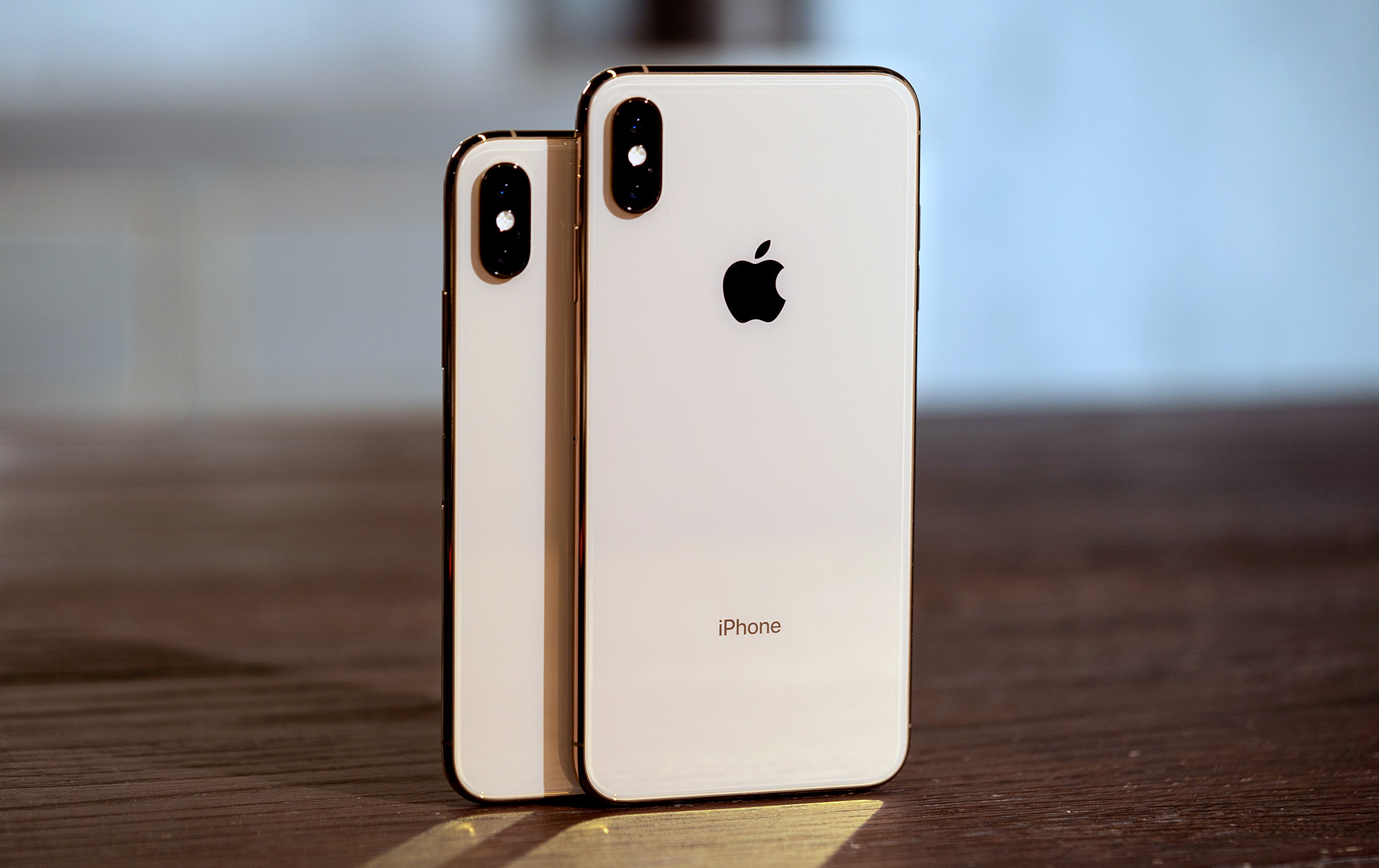
    In June of 2018, The New York Times reported that Trump had promised Cook that the iPhone would not be subject to any tariffs. Economist and Trump advisor Peter Navarro denied that this promise was made. And while Apple’s most important product has not yet been hit with tariffs, if the current truce doesn’t hold up, the next tier of products from China to receive an import tax is said to include smartphones like the iPhone. According to Morgan Stanley analyst Katy Huberty, tariffs could add $160 to the price of the iPhone XR. That would raise the retail price of the 64GB model from $749 to $909. Last month, Apple tried to warn the president that tariffs on the iPhone could damage the U.S. economy.

    Some of you might be surprised to learn that the tariffs are actually an import tax paid by consumers. In May, President Trump incorrectly tweeted that “tariffs are NOW being paid to the United States by China of 25% on Billions of Dollars worth of goods and services. These massive payments go directly to the Treasury of the U.S.” Either Trump doesn’t know how tariffs work, or the president purposely tried to mislead the country. China does not pay one cent of the tariffs. They are taxes paid by U.S. corporations that can eat them, or pass them along to U.S. consumers by raising prices. Apple, to its credit, has eaten the tariffs imposed on certain iPhone and iPad cases in order to keep the cost to consumers the same. This lowers Apple’s profit margin on those products. So if a tariff is imposed on the iPhone, either Apple will be negatively impacted, or U.S. consumers will be in the form of higher prices for the device.

    Meanwhile, we wouldn’t be holding our breath waiting for Apple to announce a new plant in Texas. It is likely to be found next to the three non-existent factories that Trump said Apple was going to build two years ago.

  • Global footwear brands lobby Trump

    Global footwear brands lobby Trump

    A group of 173 footwear companies, including Adidas, Converse, Foot Locker, Hush Puppies, Nike, Puma, Reebok, Ugg and Under Armour, have requested US President Donald Trump immediately remove footwear from the list of imported products to be tariffed from China.

    According to a joint statement released by the businesses, Trump’s additional 25 per cent tariff on footwear would be “catastrophic” for consumers, companies in the industry and the American economy as a whole.

    “Any increase in the cost of importing shoes has a direct impact on the American footwear consumer,” the statement reads.

    “It is an unavoidable fact that as prices go up at the border due to transportation costs, labor rate increases, or additional duties, the consumer pays more for the product.”

    The Footwear Distributors and Retailers of America (FDRA) association estimated that the proposed change in import costs would add US$7 billion in additional costs to be picked up by the consumer per year.

    According to the statement, the proposed tariffs would be placed atop of tariffs that already affect the industry, in some cases causing some customers to pay nearly 100 per cent duty on their shoes.

    “This is unfathomable,” the statement reads.

    “On behalf of our hundreds of millions of footwear consumers and hundreds of thousands of employees, we ask that you immediately stop this action to increase tax burden… It is time to bring this trade war to an end.”

    Footwear retailers and brands are not the only ones making statements about the effect Trump’s tariffs are having on their businesses. Walmart last week warned the tariffs are already hurting its furniture segment, and will hit its clothing and accessories segment next.

    Macy’s also warned that its furniture category has been impacted by the trade war.

    Morgan Stanley analysts have warned that a collapse of the ongoing trade talks between China and the US, and longer lasting tariffs on trade between the two countries, would “mean that we might not be able to avert the tightening of financial conditions and a full-blown recession.”

  • Trump signs order paving way for Huawei ban

    Trump signs order paving way for Huawei ban

    US president Donald Trump has signed an executive order paving the way for banning Chinese vendors including Huawei from supplying equipment for US telecommunications networks.

    The executive order declares a national emergency to give Trump the authority to regulate commerce and directs the Commerce Department to draw up an enforcement plan within 150 days.

    It has been designed to protect US telecommunications supply chain from foreign adversaries. While the order does not specifically name any countries or companies, it has been specifically promoted by members of Congress as being aimed at companies including Huawei, which has been labeled a security threat by US officials.

    The US government has been pressuring allies to prohibit Chinese vendors from supplying equipment for 5G rollouts, citing concerns that their equipment could be used by the Chinese government to spy on the communications of foreign nations. Countries including Australia have already yielded to this pressure.

    Meanwhile, Huawei, which has repeatedly denied any allegations that its equipment could be used this way, has separately revealed it is willing to sign no-spying pacts with governments to alleviate these concerns.

    The agreements, which could be negotiated with nation states including the UK, would involve the company committing to meet no-spy, no-backdoors standards.

    But Reuters cited comments from the German government pointing out that there is no indication that the Chinese government itself is offering such an agreement.

  • Trump’s threat could lead to higher Apple iPhone prices

    Trump’s threat could lead to higher Apple iPhone prices

    If you live in the U.S., be prepared to pay more for the Apple iPhone. A multi-part tweet disseminated today by President Donald Trump revealed that starting next Friday, $200 billion of Chinese goods imported into the U.S. will be taxed at a 25% rate, up from the current 10%. Trump also noted that $50 billion of hi-tech goods from China that are imported by the U.S. already are taxed at 25%. While the Apple iPhone and other Apple devices have managed to evade the tariff charges, Trump is now talking about taxing hundreds of billions of dollars of additional Chinese products imported into the states, possibly including the iPhone. While Apple designs its products in the U.S., they are assembled by contract manufacturers in China and imported into the U.S.

    Trump could be merely seeking to raise the pressure on China to reach an agreement with the U.S. A negotiating team from the country will travel to Washington this week for a round of talks. This could be the last chance for both nations to reach an agreement and end a trade war that has weakened China’s economy. That weakness has hurt Apple’s business in the country. During the company’s fiscal second quarter, which ran from January through March, Apple saw its sales in China declined by 21.5% from $13.02 billion to $10.22 billion.

    The trade war between the U.S. and China went into high gear last March when the president announced a 25% tariff on $50 billion of Chinese tech products sent to the states. A couple of weeks later, the Chinese retaliated by adding a tax on 128 products imported from the U.S. The Times reported last summer that Trump had told Apple CEO Tim Cook that he would not place a tariff on the iPhone (he uses two of them, one for tweeting), although that report was later denied by the White House.

    So why has Trump decided to engage in a trade war with China? The U.S. has run a large trade deficit with China for years, and while many economists will say that this shows that U.S. consumers are wealthier than their Chinese counterparts and can afford to purchase more goods from that country, the president sees it differently. He views the trade deficit as a scoreboard showing that the U.S. is losing when it comes to trade with China.

    The president also could be losing patience with Apple CEO Tim Apple Cook. Trump has said numerous times that Apple needs to move the production of its products to the U.S., and tweeted last September that Apple could avoid tariffs by moving jobs to the U.S. And in a bizarre episode that has never been explained, back in June of 2017 the president said that he was told by Tim Cook that Apple would build “three big plants, beautiful plants” in the U.S.The president said at the time that he couldn’t say where the factories would be located, or what they would produce. There was a good reason for that; Apple denied that this conversation ever happened. But to illustrate how the president thinks, he had previously told that he wanted Apple to build its best factory in the states “even if it’s only a foot bigger than someplace in China.”

    While the U.S. has been pressing China to buy more American made goods, it also wants the country to stop demanding U.S. trade secrets and technology as a condition for doing business in China. And while there is no doubt that Trump sees the tariffs as a way to twist the arm of Chinese president Xi Jinping, the data indicates that Americans are being hurt by the price hikes being passed on to them because of the tariffs. And if the iPhone ends up on the list of products getting taxed, U.S. consumers will end up paying more for the device. How much more would depend on how much of a tariff Apple would decide to eat.

  • Trump Again Goes After India

    Trump Again Goes After India

    President Donald Trump has criticised India’s “big tariffs” on American paper products and the iconic Harley-Davidson bikes, saying the US has been losing billions of dollars to countries like India, China and Japan. Addressing a Republican political rally in Wisconsin state’s Green Bay city on Sunday, Trump alleged that every country has been ripping off America for years.

    The President has repeatedly claimed that India is a “tariff king” and imposes “tremendously high” tariffs on American products. “For so many decades we’ve been losing tens of billions of dollars to China and Japan, and India, and name any country and we lost, but we’re not losing anymore,” he said to his cheering supporters. He said that the US was being charged high tariffs on foreign paper products.

    “We charge other countries zero tariffs on foreign paper products, but when Wisconsin paper companies export it abroad… China charged us big tariffs, India charged us big tariffs, Vietnam charge us massive tariffs,” Trump said. He claimed that people of the US demanded a government that puts America first. “And we’re doing that with China, we’re doing that with India, we’re doing that with Japan, we’re doing it with a great new trade deal, that hopefully will get approved in the house,” the President said.

    Early this year at a White House event to announce his support for reciprocal tax, Trump had said that he was satisfied with the Indian decision to reduce the import tariff on high-end Harley-Davidson motorcycles from 100 per cent to 50 per cent. The President said that he called up Prime Minister Narendra Modi on the issue of tariffs on Harley-Davidson motorcycles. “Look at Harley-Davidson. I met with them three years ago, they would tell me tough to do business in certain kind. I asked ‘How you’re doing in India?’ and they said, ‘Oh, we don’t do any business’. They weren’t even complaining because so many years.

    “So India charged a 100 per cent tariff on Harley-Davidson, but when they send their motorcycles and they may come to us, we charge them nothing,” Trump said. “So I called up Prime Minister Modi, I said unfair, he cut it 50 per cent… But that’s not good enough because look, it’s 50 per cent to nothing. And what we’re doing is changing all of that stuff, changing all of that rapidly,” he added.

    India is pressing for exemption from the high duty imposed by the US on certain steel and aluminium products, resumption of export benefits to certain domestic products under the Generalised System of Preferences (GSP) programme, greater market access for its products from agriculture, automobile, automobile components and engineering sectors.

    On the other hand, the US is demanding greater market access through a cut in import duties for its agriculture goods, dairy products, medical devices, IT and communication items. India has stated that it would be difficult for them to cut duties on IT products.

    India’s exports to the US in 2017-18 stood at USD 47.9 billion, while imports were USD 26.7 billion. The trade balance is in favour of India.

  • Wall St rises after Trump stirs China trade hopes again

    Wall St rises after Trump stirs China trade hopes again

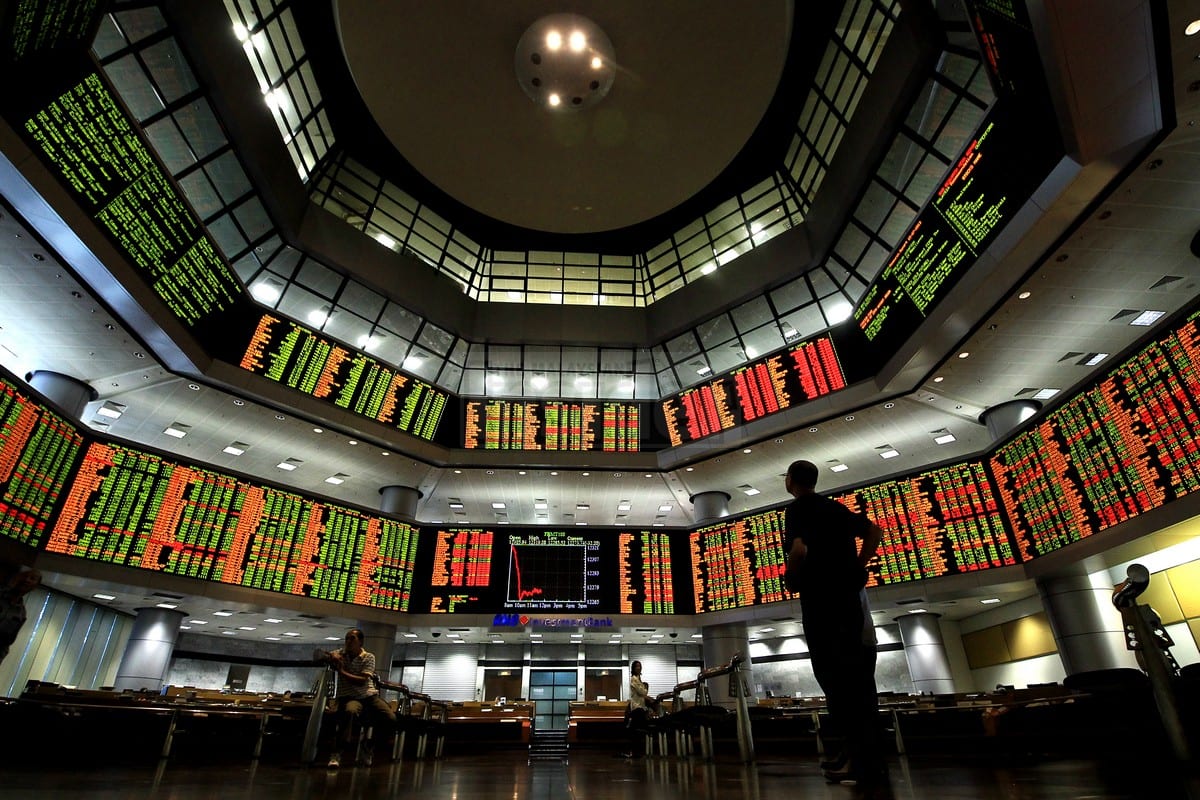
    Wall Street’s three major indexes ended higher on Monday but well below the session’s highs after President Donald Trump said he would delay a planned hike in tariffs on Chinese imports. Postponement of the tariff deadline was seen as the clearest sign yet the two countries were closing in on an agreement to end their prolonged trade spat, which has slowed global growth and disrupted markets.

    But gains were capped after weeks of advances for the S&P 500, the Dow Jones Industrial Average and the Nasdaq, partly due to trade optimism and dovish signals from the Federal Reserve.

    “A lot of the good news related to trade is priced in at this point,“ said R.J. Grant, head of trading at Keefe, Bruyette & Woods in New York.

    “There’s only so much we can rally when somebody says we’re making progress … The trade stuff is a little bit of a sideshow. If you get back to looking at economic growth, it’s clearly slowing.”

    The S&P 500 index ended 4.9% below its late September record closing high after narrowing the gap to 4.3% earlier in the session.

    Investors were also looking ahead to an appearance by Fed Chairman Jerome Powell before a US Senate committee on Tuesday.

    “In the short term trade got taken off the table today so next up on the calendar is Powell speaking to Congress. It’s possible investors are starting to clam up a bit because of what they think Powell may say,“ said Michael Cuggino, portfolio manager at Permanent Portfolio Funds in San Francisco.

    The Dow Jones Industrial Average rose 60.14 points, or 0.23%, to 26,091.95, the S&P 500 gained 3.44 points, or 0.12%, to 2,796.11 and the Nasdaq Composite added 26.92 points, or 0.36%, to 7,554.46.

    Investors were also wary of weakening estimates for current quarter earnings, with Wall Street on Monday expecting a 0.9% decline in S&P first-quarter earnings per share compared with expectations for 5.3% growth on Jan. 1, according to IBES data from Refinitiv.

    “It’s hard to get valuations to continue to rise in the face of falling earnings estimates,” said Jeffrey Kleintop, chief global investment strategist at Charles Schwab in Boston.

    Of the S&P’s 11 major sectors, 7 ended the day with gains.

    After advancing as much as 1.4%, the financials index lost ground late in the day to close up 0.4%.

    The S&P technology index rose 0.5%. The Philadelphia semiconductor index climbed 0.8% as chip companies have a big exposure to China.

    The industrials sector rose 0.4%, getting its biggest boost from General Electric Co, which gained 10.8% after announcing a sale of its biopharma business to Danaher Corp for $21.4 billion. Danaher shares rose 8.2%.

    A flurry of M&A activity also helped the risk-on sentiment.

    The Nasdaq Biotechnology Index rose 2%, its biggest boost coming from shares in Spark Therapeutics Inc, which soared 120% after Swiss drugmaker Roche Holding AG agreed to buy it for $4.3 billion.

    The biggest laggards were the S&P’s defensive sectors – consumer staples, utilities and real estate. The consumer discretionary sector also ended down 0.3%, with the biggest drag from Home Depot, down 1.3%, on concerns about a soft housing market ahead of its quarterly results.

    Advancing issues outnumbered declining ones on the NYSE by a 1.14-to-1 ratio; on Nasdaq, a 1.05-to-1 ratio favoured advancers.

    The S&P 500 posted 58 new 52-week highs and 2 new lows; the Nasdaq Composite recorded 128 new highs and 14 new lows.

    Volume on U.S. exchanges was 7.36 billion shares, compared with the 7.32 billion average for the last 20 trading days.

  • Asia markets rally as Trump delays China tariffs

    Asia markets rally as Trump delays China tariffs

    Shanghai led a rally across Asian markets Monday after Donald Trump said he would delay a hike in tariffs on Chinese goods citing “substantial progress” in trade talks and fuelling hopes of an end to their long-running stand-off. Optimism over the negotiations had already provided support to global equities, spurring a rally in January and February, but the president’s comments gave extra ammunition to investors to ramp up the buying.

    The news also fired currency markets with the yuan extending gains to a seven-month high, while other high-yielding, riskier units were also up against the dollar.

    Trump said on Twitter that the US “has made substantial progress in our trade talks with China on important structural issues including intellectual property protection, technology transfer, agriculture, services, currency, and many other issues”.

    He added: “As a result of these very productive talks, I will be delaying the US increase in tariffs now scheduled for March 1.”

    The president also said he planned to hold a summit with his Chinese counterpart Xi Jinping at his Mar-a-Lago estate in Florida to sign a deal.

    China’s Xinhua news agency added that the two sides had “made substantial progress on specific issues” including on transfer of technology, intellectual property and agriculture.

    ‘Sigh of relief’

    In morning trade, Shanghai jumped 2.8% and Hong Kong added 0.4% while Tokyo ended the morning 0.7% higher.

    Sydney and Singapore each put on 0.1%, while Seoul was flat, Taipei added 0.4% and Jakarta rose 0.3%.

    The gains in Asia followed another positive lead from Wall Street, where the Dow enjoyed its ninth straight weekly gain – the longest streak since May 1995.

    “This is a sigh of relief,“ said Ben Emons, managing director for global macro strategy at Medley Global Advisors. “Markets will still keep a level of caution, but this news is encouraging,“ he said.

    The upbeat sentiment lifted high-risk currencies, with the yuan hitting its highest level against the dollar since July, while South Korea’s won, the Australian dollar and the Indonesia rupiah were also well up.

    Forex traders will be closely watching speeches this week from top Federal Reserve officials – including chairman Jerome Powell’s appearance in front of lawmakers – hoping for clues about the bank’s monetary policy plans.

    Wall Street “will be looking for soothing comments about the future size of the balance sheet – the bigger the better – and insights into future rate hikes”, said Jeffrey Halley, senior market analyst at OANDA.

  • U.S. agency submits auto tariff probe report to White House

    U.S. agency submits auto tariff probe report to White House

    The U.S. Commerce Department sent a report on Sunday to U.S. President Donald Trump that could unleash steep tariffs on imported cars and auto parts, provoking a sharp backlash from the industry even before it is unveiled, the agency confirmed. Late on Sunday, a department spokeswoman said it would not disclose any details of the “Section 232” national security report submitted to Trump by Commerce Secretary Wilbur Ross. The disclosure of the submission came less than two hours before the end of a 270-day deadline.

    Trump has 90 days to decide whether to act upon the recommendations, which auto industry officials expect to include at least some tariffs on fully assembled vehicles or on technologies and components related to electric, automated, connected and shared vehicles.

    As the White House received the report, the industry unleashed what is expected to be a massive lobbying campaign against it.

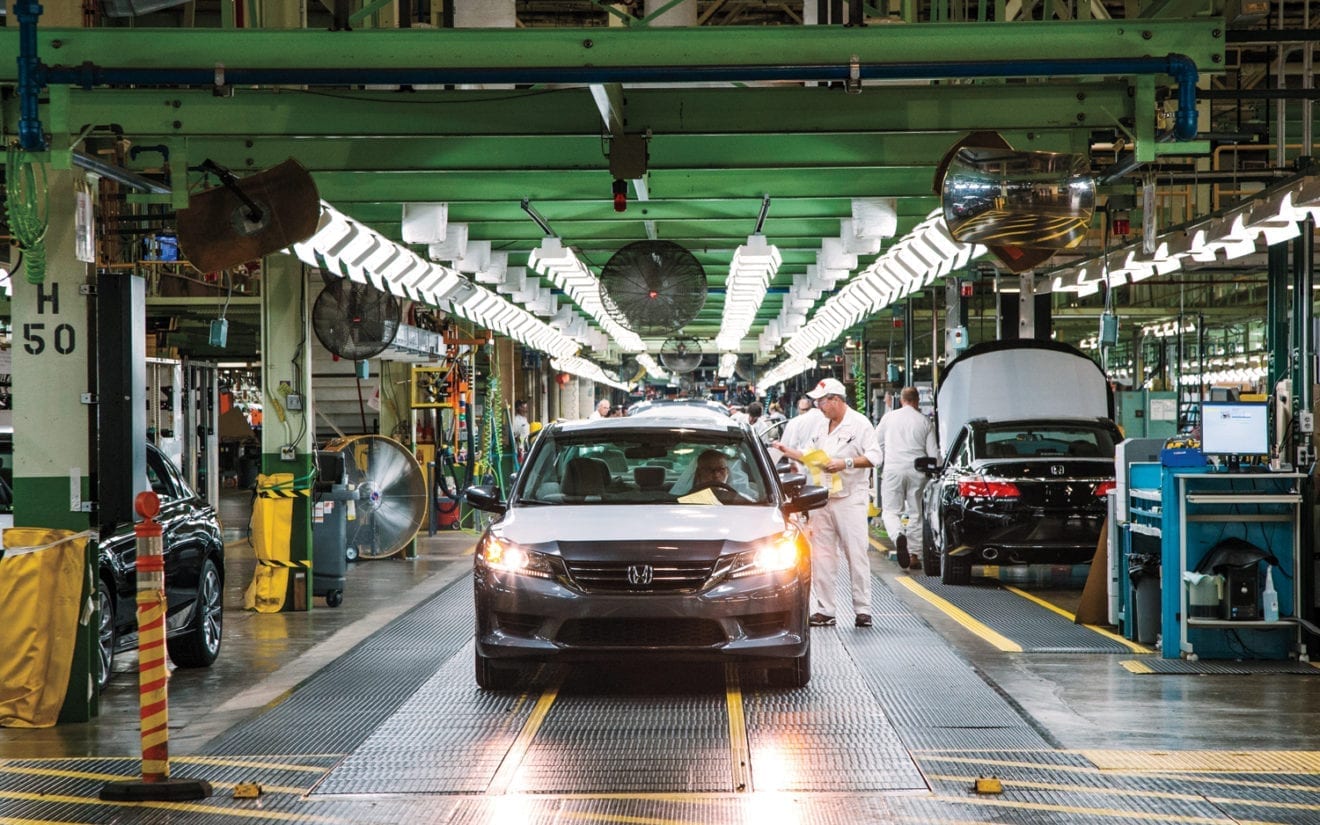
    The industry has warned that feared tariffs of up to 25 percent on millions of imported cars and parts would add thousands of dollars to vehicle costs and potentially lead to hundreds of thousands of job losses throughout the U.S. economy.

    The Motor and Equipment Manufacturers Association, which represents auto parts suppliers, warned that tariffs will shrink investment in the United States at a time when the auto industry is already reeling from declining sales, Trump’s tariffs on steel and aluminum, and tariffs on auto parts from China.

    “These tariffs, if applied, could move the development and implementation of new automotive technologies offshore, leaving America behind,” it said in a statement. “Not a single company in the domestic auto industry requested this investigation.”

    The Commerce Department started its investigation in May 2018 at Trump’s request. Known as a Section 232 investigation, its purpose was to determine the effects of imports on national security and it had to be completed by Sunday.

    Automakers and parts suppliers are anticipating its recommendation options will include broad tariffs of up to 20 percent to 25 percent on assembled cars and parts, or narrower tariffs targeting components and technologies related to new energy cars, autonomous, internet-connected and shared vehicles.

    The Commerce Department alluded to a focus on emerging vehicle technologies when it opened the investigation.

    Administration officials have said tariff threats on autos are a way to win concessions from Japan and the EU. Last year, Trump agreed not to impose tariffs as long as talks with the two trading partners were proceeding in a productive manner.

    Trump said on Friday that tariffs protect industry and also help win trade agreements.

    “I love tariffs, but I also love them to negotiate,” he said.

    A report from the Center for Automotive Research in Ann Arbor, Michigan, published on Friday showed its worst-case scenario of a tariff of 25 percent would cost 366,900 U.S. jobs in the auto and related industries.

    U.S. light duty vehicle prices would increase by $2,750 on average, including U.S.-built vehicles, reducing annual U.S. sales by 1.3 million units and forcing many consumers to the used car market, the think tank’s report said.

    Major automaker groups said last year the cumulative effect for the United States would be an $83 billion annual price increase and argued there was no evidence auto imports posed a national security risk.

    Canada and Mexico each won duty-free access to 2.6 million vehicles as part of a new North American free trade deal even if the administration moves ahead with the tariffs.

  • Trump says could extend March 1 China trade talks deadline

    Trump says could extend March 1 China trade talks deadline

    US President Donald Trump (pix) said Tuesday he would consider extending the deadline for a trade deal with China beyond March 1. “If we’re close to a deal, where we think we can make a real deal… I could see myself letting that slide for a little while,” Trump said at the White House. But he added: “Generally speaking I’m not inclined to do that.”

    The comments came as the third round of trade negotiations were set to resume in Beijing to avert more than doubling tariffs on $200 billion in Chinese imports.

    “China wants to make a deal very badly,” he said, and “things are going well” in the talks. And while no date has yet been agreed for a meeting with China’s President Xi Jinping, he said he expects that to happen “at some point.”

    The high-stakes dispute has raised concerns it could spill over into the global economy after Trump last year hit China with 25% punitive tariffs on $50 billion in goods, and then imposed 10% duties on another $200 billion in annual imports.

    The rate on all those imports are set to increase to 25% if no agreement is reached by March 1.

    China’s economy already has shown signs of slowing, while the trade war has shaken the confidence of US businesses, as retaliatory tariffs have raised prices and helped choke off a key export market.

    And Trump’s aggressive strategy has failed to produce a reduction in the US trade deficit with China, which he set as a primary goal.

    He repeated the incorrect statement that China is paying the duties, which in fact are paid by US companies importing goods.

    And economists say much of the intended effect of the duties in reducing imports, has been offset by the devaluation of China’s currency, which makes goods cheaper for importers.

  • Trump intervening to get ZTE back in business

    Trump intervening to get ZTE back in business

    n an unexpected twist in the ongoing saga over the ban on ZTE importing US components, president Donald Trump has indicated he may throw a lifeline to the Chinese vendor.

    On Sunday, Trump tweeted on his official account that he is working with Chinese president Xi Jinping on a resolution that will allow ZTE to resume operations.

    “President Xi of China, and I, are working together to give massive Chinese phone company, ZTE, a way to get back into business, fast. Too many jobs in China lost. Commerce Department has been instructed to get it done!,” he wrote.

    ZTE was forced to cease major operations last week as a result of the import ban imposed on the vendor by the US Department of Commerce’s Bureau of Industry (BIS) in April.

    The ban was originally imposed last year but automatically suspended on the condition that ZTE comply with its settlement agreement over the investigation into the vendor’s sale of telecoms equipment including US components to Iran, in violation of US sanctions.

    Trump’s announcement comes as the US and China are conducting trade talks aimed at resolving the disputes between the world’s two largest economies. Chinese vice premier Liu He reportedly met with officials in Washington on Friday, while Xi’s top-ranking economic adviser plans to visit this week to continue the

  • Trump says he’ll check out Amazon

    Trump says he’ll check out Amazon

    US President Donald Trump has escalated his criticism of Amazon and CEO Jeff Bezos, saying the White House will take a “serious look” at addressing what he sees as an uneven playing field between the e-commerce giant and its competitors.

    “Amazon is just not on an even playing field,” President Trump told a press pack assembled on Air Force One in the US yesterday.

    “I’m going to study it and we’re going to take a look. We’re going to take a very serious look at [levelling the playing field].

    “It’s very important for me, it’s got to be an even playing field for everybody.”

    The comments are just the latest in a myriad of criticisms levied at Amazon and Bezos in recent weeks by the President, who has also criticised the business for its impact on the US postal service and not paying adequate sales tax.

    “What they have is a very uneven playing field, you look at the sales tax situation — which is going to be taken up, I guess, very soon — it’s going to be a decision by the Supreme Court, so we’ll see what happens,” the President said yesterday.
    Amazon charges sales tax in a variety of US states with applicable regulation, but this does not apply to third party sellers on its platform.

    Amazon’s share price sank more than 5 per cent last week on reports that Trump was looking to target the company with tax reforms, but aides have reportedly since clarified that no such plans are in motion.  Trump has also argued that Amazon receives favourable rates with the US Postal Service and is weighing it down with the volume of its deliveries, although the e-commerce giant accounted for more than a third of the postal service’s US$19.5 billion in revenue last year.

  • Trump attacks Amazon on Twitter over tax and jobs

    Trump attacks Amazon on Twitter over tax and jobs

    Having a large market share is not illegal in the US – but that hasn’t stopped ill-informed US president Donald Trump from launching an extraordinary attack on Amazon on Twitter.

    In a new tweet on Wednesday, Trump said Amazon was causing “great damage to tax-paying retailers,” and costing jobs.

    “Towns, cities and states throughout the US are being hurt – many jobs being lost!” Trump tweeted.

    The unexplained attack, which appeared to have no contextual relevance, follows earlier attacks during the election campaign during which he promised to pursue the company for antitrust violations should he be elected.

    “Believe me, if I become president, do they have problems. They’re going to have such problems,” Trump said in February 2016.

    But, as Bloomberg points out, in the US it is not illegal to have a large market share. While online retailing is growing in volume and in share of the total retail industry in the US, Amazon accounts for 30 per cent of e-commerce sales. Every other retailer in the US has the opportunity to sell online and Walmart, especially, is mounting an aggressive challenge to Amazon’s market share. Other online retailers have 70 per cent of the market.

    In short: shoppers are spending less in physical stores and more online. They are not shifting from malls to Amazon, per se, as Trump appears to be stating. Furthermore, Amazon is expanding offline, starting to open physical stores. It has also acquired Whole Foods Market and plans to expand that business.

    Trump has clearly not researched Amazon’s effect on the economy, either, before tweeting. Firstly, Amazon is collecting sales tax in every state where it is levied – just like every brick-and-mortar retailer (although third-party sales over its platform, accounting for about 50 per cent of sales through its portals, remain exempt via a loophole).

    Secondly, Amazon has promised to hire more than 100,000 new staff in the US by 2018, countering some of the jobs lost through America’s shrinking ranks of retail stores.

    “In some cases, fired department store workers are ending up at Amazon fulfillment centres,” observed.