Retail News CRM

Tag: trump

  • Donald Trump’s business dealings on Australia’s doorstep revealed

    Donald Trump’s business dealings on Australia’s doorstep revealed

    Donald Trump was running for the US presidency when he personally raised with senior Indonesian politicians the need to have a toll road completed in Indonesia to benefit a massive new resort development in which he later invested.

    A senior Indonesian politician who met Mr Trump in New York in 2015 has revealed that he made clear the project would only go ahead if the toll road was completed.

    “He was saying that it’s impossible without the toll road,” Fadli Zon, the deputy speaker of Indonesia’s Parliament, said.

    Mr Zon, together with the speaker of the Indonesian House of Representatives, Setya Novanto, met then presidential-hopeful Mr Trump at Trump Tower in New York in September 2015 during the presidential primary campaign.

    The meeting, unauthorised by the Indonesian government, was held with the direct assistance of Mr Trump’s new Indonesian business partner, Hary Tanoesoedibjo, known as Hary Tanoe.

    At the time, Mr Trump and Mr Tanoe were in negotiations over the development of a mega-resort and an associated theme park, sky train, and Formula One racing track on a 3000-hectare site on the island of Java, south of the capital Jakarta.

    “He said he really understood well about the situation. For example, this theme park in Bogor area that needs some highway … because sometimes it’s impossible to go there,” Mr Zon said.

    Congested roads in the region can turn the 70-kilometre car ride from Jakarta into a nightmarish two-or-three-hour journey.

    One week after the New York meeting, Mr Trump signed the deal to develop the Trump International Hotel and Tower Lido.

    The construction of the toll road, which had been started then delayed in June 2015, resumed in November.

    The government took over the construction in June 2016 and the first section is due for completion by the end of the year.

    Mr Zon said he estimated that with the impending completion of the toll road, Mr Trump and Mr Tanoe had already tripled their value of the resort land.

    “Yeah. I think the price increase like three times,” he said.

    The President’s latest financial disclosure, released on June 14, stated that the management fees from the Indonesian companies tied to the Bali and Lido resorts had more than doubled.

    The latest disclosure puts the fees at $US380,000 ($A495,000), up from the $US167,000 ($A217,000) he reported in 2016.

    ‘This is a marriage between politicians and business people’

    The head of Human Right Watch Indonesia, Andreas Harsono, said he thought the meeting between the Indonesian politicians and Mr Trump was unethical.

    “It is not appropriate for any business to ask the government to pay for an access toll road into their property,” he told.

    “Unfortunately, it is common in Indonesia. You can change a road direction as you can extend a toll road or bridges or whatever to benefit people who have money, who have interest.

    “This is a marriage between politician and business people.

    “It is common, it is very common in Indonesia.”

    Mr Zon and Mr Novanto were both investigated by a parliamentary ethics committee over whether the meeting with Mr Trump violated strict Indonesian government codes.

    The result of that investigation has never been made public, but both walked away with only a warning.

    In November, two months after the New York meeting, Mr Novanto was embroiled in a massive corruption scandal, accused of attempting to extort a $US4 billion ($A5.2 billion) payment from American mining giant Freeport-McMoRan.

    Mr Novanto denied the accusation, claiming he was “just joking”.

    He was never formally charged.

    Donald Trump’s land in Bali

    Mr Trump and Mr Tanoe’s first controversial Indonesian venture was in Bali.

    The resort, planned as the largest on the island, will overlook one of the most iconic and sacred sites — the Temple of Tanah Lot.

    The existing low-scale Bali Nirwana golf course and resort will close at the end of the month.

    Hundreds of local workers will be laid off and demolition is due to start next month.

    MNC Group bought the Bali Nirwana resort in 2013 from the Bakrie Group, owned by one of the Suharto family’s business associates.

    The Trump Organisation signed up in August 2015 to the redevelopment of the site.

    Not a lot of detail is known about the plans for the second Tanoe/Trump development, Trump International Hotel and Tower Bali.

    When we confronted the local regional governor Ebu Eka Wiryastuti about what had been approved by the local government, she refused to answer questions.

    “I can’t talk about this. I cannot talk about this. At all,” she said.

    “It’s a big complex, more than 100 hectares, to build a hotel, villas, condominiums, also to build a country club — that is also with Mr Trump,” Mr Tanoe told the ABC in January.

    The Trump Organisation will manage the hotel, country clubs and golf courses with the Trump family heavily involved in the project.

    Mr Tanoe outlined the project to the ABC in March and said each of the family members had a different role.

    “Donald Jr is responsible for the overall project. Eric is more on the design and golf, and Ivanka is more on the detail, like the fit-out of the hotel,” he said.

    Mr Harsono has warned that doing business in Indonesia may come at a cost for Mr Trump.

    “I’m not going to say Donald Trump is unethical man, but he is dealing with the worse of Indonesia past, and he is going to deal with the worst of Indonesia future,” he said.

    “I think Donald Trump is going to get his businesses messier and also Indonesia messier.

    “This is going to be a messier place.”
  • Vietnam may become a target as Trump set to curb ‘trade abuses’

    Vietnam may become a target as Trump set to curb ‘trade abuses’

    U.S. President Donald Trump will sign executive orders on Friday aimed at identifying abuses that are causing massive U.S. trade deficits and clamping down on non-payment of anti-dumping and anti-subsidy duties on imports, his top trade officials said.

    The orders come as Trump prepares for his first face-to-face meeting with Chinese President Xi next week in Florida, where trade issues promise to be a major source of tension. China was the biggest contributor to the $734 billion U.S. goods trade deficit last year.

    The directives allow Trump to focus on meeting his campaign promises to combat the flow of unfairly traded imports into the United States just a week after his pledge to repeal and replace Obamacare imploded in Congress.

    Commerce Secretary Wilbur Ross told reporters that one of the orders directs his department and the U.S. Trade Representative to conduct a major review of the causes of U.S. trade deficits. These include trade abuses such as dumping of goods below costs and unfair subsidies, “non-reciprocal” trade practices by other countries and currencies that are “misaligned.”

    Ross took pains to say that currency misalignment was not the same as manipulation, and only the U.S. Treasury could define currency manipulation. But he said in some cases, currencies can become misaligned from their traditional valuations unintentionally, citing the Mexican peso’s sharp decline late last year after Trump’s election.

    The study also will examine World Trade Organization rules that Ross said do not treat countries equally, such as on taxation. The United States has long complained that WTO rules allow exports to be exempt from value-added taxes, but do not allow export exemptions from the U.S. corporate income tax. The study also will examine the effects of trade deals that have failed to produce forecast benefits, Ross said.

    Ross said he aims to complete the study and report the findings to Trump in 90 days — a time frame that coincides with the expected start of negotiations to revamp the U.S.-Canada-Mexico North American Free Trade Agreement.

    The study’s findings will underpin the Trump administration’s future trade policy decisions, Ross said, and will be the first “systematic analysis” of the trade deficit’s causes, “country-by-country, product-by-product.”

    “It will demonstrate the administration’s intention not to hipshoot, not to do anything casual, not to do anything abruptly,” Ross told a White House briefing.

    Ross has promised tougher enforcement of U.S. trade laws and more anti-dumping and anti-subsidy cases initiated by the Commerce Department, rather than relying on companies to claim injuries from imports.

    He said the study would focus on those countries that have chronic goods trade surpluses with the United States.

    China tops the list, with a $347 billion surplus last year, followed by Japan, with a $69 billion surplus, Germany at $65 billion, Mexico at $63 billion, Ireland at $36 billion and Vietnam at $32 billion.

    The second trade order to be signed by Trump is aimed at halting the non-payment and under-collection of anti-dumping and anti-subsidy duties the United States slaps on many foreign goods.

    White House National Trade Council Director Peter Navarro said that some $2.8 billion in such duties went uncollected between 2001 and the end of 2016 from companies in some 40 countries.

    Navarro said the order directs the Commerce and Homeland Security departments to close these gaps by imposing tougher bonding requirements to ensure duty collections and new legal requirements for assessing risks associated with importers.

    Navarro, a harsh critic of China’s trade practices, insisted that the orders were not aimed at sending a message ahead of Xi’s visit.

    “Nothing we are saying tonight is about China,” he said. “This is a story about trade abuses, this is a story about under-collection of duties, this is a story about 40 countries that basically subsidise their products unfairly and send them into our country or dump their products.”

  • What Will Trump’s ‘America First’ Approach Do For the Global Retail Market?

    What Will Trump’s ‘America First’ Approach Do For the Global Retail Market?

    In case you hadn’t noticed, U.S. President Donald Trump has elected for an ‘American First’ approach that will favour national brands, citizens and spending priorities. Now while there is nothing necessarily wrong with this, the tone adopted by the President has been divisive in the extreme while causing racial tensions to rise nationwide.

    Trump’s insular outlook is also bad news for globalisation, with the environment already suffering amid the President’s attempts to slash climate change. Make no mistake; the global economy may be about to follow suit, however, particularly interconnected entities such as the retail sector.

    How Will Trump Impact on Retail and Lucrative Markets Such as Singapore?

    When Trump outlined his philosophy and planned spending during a recent address to the nation, he did not specifically touch on retail as an independent entity. He has already maligned global retail partners during his brief tenure as President, however, with the Mexican sector struggling as a result of the President’s controversial objective to build a border wall and hike import taxes. In fact, firms such as Cath Kidston are already thought to have shelved plans to expand into Mexico, restricting both American companies and the global sector as a whole.

    The negative impact of Trump’s presidency on the retail market is unlikely to end here, however, with Singapore also facing potential issues. Historically, Singapore exported goods in excess of $100 million per annum to the U.S., with retail favourites such as chocolate, cocoa and snack products dominant. This number had been expected to rise incrementally under the terms of the Trans-Pacific Partnership (TPP), until President Trump withdrew the U.S. from the ongoing agreement as part of his desire to increase the number of American jobs available to citizens.

    The full affects of this move and its impact on Singapore’s trade relationship with the U.S. have yet to be seen, of course, but the nation’s export market is likely to shrink and have a negative impact on GDP for 2017. This news has dampened the enthusiasm that surrounded positive domestic figures in the region, with total retail sales in Singapore rising by 2.0% at the beginning of January and supermarket transactions increasing by as much as 13.0% during the same period.

    The Last Word: Worrying Times for the Global Retail Sector

    In some respects, Trumps approach may yet create a more competitive retail sector that benefits the customers. The President’s desire to create competitive U.S. exports have already caused the value of the USD to waiver in recent times, which in turn will drive market competition while aiding ailing currencies such as the GBP and the Euro.

    Overall, however, Trump’s insular focus will destabilise the global economy and have a negative impact on worldwide trade volumes, and this is never likely to be good news for retailers. For countries like Singapore, there is little to do but focus on optimising the trade agreements that are in place with their global partners, while also leveraging domestic retail growth across all sectors.

  • Trump’s inauguration sets live streaming record

    Trump’s inauguration sets live streaming record

    Video streaming coverage of the 2017 presidential inauguration in the United States is the largest single live news event that Akamai Technologies has delivered, the company said.

    Live video streaming of the inauguration peaked at 8.7Tbps on the Akamai Platform at 12:04pm Eastern Time on Friday, January 20, during the opening of the President Donald Trump’s speech.

    This exceeded the previous record of 7.5Tbps set during Election Day coverage on the evening of November 8, 2016.

    Akamai supported 4.6 million concurrent viewers of the inauguration at peak on behalf of its broadcaster customers.

    “The presidential inauguration is the latest in a series of record-breaking live, online video streaming events that we have supported over the last year,” said Bill Wheaton, EVP and GM of Media at Akamai.

    “More people than ever are watching video online, and it’s being done across more devices at increasingly higher levels of quality.”

    On a historical note, the 2009 US presidential inauguration reached 1.1Tbps on Akamai and the British Royal Wedding in 2011 hit 1.3Tbps.

    More recently, the 2016 Euro soccer tournament final peaked at 7.3Tbps and the Rio women’s team gymnastics final hit 4.5Tbps.

  • Hard Rock Japan plan

    Hard Rock Japan plan

    Hard Rock International has launched Hard Rock Japan with former Sands China senior executive Edward Tracy as its CEO.

    His appointment is “a strategic move designed to support the company’s growth plans in the region”, says the company.

    The new division follows Japan’s legislature approving the Integrated Resorts Promotion Bill, marking the first step toward legalising gaming in a market that investment bank CLSA gaming analysts estimate to be worth US$40 billion.

    With 30 years’ experience in the Japanese market, where it has six Hard Rock Cafe locations, the company plans to expand its portfolio by becoming a contender for Japanese resort licences.

    Tracy has held several positions within the gaming and hospitality industry. He joined Sands China, a subsidiary of Las Vegas Sands Corporation, in July 2010 as president and COO. He became its CEO one year later, responsible for the oversight of about 13,000 hotel rooms and 30,000 employees, reports the Macau Daily Times.

    Before Sands, Tracy was president and CEO of Capital Gaming, which runs regional casinos, and held similar positions at the Trump Organization, where he was responsible for managing 12,500 employees, 3000 hotel rooms and 240,000 sqft (22,296 sqm) of casino space.

    In 2014, Harvard Business Review named Tracy as one of the “Best-Performing CEOs in the World” in its annual top-100 ranking in 2014.

  • Hong Kong developer takes aim at Trump rhetoric

    Hong Kong developer takes aim at Trump rhetoric

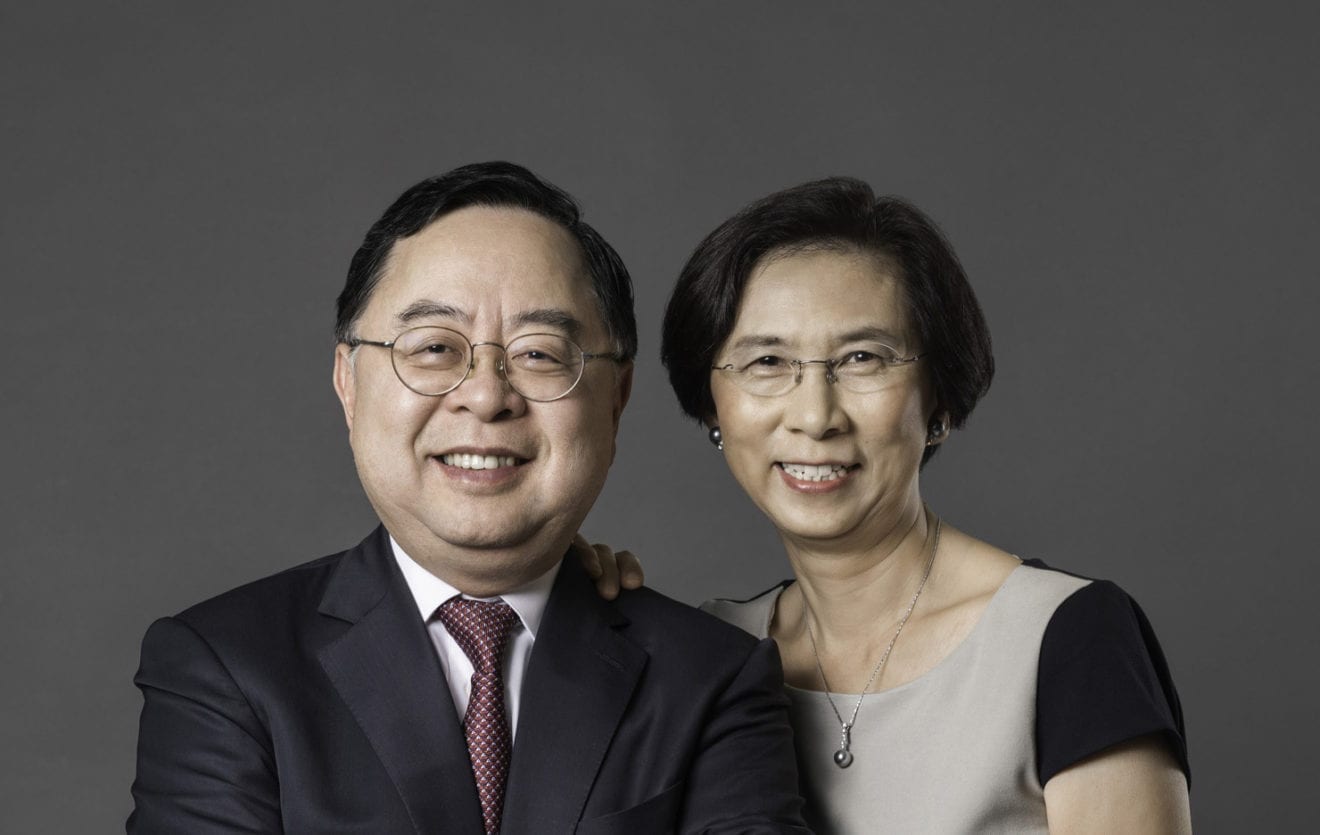
    Hong Kong property tycoon Ronnie Chan Chi-chung came to China’s defense on Thursday, saying U.S. President Donald Trump would eventually become realistic and “shut up,” amid concerns over a looming Sino-U.S. trade war.

    “China is not the same as before. If the U.S. can create troubles for China, it can do the same to the U.S.,” said Chan, chairman of Hang Lung Properties, referring to Trump’s plans to slap punitive tariffs on Chinese imports. “Don’t bother too much about a dog barking.”

    Chan’s remarks came as Hang Lung, one of the first Hong Kong developers to announce annual results, saw its Chinese business outstripped by a stronger Hong Kong market.

    The group reported a full-year net profit of 6.2 billion Hong Kong dollars ($800 million) in 2016, up 22% from a year ago. Underlying profit that excludes the impact of property revaluation jumped 45% on the year to reach HK$6.3 billion.

    Turnover was up 46% to HK$13.1 billion, driven by higher property sales in Hong Kong that grew more than four-fold to HK$5.3 billion. The developer increased sales after a rebound in home prices last April amid an influx of mainland capital, selling some 430 units, including two semi-detached houses in Happy Valley and the upscale Long Beach project.

    Rental revenue was flat. In Hong Kong, the group countered a downtrend in the retail sector with a 5% increase in rental income following mall upgrades to bring in popular sportswear tenants.

    A sluggish economy and retail environment hurt income on the mainland. Rental income from the company’s portfolio of prime offices and eight shopping malls in cities such as Shanghai, Shenyang and Tianjin fell 5% on the year to HK$4 billion. The group blamed renovations that affected occupancy, adding it would continue to develop projects on acquired sites in cities including Wuhan, Wuxi and Kunming.

    “We have 24 million square feet of buildable space in China — it’s a lot of work to follow up on,” said Executive Director Adriel Chan Wenbwo, Chan’s son, who was promoted to the position in November. Asked how he felt about chairing his first earnings briefing, he said: “It’s okay.” He described Managing Director Philip Chen Nan-lok as a “role model.”

    Mainland competition

    Hong Kong developers are facing intense competition as their mainland counterparts accelerate their shopping spree in the territory. On Wednesday, Chinese tourism conglomerate HNA Group outbid 18 developers for its third residential site in Kai Tak, bringing its total investment in the former airport site to HK$20 billion in three months. The latest deal, totaling HK$5.5 billion, is equivalent to HK$13,000 per square foot, about 10% above market valuations.

    Data from the Lands Department showed that Chinese developers splashed out HK$28.1 billion to buy land for building homes in Hong Kong last year, accounting for 41% of the territory’s residential land sales.

    Beijing’s recent capital controls may do little to reverse this trend. Patrick Wong, a property analyst at Bloomberg Intelligence, expects mainland developers to maintain a similar share of land sales in 2017, as active companies are listed in Hong Kong with funding channels abroad. “Despite the cooling measures in Hong Kong, regulatory risks here are mild relative to that on the mainland,” he said, referring to restrictions imposed on homebuyers in more than 20 major Chinese cities.

    Hong Kong developers will face a “tough time” in the land market, Wong said, although they are less aggressive in placing bids due to abundant land reserves. Local developer Hopewell stressed its priority was for existing projects rather than land acquisition. “It’s not very meaningful to look at a particular deal that has deviated from the market,” said Hopewell Managing Director Thomas Wu Man-sun on Tuesday.

    Hang Lung’s elder Chan has a similar view. “It’s a market of short-term irrationality and long-term rationality,” he said, adding that it was a “natural development” for Chinese companies to diversify their investments abroad.

    After a year of aggressive property sales, Hang Lung was left with about 100 units on its inventory list, including 16 luxury houses. Asked whether the group would replenish its land bank, he said: “When ‘black swan’ events such as the 1997 Asian financial crisis happen, that’s our chance to buy land.”

  • Trump’s 6-Star Bali Hotel Project Meets Resistance

    Trump’s 6-Star Bali Hotel Project Meets Resistance

    The lands and waters we now know as Indonesia used to be under the influence of Hindu empires (prior to the expansion of Islam in the Archipelago after the 1200s). However, on most Indonesian islands this Hindu chapter has been erased, either by time or conquest, from the Archipelago’s history. The only exception being the island of Bali. Until today most inhabitants on this resort island (known as ‘island of the Gods’) practice Balinese Hinduism (and its rituals and art also form reasons for foreign tourists to visit this island).

    In Balinese Hinduism the worshiping of gods plays a central role. Not only the traditional Hindu gods (Brahma, Vishnu and Shiva) are worshiped but also a range of other deities. These gods need to be respected fully (like in monotheistic religions). One of the local rules is that buildings are not allowed to be taller than the highest (nearby) coconut tree. If this rule is ignored, then it would anger the gods. This is one of the key issues surrounding the Trump Organization’s new 6-star hotel project in Bali’s Tabanan regency.

    The Trump Organization and its Indonesian partner business tycoon (MNC Group founder) Hary Tanoesoedibjo acquired an existing hotel (the 20-year-old Pan Pacific Nirwana Bali Resort) about two years ago. This resort is located nearby the Pura Tanah Lot temple. The structure of the existing property is, in line with local beliefs, not taller than the surrounding coconut trees. However, the Trump Organization “thinks big” and wants to expand the existing structure by building a tower with ocean view and an upgraded golf course.

    Besides the height, another issue is the additional land that is required. The MNC Group said the project requires about 34 hectares of additional land. Surrounding the existing property there is only farmland, implying local farmers need to sell it to the developers. However, based on information in local media few farmers want to sell their land. Moreover, according to local beliefs land nearby temples cannot be used for the purpose of leisure (such as a golf course). On the eastern side of the existing golf course there stands a small temple and therefore local people do not want to see an upgraded (expanded) golf course.

    Land acquisition is always a costly and time-consuming affair in Indonesia. The property, which will be named the Trump International Hotel and Tower Bali, would become the most luxurious resort on Bali. Construction is planned to start in early 2018.

    Meanwhile, I Gusti Ngurah Sudiana, Chief of Parisada Hindu Dharma Indonesia (Indonesia’s largest Hindu organization), is against any property development that would impact on the 16th century Hindu pilgrimage temple Pura Tanah Lot, a UNESCO-listed World Heritage Site.

    Hary Tanoesoedibjo’s MNC Group, however, said the height of the planned property on Bali is not yet determined.

  • Trump good for the Philippines

    Trump good for the Philippines

    Why is President Trump good for the Philippines?  He has withdrawn from the Trans-Pacific Partnership (TPP). The TPP, according to the Office of the United States Trade Representative, prohibits exploitative child labor and forced labor; ensures the right to collective bargaining; and prohibits employment discrimination.

    Philippine agriculture and retail and many small businesses depend on child labor and forced labor. The TPP would have subjected the Philippines (especially its exporters) to charges of violations of child and labor rights, non-payment of minimum wage and benefits for formal work.  With the US out of the TPP, the Philippines loses a major excuse for joining it and escapes the consequences that would have ensued with violations.

    Also, the TPP would have meant high-priced software and medicines produced by multinationals because of the treaty’s strong copyright protection provisions and severe sanctions for violations.   Without the TPP, Filipinos would have access to pirated and cheaper software and cheaper medicines.

    Besides, the Philippines doesn’t really have anything to sell to the world, except humans.  It has a very insignificant and weak manufacturing sector, outside of food and beer.

    President Trump is good for President Duterte and Duterte has been good for Filipinos.  He says they “have the same mouth.”

    Trump won’t mind any human rights violations in Duterte’s current violent anti-drugs campaign, unless the violations become so outrageous they trigger worldwide condemnation (such as the killing by the police while under police custody of the Korean businessman who was kidnapped for ransom by the police.  I agree that PNP Chief General Bato should resign and form an entirely new Philippine National Police. The present PNP is beyond reform).

    “We do not seek to impose our way of life on anyone,” Trump declared in his inaugural address. With his “America First,” Trump abandons America’s commitment declared by John Kennedy in his stirring inaugural speech wherein he said, “Let every nation know, whether it wishes us well or ill, that we shall pay any price, bear any burden, meet any hardship, support any friend, oppose any foe to assure the survival and the success of liberty.”

    So liberty, no. But territory? Now, that’s another matter.

    Still, Trump’s secretary of state, Rex Tillerson, told a US Senate confirmation hearing “we are the only global superpower with the means and the moral compass capable of shaping the world for good.  If we do not lead, we risk plunging the world deeper into confusion and danger.”  When he said that, Tillerson, however, might have been just pandering to the Democrats in the Senate to get his confirmation.

    Trump will try to  check China’s island-grabbing military and territorial expansion in the South China Sea. Tillerson has referred to China’s island-building to “Russia taking over Crimea.” “They are taking territory or control or declaring control of territories that are not rightfully China’s,” Tillerson said. At a press briefing Monday (Tuesday in Manila), White House Press Secretary Sean Spicer vowed the US would “make sure that we protect our interests” in the resource-rich trade route.  “It’s a question of if those islands are in fact in international waters and not part of China proper, then yeah, we’re going to make sure that we defend international territories from being taken over by one country,” the combative Spicer told reporters Monday.

    Some $5 trillion worth of goods pass through the South China Sea, according to our own Defense Secretary, Delfin Lorenzana.

    Trump’s belligerent anti-China stance could mean Duterte could play the China card vis-à-vis the US and his friendship with Trump vis-à-vis Beijing.  So Duterte gets the best of both worlds—increased trade, loans, assistance and investments from China—a great boost to the President’s focus on infrastructure and job generation, while enjoying the protective umbrella of the power of the US Seventh Fleet.

    Trump is an acoustics and optics-type president. He likes fire and brimstone.   That is why he has assembled for his defense and security and intelligence management who are, tough guys, and to use his own words, “the greatest of killers.”

    In the cabinet, there are three former generals, James “Mad Dog” Mattis (Defense) and John Kelly (Homeland Security and anti-terrorism), both former marines; and Michael Flynn (national security).

    Described as an intellectual in Genghis Khan clothing, a “Warrior Monk,” and another General Patton, Mattis once said “it’s fun to shoot some people”.   At the time he said (in San Diego), he was not referring to the Chinese.    He also once told Iraq military leaders, “I come in peace. I didn’t bring artillery. But I’m pleading with you, with tears in my eyes: If you f–k with me, I’ll kill you all.”   His favorite slogan: “Marines don’t know how to spell the word defeat.”  His advice to his soldiers before the second Iraq invasion: “Be polite, be professional, but have a plan to kill everybody you meet.”

    Meanwhile, a retired Marine Corps four-star general, Kelly, is the highest ranking officer who lost a son, a marine lieutenant, in Iraq (he stepped on a landmine in 2010).

    So expect fireworks, if not outright firepower, to spark in the South China Sea.  And that will be good for the Philippines.

    As for Mr. Flynn, well, The Economist calls him “a gifted intelligence officer” but recalls that “he was sacked as head of the Defense Intelligence Agency in 2014, allegedly for poor management skills.”

    In practical terms, such a description would mean:  The US has the right info on the Chinese.  They send warrior ships.  One of the warrior ships, however, fires on the wrong target (Remember: China’s ships in the islets and island it occupies in the South China are not supposed to be war ships but coast guard boats, civilians).

  • Trump’s Indonesian Business Partner to Attend Inauguration

    Trump’s Indonesian Business Partner to Attend Inauguration

    The Indonesian business partner of President-elect Donald Trump will be attending next week’s inauguration and also plans business meetings with Trump family members, his spokesman said Friday.

    Trump’s ties to Hary Tanoesoedibjo are among the many conflicts of interest he could face as the 45th U.S. president. The property billionaire’s presidency is shaping up to have unprecedented potential to muddy U.S. national interests with his personal business interests.

    Tanoesoedibjo, usually known as Tanoe, is the founder of media and real estate conglomerate MNC Group and also has political aspirations in Indonesia.

    The ethnic Chinese and Christian businessman has founded a political party and has said he wants to be president, though that is unlikely in Muslim-majority Indonesia because of historical antipathy to its tiny Chinese minority and the country’s current climate of rising religious intolerance.

    MNC’s corporate secretary Arya Sinulingga said that Tanoe and his wife were invited to the Jan. 20 inauguration and before that will have business meetings including with Trump’s two oldest sons.

    “He will meet his business partners ahead of the inauguration to bolster some business deals,” Sinulingga said.

    Tanoe’s company plans to start building two resorts in Indonesia this year that Trump’s business is associated with through management and licensing deals.

    A planned “six star” luxury resort on the tourist island of Bali would be the first hotel in Asia under the Trump Hotel brand. The second planned resort is in West Java’s Sukabumi, about 100 kilometers (62 miles) southwest of the capital Jakarta.

  • Trump’s Indonesia projects proceed despite potential conflicts of interest

    Trump’s Indonesia projects proceed despite potential conflicts of interest

    One resort, planned as the largest in Bali, will overlook a spectacular Hindu temple. The other, in the verdant hills of West Java, will adjoin a theme park. The properties will be so luxurious, the Trump Organisation says, that even an impressive five-star rating will not do them justice. So it will give them six stars instead.

    Even as President-elect Donald Trump promises to end foreign business deals that could pose conflicts of interest — there will be “no new deals” while he is in office, he has said — his company is moving ahead with two Indonesian projects that illustrate how tricky that pledge might be.

    None of the construction work to build or renovate structures at the Indonesian resorts has even begun, but Mr Trump has forged relationships with powerful political figures in Indonesia, where such connections are crucial to pushing through big projects.

    That tangle of relationships includes an Indonesian business partner who aspires to high office; a powerful politician accused of trying to extort billions of dollars from a United States mining company; and Mr Trump’s new adviser on regulatory issues, Mr Carl C Icahn, a top shareholder in the mining company.

    The resort projects, which a Trump spokeswoman said last week were “binding contracts”, have created a grey area of conflicting interests that could be hard to separate from an array of issues facing the US and Indonesia, including trade and contested claims over the South China Sea.

    Mr Trump’s local partner on the resorts, Mr Hary Tanoesoedibjo, is a billionaire media mogul with his own political ambitions. He ran for vice-president of Indonesia in 2014 and is organising a political party for another possible run at national office in 2019. If Mr Tanoesoedibjo or his party wins a major role in government, the potential conflicts could escalate significantly.

    “You could have two world leaders that are business partners,” said Professor Richard W Painter, who served as a White House ethics lawyer during the George W Bush administration. “It makes it almost impossible to conduct diplomacy in an even-handed manner. That does not work.”

    Through the partnership with Mr Tanoesoedibjo, Mr Trump has gained access to some of Indonesia’s top political figures, including Mr Setya Novanto, Speaker of the House of Representatives, who was temporarily forced to surrender his leadership post because of corruption allegations in 2015. Mr Novanto was heard on an audio recording seeking a US$4 billion (S$5.8 billion) payment from the US mining giant Freeport-McMoRan.

    Months before the recording came out in December 2015, Mr Trump met Mr Novanto during the presidential campaign at Trump Tower. After their lunch, Mr Trump pulled Mr Novanto before the cameras at a news conference and called him “a great man”, adding, “We will do great things for the United States.”

    The knot of potential conflicts includes Mr Icahn, the billionaire investor who will serve as a special adviser to Mr Trump. He is one of the largest shareholders in Freeport, which does so much business in Indonesia that it is the country’s largest taxpayer and has been seeking to extend its mining contract with the Indonesian government.

    “This stuff is so murky,” said Ms Karen Hobert Flynn, president of Common Cause, a nonprofit group that has called for Mr Trump to sell off his businesses to avert conflicts of interest. “It is not going to be clean moving forward. There are going to be complications as these projects move forward.”

    Mr Trump has provided little clarity about what he means by “no new deals”, a vow made in a Twitter post he sent out in mid-December. His aides suggested in interviews last week that even if construction had not started on a project, the Trump Organisation would move ahead if it had a binding agreement.

    For Mr Trump, the Indonesian deals are licensing and management agreements in which he provides the use of his name and his company manages the resorts.

    Even though no structures were built, Mr Trump secured a considerable payout on the two deals, according to a financial disclosure report that listed payments ranging from US$1 million to US$5 million for each of the projects between January 2015 through May 2016. That is far more than the US$400,000 salary paid to the President, which Mr Trump has said he will decline.

    Mr Trump created the corporations that manage these projects — including DT Bali Hotel Manager and DT Lido Hotel Manager — in late June 2015, just a week after he declared his intention to run for President.

    His companies have operations in at least 20 countries, including the Philippines, India, Turkey and Britain, but the full extent of his foreign financial ties is unclear because he has refused to release his tax returns or disclose the identity of his lenders.

    In addition to the no-new-deals pledge, Mr Trump has said that his sons, Eric and Donald Jr, along with other executives, will manage the family’s global real estate business.

    The Trump Organisation has recently moved to resolve potential controversies, in part by closing family foundations. It has also dropped a number of its proposed projects, including Trump Office Buenos Aires in Argentina; Trump Towers Rio and Trump Hotel Rio de Janeiro, both in Brazil; Trump International Hotel & Tower Baku in Azerbaijan; Trump Tower Batumi in Georgia; and Trump Riverwalk in Pune, India, representatives from the Trump Organisation have said last week, in response to questions.

    But other projects — including some on which construction has not started or is not well underway — are moving ahead, including Trump Tower Mumbai and a Trump tower in Gurgaon, both in India; Trump Tower Punta del Este in Uruguay; Trump International Golf Club, Dubai, and Trump World Golf Club, Dubai, both in the United Arab Emirates; and Trump International Hotel & Tower Vancouver, in Canada, the Trump Organisation confirmed.

    Ms Amanda Miller, the Trump Organisation spokeswoman, said of the two Indonesian projects: “Construction is well underway and will proceed as planned.”

    In fact, construction has started only on a golf course and toll road as part of the Lido Lakes resort in West Java. Separating the enterprise from politics may also be difficult because Mr Tanoesoedibjo’s MNC Group is building the road to the site as part of a government highway project.

    No new structures have been built at Lido Lakes or at the resort near the stunning Tanah Lot temple in Bali. A 20-year-old hotel, the Pan Pacific Nirwana Bali Resort, stands on the Bali property and could be renovated to create a Trump hotel, but that work has not begun.

    The two resorts will give the Trump brand a high profile in Indonesia — which has the world’s largest Muslim population — with the Trump name adorning two luxury hotels and premier golf courses as well as high-end villas and condominiums. Yet the US President’s name on the projects could also make them potential targets. During the campaign, Mr Trump made statements about Muslims widely viewed as inflammatory. US hotels in Jakarta have been attacked by terrorists several times.

    On Wednesday, Mr Trump accused the news media of exaggerating any potential conflicts presented by his business holdings. “It’s not a big deal; you people are making it a big deal, the business,” Mr Trump said on the steps of his Mar-a-Lago resort in Florida, where he was spending the holidays. “They all knew I had big business all over the place.”

  • President Trump ‘good for Asia’

    President Trump ‘good for Asia’

    Global Brands CEO Bruce Rockowitz is confident President Trump will be good for Asia’s apparel industry.

    Speaking at the release of the company’s half yearly results in Hong Kong Thursday afternoon, Rockowitz, who knows Trump personally, does not believe tariffs will be imposed on goods imported from China because it will hurt too many American businesses.

    A growing US economy would benefit Global Brands Group because it was already performing well in a weak market. “We’re not banking on it, we’re not budgeting for it.” But if the US economy improves, the company is ready to reap the rewards, he said.

    “He [Trump] is a businessman. A very smart businessman. He is pragmatic. He is a person who will put the right people around him and he will listen to them

    One thing we believe is that there is going to be an economic boom in the US because of his policies and the fact he controls both houses. Lowering the corporate tax to 15 or 16 per cent will result in a lot of new jobs in the economy.”

    With lower company taxes and more jobs, more money will be circulating in the economy. ON top of that Trump plans infrastructure planning – meaning more spending.

    “The one thing he will want to be remembered for is for a great economy.”

    If he imposed taxes on imports, giant American companies like Apple, Walmart and car makers who rely on imported components (and in Apple’s case complete products) would be adversely impacted and Trump would not want that, Rockowitz said.

    “Forty-five per cent import duties would be catastrophic, so I don’t think he will do that.

    “The election is over and we are seeing now he is being more conciliatory.”

  • Indonesian markets panic over Trump’s policies

    Indonesian markets panic over Trump’s policies

    Panic hit domestic financial markets on Friday as investors showed concern over the anticipated policies of US president-elect Donald Trump that may negatively affect Indonesia’s economy.

    The Jakarta Composite Index (JCI) — the benchmark of the Indonesia Stock Exchange (IDX) — ended in the red on Friday after falling 4 percent to 5,231.97 points, its lowest level in the past two months.

    Almost all sectors ended in negative territory, as investors sold a net of Rp 2.46 trillion (US$184.27 million) worth of securities throughout the trading day.

    Net sales jumped more than eightfold from the previous day, when investors ditched less than Rp 300 billion worth of securities.

    The situation was just as bad in the foreign exchange (forex) market, with the rupiah sinking as low as Rp 13,865 per US dollar, the lowest point since June 24. Market intervention by Bank Indonesia (BI) propped up the currency, enabling it to end at Rp 13,383 to the greenback.

    Friday’s development sent the government, financial authorities and analysts rushing to calm panicked investors.

    They attributed the market rout to speculation that Trump might push up fiscal spending after taking office.

    Higher spending may translate into higher inflation and interest rates in the US, which is not good news for Indonesia and other emerging markets that rely heavily on foreign funds, as some of those funds would return to the US.

    “Up to this day, the developments of the rupiah, the JCI and securities are greatly affected by regional and global sentiment impacted by the US political situation,” Finance Minister Sri Mulyani Indrawati said Friday.

    “It is natural to see that every decision made in the US, as the world’s largest economy, even in the form of a statement, can have a significant impact.”

    She said investors, including those holding government debt papers (SUN), did not have to be worried, as Indonesia had a low debt risk with a relatively long maturity profile and a relatively small state budget deficit.

    Moreover, with various fiscal measures to control the state budget deficit, spending and tax revenues, government debt papers had a very low risk profile.

    “There is no need to be trapped in groundless fear,” she stated.

    The IDX and the Financial Services Authority (OJK) also tried to calm investors, saying any impact of Trump’s policies would be temporary.

    BI senior deputy governor Mirza Adityaswara admitted the central bank had intervened in local forex and sovereign bond markets to stabilize the rupiah.

    Selling by forex traders, particularly in non-deliverable forward (NDF) derivative contracts, he went on, had triggered the market volatility.

    NDF contracts, unlike forex forwards, are settled in dollars determined by reference to a daily fixing, which in some jurisdictions is set by a survey of lenders.

    “The NDF market weakened and affected traders without considering Indonesia’s economic fundamentals. That’s why the rupiah was traded at Rp 13,400 [per US dollar] during opening, because the market followed what occurred in Mexico, Brazil and other places,” he said.

    Mirza emphasized that the country’s fundamentals remained strong, with economic growth of 5.02 percent in the third quarter, higher than in most of Indonesia’s Southeast Asian peers.

    Meanwhile, stock market analysts deemed investors’ reaction exaggerated and urged a more cautious manner. They said the market should actually have priced in the expectation of a December rate increase in the US, with further increases in 2017 and 2018.

    Separately, Trade Minister Enggartiasto Lukita said investors should wait until Trump formed his team. He expressed optimism that economic relations between the two countries would remain positive, despite Trump’s seemingly protectionist stance.

    “But we also need to keep our market strong. With a population of 250 million people, we have enough bargaining power,” he said.

    We’ll push local industries here, so that money circulation will happen much more domestically,” he added.

  • Indonesia moves away from TPP because of Trump triumph

    Indonesia moves away from TPP because of Trump triumph

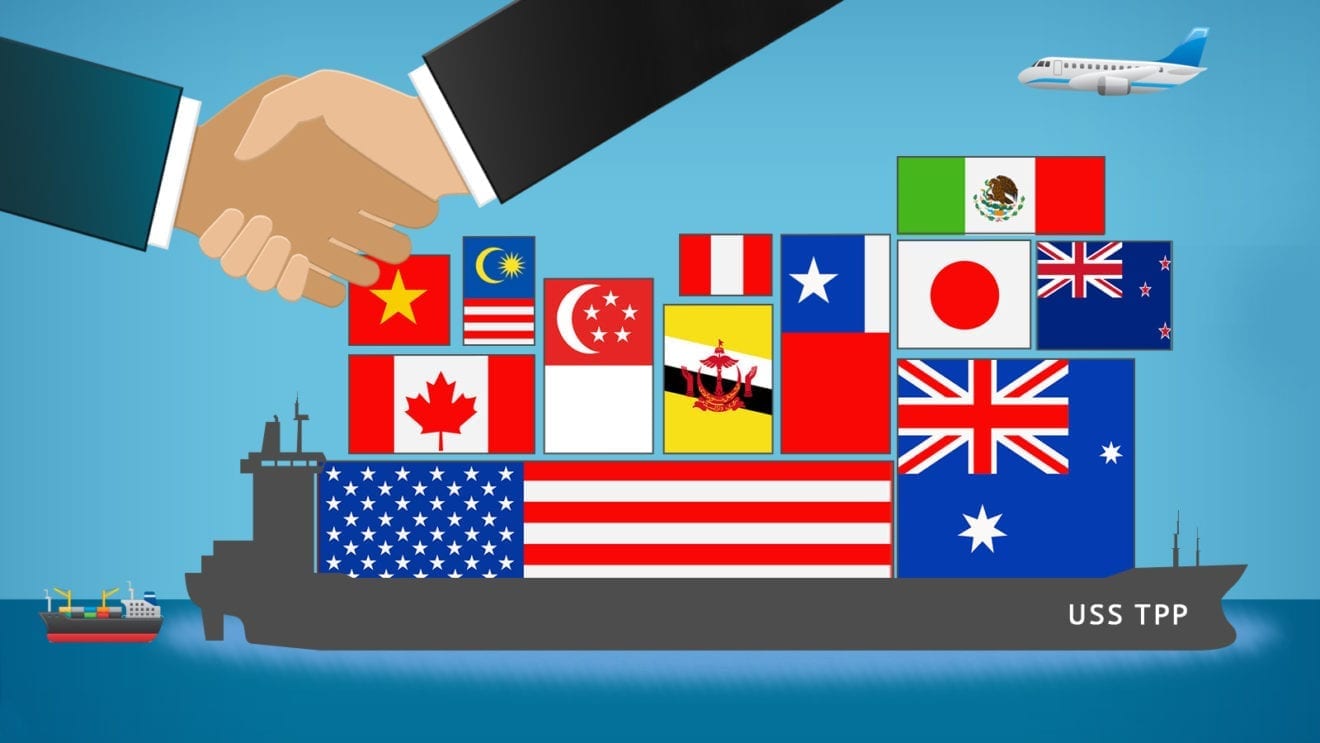
    The Indonesian government has said it will not be in a hurry to seek membership of the US-led Trans-Pacific Partnership (TPP) trade deal following the election of Republican Donald Trump as the country’s president.

    The decision was made considering Trump’s promise on the campaign trail to scrap the TPP, a multinational trade deal between the US and countries in the Asia-Pacific.

    “We are still calculating the costs and benefits of the TPP. This kind of agreement requires thorough negotiation and recently the discussion was getting stressful,” Trade Minister Enggartiasto “Enggar” Lukita said on Friday during a media briefing in Jakarta.

    He explained that problems persisted because each country had its own “ego” in expressing its needs through the mega trade deal.

    President Joko “Jokowi” Widodo expressed his intention to join the 12-member trade bloc last year.

    The TPP, which covers 40 percent of global gross domestic product (GDP), was signed by Brunei Darussalam, Canada, Australia, Chile, Japan, Malaysia, Mexico, New Zealand, Peru, Singapore the US and Vietnam.

    The trade deal has not been ratified by the US Congress.

  • Trump Victory Effect Only Temporary Visible in Asia

    Trump Victory Effect Only Temporary Visible in Asia

    Coordinating Economic Minister Darmin Nasution believes that the impact of the US presidential election on Indonesia’s economy is only temporary. Darmin said that the government would anticipate changes in the market after Republican presidential candidate Donald Trump won the election.

    “We shouldn’t be worried about the election. There will be an impact on the economy, but it’s only for a short term,” Darmin said at his office on Wednesday.

    The election results announced today showed that Donald Trump gained 288 votes, exceeding the minimum winning threshold of 270 votes. His rival from the Democratic Party Hillary Clinton obtain 215 votes.

    Industry Minister Airlangga Hartarto echoed Darmin’s comment saying that the US presidential election would not have direct impact on the national industry. Instead, Airlangga suggested that the US presidential election would have a significant impact on the capital market.

    However, Airlangga warned that the election results could affect the Fed rate revision in December. In addition, Airlangga said that he would revisit the plan to join the Trans Pacific Partnership.

    During his campaign, Trump revealed his plan to cancel all trading agreements that could cause losses to the US. Trump also criticized the TPP as a danger for the US. Trump further called for cancellation of the North America Free Trade, since it would have negative impacts on job opportunities in the country.

  • Trump to seek Indonesia`s agreement on trade commitments

    Trump to seek Indonesia`s agreement on trade commitments

    The US President Elect Donald Trump will want Indonesia to agree to ratify international trade commitments including APEC and the Indonesia-US Strategic Partnership.

    “Donald Trump will be interested in making investments in the infrastructure sector, including air, land and sea ports, especially investments that have the potential to lessen the influence of the Peoples Republic of China in South-East Asia,” international relations observer from Padjajaran University, Teuku Rezasyah, told ANTARA News in Jakarta on Wednesday.

    Teuku Rezasyah added that Donald Trump will potentially urge Indonesia to explain the Free-Active policy adopted by the country in the context of the rivalry between the US and China.

    “Considering the importance of investment and trade security, Trump is likely to understand the challenges faced by Indonesia in following human rights principles in the country,” he noted.

    Republican Donald Trump won over his rival Hillary Clinton, the candidate of the Democratic Party.

    Trump was elected as the 45th US President with total electoral votes far above Hillary Clintons.

    His victory came as a shock since most surveys had predicted that Hillary Clinton would win the US Presidential contest.