Tag: visa

  • Visa and Lianlian Pioneer AI-Driven B2B Payments in Greater China

    Visa and Lianlian Pioneer AI-Driven B2B Payments in Greater China

    In a pioneering move, Visa and Chinese fintech company, Lianlian, have successfully completed the first-ever business-to-business (B2B) transaction facilitated by artificial intelligence (AI) in Greater China. The transaction, which marks significant progress towards a future where AI agents independently facilitate purchases and make payments, was executed using LoopXPay, an AI agent developed by Lianlian.

    In a single workflow, the agent sourced a product sample from a vendor, identified the purchasing requirement, suggested suitable suppliers, compared options, placed the order, and securely executed the payment. This process was conducted within predefined spending limits and approval ranges allowing control over the transaction to be retained, while much of the procurement process was delegated to the AI. The development exemplifies the potential for AI to progress beyond information gathering and assistance to include commercial decision-making and financial transactions.

    Establishing Trust in AI-Mediated Payments

    The progression also raises a fundamental question for Visa: how can merchants and financial institutions verify if an AI agent initiating a transaction is authentic and authorised to spend? In response to this, Lianlian’s LoopXPay has been registered in Visa’s Agentic Directory, a tool that allows businesses and merchants to recognise validated AI agents.

    The infrastructure aids Visa’s Trusted Agent Protocol, built to offer identity, transparency, and controls for agent-facilitated transactions. “As businesses increasingly look to incorporate intelligence into purchasing and payment experiences, trust will become an essential driver of adoption,” stated Darren Parslow, Global Head of Visa Commercial Solutions.

    The initiative intimates a potential new function for payment networks. As autonomous AI systems become capable of commercial decision-making, payment providers will increasingly need to establish rules governing identity, authorisation, and spending controls for machines acting on behalf of businesses.

    Expanding Applications for AI Agents

    Visa and Lianlian are already exploring additional applications for AI agents beyond the first transaction. These include procurement, digital advertising optimisation, and payments on B2B platforms.

    Lianlian views payments as a crucial element of the emerging infrastructure supporting what it refers to as the “Agent Economy.” “AI is transforming the entire commercial value chain, where a growing number of business activities will be independently carried out by AI agents, with payments serving as the critical infrastructure linking them to global commerce,” explained Zhang Zhengyu, founder, chairman, and CEO of Lianlian DigiTech.

    The collaboration between Visa and Lianlian arrives as payment networks, banks, and fintech companies progressively explore how autonomous AI agents could revolutionise commerce. If adoption accelerates, the competition may extend beyond who processes a payment to who provides the identity, trust, and authorisation infrastructure enabling AI agents to transact initially.

    Questions & Answers

    What was the nature of the transaction conducted by Visa and Lianlian?
    The companies completed a B2B transaction driven by an AI agent. This marked a significant step towards autonomous AI systems facilitating purchases and making payments.

    How do Visa and Lianlian ensure that AI-driven transactions are legitimate?
    LoopXPay, the AI agent used for the transactions, is registered in Visa’s Agentic Directory. This tool allows businesses to verify AI agents, ensuring that they are legitimate and authorized to conduct transactions.

    What is Lianlian’s view of the role of payments in the future of commerce?
    Lianlian sees payments as a vital component of the infrastructure supporting the “Agent Economy.” They believe that AI is transforming the commercial value chain, with payments serving as a critical link connecting autonomous business activities to global commerce.

  • Trump’s Visa Fee Changes Ignite Offshoring Discussions Among Leading American Tech Companies

    Trump’s Visa Fee Changes Ignite Offshoring Discussions Among Leading American Tech Companies

    U.S. President Donald Trump’s recent overhaul of the H-1B visa program is causing significant ripples across the tech sector, particularly in the recruitment strategies of U.S. firms that rely heavily on international talent. By introducing a staggering $100,000 fee for new applicants, the administration has unintentionally set off a wave of uncertainty among companies and tech entrepreneurs, leaving them scrambling to adapt their workforce plans.

    A Shift in Hiring Landscape

    While the hefty new fee applies solely to prospective applicants and not to current visa holders as initially communicated, this shift has already prompted leaders in the tech world to reconsider their hiring pipelines. “We’ve had conversations where corporate clients are saying this new fee is unmanageable, leading us to explore opportunities in other countries that can offer skilled talent more affordably,” noted Chris Thomas, an immigration attorney from Holland & Hart. Some of these discussions are taking place within the walls of Fortune 100 companies that are now rethinking their operational strategies in light of these changes.

    Statistics Reveal Deeper Concerns

    In 2024, approximately 141,000 new H-1B applications were approved, according to Pew Research. While Congress caps the new visa count at 65,000 annually, this cap can be bypassed for universities and certain categories, allowing for higher overall approvals—many of which are for computer-related positions. Even before the fee increase, companies were eyeing an expansion in India as a viable alternative; in fact, Accenture is reportedly looking to establish a new campus in Andhra Pradesh aimed at creating around 12,000 jobs. This strategic pivot underscores a growing tendency to favor markets with lower operational costs.

    Jobs vs. Visas: A Complex Debate

    Critics of the H-1B program argue it has kept wage growth stagnant and limited job opportunities for U.S. graduates, but the introduction of the new fee could paradoxically end up discouraging the very innovation it aims to foster. For many startups, the financial strain of the fee is an albatross around their necks. Sam Liang, the co-founder of AI company Otter.ai, pointed out that companies might feel compelled to cut back on H-1B hires, shifting instead toward outsourcing work to nations like India where operational costs are cheaper.

    Impact on Startups and Innovation

    While some commentators align with conservative views promoting the administration’s immigration crackdown, figures like Netflix co-founder Reed Hastings have expressed support for the new structure, arguing it could enhance the visa allocation process for top-tier jobs. However, venture capitalist Deedy Das warns that sweeping changes rarely yield positive outcomes and will likely hit startups hardest. “Big tech firms might absorb the cost easily, but it’s the smaller entities that could be pushed out of the market altogether,” he noted.

    The very essence of innovation is at stake as well: over 50% of U.S. startups valued at $1 billion or more have had immigrant founders, according to a 2022 report. As concerns mount, some startups are eyeing legal challenges to contest the imposition of these fees, betting that courts will intervene to mitigate the impact before hiring patterns are irreversibly altered. “If this goes unchallenged, we may see a decline in talent from around the globe,” remarked Bilal Zuberi, founder of Red Glass Ventures and a former H-1B visa holder. And indeed, the idea of losing a wealth of global talent is a poignant reminder of how interconnected the tech landscape has become.

    Questions & Answers

    What are the main changes to the H-1B visa program announced by President Trump?
    The newly introduced $100,000 fee applies exclusively to new applicants, raising substantial concerns among tech firms that rely on international talent for recruitment.

    How is the new fee impacting tech companies?
    Many companies are reconsidering their hiring strategies, with some expressing the need to explore recruitment in countries like India due to the financial burden imposed by the new fee.

    Why are startups particularly concerned about these changes?
    Startups typically operate on tighter budgets and face greater challenges absorbing the costs associated with the new visa fees, putting their ability to hire skilled workers at serious risk.

  • Retail Sales Soar in Shanghai as Visa-Free Access Opens New Opportunities

    Retail Sales Soar in Shanghai as Visa-Free Access Opens New Opportunities

    China’s new visa policies and tax refund reforms are having a transformative impact on international travel and retail in Shanghai, according to a recent report by Savills. The city has seen a remarkable increase in international arrivals and shopper engagement, driven by enhanced accessibility and an appealing cultural landscape.

    Since December 2023, China has opened its doors wider, implementing visa-free entry for citizens from 43 countries and extending transit periods to 240 hours for 54 others. These changes have led to an impressive 2.6 million international arrivals in Shanghai during the first trimester of 2025—marking a 37.1% year-on-year increase. Notably, visitor numbers surpassed pre-COVID levels in both December 2024 and April 2025, signaling a vibrant revival of tourism.

    This influx has not only extended tourists’ stays but has also sparked a shopping spree in the city. Leveraging its well-developed infrastructure, affordable flight options, and rich cultural offerings, Shanghai has positioned itself as a prime destination for both leisure and business travelers alike.

    In April, the government took additional steps to encourage spending by lowering the minimum tax refund threshold to $28 (RMB200) and significantly increasing the annual reimbursement cap to $2,785 (RMB20,000). More stores and malls are now included, with visitors able to claim an immediate 11% refund at over 3,300 participating tax refund outlets, including major shopping havens along East and West Nanjing Road, Xujiahui, and Zhuyuan.

    The impact of these reforms has been palpable. During the Labour Day holiday in 2025, inbound tourist spending soared to $63.39 million (RMB455 million), an astonishing 211.6% increase compared to the previous year.

    Retailers are eager to capitalize on this growth, adopting high-quality, immersive experiences to meet the evolving needs of consumers. Visitors are increasingly drawn to Chinese brands, shopping fervently for fashion, designer bags, themed toys, and food—reflecting a diverse and vibrant retail landscape.

    South Korea, Japan, and Thailand emerged as the top three origin countries for tourists in Q1 2025, with notable increases in visitors from Thailand (+242.75%), South Korea (+142.37%), and Indonesia (+118.51%). The profile of these travelers is skewing younger; approximately 40% of incoming tourists are between the ages of 20 and 35, according to Mastercard.

    These “digital natives” are not just wandering the aisles; they’re active on social media throughout their shopping journeys, making seamless online-to-offline engagement crucial for brands seeking to connect with them meaningfully.

    Brands such as SHUSHU/TONG and Songmont report that nearly half of their clientele now consists of international visitors. Meanwhile, brands like Pop Mart and Miniso are capitalizing on trendy IP partnerships and social media buzz to attract attention and drive sales.

    The dining scene is also thriving, with restaurants like Haidilao and Long Time Ago experiencing higher foot traffic from foreign patrons than locals during peak hours. To cater to this diverse clientele, many establishments have introduced multilingual menus and AI translation tools, ensuring that no one is lost in translation, or worse, in flavor.

    Despite this positive momentum, some caution remains as consumer sentiment is tempered by broader economic uncertainties, with value-for-money becoming a deciding factor for many shoppers.

    Nonetheless, the marketplace is energized by emerging brands, particularly in sectors like outdoor apparel, pet services, and global bistros. Additionally, themed malls focusing on ACG (anime, comics, games) culture and immersive experiences are rapidly gaining popularity among niche audiences.

    As major attractions such as Lego and Harry Potter theme parks loom on the horizon, expectations are high for these developments to further enhance Shanghai’s reputation and stimulate cross-sector consumption in retail, hospitality, and tourism.

    Questions & Answers

    How have China’s visa policies impacted tourism in Shanghai?
    China’s recent visa-free entry policies have resulted in a significant rise in international arrivals, with 2.6 million tourists flocking to Shanghai in just the first four months of 2025—a 37.1% increase from the previous year.

    What measures have been taken to encourage foreign spending in Shanghai?
    In April, the government lowered the minimum tax refund threshold to $28 and doubled the annual cap to $2,785. This allows more tourists to enjoy immediate tax refunds at over 3,300 designated stores, driving a substantial increase in visitor spending.

    Which demographics are primarily driving tourism in Shanghai?
    Younger travelers, particularly those aged 20 to 35, make up about 40% of all inbound visitors. This group tends to engage heavily with social media, making their shopping experiences intertwined with digital interactions.

  • China asks Visa, Mastercard to cut transaction fees

    China asks Visa, Mastercard to cut transaction fees

    China is pushing for Visa and Mastercard to lower their bank card transaction fees in the country, as part of an effort to facilitate payments for foreign visitors, Bloomberg News reported, citing a person familiar with the matter.

    According to a report published on Friday, the Payment & Clearing Association of China is negotiating with global card issuers, including Visa and Mastercard, to lower fees charged on foreign card transactions.

    The association proposed trimming the fee to 1.5 percent from 2-3 percent, the report added.

    Mastercard told Bloomberg that it had received the proposal from the industry association and said it would work with partners to lower costs for local merchants accepting foreign bank cards.

    Visa and Mastercard did not immediately reply to Reuters’ requests for comment.

    According to a statement posted on its website on Tuesday, the industry group issued a proposal earlier this week to global card issuers on the fee cut without disclosing details of the price cut.

  • China tightens rules on $1.3 trln credit card business

    China tightens rules on $1.3 trln credit card business

    China unveiled tighter rules late on Thursday to better regulate its $1.3 trillion credit card industry, urging lenders to adopt a “prudent” growth strategy, and monitor risks more closely.

    Banks are also barred from using the number of cards issued or market share as main performance metrics, and are required to cap the number of dormant cards at 20% of total, according to rules jointly published by China’s central bank, and the country’s banking regulator.

    “China’s credit card business has been growing rapidly, playing a key role in facilitating payment and consumption,” the China Banking and Insurance Regulatory Commission (CBIRC) said in a statement on its website accompanying the release of the new rules.

    “Recently, however, some banks … are lax in risk management, and have behaved in ways that hurt customers’ interest,” the regulator said.

    Chinese banks have issued a total of 800 million credit cards as of the end of 2021, with outstanding loans totalling 8.62 trillion yuan ($1.29 trillion), according to the People’s Bank of China. Roughly 86 billion yuan of credit card loans, or 1% of total outstanding, are overdue for six months or longer.

    The new rules require banks to tighten scrutiny over credit card loans, and strengthen risk management control.

    Banks must also set up a sound system to monitor, identify, alert and prevent abuse in the credit card business, according to the rules.

  • Visa’s Amazon spat shows power is shifting to retailers in fee battle

    Visa’s Amazon spat shows power is shifting to retailers in fee battle

    Amazon’s latest spat with Visa shows big retailers, armed with a growing array of payment options, are gaining the upper hand in their power struggle with card providers, but it’s not a crisis for the payment company.

    Amazon said last week that it would stop accepting Visa credit cards issued in the United Kingdom from Jan 19, 2022, saying that despite technology advancements the fees on such transactions remained high or in some cases were rising.

    While Amazon may yet back down on the UK front, where the company accounts for less than 1 percent of Visa’s credit card volume, according to an estimate by Piper Sandler analysts, the dispute is a bad sign for the card industry. Some analysts said it could presage a fight in the much bigger US market.

    “Amazon is treating this dispute with Visa as an experiment,” said Piper Sandler analyst Christopher Donat. “Our biggest concern is that Amazon seeks concessions from Visa in other geographies.”

    Visa Chief Financial Officer Vasant Prabhu told Reuters in an interview on Friday that he expected a resolution. “We’ve resolved these things in the past and I believe we’ll resolve them in the future,” he said. Amazon declined to comment.

    Credit cards dominated a third of North American e-commerce spending in 2020, according to payments giant WorldPay, but mobile payment options like Venmo and ‘buy now, pay later’ (BNPL) financing plans are chipping away at their market share.

    While alternative payments have been growing for years, the pandemic accelerated a downward trend in credit card applications boosting the popularity of BNPL financing, especially among younger consumers.

    Credit cards’ share of North American e-commerce spending declined 7 percent last year, according to WorldPay, while BNPL’s share increased 78 percent, making it the fastest-growing form of payment.

    In August, Amazon partnered with BNPL provider Affirm to offer an installment financing option on US Amazon purchases.

    “Credit cards are still dominant players for non-cash transactions, but they need to be aware of the growing competition,” Chris Dinga, a payments analyst at GlobalData, wrote on Friday.

    “BNPL is gradually being adopted by retailers as they see higher conversion and growth opportunity by providing it to their customers,” Dinga wrote, adding high credit card fees could accelerate BNPL adoption by retailers.

    Some analysts said past disputes suggested Visa may have to blink before Amazon, such as when U.S. restaurant owners stopped taking Amex cards in the 1990s, leading Amex to reduce its fees.

    “Visa may need to follow American Express’s example,” Evercore analysts said in a research note.

    Still, Visa has survived such fights and few other merchants have Amazon’s heft, said Prabhu.

    “Even a very large retailer like Amazon represents a relatively small portion of our payment volume,” he said.

    And Visa is not wedded to credit cards as the primary transaction source, he added.

    “If a merchant wants to offer credit in a different way, we’re agnostic. We will do both. The buy now, pay later business has been a positive for us.”

    Visa has been partnering with BNPL providers, including Sweden’s Klarna.

    Retailers also benefit from credit card issuers offering their customers cash rebates and rewards programs to encourage them to spend more than they otherwise would.

    Prabhu said he expected credit card spending to pick up now that borders are opening and affluent customers are spending more on travel, entertainment and eating out.

    And Amazon also needs a partner for its own co-branded credit card. The company is considering replacing Visa on US co-branded credit cards with either Mastercard or American Express, suggesting its UK fee dispute could be a negotiating tactic, said analysts.

    “It’s not necessarily a good idea for merchants to restrict consumer choice,” said Prabhu. “Amazon will have to think about that, too.”

  • Crypto-Linked Spending on Cards Tops $1 Billion

    Crypto-Linked Spending on Cards Tops $1 Billion

    Crypto-linked spending on Visa cards topped $1 billion despite continued doubts about cryptocurrencies as a means of payment.

    Credit card giant Visa achieved the feat in just the first half of 2021, according to a statement, underlining more steps to make crypto transactions smoother.

    The firm said it was seeking to partner with 50 crypto platforms to improve ease of conversion and spending in digital currencies across 70 million merchants worldwide.

    Despite continued regulatory pressures, crypto adoption continues to rise across the financial sector with global banks like Goldman Sachs, Morgan Stanley, Standard Chartered and DBS launching various related offerings.

  • Pandemic Accelerating Shift to Cashless Society By 4 Years

    Pandemic Accelerating Shift to Cashless Society By 4 Years

    A new study by the payments giant reveals the growing popularity of digital payment methods such as online wallets, mobile contactless payments and QR code payments among Singaporeans.

    The ongoing Covid-19 pandemic is hastening the demise of cash-based transactions in the city-state by at least four years, Visa said in its Consumer Payment Attitudes Study, published Thursday.

    The survey shows a preference among Singapore consumers for contactless card payments (31 percent), followed by online card payments (23 percent). Visa said that more than 9 in 10 transactions of its transactions by Singapore consumers are contactless – one of the highest in the world.

    Fewer than one in five Singaporean consumers (15 percent) prefer using cash, the survey revealed, noting that its use has fallen by 45 percent for public transport transactions and 42 percent for health and fitness-related transactions. Overall, more than one-third of Singaporean consumers who prefer using cash (35 percent) used this payment method less frequently.

    According to the survey, Singaporean consumers have shown receptiveness to emerging payment trends, including installment payments (87 percent) and real-time bill payments (80 percent).

    The stickiness of new digital payment habits formed during the pandemic cannot be underestimated… With cash usage decreasing, we believe there is a significant opportunity to encourage more usage of digital payments in the country, Kunal Chatterjee, Visa country manager for Singapore and Brunei, said in a statement.

  • Afterpay and Stripe Partner to Offer ‘Buy Now, Pay Later’ Payments for Merchants

    Afterpay and Stripe Partner to Offer ‘Buy Now, Pay Later’ Payments for Merchants

    Afterpay the leader in “Buy Now, Pay Later,” today announced a partnership with Stripe, the technology company building economic infrastructure for the internet. The two companies are joining forces to offer Afterpay’s payment service to Stripe merchants through an easy and seamless integration.

    The partnership allows both new and existing Stripe merchants to easily offer Afterpay – giving their shoppers the opportunity to receive their items immediately and pay in four installments, without the need to take out a traditional loan or pay upfront fees or interest. Businesses on Stripe can start accepting Afterpay in minutes—there’s no application, onboarding, or underwriting process to get started.

    “Stripe is delighted to partner with Afterpay to make it easy and fast for online businesses to offer their customers Buy Now, Pay Later. We’ve seen strong demand from users around the world for flexible payment options, and this partnership gives businesses on Stripe an effective tool for capturing more sales and reaching new customers,” said Noah Pepper, Stripe’s Business Lead for APAC.

    Afterpay and Stripe are also extending the payment service to top e-commerce platforms, with Squarespace — the all-in-one website building platform — being the first platform to leverage the partnership and offer Afterpay to its customers.

    By offering Afterpay, Squarespace enables merchants to build a fully integrated checkout experience with ease, while maintaining the look and feel of their brand. Merchants will also experience the benefits of offering customers a flexible payment option, which is proven to attract new customers and deliver higher conversions and average order values.

    “Afterpay has been a top requested feature from our customers,” said Paul Gubbay, Chief Product Officer at Squarespace. “Through this partnership, we’re glad to be able to offer our merchants even more flexibility in how they transact with their customers and increase topline sales without having to sacrifice the design elements that are unique to their brand.”

    “Millennial and Gen Z consumers are demonstrating a clear preference for flexible payment options that allow them to budget and spend responsibly,” said Ben Presseley, Afterpay’s SVP of Global Sales Strategy and Operations. “By partnering with Stripe and Squarespace, we’re equipping retailers with the tools to meet this consumer demand – offering the younger generation a way to use their own money and pay over time, always free of interest.”

    Stripe merchants in Australia, New Zealand and the US can now integrate Afterpay, and will be available to merchants in the UK and Canada soon. Squarespace offers the combined integration of Stripe and Afterpay to their Commerce customers in Australia, New Zealand and the US, and will be available to Canadian customers soon.

  • YouTrip Inks Deal for Regional Expansion

    YouTrip Inks Deal for Regional Expansion

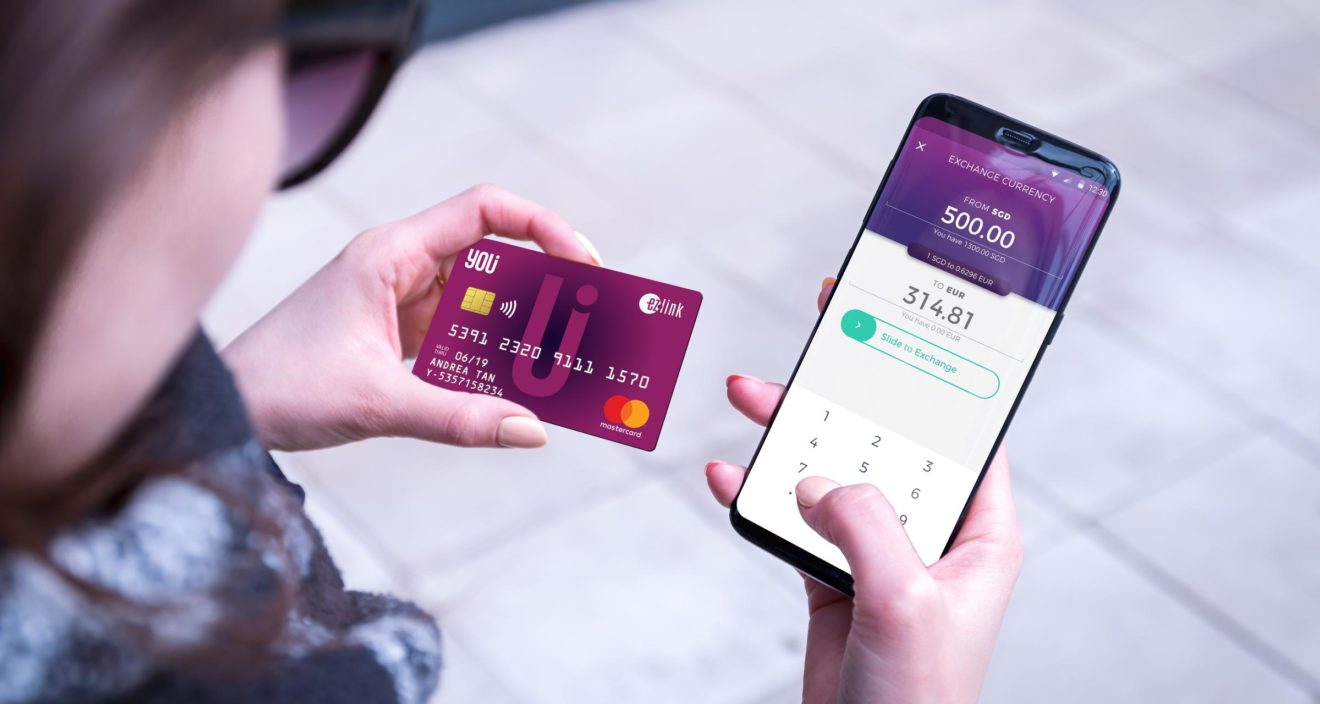
    The multi-currency mobile wallet has inked a six-year partnership with Visa to grow its reach across Southeast Asia, starting with Malaysia and the Philippines.

    The two sides are banking on an international travel recovery and hope to solve a pain point for Southeast Asian travelers by enabling access to cross border payment solutions such as wholesale exchange rates and no foreign currency transaction fees.

    Malaysia and the Philippines – two of the fastest-growing Southeast Asian countries in mobile payment adoption– have «massive untapped potential,» with outbound travel expenditure expected to reach $12.4 billion and $12 billion respectively in 2021, YouTrip noted.

    The partnership «will enable YouTrip’s continued growth to drive the next generation of payment innovation of cross border payments,» Caecilia Chu, co-founder and CEO of YouTrip said.

    Having partnered with Mastercard and EZ-Link to launch in Singapore in August 2018, YouTrip took over the role of issuer and holder of stored value accounts from EZ-Link while continuing the current brand partnership. It also closed a record $25.5 million pre-Series A fundraise in May 2019.

    The platform’s plans to tap on the booming regional travel market were nixed with the onset of the Covid-19 pandemic, but it has since pivoted to overseas e-commerce payment and recorded a three-fold increase in quarterly transactions, compared to the same period last year, YouTrip said.

    Currently also available in Thailand, the e-wallet has over 1 million downloads to date.

  • Fintech Lightnet Partners Visa and Velo Labs

    Fintech Lightnet Partners Visa and Velo Labs

    The three partners will collaborate on payment solutions aimed at addressing the under-served micro, small and medium enterprise (MSME) lending market. Singapore-headquartered fintech Lightnet Group has signed a memorandum of understanding with decentralized credit and settlement network Velo Labs and Visa to expand lending to the MSME market in Asia, according to a press statement on Monday.

    This initiative aims to enable users with poor or inexistent credit histories to receive a line of credit by depositing digital assets as collateral, with Velo tokens serving as the digital asset collateralizing financial solutions. This approach is suited to connect over 1 billion unbanked and underbanked individuals in APAC to the global financial system, Lightnet and Velo Labs said.

    Working closely together, the collaboration will also facilitate near-real-time global transactions between participating banks, money transfer operators and other financial service providers.

    The announcement cited the large opportunity for the MSME lending market, noting that $5.2 trillion in MSME lending goes unserved annually, with more than half of this financing gap existing in the Asia-Pacific (APAC) region.

    Being new-to-credit or lacking creditworthiness is often an obstacle to achieving one’s financial goals, such as securing loans to start a business or even buying a car…We are providing customers from the MSME market with another pathway to build credit and improve financial wellness, Tridbodi Arunanondchai, vice chairman and group CEO of Lightnet Group, said.

    Lightnet was co-founded in 2018 by Chatchaval Jiaravanon – a family member of the Charoen Pokphand group in Thailand – and tech entrepreneur and former investment banker Tridbodi Arunanondchai. Earlier this year, the startup raised $31.2 million in a series A funding round led by UOB Venture Management, the private equity unit of UOB Bank. It recently partnered Swiss crypto bank Seba to offer remittance services for migrant workers in Asia.

  • Visa expands acceptance of B2B payments using Stripe Connect

    Visa expands acceptance of B2B payments using Stripe Connect

    Visa, the world’s leading digital payments technology company, has teamed up with Stripe, a technology company that builds the economic infrastructure for the internet, to introduce a new set of solutions to help businesses pay and be paid on time.

    The new solutions will be on the Visa Payables Automation platform, which allows buyers to enroll, manage and pay suppliers digitally with a Visa commercial card. This new feature, which is powered by Stripe Connect, the technology company’s solution for multi-sided marketplaces and platforms, enables buyers on Visa Payables Automation to pay suppliers who are unable to accept digital payments easily and securely through the use of a virtual Visa card. This helps bring suppliers who are not plugged into the traditional banking infrastructure into the digital economy.

    “When a buyer needs to pay a supplier, the enhanced Visa Payables Automation platform allows seamless digital payments experience. The supplier will be prompted to register with Stripe Connect, provide a bank account number, and start accepting payments,” said Chavi Jafa, Head of Business Solutions, Asia Pacific, Visa. “Migrating to digital payments benefits both buyers and suppliers, as it eliminates manual processing and enhances reconciliation. This improves productivity while reducing errors and fraud. It also allows buyers and suppliers to better manage their working capital, utilizing a Visa Commercial Card.”

    “We’re excited to see Visa leverage the power of Stripe Connect to facilitate complex payments flows,” said Noah Pepper, Stripe’s Business Lead for APAC. “Less than 10 percent of commerce is online today, and that number is much lower in the B2B space. And when you consider the web has been around for over a quarter of a century, it’s clear that we’ve barely scratched the surface! We are always excited to work with forward-thinking companies in developing better tooling for businesses wanting to accelerate their shift to online.”

    Citi client, Jebhealth is the first user of the integrated Visa Payables and Stripe Connect solution.

    As an online marketplace for healthcare services, Jebhealth uses the solution to facilitate payments for its clients to healthcare service providers on its platform. By using the solution, health service providers are onboarded, just once, via Stripe Connect to become card-accepting merchants. This novel solution is now rolled out in phases and will benefit individuals, corporates and healthcare providers, and ecosystem partners in a virtual integrated pay-out network

    “The Jebhealth team believes strongly in value creation, innovation, and social good. In the backdrop of COVID-19 pandemic, the whole solution was conceptualized, developed, and launched with the help of Citi, Visa, and Stripe, while working from home,” said Jimmy Boey, Founder & CEO, Jebhealth. “With this integrated digital payment method, employees, students, and domestic helpers no longer need to bring a medical chit or cash to pay at the clinic desk whenever they visit the clinics for check-ups. This ensures every clinic visit is shorter and smoother and less exposure from the community.”

    When Jebhealth initiates a payment, a single-use virtual Citi-Visa commercial card is generated. The virtual card is then sent to the receiving healthcare service provider, after which the provider ‘charges’ the virtual card to accept and complete payment through their Stripe Connect account.

    By using a Citi-Visa virtual card, in addition to enabling digital payments, the solution ensures added safety and security. Jebhealth is able to set transaction limits on the virtual cards, including permitted current and merchant types.

    This new service is now available in 30 markets around the world.

    Tarun Minglani, Asia Pacific Head of Commercial Cards, Treasury and Trade Solutions, Citi, said, “Citi is committed to offering our clients innovative B2B payment solutions, enabling them to operate more efficiently in an increasingly digitized business environment. Our Commercial Cards business is active across 14 markets in Asia Pacific. Underpinned by digital solutions and tools, we offer our clients best-in-class products and services through our proprietary solutions as well as through our partnerships in the region. The Visa Payables Automation platform optimizes the payments process while reducing points of friction that are traditionally associated with B2B payments.”

    In 2019, Visa’s commercial card solutions generated more than US$1 trillion in payment volume, making Visa the largest card payment network for B2B payments in the world[1]. As payments migrate away from traditional plastic cards, Visa is working with its partners around the world to enable new experiences that are based on virtual cards and extending its network to collaborate with new players.

  • Visa Partnership to Tap on Growth in Digital Economy

    Visa Partnership to Tap on Growth in Digital Economy

    Visa has announced a five-year regional strategic partnership with e-commerce platform Shopee that intends to spur greater participation in Southeast Asia’s digital economy.

    The agreement includes collaboration on a number of initiatives to extend access to the digital economy for micro, small, and medium enterprises (MSMEs) across Southeast Asia.

    These businesses will be incentivized to digitalize their business on Shopee and adopt digital payments through Visa. The payments giant will also tap on Shopee’s extensive user base to expand its presence with Southeast Asia MSMEs and online shoppers, the announcement said.

    Shopee and Visa will also launch co-branded credit cards in selected markets in partnership with local banks in the next few months. The cards will offer shoppers integrated and seamless rewards and allow Visa to reach more local consumers, Shopee said.

    When a small business goes digital, it’s plugged into a much broader commerce landscape. Visa is working to help any business, regardless of their size or location, better attract and serve more local and global customers by getting enabled to accept digital payments in a safe and secure manner,» Neil Mumm, Visa’s regional head of merchant sales and acquiring, Asia Pacific, said.

    The announcement noted that Southeast Asia is on track to become the fourth-largest economy by 2030, with an increasing share of GDP driven by the digital economy.

    The region’s e-commerce market is estimated to be worth $150 billion by 2025, up from $38 billion in 2018, according to a report by Google.

    Shopee, which is owned by internet gaming, commerce and digital payments firm Sea, is a force to be reckoned with in Southeast Asia. Launched in 2015, the platform accounted for nearly a quarter of the combined gross merchandise value in Singapore, Malaysia, Thailand, Indonesia, the Philippines and Vietnam in 2019.

    Sea’s second-quarter earnings, released in August, indicated revenues of $1.3 billion – almost double from the quarter before, fuelled by revenue gains in online gaming and e-commerce, jumping 62 percent to $716 million and almost tripling to $511 million, respectively.

    The company remains unprofitable, with losses for the quarter growing 59 percent year-on-year to $373 million, largely due to Shopee’s costly battle for market share with regional rivals Lazada, which is owned by Alibaba, and Tokopedia in Indonesia, also backed by Alibaba.

  • China sets dates for reinstatement of tourist visas to Macau

    China sets dates for reinstatement of tourist visas to Macau

    @Macau, the world’s biggest casino hub, is set to welcome an influx of gamblers after China announced that tourist visas would be reinstated for all provinces.

    Residents from Zhuhai city across the border from Macau are permitted from tomorrow, August 12.

    Residents from the neighboring coastal province of Guangdong on the mainland will be able to apply from August 26, the National Immigration Administration said.

    Residents of other provinces will be allowed to apply for visas from September 23.

    Casino executives and investors have been eagerly awaiting the announcement as a catalyst to reviving gaming revenue, which has slumped since February due to coronavirus travel restrictions.

    China’s National Immigration Administration said, provided the domestic coronavirus situation continued to improve, residents would be able to apply for individual and group travel visas to enter the special administrative region located on the country’s southern coast.

    Visitors from greater China make up over 90 percent of tourists to the former Portuguese colony of Macau.

    Shares of Hong Kong listed casino stocks soared on Tuesday following the announcement. The announcement comes nearly a month after China loosened coronavirus-related border restrictions between Macau and Guangdong.

  • 10 Million Asia Pacific Small Businesses to Participate in Visa’s Global

    10 Million Asia Pacific Small Businesses to Participate in Visa’s Global

    Visa, today announced a commitment to support 10 million small businesses across Asia Pacific in an effort to get local communities back to business in the wake of the COVID-19 pandemic. Visa is introducing a range of programs and solutions to help small and medium enterprises (SMEs) drive efficiency and sales by accepting and making payments digitally to meet increased demand for cashless payments – both online and in-store. Visa also formed the Visa Economic Empowerment Institute (VEEI) focused on economic and societal issues, including pandemic challenges SMEs face and closing racial and gender opportunity gaps.

    The 10 million pledge is part of a global program that will see Visa supporting 50 million small businesses worldwide. Small businesses will play a vital role in helping communities recover – they account for more than half of global employment and are among the most affected by the pandemic. In Asia Pacific, SMEs account for more than 90 per cent of businesses and employ 50 per cent of the workforce.

    In addition to the economic impacts, COVID-19 is accelerating the use of digital commerce experiences, from people seeking new ways to pay that do not involve touching a terminal to a boom in eCommerce, as stay-home orders result in shopping online instead of in-store. In Asia Pacific, 41% of consumers made five or more eCommerce transactions in the past three months. Three quarters of consumers in the region have said they will keep using digital payments instead of going back to cash, even after the global pandemic has subsided.

    “Commerce across Asia Pacific is shifting further into digital in the wake of COVID-19, from more people ordering essentials online to people looking for secure, touchless ways to pay in person,” said Chris Clark, regional president, Asia Pacific, Visa. “Visa’s role as a payments network means we can help SMEs adapt to these new ways of managing and growing their business, ensuring that these crucial players can recover.”

    To help small businesses, Visa is focusing initially on four strategic areas to promote digital commerce and economic growth, with plans to continue to create products and services as the needs of entrepreneurs change over time. These areas include:

    • Empowering digital-first businesses: Visa has built localised online resource centres – now available in more than 20 countries and territories – providing tools, partner offers and information on how to start, run and grow a digital small business. Visa is teaming up with leading eCommerce platforms such as Shopify and Boutir to help local businesses get online. Visa will be expanding its global partnership with IFundWomen to Asia Pacific, providing grants and digital training to women-owned small businesses in India.
    • Encouraging digital payments:  Deploying easy to adopt touchless payment technology – rapidly, and at scale – is critical to enabling faster, more secure commerce. Visa is working to introduce low-cost digital payments acceptance, including solutions that do not require point-of-sale systems and can enable a merchant’s mobile phone to become a payment terminal. Visa and our partners have launched tap to phone solutions in Malaysia, with more Asia Pacific markets such as Australia, Hong Kong, India, Taiwan and Vietnam to follow. Visa is also supporting SMEs to make business-to-business (B2B) payments digitally. By digitalising procurement payments through the use of a Visa Business Card, SMEs can utilise reconciliation tools and benefit from higher efficiency and data insights, in addition to managing their working capital effectively. Visa has curated special partner offers for SMEs using these business cards, which include access to cloud accounting platforms, digital marketing and professional courses.
    • Incentivising neighbourhood support: Visa partnerships encourage consumers to shop local and remind them that where you shop matters. The Visa Back to Business Project – an online tool that helps consumers identify businesses that may be open in the wake of the pandemic or a natural disaster – is now live in Australia, New Zealand, and the U.S., and further expanding globally. Visa has launched its new ‘Where You Shop Matters’ initiative in Australia and New Zealand that champions and enables entrepreneurs while encouraging consumers to support small businesses. Visa will be expanding the initiative to other Asia Pacific markets such as Hong Kong, Malaysia, Philippines, Singapore and Vietnam.
    • Developing positioning and policy: In addition to the initiatives Visa is undertaking, the company today announced the formation of the Visa Economic Empowerment Institute. This new institute comprises Visa experts and partners who will help address underlying problems and provide insights for SMEs growth and closing racial and gender gaps. Key projects in the next six months will address topics including post-crisis recovery and resilience, urban mobility, closing equality opportunity gaps and insights into the gig economy.

    Suripong Tantiyanon, Country Manager for Visa Thailand, said: “As part of this commitment, Visa Thailand repurposed its available resources and struck new partnerships with fintechs to help small and micro businesses make the necessary digital transformation. The recently-launched Everyone Speaks Visa program is helping businesses of all sizes gain access to digital payments that are fast, convenient and secure.  In addition, as businesses reopen and consumers head back in-store, Visa is committed to ensuring buyers and sellers have the best and safest commerce experience through the acceptance of digital payments.  To that end, Visa is partnering with merchant partners across the country to expand the use of contactless terminals in order to help meet the growing demand for safe, secure and reliable digital payments.”

    Today’s announcement follows a global commitment from the Visa Foundation announced in April, to provide USD210 million in COVID-19 relief funding to address the longer-term needs of the small and micro business community over the next five years.