Retail News CRM

Tag: visa

  • Indonesia grants visa free entry to Sri Lankans

    Indonesia grants visa free entry to Sri Lankans

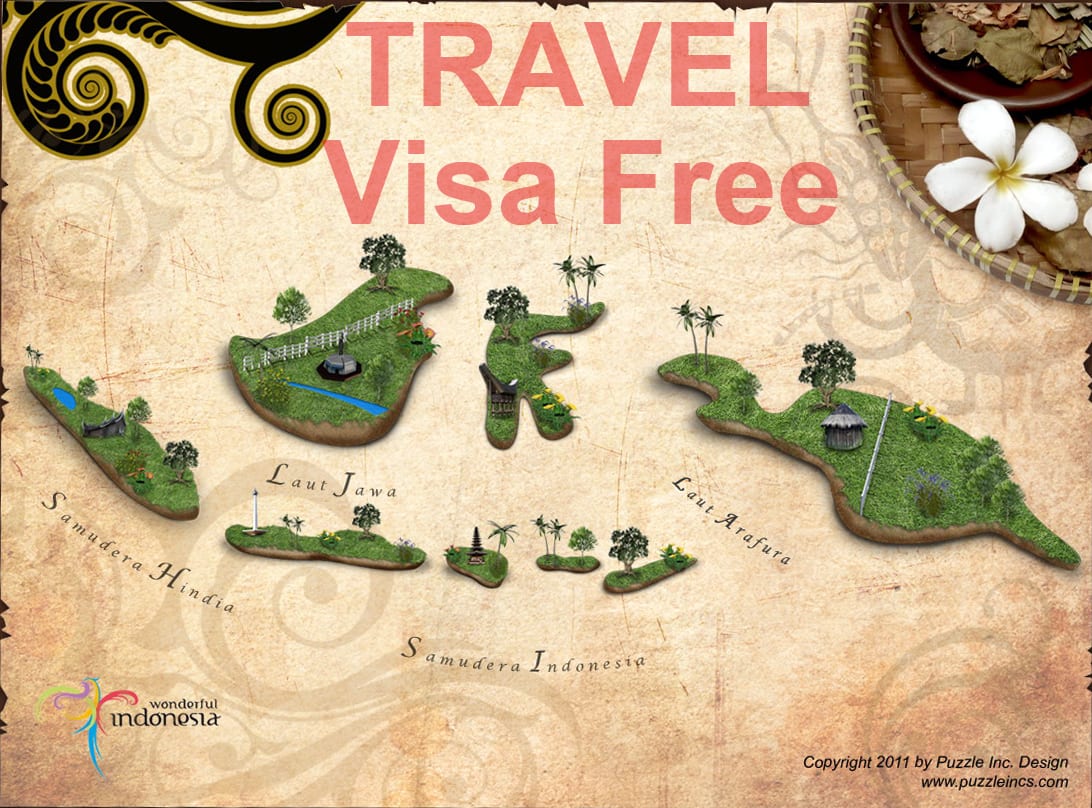
    Indonesia has granted visa-free facility to 169 countries including Sri Lanka under a new visa regulation. Indonesian President Joko Widodo has signed Presidential Regulation concerning Visit Visa Exemption early last month adding 79 countries to the list.

    Indonesian immigration office said passport holders of these countries are exempt for having a visa to enter Indonesia.

    “The visa exemption is valid only for 30 days, non-extendable or convertible into another kind of stay permit,” immigration office said.

    “Foreigners from 169 countries can enter and exit Indonesian Territory through 124 Immigration Checkpoints in airports, seaports and land border.”

    The visa exemption facility can be used for tourism, family visit, social visit, art and cultural, government duty, to deliver a speech or attend a seminar, international exhibition, meetings with head office or representative office in Indonesia, or transit.

    If the 30 days of Visit Visa Exemption facility feels insufficient, visitor still can apply for Visa on Arrival (given for 30 days and extendable for another 30 days) or Visit Visa.

    The 169 countries, special administrative regions of a country, and entities are:

    Albania, Algeria, Andorra, Angola, Antigua and Barbuda, Argentina, Armenia, Australia, Austria, Azerbaijan, Bahamas, Bahrain, Bangladesh, Barbados, Belarus, Belgium, Belize, Benin, Bhutan, Bolivia, Bosnia and Herzegovina, Botswana, Brazil, Brunei Darussalam, Bulgaria, Burkina Faso, Burundi, Cambodia, Canada, Cape Verde, Chad, Chile, China, Czech Republic, Comoros, Costa Rica, Croatia, Cuba, Cyprus, Denmark, Commonwealth of Dominica, Dominican Republic, East Timor, Ecuador, Egypt, El Salvador, Estonia, Fiji, Finland, France, Gabon, Gambia, Georgia, Germany, Ghana, Greece, Grenada, Guatemala, Guyana, Haiti, Holy See (Vatican City), Honduras, Hong Kong (SAR of China), Hungary, Iceland, India, Ireland, Italy, Ivory Coast, Jamaica, Japan, Jordan, Kazakhstan, Kenya, Kiribati, Republic of Korea, Kuwait, Kyrgyzstan, Laos, Latvia, Lebanon, Lesotho, Liechtenstein, Lithuania, Luxembourg, Macao (SAR of China), Macedonia, Madagascar, Maldives, Malawi, Malaysia, Mali, Malta, Marshall Islands, Mauritania, Mauritius, Mexico, Moldova, Monaco, Mongolia, Morocco, Mozambique, Myanmar, Namibia, Nauru, Nepal, New Zealand, Netherlands, Nicaragua, Norway, Oman, Palau, Palestine, Panama, Papua New Guinea, Paraguay, Peru, Philippines, Poland, Portugal, Puerto Rico, Qatar, Romania, Russia, Rwanda, Saint Kitts and Nevis, Saint Lucia, Saint Vincent and the Grenadines, Samoa, San Marino, Sao Tome and Principe, Saudi Arabia, Senegal, Serbia, Seychelles, Singapore, Slovakia, Slovenia, Solomon Islands, South Africa, Spain, Sri Lanka, Suriname, Swaziland, Sweden, Switzerland, Taiwan, Tajikistan, Tanzania, Thailand, Togo, Tonga, Trinidad and Tobago, Tunisia, Turkey, Turkmenistan, Tuvalu, Uganda, Ukraine, United Kingdom, United States of America, United Arab Emirates, Uruguay, Uzbekistan, Vanuatu, Venezuela, Vietnam, Zambia, and Zimbabwe.
  • WeChat launches mobile wallet service in Hong Kong

    WeChat launches mobile wallet service in Hong Kong

    WeChat has launched its payment service WeChat Pay in Hong Kong, including the new Wallet in-app payment feature.

    Wallet allows WeChat users to connect their MasterCard or Visa credit cards with their accounts to allow them to pay for products and services without having to exit the WeChat app.

    Users will be prompted to create a six digit PIN that must be input before any payment is authorized.

    Wallet currently supports payment for tickets, transportation services and travel products, and more product and service categories will be added soon.

    WeChat has partnered with local merchants to offer Hong Kong users exclusive promotions and campaigns over the messaging service.

    “We are so excited to bring WeChat Pay, a new mobile experience that allows users to pay on the go in the simplest way, to Hong Kong,” commented Norman Tam, head of the Hong Kong and Taiwan office of WeChat owner Tencent‘s international business group.

    “Customized for Hong Kong users, WeChat Pay provides a seamless and secure payment experience to users while providing our partners with the benefit of a direct connection to WeChat’s massive community that other payment platforms cannot provide. This is truly a triple-win for us all.”

  • Electronic payments boost economies, said Visa

    Electronic payments boost economies, said Visa


    Electronic payments boost household spending on goods and services as well as boost GDP, according to a study commissioned by global payments technology company Visa.

    Moody’s Analytics investigated the impact of electronic payments on economic growth across 70 countries between 2011 and 2015, finding that the increasing use of credit, debit and prepaid cards added US$296 billion to GDP, while raising household consumption by an average of 0.18 per cent a year. The countries in the study make up almost 95 per cent of global GDP.

    Moody’s economists also estimated that another effect was the creation of 2.6 million jobs on average annually over the five-year period as a result of increased use of electronic payments.

    “Countries that saw large increases in card usage also saw larger contributions to overall growth in their economies,” says chief economist Mark Zandi.

    Purchasing is more convenient and efficient for consumers, and merchants can manage their businesses better and benefit from higher sales.

    Electronic payments also benefit governments and contribute to stable and open business environments, says the study, The Impact of Electronic Payments on Economic Growth. Also, electronic payments help minimise the “grey economy” – economic activity that is often cash-based and goes unreported. This means that electronic payments provide a higher potential tax revenue base for governments, while also bringing the added benefits of lower cash-handling costs, guaranteed payment to merchants and greater financial inclusion for consumers.

    “This research suggests that the right public policies can create an open, competitive payment environment, and contribute to economic growth and job creation,” says Visa CEO Charlie Scharf.

    Two countries stood out for their large gains in employment, stimulated by fast-growing productivity and increased use of cards – China (427,000 jobs added) and India (336,000 jobs).

    As with GDP gains, job gains were not uniform across regions. North America had the highest average job gains per year (69,000), followed by Asia (62,000).

    Some emerging economies have also experienced notable increases in productivity. For example, increased card penetration raised GDP in Vietnam by 0.14 per cent, and Vietnamese labour productivity rose by 18 per cent, resulting in about 75,000 jobs gained each year.

    As consumption growth is, on average, faster in emerging economies, those countries also have more to gain by increasing card usage, says the study.

    Moody’s found that every 1 per cent increase in usage of electronic payments could produce, on average, an annual increase of about $104 billion in the consumption of goods and services. But expanding electronic payments alone do not necessarily increase a country’s prosperity – this needs the support of a well-developed financial system and healthy economy. Countries need to promote policies that minimise unneeded regulation and create a robust financial infrastructure.

    Because of the somewhat lower penetration, card use added 0.06 per cent to GDP a year in Asia.

  • Faster way to shop online with Visa

    Faster way to shop online with Visa

    According to Visa Consumer Payment Attitudes Study 2015, 67% of Malaysians shop online at least once a month, an increase from 53% in 2014.

    However, 81% of online shoppers in the country have abandoned a purchase because it took too much time to complete the payment process, revealed a study conducted by eCommerce Monitor in 2015.

    Now, online and mobile shoppers can purchase their desired items without much fuss because there is a better way to do so.

    Visa has just officially launched its Visa Checkout in Malaysia, a fast, easy and secure payment service that allows Malaysian consumers to pay for goods online, on any device, in just a few clicks.

    All users need to do is enter their username and password rather than a 16-digit credit card number, and select their required Visa credit, debit or prepaid card to complete the transaction.

    Visa country manager for Malaysia Ng Kong Boon noted the increasing significance of technology becoming part of Malaysians’ everyday lifestyle, including shopping online and on mobile devices.

    “Visa Checkout is designed to improve the digital shopping experience by making the payment process fast and secure, reducing the number of steps required to complete an online purchase.

    “We have partnered with several key merchants in the country to be part of our launch and we are confident consumers will embrace Visa Checkout across all their devices,” said Ng, adding that at least 100 merchants are expected to engage in Visa Checkout by year end.

    Visa Checkout is now accepted at a wide variety of online merchants in Malaysia including Golden Screen Cinemas (GSC), Superbuy.com, SweetSpot Digital, Little Whiz, Twenty3, Avenue 86, CUTI, Malindo Air and Lelong.my.

    There are also 13 banks in Malaysia on board for this service, with Maybank being the first bank to enrol Visa cardholders for the service and offer Visa Checkout acceptance to merchants across the country.

    With the roll-out of Visa Checkout, Visa aims to concentrate on its existing cardholders for this service.

    “Today, we have more than 20 million debit and credit cards issued in the market, and all these cards will be targeted for the Visa Checkout enrolment. Of course, new customers are welcome to enrol too,” shared Ng.

    In conjunction with the Visa Checkout launch, both GSC and Malindo Air are giving special offers to Visa Checkout users.

    Customers can enjoy normal movie tickets at a flat fee of RM8 until June 3, with a maximum of six tickets per Visa card per transaction.

    Those purchasing Malindo Air flight tickets or holiday packages with minimum transaction of RM250 will get a RM50 discount code for subsequent purchases from the airline.

    Both offers are subjected to terms and conditions.

  • South Korea’s card spending jumps 16 pct in Jan.

    South Korea’s card spending jumps 16 pct in Jan.

    South Korea’s card spending rose sharply in January, data showed Friday, on the back of increased consumption for the Lunar New Year holiday and a gradual recovery in domestic demand.

    Purchases made with plastic cards reached 56.1 trillion won (US$45.4 billion) last month, up 15.9 percent from a year earlier, according to data compiled by the Credit Finance Association (CREFIA).

    The data includes transactions on credit, debit and prepaid cards. Cash advances, overseas spending and card loans were not included.

    Of the amount, credit card spending went up 15.9 percent on-year to 44.79 trillion won, while those of debit cards advanced 16.2 percent to 11.2 trillion won over the cited period, according to the data.

    “This year, the new year holiday started earlier than last year, which mainly led to the growth in January’s credit card spending,” a CREFIA official said.

    The retail sector, including department stores and big retail chains, enjoyed a 20.4 percent surge in credit spending on-year to 6.7 trillion won, the data showed.

    In particular, purchases made by credit cards in convenience stores spiked 56 percent thanks to the increase in small families and the solid growth in sales of their private-brand products, according to the association.


  • Indonesia lures Indians with free visas

    Indonesia lures Indians with free visas

    Indonesia may be attracting almost double the number of global tourists than India but visitors from here are few and the southeast Asian country has decided to grant free visas to Indians to attract more travelers from India which is a “big market” for them.

    Vinsensius Jemadu, Indonesia’s tourism director, was in India to promote Indonesian tourism and attract more Indians. He says Indonesia and India enjoy very good relations which will help in attracting more tourists. Indonesia is also participating in the South Asian Tourism and Travel Expo (SATTE) 2016.

    Jemadu said that more than 10 million people from across the globe visit Indonesia every year – but only 270,000 from India. Indonesia attracts the highest number of tourists from Singapore, followed by Malaysia, Australia, China, Japan, South Korea and then India.

    “Realising that India is a big market, the Indonesian government decided to grant free visas to Indians. We have set a target to attract 350,000 tourists from India this year, which is a big challenge for us,” he said. “Most of the people from India visit Bali. May be it is because they do not know about other places there. We want them to explore other places of the country as well,” he said.

    Indonesia’s tourism industry contributes nine percent to the country’s GDP. “Our plans are to boost tourism industry and increase it to 15 percent of the GDP by the end of 2019.”

    “As many as 60 percent of the total tourists visit Indonesia because of its rich cultural heritage while 35 percent come to the country to see its natural beauty. Five percent tourists come here to enjoy manmade activities,” Jemadu told IANS.

    Expressing concern over lack of direct connectivity between India and Indonesia, Jemadu said: “So far there is no direct flight between the two countries. People from India reach Indonesia via Singapore or Malaysia which is not good for tourism because people have to spend more time and money in travelling.”

    He, however, added that this issue will be sorted out soon as both the governments have agreed to start direct flight between the two nations.

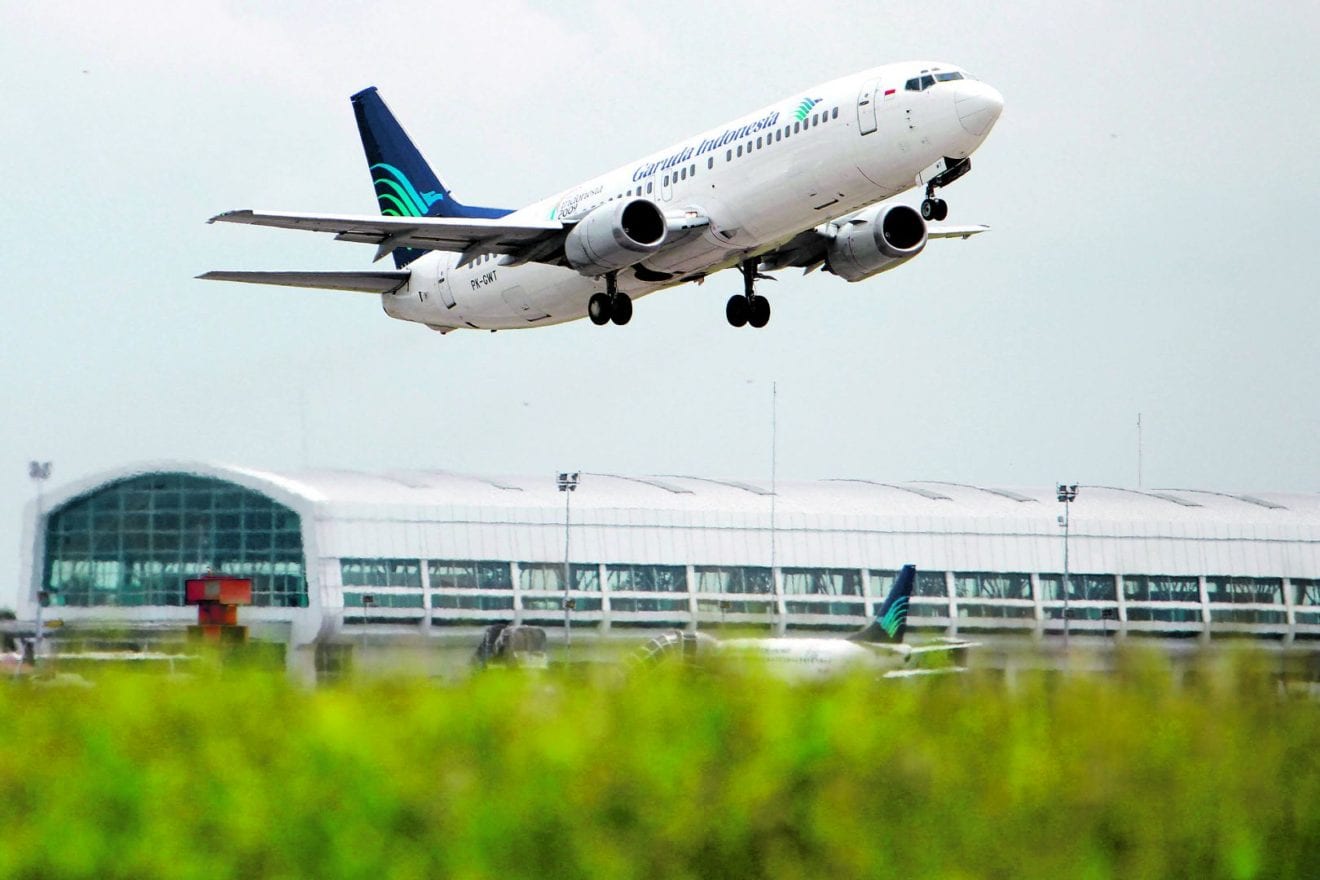
    “I am hopeful that the direct flight between Mumbai and Bali will start by March or April. Garuda Indonesian airline had agreed to operate flights between the two countries,” he said.

  • Visa claims more Filipinos using contactless payments

    Visa claims more Filipinos using contactless payments

    More consumers in The Philippines are using contactless payments, according to the Visa Consumer Payment Attitudes Study 2015.

    It shows that 29 per cent of Filipinos have used contactless payments for transactions over the past year, up from 21 per cent in 2014. Cardholders cited the convenience of the system, security and ease of use among reasons for using contactless payments.

    Trends in payments behaviour and openness to using contactless payments were identified by the study which surveyed consumers in six Southeast Asian markets. Contactless payments are made by waving a credit or debit card or smartphone over a point-of-sale terminal, eliminating the need for cash, PIN number or signature.

    “As more Filipinos learn about the convenience, security and speed that contactless payments, such as Visa PayWave, bring to their lives, they are more willing to use them regularly,” says Visa country manager for The Philippines and Guam, Stuart Tomlinson.

    Filipinos’ awareness for contactless payments has risen 62 per cent in 2014 to 66 per cent last year. This has led to usage growing from 21 per cent last year to 29 per cent.

    Using contactless payments help save time, report 78 per cent of respondents (up from 58 per cent in 2014). The same percentage said system means they don’t need to carry cash (also up from 58 per cent), and 55 per cent said contactless payments are easier than using cash – a leap from 9 per cent in 2014.

    It was also revealed that Filipinos recognise contactless payments as being less hassle to use (41 per cent) and safer (36 per cent), while freeing them from queueing (34 per cent) and giving them a more enjoyable shopping experience (22 per cent).

    In The Philippines, contactless payments are mainly used for groceries plus food and beverage – 57 per cent for groceries, 37 per cent for F&B, 28 per cent for fashion and accessories, 27 per cent for beauty and cosmetics, 25 per cent for health and wellness services, 23 per cent for movie tickets, and 22 per cent for household electronics. Another revelation was that women are buying across all categories, however men use these payments more than women for transportation (8 per cent of total purchases). Other expenditures include books, CDs and DVDs (18 per cent), personal electronics (18 per cent), financial services (17 per cent), and events and concerts (10 per cent).

    Most respondents (80 per cent) said they prefer to buy products and services from retailers who offer contactless payments, and 84 per cent are interested in making payments with contactless wearables, such as smartwatches. Women would like to make such payments for groceries (67 per cent) while men prefer them for buying food and drinks (62 per cent).

    Users said security is also important, which is addressed by contactless cards having multiple layers of security including EMV chip technology and dynamic encryption. As they have a short read range, they are claimed to be virtually impossible to compromise. Financial institutions and credit card companies also monitor transactions to identify suspicious and unusual transactions.

    “Given growing awareness, use and openness to contactless payments among Filipinos over the past year, there is an immense opportunity for businesses to grow their market share by adopting the technology,” says Tomlinson.

  • mCommerce boom raises cybersecurity risk

    mCommerce boom raises cybersecurity risk

    Asia’s mComerce boom is creating a growing target for online fraud and cybersecurity risks, according to fraud consultancy Fico Group.

    Criminals who used to focus on ATM skimming are turning their attention online in an effort to compromise credit and debit card data. These attacks can be far more lucrative, with more details stolen and a lower chance of getting caught, warns Fico.

    “The demographics suggest that this this will soon become a very big data problem.  In the next 15 years, Asia is expected to add another 1 billion internet users, which comes on top of the 700 million it has today, making it the world’s largest market for online consumers.”

    With fraud challenges growing, the issues and technologies needed to address them will be discussed this week in Bali, Indonesia, where Fico will hold its regional Fraud Forum with bank executives from across Asia Pacific.

    The last year alone has seen an average 22 per cent increase in shopping on mobile phones across 13 Asia-Pacific markets, according to a 2015 study from Visa. Indonesia, China and Taiwan reported the highest rates of growth for 2015 at 36 per cent, 34 per cent and 28 per cent respectively.

    With these card-not-present (CNP) transactions, the retailer never sees the customer or their physical card, and the cardholder doesn’t enter their PIN. At last year’s Fico Asia Pacific Fraud Forum in Singapore, 94 per cent of attendees said that cases of online or CNP fraud had increased at their organisation.

    Spotting and finding anomalies in this pool of data requires sophisticated self-learning and adaptive technologies so banks can catch fraud vectors as quickly as criminals exploit them. Fico is currently testing the geolocation abilities of mobile devices and integrating them with the Fico Falcon Platform, which protects 2.5 billion payment cards worldwide. By validating whether a consumer’s phone is in the same place where their card is being used, the system can reduce false positives while focusing on the most likely incidents of fraud. Banks can also send SMS messages to the consumer’s mobile to validate a transaction in real time.

    Maintaining trust in shopping from mobile devices will also require a new approach to cybersecurity. Data breaches at poorly protected retailers can threaten ecommerce sales. Predictive analytics is needed, rather than signature-based solutions, so that so-called “zero day” attacks can be identified and controlled.

    Raed Taji, head of global fraud consulting for Fico in Asia Pacific, said: “We are seeing rapid changes in customer behavior which then open up opportunities for fraud. In Australia, for example, cash withdrawals from ATMs have fallen 20 per cent in three years, thanks to

    tap-and-go card and mobile payment technologies. The focus on online fraud is growing very rapidly, so we must stay nimble to reduce losses.”

    Dan McConaghy, president for Fico in Asia Pacific, added: “Digital disruption to financial services may present fraud challenges, but it also presents opportunities for us to stop criminals. If consumer payments shift toward a new form of payment, fraudsters will seek out the most vulnerable element – which increasingly means a mobile device.

    “By investing in an analytics-based solution, lenders can add a powerful tool to their arsenal to stay ahead of new criminal fraud patterns.”

  • Bitcoin debit card makes cryptocurrency more accessible

    Bitcoin debit card makes cryptocurrency more accessible

    Coinbase has launched a debit card that enables US users to spend bitcoins anywhere Visa is accepted.

    The launch of a debit card – and the recognition of the currency by the Visa card system is further evidence that the new generation cryptocurrency is building momentum globally.

    The card is a result of a partnership between Shift Payments and Coinbase. The former aims to integrate multiple currencies into a single card, while the latter provides digital ‘wallets’ where 2.8 million users across the world go to for their bitcoin transactions. With a Shift Card, users can link their Coinbase account to a physical Visa debit card, which they can use to pay at participating stores in real life or online, wherever Visa is accepted (the team is also working on incorporating airline miles and other loyalty points.)

    For now, apart from the US$10 card issuance charge, there are small fees – domestic transactions fees from BTC to USD are charged at zero per cent, and ATM withdrawals are US$2.50.

    The Shift Card could make bitcoin more accessible, and counter its lack of usage, which is caused largely by the misconception among consumers that not many businesses accept it. (They’re wrong: 38 million merchants worldwide do).

    Unlike conventional currencies, cryptocurrency is an open network not controlled by any bank or government, but managed by its users. It is hoped that the system will provide a more democratic, transparent, and cheaper way to trade, upgrading the status quo, which some argue were not designed for the digital era.

  • Airlines welcome visa free facility, offering discount

    Airlines welcome visa free facility, offering discount

    Airlines began to race offering discount in welcoming the government policy which offers visa free facility for short term visitors to Indonesia from 75 countries.

    The facility is expected to draw more visitors to the country amid the global economic malaise.

    Indonesian airlines saw the policy as benefiting air transport business that they are ready to offer significant discount for ticket price.

    Commercial Director of AirAsia Indonesia Andy Ardian Febryanto said the budget airline offered a 30 percent discount for international flights.

    Discounts are given for direct flights such as from Surabaya- Kuala Lumpur, Surabaya-Johor Bahru, Surabaya-Penang and Surabaya-Bangkok, or “Fly-Thru” flights or with transit in Kuala Lumpur or Bali, such as Surabaya-Taipei, Surabaya-Beijing, Surabaya-Seoul, Surabaya-Tokyo and Surabaya-Sydney, Andy said here on Thursday.

    “Surabaya always has a special position as the main destination and market. Although we are aware amid the worrying condition of the economy interest in traveling has dropped sharply by 70 percent , but we are optimistic that the visa free policy would recover the interest in traveling abroad,” he said.

    He said there are 22 travel agents offering discount for international flights effective as from November 1 until April 2016.

    Therefore, foreign travelers including tourists , business visitors and others could take advantage of the visa free travel to Indonesia, he added.

    Currently the airline could only offer discount for international routes as there is regulation restricting freedom to offer discount for domestic flights, he said.

    Under the new policy, visa free facility is offered for short term visitors to Indonesia from South Africa, Algeria, the United States, Angola, Argentina, Austria, Azerbaijan, Bahrain, the Netherlands, Belarus, Belgium, Bulgaria, Czech Republic, Denmark, Dominica, Estonia, Fiji, Finland, Ghana, Hungary, India, Britain, Ireland, Island, Italy, Japan, Germany , Canada, Kazakhstan, Kyrgyzstan Croatia, South Korea, Kuwait,Latvia, Lebanon, Liechtenstein, Lithuania, Luxembourg, the Maldives, Malta, Mexico, Egypt, Monaco, Norway, Oman, Panama, Papua New Guinea, France, Poland, Portugal, Qatar, China, Romania, Russia, San Marino, Saudi Arabia, New Zealand, Seychelles, Cyprus, Slovakia, Slovenia, Spain , Suriname, Sweden, Switzerland, Taiwan, Tanzania, Timor Leste, Tunisia, Turkey, United Arab Emirates, Vatican, Venezuela, Jordan, and Greece.

  • Line Thailand to launch mobile payments

    Line Thailand to launch mobile payments

    Visa subsidiary CyberSource has sealed a partnership with mobile messaging app Line Thailand, to allow Thai users to make mobile payments using its Line Pay service.

    CyberSource, one of the world’s largest providers of eCommerce payment management services,  will offer its full suite of payment, fraud management and tokenisation services for Line Thailand, which will work with acquirer Krungsri (Bank of Ayudhya), Thailand’s fifth largest bank.

    Line and Cybersource will be able to process a wider spectrum of mobile payments from multiple card brands and issuers, as well as “certain alternative payment methods”.

    “The solution is designed to provide their customers with secure mobile payment options at affiliated online and brick-and-mortar stores without requiring an additional app,” explains CyberSource.

    Line has grown globally across 230 countries and regions since 2011, with its mobile messaging service app registering 205 million monthly active users as of April 2015. Some 33 million Thais use Line Thailand.

    Prapakorn Lipikorn, Head of Line Pay business development, with Line Thailand, said:. “This partnership is a key component in our strategy to cater to an ever-growing user base in Southeast Asia. We are able to streamline payment acceptance and create new growth opportunities for our merchants, while providing our users with a fuss-free mobile payment option.”

  • London retailers revel in Chinese influx

    London retailers revel in Chinese influx

    Hong Kong retailers wondering where those cashed up, big spending Mainland Chinese tourists have been unzipping their wallets… here is your answer: London.

    According to the Retail Gazette, spending by Chinese Visa card holders rose 44.5 per cent in the UK in July – outstripping spending by tourists from France and Australia.

    Inbound tourists from China now account for more spending than those from any country except the US which retains top spot.

    Retail Gazette reports the growth in Chinese spending was strongest in supermarkets (up 79 per cent) and in high street stores (up 40 per cent).

    Shopping accounted for 40 per cent of Chinese tourists’ spending in the UK

    “China is one of the fastest growing sources of tourism income for the UK and it looks set to become an important driver of growth for the sector,” said Kevin Jenkins, UK & Ireland MD with Visa Europe.

    “Spending on cards has seen a significant boost as Chinese tourists travel to the UK, confident in the use of plastic overseas.

    “With shopping a top attraction for Chinese travellers, UK retailers are likely to consider additional ways to appeal specifically to this audience,” Jenkins said.

    “Pre-travel marketing, multilingual staff and new product lines in store may be three things we see more of.”

  • Affluent Asians spending on status

    Affluent Asians spending on status

    Goods and experiences which provide “a sense of status, exclusivity and uniqueness” are key considerations when shopping for luxury items for Asia Pacific’s elite, according to the Visa Affluent Study 2015.

    In other words, affluent Asians are prepared to spend on status.

    According to the study, a significant percentage of Asia Pacific affluents describe themselves as “status seekers”, with more than one third of the affluent in China (38 per cent), Hong Kong (36 per cent) and Korea and Japan (31 per cent each) are motivated to purchase luxury goods to display their social standing. Affluent in India (29 per cent) and in Singapore (27 per cent) also report taking pleasure in the attention that luxury goods attract.

    “What drives Asia Pacific’s affluent in making luxury purchase decisions varies across the region, but the common factor is the search for unique products and services that give a sense of status and exclusivity,” said Ruben Salazar, VP, products with Visa Asia Pacific.

    “While quality remains important for most consumers, Asia Pacific’s affluent are continuously looking to go beyond quality guarantee to find that special product or experience that stands out from the crowd and that gives a sense of self-satisfaction.”

    Only the affluent from Indonesia and Australia described themselves as being more driven by other considerations, with almost a quarter of Indonesian affluent (23 per cent) surveyed also valuing quality alongside social status (24 per cent) and exclusivity (28 per cent).

    Some 500 respondents from each of Australia, China, Hong Kong, India, Indonesia, Japan, Singapore and South Korea were interviewed online and in face-to-face surveys for the study. Respondents have an average household income of US$73,000 per annum and are aged between 18 and 55 years old.

  • Big differences in Asian travel spending

    Big differences in Asian travel spending

    Koreans travel abroad most frequently, Chinese spent the most money and Japanese visit the most faraway places most often.

    Those are findings from a study by Visa card, 2015 Survey on Travel Plans, in which 13,603 people from 25 different countries shared information about their travels.

    According to the results, Koreans traveled an average of five times during the past two years, ranking the highest in travel frequency – well above the global average of three times.

    Around 90 percent of the Korean respondents answered they had travelled abroad within the past two years. But as travellers, Koreans seem to be of frugal mind when it comes to expenses. They spent an average of $1808, which was way below the global average ($2281). They also have a tendency to set a budget and stick to it. Korean travelers paid 46 per cent of their expenses before departure, and 75 per cent of the payments were made by credit card.

    On the other hand, the average travel expense for Chinese travelers was $4780 – more than double the global average. Unlike Koreans, Chinese people had a tendency to decide what they wanted to do on the trip first and then calculate the expenses.

    While 36 per cent of Korean travelers and 34 per cent of Chinese travellers visited Japan, 36 per cent of Japanese travellers visited the US, showing their preference for long distance travel. The average time taken to get to the destination was longer for Japanese travelers (nine hours), compared to eight hours for Chinese travellers and six hours for Korean travellers.

    The average travelling expense for Japanese was $3165, which was less than the average of Chinese.

    In terms of accommodation, 41 per cent of Korean travellers and 62 per cent of Chinese preferred hotels with more than four stars, while 49 per cent of Japanese preferred one to three star hotels.

    The portion of Koreans who preferred package tours (47 per cent) was similar to the portion of those who liked to travel freely (52 per cent). However, more than half of the Chinese (65 per cent) and Japanese (77 per cent) preferred tour packages.

    Ian Jamieson, head of Visa Korea, said it was impressive that Korean travellers prepare well and frequently go on trips and the purchasing power of Chinese travellers was also interesting.