Retail News CRM

Tag: visa

  • Thais show significant preference for mobile wallet payments

    Thais show significant preference for mobile wallet payments

    Nine out of ten Thais are keen to make payments via mobile wallets given the right security measures, incentives and additional services such as built-in loyalty programs, according to the Visa Consumer Payment Attitudes Study.

    The fourth instalment of the annual study discovered that 94 percent of respondents would be more likely to replace cash with a mobile wallet if payment[2] comes with features such as offers and rewards. Built-in functions such as loyalty programs, instant purchase notifications, as well as digital receipts to track expenses, will make consumers more likely to try mobile wallets.

    “The findings from this study confirm that consumers not only expect fast, simple and secure mobile payments, they also want access to relevant services such as promotions and the ability to collect and utilize reward points. Whatever the form factor, people are moving away from seeing payment as just a commodity. As a global leader in payments, Visa enriches the entire payment ecosystem by offering global acceptance, innovative product platforms, reward incentives, and state of the art security,” said Suripong Tantiyanon, Visa Country Manager, Thailand.

    Payments made via mobile applications are on the rise, particularly for financial products and services such as investment units, and online shopping. The former constituted as much as half of all mobile transactions (51 percent), while the latter comprised three in ten (31 percent). In the case of financial products and services, the increase from the previous year was a robust 14 percent.

    The Study showed that nine in ten respondents (87 percent) have made a mobile payment in the past year, with 58 percent already using it on a weekly basis. Yet the biggest barrier to entry remains security.

    The main barriers to mobile payment adoption are fear of phone hacking and data theft (34 percent), losing your phone or having it stolen (22 percent), unauthorized access to personal accounts (17 percent), and viruses and malware (9 percent).

    “While people value the convenience and benefits that come with mobile payments, security remains the highest priority. For Visa, whether it is contactless payment through card, mobile device, or QR code payment, we always implement a multi-layered approach to security to ensure that customers can pay with peace of mind. This can include the Visa Token Service that replaces the traditional payment card account number with a unique digital identifier or “token” to process online and mobile payments without exposing actual account details, or two-factor authentication for mobile commerce,” said Mr. Suripong.

    QR Code in particular will help drive the global shift toward a cashless future. Visa and the other EMVCo Members have recently launched new globally interoperable EMV specifications and successfully enabled merchant-presented QR technology in 15 countries around the world.

    This new global specification is an important step that promotes interoperability and standardizes the fast growing ecosystem of QR code payments across the world. Already, 33 banks and more than 328,000 merchants across India, Kenya and Nigeria have adopted the interoperable standards as they accelerate their QR code digital payment programs.

    EMVCo is the global technical body tasked with managing, maintaining and enhancing EMV specifications to ensure interoperability and acceptance of EMV-based payments worldwide.
     

  • Singtel adds virtual Visa account to Dash app

    Singtel adds virtual Visa account to Dash app

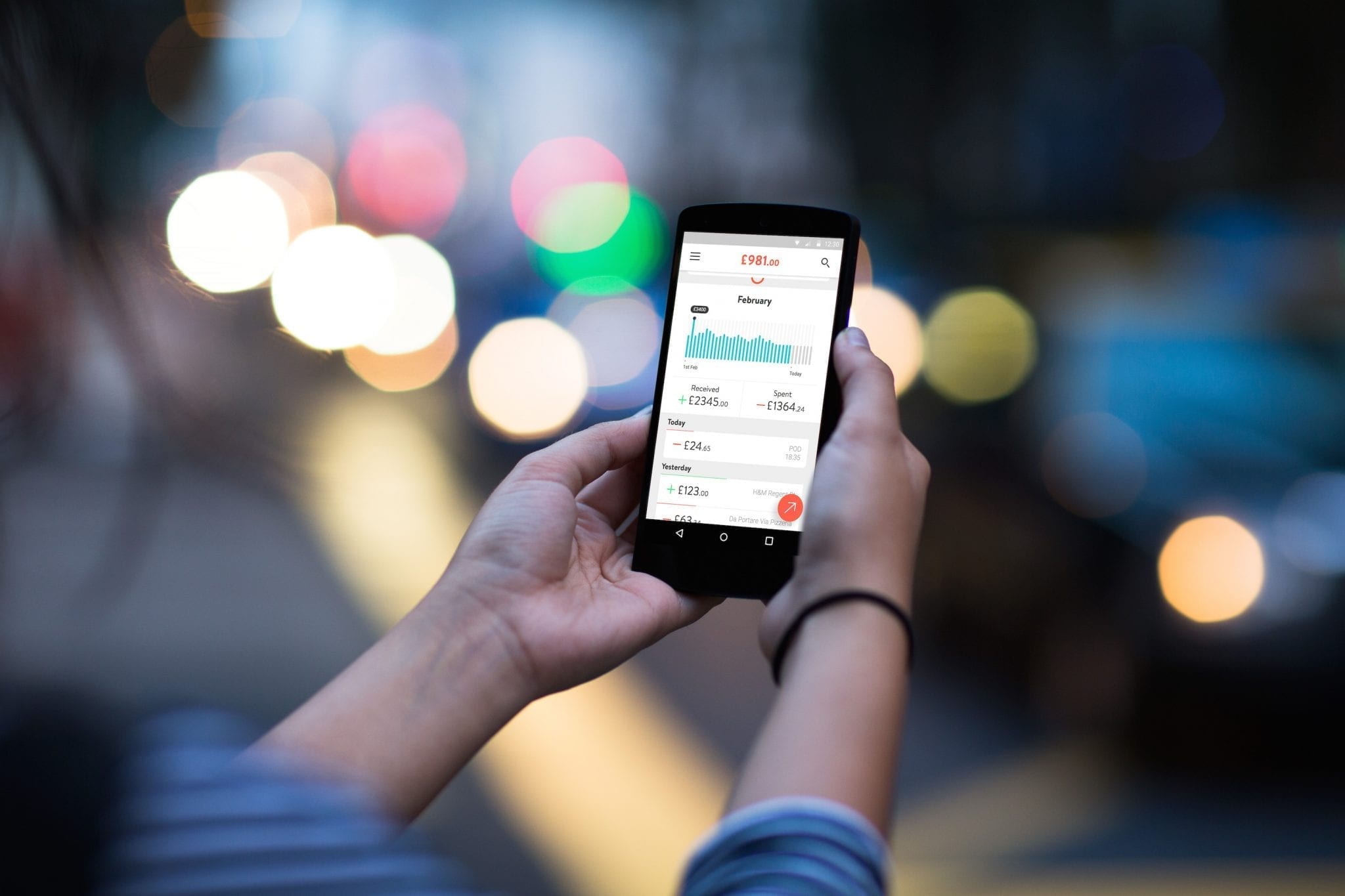
    Singtel has introduced a new virtual Visa account on its all-in-one mobile payments app Dash.

    New and existing Dash customers now receive a Dash Visa Virtual Account that can be used for mobile payments at over 50,000 merchant points across the island.

    To start paying on their mobile, customers can sign in on the Dash app and top-up their Dash Visa accounts and start using them at Dash merchants and on local e-commerce sites such as Qoo10, Zalora and HungryGoWhere.

    Customers with compatible NFC-enabled Android smartphones will also be able to pay using their Dash Visa accounts wherever Visa payWave is accepted.

    Singtel also announced future plans for Dash to be included in global wallets such as Apple Pay, and enable QR code payments to expand into hawker centres. In addition to Nanyang Polytechnic, Ngee Ann Polytechnic and Singapore Polytechnic, Dash is also working towards adding more educational institutions to its merchant list to widen its reach in the youth segment.

    But Forrester predicts that the future of mobile wallets will go far beyond mobile payments. Chinese digital juggernauts Alipay and WeChat have morphed their mobile wallets into rich customer engagement platforms. But even then, these functionalities will by no means guarantee their success in markets outside China.

    In a new report, Forrester senior analyst Xiaofeng Wang said market-entry obstacles like different business cultures, consumer behaviors, and regulations make it unlikely that Alipay and WeChat will operate directly in other markets beyond targeting Chinese travelers.

    However, the successful marketing use cases developed on Alipay and WeChat Wallet will inspire third-party players like Apple and PayPal to morph their mobile wallets into more powerful customer engagement platforms.

    Wang lists three trends that will shape the mobile wallet market in the future. Emerging mobile wallets will develop features similar to Alipay and WeChat. “We expect mobile wallet innovations to happen more quickly in emerging markets with less legacy and competition. Paytm in India is a good example,” she elaborated.

    Mainstream mobile wallets will add customer engagement features. For example, to help its mobile wallet attract more traffic to offline stores, PayPal added features like “stores nearby” and “order ahead.”

    Space will open up for third-party providers. The West’s different ecosystem creates added competition for its mobile wallet players, and gives third-party providers opportunities to add customer engagement features and offerings to Western mobile wallets and uncover the potential of marketing.

  • 2 in 3 Singapore consumers use m-payments

    2 in 3 Singapore consumers use m-payments

    Two in three Singaporeans have adopted mobile payments, according to recent research into consumer payment attitudes commissioned by Visa.

    The survey was conducted by Toluna on 500 Singaporeans to assess their attitudes toward cash and card usage, mobile banking, contactless payments and online shopping.

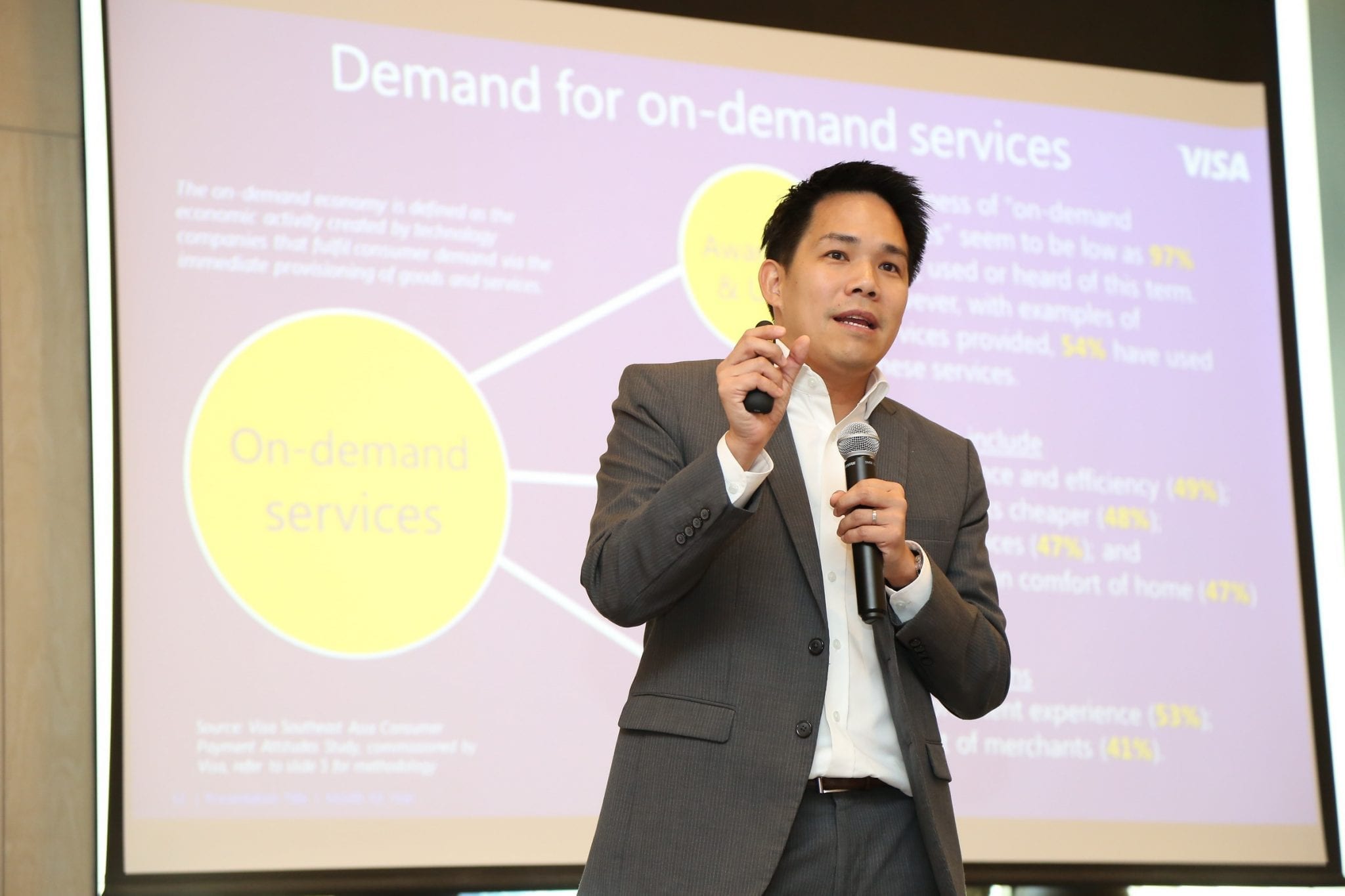
    According to the survey, on-demand services are accelerating the growth of mobile payments, with close to two-thirds of respondents using such services. Such services include on-demand transportation, meal and groceries delivery.

    Seventy-one percent of respondents cited convenience and efficiency as the top benefits for using such services while 35% of them stated that they enjoy shopping in the comfort of their own home.

    Expectations of such services have also shifted in response to higher adoption. According to the survey, a majority of the respondents expect their transportation (e.g. taxi or a car) to arrive within 10 minutes from the time they book the service, meal deliveries to arrive within 30 minutes upon ordering, and groceries to be delivered within 45 minutes.

    Peer-to-peer payments

    Singaporeans are also starting to embrace peer-to-peer (P2P) payments. The survey showed that seven in 10 respondents are aware of such options and one in four respondents are already using P2P services to split a bill after a meal. Benefits of using peer-to-peer payments were fuelled by merchant awareness and convenience.

    “Increased connectivity, coupled with the wider payment methods and form factors have transformed consumers’ experience in every aspect including payment. Based on VisaNet data, seven in 10 Visa cardholders are already making device-initiated payments and more than one in five Visa cardholders are active using in-app payments, fuelled by use of transportation booking apps,” Visa Country Manager for Singapore and Brunei Ooi Huey Tyng said.

    “The payment experience is becoming invisible and we believe this trend will continue with the introduction of more innovative players and services.”

  • Visa signs MOU as the payments partner of Phuket Smart City

    Visa signs MOU as the payments partner of Phuket Smart City

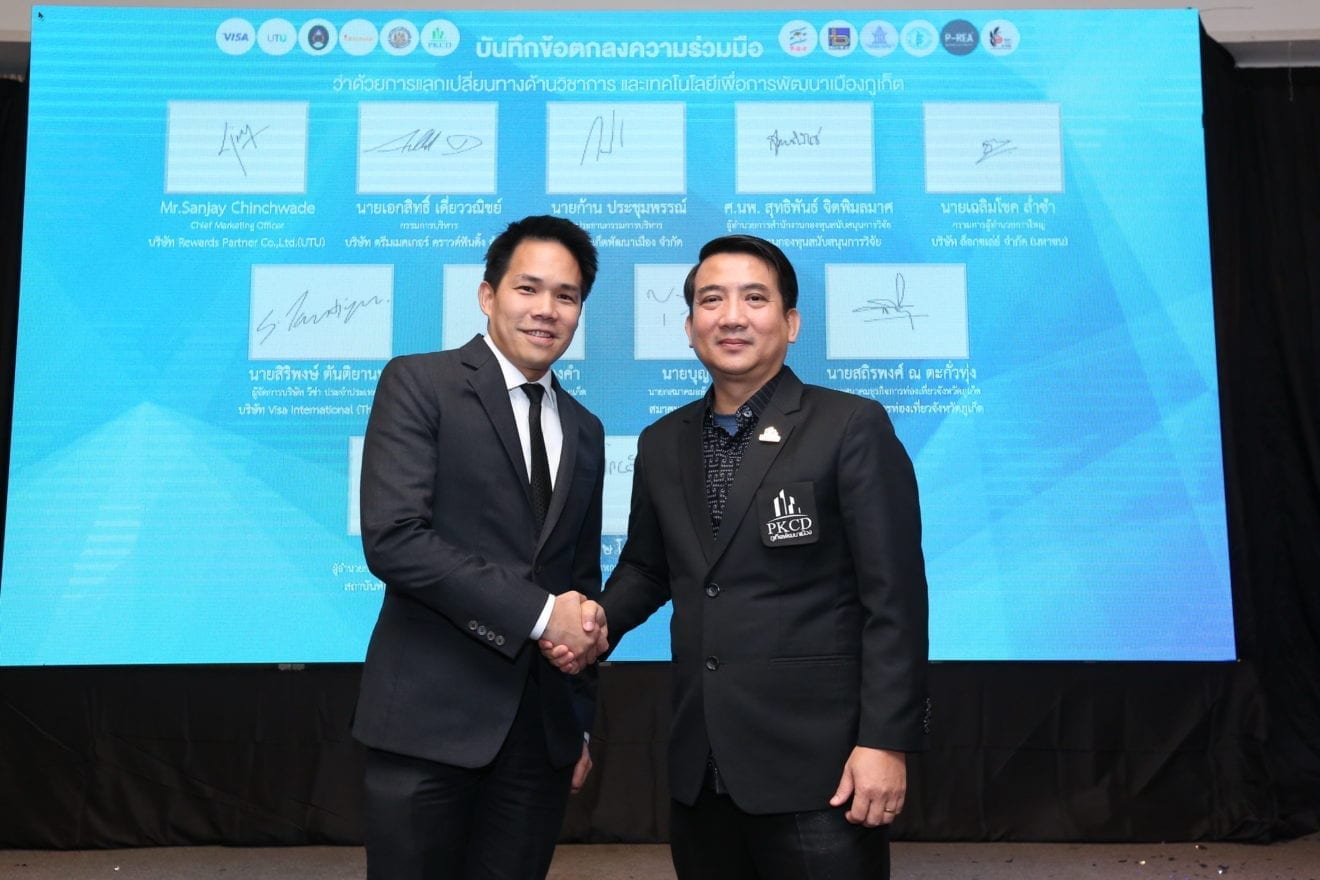
    Mr. Suripong Tantiyanon (left), Visa Country Manager, Thailand signed MOU with Mr. Karn Prachumpan (right), Co-Founder and Board of Committee, Phuket City Development Co., Ltd (PKCD) as the official partner of Phuket Smart City to develop payment solutions for both residents and tourists on the island-province.

    Phuket City Development was founded by local businesses in September 2016, with initial investment from 25 prominent Phuket families. The province is among the first in Thailand to embrace the Smart City concept. It aims to transform Phuket into a fully integrated digital economy, assisting business owners, managers, start-up entrepreneurs and residents in the transition.

    Mr. Suripong Tantiyanon, Visa Country Manager, Thailand: “Globally, Visa is speeding up the implementation of electronic payments by working closely with public and private sectors. Visa is aligning with like-minded partners around the world to help bring this vision to life. We are using our position as a global leader in innovation and technology to create solutions for businesses to connect to their consumers. The singing of MOU agreement with Phuket City Development is another milestone that help bring the country closer to a cashless Digital Thailand.”

  • Visa Thailand Grand Sale goes digital as the flagship inbound program gets a mobile revamp

    Visa Thailand Grand Sale goes digital as the flagship inbound program gets a mobile revamp

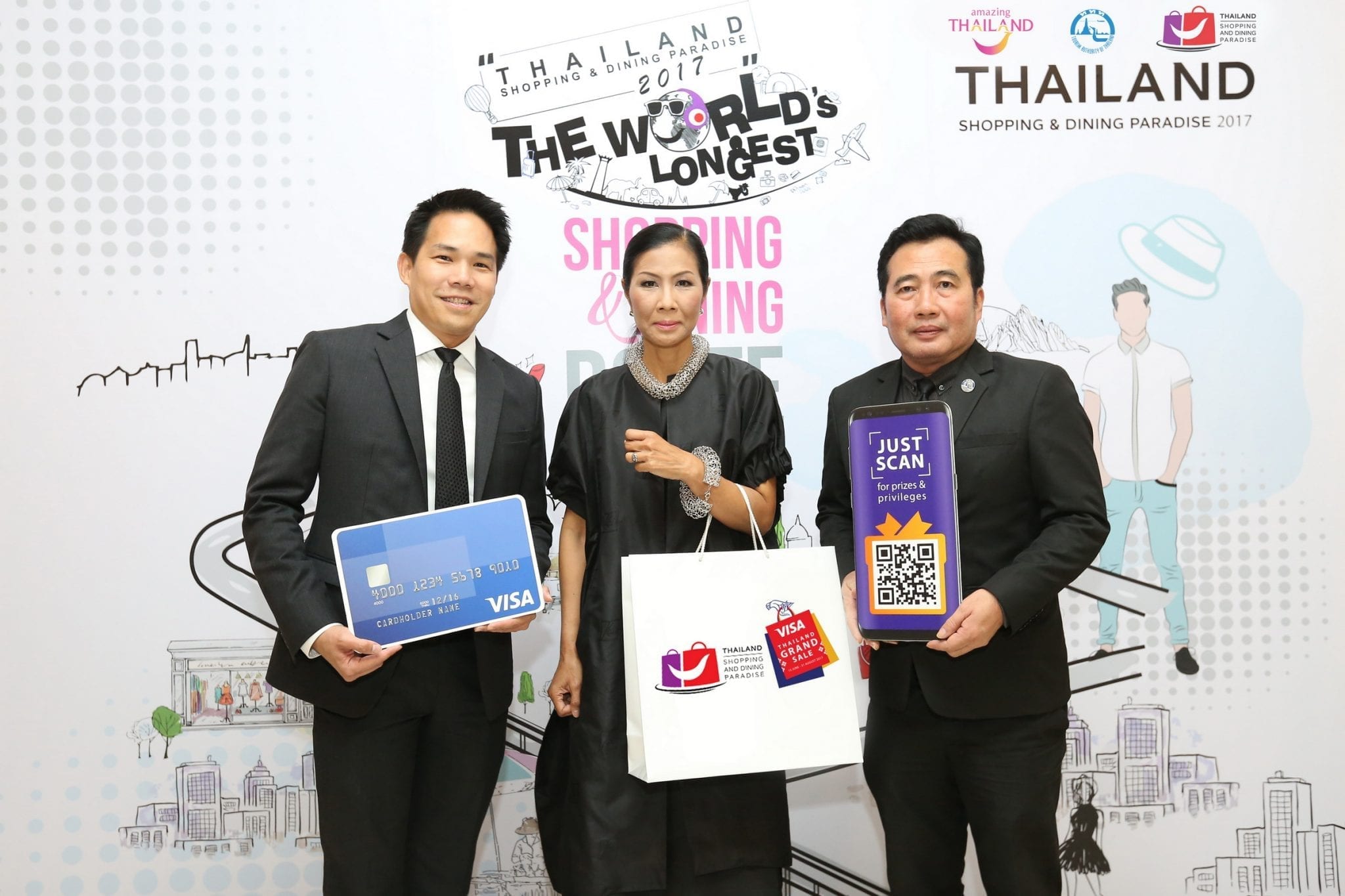
    Thailand Minister of Tourism and Sports Ms. Kobkarn Wattanavrangkul (center), Mr. Noppadon Pakprot (right), Deputy Governor for Tourism Products and Business, Tourism Authority of Thailand (TAT), and Mr. Suripong Tantiyanon (left), Visa Country Manager, Thailand launch Visa Thailand Grand Sale 2017.

    This year the entire customer journey will be made available for the first time on mobile. Visa cardholders can simply sign up by scanning a QR code at more than 7,000 merchant locations nationwide. To claim the offers, cardholders simply present the code or screen capture with merchants.

    Customers with internationally issued Visa cards who registered upon arrival at the airport will receive a welcome pack consisting of a complimentary SIM card with WIFI access, Grab ride worth THB 100, and a complimentary drink at Coffee World.

    More than 50 leading retailers in Bangkok, Pattaya, Chiang Mai and Phuket take part in Visa Thailand Grand Sale, which runs from 15 June to 31 August 2017. In Bangkok, Visa Thailand

    Grand Sale is present in three shopping and dining clusters: Downtown Bangkok from Siam to Asoke; Along the Chaophraya River at River City and Asiatique; and outer Bangkok on Bangna and Ramintra.

    Offers extend to popular online shopping websites: Lazada Thailand and Sephora.

    Suripong Tantiyanon, Visa Country Manager, Thailand said: “Having served millions of visitors to Thailand over the past 20 years, this platform has been revamped to meet the changing travel needs and behaviours. This year it has been renamed “Visa Thailand Grand Sale” from “Amazing Thailand Grand Sale” in partnership with TAT’s Thailand Shopping and Dining Paradise program.”

    For every THB 1,000 spent with Visa during the campaign, cardholders will receive a ticket to enter a lucky draw. There are ten prizes, each including two return air tickets and a maximum of seven-night stay at one of the program’s destinations. Five prizes are for international Visa cardholders and the other five are for participants with Thailand-issued Visa cards.

  • Visa, Validus to provide virtual card solutions for SMEs

    Visa, Validus to provide virtual card solutions for SMEs

    Visa has teamed up with FinTech platform Validus to provide SMEs with virtual card solutions designed to help scale their businesses. The partnership seeks to unlock capital for SMEs to reinvest in their products and services.

    The solution has already been adopted by GroXers Inc Pte Ltd, a food and beverage distributor in Singapore.

    Under this partnership, Validus is working with Visa to facilitate immediate cash flow to SMEs with unpaid invoices in their payment cycles. By clearing invoices for SMEs using a Visa virtual commercial card, Validus helps SMEs expand faster and have a faster turnover for their products and services.

    The food & beverage (F&B) businesses, have to deal with a large number of buyers ranging from “Small businesses often face challenges such as access to capital to fund their business growth and this makes them vulnerable. Similarly, suppliers for these businesses may be challenged to provide adequate credit, as they do not have the skills to underwrite higher credit lines,” commented Vikram Kshettry, head of B2B Partnerships and Small Business Asia Pacific at Visa.
    “It is essential that businesses are able to access credit from specialist lenders to invest in their businesses, and for suppliers to be paid on time. The presence of such lenders, who can respond faster to business needs, is key to Singapore’s continued SME growth.”

    GroXers Inc, a leading enterprise run by well-known Singaporean entrepreneur, Nichol Ng, stated that the solution has freed up their cash flows considerably.

    “We have been looking for a solution that bridges the gap between our cash flow and account receivables and this is our biggest untapped asset. It is interesting to see how this solution has enabled us to receive our money faster and more seamlessl,” Ng aid.

    “At GroXers Inc, 100% of our receivables from B2B retailers are now on credit card payment. We genuinely feel that in today’s economy, we should free our time and cash flow to focus on growing our business.”

    Validus and Visa will look to increase their commitment to supporting SMEs in Singapore across a range of industries. This includes businesses that specialize in the distribution, services and manufacturing sectors.

  • Thais use more electronic payments and shy away from cash for safety reasons

    Thais use more electronic payments and shy away from cash for safety reasons

    Thais are becoming increasingly confident in using electronic payments, as cash is seen as a hassle and unsafe to carry around, according to Visa’s research.

    In its third instalment, the 2016 Visa Consumer Payment Attitudes Study tracks the current attitudes consumers have on electronic payments and identifies trends in payments behavior in six Southeast Asian nations. Of those surveyed in Thailand, 73 percent said they used electronic payments, including cards, mobile devices and wearables, more often than cash, deliberately moving away from notes and coins.

    Emerging affluent were the heaviest users of electronic payments (83%) compared to the mass market at 68 percent. The main reasons cited for carrying less cash were the lack of safety (60%), up from 57 percent in 2015; and easy access to cash withdrawals (48%), up from 38 percent in 2015.

    “As new innovation emerges, consumers are more willing to try new payment technologies. The case in point is how seven in ten Thais (67%) prefer to automate payment, eliminating the entire physical process of paying. This came at a time when we are experiencing unprecedented growth in the on-demand economy, particularly in ride-sharing apps. This creates new demand for fast, secure and convenient card-not-present payments,” said Suripong Tantiyanon, Visa Country Manager, Thailand.

    New ways to authenticate payments are also a draw for Thais: 75 percent of respondents stated they felt “comfortable” using biometrics technology such as fingerprint and facial recognition – the highest percentage in Southeast Asia. Enthusiasm for biometrics are skewed towards Generation Y, 79 percent of which have no problem relying on biometrics, compared to 70 percent of Generation X.

    “There is clearly a growing appetite for electronic payments in Thailand. Take for instance existing innovation such as Visa payWave contactless payments, which is widely available at major retailers, supermarkets and restaurants nationwide. We are not surprised to see that 82 percent of respondents would choose contactless payments over cash, if merchants offer them,” said Mr. Suripong.

    Electronic payments for on-demand services, like meal delivery, grocery delivery, transportation, and travel too are shaping up in Thailand.

    According to the Visa Consumer Payment Attitudes Study, 54 percent of respondents have used on-demand delivery service in Thailand in the past 12 months, with 29 percent having used it 2-3 times a month. The most popular category was food delivery with 3 in 4 respondents (75%) having used their mobile device to order food online. Cash is currently the main payment method at 71 percent, but electronic means are catching up. Half the respondents (47%) said they would use payment via “card on file” or credit card registered with the app while 56 percent said they would like to pay upon delivery using mobile wallet.

    “Whether it is mobile wallet, payment gateway or any technology, our study shows that fundamentally Thai people still expect their payment experience to be safe, fast, and secure (82%). And a global payment network like Visa – that is capable of handling more than 65,000 transaction messages a second – more than meets the demand,” said Mr. Suripong.

  • Visa Partners ShopBack to Host Three-Day Buka Puasa Treats Online

    Visa Partners ShopBack to Host Three-Day Buka Puasa Treats Online

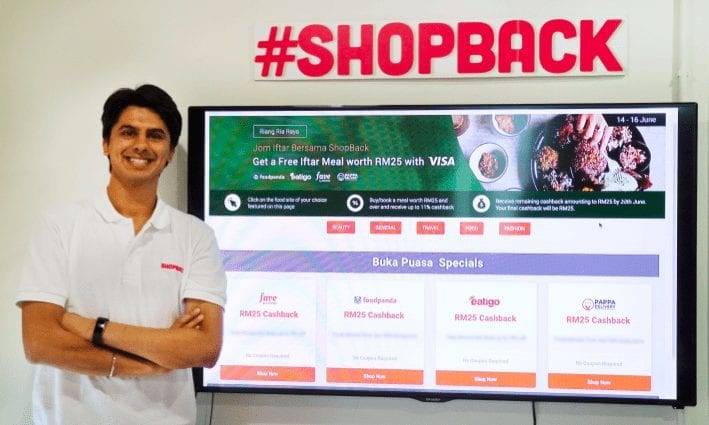
    Top Cashback platform ShopBack and global payment technology company Visa today announced a three-day Buka Puasa Treats ‘Jom Iftar Bersama ShopBack’ campaign, which will be organised in the form of online meals booking via ShopBack Malaysia’s Visa store from 14th – 16th June 2017.

    During the event period, the public can go to the site and order a meal/voucher from Eatigo, Fave by Groupon, Foodpanda, or PappaDelivery for themselves and the person they want to sponsor and enjoy a Buka Puasa dinner with, whereas Visa and ShopBack will giveaway RM25 Cashback to their accounts thereafter.

    “We are truly glad to team up with Visa on this campaign in the spirit of Ramadan. We hope to express our appreciation to our users and encourage the spirit of sharing among the online community in Malaysia, starting by ordering and sharing a meal with the people around us. The Cashback earned is meant to be transferred to their bank account after verification, which is also a savings that could be put to good use.” Alvin Gill, the Country Manager for ShopBack Malaysia said.

    Alvin expressed that the company has seen at least 60 per cent increment in terms of the number of users from its website and app in the past six months, which indicates more Malaysians are spending cautiously and constantly looking for the ways to save due to current economic challenges.

    Currently, there are more than 650,000 Malaysians making online purchases through ShopBack account every month. The company collaborates with over 500 international and online e-retailers such as Booking.com, Fave by Groupon, Foodpanda, Hermo, Lazada, Zalora and more to reward shoppers with up to 30% hard cash whenever they make a purchase online.

    ShopBack is the top Cashback platform in Southeast Asia that has enabled Malaysian online shoppers to save RM13.5 million thus far. Other than Malaysia, it also has a presence in India, Indonesia, Philippines, Singapore and Taiwan.

  • Mastercard, UnionPay International and Visa Make E-Payments in Thailand Easier

    Mastercard, UnionPay International and Visa Make E-Payments in Thailand Easier

    Mastercard, UnionPay International and Visa today introduced a Standardized Quick Response (QR) Code for payments, accelerating Thailand’s transition to a cashless society.

    The Standardized QR Code supports the Bank of Thailand’s cashless agenda to drive innovation, interoperability, and security in payments.

    In order to pay, consumers holding a Mastercard, UnionPay, or Visa card can simply use a mobile application with Standardized QR Code support to scan the merchant-presented QR code. QR Code works on both smart phones and feature phones with camera function.

    By establishing standard specifications for QR code payments, consumers and merchants in Thailand now have more options to pay electronically without compromising on security and convenience. The Standard QR Code is simple to set up and use and provides three key benefits.

    First, consumers will not need to scan different QR codes to make payments with Mastercard, UnionPay and Visa. Merchants will only need to display one QR code at the storefront or through the acquiring bank’s mobile application.

    Second, by routing the transactions through global-standard processing networks, consumers can enjoy a fast, convenient and secure payment experience.

    Third, the standards are intended to be globally interoperable and with the right mobile application consumers will be able to use the same standard QR code to make payments everywhere the standards have been adopted.

    The Standardized QR Code is intended to be implemented by banks and merchants across Thailand by the third quarter of 2017 and will contribute to the financial sector’s Electronic Data Capture (EDC) expansion initiatives under the National e-Payment Roadmap introduced by Ministry of Finance.

    A readily accessible and secure payment processing option for all stakeholders, the Standardized QR Code for payments will contribute to the growth and speed of electronic payment adoption across the country, lowering the cost for accepting electronic payments.

    In the future, Thai consumers will benefit from being able to make QR code based payments when traveling outside of Thailand.

    Mr. Donald Ong, Country Manager, Thailand and Myanmar, Mastercard, said, “The launch of the Standardized QR Code signals exciting times for Thailand as consumers move quickly to adopt new payments technology. Our own research, for example, shows that 50% of young consumers across South East Asia would use the QR code straightaway, and we believe this reflects the demand in Thailand. This demand will grow further as the technology is rolled out at small shops across the country, and includes bill payments and cash on delivery as well. Developed in line with global standards, this QR code solution means Mastercard users have even more peace of mind, as well as extra convenience when paying for goods and services. This is yet another strong offering as Mastercard supports Thailand’s evolution towards a cashless society.”

    Mr. Wenhui Yang, General Manager for UnionPay International Southeast Asia, said, “UnionPay now chairs an international workgroup with other payment networks to develop a global QR Code Standard for payments. As an international payment network, UnionPay aims to provide payment solutions that are tailored to the needs of the local market, to enable choice and ease of payment for consumers and businesses alike. The Standardized QR Code is an innovative step forward in the right direction for Thailand’s payment industry. By enabling consumers and merchants to pay and process QR codes easily and securely, this will accelerate the development of the local payments industry, as we continue to work with the Bank of Thailand on payment solutions that will benefit the people of Thailand. We believe the Standardized QR Code has the potential to support and strengthen the Thai economy and help Thailand become a truly cashless society.”

    Mr. Suripong Tantiyanon, Visa Country Manager, Thailand, said, “Visa is proud to have contributed to the development of Standardized QR Code in Thailand as we believe it has the potential to significantly accelerate the growth of electronic payments acceptance in the country. This is especially true for consumers as well as small merchants, as it lowers cost and is easy to implement, eliminating the need for traditional POS hardware. The success of mVisa worldwide has proven a QR code solution to be scalable, secure and easy to use. Increased use of electronic payments has contributed to meaningful economic growth, with more than USD 3.18 billion or about THB 113 billion added to Thailand’s GDP from 2011 to 2015. We look forward to continuing to partner with our clients, merchants and the government to innovate and expand access to digital payments in Thailand, driving inclusive growth for everyone, everywhere.”

  • Visa and Thailand Ministry of Tourism and Sports Celebrate 20 Years of Cooperation

    Visa and Thailand Ministry of Tourism and Sports Celebrate 20 Years of Cooperation

    Kobkarn Wattanavrangkul, Minister of Tourism and Sports, recently welcomed Chris Clark, Visa Group Executive for Asia-Pacific, at the Ministry of Tourism and Sports. During the visit, Mr. Clark thanked Ms. Kobkarn for the 20 years of cooperation between Visa and Thai tourism authorities, and discussed opportunities to further strengthen their partnership and drive tourism in Thailand.

    The long-standing partnership between Visa, the global leader in payments, and Tourism Authority of Thailand has resulted in a number of high-profile campaigns, boosting sustainable tourism revenues.  

    This year also marks the 18th anniversary of “Amazing Thailand Grand Sale”. Subsequently, campaigns such as “Thailand Spectacular Year End” and “Thailand Splash and Spice” were introduced to provide consistent attractions for visitors throughout the year.  

    Most recently, Visa launched the “Not a Tourist: See Thailand through Local Eyes” campaign that invited residents of Thailand to share photographs of local activities, foods, and places on social media to encourage tourists to experience Thailand at a deeper and more meaningful level.

  • MyTheresa.com takes aim at Korea

    MyTheresa.com takes aim at Korea

    European luxury online retailer MyTheresa.com is launching a Korean-language site.

    Selling luxury womenswear and accessories from such brands as Chloe, Gucci, Miu Miu and Stella McCartney, the e-tailer says it has seen “huge growth potential” in South Korea.

    “The Korean luxury market is moving quickly to digital. Ever since our first activities in Korea we have seen a massive consumer shift to digital and a triple-digit growth in the market,” says MyTheresa.com president Michael Kliger.

    The online fashion destination’s Korean website will offer free exchanges and returns within 30 days, including a free collection service, as well 72-hour deliveries. It aims to offer a more personalised service with a Korean-speaking customer care team.

    Korean customers will be able to pay in euros if using American Express, MasterCard or Visa.

    Launched in 2006, MyTheresa.com was acquired by American company Neiman Marcus Group in 2014. The German multi-brand retailer delivers to more than 120 countries with websites available in Arabic, Chinese, English, French, German and Italian.

  • Citi, Visa Launch eProcurement Platform In Singapore

    Citi, Visa Launch eProcurement Platform In Singapore

    Reports Friday said the companies are rolling out an eProcurement platform, Renepay, based on a reverse auction business model. The network will include B2B suppliers across the country within various industries, including financial services, marketing, real estate, telecom, beverages and more.

    Customers of Citi’s Visa Commercial Card will have access to the Renepay platform and can take advantage of extended payment periods without interest when making purchases on the network. The platform also digitizes paperwork typically involved in procurement processes, reports said, and aims to reduce contract negotiation time.

    The platform processes electronic purchase orders, invoices and payments, Citi and Visa noted.

    “We recognize that corporate buying is very specialized, and we wanted to provide buyers a platform where they can interact with leading suppliers online and arrive at the best price through the online negotiation center,” said Visa’s Vikram Kshettry, head of B2B partnerships in Asia-Pacific.

    “At every step of the procurement cycle, we allow corporates to decide on what best works for them including what to purchase, which suppliers to transact with and the payment process which they would like to adopt,” added Renepay founder Firdaus Morgul in another statement.

  • Visa QR payments coming to Indonesia, Pakistan, Vietnam

    Visa QR payments coming to Indonesia, Pakistan, Vietnam

    Visa will soon be expanding its QR-based mobile payment service to ten more markets, including Indonesia, Pakistan and Vietnam.

    The service, named mVisa, is now live in India, Kenya and Rwanda, and will soon be available to merchants and consumers in the three new APAC markets, as well as Egypt, Ghana, Kazakhstan, and Nigeria.

    mVisa, a mobile solution, aims to provide easy and secure digital commerce to financial institutions, merchants and consumers in emerging markets.

    The service is designed to help merchants overcome infrastructure issues by allowing consumers to use their mobile phones to make cashless purchases at merchant outlets, pay bills remotely and send money to friends and family members by securely linking their Visa debit, credit or prepaid account to the mVisa application.

    mVisa digitizes the underlying account and allows consumers to transfer funds from their account to the retailer’s account reliably and securely by scanning a QR code.

    Use cases of mVisa include the allowing subscribers of Tata Sky, a direct-to-home service provider in India, to recharge their account by using their mobile phones to scan the WR code directly from the TV screen or online. This function allows Tata Sky customers to order and pay for monthly or one-time services from home without having to visit a physical retail outlet.

    Mahanagar Gas Limited, a utility provider in Mumbai, also issues customer bills printed with the mVisa QR code. Customers scan the QR code on the bill, as they would at a merchant outlet, and complete their transaction at their leisure.

  • Korean firm enters Indonesian credit card market

    Korean firm enters Indonesian credit card market

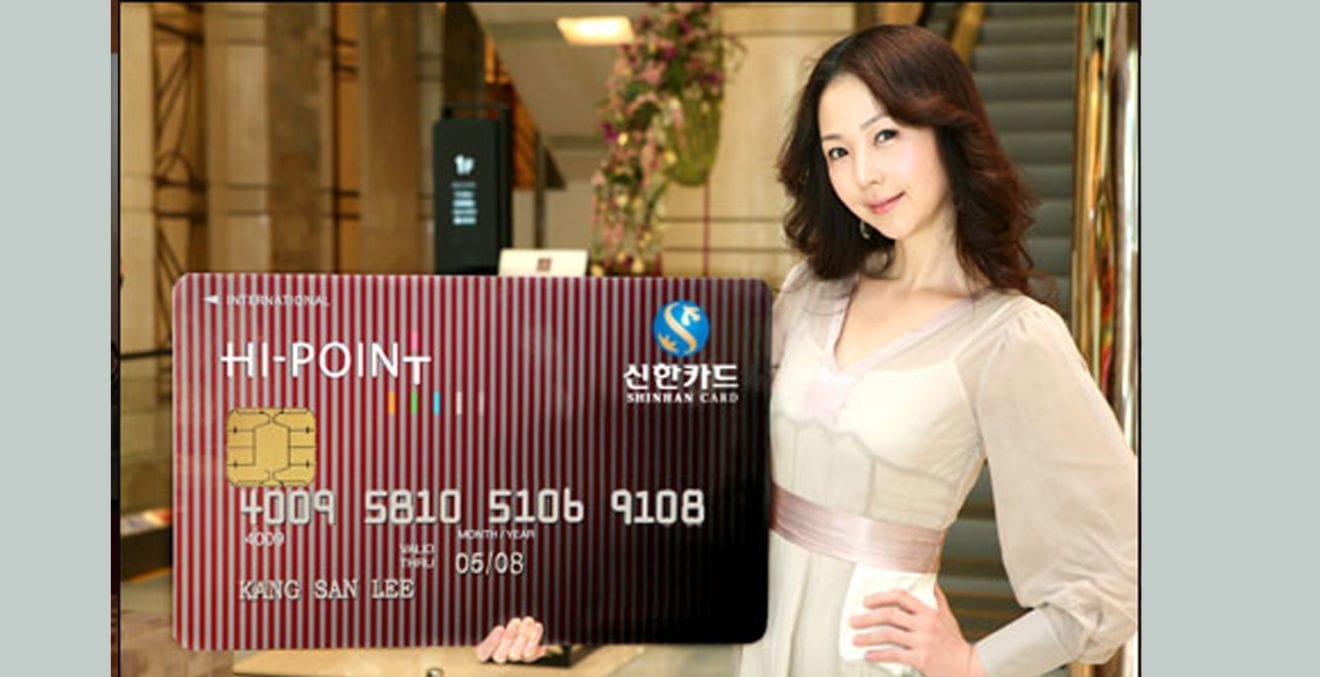
    Shinhan Indo Finance Ltd (SIF), a subsidiary of South Korean credit issuer Shinhan Card, has launched its first credit card on the Indonesian market.

    The “ShinhanIndo Card Hi-Cash” comes in four different types to reach consumers from all segments, especially the millennials.

    In developing its credit card business, SIF is cooperates with Indo-Pack, merchants under Indomobil Group, and K-Pack, merchants from South Korean companies, the company’s vice president Tan Kim Piauw told a press conference after the launching event on Monday.

    SIF was established in December 2015 as a multi-finance joint venture between the Korean credit issuer and two Indonesian firms, Indomobil Group and Asuransi Central Asia (ACA).

    The joint venture obtained permits to issue credit cards from the Financial Services Authority (OJK) and Bank Indonesia in December last year.

    In its initial stage of operation, Indomobil’s 20,000 employees and those of ACA were SIF’s main market target, Tan said, adding that this year the number of credit card holders was expected to reach 80,000.

    “We hope to book Rp 500 billion in transactions in 2017,” he said.

    Speaking at the press conference, Shinhan Card CEO Wi Sung Ho said that with its growing middle class, Indonesia was a market with quite a bit of potential for the credit card business. He said that the number of credit card holders totaled only 17 million despite the country’s large population, far below the South Korean market with 22 million cardholders.

  • Indonesian Tourism Industries Support Visa-free Policy

    Indonesian Tourism Industries Support Visa-free Policy

    Indonesian tourism industries have expressed support to the adoption of visa-free policy by the government so far, citing positive impact on the tourism sector.

    The general chairman of the Association of Indonesian Tourism Industries (GIPI), Didien Junaedy, said here on Saturday (Feb. 4) that the adoption of the policy is essential to boost tourism in the country.

    He said that the policy has been proven to significantly increase the arrival of foreign tourists in their countries.

    Through Presidential Regulation Number 21, 2016, the Indonesian government has provided visa-free facility to visitors from 169 countries for a short visit.

    The regulation was produced in March 2, 2016, and so it is not yet a year old. According to me, the evaluation should be done after two years of its implementation,” he said, adding that it would take several months to familiarize.

    Junaedy added that tourism industrialists grouped in GIPI have seen and felt the positive impacts of the policy.

    He stated that consistency in the implementation of the policy would be needed with regard to building public trust in foreign countries.

    Supervision on the other hand, however, is also needed to minimize possible violations of the regulation, he noted.

    “GIPI has planned to gather tourism industrialists eight times in the first semester this year to strengthen its support for the implementation of the Presidential Regulation Number 21,” he asserted.

    Junaedy admitted that there had also been negative excesses coming from the policy, such as visa overstay problem and illegal worker problems.

    “Their number however is relatively small compared to millions of foreign tourists visiting Indonesia legally, like in other countries that implement the same policy,” he added.

    He also said that the negative impacts of the policy must be overcome, and solution to the problems must be found through joint efforts.

    “We must not blame each other over trivial problems but must cooperate to overcome them,” he stated.

    He said that the visa-free policy has so far been one of the strong factors that has played a major role in meeting the target of foreign tourist arrivals, which was set at 15 million this year and 20 million by 2019.