Retail News CRM

Tag: visa

  • Burberry Korea price cut is needed

    Burberry Korea price cut is needed

    Burberry Korea is under fire for cutting prices “too little, too late”.

    It’s not the first time Burberry has been criticised for its Asian pricing strategy. Last May,

    Jack Chuang, a partner with Hong Kong-headquartered OC&C Strategy Consultants, said that of all the luxury brands, Burberry is the one with the most significant price gap between Asian and European markets.

    “Prices in Mainland China are almost 40 per cent higher than in UK, while in Hong Kong, it is 20 per cent higher.”

    The South Korean office of Burberry recently marked down the price of some of its products to reflect the fallen value of the British pound, but only by a small margin compared with the currency’s depreciation, fashion industry officials said Wednesday.

    Burberry Korea dropped the local price by an average 9 per cent as the pound fell after Britain’s decision to leave the European Union in June last year. Industry officials say the markdown, however, falls far short of the 17 per cent fall of the British currency against the US dollar. The pound’s exchange rate against the South Korean won dropped 17 per cent from 1765.90 won in February last year to 1468.13 won as of January 9.

    The price adjustment in Korea also falls behind Burberry’s decision for Hong Kong, where the fashion brand’s product prices were taken down 10-15 per cent in September. Some of the products were down by 20 per cent. The markdown rate was more than the 9.75 per cent fall of the pound against the Hong Kong dollar at the time.

    Burberry Korea declined to talk on the matter despite repeated calls by news agency Yonhap.

    Consumer groups have long complained that foreign brands often take advantage of their popularity in South Korea to push demands they do not make in other countries or exclude South Korea from their market action.

    Swedish furniture maker Ikea caused ire last year when it kept selling dressers in South Korea that were recalled in the US and Canada after reported accidents involving children that resulted in deaths. The company had argued that the dressers meet local safety regulations. Volkswagen, who already settled on compensation to its consumers in the US from faked emissions tests, has yet to carry out full recalls or offer compensation steps in South Korea.

    US credit card company Visa in May came under fire for deciding to raise the processing fee by 10 per cent for overseas transactions, effective in South Korea but not in Japan or China.

    Such discriminatory actions are more stark at duty-free shops, industry officials say, who fiercely compete to host highly sought brands.

    “In case of popular brands, they often insist on excessive requirements, such as the cost of interior decorations when deciding to open their store,” an official at a Seoul duty-free shop said. “The retailers have to be compliant because of the brand power and because they have to attract customers, and they end up having to accommodate the demands.”

  • Visa and TAT launch festive campaign with great rewards for tourists

    Visa and TAT launch festive campaign with great rewards for tourists

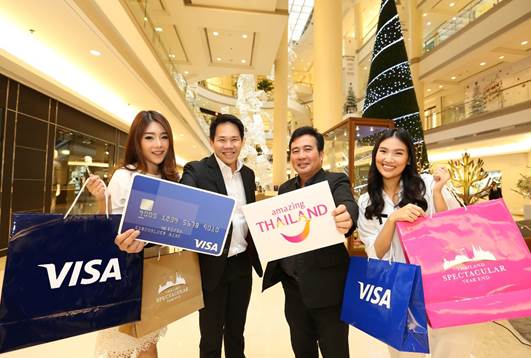
    Suripong Tantiyanon (left), Visa Country Manager, Thailand and Noppadon Pakprot (right), Deputy Governor for Tourism Product and Business, Tourism Authority of Thailand (TAT), launch Thailand Spectacular Year End 2016, aiming to boost inbound tourist spending during the festive seasons.

    The joint promotional campaign rewards non-Thai Visa cardholders with special privileges and complimentary gifts when they spend at 14 shopping complexes throughout Bangkok, from now until January 31, 2017. TAT forecast that more than 375,000 tourists will visit Thailand during the four-day New Year period, generating more than THB 5.5 billion of revenue for the country, a 12-percent increase from the same period last year.

  • Payments innovation continues to drive growth in Thailand

    Payments innovation continues to drive growth in Thailand

    Demand for innovative payment solutions is on the rise in Thailand, according to global payments technology company Visa, as the value of transactions made by Thai cardholders continues its high-growth trajectory.

    Total payment volume for all Visa cards rose by 9.3 percent last financial year, with growth coming from Visa debit cards at 18 percent and Visa credit cards at 8.6 percent. Meanwhile, the value of eCommerce transactions conducted on Visa cards rose by 24 percent. 

    “While such growth is not new to the payments industry, we are at a tipping point of innovation. New forms of commerce in the digital and hyper-connected world are emerging. When our clients issue Visa cards, they are issuing more than a card, they are issuing a Visa account that enables their customers to use Visa anywhere, anytime, with any connected device,” said Suripong Tantiyanon, Visa Country Manager, Thailand.  

    To support payments innovation in Thailand, Visa has launched the Visa Developer platform, transforming VisaNet, the world’s largest retail payment network, into an open platform for payments and commerce.

    Developers at merchants, financial institutions, technology companies and startups will have self-serve access to some of Visa’s most popular payment capabilities available through APIs, SDKs, and relevant documentation.

    One example of a solution developed and launched in Thailand is a global loyalty mobile application, using the Visa Direct API to provide real-time payment services. The product allows direct transfer of reward points to users’ Visa cards.

    The Visa Tokens Service (VTS), is another API that enables financial institutions to issue tokens – essentially digital accounts that enhance the security and simplify the consumer purchasing experience when shopping on a mobile phone, tablet, personal computer or other smart device. 

    Visa is also expanding the acceptance of electronic payments across the country. The number of merchant outlets that accept Visa cards has grown to almost half a million in 2016, particularly outside of Bangkok. The number of active mobile point of sale (mPOS) devices is almost close to fifty thousand, buoyed by insurance sales.

    “Enormous potential exists for technology to transform the entire payments experience. Many businesses are still relying on legacy systems in a world where customers want everything now – and, customer experience matters. Visa strives to extend the reach and value of electronic payments in ways that can power these changes,” added Mr. Suripong.

  • Visa buys payment authentication company

    Visa buys payment authentication company

    Visa has arranged to to acquire e-commerce payment authentication provider CardinalCommerce to improve the company’s cross-platform payments security capabilities.

    The transaction, which is subject to the customary closing conditions, is expected to close in Visa’s second fiscal quarter 2017. Financial terms have not been disclosed.

    Visa already provides Cardinal’s services to merchants and acquirers through its CyberSource merchant and acquirer enablement platform. Additionally, Visa will draw upon its global relationships and presence to drive international expansion of Cardinal’s products and services.

    As Visa plans to integrate tokenization into Visa Checkout over the next 18 months, the addition of Cardinal is expected to allow closer integration of 3-D Secure and delivery of new fraud mitigation capabilities to merchants.

    Cardinal will continue to operate and serve all of its clients as a wholly-owned subsidiary of Visa, and its authentication platform will continue to support a broad range of payment brands and partners across the industry. Co-founders Tim Sherwin and Chandra Balasubramanian will stay on as leaders of the Cardinal team.

    “This strategic acquisition combines Visa’s industry expertise and Cardinal’s critical role in payment authentication to bring added security to online transactions, reduce fraud and support digital commerce, which is the fastest growing commerce segment today,” Visa SVP of risk and authentication products Mark Nelsen said.

    “By helping merchants, acquirers, and issuers better distinguish between good and bad transactions, Visa is in an even better position to strengthen consumer trust in digital payments, help merchants grow their businesses, and accelerate innovation in commerce.”

  • Cybercrime rising Asia as cashless payments rise

    Cybercrime rising Asia as cashless payments rise

    Cashless payments are growing rapidly in Asia-Pacific and so is cybercrime, costing the region an estimated $US 81 billion.

    With new combinations of malware customised for local markets, phishing and social engineering attacks as well increasing e-commerce and ATM fraud, businesses are increasingly at risk for payment data theft, according to the PCI Security Standards Council.

    Singapore’s cards and payments market is one of the most competitive and attractive in the Asia-Pacific region. Already, 69 per cent of consumer spending in Singapore is made through electronic payments.

    It’s against this backdrop that global payment and cybersecurity experts met at the PCI Asia-Pacific Community Meeting in Singapore to collaborate on helping businesses prevent, detect and respond to cyberattacks that can lead to payment data breaches and fraud.

    “We simply must work together to advance payment security,” PCI Security Standards Council (PCI SSC) international director Jeremy King told attendees.

    “New technologies are driving adoption of cashless, mobile and digital commerce in Singapore and the Asia-Pacific region, and it’s critical that we ensure consumers remain confident in the security of their financial information with every payment transaction. As payments evolve, businesses must prioritise data protection with robust security standards and practices.”

    The PCI SSC has reinforced its mission to foster secure transactions globally and emphasised that as new cyber threats emerge, and advances in technology change the way payments are conducted, PCI Standards will evolve to protect the next generation of payments. Regional and industry experts speaking at the event included representatives from the PCI Security Standards Council, Interpol, Verizon, Diners Club Singapore, Foregenix, Beijing Information Technology and Pen Test Partners.

    Presentations and discussions addressed a mix of regional and global topics ranging from new threats via the Internet of Things; cybersecurity trends in Asia-Pacific; Point-to-Point Encryption for protecting payment data throughout the entire processing environment; preventing skimming at ATMs and the future of mobile and digital commerce.

    PCI SSC GM Stephen Orfei said the Asia-Pacific region has made tremendous advances in payment security in the past decade.

    “More and more companies in the region are making cybersecurity a top priority.  With the rapid growth in mobile payments, now, more than ever, we must join forces to devalue payment data and make it useless to criminals.  It is very encouraging to see industry and public-private partnerships in Asia-Pacific working together to address the ever expanding cyber threats from around the world.”

    The PCI Security Standards Council is a global forum that is responsible for the development, management, education, and awareness of the PCI Data Security Standard (PCI DSS) and other standards that increase payment data security.

    Key focus areas at the PCI Asia Pacific Community Meeting included:

    • Devaluing data with point-to-point encryption: More and more solution providers in Asia-Pacific are encouraged to adopt the PCI Point-to-Point Encryption (P2PE) Standard to provide solutions that devalue data and simplify security and PCI DSS compliance efforts for businesses.
    • Simplifying security for small merchants: The PCI SSC Small Merchant Task Force urged banks, technology providers and security assessors with small business customers to adopt and disseminate newly published PCI Payment Protection Resources for Small Merchants.
    • Improving security of online and mobile payments with stronger authentication: PCI SSC chief technology officer Troy Leach discussed the newly released device standards (PTS POI v5 and HSM v3) that support online and mobile payment security. PCI SSC is collaborating with EMVCo to support 3-D Secure 2.0 (3DS 2.0), which provides a way for consumers to directly authenticate their card with the card issuer when shopping online.
  • Security is key for mobile wallet adoption in Thailand

    Security is key for mobile wallet adoption in Thailand

    Whether paying with contactless cards or mobile wallets, Thais prioritize security over convenience and are more likely to use contactless payment methods when they know strong security measures are in place, according to a recent study conducted by Visa.

    The Visa Mobile Wallet and Contactless Study found that the majority of Thais (82 percent) believe security is more important than convenience when it comes to mobile and contactless payments.[1] With accelerated growth in financial technology (FinTech), public and private sectors are grappling with ways to increase consumer confidence in electronic payments, particularly when it comes to transactions carried out on mobile devices.

    The average Thai spends around 160 minutes a day on their mobile devices.[2] By the end of 2016, it is estimated that around 20 million people will own smartphones in Thailand, a figure expected to rise to 24.8 million by 2019.[3] Although internet access and mobile device ownership among Thais are on the rise, uptake of mobile financial services has been gradual, partly due to Thai consumers being unaware of advancements in cyber security, and technology. 

    Suripong Tantiyanon, Visa Country Manager, Thailand said: “Based on our study, the more secure the mobile payment experience is, the more willing Thai consumers will be to use it. We’re confident this cautious yet optimistic attitude, coupled with Visa’s multilayered approach to security, will drive the uptake of mobile transactions in Thailand.” 

    The Visa study, independently conducted by YouGov on behalf of Visa, examines Thais’ attitudes towards mobile and contactless payments alongside those of other Southeast Asian markets, namely Singapore and Malaysia. It finds that the three biggest fears in mobile wallet security are hacking of mobile phone (73 percent), theft of mobile phone (65 percent) and getting charged for unintended purchases (63 percent). 

    “Among the respondents, only 39 percent said they would consider using third-party mobile wallets. But within this particular group of potential adopters 74 percent are already aware of how encrypted tokens eliminate the risk of personal data theft,” added Mr. Suripong.

    Visa Token Service (VTS) ensures mobile and contactless payments are secure as well as convenient. VTS replaces cardholder information, such as account numbers and expiration dates, with a unique digital identifier (a “token”) that can be used for payment, via a user’s mobile wallet, without exposing the cardholders’ more sensitive account information.

    Tokenization hides consumers’ confidential account information during digital transactions, making digital payments more secure. According to the study, approximately 55 percent of Thais are familiar with VTS, with awareness highest among those that are also familiar with mobile wallet technology.

    Just under half of Thais (46 percent) believe paying with a mobile device is as safe as with physical cards; a figure likely to increase in the future, as people become more familiar with advancements in Visa’s mobile payment systems. 

    Three in five Thais (61 percent) believe that one day they will no longer need to carry a card or cash and will instead be able to use their mobile wallets for everyday spending.

    “Once Thais become familiar with innovative security measures, such as encrypted tokens, they are much more likely to use mobile and contactless payments more regularly,” said Mr. Suripong.

  • Combine all your rewards points and get more out of your luxury shopping

    Combine all your rewards points and get more out of your luxury shopping

    Shoppers can now save money on luxury brands by combining reward points from their different Visa credit cards.

    The “Points for Brands” campaign enables customers with Visa credit cards issued from leading financial institutions in Thailand, including Kasikornbank, Bank of Ayudhya (Krungsri), Krungthai Bank, Krungsri First Choice, Government Savings Bank, and Thanachart Bank to pool reward points for purchase of goods at selected luxury brands at a rate of 1,000 points for THB 100.[1] 

    There are more than 70 participating brands at The Emporium and The EmQuartier, including Coach, Kate Spade, DKNY, DVF, Proenza, COMME des GAçONS, Jimmy Choo, Valentino, EMPORIO ARMANI, Balenciaga, Calvin Klein, Hugo Boss, MCM, and Club 21.

    “This is the first time our cardholders can purchase luxury brands by redeeming points from across their portfolio of Visa credit cards, a rarity for premium categories,” said Suripong Tantiyanon, Visa Country Manager, Thailand.

    Exclusive to Visa cardholders, more information, along with help on how to redeem reward points, can be found at Points for Brands booth on M Floor at EmQuartier

  • Apple Pay makes its debut in Hong Kong

    Apple Pay makes its debut in Hong Kong

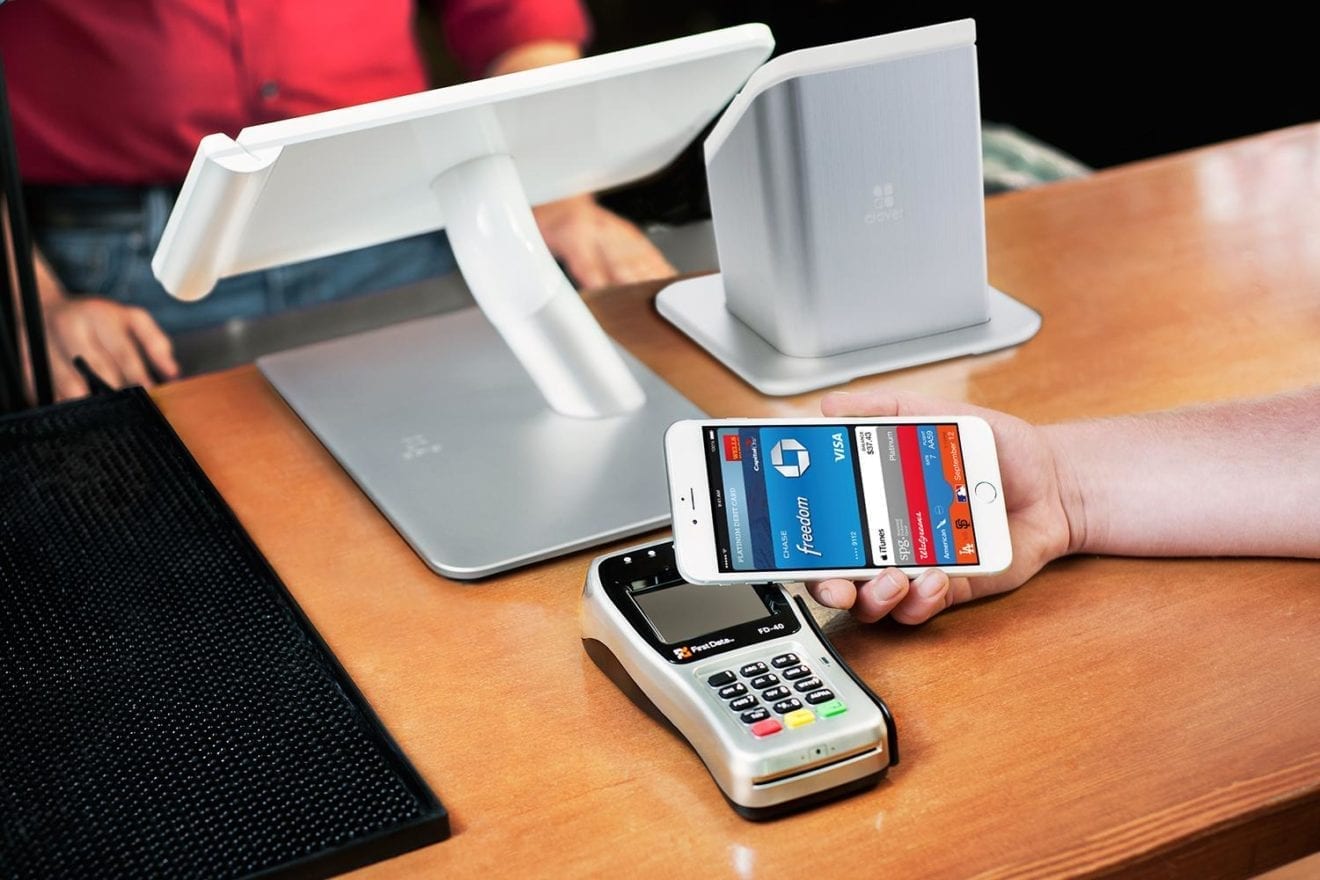
    Visa, MasterCard and American Express have all introduced support for Apple Pay in Hong Kong.

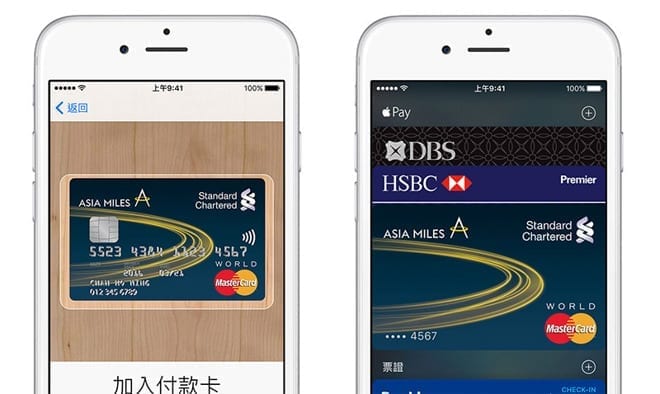
    Holders of credit and debit cards from the three companies issued by Bank of China, DBS Bank, HSBC, Standard Chartered, and Hang Seng Bank are now able to take advantage of the mobile contactless payment service.

    Apple’s Hong Kong website states that support for Bank of East Asia and Tap & Go cards is also “coming soon.”

    17613-15292-160719-Apple_Pay-HK-l

    In Hong Kong, Apple Pay is currently available in Apple’s own stores, as well as those from 39 other major chains, including 7-Eleven, APITA, KFC, McDonalds, Starbucks and Genki Sushi. It is also supported by a number of apps including Cathay Pacific, Deliveroo and Foodpanda. Support for Uber is coming soon.

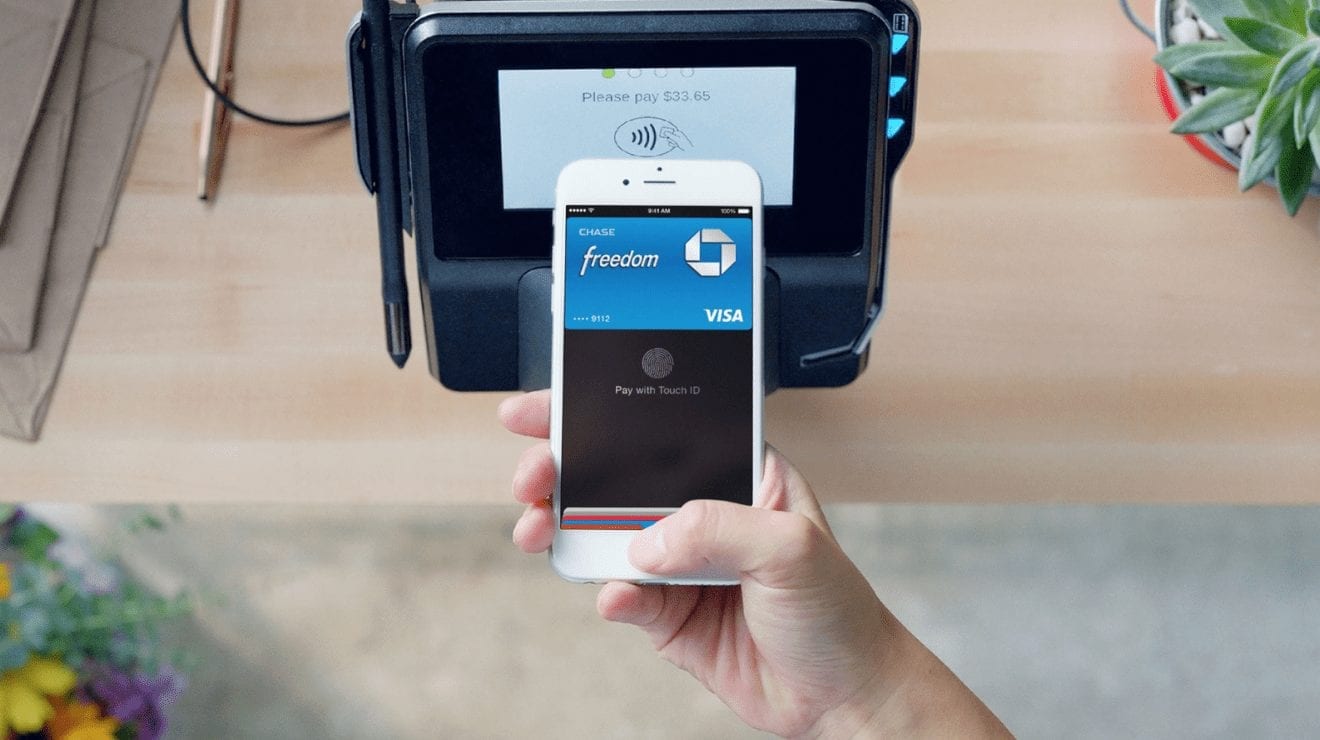
    Apple Pay’s contactless payment technology aims to improve security by not storing credit card numbers on the device or sending credit card details to merchants. Payments can be authorized using the Touch ID fingerprint authentication system.

    Apple Pay is supported by the iPhone 6s and newer, the Apple Watch paired with an iPhone 5 or newer, as well as the iPad Pro, iPad Air 2 and iPad mini 3 and 4.

    “In Hong Kong contactless payments have become a necessity for everyday life, consumers and retailers realize the greater convenience and faster checkouts for busy people on the go,” Visa Hong Kong and Macau country manager Caroline Ada said.

    She said research from the company shows that 77% of respondents are willing to try out or adopt new ways of paying, and 78% are ready to use smartphones as the device for making everyday payments.

  • Singapore Tourism Board Launches Travel Privileges Exclusive for Thai Visa Cardholders

    Singapore Tourism Board Launches Travel Privileges Exclusive for Thai Visa Cardholders

    Thai travelers to Singapore will benefit from exclusive offers, courtesy of Visa and the Singapore Tourism Board, throughout 2016. With a variety of attractions, Singapore offers something for every family member. This campaign, a collaboration between Visa and the Singapore Tourism Board (STB),  includes exclusive offers from airlines, hotels, and attractions, aiming to augment the unique experiences for Thai visitors in the vibrant island city. 

    Participating partners include Singapore Airlines, Scoot, Resorts World Sentosa (RWS), Sentosa Leisure Management, Gardens by the Bay, Asiatravel.com, ION Orchard, Mount Faber Leisure Group, Wildlife Reserves Singapore and many more.

    “For Thais, Singapore is a destination that is easy to plan and travel, offering a mixture of cultures, and great experiences for leisure and business travelers alike. Hence, Thailand is one of our key markets. Over half a million Thais visited Singapore last year spending an average of THB 30,000 per trip. They stayed for around 4 days each time,” said, Edward Koh, Executive Director, Southeast Asia, Singapore Tourism Board.

    The island country is full of events and festivals year round, as well as packed with concerts and exciting entertainment options. Families can enjoy world-renown attractions such as Singapore Zoo, River Safari, Universal Studios Singapore and S.E.A Aquarium. It is also regarded as a shopper’s paradise with options aplenty for all budgets. 

    “Singapore has so many fun activities for both business and leisure travelers – people of all ages and backgrounds. Even though you might be frequent travelers to Singapore, there will always be some new activities and experiences that are worth exploring. Under the partnership, VISA and Singapore Tourism Board want Thais to have memorable treasured moments in Singapore,” said  Ms. Sherleen Seah, Area Director, Thailand & Myanmar, Singapore Tourism Board. 

    “As the preferred card for Thai travelers Visa is delighted to work with Singapore Tourism Board and our merchant partners in the city-state to offer special privileges and discounts exclusively to Visa cardholders. Singapore is a family-friendly destination. Our offers add crucial values for everyone on all touchpoints during travel from purchasing air tickets to booking accommodation and all the way to shopping and dining,” said Suripong Tantiyanon, Visa Country Manager, Thailand. 

    Key highlight for the promotion is the lucky draw. Thai visitors to Singapore who spend more than THB 30,000 during a calendar month between July and September will have the chance to win a premium travel package worth THB 250,000 for that month. A total of 3 premium travel packages will be given away. Key events in Singapore during this time include the Great Singapore Sale between June 3 and August 14, the Singapore Night Festival on the last two weekends in August, and the Singapore Formula 1 Grand Prix on September 16 – 18.

  • Visa and TAT launch the Amazing Thailand Grand Sale 2016

    Visa and TAT launch the Amazing Thailand Grand Sale 2016

    Mr. Suripong Tantiyanon (second from left), Visa Country Manager, Thailand and Mr. Wiboon Nimitrwanich (second from right), Executive Director, Tourism Investment Department, Tourism Authority of Thailand presided over the launch of the Amazing Thailand Grand Sale 2016 campaign. More than 15,000 shops in 110 department stores and shopping centres in seven major tourist destinations of Bangkok, Pattaya, Chiang Mai, Phuket, Hat Yai, Hua Hin and Udon Thani participating in the campaign which starts today and ends on 31 August 2016. Visa cardholders get special privileges on top of the program.

    For every 500 Baht spent with their Visa cards during the campaign period, shoppers get two tickets to enter “The Travel 365 Days in Thailand” lucky draw. The grand prize includes two sets of flight tickets and accommodation, one for international traveler and another for Thai shopper. Winners can travel with a friend to any Thai airways domestic destinations and stay at any Centara Hotels & Resorts property throughout the year and up to ten days per visit. The campaign is back for its 18th successful year. Terms and conditions apply.

  • Alibaba expansion plan targets 2 billion

    Alibaba expansion plan targets 2 billion

    Chinese eCommerce pioneer Jack Ma has unveiled an Alibaba expansion plan aiming to quadruple its customer numbers to 2 billion by 2036.

    Alibaba is also aiming for a record 6 trillion yuan (US$912 billion) in gross merchandise volume (GMV) in 2020 from 3.09 trillion yuan this year.

    Ma has also pledged to intensify the fight against counterfeit products and intellectual property rights violation, saying the company is more confident than ever it can solve the problem.

    Alibaba became the world’s largest retailer (by its own definition of retailer) in April, surpassing Walmart. The company says its online trading accounts for 10 per cent of all retailing in China and has generated 15 million jobs.

    Alibaba, whose gross sales totalled $9.3 billion in 2014, hit a record $14.3 billion in sales on Singles’ Day alone last year, a Chinese holiday in November. This is more than double the eCommerce sales in the US from Thanksgiving, Black Friday and Cyber Monday combined.

    The company also holds the title of the biggest IPO in history, raising $25 billion in four days in September 2014, $7 billion more than Visa and $9 billion more than Facebook and General Motors.

  • Visa, Amex to launch Apple Pay in HK

    Visa, Amex to launch Apple Pay in HK

    Visa and American Express have both revealed plans to support mobile payment service Apple Pay in Hong Kong starting this summer.

    Customers in the region with American Express and Visa cards will be able to use Apple Pay to pay for purchases where contactless payments from the credit or charge cards are accepted.

    Apple Pay supports the iPhone 6s, iPhone 6s Plus, iPhone 6, iPhone 6 Plus, iPhone SE and Apple Watch for in-store payments, and these devices plus the iPad Air 2, iPad mini 3, iPad mini 4 and iPad Pro for payments from within apps.

    The platform uses the Visa Token Service to ensure card numbers are not stored on the device or on Apple servers.

    Instead a unique device account number is assigned, encrypted and securely stored in the Secure element on a user’s device device. Each transaction is authorized with a one-time unique dynamic security code. Customers can use Apple’s TouchID fingerprint authentication system to approve payments.

    “Visa is proud to support issuers in Hong Kong who want to launch Apple Pay to bring their customers a more secure and convenient way to pay. In Hong Kong contactless payments have become a necessity for everyday life,” commented Caroline Ada, country manager for Visa Hong Kong and Macau.

    “American Express was the first card issuer to bring Apple Pay to Card Members in the Asia Pacific region. Our customers love the ease and security of Apple Pay in their daily spending, dining and leisure activities,” added American Express VP and general manager for card services for Hong Kong and Taiwan Susanna Lee.

  • Visa launches #notatourist platform to attract travelers to Thailand with the help of locals and social media

    Visa launches #notatourist platform to attract travelers to Thailand with the help of locals and social media

    Travelers looking to experience Thailand like locals can now find ideas and inspiration in Visa’s #notatourist platform. The “Visa #notatourist: See Thailand through Local Eyes” campaign aims to woo residents to share the many local experiences that otherwise might elude travelers on the conventional path.

    The campaign rallies residents in Thailand to share photographs of the different things to do, food to eat, and places to see on social media, namely Instagram and Facebook. With hashtags #notatourist and #VisaThailand, the selected photos will go on Visa’s dedicated website at www.visa-promotions.com/notatourist/TH/. A panel of judges will then select ten to print, creating a total of 100,000 postcards – the quintessential travel souvenir – to be distributed by Tourism Authority of Thailand (TAT) and Visa around the world. There will also be lucky draw for participants at the end of each month within the activity period.[1]

    As one of the most popular destinations in the world[2], with 28 million international visitors last year[3], Thailand’s famous sights and sounds are well-known. While the usual tourist attractions such as Grand Palace and dishes like Pad Thai are worth revisiting, Visa believes that Thailand has more to offer – particularly when recommended by locals.

    Suripong Tantiyanon, Visa Country Manager, Thailand said: “This is an opportunity for people of Thailand to share unique aspects of the country for visitors looking to venture off the beaten path. Visa recognizes the changing expectations of today’s travelers and their reliance on social media when visiting new places. The #notatourist platform will help unearth new ways to discover hyper-local experiences.”


    Complementing existing partnership with TAT, #notatourist platform aims to guide travelers to navigate local experiences, customs and cuisines – all things Thais hold dear but otherwise might be off the radar to some visitors. Residents of Thailand are encouraged to share their favorite places, restaurants, and activities on the social media platform.

    The campaign is part of Visa’s #notatourist initiative, launched globally this year. As one of the most popular travel destinations in the region, Thailand is the first country in Southeast Asia to run this platform.

    “This is our chance to redefine how Thailand will look to visitors in the next ten years and we at Visa are excited to open this up for everyone to participate,” added Mr. Suripong.

    [1] Terms and conditions apply

    [2] In 2015, Thailand ranks 14th in the world on number of international tourist arrivals and 9th in the world for international tourism revenue, according to the latest figures from the UN World Tourism Organization (UNWTO)

    [3] The number of tourist arrivals announced by Tourism Authority of Thailand in their official website on December 2015. (https://www.tatnews.org/thailand-tourism-hitting-record-highs-with-the-arrival-of-the-28-millionth-tourist-for-2015/)

  • Card usage adds THB 113 billion to the Thai economy in the past five years – the largest increase in Asia

    Card usage adds THB 113 billion to the Thai economy in the past five years – the largest increase in Asia

    Increased use of electronic payments, including credit, debit and prepaid cards, added US$3.18 billion (approximately THB 113 billion) or 0.19% GDP growth to Thailand’s economy from 2011 to 2015, the largest weighted average increase in Asia, according to research conducted by Moody’s Analytics for Visa.

    Thailand’s growth triples that of the regional average GDP increase of 0.06% with Vietnam following at 0.14% and Singapore at 0.1%. Increased electronic payment usage also created the equivalent to an average of 75,730 jobs in Thailand per year in the same period.

    Suripong Tantiyanon, Visa Country Manager, Thailand said: “These findings reinforce the many positive benefits that electronic payments bring to local economies not just in Thailand but all over the world. This research also suggests that the right public policies can create an open, competitive payment environment, and contribute to economic growth and job creation.”

    “In Thailand, Visa has partnered with financial institutions, merchants, technology companies, and government agencies such as Tourism Authority of Thailand to make electronic payment accessible to everyone – accelerating electronic acceptance, growing commerce both online and offline, facilitating tourism, and in general bringing the benefits of card payments nationwide,” added Mr. Suripong.

    The Moody’s Analytics study analyzed the impact of electronic payments on economic growth across 70 countries between 2011 and 2015. The Visa-commissioned study found that increased use of electronic payment products, including credit, debit and prepaid cards, added US$296B to GDP, while raising household consumption of goods and services by an average of 0.18 percent per year.

    In addition, Moody’s economists estimate that the equivalent to 2.6 million new jobs were created on average, annually, over the five-year period as a result of increased use of electronic payments. The 70 countries in the study make up almost 95 percent of global GDP.

    “Electronic payments are a major contributor to consumption, increased production, economic growth and employment creation,” noted Mark Zandi, Chief Economist, Moody’s Analytics. “Those countries which saw large increases in card usage also saw larger contributions to overall growth in their economies.”

    Findings from the study were shared in the report, “The Impact of Electronic Payments on Economic Growth,” which also indicated that the electronification of payments benefited governments and contributed to a more stable and open business environment. Additionally electronic payments helped to minimize what is commonly referred to as the grey economy — economic activity that is often cash-based and goes unreported.  As a result, electronic payments provided a higher potential tax revenue base for governments, while also bringing the added benefits of lower cash handling costs, guaranteed payment to merchants and greater financial inclusion for consumers.


    Highlights of the global study include:

    • Growth Opportunities:

    Card Penetration: Real consumption grew at an average of 2.3 percent from 2011 to 2015, of which 0.01 percent is attributable to increased card penetration. This implies that card usage accounted for about 0.4 percent of growth in consumption. Since consumption growth is, on average, faster in emerging economies, those countries also have more to gain by increasing card usage.

    Card Usage: Countries with the largest increases in card usage experienced the biggest contributions in growth.  For example, big increases in GDP were recorded in Hungary (0.25%), the United Arab Emirates (0.23%), Chile (0.23%), Ireland (0.2%), Poland (0.19%) and Australia (0.19%). In most countries, card usage increased regardless of economic performance.

    • Contribution to Employment:

    Increased card usage added the equivalent to almost 2.6 million jobs on average, per year, across the 70 countries sampled between 2011 and 2015. Notably, the two countries with the greatest average job increases were China (427,000 jobs added) and India (336,000 jobs added), which both had large gains in employment due to the combination of fast growing labor productivity and increased card usage.

    • Emerging Markets and Developed Countries:

    Both emerging markets and developed countries experienced gains in consumption due to higher card usage. Increased card usage added 0.2 percent to consumption in emerging markets, compared with 0.14 percent in developed countries between 2011 and 2015. The corresponding figures for GDP were 0.11 percent for emerging economies and 0.08 percent for developed countries, and suggests that all markets, regardless of current card penetration rates, can benefit from increases in consumption due to increases in card usage.

    • Potential Future Growth:

    Across the 70 countries in the study, Moody’s found that every 1 percent increase in usage of electronic payments could produce, on average, an annual increase of approximately $104 billion in the consumption of goods and services. Assuming all future factors remain the same, this could result in an annual average increase of 0.04 percent to GDP attributable to card usage.

    The study highlights that expanding electronic payments alone will not necessarily increase a country’s prosperity — it requires the support of a well-developed financial system and healthy economy to have the greatest impact. The report recommends at a macro-level, to encourage the further electronification of payments, countries must promote policies that streamline regulation, create a robust financial infrastructure, and lead to greater consumption.

  • China online payments tightened

    Service providers and their millions of users are affected by a significant regulatory change to China online payments announced by the Chinese Central Bank.

    From July 1, third-party online payment service providers must ensure that all user accounts bear the real name of the account holder. In addition, accounts will be categorised into three types based on security requirements, capped with maximum annual payments.

    The policy was created with an aim of preventing large deposits of money into third-party payment accounts unprotected from bank deposit insurance.

    China’s third-party mobile payments market reached RMB9.31 trillion (US$1.4 trillion) last year, up 57.3 per cent from 2014. Analysts expect the industry will continue to grow at a fast rate in the coming years, reaching RMB52.11 trillion by 2018.
    Mobile payments have become a useful tool for companies in their China market strategy. The two largest third-party online payment platforms in China are Alipay and WeChat.

    Dominant player

    Dominating with roughly half of the market, Alipay is a subsidiary of Alibaba Holding Group, serving Alibaba’s B2B eCommerce network similar to how PayPal works with Amazon and eBay. Alipay co-operates with Visa and around 65 banks, including the Bank of China, China Construction Bank, the Agricultural Bank of China, and the Industrial and Commercial Bank of China.

    As well as being the primary payment method for Alibaba.com and Taobao, it serves more than 500,000 external merchants, covering online retail, gaming, communications, air tickets, commercial services and utility bill payments.

    Its international version, Alipay Global processes payments in RMB and automatically converts them to the merchant’s currency of choice. It supports 12 currencies, with exchange rates decided by either the Bank of China or China Construction Bank. Alipay Global’s transaction fee is 2 to 3 per cent.

    Account procedure

    To set up a service account with Alipay China, a company must first register an account, providing company information for verification. Once approved, an application can be made and a QR code issued.

    Applicants must provide a business licence, ID card information and public bank account details. If the applicant is not the company’s legal representative, a power of attorney must be provided.

    WeChat Payment was launched by Tencent Holdings in 2013. It is different to Alipay in that it serves as both a payment platform and an instant messaging service. It also differs from Tencent’s TenPay, which is similar to Alipay. WeChat Pay can be used to pay in stores, on websites, WeChat shops and third-party apps, with its payment procedure easier and for both customer and company alike.

    Paying through WeChat has revolutionised how retailers and customers interact, with a huge number of customers depending on its social media and instant messenger service.

    To set up a service account, a company first needs to apply for an official WeChat account, specifying reasons for the application and supplying the category or type of company.

    Applicants need to supply the full name of the contact person, phone number and email address; the website address of the company (not necessary for non-IT companies); full company name; description of the product; customer service number; and company bank account information.

    For non-financial entities such as Alibaba and Tencent to provide third-party online and mobile payment services in China, a payment business licence must first be obtained. Regulations stipulate that the business scope, qualifications and contribution ratio of foreign-invested institutions applying for the licence will be decided by the People’s Bank of China and State Council separately.

    Pile of documents

    Meanwhile, Apple Pay has entered the China market, partnering with China UnionPay and nearly 20 Chinese banks. In its first two days, more than three million bank cards were linked to its service, which uses Near-Field Communication (NFC) contactless payments as opposed to QR codes, which are used by Alipay and WeChat Pay.

    Apple Pay, along with Edenred and Sodexo, is among the few foreign-invested companies with a Chinese payment business licence.

    Applicants for the licence must be companies established in the China and must submit a pile of documents to a local branch of the People’s Bank of China – a written application specifying the name, domicile, registered capital and organisational structure of the applicant business, payment business being sought, a copy of the company’s business licence, articles of association, verification certification, financial and accounting reports audited by an accounting firm, feasibility study report, acceptance materials on anti-laundering measures, certification on technical safety testing and authentication, resumes of senior management personnel, certification that the applicant and senior management personnel are free of criminal records, relevant materials of major capital contributors, and an authenticity statement regarding the application materials.

    Entry into China’s lucrative third-party online payments can unlock huge market potential, but the requirements are strict and the application process and approval is by no means easy.

    In comparison, the process for obtaining an online payment QR code is relatively straightforward, but the recent restrictions imposed on payment account types and security checks might change both the way third-party online payment platforms work as well as consumer behaviour.

    • From China Briefing, published by Dezan Shira & Associates. Dezan Shira is a specialist foreign direct investment practice providing corporate establishment, business advisory, tax advisory and compliance, accounting, payroll, due diligence and financial review services to multinationals investing in China, Hong Kong, India, Vietnam, Singapore and other ASEAN countries.