Tag: Walmart

  • China Cracks Down on Walmart’s Sams Club Over Food Safety Concerns

    China Cracks Down on Walmart’s Sams Club Over Food Safety Concerns

    In a recent development, China’s market regulator has enforced stringent measures on the supermarket chain, Sam’s Club, which is owned by Walmart. The regulator has initiated these steps as part of a bid to eradicate food safety risks from the company’s supply chain and ensure public dietary safety.

    The directive comes as Sam’s Club is actively pursuing expansion activities in China. As a result of new store openings, the company achieved double-digit growth in its transactions last year. This has increased the number of its membership-only stores to 63 across the nation, as per the data available on the company’s website.

    The decision was made following a meeting with a top-level executive from the U.S. retail giant to address recently identified food safety concerns. The State Administration for Market Regulation shared this information in an announcement on Monday, without specifying the date on which the meeting took place.

    As of now, Walmart’s China office has not responded to any requests for comments on this matter.

    In response to the regulator’s directive, Sam’s Club has issued an apology stating, “We will consistently report the progress of our rectification measures to the regulatory authorities and willingly accept their supervision.”

    In an effort to rectify the situation, the grocery chain has established an exclusive task force, headed by its management. This team is responsible for conducting supply chain inspections to ensure compliance with regulations and maintain the highest standards of product quality control.

    Questions & Answers

    What actions has China’s market regulator taken against Sam’s Club?
    The regulator has ordered Sam’s Club to enforce strict measures to eliminate food safety risks in its supply chain and ensure public dietary safety.

    What was the reason behind the regulator’s directive?
    The decision was made following a meeting with a top-level executive from Sam’s Club to address recently identified food safety concerns.

    What steps is Sam’s Club taking in response to the regulator’s orders?
    Sam’s Club has established a specialized task force, led by its management, to ensure strict compliance with regulations and maintain the highest standards of product quality control. The company will also regularly update the regulatory authorities about the progress of these rectification measures.

  • Florida Family Files Worm Contamination Suit against Campbells and Walmart over SpaghettiOs

    Florida Family Files Worm Contamination Suit against Campbells and Walmart over SpaghettiOs

    A lawsuit has been filed against Campbell’s and Walmart by a Florida-based mother and her daughter, alleging that they consumed SpaghettiOs tainted with parasites or worms, rendering the product unfit for consumption.

    Accusations of Food Contamination

    In the legal complaint lodged on Tuesday, Mary Hubbard stated that she became aware of the alleged contamination on June 6, 2024, when they started eating the SpaghettiOs at their residence in Okeechobee County. It was mentioned that “worms or parasites appeared to be actively moving within the food.” In substantiation of this claim, Hubbard made videos that apparently portrayed worm-like organisms moving in the food item.

    According to her, the pasta product was purchased at Walmart, which is also named in the lawsuit. The plaintiffs, Hubbard and her daughter identified as PL, argue that they experienced parasitic infections after eating the SpaghettiOs, leading to various health issues. Hubbard suffered from a gastrointestinal illness and sepsis, while her daughter encountered nausea and vomiting.

    Companies Respond and Lawsuit Details

    In response to the allegations, Campbell’s, headquartered in Camden, New Jersey, dismissed the plaintiffs’ claims as baseless and expressed its intention to strongly refute them. Walmart, located in Bentonville, Arkansas, stated that it would respond to the allegations in court, underscoring that its customers’ health and safety are of paramount importance.

    The lawsuit seeks unspecified damages amounting to a minimum of US$75,000 from both Campbell’s and Walmart, citing alleged negligence and violation of federal food safety regulations. The father of young PL is also a plaintiff in the case, but lawyers representing the plaintiffs did not provide additional details when asked.

    Introduced to the market in 1965, SpaghettiOs was touted as “the world’s first spoonable spaghetti.” It is not uncommon for food manufacturers to face legal action over alleged contamination, often precipitated by lab tests, product recalls, or health alerts. For example, in April 2025, a public health alert was issued by the US Department of Agriculture’s Food Safety and Inspection Service for 12 varieties of soup, including four Campbell’s brand soups, on grounds of potential contamination with wood present in a federally regulated ingredient, cilantro.

    The lawsuit was filed in a federal court in Fort Pierce, Florida, and has been assigned to US District Judge Aileen Cannon.

    Questions & Answers

    What is the alleged contamination of Campbell’s SpaghettiOs about?
    The mother and daughter, Mary Hubbard and PL, claim they discovered worms or parasites in the SpaghettiOs they had purchased from Walmart. This allegedly led to parasitic infections and various illnesses.

    What are the companies’ response to this accusation?
    Both Campbell’s and Walmart have refuted the claims and intend to defend vigorously against the allegations. Walmart also highlighted that it considers customers’ health and safety a top priority.

    What compensation are the plaintiffs seeking with their lawsuit?
    They are seeking unspecified damages of at least US$75,000 from Campbell’s and Walmart, citing negligence and violation of federal food safety laws.

  • Pepsico Surpasses Q3 Projections; Announces Leadership Transition And Future Growth Strategies

    Pepsico Surpasses Q3 Projections; Announces Leadership Transition And Future Growth Strategies

    PepsiCo recently reported robust Q3 results that exceeded projections, also unveiling key leadership changes as it intensifies its commitment towards expansion, cost efficiency, and meeting shareholder expectations.

    The beverage giant’s Q3 net income saw a 2.6% year-on-year surge, reaching an impressive US$23.94 billion ($36.5 billion). This was fueled mainly by robust pricing strategies and a boost in international sales, which helped offset the mild market performance in North America.

    Regional Performance

    In terms of regional performance, the company’s Latin American Foods division enjoyed 4% organic growth. The European, Middle Eastern, and African (EMEA) sectors also showed a strong performance, reporting 5.5% organic growth. While the Asia Pacific Foods division saw a slightly slower growth rate, it still managed to report a 1% organic increase.

    PepsiCo Beverages North America (PBNA) also contributed towards the company’s overall growth, with 2% organic revenue growth. This was attributed to their effective execution strategies for the Pepsi and Mountain Dew product lines, and the successful introduction of innovative platforms such as Pepsi Zero Sugar.

    Future Plans and Leadership Transition

    Ramon Laguarta, the Chairman and CEO of PepsiCo, stated, “As we look towards the remainder of this year and the future, our prime objectives are to speed up growth and drastically streamline our cost structure. To achieve these goals, we are leaning into a robust pipeline of innovation to expedite portfolio transformation, continually refining our price pack architecture to offer excellent value to consumers, and recalibrating our entire cost base to help finance our activities.”

    In a significant leadership transition, Steve Schmitt, the former CFO of Walmart U.S., will succeed Jamie Caulfield as PepsiCo’s CFO on November 10. Caulfield will continue to serve as an advisor until late next year. Schmitt’s extensive experience in retail, supply chain, and financial sectors is viewed as crucial for PepsiCo’s efforts to improve its operating leverage and address investor pressures.

    Laguarta added, “Steve’s track record in handling complex supply chains, adapting to the evolving retail landscape and omnichannel consumers, and delivering operational excellence at a large scale will be instrumental at PepsiCo. He will play a pivotal role as we expedite growth, streamline our cost structure, and generate enhanced value for our shareholders.”

    Questions & Answers

    What is PepsiCo’s focus for future growth?
    PepsiCo aims to accelerate growth and aggressively optimize their cost structure. They plan to introduce a strong innovation pipeline, continuously refine their pricing architecture, and right-size their entire cost base to fund their activities.

    Who is succeeding Jamie Caulfield as PepsiCo’s CFO?
    The former CFO of Walmart U.S., Steve Schmitt, will be succeeding Jamie Caulfield as PepsiCo’s CFO on November 10.

    What role will Steve Schmitt play at PepsiCo?
    Schmitt’s expertise in retail, supply chain, and financial sectors will be crucial to PepsiCo. He will be instrumental in handling complex supply chains, adapting to the dynamic retail landscape and omnichannel consumers, and delivering operational excellence on a large scale.

  • Walmart To Eliminate Synthetic Dyes From Food Brands By 2027 Amid Health Initiative

    Walmart To Eliminate Synthetic Dyes From Food Brands By 2027 Amid Health Initiative

    In a move towards healthier food options, Walmart announced on Wednesday its plans to eliminate synthetic dyes from all its private-label food products in the United States. Products under its Great Value and bettergoods brands will be free of these dyes by January 2027, with this change aligning with efforts from other major corporations.

    Industry Trends Towards Healthier Options

    In response to the Trump administration’s “Make America Healthy Again” initiative, several renowned packaged food producers, including PepsiCo, Campbell’s, and Conagra Brands, have already declared similar intentions. According to Health Secretary Robert F Kennedy Jr., the move is aimed at curbing the adverse effects of ultra-processed food and chemical additives, which have been linked to various health issues such as childhood obesity, diabetes, cancer, mental health disorders, allergies, and neurodevelopmental conditions like autism.

    More Than Just Dyes

    Walmart, recognized as the world’s largest retailer in terms of sales, also intends to ban over 30 other ingredients. These include preservatives, artificial sweeteners, and fat substitutes from its private-label product range.

    “Our consumers have clearly expressed a preference for products made from simpler, more recognizable ingredients, and we are taking their feedback seriously,” said John Furner, President of Walmart US.

    The corporation manages six in-house food brands that enjoy considerable popularity among cost-conscious American consumers. Walmart reported that currently, 90% of its private-brand foods are already free from synthetic dyes.

    A Natural Substitution

    The company plans to replace artificial coloring with natural alternatives such as beetroot, turmeric, black carrots, spinach, and hibiscus. Despite the challenges in substituting blues and greens, Walmart remains committed to this health-conscious transition, a company representative explained.

    Specific changes include replacing yellow #6 and red #40 dyes in their “Great Value” brand gelatin products with Beta Carotene to achieve an orange color. For a cherry hue, the previously used red #40 and blue #1 dyes will be substituted with a blend of carrot, radish, hibiscus, blueberry, and spirulina.

    Impact on the Market

    Brian Ronholm, Director of Food Policy at the non-profit Consumer Reports, believes that as the leading grocer in the US, Walmart’s decision will significantly influence the market and enhance the safety of the food purchased by many Americans.

    The move extends beyond Walmart, as the Walmart-owned warehouse club chain Sam’s Club announced in June. They committed to remove artificial colors and aspartame from its Member’s Mark brand by the end of this year.

    Questions & Answers

    What is Walmart’s timeline for removing synthetic dyes from its private-label foods?
    Walmart plans to remove synthetic dyes from all its private-label foods in the US by January 2027.

    Why is Walmart removing synthetic dyes and other ingredients from its food products?
    The move is in response to consumer demand for products made with simpler, more familiar ingredients. It also aligns with a wider industry trend towards healthier food options, in line with the “Make America Healthy Again” initiative.

    What natural alternatives is Walmart using to replace synthetic dyes?
    Walmart plans to replace synthetic dyes with natural alternatives like beetroot, turmeric, black carrots, spinach, hibiscus, carrot, radish, blueberry, and spirulina. For example, Beta Carotene will replace yellow #6 and red #40 dyes in their gelatin products.

  • Walmart’s $2 Billion Gamble: Aiming For E-commerce Dominance In India Amid Fierce Competition

    Walmart’s $2 Billion Gamble: Aiming For E-commerce Dominance In India Amid Fierce Competition

    In a significant move to bolster its presence in Asia, American retail giant Walmart has announced plans to expand its operations in India, aiming to capture a larger share of the country’s burgeoning e-commerce market. This strategic decision comes amid increasing competition from local players like Reliance and Flipkart, which have been rapidly transforming the online shopping landscape in India.

    Walmart’s Bold Investment in India

    Walmart has unveiled a commitment of $2 billion to enhance the capabilities of its wholesale business in India. This substantial investment will focus on scaling infrastructure, increasing digitization, and expanding the supply chain network. With India’s retail market projected to reach $1.3 trillion by 2025, Walmart’s initiative underscores its ambition to remain a formidable force, especially in the wake of the coronavirus pandemic, which has accelerated the shift to online shopping.

    Leveraging Local Partnerships

    Key to Walmart’s strategy is its partnership with Flipkart, the e-commerce unicorn, which Walmart acquired in 2018. By leveraging Flipkart’s extensive reach and understanding of the local consumer base, Walmart is poised to tap into the growing demand for products ranging from everyday groceries to fashion. Incorporating local trends into its offerings, Walmart aims to present a uniquely Indian shopping experience while utilizing advanced technologies to streamline operations.

    The Digital Transformation Horizon

    As part of their expansion, Walmart is focusing on digital transformation, which includes the introduction of a new mobile application designed to enhance user experience and provide personalized shopping recommendations. Imagine a virtual shopping assistant that knows you better than your closest friend! Such innovations will likely resonate deeply with the tech-savvy young consumers in India, who are increasingly prioritizing convenience and personalization in their shopping journeys.

    Challenges and Opportunities Ahead

    However, the competitive landscape is not without its challenges. The Indian retail sector is fiercely competitive, with giants like Amazon also investing heavily to capture market share. Moreover, navigating the complexities of local regulations and consumer preferences adds an extra layer of difficulty. Yet, with a well-planned approach and robust investment, Walmart seems ready to embrace both the hurdles and opportunities that come with this dynamic market.

    As Walmart sets its sights on India, the retail giant’s strategy is not just about increasing sales but also about embedding itself into the cultural fabric of the nation—a calculated move that could redefine the shopping experience for millions of Indian consumers.

    Questions & Answers

    What are Walmart’s main objectives for expanding in India?
    Walmart aims to capture a larger share of India’s rapidly growing e-commerce market by investing $2 billion to enhance its wholesale business, focusing on infrastructure, digitization, and supply chain improvements.

    How does the partnership with Flipkart benefit Walmart?
    The partnership allows Walmart to leverage Flipkart’s extensive reach and understanding of local consumer habits, facilitating easier access to the Indian market and enhancing the customer shopping experience.

    What challenges does Walmart face in the Indian retail market?
    Walmart faces stiff competition from local players like Reliance and global rivals like Amazon, in addition to navigating local regulations and diverse consumer preferences, which adds complexity to their expansion efforts.

  • Walmart Unveils Four Cutting-Edge AI ‘Super Agents’ with Strategic Tech Recruitment Boost

    Walmart Unveils Four Cutting-Edge AI ‘Super Agents’ with Strategic Tech Recruitment Boost

    The retail landscape in Asia has been buzzing with activity as major players adapt to the evolving market dynamics. With the ongoing embrace of e-commerce and a resurgence of physical shopping, businesses are honing their strategies to capture the attention of an increasingly discerning consumer base.

    Asia’s Digital Retail Rise

    Digital retail in Asia has witnessed unprecedented growth, fueled by a blend of technological advancements and changing consumer behavior. According to recent reports, the region is on track to surpass a staggering $2 trillion in online sales this year. Beyond mere numbers, this seismic shift reflects a cultural transformation — imagine purchasing a new outfit with a few swipes on your smartphone while sipping bubble tea. It’s convenience served with a splash of personality.

    Bricks and Mortar Make a Comeback

    While e-commerce continues to thrive, the allure of physical retail stores has not dimmed. Many brands are rethinking their brick-and-mortar strategies, merging the tactile experience of shopping with digital savviness. Retailers are increasingly investing in immersive experiences that engage shoppers beyond traditional transactions, sparking excitement for customers keen to explore the latest trends in person.

    Adaptation in the Face of Challenges

    Retailers in Asia are not just riding the wave of digital sales; they are also navigating significant challenges like supply chain disruptions and inflationary pressures. Industry leaders are finding innovative ways to address these hurdles, from streamlining operations to diversifying their supply chains. The savvy among them are even leveraging local artisans and manufacturers to reduce lead times and foster closer community ties.

    Eco-Conscious Consumers Drive Sustainability Efforts

    An emerging trend is the demand for sustainability — consumers are increasingly making purchasing decisions based on a brand’s environmental impact. This rising awareness has prompted retailers to embrace more sustainable practices, integrating eco-friendly products into their offerings and emphasizing transparency in their supply chains. For many brands, being green is not just a marketing gimmick; it’s a commitment to the planet that resonates with their audience.

    Looking Ahead: The Future of Retail in Asia

    The future of retail in Asia looks bright and dynamic. As companies continue to innovate and adapt, the sales strategies of tomorrow will be shaped by technology, sustainability, and a deeper understanding of consumer needs. Expect to see more personalized shopping experiences, AI-driven recommendations, and, possibly, a few unexpected trends that could take the market by storm — like that grassroots coffee shop that becomes a nationwide sensation overnight.

    Questions & Answers

    How is e-commerce changing the retail landscape in Asia?
    E-commerce is revolutionizing retail in Asia by driving online sales to unprecedented levels, with projections exceeding $2 trillion this year, transforming consumer shopping habits along the way.

    What trends are influencing brick-and-mortar stores?
    Bricks-and-mortar stores are evolving to enhance customer engagement, blending physical allure with digital conveniences to attract shoppers who enjoy the tangible shopping experience.

    Why is sustainability becoming a key factor for consumers?
    Sustainability is rising in importance as more consumers are considering a brand’s environmental impact in their purchasing decisions, leading retailers to adopt eco-friendly practices and increased transparency.

  • Prime Day Phenomenon: How Amazon’s Mega Sale Is Reshaping The Retail Calendar

    Prime Day Phenomenon: How Amazon’s Mega Sale Is Reshaping The Retail Calendar

    The Evolution of Prime Day

    In the United States, Black Friday has long been seen as the ultimate shopping event. However, Amazon’s Prime Day has been increasingly gaining momentum among consumers since its inception. Launched on June 15, 2015, as part of Amazon’s 20th-anniversary celebrations, it initially offered a 24-hour window of exclusive deals to Prime members.

    Over the past decade, Prime Day has evolved from a one-day sales event to a multi-day shopping frenzy, significantly reshaping the US retail calendar. Melissa Minkow, Global Director of Retail Strategy at CI&T, observed that Prime Day has become an exceptional event where consumers feel inclined to splurge due to the impressive marketing around the event as a significant savings opportunity.

    This year, Amazon extended its Prime Day sale to four days, from July 8th to 11th, making it the longest sale in the company’s history. It is estimated that in 2024, Amazon achieved record sales of $14.2 billion during the 48-hour event, increasing 11 per cent year-over-year. This year’s extended Prime Day event is projected to drive $23.8 billion in spending, a rise of 28.4 per cent compared to the previous year.

    An Adobe spokesperson likened the event to “two Black Fridays,” which brought in $10.8 billion in online spending during the 2024 holiday shopping season. However, Amazon isn’t the only retailer capitalizing on this alternative “Black Friday” shopping season.

    Impact on Other Retailers

    Prime Day has become a pivotal date in the retail calendar, according to Neil Saunders, MD of GlobalData. He noted that many consumers eagerly anticipate the event to secure deals and bargains.

    To keep up with Amazon, other retailers such as Best Buy and Target have devised competing events like ‘Black Friday in July’ and ‘Target Circle Week.’ These events aim to attract consumers already excited by Amazon’s Prime Day.

    Recent data revealed that during Prime Day, 53.4 per cent of consumers intended to explore retailers other than Amazon. Furthermore, a 2024 survey revealed that 35 per cent of Prime members also shopped during Target Circle Week, another 35 per cent participated in the Walmart Deals event, and 12 per cent took part in Best Buy’s ‘Black Friday in July.’

    In response to Amazon’s Prime Day extension, competitors like Walmart and TikTok Shop have also extended their sales events. However, as noted by Daniel Reid, Senior Insights Analyst at Similarweb, merely extending the duration of discount periods isn’t enough to maintain competitiveness. Retailers must also provide a unique and credible value proposition that consumers cannot find elsewhere.

    The Competitive Landscape

    Many retailers, including Target, have adopted strategies such as releasing different deals each day to keep customers engaged and curious about what’s coming next. This year, retailers introduced new promotions to further attract consumers, such as Target allowing its Circle 360 members early access to Circle Week deals, TikTok Shop offering cash back to customers who watch ‘Deals For You Days’ live streams and find a lower price for a featured product elsewhere, and Walmart hosting its Deals event both in-person and online for the first time.

    While it’s unlikely that these retailers will match the sales numbers achieved by Prime Day, it’s evident that they must continue innovating to capture consumers’ attention during this busy shopping period.

    Questions & Answers

    How long was Amazon’s Prime Day event this year?
    Amazon extended its Prime Day event to four days, from July 8th to 11th, marking the longest sale in the company’s history.

    What strategies are other retailers adopting to compete with Amazon’s Prime Day?
    Retailers like Best Buy and Target are creating rival events, while others are extending their discount periods to match Amazon’s. Some are also releasing new deals daily to keep customers engaged and curious.

    What new promotions are retailers offering this year to attract consumers?
    Retailers are offering new promotions such as early access to deals for members, cashback offers, and hosting events both in-person and online.

  • Walmart Exits Japan, Amplifies E-commerce In Other Asian Markets: A Strategic Pivot

    Walmart Exits Japan, Amplifies E-commerce In Other Asian Markets: A Strategic Pivot

    In a notable shift within the Asian retail landscape, Walmart is making headlines by announcing the closure of its stores in Japan, yet continues to navigate the maze of international markets by expanding its e-commerce services in other regions. The retail giant, known for its expansive reach, has acknowledged that the Japanese market presents unique challenges that have led to this strategic retreat.

    Walmart’s Departure from Japan: A Strategic Move

    Walmart’s decision to close its Japanese stores underscores the fierce competition and distinctive consumer preferences characteristic of the market. The retail behemoth failed to gain the foothold it expected, despite its innovative attempts to adapt. The company will fully shutter its 85 locations by the end of the year, a transition that underscores its need to recalibrate priorities.

    Yet, don’t count Walmart out just yet. While it pulls back from the Land of the Rising Sun, it is ramping up its investments in markets like India and China, where e-commerce is booming. By enhancing its digital capabilities and refining its supply chain, Walmart hopes to capture the growing consumer base flocking online.

    Boosting E-Commerce: A Focus on Digital Growth

    Across Asia, Walmart is ramping up its efforts in e-commerce, which is no small feat given the rapid digital transformation taking place. The company is heavily investing in technology, aiming to streamline its operations and improve the shopping experience for customers. With interactive websites and user-friendly apps, they are poised to draw in more shoppers seeking convenience and efficiency.

    As part of this digital push, Walmart is also eyeing partnerships with local delivery services to facilitate faster shipping, bringing a fresh twist to the traditional retail model. This shift not only showcases Walmart’s adaptability but also reflects the ever-evolving demands of today’s consumers.

    With its sights set on revitalizing its international strategy, Walmart’s actions present an intriguing chapter in the retail narrative, raising the question: Is agility the new competitive advantage in retail?

    As we watch how these dynamics unfold, one thing is for certain—there’s never a dull moment in retail.

    Questions & Answers

    Why is Walmart closing its stores in Japan?
    Walmart is closing its Japanese locations due to challenges in gaining significant market share and adapting to unique consumer preferences.

    How is Walmart expanding its operations in Asia?
    Walmart is focusing on boosting its e-commerce presence, particularly in markets like India and China, investing in technology and local delivery partnerships.

    What does this mean for the future of retail in Asia?
    Walmart’s shift highlights the importance of adaptability and digital transformation, signaling a trend where agility may become a key competitive advantage.

  • Did Walmart Asia Just Take This Massive Step?

    Did Walmart Asia Just Take This Massive Step?

    Walmart’s presence in Asia is a key part of its global growth strategy. The retail giant has established a significant presence across the region, with hundreds of stores spanning from China to India and Southeast Asia.

    The potential of the Asian market is enormous:

    • A rapidly growing middle class
    • Increasing consumer spending power
    • Digital-savvy populations embracing modern retail

    2024 is an important year for Walmart Asia as the company focuses on expanding in the region. With plans for opening more physical stores, investing in digital technology, and forming strategic partnerships, Walmart aims to capture a larger share of Asia’s trillion-dollar retail market.

    In this article, we will explore Walmart’s ambitious plans across Asia. We will take a closer look at its operations in key markets such as China, India, and Southeast Asia, and discuss the opportunities that await in this ever-changing region.

    Walmart’s Operations in Different Asian Countries

    Walmart’s presence in Asia reflects its commitment to diversifying markets and expanding regionally. Let’s explore their operations in key Asian countries:

    China: A Retail Powerhouse

    Walmart China stands as a testament to successful market adaptation. With over 360 stores spread across 100+ cities, the company has:

    • Implemented smart retail technology in stores
    • Partnered with JD.com for enhanced e-commerce capabilities
    • Developed Sam’s Club locations catering to premium shoppers
    • Created localized product offerings matching Chinese consumer preferences

    India: Navigating Complex Markets

    The Indian market presents unique challenges and opportunities for Walmart:

    • Flipkart acquisition – $16 billion investment strengthening digital presence
    • Best Price wholesale stores serving small businesses
    • PhonePe digital payments platform expansion
    • Regulatory hurdles in multi-brand retail operations

    Southeast Asian Ventures

    Walmart’s approach to Southeast Asia reflects strategic market targeting:

    • Indonesia: Partnership explorations with local retail chains
    • Malaysia: Focus on digital marketplace opportunities
    • Thailand:
    • Strong presence through Siam Makro partnership
    • Investment in supply chain infrastructure
    • Development of omnichannel retail solutions

    The company’s operations in these regions demonstrate varied approaches to market entry and expansion. Each market requires unique strategies, from direct retail presence to strategic partnerships and digital platforms. Walmart’s ability to adapt its business model while maintaining core operational efficiency drives its success across these diverse Asian markets.

    Walmart’s Growth Strategies for 2024 and Beyond

    Walmart has ambitious plans for expansion in 2024, focusing on strategic locations in Asia’s bustling markets. The retail giant aims to open 50 new physical stores in China alone, specifically targeting tier-2 and tier-3 cities where consumer spending power continues to rise.

    Expansion Plans

    Walmart’s growth strategy includes:

    • Building smart supercenters equipped with AI-powered inventory management
    • Introducing smaller-format stores in high-density urban areas
    • Establishing specialized fresh food markets tailored to local preferences

    Omnichannel Approach

    In addition to expanding its physical presence, Walmart is also embracing an omnichannel approach that integrates both online and offline shopping experiences. This means that customers can enjoy the convenience of shopping online while still being able to visit Walmart stores for certain products or services.

    The company’s Walmart+ membership program now offers:

    • Same-day delivery from local stores
    • Scan-and-go shopping technology
    • Personalized mobile app recommendations
    • Virtual try-on features for clothing and home décor

    Technological Innovations

    Walmart is also leveraging technology to enhance the shopping experience. The retailer’s tech-forward approach includes implementing smart shopping carts that automatically track purchases and enable checkout-free experiences. Digital price tags update in real-time, reflecting online prices and promotions across all channels.

    These innovations align with Asian consumers’ expectations for seamless shopping experiences. Walmart’s mobile app integration allows customers to create shopping lists, locate items in-store, and access exclusive deals – bridging the gap between online browsing and in-store shopping.

    Leveraging Technology to Drive Growth in Asia

    Walmart Asia’s tech-driven approach shapes its regional expansion through strategic acquisitions and innovative sourcing methods. The retail giant’s recent technology investments showcase its commitment to digital transformation:

    Smart Supply Chain Solutions

    • AI-powered inventory management systems
    • Automated warehousing facilities
    • Real-time tracking and analytics platforms

    The company’s acquisition strategy targets local tech startups specializing in:

    1. Mobile payment solutions
    2. Last-mile delivery optimization
    3. Customer data analytics

    Global sourcing remains a cornerstone of Walmart’s Asian operations. The company has established dedicated sourcing offices across:

    • Shanghai, China
    • Bangalore, India
    • Ho Chi Minh City, Vietnam

    These strategic locations enable Walmart to:

    1. Build direct relationships with manufacturers
    2. Reduce supply chain costs
    3. Maintain competitive pricing
    4. Ensure product quality control

    Walmart’s technology integration extends to its supplier network through a digital procurement platform. This system connects thousands of Asian manufacturers with Walmart’s global retail network, streamlining:

    • Order processing
    • Quality assurance
    • Product development
    • Market trend analysis

    Tapping into Southeast Asia’s Digital Boom

    Southeast Asia’s digital landscape presents a goldmine of opportunities for Walmart’s expansion plans. The region’s 650 million population, predominantly under 30 years old, drives a thriving digital economy worth $200 billion.

    Key market indicators paint an exciting picture:

    • Mobile-first consumers: 90% of Southeast Asian internet users connect primarily through smartphones
    • Rising middle class: Expected to reach 350 million by 2025
    • E-commerce adoption: 70% year-over-year growth in online shopping

    Walmart’s strategic focus on this region aligns with these demographic advantages. The company’s digital initiatives target tech-savvy young professionals through:

    • Mobile payment integration
    • Social commerce features
    • Personalized shopping experiences

    The region’s digital infrastructure continues to evolve, with 5G networks rolling out across major cities. This technological advancement supports Walmart’s vision of seamless shopping experiences, from in-app purchases to same-day deliveries.

    Conclusion

    Walmart Asia’s strategic expansion is a significant moment in the retail giant’s global journey. The company’s multi-faceted approach – combining physical store growth, digital innovation, and market-specific adaptations – positions it strongly for success in the diverse Asian marketplace.

    The success of Walmart’s Asian ventures depends on three critical factors:

    • Local Market Understanding: Each Asian country has its own unique consumer preferences, shopping behaviors, and cultural nuances
    • Digital Integration: The seamless blend of online and offline retail experiences meets evolving consumer demands
    • Strategic Partnerships: Collaborations with local players strengthen market presence and distribution networks

    The company’s commitment to tailoring its business model for different Asian markets shows its dedication to long-term regional growth. From China’s tech-savvy consumers to India’s emerging middle class and Southeast Asia’s digital natives, Walmart’s adaptive strategy addresses diverse market needs.

    The next few years will be crucial for Walmart Asia’s expansion plans. As the region continues to transform economically, Walmart’s ability to balance standardization with localization will determine its success. The company’s investment in technology, infrastructure, and human capital reflects its confidence in Asia’s potential as a key driver of future growth.
  • Walmart refuses to admit it might be better off accepting Apple Pay

    Walmart refuses to admit it might be better off accepting Apple Pay

    If you use Apple Pay or Google Pay when you checkout at the supermarket. the pharmacy, or other retail stores, you see how convenient the whole thing is even if you have to use your fingerprint or face to verify your identity. Apple and Google take such a small slice of your purchase that the big money is made on volume. For example, Apple is believed to earn .15% (not 15% but .15%) of the value of a transaction paid for with Apple Pay. So a $10 purchase gives a penny and a half to Apple while a $100 purchase puts 15 cents in its pocket.
    When you think about how many times a day an iPhone is whipped out to cover a purchase, you can see that even while getting crumbs from your transaction cake, it adds up to plenty of money for the company over a single 24-hour day. Apple would probably be collecting more money from Apple Pay if the nation’s largest retailer was onboard. Yes, that’s right. You cannot use Apple Pay at Walmart.
    Considering that every day the discount retailer brings in almost $1.6 billion in revenue, certainly a small percentage of that money would have ended up in Apple’s coffers thanks to Apple Pay. Walmart does have its own Walmart Pay system that works with QR codes. We first told you about Walmart Pay when the retailer was expanding it back in 2016 and it just has not caught on the way Walmart thought it would.
    Walmart’s former Senior VP Daniel Eckert told Bloomberg in 2017 that Walmart Pay would soon surpass Apple Pay in the number of shoppers who use the service in eligible stores. At the time, Eckert said, “If daily enrollments don’t slow down, I think that’s pretty well in the cards shortly. I would have to imagine we are getting pretty close.” Those words go right up there with former Microsoft CEO Steve Ballmer’s initial response to the iPhone when he said about Windows Mobile, “I like our strategy. I like it a lot…right now we’re selling millions and millions and millions of phones a year. Apple is selling zero phones a year.”
    Looking at Walmart, it’s hard to believe that giving up .15% of the value of a transaction is going to do damage to the company’s profit margin dramatically. And it could more than make up the difference by getting back some of the business that has gone to Target and other retailers that support Apple Pay. Perhaps the company is too invested in Walmart Pay to admit it has made a mistake.
    With that in mind, kudos to Kroger for realizing that not allowing the use of Apple Pay at the cash register was not a good strategy. Now we’ll see whether Walmart can make its own admission. We should also point out that Walmart does not accept Google Pay or any other mobile or digital wallet.
  • Walmart now lets you try clothes on a virtual model of you by using only your iPhone

    Walmart now lets you try clothes on a virtual model of you by using only your iPhone

    It’s very convenient to buy clothes online. However, there’s always the risk of not liking how the apparel looks on you when you try it at home. And when this happens, then the whole online shopping thing becomes a hassle. But what if you could see how the new t-shirt you are so eager to buy will look on you before ordering it?

    Well, it appears that Walmart now offers a way for you to try your potential purchases online and then decide whether you will add them to your cart. As the company announced in a new press release, the Walmart app on iOS now offers a “Be Your Own Model” feature, allowing you to try clothes on a virtual model of you created from a photo of yours.

    To do this, tap the “Try It On” button and then choose the “Be Your Own Model” option. The first time, you will be prompted to take a picture of yourself within the Walmart app and input your height. After that, you will see an image of you wearing the item.

    You could argue that the system just slaps images of clothes on your picture and that there is nothing special about it, but according to Walmart, its technology uses algorithms and AI, which was originally created for designing highly accurate topographic maps. The company stated that, with Be Your Own Model, you see an “ultra-realistic simulation” with shadows and fabric draping, including where your desired clothing falls on your virtual body.

    Walmart also shared that more than 270,000 items across the retailer’s portfolio now support the virtual try-on feature. The company also stated that Be Your Own Model will soon be available on Android and Desktop as well.

    In 2021, Walmart acquired Zeekit, a company developing a virtual fitting room platform. And earlier this year, it introduced the try-on feature, but up until now, you could use it only with a virtual model that resembled you the most.

  • India court quashes Amazon, Walmart’s Flipkart bid to stall antitrust probe

    India court quashes Amazon, Walmart’s Flipkart bid to stall antitrust probe

    An Indian court on Friday dismissed appeals by Amazon.com and Walmart’s Flipkart that sought to stall an antitrust investigation into their business practices, dealing a major setback to the U.S. firms in a key market.

    The Competition Commission of India (CCI) last year ordered an inquiry after allegations from brick-and-mortar retailers that the U.S. firms promoted select sellers on their e-commerce platforms and used to business practices that stifle competition.

    The investigation was on hold for more than a year after companies challenged it, denying wrongdoing and arguing that the CCI lacked evidence, but a court allowed it to continue in June. On Friday, the High Court in southern Karanataka state rejected the U.S. firms’ appeals.

    “By no stretch of imagination can inquiry be quashed at this stage. The appeals are nothing but an attempt to ensure that action initiated by the CCI … does not attain finality,” a two-judge bench said while reading the decision in court. “The appeals are devoid of merit, and deserve to be dismissed.-

    The two firms are likely to appeal the decision at India’s Supreme Court, according to people familiar with the case. Amazon did not immediately respond to a request for comment.

    Flipkart said in a statement it would review the court’s order, adding that it remains in compliance with Indian laws.

    Abir Roy of Sarvada Legal, which filed the antitrust case against Amazon and Flipkart on behalf of a trader group, said the court’s decision “further reinforces that the CCI investigation should continue promptly.”

    The CCI investigation is the latest setback for Amazon and Flipkart, which are grappling with prospects of tougher e-commerce regulations and accusations from brick-and-mortar retailers that the companies circumvent Indian law by creating complex business structures.

    The companies face several allegations in the case, including exclusive launches of mobile phones, promotion of select sellers on their websites and deep discounting practices that drive out competition.

    Trade minister Piyush Goyal last month lashed out at U.S. e-commerce giants for filing legal challenges and failing to comply with the CCI’s investigation, saying “if they have nothing to hide … why don’t they respond to the CCI?”

  • RangeMe opens 200,000 suppliers to Australasian retailers

    RangeMe opens 200,000 suppliers to Australasian retailers

    Product discovery and sourcing platform RangeMe has fully launched its global service to retailers in Australia, New Zealand, and the wider APAC region, allowing businesses to access 200,000 international suppliers.

    A number of businesses are already using the service, such as Blooms the Chemist, Good Price Pharmacy Warehouse, Pet Circle and Pet Culture, and are now able to source new products at a time demand for a wider range of products is growing.

    “This will be a transformative experience for these retailers’ buyers,” said RangeMe chief executive Nicky Jackson.

    “Our mission has always been to empower retailers and suppliers to be productive and successful. The world has become a smaller place, but it remains distant for forging strong cross-border buyer and seller relationships

    “We built RangeMe to connect buyers and suppliers anywhere in the world.”

    RangeMe allows businesses to search and filter for products they want to sell, creating a more specific and intentional supplier relationship. The business is also open for Australian suppliers, which can sign up to be a part of the service and potentially gain new buyers from over 12,000 overseas clients – including Walmart, Sephora, Walgreens and Albertsons.

  • Walmart leads US$2.75bn investment in self-driving car startup Cruise

    Walmart leads US$2.75bn investment in self-driving car startup Cruise

    Walmart has led a US$2.75 billion investment into self-driving carmaker Cruise, valuing the company at $30 billion.

    The investment marks increasing faith in the concept by the international retail giant which has already partnered with Cruise in a trial delivery service in Scottsdale, Arizona, announced last November.

    “Over the years we’ve been doing a lot to learn more about the role autonomous vehicles can play in retail, and we’ve seen enough to know it’s no longer a question of if they’ll be scaled, but when,” said John Furner, president, and CEO at Walmart US, explaining the investment.

    He said the new funds would help San Francisco-based Cruise work with Walmart to achieve its goal of developing a last-mile delivery ecosystem “that’s fast, low-cost and scalable”.

    Cruise’s all-electric fleet of self-driving cars – based on the Chevrolet Bolt EV – has already attracted substantial investment from Microsoft, General Motors and Honda.

    Furner said Walmart has been impressed by Cruise’s “differentiated business model” since the two companies began their pilot project last year, its unique technology, and unmatched driverless testing. “We also value our shared commitment to a zero-emissions future.

    “As delivery has become a staple in our customers’ lives, we’re focused on growing our last-mile ecosystem in a way that’s beneficial for everyone – customers, business, and the planet. With their all-electric fleet powered by 100-per-cent renewable energy, Cruise is a natural partner as we work to take collective action on climate change,” Furner said.

    “We’re doing this not only in our own operations where we are targeting zero emissions by 2040 and have set a goal to be powered by 100-per-cent renewable energy by 2035, but also throughout the supply chain and our environmental initiative, Project Gigaton, one of the largest private-sector consortiums for climate action.”

    Meanwhile, Cruise says it plans to begin deploying a limited number of its Origin vehicles for ride-hailing services in Dubai from 2023, its first overseas commercial service.

    “We are focused on our path to commercialization right now but the IPOs happening in the space right now are a great indication of the strength of the industry and the opportunity self-driving presents,” a Cruise spokeswoman told Reuters in a statement.

  • Walmart’s Flipkart expands grocery sales to more Indian cities

    Walmart’s Flipkart expands grocery sales to more Indian cities

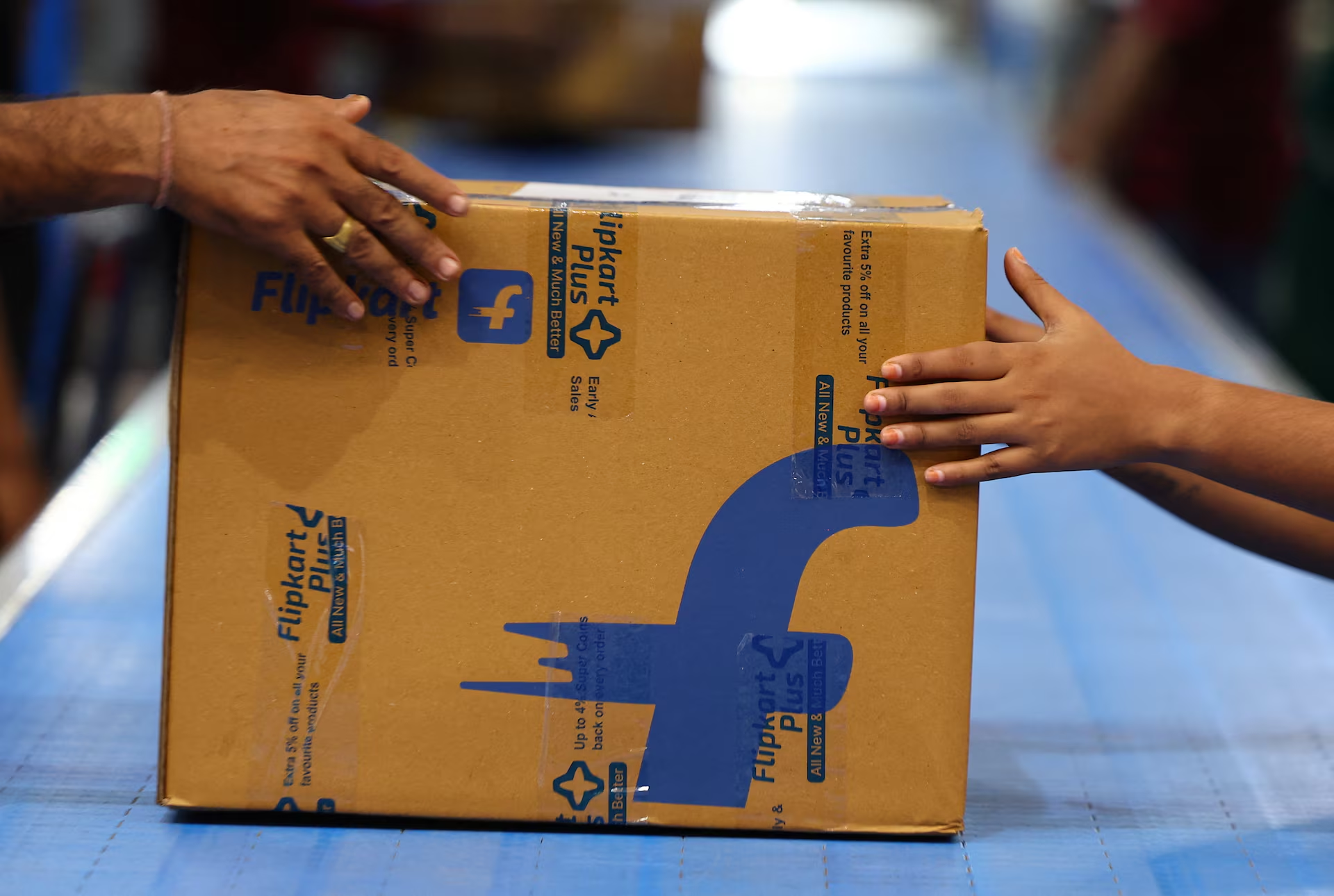
    Walmart-owned Flipkart will sell groceries online in more Indian cities, as it seeks to compete better with Amazon and Reliance in an e-commerce market that has grown rapidly during the COVID-19 pandemic.

    Flipkart has already expanded online grocery sales to more than 50 Indian cities and intends to reach over 70 locations in the next six months, the company said in a statement on Tuesday.

    The Bengaluru-based firm said its grocery service had grown “exponentially” in the past year when many Indians began buying essential supplies online due to the health crisis.

    “Grocery continues to be one of the fastest-growing categories,” said Manish Kumar, senior vice president at Flipkart, adding that the company had seen increased demand for the service from smaller cities in 2020.

    Reliance Industries-owned JioMart last year became the latest big entrant to India’s e-grocery market, a sector that also includes Amazon.com Inc, BigBasket and several smaller players. Indian conglomerate Tata is reported to be buying a majority stake in Alibaba-backed BigBasket.

    Reliance, backed by India’s richest man, Mukesh Ambani, raised over $20 billion last year from global investors including Facebook and Alphabet’s Google for its digital arm, which is expected to support JioMart.

    India’s broader retail industry is also witnessing a high-stakes legal battle between Reliance and Jeff Bezos-led Amazon on the Future Group’s $3.4 billion sale of its retail assets to Reliance, which Future’s partner Amazon is contesting.

    Flipkart’s recent expansion has taken its grocery services to big cities including Kolkata, Pune and Ahmedabad, it said.

    “Grocery is the next big frontier for online shopping and is a key focus area for Flipkart to bring new customers online,” the company added.