Retail News CRM

Tag: Walmart

  • Walmart to boost its e-commerce investment in China

    Walmart to boost its e-commerce investment in China

    China’s e-commerce market hasn’t been easy for Walmart to crack, but the U.S. shopping giant isn’t giving up. The company is investing even more in its e-commerce operations there, by taking full control of a Chinese online retailer.
    On Thursday, Walmart bought up the remaining shares of Yihaodian, after previously owning 51 percent in the Chinese company. Financial details were not announced, but the move will accelerate Walmart’s online expansion in China, the U.S. retail giant said.

    Walmart’s move was made possible by the Chinese government’s recent decision to open the e-commerce market to more foreign investment. Last month, a Chinese regulator removed restrictions that barred foreign investors from taking a 100 percent stake in any e-commerce operation in the country. Before that, foreign investors such as Walmart had to enter into joint ventures with local Chinese players.

    Although Walmart’s move could help the U.S. company tap the vast Chinese market, gaining ground against the existing competition will be tough. Other U.S. e-commerce players such as Amazon.com and eBay have all struggled to compete with Alibaba Group, the country’s leading online retailer.

    In China, Alibaba’s Tmall.com site has a 60 percent market share, according to Beijing-based research firm Analysys International. Amazon and Walmart’s Yihaodian site, however, each have about a 1 percent share.

    In spite of Alibaba’s dominance, Walmart’s Yihaodian site has been making gradual progress. It now has 100 million registered users, up from only 4 million back in 2010. Walmart’s goal is to now integrate their physical stores with Yihaodian’s mobile and online services for a better shopping experience.

  • Walmart China takes full control of online JV

    Walmart China takes full control of online JV

    Walmart China has taken full ownership of its Chinese eCommerce joint venture Yihaodian.com, buying out the 49 per cent stake held by local owners.

    In addition to seeking a higher profile in eCommerce, Walmart said it plans to create a “seamless experience” for customers across online, mobile and stores.

    Three years ago Walmart China took control of Yihaodian by bumping up its stake to 51 per cent. While the company pales in size compared to local eCommerce rivals Alibaba and JD.com, the world’s biggest retailer has been building up its online business in the wake of mediocre sales in the US, in a direct challenge to online competitor, Amazon.

    The investment will help Walmart target China’s fast-growing online market at a time when largely bricks and mortar retailers are feeling the pinch of competition from online rivals and a slowing of the world’s second-largest economy.

    Wal-Mart’s Asia head, Scott Price, said earlier this year that online retail was important to help tap China’s younger generations and that the firm would increasingly look to weave together its online and offline presence in the market.

    Walmart, France’s Carrefour and Britain’s Tesco have all seen sales or sales growth slip over the past five years in China, losing market share to local rivals.

    Yihaodian will be headed by Wang Lu, president and CEO of Walmart Global eCommerce in Asia.

    Walmart’s move also comes after China said last month it will allow full foreign ownership of some eCommerce businesses, with the goal of encouraging foreign investment and the development and competitiveness of the sector.

    “Yihaodian has excelled as one of China’s top eCommerce businesses. We’re excited about the team at Yihaodian and their strong local e-commerce experience,” said Neil Ashe, president and CEO of Walmart Global eCommerce.

    “This local experience, combined with Walmart’s global sourcing and our strong local retail presence and supply chain will allow us to deliver low prices on the products customers need in new and exciting ways,” he said.

    “Our investment in Yihaodian is part of our long-term commitment to grow in China and we look forward to continuing to play a positive role in the development of the eCommerce industry,” said Ashe.

    Walmart China acquired the remaining shares from Ping An of China, a financial services group, and the co-founders, former Chairman Gang Yu and former CEO Junling Liu.

  • Wumart Stores sales surge

    Wumart Stores sales surge

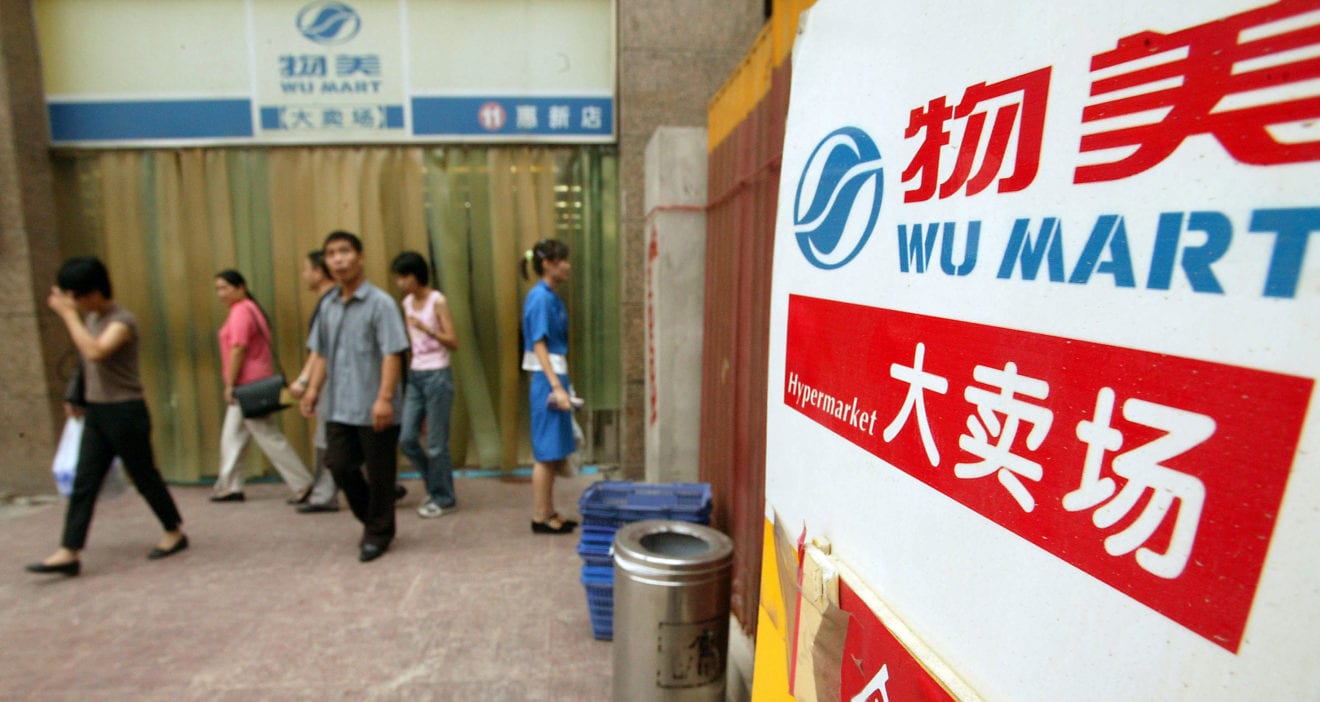
    Wumart Stores, the Beijing-based, Hong Kong-listed grocery retailing giant, has today reported an 11.9 per cent increase in sales in the first six months of the year.

    Total revenue topped RMB11.6796 billion at a time when foreign box box food and hypermarket retailers are feeling the pressure. Lotte Mart this week said it was closing four China stores, and Walmart and Carrefour are both struggling to achieve growth and profitability.

    The company says its continuing growth is being driven by new store openings, same store sales increases, higher revenue from suppliers and increased rental income.

    During the Reporting Period, comparable store sales of the Group increased by approximately

    4.2 per cent, recording an increase of approximately 3.3 percentage points in growth as compared to the corresponding period of last year.

    The group’s consolidated gross profit amounted to about RMB2,265 billion, up about 6.8 per cent on the same period of 2014. Consolidated gross profit margin was 19.4 per cent.

    Wumart says it will prioritise its business expansion in Beijing, Tianjin, Hebei and Zhejiang.

    As at June 30, Wumart had 586 stores – 42 more than at the same time last year.

  • Migros to sell private label in Japan

    Migros to sell private label in Japan

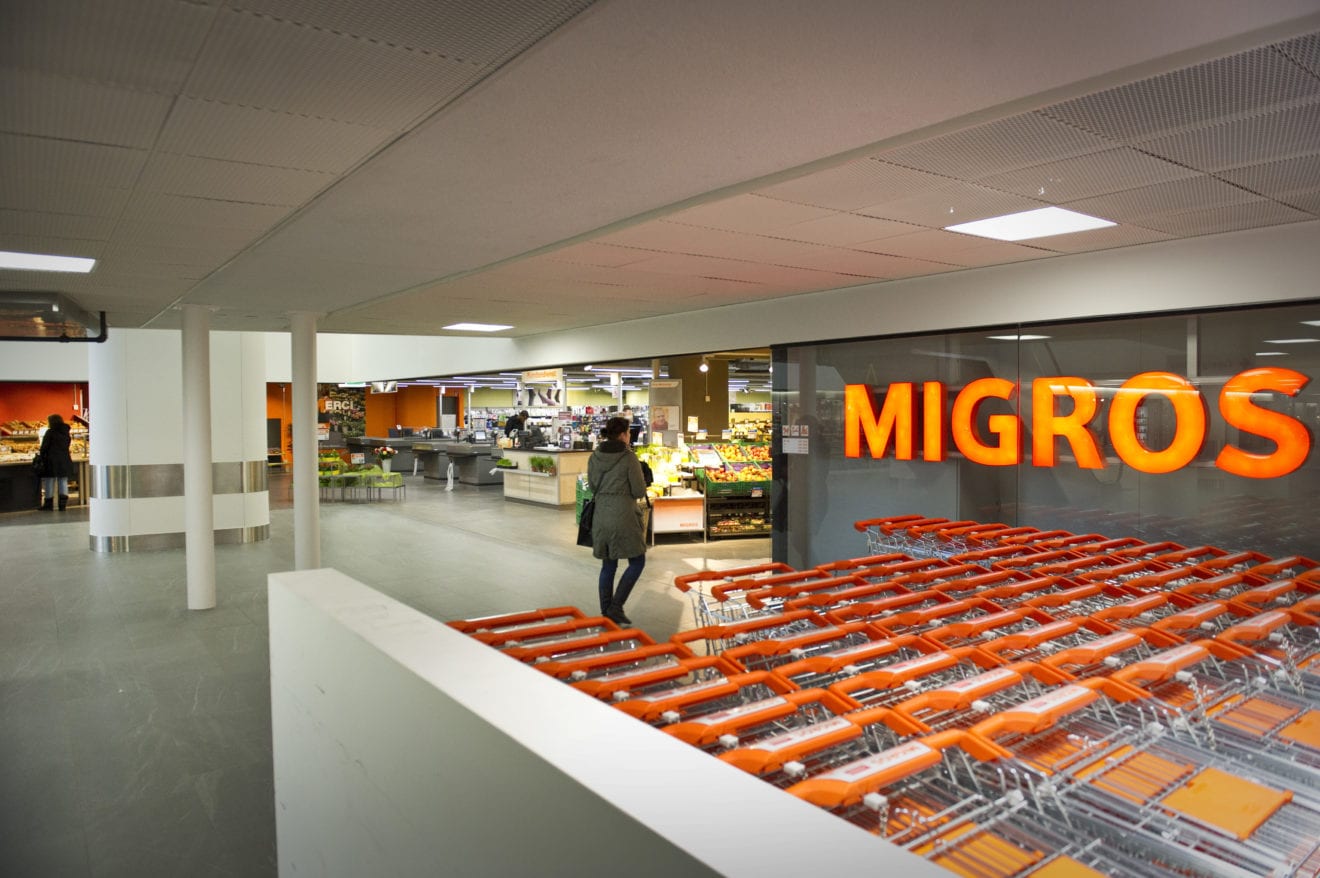
    Swiss retailer Migros is to sell private label products into two Japanese retail chains.

    Switzerland’s largest grocer, and one of the world’s 40 largest supermarket chains, is to sell lines to Lawson’s Seijo Ishii stores and Seiyu, which is Walmart’s Japan business.

    According to the Nikkei Asian Review, Migros will start with 16 premium products including Swiss Delice biscuits and iced tea, which will go on sale in 400 supermarkets trading under the Seiyu and Seijo Ishii banners.

    By 2020, Migros hopes to expand the range to 300 items, including desserts, snacks, cosmetics and skincare products, projecting sales of US$16 million annually.

    Retail research house IGD describes the move as “particularly surprising” for Seiyu, whose range already includes private label lines from Walmart’s own network, including Asda’s Extra Special wines.

    IGD describes Japan as “the most sophisticated private label market in Asia,” with strong players including Seven & I, Aeon, FamilyMart and Lawson.

    “These retailers are exploring the higher margin opportunities that premium private label ranges offer, focusing development around high quality, special ingredients and unique products.”

    Those ranges include Seven Gold and FamilyMart’s Platinum Line.

    But IGD says European influenced products are likely to appeal to shoppers’ increasingly cosmopolitan tastes, and the early line-up includes items which are mutually popular in the Swiss and Japanese markets: ice cream and iced tea.

    “Migros follows in the footsteps of European retailers Waitrose and Carrefour, whose private label products are already available in Japan through partnerships with Aeon.”

  • Walmart Opens the Phase II of Tianjin Distribution Centre

    Walmart Opens the Phase II of Tianjin Distribution Centre

    Walmart, a leading international retailer, held an opening ceremony today where they announced the completion of Phase II of the Walmart Tianjin Distribution Centre in Beichen District, Tianjin.

    This speculative distribution centre of four Grade A logistics warehouses totalling GFA 80,000 sqm (860,800 sqft) is located in the Beichen Hi-Tech Industrial Park of Tianjin’s Binhai New Development Zone, a premises chosen by Walmart based on its strategic location with proximity to the regional seaport, road and rail network.

    Walmart is developing this distribution centre into its largest logistics park in North China with its global supply chain partners including global brands such as Nestle and Unilever having moved in. A few other international companies such as ABB are also planning to relocate to this logistics park in the near future.

    The buildings are equipped with a series of cutting-edge technology and sustainable facilities including highly efficient fluorescent T5 lighting systems in the warehouse and offices, slab under international standards of flatness and levelness, clear floor height of 10m and floor loading capacity of 5T/sqm, etc.

    “As an important part of Walmart China’s long-term strategy, the development of supply chain is given high priority in the business. Walmart has been optimizing and improving its distribution network in China.” said Peter Sharp, Leader of Walmart Asia Realty, “The development of such an international logistics park also mirrors Walmart’s endeavor to achieve win-win for the government, suppliers and retailer by building a strong supply chain network and system, to ultimately achieve our goal of saving people money so they can live better by lowering the cost.”

    The phase II development is managed by IDI Gazeley (Brookfield Logistics Properties), one of the world’s leading investors and developers of logistics warehouses and distribution parks. As Walmart’s long-term strategic partner, IDI Gazeley has successfully delivered 3 major projects in China since 2007.

    Speaking at the opening ceremony, IDI Gazeley China Country Director, Sally Lin commented: “We are delighted to have been chosen by Walmart again to play such a key role in supporting the growth of their fast expanding operations in China. The delivery of Phase II of the Tianjin Distribution Centre represents another significant milestone in IDI Gazeley’s plan to serve a growing base of international companies in China by delivering them a consistent level of excellence across our global platform by leveraging our local market expertise and international best practices to provide a world class logistics facility for our customer in China. We are also committed to growing our presence in the local market as well to serve the growing needs of our customers in China.”

  • How Chinese language store on-line

    How Chinese language store on-line

    Spend a while with Chinese language shoppers and also you shortly realise how totally different their purchasing habits are in contrast with these of Westerners.

    As an American who has been dwelling in China for greater than 10 years, I’ve come to understand simply how important eCommerce has turn into to my fellow Shanghainese. I ask my buddies the place they discovered these cute footwear, or that imported ingredient, and the reply is all the time the identical: “I discovered it on-line”.

    Whereas in America and different nations eCommerce is primarily a way to an finish, for a rising variety of Chinese language individuals, on-line purchasing has develop into a part of a life-style that defines how they see themselves. And for me, browsing Taobao, China’s largest C2C market, has grow to be a routine exercise that permits me to refill on necessities, in addition to hard-to-find reminders of house for my rising household. Listed here are 4 of my private observations on why individuals have adopted Taobao as a part of their day by day lives:

    Personalisation.

    It’s not simply the altering graphics on Taobao’s entrance web page, harking back to Google Doodles. Frequent Taobao customers discover that their buying experiences appear to be tailor-made to their wants. That’s no coincidence. Ding Xi, director of Taobao Market’s consumer expertise division, says that cultivating a “character” is a vital function of Taobao’s platform.

    With so many extra customers on Taobao than on websites like Amazon, Ding says his division “can analyse shopper conduct and perceive its clients in a way more in depth method,” which permits the location to configure itself to go well with particular person buyers. From login, the location makes use of in depth knowledge to pick advertisements, merchandise and Taobao outlets in accordance with profiles developed for customers so that every finds what they’re in search of quicker.

    Cellular Commerce.  

    Some 300 million cellular purchasing customers (that’s virtually your complete inhabitants of the US) spent greater than US$1.6 trillion on on-line purchases in China final yr, in line with China eCommerce market analyst Enfodesk.

    At present almost one out of each two on-line purchasing transactions are finished on cellular units in China and that quantity is rising quick because it turns into more and more handy to browse and pay for items utilizing smartphones.

    Jessie Chen, a younger Shanghai skilled, says she makes use of Taobao on each pc and cellular, however provides that the cellular platform is properly suited to her wants when she’s away from her desk.

    “Once I verify my package deal supply standing, or once I’m out, I often verify on cellular,” Chen says.

    Partnerships between offline retailers like Walmart and e-payments supplier Alipay is even making it attainable to make use of telephones to pay for purchases in bodily shops.

    Individual to Individual.

    Chinese language tradition locations a excessive worth on guanxi, or private connections, and you may expertise that firsthand on Taobao.

    The location’s Aliwangwang prompt messenger is a closely used function that permits consumers and sellers to speak by way of actual time chats earlier than and after purchases. Due to cellular integration, response time is quick and conversations can transcend the constraints of 9-5 enterprise hours. Current college graduate Yashan Zhao says Aliwangwang is as a lot a social software as it’s a enterprise software.

    “Chatting or flirting with the sellers and clients service is nice enjoyable,” she says. Interactions may be unusually intimate. Many sellers tackle their potential clients as “pricey” which contributes to a extra private environment. And to ensure each buyer and vendor are glad, cost is made by means of Alipay, which ensures that no cash modifications palms until each events are completely satisfied.

    Taobao consumers take it a step additional, crowdsourcing info by way of purchaser critiques. Evaluations often function detailed feedback that embrace a number of pictures and details about how the package deal arrived, how properly the product matched the photographs within the product description, and whether or not sizes match nicely.

    “I’ll often verify the consumers’ feedback first earlier than I purchase something on Taobao,” says 20-something on-line shopper Pan Hu. “My pal’s opinion will probably be a key cause for me to purchase it or not.” 

    Window Purchasing.

    Browsing round on Taobao can reveal gadgets on the market that you simply’d by no means see on websites like Amazon or eBay. With services obtainable from automobiles and airplanes to canine walkers to farm recent produce, buying on Taobao might be pure leisure.

    “In addition to the issues I want, there are a number of issues in Taobao which are artistic,” says Pan. “It’s all the time enjoyable to dig round. There is perhaps surprises.”

    Many Chinese language internet buyers wish to browse to see what’s fashionable as an alternative of simply looking for the merchandise they need. Due to the depth of product choices, consumers additionally use Taobao and sister buying website Tmall.com to match costs with retail outlets. The websites’ vertical integration features like an enormous on-line mall, with consumers capable of effectively select between discount items and brand-name merchandise.
  • Walmart launches Hypermarket O2O platform “Walmart To Go” in China

    Walmart launches Hypermarket O2O platform “Walmart To Go” in China

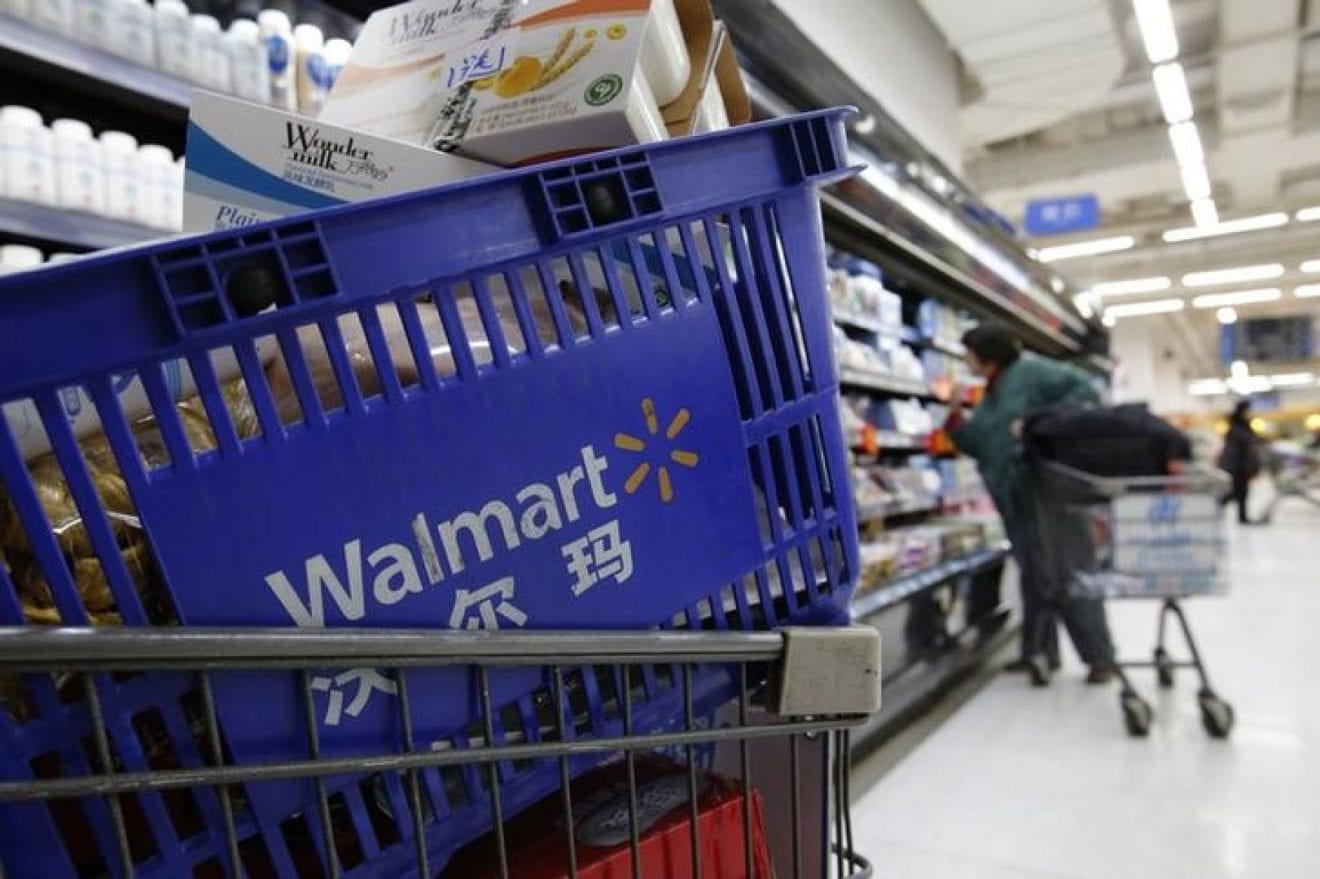
    Walmart launched its hypermarket O2O platform “Walmart To Go” within the Chinese language metropolis of Shenzhen on Tuesday. The platform consists of the newly launched “Walmart” cellular purchasing APP, To Go Service Centre, in shops for self-pickup and a number of on-line & offline e-payment choices.

    Walmart will pilot “Walmart To Go” in Shenzhen (besides Yantian and Dapeng) and supply high quality e-commerce expertise to clients with its community of 23 shops. “Walmart To Go” can be adjusted and upgraded based on clients’ feedbacks and steadily increase its service nationwide.

    By looking for key phrase “Walmart” in each iOS and Android APP shops, clients can simply obtain the APP onto their telephones. Presently the APP presents greater than 10,000 gadgets, with 1000 recent/dairy/frozen SKUs in addition to merchandise overlaying grocery, well being and wonder merchandise and family chemical compounds. Extra gadgets bought in bodily shops can be added to the APP steadily.

    “Walmart To Go” is aimed to offer high quality purchasing expertise to clients. From ordering on the APP, choosing merchandise from the shelf, to residence supply or in retailer self-pick-up, clients will expertise a considerate service by Walmart devoted groups.

    “‘Walmart To Go’ is a vital milestone as it’s an enhancement and extension to our brick and mortar enterprise. We’re uniquely positioned to combine bodily and digital retail seamlessly. Walmart needs to be an actual O2O firm. We’ll proceed to innovate each on-line and offline to satisfy the altering calls for of our clients, and would be the most trusted omni-channel retailer in China,” Sean Clarke, President and CEO of Walmart China spoke on the “Walmart To Go” launch ceremony.

    To offer one of the best supply providers to Chinese language shoppers, Walmart leveraged its expertise within the US, UK, and different comparably more experienced E-Commerce markets. Each bodily retailer acts as an unbiased customer support and operation centre with a devoted group of Walmart employees liable for APP orders. These educated specialists will cowl the order preparation course of from product choosing, packaging, to delivering or handing the merchandise to clients in retailer. For recent meals that require a sure storage temperature, the Walmart supply staff will use particular insulated luggage to ensure the identical off-the-shelf freshness a buyer expects in a Walmart retailer.

    In the meantime, Walmart works with logistics firm to construct supply group solely liable for Walmart orders.

    If clients select home-delivery providers and full an order earlier than 11 am, the merchandise might be delivered on the identical day. Supply charge might be freed from cost if the acquisition is over CNY188. Clients may also determine to select up their order in any retailer they need. The assigned retailer will put together the gadgets inside about four hours in accordance with buyer choice of the pick-up time. After clients obtain the reminder message on their cell phone, they might go to the “To Go Centre” to select up the order by order quantity.

    Merchandise bought on the APP are the identical as those bought in bodily shops. APP customers additionally take pleasure in the identical worth and after gross sales providers as in bodily shops. Walmart’s 100 % Fear Free Recent Assure additionally applies on APP. If APP customers usually are not glad with the recent merchandise they purchased, they might refund inside 14 days of buy.

    Walmart APP offers versatile cost choices for patrons reminiscent of Union Pay, Alipay and E present playing cards. Walmart bodily shops may even have particular e-payment checkouts to simply accept Alipay and different cellular cost strategies. The retail big stated it should add extra e-payments within the shops and on the APP sooner or later to offer extra handy cost providers.

  • Walmart reduces Li & Fung reliance

    Walmart reduces Li & Fung reliance

    Walmart, the world’s largest retailer, says it can take in-house a few of the inventory sourcing it has beforehand contracted out to Li & Fung subsidiary Direct Sourcing Group.

    It expects by dealing with its personal sourcing, it should scale back prices in its provide chain.

    Wal-Mart stated in a press release: “We have now made a enterprise choice to switch sure sourcing features for Wal-Mart in-house, and as such will work collaboratively with DSG to make sure a clean transition over the subsequent a number of months.”

    DSG retains the enterprise of sourcing merchandise for Walmart’s Sam’s Membership operation, which has 648 shops within the US.

    The US firm has partnered with Li & Fung for nearly 5 years. On the time the contract was introduced in 2010 the 2 corporations estimated the sourced merchandise can be value round US$2 billion a yr. They stated they might type a three way partnership, Direct Sourcing Group.

    However two years later Walmart backed out of that plan, deciding to not take up its shares however to retain Li & Fung as a sourcing provider.

    The Hong Kong firm has declined to touch upon the information, first damaged within the Wall Road Journalnewspaper and subsequently reported by Reuters.

    Reuters quoted a analysis word by UBS analyst Spencer Leung, saying Walmart’s transfer was unlikely to have vital monetary influence on Li & Fung, however “will almost certainly set off different main retailers to evaluation their sourcing preparations (with Li & Fung)”.

    Trend model Kate Spade earlier this month stated it had taken sourcing of equipment in-house, however would proceed to make use of Li & Fung for sourcing clothes provides and different providers.


  • Walmart China plans major expansion

    Walmart China plans major expansion

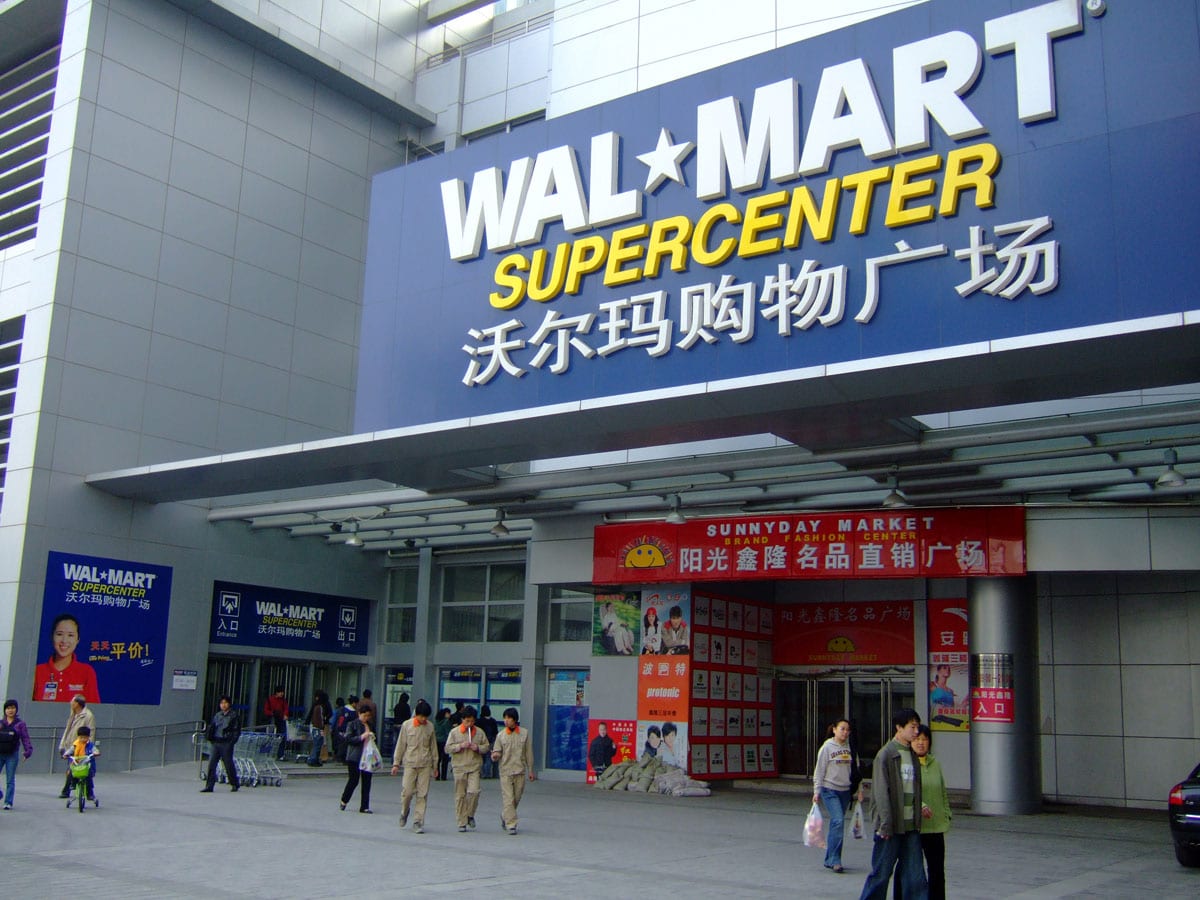
    The world’s biggest retailer Wal-Mart Stores believes the best way to achieve profitability in China is to open more stores and lure more customers.

    Walmart China will expand its store network by almost a third between now and 2017 according to CEO Doug McMillon.

    “Our aim is to become an integral part of China’s economy. China is a top priority,” McMillon told a press conference in Beijing.

    Faced with slowing growth in its mature home market, Walmart sees a massive opportunity in China’s rising middle class and booming tier 2 and 3 cities as a means to restoring growth and boosting profits. Cities like Shenzhen and Wuhan.

    But its experiences in China to date have been mixed. Sales declined 0.7 per cent in the quarter to January 31 and same store sales fell 2.3 per cent.

    At the end of January, Walmart had 411 stores in China – and after some underperforming stores are closed should end 2017 with a network exceeding 500.

    The company is also increasing its investment in its online business Yihaodian.com. Launched in 2011 with 18,000 SKUs the online store now boasts more than 8 million products. With more and more Chinese buying online – on both computers and mobile devices – the potential seems unlimited.

    Walmart’s Asian chief, Scott Price, said while the company had seen a softening in sales, it was not all bad news.

    “We’ve gained share in the hypermarket channel.”

  • McDonald’s joins Wal-Mart, Gap, other cos. in raising wages

    McDonald’s joins Wal-Mart, Gap, other cos. in raising wages

    McDonald’s said Wednesday it is raising pay for workers at restaurants that the company owns. Here’s a look at all the big companies that recently have announced they are boosting hourly wages for their employees:

    In February Wal-Mart Stores Inc., the largest private employer in the U.S., said it will boost its minimum pay to $9 an hour in April and to $10 by February 2016. That means 500,000 employees will get a raise.

    TJX Cos., the parent of discount store operator TJ Maxx and Marshall’s, said in February that it will pay all of its U.S. workers at least $9 an hour starting in June.

    Health insurer Aetna Inc. said in January that it will pay a minimum of $16 an hour starting in April. That’s more than twice the federal minimum wage of $7.25, and Aetna said about 5,700 employees will get a raise.

    Home furnishings retailer Ikea said in June that it would increase its raise wages 17 percent on average, bringing its hourly wage to $10.76 on average. Ikea said it will peg its salaries to the cost of living in different locations, and its move means higher wages for about 5,500 hourly store workers.

    Retailer Gap Inc. said in February 2014 that it will set the minimum wage for workers at $9 an hour this year and $10 an hour in 2015.

    McDonald’s Corp. said starting wages will be $1 above the local minimum wage, and its average hourly wage at those stores will be more than $10 an hour, up from $9 an hour. The move applies to about 90,000 workers at about 1,400 restaurants owned by McDonald’s. It has about 14,300 U.S. locations, the vast majority of which are franchised.

  • Walmart China to add 30 stores

    Walmart China to add 30 stores

    Walmart China plans to open 30 new stores in China this year, according to media reports from China.

    In addition to the store openings, the US-based retail giant says it will invest US$59.11 million in upgrading about 50 existing stores to modernise them.

    According to a report in the Shenzhen Daily newspaper, five or six of the new hypermarkets will be located in the Guangdong province and two will open in undisclosed locations in Shenzhen. The company already has about 80 stores in Guangdong and four distribution centres.

    Walmart has struggled to gain traction in China despite its enormous buying power and the importance of the nation as a product source for its global store network.

    But it has still managed to build a 400-store strong network, despite intense competition from local rivals.

    The Shenzhen Daily said Walmart China had increased both its sales and profit last year.

    It reported the Sam’s Club in Shenzhen’s Futian District is the top-selling Walmart store worldwide.