Tag: Walmart

  • Flipkart’s Singapore parent infuses Rs. 4500cr into India wholesale arm

    Flipkart’s Singapore parent infuses Rs. 4500cr into India wholesale arm

    the wholesale arm of the country’s largest e-commerce company, has received almost Rs 4,500 crore in what is one of the largest capital infusions for the entity, as per latest regulatory filing at the Registrar of Companies (RoC). This large investment in to the wholesale arm from its parent indicates the aggressive plans that Flipkart has charted out to counter its closest rival Amazon which too runs a wholesale arm. Since raising $4 billion from marquee investors like SoftBank last year, Flipkart has been largely been pushing its logistics and payments businesses adding big bucks to rev up these verticals.

    Flipkart India is one of the core companies that controls the e-tailer’s India operations. The wholesale arm buys products in bulk from various manufacturers and then sells it to merchants who work closely with the online retailer as well as to independent third party vendors. These merchants, in turn, sell these products to consumers on the Flipkart platform. Flipkart Internet is the other significant entity which runs the marketplace for the e-commerce major. This entity too received an investment of about Rs 370 crore recently.

    In March 2016, the Indian government allowed 100% FDI in online retail of goods and services under the marketplace model with riders which restrict a seller from contributing more than 25% of overall sales generated on any e-commerce site. This is why companies like Flipkart and Amazon, which cannot work on the inventory model, prop up few big merchants and help them cater to the growing consumer demand. Having a wholesale arm helps in doing that as they e-tailers cannot directly sell to shoppers. As per the RoC documents, Flipkart’s Singapore parent was issued each share of Flipkart India for Rs 23,900 for raising the new capital.
    An email sent to a Flipkart spokesperson on the development did not elicit a response. The e-tailer’s wholesale entity reported revenues of Rs 15,264 crore for the financial year 2017 compared to Rs12, 818 crore in the previous year showing a growth of about 18%. After a tough 2015- 2016, Flipkart had managed to make a turnaround last year with a bump up in growth numbers on the back of smartphone sale. It also successfully raised massive funds to fight Amazon as Japan’s SoftBank came on board as its largest investor.
    Both Amazon and Flipkart are vying for the largest pie of the Indian e-commerce market and are investing in their businesses at a staggering pace. Amazon has already infused over $3 billion in the Indian market and its international losses–majority of which is credited to India–stood at $3 billion for the full year of 2017. Flipkart Singapore parent reported a 67% jump in losses at Rs 8,771 crore for the financial year ending March 2017. Both the players are also ramping up their infrastructure for new businesses as they look to drive up growth. While Flipkart is setting up new fulfilment centres for its TV and large appliances business, Amazon recently announced it has opened up 15 new warehouses or what it cals Fulfillment Centres to push its grocery and daily consumables business.
    Flipkart is currently engaged in talks with Walmart, the world’s largest offline retailer, for a deal that may give the American retailer a big stake in the homegrown comoany valuing it at upwards of $20 billion, as TOI reported in our February 8 edition.
  • Walmart sales taps US$500 billion

    Walmart sales taps US$500 billion

    Walmart sales reached US$500.3 billion last year, an increase of $14.5 billion, or 3 per cent.

    But that failed to excite shareholders, with the share price shedding 10 per cent of its value immediately after the announcement.

    Arguably, the world’s largest retailer’s biggest success last year was its e-commerce business where it is looking to take market share away from Amazon – just as Amazon is trying to encroach on the brick-and-mortar space in the US.

    E–commerce sales rose 44 per cent for the full year, although growth slowed from 50 per cent to 23 per cent in the last quarter, partly due to the annualisation of its year-old Jet.com acquisition. It forecasts 40 per cent growth in the current quarter.

    Neil Saunders, MD of GlobalData Retail, says Walmart has more work to do to widen its e-commerce customer base.

    “There are many demographics, especially younger and professional segments, for whom Walmart is not the destination of choice online. This isn’t because it doesn’t sell what they want or because the price or delivery options are suboptimal; instead, it is because they do not associate Walmart with online or they default to Amazon. This is a tough nut for Walmart to crack, and one that it can only break by more heavily marketing its services and proposition.”

    While figures for the Walmart China business were not broken out, the international division posted 6.7 per cent year-on-year growth in the latest quarter. China and Mexico were the star performers and Walmart’s troubled UK grocery chain Asda showed long-awaited improvement.

    Bottom line blues

    The weakest part of Walmart’s figures was on the bottom line. Consolidated operating income was $20.4 billion for the year, a decrease of 10.2 per cent, however the company says that when one-off impairments and costs are taken out of the equation, operating income would have been “relatively flat”.

    Saunders says there is no cause for alarm over the bottom line performance. “Walmart remains comfortably profitable and much of the deterioration is down to the various investments Walmart is making in future-proofing its business. We applaud this long-term view, especially as it is now being coupled with some rationalisation and streamlining initiatives.”

    Meanwhile, a solid US market performance reflects higher customer traffic and higher average spend.

    “Part of this is down to a more optimistic and carefree consumer, who was in a mood to spend over the holidays.

    Arguably those shoppers did not have to visit Walmart – but many did, and from our data, Walmart increased its share of shoppers over the final quarter. We believe this is down to Walmart’s focus on low prices plus better customer service, improved ranges, and better-selling environments. The bottom line is that even in an era of stiff competition, Walmart is becoming more and not less relevant to the American consumer,” said Saunders.

    -Neil Saunders

  • Walmart and Rakuten Announced New Strategic Alliance

    Walmart and Rakuten Announced New Strategic Alliance

    In Tokyo today, Walmart president/CEO Doug McMillon and Rakuten chairman/president/CEO Hiroshi “Mickey” Mikitani announced a strategic alliance aimed at expanding consumer reach and enhancing customer service.

    Included in the collaboration is the launch of an online grocery delivery service in Japan as well as an exclusive retail alliance between the US retail giant and e-reading service Rakuten Kobo. This will enable Walmart to sell e-books and audiobooks, as well as offer Rakuten Kobo e-readers in stores and online in the US.

    “We’re excited to collaborate with the top online shopping destination in Japan,” says McMillon.

    “We look forward to expanding our grocery footprint in Japan and launching eBooks and audiobooks for our customers in the US.”

    Rakuten and Seiyu GK, a Walmart subsidiary, have reached a basic agreement to establish a JV to launch a delivery service for online grocery shoppers in Japan, to be known as Rakuten Seiyu Netsuper and planned to start late this year. With the aim of increasing fulfillment capacity, enriching the merchandise offering and improving customer convenience, the service will establish a fulfilment centre this year as well as offering deliveries from Seiyu stores.

    The service’s merchandise offering will showcase Seiyu’s twin strengths of “quality” and
    “low prices”. It will include not only fresh produce and daily consumables, but also convenience items such as cut vegetables, partially prepared foods and ready-meal kits, as well as local gourmet products from Rakuten Ichiba marketplace merchants.

    An optimised user experience will be offered, with more personalisation enabled by big data and AI. Customers will be able to earn and use Rakuten Super Points on more than 70 services.

    Meanwhile, Walmart will become Rakuten Kobo’s exclusive mass retail partner in the US, offering nearly 6 million titles from thousands of publishers and hundreds of thousands of authors. Walmart will also sell digital book cards in more than 4000 stores.

    All e-book content will be accessible through a Walmart/Kobo co-branded app for Android and iOS devices, a desktop app and Kobo e-Readers, which will also be sold at
    Walmart.

  • Zara to launch CleverFlex self-service pick-up kiosk

    Zara to launch CleverFlex self-service pick-up kiosk

    Spanish fast-fashion retailer Zara has installed a self-service kiosk at one of its stores to provide a flexible shopping experience for online customers.

    Springwise.com reports that when a package arrives to the kiosk, the customer receives a notification and can go to the location to pick up their item at their convenience. The CleverFlex kiosk, provided by Estonia-headquartered technology company Cleveron, has the capacity to store up to 4000 parcels – double the number of the Walmart’s pickup towers.

    The CleverFlex has a sleek white exterior and a modular design that allows retailers to customise its height and width according to their aesthetic preferences, and even being able to hide it behind a wall. The kiosks have been created to further streamline the customer online shopping experience, with the CleverFlex retrieving the correct parcel for a shopper in a matter of seconds.

    The creation of the CleverFlex kiosk “is another step in simplifying the connection between a retailer’s online entity and physical stores,” observes Springwise.

    “CleverFlex also has some some self-learning capabilities as it can remember parcel traffic peak times and predict user activity based on past data to optimise its workflow.”

    Self-service kiosks are increasingly popular across many industries, with deliveries that go directly to a smart locker streamlining the pick up process for the apartment residents and a pay-as-you-go pantry placed within an office both popular examples.

  • Walmart US’s online sales soars by 50 per cent

    Walmart US’s online sales soars by 50 per cent

    Walmart’s online sales in the US soared 50 per cent during the latest quarter, described as a stellar rate of increase which shows Walmart is growing its digital market share at pace.

    The world’s largest brick and mortar retailer recorded a revenue rise of 4.2 per cent, which equates to a US$5 billion increase in sales over the three months. Walmart US led the way with a 4.3 per cent increase in revenue and a 2.7 per cent increase in comp-store sales.

    GlobalData Retail MD Neil Saunders described that result as “impressive” and underscoring the company’s determination to not only defend its leading position but to extend it.

    That most of the online growth came from the core Walmart.com operation rather than from new additions, highlights the success of initiatives such as free two-day shipping and an expanded online selection, which now encompasses over 70 million products, said Saunders.

    “From GlobalData Retail’s figures, it is clear that Walmart is not only getting existing customers to spend more online but is also attracting new shoppers.

    “With a solid e-commerce base, Walmart is now looking to deepen its offer and experience in a select number of categories. This is one of the reasons it has struck deals with partners like Lord & Taylor in fashion and is building relationships with premium brands like KitchenAid and Bose.

    Walmart’s longer-term aim is clear: it wants to become the go-to online destination for both everyday and specialty items. The push into higher-end products should also help to bolster online margins.”

    Strong traffic

    However, although online has been a success story for Walmart, the second reason for its US growth is the performance of stores. Traffic held up well across the US, with price cuts helping to keep customers loyal, especially in categories like grocery. Some modest improvements to store layout and design have also aided conversion rates, particularly in non-food categories.

    “For a retailer of its size and scale, Walmart’s ability to keep its stores growing is impressive,” said Saunders.

    While he cautioned that some of the US sales success could be attributed to post-hurricane spending and recent acquisitions, the core business is performing well, with a broad pickup in both customer traffic and spending across all of Walmart’s channels.

    Sales outside the US also picked up. He said the Mexican operation is benefitting from investments in e-commerce, including an expanded online offer. Revenue in Canada has increased, mainly thanks to sharper pricing and expansion of the number of locations offering grocery pickup.

    In the UK, Asda posted its second consecutive quarter of comparable growth. “While this result comes off the back of a long run of weak performance and does not yet constitute a return to sustainable growth, we believe the investments made in price, offer, and service are starting to pay dividends.”

    Saunders said the latest results show Walmart is a retailer on the front foot.

    “Admittedly, the investments it is making in price and e-commerce are taking their toll on the bottom line, but they are also positioning the company for significant future success.”

  • JD.com surprises with first profitable quarter

    JD.com surprises with first profitable quarter

    JD.com profit soared 50 per cent after a 39 per cent increase in sales during the Chinese online retailer’s latest quarter.

    Its unaudited results for the three months to the end of September show revenue of RMB83.7 billion (US$12.6 billion), with a record 50.3 per cent surge in gross profit to RMB13 billion. Non-GAAP gross profit was RMB12.8 billion, up 51.9 per cent.

    Active customer accounts increased by 34 per cent to 266.3 million in the 12 months to September 30.

    Chairman/CEO Richard Lio says the company is building robust product content and enhancing user engagement with innovative tools that enable brands to launch highly targeted online marketing programs.

    “The scale economies of our model are becoming clearer with every quarter,” says CFO Sidney Huang. “Looking ahead, we will continue to prioritise investments in technology and leading R&D talent as we execute on our vision to revolutionise China’s retail industry.”

    While releasing its third-quarter figures, JD.com also listed its latest business developments…

    In October, JD and Tencent expanded their partnership with the launch of a marketing initiative that integrates insights on consumer behaviour from Tencent’s social-media platforms with online and offline shopping data from JD and its brand partners. As well as enabling more precise target marketing, the move benefits consumers by offering them wider access to sales promotions and preferred discounts.

    Strategic partnerships

    During the past three months, JD.com also formed strategic partnerships with Baidu, iQIYI, NetEase, Sogou and Qihoo 360 with their big-data resources, massive user bases and AI algorithm technologies.

    JD also continued to strengthen its position among top-tier international brands, expanding its partnership with high-fashion brand Armani with the opening of official online stores for Armani Exchange and Emporio Armani.

    JD Worldwide also launched flagship stores for such companies as Reckitt Benckiser, Spectrum Brands and Tiger, while its new Toplife platform attracted marquee brands like Dyson, La Perla, Rimowa (LVMH) and Trussardi.

    During the quarter, JD Logistics test-launched an unmanned sorting centre, the first of its kind in the logistics industry. JD also signed agreements to lay the groundwork for the rollout of China’s largest drone network.

    In September, JD Logistics expanded its environmentally friendly logistics and packaging campaign, working with brands including  Johnson & Johnson, Kimberly-Clark, Lego, L’Oreal, P&G, Nestle, Unilever, Watsons and Wrigley. The aim is to minimise environmental impact by cutting back on packaging materials.

    Customer demand

    JD also enhanced its fresh product offerings during the quarter to meet customer demand. In July, it launched the Canadian Fresh Food Pavilion, the first country pavilion for fresh products on the JD.com platform. Live lobsters from Canada can now be delivered to customers’ doorsteps in China in as little as 48 hours. During JD’s Super Canadian Day, 140,000 lobsters were sold within 24 hours.

    In September, JD.com, JD Finance, Central Group and Provident Capital announced agreements to establish two JVs in Thailand covering e-commerce and fintech services, with an aggregate investment of $500 million. JD.com is providing its expertise in technology, e-commerce and logistics while Central Group is drawing on its retail store network, brand and merchant relationships, and retail behaviour insights from its loyalty program.

    In October, JD and Sam’s Club launched a promotion offering customers discounted bundled memberships for Sam’s Club and the JD Plus paid-for membership service.

    By the end of October, JD.com JV New Dada had partnered with 146 Walmart stores and 301 Yonghui stores, as well as many other supermarkets and grocery stores, to provide online fresh grocery shopping with one-hour home delivery.

    At the end of September, JD.com had 405 warehouses and provided scheduled delivery services in 250 Chinese cities. It had about 160,000 merchants on its online marketplace, and 137,975 full-time employees.

  • Vietnam’s richest woman wants a Walmart connection on her airline

    Vietnam’s richest woman wants a Walmart connection on her airline

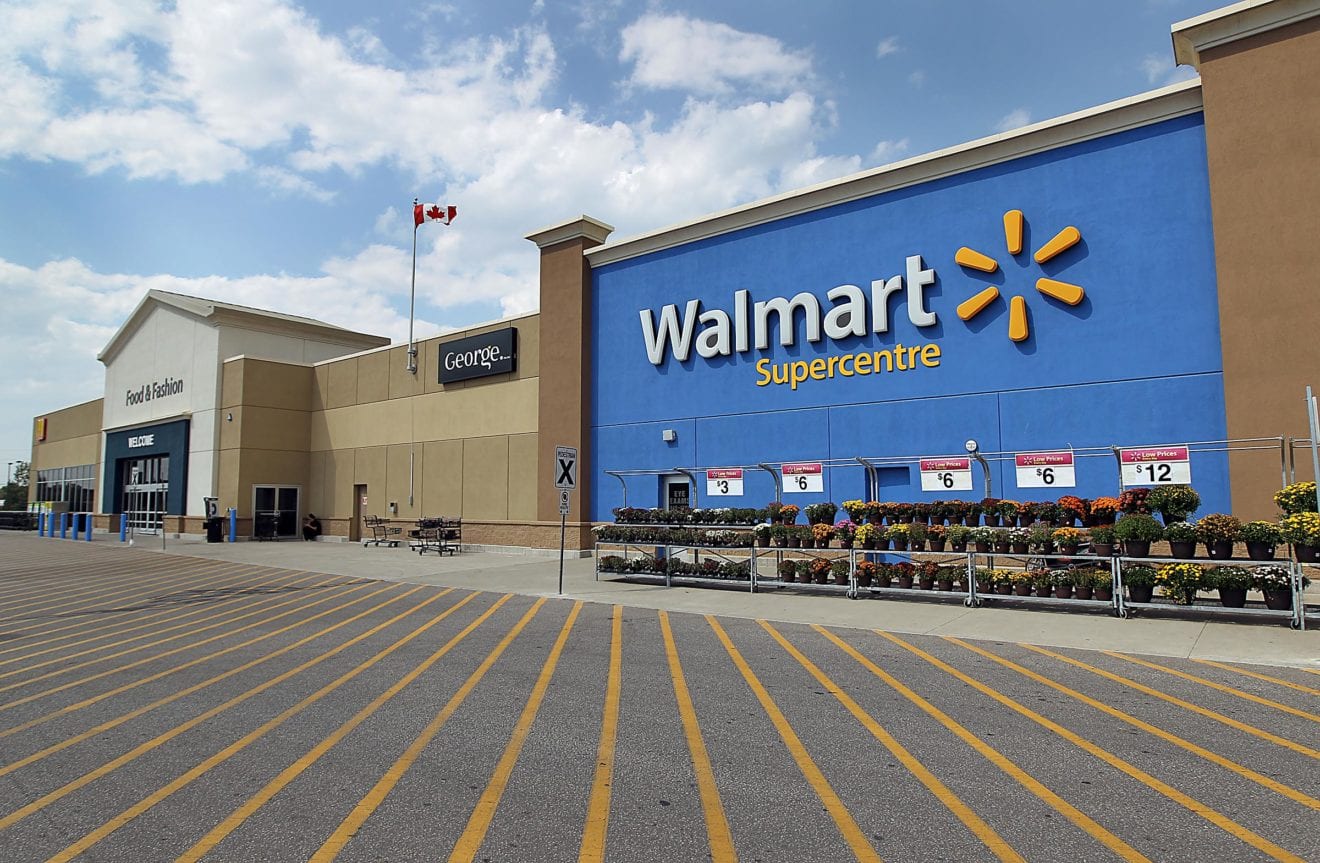
    The founder and CEO of Vietnamese budget carrier VietJet has said she wants to sell products from the world’s biggest retailer Walmart on her airline.

    Nguyen Thi Phuong Thao, the first and only female billionaire in Vietnam according to Forbes magazine, presented the idea to Scott Price, executive vice president of Global Leverage for Walmart International, at the ongoing Asia Pacific Economic Cooperation (APEC) Summit in Vietnam’s central city of Da Nang.

    “We call ourselves a consumers’ airline,” Thao said on Thursday at the APEC CEO Summit.

    “The idea to work with Walmart is an example of VietJet’s customer-oriented approach, emphasizing our philosophy of providing more convenient services for Vietnamese clients in the near future,” she said.

    She also spoke about the role of technology in trade and business, suggesting a tech connection with Walmart for VietJet’s passengers.

    Price said the company is willing to work with VietJet as it has yet to open any stores in Vietnam, providing there is demand for its products.

    “We plan to expand further,” Thao said. “Vietnamese airlines play an important role in connecting Southeast Asia. In the near future we’ll collaborate with more airlines, such as Korea’s ASIANA.”

    Vietjet already has deals with Quatar Airway and Japan Airlines, and is in talks with an airline in the U.S. and another in Europe.

    “Thanks to the connections that VietJet is building, passengers can fly anywhere they want to around the world,” Thao said.

    The CEO Summit has gathered more than 2,000 local and foreign businesses and is one of the most important events at the APEC Summit. It is hosting leaders from the 21 Pacific Rim nations and thousands of businesspeople, including Facebook COO Sheryl Sandberg, UPS CEO David Abney, and chairman and CEO of J.P. Morgan Asia Pacific Nicolas Aguzin.

    Last week, Thao secured 55th spot on the World’s 100 Most Powerful Women 2017 ranking, jumping seven places from the previous year, and was the only Vietnamese national named on the list compiled by Forbes.

    According to the magazine, Thao has an estimated net worth of $1.93 billion, eclipsing the figure of $1.2 billion it calculated in March.

    Thao launched VietJet in 2011. Her “bikini” airline, nicknamed after its unique yet controversial promotion scheme of putting female crew in bikinis on some flights, now offers 300 flights a day, or more than 40 percent of the country’s flights, with a fleet of 45 jets.

    In May, It is reported that the Hanoi-based VietJet Aviation Joint Stock Co. was in talks to become the first Vietnamese company to list on an overseas stock exchange.

    “We’ve been approached by some foreign stock exchanges including London, Hong Kong and Singapore, which expressed their interest in our stock,” Thao was quoted as saying in the report.

    According to Bloomberg, VietJet reportedly received shareholder approval in April to boost its foreign ownership limit to 49 percent from 30 percent.

    She told Bloomberg in an interview a year ago that she has plans to make VietJet a global airline. “We want to make VietJet the Emirates of Asia.”

  • Walmart, Google in voice shopping deal

    Walmart, Google in voice shopping deal

    Walmart is diving into voice-activated shopping with Google to offer hundreds of thousands of items for voice shopping through Google Assistant.

    The capability will be available in late September.

    It’s Google’s biggest retail partnership – and the most personalised shopping experience it offers – as it tries to broaden the reach of its voice-powered assistant Home speaker. It underscores Walmart’s drive to compete in an area dominated by Amazon’s Alexa-powered Echo device.

    “Voice shopping is becoming a more important part of everyday shopping behaviour,” said Marc Lore, CEO of Walmart’s US e-commerce business.

    The voice-activated devices are becoming more mainstream as they become more accessible. Walmart has said Google’s investment in natural language processing and artificial intelligence will help make voice-activated shopping even more popular.

    Lore said the personalisation of the partnership means people can shout out generic items like milk, bread and cheese, and Google Assistant will know exactly the brands and the size that the user wants.

    Google introduced shopping to Home in February, letting people use voice to order essentials from more than 40 retailers like Target and Costco under its Google Express program. But that was far behind the Echo, available since late 2014.

    Walmart, which has more stores than any other retailer and the largest share of the US grocery market, is also working hard to close the gulf online between itself and Amazon.

    To be more competitive, Google Express is scrapping the $US95 ($A120)-a-year membership starting on Wednesday, allowing shoppers to get free delivery within one to three days on orders as long as the purchase is above each store’s minimum.

    Walmart says it will be tapping its 4,700 US stores and its fulfilment network next year to offer more kinds of customer experiences using voice shopping. For example, shoppers can tell Google Assistant they want to pick up an order in a store.

    Lore said the company wants to make voice shopping as easy as possible.

    “That’s why it makes sense for us to team up with Google. We know this means being compared side-by-side with other retailers, and we think that’s the way it should be,” he wrote in a corporate blog post.

  • Walmart online sales surge 60 per cent

    Walmart online sales surge 60 per cent

    Walmart online sales in the US soared by 60 per cent during the second quarter.

    Already the nation’s third largest e-commerce player, Walmart has been acquiring pure-play online businesses to gain range and – most importantly – experience in the online space. Companies such as Jet.com (which it paid $3.3 billion for last August), men’s apparel retailer Bonobos, (which it shelled out $310 million for in June), ShoeBuy.com, ModCloth and Moosejaw.

    CFO Brett Biggs told an earnings call last week that its e-commerce results include all web-initiated transactions including those through Walmart.com such as ship-to-home, ship-to-store, pick up today and online grocery, together with transactions through Jet.com and the other sites.

    Gross merchandise value grew by 67 per cent year-on-year in the quarter to July 31.

    “GMV represents the total US dollar volume of merchandise sold or services rendered for all transactions, including marketplace transactions, that are generally initiated through our e-commerce platforms or include our owned inventory sold on other third-party platforms,” Walmart said.

    Walmart offers more than 67 million products on Walmart.com, including its own goods and third-party lines. The number of SKUs online has grown more than 30 per cent quarter-on-quarter.

    CEO Doug McMillon said the majority of the growth was organic “as customers are finding a broader assortment and more options to receive what they want at their convenience”.

    The acquisitions were playing their part, as well, he said.

    “Our recent acquisitions, such as Moosejaw, ShoeBuy and Bonobos further improved our assortment and have provided critical category expertise in higher-margin categories like shoes and apparel.”

    Meanwhile, Walmart has begun trialling an “associate delivery service” which involves staff earning extra cash during their time off by delivering online orders to shoppers’ homes.

  • Walmart and JD.com plan shopping festival in August

    Walmart and JD.com plan shopping festival in August

    Walmart and JD.com are set to launch a new online shopping festival for August 8, in an onmi-channel alliance that will see the two retail juggernauts link their supply chains and other operations.

    As the fight for the online Chinese consumer intensifies, the festival will help the US retailer “reach the 99 per cent of the country’s population that JD.com’s delivery network covers, bringing high-quality Wal-Mart products to more Chinese customers nationwide,” said an announcement.

    Helping the sale garner promotional traction, coupons have already been made available across 400 Walmart stores in China, allowing shoppers huge discounts during the upcoming online sale.

    “Our ability to tap into JD.com’s advantages across logistics, big data, technology and customer service gives Wal-Mart a huge advantage in reaching China’s rapidly expanding consumer class,” Ben Hassing, senior vice president of Wal-Mart China e-commerce and technology, told WWD.

    “We look forward to further bringing together our strengths in digital and physical retail to take the customer experience in China to the next level.”

    The date, August 8, was chosen for its symbolic numerical links, the double 8. The number eight is considered a lucky number in the country.

    The two companies also confirmed plans to integrate supply chains, “to significantly improve delivery efficiency for customers, optimize delivery routes for JD.com and increase Wal-Mart’s inventory turnover rate.”

    The change allows customers to place orders online with JD.com, where then the system will find out if a JD.com warehouse or Walmart store is closer to the delivery address. From here, the order will dispatch a JD.com courier accordingly.

    The trial project will launch initially in Beijing, Shanghai, Guangzhou, Shenzhen, Chengdu and Wuhan.

  • Walmart’s future in China increasingly depends on a single Chinese company

    Walmart’s future in China increasingly depends on a single Chinese company

    In China, Walmart is not only betting on e-commerce, it’s betting on a top Chinese e-commerce giant. The US retail giant announced on May 25 that it will open a store on JD.com, one of China’s most popular e-commerce sites, second only to Alibaba. It’s the latest move in a new strategy for the company that has consistently brought it closer to JD, which now has the power to make—or break—the company’s future in China.

    According to Walmart, the online store will carry over 1,700 of Walmart’s most-purchased items from its brick-and-mortar stores in China. Customers that order items before 11:00am can receive their packages on that same day. The orders will be fulfilled using JD’s in-house logistics infrastructure of warehouses, deliverymen, and drones.

    Walmart sold its e-commerce operations to JD in June 2016 after a joint-venture with Yihaodian, a marginal player in China’s online shopping industry, proved unsuccessful. In exchange for the purchase, Walmart took a 5% stake in JD.

    Since then, the two companies have moved quickly to boost Walmart’s online presence. In October 2016 JD launched an online store for Sam’s Club, as well as a store that sold only imported goods from Walmart overseas. That same month, Walmart announced it had invested $50 million in New Dada, a joint venture between JD and logistics network Dada. In April 2017 it launched an online store for Asda, Walmart’s UK subsidiary, selling British-branded products.

    Meanwhile, Walmart has steadily increased its stake in JD–from 5% in June 2016, to 10.8% in October, and then 12.1% this past February.

    Walmart’s bet on e-commerce in China, assisted by JD, comes as its traditional offline retail business there continues to struggle. The company does not regularly disclose financial details about its China business, but there’s plenty of evidence to suggest it is not going great. In 2014 a joint-venture partner revealed that same-store sales across 21 outlets dropped 6 percent between 2014 and 2015. It has also slowed the rate (paywall) of its new store openings in China.

    One of the factors causing Walmart’s middling success in China has been the country’s quick embrace of e-commerce. According to Nielsen, 11% of total retail sales in China come from e-commerce, compared to 8% in the US. And e-commerce sales in China are growing at a rate of 53% annually, compared to roughly 12% in the US. Meanwhile, Chinese consumers are opting to make small purchases either online or in convenience stores, rather than in hypermarkets, according to another Nielsen study. The average shopping basket value for Chinese hypermarket shoppers fell 172.4 yuan (about $25) in 2014 to 162.7 (about $23) yuan in 2015.

    This and other factors have led other overseas retailers to revamp their China strategies, or withdraw altogether. Carrefour, another hypermarket chain in the style of Walmart, suffered a net loss of €58 million (about $65 million) in China during 2016. The company recently started opening smaller outlets modeled after convenience stores. Tesco, from the UK, distanced itself from China when it sold its stores there to domestic retailer China Resources Enterprises in late 2013. And last October, bourgie expats gasped when Marks & Spencer announced it would close its 10 stores in China, citing continued losses.

    By relying on JD to manage its e-commerce operations, Walmart is placing its future in China in the hands of another company, and betting on JD’s success to boost its own. That could turn out all right for Walmart.

    JD, a major competitor to Alibaba, has long differentiated by promising faster deliveries than its rival, thanks to its in-house logistics network. Its market share in business-to-consumer e-commerce (as opposed to “marketplace style” e-commerce, where third-party vendors do the selling) has risen in the past few years, from 18.6% to 24.7%. The company just turned its first-ever operating profit since it listed in New York in 2014, and is investing hugely in drones to make delivery more efficient.

    Both JD and Alibaba have lately turned to groceries and household items as drivers for growth, hoping that repeat purchases will drive up “gross merchandise value,” a metric investors look at to assess the sales value of all purchases (though it’s not the same as revenue). That competitive pressure might squeeze JD’s margins from selling Walmart products online. Given all the headaches Walmart has endured in China in the past—food safety scandals, fickle consumer behavior, and accounting fudges—it might be nice to offload parts of the company’s future to someone else.

  • Walmart Is Crushing Amazon in China

    Walmart Is Crushing Amazon in China

    Shares of Walmart gained more than 3% on Thursday after the company posted better-than-expected earnings results. Despite a brutal industry landscape, America’s largest brick-and-mortar retailer is thriving thanks to its success in key segments.

    One of the biggest takeaways from Walmart’s latest report is the growth of its e-commerce unit. In an effort to catch up to internet behemoth Amazon.com, Walmart has been pouring money into e-commerce, and it seems to be working. The company said that its e-commerce business saw gross merchandise volume skyrocket 69% in the first quarter.

    Of course, Walmart can never hope to overtake Amazon as the e-commerce king. Amazon has had that crown for over a decade, and although Walmart’s recent online push has been a success, it was basically a do-or-die situation if the company wanted to maintain any legitimacy as a retail giant.

    However, there are still several key emerging markets for e-commerce, and Walmart may just be dominating Amazon in the biggest of them all: China.

    Sure, China isn’t really an emerging market anymore, and the country is no stranger to e-commerce. If anything, its domestic online retailers, such as Alibaba, present a threat to Walmart and Amazon as they move into Western markets.

    Nevertheless, China is a relatively fresh market for American online retailers, and Amazon is really just starting to get a foothold in the nation of nearly 1.4 billion. In fact, Amazon Prime debuted in the country only seven months ago. At launch, Prime members in China could expect to get there packages in about 5 to 9 days.

    And after Walmart’s earnings call earlier today, it looks like Amazon’s efforts in China might be futile.

    According to Walmart chief executive Doug McMillon, the company recently started offering one-hour delivery service from 80 stores in China. The service is an extension of Walmart’s existing partnership with JD.com —the two companies previously debuted a two-hour delivery service last year.

    “We can see the benefits of omni-channel retail even more clearly in China than any other country where we operate. Given the urban density and automobile traffic challenges, stores serve the triple purpose of in-store shopping, pickup and delivery most effectively,” said

    JD.com falls behind Alibaba in terms of size, making it the second-largest Chinese e-commerce company. The Walmart-JD partnership was announced last summer, and JD now controls all of Walmart’s e-commerce operations in the country.

    Interestingly enough, Walmart does not currently offer a one-hour delivery service anywhere in the U.S. Amazon does have a pretty well-established same-day delivery network, but it will be interesting to see if Walmart’s success in China inspires the company to make a similar play here on its home turf.

  • Walmart India wants 50 more stores

    Walmart India wants 50 more stores

    Supermarket giant Walmart is reportedly opening fifty more stores in India over the next three years, as the US retailer looks to expands its cash-and-carry segment and food retail arm.

    Walmart hopes to open nearly half of its 50 India stores in Uttar Pradesh and Uttarakhand, two of the country’s northern states, a company spokesperson told the Times of International.

    In addition, the cost-savvy retailer plans to open ten stores each in Maharashtra, Andhra Pradesh and Telangana, and two more stores in Lucknow. Other cities include Ghaziabad, Noida, Kanpur, Allahabad, Haridwar, Dehradun and Haldwani.

    With each store providing jobs for 2,000-2,500 persons, the company has the potential to create over 40,000 jobs in Uttar Pradesh and Uttarakhand, said the spokesperson.

    “Our commitment to the country is very deep and we are growing our footprints in India further by opening 50 more cash-and-carry stores in next few years across key focus states, including AP, Telangana, UP, Uttarakhand, Haryana, and Maharashtra,” said a Walmart India spokesperson.

    “Our development team is growing this store pipeline for last couple of years and we’re confident of continuing our contribution to the creation of thousands of skilled jobs, helpings kiranas, farmers & SME suppliers succeed through our cash & carry business.”

    Walmart India parted ways with Bharti in 2013, and had put its store expansion on hold. The news signals new opportunities for the retailer, especially in UP and Uttarakhand, where there is little competition Metro AG and Reliance, rivals chains which also operate the cash-and-carry format.

    Walmart is also awaiting clarity on the food retail guidelines. They want international food products rather than limiting themselves to domestically produced and manufactured food products, which is part of India’s guidelines.

    “As we’ve said earlier, allowing 100% FDI in food retail is a very progressive step, but having a certain percentage of non-food items in this policy will make it economically viable,” said the company’s spokesperson. food retail is a very progressive step, but having a certain percentage of non-food items in this policy will make it economically viable,” said the company’s spokesperson.

  • Walmart India weighing food retail possibilities

    Walmart India weighing food retail possibilities

    Walmart India is “evaluating” new foreign direct investment (FDI) guidelines for the food retail space. This follows the government permitting 100 per cent FDI in the sector.

    Walmart India president/CEO Krish Iyer describes the government’s decision as a good step. “It’s a very noble objective in terms of being able to double farmers’ income and reduce food waste.”

    He says the company has been evaluating the guidelines and “at an appropriate time” will look at the sector. Walmart India currently works in the wholesale segment with 21 cash-and-carry stores across nine states. It plans to increase the number of stores to 50 by 2021.

    Regarding its Best Price wholesale stores, Iyer says the major focus has been in states where the company already has a presence – Andhra Pradesh, Haryana, Himachal Pradesh, Madhya Pradesh, Maharashtra, Punjab, Telangana, Uttarakhand and Uttar Pradesh.

    Walmart India is a wholly ­owned subsidiary of US retail giant Walmart Stores.

  • Walmart China eyes up to 40 new stores

    Walmart China eyes up to 40 new stores

    Walmart Stores says it plans opening between 30 and 40 new stores in China this year.

    Included in that number will be up to five new Sam’s Club outlets.

    While Walmart achieved a solid performance in its home market last year, its international operations – especially in the UK, are struggling.

    In China, Walmart is seeking to develop new retail models to cater to consumers’ changing shopping habits.

    Walmart China will invest a further RMB300 million (US$43.4 million) in upgrading and refurbishing about 50 of its existing stores and improving its supply chain operation.

    “We will move faster to improve the overall customer experience and continue our strategic alliance with JD.com and to strengthen omni-channel approach,” said Dirk Van den Berghe, president and CEO of Walmart Asia and China.

    Last year, Walmart China opened 24 new stores: 21 hypermarkets and 3 Sam’s Club stores.

    The company said its average basket size in China increased by 5.4 per cent in the quarter ended January and same-store sales rose 2.3 per cent.