Tag: Walmart

  • India’s Reliance to take on Walmart and Amazon online

    India’s Reliance to take on Walmart and Amazon online

    South Asia’s richest man Mukesh Ambani is establishing an e-commerce platform to compete with Walmart and Amazon in India. The Reliance Industries chairman will roll out services in Gujarat before extending them nationwide. “Jio and Reliance Retail will launch a unique new commerce platform to empower and enrich our 1.2 million small retailers and shopkeepers in Gujarat,” said Ambani.

    Reliance introduced the 4G Jio network in September 2016, a market disruptor with its free voice calls and cheap data plans. Its move into e-commerce will aggravate an already cut-throat battle between market leader Flipkart, owned by Walmart, and Amazon’s services in the territory.

  • Flipkart secures more funding to face competition

    Flipkart secures more funding to face competition

    Indian e-commerce firm Flipkart has received US$201 million funding for its wholesale business from its Singapore-incorporated parent. The investment comes during a period of intensifying competition between the firm and its Amazon-backed competitor in a market estimated to be worth $18 billion. It signals a prioritising of sales growth by the retailer since its acquisition by Walmart.

    A report last year indicated that Flipkart has seen a more than 80-per-cent increase in transactions in recent months, prompting the company to expand into new business lines such as furniture and groceries over the next three years.

    Separate reports show that Amazon also looks to invest significant funds into the market in order to challenge Flipkart’s present lead in the territory.

  • Walmart China to boost offline, online integration

    Walmart China to boost offline, online integration

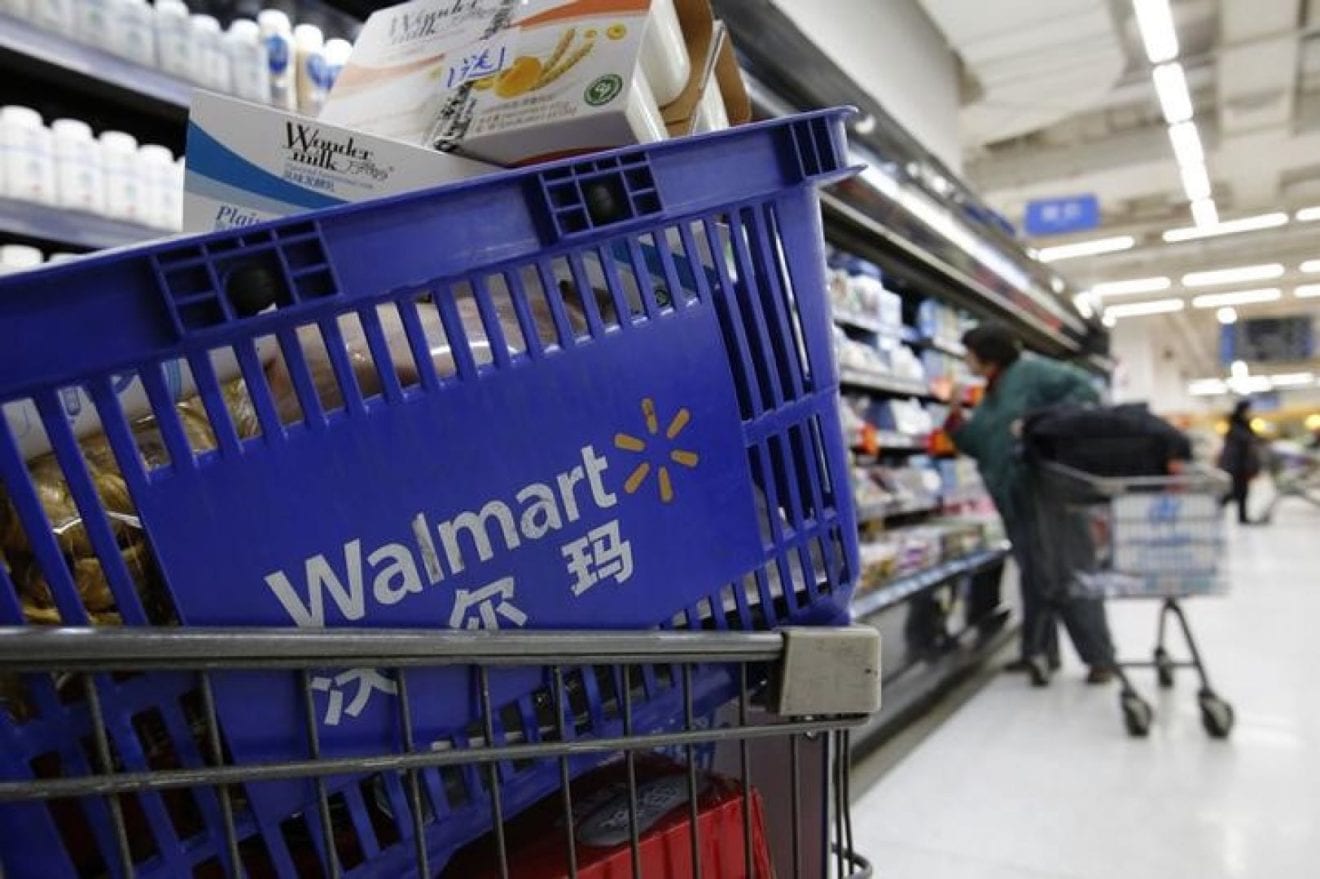
    Walmart China has pledged to further its online/offline integration strategy with increased focus on fresh food distribution, private brands and membership services. The firm’s president and CEO Tan Wern-Yuen said the business will focus on “consolidating its upstream resources and to further improve product quality”. The firm is set to invest more than RMB700 million (US$103.7 million) in its first perishable food distribution centre in Dongguan this March, its largest investment in its 22 years of operations in China. The centre will serve its South Chinese stores.

    Walmart plans to build or renovate around a dozen such centers within the next 20 years, with fresh food now taking up a quarter of Walmart’s overall sales. Tan added that Walmart’s e-commerce transactions have now hit a consistent 150 per cent year-on-year growth rate. Its WeChat mini program “Scan and Go” counted more than 20 million users by the end of last year.

  • After Flipkart, Walmart eyes another Indian startup that specialises in AI

    After Flipkart, Walmart eyes another Indian startup that specialises in AI

    Walmart Labs India, the local product development division of US retail giant Walmart, last week announced it would hire key tech team from Artificial Intelligence (AI) and data analytics start-up Int.ai — its second acqui-hiring in the country within three months.

    Three engineers — including co-founders Vinay Kumar NP and Praneeth Doguparthy — from Int.ai will join Walmart Labs India.

    They will be part of the health and wellness portfolio under Customer Technology at Walmart Labs, the company said in a statement.

    “We are glad to welcome the Int.ai team to the big Walmart Labs family and believe that their expertise will be a great addition to our data analytics capabilities,” said Hari Vasudev, Country Head and Vice President – Technology, Walmart Labs India.

    This is the second acqui-hiring Walmart Labs India has made — after micro-app startup Appsfly in September where it merged Appsfly’s six-member team into its customer experience engineering group.

    Founded in 2016, Int.ai has invested and built expertise in architecting an analytics automation framework which will support Walmart Labs in developing solutions and supporting large-scale businesses.

    “After working for almost 3 years on it, we are very happy to let you know that our entire team will be joining Walmart Labs, India,” Vinay and Praneeth said in a separate statement.

    “We started Int.ai in the beginning of 2016 with an ambitious mission to build an AI-powered personal data analyst for every business executive,” they added.

    Int.ai developed expertise in blending Machine Learning with data analytics to uncover insights that significantly impact business metrics.

  • Macy’s, Tmall contract completely over

    Macy’s, Tmall contract completely over

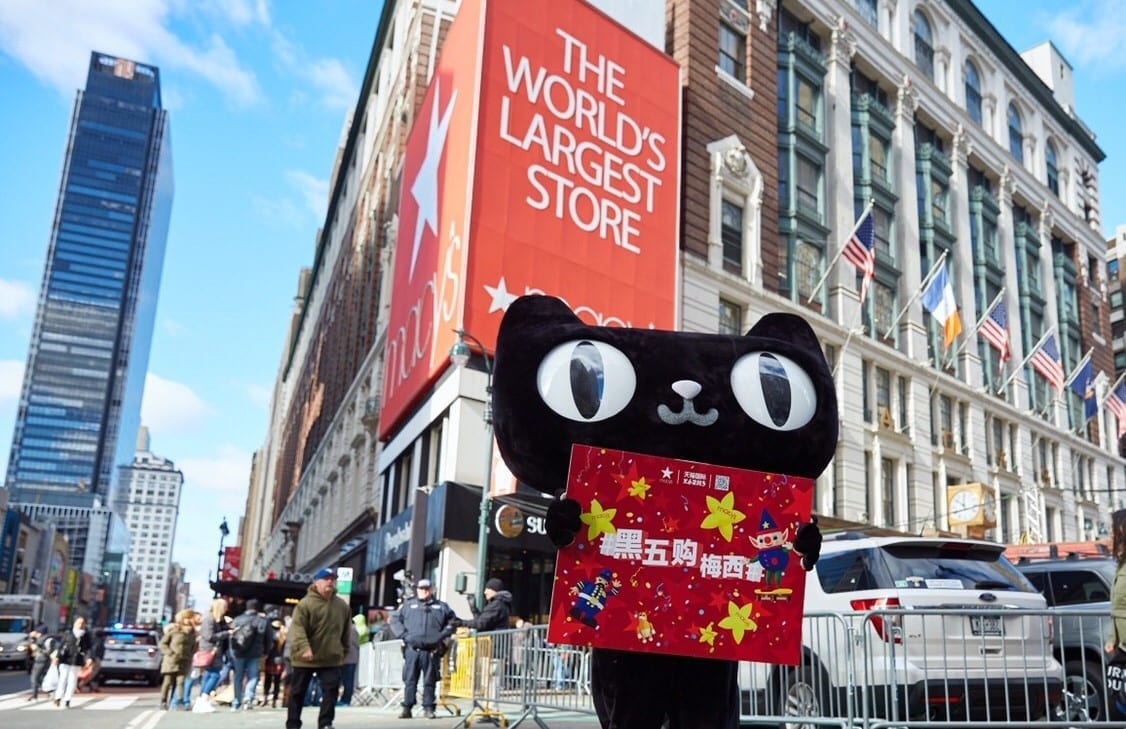
    Macy’s China stopped taking orders on Tmall this week and will close its operations by the end of the month. The US department store business said it chose not to renew the contract with Alibaba’s Tmall which ends on December 31. “We sincerely thank you for your support and love of Macy’s, and we will continue to provide services to you through the American website Macys.com,” the US retailer said in a statement.

    Just two years ago, in an interview, Macy’s China president Dustin Jones assured customers that the company would not leave China. “We will become [a] Chinese Macy’s,” he said.

    That comment followed the closure of the company’s brick-and-mortar stores in Mainland China. Macy’s subsequently closed its own China website last June.

    Since 2015, the Macy’s China business has been operated in partnership with Hong Kong-based Fung Retailing.

    Beijing-based retail analyst Liu Dingding said that Macy’s China failed because it could not keep up with the fast-changing and diversified demands of Chinese consumers.

    “The market in China is changing much faster than those in the US and Europe. These Western giants seem to react a bit slower than their Chinese counterparts,” said Liu.

    Securing a local partner was one way of ensuring success in the market – as WalMart and Carrefour’s partnerships with Tencent have shown, said Liu. That way they can localise their offer and learn from Chinese experience.

    “[Western retailers] have built up operating experience with years of success back home. But before applying this experience in their Chinese operations [they should] respect Chinese culture, hire more Chinese executives and try to adjust the way that they have operated for years back home.

    “That’s the first step to gaining a foothold in the Chinese market,” Liu said.

  • Walmart sales goes back on track

    Walmart sales goes back on track

    US retailer Walmart has reported a 4.7 per cent increase in operating income in the third quarter to US$4.98 billion, and a 3.4 per cent increase in year-on-year comparable sales. Walmart sales for the period reached US$124.9 billion, an increase of 1.4 per cent.

    “We have momentum in the business as we execute our plan and benefit from a favourable economic environment in the US,” Walmart president and CEO Doug McMillon said in a statement.

    “We’re accelerating innovation and using technology to shape the future of retail [and] making shopping at Walmart faster and easier.”

    The retailer saw a 43 per cent increase in online sales in the quarter, largely thanks to its investment in its e-commerce business, as well as key acquisitions, according to GlobalData Retail’s MD Neil Saunders.

    “Making online work for customers has been a priority for Walmart, but the company is also conscious that online needs to deliver in terms of profitability,” Saunders said.

    “On this front, we are impressed with the experimentation on automation and the testing of various last mile solutions for grocery. We believe that Walmart has the skill, financial muscle, and the physical infrastructure to drive profitable online growth in a way that many other retailers, especially grocery players, will struggle to achieve.”

  • What is the hot new “Boundaryless Retail” trend?

    What is the hot new “Boundaryless Retail” trend?

    Chinese consumers are quickly adapting to buying groceries online for immediate delivery from local offline stores, according to a new joint study conducted by JD, Walmart, Tencent and JD Daojia. In China, where over 15% of consumption takes place online, compared to just 9% in the US, consumers have been faster to embrace online grocery shopping.

    Over 67% of Chinese consumers actively use services like JD Daojia, which can deliver goods from local offline shops, including Walmart, to customers in under an hour.

    An increasing number of online shoppers in China view a guarantee of product authenticity as the most important factor when buying goods, with price often viewed as secondary in importance to considerations like product variety, speed of delivery and after-sales service.

    Consumers carefully consider purchases that can improve their lifestyle, reflect their individuality and be delivered in a convenient way that fits in with their busy modern lives.

    Omnichannel integration in the Chinese supermarket industry is expected to be a major trend going forward, as online and offline players in the industry are increasingly combining resources to meet the diverse needs of modern-day shoppers: bringing together the convenience and diversity of online shopping with offline retail’s immediacy of service and superior user experience.

    Boundaryless Retail is a reality gaining in popularity as “The increasingly diverse needs of consumers require a correspondingly dynamic approach” said Kenny Li, VP of JD.com.

  • Flipkart, Amazon see bumper in India festive sale

    Flipkart, Amazon see bumper in India festive sale

    With festive sales drawing to a close, e-tailing giants Amazon and Flipkart have claimed bumper sale on their platforms, and that they were ahead of the competition, as they received orders from customers from over 99 percent of the pin codes in the country.

    According to a report: Citing a survey by Kantar IMRB and other reports, Amazon India Senior Vice President and Country Head Amit Agarwal said Amazon emerged as “the most visited and transacted shopping destination in India this festive season” (October 10-15, October 24-28 and November 2-5).

    “With 99.3 percent of pin codes placing at least one order, 89 percent of new customers coming from smaller towns, almost 70,000 small and medium businesses getting at least one order and new Prime memberships growing by nearly 2X, we are humbled that India trusts us to find, discover and buy anything online,” he said in a release.

    Asked about another report stating that Flipkart cornering 51 percent share of the festive sale between October 9-14, Agarwal said, “we don’t comment on reports that are based on non-scientific methodologies”.

    The said industry report had stated that Amazon.in had a 32 per share in the first leg of the festive sale before Dusshera.

    Both Walmart-backed Flipkart and Amazon have claimed record-breaking sales numbers across categories like smartphones, large appliances and fashion during their festive sales.

    “The current sale (November 1-5) is already more than 2X of our Big Billion Days sale this year. We were the clear leaders in the fashion category… we had all brands (of smartphones) except one…competition is no where close to that,” Smrithi Ravichandran, Head of Growth, Flipkart said.

    She added that customers on an average spent Rs 7,500 on various purchases during this festive sale and that its gross merchandise value (GMV) was up 90 percent over last year.

  • Rakuten  and Seiyu to partner in online grocery service

    Rakuten and Seiyu to partner in online grocery service

    Japanese online retail company Rakuten is partnering with Walmart-owned supermarket Seiyu to launch an online grocery service. Spokespeople from the companies say about 20,000 products will be available on the site, drawn from the Seiyu range, including fresh food. Orders will be fulfilled from stores, restricting the service – for now – to about 16 Japanese suburbs, however a warehouse has been opened near Tokyo to serve the capital.

    “We can tap into Rakuten’s 99 million-strong membership base,” said Seiyu executive officer Tamae Takeda. “[Rakuten’s] advantage is in technology, so we can combine our strengths.”

    The new online grocery service will compete with one launched by Amazon in April last year, as well as those offered by larger Japanese supermarket chains.

    Seiyu and Rakuten plan to offer free delivery on orders over a set threshold, or $4 for those under it.

  • Walmart may soon track heart rates through shopping carts

    Walmart may soon track heart rates through shopping carts

    But its not about burning calories, Walmart wants to capture shopper reactions based on what they see or feel in terms of products and prices. The patent, titled “System and Method for Biometric Feedback Cart Handle,” will have grocery carts fitted with sensors on the cart’s handle, that will transmit the data to Walmart’s servers.

    “If biometric indicators show signs of an emergency, the program may also issue a broadcast throughout the store to call associates’ attention to the situation and could potentially initiate a call for emergency medical help as well,” said technology blog CBInsights.

    However, not all shoppers are happy with this new development with many taking to social media to express their concerns. Susan La Duke tweeted that is was on “the list of reasons” why she would never shop at Walmart.

    The retail giant has also bolstered its e-commerce and grocery teams witha reshuffle of senior executives in the US.

    Kieran Shanahan was promoted as the new senior vice president of e-commerce retail for everyday living while Tom Ward was named the new senior vice president of digital operations.

    It also announced that Andrea Albright will take up the position of senior vice president of snacks, beverage and impulse, replacing Al Dominguez who is leaving the company after 12 years.

    Bloomberg reported that Shanahan and Ward had helped expand the online grocery business prior. Walmart’s grocery segment makes up more than half its US sales.

    Deutsche Bank had upgraded the shares of Walmart on Tuesday based on strength in the online grocery industry. Deutsche Bank analyst Paul Trussell said that the retail giant is “reaping returns on the many years of investment in e-commerce and customer service”, which puts the retailing giant in the best position to move forward.

    Trussell also lifted his stock target from $US89 to $US113. Nuveen managing director Stephanie Link agrees that Walmart’s digital investments and acquisitions with Jet and Flipkart are a good move although she said to CNBC that Deutsche Bank’s call is a little early as Walmart still has to do some more to deliver growth.

    “They [Walmart] have just started to make these investments, and you’re just starting to see some results, but I think it’s going to take a long time … I think the environment is competitive and I think what Walmart is doing is right, but I don’t necessarily want to own the stock,” she said on CNBC‘s “Halftime Report.”

  • Walmart India eyes 10 pc revenue from private labels, 30 stores by 2019

    Walmart India eyes 10 pc revenue from private labels, 30 stores by 2019

    Walmart India, which runs 22 Best Price wholesale stores, is planning to increase the share of its private labels to topline to 10 percent by next year as it plans to tap the Flipkart platform.

    According to a report: The company opened its 22nd store in Ludhiana late last month, which is the sixth in the state, where it began with and the second in the Punjab city.

    The company will have 30 stores by the time it completes a decade of its second coming next year.

    Globally, the retail major which is bigger than Boeing, Coca-Cola, Facebook, and the Google parent Alphabet in total sales–nets around 20 percent of its topline from private labels, which are low-priced but high margin items while from a volume perspective it is around 25 percent, which it has already achieved in the country as well.

    Walmart India closed fiscal 2017 with a topline of Rs 3,609 crore, up around 14 percent, according to government filing.

    The numbers for FY18 is not available for Walmart.

    “Currently, our revenue from private labels is 6-7 per cent from our two brands–Right Buy and Member’s Mark, wherein the first is the cheaper than the other. We hope to take this to 10 per cent by 2019, when we close our first decade,” Krish Iyer, Chief Executive, Walmart India said.

    Internationally, its private labels are a US$ 60 billion business for them under the name of Sams Club, while its total volume is over US$ 500 billion.

    India is the only market where Walmart is only into wholesale.

    Iyer, also said he expects an uptick in private label sales going forward as the company is planning to cross-sell these brands on Flipkart, its online marketplace subsidiary here.

    In the biggest M&A deal, the world’s largest retailed Walmart had bought 77 percent of the homegrown online marketplace Flipkart for over US$ 16 billion in August.

    It can be noted that FDI norms allow only 51 percent in multi-brand retail, whereas in cash & carry 100 percent is permitted.

    Flipkart also has developed private brands like Billion though not exactly in the grocery segment.

    “What can be done is while we can’t sell on Flipkart, our manufactures can do and vice versa, which can be beneficial for both,” Iyer said.

    But he was quick to add that both are independent companies with independent boards and the process can take time.

    “Nothing will happen immediately at least over the next quarter or so. But we do see tremendous scope for synergies as Flipkart is very good at their logistics, deliveries, customer relationship management, artificial intelligence, machine learning and analytics, among others. We too have similar strengths, which can be combined,” he said.

    The company made a reentry in 2009 after exiting its failed jv with Bharati Enterprises, on its own and opened the first wholesale store in Amritsar. The new 56,000 sq.ft. store in Ludhiana is the sixth in the state and the first one since August 2015 in Agra.

    The company has announced plans to open 50 stores by 2025. When asked where it would be by the turn of the first decade (next year), Iyer said, adding they would have 30 stores by December 2019. We will also two fulfilment centres by then, and the next one is coming up in Vishakapattanam by December 2019.

    He said the company has created over 1 million customers since 2009, and each store typically generates around 2,000 jobs of which around 250 are direct jobs.
    Walmart eyes 10 pc revenue from private labels, 30 stores by 2019

    Walmart India, which runs 22 Best Price wholesale stores, is planning to increase the share of its private labels to topline to 10 percent by next year as it plans to tap the Flipkart platform.

    According to a report: The company opened its 22nd store in Ludhiana late last month, which is the sixth in the state, where it began with and the second in the Punjab city.

    The company will have 30 stores by the time it completes a decade of its second coming next year.

    Globally, the retail major which is bigger than Boeing, Coca-Cola, Facebook, and the Google parent Alphabet in total sales–nets around 20 percent of its topline from private labels, which are low-priced but high margin items while from a volume perspective it is around 25 percent, which it has already achieved in the country as well.

    Walmart India closed fiscal 2017 with a topline of Rs 3,609 crore, up around 14 percent, according to government filing.

    The numbers for FY18 is not available for Walmart.

    “Currently, our revenue from private labels is 6-7 per cent from our two brands–Right Buy and Member’s Mark, wherein the first is the cheaper than the other. We hope to take this to 10 per cent by 2019, when we close our first decade,” Krish Iyer, Chief Executive, Walmart India said.

    Internationally, its private labels are a US$ 60 billion business for them under the name of Sams Club, while its total volume is over US$ 500 billion.

    India is the only market where Walmart is only into wholesale.

    Iyer, also said he expects an uptick in private label sales going forward as the company is planning to cross-sell these brands on Flipkart, its online marketplace subsidiary here.

    In the biggest M&A deal, the world’s largest retailed Walmart had bought 77 percent of the homegrown online marketplace Flipkart for over US$ 16 billion in August.

    It can be noted that FDI norms allow only 51 percent in multi-brand retail, whereas in cash & carry 100 percent is permitted.

    Flipkart also has developed private brands like Billion though not exactly in the grocery segment.

    “What can be done is while we can’t sell on Flipkart, our manufactures can do and vice versa, which can be beneficial for both,” Iyer said.

    But he was quick to add that both are independent companies with independent boards and the process can take time.

    “Nothing will happen immediately at least over the next quarter or so. But we do see tremendous scope for synergies as Flipkart is very good at their logistics, deliveries, customer relationship management, artificial intelligence, machine learning and analytics, among others. We too have similar strengths, which can be combined,” he said.

    The company made a reentry in 2009 after exiting its failed jv with Bharati Enterprises, on its own and opened the first wholesale store in Amritsar. The new 56,000 sq.ft. store in Ludhiana is the sixth in the state and the first one since August 2015 in Agra.

    The company has announced plans to open 50 stores by 2025. When asked where it would be by the turn of the first decade (next year), Iyer said, adding they would have 30 stores by December 2019. We will also two fulfilment centres by then, and the next one is coming up in Vishakapattanam by December 2019.

    He said the company has created over 1 million customers since 2009, and each store typically generates around 2,000 jobs of which around 250 are direct jobs.


  • Walmart Canada launches grocery delivery in Metro Vancouver with Food-X

    Walmart Canada launches grocery delivery in Metro Vancouver with Food-X

    Walmart Canada has announced the launch of sustainable grocery delivery for Metro Vancouver consumers in collaboration with Sustainable Produce Urban Delivery (SPUD)’s food delivery platform, Food-X Urban Delivery (Food-X). Metro Vancouver residents can now shop on walmart.ca/grocery or via the Walmart app and have their grocery orders delivered to their door by Food-X. Food-X helps Walmart with home delivery through shared warehousing and consolidation of orders.

    “It’s never been easier for customers to shop for fresh groceries – however and whenever they want,” said Daryl Porter, Vice President, Omnichannel Operations and Online Grocery. “Consumers are seeking out options to save time and money and Walmart is proud to offer more choices – including sustainable delivery.”

    Walmart remains committed to making everyday easier for busy families. This new grocery shopping option is faster and more affordable for customers in urban centres like Vancouver where there may not be convenient access to a Walmart Supercentre, and for customers who prefer to shop online.

    Customers can shop at walmart.ca/grocery or via the Walmart app. When done, they simply pay by credit card a then select a delivery window and their order will be delivered by Food-X right to their door in reusable totes as early as the next day. Customers can fill their cart with fresh groceries, including Canadian No. 1 grade fruits and vegetables such as BC-grown produce as well as an expanded selection of organic produce, Canadian beef, chicken and pork, dairy, baked goods, frozen foods and pantry items. They can also add health and beauty products, household supplies, pet food, baby food, diapers and lots more. All fresh groceries come with a 100 percent satisfaction, money-back guarantee. Minimum order is US $50 before taxes and delivery is US $9.97.

    The 74,000 sq. ft. sustainable warehouse features proprietary technology SPUD has been refining for the past 20 years to minimize the environmental impact of grocery delivery from reducing food waste to ensuring trucks are making fewer trips on the road. The Food-X warehouse has technology, several bio-digesters used to compost meat, produce, and compostable packaging bringing their food waste to 0.5 percent, which is leading the retail industry.

    Earlier this year, Walmart announced a commitment to achieve zero food waste by 2025 in its Canadian operations. The company’s journey to zero food waste in Canada by 2025 was announced in April 2018 with a three-part strategy that includes improving operational efficiencies, as well as increasing food donations and providing philanthropic support.

    “Our strategic collaboration with Food-X supports our belief that environmental and business sustainability go hand-in-hand,” said Porter. “Food-X is a leader in sustainability in Vancouver and we are proud to partner with a like-minded, environmentally-conscious operation.”

    “Consumer demand for online grocery shopping is growing and that means more trucks on the road,” said Peter van Stolk, CEO of Food-X. “We have built a best-in-class platform to get fresh food and groceries from the supplier to the kitchen while reducing waste and lowering emissions. We are very proud that Walmart is committed to zero food waste by 2025, and we are excited to be partnered with them on this goal.”

  • Amazon, Samara Capital buy India’s retail chain More

    Amazon, Samara Capital buy India’s retail chain More

    Samara Capital, a private equity company, has teamed with Amazon to buy Indian grocery retailer More from Aditya Birla Retail.

    While the value of the deal has not been disclosed, it is reported a person close to the transaction putting it at around ₹4,200 crore (US$584 million).

    It is believed Amazon’s stake in the business will be capped at 49 per cent to comply with Indian foreign investment regulations. The balance will be held by Samara Capital, which is an Indian entity founded by former Citigroup executives.

    Amazon has already committed US$500 million to build its food retailing business in India, where it sees massive opportunity for growth.

    Analysts say that by investing in More, Amazon can build both online and offline food retailing operations simultaneously and find ways to marry the two. But it faces intense competition from Walmart which spent $16 billion acquiring Flipkart in a deal completed last month.

    More operates more than 500 supermarkets and 20 hypermarkets, ranking it fourth among Indian grocery retailers.

  • Walmart India opens 22nd cash and carry store in India

    Walmart India opens 22nd cash and carry store in India

    Walmart India, the wholly-owned subsidiary of Walmart Inc, Saturday announced the opening of its 22nd business-to-business Cash and Carry store in the country, making it the second Best Price Modern Wholesale store in Ludhiana and the sixth in Punjab.

    The new store simultaneously got integrated with the B2B e-commerce platform, making it the 22nd Best Price store to go online, a release said here.

    “I am very excited about opening the 22nd Cash and Carry store in India. It reiterates our commitment to India and our growth plans. Setting up a second store in Ludhiana and sixth one in Punjab reinforces our belief in the ease of doing business here in the state,” Krish Iyer, President and CEO, Walmart India said.

    The Best Price Modern Wholesale Store stocks over 5,000 items, including a wide range of fresh, frozen and chilled foods, fruits and vegetables, dry groceries, personal and home care items, hotel and restaurant supplies, apparel, office supplies, electronic goods and other general merchandise items.

    Punjab is an important sourcing destination for Walmart India and the company sources food items such as fresh vegetables, agri-commodities, staples, meat, and beverages and non-food items including plastic-ware, glassware, decor items, brooms, mattresses, among others.

  • Walmart’s mini program “Scan to Buy” has attracted over 10 users in China

    Walmart’s mini program “Scan to Buy” has attracted over 10 users in China

    Walmart Scan & Go use in China has broken through the 10 million-users barrier, the first mini-program in the retail industry to reach such a broad user base.

    Since launching last April, Walmart Scan & Go – which allows customers to scan their own items and complete payment on their mobile phones for in-store purchases – has been promoted in nearly 300 Walmart stores in more than 50 cities. By the end of the year, it is expected to be available in more than 400 Walmart stores across the country.

    In the two-month tryout period in some Walmart stores, Scan & Go reached a penetration rate of up to 30 per cent of in-store customers choosing to use the mini-program to make payment. About 95 per cent of those users said they were willing to continue to use this new self-help checkout method.

    The mini-program also features an electronic mapping service called “Find My Item”, which provides customers with an electronic map-based shopping guide service helping in-store customers to quickly locate the products they need.

    Jordan Berke, Walmart China Hypermarket’s VP of e-commerce said: “Walmart Scan & Go is one of our important initiatives to deliver innovation and omni-channel experiences to our customers… We believe that innovative technologies provide a more convenient experience to customers and enhance customer loyalty.”

    Cecilia Tian, head of smart retail strategic partnership at Walmart’s partner Tencent, said: “Scan & Go meets the customer’s needs by shortening the checkout time. For retailers, Scan & Go helps anchor their digital assets and improve the digitalisation and CRM capability. It brings positive impact on O2O business. Tencent hopes to collaborate with retail partners such as Walmart, who are able to build a holistic, seamless O2O experience with digitalisation tools, improve the operation efficiency and drive business growth.”