Retail News CRM

Tag: Walmart

  • JD and Better Life collaborate to fasten deliveries

    JD and Better Life collaborate to fasten deliveries

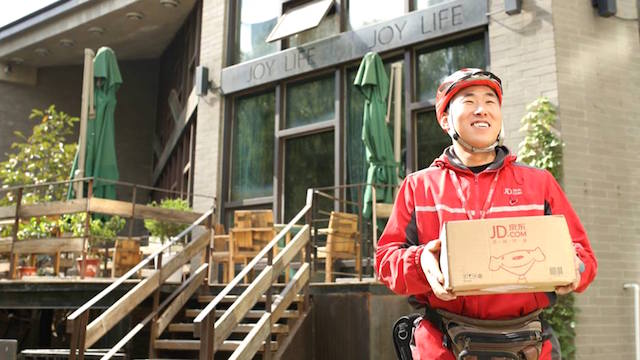
    JD has developed a partnership with Chinese retailer Better Life as part of its Retail as a Service strategy.

    The cooperation will further speed up delivery for mainland customers and integrates inventory across the two retailers by using technology to identify the most efficient way to source orders on JD.com, whether from JD’s own warehouses, or from Better Life stores.

    Products sourced from Better Life will be delivered in less than an hour by Dada, China’s leading crowdsourcing delivery company. The efforts follow a cooperation with Walmart that uses a similar strategy of supply chain integration to increase overall efficiency and improve user experience.

    “JD is uniquely able to improve our overall inventory management and reach a wider swath of customers more efficiently,” said Kevin Liu, grocery merchandising director at Better Life. “As the retail landscape is rapidly changing, we see this initiative as a prime example of how offline retailers can not only remain relevant, but actually become even more relevant.”

    Ting Qi, director of user experience at JD FMCG and Foods, said the partnership marks another step forward in the Retail as a Service strategy, which leverages JD’s resources to help traditional companies excel in a changing environment.

    “We are pleased that our customers will be able to get an even better shopping experience through this initiative with Better Life.”

    The benefits for the customer, offline stores and JD through the integration of inventory include increased sales, faster inventory turnover, improved cash flow and even faster delivery.

    JD is also exploring the option of integrating its online membership program with offline partner stores, so that offline stores can enjoy even more benefits from their partnerships with JD.

  • Walmart India, Flipkart top executives meet CCI

    Walmart India, Flipkart top executives meet CCI

    Top executives of Walmart India and Flipkart on Wednesday met fair trade regulator CCI to explain their activities in the country, days after submitting an application seeking approval for their $16-billion mega merger deal.

    While there was no official word on the meeting, sources said it was a “courtesy call” by the executives of the two companies during which they also apprised the regulatory authority of Walmart’s global sourcing from India, including from the farmers, and its work towards kirana stores and supplier development programmes.

    Those present in the meeting included Walmart India president and CEO Krish Iyer and the company’s senior vice president and chief corporate affairs officer Rajneesh Kumar, besides Flipkart CEO Kalyan Krishnamurthy and its group legal head R Baweja, sources said.

    In their meeting with CCI member Sudhir Mittal, the officials of the two companies briefly explained about their individual businesses, development programmes and other activities.

    The meeting comes days after Walmart approached the Competition Commission of India (CCI) for approval of its proposed acquisition of a majority stake in e-commerce major Flipkart. In their application filed last week, the two companies have said the acquisition, proposed through Walmart International Holdings, deal doesn’t raise any competition concerns.

    Mergers and acquisitions beyond a certain threshold require the approval of the CCI.

    In their plea, Walmart has told the regulator that Flipkart is a Singapore-based investment holding firm, which along with its direct and indirect subsidiaries, both in India and elsewhere, is primarily engaged in the business of wholesale cash and carry of goods and providing marketplace based e-commerce platforms to facilitate trade between customers and sellers in India.

    According to the notice submitted to the CCI by Wal-Mart International Holdings, the proposed transaction will be effected pursuant to the share purchase agreement and the share issuance and acquisition agreement entered into on May 9 by and among Walmart’s subsidiary and Flipkart.

    Retailers have joined hands to approach CCI against $16 billion Walmart-Flipkart deal as they apprehend that it would lead to massive job loss and be a “nightmare for retail trade” of the country.

    Earlier this week, traders body CAIT also said it will approach the CCI to file objections on the proposed Walmart-Flipkart deal, claiming that the agreement would lead to an uneven playing field and massive job losses.

    On the other hand, an online sellers industry body has already moved the CCI against Flipkart India Pvt Ltd, a wholesale company, for allegedly abusing its dominant position on Flipkart’s online marketplace.

    Walmart seeks to acquire 77 percent stake in the homegrown e-commerce firm with a buyout of $16 billion.

    Opposing the deal, the Confederation of All India Traders (CAIT) has also written to Commerce Minister Suresh Prabhu, seeking to know the steps being taken by the government to scrutinise the deal.

    CAIT alleged that the deal involves important issues related to FDI policy, cyber security, apprehension of using e-commerce for entering retail trade by circumventing the law etc.

  • Walmart sales boosted by new website

    Walmart sales boosted by new website

    A new website has delivered a rebound in e-commerce sales for the world’s largest retailer Walmart, but falling margins have crimped first quarter earnings, with operating income down four per cent on a constant currency basis.

    Delivering its figures for the 13-weeks ended 28 April in the US overnight, Walmart said price cuts and higher shipping costs weighed on gross margin, down 23 basis points.

    Despite that sales, up 2.7 per cent on a constant currency basis to US$120 billion, and earnings came in above market expectations – helped along by a rebound in e-commerce sales, up 33 per cent.

    Comparable sales (excluding fuel) increased by 2.1 per cent, compared to 1.4 per cent in the prior corresponding period.

    Walmart launched a new website during the quarter after online sales experienced a slowdown over the holidays, with growth down to 23 per cent compared to 50 per cent in Q317.

    Walmart president and chief executive Doug McMillion said it was a solid first quarter with momentum building across the business.

    “We’re transforming to better serve customers, we are changing from within to be faster and more digital, while shaping our portfolio of businesses for the future,” he said.

    Walmart made a number of large corporate moves in the first quarter, including a US$16 billion deal for a 77 per cent stake of Indian marketplace Flipkart and a circa £10 billion on the merger of its UK supermarket business Asda with Sainsbury’s.

    Walmart also revealed on Thursday that it had sold its banking operations in Canada and Chile in line with its focus on retail.

    Neil Saunders said the first quarter figures were impressive in that, for a company of its size, Walmart has shown an ability to make dramatic changes to its business model in a relatively short time frame.

    “Today’s results are proof not only that Walmart is making gains in its day-to-day business, but that it is now a company firmly in the midst of a dramatic transition. As much as the structural changes are disruptive and, in some cases, profit-eroding, we believe they are necessary in order for Walmart to thrive in a new era of retail,” Saunders said.

    “Too many legacy retailers fail to make the bold moves needed to maintain their relevance. Walmart is not one of them. It has both the will and financial muscle to ensure it remains a retail leader for many years to come. Indeed, we think it is one of the few companies that can truly take on Amazon in a serious and meaningful way.”

  • Walmart closes in on $15bn Flipkart e-commerce deal

    Walmart closes in on $15bn Flipkart e-commerce deal

    Walmart may have secured a key victory over Amazon in India, with reports surfacing that the board of Flipkart Online services, one of the fast-growing nation’s largest retail platforms, has approved a deal to sell 75 per cent of the company to the grocery giant for around US$15 billion.

    Citing sources familiar with the deal Bloomberg has reported that the world’s largest retailer is closing in on an official offer for the Indian retailer after Amazon, which was also reportedly looking at the business, took itself out of the race.

    The deal is expected to close in the next 10 days, although final terms remain uncertain. A Walmart deal is thought to be more appealing to regulators given Amazon’s position as the number two competitor in the market.

    Should a transaction progress it would represent a significant international capital reallocation for US-based Walmart, which only last week agreed to offload most of its stake in UK supermarket chain Asda in a £10 billion merger with Sainsbury’s.

    For Amazon, which has been investing heavily in its own Indian platform in recent years in a bid to cash in on growing consumption in the world’s second fastest growing economy, the deal represents a renewed competitive threat.

    Flipkart is an online marketplace founded in 2007 by former Amazon employees Sachin Bansal and Binny Bansal, valued at around $20 billion after garnering investment from the likes of Ebay, Microsoft and Tencent.

  • Walmart kicks off with redesigned e-commerce platform

    Walmart kicks off with redesigned e-commerce platform

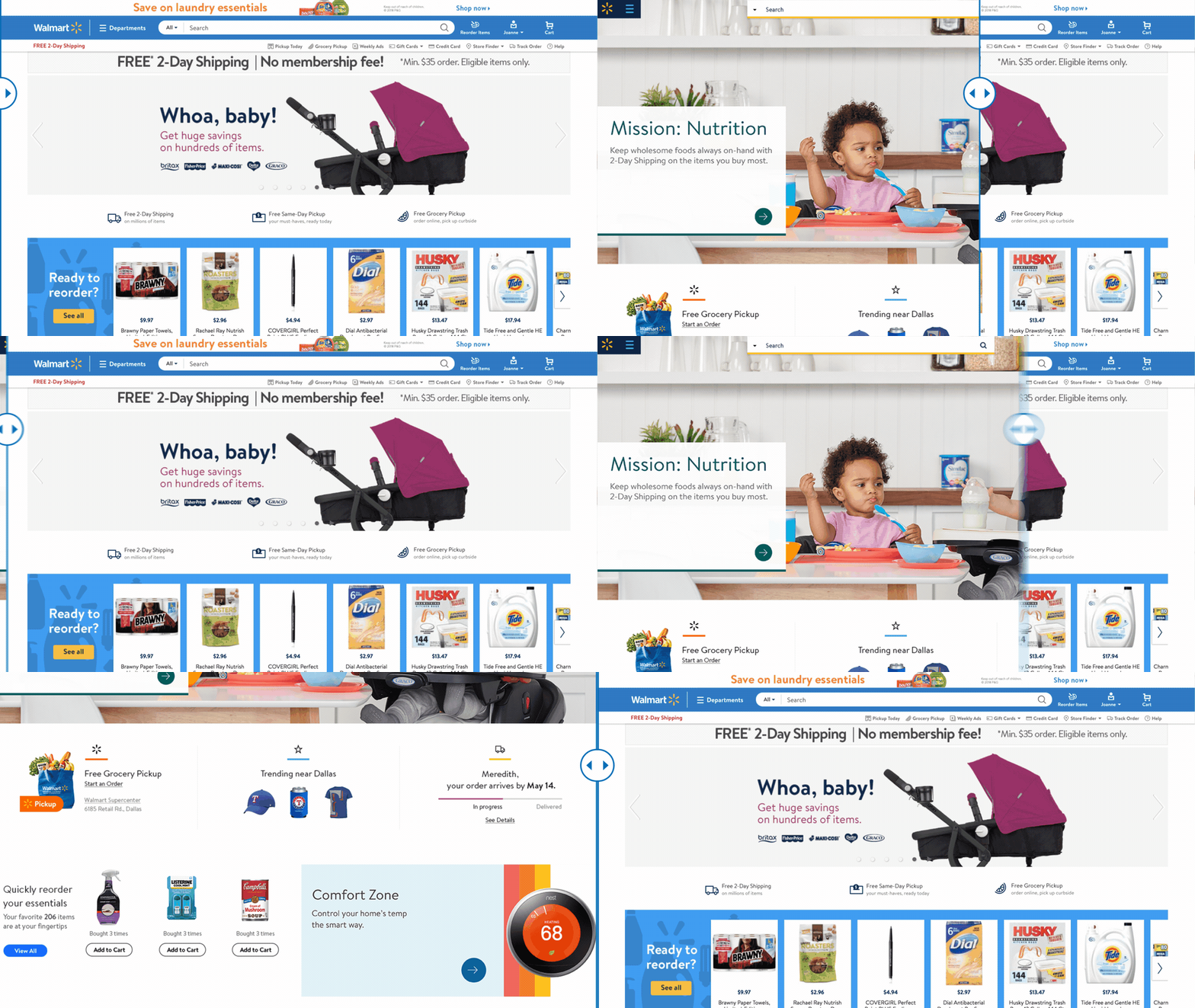
    The world’s largest retailer Walmart has unveiled a complete redesign of its North American e-commerce platform to deliver a more local and personalised experience for shoppers.

    The new website, which is now live, sports a completely redesigned look and feel, as well as several new features, including specialty shopping experiences.

    The move comes after Walmart disappointed the market in February with a slowdown in its e-commerce growth to 23 per cent in the fourth quarter, down from 50 per cent in the prior quarter.

    The retail giant is forecasting a further 40 per cent increase in its e-commerce sales in fiscal 19.

    Walmart’s president and chief executive of US e-commerce Marc Lore oversaw the changes and said that personalisation was a key focus for the retail giant, with new sections introduced that showcase top-selling items based on a customer’s location.

    “The majority of the homepage will be personalised in some way,” Lore said in a post about the new site.

    There will be an area of the site dedicated to customers’ local store profiles, which will provide product availability information.

    Specialty shopping experiences have also been introduced, an area of the site dedicated to a specific category, designed to emulate a specialty retail shopping experience.

    “Customers shopping for groceries and household essentials want to quickly re-buy what they always purchase, while those looking for a new couch want to be inspired while browsing the different options,” Lore said.

    “We want each category to feel like you are shopping a specialty store and we plan to build out these specialty experiences for other categories starting later this year.”

    A home specialty experience has already been launched, while a destination for fashion is on the way.

    Advertising has also changed, providing Walmart’s suppliers with the ability to “better tell their stories” on the website within “seamlessly integrated” ads.

  • Walmart China introduces compact format

    Walmart China introduces compact format

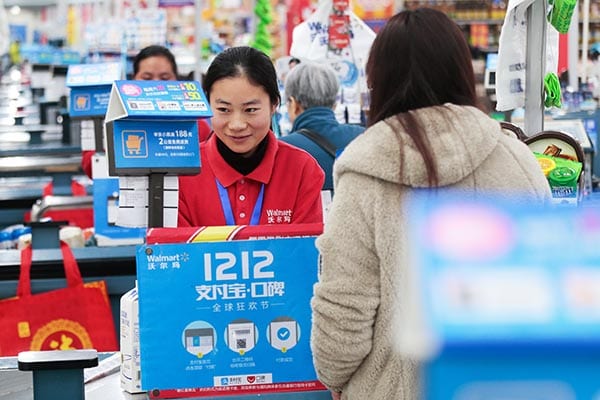
    Walmart China has deepened its omni-channel retail model with the opening of its first small-format Walmart Supermarket.

    In Shenzhen’s Bao’an district, the store delivers an integrated online/offline experience, with an emphasis on fresh foods, fast delivery and convenience.

    “Retail and lifestyle are closely linked,” says Walmart China hypermarket senior VP/COO Elliot Dickson.

    “Walmart is proud to have been a part of the evolution of shopping in China since we opened the first Walmart Hypermarket here in Shenzhen in 1996. We are introducing our Walmart Supermarket to give customers an upgraded omni-channel experience rooted in their own community.”

    The 1200sqm store stocks more than 8000 items, with a localised assortment strategy that includes fresh products, prepared meals, dairy products, beverages and household supplies. The layout also seeks to enhance shopper convenience with chilled vegetables, fresh fruit and frozen foods given prominence, alongside pre-prepared dishes such as fish with preserved vegetables and stir-fried clams.

    Ninety per cent of the supermarket’s inventory, including fresh, frozen, deli and bakery goods, are also available on the Walmart Supermarket at JD.com. The store has a high-tech stocking system so associates can precisely find products on the shelf and fulfil orders by the fastest product-picking route. This enables the store to provide delivery as fast as 29 minutes to homes within 2km of the store.

    Walmart Supermarket’s soft opening day set a record for stores on the JD.com platform, with more than 1000 online orders. The fastest delivery on opening day was less than 10 minutes from online order to the customer’s door.

    Using the scale and merchandising resources of more than 400 Walmart stores across China, the store introduces electronic price tags to help keep prices up to date.

    Services for customers include online options to buy e-gift cards, schedule home-appliance maintenance, arrange flower deliveries, and make travel reservations. In-store services ranging from laundry to key cutting, shoe repair and Shenzhen Tong card top-ups.

    Customers can use a WeChat mini-program to scan barcodes as they shop, and pay via their mobile device and verify payment in store to bypass the checkout counter. In a two-month pilot, more than one in five customers chose to pay through Scan & Go, with about 95 per cent of them planning to use the new way of payment again to save time. Overall, more than half of Walmart Supermarket customers chose online ordering, Scan & Go or self-checkout during the pilot period. There are nine checkouts: three Scan & Go payment-verification stations, three self-service checkouts, and three traditional checkouts with cashiers. The store provides high-speed Wi-Fi.

  • New USA tariff plan draws backlash from US retailers

    New USA tariff plan draws backlash from US retailers

    Failing US president Donald Trump is facing widespread backlash from US retailers and brands over his intention to trigger a trade war with China and other nations.

    Just days after announcing tariffs on steel imports against the advice of officials, lawmakers and industry, Trump is now believed to be formulating sweeping tariffs on imported goods from China – a move retail and business groups warn will wipe away gains for the economy from the recent tax cuts.

    “This is not American industries crying wolf,” said Sandy Kennedy, president of the Retail Industry Leaders Association, which organised a letter to Trump, sounding alarm that such tariffs will boost prices of numerous consumer goods, including shoes, apparel and appliances.

    Twenty-four US retailers signed Kennedy’s letter, including Walmart, Target, Best Buy, Abercrombie & Fitch, American Eagle Outfitters, Columbia Sportswear, Costco, Dollar Tree, Gap, JC Penney, Kohl’s, Ikea, Levi Strauss, Sears, VF Corp and Wolverine World Wide.

    A second letter was signed by 82 shoe companies, including Nike, Payless ShoeSource, Under Armour and Shoe Carnival.

    “Adding even more tariffs on top of this heavy burden would mean higher costs for footwear consumers and fewer US jobs,” one of the letters said.

    “Given the price sensitivity of our products, any additional increases in our costs would strike right at the heart of our ability to keep product competitively priced for our consumers.”

    One of the issues worrying retailers and manufacturers is that Trump does not need approval from Congress to implement tariffs. He can impose unilateral tariffs on China citing national security grounds – the same rationale behind the steel tariffs – because a US government investigation had found Chinese had violated intellectual property rules.

    Trump has previously stated he does not fear a trade war because he believes America would win it.

    Widespread media debate about tariffs and the rationale behind them would also distract public attention from numerous controversies surrounding the Trump presidency, including a growing list of women revealing extramarital affairs with him, election tampering and his links to a company under investigation by the FTC for stealing personal details of 50 million Facebook users.

  • Flipkart’s Singapore parent infuses Rs. 4500cr into India wholesale arm

    Flipkart’s Singapore parent infuses Rs. 4500cr into India wholesale arm

    the wholesale arm of the country’s largest e-commerce company, has received almost Rs 4,500 crore in what is one of the largest capital infusions for the entity, as per latest regulatory filing at the Registrar of Companies (RoC). This large investment in to the wholesale arm from its parent indicates the aggressive plans that Flipkart has charted out to counter its closest rival Amazon which too runs a wholesale arm. Since raising $4 billion from marquee investors like SoftBank last year, Flipkart has been largely been pushing its logistics and payments businesses adding big bucks to rev up these verticals.

    Flipkart India is one of the core companies that controls the e-tailer’s India operations. The wholesale arm buys products in bulk from various manufacturers and then sells it to merchants who work closely with the online retailer as well as to independent third party vendors. These merchants, in turn, sell these products to consumers on the Flipkart platform. Flipkart Internet is the other significant entity which runs the marketplace for the e-commerce major. This entity too received an investment of about Rs 370 crore recently.

    In March 2016, the Indian government allowed 100% FDI in online retail of goods and services under the marketplace model with riders which restrict a seller from contributing more than 25% of overall sales generated on any e-commerce site. This is why companies like Flipkart and Amazon, which cannot work on the inventory model, prop up few big merchants and help them cater to the growing consumer demand. Having a wholesale arm helps in doing that as they e-tailers cannot directly sell to shoppers. As per the RoC documents, Flipkart’s Singapore parent was issued each share of Flipkart India for Rs 23,900 for raising the new capital.
    An email sent to a Flipkart spokesperson on the development did not elicit a response. The e-tailer’s wholesale entity reported revenues of Rs 15,264 crore for the financial year 2017 compared to Rs12, 818 crore in the previous year showing a growth of about 18%. After a tough 2015- 2016, Flipkart had managed to make a turnaround last year with a bump up in growth numbers on the back of smartphone sale. It also successfully raised massive funds to fight Amazon as Japan’s SoftBank came on board as its largest investor.
    Both Amazon and Flipkart are vying for the largest pie of the Indian e-commerce market and are investing in their businesses at a staggering pace. Amazon has already infused over $3 billion in the Indian market and its international losses–majority of which is credited to India–stood at $3 billion for the full year of 2017. Flipkart Singapore parent reported a 67% jump in losses at Rs 8,771 crore for the financial year ending March 2017. Both the players are also ramping up their infrastructure for new businesses as they look to drive up growth. While Flipkart is setting up new fulfilment centres for its TV and large appliances business, Amazon recently announced it has opened up 15 new warehouses or what it cals Fulfillment Centres to push its grocery and daily consumables business.
    Flipkart is currently engaged in talks with Walmart, the world’s largest offline retailer, for a deal that may give the American retailer a big stake in the homegrown comoany valuing it at upwards of $20 billion, as TOI reported in our February 8 edition.
  • Walmart sales taps US$500 billion

    Walmart sales taps US$500 billion

    Walmart sales reached US$500.3 billion last year, an increase of $14.5 billion, or 3 per cent.

    But that failed to excite shareholders, with the share price shedding 10 per cent of its value immediately after the announcement.

    Arguably, the world’s largest retailer’s biggest success last year was its e-commerce business where it is looking to take market share away from Amazon – just as Amazon is trying to encroach on the brick-and-mortar space in the US.

    E–commerce sales rose 44 per cent for the full year, although growth slowed from 50 per cent to 23 per cent in the last quarter, partly due to the annualisation of its year-old Jet.com acquisition. It forecasts 40 per cent growth in the current quarter.

    Neil Saunders, MD of GlobalData Retail, says Walmart has more work to do to widen its e-commerce customer base.

    “There are many demographics, especially younger and professional segments, for whom Walmart is not the destination of choice online. This isn’t because it doesn’t sell what they want or because the price or delivery options are suboptimal; instead, it is because they do not associate Walmart with online or they default to Amazon. This is a tough nut for Walmart to crack, and one that it can only break by more heavily marketing its services and proposition.”

    While figures for the Walmart China business were not broken out, the international division posted 6.7 per cent year-on-year growth in the latest quarter. China and Mexico were the star performers and Walmart’s troubled UK grocery chain Asda showed long-awaited improvement.

    Bottom line blues

    The weakest part of Walmart’s figures was on the bottom line. Consolidated operating income was $20.4 billion for the year, a decrease of 10.2 per cent, however the company says that when one-off impairments and costs are taken out of the equation, operating income would have been “relatively flat”.

    Saunders says there is no cause for alarm over the bottom line performance. “Walmart remains comfortably profitable and much of the deterioration is down to the various investments Walmart is making in future-proofing its business. We applaud this long-term view, especially as it is now being coupled with some rationalisation and streamlining initiatives.”

    Meanwhile, a solid US market performance reflects higher customer traffic and higher average spend.

    “Part of this is down to a more optimistic and carefree consumer, who was in a mood to spend over the holidays.

    Arguably those shoppers did not have to visit Walmart – but many did, and from our data, Walmart increased its share of shoppers over the final quarter. We believe this is down to Walmart’s focus on low prices plus better customer service, improved ranges, and better-selling environments. The bottom line is that even in an era of stiff competition, Walmart is becoming more and not less relevant to the American consumer,” said Saunders.

    -Neil Saunders

  • Walmart and Rakuten Announced New Strategic Alliance

    Walmart and Rakuten Announced New Strategic Alliance

    In Tokyo today, Walmart president/CEO Doug McMillon and Rakuten chairman/president/CEO Hiroshi “Mickey” Mikitani announced a strategic alliance aimed at expanding consumer reach and enhancing customer service.

    Included in the collaboration is the launch of an online grocery delivery service in Japan as well as an exclusive retail alliance between the US retail giant and e-reading service Rakuten Kobo. This will enable Walmart to sell e-books and audiobooks, as well as offer Rakuten Kobo e-readers in stores and online in the US.

    “We’re excited to collaborate with the top online shopping destination in Japan,” says McMillon.

    “We look forward to expanding our grocery footprint in Japan and launching eBooks and audiobooks for our customers in the US.”

    Rakuten and Seiyu GK, a Walmart subsidiary, have reached a basic agreement to establish a JV to launch a delivery service for online grocery shoppers in Japan, to be known as Rakuten Seiyu Netsuper and planned to start late this year. With the aim of increasing fulfillment capacity, enriching the merchandise offering and improving customer convenience, the service will establish a fulfilment centre this year as well as offering deliveries from Seiyu stores.

    The service’s merchandise offering will showcase Seiyu’s twin strengths of “quality” and
    “low prices”. It will include not only fresh produce and daily consumables, but also convenience items such as cut vegetables, partially prepared foods and ready-meal kits, as well as local gourmet products from Rakuten Ichiba marketplace merchants.

    An optimised user experience will be offered, with more personalisation enabled by big data and AI. Customers will be able to earn and use Rakuten Super Points on more than 70 services.

    Meanwhile, Walmart will become Rakuten Kobo’s exclusive mass retail partner in the US, offering nearly 6 million titles from thousands of publishers and hundreds of thousands of authors. Walmart will also sell digital book cards in more than 4000 stores.

    All e-book content will be accessible through a Walmart/Kobo co-branded app for Android and iOS devices, a desktop app and Kobo e-Readers, which will also be sold at
    Walmart.

  • Zara to launch CleverFlex self-service pick-up kiosk

    Zara to launch CleverFlex self-service pick-up kiosk

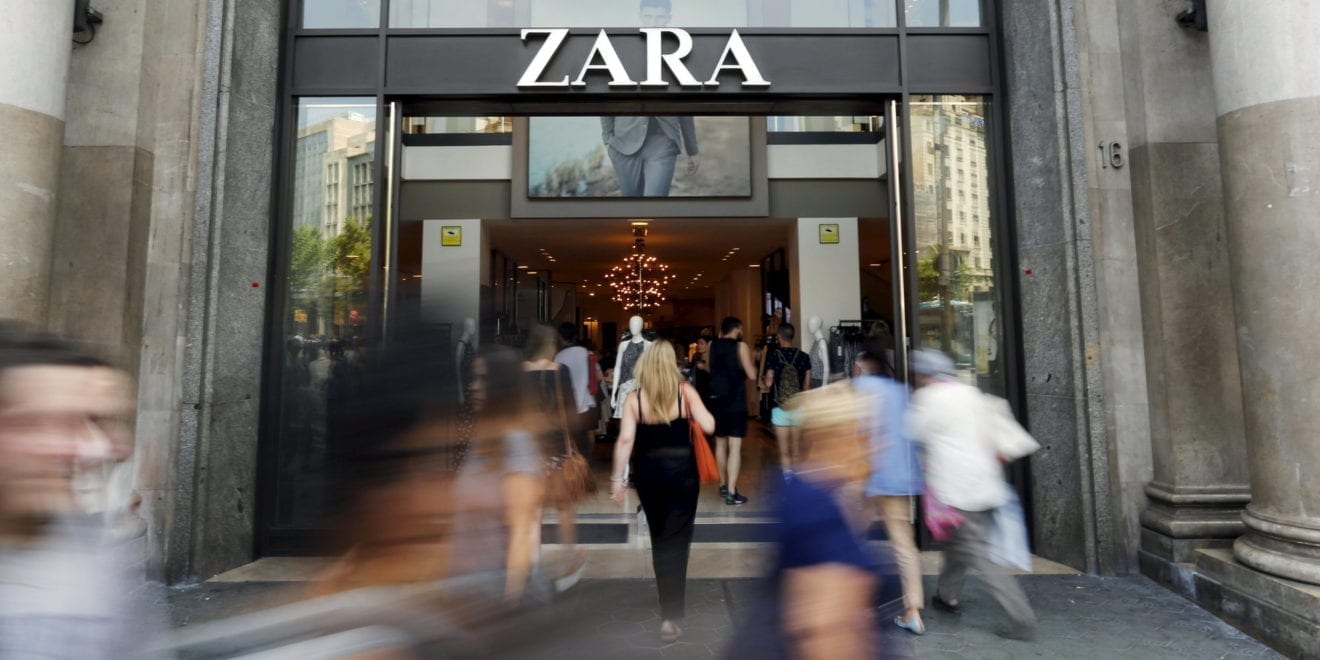
    Spanish fast-fashion retailer Zara has installed a self-service kiosk at one of its stores to provide a flexible shopping experience for online customers.

    Springwise.com reports that when a package arrives to the kiosk, the customer receives a notification and can go to the location to pick up their item at their convenience. The CleverFlex kiosk, provided by Estonia-headquartered technology company Cleveron, has the capacity to store up to 4000 parcels – double the number of the Walmart’s pickup towers.

    The CleverFlex has a sleek white exterior and a modular design that allows retailers to customise its height and width according to their aesthetic preferences, and even being able to hide it behind a wall. The kiosks have been created to further streamline the customer online shopping experience, with the CleverFlex retrieving the correct parcel for a shopper in a matter of seconds.

    The creation of the CleverFlex kiosk “is another step in simplifying the connection between a retailer’s online entity and physical stores,” observes Springwise.

    “CleverFlex also has some some self-learning capabilities as it can remember parcel traffic peak times and predict user activity based on past data to optimise its workflow.”

    Self-service kiosks are increasingly popular across many industries, with deliveries that go directly to a smart locker streamlining the pick up process for the apartment residents and a pay-as-you-go pantry placed within an office both popular examples.

  • Walmart US’s online sales soars by 50 per cent

    Walmart US’s online sales soars by 50 per cent

    Walmart’s online sales in the US soared 50 per cent during the latest quarter, described as a stellar rate of increase which shows Walmart is growing its digital market share at pace.

    The world’s largest brick and mortar retailer recorded a revenue rise of 4.2 per cent, which equates to a US$5 billion increase in sales over the three months. Walmart US led the way with a 4.3 per cent increase in revenue and a 2.7 per cent increase in comp-store sales.

    GlobalData Retail MD Neil Saunders described that result as “impressive” and underscoring the company’s determination to not only defend its leading position but to extend it.

    That most of the online growth came from the core Walmart.com operation rather than from new additions, highlights the success of initiatives such as free two-day shipping and an expanded online selection, which now encompasses over 70 million products, said Saunders.

    “From GlobalData Retail’s figures, it is clear that Walmart is not only getting existing customers to spend more online but is also attracting new shoppers.

    “With a solid e-commerce base, Walmart is now looking to deepen its offer and experience in a select number of categories. This is one of the reasons it has struck deals with partners like Lord & Taylor in fashion and is building relationships with premium brands like KitchenAid and Bose.

    Walmart’s longer-term aim is clear: it wants to become the go-to online destination for both everyday and specialty items. The push into higher-end products should also help to bolster online margins.”

    Strong traffic

    However, although online has been a success story for Walmart, the second reason for its US growth is the performance of stores. Traffic held up well across the US, with price cuts helping to keep customers loyal, especially in categories like grocery. Some modest improvements to store layout and design have also aided conversion rates, particularly in non-food categories.

    “For a retailer of its size and scale, Walmart’s ability to keep its stores growing is impressive,” said Saunders.

    While he cautioned that some of the US sales success could be attributed to post-hurricane spending and recent acquisitions, the core business is performing well, with a broad pickup in both customer traffic and spending across all of Walmart’s channels.

    Sales outside the US also picked up. He said the Mexican operation is benefitting from investments in e-commerce, including an expanded online offer. Revenue in Canada has increased, mainly thanks to sharper pricing and expansion of the number of locations offering grocery pickup.

    In the UK, Asda posted its second consecutive quarter of comparable growth. “While this result comes off the back of a long run of weak performance and does not yet constitute a return to sustainable growth, we believe the investments made in price, offer, and service are starting to pay dividends.”

    Saunders said the latest results show Walmart is a retailer on the front foot.

    “Admittedly, the investments it is making in price and e-commerce are taking their toll on the bottom line, but they are also positioning the company for significant future success.”

  • JD.com surprises with first profitable quarter

    JD.com surprises with first profitable quarter

    JD.com profit soared 50 per cent after a 39 per cent increase in sales during the Chinese online retailer’s latest quarter.

    Its unaudited results for the three months to the end of September show revenue of RMB83.7 billion (US$12.6 billion), with a record 50.3 per cent surge in gross profit to RMB13 billion. Non-GAAP gross profit was RMB12.8 billion, up 51.9 per cent.

    Active customer accounts increased by 34 per cent to 266.3 million in the 12 months to September 30.

    Chairman/CEO Richard Lio says the company is building robust product content and enhancing user engagement with innovative tools that enable brands to launch highly targeted online marketing programs.

    “The scale economies of our model are becoming clearer with every quarter,” says CFO Sidney Huang. “Looking ahead, we will continue to prioritise investments in technology and leading R&D talent as we execute on our vision to revolutionise China’s retail industry.”

    While releasing its third-quarter figures, JD.com also listed its latest business developments…

    In October, JD and Tencent expanded their partnership with the launch of a marketing initiative that integrates insights on consumer behaviour from Tencent’s social-media platforms with online and offline shopping data from JD and its brand partners. As well as enabling more precise target marketing, the move benefits consumers by offering them wider access to sales promotions and preferred discounts.

    Strategic partnerships

    During the past three months, JD.com also formed strategic partnerships with Baidu, iQIYI, NetEase, Sogou and Qihoo 360 with their big-data resources, massive user bases and AI algorithm technologies.

    JD also continued to strengthen its position among top-tier international brands, expanding its partnership with high-fashion brand Armani with the opening of official online stores for Armani Exchange and Emporio Armani.

    JD Worldwide also launched flagship stores for such companies as Reckitt Benckiser, Spectrum Brands and Tiger, while its new Toplife platform attracted marquee brands like Dyson, La Perla, Rimowa (LVMH) and Trussardi.

    During the quarter, JD Logistics test-launched an unmanned sorting centre, the first of its kind in the logistics industry. JD also signed agreements to lay the groundwork for the rollout of China’s largest drone network.

    In September, JD Logistics expanded its environmentally friendly logistics and packaging campaign, working with brands including  Johnson & Johnson, Kimberly-Clark, Lego, L’Oreal, P&G, Nestle, Unilever, Watsons and Wrigley. The aim is to minimise environmental impact by cutting back on packaging materials.

    Customer demand

    JD also enhanced its fresh product offerings during the quarter to meet customer demand. In July, it launched the Canadian Fresh Food Pavilion, the first country pavilion for fresh products on the JD.com platform. Live lobsters from Canada can now be delivered to customers’ doorsteps in China in as little as 48 hours. During JD’s Super Canadian Day, 140,000 lobsters were sold within 24 hours.

    In September, JD.com, JD Finance, Central Group and Provident Capital announced agreements to establish two JVs in Thailand covering e-commerce and fintech services, with an aggregate investment of $500 million. JD.com is providing its expertise in technology, e-commerce and logistics while Central Group is drawing on its retail store network, brand and merchant relationships, and retail behaviour insights from its loyalty program.

    In October, JD and Sam’s Club launched a promotion offering customers discounted bundled memberships for Sam’s Club and the JD Plus paid-for membership service.

    By the end of October, JD.com JV New Dada had partnered with 146 Walmart stores and 301 Yonghui stores, as well as many other supermarkets and grocery stores, to provide online fresh grocery shopping with one-hour home delivery.

    At the end of September, JD.com had 405 warehouses and provided scheduled delivery services in 250 Chinese cities. It had about 160,000 merchants on its online marketplace, and 137,975 full-time employees.

  • Vietnam’s richest woman wants a Walmart connection on her airline

    Vietnam’s richest woman wants a Walmart connection on her airline

    The founder and CEO of Vietnamese budget carrier VietJet has said she wants to sell products from the world’s biggest retailer Walmart on her airline.

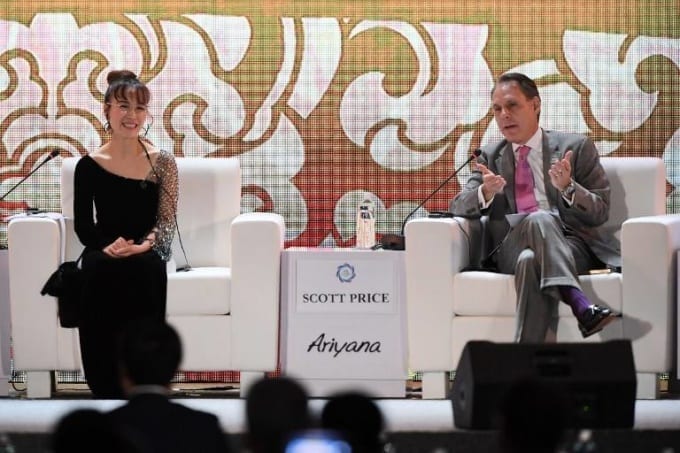
    Nguyen Thi Phuong Thao, the first and only female billionaire in Vietnam according to Forbes magazine, presented the idea to Scott Price, executive vice president of Global Leverage for Walmart International, at the ongoing Asia Pacific Economic Cooperation (APEC) Summit in Vietnam’s central city of Da Nang.

    “We call ourselves a consumers’ airline,” Thao said on Thursday at the APEC CEO Summit.

    “The idea to work with Walmart is an example of VietJet’s customer-oriented approach, emphasizing our philosophy of providing more convenient services for Vietnamese clients in the near future,” she said.

    She also spoke about the role of technology in trade and business, suggesting a tech connection with Walmart for VietJet’s passengers.

    Price said the company is willing to work with VietJet as it has yet to open any stores in Vietnam, providing there is demand for its products.

    “We plan to expand further,” Thao said. “Vietnamese airlines play an important role in connecting Southeast Asia. In the near future we’ll collaborate with more airlines, such as Korea’s ASIANA.”

    Vietjet already has deals with Quatar Airway and Japan Airlines, and is in talks with an airline in the U.S. and another in Europe.

    “Thanks to the connections that VietJet is building, passengers can fly anywhere they want to around the world,” Thao said.

    The CEO Summit has gathered more than 2,000 local and foreign businesses and is one of the most important events at the APEC Summit. It is hosting leaders from the 21 Pacific Rim nations and thousands of businesspeople, including Facebook COO Sheryl Sandberg, UPS CEO David Abney, and chairman and CEO of J.P. Morgan Asia Pacific Nicolas Aguzin.

    Last week, Thao secured 55th spot on the World’s 100 Most Powerful Women 2017 ranking, jumping seven places from the previous year, and was the only Vietnamese national named on the list compiled by Forbes.

    According to the magazine, Thao has an estimated net worth of $1.93 billion, eclipsing the figure of $1.2 billion it calculated in March.

    Thao launched VietJet in 2011. Her “bikini” airline, nicknamed after its unique yet controversial promotion scheme of putting female crew in bikinis on some flights, now offers 300 flights a day, or more than 40 percent of the country’s flights, with a fleet of 45 jets.

    In May, It is reported that the Hanoi-based VietJet Aviation Joint Stock Co. was in talks to become the first Vietnamese company to list on an overseas stock exchange.

    “We’ve been approached by some foreign stock exchanges including London, Hong Kong and Singapore, which expressed their interest in our stock,” Thao was quoted as saying in the report.

    According to Bloomberg, VietJet reportedly received shareholder approval in April to boost its foreign ownership limit to 49 percent from 30 percent.

    She told Bloomberg in an interview a year ago that she has plans to make VietJet a global airline. “We want to make VietJet the Emirates of Asia.”

  • Walmart, Google in voice shopping deal

    Walmart, Google in voice shopping deal

    Walmart is diving into voice-activated shopping with Google to offer hundreds of thousands of items for voice shopping through Google Assistant.

    The capability will be available in late September.

    It’s Google’s biggest retail partnership – and the most personalised shopping experience it offers – as it tries to broaden the reach of its voice-powered assistant Home speaker. It underscores Walmart’s drive to compete in an area dominated by Amazon’s Alexa-powered Echo device.

    “Voice shopping is becoming a more important part of everyday shopping behaviour,” said Marc Lore, CEO of Walmart’s US e-commerce business.

    The voice-activated devices are becoming more mainstream as they become more accessible. Walmart has said Google’s investment in natural language processing and artificial intelligence will help make voice-activated shopping even more popular.

    Lore said the personalisation of the partnership means people can shout out generic items like milk, bread and cheese, and Google Assistant will know exactly the brands and the size that the user wants.

    Google introduced shopping to Home in February, letting people use voice to order essentials from more than 40 retailers like Target and Costco under its Google Express program. But that was far behind the Echo, available since late 2014.

    Walmart, which has more stores than any other retailer and the largest share of the US grocery market, is also working hard to close the gulf online between itself and Amazon.

    To be more competitive, Google Express is scrapping the $US95 ($A120)-a-year membership starting on Wednesday, allowing shoppers to get free delivery within one to three days on orders as long as the purchase is above each store’s minimum.

    Walmart says it will be tapping its 4,700 US stores and its fulfilment network next year to offer more kinds of customer experiences using voice shopping. For example, shoppers can tell Google Assistant they want to pick up an order in a store.

    Lore said the company wants to make voice shopping as easy as possible.

    “That’s why it makes sense for us to team up with Google. We know this means being compared side-by-side with other retailers, and we think that’s the way it should be,” he wrote in a corporate blog post.