Tag: Walmart

  • Amazon India proposes $500m food venture

    Amazon India proposes $500m food venture

    Amazon India has applied to the government to invest US$500 million in a wholly owned venture that will allow the US eCommerce giant to stock locally produced food items and sell them online.

    If successful, it would become the first foreign retailer to enter the segment.

    Amazon already has an eCommerce marketplace in India, but while 100 per cent overseas capital is permitted for such platforms, they cannot sell products of their own. Last year, the government allowed for 100 per cent foreign investment in the retailing of processed foods made in India.

    Amazon has filed its application with the Department of Industrial Policy & Promotion (DIPP), which handles foreign investment in retailing and e­Commerce. The company plans to invest $500 million over five years and could start selling locally produced food items within six months of obtaining approval, says an insider.

    “We are excited by the government’s continued efforts to encourage foreign direct investment in India for a stronger food-supply chain,” says an Amazon spokesperson. “We have sought an approval to invest and partner with the government in achieving this vision.”

    Only Indian grocery delivery companies Big­Basket and Grofers have applied under
    the category, prompting the government to invite companies including CP Foods (Thailand), Heinz, Nestle and Walmart to provide feedback and investment plans.

    This followed the minister for food-processing industries Harsimrat Kaur Badal visiting London with a team of officials last year to meet representatives of such companies as Cobra Beer, Harrods, Marks & Spencer, Sainsbury’s and Tesco to drum up support for the policy.

    Amazon’s current online platform is open to Indian-­owned entities, and similar platforms are run by Flipkart, the country’s largest eCommerce company, and Snapdeal.

  • Stores push deals in bid to lure holiday shoppers

    Stores push deals in bid to lure holiday shoppers

    Nearly 156 million people — or 66 percent of Americans — plan to or are considering taking advantage of Saturday sales to complete their holiday gift lists, according to a survey released Friday by the National Retail Federation and Prosper Insights & Analytics. The survey found that more people said they planned to shop on Saturday than those who aimed to shop over Thanksgiving weekend in an earlier survey.

    Still, given the quirk in the calendar that makes this weekend the last full weekend before Christmas, retailers including Best Buy, Gap and J.C. Penney, have set an earlier deadline to order holiday gifts this year, according to StellaService, which tracks online services at retailers. Wal-Mart, along with others, is encouraging online shoppers to pick up their merchandise at the store.

    Target will be offering last-minute shoppers deals that are good only for a day on certain in-demand products like children’s sleepwear and fragrance sets.

    Still, plenty of shoppers plan to take their time.

    Christine Bunker Tobia of Queens says she mostly shops at Macy’s but likes to wait to get the best deals. She’s been stopping by Macy’s New York Herald Square store often to check the prices.

    “I’m looking for a special sale,” she said last weekend. “I may wait another week.”

  • Metro China changes track

    Metro China changes track

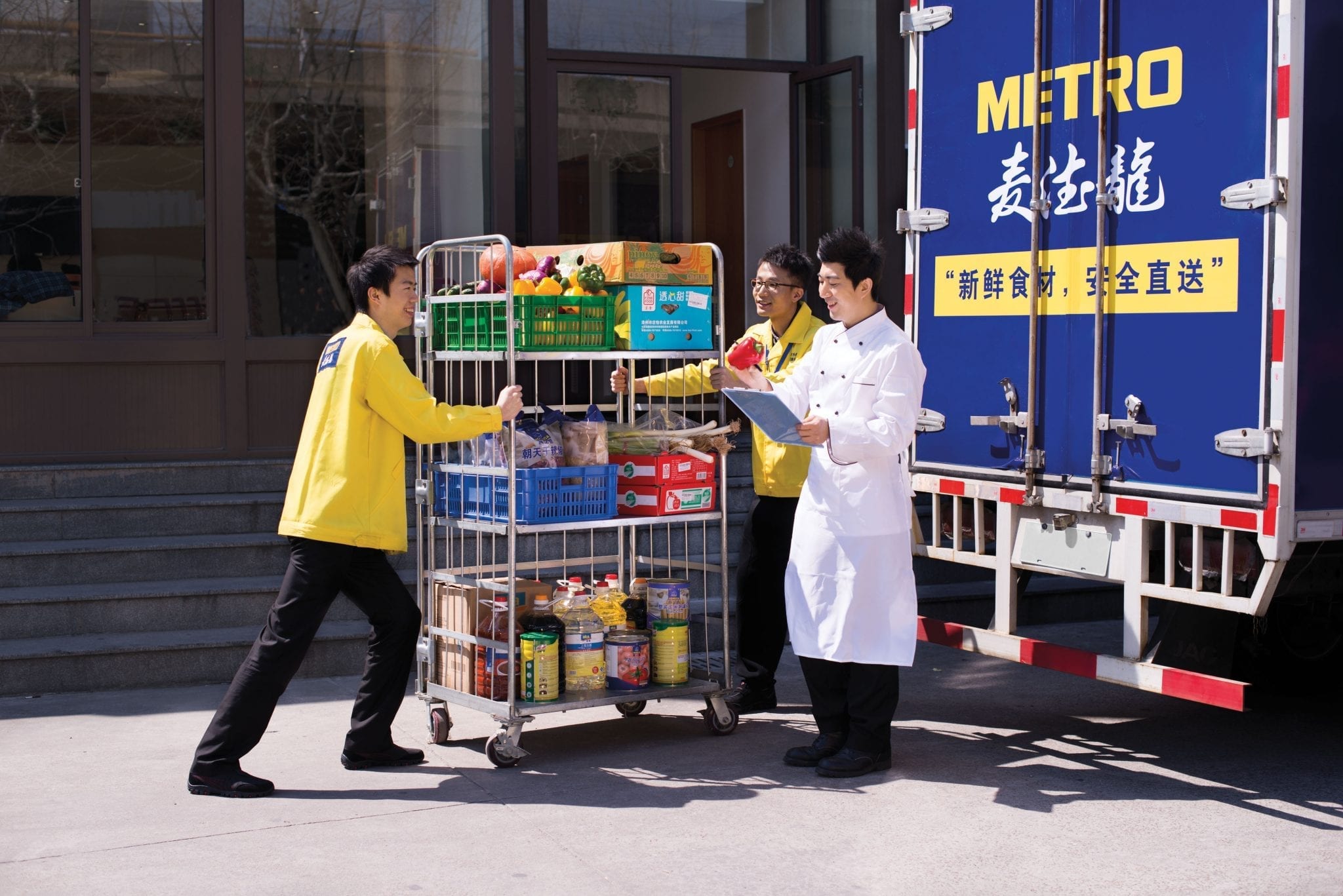
    Surging property costs and a changing consumer landscape have forced German retail giant Metro Group to change its approach to the market in China.

    In the 20 years since it opened its first Metro China wholesale store in Shanghai, the retailer has had a rigid policy of building its Metro Cash & Carry stores rather than renting.

    Now, in Wuhan, the capital of central China’s Hubei province, Metro is trying to redevelop one of its stores into its first shopping complex.

    “We are partly turning to asset-light from asset-heavy,” says expansion director and head of project development for China Geoffrey Guo. Metro Jinjiang Cash & Carry, a JV with Shanghai-based Jinjiang Group, has partnered with a local developer to build the Wuhan project, and has transferred property ownership to the developer. The plan is to expand the outlet into a 167,000 sqm German-themed town comprising a mall, office buildings and apartments.

    The complex will include a smaller cash-and-carry shop, and Metro will buy back the store ownership. Meanwhile, it will participate in running the complex and try to introduce German brands through tenant leasing.

    “Some of our land used to be in remote areas, but after a decade or two it became the city centre,” says Guo, “so we need to negotiate with local governments and change our plan.”

    City plans

    As well as Wuhan, Metro China is considering redeveloping some of its stores in Shanghai and other cities into five-star hotels, office buildings or neighbourhood centres.

    Metro has grown slowly in China compared to its peers, opening 86 stores in 58 cities so far, about two-thirds of them owned by the company. In comparison, US-based Walmart has 423 stores in China.

    With the rise of eCommerce, the German retailer has started renting more stores in the past few years to enable quicker expansion. It also launched its first two My Mart convenience stores in Shanghai this year.

    “The demand for supermarkets is not so strong in places like Shanghai, where convenience stores are thriving,” says Guo.

    My Mart offers Metro’s exclusive imported products, private-label lines and fresh fruits, as well as about 100 ready-to-eat items. Metro plans to roll out the concept to other cities in China through franchise.

    While Guo says Metro’s focus will always be its wholesale stores, the company is seeking to open more stores in western Chinese cities such as Xi’an and Zhengzhou.

    Metro’s sales in China climbed 17.4 per cent to €2.662 billion (US$2.8 billion) in the year to September 2015.

  • Across China, Walmart Faces Labor Unrest as Authorities Stand Aside

    Across China, Walmart Faces Labor Unrest as Authorities Stand Aside

    In a one-man war room in his apartment, a laid-off Walmart employee named Wang Shishu was tapping out a message on his phone to a group of workers and plotting his next move.

    Over the past few months, Mr. Wang, 56, has helped organize a national movement in China against Walmart. Labor strikes have hit stores in the south simultaneously. There have been boycotts in the northeast. And here in Shenzhen, where Walmart opened its first outlet in China two decades ago, employees have filed a lawsuit demanding back pay.

    “We want a snowball effect,” he said in the booming baritone of a street preacher. “We want everybody to know what to do next.”

    As the Chinese economy has slowed, strikes and labor protests have broken out across the country, mostly scattered episodes targeting a single factory or business. The government has responded aggressively, detaining activists and increasing censorship to keep unrest from spreading.

    But activism against Walmart’s more than 400 stores in China in recent months has followed a different pattern: workers in several cities agitating against the same company, bypassing official unions controlled by the Communist Party and using social media to coordinate their actions — while the authorities largely stand aside.

    Across China, Walmart employees have raised their fists at protests, chanting, “Workers, stand up!” They have appealed to local officials with patriotic fervor, invoking the struggles of Mao Zedong against foreign imperialists. They have posted screeds online against unkind bosses and “union puppets.”

    In doing so, the Chinese work force of the world’s largest retail chain has put the ruling Communist Party in an uncomfortable position, publicly testing its Marxist commitment to defend the working class and pitting that against its fear of independent labor activism.

    Ever since the Solidarity trade union helped topple Communist rule in Poland, Beijing has sought to prevent the emergence of a nationwide labor movement, suppressing efforts by workers to organize across industries or localities.

    But the authorities appear to be hesitating in the case of Walmart, whose workers have complained of low wages and a new scheduling system they say has left them poorer and exhausted.

    In recent months, as many as 20,000 people, about a fifth of the company’s work force in China, have joined messaging groups set up by Mr. Wang and other activists on WeChat, a popular app. In these forums, they vent about company policies, share protest slogans and discuss plans to coordinate demonstrations for maximum effect.

    Mr. Wang, a former customer service representative whom Walmart has fired twice, spends his days babysitting his granddaughter and trading messages with workers across the country, often as late as 2 a.m.

    “What they’re doing is inhumane,” he said. “I want Walmart to return to the sympathetic company it used to be.”

    Eli Friedman, a labor scholar at Cornell University, said the Walmart movement was “probably the most substantive example of sustained, cross-workplace, independent worker organizing we’ve ever seen in China’s private sector.”

    The government appears to be keeping a distance because it is worried about provoking a backlash, or about acting on behalf of a prominent American company against Chinese workers at a time when nationalism in China is rising.

    But by doing little or nothing, it risks encouraging disaffected workers elsewhere, especially at the growing number of national chain businesses with operations across China. Already, workers at Neutrogena stores and China Unicom, a state-owned telecom operator, have used similar tactics, while avoiding serious punishment.

    “We can only expect that online organizing will continue to break down local barriers,” said Keegan Elmer, a researcher for China Labour Bulletin, an advocacy group based in Hong Kong.

    The retail sector in particular has become a hotbed of worker activism. The government wants to shift growth from manufacturing to service industries, but many new jobs at restaurants, hotels and stores are low-paying or part-time.

    From July through September, there were 124 strikes and protests at service-sector firms, about double the number last year, outpacing episodes in manufacturing for the first time since at least 2011, according to China Labour Bulletin.

    Chinese law requires businesses to establish labor unions, but they are almost always controlled by management, and companies generally use the unions to contain worker activism. In the face of labor strife, some businesses have offered back pay, bonuses and other benefits to workers.

    But others, concerned that labor activism could force costly concessions, have resorted to tougher tactics, retaliating against those who help organize protests. At Walmart, some of the most vocal workers have been deprived of raises, reassigned, or in some cases fired, according to interviews with more than a dozen employees.

    At one store in Zhongshan, west of Shenzhen, a labor activist said a supervisor photographed her in the bathroom as retribution for speaking out. She asked not to be identified for fear of further antagonizing her bosses.

    Much of the discontent stems from a new scheduling system that Walmart put in place this summer as a way, the company said, of giving workers more flexibility. Workers have argued that it has resulted in cuts to overtime pay and excessively long shifts, and some say they were coerced into signing new contracts agreeing to the system.

    Walmart denied that it had treated its employees unfairly or had pressured them to accept the new schedules. Rebecca Lui, a spokeswoman, said that the vast majority of its work force supported the new system, and that employees were free to keep their old schedules.

    “Our associates are our most valuable asset,” she said in a statement.

    Zhai Xiuhua, a former greeter at a Walmart store in Shenzhen, said she was fired in September after leading a fight against the new scheduling system.

    “I told them, ‘Even if you put a knife to my neck, I’ll never agree,’” she recalled at her home, where her uniform and identification badge — No. 14470 — still hang on the wall. Ms. Zhai, worried about medical bills, says she now hopes to find work in her hometown in the southwestern province of Sichuan.

    Walmart, which has resisted unionization at its thousands of stores across the world, was forced by the government in 2006 to establish branches of the Communist Party-controlled All-China Federation of Trade Unions for its roughly 100,000 Chinese employees, part of a broader push by the party to unionize foreign businesses.

    But union branches at many Walmart stores are under the thumb of store managers, and higher-level union officials appear torn about how to respond to complaints from workers like Ms. Zhai.

    While union officials here in Guangdong Province have criticized Walmart for not seeking governmental approval for the new scheduling system, they have not taken more forceful action or helped mobilize workers.

    Labor activists at Walmart have cited the ideals of President Xi Jinping and the Communist Party’s history of protecting workers, and experts said they appeared to be benefiting from a belief among some officials that the influence of foreign companies such as Walmart should be curtailed.

    “If the Chinese authorities try to suppress the workers on behalf of Walmart,” said Wang Jiangsong, a Chinese labor scholar, “it will hurt the country’s image.”

    When Walmart opened its first store in China in 1996, workers rushed to snap up jobs that paid more than those at Chinese competitors.

    Now, some employees say, a Walmart job does not pay enough to comfortably support a family, with wages hovering around minimum wage, or about $300 a month. While Walmart has led a high-profile campaign in the United States to raise pay, salaries in China have remained largely stagnant, workers said, barely keeping pace with inflation.

    Walmart has struggled to keep up with the fast-changing tastes of Chinese consumers and tried to re-energize its business by making investments in online retailers.

    But the continuing labor unrest poses a potential hurdle.

    You Tianyu, 45, a customer service employee at a Walmart store in Shenzhen, caught the attention of her supervisors in August when she wrote a letter to the president of Walmart, Doug McMillon, to complain about the company’s efforts to silence aggrieved workers.

    Ms. You said her bosses now harassed her daily because she spoke out, and she has received a diagnosis of anxiety and depression.

    She spends most of her nonworking hours rummaging through a mess of worker manifestoes, union laws and pay slips in her tiny apartment, hoping to find a new line of attack against Walmart.

    “I’m on the verge of collapsing,” she said. “I don’t know how much longer I’ll last.”

  • Walmart Invests $50M In JD.Com’s O2O Logistics Services App New Dada

    Walmart Invests $50M In JD.Com’s O2O Logistics Services App New Dada

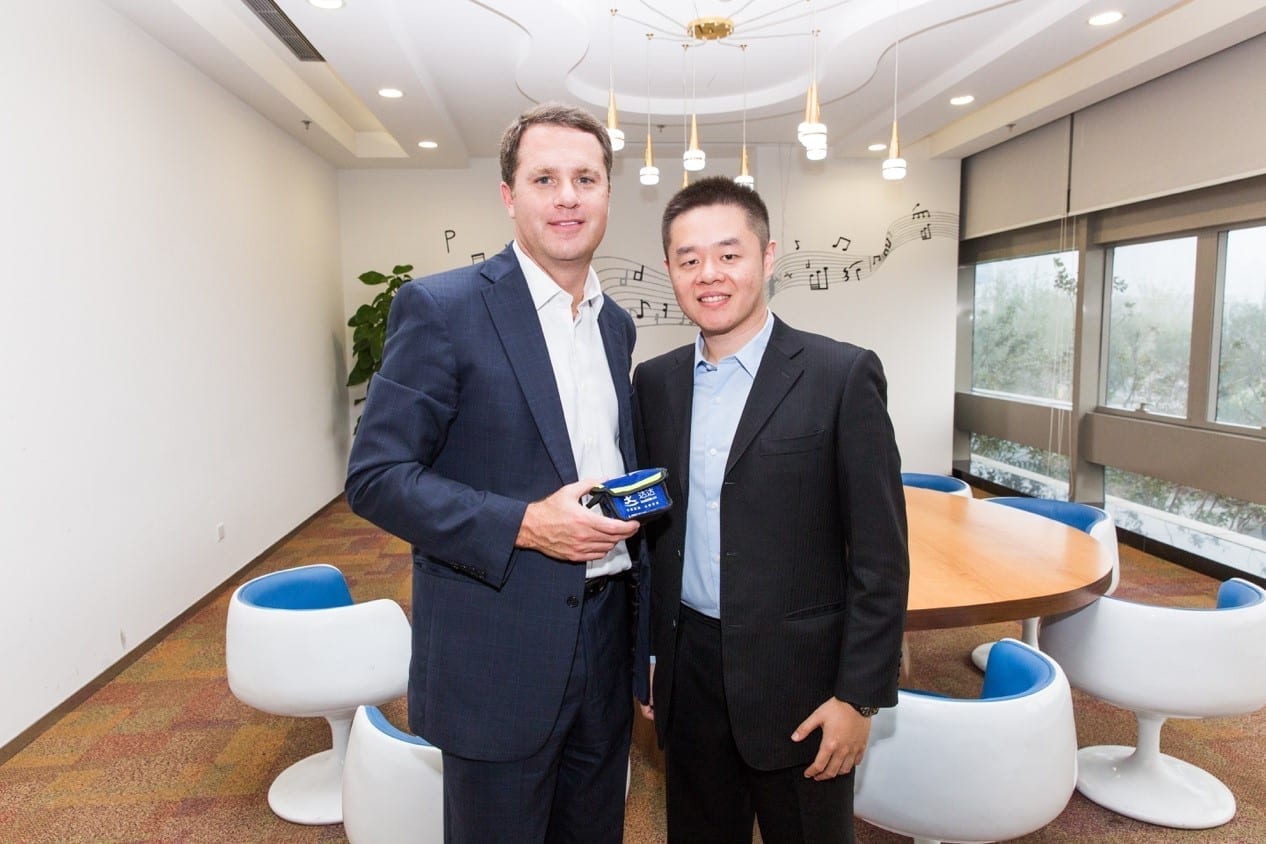
    Walmart has made a US$50 million strategic investment in New Dada, formerly known as Dada and controlled by JD.com Inc., in another step deepening an existing partnership between the global retail giant and China’s second largest e-commerce firm.

    New Dada was created in April from a merger between JD.com’s O2O (online-to-offline) unit and Dada Nexus Ltd., a venture-backed Uber-like mobile app that focuses on providing last mile logistics services.

    “Our alliance with JD and cooperation with New Dada will enable seamless shopping to millions of customers across China,” says Walmart CEO, Doug McMillon.

    The O2O logistics services provider New Dada currently has more than 25 million registered users, and provides local on-demand delivery capabilities with 2.5 million crowd-sourced deliverers across more than 300 cities in China.

    New Dada currently offers customers two-hour delivery on groceries ordered from Walmart stores to customers within a 3-kilometer radius of more than 20 Walmart stores in China. The number of Walmart stores offering two-hour delivery is expected to double by the end of the year.

    Officially launched in 2014, Dada operates through Imdada.cn and last completed a US$300 million series D round of financing from DST Global, Sequoia Capital and others in January.

    It previously raised three rounds of venture funding from DST Global, Sequoia Capital, Greenwoods Investment Management and other undisclosed investors.

    In April, JD.com paid US$200 million in cash and injected JD Daojia assets into Dada in exchange for a 47.4% stake in the newly merged Dada.

  • Wal-Mart Boosts Stake in JD.com, Expands Further in China

    Wal-Mart Boosts Stake in JD.com, Expands Further in China

    Wal-Mart Stores Inc. has reportedly increased its stake in Chinese eCommerce website, JD.com Inc., to 10.8% from 5.9%, aiming to grab more market share in the world’s largest online market. Shares of JD.com jumped 7.5% in after-hours trading following the news.

    The move comes nearly four months after Wal-Mart inked a deal with JD.com. to sell its Chinese eCommerce business, Yihaodian to JD.com in exchange for a 5% equity stake in the company.

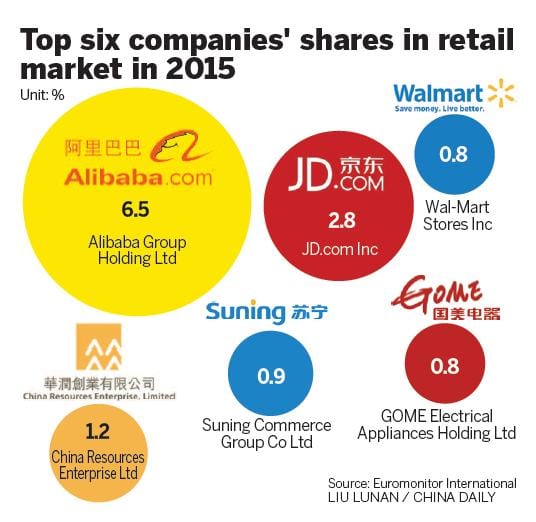
    JD.com is the second-largest online retailer in China after Alibaba Group Holding Ltd. in terms of market cap. The expanded deal with JD.com is expected to offer Wal-Mart a better chance of competing in the cut-throat retail industry in China and expand its reach in the country. Evidently, it expects to generate 25% of global retail growth from the region over the next five years. Further, this will benefit Wal-Mart with JD.com’s huge customer base and its same-day delivery network.

    WAL-MART STORES Price and Consensus

    We note that Wal-Mart has been struggling of late to expand its reach in China. The retailer opened its first store in the country in 1996, but only has about 430 stores there at present. The company has stated various reasons for the sluggish business operations in the region.

    In China, the company has long been dealing with food safety scandals despite trying to maintain high food safety standards. Wal-Mart China too has been facing significant pressure from government austerity measures and deflation. Further, the company faces problems in understanding discerning Chinese consumers as their buying decisions aren’t always price driven.

    Apart from expansion in China, this Bentonville, AR-based company is leaving no stone unturned to acquire a stake in the online business. In this regard, it continues to make huge investments in eCommerce initiatives, including acquisitions. Recently, Wal-Mart completed the acquisition of eCommerce company, Jet.com, Inc., which marked a huge step forward in its quest to dominate ecommerce king, Amazon.com, Inc. Wal-Mart is also in talks to acquire a stake in India’s largest eCommerce firm, Flipkart Online Services Pvt., in order to expand in the fast-growing online retail market.

  • Wal-Mart Stores mulls Flipkart ownership

    Wal-Mart Stores mulls Flipkart ownership

    Wal-Mart Stores is seeking to pay as much as US$1 billion for a share of India’s Flipkart Online Services to counter Amazon’s foray into the fast-developing eCommerce market.

    Under a proposed agreement, reported by both Bloomberg and the Wall Street Journal, the world’s largest retailer would take a minority Flipkart ownership. Insiders say the terms have not yet been finalised for the deal, which follows on the heels of Amazon CEO Jeff Bezos announcing plans to spend a further $3 billion in India.

    India’s largest online retailer, Flipkart is worth about $16 billion, according to research firm CB Insights.

    India’s online market will expand at an average of 45 per cent annually in the next four years and reach $28 billion by 2020, according to estimates from Kotak Institutional Equities.

    Wal-Mart first established a retail joint venture in India with Bharti Group, which runs the country’s largest telecommunications organisation, Bharti Airtel. Eventually Wal-Mart sold its stake to its partner.

    Meanwhile, Amazon has been making major investments in infrastructure and partnerships in India, so far costing about $2 billion.

    Wal-Mart last month agreed to buy US eCommerce company Jet.com for about $3.3 billion, and put founder Marc Lore in charge of the combined company’s online business.

  • Private-label deal for E-mart Korea

    Private-label deal for E-mart Korea

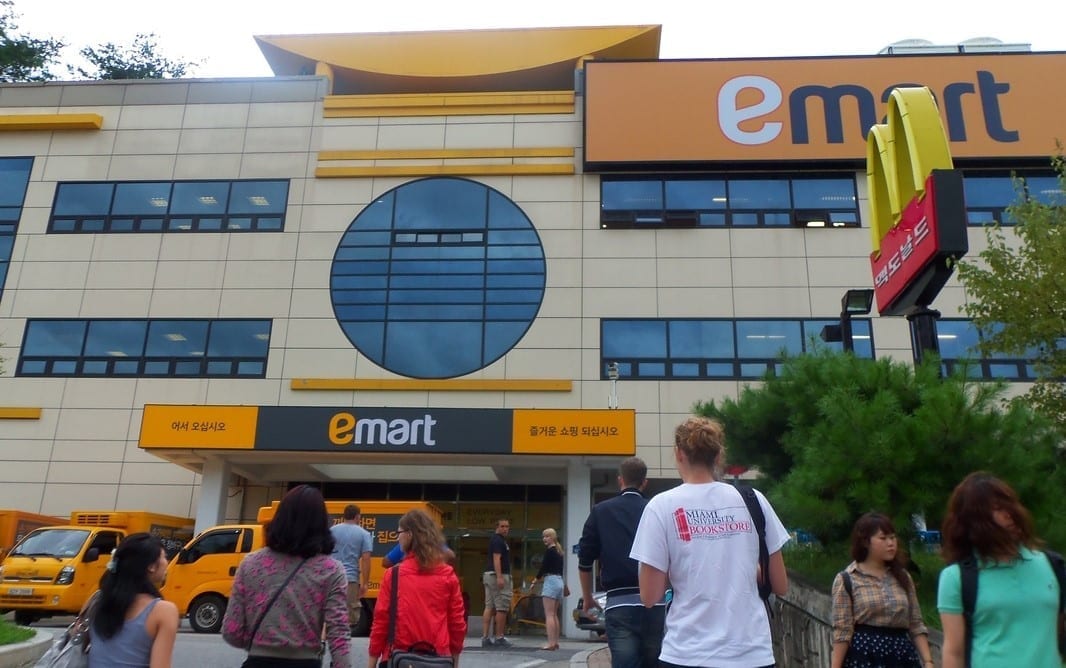
    Discount seller E-mart Korea has signed an agreement to supply its private-label items to Metro China.

    It is introducing four items from its No Brand range, to be sold from next month. It is the first time for E-mart to export to an overseas offline store.

    E-mart’s private-label products already sell in Mongolia and Vietnam. Sales of its No Brand range at its Ulaanbaatar branch, which opened last month, have already reached 600 million won (US$533,000), accounting for about 7 per cent of total sales. No Brand contributed 3 per cent of sales at its Vietnamese outlet, which opened in December.

    Introduced in April last year with nine items, No Brand now has more than 300 products, from butter cookies to car window wipers, and posted 63.8 billion won turnover in the first half of this year.

    Metro is a German retailer that is the third-largest franchise globally following Walmart and Carrefour. It has more than 2200 outlets in 33 countries, with 88 in China.

  • Wal-Mart’s deal with China’s JD.com may be copied by others

    Wal-Mart’s deal with China’s JD.com may be copied by others

    When the world’s largest retailer makes a move, other retailers pay attention. Wal-Mart Stores Inc.’s decision to enter into a strategic alliance with the second largest Chinese e-commerce retailer, JD.com Inc., may inspire others to seek out local partnerships to make inroads in this major market.

    “For some in the industry, this will be a ‘Good Housekeeping’ seal of approval,” said Christian Magoon, chief executive officer of Amplify Investments, which recently launched the Amplify Online Retail ETF IBUY, -0.52% .

    “If Wal-Mart is comfortable and, with their scale, couldn’t crack the Chinese market on their own, it will be a case study for others. It could be a bellwether moment to see if this strategic partnership is the best model.”

    Wal-Mart announced Monday that it will sell its Yihaodian website to JD.com and receive about 5% of the company’s total shares outstanding. Wal-Mart WMT, +0.51% will open a flagship Sam’s Club China store on JD.com JD, +0.33%  and leverage the online retailer’s supply chain assets.

    Wal-Mart has had problems growing in the Chinese market, amid food regulatory and food safety controversies.

    “Wal-Mart was trying to go on its own and I think this is kind of a throwing in the towel,” Magoon said. At the same time, it is an acknowledgment that Wal-Mart needs to grow in China to be in a good position for the future. “If Wal-Mart is going to compete, they’re going to have to go big,” Magoon said.

    To compete in China, retailers have to go online, said Charlie O’Shea, Moody’s lead retail analyst.

    “JD.com has a solid platform online in China, and we know China’s online business is expanding rapidly because they’re not at the level of brick-and-mortar like the U.S.,” said O’Shea.

    JD.com also has a proprietary system that allows them to control the “last mile” with customers, or the final leg of the delivery process that gets merchandise into the buyer’s hands. O’Shea describes the last mile as “critical.”

    Analysts at UBS view the deal as a “good move on many levels,” though Wal-Mart’s share price may not reflect that.

    “While this deal isn’t a needle mover for Wal-Mart shares, it shows the retailer can be shrewd when the opportunity presents itself,” the bank wrote in a Monday note.

    UBS believes there are more opportunities like this one in the retailer’s portfolio, which currently spans 28 countries.

    “Wal-Mart has identified China as its highest potential international growth market,” they wrote. “We believe it remains fully committed to this geography, despite the sale.”

    UBS rates Wal-Mart stock at neutral with a price target of $67.

    Wal-Mart shares were up 0.4% in Tuesday trading, and up 16.5% for the year so far. JD.com shares are down 0.4% in Tuesday trading, and down 35% for the year so far. The S&P 500 is up 2.1% for the year to date.


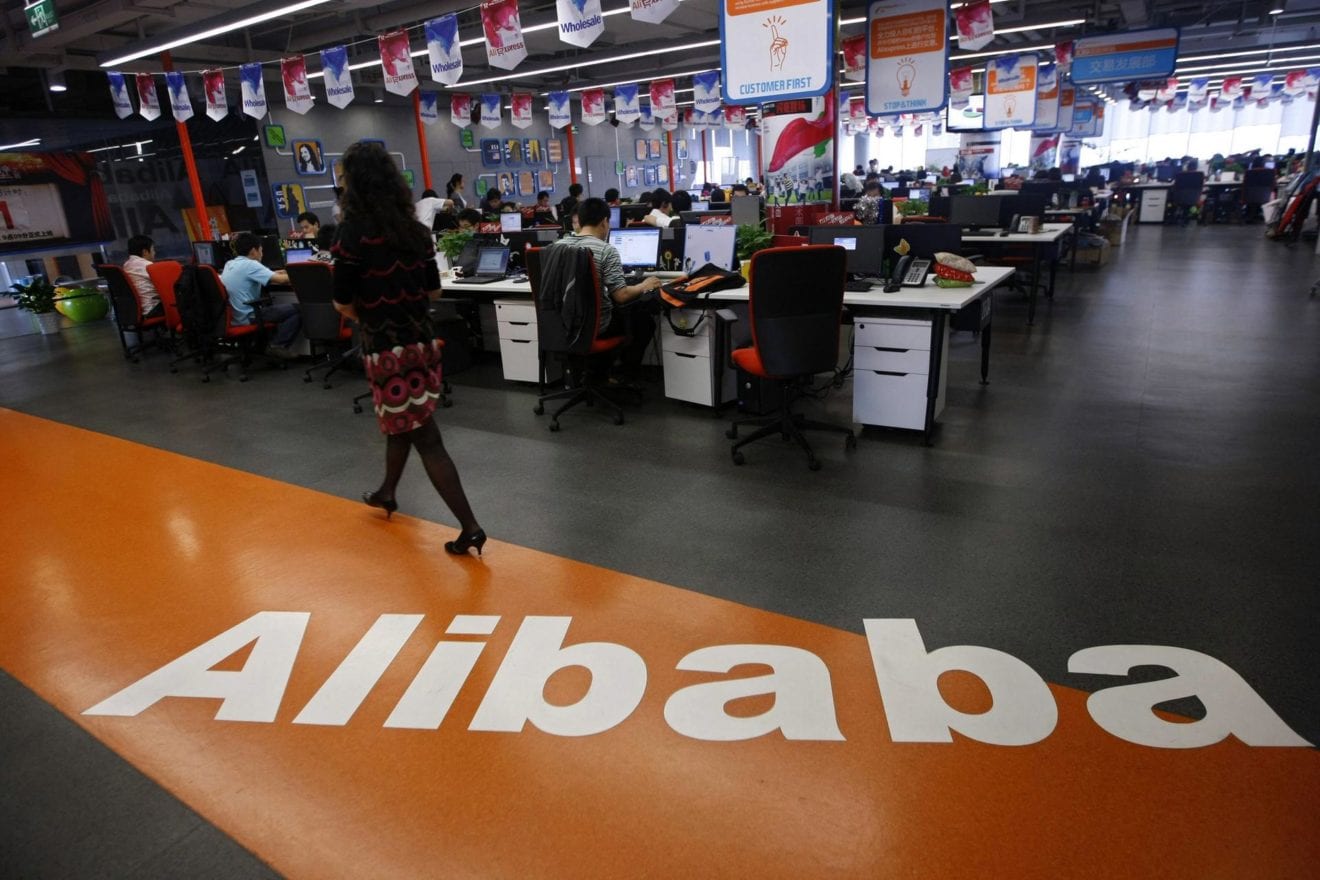
  • Alibaba expansion plan targets 2 billion

    Alibaba expansion plan targets 2 billion

    Chinese eCommerce pioneer Jack Ma has unveiled an Alibaba expansion plan aiming to quadruple its customer numbers to 2 billion by 2036.

    Alibaba is also aiming for a record 6 trillion yuan (US$912 billion) in gross merchandise volume (GMV) in 2020 from 3.09 trillion yuan this year.

    Ma has also pledged to intensify the fight against counterfeit products and intellectual property rights violation, saying the company is more confident than ever it can solve the problem.

    Alibaba became the world’s largest retailer (by its own definition of retailer) in April, surpassing Walmart. The company says its online trading accounts for 10 per cent of all retailing in China and has generated 15 million jobs.

    Alibaba, whose gross sales totalled $9.3 billion in 2014, hit a record $14.3 billion in sales on Singles’ Day alone last year, a Chinese holiday in November. This is more than double the eCommerce sales in the US from Thanksgiving, Black Friday and Cyber Monday combined.

    The company also holds the title of the biggest IPO in history, raising $25 billion in four days in September 2014, $7 billion more than Visa and $9 billion more than Facebook and General Motors.

  • Wal-Mart Needs to Grow Overseas, and China’s the Big Prize

    Wal-Mart Needs to Grow Overseas, and China’s the Big Prize

    Zhong Guoyan sifted through piles of fish at a Wal-Mart in Shenzhen, one of China’s largest cities. She studied the fins, to make sure they were bright red and firm. She peered at the eyeballs — were they bulging?

    “I like when the products are fresh, and the quality is good,” she said. “When I come here, I have a look. If it’s good, then I will buy it. If it’s only cheap, I won’t buy it.”

    In American Wal-Marts, customers are not offered the opportunity to fondle their fish. But America is not China, as the world’s biggest retailer has learned. If the Arkansas-based company wanted to win over foreign consumers like Zhong, it would have to shed some of its American ways, and cater to very different customs and conventions that are fast changing.

    In the U.S., Wal-Mart conquered the marketplace by offering “everyday low prices” to penny-pinching, bulk-buying customers, but Chinese shoppers have good reason to look for quality first, bargains second after scandals involving tainted and mislabeled food. And Chinese shoppers seek fresh food daily because their tiny refrigerators don’t give them room to stock up.

    Zhong eventually tossed a couple of fish into a plastic bag — a small victory in this massive retailer’s struggle to build an international empire.

    The stakes are high: Wal-Mart can’t count on much sales growth from its U.S. business — it’s facing challenges at home with intense competition from online leader Amazon.com and dollar stores, which offer low prices and convenience — so the retailer is depending more on its operations overseas.

    China, the world’s most-populous country, is the ultimate prize. Right now, it represents just 3 percent of Wal-Mart’s global sales of $478.6 billion, according to estimates from IBISWorld, a research firm. And the company has just over 400 stores in China, compared with more than 5,000 in the U.S. But the Chinese grocery market, already the world’s largest at $1.1 trillion a year, is expected to grow to nearly $1.5 trillion in just the next four years, says IGD, a global consumer products research firm.

    “China remains a strategic market for our future,” Doug McMillon, CEO of Wal-Mart Stores Inc. recently told investors.

    Getting the food business right is critical for Wal-Mart. Shoppers buy groceries more often than anything else. If Wal-Mart can get them in the door to buy food regularly, perhaps they will visit more frequently for items like pajamas and coffee makers — and eventually become loyal online customers, too.

    Still, markets in China and elsewhere in the world will not surrender to Wal-Mart, just because it’s Wal-Mart. In particular, global players like Wal-Mart have found that food retailing doesn’t cross borders easily because it’s a largely local business. After struggling on its own in China, Britain’s Tesco PLC decided two years ago to team up with China Resources Enterprise, a state-owned company. Wal-Mart has also taken some lumps.

    Overall international sales growth has been uneven, dropping 9.4 percent last year largely because of the strong dollar. And while Wal-Mart’s overseas business had a strong start to this year, it faces long-term challenges. Wal-Mart gave up in Germany and South Korea, abandoning those markets back in 2006 in the face of tough competition. It’s closing 10 percent of its stores in Brazil. And it’s locked in a price war in the United Kingdom, slugging it out with no-frills German discounters Aldi and Lidl.

    Overseas, Wal-Mart lacks the scale to squeeze local suppliers on price as it does in the U.S. It also faces nimble competitors who are entrenched in foreign markets. It has not always found it easy to duplicate its bedrock strategy of constant bargains outside the United States.

    But Wal-Mart has learned over the years from its missteps, discovering that it can’t just impose its culture on the world, that it needs to adapt to local ways, that patience does pay off.

    In countries like Mexico, Canada and Japan, Wal-Mart has won shoppers over time. After the setbacks in Germany and South Korea, the company established a team to ensure it does a better job integrating international acquisitions, while avoiding the impulse to force employees overseas to adopt all its ways. In Chile, it launched a corporate culture campaign and worked closely with suppliers to coax them into its way of doing business. It’s using its global clout to find and import products from around the world, catering to increasingly sophisticated and demanding middle class consumers.

    Wal-Mart also has come to realize that it can thrive without being the biggest player in every market, says Bryan Roberts, global insights director at TCC Global, a London-based marketing consultancy for grocery retailers. But the company also knows that it needs to succeed in China, now the company’s fourth largest international market by sales. And he believes it will do just that.

    “Wal-Mart,” Roberts says, “is a very determined organization.”

    ___

    WINNING OVER PICKY CONSUMERS

    Except for the signs, most Americans wouldn’t recognize a Wal-Mart in China. At a store in Shenzhen, shoppers sniff bins of rice or use tongs or their hands to examine the piles of local sausage, whole chickens and pigs’ feet. Nearby, tanks brim with live fish, frogs and crabs.

    Americans may like to touch products, but in China, many want to buy live fish, or smell the meat.

    “It has to smell like fresh blood,” said Lina Wang as she examined loose pork.

    Meanwhile, Huang Xiulian stood at a nearby Snickers display, studying the expiration date and where the candy was produced.

    In the massive, unruly Chinese market, some competitors have cut corners, mislabeling products or even selling tainted foods. The risks have made Chinese consumers unusually wary: If a carton of milk or a piece of fish seems too cheap, Chinese shoppers wonder if it’s safe. If items stay on sale day after day, they worry if there’s something wrong with them.

    Sean Clarke, CEO of Wal-Mart China, based in Shenzhen, previously worked in Britain, Japan, Germany, and Canada. China, he says, “is easily the most challenging market to operate.”

    “There is a huge level of distrust in this market,” Clarke says. “Is it fresh? Is the price right?”

    Although China still has plenty of bargain-conscious shoppers, overplaying the price message can also “alienate the increasingly affluent middle-class shoppers, less sensitive on price but (who) value more the quality and assortment of merchandise,” says Jason Yu, general manager of Kantar Worldpanel China, which specializes in research on Chinese shopping habits.

    In particular, Wal-Mart had a difficult time promoting “everyday low prices” — promising the lowest prices on a basket of goods every time consumers shop. Early on, Wal-Mart undermined its own claims for consistently low prices by running lots of short-term promotional gimmicks.

    Then some rivals poached the “everyday low price” message, confusing customers. Wal-Mart scrambled to find the right slogan. In 2010, it switched to “Low Prices.” Two years later, it trotted out “Worry Free” — a message that employs the Chinese characters for “save, heart, price,” implying quality and reassuring shoppers who worry that deals will expire before they get to the store.

    “Worry Free” is Wal-Mart’s key weapon to lure shoppers: 85 percent of the discounts in the Wal-Mart stores in China now last anywhere from four weeks to six months, said Clarke. Unlike in the U.S., Wal-Mart had to build trust by spelling out in signs how long the low prices last.

    The company’s message: Efficiency and good management, not cutting corners, make everyday low prices possible.

    When Wal-Mart came to China, it was slow to tailor its offerings to local tastes. Southern Chinese like rice. Northern Chinese like noodles. Folks from Hunan like their chili peppers. The Cantonese crave chicken feet.

    Realizing its mistake, Wal-Mart gave local managers more leeway to run their businesses. For example, it let them decide when hot deli food was past its sell-by date and gave them free rein in ordering from different local suppliers.

    But that approach backfired, leading to a series of food-safety violations. In one particularly embarrassing episode, Wal-Mart had to recall donkey meat — a delicacy in China — after DNA testing showed it contained traces of fox meat. The misstep came at a time when Chinese consumers were especially wary, because tainted baby formula had sickened hundreds of thousands of infants.

    In response, Wal-Mart slashed nearly two-thirds of its 20,000 suppliers, including food. Now, Wal-Mart knows exactly where each product comes from. Wal-Mart also took back some of the responsibilities from local managers, though they are allowed to decide on such issues as whether meat should be loose or packaged in their stores.

    Wal-Mart increased its investment in food safety. It broke new ground in China by adding mobile testing labs that go around from store to store in both the Southern and Eastern regions of China, checking for pesticides on vegetables and fruits. It’s using handheld devices in South China to check temperatures of meat products.

    “It’s quality first,” Clarke said, “and then we will have the lowest price.”

    ___

    GAINING CONTROL OVER SUPPLIERS, COSTS

    In America, Wal-Mart consistently delivers low prices to shoppers largely because it has the clout — 25 percent of the U.S. grocery business— to force suppliers to do things the Wal-Mart way. That means cutting costs to the bone. In return, the suppliers enjoy steady demand from Wal-Mart, so they don’t have to spend so much on advertising or worry about staffing their factories.

    Wal-Mart’s pull is so strong that more than 1,500 suppliers have opened offices near its headquarters in Bentonville, Arkansas.

    But replicating that model has proven tough overseas, partly because it takes time to work with new suppliers to cut costs. In Brazil, for instance, it’s still a work in progress after two decades.

    In China, things are tougher still. Wal-Mart accounts for just 2.3 percent of the overall grocery market. In fact, the top 10 grocery retailers in China account for just 18.5 percent of the market, says Euromonitor International, a global market research firm. Suppliers are scattered, too. Ninety-five percent of all products Wal-Mart sells in China are supplied by local companies. It’s tough for retailers to have influence over their network of Chinese suppliers.

    The Chinese supply chain is also notoriously inefficient. For years, Wal-Mart and other foreign companies haven’t dealt directly with their suppliers, working mostly instead through a labyrinth of middlemen who handle distribution. One supplier could potentially have 100 distributors, handling delivery to just three or four stores. Wal-Mart would have to work with each distributor.

    Wal-Mart had been making some efforts in centralizing its food distribution. But it didn’t get serious about breaking up the system until three years ago. It decided to cut out, or at least reduce, the middlemen and route as many goods as possible through 20 of its own distribution centers. It built 11 centers for fresh food, and increased its packaged-food distribution centers from five to nine. Now, 85 percent of packaged goods is being sent through distribution centers. For fresh food, that figure is about 50 percent.

    Wal-Mart says it was a challenge to convince many suppliers to unravel their way of doing business. But by eliminating the go-betweens, Wal-Mart could negotiate directly with suppliers and knock down costs — often by 10 percent to 12 percent, says Lesley Smith, senior vice president of the supply chain at Wal-Mart China and the woman behind the move.

    The change also gives Wal-Mart more control over the quality of the food being sent to its stores and the efficiency with which it gets to them. Before the switch, only about 75 percent of orders would actually reach Wal-Mart stores; now 95 percent do. Before, it took three days for products to arrive; now it takes a day and a half, Smith says.

    Nestle S.A., for instance, used to go through 81 Chinese distributors to reach 400 Wal-Marts. Now it’s using Wal-Mart’s national distribution network, which it says is resulting in fresher quality of goods at the store, higher sales and lower costs.

    Another supplier, Beijing-based noodle and flour maker Cofco, is also coming to appreciate the Wal-Mart way. In 2003, it started supplying 11 Wal-Marts. Now it’s selling to 398. Wal-Mart demands that state-owned Cofco keep prices low and stable.

    “At first, we had concerns, especially when the raw material costs had some ups and downs,” says Cofco general manager Liu Hongwei says.

    But Cofco has learned to be more efficient. And Wal-Mart stocks Cofco products in the busiest parts of the stores and markets them under the “worry free” slogan. Cofco sales to Wal-Mart rose 40 percent last year, compared to 10 percent to 20 percent increases for other customers.

    Liu says he negotiates prices with his other customers every two weeks. With Wal-Mart? Twice a year.

    ___

    FIGHTING COMPETITORS

    Often, Wal-Mart enters new markets by acquiring competitors, but that doesn’t guarantee success. Buying the top player, as it did in Chile and Mexico, seems to work best.

    In Chile, Wal-Mart’s intense marketing paid off. Chileans are so sold on Wal-Mart’s supercenter, Lider, that they believe the gap between its prices and rivals is twice what it actually is.

    But in the United Kingdom, Wal-Mart’s Asda and traditional British supermarkets like Tesco and Sainsbury’s are all being undercut by the rapidly expanding Aldi and Lidl chains. In response, Asda is stepping up sustained price cuts and joined the European Marketing Distribution, which pools the buying power of 250 supermarket chains.

    In vast China, Wal-Mart competes with a swarm of regional rivals.

    At first Wal-Mart and France’s Carrefour had China’s big-box retail business pretty much to themselves. But Chinese rivals, learning fast and exploiting close ties to local suppliers, erased their lead.

    Wal-Mart landed in China in 1996, a year behind Carrefour, opening two stores in Shenzhen — a Wal-Mart supercenter and a Sam’s Club. They were the first foreign retailers to offer the big-box shopping experience, which offers everything from clothing to food. That’s a big change from traditional wet markets and mom-and-pop stores filled with counterfeit goods. After investing in a Taiwanese-owned retail chain in 2007, Wal-Mart became China’s biggest super-sized store chain and expanded its lead for over the next two years.

    But Wal-Mart and Carrefour were hobbled. The government restricted foreigners to opening three stores per city. But even after China dropped the store limit in 2001, Wal-Mart and other foreign retailers have faced unfavorable treatment. Government officials have investigated the foreign retailers’ pricing and highlighted their food scandals.

    Meanwhile, local and regional competitors quickly closed the gap. The local players can sometimes undercut Wal-Mart prices because they have closer ties to local suppliers and can negotiate better deals, says Kantar’s Yu in Shanghai.

    Wal-Mart insists its share of the big-store sector has increased three years in a row. But Euromonitor says Wal-Mart’s market share has fallen steadily since peaking at 11.6 percent in 2009. By last year, Wal-Mart held 9.6 percent of the market, good for No. 3.

    Wal-Mart closed about 30 lackluster stores, but it has spent millions to renovate 50 it thinks are promising. Last year, it announced that it plans to add 115 stores by 2017, bringing the total store count to 530. It’s concentrating in markets where it’s already established, including the west, central China and its stronghold in the south.

    From the start, Wal-Mart has had some advantages, including its global clout. It’s able to stock its shelves with foreign imports and sell them at a bigger discount than its rivals can. And it’s been pressing that advantage in the wake of a changing consumer mindset. Three years ago, Wal-Mart imported 212 containers of products into China. Last year, it imported 2,800, including milk sold under its Asda brand — popular with the exploding ranks of middle-class Chinese who can afford to buy better goods.

    But, Wal-Mart faces another challenge in China, and it is not from other big box stores.

    Across the globe, shoppers who are increasingly shifting away from buying at big stores and toward buying online or at small stores. But in China, that trend is more dramatic. It has overtaken the U.S. as the world’s biggest online marketplace.

    That’s meant declines in traffic at Wal-Mart and other big-store rivals, both local and foreign. So Wal-Mart is expanding offerings at its website, which is run by Yihaodian, a Chinese startup Wal-Mart fully took over last year. And it’s blending its online services with its own stores and adding hubs in key cities to deliver goods to shoppers’ homes.

    Sissy Xiao, a journalist, represents the future. Xiao had her hands and nose in the bins of rice at a Wal-Mart store in Beijing. She compared the scents. Her elderly mother was elsewhere in the store, buying food.

    Xiao, however, was not planning to take any home. She’ll do her shopping later, online.

    “I am spending less time at big stores,” Xiao says. “I usually buy things online. It’s more convenient.”


  • Wal-Mart to open 60 new stores by 2017

    Wal-Mart to open 60 new stores by 2017

    Wal-Mart China is opening 60 new stores in the country by 2017 as part of its efforts to integrate its hypermarkets, membership stores and online platform to offer customers more convenience and quality products in a highly-competitive retail market, the company’s top executive said.

    Greg Penner, chairman of the Wal-Mart board of directors, said in an exclusive interview with China Daily in Shanghai on Wednesday that the company has already opened more than 50 new stores since a plan to add 115 stores in three years was announced in 2015.

    “China has amazing growth opportunities which in the next five years will surpass the US market in retail potential,” said Penner, who visited two Wal-Mart stores in Shanghai on Tuesday.

    In addition to growing its physical presence, Wal-Mart is also focusing on enhancing its online stores and building stronger digital relations with Chinese customers, he said.

    Penner was elected to lead the board in 2015.

    “Customers want their products from stores and also from online platforms and now have a choice of getting them delivered to their homes or picking up in the stores,” Penner said, referring to the increasing importance of online shopping convenience to customers.

    Wal-Mart to open 60 new stores by 2017

    Greg Penner, chairman of Wal-Mart board of directors.

    He added: “The food safety is critical in China and is a big part of our focus here.”

    Penner said, in 20 years in China, Wal-Mart has built three brands-Wal-Mart hypermarket, the Sam’s Club membership store and Yihaodian, the retailer’s Chinese online offering-all playing important roles in the company’s growing business.

    Wal-Mart China operates 432 stores including 12 Sam’s Clubs in 174 cities and municipalities. And registered users of Yihaodian have reached 130 million.

    Wal-Mart is the second-largest retail banner just behind RT-mart in modern trade (including hypermarkets, supermarkets and convenience stores), according to Jason Yu, general manager of Kantar Worldpanel China. This sector of retail business has continued to experience sluggish growth in 2015, only growing by 3.3 percent from 2014.

    Hypermarkets declined in key cities and provincial capitals by 1.5 percent, but it managed to grow at 4.1 percent at national level as a result of more store openings in the lower-tier cities. Kantar Worldpanel expects to see continued development in the hypermarket format in lower-tier cities in the coming years.

    “The group presented clear strength in terms of hypermarket geographic coverage (more cities than anyone else) but also established its leadership in membership club format and e-commerce through acquisition of Yihaodian,” said Yu.

    According to Kantar, Wal-Mart leads the modern trade sector in southern and western China. It started to embrace more O2O opportunities by launching a mobile shopping app and introducing Alipay to drive efficiency and customer experience, said Yu.

    Wal-Mart has recently launched its Global Shop, a cross border e-commerce platform, offering more than 200 imported items on Wal-Mart App.

    Wal-Mart to open 60 new stores by 2017

  • Alibaba likely to surpass Walmart as world’s top retailer

    Alibaba likely to surpass Walmart as world’s top retailer

    Chinese e-commerce giant Alibaba is expected to surpass the US multinational firm WalMart soon as the world’s largest retail platform with its total trading volume this fiscal year set to exceed USD 463.3 billion, an official media reported today.

    Chinese e-commerce giant Alibaba is expected to surpass the US multinational firm WalMart soon as the world’s largest retail platform with its total trading volume this fiscal year set to exceed USD 463.3 billion, an official media reported today.

    An official announcement by Alibaba Group Holding Ltd expected to be made at the end of this fiscal year on March 31.

    WalMart Stores Inc posted net sales of USD 478.6 billion for its fiscal year ending Jan 31, while the latest trading volume figure for Alibaba amounted to three trillion yuan (USD 463.3 billion), the company said yesterday.

    It is equivalent to China’s Sichuan province’s gross domestic product (GDP) last year, when the province’s GDP ranked sixth on the Chinese mainland, state-run China Daily reported today.

    Zhang Yong, the company’s CEO, said in Hangzhou that the figure was recorded on the company’s business-to-customer platform Tmall, consumer-to-consumer platforms Taobao and Rural Taobao, and group-buying site Juhuasuan.

    Zhang said he expected the company will achieve an annual trading volume of six trillion yuan by 2020 (about USD 980 billion) and that “in 2024, we wanted to be a business platform serving 2 billion consumers and tens of millions of enterprises at home and abroad.”

    According to Zhang, the company will strive to combine cloud computing and big data technologies with the Internet and the Internet of Things, as well as consumer terminal equipment, to spur its development.

    The Internet of Things is the network of physical objects devices, vehicles, buildings and other items embedded with electronics, software, sensors and network connectivity that enables these objects to collect and exchange data.

    Citing the National Bureau of Statistics and McKinsey & Co figures, Gao Hongbing, director of AliResearch, said that of Alibaba’s 3 trillion yuan in total trading volume, about 660 billion to 1.17 trillion yuan is newly increased consumption.

    “Online shopping has been an important engine to promote consumption, which meets the nation’s strategy of promoting domestic demand,” Gao said.

    Last year, Chinese consumers’ willingness to spend reached the highest level since 2012, despite the economic slowdown, according to a study published in February by The Nielsen Company.

    “This is a result of China’s commitment to shifting from an investment-driven to a consumption-driven economy,” said Kiki Fan, managing director of Nielsen China, China Daily reported.

    “Booming online shopping provides more variety and convenience to customers, thus fuelling their spending desire,” the Daily quoted Fan as saying.

    Despite its economic growth falling below 7 per cent (USD 6.9 per cent) for the first time since 2009, China surpassed the United States last year to become the largest e-commerce market in the world, according to statistics from multinational consultancy Forrester Research Inc.

    Chinese government has fixed 6.5 to seven per cent GDP target for this year.

  • HK’s Li & Fung 2015 profit down, but beats forecast

    HK’s Li & Fung 2015 profit down, but beats forecast

    Global exporter Li & Fung Ltd’s full-year profit fell 4.6 percent but beat analysts’ estimates, as growth in its logistics and vendor support services business helped overcome headwinds from global retail disruption and macro environment.

    The Hong Kong-based company, which grew to prominence by making clothing and toys in Asia for Western retailers, said on Thursday its net profit for the year ended Dec. 31 fell to $421 million from $441 million a year earlier.

    That compared with an average forecast of $413.2 million by 10 analysts polled by Reuters. Li & Fung, which supplies to companies like Kohl’s Corp and Wal-Mart Stores Inc, said core operating
    profit fell 15.2 percent to $512 million.

    Revenue fell to $18.8 billion from $19.3 billion a year ago, which was the biggest company by revenue for 2014 in Asia pacific in “Textiles & Apparel” industry.

    Textile companies in China are expected to post a 12-month forward revenue growth of 23 percent, the highest expected increase in the Asia-Pacific region in the “Textile & Apparel”
    sector, according to Thomson Reuters StarMine SmartEstimates, which emphasizes on recent forecasts by top-rated analysts.

    Li & Fung has refocused on its core asset-light supply-chain business following the sale of its loss-making brand-licensing and distribution business in 2014, helping it boost free cash flow and better control operating costs.

    The company, with a market value of about $5.3 billion, posted a 34 percent rise in January-June profit last year at $149 million.

    Analysts were concerned about inventory build-up at retailer level as inventories grew faster than sales growth in recent quarters. They worried that Li & Fung’s turnover would be affected as U.S. retailers focus on resolving high inventory levels.

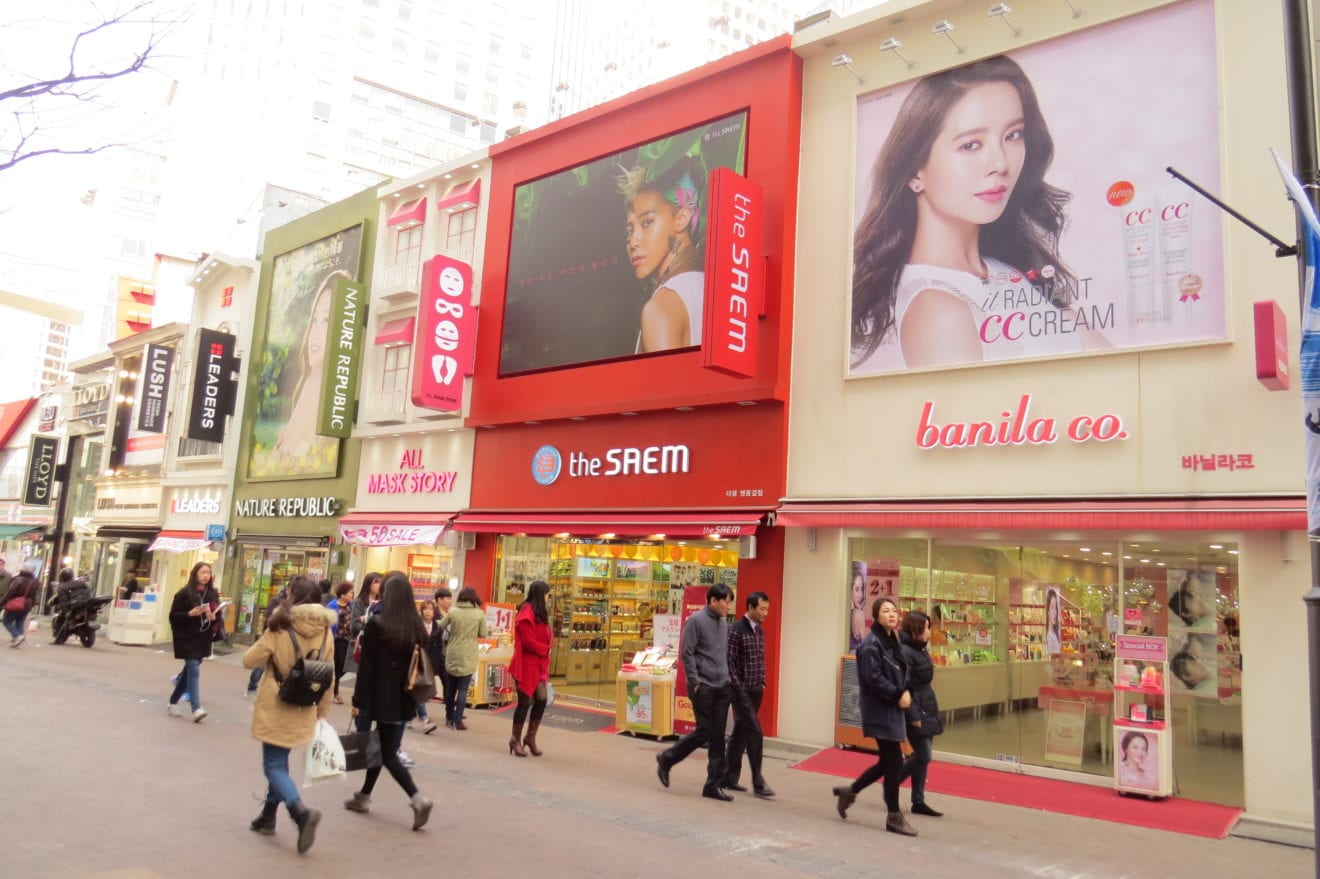
  • South Korean retailers eye overseas push

    South Korean retailers eye overseas push

    The largest South Korean retailers, faced with cut-throat competition in the rapidly saturating domestic market, are turning their attention to overseas markets in conjunction with small and mid-sized businesses to secure a new growth driver.

    The country’s three major retail conglomerates – Shinsegae Group, Lotte Group and CJ Group – are targeting to sell more of their ‘private brand’ products or help small and medium-sized enterprises (SMEs) promote their products both in emerging and developed markets, they said.

    Of the three, Shinsegae’s Emart, the nation’s largest discount store chain by sales, appears to be the most aggressive player given its latest moves and announcements.

    On Wednesday, Emart outlined its 2016 plan not only to increase shipments of its products to overseas branches in China and Vietnam but also to supply them to local retail companies in the US, Europe and Oceania.

    “We have set an ambitious target of US$20 million in overseas earnings this year, sharply up from $1.72 million the year before. What we earn outside the country still accounts for a tiny portion of our overall sales. But we expect it to grow over time,” Emart spokeswoman Hur Chae-jeong said.

    For all of 2015, Emart saw its net profit jump 57 per cent to 455.9 billion won ($374 million) from 290 billion won a year earlier. Sales rose 4.1 per cent to 15.3 trillion won from 14.7 trillion won during the same period.

    The dominant discount store company seeks to fill more than 40 per cent of its total products to be exported with price-competitive PB products. In Korea, in partnership with SMEs, big retailers provide ‘less-recognised’ private label products to customers at lower prices compared to existing brand names.

    Moreover, Emart signed an initial agreement with the Korea Trade-Investment Promotion Agency (KOTRA) in November to help SMEs find ways to export their products. The move was in line with the government’s broad efforts to support them amid falling exports.

    Exports have been on a losing streak over the past 14 months, posting a 12 per cent on-year decline in February at $36.4 billion, according to government data.

    Lotte Department Store and CJ O Shopping, the nation’s biggest department store chain and home shopping channel by sales, respectively, have taken similar moves to go overseas.

    Lotte said Thursday it had arranged meetings between Korean SMEs and their Vietnamese and Indonesian counterparts in those countries to help them find bilateral business opportunities there.

    “The Korean SMEs supply their products to our department store chains. If they successfully enhance their brand awareness among overseas customers, it will lead to an increase in sales. So we will jointly conduct a market survey with the SMEs and offer them a variety of support programs,” a Lotte spokesman said.

    Lotte currently operates department store outlets in Vietnam, Indonesia, Russia and China.

    CJ O Shopping said it has partnered with Kotra to help Korean SMEs advance into Latin American markets on top of its current China and Southeast Asian markets.

    “In June last year we set up a joint venture with Mexico’s main broadcasting company Televisa to sell Korean products through a local home shopping channel. We will sign such partnerships with other Latin American countries in coming years,” CJ spokesman Hong Seok-woo said.

    CJ O shopping is in talks with daily deals website operator Groupon  and US retailer Walmart Stores to have Korean products available in their online shopping malls, Hong said.

    CJ has signed with 10 countries, largely in emerging markets, to sell Korean goods through local home shopping channels.

    “We are seeing a burgeoning demand for Korean beauty and fashion products in Latin America helped by the boom of ‘hallyu,’ or the Korean wave, there,” he added.