Retail News CRM

Tag: Warehouse

  • Warehouse Managers Must Get Mobile

    Warehouse Managers Must Get Mobile

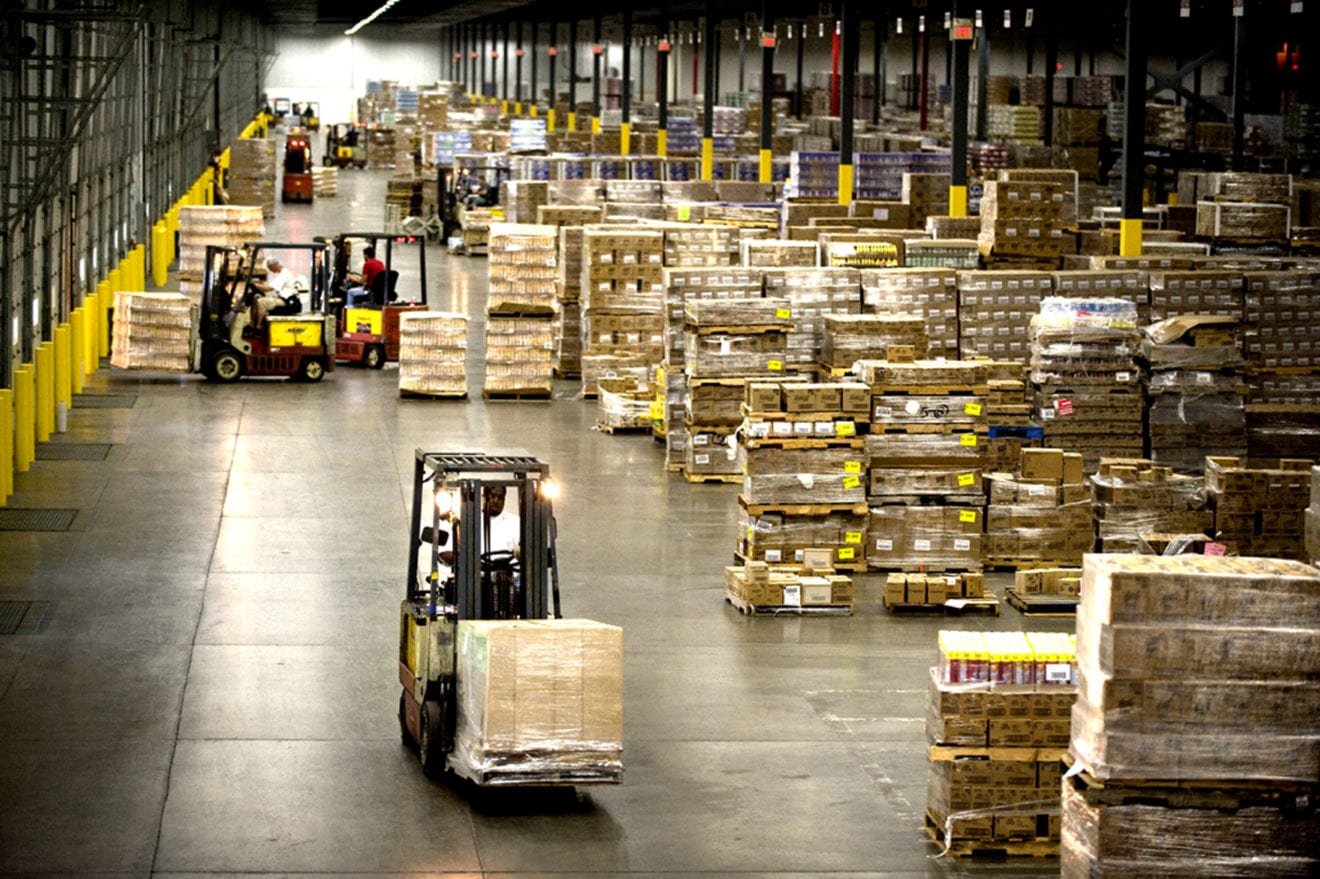
    Today’s warehouse managers face many challenges, not the least of which are meeting higher service levels and operational cost constraints. In this environment, it’s more important than ever that managers spend time on the floor, managing associates to drive optimal levels of productivity and monitoring work throughout the warehouse. This represents a difficult balancing act, however, as distribution centre managers and supervisors traditionally lack access to critical real-time data anywhere but the office.

    With this issue in mind, Manhattan Associates recently conducted a survey of supply chain executives and managers to better understand their struggle—and how mobile tools may be able to alleviate the challenges. The findings underscore that legacy, PC-based labour management systems (LMS) are effectively chaining managers to their desks, and preventing them from spending valuable time with associates. For example, 63 percent of respondents said lack of access to a computer keeps them from the warehouse floor, and 58 percent pointed to the need to review reports as another barrier against more associate engagement.

    Numerous studies have documented that employees are more productive when given frequent, real-time feedback on their performance, and how their work aligns with broader company goals. As such, it’s essential that distribution centre managers break out of the back-office for good, or risk poor morale and warehouse throughput.

    According to Manhattan Associates’ survey, increased mobility could address these challenges. Thirty-three percent of respondents said a mobile solution would increase their floor time by 50 percent or more, and an additional 28 percent indicated that mobile would free up at least 25 percent more time for on-site activities. In keeping with these findings, respondents reported that greater engagement is the chief benefit of providing managers with mobile tools. Additional advantages include:

    • Increased oversight (42 percent)
    • Real-time data (33 percent)
    • Supervisor productivity (21 percent)
    • Exception management (19 percent)

    In addition to recognising the benefits of mobility, our survey results indicate that warehouse managers are well on their way to implementing these solutions. Eighty-one percent of respondents said they either currently have mobile capabilities for managers, or have plans to deploy them in the near-term. Among the most desired functions in a mobile app were:

    • Employee productivity (85 percent)
    • Work management (85 percent)
    • Exception management (66 percent)
    • Labour requirements (49 percent)

    It’s evident that mobile solutions enable warehouse managers to spend much-needed time engaging with employees without sacrificing reporting requirements or other equally critical responsibilities.

    To help distribution managers and staff alike break away from their desktops and be more engaged and effective in the warehouse, Manhattan Associates launched its own Mobile Distribution Management solution earlier this year. The Manhattan solution provides everything warehouse managers need to interact and effect change among employees and execute tasks out on the warehouse floor. Combining data and functionality from Manhattan’s Warehouse Management and Labour Management solutions, Mobile Distribution Management allows warehouse and distribution managers to:

    • Systematically record active interactions with employees, including observations and performance measurements
    • Review work in the warehouse by wave, job function and task/activity
    • Put a task on hold, re-prioritise a task, assign a task to an employee or release a set of tasks to be completed
    • Monitor, plan and forecast work in real-time
    • Track the status for a particular customer, including order look-ups and wave progress

    While Labour Management and Warehouse Management Solutions have long been integrated, sharing performance data in person with employees was limited to static reports run at infrequent intervals. Mobile management, however, improves the manager/employee interaction by connecting both parties to performance reports in real time.

    Intelligent decision

    With mobile solutions, managers can also update information while an operational change is being made, and potentially reverse changes quickly to avoid work stoppages. Examples of active capabilities include task reprioritisation, release and reassignment. Outbound tasks in particular have the potential to benefit the most due to their high complexity and rapid pace.

    Supervisors can send real-time metrics (e.g., picking and packing rates by team or individual members; rankings; actual versus goal performance) via display screens and desktop dashboards to employees on the warehouse floor. This enables them to make better decisions in real time. The data also can be pushed to mobile devices, enabling management to monitor activity from any location or through pre-set, threshold alert notifications.

    What is the market’s understanding of mobile supply chain management?

    Engagement and communication techniques in the warehouse were traditionally centred around decidedly low-tech items, like bulletin boards and newsletters. With the increasing adoption of technology in the warehouse, big screen TVs for example, companies are introducing some great new ways to facilitate informational flow with minimal work. Large screens broadcast details like top performers on the floor and the most current KPIs, so that everyone is on the same page. This enables managers to make information available anywhere and anytime while integrating both quantitative and qualitative data.

    With mobile phones and tablets entering the scene also and showing up on the warehouse floor, mobility is having a huge impact on warehouse management. With a continuous drive for greater efficiency, improved productivity and enhanced service levels by companies in the Southeast Asia region, mobile is becoming a major focus for supply chain infrastructure upgrades and we expect this to remain the case for many years to come.
     

  • British brands invading Philippines

    British brands invading Philippines

    Asif Ahmad, the UK ambassador to the Philippines, is one of the busiest diplomats in the country, as he leads, almost on a weekly basis, the opening of new outlets put up by dozens of British companies which are taking advantage of the rapidly growing consumer market and improved purchasing power of Filipinos.

    Ahmad, the 59-year-old diplomat who has been assigned in the Philippines since July 2013, says while several British companies have established their presence in the country for several decades now, more are expected to land in the Philippines soon.

    “We have done it in fashion.  We have done it in cars. We have done it in films and music.  The next story is eating and drinking,” says Ahmad, during the opening of the second outlet of Costa Coffee in the Philippines at Robinsons Place in Ermita, Manila.

    Costa Coffee, the leading coffee chain in the United Kingdom, is the latest British brand setting its sights on the Philippine market, which Ahmad says offers a lot of opportunities for foreign companies.

    The ambassador says the expansion of British firms in the country is a part of a deliberate effort of the London government to triple its exports to the world to 1 trillion pounds by 2020.

    Unilever, an Anglo-Dutch company, is one of the biggest distributors of consumer products in the Philippines while Royal Dutch Shell Plc. is one of the three largest petroleum players in the country.

    The last couple of years saw dozens of UK firms opening outlets or expanding their presence in the Philippines.  In November 2013, London opened its airspace to Philippine Airlines via Heathrow Airport, with the help of Ahmad.  This has triggered a faster movement of people, including investors and tourists, between the two countries.

    British financial giants HSBC, Standard & Chartered, Barclays and Pru Life UK have strong presence in the Philippines while UK companies that are expanding in the country include Pearson Plc., Ashmore Group, British American Tobacco, British Petroleum, ECR Minerals Plc., CRH Plc., Arup, Nectar Group Ltd., MacKay Green Energy Inc., Forum Energy, Pitkin Petroleum Plc., Eaton Corp. Plc. and Weir Engineering Services Ltd.

    Top British brands opening or adding outlets in the Philippines include Rolls Royce, Range Rover, Jaguar, Mini Cooper, Morgan Motors, Tesco, The Body Shop, Fitness First, Toni & Guy, Remington UK, Marks & Spencer, Debenhams, Lee Cooper, F&F, John Lewis, Burton, Reiss, Speedo, Hamleys, Burberry, Topshop, Topman, Dorothy Perkins, Mitre Sports, Berghaus, Kangaroos, Superdry, Warehouse, Clarks Shoes, Paul Smith, Mothercare, Hackett London, Lush, TM Lewin, River Island, Cath Kidston, Pepe Jeans London, Savile Row, Lyle & Scott,  Whyte & Mackay, Twinings, Diageo, Union Jack Tavern, Wolf & Fox, Chuck’s Grub, Waitrose and Yummy Organics.

    Ahmad says more brands will expand in the Philippines soon. “We have a strong presence of British brands that is gonna grow.  My government, the UK, has said that we must triple exports to 1 trillion [pounds]. My mission here is to grow three times more than before.  That is a very strong target to have,” he says.

    The UK is already the largest investor among European countries in the Philippines.  “The easy target that we have met is being the number one investor in the Philippines from the European Union. We have achieved that already,” he says.

    “In terms of trade, we have a long way to go.  If we added it both ways, it [bilateral trade] adds up to $2 billion.  We have to make it $6 billion,” says Ahmad.

    He says the UK embassy is working with the British Chamber of Commerce to help more companies navigate the Philippine market.  British investors are looking at infrastructure, public-private partnership projects, water, healthcare, education, information technology and defense sectors, he says.

    The British Chamber of Commerce is arranging more trade missions to bring more British brands in the Philippines this year to look at opportunities, given the country’s improving economy.

    “What we are seeing is that the government has more money.  The infrastructure projects are now speeding up, after a difficult start.  We are seeing people consuming more, spending money more, not just in houses and cars, but also in their lifestyle,” Ahmad says.

    Ahmad says Filipinos can afford to buy British brands.  “It [local market] has been ready for quite some time.  That’s why we have been very successful here.  If you go back, they [British companies] have been here for a long time and they are expanding still.  New ones are coming onboard.  What Costa Coffee does is something different.  It is in food and beverage segment, which has much more to offer,” he says.

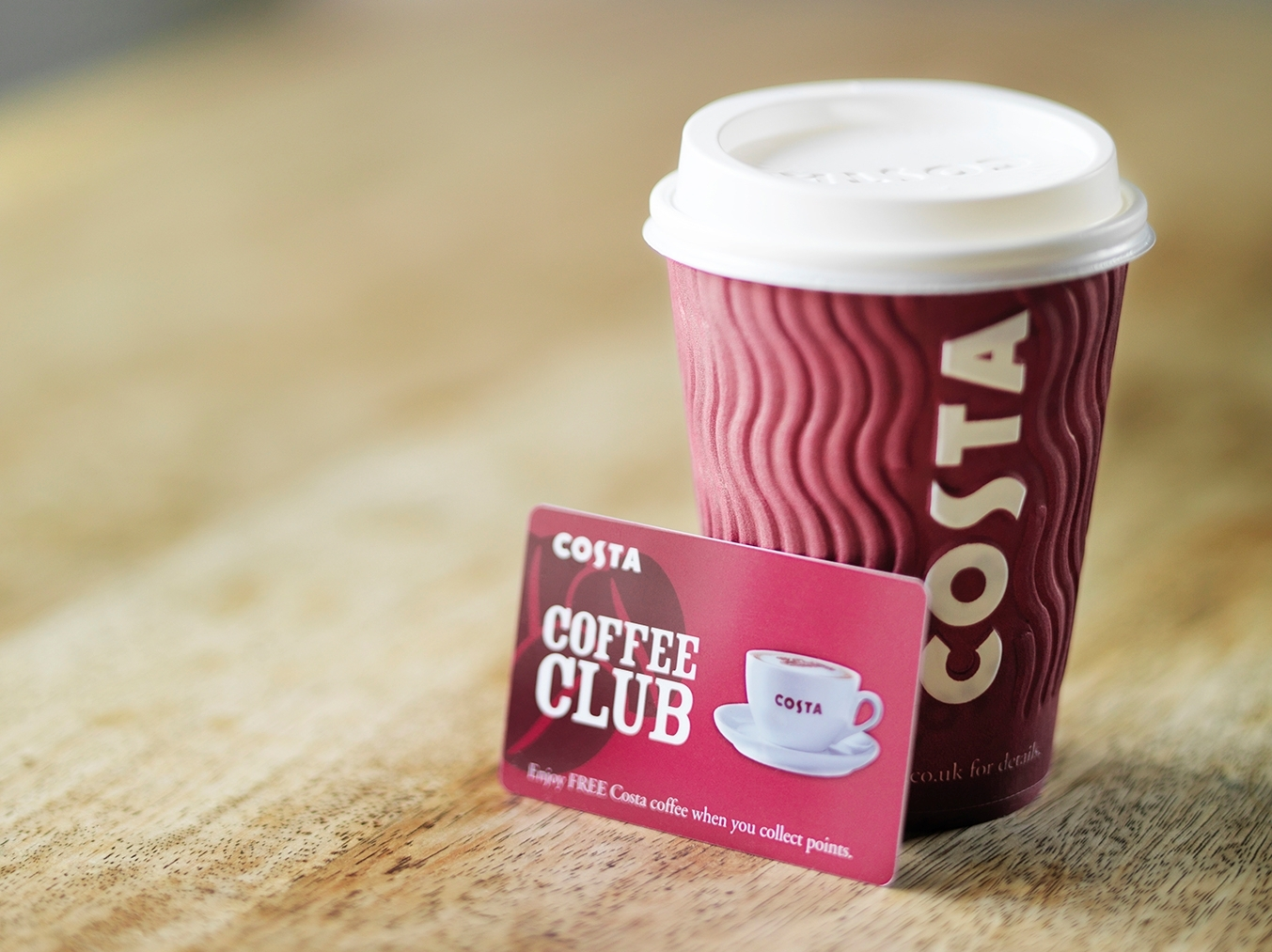
    Costa Coffee opened its first outlet at Eastwood Citywalk 1 in Libis, Quezon City in June and plans to open three more branches this year at Tera Towers in Fort Bonifacio, E. Rodriguez Jr. Ave. in Quezon City and Robinsons Antipolo in Rizal.

    “We plan to open 70 Costa Coffee branches in the Philippines over the next five years,” says Costa Coffee Philippines general manager Corinne Milagan, who heads a new unit of Robinsons Retail Holdings Inc. to guide the expansion of the Costa brand in the country.

    Among those who attended the opening of the Costa Coffee branch at Robinsons Place Manila are Ahmad, Milagan, Robinsons Retail Holdings president and chief operating officer Robina Gokongwei-Pe, Costa Coffee International managing director Chris Rogers, Robinsons Land Corp. president and chief operating officer Frederick Go and Costa Coffee franchise manager for Southeast Asia and India Matt Kenley.

    RRHI formed a new company called Robinsons Gourmet Food and Beverage Inc. to operate the Costa Coffee chain in the country. Robinsons Gourmet teamed up with Whitbread Plc. of the United Kingdom to bring the British coffee brand to the Philippines.

    “The Philippines has fantastic opportunity for the Costa brand.  It brings something different to the market. A different coffee, a different environment and a great people.  And it brings a little taste of London to the Philippines,” says Rogers.

    “We have been looking forward to the next 20 to 30 years. The Philippines is an exciting place to be, because of the potential growth.  The economy is growing strongly. The consumer population is growing. There are good dynamics,” says Rogers, who joined Whitbread eight years ago.

    Rogers has been leading the international expansion of the Costa Coffee brand since July 2012.

    Robinsons Retail plans to open 70 Costa Coffee stores in the Philippines over the next five years, with an average cost of P10 million per outlet.

    Rogers says Costa Coffee has found its niche in the competitive coffee market.  “Our difference is our coffee.  We have the Mocha Italian blend.  We are very particular with the beans we choose–high-quality beans with a particular taste. The environment is also very different,” he says.

    Milagan says the Philippine coffee market is now prepared for a British brand.  She says coffee lovers, including British expatriates, were lining up hours prior to the opening of the Costa Coffee branch at Robinsons Place Manila on July 31.

    “The [coffee] market is not yet saturated. The Philippine market has matured in terms of  food and drinking preference. We are graduating now from instant coffee and we are now shifting to coffee made in a hand crafted way,” says Milagan.

    Milagan says “the Filipino taste has become discriminating, as they travel abroad.”

    Costa Coffee was founded by Italian immigrants Sergio and Bruno Costa in 1971 in Lambeth, London. The Costa brothers were known for creating their unique blend of coffee, a combination of Arabica and Robusta beans. They called it Mocha Italia, a blend that is a closely guarded secret to this day.

    The brand was acquired by Whitbread Plc. in 1995.  The UK firm continues to serve the original Mocha Italia recipe, which is slowly roasted in the Old Paradise Street Roastery in London.

    Milagan says Costa coffees are all handcrafted and espresso-based.

    Costa Coffee now has 3,000 stores in more than 30 countries. Costa employs Master Genarro Peliccia as the official coffee master who ensures that the taste remains consistent to the original blend.

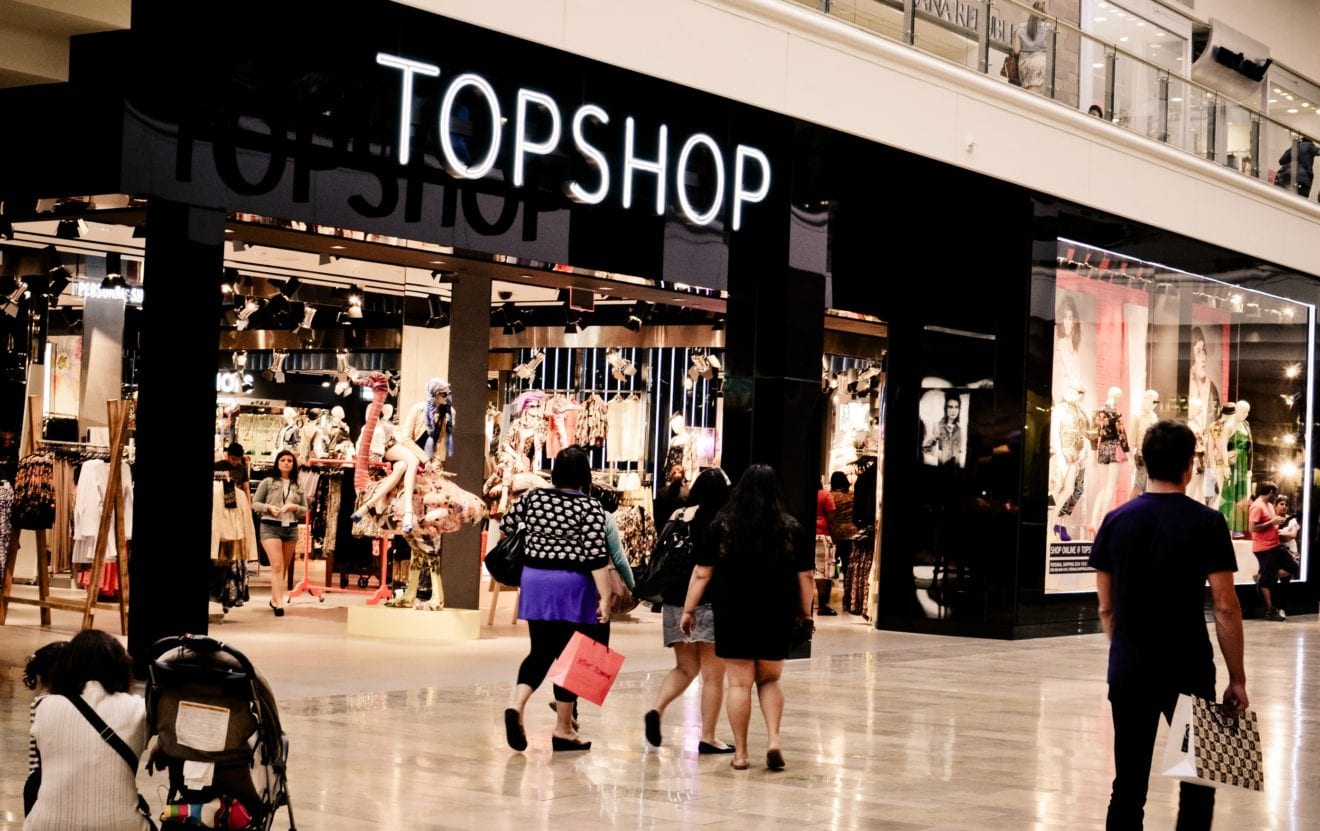
    Gokongwei-Pe says Costa Coffee is the second British brand brought to the Philippines by Robinsons Retail, the first being the fashion brand Topshop.  She says her company will bring more foreign brands, depending on the performance of Costa Coffee.

    “We have to make sure this works first,” she says, adding that the outlook for the Costa brand in the Philippines is promising.

    “I believe in good luck.  I believe in good vibrations,” she says.


  • Arcadia Malaysia partner rules out expansion

    Arcadia Malaysia partner rules out expansion

    Wing Tai, the corporate retailer which partners with Uniqlo and a raft of other brands, including the Arcadia Malaysia stores, says it is streamlining its retail business.

    The listed company has 85 retail stores in Malaysia’s major cities under 12 international brands – Topshop, Topman, Dorothy Perkins, Miss Selfridge, Warehouse, Karen Millen, Pumpkin Patch, Wallies, BCBG, Ben Sherman, Burton and Furla. It also has a 45 per cent stake in the joint venture with Japan’s Fast Retailing, operating 25 Uniqlo stores.

    Wing Tai GM of finance Lee Kong Beng says while the Uniqlo store network, targeting the value driven fast fashion customers, will expand into suburban markets, the Arcadia brands like Topshop and Topman have reached their limits in Malaysia.

    “We will not expand (the Arcadia brands),” he told a press briefing this week.

    He said while there were no current plans to close Arcadia stores, if any store failed to generate positive cashflow or profit it would be cut.

    “For retail, we’d just consolidate because it’s challenging. So no point being a hero, where you open outlets and the sale is not there.”

    Lee said the company was finding the current retail market in Malaysia challenging following the introduction of GST on April 1, which consumers are slowly adjusting to.

    An influx of tourists was bolstering the group’s earnings, with spending holding up in stores in high profile shopping malls.

    “We expect retail sales to pick up because of the weakening of the ringgit, so it’s cheaper to shop in Malaysia rather than in Singapore. It’s a matter of time people get used to GST. We see that (retail sales) are more stabilised now,” Lee said.

  • TCC opens megamarket in Nong Khai

    TCC opens megamarket in Nong Khai

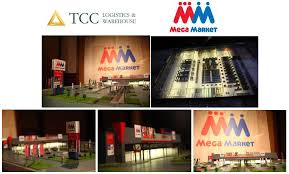
    TCC Logistics and Warehouse, a subsidiary of TCC Group, has opened the MM Mega Market in Nong Khai province to cash in on growing consumption spurred by increasing border trade with neighbouring countries.

    The company has leased space at Asawann Shopping Complex II for 30 years to open the MM Mega Market, which has a new concept blending a hypermarket and wholesale store under the same roof. Customers can but products either in bulk or just one piece.

    The market, covering 10,000 square metres, is 4.4 kilometres from the Thai-Lao Friendship Bridge, enabling it to attract customers from Laos.