Tag: wifi

  • Wi-Fi 7 Revolution: Ushering in the New Era of High-Speed, High-Capacity Connectivity

    Wi-Fi 7 Revolution: Ushering in the New Era of High-Speed, High-Capacity Connectivity

    The progressive evolution of digital ecosystems and escalating user demands for seamless high-speed connectivity have pushed Wi-Fi technology to new frontiers. The next significant milestone in wireless networking is the emergence of Wi-Fi 7, grounded in the IEEE 802.11be standard. Compared to its predecessors — Wi-Fi 6 and Wi-Fi 6E, Wi-Fi 7 brings to the table appreciable enhancements in speed, reliability, capacity and responsiveness.

    Dissecting the Capabilities of Wi-Fi 7

    Wi-Fi 7, or Wi-Fi CERTIFIED 7™, represents the most sophisticated generation of Wi-Fi technology to date. It builds on the base established by its predecessors, offering capabilities designed to meet the rigours of increasingly demanding digital environments. The prime objective of Wi-Fi 7 is to amplify data throughput, latency, and network efficiency to support a broad range of applications, from immersive media to mission-critical enterprise systems.

    Wi-Fi 7 is distinguished by a range of technological advances, including wider channel bandwidth of up to 320 MHz that doubles the maximum channel width of Wi-Fi 6 and 6E, facilitating significantly higher raw data rates. Multi-link operation (MLO) enables devices to use multiple frequency bands simultaneously (2.4 GHz, 5 GHz, and 6 GHz) to improve throughput, reliability, and latency by dispersing traffic across several links. Wi-Fi 7 uses higher modulation through 4096-QAM to pack more data into each transmission, thereby increasing efficiency and overall throughput compared to earlier standards. Multi-user handling is also improved, enabled by enhanced MU-MIMO and OFDMA techniques that allow more devices to share the network simultaneously without performance degradation. Collectively, these advances can deliver theoretical peak speeds surpassing 30 Gbps, a substantial leap over Wi-Fi 6E, and much lower effective latency suited to real-time applications.

    Implications for the Consumer Market

    For consumers, Wi-Fi 7 has the potential to redefine the home wireless experience by addressing the proliferation of connected devices and the surging demand for high-bandwidth use cases. A key benefit for consumers will be improved support for 4K/8K video streaming, cloud gaming, and immersive media such as augmented reality (AR) and virtual reality (VR). With wider channels and increased throughput, Wi-Fi 7 can stream ultra-high-definition content with fewer buffering interruptions, particularly in homes with multiple users and devices.

    Smart homes are also witnessing a rapid increase in device density, from security cameras to smart appliances. Wi-Fi 7’s multi-user management and deterministic latency ensure these IoT devices can function reliably alongside high-data-rate traffic. Wi-Fi 7 also offers features that reduce power consumption in battery-powered devices by coordinating communication windows more efficiently.

    Wi-Fi 7 and the Enterprise Market

    However, despite the promise, the rollout of Wi-Fi 7 in the consumer market faces challenges. The full benefits of Wi-Fi 7 require both routers/access points and client devices to support the standard. Early products may only implement basic features, and device compatibility remains limited. Upgrading the infrastructure can also be costly, as households may have to replace legacy Wi-Fi equipment to unleash the full potential of Wi-Fi 7 speeds and capabilities.

    For enterprises, Wi-Fi 7 offers opportunities beyond simply improving network performance. It can act as the backbone for digital transformation initiatives that depend on robust, high-capacity wireless connectivity. Modern workplaces often have thousands of connected devices that place heavy demands on network infrastructure. Wi-Fi 7’s increased capacity and advanced interference mitigation ensure stable performance even under heavy load, reducing network bottlenecks common in large offices or campuses.

    Support for IoT and Industrial Systems

    Industries such as manufacturing, logistics, and healthcare increasingly rely on connected devices for automation, inventory tracking, telemedicine, and robotic systems. Wi-Fi 7’s enhanced reliability and scalability make it well-suited for these applications, where deterministic performance is mission-critical. However, enterprises face real challenges in planning for the adoption of Wi-Fi 7. Legacy infrastructure can bottleneck performance and undermine the theoretical benefits of Wi-Fi 7.
    Security and Future Proofing

    Wi-Fi 7 supports enhanced security protocols such as WPA3, providing protection against modern threats. As digital demands escalate, driven by cloud computing, collaboration tools, AI, and immersive content, enterprise networks that adopt Wi-Fi 7 can ensure their infrastructure supports next-generation use cases without compromising performance.

    While Wi-Fi 7 promises to drive digital transformation by enabling scalable, high-performance networks, it’s adoption will be gradual. Compatibility, cost, and infrastructure readiness remain barriers. However, as device ecosystems grow and digital demands intensify, Wi-Fi 7 is set to become the infrastructure backbone for the next era of connected living and working.

    Questions & Answers

    What makes Wi-Fi 7 different from its predecessors?
    Wi-Fi 7 offers substantial improvements in speed, reliability, capacity, and responsiveness compared with previous generations. It’s distinguished by advances such as wider channel bandwidth, multi-link operation, higher modulation, and improved multi-user handling.

    How does Wi-Fi 7 benefit the consumer market?
    Wi-Fi 7 enhances the home wireless experience by supporting a proliferation of connected devices and high-bandwidth uses such as 4K/8K video streaming, cloud gaming, and immersive media. It also improves the functionality of IoT devices and reduces power consumption in battery-powered devices.

    What challenges do enterprises face in adopting Wi-Fi 7?
    Enterprises face challenges in planning for the adoption of Wi-Fi 7, including compatibility and cost issues and the readiness of existing infrastructure. Legacy infrastructure can bottleneck performance and undermine the theoretical benefits of Wi-Fi 7.
  • Huawei Unveils Snow-Capped Mountain Inspired WiFi 7 Router: A Blend of Artistic Design, AI Intelligence, and Blazing Performance

    Huawei Unveils Snow-Capped Mountain Inspired WiFi 7 Router: A Blend of Artistic Design, AI Intelligence, and Blazing Performance

    Huawei has raised the bar for Wi-Fi routers with the introduction of its new product, the Huawei Wi-Fi Mesh X3 Pro. This device, which serves as a central hub for home internet connections, combines functional excellence with a stunning aesthetic design.

    An Artistic Masterpiece

    The Huawei Wi-Fi Mesh X3 Pro is endowed with an artistic design that embodies the beauty of a snow-capped mountain. This artistic look is further enhanced by lights that illuminate the router and mimic the radiant glow of sunset and sunrise. The device’s lighting system is designed to adjust automatically based on the time of day and prevailing weather conditions. It’s also customizable, allowing users to tap it on or off at will.

    A Fusion of Beauty and Power

    While the Wi-Fi Mesh X3 Pro is visually captivating, it is also a powerhouse of efficiency and cutting-edge technology. The router, equipped with the state-of-the-art Wi-Fi 7 technology, offers tremendous capabilities for a seamless and superior internet experience. It fully leverages the high-speed capabilities provided by gigabit+ fiber networks, enabling users to download large 4K/8K video files nearly instantly, enjoy lag-free 3A game streaming, and maintain simultaneous connections across multiple devices even in busy households.

    Extending Coverage and Enhancing Connectivity

    To ensure extensive coverage, the Wi-Fi Mesh X3 Pro comes with an extender that shares the router’s exceptional design. It operates using Huawei WiFi Mesh+ technology to keep devices connected to the strongest available signal as users move around the house. This ensures seamless roaming with very low latency below 50ms.

    The Huawei WiFi Mesh X3 Pro Suite, which includes the router and the extender mesh network, provides adaptable coverage suitable for various apartment layouts. It delivers up to 120+ square meters of whole-home Wi-Fi coverage, ensuring a strong signal in all rooms.

    The device supports Wi-Fi 7, which offers speeds of up to 3.6Gbps. Huawei has also incorporated advanced features such as Multi-Link Operation (MLO) for dual-band connections and 4K-QAM for efficient data transfer. Completing the device’s impressive feature set is a 2.5GE port that delivers speeds 2.5 times faster than standard Gigabit Ethernet.

    Smart Performance

    The performance of the Huawei Wi-Fi Mesh X3 Pro is powered by the first-party Gigahome SoC. The router’s operation is further optimized through the use of Artificial Intelligence (AI) capabilities, ensuring the network is smooth and efficient. This, combined with a powerful processor and 4-channel signal amplifiers, allows the router to maintain a reliable connection through multiple concrete walls.

    Questions & Answers

    What is the design inspiration for the Huawei WiFi Mesh X3 Pro?
    The Huawei WiFi Mesh X3 Pro is designed to resemble a snow-capped mountain and includes an automatic lighting system that emulates the glow of sunsets and sunrises.

    What are some of the advanced features of the Huawei WiFi Mesh X3 Pro?
    The Huawei WiFi Mesh X3 Pro comes with Wi-Fi 7, which delivers speeds of up to 3.6Gbps. It also features Multi-Link Operation for simultaneous dual-band connections and 4K-QAM for efficient data transfer, and a 2.5GE port for faster connectivity.

    How does the Huawei WiFi Mesh X3 Pro ensure extensive coverage?
    The device includes an extender that uses Huawei WiFi Mesh+ technology to maintain a strong signal throughout the home. The suite provides up to 120+ square meters of Wi-Fi coverage with a strong signal in every room.

  • Air France Takes Flight with Superior In-Flight WiFi, Surpassing Swiss Competitors

    Air France Takes Flight with Superior In-Flight WiFi, Surpassing Swiss Competitors

    Air France Takes Off with Complimentary High-Speed WiFi

    In a significant move set to enhance the passenger experience, Air France has become the first major European airline to offer complimentary high-speed WiFi on its flights, leaving its Swiss counterpart in the dust.

    While some passengers might enjoy the break from screens during their flights, the announcement of “Free high-speed WiFi now available on Air France flights” certainly raised eyebrows on Tuesday.

    Partnering with Starlink for Connectivity

    This new initiative allows travelers on selected aircraft to enjoy a fast, stable, and secure internet connection, thanks to a collaboration with Elon Musk’s satellite provider, Starlink. Currently, this technology is operational on two Embraer 190s, two Airbus A220s, and one Airbus A350, catering to both short-haul and long-haul routes.

    Aiming for Fleet-Wide Implementation by 2026

    Air France has ambitious plans, targeting to retrofit 30% of its fleet by the end of 2025 and to achieve full fleet implementation by the end of 2026. What’s more, this service is offered free of charge across all travel classes and is accessible via the Flying Blue frequent flyer program. The airline boasts that passengers can stream TV shows, films, and even engage in multiplayer video games — a digital paradise at 30,000 feet!

    Swiss Airline Struggles to Keep Up

    Conversely, Swiss International Airlines, a subsidiary of Lufthansa, lags behind in this competition. Though the airline confirmed to finews.com that its short- and medium-haul fleet possesses onboard internet, it is not yet comprehensive. Passengers can access a free messaging service, but access to streaming or using laptops and tablets comes at an additional price.

    Long-Haul Flights Come with a Price Tag

    Swiss has been equipped with internet since 2016, and since 2023 offers a complementary service for chat applications like WhatsApp, Facebook Messenger, or Signal on long-haul flights. However, for any other online activities, passengers face additional charges, leaving the airline noticeably behind Air France, which is touting its complimentary service as a premium perk.

    Lufthansa’s Centralization Moves Impacting Swiss

    In a strategic shift, Lufthansa has announced plans to centralize some business functions of its Swiss subsidiary in Frankfurt. The implications for the quality of service at Swiss remain uncertain. While WiFi may not be the primary concern for travelers, this issue underscores a recurring criticism: Swiss often offers low-cost quality at premium prices.

    Questions & Answers

    How does Air France’s free WiFi service compare to Swiss International Airlines?
    Air France offers complimentary high-speed WiFi across its fleet, while Swiss International Airlines provides a limited free messaging service and charges for streaming and other internet access.

    What technology is enabling Air France’s WiFi service?
    Air France’s WiFi service is powered by a partnership with Elon Musk’s Starlink satellite provider, ensuring high-speed connectivity for passengers.

    What are Lufthansa’s plans regarding its Swiss subsidiary?
    Lufthansa intends to centralize certain business functions of Swiss in Frankfurt, although it’s unclear how this will affect the overall quality of service.

  • Pushing Boundaries: Real-World Trials Fuel the Future of 5G and Wi-Fi Innovation

    Pushing Boundaries: Real-World Trials Fuel the Future of 5G and Wi-Fi Innovation

    The telecom industry stands at a crucial crossroads as 2025 approaches. On one side, the demand for faster and more reliable connectivity reaches unprecedented heights. On the other, telecom operators are grappling with escalating financial and operational pressures. Equipment revenues plummeted by approximately 11% in 2024 and are expected to remain stagnant this year, highlighting a slow-down in the initial wave of 5G investments that energized the market.

    Pressure Points in a Growing Market

    Despite these challenges, the adoption of next-generation technology clings to a robust trajectory. Ericsson projects that by the end of 2025, the globe will host nearly 3 billion 5G subscriptions, amounting to about one-third of all mobile users. As we approach 2030, that number could double, with 5G networks projected to carry around 80% of global mobile data traffic. Meanwhile, mobile data consumption continues to climb, showcasing a staggering year-over-year increase of nearly 20% in early 2025. A shining example of this insatiable hunger for speed can be seen in fixed wireless access (FWA), now extended by over 80% of global operators. With more than half offering tiered-speed home plans over 5G, industry experts predict FWA will account for over a third of all new broadband connections by 2030.

    This pull between constricting budgets and soaring demand highlights a new urgency for real-world testing platforms across the sector.

    Operators now need to demonstrate technology performance under real-world conditions, confronting the complexities of dense urban environments and remote rural areas. By doing so, they can not only validate their technical capabilities but also uncover new strategies for monetization in an industry striving to balance investment and returns.

    Pioneering Real-World 5G Trials

    This necessity was particularly evident in the Philippines in August 2025, when Globe Telecom orchestrated the country’s first live pilot of 5G-Advanced in Bonifacio Global City. Unlike sterile lab environments, this trial produced a peak throughput of around 2.5 gigabits per second, showcasing the potential of standalone 5G core technology alongside massive MIMO and the aggregation of three component carriers (3CC), which collectively delivered 210 megahertz of bandwidth.

    The impact on everyday users was immediate—offering faster downloads, seamless cloud gaming, and the capability to run advanced applications such as extended reality (XR) and AI-driven analytics. Not only did this trial amplify performance, but it also positioned the Philippines as a thriving player in the regional telecom scene, joining the ranks of operators like Singtel in Singapore and AIS in Thailand as early adventurers in the 5.5G landscape.

    In Sri Lanka, Dialog Axiata PLC unveiled that the 5G journey isn’t simply about faster data speeds. In a landmark 2025 trial, the operator successfully completed the nation’s first voice over new radio (VoNR) test on a live 5G standalone network, pushing fully-native 5G voice services closer to reality. The trial revealed uninterrupted connectivity and high-definition voice calls, building on a previous proof of concept from 2023.

    “Dialog’s achievements here underscore our commitment to advancing Sri Lanka’s 5G technology,” remarked Ranga Kariyawasam, Group CTO of Dialog Axiata, highlighting that VoNR opens up exciting avenues for enhanced daily communication by embedding video, augmented reality (AR), and advanced messaging into voice services.

    Wi-Fi’s New Wings: The Buzz from South Korea

    While 5G captures the limelight, Wi-Fi also enters a renaissance of performance. In South Korea, SK Telecom has led the charge by being the first operator to deploy Wi-Fi 7 on public transport, outfitting 100 city buses across Seoul and Gyeonggi Province with state-of-the-art wireless access points. Initial tests reveal that average download speeds surged from 429 Mbps on Wi-Fi 6/6E to between 715 and 1,003 Mbps on the new standard—an eye-popping increase of about one and a half times. Commuters can revel in smoother video streaming and faster downloads, a boon on Seoul’s bustling routes, where data usage per device has surged by 20-30%.

    Wi-Fi 7 achieves these remarkable efficiencies by utilizing wider channels and advanced modulation techniques that allow for simultaneous uploads and downloads across various frequency bands.

    By tapping into the 2.4 GHz, 5 GHz, and 6 GHz spectrum concurrently, Wi-Fi 7 minimizes interference and maximizes capacity.

    Satellite Technology Joins the 5G Ensemble

    Testing outcomes extend beyond mere speed improvements; they reflect operators’ newfound abilities to package differentiated service tiers, offering not just “faster internet” but distinct experiences with guaranteed latency or premium speeds. These tangible results form solid foundations for monetization strategies, responding to industry leaders’ calls for innovation and precision.

    However, as terrestrial trials illuminate urban potential, they also push connectivity into uncharted territories. In May 2025, an allied consortium demonstrated the first end-to-end 5G non-terrestrial network transmission at the Singapore Pavilion of World Expo in Osaka. This ambitious project transmitted a 5G signal from Singapore to a geostationary satellite operated by SKY Perfect JSAT, bouncng it back to a ground station in Japan connected to a live 5G base station. This groundbreaking endeavor confirmed the potential for existing satellites to support 3GPP-standard 5G New Radio.

    Engineers also introduced electronically steered antennas designed to maintain connectivity across maritime routes and moving vehicles. With robust digital twin testbeds, the experiment enabled comprehensive modeling of performance and quality of service before committing to costly infrastructure.

    In a world where universal coverage remains elusive, real-world NTN testing paves the way for global hybrid networks, seamlessly blending terrestrial 5G with satellite enhancements, ensuring resilience and reach.

    Emphasizing the Value of Real-World Testing

    These initiatives spotlight why real-world testing platforms are crucial. They provide compelling proof that theoretical advancements can evolve into meaningful user experiences, from uninterrupted streaming to essential connectivity. Operators can explore new business models, such as premium FWA tiers or enterprise-grade private networks, without committing to extensive rollouts. This testing also enables operators to carve out leadership roles in their markets, fostering consumer confidence.

    Yet the road ahead is riddled with challenges. With tightening budgets, operators cannot afford a haphazard approach. Every trial must yield insights that justify targeted investments. Conversely, the opportunities are equally compelling. By 2030, with billions more migrating to 5G and its successors, operators that successfully validate performance in real-world settings will be uniquely positioned to monetize this technology and secure their networks’ future.

    Questions & Answers

    What are the key drivers of 5G adoption by 2025?
    Demand for faster and more reliable connectivity, coupled with increased mobile data consumption rates and fixed wireless access offerings, are driving 5G adoption to nearly 3 billion subscriptions by the end of 2025.

    How does real-world testing impact the telecom industry?
    Real-world testing allows operators to validate performance under actual conditions, providing tangible evidence that can lead to innovative monetization strategies and enhanced user experiences.

    What recent innovations have emerged in satellite connectivity?
    Recent tests demonstrated 5G non-terrestrial network transmission between Singapore and Japan, indicating that existing satellites can support 3GPP-standard 5G New Radio, broadening the scope for communications beyond traditional terrestrial networks.

  • Google Fi Wireless increases pricing for those with more than three lines on “Simply Unlimited” plan

    Google Fi Wireless increases pricing for those with more than three lines on “Simply Unlimited” plan

    Google Fi Wireless, the MVNO wireless phone plan brought to you by Google, has announced changes to the pricing of its “Simply Unlimited” plan. Starting today for new customers, and rolling out to existing customers after April 4th, 2024, the prices for plans with three or more lines will be increasing as follows:

    • Three lines: The cost for three lines on the Simply Unlimited plan will increase from $80 to $90 per month.
    • Four lines: Accounts with four lines will go up from $80 to $100 per month.
    • Five and six lines: There are also increases for five-line accounts (going up to $125/month) and six-line accounts (going up to $150/month)

    If you have one or two lines active on the Simply Unlimited plan, not to worry, your pricing will remain unchanged. Additionally, Google Fi Wireless is not changing the core features of the Simply Unlimited plan, which still include unlimited high-speed data (which slows down after 35GB), unlimited calls and texts in the US, Canada, and Mexico, 5GB of hotspot tethering, connectivity for select smartwatches, automatic encryption of your data using a virtual private network (VPN), as well as some family safety features such as spam blocking, location sharing, and contact controls.

    These pricing adjustments begin for new customers starting today, March 5th, 2024. Existing customers will see the change reflected on their first bill after April 4th, 2024. Google Fi Wireless also clarifies that existing accounts with long-term promotions or device financing agreements activated before March 5th, 2024, will maintain their original pricing until those commitments end. Pricing will also not change on the Flexible or Unlimited Plus plans.

    Google Fi Wireless states this change in pricing is necessary “to continue delivering high-quality product offerings and features.” This marks the first price increase for the almost three year old “Simply Unlimited” plan since the service was rebranded from “Google Fi” to “Google Fi Wireless” last year.

  • Wi-Fi 7 is introduced with five times faster transfer speeds and less interference

    Wi-Fi 7 is introduced with five times faster transfer speeds and less interference

    Earlier this week the Wi-Fi Alliance unveiled Wi-Fi 7 which brings faster transfer speeds and lower latency, a couple of things that will be tailor-made for a device like Apple’s Vision Pro. Let’s take a deeper look at the numbers. The current standard is Wi-Fi 6E which is essentially Wi-Fi 6 with additional support for the 6GHz band. But check out how much faster Wi-Fi 7 will be compared to Wi-Fi 6E.

    While Wi-Fi 6E has a maximum transfer speed of 9Gbps, Wi-Fi 7 supports a maximum transfer speed of up to 46Gbps. That makes Wi-Fi 7 five times faster than current Wi-Fi. In countries where Wi-Fi has access to the 6GHz band, Wi-Fi 7 will double the channel size meaning support for more traffic leading to less interference. 4K QAM means that transmissions carry 20% more bits than they can with the 1024 QAM currently being used with Wi-Fi 6E. In other words, more data can be transmitted at one time.

    Kevin Robinson, president and CEO of Wi-Fi Alliance, said, “The introduction of Wi-Fi CERTIFIED 7 marks the emergence of the latest generation of Wi-Fi and will be an accelerant to mass adoption of Wi-Fi 7. This certification underscores our relentless commitment to delivering cutting-edge technology that redefines the way users experience Wi-Fi, providing faster speeds, improved efficiency, and increased reliability which expand the horizons of what is possible through Wi-Fi.”

    It will take some time before you see smartphones support the new Wi-Fi standard. Haitung Securities analyst Jeff Pu told clients a few months ago that the iPhone 16 Pro and the iPhone 16 Pro Max will be the first Apple devices to work with Wi-Fi 7 in 2024. Those phones should be released this coming September. But as we pointed out earlier, Wi-Fi 7 is perfect for mixed reality devices like the Vision Pro which makes us wonder whether Apple will be able to have its $3,499 spatial computer ready to support Wi-Fi 7 in time for its February 2nd launch.

    Considering that there is speculation that the Samsung Galaxy S24 Ultra will support Wi-Fi 7, we could see Vision Pro do the same.

  • Wi-Fi is old school; get ready for faster, more secure Li-Fi

    Wi-Fi is old school; get ready for faster, more secure Li-Fi

    Wi-Fi might be on the way out even though Wi-Fi 7 is on the way in. The IEEE standards body that oversees Wi-Fi has released the IEEE 802.11bb light communications standard that will cover the emerging Li-Fi technology. Instead of using wireless network signals, Li-Fi uses invisible (to the human eye, anyway) infrared light to deliver light-based wireless optical connectivity at speeds up to 100 times faster than Wi-Fi.
    Light can deliver signals free of radio interference and Li-Fi already has a competing standard, the International Telecommunication Union’s G.9991. The Verge notes that this standard is used with data-beaming bulbs from Signify. Another company called pureLiFi released the Light Antenna One system in February which already meets 802.11bb standards. This is a module that could fit into smartphones and the manufacturer claims that it can deliver data speeds exceeding 1Gbps.
    However, Light Antenna One is rated to communicate with devices less than 10 feet away and when transmitting back it has only a 24-degree field of view. Still, the manufacturer of the Light Antenna One says that it is ready “to enable mass integration of Li-Fi for the first time.” Despite the 1Gbps claim from pureLiFi, download data speeds for Li-Fi are said to be as high as 224Gbps which tops the average 40Gbps download speed expected for Wi-Fi 7.
    Some of the advantages of Li-Fi includes better security as signals are less likely to leak through walls. Li-Fi transmitters can be easily installed in light fixtures used in offices, and Li-Fi’s higher data speeds certainly would deliver the fast connectivity that Augmented Reality, Virtual Reality, and gaming devices could benefit from. And besides the faster download speeds, Li-Fi promises to deliver low latencies.
    This is just the beginning of Li-Fi and in a few years, we might be talking about the technology with the same familiarity we use when talking about Wi-Fi.
  • Google Fi Wireless rolls out redesigned app with updated branding

    Google Fi Wireless rolls out redesigned app with updated branding

    Google Fi Wireless, which is Google Fi’s new name after the rebrand last month, has updated its mobile app with a redesign that makes it easier for customers to manage their family’s Fi subscription. The new app offers several new capabilities, including the option to check how much data each family member has used, set data limitations, and add new people to the plan.

    The app redesign was also teased last month with a short animation showing off the new family-oriented features. These also include parental controls to protect any minors added to the plan.
    As part of the redesign, a visible “Cycle ends” timer now appears on the top right of the app, alerting you when your plan resets. Right below that, you will see letter avatars representing each member that is part of the plan, which you can click on to check individually. Additionally, there is a “Group” avatar which is where you can check your plan highlights and any offers or deals that may be of interest to you.

    If you’re not on an Unlimited plan, your manager account will show data consumption with Overall and Daily views. The top “Your safety features” or “Help protect” area shows the status of silencing unknown callers or selecting only to receive calls or texts from phone contacts. It also s hows the status of your Location sharing and any Data alerts.

    This family dashboard sports the familiar Material You UI and allows you to check all of your family members’ data consumption in one spot. This can be useful for tracking who is using how much data and ensuring that everyone is staying on track with their usage in the case that you don’t have an unlimited plan.

    This redesign is rolling out with version 85 of the Google Fi Wireless app on Android, however, there is a server-side component that needs to be switched on before the changes can be seen. Fortunately, it appears that this switch has been flipped for more users in the past few days.

  • Google Fi users are now eligible for the traditional year-end gift

    Google Fi users are now eligible for the traditional year-end gift

    If you’re a new Google Fi subscriber, you’re probably not aware that the MVNO typically offers gifts to its customers at the end of the year. Although this time around the rewards isn’t as exciting as it was in the previous years, you’ll still get something. Also, it’s always the gesture that counts, not the value of the gift.

    Starting today, Google Fi users with active service as of December 15, 2021, are eligible for a $10 Play Store credit. Of course, your account must be in good standing to qualify for the offer. Also, one thing worth noting is the Fi for Googlers accounts are not eligible for the $10 Play Store credit.

    According to Google Fi, the offer ends January 5, 2022, but customers can redeem it by January 12, 2022. The promotion is aimed at US residents only and requires Google Pay and Google Fi accounts.

    Once you add the $10 Play Store credit to a Google Payments account, you must use it on Google Play by June 30, 2022, otherwise, you’ll lose it.

  • Inmarsat launches new customer experience platform for airlines to monetise inflight connectivity

    Inmarsat launches new customer experience platform for airlines to monetise inflight connectivity

    Inmarsat announced the launch of its innovative new OneFi customer experience platform (CXP) for airlines. The first-of-its-kind solution will serve as a catalyst to monetise inflight connectivity by bringing a host of onboard services together within a single portal interface, which passengers can easily access using their own personal devices.

    OneFi delivers a rich airline-branded digital platform to enhance the passenger experience onboard flights. It allows passengers to order food and beverages, purchase seat upgrades, receive the latest flight and destination information, and sign-up to the airline’s frequent flyer programmes, all in real-time from the comfort of their seat. In addition, passengers can browse the internet, stream videos and audio, shop online and enjoy other ecommerce offerings, using high-speed inflight broadband that airlines could choose to offer free-of-charge, funded through OneFi’s sponsorship and advertising features.

    The launch of OneFi comes at a critical time for airlines, with the global pandemic having accelerated passenger demand for digital inflight experiences. Inmarsat’s recent 2021 Passenger Confidence Tracker, the largest and most comprehensive global survey of its kind since the pandemic began, found that digital solutions that keep passengers connected and minimise their contact with cabin crew and fellow passengers can go a long way in boosting confidence. In addition, out of the 10,000 respondents worldwide, 41% believed inflight Wi-Fi had increased in importance after the pandemic.

    Philip Balaam, President of Inmarsat Aviation, said: “For many years, Inmarsat has advocated the vast commercial opportunities of inflight connectivity. However, until now, airlines have struggled to realise the full potential of the business model. OneFi is a step change for those looking to monetise their Wi-Fi services and ensure they keep pace with evolving passenger needs. It will empower a digital transformation in the cabin, which is especially important at this critical time for the aviation industry.

    “OneFi allows airlines to improve their brand experience and secure passenger loyalty, with the flexibility to incorporate their own services and use existing and new partners, such as content providers, advertisers and retailers. We are in advanced discussions with leading airlines about adopting this innovative new platform and expect to see a rollout with our first OneFi customer by the end of this year.”

    In recent years, airlines have continued to increase their focus on unlocking new revenue streams through broadband-enabled ancillary services. The market for digital inflight advertising alone is forecast to grow from $266 million today to $3.3 billion by 2030, representing a 10-year compound annual growth rate (CAGR) of 42.9% between 2020 and 2030, according to Valour Consulting.

    The launch of OneFi is a significant step in turning that untapped commercial opportunity into a reality. OneFi promises industry grade targeting features, media inventory and calls-to-action that are made available to the airline and its partners. These ensure that content is contextual and relevant to the individual passenger. It also enables partners to engage in more meaningful ways with passengers and boost sales lead generation rates. The platform’s intuitive, user-friendly interface will enable airlines to boost passenger take-up rates and create a frictionless funnel to purchase.

    In addition, OneFi is network agnostic and uses open architecture, meaning it can integrate with any technology infrastructure and Internet Service Providers (ISPs) used by airlines, ensuring a uniform experience across mixed aircraft fleets. The platform is also scalable, giving airline customers the flexibility to add new third-party services over time and helping to future proof their onboard offering.

    Inmarsat is transforming global aviation by bringing complete connectivity to aircraft and flight paths across the world. It recently unveiled plans for ORCHESTRA to bring existing geosynchronous (GEO) satellites together with low earth orbit satellites (LEO) and terrestrial 5G to form an integrated, high-performance solution, unmatched by any existing or planned competitor offering. ORCHESTRA allows capacity to be boosted in high-density areas such as at airports, eliminating congested network ‘hot spots’ and ensuring the connectivity needs of aviation customers are met well into the future, with capacity scaled directly to match their requirements.

  • Nokia partners Uniti Group for first commercial launch of WiFi Beacon in Australia

    Nokia partners Uniti Group for first commercial launch of WiFi Beacon in Australia

    Nokia and Uniti Group’s retail brands including FuzeNet, HarbourISP and UnitiBroadband, have announced the first commercial launch in Australia of Nokia’s WiFi Beacon.

    Utilizing mesh technology, Nokia’s Beacon 1.1 solution will allow Fuzenet and HarbourISP to provide residential customers with superfast and reliable Wi-Fi coverage throughout the home.

    Kurt Magner, Chief, Consumer & Small Business at Uniti Group, said: “As the digital revolution enters our living rooms, kitchens and offices, so must our Wi-Fi networks. Nokia’s WiFi solution ensures uninterrupted connectivity and high speeds into every corner of our subscribers’ homes, transforming them into true digital homes. We are thrilled to be the first service provider to offer a Nokia WiFi Beacon solution in the country.”

    Anna Wills, Managing Director of Australia and New Zealand at Nokia, said: “Service providers often have no visibility of poor in-home network issues. A sub-standard Wi-Fi experience inside the home negates the benefits of excellent broadband service promised by providers and is increasingly the leading cause of consumer complaints. Consumers who are seeking uniform in-home coverage with no disruptions. The Nokia solution, which is a combination of local and cloud-based Wi-Fi optimization, helps achieve the best overall Wi-Fi performance for residential customers.”

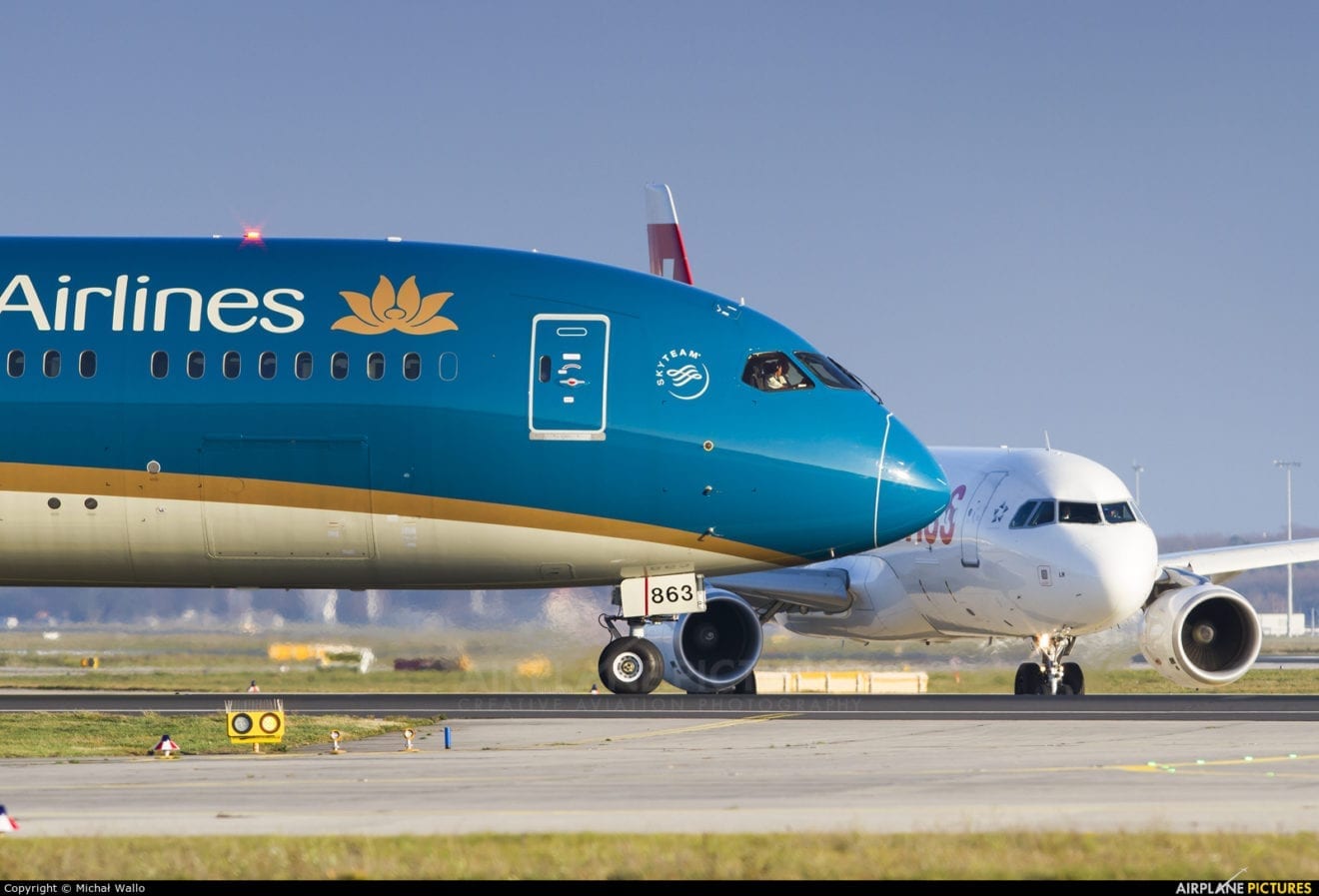
  • Vietnam Airlines to launch inflight Wi-Fi service

    Vietnam Airlines to launch inflight Wi-Fi service

    Vietnam Airlines will launch inflight Wi-Fi service on some flights connecting Hanoi and HCMC with cities in China, Japan and Singapore.

    Passengers will be charged VND75,000-735,000 ($2.95 -$29.95) depending on usage time and capacity.

    Providing inflight Wi-Fi service is one of the steps that Vietnam Airlines is taking towards becoming a digital airlines by 2020 and an international five-star airline in the future.

    The Wi-Fi service will be available on the domestic route from Hanoi to Ho Chi Minh City and international flights from Hanoi to China’s Shanghai and Japan’s Osaka and between HCMC and Osaka and Singapore, the airline said in a statement Monday.

    In the coming months, the airline will continue upgrading and expanding this service to Boeing 787 and other Airbus A350 aircraft with faster speeds, it said.

    Le Hong Ha, deputy general director of Vietnam Airlines, said that when using the service, passengers can send text messages on popular applications such as Viber, iMessage, Messenger and Whatsapp.

    “This is part of Vietnam Airlines’ efforts to catch up with the development trends of the world aviation industry, with many 5-star airlines like Singapore Airlines, Qatar Airways, Cathay Pacific Airways and Lufthansa providing similar services,” Ha said.

    Vietnam Airlines operates flights on 60 international and 33 domestic routes.

  • AirAsia’s inflight WiFi is getting faster

    AirAsia’s inflight WiFi is getting faster

    WiFi on planes is the next-gen convenience, or potential annoyance, depending on your attitude to people being ‘connected’ all around you. But for business people, parents with families or bored flyers, it will be a welcome addition to the low-cost flying experience.

    Now, passengers, onboard AirAsia can look forward to an “enhanced inflight entertainment and connectivity experience” with the low-cost airlines’ recently upgraded WiFi services.

    Six AirAsia Malaysia planes and two aircraft operated by Thai AirAsia have now been equipped with Inmarsat’s high-speed Ka-band platform, GX Aviation. AirAsia Group president (RedBeat Ventures) Aireen Omar said this development is the “next logical step” for the airline.

    AirAsia formerly carried a system called ‘Rokki’ but has phased that out in preference to the newer, faster system.

    “As the pioneer of low coast inflight WiFi in the region, we are always looking for ways to redefine the digital inflight experience for our guests.”

    Guests will be able to stay connected throughout their journey and perform data-intensive activities, including live streaming. Ka-band claims to provide connectivity beyond basic broadband, supporting real-time video, music streaming and more.

    The AirAsia WiFi Internet plans range between 9 Ringgit (65 baht) and 58 Ringgit (420 baht) with the most basic plan capped at 10MB speed. There is also the top of the range 200MB plan which is best for streaming.

    The service will be rolled out to the rest of the Air Asia fleet over the next 12 months.

    The Thaiger tried out the new system on a flight from Kuala Lumpur to Phuket on Tuesday. We were only using the 10MB speed internet but was perfectly adequate for our work and saving documents in the ‘cloud’.

  • Australia gets first 5G-enabled Wi-Fi hotspots

    Australia gets first 5G-enabled Wi-Fi hotspots

    “We have said we intend to lead on 5G and with these 5G-enabled Wi-Fi hotspots Australian consumers will be among the first people in the world to try the technology,” Mr. Wright said. “Taking 5G technology out of a lab and into the hands of consumers is another key milestone on Telstra’s roadmap to offering 5G services in 2019.”

    There are no 5G compatible commercial smartphones or tablets available today. By connecting 5G backhaul and infrastructure in the Southport Exchange, to a standard Wi-Fi access point then people can use the technology on their existing device, Telstra explained in a press release.

    Using Wi-Fi access as part of Telstra’s 5G technical program is a way to show the benefits of 5G capability in real-world conditions. The 5G hotspots will be open to anyone in the area and are free with a download limit of 10 GB per day per device.

    “Wi-Fi has limited throughput so a single hotspot alone cannot come close to reaching the limits of 5G at our Innovation Centre. By using multiple hotspots with potentially hundreds of smartphone users served through a single 5G device we are able to get closer to demonstrating 5G in a real-world environment,” Wright said. “Our 5G backhaul is capable of delivering download speeds of more than 3Gbps, which is capable of supporting around 1,000 HD movies being streamed simultaneously.”

    Telstra is also using mmWave spectrum and its 5G Innovation Centre to put a connected car on the road with the Intel 5G Automotive Trial Platform, one of the most advanced 5G prototype devices available in the world today.

    “Working with global technology companies Ericsson and Intel, we have put Australia’s first 5G connected car on the road. We are in the very early stages of development and are achieving download speeds approaching 1Gbps inside the car and the vehicle is also equipped with a Wi-Fi access point,” Wright said.

    “This shows how quickly technology is evolving. At the beginning of the year, our 5G prototype device was the size of a bar fridge and weighed more than 200 kilograms.  Now, in collaboration with Intel and Ericsson, we have one that has been shrunk down to the size of a personal computer and can be installed in a car.”

    The Connected Car will help Telstra to start getting real results on mobile performance over mmWave and ensure 5G network readiness.  These advances are part of a series of 5G related activities that Telstra, Ericsson, Intel and other technology companies will undertake on the Gold Coast in 2018.

    The 5G Innovation Centre is central to a $60 million investment Telstra has made to upgrade infrastructure on the Gold Coast to support growing demand and major events in the area.

    Actual broadband speeds experienced on the 5G enabled Wi-Fi hotspots and Connected Car will vary and are likely to be lower than the maximum depending on factors, Telstra said, such as the type of device being used, distance from the hotspot and the number of people connected to the hotspot at the one time. 

  • Singapore Airlines adds another Airbus A350 to Perth

    Singapore Airlines adds another Airbus A350 to Perth

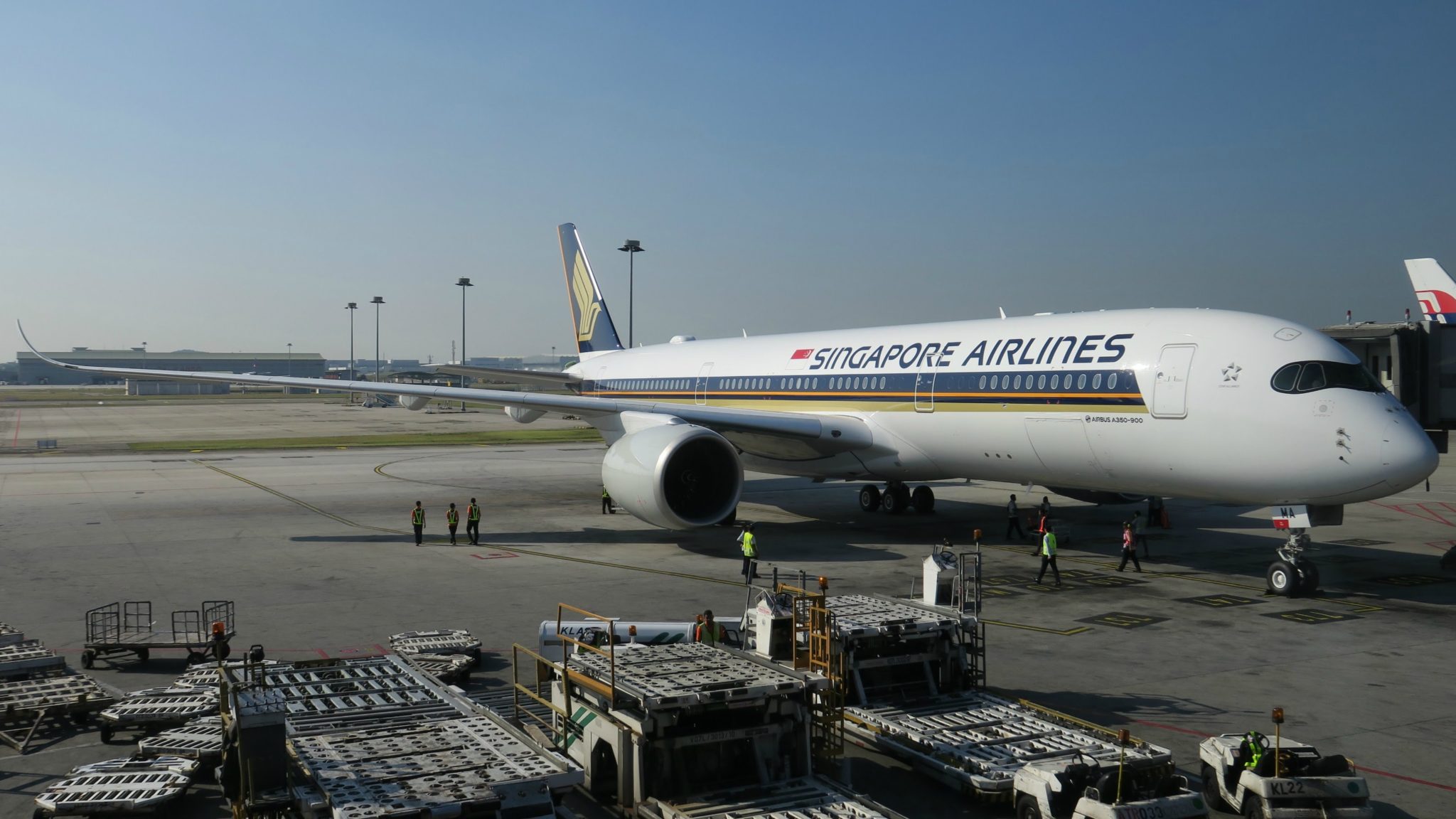
    Singapore Airlines is continuing its rolling upgrade of flights to Australia, with Perth set to see a second Airbus A350 from July 1, 2019.

    The advanced jet, which boasts Singapore Airlines’ latest flat-bed regional business class seats in what the airline calls a ‘medium-range’ configuration, will slot into daily flights SQ214 (departing Perth at 5.10pm) and SQ223 (wheels up from Singapore at 9.30am).

    SQ226/SQ213 already hosts an A350, with a Boeing 787-10 Dreamliner rostered onto SQ216/SQ215.

    This leaves just one daily flight on the Star Alliance member’s older Airbus A330, and its days are surely numbered.

    The Airbus A350’s 40 business class seats are arranged in a 1-2-1 layout, providing every passenger with direct aisle access, with access to inflight WiFi if you need to work rather than rest – or luxuriate over your Book the Cook meal – on the quick five-hour hop.

    Singapore Airlines intends to roll out lie-flat beds across its entire fleet from 2020, from the longest of globe-spanning trips to short hops such as Singapore-Kuala Lumpur on SilkAir, which will be adopting new flat-bed business class seats on its factory-fresh Boeing 737s.