Tag: with

  • Uniqlo Targets Massive Expansion in India with Over 100 Stores by 2031

    Uniqlo Targets Massive Expansion in India with Over 100 Stores by 2031

    Uniqlo, a highly recognized retail brand, is set to embark on a substantial expansion plan in India. The company’s strategy involves a fivefold increase in its store network, boosting the number from 20 to over 100 within the next five years.

    The company’s expansion will primarily concentrate on New Delhi and other significant urban areas, as per inside sources. Uniqlo, a division of the Japanese retail powerhouse Fast Retailing, has a presence in more than 25 markets and boasts a global network of over 2,500 stores.

    Local Production and Global Expansion

    In line with local regulations, Uniqlo will not only import clothes from Asian factories but will also initiate production within India. This move is consistent with the company’s broader strategy to expand its influence in the Global South, encompassing South Asia and Southeast Asia.

    The retail brand’s presence in Southeast Asia is considerably more extensive than in India. Uniqlo operates 81 stores in the Philippines, 78 in Indonesia, 73 in Thailand, 60 in Malaysia, and approximately 30 in both Singapore and Vietnam.

    Impressive Sales Growth

    Uniqlo’s consolidated sales in South Korea, Southeast Asia, India and Australia experienced a surge of 32 per cent for the initial nine months ending in May. Sales in India and Southeast Asia alone continued to demonstrate double-digit growth. “We see Asia as the next global growth centre in the long term,” stated Takeshi Okazaki, CFO of Fast Retailing. The brand aims to bolster its reputation in Asia, with plans to enhance its product lineup and store operations.

    Questions & Answers

    What is Uniqlo’s expansion plan in India?
    Uniqlo plans to expand its store network in India fivefold, from 20 to over 100 stores within the next five years.

    What strategy will Uniqlo employ to meet local regulations?
    To adhere to local regulations, Uniqlo will not only import clothes from Asian factories but will also begin manufacturing in India.

    How has Uniqlo performed in other Asian markets?
    Uniqlo has seen significant growth in Southeast Asia. The brand operates numerous stores in the Philippines, Indonesia, Thailand, Malaysia, Singapore and Vietnam, and has experienced a 32% increase in sales in South Korea, Southeast Asia, India and Australia.

  • Chinese Hotpot Giant, Banu, Ignites Global Expansion with First Hong Kong Outlet

    Chinese Hotpot Giant, Banu, Ignites Global Expansion with First Hong Kong Outlet

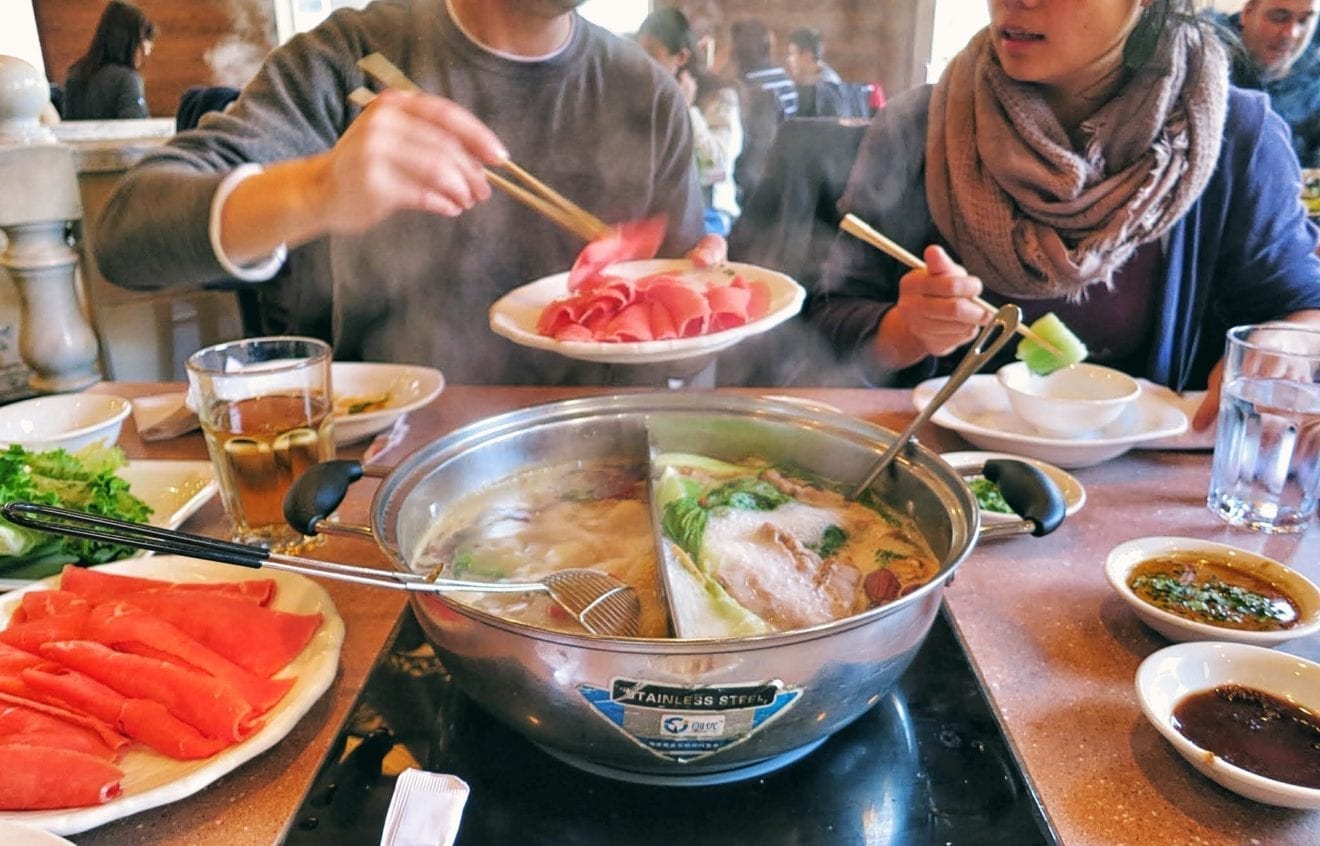
    Banu, a premier hotpot brand originating from Mainland China, has broadened its horizons by launching its very first establishment in Hong Kong.

    Established in 2001, Banu has seen rapid expansion, operating over 200 outlets across Mainland China. The brand’s debut in Hong Kong, with its maiden store located in Hysan Place, Causeway Bay, signifies the commencement of its ambitious global expansion plan.

    A Market Leader

    Banu is recognized as the largest revenue-generating brand in China’s premium hotpot market, recently ascending to occupy the second spot in the country’s overall hotpot market standings. The previous year witnessed an impressive 88.7% year-on-year surge in profits, alongside the opening of 44 new locations.

    In anticipation of its Hong Kong debut, Banu acknowledged the region’s reputation as a global culinary hub, boasting a mature catering industry with stringent standards for ingredient quality and culinary processes. They noted that Hong Kong’s hotpot market is distinctly divided: budget brands compete for footfall with their value-for-money offerings, while high-end establishments focus on deluxe seafood offerings. However, they believe there is a yet unexplored niche for boutique hotpot that harmoniously blends authentic Sichuan flavors with meticulous ingredient selection, all packaged within a sophisticated premium dining experience.

    Future Plans

    Towards aiding its global expansion, Banu is considering an initial public offering (IPO) in Hong Kong. Current market data indicates that themed restaurants, such as Banu, account for one-third of Hong Kong’s hotpot market.

    The brand’s unique positioning, centered around their signature beef tripe, is anticipated to unlock new growth opportunities in the market.

    Questions & Answers

    What is Banu’s market position in China’s hotpot market?
    Banu is recognized as the largest revenue-generating brand in China’s premium hotpot market and holds the second position in the country’s overall hotpot market standings.

    What is Banu’s expansion strategy?
    Banu is considering an initial public offering (IPO) in Hong Kong to aid its global expansion. It aims to explore the untapped niche for boutique hotpot that blends authentic Sichuan flavors with meticulous ingredient selection in a premium dining experience.

    What is Banu’s unique selling proposition?
    Banu’s unique selling proposition is its signature beef tripe, which it hopes will unlock new growth opportunities in the market.

  • Singapore Exchange Broadens Horizons with SpaceX and Grab Depository Receipts Launch

    Singapore Exchange Broadens Horizons with SpaceX and Grab Depository Receipts Launch

    Singapore Exchange (SGX), the country’s stock exchange, has announced that it will introduce depository receipts for three major tech companies: SpaceX, Grab, and Sea. This announcement was made on Tuesday, with the trading of the depository receipts set to commence the following day. The addition of these companies allows investors to trade in Singapore Dollars during local trading hours.

    The introduction of these three businesses expands the SGX’s offering to a total of 38 depository receipts, adding to those already available from companies across Thailand, Indonesia, Hong Kong, and the United States. This expansion serves to further diversify and enhance the offerings available to investors in the local market.

    The Impact on Retail Investors

    The SGX highlights that the inclusion of these companies, especially the launch of SpaceX’s depository receipts following its historic IPO last month, provides retail investors with unprecedented access to these equities. The depository receipts offer a simplified and convenient method for investors to gain exposure to these equities, using local currency.

    Grab and Sea, while both listed in the U.S., are headquartered in Singapore, further solidifying the SGX’s position as a global hub for investment. Bernice Tan, a representative from the Securities Market & Depository with SGX, expressed that the new addition mitigates traditional challenges such as foreign exchange friction and the complexities of overseas markets. She added that this allows investors to build a globally diversified portfolio in the Singapore Dollar, within a familiar trading environment.

    Questions & Answers

    What is the significance of introducing depository receipts for SpaceX, Grab, and Sea to the Singapore Exchange?
    Introducing depository receipts for these companies provides investors with more diversification options. It allows them to invest in these companies using local currency and during local trading hours.

    How does the introduction of these companies impact the SGX’s portfolio?
    The addition of SpaceX, Grab, and Sea expands the SGX’s portfolio to a total of 38 depository receipts, alongside those from Thailand, Indonesia, Hong Kong, and the U.S., enhancing its offerings.

    What advantages do these new additions offer to retail investors?
    The new additions provide a simplified and convenient way for retail investors to gain exposure to these equities, mitigating challenges such as foreign exchange friction and overseas market complexities.

  • Lucio Tans Sky-High Ambitions: Philippine Airlines to Boost Fleet with 20 Boeing Dreamliners

    Lucio Tans Sky-High Ambitions: Philippine Airlines to Boost Fleet with 20 Boeing Dreamliners

    Philippine Airlines, under the leadership of banking and tobacco magnate Lucio Tan, intends to acquire up to 20 Boeing 787-10 Dreamliner jets as the company upgrades its fleet in response to increased demand in air travel. The national airline has committed to purchasing at least 15 Dreamliners, with the option to buy another five, as stipulated in a preliminary agreement established in the United Kingdom.

    A Historic Purchase for Philippine Airlines

    The new order represents Philippine Airlines’ initial acquisition of Boeing aircraft in nearly 20 years, with delivery slated between 2031 and 2034. While the financial details of the agreement were not disclosed, the overall deal could potentially exceed $7.1 billion based on listed prices. A single Dreamliner typically ranges from $150 million to $200 million, even though its list price can reach a peak of $355 million.

    The procurement follows Philippine Airlines’ successful fundraising of $300 million from its inaugural bond sale after emerging from Chapter 11 bankruptcy in the U.S. in December 2021. The generated funding will contribute to the rejuvenation and expansion of the 85-year-old airline’s fleet.

    Lucio Tan III, president of PAL Holdings, the airline’s parent company, said, “This investment exemplifies our faith in the future of Philippine Airlines and the projected growth of air travel.” He added, “The Boeing 787-10 will augment our medium and longhaul fleet, enabling us to offer an enhanced travel experience for our passengers while improving operational efficiency.”

    A Broader Strategy for Efficiency and Sustainability

    The acquisition of the 787 Dreamliners is part of a larger plan to build a more efficient, sustainable, and competitive airline. The new aircraft will be powered by GE Aerospace’s GEnx-1B engines. Philippine Airlines, which boasts a fleet of over 80 aircraft, provides service to various destinations across the Philippines and 40 international routes in Asia, North America, Australia, and the Middle East.

    Since 2024, the airline has been actively expanding and upgrading its fleet, following a record profit in 2023 spurred by a post-pandemic travel surge. In December, the airline also added five Airbus A320 aircraft to its fleet.

    In addition to aviation, Tan’s business portfolio extends to banking, beer, spirits, tobacco, and real estate through his publicly traded LT Group. His net worth is estimated to be $2.9 billion.

    This purchase also represents a significant win for Boeing, which has also recently secured orders for 100 aircraft from leasing company SMBC and 28 jets from Riyadh Air.

    Questions & Answers

    What is the significance of this purchase by Philippine Airlines?
    This is the first time in nearly two decades that Philippine Airlines has placed an order for Boeing aircraft, marking a significant milestone in the company’s fleet upgrade strategy.

    How will this acquisition benefit Philippine Airlines?
    The acquisition of the Boeing 787-10 Dreamliner aircraft is expected to enhance operational efficiency and the overall travel experience for passengers, particularly for medium and long-haul flights.

    What are Lucio Tan’s other business interests besides aviation?
    Apart from aviation, Lucio Tan’s business interests span across various sectors, including banking, beer, spirits, tobacco, and real estate through his publicly listed LT Group.

  • Brochu Walker Makes Bold Asia Debut with Grand Flagship Store in Seouls Gangnam District

    Brochu Walker Makes Bold Asia Debut with Grand Flagship Store in Seouls Gangnam District

    Brochu Walker, a high-end American women’s fashion label, has announced the grand opening of its inaugural international flagship store. Situated in Seoul, the move signifies the brand’s first venture into the Asian market.

    Brochu Walker: New Horizons

    Positioned in the bustling district of Gangnam, the impressive five-level ‘Maison’ spans approximately 664 square meters, spread over two floors dedicated to retail. The spacious location also offers an exclusive, personalized shopping experience with an area set aside for private client consultations. The decision to expand into Seoul comes on the heels of the brand’s appointment of South Korean actress Cha Joo Young as its first Korean ambassador, a move that underscores the growing significance of the Asian market to the Los Angeles-based fashion house.

    The Maison design is the result of a partnership with the Seoul-based Blurker Design Studio. The store’s innovative design seamlessly blends modern interior aesthetics with elements of traditional Korean artistry. The space is punctuated by standout materials such as oak, marble, Hanji paper, and bronze, which sit alongside artwork commissioned from local creatives.

    Brochu Walker: A Personal Vision

    Karine Dubner, the CEO and chief creative officer of Brochu Walker, spoke passionately about the new store, saying, “Maison Seoul is the culmination of years of dreams, designs, and thoughtful collaborations.” Dubner’s sense of accomplishment is evident when she describes the finished space, which she views as an embodiment of Brochu Walker’s ethos – “quiet, beautiful, intentional, and deeply personal.” She also expressed her gratitude for the warm reception from the Korean community, which she described as “deeply humbling.”

    Originating in Los Angeles, Brochu Walker has built a reputation for its superior knitwear and subtly elegant ready-to-wear collections, placing it firmly in the ‘quiet luxury’ niche. The brand, which already has a solid brick-and-mortar presence across America with boutiques in California, Connecticut, Georgia, and New York, hints at further growth with plans in place to open more stores in Nashville and Austin.

    Questions & Answers

    What is Brochu Walker known for?
    Brochu Walker is renowned for its high-quality knitwear and subtly elegant ready-to-wear collections, which are part of the ‘quiet luxury’ segment.

    Where is the brand’s first international flagship store located?
    The brand’s first international flagship store is located in the Gangnam district of Seoul, South Korea.

    What are the future expansion plans of Brochu Walker?
    The brand has plans for further expansion within the US, with new stores expected to open in Nashville and Austin.

  • Ikea Fuels Indian Expansion with $2.2B Investment by 2030

    Ikea Fuels Indian Expansion with $2.2B Investment by 2030

    Swedish furniture giant, Ikea, anticipates a substantial increase in its investment in India, aiming to reach a total of US$2.2 billion by 2030 as part of its aggressive expansion strategy.

    Doubling Investments

    Patrik Antoni, the CEO of Ikea India, revealed that the company has already surpassed the initial commitment of $1.1 billion made in 2013 post the approval to establish single-brand retail outlets in India. He added, “We will likely double this investment in future. By 2030, we should have at least accomplished that.”

    The additional investment is set to be utilized to facilitate the expansion of Ikea’s physical store footprint and develop mixed-use retail centers. Further, it will support increased local sourcing, renewable energy ventures, and advanced technology capabilities.

    Future Expansion Plans

    The upcoming major projects include the inauguration of a large-format store in Noida next year, with another planned in Gurgaon for 2028. In tandem with its retail growth, Ikea also plans to enhance local manufacturing to bolster domestic sales and exports. Antoni concluded by stating, “We plan to produce more and also increase our exports. Thus, we hope to do a lot more.”

    Questions & Answers

    What is Ikea’s investment plan for India by 2030?
    Ikea plans to more than double its investment in India to reach US$2.2 billion by 2030.

    What will the additional investment be used for?
    The additional investment will be used to expand Ikea’s physical store network, develop mixed-use retail centers, increase local sourcing, fund renewable energy projects, and enhance technology capabilities.

    What are Ikea’s future expansion plans in India?
    The company plans to open a large-format store in Noida next year, followed by another in Gurgaon in 2028. It also plans to increase local manufacturing to support domestic sales and exports.

  • Vietnam’s Auto Market Zooms Ahead: 15% Hike in Sales with Hybrids and Imports in the Lead

    Vietnam’s Auto Market Zooms Ahead: 15% Hike in Sales with Hybrids and Imports in the Lead

    The Vietnamese auto market has witnessed a significant growth of 15% in sales during the first half of 2026, as compared to the same period last year. A substantial portion of this growth can be attributed to the robust sales of imported and hybrid vehicles. Cumulative sales during this period amounted to 149,761 vehicles, which presents an increase of 4% from the previous month with total sales reaching 31,104 vehicles, as per a report by the Vietnam Automobile Manufacturers’ Association (VAMA).

    The Uneven Recovery of the Auto Market

    Despite the substantial growth, the auto market recovery in Vietnam appears to be inconsistent. When compared to June 2025, the sales for June 2026 reflect a decrease of approximately 2.7%. The first half of the year marked the sales of over 100,000 passenger cars, around 38,000 commercial vehicles, and nearly 10,865 hybrid vehicles, which witnessed a remarkable growth of 83% year-on-year.

    The surge in the sales of hybrid vehicles suggests a growing preference for fuel-efficient and environmentally friendly vehicles. VAMA reported the sale of 2,347 hybrid vehicles in June alone, marking an increase of 41% from the previous month and nearly double the sales in June 2025, making hybrid vehicles the most rapidly growing sector in the auto market.

    Competitive Landscape and Market Growth Prospects

    Among the brands under VAMA, Toyota secured the leading position with the sale of 6,494 vehicles in June, accounting for nearly 27% of the total sales. They were followed by Mitsubishi with 3,158 units sold, and then Ford with 2,741 units. Kia and Mazda, both distributed by THACO, sold 2,675 and 2,361 vehicles respectively, making it to the top five best-selling brands of June.

    The competition has been intensifying in the market, as reflected by the narrowing gap in sales among the leading brands. It spans across various segments including B-segment sedans, urban SUVs, MPVs, and pickup trucks.

    Industry experts anticipate that the positive performance in the first half of 2026 will lay a strong foundation for greater growth in the second half. Several automakers are planning to introduce new models, expand their hybrid and electric vehicle lineups, and implement promotional programs to boost demand.

    Given the competitive auto loan interest rates, stable supply of vehicles, and a diverse product range, Vietnam’s automotive market is likely to sustain its growth momentum for the rest of 2026. SUVs, MPVs, and hybrid vehicles are expected to continue to drive overall market sales.

    Questions & Answers

    What is the growth rate of sales in the Vietnamese auto market in the first half of 2026?
    The Vietnamese auto market recorded a growth rate of 15% in sales in the first half of 2026.

    Which are the top-performing vehicle brands in June 2026?
    Toyota, Mitsubishi, Ford, Kia, and Mazda were the top-performing vehicle brands in June 2026.

    What type of vehicles are expected to drive overall market sales for the rest of 2026?
    SUVs, MPVs, and hybrid vehicles are expected to be the key drivers of overall market sales for the rest of 2026.

  • Revolutionizing Employee Health: LivWell Broadens Wellness Ecosystem in Vietnam with Innovative InsurTech Solutions

    Revolutionizing Employee Health: LivWell Broadens Wellness Ecosystem in Vietnam with Innovative InsurTech Solutions

    LivWell, a leading Singapore-based InsurTech firm, has announced plans to broaden its OneHealth employee benefits scheme in Vietnam. The expansion includes the development of specialized insurance solutions, focused on various health conditions.

    The company’s decision to expand its services and offerings was announced during a strategic conference held in Ho Chi Minh City, where LivWell also revealed new partnership agreements with InSmart and DiaB.

    Revolutionising Health and Wellness Benefits

    LivWell aims to transform OneHealth from a traditional employee benefits solution, primarily focused on medical expense reimbursement, into a comprehensive healthcare platform. This integrated platform is aimed at consolidating preventive care, financial protection and long-term health support.

    This all-inclusive platform combines numerous elements of health, including insurance, healthcare services, wellness incentive programs, and health monitoring tools, all within a single application.

    For employers, OneHealth delivers a unified view of workforce health and benefits utilization, aiding benefits management. Meanwhile, employees can use the LivWell app to monitor their health indicators while availing themselves of health screenings, workplace wellness activities, and healthcare services.

    Emphasizing the need for proactive health management, Nikhil Verma, Co-Founder and Group CEO of LivWell, said, “We aim to help organizations cultivate healthier workplaces where health is proactively managed and every employee gets the necessary support throughout their wellness journey.”

    Enhancing Workplace Productivity and Reducing Out-of-Pocket Expenses

    LivWell cited studies to illustrate that a staggering 70% of adults believe wellness programs boost workplace productivity. However, Vietnamese households continue to pay nearly 39.5-40% of healthcare expenses out of pocket, despite having public and private health coverage. This figure starkly contrasts with the World Health Organization’s recommended out-of-pocket expenses in the range of 15-20%.

    LivWell’s partnerships with InSmart and DiaB aim to address these issues. The collaboration allows users to submit insurance claims and monitor benefits through the LivWell app, in addition to providing remote consultations, personalized nutrition guidance, and chronic disease management services.

    Additionally, LivWell announced plans to create insurance products specifically for individuals with certain health conditions, starting with cancer. Noting the financial burden of cancer treatment, the company mentioned that patients often pay up to 70% of the treatment cost by themselves.

    Balakrishnan Ambat, Co-Founder and CEO of LivWell Vietnam, reiterated the company’s commitment to not only providing for treatment costs but also encouraging healthier lifestyles to prevent illness.

    LivWell’s expanded ecosystem and future condition-focused insurance products intend to contribute to the evolution of employee health benefits in Vietnam, by aiding businesses in investing in workforce wellbeing and expanding access to healthcare services throughout different life stages.

    Since 2020, LivWell has served over 320,000 users and supported more than 450 businesses, including small and medium-sized enterprises, with employee benefits and wellness programs.

    Questions & Answers

    What is LivWell’s OneHealth?
    OneHealth is an employee benefits solution by LivWell. The company plans to transform it into a comprehensive healthcare platform integrating preventive care, financial protection, and long-term health support.

    What are some of the features of the OneHealth platform?
    OneHealth combines health insurance, healthcare services, wellness incentive programs, and health monitoring tools within a single application. It provides employees with health screenings, workplace wellness activities, and healthcare services.

    What is the aim of LivWell’s partnerships with InSmart and DiaB?
    The collaborations with InSmart and DiaB will allow users to submit insurance claims and monitor benefits through the LivWell app. They will also provide remote consultations, personalized nutrition guidance, and chronic disease management services.

  • World Cup Fever Ignites Retail Boom: How Vietnamese Consumers Score Big with Huge Discounts

    World Cup Fever Ignites Retail Boom: How Vietnamese Consumers Score Big with Huge Discounts

    In Vietnam, the excitement of the 2026 World Cup has sparked a shopping frenzy, as consumers eagerly take advantage of retail promotions. With retailers offering substantial discounts on household appliances and fashion items, Vietnamese shoppers have been quick to seize the opportunity.

    Major Discounts on Household Appliances

    One shopper, Hang, who resides in Ho Chi Minh City (HCMC), had been monitoring prices for a few months. In early June, she successfully purchased a slow juicer at half its regular price, thanks to a World Cup promotion. She excitedly shared how previous discounts on the product, which only ranged from 10-20%, hadn’t been enticing enough. However, with the price slashed by over half, she made the purchase immediately.

    Another Ho Chi Minh City resident, Lan Anh, also capitalized on the ongoing promotions to purchase a variety of household appliances, including a television and a vacuum cleaner. Anh noted that aside from the significant markdowns, retailers were also providing additional incentives such as vouchers and gifts as part of interactive match prediction programs.

    The World Cup’s influence also extends to the electronics retail market. Several electronics retailers in HCMC have been actively promoting televisions in light of the football event. Various TV models have been discounted significantly, with some prices reduced by as much as 61%. This has been described as the most substantial price-cutting campaign for TVs to date, with large-screen models being heavily discounted to meet the tournament-driven demand.

    Boost in Retail Sectors Beyond Electronics

    While electronics retailers are witnessing a surge in sales, other consumer goods retailers haven’t been left behind. Saigon Co.op, for example, offers discounts of up to 30% on almost half of their snack, beer, and beverage bundles, targeted at football fans. They are even rewarding customers making large purchases with gifts.

    Fashion retailers are also leveraging the World Cup frenzy to their advantage. Pierre Cardin Shoes and Oscar Fashion reported the simultaneous launch of their World Cup’s Vancouver 2026 collection in six markets: Vietnam, Cambodia, Myanmar, Thailand, Laos, and Canada. Since the campaign’s inception, store traffic has reportedly increased by more than 55%, and sales have reached approximately 65% of the campaign’s target.

    The World Cup’s impact on global retail activity is projected to be highly positive, with predictions suggesting it could contribute up to $41 billion to global GDP by stimulating tourism, services, and consumption.

    Questions & Answers

    Q: How have Vietnamese consumers reacted to the World Cup retail promotions?
    A: Vietnamese shoppers have been quick to take advantage of the significant discounts offered by retailers during the World Cup, leading to a shopping frenzy.

    Q: Which sectors have seen a boost in sales due to the World Cup?
    A: The electronics sector, particularly TV sales, has seen a substantial boost, along with other consumer goods retailers and the fashion industry.

    Q: What has been the impact of the World Cup on global retail activity and GDP?
    A: The World Cup is expected to have a highly positive impact on global retail activity and could potentially contribute up to $41 billion to the global GDP by boosting tourism, services, and consumption.

  • Five Guys Joins US Fast-Food Frenzy in China with First Beijing Outlet Opening

    Five Guys Joins US Fast-Food Frenzy in China with First Beijing Outlet Opening

    Five Guys, an American burger chain, is set to open its first outlet in Beijing in the coming month, joining a surge of American fast-food brands either entering or rapidly expanding within China. This comes on the heels of the establishment of the brand’s first Chinese outlet in Shanghai in 2021. According to a statement made by the company last week, it is aiming to open three outlets in Beijing’s prime shopping centers, primarily targeting younger consumers. Construction activities are already underway, indicating that the openings are not far off.

    American chains like Wendy’s, Chili’s, Texas Chicken, and Popeyes are all vying for a piece of the world’s second-largest consumer market as they face oversaturation in their domestic markets, according to industry analysts. Sandy Lim, a China consumer analyst at S&P Global Ratings, stated that some smaller American chains are exploring possibilities in China to counterbalance the oversaturation in their domestic markets.

    Lim elaborated, “Despite fierce competition, there are still pockets of demand within China’s large catering market.” She explained that unlike previous foreign brands that depended on direct operations overseen by overseas headquarters, exposing them to profits, losses, and market volatility, many American brands nowadays prefer franchising models.

    Wendy’s, listed on Nasdaq, announced in May its plans to open up to 1,000 stores across China in the next decade. As per its first-quarter earnings report, the company has entered into a new franchise agreement with an experienced local restaurant operator, who remains unnamed.

    In the first quarter, the burger chain’s sales, in the same stores, fell by 7.8% year on year, while its system-wide sales in international markets rose by 6% from the previous year.

    Texas Chicken, another American fast-food chain, plans to open its first Chinese outlet in Shanghai this summer. In an April statement, the company announced its partnership with Deke Shengtang, a well-established local operator with several quick-service restaurant brands, to develop a minimum of 600 restaurants across the country over the coming years.

    Chili’s, yet another American chain, opened its second store in Beijing in May. Meanwhile, the Louisiana-based fried chicken brand, Popeyes, made a comeback to Beijing in April, nearly twenty years after it left China in 2003. This chain currently has over 80 outlets in Shanghai.

    Adapting to the Chinese Market

    Fu Yifu, a special research fellow at Su Merchants Bank, noted that inflation continues to affect household spending in the U.S., while the presence of Western fast-food brands in China continues to grow.

    Early market entrants like KFC, McDonald’s, and Starbucks have developed localized franchising models to mitigate risks. Five Guys is positioning itself to appeal to quality-conscious consumers in first-tier cities. Fu emphasized that Chinese consumers are not automatically attracted to foreign brands anymore. To succeed, these brands must offer differentiated products and adopt localized operations.

    Questions & Answers

    What is Five Guys’ expansion plan in China?
    Five Guys plans to open three stores in Beijing’s popular shopping centers, targeting younger consumers. This follows the opening of its first China outlet in Shanghai in 2021.

    What strategy are American fast-food chains employing in China?
    Many American fast-food chains are opting for franchising models in China, partnering with experienced local operators. This model reduces their exposure to market volatility compared to direct operations managed by overseas headquarters.

    What approach is Five Guys taking to appeal to Chinese consumers?
    Five Guys is targeting quality-focused consumers in first-tier cities. As Chinese consumers are not automatically attracted to foreign brands, the company is focusing on offering differentiated products and adopting localized operations.

  • Saxo Bolsters APAC Growth Strategy with New Institutional Business Head

    Saxo Bolsters APAC Growth Strategy with New Institutional Business Head

    Saxo, a leading digital broker, has named Gift Muthita Anankaphannan as their new Regional Head of Institutional Business for Asia-Pacific, in a move to strengthen their foothold in a prime market. Anankaphannan will be based in Singapore, and her role will involve leading the institutional business throughout the Asia-Pacific region while partnering with clients to enhance the offerings of Saxo.

    Anankaphannan’s Wealth of Experience

    Anankaphannan has an impressive career history, having previously served as a Senior Relationship Manager at Saxo. She brings over 16 years of experience spanning both the technology and institutional financial services sectors.

    Before her tenure at Saxo, she spent over a decade at Google, holding senior positions in sales, product strategy, and go-to-market execution, with her work encompassing AI-powered solutions. Anankaphannan kick-started her career in financial services at Bloomberg, where she specialized in equities and equity derivatives. Here, she provided data-driven insights to traders, analysts, and portfolio managers.

    Mahesh Sethuraman, the CEO of Saxo Singapore, praised Anankaphannan’s extensive experience with institutional partners and her deep understanding of Saxo’s FinTech DNA. He cited her excellent ability to foster long-term client relationships and lead high-performance teams.

    Saxo’s Institutional Business Growth

    Institutional clients make up a significant portion of Saxo’s international business, contributing to nearly one-third of the group’s overall income. Over the past year, the number of global institutional end-clients witnessed a 23 percent growth.

    Saxo recently collaborated with Singapore’s Trust Bank to roll out TrustInvest, a unique in-app investment tool that enables users to directly trade US stocks and exchange-traded funds (ETFs) via the Trust Bank app, with investments starting from a minimum of $10.

    Anankaphannan’s main role will be to steer the next stage of Saxo’s institutional growth in the Asia-Pacific. She stated that the region remains a crucial growth market for Saxo, and the company is dedicated to further scaling their institutional offering in the region.

    Questions & Answers

    What is Gift Muthita Anankaphannan’s new role in Saxo?
    She is the new Regional Head of Institutional Business for Asia-Pacific at Saxo.

    What is Anankaphannan’s professional background?
    She has over 16 years of experience in the technology and institutional financial services sectors, having previously worked at companies like Google and Bloomberg.

    What efforts is Saxo making to grow their institutional business?
    Saxo is focusing on enhancing their offerings and has recently launched an in-app investment tool called TrustInvest in collaboration with Trust Bank.

  • Philippine Airlines Soars with $300M Bond Sale: Billionaire Lucio Tans Strategy for Expansion and Recovery Post-Bankruptcy

    Philippine Airlines Soars with $300M Bond Sale: Billionaire Lucio Tans Strategy for Expansion and Recovery Post-Bankruptcy

    Philippine Airlines, under the ownership of billionaire Lucio Tan, renowned for his ventures in the tobacco and banking sectors, has successfully garnered US$300 million via a five-year bond sale. This strategic move is aimed at financing the carrier’s ambitious plans for fleet modernization and growth.

    The bonds, which have been guaranteed as senior unsecured, were issued at a rate of 7.75% by Primero Agila, a fully owned subsidiary of the airline. The statement issued by the carrier also revealed the overwhelming response received for the offering, which was subscribed to 4.5 times more than anticipated, resulting in an order book surpassing $1.4 billion.

    First Bond Sale Since Bankruptcy Clearance

    Significantly, this bond sale is the first for Philippine Airlines following its emergence from Chapter 11 bankruptcy proceedings in the U.S. in December 2021. The funds raised will be used to bolster the carrier’s international expansion plans, which include augmenting the frequency of flights to major North American hotspots including Chicago, New York, Toronto, and Vancouver.

    In the words of Lucio C. Tan III, president of PAL Holdings and the grandson of the tycoon, “This landmark bond offering is a powerful affirmation of Philippine Airlines’ transformation and the confidence that global investors have in our long-term vision and growth ambitions. This allows us to strengthen our network and continue to elevate the travel experience for our customers.”

    A Landmark Achievement

    The bonds, which have received an unconditional and irrevocable guarantee by Philippine Airlines and its wholly-owned subsidiary, Air Philippines Corp., will be listed on the Singapore Exchange. The $300 million bond sale has been recognized as the first rated high-yield bond offering by a Philippine issuer in over a decade and the first unsecured rated high-yield bond issued by an Asian airline.

    Moreover, the airline has demonstrated a robust earnings recovery since the height of the Covid-19 pandemic. Its net profit witnessed a rise of 2.6% to $78.6 million in the first quarter, compared to the same period in the previous year, while revenue experienced a healthy increase of 9.7% to $895.7 million.

    In addition to aviation, Tan maintains interests in multiple sectors including banking, beer, spirits, tobacco, and real estate via his publicly listed flagship company, LT Group. His net worth stands at an impressive $3 billion, making him one of the wealthiest tycoons in the Philippines.

    Questions & Answers

    What will the proceeds from the bond sale be used for?
    The funds raised from the bond sale will be used to support Philippine Airlines’ international expansion plans, including the increase of flight frequencies to major North American cities.

    Why is this bond sale significant for Philippine Airlines and the aviation industry?
    This bond sale is the first for Philippine Airlines since it emerged from bankruptcy proceedings last year. It is also the first rated high-yield bond offering by a Philippine issuer in over a decade and the first unsecured rated high-yield bond issued by an Asian airline.

    How has Philippine Airlines performed financially since the height of the Covid-19 pandemic?
    The airline has shown a strong earnings recovery, with net profit rising 2.6% to $78.6 million in the first quarter from a year earlier, while revenue increased 9.7% to $895.7 million.

  • Balenciaga Turns Heads with Voluminous Capes and Feathered Fashions at Paris Haute Couture Show

    Balenciaga Turns Heads with Voluminous Capes and Feathered Fashions at Paris Haute Couture Show

    Under the scorching midday sun, models strutted around a circular runway, donning oversized gowns, capacious capes, and trousers encrusted with ostrich feathers. This dramatic display marked designer Pierpaolo Piccioli’s debut haute couture collection in Paris, showcased on a sweltering Wednesday.

    Piccioli’s collection, designed for the autumn/winter season, comprised rich cashmere coats, elongated leather gloves, and feather-laden gowns. As the heatwave intensified in the city, these magnificent creations gracefully passed by spectators who were attempting to cool down by fanning themselves.

    The collection featured dresses with expansive balloon hems and jackets with curved backs, a nod to the unconventional, architectural fashion that Cristobal Balenciaga, the brand’s founder, was renowned for. Piccioli, with his 16-year tenure as creative director for Valentino under his belt, took the reins at Balenciaga a year prior and is keen to leave his imprint on the brand. His task is to balance the legacy of his predecessor, Demna, who during his 10-year stint introduced streetwear phenomena such as “ugly” oversized sneakers.

    Balenciaga, a component of the Kering luxury group, might be one of the smaller fashion houses, but it shares the limelight with other illustrious brands such as Gucci, Yves Saint Laurent, and Bottega Veneta. In 2020, the fashion house revived its haute couture collection, which had been on a hiatus since 1968.

    The show concluded with Piccioli’s appearance, accompanied by 30 of his key creative team members, all clad in white lab coats. They received a round of applause. The front-row attendees included renowned actors Demi Moore and Cynthia Erivo, with Kering’s CEO, Luca de Meo, also observing the spectacle that unfolded across the gardens of the historic Cite Universitaire student housing complex.

    Questions & Answers

    Who is Pierpaolo Piccioli?
    Piccioli is a renowned fashion designer who previously served as the creative director of Valentino for 16 years. He took over Balenciaga a year ago.

    What constituted the primary theme of Piccioli’s debut collection for Balenciaga?
    Piccioli’s debut collection was characterized by oversized forms and unconventional, architectural fashion, reminiscent of the styles that Cristobal Balenciaga, the brand’s founder, was known for.

    When did Balenciaga reinstate its haute couture collection?
    Balenciaga reinstated its haute couture collection in 2020, after a hiatus that began in 1968.

  • Sapporo Joins Forces with Carlsberg in $643M Southeast Asian Venture to Boost Premium Beer Sales

    Sapporo Joins Forces with Carlsberg in $643M Southeast Asian Venture to Boost Premium Beer Sales

    Japanese brewing company Sapporo is set to enter into a strategic partnership with Danish brewer Carlsberg, which entails a $643 million investment for a 25% stake in a Singapore-based joint venture. This venture, which will span across Southeast Asia and Hong Kong, is anticipated to begin operations in December 2026, with Carlsberg owning a majority stake of 75%.

    A Regional Expansion

    Sapporo intends to use this partnership as an opportunity to extend its existing collaborations in Malaysia, Hong Kong, and Singapore to other countries including Vietnam, Laos, and Cambodia. The company’s goal is to significantly increase the sales of its flagship product, Sapporo Premium Beer, in these target markets. By 2035, Sapporo aims to sell around ten times the number of units sold in 2025, an ambitious objective that will be facilitated by Carlsberg’s strong market presence across the region.

    Anticipated Benefits

    As part of the agreement, Sapporo will provide the joint venture with a long-term license for Sapporo Premium Beer. The Japanese brewer expects to see a variety of financial benefits as a result of this arrangement, including diversified revenue streams. These will emanate from dividends, royalty income, and manufacturing-related earnings.

    Questions & Answers

    What is the nature of the strategic partnership between Sapporo and Carlsberg?
    The partnership involves Sapporo investing $643 million for a 25% stake in a Singapore-based joint venture with Carlsberg, which will span across Southeast Asia and Hong Kong.

    What is Sapporo’s sales goal for the Sapporo Premium Beer?
    Sapporo aims to increase sales of the Sapporo Premium Beer in the target markets to approximately ten times the sales level of 2025 by the year 2035.

    How will Sapporo benefit from this joint venture?
    Sapporo anticipates gaining from diversified revenue streams, which will come from dividends, royalty income, and manufacturing-related earnings.

  • Watson’s Celebrates 185 Years with Exclusive Heritage Concept Store in Hong Kong, Offering Unique Merchandise and Experiential Retail

    Watson’s Celebrates 185 Years with Exclusive Heritage Concept Store in Hong Kong, Offering Unique Merchandise and Experiential Retail

    In celebration of its 185th anniversary, Watsons Hong Kong has unveiled a heritage concept store in Yau Ma Tei. This innovative store seeks to blend the brand’s long-standing pharmacy heritage with the excitement of experiential retail and exclusive anniversary merchandise.

    Situated on Nathan Road, the store pays homage to AS Watson’s pharmacy origins with interiors that take design cues from yesteryears, interactive spaces for customers to engage with, and exclusive merchandise created especially for the anniversary. This experiential retail space features three themed photo zones which are inspired by the rich culture of Hong Kong’s pharmacies: a vintage medicine cabinet, a retro vanity corner, and a bathroom-themed display.

    To commemorate its opening, Watsons has launched a series of anniversary-exclusive products. Among these are a vintage-themed ‘Watjai’ mascot plush collection and a unique ‘Love Your Organs’ blind box series. In addition, a collaboration with popular brands Bioré, Colgate, and Darlie has resulted in the introduction of retro-inspired packaging for select products.

    In conjunction with the 185th anniversary campaign, other retail brands under the AS Watson Group umbrella, such as ParknShop, Fortress, and Watsons Water, are also participating. Exclusive merchandise from these brands will make their debut at the heritage concept store. Customers can look forward to items like lightbox-style magnets that pay tribute to ParknShop’s signage, a retro film camera from Fortress, and a vintage-style bottle opener courtesy of Watsons Water.

    This heritage concept store forms an integral part of Watsons’ overarching 185th-anniversary campaign, encapsulating the brand’s commitment to honoring its history while incorporating more experiential elements into its physical store network.

    Questions & Answers

    What is the heritage concept store?
    The heritage concept store is a new retail space by Watsons Hong Kong that combines the brand’s pharmacy history with experiential retail and exclusive anniversary merchandise.

    What can customers expect at the new heritage concept store?
    Customers can engage with vintage-inspired interiors and interactive experiences at the store. They can also purchase exclusive anniversary merchandise, including a ‘Watjai’ mascot plush collection and a ‘Love Your Organs’ blind box series.

    Which other brands are participating in Watsons’ 185th-anniversary campaign?
    Other retail brands under the AS Watson Group, such as ParknShop, Fortress, and Watsons Water, are also taking part in the anniversary campaign with exclusive merchandise debuting at the heritage concept store.