Retail News CRM

Tag: Xiaomi

  • Xiaomi Becomes a Bank

    Xiaomi Becomes a Bank

    Xiaomi has the expected trimmings for a smartphone and device-maker: A retail channel for its products and internet services for its 300 million users. It’s also becoming a bank.

    «We are looking at the business we are doing in the non-financial sectors and how we can apply the technology, apply the artificial intelligence to power our financial business,» Hong Feng, chairman, and CEO of Xiaomi Finance and co-founder of Xiaomi, said at the Singapore Fintech Festival 2019 on Monday.

    In May, the Hong Kong Monetary Authority issued Xiaomi an online-only banking license. The smart-device maker has also begun «beta» consumer lending services in India, according to a «Reuters» report. In China, Xiaomi’s lending business has an $8 billion loan book as of mid-2018, the «Reuters» report said, citing documents it had seen.

    In August, Xiaomi reported 792 million yuan ($112.98 million or S$153.68 million) in revenue from the fintech business in the second quarter, up 62.7 percent on-year.

    We have about 300 million active users. They are using our devices five hours per day,» Hong said. «We are collecting a lot of data about our users’ behavior, our users’ financial situation, and their different situations. When we’ve got the consent of the users, we are having those data analyzed and [they] provide a very accurate credit profile.

    Hong noted that wasn’t particularly innovative any longer, with other providers on the mainland and elsewhere taking the same tack.

    But he said Xiaomi is able to offer some unique features, particularly with more accurate fraud detection.

    It’s relatively easy to pretend to be a good user if you are only facing the financial institutions for a very short period of time. But our users are using our phone 24-7 for an extended period of time so it’s much harder to defraud, Hong said.

    He added the company was also able to leverage its smart devices for payment services, such as using the smartphone or smartwatch to pay for transportation passes, a service already offered in 200 Chinese cities’ mass transportation systems.

    Xiaomi isn’t only looking at consumer lending. It’s leveraging its experience as a manufacturer – of a range of products from smart devices to smart washers, dryers and refrigerators – to arrange to finance for other manufacturers.

    By doing all this business, we know how to evaluate a manufacturing enterprise inside out. We know exactly which factor to look into and how to look at their operation, management, and technology side,» Hong said.

    For the financial institutions, it’s difficult to read the real or crisis situation for the manufacturing enterprises because in each industry is different on how they operate,» he said. Usually, the financial institutions just read your balance sheet, with your revenue and those financial numbers and those are just after the fact of operations.

    Hong said his company was particularly interested in helping large OEMs onboard smaller clients, which can be a difficult process if the larger company isn’t sure how long the smaller company might stay in business.

    But Xiaomi has end-to-end» data – tracking the product through its retail stores and internet services, Hong said.

    We know if they have a good quality product, if they are selling well or not well and also we know if this product has been frequently and constantly used by the end consumers. And all those end-to-end data provide very useful risk control methodologies for our financial institution partners, he said.

    Hong pointed to a smart doorbell product maker his company founded two years ago, which Xiaomi was able to direct throughout the product lifecycle, from tapping the most appropriate OEM manufacturer, to watching the balance sheet in real-time, to making sure their e-commerce partners were paying the company correctly. Xiaomi has more than 20 companies working with at a similar stage, he said.

    Xiaomi is estimated to be the fourth-largest smartphone maker as of early 2019, behind Samsung, Apple, and Huawei, according to data from Trendforce.
  • Xiaomi’s next Mi Band could come with NFC support in the states

    Xiaomi’s next Mi Band could come with NFC support in the states

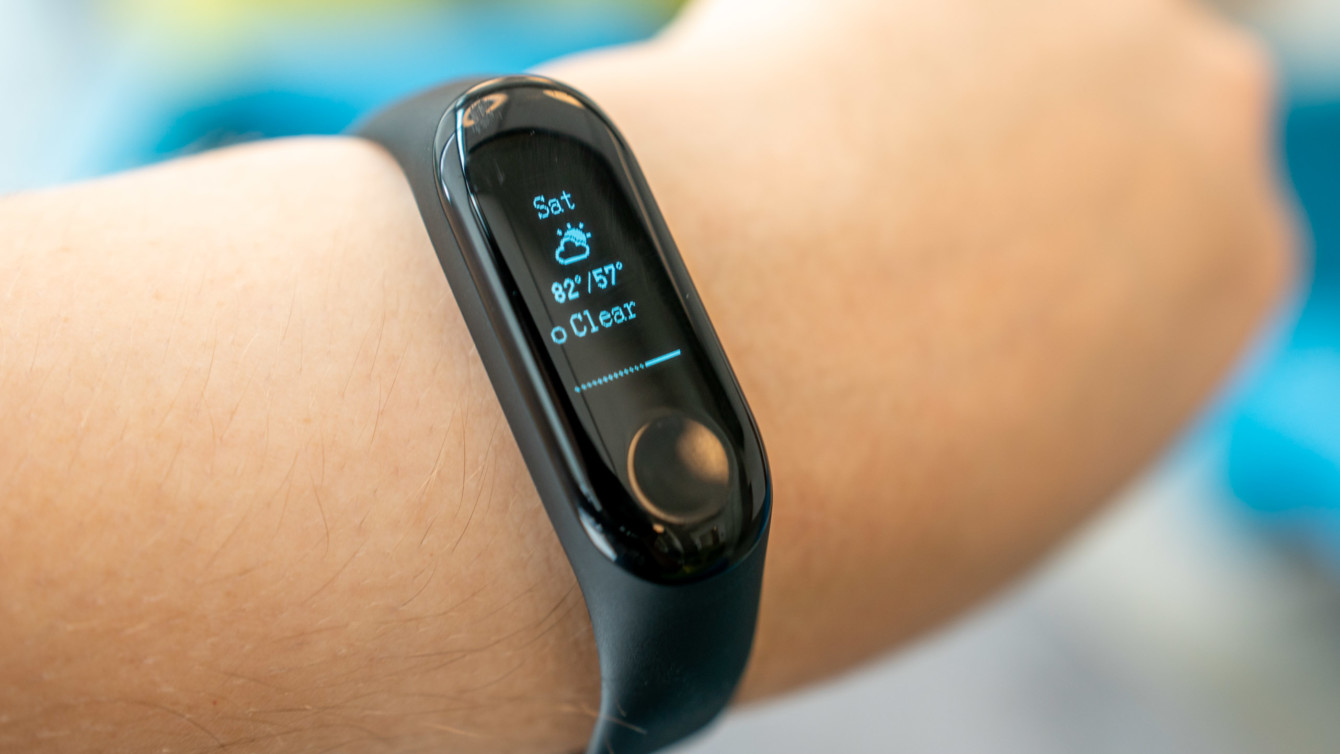
    Xiaomi has a good thing going with its Mi Band fitness tracker. IDC said that last year, the manufacturer shipped 23.3 million units of the Mi Band 3, up 44% over 2017’s deliveries. The device accounted for 13.5% of the wearables market in 2018 behind only the 26.8% share belonging to the Apple Watch. And when the Mi Band 4 was released this past June, 1 million units were sold in the first eight days. At one point, Xiaomi was ringing up over 5,000 units an hour.
    Ever since the first Xiaomi Mi Band was launched in June 2014, demand for the product has been strong. That’s because it offers a number of useable features at a very reasonable price. And it is one of the few Xiaomi products that can be purchased in the states. For example, the Mi Band 4 is available from Walmart for less than $33. And for that price, you’re getting a band that will not only monitor your heart rate, but will also track your sleep, activities, and alert you to phone calls, app notifications, and texts.

    The Mi Band 4 also can act as a stopwatch, an alarm clock, and a timer. And while the device uses Bluetooth 5.0 connectivity, a variant is available in China with support for NFC. That allows users in the country to make mobile payments through Alipay. The version of the Mi Band 4 offered in the U.S. is the one without NFC. But next June, that is going to change according to a report from TizenHelp. The report cites a source who states that the Mi Band 5 will offer NFC service to those both inside and outside of China. Besides allowing users to make mobile payments, NFC support would allow th

    The Mi Band 4 is equipped with a with a .95-inch color AMOLED display carrying a 120 x 240 resolution. The fitness tracker is equipped with 512KB of memory along with 16MB of storage and is water-resistant to a depth of 5ATM (169 feet). The battery runs as long as 20 days between charges and the device is compatible with phones running Android 4.4 or higher and iOS 9.0 and higher.
    The new report adds that the Mi Band 5 will have a more rugged, durable design and will be released during the second quarter of 2020. One feature that was rumored for the Mi Band 4 but failed to make the cut just might be found in the next iteration of the fitness band; that would be an electrocardiogram (ECG). The big breakout feature on the Apple Watch Series 4, an ECG monitors the user’s heart looking for an abnormal rhythm that could be a sign of atrial fibrillation (AFib). The latter can lead to blood clots, strokes, heart failure, and death. Just recently we told you the story of yet another person whose life was saved by the Apple Watch, with the ECG monitor providing the heroics this time. The company that builds the Mi Band for Xiaomi, Huami, has already built a smartwatch with an ECG. While the Amazfit Verge2 does track heart rhythms, its sensor has not been approved by the FDA.
    Besides working on the Mi Band 5, Huami could be developing a new smartwatch for Xiaomi that will run on Google’s Wear OS. The name of the new timepiece is rumored to be the Xiaomi Mi Watch and the device might also be offered in the United States. Hidden code found in the latest version of the Wear OS app revealed the possible existence of this device.
  • Hidden code reveals that Xiaomi could be first to use this sensor on a phone

    Hidden code reveals that Xiaomi could be first to use this sensor on a phone

    Remember when you walked around, feeling like the King of the neighborhood because your Samsung Behold had a 5MP camera on back? While a bigger megapixel count doesn’t necessarily translate to better pictures, today we have phones like the OnePlus 7 Pro carrying around a 48MP primary sensor. And if XDA is right, Xiaomi will be the first to release a phone with a 64MP camera sensor on the back.

    Strings of code that XDA discovered on the latest version of the MIUI 10 Camera app make references to a 64MP “ultra-pixel” mode. They also allude to a 64MP Dual Camera. Right now, Samsung has the only 64MP sensor announced. That would be the ISOCELL Bright GW1 sensor with a small pixel size of 0.8μm. Samsung unveiled the sensor last month noting that under bright lighting conditions it can produce 64MP photos. When lighting conditions are not as favorable, the sensor merges four pixels into one to create a better quality 16MP image. The GW1 sensor will record video in 1080p (FHD) at 480fps allowing it to support “smooth cinematic slow-motion videos.” Samsung’s sensor also supports real-time high dynamic range (HDR) of up to 100-decibels (dB). That compares to the 60 decibels found on many handsets and the human eye’s 120 decibels.

    The code discovered by XDA dovetails with a leak from tipster Ice Universe who posted on Weibo a few days ago about a “mysterious” Redmi model (made by Xiaomi) that will be the first to use Sammy’s 64MP sensor. While the upcoming Galaxy Note 10 series will not feature it, we could see the 64MP GW1 sensor also employed on the upcoming Galaxy A70 mid-range handset.

  • Xiaomi wants to dominate the smartphone market

    Xiaomi wants to dominate the smartphone market

    International markets are becoming increasingly more important to Xiaomi. And in an interview with Sina Tech, the CEO of Xiaomi’s sub-brand Redmi, Lu Weibing, did nothing to hide this fact and openly detailed the company’s plans for global domination.

    Over in India, as Weibing pointed out, Xiaomi and Redmi combined have led the smartphone market for the past seven quarters. They now apparently hold a 10% lead over second place Samsung, but through further investments, Xiaomi wants to take things to a whole new level by achieving a 50% market share.

    The Chinese company and its sub-brand currently account for 29% of Indian shipments, so the goal is certainly an optimistic one. It isn’t impossible, though. After all, seven of the top 10 best-selling smartphones in India recently were made by Xiaomi. Also, just a few weeks ago it was announced that over 2 million Redmi Note 7 units had been shipped in just two months.

    Outside of Asia, Xiaomi and Redmi are also hoping to continue their expansion this year. In Europe, the company is a distant fourth behind Samsung, Apple, and Huawei, but through further Redmi investments it hopes to gradually close the gap. Also, in the hope of increasing shipments globally, 2019 will see Redmi launch in Latin America alongside East African, Central African, and West African markets. The company plans to continue its focus on e-commerce and value for money, meaning there will be no push for large profit margins.

  • Xiaomi India plans 10,000 New Stores

    Xiaomi India plans 10,000 New Stores

    Xiaomi India will open 10,000 outlets in a bid to lock down its dominance over Samsung in the territory.

    The Chinese-headquartered company also announced last week that it expects 50 per cent of its business to be generated by trading offline by the end of this year.

    “About two years ago, we realised that while we had a 50 per cent share in online sales, our offline presence was negligible,” said Xiaomi VP and MD Manu Jain. “That’s when we started our offline expansion.”

    The firm opened in India as an online-only brand about five years ago. Its new “Mi Studio” retail format will join Xiaomi’s more than 6000 existing outlets in other categories, including Mi Homes, Mi Preferred Partners and Mi Stores.

    The firm opened 500 outlets in one day in India last October.

    Xiaomi is already ahead of Samsung in smartphone sales, with a 28.9 per cent share as of December last year, compared with Samsung’s 18.7 per cent.

    “Mi Studios aim to offer premium brand experience in 50 top cities,” said Jain. “This format is an optimised version of Mi Homes replicating the same design and displaying modern, minimalist interiors.”

    Two of the new 400–600sqft Mi Studios outlets have already been set up in Bengaluru and Mumbai.

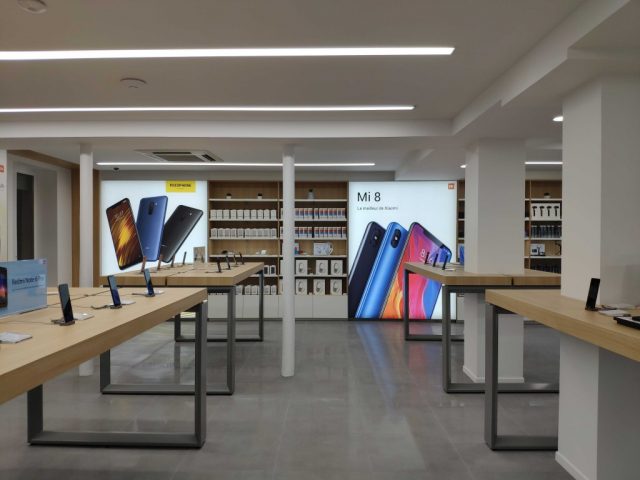
    Xiaomi has also recently entered the Romanian market with a new flagship Mi Store in Bucharest. The Mega Mall Bucharest outlet sells the full range of Xiaomi products, including smartphones, headsets, electric scooters, and home appliances.

  • Xiaomi just patented a weird-looking inverted Notch

    Xiaomi just patented a weird-looking inverted Notch

    Since notches first arrive back in 2017, smartphone brands have attempted a range of implementations ranging from wide ones to much subtler water drop alternatives. One thing that hasn’t been attempted, however, is an outward facing one. But Xiaomi’s latest patent suggests it could be working on one.

    In what is presumably an attempt at creating a low-cost smartphone that also presents a notchless display, Xiaomi’s latest patent envisions a smartphone that features minimal bezels and a rather large hump on the very top of the device. This looks exactly like an inverted notch and is home to the in-ear speaker and two selfie cameras.

    On more expensive devices such as the Xiaomi Mi Mix 3, the Chinese brand has chosen to implement a slider design that hides the front-facing cameras and allows for an all-screen design. However, this comes at an added cost that most likely wouldn’t be financially viable in the low-end segment. The company is also rumored to be working on two flagships with pop-up cameras but, once again, this is a costly feature.

    More often than not, patents are a good indication of what’s to come from smartphone brands in the future. But considering the very unusual design that is shown in the included sketches, it seems likely that this particular  patent will never result in a production device.

  • Over 1 million Xiaomi Mi 9 units have already shipped worldwide

    Over 1 million Xiaomi Mi 9 units have already shipped worldwide

    Just over one month after the Mi 9 flagship was first announced, Chinese smartphone brand Xiaomi has today revealed that it has already shipped over one million units of its latest premium device.

    The majority of these devices were undoubtedly supplied to consumers in China, where Xiaomi conducts roughly 60% of its business and where the smartphone was made available to purchase just days after its unveiling. Europe, however, is becoming increasingly important for Xiaomi – sales surged over 415% in the region last year – and likely played a big role in the phone’s short-term success.

    The Xiaomi Mi 9, which retails at just €449 across Europe, offers a variety of impressive features such as a large 6.4-inch AMOLED display manufactured by Samsung, Qualcomm’s Snapdragon 855, up to 128GB of storage, and as much as 8GB of RAM. The smartphone also includes a 3,300mAh battery, support for extremely fast 20W wireless charging, and Android 9 Pie straight out of the box.

    Alongside the Mi 9, Xiaomi also sells two other devices in the form of the cheaper Mi 9 SE and the more expensive Mi 9 Explorer Edition. The sales figures for these two models weren’t broken down, but Xiaomi did confirm that they push the total number of Mi 9 sales to 1.5 million units, an even bigger achievement for the low-cost brand.

  • Xiaomi’s Black Shark 2 gaming smartphone goes on sale

    Xiaomi’s Black Shark 2 gaming smartphone goes on sale

    Great news for mobile gaming fans looking to buy one of the most powerful gaming smartphones available on the market, as Xiaomi has just announced their new product, Black Shark 2 is now up for grabs in Europe.

    Initially introduced in China on March 18, Xiaomi Black Shark 2 can be purchased from Europe beginning March 28, at 6.00 PM CET. You’ll be able to buy the phone from every European country where Xiaomi officially sells its phone, and here is how much you’ll have to pay.

    The Black Shark 2 with 8GB RAM and 128GB internal memory will be available for purchase for €549, while the 12GB RAM and 256GB storage will cost €649. For customers in the UK, the smartphone will be available for £479 and £559, respectively.

    If you take away its gaming-related features, the Black Shark 2 remains a very powerful flagship smartphone, so even if you’re not a gamer, it can be a great alternative to Samsung, LG and Huawei’s flagships.

    Speaking of gaming features, Xiaomi explains that the Black Shark 2 embeds the only direct touch liquid cooling system in the work. Also, the phone’s display benefits from the world’s lowest latency touch.

    As far as US availability goes, we doubt this will come in the United States at all since Xiaomi hasn’t yet officially entered the market, although it repeatedly said it will eventually happen.

  • Xiaomi Mi Band 4 could include major Apple Watch features

    Xiaomi Mi Band 4 could include major Apple Watch features

    A few days ago, we told you that Xiaomi will release the Mi Band 4 fitness tracker sometime this year. An executive from Huami, the company that is the source of Xiaomi’s wearables, said that the Mi Band 3 is still selling in big numbers and that there is no reason for Xiaomi to launch the next generation model at this point. We should point out that the Mi Band traditionally has sold well because of its low price. For example, the Mi Band 3 is offered by Amazon in the U.S. for $33.53.

    While Xiaomi has been tight lipped about any new features we might find on the Mi Band 4, we do have some specs to pass along. We spotted a certification from the Bluetooth SIG (Special Interest Group) revealing that the next generation of the fitness band will sport Bluetooth 5.0 LE (Low Energy). That is an upgrade from the current model’s use of Bluetooth 4.2 LE and indicates that the Mi Band 4 will offer improved connectivity. In addition, the Bluetooth Launch Studio web site indicates that the Mi Band 4 will feature NFC connectivity as well, at least in some markets.

    Two different variants of the device were listed on the site and the one with the model number of XMSH08HM will include NFC; the other, listed as XMSH07HM, will not. The model with NFC could include support for the company’s Xiaomi Pay mobile payment service.

    The Mi Band 4 could include an electrocardiogram sensor to watch for abnormal heart rhythms

    There is also speculation that like the Apple Watch series 4 smartwatch, the Xiaomi Mi Band 4 will come with an electrocardiogram (ECG) monitor that will detect abnormal heart rhythms. This is mainly used to alert users to the possibility that they are suffering from atrial fibrillation (AFib), which can lead to strokes, blood clots, heart disease and death. Including an ECG monitor with a low priced fitness ban could make the Mi Band 4 even more popular than its hot selling predecessor, especially if the feature is as accurate as the one on Apple’s timepiece. There is also speculation that the Mi 4 will be equipped with better activity tracking features and a larger, color display.

    The Xiaomi Mi Band 3 has been such a hit that globally it has challenged the Apple Watch for the top spot among wearable devices based on shipments. As long as Xiaomi adds new features to its next-gen fitness band without substantially hiking the price, we can expect the Mi Band 4 to be just as popular as the current iteration of the product. Speaking of which, the Mi Band 3 comes with an OLED touchscreen and is waterproof to a depth of 164 feet. It will monitor physical activities, count your steps, watch your heart rate, track your sleep, display SMS messages and those from certain apps (like WhatsApp), and allow you to accept or reject incoming calls. The battery will run as long as 20 days with the heart rate monitor off, and 3 to 9 days with the monitor on. We would expect to see all of these features, some of them improved, carry over to the Mi Band 4.

    Xiaomi launched the first Mi Band in July 2014, and followed it up with the sequel two years later. The Mi Band 3 was released last May, which means that we could be only a couple of months away from seeing the Mi 4 hit the marketplace.

  • New air purifier from Japan debuts in Korea

    New air purifier from Japan debuts in Korea

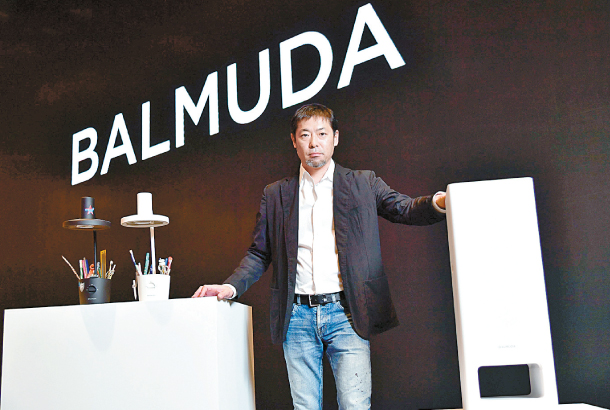
    Balmuda, a Japanese high-end home appliance maker, is introducing a new air purifier in Korea today ahead of the rollout in Japan, where the launch date has not been set. Balmuda CEO Gen Terao emphasized the importance of the Korean market during the company’s first press conference in Korea Tuesday as he unveiled The Pure air purifiers.

    “We chose to unveil our air purifiers in Korea in light of the fine-dust problem and Balmuda’s growing brand awareness here,” Terao said at the conference in Yongsan District, central Seoul.

    “While Japan’s air purifier market is decreasing every year, it’s been growing in Korea. We sell 10 times more air purifiers here.”

    Several new features make it an upgrade from the AirEngine, the company’s older 2013 model.

    One of the key innovations is that The Pure allows users to see how much dust the machine sucks in. The purifier has a rectangular hole cut out in the bottom installed with lighting, making it easy for users to see the dust and particles that go up into the filter above the hole.

    The Pure’s HEPA filters can trap 99.97 percent of particles as small as 0.3 microns and eliminate odors. The machine releases up to 7,000 liters (1,850 gallons) of cleaned air per minute.

    The Pure will be available at department stores and online and offline electronic retailers from today. They are priced at 749,000 won ($666).

    Terao also discussed Balmuda’s The Light, a desk lamp for children launched last December.

    Addressing the growing problem of short-sightedness among children, Terao said he developed advanced light technology together with medical surgery light manufacturers.

    Terao called out Xiaomi’s air purifiers for copying Balmuda’s AirEngine design.

    “When I saw this [Xiaomi] product, I wondered when we had built it because it had the same size, silhouette and structure as the AirEngine,” Terao said. “But the fact that others are copying us is proof that our products are good.”

    Balmuda, founded in 2003, posted over 10 billion yen ($90 million) in annual sales last year. The company currently generates around 30 percent of its total revenue in Korea.

  • Xiaomi opens massive Mi store in Paris

    Xiaomi opens massive Mi store in Paris

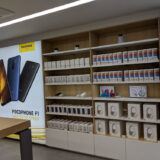
    Chinese electronics firm Xiaomi has opened its largest European Mi Store in Paris. Queues for the January 18 1pm opening started to form at the Champs-Elysees location at sunrise, despite freezing temperatures. The store is hosting a reportedly comprehensive selection of the brand’s full product range, including smartphones, headphones, cameras and home appliances.

    In celebration of the launch, Xiaomi held a three-day sale on its French online store featuring discounts of up to €50. The supersized flagship is Xiaomi’s second location in Paris.

    View the gallery below for images of the stores (11 images) :

  • Samsung to release feature-rich phone to take on Huawei

    Samsung to release feature-rich phone to take on Huawei

    Samsung is releasing a phone with robust functions specifically designed to meet the challenge posed by Huawei. It has fast internet speeds — utilizing 5G wireless — is foldable and has an innovative screen design. Last year’s smartphone market can be summarized in one sentence: Apple’s defense, Huawei’s catch-up and the fall of Samsung Electronics.

    According Counterpoint Research, Apple’s share in the super high-end smartphone market, those priced over $900 (880,000 won), was 79 percent in the third quarter of 2018. In the $600-$900 market (660,000 to 880,000 won), Apple (61%) surpassed Samsung Electronics (21%) by a large margin, and in the $400-$600 range (440,000 to 660,000 won), Huawei (17%) was right behind Samsung (25%).

    At this critical moment, Samsung Electronics celebrates the 10th anniversary of the release of its “Galaxy” smartphone. The Galaxy Black came to market in April 2009. A new Galaxy S10, a commemorative issued for the anniversary, will be unveiled at the Mobile World Congress (MWC) 2019 in Barcelona, Spain this February. The name of the new S10 is “Beyond.”

    Samsung’s says it wants to outdo itself with the latest release.

    In the new S10, Samsung’s Infinity-O Display will be embedded. The display has a small hole in the screen for the selfie lens, so almost the entire face of the device is screen. The proportion that is screen is more than in Apple products, which utilize more real estate for the lens.

    The fingerprint-identifying sensor does not require separate hardware, but is found within the screen. The sensor itself utilizes Qualcomm ultrasonic-wave technology, which can identify prints that are less readable due to water or soil on the screen. Instead of scanning the user’s iris, the new model will utilize facial recognition, as is done with iPhones.

    It is expected that Samsung will maintain the 3.5mm-earphone jack, which has been scrapped on iPhones. It will also be 5G capable, allowing for a 1.5-gigabyte movie to be downloaded in less than a second. Samsung announced last month it will supply the world’s first 5G phones to Verizon and AT&T.

    Huawei is expected to release its own 5G phone in the first half of the year.

    Early versions of the new Galaxy S10, to be released in February, will not be 5G capable. It is possible that the S10 with a 5G communications chip will be released separately, as was done with the Galaxy S5 broadband LTE-A model, which was separately released in 2014.

    It was expected that LG Electronics will release its 5G smartphone this April or May, but it changed its goal for release to late March. Apple might not equip new iPhones, which will be released this year, with a 5G-communications chip.

    A telecommunications industry source said, “Apple originally did not really care about the speed of telecommunications that much. Apple might embed 5G in the iPhone in fall.”

    Smartphone competitors are seen pushing foldable phones in 2019. According to market research firm Strategic Analysis (SA), shipments of foldable smartphones globally will increase gradually from 3 million in 2019 to 14 million in 2020, and ultimately to 30 million in 2022.

    Chinese phone market Royole released a foldable first, in October last year, ahead of Samsung Electronics and Huawei. Royole will release its 7.8-inch Flex Pie foldable phone at the 2019 Consumer Electronics Show (CES), to be held in Las Vegas from Jan. 8-Jan. 11. Royole led the market but has received criticism about the quality of its device.

    The Galaxy foldable phone will be released in February. It will have a 7.3-inch screen as well as a 4.58-inch screen. The initial run will be about 1 million units.

  • Xiaomi India to foray into appliances, white goods space

    Xiaomi India to foray into appliances, white goods space

    Xiaomi is all set to convert its India arm into an end-to-end consumer durables company. According to a report, Xiaomi officials are currently identifying potential categories including air-conditioners, washing machines, refrigerators, laptops and small appliances like vacuum cleaners and water purifiers for the Indian market. All the products will be smart appliances based on Internet of Things (IoT) or which can connect to the internet and other devices, and operated remotely.

    Xiaomi entered the Indian television market in February this year with products 30-50 percent cheaper than the top three brands — Samsung, LG and Sony. It eventually expanded TV sales to offline stores and started assembling them in India in partnership with contract manufacturer Dixon. It recently announced having shipped more than a million televisions into the Indian market.

    The company will follow the same model for appliances. The products will be priced aggressively in line with its announced strategy of keeping just 5 percent profit margin for itself and start local assembly after gaining some scale to take advantage of Make in India duty benefits, according to the report.

  • Xiaomi aims at 5,000 stores in India by the end of 2019

    Xiaomi aims at 5,000 stores in India by the end of 2019

    Chinese tech giant Xiaomi is looking to cement its status as India’s leading smartphone provider by opening thousands of stores before the end of 2019. The company announced it would increase its presence in India from 500 retail stores to 5,000 by 2020. “It’s been over a year since we started offering our products through offline retail and we have seen strong growth there,” said Manu Jain, Xiaomi vice president and managing director for India.

    “Offline retail is a huge segment in our country with nearly 40 percent of the offline market focused in rural regions, and all of this should increase our offline sales and account for 50 percent of the company’s revenue by the end of next year.”

    In a Twitter post, the smartphone maker invited people to apply to run one of the franchised stores, which will be based on its Mi retail model.

    “It’s been over a year since we started offering our products through offline retail and we have seen strong growth there,” – Manu Jain

    “Mi store is the ‘new retail’ model for rural India that gives flagship store experience to our rural customers,” Xiaomi said on Twitter, adding that the new stores would generate more than 15,000 jobs.

    India is one of Xiaomi’s fastest-growing markets, according to Reuters, where it has had success with its budget Redmi phone series.

    The firm is the country’s leading smartphone provider, with 30 percent of market share. It entered the market in 2014 as an online-only retailer, before opening physical stores across India. Samsung and Vivo are its closest competitors there.

    Xiaomi was awarded a Guinness World Record on Tuesday for opening the largest number of retail stores in India simultaneously. The company also operates in Asia, Europe, the Middle East, Africa, and Mexico.

  • Xiaomi takes over Meitu’s phone business, manufacture co-branded products

    Xiaomi takes over Meitu’s phone business, manufacture co-branded products

    Meitu and Xiaomi have formed a strategic partnership to jointly launch Meitu-branded phones and other smart devices. The partnership between Meitu – best known for its selfie app – and Xiaomi, a fast-growing technology company with smartphones at its core – will have a far-reaching impact on the brand development of Meitu and Xiaomi as well as the smartphone market as a whole, according to research house IDC. It will allow both companies to expand their customer base and signals a further consolidation in the highly competitive Chinese smartphone market.

    A spokesperson for IDC said that during the last year, Xiaomi has stepped up its efforts to improve the camera capabilities of its products and has done a lot in AI-powered photography research and development. “Leveraging Meitu’s image processing technologies and selfie algorithms will help Xiaomi further boost its AI-powered photography and photo quality and reduce its gap with leading vendors such as Huawei.”

    IDC says Meitu is popular with females which will help draw more women to Xiaomi products which are currently “overrepresented by male users”.

    “Introducing the Meitu brand also enables Xiaomi to offer greater diversity of smartphone products under multiple brands and series, including Redmi, Xiaomi, Black Shark, Pocophone, and Meitu. Xiaomi is gradually forming a multi-brand portfolio targeting different user groups, thereby laying the foundation for it to compete in the market in the long term.”

    The spokesperson said that through Xiaomi’s sales network, Meitu’s software products will reach a larger group of customers via smartphones. “Moreover, licensing its hardware business to Xiaomi allows Meitu to focus on software development and the upgrade of its image processing technologies.”

    And finally, with the top five vendors in China’s smartphone market taking up nearly 83 per cent market share, the growth potential will increasingly diminish for small vendors in areas such as marketing and supply chain resource integration.

    “Going forward, more small vendors are expected to seek strategic cooperation with large vendors and drive consolidation in the China’s smartphone market.”

    Meitu was founded in Xiamen in 2008 as a developer of selfie apps such as MeituPic and BeautyCam, and has been focussed on selfie algorithm development. In 2013, the company ventured into the smartphone market and launched smartphones targeting female users and the selfie market. Despite a higher profit per phone sold and a higher brand premium, the company has become increasingly marginalised in China’s brutally competitive smartphone market due to its meagre shipments.

    According to IDC’s Worldwide Quarterly Mobile Phone Tracker, Meitu only had a mere 0.5 per cent market share in China with shipments of approximately 1.5 million units as of the third quarter of this year.