Retail News CRM

Tag: Yum

  • Yum China tramples expectations; profit up 31%

    Yum China tramples expectations; profit up 31%

    Yum China’s first earnings report as an independent company proves that sometimes breaking up can be a very beautiful thing. In fact, its first report since the October spin-off from Louisville-based Yum Brands not only surpassed estimated sales projections for the company but showed its full-year operating profit was up 31 percent year over year to $640 million, according to a news release.

    For the year and fourth quarter that ended Dec. 31, Yum China reported a profit of 17 cents a share, up from the average estimate of 10 cents. The company also attributed much of the financial success of the last year to expansion and new openings, as well as same-store sales growth at KFC. 

    The only clouds inside this silver-lined report came from the direction of the performance of Pizza Hut, which was worse than expected, according to the news release.

    Yum China’s board of directors also authorized the repurchase of up to $300 million of common stock.

    “This was a momentous year for Yum China,” CEO Micky Pant said in the news release. “We successfully became an independent, publicly traded company while simultaneously improving our business performance and investing for future growth. At year end 2016 with over 7,500 restaurants nationwide, we extended our market-leading position in China.” 

    Full-Year Highlights
    •    Total system sales grew 5 percent, including growth of 6 percent at KFC and 3 percent at Pizza Hut Casual Dining, excluding foreign currency translation.
    •    Opened 575 new restaurants for the full year, or 5 percent net growth, surpassing 7,500 restaurants in China.
    •    Same-store sales were flat, with an increase of 3 percent at KFC, offset by a decline of 7 percent at Pizza Hut Casual Dining.
    •    Total restaurant margin increased 2.7 percentage points to 15.3 percent, primarily aided by the impact of retail tax structure reform implemented on May 1, 2016.
    •    Reported operating profit grew 31 percent, primarily aided by the impact of retail tax structure reform. Foreign currency translation negatively impacted operating profit by $36 million. Excluding foreign currency translation and special items, and Special Items, operating profit grew 37 percent.

    Fourth-Quarter Highlights
    •    Total system sales grew 4 percent, including growth of 4 percent at KFC and 6 percent at Pizza Hut Casual Dining, excluding foreign currency translation.
    •    Opened 302 new restaurants during the quarter.
    •    Same-store sales were flat, with an increase of 1 percent at KFC, offset by a decline of 3 percent at Pizza Hut Casual Dining.
    •    Foreign currency translation negatively impacted operating profit by $5 million.

    “For our shareholders, we exceeded our 2016 financial targets in operating profit, restaurant margin and adjusted EBITDA,” Pant said. “We continue to focus on our long-term growth formula: new unit development, same-store sales growth, and continued restaurant margin improvement. Right now, our top priority is consistently delivering positive same-store sales growth. During 2016, we continued to build a foundation for long-term growth with emphasis on product innovation, investments in refurbishing our restaurants, and focus on digital engagement with our customers.”

    New leaders named

    Yum China also announced Tuesday afternoon that it has appointed Joey Wat as president and COO of Yum China and Johnson Huang as KFC business general manager. Wat was previously CEO of the company’s KFC business and Huang was previously chief information and marketing support officer
  • Yum China has ‘huge potential’

    Yum China has ‘huge potential’

    Yum China is set to exploit “huge potential” after its spin-off from its US parent, says Neil Saunders, CEO of Conlumino.

    Commenting on the parent company’s latest results, the US-based retail commentator said  while the China division once again delivered “an anemic performance” with total system sales declining by 3 per cent over the prior year, the best is yet to come.

    Revenue at both Pizza Hut and KFC fell on a same-restaurant basis.

    “This means that in the year to date, in real terms the China operation has posted no real sales growth. Fortunately, changes to value-added tax in the country allowed Yum! to ease up operating profits across the quarter,” said Saunders.

    “The position of China as a business which has huge potential once it gets through the current patch of slow growth, largely justifies its imminent spin-off into a completely separate operation. The divorce from the rest of the Yum! operation will allow both sides to focus more on their respective priorities and opportunities.”

    He said the overall global result for Yum! Brands suggest the company is making good headway in an increasingly challenging market.

    “However, the reality is far more mixed – mostly because Yum!’s growth figures are flattered by the fact the company strips out exchange rate fluctuations. When these are put back in, total revenue experienced a shrink of 3 per cent over the prior year – a far less impressive outcome.

    “In terms of the core business, the main focus needs to be Pizza Hut which has become something of a problem child for Yum! Over the quarter system sales shrank by 2 per cent in real terms, underpinned by a 1 per cent decline in same-restaurant sales. While there are some markets in which the brand is performing well, these continues to be overshadowed by the US which accounts for the majority of Pizza Hut’s revenue.”

    Saunders said that while admittedly the overall casual dining market, in which Pizza Hut loosely falls, saw customer traffic and spend decline over the third quarter.

    “However, our data also show that Pizza Hut is losing customer share to delivery services like Papa John’s and Domino’s. A defection to cheaper fast-food alternatives, especially among younger families, has also been unhelpful. This is an uncomfortable position and underlines the fact that Pizza Hut still has much work to do in terms of reinvigorating its brand.”

    Taco Bell, meanwhile, had a better quarter with a 5 per cent system-sales growth and 3 per cent same-restaurant growth.

    “While Taco Bell has benefitted from challenges at Chipotle, in our view most of the success is down to a change in marketing which is now more relevant to the younger millennial audience. Menu simplification and focus on popular lines has also helped to drive growth. We think these steps should be seen as part of a longer term upswing in the brand’s fortune.”

    Saunders said that while KFC had a much better quarter than the previous one, especially in the US, Conlumino still harbors concerns about the brand’s longer term growth prospects as younger upstarts like Chick-Fil-A or Popeyes Louisiana Kitchen continue to gain traction.

    “As such, we see KFC’s latest upswing as part of a more turbulent longer term picture.”

  • Yum China board lineup revealed

    Yum China board lineup revealed

    Yum China has revealed the likely composition of its board post-spin-off from its US parent, Yum! Brands.

    The new company to be formed after the sell-off to Primavera Capital Group and a subsidiary of Alibaba Group, will be called Yum China Holdings and is expected to be formally formed on October 31.

    The nine new directors announced, seven of whom are independent, will join the board chaired by Dr Fred Hu, chairman and founder of Primavera Capital Group.

    The other members are:

    • Micky Pant, CEO of Yum China.
    • Peter A Bassi, former chairman and president of Yum! Restaurants International and current lead director for BJ’s Restaurant and Potbelly Sandwich Works.
    • Christian L Campbell, owner of Christian L Campbell Consulting LLC and former senior VP, general counsel, secretary and chief franchise policy officer of Yum! Brands.
    • Ed Chan Yiu-Cheong, vice chairman of Charoen Pokphand Group.
    • Edouard Ettedgui, non-executive chairman of Alliance Francaise, Hong Kong and non-executive director of Mandarin Oriental International.
    • Louis T Hsieh, director and senior advisor to the CEO, and former CFO and president of New Oriental Education & Technology Group.
    • Jonathan S Linen, director for Yum! Brands and Modern Bank, former adviser to the chairman of American Express, and former vice chairman of American Express.
    • Zili Shao, co-chairman of King & Wood Mallesons, China.

    Yum China also expects to name one additional independent board member in connection with the spin-off.

    Yum! Brands CEO Greg Creed said the company was pleased to have announced the composition of the Yum China board, as it nears the completion of the separation.

    “We are confident that these business leaders will offer the market insights and strategic vision required to enable Yum China to reach its full potential.”

    Yum China will become the licensee of Yum! Brands in Mainland China. It will have exclusive rights to KFC, Pizza Hut and Taco Bell, the latter of which is expanding globally but is not yet in China. It will also own the Little Sheep and East Dawning concepts outright.

    Yum China has more than 7200 restaurants in over 1100 cities in China and generated over US$8 billion in system sales in 2015.

  • Yum China to split from parent

    Yum China to split from parent

    US fast food giant Yum! Brands is to spin off its troubled Chinese operation into a separate business.

    The new company will be called Yum China.

    The move will strengthen the parent company which will retain 41,000 restaurants trading under the KFC, Pizza Hut and Taco Bell brands in 125 countries – and which will no loger be saddled with the ongoing losses from the Chinese operations. Nearly all of its restaurants will be operated by franchisees.

    “Following the separation, each standalone company will be able to intensify focus on its distinct commercial priorities, allocate its own resources to meet the needs of its business, and pursue distinct capital structures and capital allocation strategies,” said Yum CEO, Greg Creed in a statement.

    “This will provide a clear investment thesis and visibility to attract a long-term investor base suited to each business.”

    The likely interpretation of that statement is that Yum China will seek local investors or possibly a joint venture partner to help bring the business back on track.

    Yum China has 6900 KFC and Pizza Hut restaurants, but has struggled for more than two years after high profile food safety scares involving suppliers.

    Mid last year, a Chinese TV network screened footage of a supplier mixing allegedly expired meat with fresh meat. The company, a subsidiary of OSI Group, was a minor supplier to Yum! and its contract was cancelled immediately. But the TV news footage was sufficient to spook Chinese customers, many of whom stopped eating at KFC China outlets.

  • Yum profit beats as China sales fall less than forecast

    Yum profit beats as China sales fall less than forecast

    Yum Brands shares rallied on Tuesday after the restaurant operator topped earnings expectations as comparable sales in China declined less than forecast.

    Yum, which operates KFC, Pizza Hut and Taco Bell restaurants, reported first-quarter earnings of 80 cents per share on revenue of USD2.62 billion.

    Same-store sales in China, a key division for the company, fell 12 percent during the quarter after allegations that a former supplier used expired meat. The company’s China unit has been especially hard hit this year because of a supplier scare last summer. Analysts expect same-store sales in the country to shrink 14.4 percent.

  • Yum! China opens luxury restaurant

    Yum! China opens luxury restaurant

    US fast food giant Yum! Brands has opened a luxury restaurant overlooking Shanghai’s Bund to test menu concepts on locals.

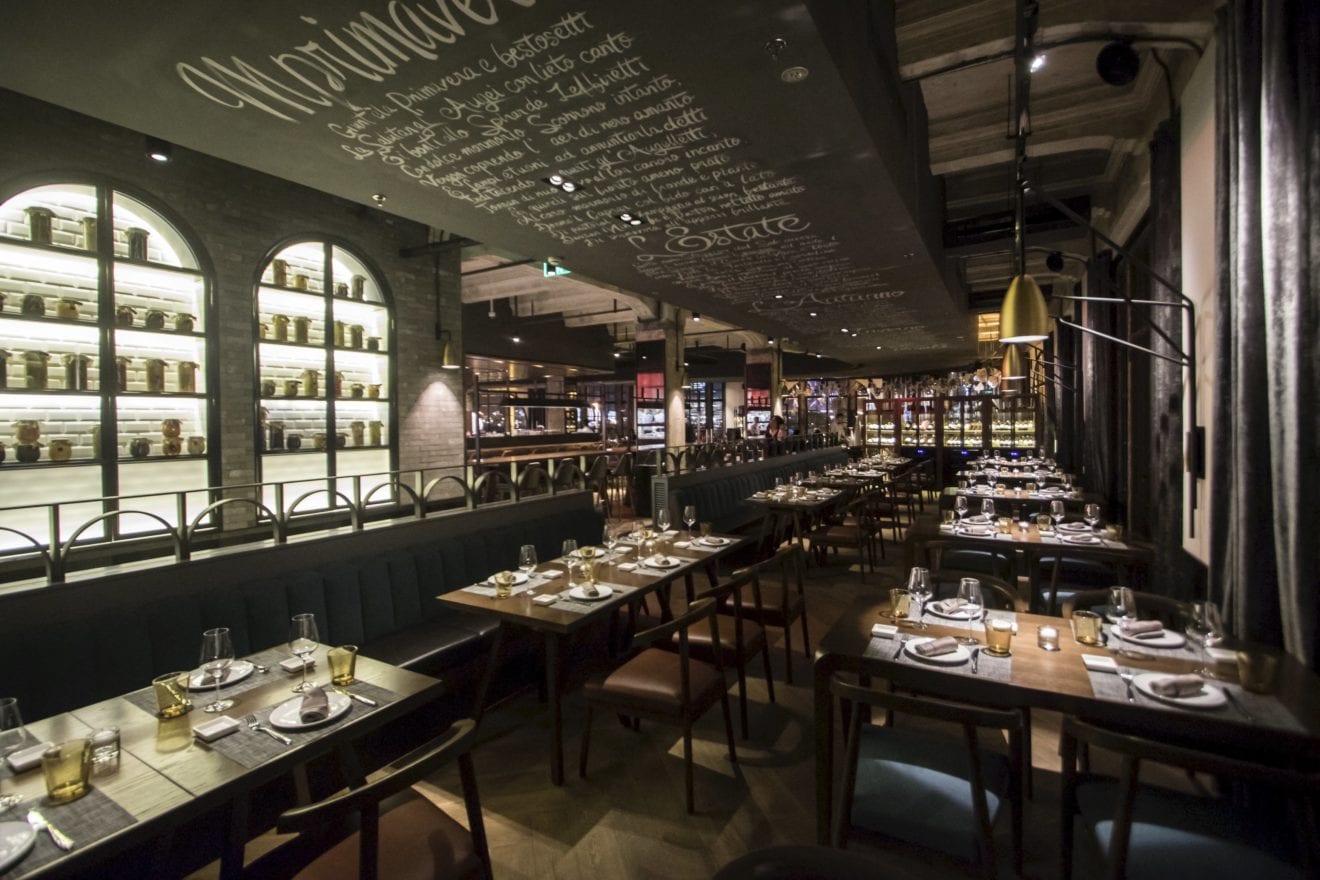
    Atto Primo, complete with its Italian name, is as far from the fast fried chicken concept of KFC or Pizza Hut as you could possibly get. The expansive restaurant is located in a historic building more than 100 years old. The decor is heavy on design and atmosphere, the dining environment with dim light, captivating wall murals, natural wooden furniture – and it has an expansive bar.

    Atto Primo 415

    “Atto Primo also houses a bar, and the design here stems from a puppet theatre concept,” wrote on Shanghai food blogger, seemingly unaware of the identity of the owner. “When diners make their order, bartenders, baristas, pizza and grill chefs leap into action, preparing cocktails and coffee, pizzas and meat, much like a puppet being pulled along by its strings, acting on the fancies of its masters.”

    Atto Primo The Bund interior

    So far from fast food is Atto Primo, Inside Retail Asia crossed checked multiple sources to be sure it was a Yum! Brands project. Sure enough, both Forbes and Reuters have reported on the concept, without going into any detail of how stunning the restaurant looks.

    To us, it’s as if Primark had suddenly unveiled a $5000 Vera Wang style wedding dress!

    Yum! China has apparently dubbed the venture a “lab” and while the investment has not been revealed, just the location and the decor, not to mention the sheer size of the venue, suggests a serious chunk of the R&D budget has gone into this experiment.

    “A high-end test kitchen will let Yum! test the waters with new menus and concepts and get feedback from more sophisticated diners – helpful if you want to go a bit upmarket,” Ben Cavender, a principal at China Market Research Group, told Reuters.

    Atto Primo The Bund wall mural

    Yum! China has been experiencing serious challenges in China, which started with, but are by no means all linked to, food safety scares when suppliers were outed using dodgy hygiene standards. The company has about 7000 QSR restaurants across the country, but its early-to-market advantage from being one of the first multinational food chains to enter China has been eroded by an increasingly sophisticated army of local chains more attuned to Chinese eating habits and tastes. Yum!’s same store sales slumped 16 per cent in the last quarter of 2014. Some analysts describe the company’s predicament as “brand fatigue”.

    In an email to Reuters, Yum! China spokesman Jonathan Blum described Atto Primo has “an innovation lab to help us learn more about the evolving tastes of Chinese consumers”.

    Atto Primo The Bund table

    Somehow, in an environment where diners can expect to splash $50 on a dinner, Yum! will learn recipes and dining solutions it can sell at the bottom end of the market over the counter of a KFC or Pizza Hut.

    English language blog Shanghai Wow describes Atto Primo as “a fine balance between classy, fashionable interiors and a good, authentic menu”, again with no obvious awareness it is a Yum! establishment.

    It has a heavy Italian theme, suggesting it may be more about developing menu solutions for Pizza Hut than KFC.

    Atto Primo  415

    Designer Lance Smith has blended modern design elements with the building’s historical architecture for an “east meets west” end result. Think wine red colours, turquoise green, heavy theming such as a giant mural of a bull (surely more Spanish than Italian).

    Atto Primo food pic 1

    The restaurant is divided into three main areas – Sonetto, Drama, and Satira.

    “The Drama section features Pirandello’s famous masks. It’s dynamic, jarring, very dramatic, almost like being seated on the stage of a grand Italian play,” writes Wow Shanghai.

    “The Sonetto area is located beside the building’s 100-year old floor-to-ceiling colonial windows. Overhead, Vivaldi’s quatrain lyrics that inspired his famous “Quattro Stagioni” concerts are etched across the ceiling.

    “The Satira area, where the main focal point is a large mural of a bull made up of different vegetables against a backdrop of red. The painting is inspired by the works of 16th century Italian painter Giuseppe Arcimboldo.”

    Atto Primo   1-415

    A Forbes columnist observed Yum! is calling the restaurant a lab for now, but “I suspect it could quickly expand the concept with new outlets if it proves popular”.

    • We doubt that very much, but we can see the potential in some of the images of food dishes shared by That’s Shanghai  for low cost versions suited to QSR restaurants.

    A trendy eatery being managed by a fast food specialist is a hard concept to embrace. But then one has to not-so-grudgingly admire any multinational brave enough to venture into such a costly and experiential form of research in order to understand a local market.

    KFC China is at the bleeding edge; Atto Primo is at the leading edge. Somewhere in the middle there surely has to be a compromise of convenience and innovation which could well lead to a profitable change of strategy for a business with such a large store network and reach.

  • New concept for Pizza Hut Hong Kong

    New concept for Pizza Hut Hong Kong

    Yum! Brands has unveiled a new concept store in Hong Kong – Pizza Hut Super Delco.

    The delivery-based, eat-in store model features smaller scale fast casual or a convenient eat-in area with seating for 30-50 customers. The company believes the new store model is ideal for locations with high traffic and in dense residential areas.

    In place of the stark, plastic look of the last generation of fast food stores, Pizza Hut Hong Kong Super Delco features cast iron ‘star-burst’ chandeliers, mosaic, light-wood tables and rustic grasses arranged amidst artisan olive oil bottles. In the words of Yum!, it looks more like a character-filled coffee bar than a pizza restaurant.

    Designed to create “a relaxing and intimate ambiance”, the new Super Delco offers “a flavorful oasis from the hectic lifestyle of millennials living in Hong Kong”, says Yum!.

    Pizza Hut Hong Kong is aiming to be the city’s ‘most loved’ pizza brand and the chain already boasts more than 100 outlets. It is one of the few Super Delco located anywhere in the world.

    Richard Leong, CEO of Pizza Hut Hong Kong, is excited about the opportunities the Delco Model store will bring to the region.

    “Pizza Hut Super Delco is a new business channel that will continue to be an engine of growth for us as the Hong Kong restaurant space becomes more competitive and the neighborhood dining scene is evolving. We also need to cater to a younger millennial generation seeking for a convenient meal replacement.”

    The Super Delco design was intentional as research showed that millennials in Hong Kong are looking for a relaxing place to enjoy a cup of coffee or tea and light meals (e.g. Panini or cake) during weekends in their neighborhood.

    It’s not just the design of the new Super Delco that’s infused with flavour: the menu brings new dishes, offering solutions for small groups or individuals with a focus on pasta, rice and mini-pizza.

    Dishes already proving popular among local customers include the Chinese New Year Pizza – Cheesy 7 Fiesta in the shape of a flower, and in Taiwan, the Pineapple Bun Stuffed Crust Pizza.

    “The overwhelming amount of encouraging responses to the new store opening has given the Hong Kong Pizza Hut team confidence in this exciting new venture,” Yum! said in a statement.

    More Super Delcos will now be opened in Hong Kong during the year.

  • Yum’s China sales fall less than expected, shares rise

    Yum’s China sales fall less than expected, shares rise

    Yum Brands Inc, owner of KFC and Pizza Hut, said on Wednesday that sales at established restaurants in its biggest market China fell less than feared in the fourth quarter as it fights to recover from a food scandal involving a minor supplier, and its shares jumped 2.1 percent.

    Same-restaurant sales in China, Yum’s number one market for revenue and profit, fell 16 percent for the quarter that ended on 27 December on continued fallout from allegations that a former supplier used expired meat.

    But the decline was less severe than the 19.4 percent drop expected by analysts polled by Consensus Metrix, and shares in Yum rose USD1.51 to USD75.16 in extended trading.