Retail News CRM

Tag: Yum

  • Yum! Brands to take over The Habit Burger Grill chain

    Yum! Brands to take over The Habit Burger Grill chain

    Yum! Brands has bought California-based The Habit Burger Grill, adding its first fast-casual burger chain to its portfolio which already includes KFC, Pizza Hut and Taco Bell

    The company says it has bought all of The Habit Burger Grill’s issued and outstanding common shares in a deal worth US$375 million.

    “The Habit Burger Grill is a sweet spot within fast-casual because of its delicious California-inspired menu with premium ingredients at a QSR-like value, strong unit economics and tremendous untapped growth potential in the US and internationally,” said David Gibbs, CEO of Yum! Brands.

    As a subsidiary of Yum! Brands, The Habit Burger Grill will continue to be run as an independent brand, the company said in a statement.

    President and CEO of The Habit Burger Grill, Russell Bendel, said, being part of Yum! will take The Habit Burger Grill to the next level by leveraging Yum!’s global scale, resources, and franchising capabilities to strengthen and significantly grow our beloved brand for many years to come.”

    Founded in California in 1969, fast-casual restaurant concept The Habit Burger Grill operates about 300 restaurants across 13 states in the US.

  • Yum China launches contactless delivery services

    Yum China launches contactless delivery services

    Yum China, which operates Chinese KFC and Pizza Hut networks, has launched a contactless food-delivery service.

    The move is a response to concerns about transmission of coronavirus between customers and delivery staff – but will also give confidence to consumers who are increasingly buying from food-delivery services to avoid public contact in supermarkets, shopping centers, and restaurants.

    “The health and wellbeing of our employees and customers is our top priority,” said the firm in a written statement to Business Insider, “and the innovative new services will help reduce the risk of person-to-person transmission of the coronavirus and protect our employees and customers”.

    Customers who elect for the contactless service will be instructed to remain at least 10 feet from the masked delivery personnel, who will remove the boxed food from its thermal pouch and place it on an agreed pick-up surface only after visually confirming the receiving party.

    Delivery staff is expected to disinfect their hands before and after every transaction.

    Food may also be picked up in-store in hygienically sealed packages.

  • Yum China prepares to list in Hong Kong

    Yum China prepares to list in Hong Kong

    Pizza Hut and KFC restaurant operator Yum China is preparing for a second listing in Hong Kong.

    The US-listed firm is currently working on proceedings with China International Capital and Goldman Sachs to establish a footing closer to its base territory. The listing could take place as early as this year.

    Bloomberg revealed that the Hong Kong Stock Exchange is seeing a spike in inquiries about second listings from Chinese companies since Alibaba’s US$13 billion share sale two months ago.

    Yum China operates more than 8900 restaurants across the Chinese market and recently agreed to purchase a majority shareholding in simmer pot restaurant operator Huang Ji Huang.

    Meanwhile, shares in Chinese restaurant chain Jiumaojiu International soared by than 40 per cent when they debuted on the Hong Kong Stock Exchange yesterday. Jiumaojiu has 328 outlets trading under five brands in Mainland China, where it plans to focus its business for now, before expanding into Hong Kong, other Asian markets and North America in the longer term.

  • Yum China buys Chinese retail chain Huang Ji Huang

    Yum China buys Chinese retail chain Huang Ji Huang

    Yum China Holdings has entered into a definitive agreement to acquire a controlling interest in Huang Ji Huang group, a leading Chinese-style casual-dining franchise business.

    Subject to the satisfaction of closing conditions and regulatory approvals, the transaction is expected to close early next year.

    Founded in 2004 and headquartered in Beijing, Huang Ji Huang has more than 640 restaurants in China and internationally. The group operates primarily under a franchise model and its brand portfolio consists of simmer pot brand “Huang Ji Huang” as well as “San Fen Bao”, a newly launched Chinese fast food concept.

    Yum China is the largest restaurant company in China, with more than 8700 restaurants as of June 30. With the addition of Huang Ji Huang, Yum China aims to gain a stronger foothold and enhanced knowhow in the Chinese dining space, which represents a significant share of the dining market in China.

  • Yum China speeding up expansion plans

    Yum China speeding up expansion plans

    Yum China plans to invest up to US$525 million opening between 800 and 850 new stores in the current financial year.

    Most of the new stores will be KFC outlets and of its new cafe chain Coffii & Joy.

    The protections were included in the company’s second-quarter results released overnight, which showed total system sales up 10 percent year on year to US$2.12 billion, with KFC leading the way at 12 percent. Sales at Pizza Hut rose by 4 percent.

    While sales were up, much of the growth was driven by network expansion. Same-store sales grew 4 percent, with a 5-per-cent increase at KFC and a 1-per-cent increase at Pizza Hut.

    Restaurant margin slipped from 15.1 percent to 14.7 percent, however, operating profit rose 6 percent from $193 million to $204 million.

    Net Income increased 24 percent from $143 million to $178 million, primarily due to the increased operating profit and a gain from the company’s equity investment in Meituan Dianping.

    During the quarter, Yum China opened 178 new restaurants taking its store count to 8751 across more than 1300 cities.

    “We continued to capitalise on market opportunities across China with aggressive, KFC-led store expansion,” said Yum China CFO Jacky Lo. “With a strong cash payback period for new KFC stores and many untapped opportunities, we intend to continue to rapidly expand our store footprint in the second half of the year.

    “Looking forward, we expect overall sales growth to moderate as KFC begins to lap several key sales drivers, including successful value campaigns that we initiated in the second half of last year. However, we remain confident that our strong foundation and commitment to innovation throughout our business will power continued growth for Yum China. We will continue to create new and exciting menu items, and leverage our leadership in digital, data and delivery to meet the evolving needs of our consumers.”

  • Yum China eyes Thailand with A Fresh Hotpot Concept

    Yum China eyes Thailand with A Fresh Hotpot Concept

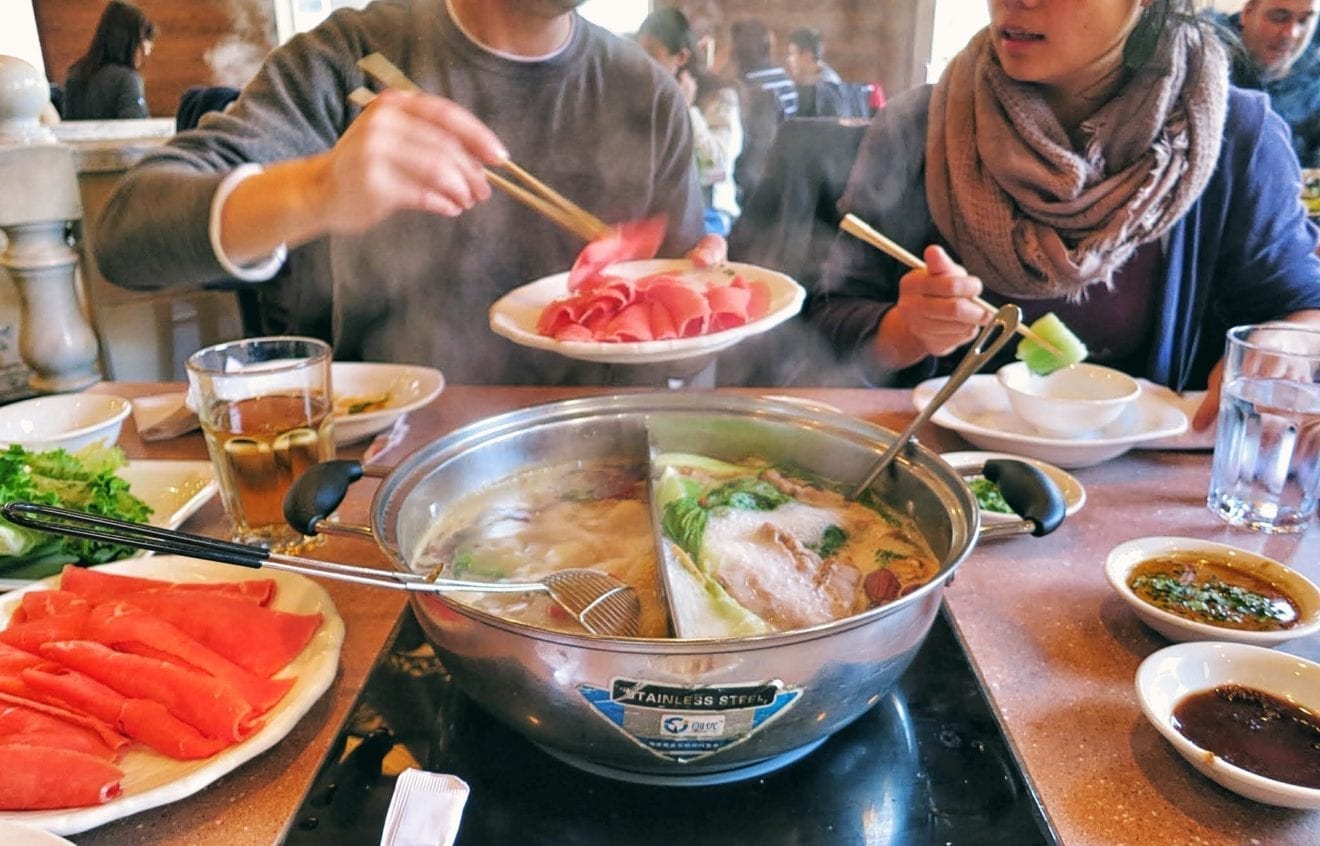
    Yum China looks to expand Asian footprint for hot-pot restaurant brand.

    Quick-service restaurant firm Yum China Holdings is seeking entry into the Thai hotpot market, reportedly worth THB5 billion (US$156.7 million).

    The company is seeking a local partner to launch its Little Sheep Mongolian hotpot chain in the territory.

    “The food and beverage industry in Thailand is one of the most developed markets in the world,” said Yum’s senior specialist for franchise development Isa Jiang. “Thailand also has a rich history of hotpots, as well as food culture.”

    Sixty-six Little Sheep outlets opened in China last year, as well as a further 10 abroad. Seventy of the openings were franchised. The restaurant is currently operated in 300 locations across 130 cities.

    “Ma la, or Sichuan hot chillies, is growing in popularity with Thais,” said business advisory firm Gnosis MD Sethaphong Phadungpisuth, “and we believe that Little Sheep will fit well with Thai tastes.”

    “Southeast Asia and the US have the highest projections for expansion this year,” observed Jiang. “We are focusing on Malaysia, the Philippines and Indonesia. Shabu restaurants are quite popular in Thailand, but we are confident in our key product’s characteristics, especially our meat and broth.”

  • Yum! appointed new leader for Pizza Hut Asia Pacific

    Yum! appointed new leader for Pizza Hut Asia Pacific

    Pizza Hut International on Tuesday announced that Unnat Varma, Managing Director, Pizza Hut India Subcontinent has been elevated to the position of Managing Director, Pizza Hut Asia Pacific effective 1 January 2019. In his new role, he will be responsible for steering Pizza Hut to the next phase of growth across the Asia Pacific region. Varma will be based in Pizza Hut APAC headquarters at Singapore and will report to Vipul Chawla, President, Pizza Hut International. As part of the APAC growth strategy, Pizza Hut India-Subcontinent will now be inducted under the Asia Pacific Business Unit. In total, Varma will oversee over 5500 stores across 22 countries.

    With Varma at the helm since 2015, Pizza Hut India-subcontinent has achieved strong business results with 10 successive quarters of positive Same Store Sales Growth. The brand has also expanded its physical store footprint – having recently launched its 500th physical store in the Indian Subcontinent.

    Under his stewardship, Pizza Hut has also pioneered the Fast-Casual Delco (FCD) concept in India, which offers a seamless integration of dine-in, takeaway and delivery channels, all under one roof and also upgraded all its digi-tech assets including the website, m-site and mobile app.

    These initiatives have enabled Pizza Hut to deliver on the promise of providing the Easiest, Fastest and the Tastiest pizza experience to consumers in India. As a result, Pizza Hut has been voted the most trusted brand in India for the 12th time in a row (as per a reputed media house) and was awarded the prestigious EFFIE Gold in the Foods and Confectionery category in 2018 for its outstanding consumer-centric performance.

    Varma is a respected and credible leader with over 24 years of industry experience. He joined Yum! in February 2006 and was elevated to Director Marketing, KFC, India Subcontinent in 2008. In February 2011, he took over the role of General Manager – Taco Bell and was responsible for launching the brand as the next growth engine for Yum! in India.

    After successfully establishing a strong foundation for KFC and Taco Bell, Varma was appointed as General Manager – Pizza Hut, India Subcontinent in December 2015and thereafter promoted as Managing Director – Pizza Hut, India Subcontinent in February 2016.

    Varma is also the Chairman of FICCI Task Force on Food Service Retail. Prior to joining Yum!, he worked with Gillette in India for 12 years across sales and marketing functions.

  • Most Yum payments via mobile now

    Most Yum payments via mobile now

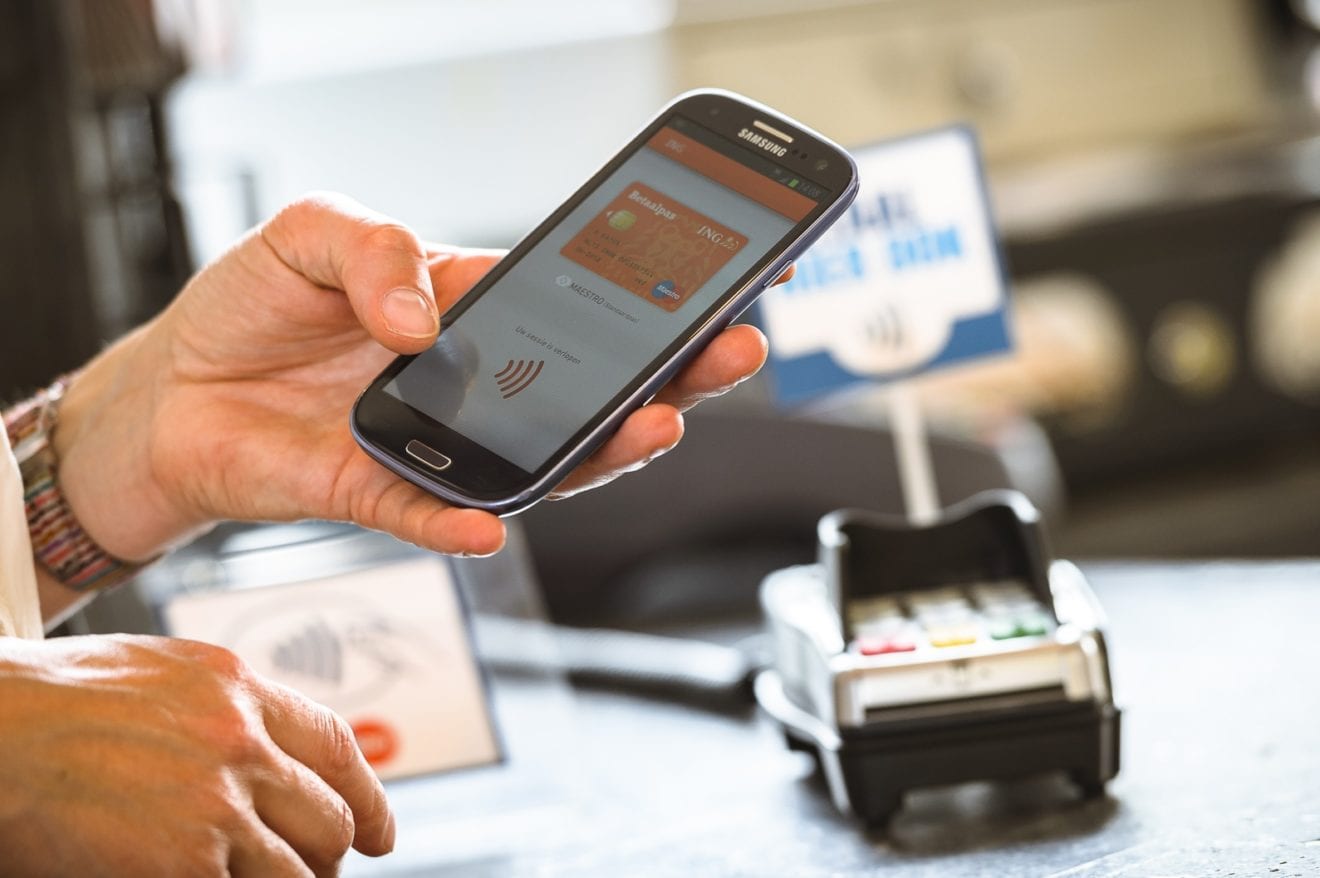
    Mobile payments accounted for 56 per cent of Yum China Holdings first-quarter sales, up from 31 per cent 12 months earlier.

    Unaudited results for the period show the fast-food giant’s total revenues grew 15 per cent year over year to US$2.2 billion (6 per cent if foreign currency translation excluded). Total system sales grew 6 per cent, with 9 per cent growth at KFC partially offset by 1 per cent decline at Pizza Hut, excluding foreign exchange.

    Same-store sales grew 3 per cent, with an increase of 5 per cent at KFC partially offset by a 5 per cent drop at Pizza Hut, excluding foreign exchange.

    Restaurant margin was 17.9 per cent, compared with 20.4 per cent in the previous year.

    Operating profit grew 33 per cent to $395 million, while net income grew 41 per cent to $288 million.

    During the quarter, the company completed the acquisition of an extra 36 per cent equity interest in an unconsolidated affiliate, Wuxi KFC, for cash consideration of about $98 million, taking its stake to 83 per cent.

    Also during the quarter the group opened 203 restaurants, taking its total store count to 8112 across more than 1200 cities.

    Online delivery contributed 16 per cent to company sales, up from 13 per cent 12 months earlier. Delivery services are now available in 970 cities, up from 700.

    At the end of March, the KFC loyalty program had more than 120 million members while that for Pizza Hut had about 40 million members.

  • Yum China Reports A Strong Quarter

    Yum China Reports A Strong Quarter

    A strong fourth quarter has been recorded by Yum China Holdings, which runs KFC and Pizza Hut restaurants on the mainland.

    Its unaudited results for the quarter to the end of December show 5 per cent growth in same-store sales, up 7 per cent at KFC and 1 per cent at Pizza Hut.

    Total system sales grew 9 per cent, including growth of 11 per cent at KFC and 6 per cent at Pizza Hut, and excluding foreign currency conversion (F/X).

    Total revenues were US$2.2 billion, an increase of 13 per cent (9 per cent excluding F/X).

    The group opened 339 restaurants during the quarter.

    Operating profit rose 23 per cent to $71 million, but excluding special items and F/X, there was a 9 per cent decrease in adjusted operating profit because of product upgrades at Pizza Hut during the quarter, partially offset by strong sales at KFC.

    There was an estimated one-time tax charge of $164 million related to tax reform in the US. This resulted in a net loss of $90 million. Excluding this impact, adjusted net income was $74 million, up 12 per cent (18 per cent, excluding F/X).

    For the full year, same-store sales were up 4 per cent – an increase of 5 per cent at KFC and 1 per cent at Pizza Hut.

    Total system sales grew 8 per cent, including growth of 9 per cent at KFC and 7 per cent at Pizza Hut, excluding F/X.

    Total revenues were $7.1 billion, an increase of 6 per cent (8 per cent, excluding F/X).

    During the year, 691 restaurants were opened, taking the total store count to 7983 across more than 1200 cities.

    Restaurant margin improved 1.5 points to 16.8 per cent, primarily driven by same-store sales and helped by retail tax structure reform.

    Operating profit rose 23 per cent to $785 million. Excluding special items, the adjusted operating profit was $782 million, an increase of 20 per cent (23 per cent excluding F/X) driven by strong sales and margin expansion.

    Net income dropped 20 per cent to $403 million. Excluding special items, adjusted net income was $564 million, up 20 per cent (24 per cent excluding F/X).

    Loyalty program membership grew to more than 110 million for KFC and more than 35 million for Pizza Hut at year end.

    Mobile payments accounted for about 53 per cent of company sales during the fourth quarter, while delivery contributed to 14 per cent of company sales for the year.

    It was the first full year of Yum China as an independently listed company. CEO Micky Pant will hand over the reins to Joey Wat, currently president and COO, from March.
  • Company Bets China Has an Appetite for Taco Bell

    Company Bets China Has an Appetite for Taco Bell

    After a year of consolidation, Yum China Holdings has opened two more Mexican-inspired Taco Bell restaurants in Shanghai.

    Along with Taco Bell Corp, the company launched the brand in Shanghai’s Lujiazui area a year ago. The two new outlets are in a shopping mall in Wu Jiao Chang and the shopping precinct of Feng Sheng Li.

    “The response to our first Taco Bell store in Shanghai has been fantastic,” says Yum China CEO Micky Pant. “The new restaurants integrate Taco Bell’s signature brand and spirit into the local community, and bring both classic menu items and original recipes to cater to Chinese customers.”

    He says the company looks forward to opening further outlets in other parts of China this year.
    New dishes include a Ribeye Steak & Mushroom Taco, Taco Salad Bowl, Beef Kebab Nachos and XL-Wing Nachos. The two new restaurants also offer alcoholic beverages, including the Shanghai Cosmopolitan.

    New service model

    A new service model has been rolled out with the new outlets, with orders being delivered directly to the table. The Wu Jiao Chang restaurant, which is close to several universities, has a design that combines the chain’s Californian roots with Chinese style and culture. Communal tables encourage students and urban professionals to socialise, and customers are invited to display their artwork, poetry, designs and other creative expressions on the walls. The restaurant will also host events to showcase local talent.

    In an historic residential area close to a shopping precinct, the Feng Sheng Li restaurant is designed in the Shikumen (stone gate) architectural style. In a Shanghai-style townhouse, it incorporates elements of Taco Bell’s signature look and feel. Its decor includes images of the Shanghai Oriental Pearl Tower and the city’s Art Deco buildings alongside California palm trees and skateboards.

    A neighbouring alleyway, historically a place for residents to congregate, features customised street art as a backdrop to the outdoor dining area. It has clusters to cater to different group sizes, with a canopy to ensure all-weather dining.

    Taco Bell has more than 7000 restaurants, nearly 400 of them in 26 countries outside of the US.

  • More refresh design for Pizza Hut Australia

    More refresh design for Pizza Hut Australia

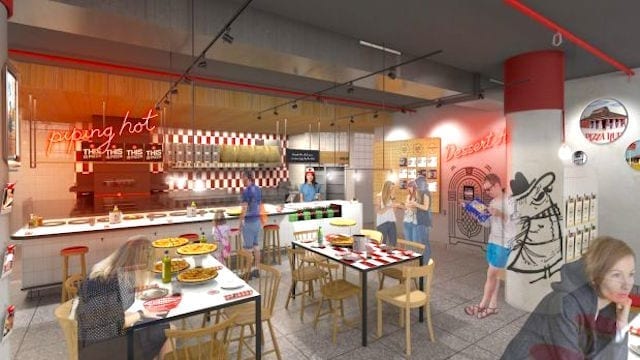
    Pizza Hut Australia has taken its next big step back into the fore, unveiling a new brand image and concept store in a bid to redefine its position in Australia’s highly competitive pizza market.

    The new store, launched yesterday in Sydney has been designed as a fresh take on contemporary Australia with ties to the brand’s US heritage and will inform a broader store refresh program, which began earlier this year.

    Its original brand icon Pizza Pete has also been reintroduced into signage and internal designs alongside several menu innovations, such as localised flavours, designed to cement its point-of-difference as a dine-in pizza option – juxtaposed to market leader Domino’s delivery-focused offer.

    The move is a sign that the chain’s owner, private equity firm Allegro Funds, is looking to bolster the consumer-side competitiveness of the chain, after it purchased the master-franchise license for Pizza Hut from American owner Yum! Brands in 2016.

    Under Yum! Pizza Hut began falling behind rival Domino’s technologically enabled fast-delivery model, prompting management to spend the last year undertaking a broad-based improvement plan within the business that included the acquisition of Eagle Boys outlets late last year.

    Allegro has also been busy bringing new talent into the business to reposition its future under the stewardship of former McDonald’s executives Peter Rodwell, Lisa Ransom and Chris Leslie. The chain’s new director of innovation, Matthew Sawyer, who was brought over from McDonald’s in December last year, said that the re-brand would deliver a local spin on a well-known brand with global credentials.

    “Pizza Hut in previous years had lost its direction and when we took over the business we clearly identified that there was a lot of love for the brand – in particular the old dine-in restaurants with the all you can eat buffets and the self-service desserts,” he said. “We knew we had to do something around that to reconnect with the Australian community.”

    Sawyer said dine in will be a point-of-difference for Pizza Hut’s new look, with franchisees given autonomy within a flavour toolkit to localise parts of the menu. He calls it ‘glocal’ – a play on the words local and global – a philosophy that will be rolled out through the 300+ store network.

    “Over the next few years you’ll see significant change in the brand, how fast we roll this out will depend on how fast we learn about how well certain items work in different communities,” he said. “That’s the thing about global, it’s going to be different everywhere.”

    In many ways the dine-in focus doubles down on Pizza Hut’s pre-existing market position, but made-to-order rather than pre-prepared pizzas as well as new delivery methods, such as electric bikes, will round out the new offer.

    Allegro has previously said it has no intention of contesting Domino’s market leading position, but does want to cement itself as the number-two in the Australian market, making Retail Food Group (RFG)’s Pizza Capers and Crust brands relevant competitors.

    RFG has been embarking on its own repositioning since last year, revamping its QSR division to focus more heavily on lunchtime business with new products and mobile food trucks. IBISWorld data from 2016 placed Pizza Hut’s share of the local market at just over 15 per cent after the Eagle Boys acquisition, compared to Domino’s 25 per cent share and RFG’s 4 per cent share.

  • Charoen Sirivadhanabhakdi eyes Malaysian restaurants

    Charoen Sirivadhanabhakdi eyes Malaysian restaurants

    A Thai group controlled by Charoen Sirivadhanabhakdi may buy a substantial stake in the KFC and Pizza Hut restaurant chains in Malaysia.

    Through his majority controlled Thai Beverage, which brews and markets Chang beer, Charoen is presently taking over the KFC chain in Thailand.

    QSR Brands owns and runs the KFC and Pizza Hut quick-service restaurants in Malaysia. Johor Corporation has a 51 per cent stake in QSR Brands, while the Employees Provident Fund (EPF) and private equity firm CVC Capital Partners own 25 and 24 per cent respectively.

    JCorp took KFC private in 2012 through QSR Brands in a deal listed at RM5.1 billion (US$1.2 billion). The deal was completed in early 2013.

    Apart from ThaiBev, Charoen also owns Fraser and Neave (F&N) in Singapore, a company he took over in January 2013. In Malaysia, Fraser & Neave Holdings works in the F&B sector.

    Charoen’s ThaiBev last month bought 240 KFC restaurants across Thailand for THB11.3 billion (US$340.2 million).

    QSR Brands has more than 775 KFC restaurants in Malaysia, Singapore, Brunei and Cambodia. It also runs Pizza Hut in Malaysia and Singapore, with more than 390 restaurants.

  • Yum China buys majority stake in delivery firm Daojia

    Yum China buys majority stake in delivery firm Daojia

    Yum China Holdings said this week it has purchased a controlling stake in Daojia, a food delivery firm, in a bid to improve the restaurateur’s outgoing food business.

    The operator of US chains Pizza Hut and KFC in China, Yum China has been in talks with Daojia since November, where it was reported by Reuters that the fast-food giant was willing to buy Daojia for up to $200 million.

    Terms of the deal to buy the majority stake in the holding company of DAOJIA.com.cn were not disclosed, though details will be finalised by the close of May.

    Yum China, with over 7,663 restaurants in China, currently offers home-delivery from more than 4,400 of its outlets.

    Commenting of the majority stake purchase, Yum China Chief Executive Micky Pant said delivery is one of the firm’s main future drivers of growth for the brand in China.

    “Digital and delivery are long-term strategic drivers of our business, and I am pleased to build on our technological know-how and capabilities in this high growth area,” said Pant in a statement.

    The company added that in the first-quarter, delivery sales accounted for 12% of total sales.

    Daojia, founded in 2010, is an online food delivery service provider focusing on orders in large cities including Beijing, Shanghai, Guangzhou and Shenzhen.

    Yum China is a licensee of Yum Brands and has exclusive rights to KFC, Pizza Hut and Taco Bell. Yum China also owns the Little Sheep and East Dawning restaurants.

    In February, Yum China said it plans to open approximately 600 new stores annually across mainland China, in a mass rollout that will see the fast-food attempt to outpace rival restaurateurs and boost same-store sales

  • Upgrade for Pizza Hut Malaysia’s restaurants

    Upgrade for Pizza Hut Malaysia’s restaurants

    The operator of Pizza Hut, QSR Brands (M) Holdings Bhd, plans to upgrade its 221 dine-in restaurants over the next two years, as part of its re-branding activity in conjunction with Pizza Hut’s 35th anniversary.

    QSR Brands chief executive officer Merrill Pereyra said Pizza Hut currently had close to 400 outlets, nationwide.

    “So far, we have upgraded more than 50 restaurants and we will also conduct 100 per cent asset enhancement in all 221 restaurants,” he told a press conference after Pizza Hut’s 35th anniversary celebrations in Kuala Lumpur on Thursday.

    Pereyra said the company planned to enhance dining experience at its restaurants as the segment was not only its core business but also made Pizza Hut stand out from its competitors.

    He, however, declined to elaborate on the capital expenditure for the upgrading exercise but said the company had allocated enough for the purpose.

    When asked on possibilities of new openings for this year, Pereyra said the company planned to spend the next couple of years to re-brand Pizza Hut and the exercise would include a new logo, website and also a new mobile application.

    The website was launched on May 5 and we are already seeing nearly 100 per cent increase in visits and 150% increase in new users.

    Order placement with the newly developed website and mobile application would reflect Pizza Hut’s refreshed brand mission of “easy and better”, he added.

    Pereyra said the mobile application will be launched in three months.

    Pizza Hut, in conjunction with its anniversary celebrations, on Thursday launched the 35 Bites Challenge where consumers can attempt to finish a large pizza in 35 bites, within five minutes.

  • Yum China buys Chinese food delivery company

    Yum China buys Chinese food delivery company

    Yum China is betting that more consumers will continue to order Pizza Hut and KFC food via their smartphones for speedy delivery to their homes and work.

    Yum China Holdings Inc is buying a controlling interest in online food delivery company Daojia.com.cn for an undisclosed sum.

    Founded in 2010, Daojia.com.cn is an online food delivery service provider focused on higher-end orders in major cities in China, including Beijing, Shanghai, Shenzhen and Guangzhou. It also operates food delivery service Sherpa’s, and has partnered with over 6,000 brands and restaurants, providing services for over one million family customers.

    China Money Network reports that Daojia.com.cn previously raised a US$2 million series A round from Morningside Venture Capital in 2010. It secured a US$7.5 million series B round from CDH Investments in 2011, and completed a US$10 million series C round led by JD.com Inc and Morningside in 2013.

    In 2014, the company received a US$50 million series D round led by JD.com and Macquarie Group, according to its website.