Retail News CRM

Tag: zte

  • ZTE, Huawei sign circular design commitment with KPN

    ZTE, Huawei sign circular design commitment with KPN

    ZTE and Huawei have both committed to producing telecoms equipment for Dutch operator KPN that is circular by design by 2025, to reduce waste and emissions and improve energy efficiency.

    A circular design involves minimizing waste, emissions and energy leakage by recycling, repairing and reusing components and employing a long-lasting design.

    Huawei, ZTE and five other KPN suppliers have now signed the KPN Circular Manifesto, agreeing to implement a circular design for products manufactured for the operator by 2025.

    “Climate change is one of the most pressing challenges in our society and it’s time for action, not words.  As the Netherland’s largest ICT provider, we recognize that we have a leading role to play to enable the necessary transition towards a sustainable and increasingly circular economy. That’s why we’re implementing our own circular economy target with a demanding timeline,” KPN CEO Eelco Blok said.

    Huawei said that to achieve its commitment, the vendor plans to incorporate design principles of easy take-bake, maintenance, recycling reuse and maximizing product lifespan.

    “For years Huawei and KPN have been working together successfully to improve KPN’s energy efficiency and reduce CO2 emissions. Now we need to transition from a linear to a circular way of working,” Huawei Netherlands CEO Steven Cai said.

    “It is very commendable that KPN is taking a lead and involving partners in the process. Together with KPN, we’ll take joint responsibility to proactively drive an energy-saving, environmentally friendly, and low-carbon society.”

    KPN was recently recognized by the Dow Jones Sustainability Index as the world’s most sustainable operator, after having lowered its annual energy consumption over the past six years. The operator is on track to reduce its energy consumption by 50% by 2030 compared to 2010, despite the anticipated continued exponential growth in data traffic.

  • ZTE verifies 5G dynamic resource deployment

    ZTE verifies 5G dynamic resource deployment

    ZTE announced it has become the first vendor to complete high-layer tests of experimental network equipment prototypes as part of phase II of China’s national 5G technical network architecture tests.

    The company was able to verify functions including base functions of split central unit/distributed unit architecture, dynamic resource deployment and dual-connectivity mobility. The testing phase also included verification of basic wireless network architecture and functions.

    During the high-layer test of experimental wireless network prototypes, ZTE used its cloud-ready central units as well as a one-click new radio system with central unit-distributed unit split architecture.

    The verification follows air interface tests as part of phase II of the IMT-2020 Promotion Group’s China 5G Technology Research and Development Trial.

    In these tests ZTE showcased a range of products including virtualized core networks. Connectivity tests were conducted with instrument and chip vendors, and the company also conducted lab and field tests. Testing results met the key performance requirements for 5G networks.

    “The 5G technical testing organized by the IMT-2020 (5G) Promotion Group plays an important role in 5G development, and is critical in promoting 5G key technologies, verifying 5G solutions, and supporting the freezing of a unified 5G standard,” ZTE GM Bai Gang said.

    “ZTE will continue to fully engage in phase III work.”

  • ZTE debuts AI platform for intelligent networks

    ZTE debuts AI platform for intelligent networks

    ZTE has introduced a new AI solution to help operators build intelligent and automated AI networks.

    ZTE’s AI solution uses a unified AI platform that can provide diversified applications for cloud service and intelligent networks combined with chip and terminal hardware.

    The AI-based service application can provide voice and video services which are based on face recognition, human and vehicle identification, speech recognition and natural language processing technologies.

    Meanwhile the AI-based intelligent network application uses precision algorithms to provide intelligent network operations and maintenance and network optimization capabilities.

    The portfolio can also provide self-researching AI chip, robot modules and intelligent terminals such as smartphones and smart home controllers.

    “Complemented with high computing power, precision algorithm and data analytics capability, AI technology will lead to the evolution of highly intelligent autonomous, automatic, self-optimizing and self-healing networks,” ZTE said.

    “At this stage, operators and vendors are still proactively exploring and seeking more efficient, stable and accurate AI algorithms and solutions to reduce the operation labor cost and effectively improve operating income. [The platform can help] operators introduce new technologies and build next generation intelligent network more conveniently amidst the ongoing advancement of AI technologies.”

  • ZTE, Intel developing vEPC application

    ZTE, Intel developing vEPC application

    ZTE and Intel have released a white paper covering an NFV reference design for a containerized vEPC application as part of the two companies’ joint research into virtualization of telecoms networks.

    The two companies are jointly researching cloud native and NFV technologies. Intel is helping ZTE develop virtual evolved packet core applications based on cloud native architecture.

    The white paper highlights that such vEPC applications are compatible with and open to cloud platforms based on open source container technology. The vEPC application uses s microservice design to achieve network function atomization to speed delivery of new services.

    Each microservice is also run, upgraded and deployed separately to improve flexibility, the companies said.

    A vEPC microservice adopts a stateless design to achieve 99.999% carrier-grade reliability in commercial off the shelf hardware.

    The vEPC solution is expected to be fully compatible with 5G, with guaranteed upper layer service continuity for future wireless network evolution and upgrades.

  • ZTE unveils NB-IoT based intelligent energy management system

    ZTE unveils NB-IoT based intelligent energy management system

    ZTE has released an intelligent energy management system designed to operate over Narrowband IoT (NB-IoT) network, which has been installed as a pilot project in Zhangjiang Intelligent Park.

    The system leverages IoT technologies for energy-saving and emission reduction management.

    For technology enterprises, laboratory equipment accounts for a high percentage of electricity consumption to ensure efficient operations. However, equipment often remains idle outside of office hours.

    With ZTE’s NB-IoT Intelligent Energy Management System, enterprises can leverage its energy-saving control function to effectively reduce energy consumption during research and production.

    With the use of NB-IoT technologies, this system comes with lower investment costs and higher rate of returns, featuring wider coverage, shorter construction lead time and ease of operations, ZTE said.

    A built-in chip module developed by ZTE also makes remote control and strategy customization feasible, enabling users and enterprise management to easily implement personalized management for each device, and minimize energy consumption.

  • Ncell taps ZTE for network virtualization

    Ncell taps ZTE for network virtualization

    Nepal’s Ncell Axiata has contracted ZTE to provide network virrtualization technologies for a new virtual subscriber data management (vSDM) platform.

    The operator’s vSDM platform will use advanced virtualization, advanced distributed architecture, hierarchical storage, multi-level protection and cloud technologies, ZTE said.

    Ncell is conducting the project in a bid to establish a more intelligent and flexible telecoms network while increasing cost savings on hardware investment and operations.

    Malaysia-based Axiata Group completed the acquisition of an 80% stake in Ncell in April 2016 for 5.9 billion ringgit ($1.37 billion). Ncell is competing with state-owned Nepal Telecom to be the market’s top operator by market share.

    Ncell has meanwhile announced it has expanded its LTE service to the Pokhara and Damauli areas as part of its plan to make 4G accessible to 15% of the population by the end of the year.

    The operator launched initial 4G services in Kathmandu Valley including in Nagarkot, and Banepa and Dhulikhel on June 1 after securing permission to deploy services over its existing spectrum under Nepal’s technology neutrality principles.

    Ncell aims to make 4G service available in 40 cities nationwide by 2018. Nepal’s National Broadband Policy aims to make broadband connections available to 45% households within 2018 and connect all village development committees with broadband by 2020.

  • ZTE, InfoVista complete SD-WAN solution interconnection

    ZTE, InfoVista complete SD-WAN solution interconnection

    ZTE and InfoVista said they’ve successfully completed interoperability testing of their combined SD-WAN (Software-Defined Wide Area Network) solution by integrating InfoVista’s Application Performance Orchestration Solution (Ipanema) with ZTE’s Micro Cloud Gateway (MCG) platform.

    The combined SD-WAN solution provides a single box overlay networking solution for hybrid WAN connectivity, guaranteeing  performance of critical business applications while also supporting a secure overlay VPN, zero touch installation and one-button recovery, the companies said in a statement.

    “This can be delivered at an extremely competitive price for enterprises looking to drastically reduce IT networking costs,” the companies added. “Service providers can also use the new platform to deliver value-added SD-WAN services to their enterprise customers as they implement hybrid WANs and augment their enterprise networks.”

    The combined SD-WAN solution can replace multiple enterprise and communications equipment deployed in traditional WANs. This enables fast distribution, deployment, data backup, and disaster tolerance one-button recovery on a cloud-managed platform.

    The solution also provides enterprises with Application Performance Orchestration capabilities that protect and guarantee the user experience of their business-critical applications essential to digital transformation strategies.

  • ZTE wins 75% of True’s Beyond-100G project

    ZTE wins 75% of True’s Beyond-100G project

    ZTE announced it has secured around 75% of Thai operator True Corporation’s Beyond-100G backbone WDM network upgrade project.

    ZTE will provide equipment for a 100G/400G backbone DWDM network to allow the operator to improve its network capacity and grow its 3G, LTE, fixed network and other operations.

    With the deployment, True aims to develop capabilities including ultra-large capacity OTN cross-connection, intelligent scheduling of optical networks and ultra-long-distance transmission.

    ZTE has been contracted to build three of the networks under the project. The company will supply software-defined optical networking technology including modulation and coherent reception technology, its digital signal processing algorithm and third-generation soft decision forward error correction.

    The project will also support the embedded optical time domain reflectometer (OTDR) solution to facilitate real-time monitoring of fiber parameters and fault points in the existing network.

    Research firm Ovum last year estimated that ZTE is the world’s second largest vendor in the optical network market by market share. The vendor has deployed a total length of 300,000km of network fiber.

  • ZTE calls for globally harmonized 5G ecosystem

    ZTE calls for globally harmonized 5G ecosystem

    ZTE has called on mobile operators to work towards a globally harmonized 5G ecosystem to ensure the healthy development of the telecoms industry.

    In an address at the third global 5G Event in Tokyo last week, ZTE’s director of wireless standardization and industrial relationships Wang Xinhui said that industry standardization for the future of both mobile broadband and the IoT should move forward in parallel.

    “This year is a critical year for 5G,” Wang said during his address.

    “Standardization for next-generation mobile broadband and the Internet of Things should go hand-in-hand, and cooperation with industries should be enhanced. For example, it is vital for 5G to integrate with vertical applications such as the Internet of Vehicles.”

    He said 5G standards should simultaneously meet the requirements of enhanced mobile broadband, ultra-reliable low latency communications and massive machine type communications. To ensure this, he said industry participants should collaborate more openly to build unified standards and ecosystems.

    Global 5G Events are sponsored by industry groups including the IMT-2020 promotion group, Europe’s Fifth Generation Mobile Communications Promotion Forum, the 5G Infrastructure Association, South Korea’s 5G Forum and the 5G Americas.

    At last week’s event, industry experts gathered to discuss 5G policies, spectrum, security and further cooperation in various industry verticals.

  • ZTE completes 3D-MIMO test in Jiaxing

    ZTE completes 3D-MIMO test in Jiaxing

    China Mobile and ZTE announced they have completed the deployment and pre-test verification of Pre5G Massive MIMO technology 3D-MIMO in Jiaxing, a prefectural city in northern Zhejiang province in China.

    The testing, conducted in collaboration with China Mobile Zhejiang and the China Mobile Jiaxing Branch, included verification tests in scenarios including large-traffic scenarios in universities or 3D  in-depth coverage in high-rise residential buildings.

    It builds on the completion of the world’s first 3D-MIMO field verification conducted by the two companies in 2015.

    The 3D-MIMO technology increases downlink capacity by 3-5 times and uplink capacity by 4-6 times over traditional 4G networks, helping to address issues caused by the exponential growth in demand for traffic and growing 4G user base in dense areas such as universities.

    Using three carriers on a 3D-MIMO site downlink rates reached 1Gbps while uplink rates reached a peak of 237Mbps.

    Testing showed that 3D-MIMO increased uplink and downlink spectrum efficiency of small-packet services by 2-3 times on average compared to co-frequency eight-transmit macro base stations. The test involved up to 800 concurrent commercial users.

    The 3D beamforming technology also helped to suppress interference, enhance connections on cell edges and increases user traffic in the coverage area.

    Last year, China Mobile and ZTE completed 3D-MIMO pre-commercial verification in 29 provinces and 50 cities as part of their collaboration on the technology.

  • ZTE’s TECS passes OpenStack Interop Challenge

    ZTE’s TECS passes OpenStack Interop Challenge

    ZTE has announced that its OpenStack-based cloud management platform has passed the Interop Challenge at the OpenStack Summit 2017.

    The Tulip Elastic Cloud System (TECS) platform successfully passed the challenge by deploying a standard Kubernetes workload, indicating that it meets the OpenStack interoperability requirements for commercial releases.

    Kubernetes is an open-source system for automating deployment, scaling, and management of containerized applications.

    The TECS platform has previously been involved in three Interop Challenge pre-test scenarios, covering the LAMP model of web service stacks and the Dockerswarm software container engine configuration as well as Kubernetes.

    The Interop Challenge was started in the OpenStack community in July last year to act as a set of common workload standards to be executed across the cloud environments of multiple vendors. The aim is to demonstrate that vendors’ OpenStack-powered releases are consistent and interoperable.

    ZTE is actively involved in the challenge project as part of its involvement as a key member of the OpenStack community.

    The vendor announced it plans to further promote contributions of NFV interoperability application scenarios in the OpenStack community, and to continue to participate in the Interop Challenge.

  • ZTE back to black for the first quarter

    ZTE back to black for the first quarter

    After reporting a loss for 2016, ZTE swung back to a 1.21 billion yuan ($175.6 million) profit for the first three months of 2017 – a year-on-year increase of 27.8%.

    The vendor reported a 17.8% increase in revenue for the quarter to 25.75 billion, due to strong momentum across its networking and smartphone businesses.

    ZTE announced that its Pre5G products have now been deployed in over 40 networks in 30 countries. The company is on track to begin 5G pre-commercial deployments in the third quarter of 2018, with full commercial deployment starting in 2019.

    On the wireline front, ZTE said it is sustaining its momentum as one of the industry leaders in the PON segment.

    The company meanwhile reported more than 25% growth in shipments of set-top-boxes within its Big Video business, and a 70% growth in shipments for its self-developed NB IoT chipsets.

    ZTE swung to a 2.36 billion yuan ($34.3 million) net loss for 2016 as a result of its $829.3 million settlement deal with the US Department of Commerce over the company’s alleged sale of telecommunications equipment using US components to Iran, in violation of trade sanctions.

    At the time, ZTE CEO Dr Zhao Xianming said the company “acknowledges the mistakes it made, takes responsibility for them, and remains committed to positive change in the company.”

  • ZTE, China Mobile complete NB-IoT field trial

    ZTE, China Mobile complete NB-IoT field trial

    ZTE and China Mobile have announced they have completed the operator’s first narrowband IoT (NB-IoT) field test in Guangzhou.

    The trial involved the validation of core network, service, terminals and wireless equipment for NB-IoT with both single mode and multi-mode networking.

    Testing concentrated on performance, including users’ data rate, delay and coverage enhancements. ZTE provided all the equipment for the trial, including virtual core network, 2T4R base stations and terminals using a ZTE custom-developed chip.

    China Mobile is conducting NB-IoT trials in four provinces – Guangzhou, Hangzhou, Shanghai and Fuzhou, and is working with only one vendor in each of these provinces to allow it to deeply study and verify various NB-IoT features.

    Guangdong Mobile’s field test is the largest-scale among the four provinces with nearly 200 sites constructed. ZTE said this trial was also the only field test to accomplish specified test items dedicated to the NB-IoT protocol, including all combinations of uplink channels and services specified in NB-IoT protocol standards.

    The trial also exclusively supported the sub-carrier interval of 3.75KHz and 15KHz simultaneously, marking the world’s first 3.75KHz test.

    ZTE separately announced it has completed verification for its emergency communication solution based on drone technology, in collaboration with the Quanzhou branch of China Telecom.

    The lightweight (15 kilogram) solution comprises a drone equipped with a ZTE Pico base station and customer premises equipment that can be easily transported and deployed to a rescue scene.

    The test demonstrated that the drone can complete preparation and be in the air within 10 minutes, and can deliver a downlink peak data rate of 30Mbps and a VoLTE speech quality mean opinion score of 3.3.

  • ZTE launches Big Video offering for telcos

    ZTE launches Big Video offering for telcos

    ZTE launched a new Big Video Premium OTT solution for operators at last week’s TV Connect 2017.

    The new solution is designed to help operators cut costs and shorten time to market with OTT video offerings, while ensuring end-users have a quality video experience.

    It incorporates technologies including multicast adaptive bit rate, cloud DVR and low latency technologies to provide video segmentation, aggregation and optimization capabilities.

    The solution also supports just-in-time packaging (JITP), which packages and transmits content only upon subscriber request, so only one copy needs to be stored to cut down on storage, as well as and multi-digital rights management technology to reduce investment on terminal DRM licenses.

    Operators will be able to adopt multiple potential business models to maximize profit-earning opportunities.

    ZTE said it has to date deployed a big video ecosystem comprising more than 90 commercial offices with a total system capacity of 80 million and more than 100 CDN commercial offices with a total concurrency throughput over 100Tbps.

  • ZTE launches Big Video 4K+ solution

    ZTE launches Big Video 4K+ solution

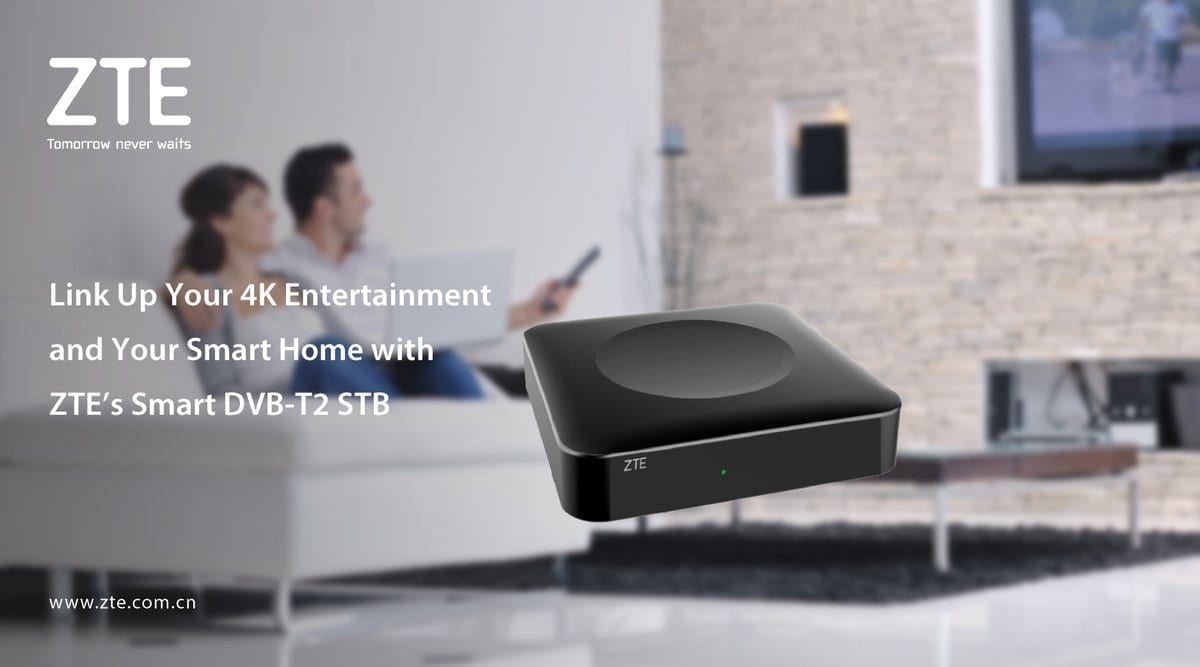
    ZTE has launched its Big Video 4K+ solution for the European market, which includes ZTE’s latest smart terminals and Big Video-based smart home service.

    ZTE’s Big Video 4K+ solution consists of four sub-solutions, namely fixed-mobile convergence, intelligent operation, intelligent maintenance and 4K smart terminal.

    “The market consolidation is accelerating and it is important for operators to quickly integrate their fixed network and mobile networks to offer Big Video services that can address this increasing customer need,” said Cui Liangjun, VP of ZTE.

    “ZTE’s 4K+ solution provides fixed-mobile convergence to support the convergence of fixed and mobile service platforms, content delivery networks (CDN) and multi-screen terminals.”

    The solution is designed to meet diversified customer requirements and bring users an ultimate video experience with key features including unified platform, cloudized deployment, intelligent operation and maintenance (O&M), multi-screen access and ultra-high definition.

    The ZTE Big Video 4K+ solution provides intelligent operation and intelligent maintenance based on a big data platform. With powerful data mining and analysis, management, and scalability, the solution offers customers a visualized online maintenance management (OMM) portal and end-to-end intelligent fault location to improve terminal users’ video experience.

    Meanwhile, the intelligent operation platform supports precision marketing, targeted advertising, personalized EPG, as well as providing data support for innovative digital services required by industries such as medical care, education and travel. The solution’s big data based multi-dimension user analysis and modelling capability provides reference for users when making operation-related decisions.