Author: Mei Ling Tan

  • Calvin Klein and AllSaints Ban fur Acrross Ranges

    Calvin Klein and AllSaints Ban fur Acrross Ranges

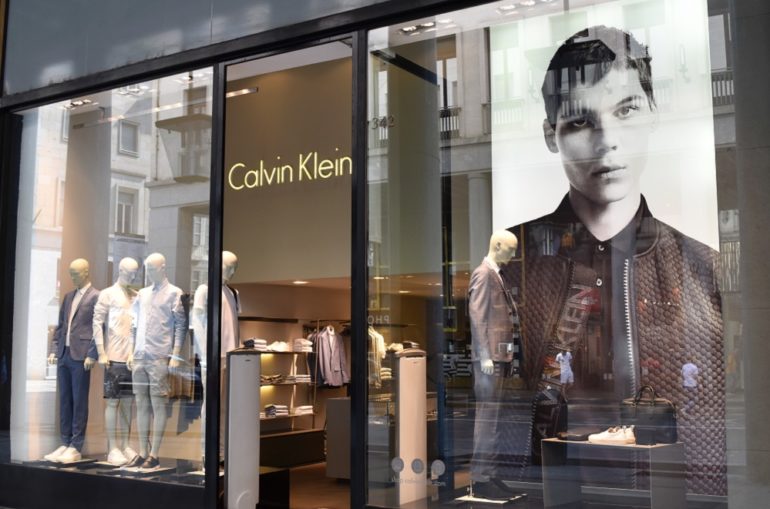
    Hong Kong fashion brands management firm Global Brands Group says it will ban fur across its Calvin Klein and Allsaints clothing ranges.

    The ban is not the group’s first of its kind, according to a report by Livekindly. In recent years it has already moved to ban ostrich skin and angora wool.

    “Peta applauds Global Brands Group for its compassionate and business-savvy decision to ban fur,” said animal rights organization Peta (People for the Ethical Treatment of Animals) executive VP Tracy Reiman, “which shows that the future of fashion is vegan.”

    Other major clothing brands placing similar bans include Gucci, Burberry, Karl Lagerfeld, Prada, and Chanel, as has retail giant Macy’s, owner of Bloomingdales. Gucci’s president and CEO Marco Bizzarri has said publicly that animal fur is “outdated”.

    “Over the past two years, we have been closely following consumer and brand trends, listening to our customers and researching alternatives to fur,” said Macy’s CEO Jeff Gennette. “We’ve listened to our colleagues, including direct feedback from our Go Green Employee Resource Group, and we have met regularly on this topic with the Humane Society of the United States and other NGOs. Macy’s private brands are already fur-free so expanding this practice across all Macy’s, Inc. is the natural next step.”

  • Puma experiences its best year yet as sales soar globally

    Puma experiences its best year yet as sales soar globally

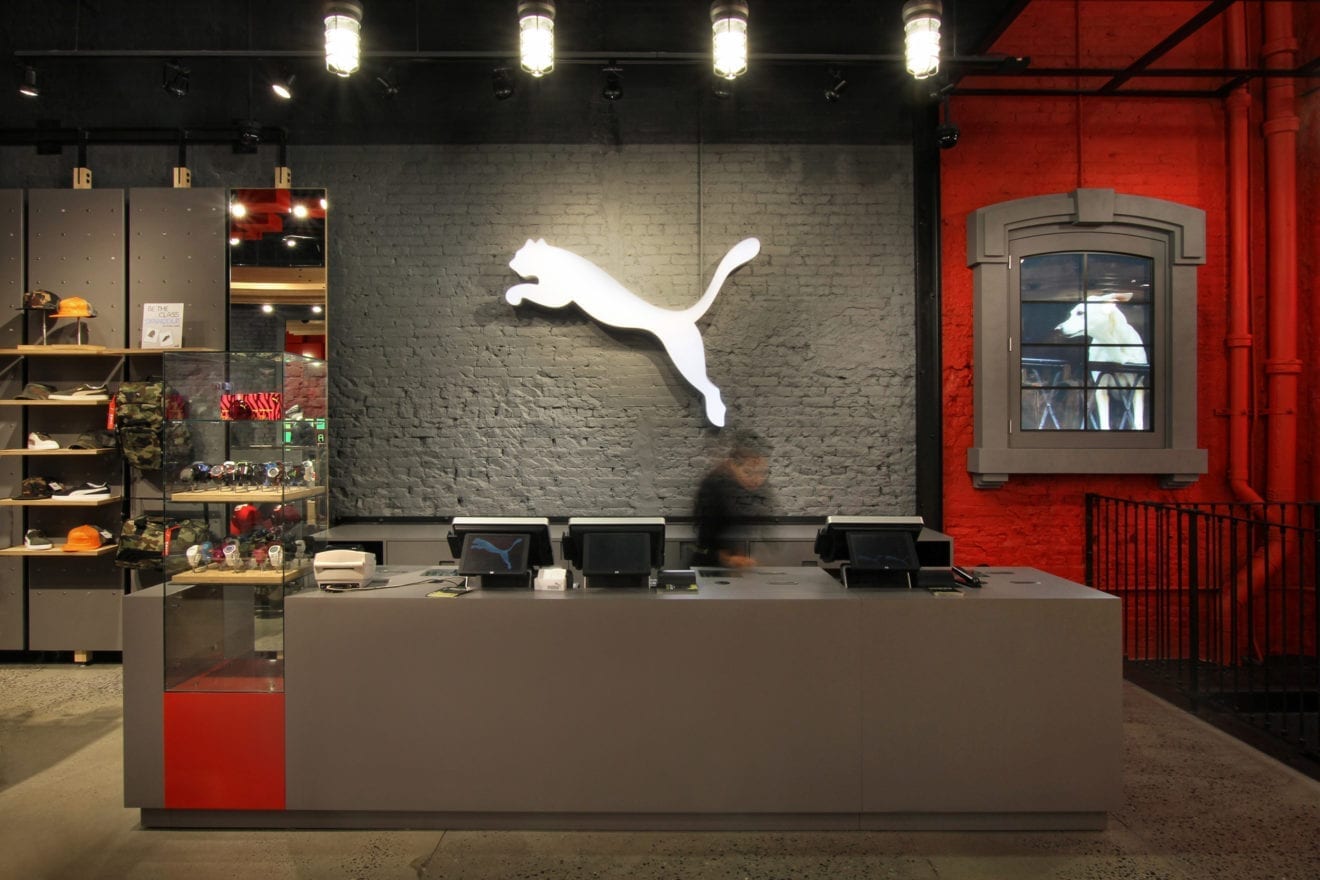
    Puma’s worldwide sales surged 18.4 percent last year, to €5.502 billion and its pre-tax profit rose 40 percent to €262 million.

    But the positive results were tempered by a warning from CEO Bjorn Gulden about the year ahead given the outbreak of coronavirus in China.

    “After a good start into 2020, February has of course been negatively affected by the outbreak of COVID-19. The business in China is currently heavily impacted due to the restrictions and safety measures implemented by the authorities.”

    He said businesses in other markets, especially in Asia, are suffering from lower numbers of Chinese tourists.

    “Given the current uncertainty around the virus, it is, of course, impossible to forecast its impact on the business. We will do everything we can in the short term to minimize the damage and remain very positive in the long term both for our industry and for Puma,” said Gulden.

    Puma’s year ended with a strong fourth-quarter result, with revenue up by 20.6 percent and pre-tax earnings up by 47 percent.

    “All regions and all product divisions were up by double-digits. This made 2019 the best year in Puma‘s history,” said Gulden. “I am very proud of what the team has achieved and thought this performance shows the global potential of the Puma brand.”

  • Philippine airlines are losing Chinese tourists amid coronavirus outbreak

    Philippine airlines are losing Chinese tourists amid coronavirus outbreak

    When Philippine President Rodrigo Duterte pursued closer foreign relations with China, he helped attract planeloads of Chinese tourists to the Southeast Asian nation. Now, the coronavirus outbreak is reversing the trend, much to the chagrin of airline companies.

    Budget carrier Cebu Pacific has put its expansion plans into the Chinese market on hold after the Covid-19 disease triggered the biggest health scare in the region since the Sars (severe acute respiratory syndrome) outbreak in 2003. Cebu Pacific and Philippine Airlines have both canceled all China-related flights until the end of March, and both stocks have taken a beating along the way.

    The country has reported three infection cases, and recorded the first death outside China on February 2. After that, Duterte imposed a sweeping ban on travels to and from mainland China, Hong Kong and Macau to protect the country in one of the most drastic reactions by regional governments. Approvals for visas on arrival have also been tightened.

    “Traveller volumes on China-Philippines routes have fallen,” said Jose Enrique Perez De Tagle, vice-president of corporate communications at PAL Holdings, which owns Philippine Airlines. Mainland Chinese account for about 10 percent of its global passengers, he added.

    Global travel restrictions on Chinese travelers as airlines cut flights to mainland
    15 Feb 2020

    Since Duterte won the presidential election in June 2016, the combative president has embraced closer ties with Beijing despite territorial disputes in the South China Sea. He has also distanced the country from the US, including a decision last week to end the Visiting Forces Agreement, a 21-year pact that allowed US troops to be based in the country for bilateral exercises.

    Mainland Chinese tourists have since become the nation’s second-largest source of tourist arrivals in the Philippines, according to government data. They made up more than one-fifth of the 7.5 million arrivals in the first 11 months of last year, versus 9.1 percent in 2013.

    The Philippines received 1.26 million Chinese tourists in 2018 versus 491,000 in 2015, according to Colliers, citing government data. They spent US$1,130 per person on average, boosting the retail and tourism sectors. In January to November last year, arrivals jumped 40 percent year-on-year, faster than the national average of 10-15 percent, Colliers said.

    Ending Philippines-US military pact will affect South China Sea disputes: analysts
    16 Feb 2020

    The coronavirus outbreak has claimed more than 1,800 lives and infected more than 71,000 people worldwide, mostly in mainland China.

    Before the outbreak, which originated in Wuhan, local carriers were emboldened by the surge in Chinese visitors to consider adding more routes in China to take advantage of the growth.

  • Vietnam IT recruiting firm raises million dollars from South Korean investor

    Vietnam IT recruiting firm raises million dollars from South Korean investor

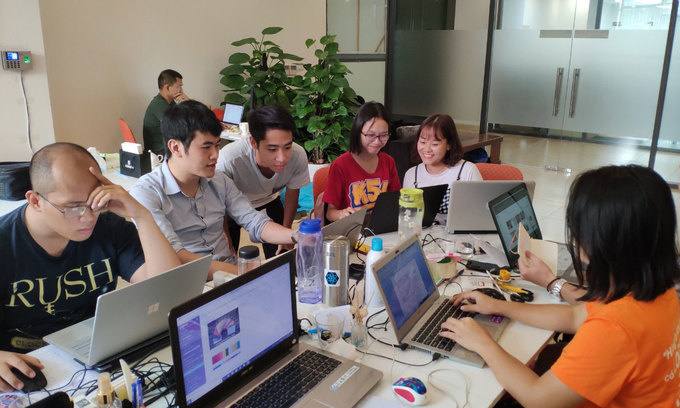
    IT recruitment firm TopDev has secured a million-dollar investment from South Korea’s leading recruitment company Saramin HR.

    The Ho Chi Minh City-based company said in a statement Monday that the deal, whose exact value it did not reveal, would be used to increase the supply of developers through training programs for graduates.

    Saramin HR, which is listed on South Korea’s KOSDAQ, said the investment is part of its global development plan and would support TopDev’s potential expansion in Southeast Asia.

    TopDev said Vietnam has 350,000-400,000 developers now but 500,000 would be needed by 2021 as the country remains a popular outsourcing software destination for multinationals.

    Vietnam is seeing increasing investment in tech startups.

    Last year the total investment in Vietnamese tech startups surged 2.5 times to $741 million, second only to Indonesia in Southeast Asia.

  • Vietnam’s Coffee Queen abdicates Trung Nguyen throne

    Vietnam’s Coffee Queen abdicates Trung Nguyen throne

    Le Hoang Diep Thao has transferred all shares in the Trung Nguyen empire she ran with her ex-husband, pursuant to their final divorce ruling.

    Thao, former deputy director of Trung Nguyen Group (TNG), is no longer on the company’s list of shareholders, TNG announced in a statement Wednesday.

    She and her ex-husband were referred to in the media as the King and Queen of Vietnamese coffee.

    Her ex-husband, Dang Le Nguyen Vu, founder, chairman and CEO of TNG, now owns all shares in the coffee giant and its subsidiaries and has full control of the group. He has also completed a VND1.19 trillion ($51.1 million) “difference in assets” payment to Thao following their divorce ruling on December 5 last year, TNG said.

    On January 13, the Ho Chi Minh City Civil Judgment Execution Department had confirmed that it received Vu’s payment of the above VND1.19 trillion ($51.1 million) in full. The same day, the department also received a written request from the Supreme People’s Procuracy to postpone the execution of the ruling, to give it time to “consider a cassation request Thao had submitted on the judgment.”

    But because Vu had already fulfilled his obligations in accordance with the judgment in question, the City Civil Judgment Execution Department went ahead with the execution and notified the Supreme People’s Procuracy of its action on January 16.

    Vu and Thao, who got married in 1998, differed on how the group, which had developed one of the biggest brands in the country, should be run. In 2015, Thao filed for divorce.

    In March, the court of the first instance had ruled that the stocks and cash of TNG shared by Vu and Thao, as well as the couple’s cash deposits, would be split 60:40 in Vu’s favor.

    Both Thao and Vu had appealed against the entire verdict. The HCMC People’s Appellate Court on December 5 quashed both appeals, finalized the divorce, and upheld the previous judgment.

    Vu will receive all of his and Thao’s stocks in the Trung Nguyen Group, estimated at over VND5.7 trillion ($244.74 million), and have sole management rights over the Trung Nguyen coffee empire, the court had ruled.

    Vu would also receive six properties worth VND350 billion ($15.03 million) that were jointly owned by the couple, while Thao would get the remaining seven worth over VND376 billion ($16.48 million).

    Thao would also receive cash and cash equivalents, gold and foreign currency belonging to TNG that have been deposited at banks totaling VND1.76 trillion ($75.57 million). Vu was liable to pay the difference in assets to Thao, valued at VND1.22 trillion ($52.38 million), the court had ruled.

    Trung Nguyen Group, founded in 2006, is the leading coffee brand in Vietnam. The group began experiencing difficulties six years ago when Vu and Thao fell out on how the corporation should be run.

  • Moody’s Economist Joins Citi Australia

    Moody’s Economist Joins Citi Australia

    The bank is expanding its local research team as it hopes to strengthen its research insights and provide tailored insights on the implications for Australia.

    Citi Australia is bolstering its research capabilities with the addition of Faraz Syed, the bank announced in a statement on Wednesday.

    Syed joins from Moody’s Analytics, where he was an economist responsible for producing thematic analysis on domestic macroeconomic issues, and country forecasts for Australia, Japan and India, and led research on the Australian housing market. He was previously a research economist at the Australian Bureau of Agricultural Resources, Economics and Sciences.

    In his new role, Syed will report to Citi Australia chief economist Josh Williamson. In the announcement, Citi noted growing demand among clients for deeper insights into key macro-economic influences, as well as its Equity Research function, which has more than 160 ASX-listed stocks under coverage.

  • Standard Chartered Hires Fintech Leader

    Standard Chartered Hires Fintech Leader

    The bank is bringing on board a fintech evangelist, who will focus on strengthening data analytics and channel capabilities at its transaction banking business.

    Standard Chartered has announced that fintech leader Kahina Van Dyke has joined its Corporate, Commercial and Institutional Banking division (CCIB) team in Singapore as global head, digital channels, and client data analytics. Her career in financial services spans more than two decades, during which she focused on the access and delivery of financial services worldwide.

    She previously spent just under two years at blockchain payments company Ripple, where she was senior vice president of business and corporate development. She also held executive roles at Facebook, MasterCard, and Citi.

    She moves to Singapore for her new role and reports to CCIB chief executive Simon Cooper. She will also be a part of the CCIB management team, the statement said.

    The move signals the bank’s continued commitment to building its digital capabilities as fintech players continue to encroach on its turf, especially in Asia. In January Standard Chartered announced the appointment of Rene Keller as a chief information officer, CCIB.

    Projects to boost its tech capabilities include a mobile token rolled out for corporate clients in more than 38 markets; the joining of the Enterprise Etherium Alliance to develop blockchain research and application in banking; and a new venture with five other banks to address unmet financing demand from the early stages of supply chains.

  • Huawei Lawyers Accuse U.S. for Overlooking HSBC Misconduct

    Huawei Lawyers Accuse U.S. for Overlooking HSBC Misconduct

    Huawei’s legal representatives claim that U.S. authorities had knowledge of the bank’s violations against Iran sanctions but chose not to pursue the matter.

    In exchange, HSBC allegedly cooperated to support the American federal prosecutor’s case against the Chinese telecom tech giant.

    The government agreed to overlook HSBC’s continued misconduct, electing not to punish the bank, prosecute its executives or even extend the monitorship,» according to a report citing a letter filed by Huawei’s lawyers. «[In return], HSBC agreed to cooperate with the government’s efforts to depict Huawei as the mastermind of HSBC’s sanctions violations and supply witnesses to the government’s stalled investigation of Huawei.»

    This is the latest development in the legal battle involving allegations against Huawei of bank fraud and Iran sanction violations with more charges coming later this month. In an indictment unsealed last year, Huawei’s chief financial officer Meng Wanzhou – currently fighting extradition from Canada to the U.S. – was accused of defrauding banks by misrepresenting the smartphone maker’s relationship with Skycom Tech Co Ltd, a suspected front company in Iran.

    The timing couldn’t be worse for HSBC’s interim chief executive Noel Quinn who is not only fighting to regain shareholder confidence after 2019 profits plummeted but also for his job, as the bank has yet to name a permanent chief.

  • AXA Names Asia Chief Strategy and Customer Officer

    AXA Names Asia Chief Strategy and Customer Officer

    AXA appoints a chief strategy and customer officer for Asian markets to place an even greater emphasis on the region including a doubling down on mainland China.

    AXA appoints Dongjun Choi in his newly expanded role in addition to the strategic development office. Choi will be responsible for finance and operations & technology alongside health and distribution, reporting to Gordon Watson, CEO of AXA Asia.

    Choi has over 20 years of experience in the insurance and financial sector. Prior to joining AXA, he was a managing director with Barclays U.K.’s Strategic Analytics Centre of Excellence responsible for optimizing the bank’s commercial performance. Previously, he had also worked for Cigna, Standard Chartered and McKinsey & Company.

    Choi brings vital expertise to this important function within AXA’s Asian Markets business as we focus on our strategic pillars ­– an enhanced health business, expanded distribution, building our brand and doubling down on mainland China, said Watson, commenting on the new hire.

  • Foodpanda launches 15-minute grocery-delivery service

    Foodpanda launches 15-minute grocery-delivery service

    Singapore food-delivery service Foodpanda has officially rolled-out its instant grocery delivery service, Pandamart, in Hong Kong after a trial commencing last November.

    Partnering with 1000 retailers and selling more than 14,000 items, Foodpanda has expanded its service from restaurant take-outs to the delivery of groceries and daily necessities such as beauty and baby-care products. Local partners include Li & Fung’s convenience chain Circle K, snack store Okashi Land, Heroes Beer and kitchenware store I Love Kitchen. So far, snacks and alcohol are the most popular categories, comprising two-thirds of all orders. During its promotional launch, delivery is complimentary with a certain minimum spend.

    During testing, Pandamart was been able to deliver within 25 minutes of orders and the service aims to maintain an average delivery time of 15 minutes. During Chinese New Year, which coincided with the coronavirus lockdown, takeaway orders on Foodpanda tripled and the number of new visitors to the platform doubled week on week.

    Jeremy Wong, head of Pandamart Hong Kong, said the company hopes to expand its partnerships to 3000 retailers including supermarkets and to increase product selection to 550,000 items by the end of the year. In an interview with Unwire.HK, Wong said launching Pandamart was not for profit margin, but as “a new business direction and utilizing our existing fleet of drivers to meet more of customer’s demands”.

    Currently, Foodpanda has 4000 drivers and aims to double its fleet size and increase the number of partner restaurants room 7000 currently to 12,000 this year.

    Foodpanda has also announced that for the next month it will help partner restaurants by offering free-delivery discounts in the city to encourage more customers to buy via the app, and compensate for some of the lost walk-ins to restaurants.

    “Over 76 percent of people in Hong Kong are forecast to have used online delivery within 2020. We would like all of them to try Foodpanda for either groceries or food delivery,” said Arun Makhija, CEO of Foodpanda Hong Kong.

    At the same time, Foodpanda has joined Deliveroo in offering a relief fund of HK$25 million, allowing partners to delay commission payments for up to three months to ease their cash flow. Local small-scale restaurants will be given first priority with assistive support from Foodpanda.

  • Malaysian retailers hit by coronavirus

    Malaysian retailers hit by coronavirus

    Malaysian retailers operating in tourist zones have seen sales plunge in the wake of the coronavirus outbreak.

    Locally headquartered leathergoods retailer Bonia says sales have fallen by as much as 77 percent in one location and were down overall as fewer Chinese traveled to Malaysia and locals avoided crowded locations to reduce their exposure to the virus.

    Besides its own brand, Bonia also operates stores under the Braun Buffel, Sembonia, Renoma and Valentino Rudy banners.

    Aa Bonia spokesperson said sales had dropped 30 percent overall in the first 17 days of February, the peak, so far, of the virus outbreak.

    “Our Genting Highlands outlet has been tremendously affected,” he said. “The key factor is Covid-19, which has made tourist numbers decline, while local consumers are shying away from crowded malls during their weekend outings.”

    Sales at the Genting Highlands store were down 77 percent and at the Pavilion shopping center in Kuala Lumpur by 35 percent, year on year.

    Stores in Johor Bahru and Penang have also been hit.

    Another retailer, Corn In a Cup, has experienced a drop in sales of between 15 and 40 percent, with the worst-affected store the one at Zoo Negara, where daily sales usually run from 200 to 300.

    “We have been operating at the zoo for over 10 years,” he told The Edge. “Never before in history have we only sold one cup of corn in a day.”

  • Warner Bros eyeing Indian malls for entertainment spaces

    Warner Bros eyeing Indian malls for entertainment spaces

    US entertainment giant Warner Bros is negotiating to establish family entertainment centers in Indian malls.

    The firm has already been seeking 20,000–30,000sqft of mall real estate for some time now in the hopes of setting up branded spaces to show off its popular brands such as DC and Harry Potter.

    Observers of the proposed move have speculated that the business will use the centers to assess the Indian market for its entertainment brand, considering the success of its expansive Warner Bros World indoor theme park in Abu Dhabi.

    Warner Bros has not released a public statement about its Indian expansion plans.

  • Global franchise operators eye Thai growth

    Global franchise operators eye Thai growth

    Franchise brands from the US, France and China are eyeing opportunities in Thailand which has become a strong drawcard for offshore companies, according to consultants.

    Southeast Asian specialist VF Franchise Consulting is holding a franchise-business matching event in Bangkok next week, with local partner Gnosis which has drawn businesses keen to establish a presence in Thailand.

    Among the companies participating who are seeking local partners are retailers Ace Hardware, Delifrance and Little Caesars. Others include technology-focused language education company Qooco and Scholastic World of English.

    “Thailand continues to be of strong interest from our clients,” said Sean T Ngo, CEO of VF Franchise Consulting. “Whether it is food and beverage, education, retail, fashion or services, all of these sectors are attractive in the Thai market.”

    Ngo says the key to succeeding in Thailand’s ultra-competitive market is offering clear and sustainable value and differentiation.

    “We believe the brands that we are taking to Thailand fit that extremely well as they are all leaders in their respective franchise segments.”

    On February 25 in Bangkok, some of the franchisor executives from the brands will meet one-on-one with invited franchisees and investors.

    US-based Little Caesars Pizza is the world’s third-largest pizza franchise and now operates in 26 countries, including Singapore and the Philippines.

    Delifrance is the world’s largest French bakery and cafe chain and has more than 400 stores serving millions of customers in 15 countries across the globe.

    Ace Hardware is the largest home-improvement franchise in the world with more than 5300 stores worldwide, including more than 200 stores in the Philippines and nearly 200 stores in Indonesia.

  • E-commerce battleground turns to ‘easy returns’

    E-commerce battleground turns to ‘easy returns’

    South Korea’s e-commerce industry, which has long emphasized “fast delivery,” is expanding its services, with competition now turning to offerZ “easy returns”.

    South Korea’s major shopping portal 11st said Monday that it has introduced a service to offset return costs caused by customers exchanging products, in which an insurance company pays for shipping when consumers return a product.

    When customers wish to return products with return insurance with 11st designated delivery service, they will not have to pay the delivery charge.

    However, if a customer returns a free-delivery item, the purchaser must pay for the initial shipping costs incurred by the seller.

    11st introduced services to flagship product lines such as fashion and accessory goods, which are often difficult to purchase online due to the cost of return shipping resulting from color and size exchanges.

    Shipping costs not only contribute to consumer hesitation about making a purchase but also make them hesitate as they might want to exchange a product for another size or color.

    However, with the delivery charges covered, one can shop worry-free.

    According to a report released last year by market-research firm Consumer Insight and Hanyang University’s Retail Research Center, “exchange/return/refund convenience” topped the list with 35.1 percent according to a survey of six aspects of delivery satisfaction.

    Rapid/accuracy, with 16.4 percent, was second.

    The result can be interpreted that consumers consider being able to return goods more important than the speed at which they are originally delivered.

    Coupang Corp, South Korea’s No 1 e-commerce company, is also offering free delivery and free return services to Rocket Wow members.

    In the case of size-sensitive fashion products, the company offers exchanges free of charge for 30 days for rocket delivery products that are purchased directly even if the purchaser is not a member.

    Prior to e-commerce channels, the home shopping industry focused on growth based on “free returns” as its sales strategy.

    “On the part of consumers, fewer hassles or costs caused by returning products are eliminated, and on the part of sellers, more sales can be expected if more frequent purchases occur,” said a source in the retail industry.

  • AirAsia offers up to 30% off for flights from KL

    AirAsia offers up to 30% off for flights from KL

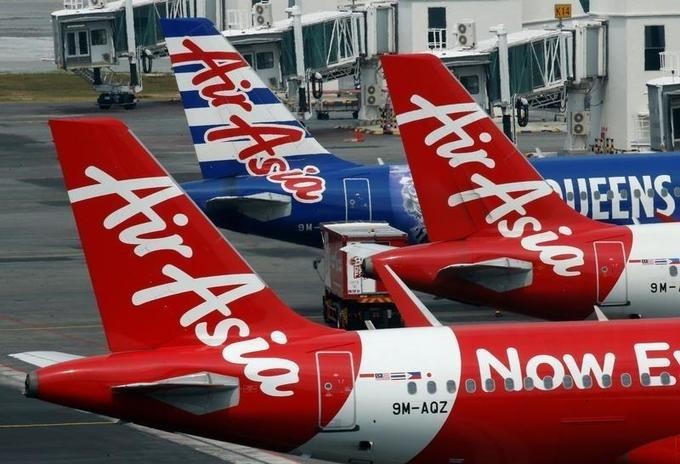
    AirAsia Group Bhd is offering 30% off all its flights out of Kuala Lumpur from now until Feb 23, except those operated by AirAsia India and AirAsia Japan.

    The special sale is for travel between Feb 24 and Sept 30.

    In a statement today, AirAsia said the discounted base fares are for short-haul flights from Kuala Lumpur to destinations such as Johor Baru, Bintulu, Kuantan, Maldives, Krabi and Kolkata.

    “Our goal is to make travel more affordable and seamless than ever before as we continue our transformation to become a leading online travel package platform — now offering much more than just airfares,” airasia.com CEO Karen Chan said.