Author: Mei Ling Tan

  • Aditya Birla plans to open 500 stores this year

    Aditya Birla plans to open 500 stores this year

    India’s Aditya Birla Fashion and Retail is set to launch more than 500 stores by the end of the year.

    According to reporting in The Economic Times, the firm, which owns the Pantaloons fast-fashion brand, is counting on shifting buyer interest towards its branded clothing despite economic indicators of a lull in consumer spending – and its plans represent three times the company’s normal growth rate. Aditya Birla’s strategy seeks to invigorate spending while speeding up the expansion of exclusive brand outlets, including conversion of some large wholesalers into exclusive brand outlets.

    “The general consumption habits are changing, especially in a digitally connected network, when you are seeing a desire for brands and aspiration for better quality products,” said Aditya Birla MD Ashish Dikshit.

    “There is a very large movement to buy brands and the opportunity in a country like India will keep emerging from new markets.”

    The firm also currently plans to release a line of mass-market traditional ethnic wear, which represents an estimated 30 percent of the overall apparel market in India.

  • AirAsia active, falls 2.52% on potential RM1.1b loss amid Covid-19 outbreak

    AirAsia active, falls 2.52% on potential RM1.1b loss amid Covid-19 outbreak

    Shares in low-cost carrier AirAsia Group Bhd (AAGB) fell by as much as 2.52% at mid-morning following a report by CGS-CIMB Research that flagged a potential core net loss of RM1.1 billion for the aviation group amid the ongoing Covid-19 outbreak.

    As of 10.45am, shares in AAGB fell 3 sen to RM1.16, giving the group a market capitalization of RM3.88 billion.

    AAGB saw 14.77 million shares traded and is the sixth most actively traded counter on Bursa Malaysia today.

    At the time of writing, AAGB is just one sen away from its one-year low of RM1.15 on Feb 4, 2020.

    CGS-CIMB Research had opined in a note to investors that it was expecting AAGB to post a core net loss of RM1.1 billion in the financial year ending Dec 31, 2020 (FY20), from its previous expectation of a RM147 million core net profit.

    This was due to the impacts of the Covid-19 outbreak on passenger movements, particularly as AAGB’s operations in Malaysia, Thailand and the Philippines have significant exposure to the North Asia region, which includes China.

    These impacts include lower passenger demand and yield.

    The research house had also slashed its target price (TP) on the low-cost carrier to RM1.03, from RM1.58 previously, while maintaining its hold call on the stock.

    The lower TP is based on a lower 2020 price-to-book value (P/BV) of 0.73 times (from 1 times), which is two standard deviations below its P/BV mean since 2013.

    “AAGB is less able to tolerate unexpected changes to demand and yields given that its profitability has already been ravaged by the higher cost of leasing planes, with virtually all of its planes having been sold and leased back in the past two years. AAGB has already lost its lustre among investors, and Covid-19 will turn conditions far more hostile,” CGS-CIMB said in a note Feb 17.

    In terms of analyst coverage, AAGB has 22 analysts covering it — with 10 sell calls, 10 hold calls and only two buy calls.

    Its consensus TP stands at RM1.41 — with TPs among the analysts ranging from RM1 to RM2.16.

  • Cebu Pacific, PAL to resume Taiwan flights after travel ban lifting

    Cebu Pacific, PAL to resume Taiwan flights after travel ban lifting

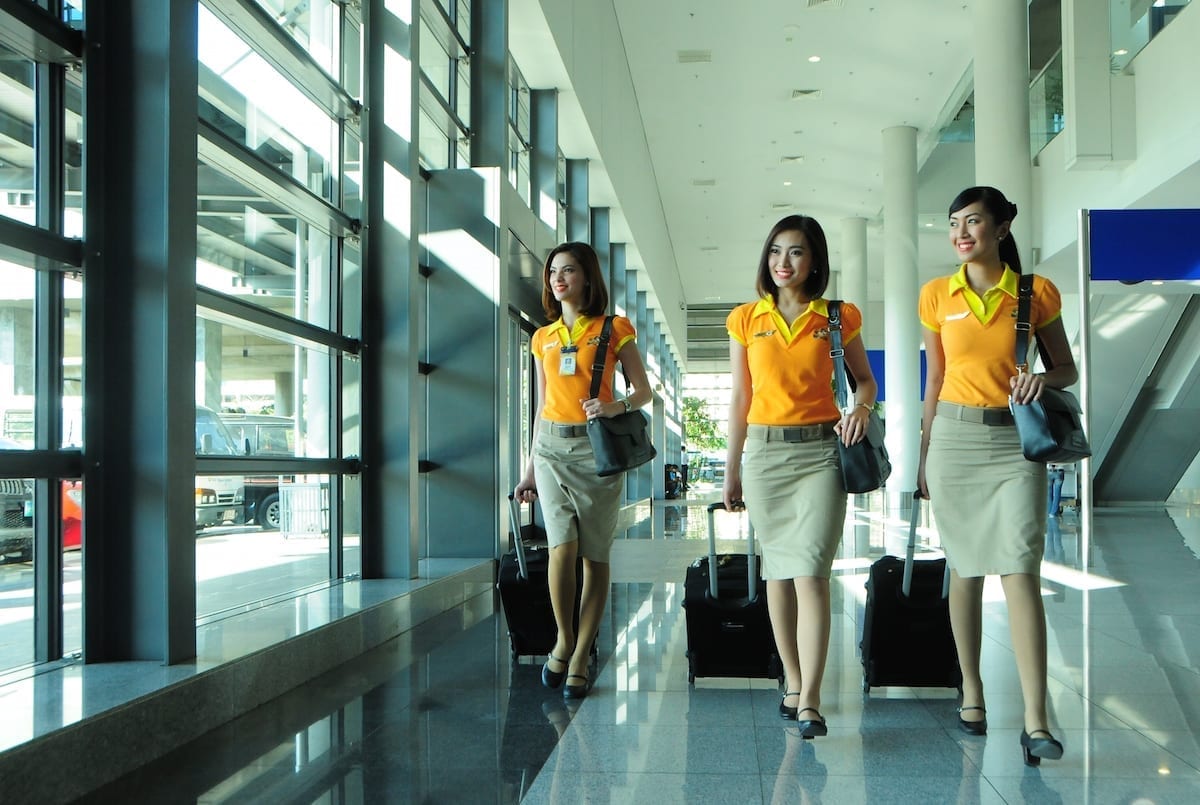
    Two local airlines will again mount flights to and from Taiwan after the government lifted the travel ban on the territory.

    Cebu Pacific flights will resume February 17.

    In an advisory, the airline will have one flight from Manila on Monday and only arrival flights from Taiwan beginning February 18.

    On February 21, there will be two flights from Manila and two from Taiwan.

    “We are notifying passengers both on those flights on the resumption of scheduled flights starting Monday,” said Cebu Pacific spokesperson Charo Logarta- Lagamon in a phone patch interview.

    Lagamon said the airline has carried out safety measures since the coronavirus disease (COVID-19) outbreak.

    “Ever since the situation with the COVID-19 broke out, we have implemented precautionary measures — disinfection of aircraft, measures for personnel — and we try as best as we could to keep them in place all through these weeks,” she said.

    Meanwhile, Philippine Airlines announced in an advisory that Taiwan flights will begin February 21. Trips will initially be four times weekly — Monday, Wednesday, Friday, and Sunday — until February 29.

    Daily flights will resume March 1.

    “Passengers originally confirmed on canceled MNL-TPE and TPE-MNL flights now have the opportunity to book on the restored PR890 and PR891 flights,” said PAL.

    Presidential spokesperson Salvador Panelo earlier said that the Inter-Agency Task Force for the Management of Emerging Infectious Diseases lifted the travel restriction given Taiwan’s strict security protocols against the COVID-19.

  • Great Wall Motor To Purchase GM’s Thailand Manufacturing Plant

    Great Wall Motor To Purchase GM’s Thailand Manufacturing Plant

    Great Wall Motor announced that it has signed an agreement for the purchase of General Motors’ manufacturing facility in Rayong, Thailand. This announcement is subject to government and regulatory approvals. Under a signed binding term sheet, GM Thailand and GM Powertrain Thailand legal entities, which include the Rayong vehicle assembly and powertrain facilities, will transfer to GWM. GM and GWM are targeting the end of 2020 to close the deal and hand over the site.

    The acquisition of GM’s Thai Rayong plant will help the business development of Great Wall Motor in Thailand and the ASEAN market. Great Wall Motor will expand through the entire ASEAN region with Thailand as the center, and export its products to other ASEAN countries as well as Australia. Great Wall Motors’ investment will create more jobs in the local area, including direct and indirect employment and further enhance skill development in the automotive industry. GWM will also promote the development of the local supply chain, R&D and related industries, plus contribute more to the exchequer of both the local Rayong and Thailand governments.

    Parker Shi, Vice President, GWM India said, “This agreement marks an important milestone in the overall scheme of things for Great Wall Motor in the ASEAN Region and is a testimony of our global expansion strategy that is now focused on South East Asia including India.”

  • Beijing Auto Show Delayed Due To Coronavirus

    Beijing Auto Show Delayed Due To Coronavirus

    Organizers of Beijing auto show, which is scheduled to be held in late-April, said on Monday the event will be delayed event due to the coronavirus outbreak.

    Across mainland China, officials said the total number of coronavirus cases rose by 2,048 to 70,548, with 1,770 deaths.

  • Nissan’s New CEO Says Willing To Be Fired If No Turnaround

    Nissan’s New CEO Says Willing To Be Fired If No Turnaround

    Nissan’s worsening performance has heaped pressure on Uchida, formerly Nissan’s China chief who became its third CEO since September, to come up with aggressive steps to revive the company. On Tuesday, Uchida, who was repeatedly heckled by shareholders, said he was ready to face dismissal if he failed to improve profitability at the company, which is on course to post its worst annual operating profit in 11 years.

    “We will make sure that we steer the company in an effective way so that it is visible in the eyes of viewers. I will commit to this: if the circumstances remain uncertain you can fire me immediately,” he said.

    Uchida, 53, did not give a timeframe for improving Nissan’s performance. The new boss must prove to the board he can accelerate cost-cutting and rebuild profits at the 86-year-old Japanese giant, and that he has the right strategy to repair its partnership with France’s Renault, sources have told Reuters.

    Uchida pleaded with shareholders to be patient while he comes up with a plan by May to recover from crumbling profits and a corporate shake-up following Ghosn’s arrest in Japan in late 2018 over financial misconduct charges.

    “If you can be patient a little bit longer, on a day-to-day basis you will be able to sense we are changing,” he said.

    Ahead of the meeting, some shareholders demanded more clarity about Uchida’s plan.

    “I just want to know what the plan for recovery is. At the moment, the share price has dropped again, and the value of the company has plummeted,” said a 70-year-old former employee who owns shares in the company.

    “If this is the situation, part of me thinks that we would be better off with Ghosn … If we don’t get a clearer vision of the path the company is taking, it will be a worry.”

    Nissan’s shares are trading around their lowest level in more than a decade following its latest earnings.

    Last week, Nissan cut its dividend outlook to its lowest since the 2011 financial year, after dwindling car sales drove the company to post its first quarterly net loss in nearly a decade.

    Shareholders gathered at the extraordinary meeting in Yokohama to vote in new directors including Uchida and Chief Operating Officer Ashwani Gupta.

    Their appointments highlight a changing of the guard at Nissan, as shareholders were also voting on motions for former company stalwarts, CEO Hiroto Saikawa and COO Yashuhiro Yamauchi, to leave their board director positions.

  • Beta version of popular Google app gets Dark Mode for all Android users

    Beta version of popular Google app gets Dark Mode for all Android users

    Another reason to use Dark Mode is to preserve the battery life on handsets that sport an AMOLED display. That’s because such panels create the color black by turning off the pixels in the appropriate area of the screen. Pixels that are turned off do not draw on the phone’s battery, saving some power. Dark Mode has become so popular that both iOS and Android now allow users to enable it system-wide.
    To become a beta tester for the Google app, head over to this Google support page and follow the directions. You can only have one version of the Google app installed at one time, and if you’re unhappy being a beta tester you can always return to the public version of the app.
    Once you sign up as a beta tester for the Google app on your Android phone, you can turn on Dark Mode by going to Settings > General > Theme > select Dark or System Default. On phones running Android 10, this means that you can choose to have the Google app in Light Mode all of the time, Dark Mode all of the time, or have it match the system setting. On phones running an earlier version of Android, go to Settings > General > Theme > select Dark or Set by Battery Saver. On pre-Android 10 phones, this will give you the option of running the Google app in Light Mode, running the app in Dark Mode, or running the app in Dark Mode once the Battery Saver is turned on.
  • AT&T continues its 5G expansion to 13 new markets

    AT&T continues its 5G expansion to 13 new markets

    It looks like AT&T is expanding its 5G network to new markets every week. Early this month, the carrier added more than a dozen cities to its 5G service map and just a week ago another 13.

    Today, the carrier announced another expansion of its 5G network to 13 markets. Of course, we’re talking about AT&T’s low-band 5G, not the uber-fast 5G+ that’s only available in 35 cities in the United States at the moment.

    Anyway, here are all 13 new markets that now benefit from AT&T’s 5G mobile service: Chattooga County, GA, Hunterdon County, NJ, Las Cruces, NM, Long Branch, NJ, New Brunswick, NJ, New Haven, CT, Ocean County, NJ, Orange County, NY, Portland, OR, Utica-Rome, NY, Vallejo, CA, Whitefield County, GA, and Wilmington, DE.

    With the addition of the 13 new markets announced this week, AT&T now provides 5G mobile service in 58 cities across the US. Truth be told, you’ll only get 5G data speeds in parts of these cities, but it’s better than nothing.

    Hopefully, you already own a Samsung Galaxy Note 10+ 5G or plan to buy a 5G-enabled Galaxy S20, otherwise, you won’t be able to take advantage of AT&T’s 5G service.

  • DBS Reports Second Staff Infected With Coronavirus

    DBS Reports Second Staff Infected With Coronavirus

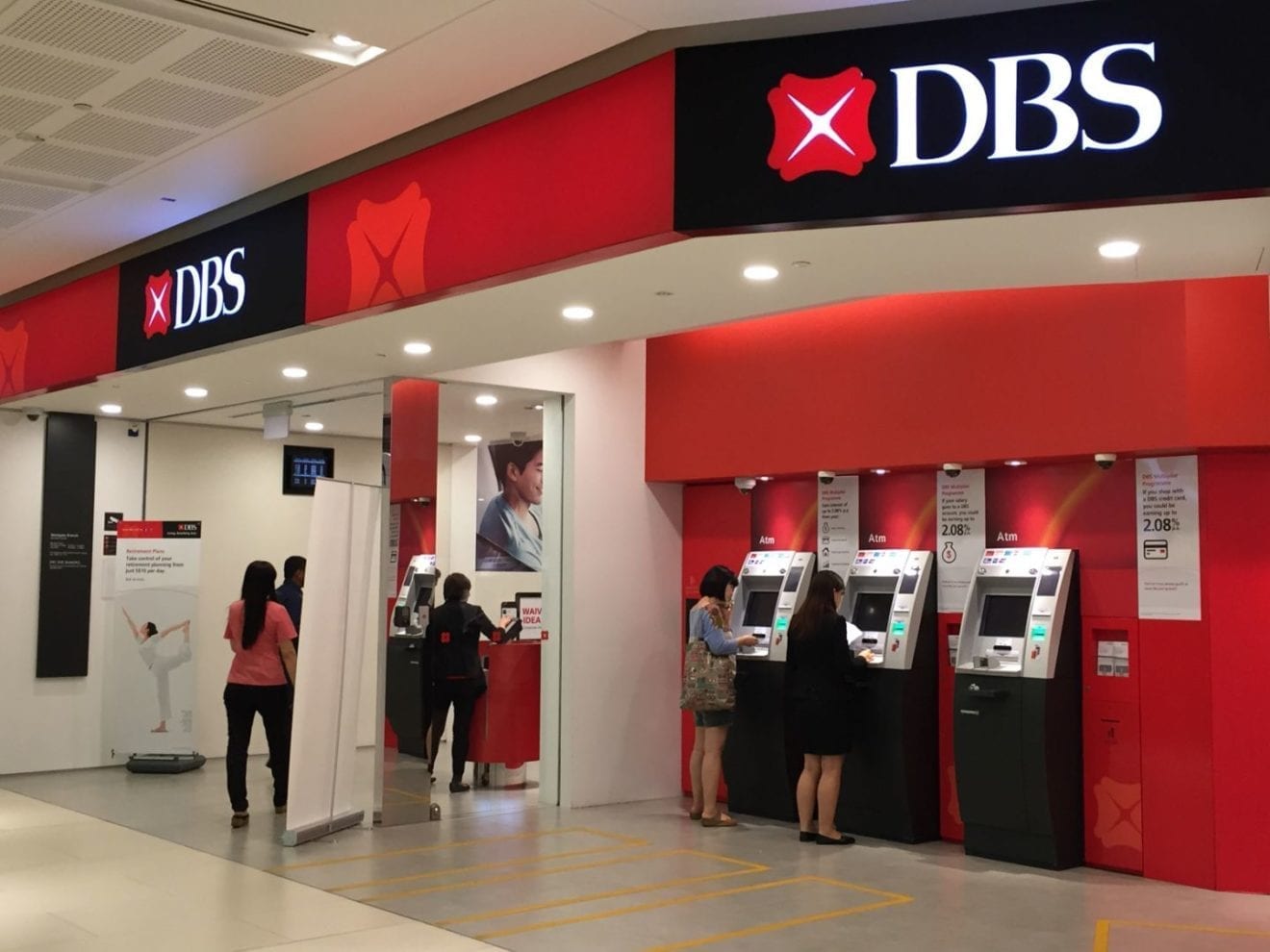
    Another staff of DBS has tested positive for the novel coronavirus, according to a media report. This time around, the latest patient is based in one of the bank’s satellite offices, a DBS spokesman said in Singapore, without disclosing the location. The new case – Case 77 – is understood to be a staff at DBS’s Ngee Ann City office on Orchard Road.

    DBS Treasures has a branch on the fifth story of the property. This satellite office has been deep cleaned as per MOH and National Environmental Agency guidelines, the spokesman added. Case 50 involved a 62-year-old male DBS employee who works at Tower 3 of Marina Bay Financial Centre.

    Case 77 was a first-degree contact, which means he was in close contact with the first DBS employee infected, Case 50, the spokesman added.

    The Ministry of Health (MOH) had announced two more cases in Singapore on Monday evening, with one of them being Case 77, a 35-year-old Singaporean man with no recent travel history to China.

    The affected office space and floor in Tower A have been cordoned off, and common areas such as lifts and toilets are being deep-cleaned and disinfected.

    The DBS spokesman said the bank has a framework for contact tracing, which is done through a mix of physical interviews and data analytics. Through this, we are able to contact-trace up to three degrees of separation, said the spokesperson.

  • Standard Chartered to Double Relationship Manager Headcount

    Standard Chartered to Double Relationship Manager Headcount

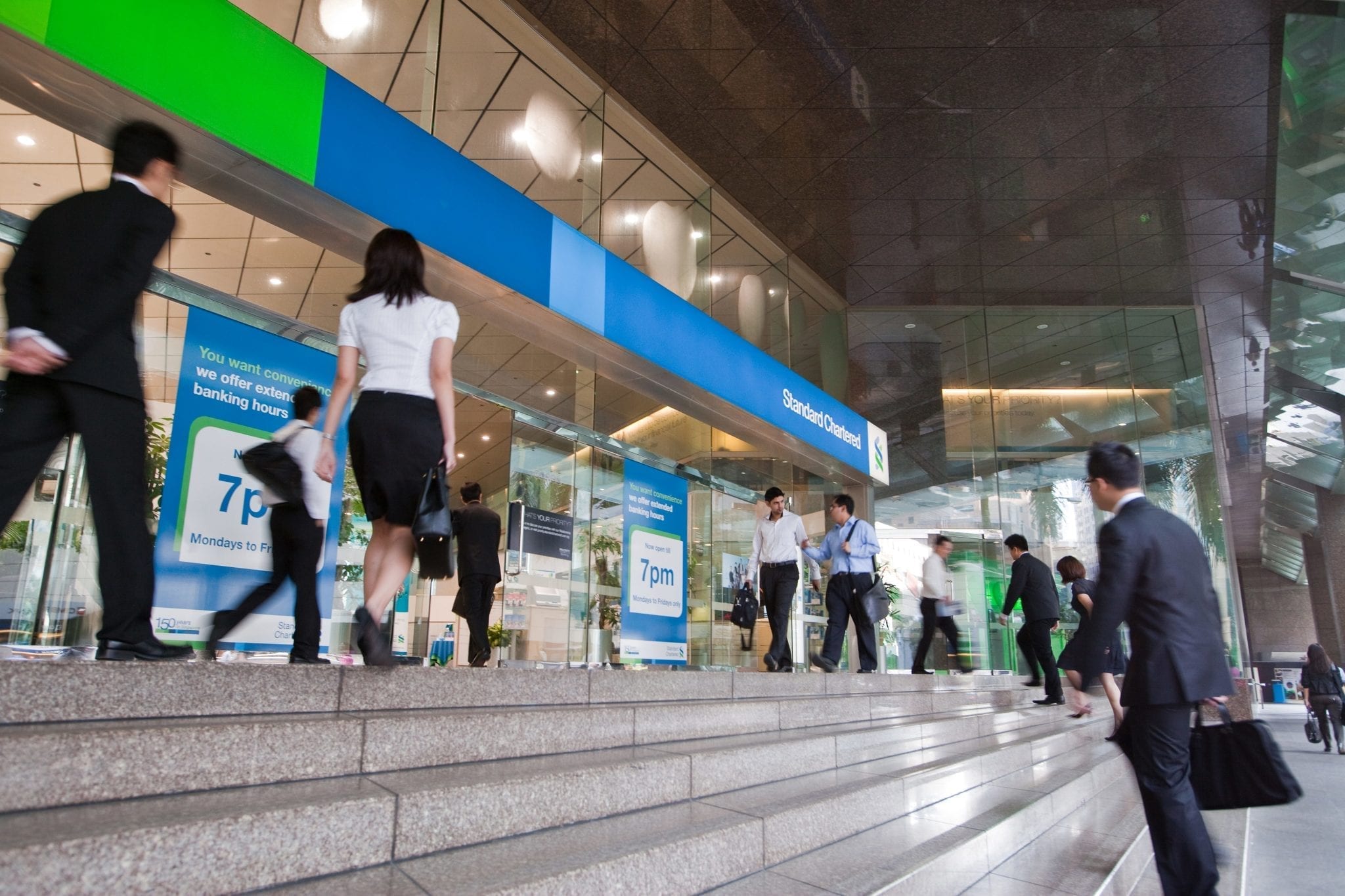
    In anticipation of the growth of international banking clients, Standard Chartered will look to double the number of relationship managers it houses over the next four years.

    With an existing affluent segment business (priority) and a high and ultra-high net worth segment business, Standard Chartered decided several years ago to pursue the mid-tier client segment, akin to major competitors like HSBC Jade, Citigold Private Client, and DBS Treasures Private Client.

    According to a release, the bank subsequently launched its «priority private client» segment in March 2018 which has since seen the client base more than double.

    Unsurprisingly, the segment also exhibits global tendencies and currently makes up about one-third of Standard Chartered’s international banking clients.

    In fact, international banking now makes huge contributions to the retail business, according to Standard Chartered’s retail banking head Dwaipayan Sadhu, which subsequently led to more investments not only in talent but a newly launched wealth center based in Singapore.

    Located in Ngee Ann City, the first-ever flagship center will focus on international banking and priority private clients. Standard Chartered’s priority private clients, defined as those with S$1.5 million ($1.1 million) or above in assets under management with the bank, will have access to an extended range of investment opportunities, preferential pricing, and an experienced relationship management team.

    International banking services include foreign investments, multi-currency payments or funding of child education. Sadhu noted that over 20 percent of its affluent clients are from around the world and the center could act as an oasis for them to catch up on their financial needs whenever they are in town.

  • Laura Ashley fighting to Survive

    Laura Ashley fighting to Survive

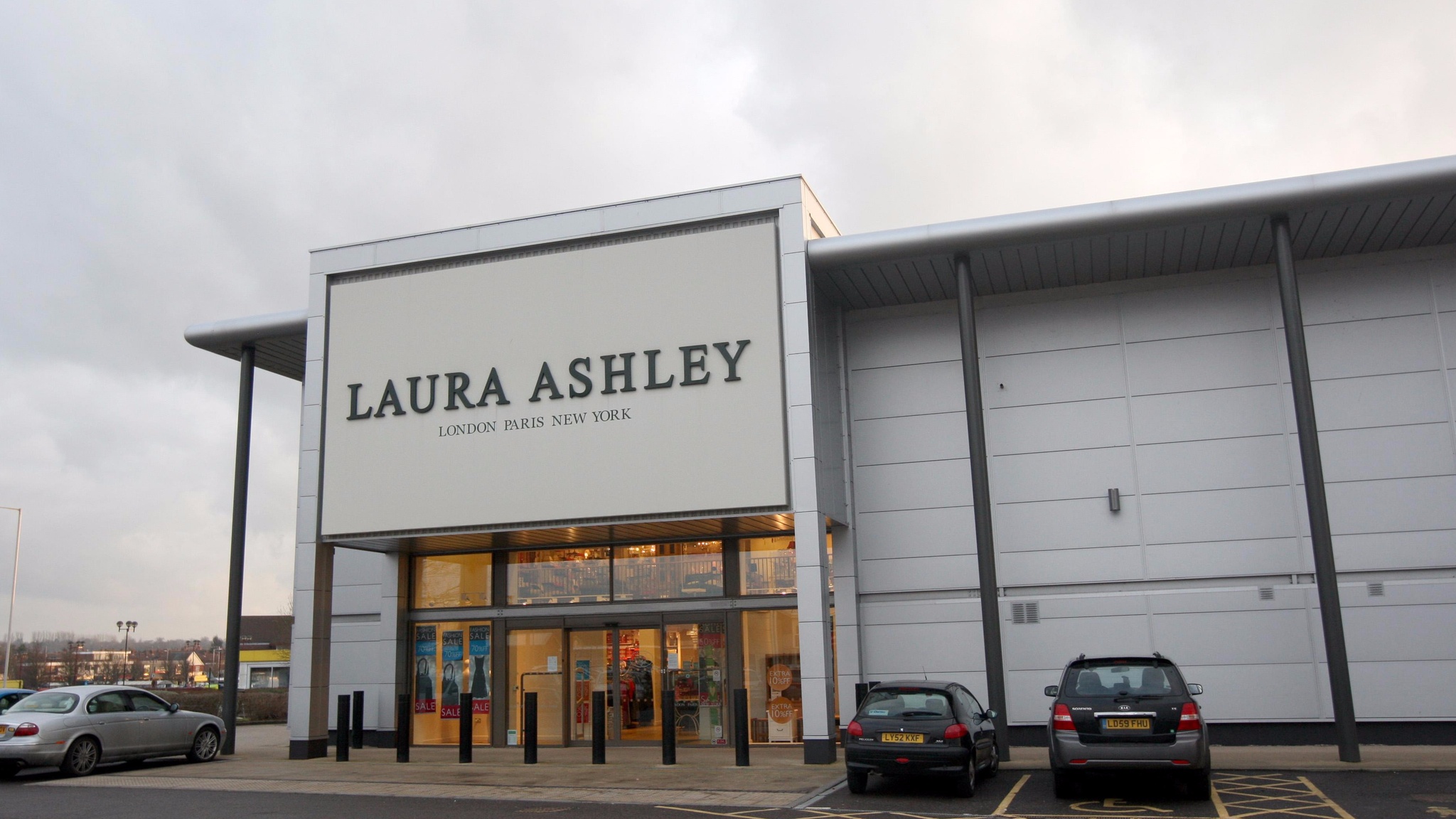
    Struggling fashion & homewares chain Laura Ashley is seeking to borrow additional funding to stay afloat in the midst of a dispute with its lender.

    The firm’s Malaysian owner MUI Group is renegotiating its access to a £20 million (US$26 million) fund put up by Wells Fargo last October. As an asset-backed loan, the amount made available to the chain by the lender has dropped along with its stock value.

    MUI has stated it needs the financing to “meet the group’s immediate funding requirements and to draw down additional amounts to meet ongoing working capital needs”.

    The firm has had a rough financial year, with figures showing a 10.8-per-cent drop in sales in the first half compared to last year’s results following a drop in consumer spending.

    “We acknowledge that recent trading conditions, in line with the overall UK retail market, have indeed been challenging,” said MUI chairman Andrew Khoo. “There is however a robust plan in place to turn the business around … The major shareholders have indicated their continued confidence in the business and are fully supportive of the management team and the execution of the transformation plan.”

    The firm will consider “all appropriate options” should talks regarding the funding break down.

  • Tmall Global offers relief package to merchants worldwide

    Tmall Global offers relief package to merchants worldwide

    Alibaba’s B2C platform Tmall Global is offering support to its merchants during the coronavirus epidemic, including waiving services fees.

    The firm’s annual service fee for the first half of 2020 will be waived for all Tmall Global merchants on board before this coming July. It will also provide its shop setup tool Winpool Smart Edition to all its merchants free of charge.

    “It has always been Alibaba’s mission to make it easy to do business anywhere, and now it’s the time to commit,” said Tmall import and export GM Alvin Liu. “Tmall Global will stand firmly with merchants from all over the world, supporting them and uniting as one to overcome challenges and difficulties at this special moment.”

    Along with the fee waivers, Tmall Global will reduce or exempt warehouse rent and logistics costs. lower the threshold for merchants’ automatic settlement obligations, reduce agency service fees, provide low-interest loans to merchants, and optimize its rules and regulations to allow more flexibility.

    Tmall Global’s move follows the rollout of 20 measures by Alibaba Group and subsidiary Ant Financial to support Chinese SMEs during the outbreak.

  • Fashion brands urged to ‘tread carefully’ over veganism claims

    Fashion brands urged to ‘tread carefully’ over veganism claims

    Brands and retailers have been warned to tread carefully when embracing the growing veganism trend.

    “Veganism is increasingly becoming a lifestyle choice for many people, with the number of vegans in Great Britain quadrupling between 2014 and 2019, according to The Vegan Society,” says Beth Wright, apparel correspondent at GlobalData. “With this rise comes a likely surge in demand for vegan-friendly clothing and footwear.”

    Wright says it should come as no surprise that apparel and footwear companies want to be seen to be embracing veganism. But she warns that there are many issues brands and retailers must consider before declaring products free from animal-derived materials or ingredients.

    “While there are a great many gains to be made from entering the vegan fashion market, industry players must do their homework and identify the risks before joining the fray.”

    Sourcing vegan fashion products goes further than simply bypassing wool, leather and natural silk as raw materials, says Wright. Retailers must also take care to guard against the use of a number of dyes, glues and chemicals that are derived from animals.

    To help address and tackle these complexities, the British Retail Consortium (BRC) has created new guidelines to help retailers and brands sourced vegan fashion products, setting out steps and questions to ask both internally and of suppliers. The ‘Voluntary Guideline on Veganism in Fashion’ sets out a sequence of steps brands and retailers should take to verify their raw material ingredients.

    It aligns with previous advice from testing, inspection and certification specialist SGS Softlines Services, which notes the materials used in the production of vegan products must be robust and maintain the qualities of the animal-based materials they are replacing.

    Among the companies that have launched vegan products are Topshop, Asos and New Look, which last summer became the first high-street fashion retailer to register ranges with The Vegan Society’s Vegan Trademark.

    “Fashion brands and retailers must heed the advice from industry bodies such as the BRC in sourcing vegan products and do their due diligence,” says Wright.

    “Building a relationship between internal sourcing and buying teams and suppliers is key in not only instilling confidence along the supply chain but among consumers too.”

  • Tokyo builds its case to become the next key global city for fashion

    Tokyo builds its case to become the next key global city for fashion

    Tokyo is to host Japan’s largest fashion and art event next month – Tokyo Creative Salon – part of a plan to boost its case to become one of the world’s key fashion hubs.

    Supported by the Tokyo Metropolitan Government, Tokyo Creative Salon will be held from March 15 – 31. It will feature a variety of fashion and art initiatives across Tokyo’s five key districts: Nihonbashi, Marunouchi, Shibuya, Ginza, and Daikanyama.

    Each district will present a line-up of exhibitions and activations such as street runways, art installations, dance performances, and talk sessions. Tokyo Creative Salon will be attended by Japanese girl group Nogizaka46 together with Japanese solo artist Kavka Shishido.

    Tokyo Creative Salon Nihonbashi will feature the “Off to meet” theme, which advises visitors to turn off their mobile devices to fully experience the event. Some 10,000 Sacoche bags, which block smartphone reception, will be given out as gifts. The Nihonbashi venue will feature Sakura Menu Walk and Nihonbashi Art Gate where artists create works with the “Nihonbashi (that is) unrecognizable by the smartphone” theme.

    Tokyo Creative Salon Marunouchi will transform Marunouchi Nakadori into a red runway with full-scale fashion shows. The event also features an exhibition “Fun in the Life” by Hobonichi, allowing people to experience “Fun in the life” through valuable shops and specially prepared products and food.

    A Ginza Rooftop Project will be held on the rooftops of several landmarks including Matsuya Ginza, Ginza Mitsukoshi, Wako and Tokyo Plaza Ginza. The district will also present other fashion shows and art installations.

    Tokyo Creative Salon Shibuya will run a Shibuya Runway for a one-day-only show where up-and-coming designers present their latest styles.

    During the Tokyo Creative Salon at Daikanyama, visitors will get to try on vintage kimonos. The winning works of Fashion Koshien will also be exhibited here.

  • Vietnam winning greater share of US apparel imports

    Vietnam winning greater share of US apparel imports

    Vietnam’s share of US apparel imports has benefited as China’s share in the market is slipping in the wake of the Sino-US trade war.

    According to the US Department of Commerce’s Office of Textiles and Apparel, Vietnam’s share increased to 14.26 percent last year, up from just 7.72 percent in 2010.

    Michelle Russell, an apparel correspondent at GlobalData, says Vietnam’s garment sector has clearly benefited from the ongoing tit-for-tat trade spat between the US and China during the last two years as producers and buyers diversify their supply chains.

    Brands have chosen Vietnam and Bangladesh as its alternative sources as additional tariffs are imposed on most garments imported from China.

    China’s share of the market slipped from 41.9 percent in 2018 to 39.9 percent last year, on top of a year-on-year decline in the unit prices of apparel imported into the US.

    “Despite China remaining the cheapest of the top-10 garment supplier countries, the country’s share of US imports declined last year. Meanwhile, Vietnam is becoming something of a global manufacturing powerhouse and has clearly reaped the benefits thanks to its younger and lower-wage workforce, its preferential trade policies and its logistics – the country boasts 14 major ports,” said Russell.

    The EU-Vietnam Free Trade Agreement (EVFTA) between Vietnam and the European Union, which will remove most tariffs between the two parties over the next 10 years, has been approved by the European Parliament this week. However, Vietnam still faces challenges ahead that will require Vietnam to gradually change the structure of its economy.