Author: Mei Ling Tan

  • Ralph Lauren fears coronavirus will cut sales by $70 million

    Ralph Lauren fears coronavirus will cut sales by $70 million

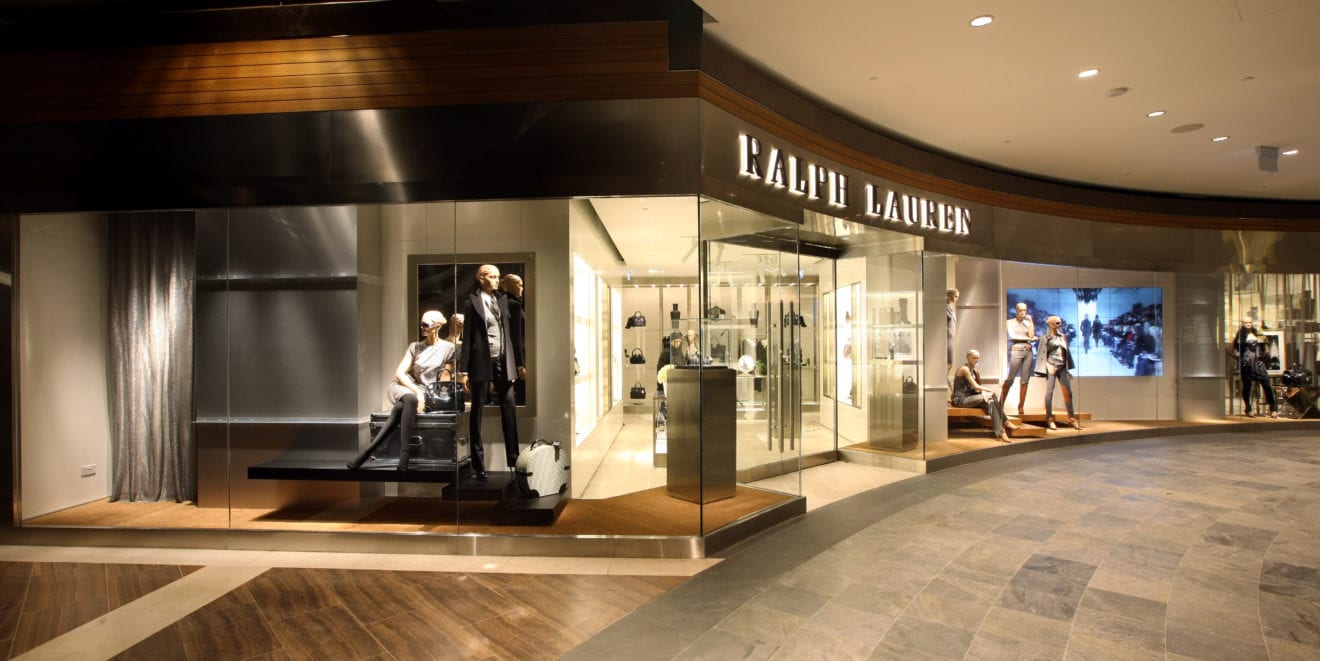
    Luxury group Ralph Lauren Corp fears the coronavirus will reduce its March-quarter sales by between US$55 million and $70 million, due to falling store footfalls in Mainland China, South Korea and Japan.

    The company says it expects “broader impact across its businesses in China and parts of Asia due to significantly reduced travel and retail traffic.” It also warned there may be some disruption to its supply chain due to the virus.

    In a bleak outlook, the company said the sales decline would reduce its operating income for Asia by between $35 million and $45 million, potentially resulting in a loss given the company reported a $38 million surplus in the same quarter a year ago.

    Asia drove $273 million in revenue this time last year

    Ralph Lauren has closed about two-thirds of its stores in Mainland China since the coronavirus broke out.

    “Our dedicated teams are operating with agility in a highly dynamic situation, and we will continue to assess the implications for our business across retail, corporate and our supply base,” said Patrice Louvet, president and CEO, in a statement.

    “While the health crisis creates near-term uncertainties, the fundamentals of our business are strong, and we continue to see significant long-term opportunities for growth in China and across Asia.”

    The company’s founder Ralph Lauren expressed sympathy for those affected by the outbreak.

    “Our hearts are with the many impacted by this virus. Our number one priority is keeping our teams, partners and consumers safe.”

  • Pricerite closes stores, culls staff to weather downturn

    Pricerite closes stores, culls staff to weather downturn

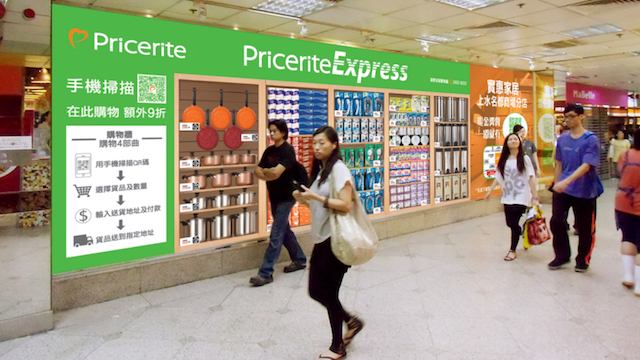
    Furniture and housewares retail Pricerite has closed four stores and will cut staff and executive salaries as it rides out the combined impact of the protests and now the coronavirus on sales.

    Four stores have been closed, the company said in a statement, without identifying their locations. The leases on another eight stores are due to expire this year and management is evaluating which of these will be renewed.

    Store staff numbers have been reduced by 10 percent, but the company said this has not resulted in any effect on service quality.

    Wages of senior management have been cut by 20 percent and directors’ salaries by 40 percent, from now until May and June respectively. Logistic employees have been asked to take unpaid vacations.

    “Under the current economic downturn, the sales of local consumer goods such as furniture have been under great pressure,” said the chairman of Pricerite’s parent, Cash Group, Guan Baihao.

    “The flow of customers has been reduced by 30 percent in the past nine months under the influence of epidemics and social movements. The new retail model is convenient for customers to enjoy online shopping and delivery services. However, the supply of major furniture and household goods has also been affected by the impact of the epidemic, and the supply chain is almost terminated,” he said in a statement translated from Chinese.

    “Under the situation of severely affected supply and demand, if the economic situation does not improve in the short term, the group will be forced to take other measures, including further reduction of branches and layoffs.”

    Meanwhile, the company is negotiating with landlords for temporary rent relief.

    Baiho said the current series of cost-saving measures have gone far beyond the Sars crisis of 2003.

    Along with declining retail sales since the social unrest commenced last June, Buildings Department data shows that only 12,923 private homes were completed in the first 11 months of last year, a decrease of nearly 18 percent over the previous year and the lowest figures in three years. That in turn impacts on the sale of furniture.

    As of December 31, Pricerite had 28 branches across Hong Kong and employed 800 full- and part-time employees.

  • JustCo turns to malls for co-working locations

    JustCo turns to malls for co-working locations

    Coworking space provider JustCo is turning to shopping malls as it looks to double its Asia-Pacific presence this year.

    The firm stands poised to launch its services in Singapore’s The Centrepoint mall as well as Amarin Plaza in Bangkok, its fourth space in Thailand. JustCo is already operating from Marina Square in Singapore.

    “Malls in the city see an annual footfall of over 30 million compared to approximately 120,000 in an office building in the CBD,” said JustCo’s founder and CEO Kong Wan Sing on the opening of the 60,000sqft location at Centrepoint. “We believe that there is a huge untapped opportunity in the retail space segment.”

    Centrepoint, JustCo’s 14th location in Singapore, will be the first to incorporate the firm’s data analytics and other enhanced proprietary technologies, including a robot butler, access by facial recognition, and a digital Wayfinder.

    The Amarin Plaza centre will have the capacity to host 1000 members and will open in the third quarter.

    Buoyed by consistent demand, JustCo has expanded the total area of co-working spaces it manages by more than 150 percent year on year, and doubled the number of enterprise clients served across the markets it serves. It currently manages 42 centres across eight cities.

    “Our greater purpose is to build a mega-network and community within and across markets – one that helps companies and individuals realize the synergies, efficiencies and opportunities of a shared workspace,” said Kong. “In just over a year, our member base has grown by 100 per cent and this is set to grow further with changing workforce demographics.

  • Tesla Seeks Approval To Build Longer Range Model 3 Cars In China

    Tesla Seeks Approval To Build Longer Range Model 3 Cars In China

    Tesla Inc is seeking approval from Chinese regulators to offer a new China-made Model 3 variant, a government document shows.

    The variant would have a longer driving range, a source familiar with the matter said.

    Tesla shares overvalued: strategist

    National Securities’ Art Hogan says don’t buy Tesla at current levels because the stock has “gotten ahead of itself.

    Like the current China-made Model 3, which has a standard driving range of more than 400 kilometers, it would be a rear-wheel-drive vehicle, the source said, who was not authorized to talk about the matter and declined to be identified.

    Tesla, which started delivering cars in December from its $2 billion Shanghai factory, also sells longer-range imported Model 3s with an all-wheel-drive in China.

    The electric vehicle maker restarted production in Shanghai on Monday after the government ended an extended holiday that had been put in place due to the new coronavirus outbreak.

  • Mitsubishi Motors Delays Factory Restart In China Due To Coronavirus

    Mitsubishi Motors Delays Factory Restart In China Due To Coronavirus

    Mitsubishi Motors is postponing the restart of its factory with Guangzhou Automobile Group in Hunan province until 27 due to the coronavirus outbreak, the Japanese automaker said on Friday.

    Spectacular sculptures at Harbin’s Ice and Snow Festival

    Drone footage of giant frozen castles and ice sculptures at one of the world’s largest ice and snow festivals in Harbin, in China’s northeast Heilongjiang province, which draws millions of visitors each year.

    It had previously planned to resume operations as early as Feb. 17.

    Mitsubishi has also delayed the restart of its engine plant with Shenyang Aerospace in Liaoning province and another with Dongan Automotive Engine Manufacturing in Heilongjiang province following Lunar New Year holidays.

  • Volkswagen’s Group Deliveries In China Fall 11.3% In January 2020

    Volkswagen’s Group Deliveries In China Fall 11.3% In January 2020

    Volkswagen, one of the world’s biggest carmakers, on Friday said deliveries in China declined by 11.3% in January as the auto sector feels the effects of the coronavirus outbreak.

    The German company said the group, which includes brands like Volkswagen and Audi, delivered 343,400 vehicles in China and Hong Kong. The country is VW’s biggest market.

    Worldwide, group deliveries dropped by 5.2% to 836,800 vehicles, Volkswagen added.

    The China Association of Automobile Manufacturers said on Thursday that the country’s vehicle sales likely fell by almost a fifth in January, marking a 19th consecutive month of decline, hurt by Lunar New Year holidays that started earlier than last year and by the coronavirus outbreak.

  • Maserati Announces Plans To Develop Its Electric Range

    Maserati Announces Plans To Develop Its Electric Range

    Maserati announced that it will develop, engineer and build its cars in Italy, and will adopt hybrid and battery electric propulsion systems. Following on from the announcement of testing of the new full-electric powerplants to be installed on future Maserati models, the development and production plans for the Trident Brand’s electrified range are now presented. Maserati’s electrification program starts this year, and the first hybrid car to be built will be the new Maserati Ghibli.

    Production of the new Maserati GranTurismo and GranCabrio, will commence in 2021. Maserati has decided to build the GranTurismo and GranCabrio at the Mirafiori production hub, with an investment of 800 million Euros.

    However, Maserati’s heart is still in Modena, where it has its Headquarters, where the cars in its range are developed and tested, and where the new super sports car is to be built. For Maserati, Modena is the place where extraordinary cars have been produced for over 80 years, all outstanding in their luxury, elegance, style, performance, and quality, and which are sold in over 70 markets.

    Also upcoming is a new Maserati utility vehicle, to be built at Cassino and intended to play a leading role for the Brand, thanks to its innovative technologies. About 800 million Euros will be invested in the construction of the new production line, scheduled to begin at the end of the first quarter of 2020. The first pre-production cars are expected to come off the line by 2021.

  • HSBC Joins Singapore Banks In Local Relief Measures

    HSBC Joins Singapore Banks In Local Relief Measures

    HSBC Singapore is the latest to join other Singapore banks in announcing a slew of relief measures to help businesses and retail customers tide through the effects of the Covid-19 outbreak.

    HSBC announced on Friday its set of support measures for Singapore clients, joining DBS, Standard Chartered, OCBC who already pushed out their relief packages on Thursday. UOB had announced mid-week it would set aside S$3 billion to support small- and medium-sized enterprises (SME).

    The bank’s set of support measures aims to ease Singapore’s flow of commercial trade, which includes maturity extensions to SGD$600 million of current trade loans and 1-hour turnaround on the issuance of shipping guarantees. «Trade underpins Singapore’s economy and society. The measures that we have introduced today aim to facilitate the continued flow of trade by easing the cashflow and operational pressures faced by businesses tackling supply chain disruptions. We are committed to supporting our customers,» said Tony Cripps, Chief Executive Officer of HSBC Singapore.

    In addition, it is waiving amendment fees on Letters of Credit impacted by delays, plus providing enhanced support to enable customers to shift towards digital processing.

    On Thursday, DBS provided details of its liquidity relief packages to address their customers’ «most urgent cash flow needs» after the lender announced its year-end results. In particular, it will provide a six-month principal repayment moratorium for SME property loans.

    In addition, DBS will offer an extension of import facilities of up to 60 days to act as immediate cash-flow support for businesses coping with disruptions from the Covid-19 situation. These relief packages will be available to customers with good repayment histories when they apply, it added. Assistance for affected retail customers will be shared on DBS/POSB’s website from 17 February.

    Standard Chartered is looking to offer loan tenor extensions and principal moratoria of up to 12 months for affected clients with business banking installment loans upon request. Other forms of support could include bill maturity extensions of up to three months for clients with trade facilities who face delayed trade payments, waivers of business banking late fees and related charges such as restructuring costs for up to six months, and extra loans or overdrafts against their property for clients with commercial mortgages.

    For OCBC, it will offer targeted support to customers across its core markets which include Singapore, Malaysia, China, Hong Kong, and Macau. Measures include letting customers restructure their loans, providing a moratorium on principal repayment for loans, extending the due date of affected trade finance bills, and extending bridging loans in the form of additional working capital financing.

    The bank will not limit he help it will extend to customers, noting that the scale of the virus outbreak is «different from that of previous challenges» due to increased connectivity in the region, said OCBC chief executive Samuel Tsien in a media statement.

  • UBS with a personal touch

    UBS with a personal touch

    One of the key challenges facing wealth managers today is how to gauge the needs of their clients. UBS has designed an app that will help its bankers to collect information going far beyond the core financial interests.

    What are you passionate about? Who are the people you care about most? What do you really want to do with your wealth and life?

    These are questions that the wealth management of UBS will put to its U.S. clients soon with the help of an app it designed together with Deloitte consultants. The new app is designed to help clients gain a more complete picture of their total wealth.

    The bank worked closely with clients and financial advisers in the launch of the application, it said in a statement. The clients can expect tailor-made insights through the use of the app.

    Apart from gathering information about the personal needs of clients with the help of algorithms, the app also introduces functionality that lets clients set and track financial milestones, alongside enhanced online account management features.

    In a bid to enhance the communication between client and relationship manager, the bank is introducing a one-click connection to the financial adviser. This feature sets the app apart from rival bids.

    The app will also help customers keep a view over their finances at UBS and other companies, something that UBS rivals also are keen to introduce as it would help them in advising their clients.

  • Former Grab leader appointed CEO of VinID

    Former Grab leader appointed CEO of VinID

    Former CEO of Grab Financial Group Vietnam, Nguyen Tuan Anh, is the new general director of Vingroup’s loyalty program VinID.

    Tuan Anh, who had left the ride-hailing firm last month, confirmed his new appointment with VnExpress, saying he had taken over last Friday.

    The VINID Joint Stock Company (VinID) said that it expected Anh would help strengthen its apparatus to compete with other rivals and become an independent service company.

    Anh left Grab Vietnam last month after six years. He is credited being the person who laid the first bricks for the company’s operations in Vietnam in 2014 and paving the way for the successful deployment of its ride-hailing services, especially GrabBike.

    Born in 1982, Anh graduated in Information Technology from the National University of Singapore. Prior to joining Grab, he had worked with American web services provider Yahoo and several other startups.

    VinID JSC was established in July 2018. It has a chartered capital of VND3 trillion ($129.4 million) and is 80 percent owned by Vingroup, Vietnam’s biggest private conglomerate.

  • Vietnam Airlines loses up to $10.8 million a week to Covid-19

    Vietnam Airlines loses up to $10.8 million a week to Covid-19

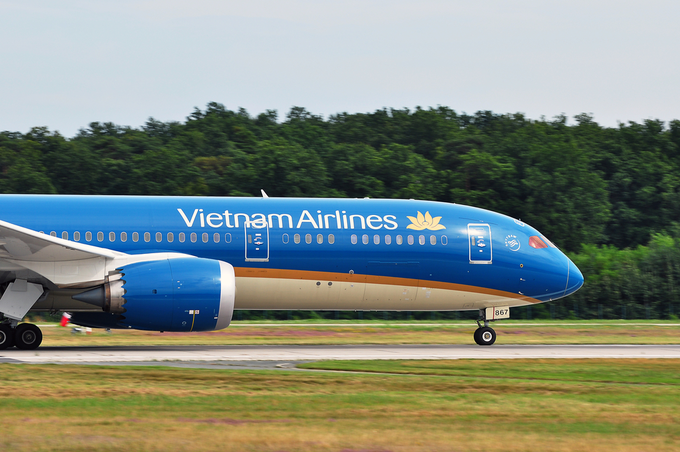
    Vietnam Airlines has lost VND200-250 billion ($8.6-10.8 million) per week following flight suspension to China, the national carrier said in a statement.

    Vietnam Airlines has suspended all flights to and from mainland China since the end of January, directly affecting 70,000 visitors per month between both countries while air routes to China account for 10 percent of Vietnam Airlines’ market share, the airline said.

    “The epidemic has significantly reduced the demand for domestic and international travel among Vietnamese passengers,” the airline reported, adding the number of passengers on its domestic routes had fallen by 20-30 percent over the past two weeks.

    Vietnam welcomed around 5.8 million Chinese tourists last year, accounting for one-third of the 18 million foreign visitors to the country.

    The Civil Aviation Authority of Vietnam said Wednesday the deadly virus had cost Vietnamese airlines over VND10 trillion ($430.5 million) in revenue so far.

    Vietnam declared the Covid-19 outbreak an epidemic on February 1. The country has recorded 16 cases of infection with 11 in Vinh Phuc. Of the remaining five, three were found in Ho Chi Minh City, one in Khanh Hoa and another in Thanh Hoa.

    As of Friday the global death toll had climbed to 1,383 and confirmed infections topped 64,434.

  • Viettel used fake accounts to discredit rivals

    Viettel used fake accounts to discredit rivals

    Facebook has removed a network of accounts and pages linked to Vietnamese telecom giant Viettel for allegedly using disinformation tactics to discredit rivals.

    The social network behemoth said Wednesday it had removed 13 accounts and 10 pages linked to Vietnam’s biggest telecom provider Viettel and its Myanmar venture Mytel for “violating” its “policy against coordinated inauthentic behavior”.

    The move marks the first time Facebook has taken action against businesses for directly using disinformation against competitors.

    Facebook said the individuals behind the network used fake accounts to manage pages posing as independent telecom consumer news hubs. They posed as customers to criticize their rivals, it stated in a release.

    “The page admins and account owners typically shared content in English and Burmese about alleged business failures and planned market exit of some service providers in Myanmar and their alleged fraudulent activity against their customers.”

    The world’s largest social media platform also noted that although the people behind these activities, which originated from Myanmar and Vietnam, attempted to conceal their identities and coordination, its investigation found links to Mytel in Myanmar and Viettel in Vietnam.

    Viettel owns a 49 percent stake in Mytel.

    The controversial pages have around 256,600 followers, and admins have paid around $1.15 million for ads on Facebook in U.S. dollars and Vietnamese dong, it added.

    Military-run Viettel said in a statement Friday that as a company with a presence in 11 countries, it always complies with the laws and business ethics in each market.

    The company is verifying the allegation and is willing to cooperate with Facebook. It will punish anyone guilty of misconduct, Viettel said.

    The company added it supports Facebook’s efforts to clean up the social network environment and expects the latter to function in a cooperative manner to avoid making unilateral allegations.

    Viettel’s revenue last year rose 7.5 percent year-on-year to $251 trillion ($10.78 billion), accounting for 50 percent of Vietnam’s telecom revenues. The company eyes to commercially launch 5G services in June using its own equipment.

  • How scandal-hit AirAsia could fall even further

    How scandal-hit AirAsia could fall even further

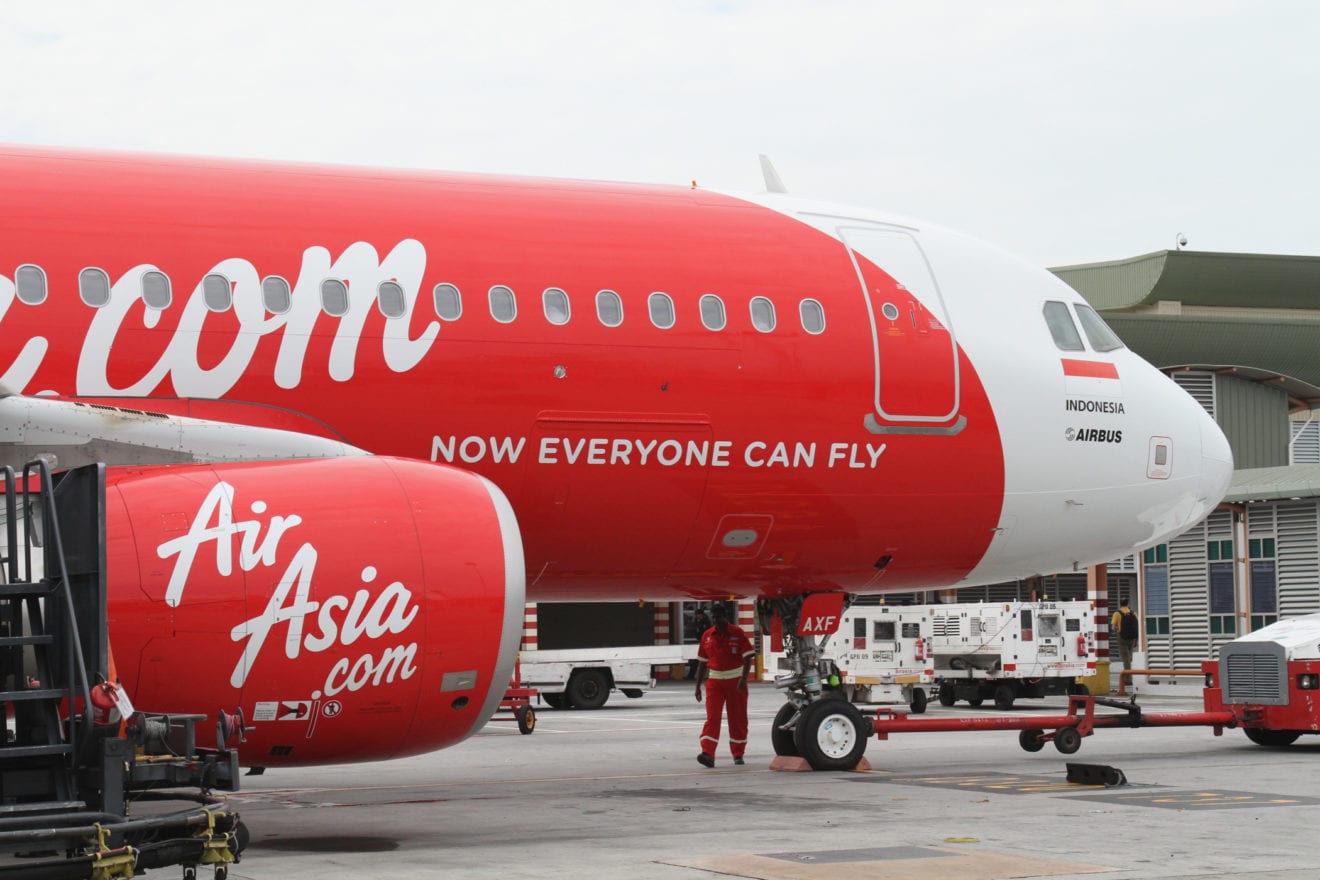
    According to Malaysia’s Prime Minister Mahathir Mohamad, who controversially chose to weigh in on a bribery scandal involving top executives at budget airline AirAsia amid ongoing official probes, a bribe is only a bribe when an inducement is pocketed for personal gain.

    “I hear there are allegations that AirAsia is involved in corruption. I am hesitant to comment, but usually, when governments buy equipment, we always ask for an offset,” Mahathir said on February 6.

    “If the money we obtain does not go into our own pocket, but instead is meant for a certain purpose, then it becomes an offset and this is not bribery. That’s my view,” he said.

    The premier’s remarks were widely seen as tacit approval of AirAsia business dealings that British prosecutors at the United Kingdom’s Serious Fraud Office (SFO) have deemed as fraudulent.

    Bribery claims involving two still-unnamed AirAsia executives came to light late last month after French airplane maker Airbus admitted to paying US$50 million to secure a large aircraft order with the budget carrier.

    Tony Fernandes, the low-cost airline’s charismatic chief executive, and his joint-venture partner, Kamarudin Meranun, have been implicated in the scandal.

    Both men stepped down from AirAsia temporarily last week after issuing a public statement categorically denying allegations of wrongdoing and vowing to work with investigators.

    The Malaysian Anti-Corruption Commission (MACC) and national aviation and securities regulators have since opened probes into the allegations, casting a cloud of uncertainty over one of the best-known brands in Asian aviation, one that has arguably put Kuala Lumpur on the global map as a regional travel hub.

    The Prime Minister’s Office chose to clarify Mahathir’s statement as some critics speculated that he had sought to influence ongoing official investigations.

    Legal experts and others said the government procurement contract practices he referred to are not applicable to transactions by private entities that are answerable to public shareholders.

    “In answer to questions by the press, he (Mahathir) pointed out that it is normal for the government to request for offset to benefit from big purchases. He did not say that AirAsia was benefiting from this normal practice,” read a statement from the Prime Minister’s Office. “It is up to the investigators to determine whether it is a bribe or not.”

    The SFO’s bribery complaint concerns a sponsorship deal involving the now-defunct Caterham Formula 1 racing team then-privately owned by Fernandes and Meranun in their personal capacities, which Airbus admitted was the recipient of a $50 million inducement.

    AirAsia maintains the sponsorship deal was a “branding exercise” supported by Airbus.

    “You cannot ‘offset’ a bribe or direct monies to be paid to others after inflating the value and calling it an ‘offset’. That is corruption,” said Dave Ananth, a former Malaysian magistrate.

    “Mahathir has his views [but] perhaps it is best not to comment whilst investigations are ongoing.”

    Other legal wheels are in motion, with at least one AirAsia shareholder maneuvering to take so-called statutory derivative action, a lawsuit against a director or officer of a company who allegedly committed wrongdoing.

    Mathew Thomas Philip, a lawyer representing the individual shareholder who asked not to be named, elaborated on the matter at a recent public event in the Malaysian capital.

    “The position that we are taking is that when the news broke out that a $50 million bribe was made, in my view, the board of directors had a requirement to disclose [whether] they have in their possession relevant material that this is not a bribe, that this was in fact something that was disclosed to the board,” said Philip.

    Section 221 of Malaysia’s Companies Act, he explained, requires directors with an interest in a contract or proposed contract to declare the nature of that interest at a meeting of the board of directors. In simple terms, if those interests are disclosed and approved by the board, they cannot be considered a bribe.

    “If this payment was made, at that particular time it would be incumbent on those directors who had an interest in that sports company to have declared it to the board meeting,” he continued. “Under our listing requirements, it was mandatory for them to have immediately made that announcement because it is price sensitive information.”

    Philip, founder and managing partner of law firm Thomas Philip, told Asia Times that his client would send a notice to AirAsia’s company’s directors on February 10 outlining his intention to take statutory derivative action. Malaysian law allows companies a 30-day period to initiate, intervene in or defend such a legal proceeding if it chooses to do so.

    “We don’t see any disclosure. The law is quite clear, you have to disclose this. Really, the rules are you don’t come and justify post-nondisclosure. The issue is about nondisclosure, which leads to the fact that technically, it is a secret profit,” said Philip. “There’s no such thing as ‘offset’ in the context of this case.”

    If AirAsia’s board of directors can substantiate that such a disclosure had been made and approved, which it has yet to do despite denials of impropriety, Philip said his client would withdraw their notice of statutory derivative action. “I think their response to the [notice] letter will say everything,” Philip remarked.

    When news of the bribery scandal emerged, AirAsia Group Bhd and its long-haul subsidiary AirAsia X Bhd’s shares went into free-fall.

    On February 5, AirAsia Group Bhd’s share price fell to 1.12 ringgit, a 52-week low, as a massive selldown saw its trading volume exceed the daily average by 430%. AirAsia X Bhd shares hit a record low of 11 sen on February 4.

    Though the carrier’s shares rebounded after Mahathir’s comments, market analysts expect further turbulence as separate bribery probes make headway.

    “AirAsia’s stock price is likely to fall further if the MACC or SFO brings successful charges against the two executives or the airline,” said Mark Pacitti, founder and managing director at investment firm Woozle Research.

    Both scenarios, he said, would be detrimental to the low-cost carriers and their subsidiaries’ future growth potential.

    “That level of uncertainty would likely bring forward a wave of analyst downgrades, sending the shares lower. An unfavorable result from either the SFO or MACC probes into the corruption scandal risks causing long-term financial, commercial, and reputation damage to the founder and airline that will take many years to reverse,” Pacitti said.
  • How Chieh Huang built a pureplay online warehouse giant

    How Chieh Huang built a pureplay online warehouse giant

    Started in a garage in Edison, New Jersey, Boxed – unlike its brick-and-mortar rivals – is membership-free. It offers direct delivery of bulk-sized packages, ordered online or via a mobile app.

    Huang, who shared his story on stage at the BrandLoyalty conference in Amsterdam, was inspired to create Boxed when living in Manhattan. Without a car or a wholesale club nearby he realized he didn’t have access to those types of retailers any longer, recognizing a blind spot in the wholesale market. So he returned to his roots in suburban New Jersey with a plan to change that.

    “It started off in my garage in tropical New Jersey, a very exotic place, home to the Jersey Shore and folks like Bon Jovi and Bruce Springsteen. I was sitting there, saying, okay, it’s time; I’m going to start my own business.”

    Things usually start off slow in business, but pushing the boulder up that proverbial hill didn’t take long. As Huang recalled: “When we started really growing we started hiring friends and family members, and by this time, trucks would drop off entire pallets on my driveway. And if you find my home address on Google Maps, you’d actually find a street view picture of like, a huge 40-foot container in my driveway, in the middle of a residential neighborhood with 20 people walking in and out of the house. So of course, my neighbors thought I was selling drugs.”

    But it was toilet paper being moved in bulk, not drugs, and Huang was soon nicknamed ‘The Toilet Paper Guy’. It wasn’t long before the business outgrew a suburban garage and the founding team needed to find a proper facility. “We had to get out of my garage, because at this point in time, like the neighbors, they were definitely going to call the cops,” he jokes. “So we moved into our first facility, our first warehouse.”

    Though it wasn’t the nicest of warehouses, it allowed Boxed the space to continue to expand, which it did, at a rapid pace, filling a niche in the wholesale market while generating millions in sales.

    Even Huang couldn’t believe it. “When you think about a retailer that went from $40,000 in sales to hundreds of millions in 60 short months, that sounds absolutely nuts. It’s even crazier because this type of service didn’t exist 10 years ago. It tells us that in the current economic climate that this rate of change is only going to get faster and faster and faster.”

    With such a rapid ascent there have been a lot of triumphs as well as a number of lessons. For one, Huang had to learn to stop micromanaging his employees. He referenced this in a recent Ted Talk he participated in when he said, “What is micromanaging? I posit that it’s actually taking great, wonderful, imaginative people, bringing them into an organization, and then crushing their souls by telling them which font size to use. Thankfully, there’s a cure to this management madness: trust. When we stop micromanaging the wonderfully creative people at our own companies, innovation will flourish.”

    Which is precisely what happened. Boxed has been innovative in its relationships with both producers and consumers alike. In regard to producers, just one example is how the company took a new approach to advertising.

    “We like to think of ourselves as not only retailers, but also as an advertising platform. A significant portion of the revenue that we generate is not from just selling potato chips online, but it’s also from selling ads for potato chips, which is actually an almost 100-per-cent gross-margin business.”

    Boxed works with those manufacturers, providing data on buying patterns. They agree on a performance benchmark for sales and if that is not met, the manufacturer receives a rebate. This serves as an alternative to catalogs and flyers and manufacturers compete with each other for promotional space as they would on Google or Facebook.

    Such strategies are clearly resonating with manufacturers just as consumers are embracing the convenience of shopping on Boxed in bulk, saving money and having goods delivered to their door. Huang says the company is turning inventory 12 to 15 times a year. In Boxed’s first year its turnover was about US$40,000. Six years on, it turns over hundreds of millions of dollars annually.

    While Boxed is selling products in bulk – 24-bottle slabs of water or 48-packet boxes of Oreo cookies – it is still personalizing its engagement with customers.

    “Even though we’re a new retailer, we use some old-school kind of things like handwritten notes. If you buy diapers from us the folks at the fulfillment centers will write a nice note that says, ‘say hi to the baby for us’. And then as time goes on and the diaper sizes increase, the next note will say, ‘wow, the baby is growing up so fast’. And so they start to kind of form that one-on-one connection.”

    Another hallmark of Huang’s business strategy for Boxed is the corporate concern the company shows towards social injustice. That’s not to say they are taking a stand on hot-button political issues.

    As Huang explains: “Treating our customers’ right with trusted brands and the best pricing, that’s just good customer service. But we’re actually helping them with social issues that feel unjust. For example, women are charged tax in numerous states for feminine care products like tampons and pads while items for men like condoms and Regaine are not charged.

    “We have to collect the tax by law, but then we rebated it back to customers, even though it hits our bottom line. But when you poll customers, especially the 60 percent who are female, one of the top reasons that they shop with us is because we take stands like this.”

  • Bossini half-year loss could quadruple

    Bossini half-year loss could quadruple

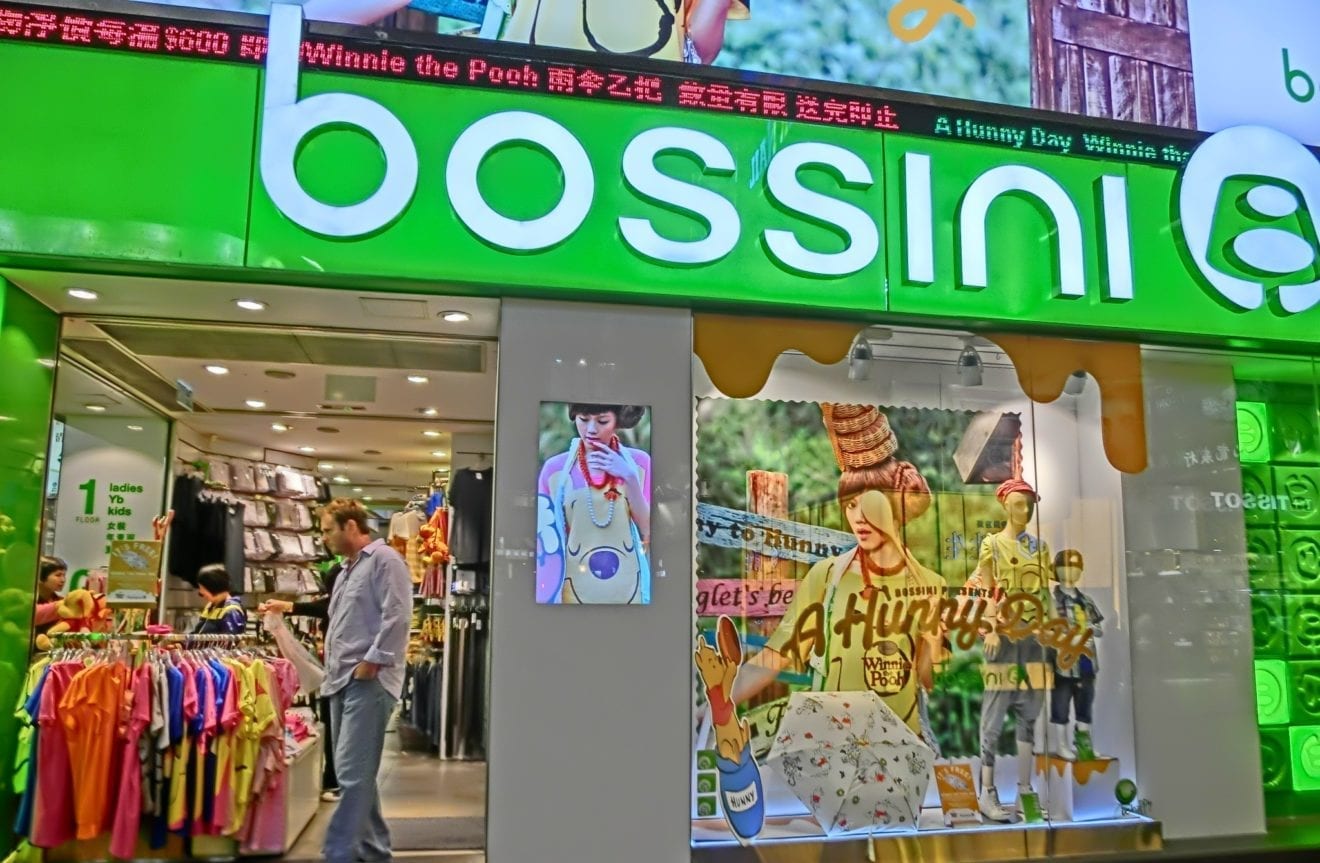
    Chairman Bess Tsin said in a stock-exchange filing that the group expects to record a loss attributable to shareholders ranging between HK$85 million and $105 million for the six months ended December 31.

    That could be as much as four times the loss of $26 million it recorded in the same six months a year earlier.

    Tsin said the loss was “mainly due to a sharp decline in inbound visitors in Hong Kong, the Mainland China-US trade disputes, weakened consumer sentiment and the unseasonably warm winter weather in several core markets where the group operates”.

    Bossini is scheduled to release its half-year results in “mid-February”.