Author: Mei Ling Tan

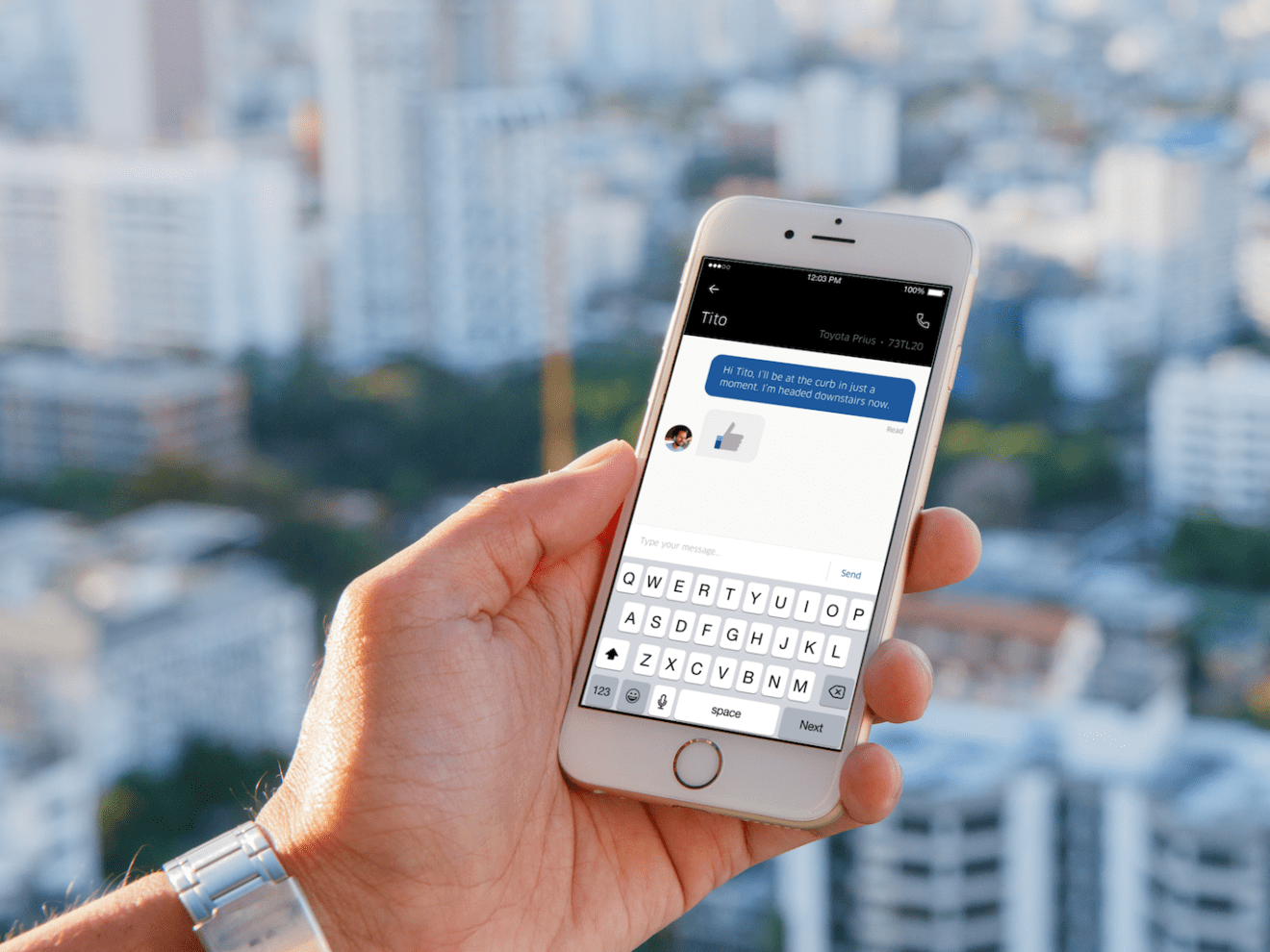
  • Should retailers use emoticons in customer service support chats?

    Should retailers use emoticons in customer service support chats?

    Service providers who use emoticons are perceived as warmer, but less competent, according to a new research paper, which offers sage advice for retail brands engaging with consumers across digital platforms.

    The effect held true regardless of whether or not a customer service employee used emoticons that were pictorial or text-based, showing that the impact of emoticons is not purely driven by eye-catching graphics and colors.

    The Hong Kong Baptist University study investigates what happens when emoticons figure into commercial service discussions. Through laboratory and field experiments, the research showed the major effects of emoticons in customer service interactions and found that emoticon usage by a customer service employee had conflicting effects.

    According to the report, how emoticons are perceived is highly dependent on the recipient’s preferences. The individual customer’s personality and expectations on how a service relationship should be conducted plays an important role in how emoticon senders are ultimately seen. Customers who enjoy friendlier relationships with brands perceive service providers who use emoticons to be warmer, which in turn makes them feel more satisfied with the service provided. Conversely, exchange-oriented customers see a customer service employee using emoticons as less competent, making them more likely to be less satisfied. These effects apply to all emoticons, regardless of whether the emoticon used had positive or negative connotations.

    When service is deemed unsatisfactory and is failing to resolve the situation, the study reasons that all customers will increasingly place value on competence as opposed to warmth. In these situations, any emoticon usage by a customer service rep will have a negative impact on the customers’ attitude towards the employee.

    Conversely, when a customer service employee successfully addresses a customer’s needs with messages accompanied by an emoticon, the study finds that customers are more likely to buy.

  • First Starbucks Reserve store in Penang opens at Gurney Plaza

    First Starbucks Reserve store in Penang opens at Gurney Plaza

    Starbucks has opened its first Reserve store in Penang, Malaysia.

    The new store, located in Gurney Plaza, is the 12th Starbucks Reserve Store in Malaysia and features an interactive coffee bar equipped with a variety of brewing equipment.

    Starbucks Reserve Gurney Plaza has two bars, the main one serving core Starbucks products as well as a coffee bar that highlights rare, small-lot coffees from around the world.

    “The opening of Penang’s first Starbucks Reserve further reinforces our coffee leadership here in Malaysia,” said Starbucks Malaysia & Brunei MD Sydney Quays, “while also committing to fostering coffee education and moments of connections between our Starbucks partners [employees] and our customers.”

    The materials and patterns used in designing the store highlights the main stage where the Reserve bar sits, and is a nod to locally sourced textiles. The store’s ceiling element is inspired by the patterns and textures of the mountains where many Arabica coffee cherries are grown, and is featured throughout the store.

    Customers can enjoy the classic Starbucks menu in addition to specialty beverages inspired by the six Starbucks Reserve Roasteries around the world, including Shanghai, Milan and Tokyo.

  • Citibank’s Singapore Head of Retail Exits

    Citibank’s Singapore Head of Retail Exits

    Citi’s head of retail banking in the city-state leaves after more than two decades with the American lender.

    Charles Wong exits the bank after nearly five years in his last role as Singapore head of retail banking. A spokesperson for the bank confirmed his exit.

    In 2015, Wong was appointed to his current role to oversee the retail banking business alongside wealth management, bancassurance, sales and network distribution.

    With over 20 years of experience at Citi, Wong has held a range of roles in retail banking, bancassurance, credit payment products and marketing across Asia Pacific. He was seconded to Citibank’s China business from 2006 to 2008 where he was the head of branch expansion and ATM distribution as well as director for CitiBusiness and customer experience. He was also previously involved in the launch of the Citi Priority segment across APAC which targets emerging affluent customers.

  • Harley-Davidson Global Annual Sales Fall In 2019

    Harley-Davidson Global Annual Sales Fall In 2019

    Harley-Davidson has announced annual results, and the sales numbers for 2019 aren’t very encouraging. The American motorcycle brand’s worldwide sales declined 4.3 percent with a total of 2,18,273 units sold worldwide. Even more worrying is the sales slowdown in Harley-Davidson’s home market, the US. The Bar & Shield brand’s sales in the USA fell by 5.2 percent to 1,25,960 units in 2019, from 1,32,868 units in 2018, while international sales fell 3 percent to 92,313 units in 2019, from 95,183 units a year ago. Harley-Davidson’s 2019 sales in almost all global geographies are in the red, with the Asia Pacific region showing a slight glimmer of hope with 2.7 percent growth.

    With 29,513 units sold in 2019 in the Asia-Pacific region, this is now Harley-Davidson’s third most important geography in terms of sales, after the US market, as well as Europe, Middle East and Africa (EMEA). Sales in EMEA fell 5.4 percent in 2019, down from 46,602 units in 2018 to 44,086 units in 2019. The Latin American geography also ended the year in the red, declining 3.9 percent from 10,167 units in 2018 to 9,768 units in 2019. Harley-Davidson’s sales declined the most in Canada, falling 7.7 percent from 9,690 units in 2018 to 8,946 units in 2019.

    On the financial side of things, Harley-Davidson reported annual revenue growth of 5.5 percent in 2019, up from $ 7,48,229 in 2018 to $ 7,89,111 in 2019. As part of the company’s More Roads To Harley-Davidson program, the American brand intends to introduce a whole new range of motorcycles over the next few years, to generate a new generation of customers, both in US, and more importantly, in newer markets abroad, like the Asia-Pacific.

    Later in 2020, Harley-Davidson is expected to introduce the Bronx Street Fighter, in a completely new segment, which is a departure from the company’s traditional cruiser-styled motorcycles. The Harley-Davidson Pan America will be the brand’s first adventure touring bike, and will be the brand’s first foray into the segment. More important though, will be a new small motorcycle, developed with Chinese partner Qianjiang Motorcycle. The 338 cc Harley-Davidson will be based on the Benelli 302 platform and will be manufactured in China, to be targeted at Asian markets.

  • Grab Moves Into Wealth Management With Acquisition

    Grab Moves Into Wealth Management With Acquisition

    Grab on Tuesday announced the acquisition of Bento Invest, a Singapore-based Robo-advisory start-up for an undisclosed sum. It allows Grab to kickstart the offering of retail wealth management solutions to users, driver-partners, and merchant-partners via its app.

    With the acquisition, Bento will be rebranded as GrabInvest with products launched on the Grab app in the first half of the year in Singapore. GrabInvest will be a new core business vertical under Grab’s financial services arm, Grab Financial Group, led by Chandrima Das, founder, and chief executive of Bento.

    «In Southeast Asia, there is a lack of access to affordable wealth management products and retirement planning solutions for most people. As we face an increasingly volatile and uncertain economic environment, it is imperative for Southeast Asians to acquire the tools and knowledge to protect their future by sustainably building wealth for themselves and their families,» said Reuben Lai, Senior Managing Director of Grab Financial Group in a media statement.

    Bento’s proprietary digital wealth platform includes client onboarding, and portfolio construction and rebalancing supported by robust risk management capabilities. The platform is built and backed by a team of seasoned asset management and banking professionals who will join the GrabInvest team. Bento’s founder, Chandrima Das, has over two decades of leadership experience in banks and asset managers across Asia and the U.K. She was formerly Managing Director at Bank of Singapore and prior to that, CEO of ING Investment Management.

    GrabInvest will operate under a retail wealth management capital markets services license in Singapore, namely the MAS Retail Licensed Fund Management Company (LFMC) license. It hopes to offer cash management and portfolio-based financial solutions to its users, driver-partners, and merchant-partners, with Singapore as the first market to roll-out.

    GrabInvest said its aim is to democratize access to retail wealth management products, by providing people in Southeast Asia with the opportunity to save and invest in financial products traditionally limited to affluent individuals and institutional investors. GrabInvest aims to make wealth management services accessible by adopting a low-cost model, easy to understand by allowing users to transact on a platform they are familiar with, transparent by having full disclosures on fees with zero hidden elements, and trusted by adhering to consumer protection standards outlined by the regulators.

    Grab Financial Group currently offers financial services across Southeast Asia in payments (GrabPay), rewards (GrabRewards), lending (GrabFinance), and insurance (GrabInsure) to micro-entrepreneurs, small business owners, driver-partners and users across Southeast Asia.

  • Vietnam’s Pharmacity eyes 1000 stores by end of 2021

    Vietnam’s Pharmacity eyes 1000 stores by end of 2021

    Vietnam’s largest pharmacy retailer Pharmacity has raised VND730 billion (US$31.8 million) in a fresh funding round as it ramps up its expansion plans.

    According to a statement, the new funding will be used for further store network expansion. However, the identity of the investors was not revealed.

    Pharmacity, which previously has received backing from Mekong Capital, aims to open 350 new stores this year and reach 1000 stores by the end of next year.

    The company is targeting more than VND3 trillion (US$130 million) in revenue.

    Last year, Pharmacity achieved revenue growth of 129 percent year on year, it said in a statement.

    Prior to the latest funding round, Pharmacity had successfully raised VND150 billion (US$6.44 million).

  • Vietnam Airlines, Jetstar Pacific cut China flights

    Vietnam Airlines, Jetstar Pacific cut China flights

    Vietnam Airlines and Jetstar Pacific will stop flights on some routes to China and reduce them on others amidst the ongoing coronavirus outbreak.

    National flag carrier Vietnam Airlines will suspend routes between Vietnamese localities and China’s Beijing, Shanghai, Guangzhou and Shenzhen cities starting February 4. It will stop flying to and from China’s Chengdu starting February 5, and Macau starting February 6.

    The airline will also suspend flights on the Hanoi-Hong Kong route from February 6 and reduce the number of flights between Ho Chi Minh City and Hong Kong from 10 to 7 per week starting the same day.

    It will disinfect all aircraft upon returning to Vietnam from China to prevent the spread of 2019-nCoV, which originated in Wuhan City of Hubei Province in mainland China.

    Jetstar Pacific, the budget carrier of Vietnam Airlines, will stop operating flights on the Hanoi-Hong Kong route starting February 6, Hanoi-Guangzhou starting February 9 and HCMC- Guangzhou starting February 11.

    Passengers who wish to fly between the mentioned destinations before the suspension can change dates free of charge or ask for a refund from both airlines.

    Budget carrier Vietjet had earlier announced that it will suspend all China flights starting Saturday.

    Over 30 airlines in the world have suspended all or certain flights to China in the wake of nCoV, which as of Saturday had killed 259 people in the country.

    As of Friday, Vietnam had quarantined 97 people, of whom 32 remain isolated pending test results, according to the Ministry of Health.

    As of Saturday morning, the country has recorded six confirmed cases of infection: two Chinese nationals, and four Vietnamese, including three returning from Wuhan, and a female hotel receptionist who has caught the coronavirus infection from the two Chinese nationals presently quarantined in Saigon.

  • Conscious consumers a major threat to fashion and footwear retailers

    Conscious consumers a major threat to fashion and footwear retailers

    Conscious consumers pose “the biggest threat to clothing and footwear retailers in 2020” according to research by GlobalData.

    When asked about their intentions last month, 19.2 percent of UK consumers said they planned to spend less than average on retail products, according to the survey of 2000 nationally representative shoppers.

    “A worrying 48.9 percent of these consumers said they are making a conscious effort to buy less stuff,” said Sofie Willmott, lead retail analyst at GlobalData.

    “Although some shoppers will struggle to keep up this mindful mentality past January, the shift away from spending on non-essential retail products is set to continue throughout the year as consumers prioritize spend on holidays, activities and meals out, and especially as sustainability concerns seep into their consciences.

    “With sustainability becoming a bigger consideration for more consumers, the easiest way they can reduce their impact on the environment is by not buying anything new. Buying second-hand items or reducing the number of clothing and footwear products they purchase is a win-win for consumers who are focused on spending their disposable income wisely while also acting in a sustainable way, but these shifting shopping habits will not help struggling retailers in what is already a challenging and highly competitive trading landscape,” said Willmott.

    Early signs of a new wave of conscious consumers came with the results of discount-fashion retailer Primark. For the 16 weeks to January 4, Primark recorded a marginal decline in like-for-like sales. Willmott says that suggests volume growth will be difficult for clothing retailers to achieve this year.

    “In order to thrive in testing times, it is vital that retailers provide transparency in their supply chains and although years of building a production process with the main aim of providing fast fashion at accessible prices will be difficult to transform into an environmentally sustainable operation, retailers should clearly convey the steps they are taking.

    A brand’s positive environmental stance must be communicated through aspects that customers can interact with. For example, & Other Stories offers 10 percent off a purchase when you bring back an empty beauty container and H&M has garment collection bins in store which customers can donate a bag of clothes to and receive a £5 voucher to use at H&M when they spend £25 or more,” she said.

    “Sustainable clothing pioneer Reformation has taken it to more of an extreme giving their customers the option to purchase ‘climate credits’ such as a credit for an international flight for £22 which offsets the carbon emissions.”

  • South Korean restaurants remain empty as coronavirus fears spread

    South Korean restaurants remain empty as coronavirus fears spread

    South Korean consumers are opting to avoid crowded places, causing restaurant bookings to plunge by as much as half as fears grow of the spreading coronavirus.

    “Lunar New Year, followed by graduation and enrollment ceremonies, should have been a chance to boost our sales,” said the owner of one Seoul Chinese restaurant. “This year, though, reservations have dropped by more than half.”

    Group dinners, accounting for a significant portion of all sales at this time of the year, have dwindled, and schools are canceling graduation and enrollment ceremonies.

    “It’s important that I don’t get infected, but it is also important not to take any chance of spreading the disease to other people. It doesn’t hurt to stay careful,” said a local office worker.

    Some companies have chosen to axe group dinners.

  • Kjus opens Beijing flagship store

    Kjus opens Beijing flagship store

    Luxury sportswear brand Kjus China has opened a flagship store in Beijing, incorporating a VIP lounge with a cafe and highlighting the luxury image of the brand.

    Designed by 5 Star Plus Retail Design, the store features a futuristic, high-tech and luxurious ambiance using cool high-end materials in metal and stone.

    “We used cool, modern, and high-end materials such as metal and stone,” a 5 Star Plus spokesperson explained about the design of the store.

    “Using stone elements in retail fixtures and stone-look flooring helped to create a more luxurious feeling to the store.

    While Kjus stores elsewhere in the world typically use wood, the 5 Star team thought wood would not achieve a futuristic feeling in this location as it is considered something of classic material.

    “However, using wood on a smaller-scale helps to draw a connection to the Switzerland-born brand. We used a wooden background for some of the high-rack equipment, as well as wooden tables, which help to create some warmth in an otherwise cool space.”

    Another important element of the Kjus China store which communicates luxury is to ensure there is enough empty space in the store, without displaying too many SKUs.”

    Special lighting effects and technological advancements are used to explain product features, key products and collections.

  • Amorepacific launching Etude in Indonesia

    Amorepacific launching Etude in Indonesia

    South Korean beauty company Amorepacific Group is set to launch the Etude brand in Indonesia.

    The firm has partnered with local lifestyle retailer PT Mitra Adiperkasa Tbk (MAP) to boost the growth of its business in the territory.

    MAP plans to expand Amorepacific’s presence beyond Jakarta and across Bali, Surabaya and Bandung, giving more local customers better accessibility to the Etude brand, as well as Amorepacific’s other global brands such as Sulwhasoo, Laneige and Innisfree.

    “We are looking forward to working with MAP, the largest retailer in Indonesia to unlock the enormous potential the country has to offer,” said Amorepacific Group president Dong-hyun Bae.

    “With their expertise in retail, MAP and Amorepacific’s global brands are expected to create a great synergy and thereby provide the best quality service to the customers in Indonesia.”

  • UBS Donates $1 Million for Coronavirus Relief

    UBS Donates $1 Million for Coronavirus Relief

    UBS Group will donate $1 million to support efforts to contain the global spread of the novel coronavirus.

    According to the Swiss financial group, the donations will target frontline responders through domestic charity partners focusing on a range of areas including «timely delivery of medical supplies to the needy, screening and treatment of suspected cases, the development of treatments and vaccines and the construction of medical facilities in the community.

    This is a challenging time for many of our employees and customers, their families and the local community. Our thoughts are with the many impacted by the coronavirus outbreak, said David Chin, APAC head of investment banking and China country head at UBS. It is a critical time for us to give back to the community and help authorities in the most affected areas.

    In addition to a raft of Chinese firms, UBS joins foreign financial companies such as Japanese insurer Tokio Marine in supporting relief efforts in an outbreak that some estimate could result in damages surpassing the SARS crisis nearly 20 years ago.

    Meanwhile, the outbreak shows limited signs of slowing down and has now infected more than 17,000 individuals and claimed the lives of more than 360.

  • OCBC Automates Cooperation with Law Enforcers

    OCBC Automates Cooperation with Law Enforcers

    OCBC has implemented an automated solution that accelerates collaboration with law enforcement agencies by up to 100-fold.

    On average, it takes between 10 days and three months for banks to respond to production orders or requests by law enforcement agencies to provide information for investigation on the bank accounts of individuals or companies. With the new solution – Production Orders: Electronic Transmission (POET) – OCBC will cut turnaround time to just one or two working days with minimal manual processing assuming the information requested does not exceed 13 months.

    By greatly reducing the turnaround time for production orders, we are doing our part to put the squeeze on criminals, said Loretta Yuen, OCBC’s head of group legal and regulatory compliance.

    After a successful pilot, OCBC launched POET in collaboration with the Commercial Affairs Department (CAD) in July 2019. Since then, it has extended collaboration to other agencies including the Singapore Customs, Inland Revenue Authority of Singapore (IRAS), the Corrupt Practices Investigations Bureau (CPIB) and various units under the Singapore Police Force. It is in collaboration with more than 10 law enforcement agencies and expects about 70 percent of production orders to come through POET.

    Other banks are also considering to adopt the solution to improve compliance efficiency. In addition to DBS and UOB, the report noted that foreign banks in Singapore also expressed interest in POET.

    Collaboration with regulators aside, Yuen also highlighted the benefit of data gathered by POET for banks not only to respond to requests but to identify compliance risk early.

    We can use it as additional surveillance risk indicators, as well as in intelligence data mining and transactional link analysis to identify hidden relationships and/or clustering relationships that may pose money laundering risks to the bank, Yuen said.

    On average, OCBC receives more than 1,000 production orders per month from law enforcement agencies and the figure is projected to rise in the coming years.

  • Chatbots still have their place, according to Microsoft

    Chatbots still have their place, according to Microsoft

    The early generation of chatbots may have had their day – but the concept is not yet dead, says a senior Microsoft executive.

    Raj Raguneethan, regional business lead, retail and consumer goods, at Microsoft Asia, told Inside Retail Asia that the standard chatbot question and order queue format is gone.

    “But we have advanced deployments of a chatbot which can fully integrate into the whole call-center back office and all the way online. You can ask questions, it will connect back to your back office systems tell you when your order is going to be delivered, you can ask questions and it tells you that you can buy this product from this store, and here is a promotional offer for you.”

    Early renditions of chatbots often succeeded in only infuriating consumers with clumsy interfaces, irrelevant answers and being all-too-obviously artificial. The end result: consumers often consider old-style chatbots as insincere, an image unsurprisingly transferred to the brand itself.

    “We have seen customers continue to use them,” says Raguneethan. “It’s not so much chatbot, it’s about cognitive services which are fully integrated.”

    He explains that advanced cognitive services-based solutions that are connected to the same system used by customer call centres, can use chatbots that provide real service and assistance to shoppers.

    “So it’s how you deploy and how you leverage them that is the key. If you just deploy them for an FAQ, it’s probably not interesting. But if you really deploy them connecting into all the systems you have, then you are delivering a superior experience.”

    Raguneethan says new-generation chatbot technology should be able to provide customers with real-time, accurate information about the delivery status of a product they have ordered.

    “Or, I should be able to come in and say ‘I want to buy a shirt, I’m looking for this brand’, you should be able to tell me sorry it’s not here in this store, you can order online, or you can go to this store, or we will place an order for you to pick up from this store.”

    “If you deploy chatbot technology in those scenarios, you will definitely see a difference.”

  • Porsche Taycan Electric Sports Car Will Come To India By Late 2020

    Porsche Taycan Electric Sports Car Will Come To India By Late 2020

    The all-new Porsche Taycan electric sports car will be introduced in India by late 2020. Pavan Shetty, Director Porsche India confirmed the 4-door electric car’s arrival while addressing the Indian media today the Skoda Auto Volkswagen India’s first-ever media night. The Taycan is the first fully electric sedan from the Stuttgart-based luxury/sports car maker and it was first revealed at the 2019 Frankfurt Motor Show.

    Based on the Porsche Mission E Concept that was showcased in 2015, the electric sports car is touted as a huge technological step for the company and forms a new direction for Porsche in the EV space. The new Porsche Taycan will sport two permanently excited synchronous electric motors that can churn out a maximum of 600 bhp and will a range of over 500 km thanks to its high voltage lithium-ion batteries. The electric car will get 800-volt chargers with fast charging capability, which can offer a 400 km range in 15 minutes of charge time. It can go from 0-100 kmph in under 3.5 seconds.

    The Porsche Taycan comes with quad-LED headlamps, sculpted bonnet and muscular front bumper. The rear too looks very elegant with the very slim wraparound LED tail-lamp and muscular haunches. With a Cd value from 0.22, the aerodynamically optimized basic shape makes a significant contribution to low energy consumption resulting in a long-range.