Author: Mei Ling Tan

  • Half of Vietnamese buyers favor used cars assembled locally

    Half of Vietnamese buyers favor used cars assembled locally

    55 percent of buyers prefer used cars assembled in Vietnam to those imported from South Korea and Japan, a 2019 survey found.

    This figure is several times higher than the 16 percent who favor South Korea and the 11 percent stuck on Japan, according to Cho Tot Xe, a popular car listing website in Vietnam.

    Ho Chi Minh City residents prefer newer, more expensive vehicles compared to those in Hanoi, the website’s data shows.

    HCMC buyers favor used models released in the previous three years at a cost of VND300-700 million ($12,900-30,200). The top three models are Hyundai Grand i10 2016, Mazda CX 5 2017 and Honda City 2016.

    But buyers in Hanoi are more interested in vehicles priced less at VND300-400 million ($12,900-17,200), which date back to 2015, such as the Toyota Vios 2015, Hyundai Grand i10 2015 and Kia Morning 2015.

    The demand for used cars is on the up, listings on Cho Tot Xe rising 22 percent from 2018 to 200,000 last year, with the most popular brands Toyota, Kia and Hyundai.

    Sedans were the most popular used car types in 2019, with Honda City 2016, Toyota Vios 2017 and Mazda 3 2018 the top three.

    Toyota Innova maintained the best used price in 2019 at VND678-740 million ($29,220-31,890), followed by Chevrolet Spark and Ford Ranger.

    Vietnam has been striving to develop its car industry for decades, but experts say the small market size has constrained local producers. The localization rate of passenger cars in Vietnam is at 7-10 percent, compared to 55-60 percent across ASEAN.

    The country imported 133,696 vehicles in the first 11 months last year, up 95.6 percent year-on-year, mostly from Thailand and Indonesia, according to Vietnam Customs.

    289,128 cars were sold throughout Vietnam in the same period, up 14 percent year-on-year, according to Vietnam Automobile Manufacturers Association (VAMA).

  • Uber Stops Upfront Ride Pricing In Response To California Worker Law

    Uber Stops Upfront Ride Pricing In Response To California Worker Law

    Uber Technologies Inc on Wednesday informed its California customers that it would switch to providing estimates as opposed to fixed prices for its rides in response to a new law that makes it harder to qualify its drivers as contractors. In an email sent out to riders and seen by Reuters the company said the final price would now be calculated at the end of a trip, “based on the actual time and distance traveled.”

    “Due to a new state law, we are making some changes to help ensure that Uber remains a dependable source of flexible work for California drivers,” the company said in the email.

    The change applies to all private rides, while upfront prices will continue to be provided for shared, or pooled rides.

    The email included a picture displaying an example of a ride request on the Uber app. It showed a $27 to $36 range for an UberX ride, the company’s most popular private ride option.

    Uber in a blog post on Wednesday said the step was the result of changes to its fare structure, with drivers still getting paid per mile and minute, but the company now taking a fixed 25% cut from drivers. That service fee previously fluctuated. Uber on Wednesday also told customers it discontinued some of its reward benefits for frequent riders. The company hopes the changes will bolster its argument that Uber is merely a technology platform connecting riders with drivers, not a transportation company.

    The California law strikes at the heart of the “gig economy” business model by making it harder for companies to qualify their workers as contractors rather than employees. The measure went into effect on Jan 1. By classifying contractors as employees, technology companies like Uber, Lyft Inc, DoorDash and Postmates Inc would be subject to labor laws that require higher pay and other benefits, such as medical insurance.

    Uber and Postmates, a courier services provider, in a lawsuit in late December asked a U.S. court to block the law. Uber has repeatedly said that its drivers are properly classified as contractors. Nevertheless, the company has made changes to its driver app in recent weeks, with California drivers now being able to see more information ahead of accepting a trip, including the ride’s likely fare, length and destination.

  • New features for Google Assistant announced at CES

    New features for Google Assistant announced at CES

    Google Assistant has consistently beat out its rival virtual assistants like Siri, Alexa, and Cortana in tests measuring how well each one understands tasks and questions asked of it. The digital helper is the hub of the Google ecosystem which is one of the reasons why fans of the latter prefer Android over iOS. Today at CES, Google announced new features aimed at the more than 500 million monthly Assistant users which will make it more helpful on the phone, in the car, or at home.

    Google is making it easier to connect smart devices to Google Assistant through the use of a notification link that will appear on your phone or a suggestion button that shows up on the Google Home app. This saves you the time of having to type in all of the information related to your Google account. Later this year, Google will add a new feature called Scheduled Actions that will allow you to set a schedule for other compatible smart devices in the home. For example, you can tell the Assistant to start the coffee maker at 6 am so you can awaken to a steaming hot cup of java and get your caffeine fix when you need it the most. Google points out that 20 new devices have been added to the Google Home app to help you control “AC units, air purifiers, bathtubs, coffee makers, vacuums and more.”
    Did you ever sit back and wish that you were the genius who invented sticky notes? But they are quite a mess when you leave them up all around the house. Google is going to add a new feature that will create digital sticky notes for smart displays that support Google Assistant. All you need to do to leave a sticky note is say, “Hey Google, leave a note that says don’t forget your dental appointment after school today.” And if you have a smart speaker or smart display, another new feature will allow you to create a “speed dial” list that will make calls simply by saying “Hey Google, call Olaf.”
    Google also previewed today a new technology that allows Assistant to read long-form content on your phone. This would allow you to listen to news stories posted on websites just by saying “Hey Google, read it” or “Hey Google, read this page.” Imagine being able to have PhoneArena read to you hands-free while you’re driving in your car. The company says, “Unlike traditional screen readers, this experience is built on new voice datasets to create more expressive and more natural sounding voices, so it’s easier to listen for a longer period of time.” The content can be translated into 42 different languages, and Google is working on a way for the website to highlight the portion of the text being read aloud by Google while automatically scrolling the page. This “Read It” feature will be available on Android phones running version 5.0 or higher by later this year.
    Another feature for phones, smart displays, and smart speakers will allow people to engage in conversations even if they don’t speak the same language. Called interpreter mode, this is available starting today to guests of Google partners Volara and SONIFI. Both are in the hospitality business and Google is looking to bring interpreter mode to hotels, stadiums, arenas, human-rights based organizations and more.
    Lastly, Google wanted to discuss privacy. The company says that while in standby, before being awoken by the “Hey Google” or “Ok Google” wake words, Assistant doesn’t eavesdrop on you and send to Google the conversations that you are having. You can always ask the Assistant, “How do you keep my information private?” and, “Hey Google, are you saving my audio data?” You can also ask Google to delete everything you said this week that it recorded. And if you said something after accidentally activating Google Assistant, by saying “Hey Google, that wasn’t for you,” the Assistant will instantly contact short-term amnesia and forget what you just said. By default, once your request has been processed by Google’s server (although the Pixel 4 series does this on-device), the information is discarded by Google. You can choose to participate in Google’s human-based review of Assistant, but that will allow Google to keep information heard through the virtual digital helper.
  • New chipset announced today will make 5G easier for consumers to afford

    New chipset announced today will make 5G easier for consumers to afford

    Chip designer MediaTek impressed many when it introduced its new flagship Dimesnity 1000 SoC. The chipset includes an integrated 5G modem chip that supports both sub-6GHz and mmWave 5G, and LTE. Additionally, the Dimensity 1000 has four high-performance Cortex-A77 CPU cores running at a clock speed of 2.2GHz and four Cortex-A55 efficiency CPU cores running at 2GHz. ARM’s Mali-G77 MP9 graphics chip is included. The chip is manufactured by TSMC using its 7nm process.
    MediaTek unveiled the Dimesnsity 800, a chipset designed for lower priced 5G handsets. This will help bring the faster 5G data speeds to those who normally wouldn’t be able to afford a device that supports the next generation of wireless connectivity. While the company claims that the integrated 5G modem chip is more efficient when it comes to battery life, there is a catch. The modem on the Dimensity 800 does not support mmWave 5G signals, which deliver the faster 5G data speeds. This means that devices powered by the MediaTek Dimensity 800 SoC can connect in the states with T-Mobile’s nationwide 5G network and AT&T’s consumer 5G network. However, Verizon’s 5G mmWave network is out.
    The Dimensity 800 will feature four Cortex-A76 CPU cores running at a clock speed up to 2GHz and four Cortex-A55 CPU cores also running up to 2GHz. MediaTek says that with four performance cores, demanding gaming applications will launch faster. The chip supports displays carrying a resolution up to FHD+ (1080p) with a refresh rate of up to 90Hz. It will drive a quad-camera setup with a primary sensor up to 64MP and handle camera-based AI, facial detection, automatic noise reduction, and white balance.
    Qualcomm’s Snapdragon 765 Mobile Platform and its gaming enhanced Snapdragon 765G might have only half the number of performance cores as the Dimensity 800 sports, but it does support some higher-spec’d phones. Qualcomm’s chips handle both sub-6GHz and mmWave 5G signals. The Snapdragon 765/765G will be equipped with a pair of Cortex-A76 CPU cores, one running at 2.3GHz, the other at 2.2GHz. Six Cortex-A55 cores running up to 1.8GHz are also included. The component also supports QHD+ resolution displays (1440p), 192MP camera systems and video at 4K.
    MediaTek hopes to have its flagship Dimensity 800 inside devices launching in the first half of this year. TL Lee, the head of MediaTek’s wireless business unit, said, “MediaTek already launched its flagship 5G smartphone solution, the Dimensity 1000, and with the 800 series 5G chipset family, we are bringing 5G to the mid-tier and mass market. Everyone should have access to great technology. The Dimensity 800 Series will power the New Premium segment for 5G, bringing consumers flagship smartphone features and performance at mid-range price points.”
  • Putien opens first outlet in the Philippines

    Putien opens first outlet in the Philippines

    Singaporean Michelin-starred restaurant Putien has opened its first eatery in the Philippines.

    The Cantonese/Fujianese-style brand has been introduced to the territory by The Vikings Group and opens in The Podium in Ortigas as its 67th location internationally.

    “Putien serves characteristically light, down-to-earth, and flavourful food, with an emphasis on fresh ingredients,” the restaurant’s founder and CEO Fong Chi Chung told the Manila Standard. The restaurant specializes in cuisine made from ingredients sourced exclusively from the Fujianese coast.

    “The Fujian flavor gives a unique twist to the usual Cantonese-style food,” said Vikings Group marketing director Charles Lee. “We’re excited for Filipinos to finally try this new type of cuisine that’s making waves in Singapore, Hong Kong, Malaysia, and China for its good quality and service”.

  • Tumi signs major E-sports sponsorship

    Tumi signs major E-sports sponsorship

    Tumi, the international travel and lifestyle brand, has committed to a seven-figure partnership with One Esports, which will be running events online and an invitational series in Singapore.

    One Esports is a joint venture between One Championship and Japan’s largest global advertising agency, Dentsu, which launched a live experiential business through oneesports.gg. Oneesports.gg is a Top 5 global esports site that reaches millions of visitors each month, and delivers esports news and in-depth stories on esports athletes and teams.

    “We are very excited to be entering into a partnership with One Esports,” said Adam Hershman, GM, Tumi Greater China, APAC distribution and travel retail.

    “It is an incredible time for esports and this is a truly unique and innovative partnership that opens up new possibilities for both brands.”

    Esports is one of the world’s fastest-growing industries, driven by Asian fans and participants. With more than 700 million followers globally, and more than half of those from Asia, esports’ current growth trajectory sets it on its way to becoming one of the top-earning sports leagues in the world.

    “We are looking forward to working with this new generation of athletes and the fans to perfect their journeys – while having a bit of fun along the way,” said Hershman.

    Tumi will be creating content with One Esports as well as equip athletes on the move with travel essentials. The lifestyle brand and One Esports will also collaborate on a series of events following the Invitational Series across the region.

    “Bringing together One Championship and One Esports with Tumi creates countless opportunities to engage with our fans in new and exciting ways,” said Chatri Sityodtong, chairman and CEO of One Championship.

    “I am excited to work with Tumi across all of our platforms through various markets and to continue to establish One as the largest producer of millennial live sports content in Asia and around the world.”

  • Digital innovation driving change in beauty-care retailing

    Digital innovation driving change in beauty-care retailing

    During the recent Singles’ Day sales, more than 1 million orders were placed and processed through voice command via Alibaba’s Tmall Genie.

    What do such observations mean for beauty-care retailing? Besides increasing digital savviness, the adoption of voice command is one of many examples of how the line between the offline and online experience is almost seamless. In the case of beauty-care products for example, we know that the success of the product is dependent on the user’s offline experience and how they share that experience online. As such, it is even more important for retailers to keep up with changing consumer buying preferences and apply new ways of retailing across offline and online platforms. This means giving our consumers the options to buy products online, in-store, or even via voice command on e-commerce channels.

    When we speak about user experience, there is an element of exploration and discovery. The online space levels the playing field and is fast becoming a platform where new brands and products can suddenly skyrocket into prominence as the next best thing in beauty care. Digital innovation is also influencing the way retailers interact with consumers. For example, the concept of the “capsule wardrobe” has influenced the way consumers select their clothes, by choosing quality over fast fashion. In beauty care, we see concepts like “bare-faced”, “self-love”, and Schwarzkopf’s “blonde me” resonating with consumers.

    It is important to share content which is relevant to consumers and to establish close and trusted collaboration with influencers who provide authentic endorsements. Digital innovation is about technological disruption. It is also about leveraging data to steer our growth strategy.

    The future of beauty care retail

    We are already seeing some indications of how the future of beauty-care retailing will look. Today, consumers can check out the products in-store, make online purchases and have the products delivered to their homes.

    Some retailers have begun to use artificial intelligence to cope with the abundance of data, assist with efficient last-mile delivery and cater to product customisation. At Henkel, we have experienced some success using live broadcast for our homecare products in Asia Pacific to raise product awareness and boost sales. Many brands, including our own beauty-care brands like Beology, GlissKur, Schauma Nature Moments, Freshlight and Got2b are available on different channels, such as chain stores, online platforms and specialised online stores.

    We have also developed strategic partnerships with local e-commerce start-up Synagie, for example, which owns the Beautiful.me platform. Synagie manages the go-to-market strategy of Henkel across the entire value chain – from logistics and warehousing to customer management and brand advertising. Through this partnership, we aim to expand our footprint across Southeast Asia, reaching out to 700 million consumers across various touchpoints. We are also working closely with key retailers such as Watsons, Dairy Farm International Holdings and Lazada.

  • Invincible launches convenience store-inspired capsule collection

    Invincible launches convenience store-inspired capsule collection

    Japanese retail project The Conveni has entered into a collaboration with the Invincible label.

    The Hiroshi Fujiwara product line, packaged in its signature convenience store aesthetic and carrying both The Conveni and Invincible branding, includes a hoodie, a long-sleeve and short-sleeve T-shirt, and a tote bag.

    The capsule collection features a black and white palette and elongated, dual-colored branding from the principal collaborators. The packaging includes soda cans, food boxes, milk cartons and sandwich packs.

    The collection is available at the Invincible East pop-up store in Da’an, Taipei from January 10 to February 2.

  • Hong Kong toy shop fined for deceptive conduct

    Hong Kong toy shop fined for deceptive conduct

    An unidentified Hong Kong toy-shop owner has been convicted of misleading omission commercial practice.

    The owner was convicted of engaging in commercial practices involving misleading omission according to the Trade Description Ordinance (TDO) and sentenced to 200 hours of community service by Kowloon City Magistrates’ Courts. The court also ordered him to compensate HK$11,210 (US$1440) to three victims.

    An investigation carried out after Hong Kong Customs received a complaint from the victims alleging that a toy shop owner had engaged in unfair trade practices, showed that the owner had failed to explain the risks of late delivery to its customers on a social-media platform page. The owner has sold eighteen types of toy models without regard to the risk of delay.

    Under the TDO, any trader who engages in a commercial practice that omits or hides material information or provides material information in a manner that is unclear, unintelligible, ambiguous or untimely, or fails to identify its commercial intent and as a result causes, or is likely to cause, an average consumer to make a transactional decision commits an offense. The maximum penalty upon conviction is a fine of $500,000 and imprisonment for five years.

  • Bangladesh garment factories urged to embrace sustainable behavor

    Bangladesh garment factories urged to embrace sustainable behavor

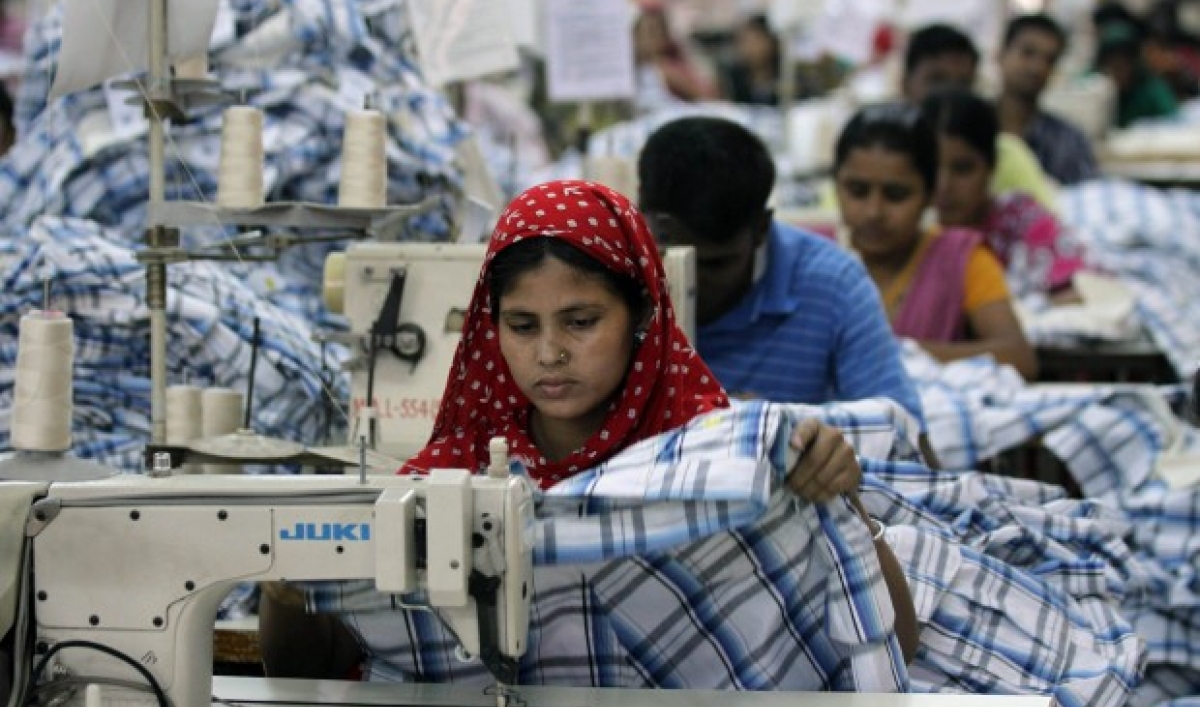
    Bangladesh garment factories must continue to invest in making their operations more sustainable if they hope to win business over other major competing sourcing countries such as Vietnam, Cambodia and Indonesia, says data and analytics company GlobalData.

    In line with this, the country is looking to increase its garment exports from US$34 billion in the financial year ending last June to US$50 billion next year.

    In 2018, 67 factories had adopted the Leadership in Energy and Environmental Design (LEED) certification, which evaluates sustainable sites, water efficiency, energy, indoor environment and innovation. Eight were LEED-platinum certified. But with eco-credentials playing a greater role in how consumers today shop, more factories need to get on board.

    Hannah Abdulla, apparel correspondent at GlobalData, says the owners of Bangladesh garment factories are growing increasingly concerned they are losing business to rival sourcing countries.

    “Where buyers were previously concerned with mass-produced, cheap goods, the focus is now on better quality and sustainably sourced (value-added) items. Green factories have an edge; this is what helps sets them apart from the competition.”

    With Bangladesh looking to increase the investments, big changes need to be made to secure additional business from the higher-paying customer, says Abdulla.

    “While change has happened at several factories, this needs to be scaled up. More factories need to get on board if Bangladesh is going to convince global players it remains a worthy contender in the readymade garment space.

    “For the national industry to be viewed as one that is an environmentally-sustainable apparel sector with an international reputation for good practice, it needs to move beyond a minority of factories implementing sustainable measures.”

  • Emart to shut Pierrot discount-store chain

    Emart to shut Pierrot discount-store chain

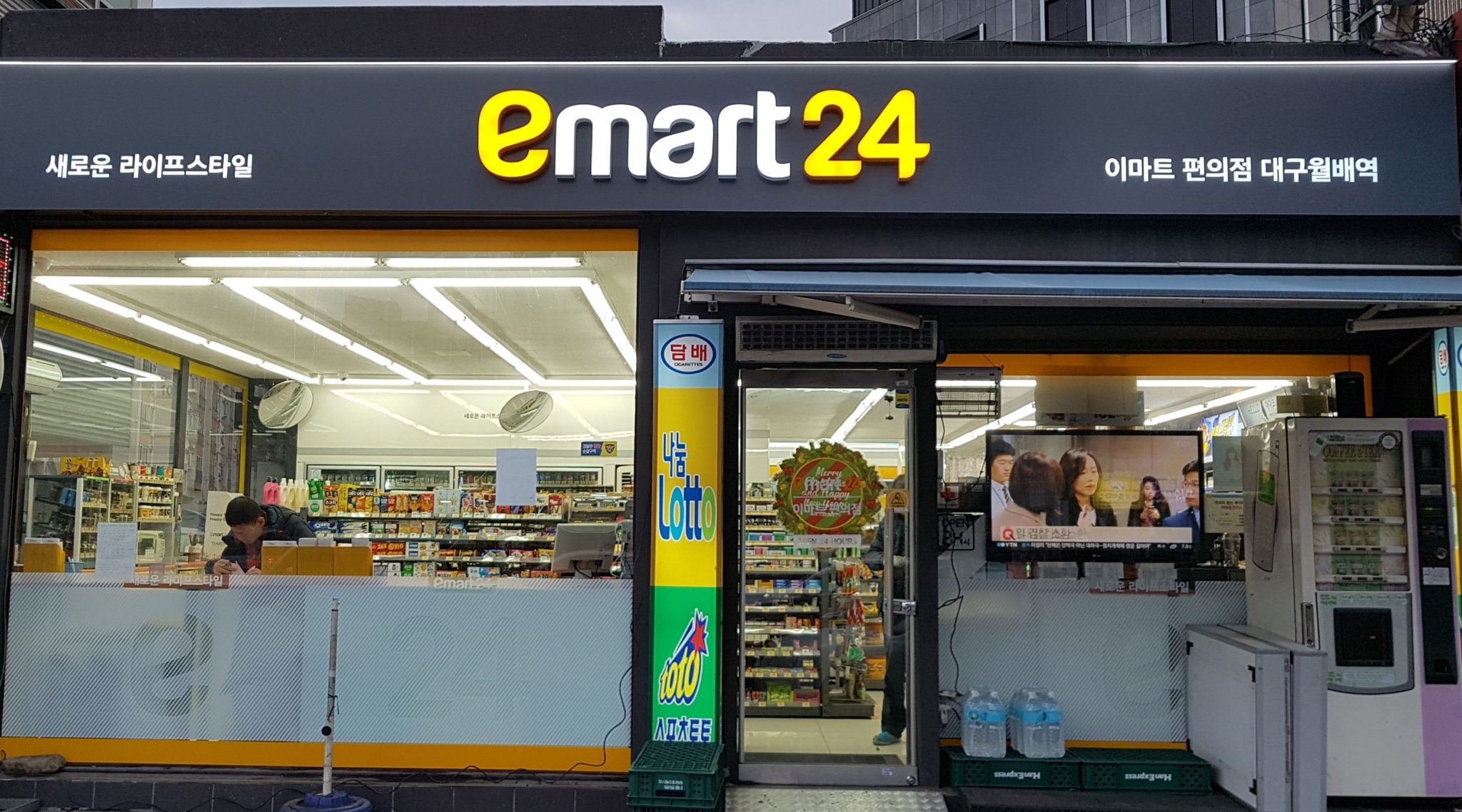
    Emart is to shut down its Pierrot discount-store chain to focus on luring customers to its mainstay hypermarkets.

    After significantly falling sales last year, the South Korean giant closed down several Pierrot stores, including the store in Myeongdong shopping district. The company will shut the remaining six stores this year.

    Meanwhile, Emart plans to remodel about 50 out of 160 general merchandise stores this year to offer a larger selection of lower-priced items and high-margin, private-brand products.

    Besides its hypermarkets, Emart operates a range of chains spanning convenience stores, drugstores and home electronics. Emart’s profit fell from 194.6 billion won (US$166 million) in the third quarter of 2018 to 116.2 billion won (US$97.2 million) in the same period last year.

  • Forever 21 online store relaunched

    Forever 21 online store relaunched

    Bankrupt US fast-fashion chain Forever 21 is relaunching its e-commerce site to target customers in Asia, Australia and the Americas.

    The troubled retailer has closed more than 100 stores – mostly outside its core US market – since it sought Chapter 11 protection in September. But in a sign it wants to continue to engage with customers in Asia, especially, Forever 21 online has partnered with Global-e to create a new site which will support nearly 100 currencies and more than 150 local and alternative payment methods, along with localized tax collection and duties calculations. The site will feature 21 languages.

    Forever 21 president Alex Ok said the company had noted ongoing demand from customers in markets it has plans to exit.

    “E-commerce forms a large chunk of the profitable core of our operations and as part of our new global strategy, Forever 21 will leverage Global-e’s technology to offer international customers an outstanding online experience,” he said in a statement.

    Matthew Merrilees, Global-e​ CEO for North America, says the global e-commerce market remains an opportunity for Forever 21 online.

    “More than 60 percent of Australian online shoppers and more than 80 percent of Canadian online shoppers are now purchasing from international retailers, and we’re also noticing a growing trend towards cross-border e-commerce from a variety of markets across the Asia-Pacific region,” he said.

    A commentator writing for Retail Dive said pressure on the fast-fashion sector due to growing awareness of sustainability and growth in resale and rental services could impact Forever 21’s recovery strategies.

    “At least in the US, that is driving a slowdown in overall apparel sales and throws Forever 21’s longer-term prospects into question. That may be one reason why, despite centering its post-bankruptcy operations on the US and Latin America, the fast-fashion retailer doesn’t want to completely let go of its potential abroad.”

  • Nike to replace New Balance as Liverpool FC kit provider

    Nike to replace New Balance as Liverpool FC kit provider

    Nike has signed on as the official kit provider of presumptive English Premier League 2020 champions Liverpool FC.

    The new partnership will commence on June 1 for the following 2020/21 season and continue for “multiple years” according to a statement by Nike.

    Nike will outfit the men’s, women’s and academy squads, as well as the coaching staff and Liverpool Football Club Foundation. Nike replaces New Balance with which the club won a High Court dispute in October.

    “We’re delighted to be partnering with Nike, one of the world’s leading brands,” said Billy Hogan, chief commercial officer of Liverpool Football Club. “We welcome them to the Liverpool FC family and expect them to be an incredible partner for the club, both at home and in the city of Liverpool, and also globally as we continue to expand our fan base.”

    The partnership coincides with Liverpool Football Club preparing to move into a new training facility for the 2020/21 season in Kirkby, a project that includes investment in improved sports facilities for the local community.

    “Liverpool Football Club has such a proud heritage and strong identity,” said Bert Hoyt, VP, GM Nike EMEA. “The partnership with Liverpool underscores our leadership in global football, and with the club’s passionate world-wide fan base and strong legacy of success, they have a very bright future ahead. We look forward to partnering with them to serve players and supporters with Nike innovation and design.”

  • StanChart Launches Public Real-Time Tracking of Cross-Border Payments

    StanChart Launches Public Real-Time Tracking of Cross-Border Payments

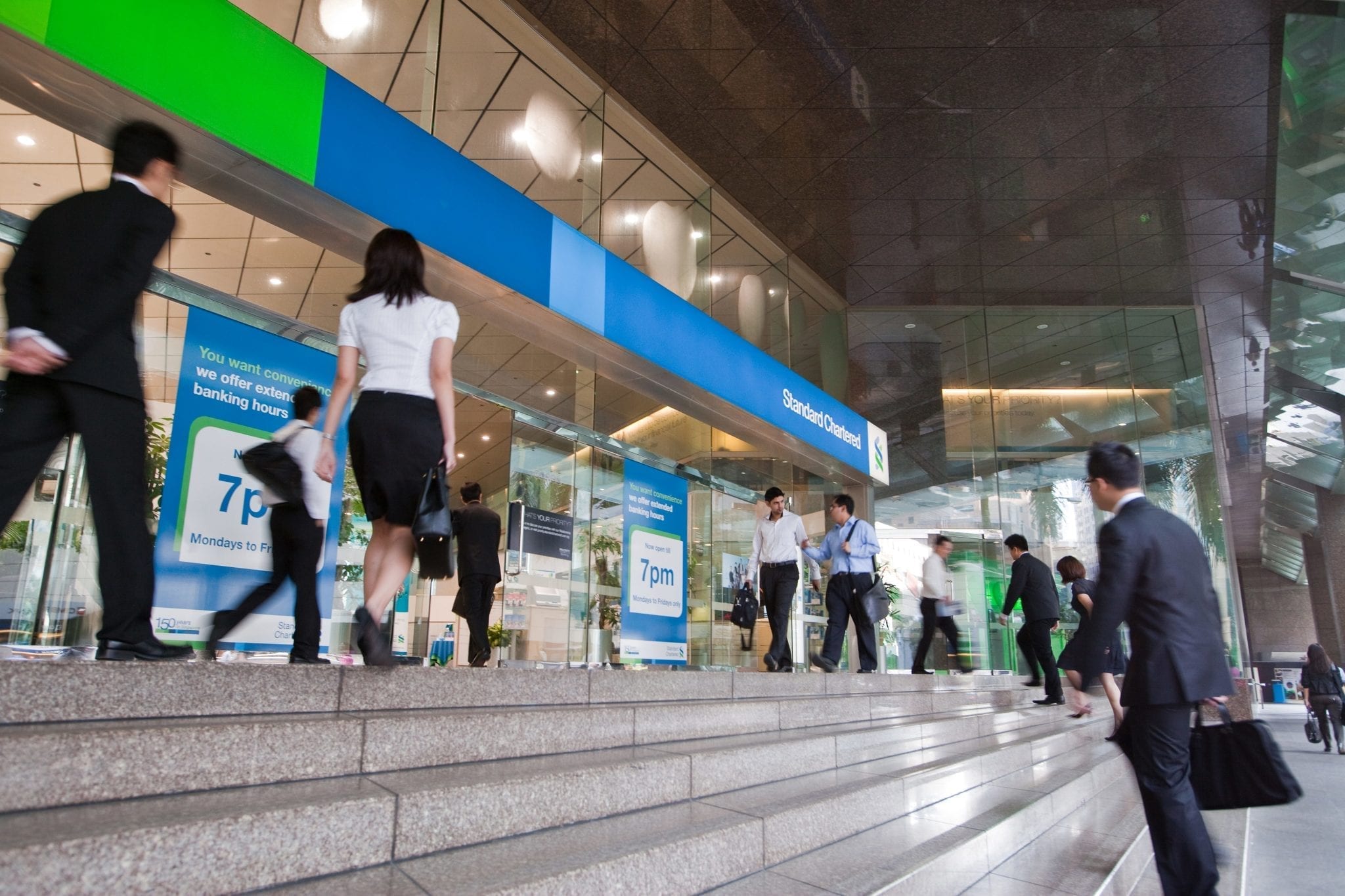
    Standard Chartered ups the transparency of global payments with the introduction of a public portal for real-time tracking.

    The new portal, SC GPI Track will trace cross-border payments processed through the bank’s major clearing centers to their clients and from them to their corporate and retail clients. According to Standard Chartered, the launch makes it the first the bank to introduce such a payment tracking platform well ahead of the SWIFT November 2020 payments confirmation mandate – an initiative aimed to make it mandatory for all financial institutions to confirm to beneficiaries when a cross-border has been credited to their account.

    By entering SWIFT unique end-to-end transaction reference (UETR) linked with the cross-border payment, Standard Chartered clients and their counterparties will be able to obtain the real-time status of payments.

    SWIFT’s chief business development officer, Alain Raes, underlined that the sector has long wrongly believed that technology was the hindrance to enhanced cross-border payment capabilities when it has instead been a case of lacking progressive thinking at financial institutions. Recorded data is major evidence against believers of tech headwinds in payment speed – 50 percent of gpi payments are credited to end beneficiaries within five minutes, on average, and 50 percent are credited within 30 minutes.

  • Bank of China Approved for Saudi Branch Launch

    Bank of China Approved for Saudi Branch Launch

    Bank of China has been approved by Saudi Arabian authorities to open a branch in the kingdom, in yet another move towards further internationalization.

    Saudi Arabia’s cabinet approved the Chinese lender’s license, according to a report citing a tweet from the state news agency SPA.

    Bank of China joins a wave of Chinese firms seeking to expand in Saudi Arabia, its close strategic ally and top oil supplier. Saudi Arabia is undergoing major reforms to diversify the economy away from energy in a grand strategy called «Saudi Vision 2030». Four years ago, rival lender, Industrial and Commercial Bank of China, launched its first branch in Riyadh.

    Capitalizing on Saudi Arabian opportunities aside, the branch launch marks another step towards for China towards further internationalization through its financial entities. In December last year, Bank of China launched its first branch in Romania through the capital of Bucharest.