Author: Mei Ling Tan

  • UBS Revamps Wealth Management

    UBS Revamps Wealth Management

    UBS is restructuring its private bank, the first major move under new co-head Iqbal Khan. The move dramatically reduces the influence of two veterans of the bank.

    The Zurich-based wealth manager is making a host of changes three months into the tenure of Iqbal Khan, who joined from Credit Suisse, as co-head of its private bank.

    The biggest changes? Breaking up its European, Middle East, and African business, which dramatically curbs the purview of current head Christine Novakovic, into three parts. She is left with the EU piece including a Frankfurt hub for Europe, while Caroline Kuhnert takes on Central and Eastern Europe. Ali Janoudi will run UBS’ business in the Middle East and Africa.

    UBS is also combining a specialty unit that tailors products for the ultra-wealthy, led by veteran Christian Wiesendanger, with a markets team within its investment bank. Wiesendanger, who took over sole leadership of the unit just over one year ago, will be offered a new, as-yet-undisclosed new role at UBS, Khan, and co-head Tom Naratil said in the memo.

    The duo said the move is a bid to speed up how it makes decisions, limit duplication, and delayer, which generally means cutting jobs. Khan and Naratil made no mention of specific cuts. UBS plans to dismiss as many as 500 bankers as a result of the changes.

    The move is the second leg of UBS’ referral of some of its super-rich and family office clients back into the regions. UBS’ top executive for the super-rich, Josef «Joe» Stadler, is coming away from the revamp with a mandate to expand the bank’s business with wealthy families, including in the U.S.

    We are pleased to announce that we will accelerate decision-making and time to market by delayering, reducing organizational duplication, and increasing business unit autonomy, which comes with more accountability, Khan and Naratil wrote to staff.

  • StanChart Hires Technology Risk Expert

    StanChart Hires Technology Risk Expert

    The bank has brought on board a financial and telecommunications services technology risk, regulatory and security leader to support its business, functions and regions.

    Standard Chartered has hired technology expert David McLinton as its global head of Operations, Information and Cyber Security (ICS), effective 06 January 2020, subject to regulatory approvals, the bank announced in a statement on Wednesday.

    McLinton has over 25 years of industry experience joins from Singtel, where he was head of its Asia Pacific cybersecurity team. He was previously chief information security officer for Asia Pacific and Latin America for J.P. Morgan Chase.

    The position is based in Singapore. McLinton reports to Yuval Illuz, group chief information security officer and chief operating officer, Trust, Data and Automation.

  • Daimler Sued For $1 Billion In German Court Over Diesel Cheating

    Daimler Sued For $1 Billion In German Court Over Diesel Cheating

    Investors have sued Daimler for 896 million euros ($1 billion) in a regional court in Stuttgart, accusing the carmaker of concealing its use of emissions cheating software, German law firm TILP said on Tuesday.

    The suit was filed on behalf of institutional investors who accuse Daimler of failing to inform investors about the risks and costs of using such devices, which amounts to a violation of capital markets law, the law firm said.

    In a statement, attorney Andreas Tilp said: “This means that the plaintiffs bought the Daimler stock at too high a price, and it is our conviction that Daimler is liable to them for compensation of damages.”

    Daimler said it had not yet been formally notified of the lawsuit adding it believed that the lawsuit was without merit.

    “We will defend ourselves against the accusations with all legal means,” a spokeswoman said on Tuesday.

  • Ferrari Joins European Auto Lobby ACEA Four Years After Spin-Off

    Ferrari Joins European Auto Lobby ACEA Four Years After Spin-Off

    Italian luxury carmaker Ferrari has become the latest manufacturer to join the European carmakers’ association (ACEA), the auto lobby said on Tuesday.

    ACEA represents manufacturers of passenger cars, vans, trucks and buses with production sites in the European Union and provides benchmark data on vehicle registrations.

    Ferrari’s membership took effect on Jan. 1, following approval at the end of last year by the association’s board of directors, which is made up of the chief executives of its member companies, ACEA said.

    Ferrari did not comment.

    Mike Manley, the CEO of Ferrari’s former parent company Fiat Chrysler, took over as ACEA’s new president this month.

    Ferrari – which was spun-off from Fiat Chrysler (FCA) in 2016 – became ACEA’s sixteenth member, adding to manufacturers such as luxury carmakers BMW and Jaguar Land Rover, but also mass market producers such as PSA-Peugeot or Ford, as well as truck and commercial vehicle makers such as DAF Trucks.

    Ferrari is controlled by Exor, the holding company of Italy’s Agnelli family, which also controls FCA and industrial vehicle maker CNH Industrial, another ACEA member.

    Last month FCA and PSA agreed a binding $50 billion tie-up to create the world’s fourth-largest carmaker

  • Aston Martin Confirms Limited Edition V12 Speedster

    Aston Martin Confirms Limited Edition V12 Speedster

    Aston Martin has confirmed that a strictly limited number of the new V12 Speedster will make it production. The car will make its global debut later this year, with discerning drivers around the world offered the opportunity to acquire this sports car.

    The V12 Speedster, created by in-house bespoke service Q by Aston Martin, is all about being a driver-oriented sports car and yes it is a two-seater. The new car’s design, while modern and dynamic, also clearly nods to both Aston Martin’s legendary 1959 Le Mans 24 hours- and 1000km of Nurburgring race-winning DBR1 as also the Centenary CC100 Speedster Concept shown in 2013. It’s forward-looking features are shaped from the same advanced materials and expert engineering used throughout Aston Martin’s contemporary sports car range.

    Creating the new V12 Speedster has taken months of meticulous design and planning work by the teams from both Q by Aston Martin, and Aston Martin Design. At the new car’s heart lies a high-performance variant of Aston Martin’s now iconic, 5.2-litre V12 Twin-Turbo engine, capable of generating an output of around 700 horsepower and 700 Nm. The engine is mated to a ZF 8-speed automatic transmission mounted towards the rear of the car. The company says that the engine note and sound quality play an important part in the overall experience.

    Aston Martin Lagonda President and Group CEO, Dr. Andy Palmer said: “The V12 Speedster we’re proud to confirm today once again showcases not only this great British brand’s ambition and ingenuity, but also celebrates our rich and unrivaled heritage. The 88 enthusiast drivers and collectors who secure the keys to these cars can be confident that in doing so, they are also securing an iconic new piece of Aston Martin history.”

    Deliveries of the car will start from the first quarter of 2021.

  • Vietnam gold price hits 6-year high

    Vietnam gold price hits 6-year high

    Gold prices in Vietnam soared to a six-year high on Monday amid rising military tension between the U.S. and Iran. The country’s largest jewelry company DOJI sold its SJC gold at VND44.44 million ($1,924) per tael (1.2 ounces) on Monday morning, up 3.78 percent from Friday.

    Another giant Phu Nhuan Jewelry also raised its selling price to VND44.3 million ($1,918), up 4.7 percent.

    It is the first time Vietnam’s gold price passed the VND44.4 million ($1,922) mark in the last six years.

    The surge came as global gold prices increased by up to 1.8 percent to $1,579 per ounce at a point on Monday morning, the highest in seven years.

    The sudden rush for safe-haven assets came after U.S. President Donald Trump ordered a strike that killed Iran’s General Qasem Soleimani, head of the Iranian Revolutionary Guard’s elite Quds Force, on Friday. Iran has vowed to retaliate.

    Gold prices had been surging throughout last year as trade tensions between the U.S. and China persisted.

  • Augmented Reality marketing carries great development potential

    Augmented Reality marketing carries great development potential

    Augmented Reality (AR) is predicted to witness rapid growth in 2020 as brands foster its application in marketing their products and services.

    Invented in the 90s and based on virtual reality (VR), AR is seen as a remarkable technological leap. Unlike VR, whose images are computer-generated and seen via a headset, AR allows users to view the real world through a mobile device with virtual details added in.

    Though it came out a long while ago, AR became a worldwide phenomenon after Pokemon Go was introduced in 2016. Its success made brands sit up and take note of AR’s limitless transformations that could be applied to different fields.

    The era of AR marketing was kicked of by American international fashion brand, Michael Kors. The brand experimented with AR ads on Newsfeed, allowing users to directly try a wide variety of sunglass designs before purchasing what they liked.

    Its strong ability to visualize and communicate ideas via an image in an interactive way is the primary reason that AR is an ideal marketing tool. In addition, AR is highly flexible, changeable, and capable of personalizing and waking users’ curiosity, delivering a more interesting customer experience.

    It is anticipated that 2020 will be the year that AR emerges into its own as a new marketing method, dominating the retail sector by offering new-fashioned, captivating customer experience.

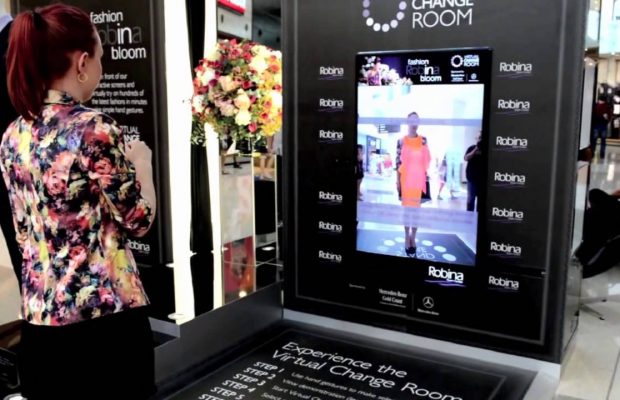
    Users will be able to play with different brands of products, from trying on sunglasses to outfits and even wear lipstick being physically present at the store. The AR-enabled technology will make shopping quick and convenient

    AR can also be used for outdoor navigation like Google and Apple Maps. A typical example of this application can be seen at Gatwick Airport where users are guided to terminals and gates more quickly and accurately.

    Not stopping there, a combination of AR and artificial intelligence (AI) is also seen as a new trend among enterprises in the upcoming year. The collaboration between AR and AI will help companies solve different problems with minimal effort, allowing them to progress faster.

    Jingo entered the technology market with an online interactive game show that became popular worldwide. It went on to offer interactive solutions to enhance fan engagement.

    As AR application extended to more areas, Jingo adopted a new marketing method called AR Branded Camera that quickly achieved many solid outcomes.

    For instance, the minigame “Chon Thuan Ngu, Nhan Qua Nhu Y” (Thuan Ngu – a present for meals) was created to introduce the Thuan Ngu (584 Nha Trang) brand, using the image of fish sauce, an indispensable condiment in Vietnamese meals, aiming to prompt brand recall.

    Other exceptional ideas that Jingo came up with for brands include the AR Filter “Gui Online – So tiet kiem trao tay” (Online Savings, Prosperous Living) for Saigon Commercial Bank (SCB), which allows users to calculate how much they can save with an online saving program, and AR Game “Mam mam Aji-mayo” (Play with Aji-mayo), designed mainly to increase brand engagement among mothers and kids.

    Jingo was among the teams invited to participate at the Facebook iD8 meet organized in Singapore in August. Facebook iD8 is an annual event exclusively for Facebook developers.Jingo was also the only digital marketing representative from Vietnam to participate in the final round of RBSA held February 2018 in Bali, Indonesia.Other prominent awards that have recognized Jingo’s work include: silver medal at the Swiss Innovation Challenge Vietnam 2018; and Best Digital Marketing Solution – Asean Rice Bowl Startup Awards 2018 (RBSA 2018).

  • Otterbox announces new iPhone screen protector that also protects users

    Otterbox announces new iPhone screen protector that also protects users

    For those worried about the dirt and crap that their phone’s screen protector collects over the course of a year, case maker Otterbox has come up with a solution. The company teamed up with Corning to create the Amplify Glass Anti-Microbial screen protector. Does it actually kill bacteria? Well, we can tell you that the antimicrobial technology used on the accessory is registered with the Environmental Protection Agency (EPA). The important thing is that this technology is embedded in the glass protector and doesn’t interfere with the touchscreen properties or the clarity of the screen.
    Otterbox CEO Jim Parke says, “Amplify Glass now features proprietary anti-microbial technology that suppresses the growth of several common stains and odor-causing bacteria to protect the surface of the screen protector.” So you will be able to put your face against your phone’s display when making a call without fear that you are going to be ravaged by some disease.
    And the Amplify Glass Anti-Microbial screen protector does more than kill bugs. It also protects the display on a phone up to five times better than rival screen protectors and keeps the screen on your phone from succumbing to drops, bumps and falls. Keep in mind that while Otterbox and Corning are protecting your phone, they are also protecting your health. The accessory will be soon available for the latest iPhone models and will be compatible with the company’s iconic cases.
  • Microsoft to update Outlook for iPhone with a host of new features

    Microsoft to update Outlook for iPhone with a host of new features

    Outlook for iOS is becoming better by the month, and the next wave of improvements is coming no later than this month. Microsoft revealed what new features Outlook users will get on their iPhones with the next update.

    Meeting Insights is one of the features that will be coming in the next Outlook update. Thanks to the new feature, all emails, and documents that are important to meetings or appointments will be included in the Calendar event description.

    Next, the Suggested Replies feature allows iPhone users to quickly reply to an email by tapping the suggestions offered by the app, much like the similar feature offered by Google’s Gmail. You’ll be able to edit your replies before the email is sent. The new feature appears at the bottom of an email, just above the reply box, and it’s only available in English, Spanish, and Brazilian Portuguese.

    Finally, Microsoft will allow iPhone users to create an Outlook.com account directly from the smartphone, something that’s not yet possible. Of course, you’ll be able to add iCloud, Yahoo!, and Gmail accounts as well if you have any of these.

    All the new features are already available to all Outlook Insiders on iOS devices, but they’re expected to arrive with the next update at some point this month.

  • Qualcomm Launches Autonomous Driving Computer, Aiming To Hit Roads By 2023

    Qualcomm Launches Autonomous Driving Computer, Aiming To Hit Roads By 2023

    Qualcomm Inc on Monday announced a computing system for autonomous vehicles designed to handle everything from lane controls to full self-driving that it aims to have on the road by 2023. The system, dubbed Snapdragon Ride, is the company’s first foray into a full system to power self-driving cars. San Diego-based Qualcomm, known best as the world’s biggest mobile phone chip supplier, has been a major automotive supplier for more than a decade, but primarily for the modem chips that connect vehicles to the internet and chips for the infotainment systems that power screens inside vehicles.

    Qualcomm has spent years developing self-driving technology near its headquarters in virtual silence while rivals such as Intel Corp and Nvidia Corp jumped into the market, spending billions on acquisitions supplying major automakers for autonomous driving.

    Patrick Little, the senior vice president and general manager of Qualcomm’s automotive business, said the company is using the expertise it built in the mobile phone processor business developing powerful processors that consume little electricity and generate little heat.

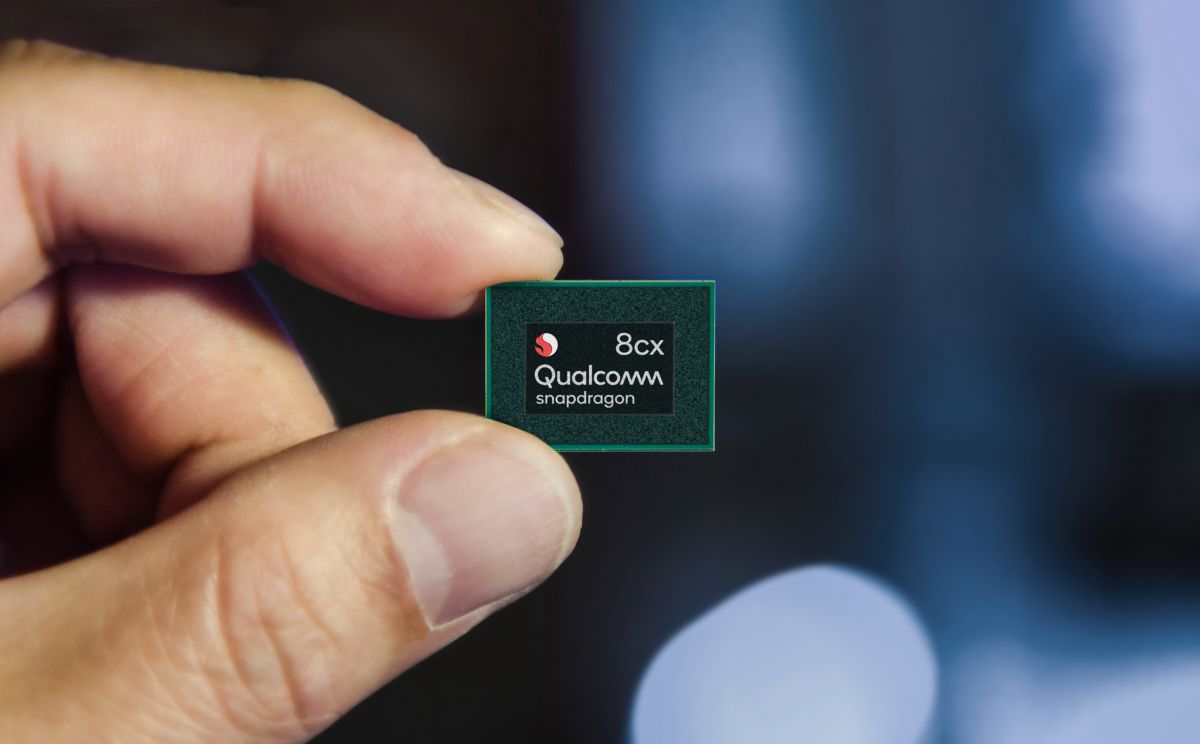
    Qualcomm’s new computers can fit in one hand and do not need fans or liquid cooling systems to prevent them from overheating. Lower power consumption will become important in electric vehicles, in which computers will have to compete with the drive train for battery power.

    “Many of these cars have a supercomputer in the back. It looks like your kid’s gaming PC,” Little told Reuters in an interview. “Now imagine you’re putting that in the trunk of an electric vehicle. Now your range anxiety is just doubled.”

    Qualcomm has also broken the system into pieces of hardware and software that can be scaled up or down for various needs from automakers. A smaller version of the computer can be used for simpler tasks like lane-control, or the computers can be chained together for full self-driving. Little said Qualcomm has used test vehicles in San Diego to develop its own set of self-driving software algorithms if automakers want to use them, but that it will be up to each one.

    “If they came to us with their own software stack, or even somebody else’s software stack, we’re happy to say we’ll help you” adapt it to Qualcomm’s hardware, he said.

    Qualcomm and General Motors Co on Monday also said that the automaker has expanded its existing partnership with the chip suppler into “high performance compute platforms.” Qualcomm previously provided chips for the company’s dashboard electronics, location tracking and driver-assistance systems.

  • Singapore Digibank Applicants Total 21

    Singapore Digibank Applicants Total 21

    The Monetary Authority of Singapore received 21 digital bank applications, the regulator said on Tuesday.

    This comprises 14 applications for the digital wholesale bank licenses and seven applications for the digital full bank licenses. The majority of applicants are consortiums, Monetary Authority of Singapore (MAS) said in a statement, without naming the entities.

    The new digital bank licenses have attracted strong interest from a diverse group of applicants, ranging from e-commerce firms, technology, and telecommunications companies, fintech – such as crowd-funding platforms and payment services providers – as well as financial institutions.

    MAS is issuing up to five digital banking licenses by June this year – up to two full-bank licenses that permit retail banking, and up to three for wholesale banking.

    The new digital banks are expected to start their operations by the middle of 2021. This liberalization move – the biggest for the financial sector here since 1999 – was first announced by the MAS in June last year. Applications closed on Dec 31, 2019.

    Applicants that have expressed their interest publicly include Ant Financial, Grab and Singtel, Razer’s consortium, the V3 Group linked to entrepreneur Ron Sim,  Temasek-linked supply chain finance firm Sheng Ye Capital, and a consortium led by Hong Kong’s AMTD Group.

  • Sluggish sales dampen India retail leasing activity

    Sluggish sales dampen India retail leasing activity

    Indian retail leasing activity in major cities slumped 35 percent last year as the country’s economy continued on a sluggish course.

    “It’s very obviously not business as usual in the Indian retail sector, and retailers have had to reduce costs – not least of all by realignment of retail spending,” said Anuj Kejriwal, MD and CEO at Anarock Retail.

    According to data from real-estate services provider Anarock, Indian retail leasing activity in the nation’s seven largest cities dropped from 5.5 million sqft in 2018 to 3.6 million sqft last year.

    The worst-affected sector was fashion where falling consumer spending has impacted the top line of several major retail groups, including V-Bazaar and 1-India Family Mart, both of which say they are scaling back expansion plans this year.

    “The apparel industry has been hit with a triple whammy – GST, credit squeeze on small and medium enterprises, and increased competition due to slowdown in global demand,” said Kejriwal.

    With spending on fashion declining, there has been “a significant reduction in demand” for new fashion-specific mall spaces among local brands and global brands, he says, are “staying put but not expanding”.

    Kejriwal said downward revisions of India’s GDP growth rate are bound to be reflected in the consumption-driven retail industry, with most categories affected.

    “Discretionary spending remains low and the ticket sizes of purchases have shrunk – with predictable impact on retail leasing activity. Slow sales and sluggish activity across sectors such as automobiles, fashion and telecom are translating into reduced leasing across retail spaces as players shift their operational strategy,” he said.

    Jewelry, electronics, books and music, hypermarkets and men’s formal clothing are other retail categories where leasing activity declined last year.

    The standout exceptions in retail are food and beverage, family entertainment centers, cinemas and beauty/wellness boutiques.

    “These verticals have seen a decent rise in space leasing and are doing fairly good business depending on factors such as location, accessibility, brands, etc,” said Kejriwal.

    “Though rising rentals in prime locations hinder the growth plans of many brands, Indians’ affinity to eating out and entertainment remains undiminished.”

    Kejriwal said many Indian retailers must now consider consolidation and realignment of their operational structure. “Long-vision players are taking steps to boost productivity through technological innovations, automation of production and analytics-driven decision making. The retail sector is also renewing its focus on consumer-centric strategies in order to strengthen customer loyalty.”

    India’s retail market is predicted to grow to US$1.3 trillion this year, significantly up on the $672 billion of 2017, prompting many retail players to believe that the current slowdown is a short-term phenomenon.

    “Optimistic about the future growth prospects of retail, they maintain that the size of the Indian population, consumption and demand will drive organized retail growth in the future,” said Kejriwal.

    “However, it will take more than optimism to pull the retail sector out of its current tailspin. What the retail industry needs is strong demand dynamics, sizeable funding and consistent policy support from the government to get past the slowdown.”

  • American chain Gelato-go makes Asian debut in Hong Kong

    American chain Gelato-go makes Asian debut in Hong Kong

    US artisanal gelato brand Gelato-go has launched its first store in Asia at Tsim Sha Tsui in Hong Kong.

    Located at The Nate, Gelato-go Hong Kong features more than 20 flavors of gelato handcrafted daily for consumers.

    “We know Asian customers love sweet dessert and we have a huge variety of Italian dessert and gelato flavors,” said Alessandro Alvino, co-founder at Gelato-go. “Bringing it to Hong Kong is to share something from our country”.

    Beside its selection of fresh Italian ice cream and snow mousse flavors, it also offers different styles of desserts, sandwiches, and beverages, such as traditional Italian Cannoli ricotta cheese rolls, cream croissants and milkshakes.

    Founded in 2013 by three young Italians, Gelato-go is one of the fastest-growing chains in its category within the US market and operates 14 locations between Florida and California. Hong Kong is its first destination outside US.

  • Brick and mortar is back: The retail apocalypse is ‘nearing its end’

    Brick and mortar is back: The retail apocalypse is ‘nearing its end’

    The retail apocalypse is nearing its end, giving brick-and-mortar the opportunity to make the comeback of a lifetime – and surprisingly, millennials and Gen Z are to thank for this movement. Retail locations are finding new footing and a new role in 2020, and that is because 43 percent of both Millennials and Gen Z are more likely to do in-store shopping as opposed to only 29 percent of Gen X.

    It seems odd that the generations who are conditioned to constantly accessible technology, are practically glued to their phones, and have never turned to a leather-bound encyclopedia before consulting Wikipedia, would prefer in-store experiences over online shopping. But that is just it – it is the interaction they crave.

    In true millennial and Gen Z fashion, they desire a personalized shopping experience catered to them, in fact, a staggering 63 percent of millennials note that they will actually spend more on a product if it comes with a personalized experience. For retail locations, improving customer service is going to be key if they want to continue to turn the heads of millennials and Gen Z. With these generations making a significant dent in the buying power of today’s consumers, brick-and-mortar locations will need to brush up on this 2020 retail trend as they plan for the future.

    Retail has experienced many ups and downs, from the entrance into a digital age and advancement of retail technology, to experiencing a retail apocalypse causing many store locations to close their doors. The future for brick-and-mortar retailing looked bleak as retailers began to loosen the reins and became lax on creating the type of customer experience that keeps shoppers coming back. But not anymore: this year promises a resurgence of brick-and-mortar retailing, and it is in high demand.

    Personalisation of the retail experience 

    With the goal of cultivating a more personalized retail environment, retailers can tap into the abundance of data available about their consumers. Social-media influence and social shopping and retail are even more intertwined now than ever before. Online activity provides the data insights into preferences, buying habits, and interests of consumers – driving personalization in the retail sector moving into this year and beyond.

    The tactical use of this data makes creating personalized promotions easier than ever – an excellent tool to target retail customers and keep them engaged with your brand. Customizing relevant data points with targeted deals and offers generates more profitable purchases leading to more revenue for the retailer.

    Retail 4.0: an integrated omnichannel approach

    This year’s retail trends are moving toward putting the consumer more in control of their retail choices and behavior. This opens the door for Retail 4.0 – the “new retail” – a hybrid approach between physical and digital retail that relies on consumer data for a more customer-centric experience throughout the supply chain. An integrated omnichannel approach is a way to successfully move into the future of retail.

    Integrated omnichannel retail breaks barriers between customers and their purchase mode using multiple touchpoints for a single purchase. The result is improved customer engagement by providing a consistent shopping experience across channels. Adopting this approach can improve data accuracy by as much as 95 percent and streamlines the processes on the backend to seamlessly transition them on the front end, providing a better customer experience, with multiple paths to purchase.

    Looking ahead, with 20/20 vision, it is clear that streamlining processes and cutting away retail excess is going to be key to retail success. The long-feared ‘retail apocalypse’ is clearly nearing its end.

  • Ethical shoe retailer Toms collapses

    Ethical shoe retailer Toms collapses

    Ownership of ethical American shoe retailer Toms will be transferred to its creditors.

    CEO Jim Alling addressed a letter to employees informing them of the transfer from current owners Bain Capital and founder Blake Mycoskie to Jefferies Financial Group, Nexus Capital Management and Brookfield Asset Management.

    The move is intended to “identify the best path forward for our company,” read the letter. It entails a new investment of US$35 million and an enhanced capital structure including debt relief. The shoe retailer Toms distributes products through more than 500 stores worldwide, including department stores and single-brand outlets.

    The firm would have collapsed entirely this year facing a crippling debt of $300 million if the restructure and rescue plan had not proceeded.

    Toms was founded in 2006 by Mycoskie, a Texas entrepreneur, to design and retail shoes, later adding eyewear, coffee, apparel and handbags. Its business model was based on business with a purpose concept, with the company donating a pair of shoes to the underprivileged for every pair sold. By 2012 more than 2 million pairs of new shoes had been given to children in need around the world, including in Argentina, Ethiopia, Guatemala, Haiti, Mexico, Rwanda, South Africa and the US.

    In Asia the company-operated stores with partners in Japan and the Philippines. In 2014 it opened a store in Bangkok’s CentralWorld and Central Embassy shopping centers in partnership with Star Fashion Co. The CentralWorld store has since closed, but it still shows on Central Embassy’s store directory.

    At the time, Hajime Birnbaum, international sales and marketing director for shoe retailer Toms, said taking the brand into Thailand, which he described as a very pro