Author: Mei Ling Tan

  • Japanese bank seeks 9.9 pct stake in Vietnam’s OCB

    Japanese bank seeks 9.9 pct stake in Vietnam’s OCB

    Japan’s Aozora Bank Ltd could acquire 9.91 percent of Vietnam’s Orient Commercial Joint Stock Bank in a VND1.22 trillion ($52.8 million) deal.

    OCB is seeking shareholders’ approval to issue the private placement to the Japanese bank, with an offered price not lower than the book value per share at the end of the latest quarter.

    As OCB’s over-the-counter (OCT) shares are being traded from VND14,100-15,900 each (61-69 cents), Aozora will need to spend at least VND1.22 trillion ($52.8 million) on the deal, at VND14,100 apiece.

    Aozora was established in 1957. It has a total asset value of $48 billion and is listed on the Tokyo Stock Exchange at a market cap of $3.16 billion.

    OCB’s charter capital is currently around VND7.9 trillion ($341.9 million). Its January-September pre-tax profit last year was almost VND1.94 trillion ($83.96 million), up 15.3 percent year-on-year.

    Last year saw several foreign investors acquiring stakes or expressing interest in owning shares of Vietnamese banks.

    Vietnam’s largest bank by asset, BIDV, sold a 15 percent stake to South Korea’s KEB Hana Bank in November, while Vietcombank had in early 2019 sold a 3 percent stake to Japanese and Singaporean investors.

  • Vietnamese automaker ships buses to Philippines

    Vietnamese automaker ships buses to Philippines

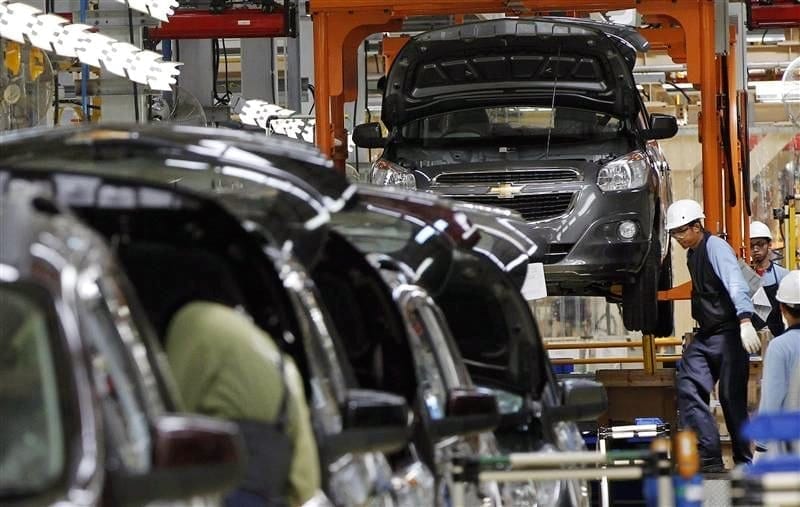
    Vietnam’s leading automaker and assembler Thaco shipped the first 15 buses to the Philippines on Saturday.

    Tran Ba Duong, chairman of Truong Hai Auto (Thaco), said the exported buses were redesigned after seven months of testing in the Philippines. They had a localization rate of 45 percent and complied with Euro 5 emission standards.

    All the buses were assembled in the Chu Lai open economic zone in Quang Nam Province, central Vietnam.

    Duong said a major challenge in exporting vehicles made or assembled in Vietnam was the complicated assessment process in foreign countries. For example, the process takes six months in Thailand, four to five months in the Philippines and a year in the U.S.

    Thaco expected to ship 200 buses to the Philippines in 2020.

    The firm exported 186 automobiles of various types to ASEAN countries and plans to export over 1,020 units next year. Thaco also exported auto parts and accessories worth $14.5 million to South Korea and Japan in 2019, and this is expected to rise to $21 million in 2020.

    Thaco has been researching, manufacturing and assembling buses and continuously promoting investment in the field since 2004. To date, the company has supplied over 17,000 buses to the domestic market, holding a 65 percent market share.

  • Number of new businesses, registered capital highest ever

    Number of new businesses, registered capital highest ever

    138,100 businesses were established in Vietnam this year, the highest ever, with the government’s initiative to increase the quantity and quality of enterprises bearing fruit.

    In terms of volume, the figure was up 5.2 percent year-on-year, while their registered capital also climbed a new high at over VND1,730 trillion ($75.1 billion), up 17.1 percent year-on-year, according to the General Statistics Office.

    This meant the average registered capital was VND12.5 billion ($542,000) per business.

    An additional 39,400 businesses resumed operations this year, up 15.9 percent from last year. But the year also saw 43,700 businesses filing for dissolution, up 41.7 percent year-on-year.

    The surge in the business numbers and registered capital is happening as the government seeks to improve its administrative policies to support enterprises as part of a plan to have the private sector spearhead economic growth.

    Prime Minister Nguyen Xuan Phuc said at a meeting with business leaders on December 23 that the large number of businesses dissolving each year, including big ones, was a matter of concern.

    Government agencies have been making proposals in this regard. In July, the Ministry of Finance proposed to the National Assembly that it considers scrapping corporate income tax on micro and small enterprises.

    There are about 760,000 businesses operating in the country. Vietnam targets taking this up to 1 million next year.

    Vietnam’s GDP growth of 7.02 percent in 2019 exceeded the parliament’s target of 6.6-6.8 percent as well as forecasts by several international organizations like the WB and the ADB. It had slowed from a record 7.08 percent in 2018, but remained the second highest growth figure in the last decade.

  • Vietnam air travel demand surges 12 pct

    Vietnam air travel demand surges 12 pct

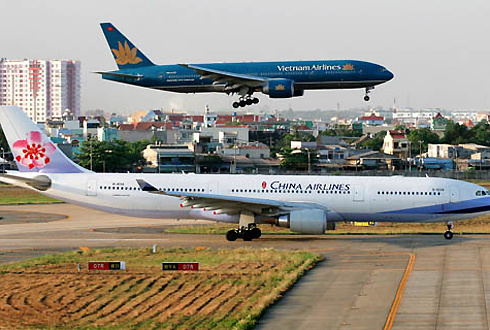
    Airports across Vietnam served near 116 million passengers this year, up 12 percent from 2018, with Vietnam Airlines Group and Vietjet dominating the market.

    About 64 percent, or 74 million passengers, were domestic, up 11 percent from last year, according to Airports Corporation of Vietnam (ACV).

    The remaining 41.7 million foreign travelers grew by 13.6 percent from last year, with Noi Bai International Airport, Da Nang International Airport and central Cam Ranh International Airport near Nha Trang experiencing the highest traffic growth.

    Vietnam Airlines Group accounted for over 50 percent of the market share. It comprises national flag carrier Vietnam Airlines, low-cost arm Jetstar Pacific and Vietnam Air Services Company (VASCO).

    Budget carrier Vietjet accounted for 41.9 percent of the market.

    ACV Chairman Lai Xuan Thanh said overload will be a challenge next year as red tape in aviation infrastructure and investment constrains upgrade and expansion projects, like at Tan Son Nhat International Airport, which handles 30 percent of the country’s air passengers.

    Another concern is slower growth in foreign passenger numbers, which dropped from over 20 percent in 2016-2018 to 13.6 percent, he added.

    ACV forecasts the number of air passengers would rise by 10 percent to 127 million next year.

  • Vietnam Airlines reports record profit in 2019

    Vietnam Airlines reports record profit in 2019

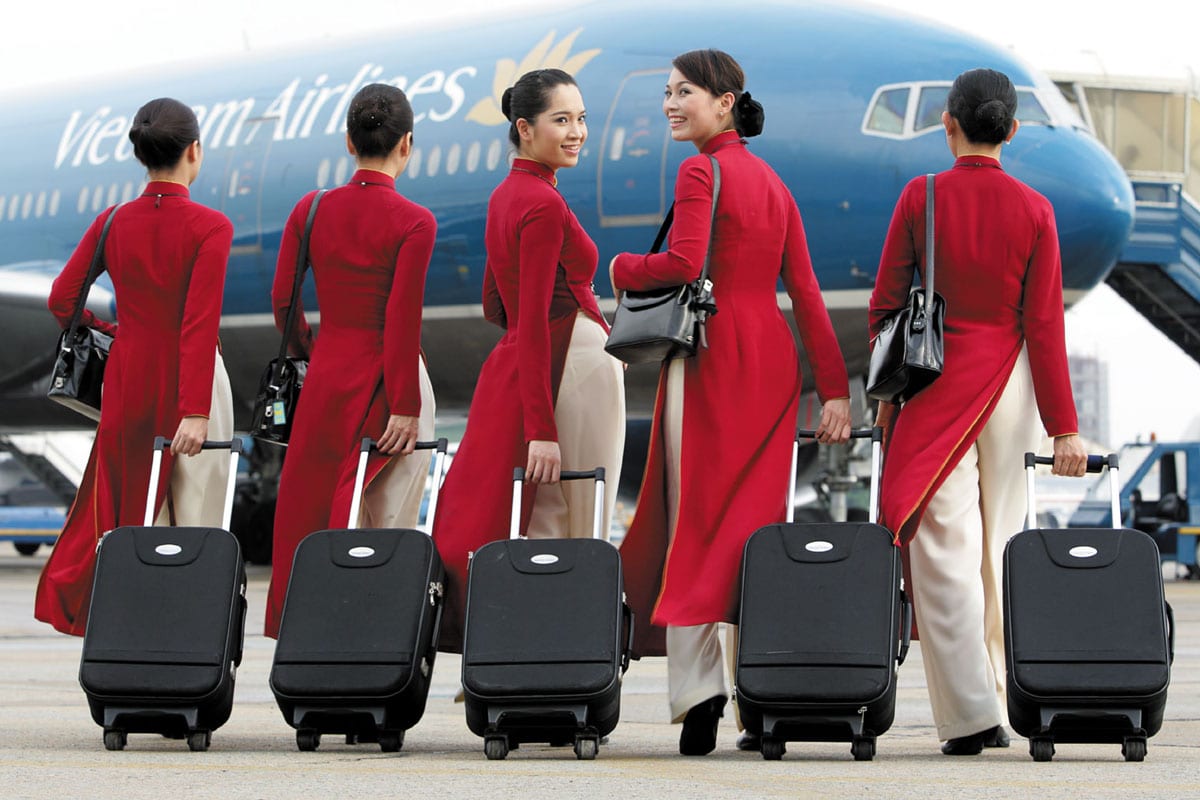
    National flag carrier Vietnam Airlines estimates its consolidated pre-tax profit for 2019 at an all-time high of VND3.37 trillion ($146 million).

    The figure also marks a 10 percent year-on-year increase, Vietnam Airlines said in a press release.

    Its consolidated revenue is estimated at VND101.18 trillion ($4.39 billion) this year, up 2.2 percent year-on-year.

    In 2019, Vietnam Airlines transported 23 million passengers and nearly 346,000 tons of cargo on 134,000 flights. The airline also began operating 22 new aircraft and 10 flight routes, bringing its fleet to above 100 aircraft.

    In 2020, it will focus on retaining its core customer segments and holding share in key markets, the airline said. It expects to invest in 50 additional narrow body aircraft between 2021 and 2015, as well as improving services and digitization of its systems.

    Vietnam Airlines is 86.16 percent state-owned, and Japanese air transportation company ANA Holdings has an 8.77 percent stake. The remaining shares are held by state-owned lender Vietcombank, private lender Techcombank, and other domestic individuals.

  • After Tesla’s Record Year In Norway, Rivals Gear Up For 2020

    After Tesla’s Record Year In Norway, Rivals Gear Up For 2020

    New electric car sales in Norway rose by a third last year amid soaring demand for Tesla Inc’s vehicles, but the pioneering U.S. company will face a more competitive market in 2020 as rivals prepare to launch new electric models.

    Fully electric cars made up 42.4% of sales in the Nordic country last year, a global record, rising from a 31.2% market share in 2018 and just 5.5% in 2013, the Norwegian Road Federation said on Friday.

    Norway, which is Europe’s biggest oil and gas producer, is seeking to become the first country to end the sale of fossil-fueled cars by 2025. The country has exempted battery-powered vehicles from the taxes imposed on petrol and diesel engines and after just a few years the streets of Oslo have become quieter and have less air pollution.

    Most of Norway’s top-10 cars in 2019 were electric, including Volkswagen’s Golf, Nissan’s Leaf, Audi’s e-tron, BMW’s i3, Jaguar’s I-PACE and several of Hyundai’s models.

    New car sales in the country last year were 142,381, of which 60,316 were fully electric. This year, as many as six in 10 of all new cars sold in the country could be fully electric, said Volkswagen (VW) distributor Harald A. Moeller AS, which is preparing to launch several models in 2020.

    Other importers predicted the market share in 2020 would be in a range of 50-60% of all sales.

    “The electrification of the car market is accelerating … we forecast electric vehicles to hold a 100% market share in 2025,” Volkswagen said of the outlook for Norway.

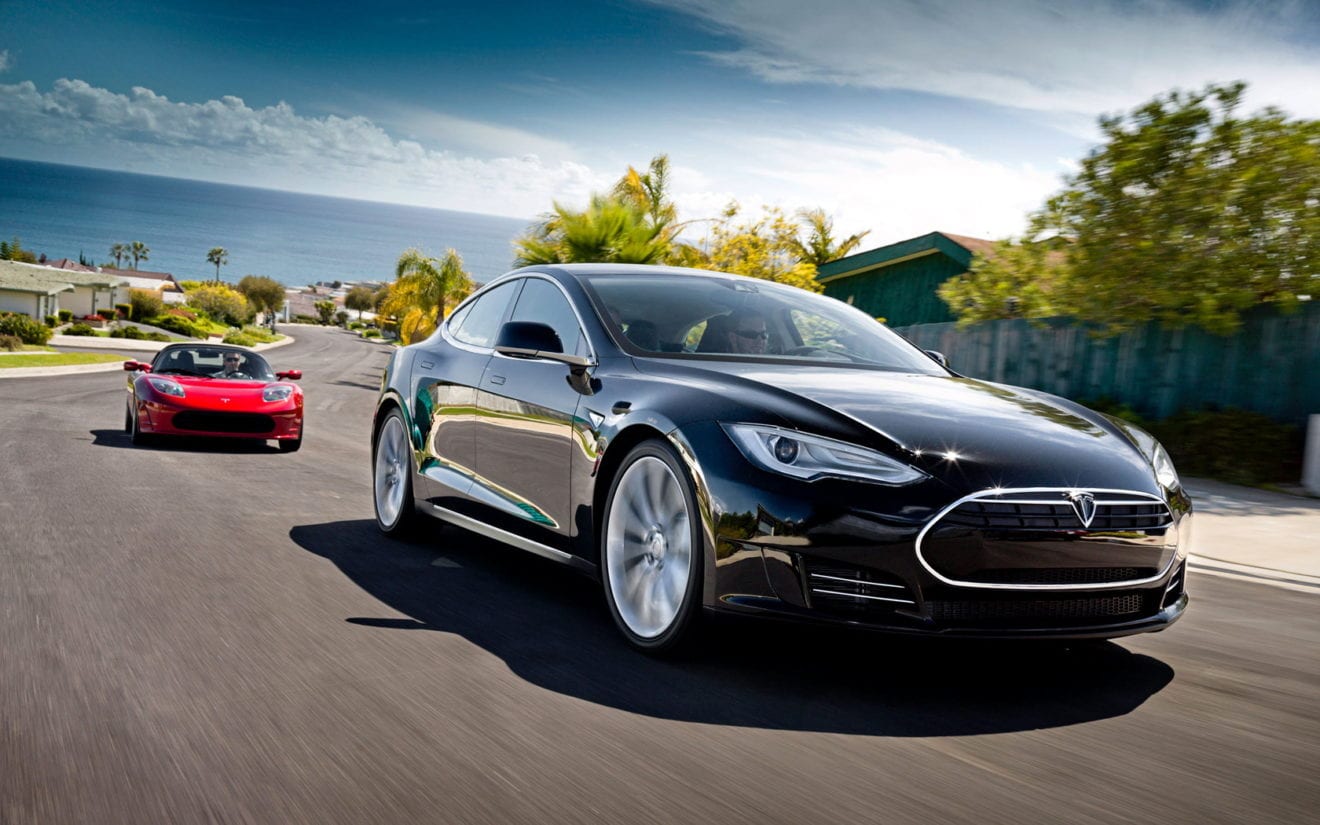
    The country’s best-selling car in 2019 was Tesla’s mid-sized Model 3 sedan, which retails from 384,900 Norwegian crowns ($43,721.74), racking up an 11% market share in the California-based firm’s first attempt at cracking the mass market.

    Rising global awareness of climate change has encouraged a shift in regulation, technology and consumer preferences, disrupting the auto industry and boosting Tesla’s share price to make it one of the world’s most highly valued car brands.

    This year, the company will start producing a medium-sized sport utility vehicle, the Model Y, but faces competition from a plethora of rivals, including by Daimler AG’s Mercedes-Benz, VW’s Audi and Ford Motor Co.

    “There will be between 20 and 30 new electric models on the market in 2020, many of them launching early in the year,” the Norwegian Electric Vehicle Association said in a statement.

    Ford late last year unveiled the Mustang Mach-E SUV, which it hopes will help turn around its flagging fortunes.

    “It will compete with Tesla’s models 3 and Y. I also think Audi e-tron is a big competitor. The customers have waited for this car for over two years,” said Kjetil Hagestande, chief executive of Ford importer RoehneSelmer.

    “This amazing car with four-wheel drive and long range fits the Norway market perfectly,” Hagestande told Reuters on the sidelines of the Mach-E launch in November.

    Also aiming for a slice of Norway’s market is China’s Geely group, whose Polestar and Volvo brands will begin producing fully electric cars this year.

    In October, Polestar opened its first European showroom in Oslo’s most upmarket shopping district, rubbing shoulders with fashion designers rather than with rival auto makers.

    “I’m here to consider a new car because my wife already has her second electric car, a Hyundai,” said Espen Cook, a retired IT worker, on a recent visit to the Polestar venue.

    “Two months ago I sold my hybrid Lexus so I would like to go full electric,” the 70-year-old told Reuters.

  • Tesla Reports Solid Q4 Auto Deliveries, Boosting Shares

    Tesla Reports Solid Q4 Auto Deliveries, Boosting Shares

    Tesla reported Friday a jump in fourth-quarter auto deliveries, lifting shares as it ramps up output in the United States and China.

    The electric automaker led by Elon Musk delivered 112,000 vehicles in the quarter ending December 31, up about 23 percent from the year-ago period.

    The figures boosted full-year deliveries to 367,500, 50 percent above the 2018 level and in line with company forecasts.

    The solid figures come four days after Tesla delivered its first batch of China-made cars from its new multibillion-dollar Shanghai “Gigafactory”.

    Tesla touted its speedy completion of the China plant, saying Friday it has already produced just under 1,000 “customer salable cars” in China “despite breaking ground at Gigafactory Shanghai less than 12 months ago.”

    After a series of controversies surrounding Musk in 2018, including a quickly-aborted effort to take the company private, Tesla hit key targets in 2019 in the critical ramp-up of the Model 3 vehicle.

    Tesla shares have risen to all-time highs, and fewer investors are betting on a decline.

    Canaccord Genuity analyst Jed Dorsheimer on Thursday lifted his price target for the company in a note that predicted that sales in China “will be an important driver for the company in 2020.”

    Shares of Tesla rose 3.8 percent to $446.51 in mid-morning trading.

  • Vingroup airline expects profits in 3 years

    Vingroup airline expects profits in 3 years

    Vingroup’s Vinpearl Air, a $200 million venture, is seeking to launch its first flight in July with expectations of turning profitable by 2023.

    The new airline could also recover its investment in 5-6 years, according to an evaluation report recently submitted to the Prime Minister by the Ministry of Planning and Investment.

    The airline will have a total investment of VND4.7 trillion ($202.7 million), of which conglomerate Vingroup will contribute VND1.3 trillion ($56 million), or 28 percent. The remaining will be sourced from loans and other sources.

    Vinpearl Air is set to create 500-600 direct jobs when launched and 2,200-2,300 jobs by 2023-2024.

    It will pay a corporate income tax of VND1 trillion ($43.1 million) a year in the first five years of operation.

    Vinpearl Air plans to start off with six aircraft and increase the fleet to 30 by 2024.

    It wants to be based at the Noi Bai International Airport and park its aircraft in Hanoi as well as in other airports in Quang Ninh Province and Hai Phong City in the north, and Da Nang City and Khanh Hoa Province in the central region.

    The Ministry of Planning and Investment has said it supports the establishment of the airline, but asked the airline to provide more detailed financial calculations.

    Apart from Vinpearl Air, Vietravel Airlines and KiteAir are two other airlines seeking permission to fly this year.

    The country now has five commercial airlines: national flag carrier Vietnam Airlines, Jetstar Pacific, Vietjet Air, Bamboo Airways and Vietnam Air Services Company (VASCO).

    Airports across Vietnam served near 116 million passengers in 2019, up 12 percent from 2018, according to Airports Corporation of Vietnam (ACV).

  • Vietnam to buy 1.5 billion kWh of power annually from Laos

    Vietnam to buy 1.5 billion kWh of power annually from Laos

    State power utility EVN will buy around 1.5 billion kWh of electricity a year from Laos for two years starting in 2021.

    Under contracts it signed on Saturday, Vietnam Electricity (EVN) will buy over 596 million kWh a year from two hydropower plants belonging to Phongsubthavy Group and 632 million kWh from two plants belonging to Chealun Sekong Group from 2022.

    From 2021 it will start buying 263 million kWh annually from another plant belonging to the latter company.

    The import was approved by the Vietnamese government to mitigate power shortages predicted to hit the country from this year.

    The Ministry of Industry and Trade estimates shortages of 3.7 billion kWh in 2021 and nearly 10 billion kWh the following year.

    2023 will be the most stressful with the shortage expected to be around 15 billion kWh. From then on it will decrease, with the shortage expected to come down to 7 billion kWh and 3.5 billion kWh in 2024 and 2025 respectively.

    The industry ministry has said not more than 5-8 percent of electricity can be conserved, and the only way out is to import more from Laos and China.

    But buying from neighboring countries is only a band-aid solution, and in the long run it is necessary to speed up work on large power generation projects, it stated.

  • Daimler Recalls 744,000 Mercedes-Benz Vehicles In The US For Faulty Sunroofs

    Daimler Recalls 744,000 Mercedes-Benz Vehicles In The US For Faulty Sunroofs

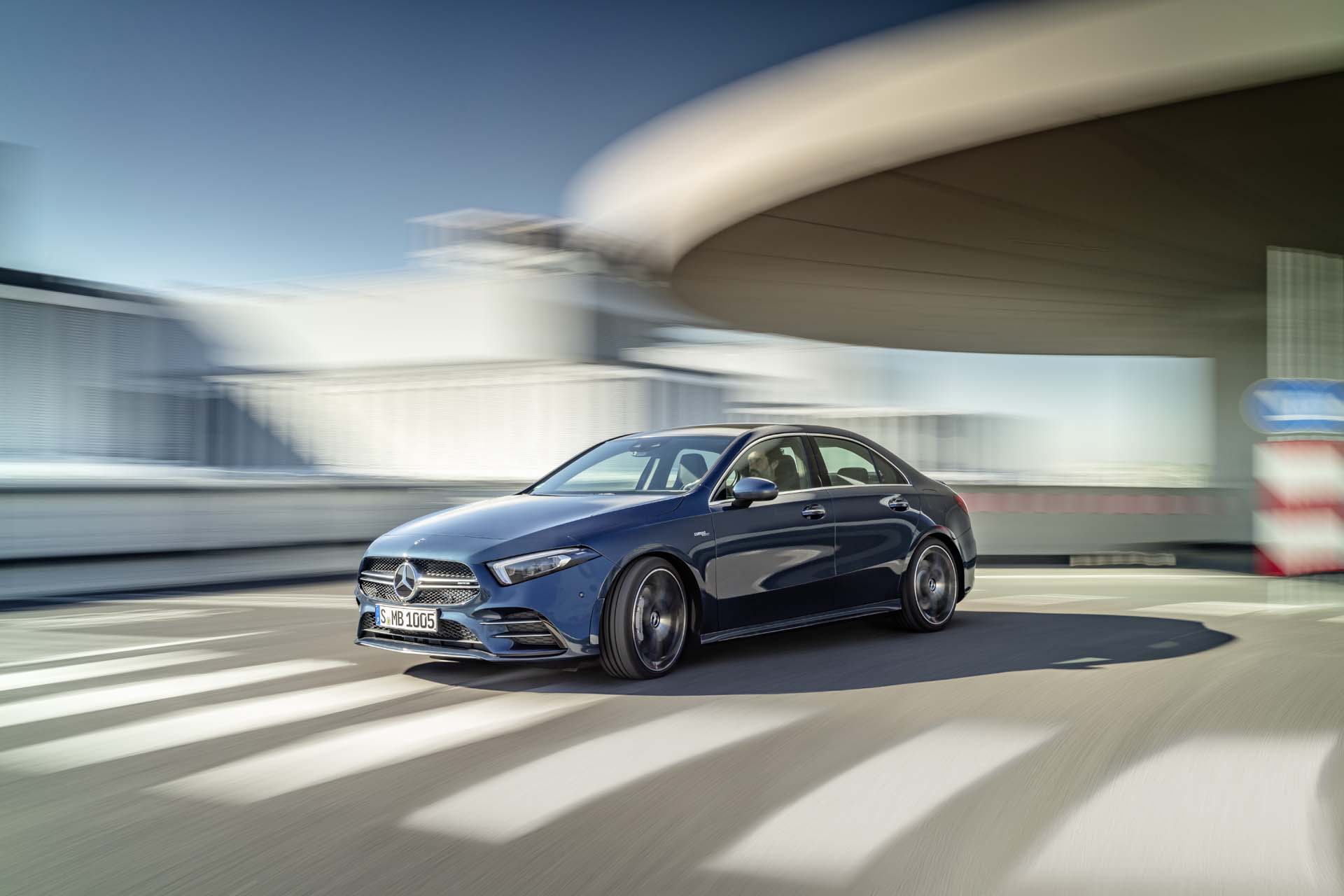
    German automaker Daimler AG said on Saturday it will recall 744,000 Mercedes-Benz vehicles in the United States from the 2001 through 2011 model years because the sunroof glass panel could detach and pose a hazard. The large recall covers more two dozen vehicles from C-Class, CLK-Class, CLS-Class and E-Class model lines. The automaker said the bonding between the glass panel and the sliding room frame might not meet specifications and could lead to sunroofs detaching.

    Owners who paid for repairs for the issue will be able to seek reimbursements from Daimler. A Mercedes-Benz USA spokesman said on Saturday he did not have a worldwide vehicle total for the recall.

    Dealers will inspect the glass panel bonding and replace the sliding roof if necessary, the company said.

    Last month, Mercedes-Benz USA agreed to a $20 million civil penalty over its handling of U.S. vehicle recalls after a year-long U.S. government investigation into 1.4 million recalled vehicles.

    Under the terms of the settlement, the automaker will pay $13 million and faces another $7 million fine if it does not comply with the agreement. The U.S. National Highway Traffic Safety Administration said the company failed to notify owners in a timely fashion in some recalls, did not submit all reports and did not launch at least two recalls in a timely fashion.

  • Volkswagen Starts Settlement Talks With German Consumer Groups Over Diesel Scandal

    Volkswagen Starts Settlement Talks With German Consumer Groups Over Diesel Scandal

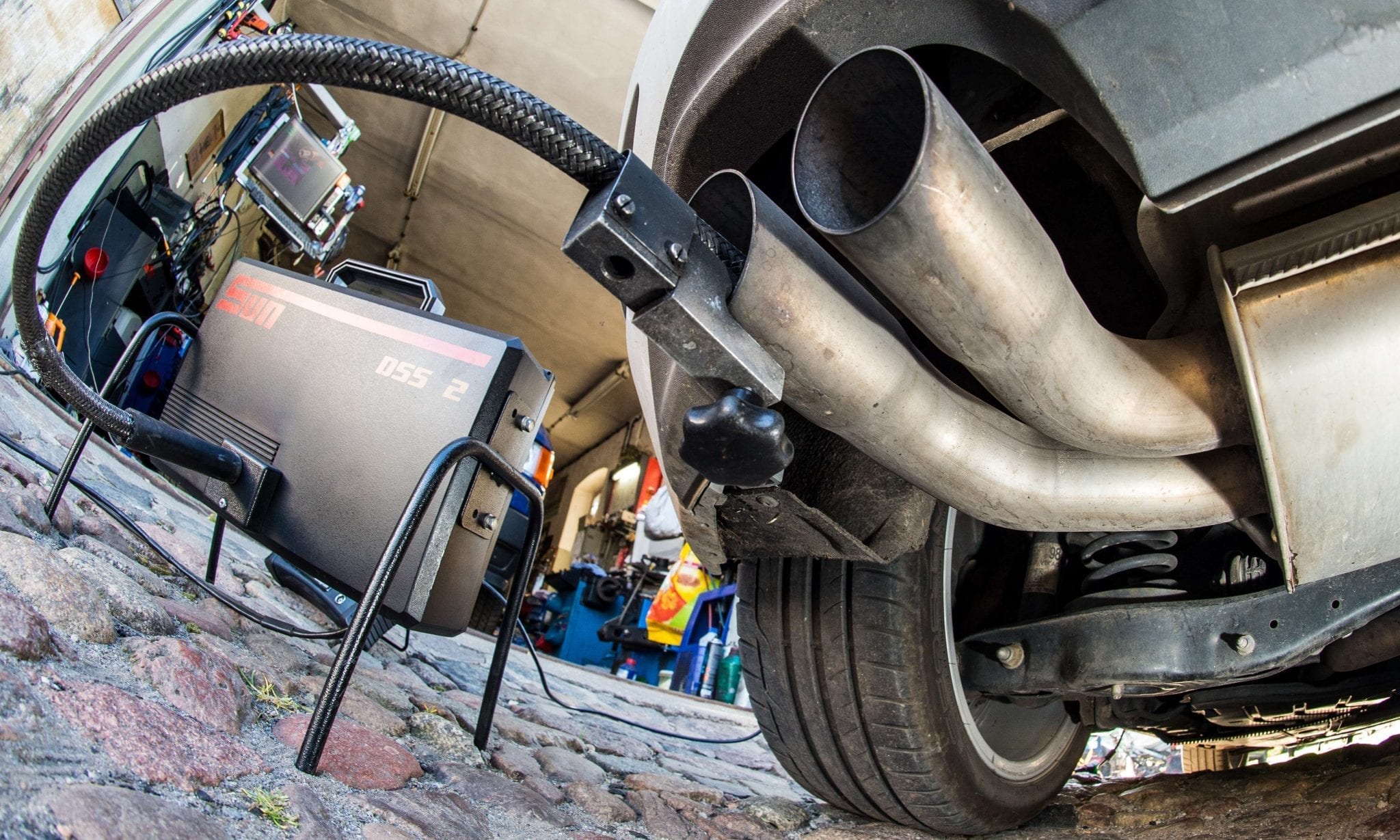
    Volkswagen on Thursday said it was in talks to discuss a settlement with German vehicle owners who are suing the carmaker over excessive pollution caused by VW’s diesel cars. In 2015 the carmaker admitted to using manipulated engine management software to mask excessive pollution levels in its diesel cars, sparking a raft of prosecutions and lawsuits that have led to at least 30 billion euros in legal costs and fines.

    “Volkswagen and the Federation of German Consumer Organisations have agreed to enter into discussions regarding a possible settlement,” the carmaker said.

    “The discussions are at a very early stage, and there is no guarantee that they will result in a settlement. Both parties have agreed that the discussions should remain confidential.”

    German consumers have had less success than vehicle owners in the United States in securing compensation from VW because German cars did not lose their road worthiness certification in the wake of the diesel scandal.

    In Germany VW’s diesel vehicles retained their road worthiness certification if customers agreed to an update of vehicle engine management software, leading VW to take a different approach to compensate consumers.

  • 2020 Lamborghini Huracan Evo Rear-Wheel Drive Breaks Cover

    2020 Lamborghini Huracan Evo Rear-Wheel Drive Breaks Cover

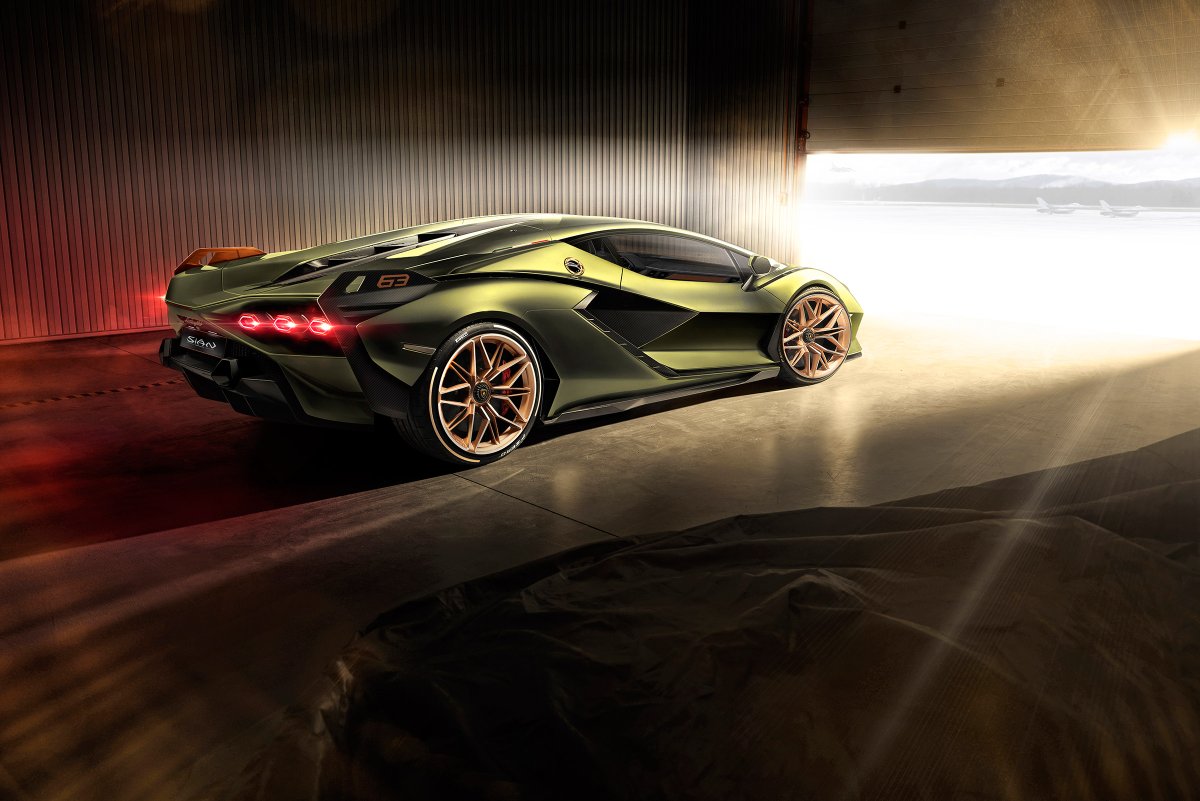
    It’s hard to think about how can the Huracan be more engaging for the driver without losing control. Lamborghini seemed to have a similar thought very recently and has introduced an unfiltered, unadulterated version of the supercar with the new Huracan Evo rear-wheel drive. The new Lamborghini Huracan Evo RWD is the newest addition to the Huracan family and keeps that Italian bull only on its hind legs. Admittedly, the Huracan Evo RWD makes less power than the AWD version with the 5.2-litre naturally aspirated V10 belting out 594 bhp, about 29 horses less than the standard Huracan Evo. However, what it promises is a lot of sideways action.

    Essentially, the 2020 Lamborghini Huracan Evo RWD is the no-frills edition of the two-door coupe, which in Italian supercar speak means “more fun.” So, the car misses out on the front axle, the rear steering and gets a power cut. There are some nifty additions though that aim to make the driving experience more seamless and exhilarating. This includes the new P-TCS or Performance Traction Control System that is unique to the 2020 Huracan Evo RWD and lets you slide and skate during acceleration, according to the manufacturer. Lamborghini also says that P-TCS never cuts torque abruptly. Instead, it will feed extra torque before the car gets into a slide and then will back off more gently, in the Sport mode. The system will also allow the car to exit corners more quickly in the Corsa mode, lending more control to the driver.

    Compared to the older Huracan LP580-2, the new Huracan Evo RWD gets about 30 per cent oversteer, as per Lamborghini’s proprietary fun calculator. The car weighs 1389 kg, which is lighter than the AWD version and has a top speed of 3.3 seconds. Visually, the 2020 Lamborghini Huracan Evo RWD is difficult to distinguish from the standard versions but take a hard look and you’ll find a new front splitter and fins in the front intakes while a new diffuser is visible at the rear. The car also wears its own shade of yellow – Giallo Belenus but can be ordered in a plethora of colour and leather options to match your taste.

  • Musk Defies Skeptics, Meets Tesla Delivery Goal

    Musk Defies Skeptics, Meets Tesla Delivery Goal

    Tesla Inc beat Wall Street estimates for annual vehicle deliveries and met the low-end of its own target, sending shares to a record high in a vindication for Chief Executive Elon Musk after a few turbulent years. Boosted by demand for its mass-produced Model 3 sedans as overseas sales pick up, Tesla on Friday said it delivered 112,000 vehicles in the fourth quarter, including 92,550 Model 3s and 19,450 Model S/X SUVs, which was above expectations of 104,960 vehicles, according to IBES data from Refinitiv. The Silicon Valley carmaker delivered approximately 367,500 vehicles during all of 2019, just meeting the low end of its target to deliver 360,000 to 400,000 vehicles in 2019.

    Tesla shares were up as much as 5.5% at $454, touching a record high.

    The stock has had a strong run in recent months after posting a rare profit in the latest quarter and news of China ramp up. With a market valuation of more than $80 billion, Tesla is far outstripping those of traditional carmakers General Motors Co (GM.N) and Ford Motor Co (F.N).

    The delivery results defy skeptics of Musk, whose mercurial behavior over the last two years came under close scrutiny from federal regulators and shareholders of Tesla.

    Musk, who has more than 30 million Twitter followers, has a history of firing off tweets that resulted in an investigation by the U.S. Securities and Exchange Commission and a defamation trial against him.

    The Tesla CEO settled the SEC complaint for $20 million in 2018 and a Los Angeles jury cleared Musk in the defamation case in December.

    “Elon has Tesla executing right on track,” said Roth Capital Partners analyst Craig Irwin.

    Tesla also provided an update on its Shanghai factory, which has started churning out Model 3 cars. It said the plant demonstrated a production run-rate capability of more than 3,000 units per week.

    The run-rate shows that the factory appears to be ramping faster than expected, Baird Equity Research analyst Ben Kallo said. “Shanghai deliveries should be the next catalyst to drive volume growth.”

    The $2-billion factory, Tesla’s first car manufacturing site outside the United States, is the centerpiece of its ambitions to boost sales in the world’s biggest auto market and avoid higher import tariffs imposed on U.S.-made cars.

    A company representative on Thursday said that Tesla will deliver its first China-made Model 3 sedans to the public on Jan. 7.

    The Model 3 is Tesla’s most affordable car, with lower-range versions available starting at $35,000.

    Analysts in the past have questioned how rapidly Tesla’s vehicle sales will grow as government subsidies for electric vehicle purchases dwindle in the United States, China and other markets. Some analysts consider those subsidies the biggest driver for Tesla purchases.

    Traditional automakers largely relying on fuel-powered vehicles on Friday reported a decline in fourth-quarter U.S. sales and saw their shares tumble as a widening conflict with Iran pushed oil prices more than $2 a barrel on Friday.

    Fiat Chrysler Automobiles NV on Friday said it saw a 2% fall in U.S. auto sales, while GM reported its fourth-quarter U.S. deliveries were down more than 6%.

    “The recently escalating geopolitical uncertainties driving oil prices higher are likely to create a tailwind for TSLA shares,” Canaccord Genuity analyst Jed Dorsheimer said.

  • Chinese Firms Vie for Singapore Digital Bank Licenses

    Chinese Firms Vie for Singapore Digital Bank Licenses

    Several Chinese fintech firms have submitted a bid to the Monetary Authority of Singapore to operate a digital bank in the city-state.

    By the application deadline on Tuesday, Chinese firms that submitted bids for a digital banking license in Singapore included Bytedance, which operates viral video sharing application TikTok, Yillion Group and Hande Group, which applied as part of a consortium with Singapore wealth management fintech platform iFast Corporation, and the country’s largest online financial platform Ant Financial.

    All three are applying for a digital wholesale bank license, according to several media reports this week. There are up to five licenses on offer – two for full digital banks, and three for digital wholesale banks, in which foreign firms can hold majority stakes and the capital commitment is S$100 million.

    We look forward to contributing to the development of the digital banking landscape in Singapore, Ant said, citing an emailed statement.

    For iFast, a license in Singapore would allow it to «bring solutions to the small and medium-sized enterprises (SME) market that has been underserved by bank,» CEO and chairman Lim Chung Chun told «The Business Times» reported on Thursday.

    Other firms that have entered the fray include a consortium led by Singapore gaming firm Razer and Grab, which submitted a joint bid with Singtel.

  • Singapore Fintech Eyes Middle East

    Singapore Fintech Eyes Middle East

    The acquiring business in Dubai is one of the first initiatives the firm has in the pipeline for the Middle East.

    MoovPay has entered into a global’s exclusive partnership with China’s UnionPay International (UPI) for cross-border cashless payment services in the Middle East, the firm announced in a press release on Wednesday.

    As part of the agreement, businesses in the Arab world will be able to use UPI’s range of payment methods, which are commonly used in China, to make payments through MoovPay’s online payment solutions.

    «Our Dubai office will serve as a bridge between the Middle East and Asia Pacific, as well as a springboard for expansion into Europe, helping European merchants tap into both the Middle East and Chinese markets, particularly in e-commerce and mobile applications,» Moovpay CEO Ryan Gwee said about the firm’s ambitions in the region.