Author: Mei Ling Tan

  • Uber Submits Appeal To Regain London Taxi License

    Uber Submits Appeal To Regain London Taxi License

    Uber submitted an appeal on Friday against a decision by London’s transport regulator to strip the taxi app of its right to operate in one its most important markets, setting up a potentially lengthy legal process during which it can continue to take rides. Last month, Transport for London (TfL) refused to grant the Silicon Valley-based company a new license due to what it called a “pattern of failures” on safety and security, the latest stage of a long-running battle with the authorities.

    Uber, which was also denied a license by TfL in 2017 before a judge restored it on a probationary basis, said it had changed its business model over the last two years and would go further, as it lodged its appeal at Westminster Magistrates’ Court.

    “We are committed to Londoners and are working closely with TfL to address their concerns and requests, as we have since 2017,” said the firm’s Northern and Eastern Europe boss Jamie Heywood. TfL director Helen Chapman said it would now be for a magistrate to decide.

    “We found Uber not fit and proper to hold a new private hire operator’s license on 25 November,” she said in a statement. “We note that Uber has submitted an appeal and it will now be for a magistrate to determine if they are fit and proper.”

    The firm’s roughly 45,000 drivers in London will still be able to take rides until the appeals process is exhausted, which could take months or even years.

    The regulator said in November that unauthorized drivers were able to upload their photos to other Uber accounts so that on at least 14,000 trips a driver other than the advertised one picked up passengers.The Silicon Valley company has run into regulatory barriers and a backlash in several markets, forcing it to withdraw completely from places such as Copenhagen and Hungary.

    In London, black cab drivers who see Uber as a threat to their livelihoods have blocked streets in protest, arguing that they are being unfairly undercut by an inferior service.

  • Audi Introduces 25 Years Anniversary Package For RS Models In Europe

    Audi Introduces 25 Years Anniversary Package For RS Models In Europe

    Audi is celebrating 25 years of its RS models and has announced an exclusive package for its performance models. Audi has released an exclusive equipment package for the Audi TT RS Coupe, RS 4 Avant, RS 5 Coupe, RS 5 Sportback, RS 6 Avant and the RS 7 Sportback models. It was the RS 2 Avant that kicked off things for Audi in the hot performance segment back in 1994 and every RS model gets some elements both on the outside and inside which are inspired by the RS 2 Avant.

    The anniversary package includes a matt aluminum look with gloss black for the exterior of all models, a front blade for models like the RS 4, RS 5, RS 6, and RS 7*, as well as the inlays in the side sills. The horizontal web of the rear diffuser also features a matt aluminum look. Moreover, the four rings, RS logos and wing mirrors along with the rear wing of the TT RS Coupe are finished in gloss black. An exclusive RS anniversary logo showing the number “25” is projected onto the ground when the doors are opened and is also featured on the hub cap. The wheels itself are designed in a two-color look featuring silver and gloss anthracite.

    The interior is also inspired by the iconic RS 2. The cabin is finished in all black an there are cobalt blue accents in Alcantara on the piping of the floor mats and the 12 o’clock marking on the steering wheel rim. The RS sport seats with a honeycomb pattern in the TT RS, RS 4, and RS 5 are draped in Nappa leather with seat center panels in Alcantara, just like the very first RS 2 Avant had back in the day. The seat upholstery of the RS sport seats in the RS 6 and RS 7 is finished in perforated Valcona leather. A special touch on the inside is the ’25 years’ logo on the shoulder area of the seats, floor mats, and the door trim panels. The anniversary package has only given cosmetic updates to the RS models and mechanically they remain unchanged.

  • Ankur Garg appointed as chief commercial officer at AirAsia India

    Ankur Garg appointed as chief commercial officer at AirAsia India

    AirAsia India on Sunday announced the appointment of Ankur Garg as its chief commercial officer (CCO), a role in which he will be in-charge of areas such as network and revenue management, marketing and sales, and cargo.

    Garg had quit as the vice-president of revenue management at IndiGoNSE -1.82 % a few weeks back. “Ankur Garg takes over from Mr Sanjay Kumar, AirAsia India’s Chief Operation Officer (COO)…Garg will report to Sunil Bhaskaran, MD and CEO, AirAsia India,” the airline said in a statement.

  • Japanese airline ANA uses avatar robots to let customers shop remotely

    Japanese airline ANA uses avatar robots to let customers shop remotely

    Japanese airline ANA has opened a pop-up shop equipped with avatar robots that enable customers to shop remotely.

    ANA said it’s pop-up at Coredo Muromachi 3 shopping mall in Nihonbashi which will remain open until December 24, is fitted with stick-shaped robots called ‘Newme’. Through the robots, shoppers will be able to browse and buy products as if they were physically at the shop.

    Online registration is required to be able to use the avatar in-store and all purchases will be shipped and delivered to the address provided at registration.

    “With its potential to increase connectivity and help people forge long-lasting bonds no matter the distance between them, avatar technology is well-aligned with ANA HD’s core values,” said Kevin Kajitani, ANA avatar division co-director.

    “Avatar technology is a significant component in our plans to help create ‘Society 5.0’, a world where interactions with technology and other humans are seamless and intuitive. Instead of supplanting the human connection, avatars will make it deeper and create a whole new range of experiences that were never possible before,” he added.

    Once the pop-up shop ends, shoppers will be able to continue to use the avatar technology as ANA plans to deploy 100 Newme avatar robots across Nihonbashi including department store Isetan Mitsukoshi and Mitsui Fudosan ́s retail properties next year.

    The use of avatar technology across Nihonbashi is part of the district’s broader ‘Nihonbashi Revitalisation Plan Stage 3’ project, a joint public-private-community initiative aiming to preserve its unique heritage while promoting modernization through technology and urban development.

    ANA will also deploy avatar robots to workplaces such as at X-Nihonbashi, which provides multipurpose venues and workspaces. The robots will allow for full-remote participation that goes beyond traditional teleconferencing, the company says.

  • E-Land shutters stores as profit tumbles

    E-Land shutters stores as profit tumbles

    South Korean retail giant E-mart is closing loss-making specialty stores as it responds to falling sales in a gloomy retail market.

    After closing outlets in its discount Pierrot Shopping network in July, the company is now looking at trimming the network further.

    “We’re considering closing the Pierrot Shopping store in Myeong-dong in order to enhance the profitability of specialty stores,” an E-mart official told The Korea Times.

    The company has also closed 18 out of its 33 Boots health & beauty stores and the Pangyo branch of its technology-retailing chain Electro Mart.

    E-Land launched Boots under license in 2017 to take on CJ Group’s market-leading chain Olive Young, but the brand has made a little impact to date.

    E-mart’s profit fell from 194.6 billion won (US$166 million) in the third quarter of last year to 116.2 billion won ($97.2 million) in the same period this year.

    Analysts predict incoming CEO Kang Heui-seok will continue to rationalize store networks and focus on the group’s burgeoning online business SSG.com.

    “E-mart will accelerate is business transformation under Kang’s leadership, as the CEO has extensive retail experience and ability to drive growth” an HI Investment & Securities analyst told The Korea Times.

    “The company will seek to recover its profitability by minimizing unprofitable businesses and focusing more on the online sector, SSG.com.”

  • Singapore’s Home-Fix hardware chain shutters its last stores

    Singapore’s Home-Fix hardware chain shutters its last stores

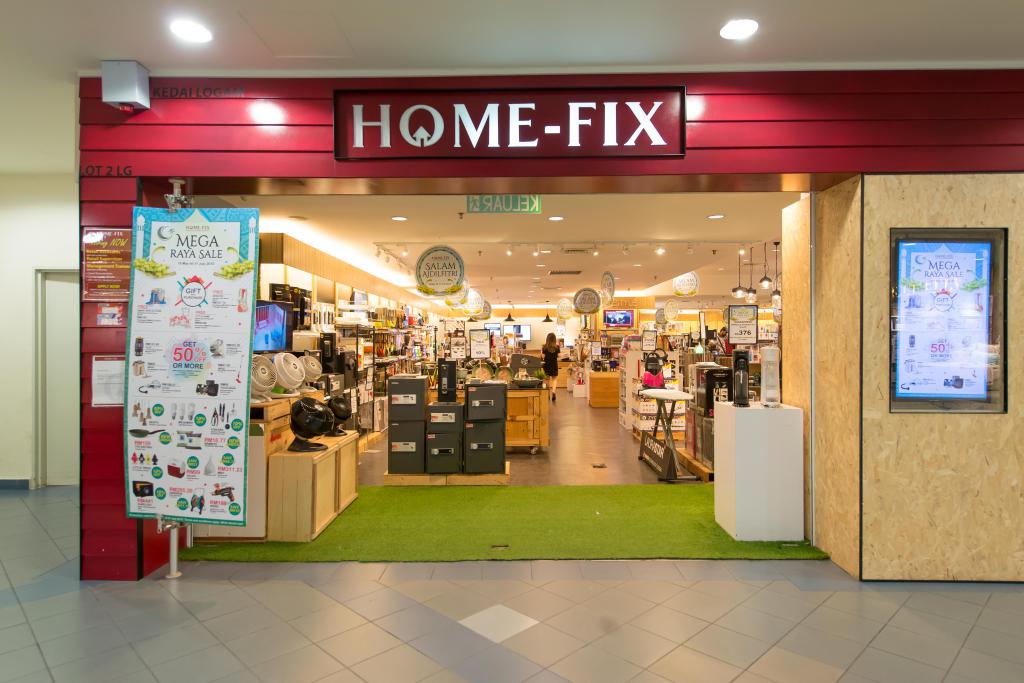
    Singapore hardware chain Home-Fix is closing its last physical stores this week as it restructures under interim judicial management.

    The home-grown chain was founded in 1993 and once had 20 stores across the city-state, but by the end of this weekend will have only an e-commerce site left, a victim of changing retail environment and price-focused rivals on and offline.

    Home-Fix has debts of almost S$20 million (US$14.8 million), however, local media report that the managers are endeavoring to refinance debts.

    The Straits Times newspaper observed that Home-Fix has had to deal with “high mall rentals, competition from e-commerce and neighborhood stores that sell the same wares at lower prices and a sluggish economy”.

    The retailer’s last two stores are at Tanglin Mall and Tampines One. Stores in Novena Square and Compass One have repossessed earlier this year and stores at Great World City and Thomson Plaza – once its two best-performers – were forced to close when renovations decimated foot traffic.

    Home-Fix creditors told Business Times that the owners, brothers Low Cheong Kee and Low Cheong Yew, plan to revive the company by focusing on services such as training courses and home repairs instead of retailing.

  • 5G tops list of top 10 technology trends for 2020

    5G tops list of top 10 technology trends for 2020

    Juniper Research has revealed its top 10 technology trends for 2020, with 5G data network the standout.

    Other trends involve brands Huawei, Google and Netflix with the list rounded out by a strong warning for consumers.

    Juniper Research’s top 10 technology trends for 2020 are:

    1. 5G – Last-mile fibre rollouts will be replaced by 5G connectivity.
    2. OTT TV – Over-the-top television services will prompt advertising services to develop a functional attribution ecosystem to preserve marketing message channels for brand clients.
    3. Mobility as a Service – Open data in transportation will start to drive MaaS beyond Europe.
    4. Games – Subscription models will flourish in the games market, but ‘live’ elements will diminish in popularity.
    5. Netflix will have to seek out new sources of revenue growth as competition increases.
    6. Google will expand its Rich Communications Services in Europe.
    7. Google will leverage its newly acquired Fitbit division’s health credentials to mount a challenge to Apple Watch.
    8. Huawei’s ban will expand, resulting in uneven growth of the 5G network internationally.
    9. Robotics – Consumer robots will launch via subscription models.
    10. Voice Assistants – Security concerns will come to a head bringing trouble for smart-homes devices.

    Juniper says with the first commercial launches of 5G networks occurring this year, next year –  2020 – will be the one in which 5G connectivity starts to replace costly rollouts of fibre networks in remote areas.

    “We anticipate that the high bandwidth and throughput of 5G networks will provide a highly appealing and cost-effective alternative to the rollout of fibre,” said a Juniper spokesperson.

    Meanwhile, number two in Juniper’s top 10 technology trends for 2020 – the launch of new OTT (Over-the-Top) TV services will experience launches of functional advertising attribution systems that will align advertising closer to the wider digital advertising ecosystem.

    Juniper also believes that open-data initiatives will provide the perfect platform to expand the presence of MaaS (Mobility-as-a-Service) deployments outside of Europe.

    “We predict that increasing transparency between stakeholders will create new levels of efficiency for services launches in regions such as North America and Asia Pacific over 2020.”

  • What the new JD superstore says about the future of e-commerce

    What the new JD superstore says about the future of e-commerce

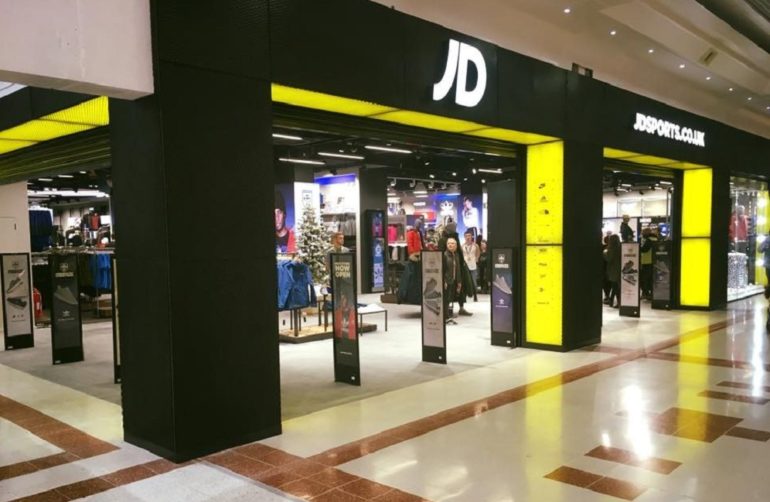
    On Singles Day this year, China’s largest online retailer JD.com launched a 50,000 sqm JD superstore in Chongqing, Mainland China.

    Nicknamed the E-Space store, the massive, 5G-equipped high-tech complex is designed to flex JD’s strengths in retail technology, logistics, and services.

    More than 30,000 customers crammed into the store, purchasing over 10 million RMB worth of products that day.

    A true omnichannel experience

    The E-Space store displays more than 1500 brands and 200,000 items across electronics, furniture, home appliances, and smaller categories such as health & wellness, beauty, books, and daily necessities.

    It is split into seven zones with 55 interactive experience zones, and smart robots designed to guide customers to the right area. This layout gives JD an opportunity to provide a unique offline retail experience that can’t be replicated online.

    For example, the store hosts Apple’s largest authorized offline experience store, a Microsoft smart home experience area, and GE’s first omnichannel home-appliances store in China. There’s a special floor designed for immersive virtual reality video games, and there are JD Home sections that display white goods appliances and furniture in different living scenarios.

    Such a store format is designed to give customers a better sense of what products would look like at home.

    To merge these experiences with its e-commerce business, JD has equipped each item’s price tag with a QR code that customers can scan to order online, through JD’s WeChat mini-program.

    These smart price tags are electronic, meaning that prices can be updated remotely to keep up with online price changes on JD’s e-commerce platform.

    Such an omnichannel model is important for large purchases such as washing machines and furniture, especially in lower-income cities such as Chongqing.

    Customers may be more hesitant to make these purchases as they might account for a large chunk of their monthly salaries. The customer journey is longer; shoppers might see a product in a store but wait several days or weeks to make a final decision.

    But with JD’s model, once that decision is made, the products can be delivered within 24 hours, complete with installment and repair services.

    In this sense, JD is providing multiple touchpoints between the merchant and the customer, as well as a full end-to-end service.

    This business model is designed to help JD differentiate from other retailers who may sell the same brand but lack the same capabilities in technology, logistics, and services.

    How the JD E-Space store fits into JD’s Boundaryless Retail Strategy

    Boundaryless retail is meant to be JD’s response to Alibaba’s New Retail strategy, leveraging technology, big data, and cloud computing to merge offline retail with online e-commerce, sharing data and traffic to provide an optimized omnichannel experience.

    The premise is that the typical marketplace e-commerce model where customers search for their products on a platform is seeing slowing growth.

    For future growth, players will have to look towards decentralized e-commerce, where new customers discover new products through online content partners and offline retail/experience centres. The E-Space store is just one example, but other examples include JD’s convenience store chain, its fresh fruit partner chain 7Fresh, and larger retailer partners such as Yonghui Superstores and Walmart.

    After hooking in new customers, JD can then upsell them using its online e-commerce capabilities. This is particularly important in China’s smaller cities where e-commerce is less prevalent and older users are less tech-savvy.

  • LightInTheBox sees strong third-quarter growth

    LightInTheBox sees strong third-quarter growth

    Beijing-based e-commerce retailer LightInTheBox achieved US$59.9 million sales in its third quarter to September, up 35 percent year on year.

    LightInTheBox said third-quarter net income was US$10 million, in contrast to a loss of US$17.8 million in the same quarter a year ago.

    Taking into account the change in fair value of the convertible promissory notes associated with the acquisition of Singapore-based e-commerce platform Ezbuy, net income stood at US$10.3 million.

    “Our results this quarter are a strong reflection of the significant progress we have made since we began implementing our strategy to turn the business around last year,” said CEO Jian He.

    The company attributed the strong growth to its focus on improving product optimization, driving customer engagement and expanding market scale.

    “We remain focused on executing our strategy to generate sustainable long-term growth and are very encouraged by our improvements to date. We will continue to implement our strategies in order to maintain the trend of improvement,” he added.

    The third quarter results have made the company’s outlook for the fourth quarter more bullish, expecting net revenue to rise up to US$75 million.

    LightInTheBox operates e-commerce sites including Light in the box, Mini in the box and Ezbuy.

  • Singapore retail sales down, but car market exaggerates the decline

    Singapore retail sales down, but car market exaggerates the decline

    Singapore retail sales – excluding motor vehicles – slipped by 0.6 percent year-on-year in October. Including vehicles, the headline figure was down 4.3 percent.

    Month-on-month, sales declined by 1.5 percent, excluding motor vehicles.

    Statistics Singapore estimated the city-state’s retail sales were worth about S$3.6 billion (US$2.7 billion) in October, of which about 6.1 percent were conducted online.

    The impact of car sales on the overall figure is clear: that sector declined by 22.7 percent in October, due to reduced government quotas for new vehicle registrations, while the second-worst performing category was furniture and homewares, down by 10.6 percent.

    Sales of optical goods and books fell by 2.4 percent, and of recreational goods by 6.9 percent.

    Conversely, sales of watches and jewelry industry increased 7.2 percent, largely attributed to higher demand for jewelry. Apparel and footwear sales, and trade at supermarkets, hypermarkets, mini-marts and convenience stores improved by between 1 percent and 4.7 percent.

    Food and beverage services

    Meanwhile, sales of food and beverage services grew by 4.5 percent year on year.

    The total sales value of food & beverage services in October 2019 was estimated at $893 million, compared to $854 million in October last year.

    Turnover by fast-food outlets, restaurants and cafes, food courts and ‘other eating places’ increased by between 3.3 percent and 7.9 percent.

    In contrast, sales by food caterers decreased by 1.5 percent during the period.

  • Muji loses Chinese trademark infringement case

    Muji loses Chinese trademark infringement case

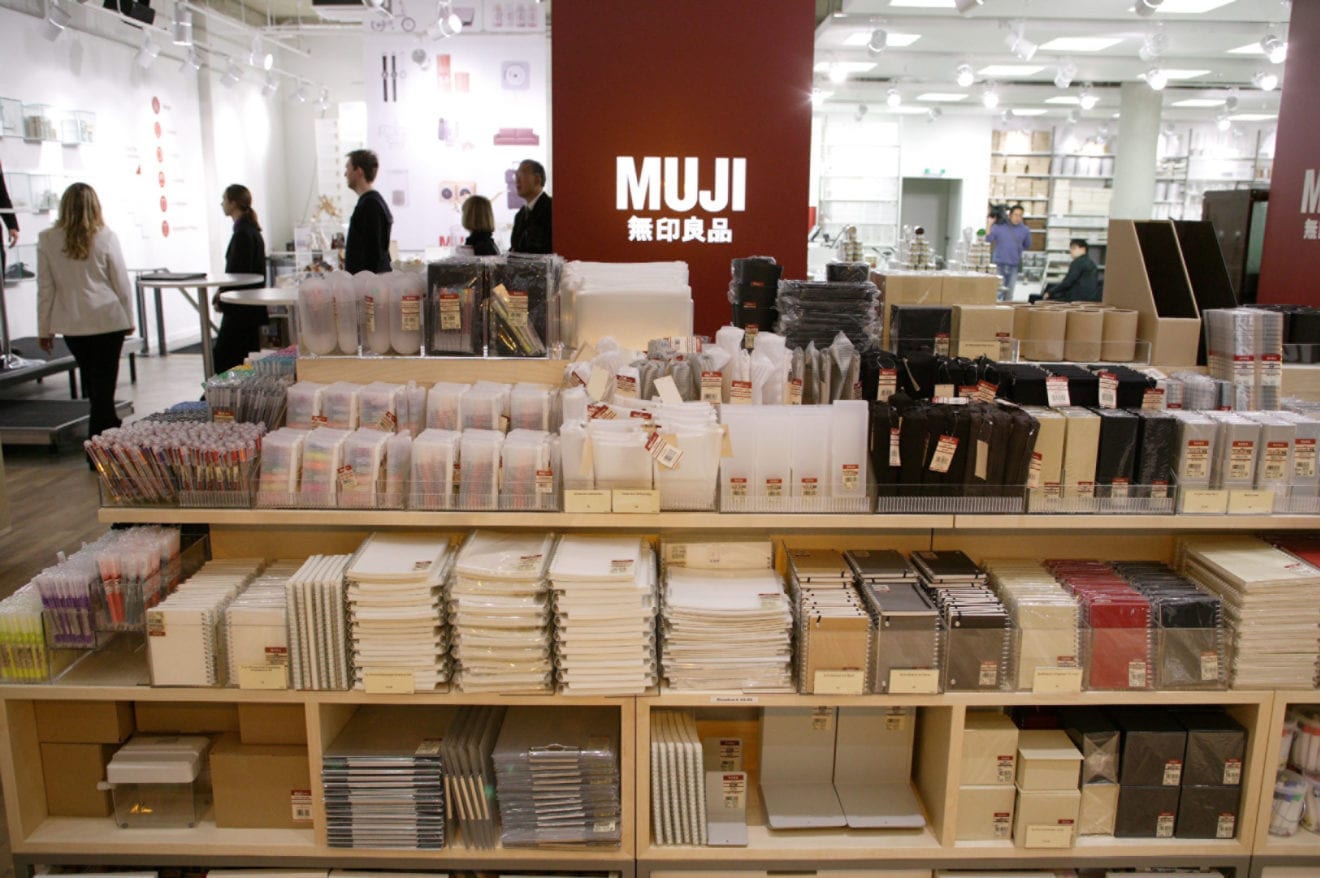
    A Chinese court has ruled Japanese retailer Muji must pay RMB626,000 (US$89,000) and apologize to a local firm after losing a trademark-infringement case, according to the South China Morning Post

    Muji had appealed a 2017 ruling finding against its use of a trademark currently held by Beijing Cottonfield Textile Corp, which was registered four years before Muji entered China, its largest market outside Japan. The Chinese characters in the trademark translate as “Unbranded, quality goods”.

    The phrase was owned by Cottonfield subsidiary Natural Mill. Muji was sued by Beijing Cottonfield and the trademark’s original owner Hainan Nanhua in 2015.

    China’s appeals court ruled against Muji this week saying “Beijing Cottonfield Textile Corp has the exclusive rights to the trademark… others may not infringe on that right without permission,” according to the South China Morning Post report.

  • 7-Eleven India plans 1000+ stores in Mumbai

    7-Eleven India plans 1000+ stores in Mumbai

    7-Eleven India is poised to launch in Mumbai, marking the first major international convenience-store chain to take on local players.

    Master franchisee Future Group’s founder and CEO Kishore Biyani said the firm will concentrate on development in Mumbai only for the initial few years of business, with the first outlets launching in March.

    “There will be a cluster of stores in Mumbai,” said Briyani in a Livemint report. “Only in Mumbai we can set up over 1000 stores… I don’t think we would be able to do anything beyond Mumbai for another two-three years.”

    Future has also recently partnered with a Japanese logistics expert Nippon Express who will help 7-Eleven develop a distribution network for perishable foods and groceries.

    “We will keep a lot of ready-to-eat Indian meals like dal-chawal, khichdi, poha, idli etc but it’s going to be fast eating,” Biyani told Livemint.

    “What 7-Eleven will bring in is technology and how to keep it fresh..there are going to be lot of in-house cooking as well, ” Biyani said

    7-Eleven operates more than 67,000 stores around the globe. Future Group operates 1440 stores in more than 400 cities under brands including Easy Day, Central, Big Bazaar and Nilgiri’s.

    In India, the chain will compete with local operators In&Out, Twenty Four Seven and J-Mart.

  • Chili’s Grill & Bar Vietnam launches in Ho Chi Minh City

    Chili’s Grill & Bar Vietnam launches in Ho Chi Minh City

    US chain Chili’s Grill & Bar has opened its first restaurant in Vietnam in partnership with local food-franchise operator Golden Gate Restaurant Group.

    Located at SC VivoCity mall in Ho Chi Minh City’s District 7, the new restaurant is the 1700th Chili’s outlet worldwide. The restaurant offers the same dishes as other Chili’s outlets internationally, following the original restaurant-bar concept inspired by Mexican & Texas cuisines.

    According to a spokesperson, the restaurant will target “middle-income customers”.

    Chili’s Grill & Bar Vietnam representative, David Weston, considers the country a key market in Asia as many international chains has chosen the country to make their regional debut.

    Founded in 2005, Golden Gate Restaurant Group now operates more than 20 restaurant chains across the country, including Cowboy Jack’s, Hutong, Manwah and Osaka Ohsho.

    Founded in Dallas, texas, in 1975, Chili’s is now owned by US-listed Brinker International restaurant group, and operates in 33 countries worldwide.

  • AXA Consortium Nets Student Housing Portfolio

    AXA Consortium Nets Student Housing Portfolio

    The acquisition aims to capitalize on the high demand for student housing in Australia, the third most popular country for international students.

    A joint venture comprising AXA Investment Managers – Real Assets, Allianz and APG have agreed to acquire Urbanest, a portfolio of student accommodation properties in four major Australian cities, AXA IM – Real Assets announced in a press release on Wednesday.

    The 14 properties, located in Sydney, Melbourne, Brisbane and Adelaide, have 6,805 beds, and will be operated by student accommodation manager Scape, which also manages the consortium’s Atira portfolio comprising 3,510 beds, which was acquired in September.

    «The sector has favorable demand drivers and growing institutional appeal, assets are tightly held and the barriers to entry are relatively high, particularly in Sydney, which makes this opportunity even more appealing,» Kumar Kalyanakumar, Head of Australia at AXA IM – Real Assets, said about the deal.

  • China Wants Macau as Financial Hub

    China Wants Macau as Financial Hub

    Beijing has directed state-owned banks and enterprises to help set up infrastructure in Macau to aid financial diversification, and to serve as a contingency plan if the situation in Hong Kong worsens.

    Two officials who helped develop the Shanghai stock exchange moved to Macau to help establish its yuan-based stock exchange, one of the sources told «Reuters». Chinese officials, and bankers in Hong Kong, say the push to develop financial infrastructure in Macau is part of a plan to avoid any major market disruption in Hong Kong that could impact Chinese businesses.

    The financial industry used to be an idea that we reserved for Hong Kong. We used to give all the favorable policies to Hong Kong. But now we want to diversify it, said one Chinese official who requested anonymity.

    The idea is not for Macau to replace or undermine Hong Kong but for China to have a contingency plan in case the situation in Hong Kong worsens, sources at Reuters added.

    The slew of new policies for Macau is aimed at diversifying the city’s casino-dependent economy into a financial center. Macau’s casino operators, which have been hit by slowing economic growth and the Sino-U.S. trade war could look forward to the development opportunities in Hengqin, casino executives who were interviewed said.

    Xi Jinping has made very clear that he wants a diversified Macau economy, said one Chinese official. The future focus will be on tourism and finance, to make it a center to host international meetings like Singapore.

    Besides establishing a yuan-denominated stock exchange and speeding up a yuan settlement center which is currently being developed, the policies will also be looking at land allocation in Macau. As part of that effort, Macau will be allocated more land on the mainland island of Hengqin to develop in areas such as education and healthcare.

    These policies also mark the 20th anniversary of the former Portuguese colony’s return to Chinese rule, as Xi plans a visit to Macau next week. There, Xi is expected to announce policies to further integrate Macau with mainland cities in the Greater Bay Area, the region around the Pearl River Delta that also includes Hong Kong, according to Chinese officials and Macau executives.