Author: Mei Ling Tan

  • China’s convenience-store market is booming business

    China’s convenience-store market is booming with rapid sales growth and rapid network expansion ahead.

    Sales through Chinese convenience stores reached US$19.78 billion last year, representing a compound annual growth rate (CAGR) of 24 percent over the past five years, according to new research from Mintel.

    Sales are predicted to grow to $22.75 billion this year and Mintel says there will be more than 117,000 convenience stores in China by 2024 – a huge increase from the 75,000 last year.

    “The convenience store sector has experienced double-digit growth, even at this challenging time for brick-and-mortar retail in China. This is due, in part, to consumers’ continuous pursuit of time efficiency, availability and instant fulfillment,” said Chih-yuan Wang, category research director, retail at Mintel Reports – China.

    She said to meet customers’ ongoing demand, convenience stores in China need to strengthen their social function and provide more types of the shopping experience, including launching themed stores and exclusive products by collaborating with different manufacturers and brands.

    The study shows that more than 61 percent of urban Chinese customers shop at convenience stores several times a week while more than 50 percent of respondents like to window-shop and eat inside convenience stores.

    Young and female consumers are more open to themed convenience stores, according to Mintel. More than half (54 percent) of urban Chinese respondents like convenience stores decorated in different themes.

    Meanwhile, 56 percent of Chinese respondents say that they like to try new products in convenience stores, skewed towards post-90s (62 percent) and female consumers (60 percent).

  • New Burberry store in Bangkok

    New Burberry store in Bangkok

    British fashion house Burberry in Thailand has opened a new store in Bangkok.

    The new venue, which features a fresh interior concept by designer Riccardo Tisci, is located at Central Embassy Mall.

    Burberry says the store’s design unveils a color palette of “white and pistachio complemented by fixtures and plinths constructed in a variety of materials and textures, from plywood to mirror and high-gloss finishes”.

    Burberry Central Embassy opens with the brand’s AW19 collection “Tempest” inspired by British culture and weather, as well as the house’s latest bag styles.

  • School House creates La Mer retail experience in Shanghai

    School House creates La Mer retail experience in Shanghai

    New York-based creative agency School House has partnered with cosmetics brand La Mer for its Edge of the Sea campaign exhibition at Shanghai’s Power Station of Art.

    The immersive, multi-sensory campaign activation is “designed to explore the joyful, powerfully truthful story of the sea and its role in discovery, healing and recollection,” according to School House.

    “This was the first international exhibition that School House has had the opportunity to conceptualize and produce,” said School House founder and principal Christopher Skinner. “It required us to bridge strategic thinking, retail experience and brand storytelling in a new way, for a new market.”

    Located within and upon the canvas of the Power Station of Art (home of the Shanghai Biennale), Edge of the Sea celebrates La Mer’s signature Creme de la Mer through immersive storytelling art. Inspired by the colliding force of two artistic lenses, the activation features a collaboration by father and daughter photographers Mario and Gray Sorrenti – across two generations and two perspectives, the Sorrentis have captured the impact of the sea and shore on our collective and individual imaginations.

    For the project, School House suspended a projection ring of Sorrenti content, in which consumers could pass through and sit within the 360-degree visual and audio sea-going memories of the father-daughter duo.

    Edge of the Sea opened October 9 and can be experienced through October 23 at Shanghai’s Power Station of Art.

  • Volvo Cars Aims To Be Carbon Neutral By 2040

    Volvo Cars Aims To Be Carbon Neutral By 2040

    Volvo Cars aims to reduce its lifecycle carbon footprint per car by 40 per cent between 2018 and 2025. This is in line with the company becoming a climate neutral company by 2040. The plan represents concrete actions in line with the global Paris climate agreement of 2015, which seeks to limit global warming to 1.5 degrees Celsius above pre-industrial levels. Volvo Cars’ 2040 ambitions is not just about tailpipe emissions or all-out electrification. It will also tackle carbon emissions in its manufacturing network, through its supply chain and through recycling and reuse of materials.

    As a near term step towards its 2040 ambition, Volvo Cars is implementing a set of ambitious, immediate measures in its efforts to reduce the company’s lifecycle CO2 footprint per car by 40 per cent between 2018 and 2025. At that point in time, the company also aims for its global manufacturing network to be fully climate neutral.

    To realise the significant 40 per cent reduction of its CO2 footprint per car by 2025, the company has devised a number of ambitions for different parts of its operations. The previously communicated goal of generating 50 per cent of global sales from fully electric cars by 2025 is a prominent one, which would result in a 50 per cent reduction in tailpipe carbon emissions per car between 2018 and 2025.

    Other short-term ambitions include a 25 per cent reduction of CO2 emissions related to its global supply chain by 2025, a 25 per cent share of recycled plastics in new Volvo cars by 2025 and a 25 per cent reduction of carbon emissions generated by the company’s overall operations, including manufacturing and logistics.

  • UBS Singapore Rainmaker Departs

    UBS Singapore Rainmaker Departs

    The Singapore-based firm offering end-to-end issuance, custody, and trading of digitized securities, has hired a banking and investment industry veteran as its first chief commercial officer.

    Singapore-based capital markets platform iSTOX has hired Choo Oi Yee as the firm’s chief commercial officer, to commence in January 2020, the firm announced in a press release on Thursday.

    Choo has spent more than two decades in banking, including six years at UBS, where she most recently was the lender’s managing director and head of Singapore corporate client solutions. She has also held senior roles at Morgan Stanley, Nomura Singapore and Parkway Holdings, according to her LinkedIn profile.

    In her new role, Choo will be responsible for driving the platform’s business growth and building its network of issuers and investors, the statement said, noting that iSTOX plans to grow its base of issuers and investors as it works towards graduation from MAS’s Fintech Regulatory Sandbox in early 2020.

    In September, the Temasek and SGX-backed firm hired former Monetary Authority of Singapore deputy director Lim Mei Shen as its chief compliance officer, saying it hopes to leverage her technical expertise and experience to build its position as a trusted and transparent capital markets platform.

    iSTOX shareholders include Singapore Exchange, Temasek Holdings subsidiary Heliconia, ICH Group and Kiatnakin Phatra Financial Group.


  • Tesla Gets Approval To Start Manufacturing In China

    Tesla Gets Approval To Start Manufacturing In China

    Tesla Inc was added to a government list of approved automotive manufacturers, China’s industry ministry said on Thursday, as it granted the electric-vehicle maker a certificate it needs to start production in the country. The list was published by the Ministry of Industry and Information Technology. This means “the green light is fully given to Tesla for production in China,” said Yale Zhang, head of the Shanghai-based consultancy Automotive Foresight. Tesla can start production any time, he said. Tesla did not immediately respond to an e-mailed request for comment. The $2 billion factories it is building in the eastern Chinese city of Shanghai is its first car manufacturing site overseas.

    Reuters reported earlier this month that Tesla plans to start production at its China factory this month. It is unclear when it will meet year-end production targets because of uncertainties around orders, labor and suppliers.

    Tesla intends to produce at least 1,000 Model 3s a week from the Shanghai factory by the end of this year, as it tries to boost sales in the world’s biggest auto market and avoid higher import tariffs imposed on U.S. cars.

    The factory, China’s first fully foreign-owned car plant, also reflects Beijing’s broader shift to open up its car market.

    Shanghai authorities have offered Tesla assistance to speed up construction, and China excluded Tesla models from a 10 percent car purchase tax on August 30, 2019.

  • Singapore’s First Blockchain Trade Financing Platform Launched

    Singapore’s First Blockchain Trade Financing Platform Launched

    CIMB Bank’s Singapore Branch and iTrust have launched Singapore’s First Blockchain Trade Financing Platform, and successfully completed their first structured trade financing transaction on the platform.

    The milestone transaction involves the financing of dairy products imported into China and is expected to generate transaction flows of up to $100 million a year, CIMB Bank said in a media statement on Thursday. iTrust provides secured real-time visibility of the cargo in transit and in the warehouse using blockchain-based IoT.

    Given the rapid technology shifts in the market today, we will continue to focus on digitalization and customer experience to transform the way we finance our corporate customers, thus adding value to our services. This blockchain trade financing with iTrust mitigates fraud risk, and alerts us of any unauthorized movement of the financed cargo, said Mak Lye Mun, CEO of CIMB Bank Singapore.

    All data and documents from the transaction are blockchain in a distributed ledger for provenance and immutability, the bank said. The technology provides all stakeholders with a secured operational dimension of the transaction, which was absent in the past. With iTrust’s security, transparency and visibility for the documents and cargo, CIMB hopes to mitigate risks associated with commodity trade financing and facilitate credit extension for their customers.

    Digitalization is gradually transforming financing. With iTrust, we have used blockchain-based IoT to provide insight into the physical world into a blockchain digital platform. We believe that the day will come whereby all lenders and borrowers would demand to have a secured real-time view of their cargo under financing on a secure and immutable blockchain platform like iTrust,» said Lim Chee Kean, CEO and co-founder of iTrust.

    As much as 80 percent of global flows of merchandise – worth about $9 trillion – is financed by some form of credit, guarantee or insurance, according to a global survey by the International Chamber of Commerce. Trade finance revenues were $39 billion in 2017. Yet, this $9 trillion business of financing global trade has only started to transact digitally.

    While some processes are already being digitalized and banks and commodity traders are experimenting with blockchain technology, paper documentation remains widespread and the risk of fraud elevated. In fact, forgers have become so adept at faking documents used by banks that going digital has become a necessity for the industry, according to OCBC, Southeast Asia’s second-biggest lender.

  • Vietnam considers more pork imports as prices surge

    Vietnam considers more pork imports as prices surge

    The government has asked the agriculture ministry to look into increasing pork imports as supply plunges and prices reach 3-year high.

    The order, signed by Deputy Prime Minister Vuong Dinh Hue, seeks to stabilize pork prices, which have been surging since earlier this month and are now at a 3-year high of VND60,000-70,000 ($2.6-3) per kilogram.

    Experts have also expressed concerns that the recent price surge follows increasing exports to China. In January-August the country exported $449 million worth of meat, up 3.6 percent year-on-year from 2018, mostly because of the rise in pork exports to China.

    Domestic supply has been falling since the African swine fever broke out in February and spread to all localities. Almost 5 million pigs have been culled because of the virus, the Ministry of Agriculture and Rural Development estimated.

    In January-September, pig stock in the country dropped 19 percent year-on-year, while pork supply fell 9 percent, according to the General Statistics Office.

    Vietnam, the world’s fifth-largest pork producer last year, is at risk of a 500,000-ton shortage of pork, or 20 percent of total demand, between July and next February, according to global market research firm Ipsos Business Consulting.

    In the first seven months, Vietnam imported $22.1 million worth of pork, 4.3 times that of the same period last year, according to the Ministry of Agriculture and Rural Development. Major import markets were Brazil, the U.S. and Poland.

    About 70 percent of all meat consumed last year in Vietnam was pork, according to the ministry.

  • Google Maps updated with new ways to report driving incidents

    Google Maps updated with new ways to report driving incidents

    Google has just announced that a new update is making its way to the Maps app on mobile. The update brings new ways for Google Maps users to report driving incidents and will be available globally starting this week.

    The most important change included in the update is the addition of a new ability that allows Maps users to report crashes, speed traps, and traffic slowdowns directly from their iPhones. The same features proved to be extremely popular among Android users, which is why Google has decided to bring it to iOS as well.

    The next major improvement is the ability to report four new types of incidents: construction, lane closure, disabled vehicles, as well as objects on the road. The new option lets Maps users know whether or not they’ll encounter one of these obstructions on their ride.

    If you stumble upon such an obstruction, the easiest way to reports with the new version of Google Maps is to simply tap on the + sign and then on “Add a report.” The update revealed today by Google will be rolled out globally on Android and iOS starting this week.

  • DHL Global Forwarding expands multimodal service to Indonesia

    DHL Global Forwarding expands multimodal service to Indonesia

    International freight service provider DHL Global Forwarding has launched a delivery service to tap into growing shipments from Indonesia to other parts of Asia.

    The service, called Asiaconnect+, officially launched in Jakarta on Tuesday, enabling regional shipments from Indonesia to Singapore, Malaysia, Thailand, or vice versa, using multimodal services combining air and road freight, instead of only air freight or ocean freight.

    “Asiaconnect has been connecting Malaysia, Singapore, Thailand, Vietnam, and China through a cross border network. Today, Indonesia is joining the network,“ said Bruno Selmoni, DHL’s head of road freight and multimodal ASEAN and South Asia during the launch of the new service.

    DHL first introduced the Asiaconnect network in 2011, which at that time connected Singapore, Malaysia, and Thailand through road freight.

    With Indonesia included in the network, shipping from many cities in Indonesia, such as Bandung, Balikpapan, Semarang and Lampung to Singapore, Malaysia, or Thailand will be pooled in Jakarta by air or truck freight first. Then, the goods will be transported to Singapore using air freight before they are transported by truck to a destination such as Kuala Lumpur, Penang, and Bangkok.

    “From Jakarta to Bangkok using DHL Asiaconnect+, for example, will take six days or two days slower [compared to when using air freight]. However, on the other side it comes with a lower price,” said Bruno.

    DHLBruno said with Asiaconnect+,  service for Jakarta – Bangkok shipments could cut logistics costs by 35 percent. Meanwhile, Jakarta to Kuala Lumpur will take four days using Asiacconect+,  one day slower than using air freight but is 32 percent cheaper than using air freight.

    DHL Forwarding Indonesia president director Vincent KC Yong said DHL’s decision to provide Asiaconnect+ was because the logistics company had seen demand for innovative logistics service with competitive costs for regional shipment. Especially since Indonesia’s focus is pushing exports and its biggest market for export in Asia.

  • David Jones opens first food store in Melbourne

    David Jones opens first food store in Melbourne

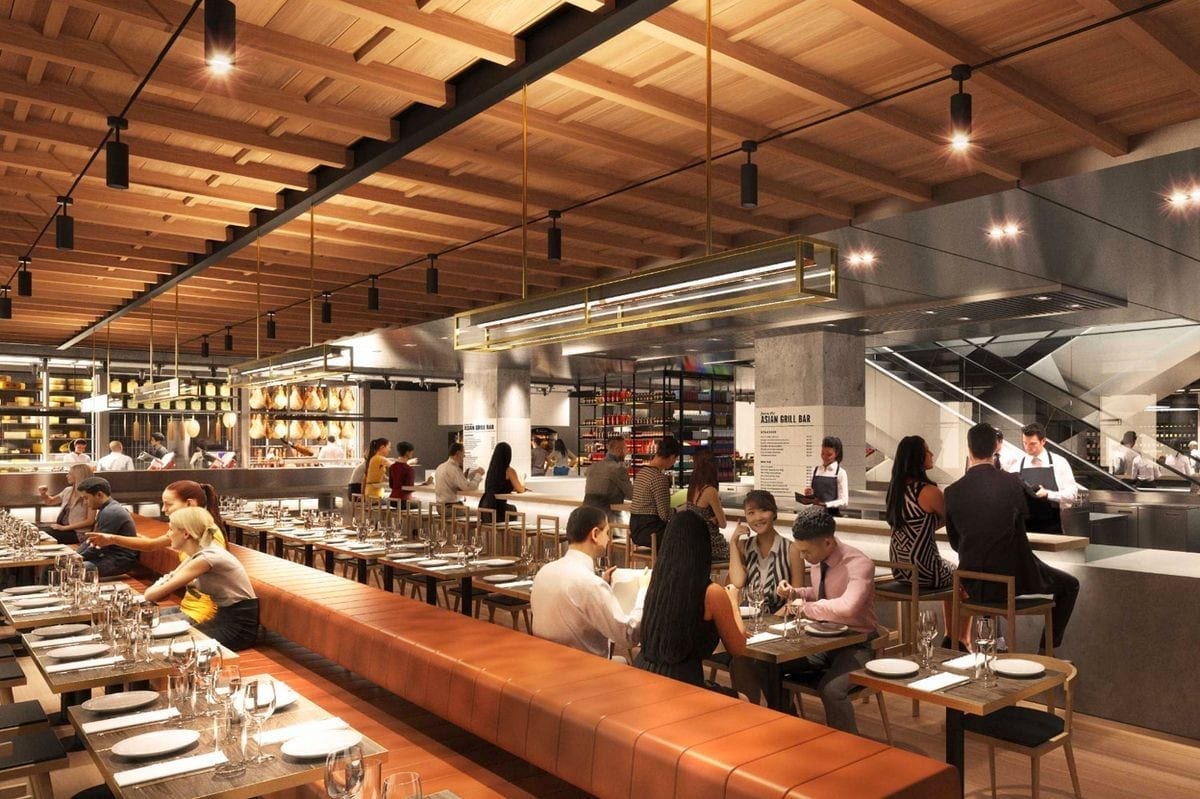
    David Jones has opened its first standalone food store in Melbourne in a bid to lock down Australia’s gourmet grocery market and take share off the country’s leading supermarkets, Coles and Woolworths, by offering fresher and, it argues, tastier prepared food.

    The 425sqm store, located on the ground level of Capitol Grand, a high-end residential and retail development on Chapel Street in South Yarra, stocks a large range of prepared meals, including a newly launched vegan range, alongside meat, eggs, dairy, fresh produce and other groceries and pantry staples, such as pasta, olive oil, tea and biscuits.

    Roughly 60 per cent of items in the store are private label, most of which were developed exclusively for David Jones by Inspired Foods, the Australian arm of Interfood, South Africa’s leading food supplier.

    According to Pieter de Wet, David Jones’ managing director of food, this partnership gives the retailer a competitive edge in Australia’s $110 billion grocery market, which increasingly is shifting towards fresh and prepared food.

    “Because of the long distances and supply chain issues in Australia, when [supermarkets] go into fresh, and I’m talking particularly about convenience and fresh meals, shelf life becomes a big issue,” de Wet told Inside Retail Australia.

    “You’ll find products deemed fresh have a shelf-life of 30 days, and then there’s no flavour, quality goes out the window.”

    In comparison, most of David Jones’ prepared meals have a shelf life of four to five days, he said. This is because Inspire Foods has developed different processes to prepare food without preservatives.

    “The IP we created over decades of working with our suppliers is what delivers those products, and over time, that’s what we see as a big opportunity that will differentiate us,” he said.

    De Wet declined to say how many standalone food stores David Jones will open, but said the retailer aims to be the only national player in Australia’s underdeveloped gourmet grocery market.

    “If you look at other markets, there are one or two retailers occupying the top end of the market,” he said, pointing to M&S and Waitrose in the UK and Whole Foods in the US.

    “In Australia, it’s a little bit different. It’s almost occupied by food service. You’ve got a couple independents, but nobody is doing it at scale and cohesively. There’s an opportunity there,” he said.

    Gary Mortimer, an associate professor at Queensland University of Technology’s business school, agrees that the top end of the market is “ripe for exploitation”.

    “Such a strategy has proved successful in cushioning several international supermarkets from increased price discounting,” he said.

    But it is not without risks. Woolworths closed down its gourmet grocer business Thomas Dux in 2017, and Brisbane-based Mercado slipped into voluntary administration in May.

    “The key challenge is volume and selecting the right locations,” Mortimer said.

    The store in South Yarra marks David Jones’ third food format since it announced its $100 million food strategy in 2017.

    The retailer over the past two years has opened food halls in its department stores in Sydney, Melbourne, Adelaide and Perth, where customers can dine on sushi and oysters and purchase gourmet food products between shopping for clothes and homewares, and in August, it announced a partnership with BP to offer fresh food and prepared meals in its service stations.

    The new store occupies a middle territory between these two formats. In addition to its grocery offer, it also features an in-house espresso bar and a pop-up shop from The Plant Society, where customers can buy freshly cut flowers, potted plants and accessories.

    Going forward, de Wet said the retailer will expand its food offer primarily through its partnership with BP and standalone stores like the one in South Yarra, rather than food halls.

    “BP have got a massive network, the opportunity there is very big. If you look at M&S, they’ve got 400 BP stores in their network, there’s a real opportunity there for us,” he said.

    “How big this could become over time…time will tell.”

    David Jones is set to open its second store in New Zealand next month at Westfield’s newly opened Newmarket shopping centre. The location will reportedly include a food offer.


  • KFC New Zealand drives Restaurant Brands’ sales

    KFC New Zealand drives Restaurant Brands’ sales

    Restaurant Brands total group sales grew 2.7 percent over during the first half of FY20, though net profit fell 2 per cent due to the adoption of a new leasing standard.

    Total group sales, which include KFC, Pizza Hut and Carl’s Jr. in New Zealand, as well as KFC operations in Australia, and Taco Bell and Pizza Hut in Hawaii, grew to $442.6 million – an increase of $11.6 million on the prior year.

    Net profit fell to $20 million, 2 percent lower than the $20.4 million seen during 1H19, due to the adoption of NZ IFRS 16, which knocked net profit down $2.9 million as a result of lease depreciation costs.

    The bulk of the sales improvement came from KFC’s New Zealand operations, which saw sales up 7.9 per cent to $193.5 million.

    Same-store sales grew 5.7 percent, while EBITDA totaled $41.8 million, driven by a further roll-out of the business’ delivery operations, as well as successful product promotions and the opening of three new stores.

    Pizza Hut saw a more difficult half, with total sales down 10.5 percent to $18.3 million despite the expansion of the chain’s store network. Same-store sales also fell 4.4 percent due to competitive pressure, the impact of launching new stores, as well as the appearance of new food delivery companies in the New Zealand market.

    Restaurant Brands also confirmed it would be opening its first New Zealand Taco Bell at LynnMall Shopping Centre in Auckland next month.

    “Initial planning and setup is well underway to bring this exciting new brand to the New Zealand market with the first new store in Auckland targeted to open in November,” the company said in a release.

    Restaurant Brands chief executive Russel Creedy said the group would launch up to 25 Taco Bells across New Zealand in the next five years.

    The group’s Australian results were adversely affected by a stronger New Zealand dollar, with KFC Australia seeing 4.2 percent total sales growth to $99.5 million. Restaurant Brands is also planning to open two Taco Bell stores in New South Wales, Australia in the calendar year.

    “The overall business continues to deliver solid results across all geographic markets and this strong performance is expected to continue in the second half of the year,” the group said.

    The directors believe that, not including further impact of NZ IFRS 16, Restaurant Brands will deliver an NPAT at least 10 per cent higher than FY19 – having previously stated they are expecting a net profit of $45 million for the FY20 period.

  • Thai Airways eyes passenger growth

    Thai Airways eyes passenger growth

    Financially struggling Thai Airways is eyeing 8% in passenger growth by year’s end as it plans to launch new routes.

    Nond Kalinta, Vice President of Sales at Thai Airways International Public Company Limited (THAI) told the media the airline’s financial situation is likely to improve. The airline’s debts by the end of the year will be reduced to under six billion baht thanks to the steady rise of passengers throughout the year.

    Over the past nine months, the airline has achieved passenger growth of 4%-5%, which is higher than last’s year figure year-on-year. The national carrier is hopeful of growth as projected passenger numbers for the last quarter shows an 8% uptick.

    Mr Nond said more routes will be launched by the end of the year, especially popular routes to Europe such as Bangkok-Vienna, Bangkok-Brussels, and Bangkok-Paris, as the airline seeks to make the most of the recent improvement in passenger numbers.

    Mr Nond said business will be brisker next year thanks to the well-performing baht as well as positive signs from the economy. He added that THAI has already seen advanced bookings for the first quarter of next year. Next year, THAI will also place emphasis on routes to East Asia, maintain its hold over Europe, and nourish growth in emerging markets such as India.

    “The Japan route has been a potential market for some time now, so more routes to Japan will be available to serve the needs of a certain group of passengers,” he said.

    “Also, flights to Europe should not be ignored as 80% of these flights have been booked in advance.”

  • Ikea India focuses on tier-2 cities as it targets growth

    Ikea India focuses on tier-2 cities as it targets growth

    Ikea India is set to expand into tier-II cities in the second phase of its development after early success in key markets.

    The Swedish-headquartered furniture-and-homewares giant has established its presence in Hyderabad and Mumbai and is now working on building a large-format outlet in Bengaluru before moving on to Delhi.

    “We want to bring our offering through multi-channel approach,” said Ikea India CEO Peter Betzel. “We want to be present through large format stores, small stores and even on the online platform.”

    The planned stores will be wholly owned by Ikea and will work to ensure half of its workforce are women. They will be smaller in size but otherwise functionally similar to its large-format stores in the territory.

  • Nok Air gets serious about turnaround

    Nok Air gets serious about turnaround

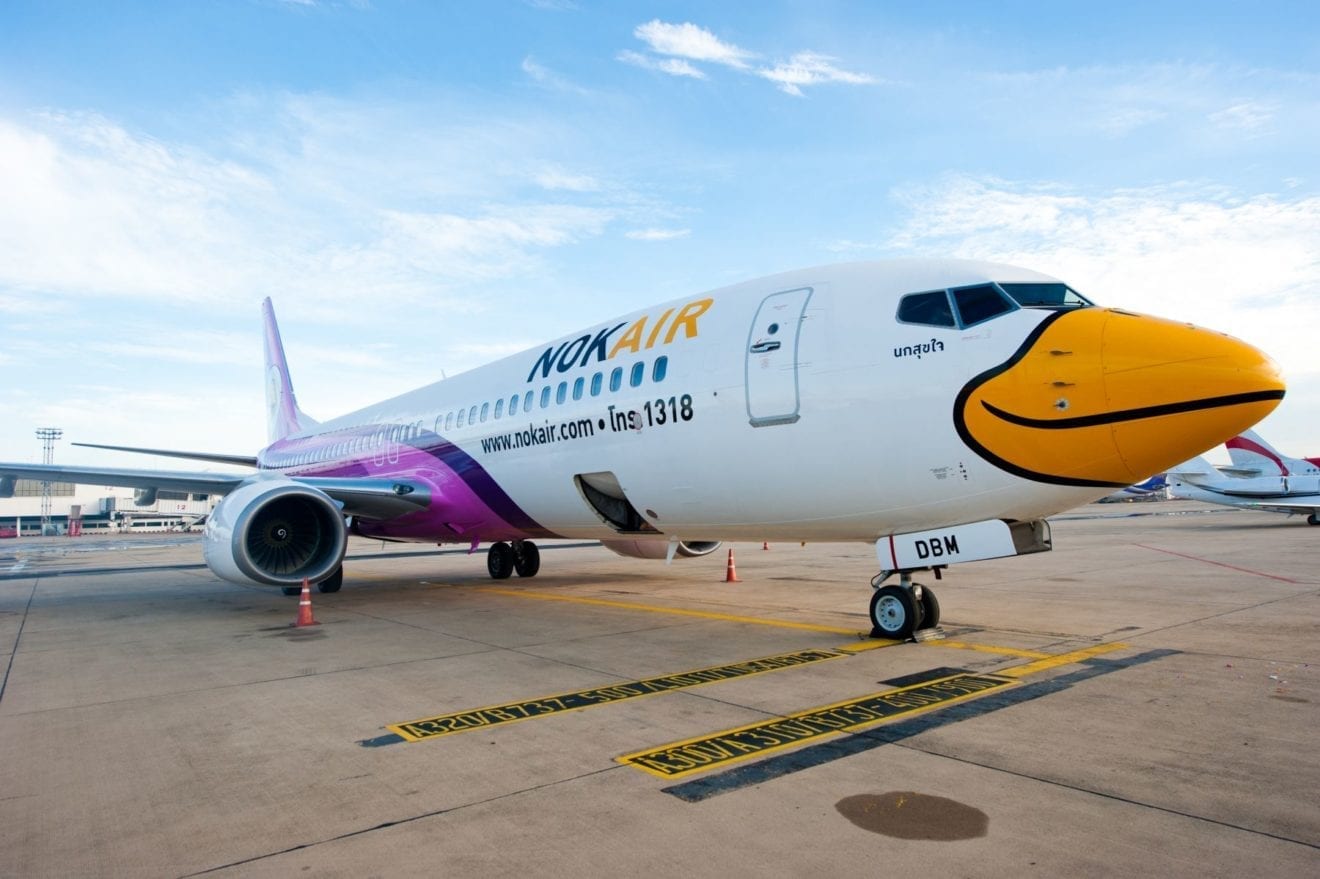
    Nok Air, a loss-ridden budget airline, has pledged to implement plans to revive its business, increasing income and overhauling flights to prevent delays that have damaged the carrier’s image.

    The turnaround is set to start in the final quarter this year, said chief executive Wutthiphum Jurangkool.

    He said apart from airfare, the airline plans to create additional revenue from value-added services by partnering with tourism operators such as hotels, car rental companies, department stores and tour agencies on domestic routes.

    To prevent flight delays, Mr Wutthiphum said the airline has invested in a home-based stock worth 100 million baht at Don Mueang airport to install spare parts for immediate use if needed. Spare parts from abroad take around three days to reach Thailand, which is the main reason for the delays, he said.

    “Nok Air’s home-based stock will not only speed up maintenance work, but also reduce maintenance expenses by 30% in the latter half of this year,” said Mr Wutthiphum.

    Rearranging flight schedules and adding spare aircraft to stand by in the morning or busy times should also help avoid delays, he said.

    “Even though the airline will reduce flight numbers and income by operating with only 22 aircraft, we must fix this urgent problem,” said Mr Wutthiphum.

    He said the airline is set to increase aircraft utilisation from red-eye flights to international destinations, aiming to use them for 12 hours of operation in the fourth quarter, up from 10-11 hours.

    In November, the carrier plans to launch a Bangkok-Hiroshima route. On Sept 21 it added a flight from Bangkok to Guwahati in Assam state, India. Other second-tier cities in China will be added to the airline’s expansion plans, said Mr Wutthiphum.

    He said Nok Air will not open new international routes to popular destinations to avoid price wars with other airlines.

    The Jurangkool family is the major shareholder of SET-listed Nok Airlines, holding about a 52% stake, while Thai Airways International holds 15.94%.

    Nok Air’s cabin factor stood at 88% in the first half this year, down from 91% year-on-year because of a lower number of aircraft, from 28 to 22. The reduced fleet saw lower volumes of flights and passengers in the second quarter by 10.3% and 8.18%, respectively.

    Mr Wutthiphum said Nok Air expects to expand its fleet with two new aircraft this year and at least two more in 2020.

    Nok Air reported a loss of 470 million baht in the second quarter, down from a loss of 742 million in the same period last year, and a net loss of 751 million for the first six months, down from a loss of 774 million year-on-year.

    On Thursday, the budget airline announced a partnership with Bangpakok 9 International Hospital, the Social Development and Human Security Ministry and Ruamkatanyu Foundation to support rescue operations in the flooded areas of Ubon Ratchathani province, while other affected provinces will be considered later.