However, there could be another reason for the announcement. As it turns out, some new Android handsets are expected to be unveiled on Tuesday including a pair from Xiaomi (Xiaomi Mi 9 Pro 5G and Xiaomi Mi MIX Alpha), the Sony Xperia 5 and the Realme X2. Taking this into consideration, the buzz around the water cooler suggests that one or more of these devices could be the reason for the teaser that Qualcomm posted yesterday for the upcoming event. All of the aforementioned phones will employ a Snapdragon SoC with the 855+ expected inside the Mi 9 Pro 5G and possibly the Mi MIX Alpha. The regular Snapdragon 855 SoC will power the Xperia 5 with the Snapdragon 730G chip driving the X2. There must be a connection between the number “3” used in Xiaomi’s teaser and the three smartphone manufacturers we’ve been discussing in this paragraph.
Author: Mei Ling Tan
-

Qualcomm could unveil its next-gen flagship chip on September 24th
There is speculation that the chip designer will unveil the Snapdragon 865 Mobile Platform. Expected to be found inside high-end Android devices next year, the new chipset will be manufactured by Samsung using its 7nm EUV process. The smaller the process number, the more transistors fit inside the chip making it more powerful and energy-efficient. And extreme ultraviolet lithography (EUV) is a more precise method of marking up a chip die for transistor placement. Qualcomm’s current top-of-the-line-chipset is the Snapdragon 855+, an overclocked version of the Snapdragon 855 Mobile Platform that offers a 15% improvement in graphics capabilities.While Samsung is doing the fab work and manufacturing the Snapdragon 865, Qualcomm will be returning to Taiwan Semiconductor Manufacturing Company (TSMC) for 2021’s Snapdragon 875 Mobile Platform. The world’s largest independent foundry, TSMC rolls chips off the assembly line for companies that design their own chips, but don’t have the facilities to make them. For example, both Apple and Huawei design their own SoCs like the A13 Bionic and Kirin 990 respectively. But both rely on TSMC to churn out the chips they’ve designed.As for the Snapdragon 865, traditionally Samsung’s new Galaxy S phones have been the first with a global release to sport the latest Qualcomm Snapdragon chipset, and that most likely won’t change next year. The very first phone to be powered by the Snapdragon 855 Mobile Platform was the Xiaomi Mi 9, but this device was not offered worldwide.2019 has been quite a tumultuous year for Qualcomm. It started with the chip designer in the midst of a feud with Apple and both companies were getting ready to square off in court multiple times. Qualcomm also was the defendant in an antitrust case brought by the FTC. The non-jury trial in January was presided over by Judge Lucy Koh (of Samsung v. Apple fame). During the proceedings, Apple and other firms testified against Qualcomm’s sales practices including its “No license, no chips” policy, the computation of royalties based on the retail price of a phone, and its failure to license its standards-essential patents in a Fair, Reasonable and Non-Discriminatory (FRAND) manner.Things took a turn for the better in April (as far as Qualcomm is concerned) just as a court battle with Apple was wrapping up; the two outfits agreed on a settlement. All legal action between the companies was dropped and Apple paid Qualcomm an undisclosed amount believed to be $4.5 billion; in return, Apple received a six-year license (with a two-year option) and a multi-year chip supply agreement.And so Qualcomm sailed along, but only for a month. In May, the verdict was in and Judge Koh ruled that Qualcomm had engaged in anticompetitive behavior. Losing this court case could force the chip designer to overhaul its current business practices. And while Judge Koh refused to grant Qualcomm a stay that would allow it to continue the status quo until all of its appeals have been exhausted, last month the Ninth U.S. Circuit Court of Appeals granted the stay.If Qualcomm does not get Judge Koh’s ruling overturned on appeal, it faces the long, complex and difficult task of renegotiating all of the current contracts it has with phone manufacturers. The chip designer asked for the stay because it did not want to go through this process, win on appeal, and then have to come to terms on a whole new set of contracts. -

Uninstall these two Android apps right now
Google has removed two Android apps that have been installed together over 1.5 million times. The apps were making money for those behind it by running pop-up advertisements that rang the cash register for the bad actors every time someone clicked on an ad. You might say to yourself, well, what’s the harm. Why begrudge some guy out there because he’s making some dough. But the truth is, these ad playing apps can take up some of your phone’s resources and help drain the battery.Sun Pro Beauty Camera had over 1 million installs while Funny Sweet Beauty Selfie Camera garnered 500,000 downloads. If you installed either of these two apps on your Android handset, you need to uninstall them now. As usual with these malicious apps, once you have installed one, the app icon disappears from the app drawer as a shortcut is created. And even if you delete the shortcut, the app keeps serving up ads in the background.
Once installed, Sun Pro Beauty Camera runs hard to close full-screen ads even if the app is not open. Funny Sweet Beauty Selfie Camera also serves up full-screen ads, but only after a filtered photo is downloaded using the app. And as usual, the comments left on both apps’ listings in the Google Play Store provided Android users with an early warning. One review says, “Garbage, please don’t download this app. It’s only ads, that’s all, nothing else.” Another notes that “…ads keep popping up,” and a third stated “I could not find anything useful and the ads, don’t get me started on them. They were all over the place.” When you see an app with reviews like this, your first action should be to get as far away from it as possible.“Adware is usually viewed as a nuisance for the end-user. However, mobile adware can kill productivity leading to more serious repercussions for businesses. Intrusive out-of-app ads interrupt users in the middle their workflow, brick their devices, drain the device battery, and in some cases, infected devices need to be replaced altogether. Adware enables authors to make money from affected devices and while it is typically regarded as more of a nuisance than a severe threat, these particular apps have more advanced functionality than your average adware.”-WanderaWandera reported the apps to Google on September 11th, and as we pointed out, they have since been removed from the Google Play Store. -

Nokian Tyres Says High Inventories In Europe To Hurt H2 Sales
European distributors are holding back from buying costly winter tyres due to high inventories, Finland’s Nokian Tyres said on Thursday, adding it saw weakness in its Russian market too.
“We expect short-term weakness in sales volume throughout Central Europe to continue during the remainder of the year,” Chief Executive Hille Korhonen told an investor call.
Korhonen said summer tyre inventories in Central Europe were higher than normal, leading distributors to hold back on stocking winter tyres.
“So it seems that the order intake is slower compared to many, many years and they will be ordering goods closer to the season,” Korhonen said, adding oversupply was putting pressure on prices.
Korhonen said the company’s view on the Russian market had worsened through the year.
“There is increasing uncertainty in the Russian market and my meetings with all key distributors in Russia earlier this month confirmed the weakness,” Korhonen said.
Shares in Nokian were 3% lower in late trading.
-
Toyota To Expand Sao Paulo Plant
Toyota Motor announced a 1 billion reais ($243.29 million) expansion at a plant in the Brazilian state of Sao Paulo, joining Volkswagen and General Motors in new investments in the region. Toyota said the funding would allow the Sorocaba plant, which builds the Etios and Yaris sedan models, to produce a new vehicle model. It did not provide details on the new model.
Sao Paulo state has long been the heart of Brazil’s auto industry, which is, in turn, the largest in South America, but it had recently been losing steam against aggressive incentives offered by other states to lure manufacturers. Ford announced plans in February to shut down and sell one its oldest Sao Paulo plants.
Sao Paulo Governor Joao Doria has fought back to keep manufacturing jobs in the state, devising a tax incentive program to give automakers a 25% reduction in value-added taxes as long as they invested at least 1 billion reais and created 400 new jobs.
Toyota, however, said the Sorocaba expansion will create only 300 jobs. The company, which has two other plants in Brazil, did not immediately respond to a question about whether this would still allow it to benefit from the tax incentives.
“During the last decade, which involved challenging times for the economy and the auto industry, Toyota remained faithful in its commitment … growing in a sustainable way,” Rafael Chang, who heads Toyota in Brazil, said in a statement.
-

Delaware Judge Says Tesla Board Must Face Trial Over Musk’s Mega-Pay Package
A Delaware judge ruled on Friday that Tesla Inc’s board of directors must defend at a trial Chief Executive Elon Musk’s multibillion dollar pay package, which a shareholder lawsuit said unjustly enriched the head of the electric vehicle company.Tesla estimated the 2018 compensation package was worth $2.6 billion (£2.08 billion) when it received stockholder approval in March 2018, although stock analysts at the time said it could be worth up to $70 billion (£56.04 billion) if the company – which has yet to post an annual profit – grew quickly.
The compensation award includes no salary or cash bonus for the Silicon Valley billionaire Musk, but sets rewards based on Tesla’s market value rising to as much as $650 billion over the next decade.
On Friday, Vice Chancellor Joseph Slights of the Delaware Court of Chancery ruled against Tesla’s request to dismiss the lawsuit by shareholder Richard Tornetta at an initial phase in the litigation because of the way the board approved the package.
As a result, the board must now defend against allegations that it breached its fiduciary duty in approving the package, and that the package unfairly enriches Tesla’s CEO. The ruling opens the way for additional discovery into the decision-making process.
Tornetta had asked that the pay package be rescinded and the board of Tesla be overhauled to better protect investors.The ruling turned on Tesla’s compensation committee, which the company conceded was not independent of Musk, according to Slight’s opinion. Had the package been negotiated by truly independent directors and approved by a majority of shareholders who were unaffiliated with Musk, Slights said he would have dismissed the lawsuit.
“Plaintiff has well pled, however, that the board level review was not divorced from Musk’s influence,” Slights wrote.
Musk’s compensation package passed shareholder approval with about 73 percent of votes cast, excluding votes by Musk and his brother Kimbal. The vote result indicated some, but not all, big investors were prepared to support a large payout at the founder-led company, which has struggled to produce its electric vehicles efficiently and profitably.
At the time, proxy advisory firm Institutional Shareholder Services recommended voting against the compensation, noting that if achieved Musk’s award would surpass anything previously granted to top U.S. executives.
Under the award, which involves stock options that vest in 12 tranches, Tesla’s market value must increase to $100 billion for the first tranche to vest and rise in additional $50 billion increments for the remainder. The package does not require Tesla to hit profitability metrics.
Musk does not hold a majority of the Tesla’s stock, but in a separate case, Slights determined that Musk’s sway over Tesla made him in effect a controller from a legal standpoint. As a controller, the board is subject to a higher standard of legal oversight for decisions it makes regarding its relationship with Musk.The judge did dismiss Tornetta’s claim that the package amounted to a waste of corporate assets.
-

The Nissan Leaf Can Now Power A House
Nissan and EDF have partnered to accelerate the delivery of electric mobility in the United Kingdom, France, Belgium and Italy and will be adopting smart charging of electric vehicles in these markets. The new agreement will be primarily focusing on the development of smart charging solutions i.e. vehicle to grid (V2G) chargers which will help to optimize the charging or discharging of an electric vehicle. Interestingly, the stored energy on the car can be supplied back to the grid and can be used to power the house.
As part of the deal, Nissan will develop and sale the V2G compatible EVs and the EDF Group will provide the V2G charging solution. Nissan says that the V2G technology will offer a significant opportunity to electricity grids and will provide new financial opportunities to the businesses. Nissan is aiming for a potential shift towards electric vehicles after achieving record sales for both Nissan Leaf and e-NV200.
Speaking about the partnership, Francisco Carranza, Managing Director for Nissan Energy in Europe, said: “This new partnership with EDF across four major European markets is another sign that our vision of an electric ecosystem is becoming a reality. Businesses are becoming increasingly aware of the benefits and opportunities offered by the Nissan LEAF and e-NV200, and adding a V2G solution is a logical next step for managing their energy supply and opening new revenue opportunities.”
Speaking on similar lines, Yannick Duport, EDF Group Electric Mobility Director, says: “The cooperation agreement is fully in line with the Electric Mobility Plan launched last October. We are convinced that the development of electric mobility will be supported by partnerships. I am very pleased to count among them the cooperation agreement that Nissan and EDF have just signed to develop smart charging solutions. So, EDF is building an ecosystem of innovative players by forming strategic partnerships for the large-scale roll-out of the best technologies to support our customers.”
Smart charging solutions include technologies to control when vehicles charge and how quickly they power up, as well as allow the two-way flow of electricity between vehicle and charger. The V2G technology helps the energy to accumulate in the batteries of electric vehicles which can also be used for businesses own energy needs or the grid when required. The energy that is stored in a electric vehicle like the Nissan Leaf and e-NV200 van can be sold back to the grid by the customer, generating additional revenue to offset vehicle ownership costs.
-
Tata Motors Showcases New Ultra Trucks In South Africa
Tata Motors has showcased two new variants of its Ultra truck range- Ultra Plus 1418 and Ultra 814 AMT in South Africa at the Futuroad Expo 2019 in Johannesburg. While the Ultra AMT 814 is from the existing range, the Ultra Plus 1418 is an entirely new vehicle in the Heavy Commercial Vehicle (HCV) range. Powered by the 5.0-litre diesel engine, Ultra Plus 1418 is a multipurpose offering and is available in the wheelbase options of 4900 mm and 5300 mm. The vehicle will offer a payload capacity of seven to eight tonnes.
The Ultra platform is modular architecture with five deck lengths, five wheelbases and payloads ranging from four to eight tonnes. The Tata Ultra is designed and tested for South African conditions and according to the company it is versatile enough to suit the needs of a large customer base, be it for large fleet, captive users, fleet rental companies or logistics companies. The Ultra range is inspired by the Prima range which is based on an Italian cab design, with engine technology and gearbox expertise from the U.S. and Germany. The chassis frame has been designed in Mexico and sheet metal dies from Japan and Korea, combined with Swedish precision on a robotic weld line.
-
Uber Awaits Renewal Decision On Vital London License
Uber is still waiting to see whether its license in London, which expires on Wednesday, will be renewed as the regulator, which previously stripped the taxi app of its right to operate in the city, remains tight-lipped about the decision. Transport for London rejected the Silicon Valley company’s license renewal request in 2017 due to failings it said it found in its approach to reporting serious criminal offenses and driver background checks, prompting legal action.
A judge in 2018 then granted Uber a probationary 15-month license, which expires on Sept. 25, after the company had made several changes to its business model in London, the firm’s most important European market.
A question put to London Mayor Sadiq Khan from a member of the city’s assembly about the license renewal is still awaiting a reply according to an entry on the London Authority’s website from earlier this week.
TfL said it does not comment on individual license applications. Uber declined to comment on Friday. Among its options are giving Uber a maximum five-year license, a shorter one, or stripping the firm of its ability to operate, almost certainly prompting an appeals process during which the app would still be able to take rides, as in 2017.
Benjamin Black, Co-Head of Internet Equity Research at analysts Evercore ISI, told Reuters he thought the firm would retain its ability to operate in London, one of its top five global markets.
“If they lost the London license, that would be a major blow… but we just don’t see it happening,” he said.
“Is there going to be another 15-18 month renewal or is it going to be five years? Judging by (ride-sharing firm) Ola coming in and getting a 15-month license, I think they’re going to be on the shorter cycles.”
The 2017 license loss came just weeks after Chief Executive Dara Khosrowshahi took over and became a test of his ability to assuage regulator concerns as the app faced disputes with taxi firms and the authorities in different markets.Mayor Khan was critical of Uber just weeks ago and said companies must play by the rules.
“You will know my track record which is standing up to the big boys, and they are boys, and make sure everyone plays by the rules,” he told listeners to a phone-in on LBC radio. “I don’t care how many lawyers you employ or how big your PR budget.”
-
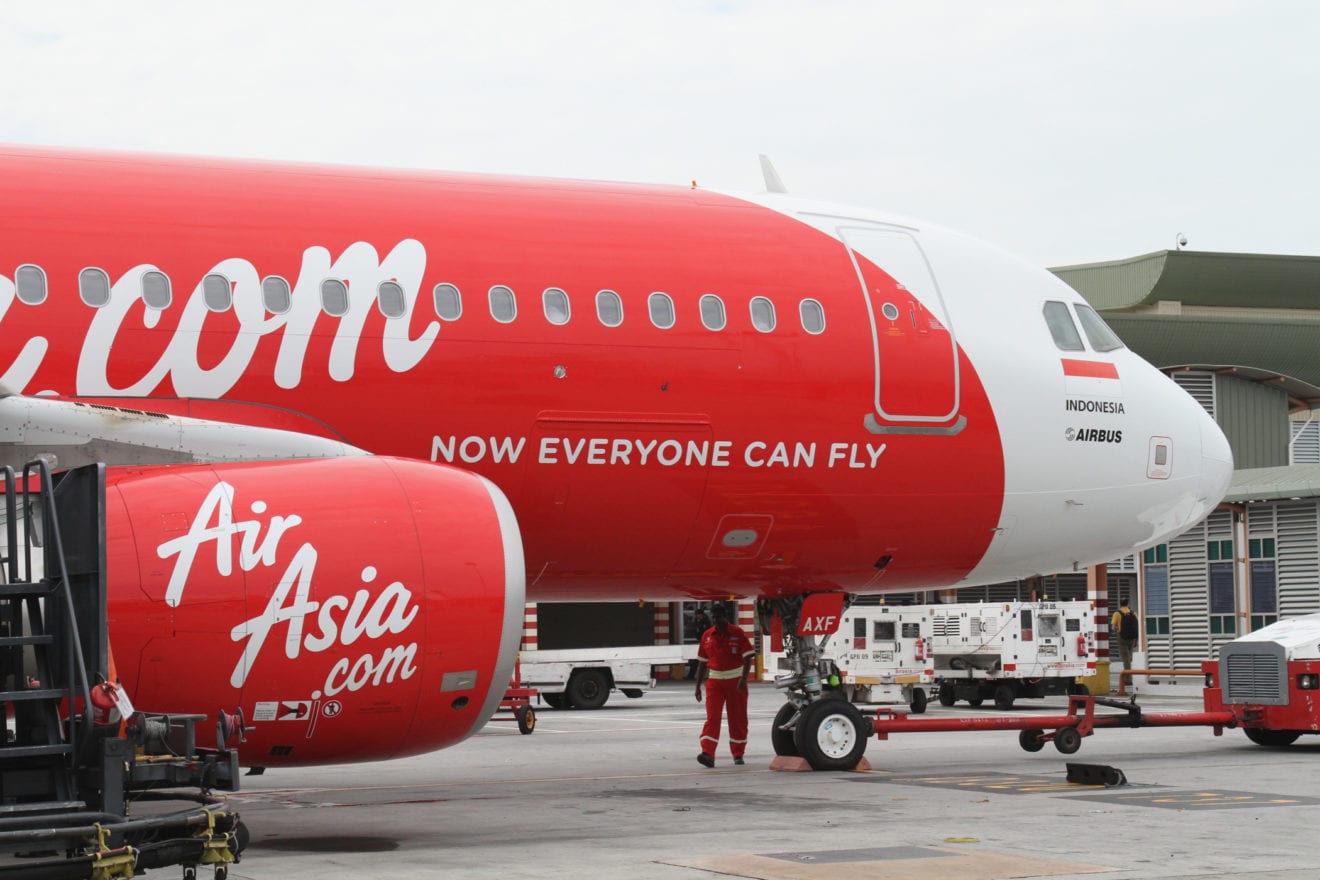
AirAsia X Launch Flights Between Kuala Lumpur and Tokyo Narita
AirAsia is set to capitalize on the growing demand for flights to Japan, with the country experiencing a tourism boom. In a response to increasing numbers of visitors to Tokyo, the Malaysian airline’s low-cost sister company, AirAsiaX is to start flying between Kuala Lumpur and Tokyo Narita airport from November 2019. This route is commencing for the second time around, after a four year absence. Read on to find out what led to this decision, as well as the details regarding the resumed flight route.
The commencement of the route between Kuala Lumpur and Tokyo Narita comes four years after AirAsia X suspended its flights to this airport. Originally opened in 2014, the Malaysian low-cost airline operated flights between KUL airport and Narita airport for less than a year, before calling a halt in August of 2015.
The airline endured a tough year in 2015, with significant losses reported as competition in the area increased. This competition came especially from Malaysian Airlines (MAS), and AirAsia X was forced to make some changes to its structures. Its ambitious capacity increases in 2014 could not be sustained and it necessitated the suspension of its flights to Narita airport, in a bid to counter increasing quarterly losses.
The carrier has, for almost a decade, operated flights to Tokyo Haneda airport. In a statement supplied to Simple Flying, AirAsia X said,
The trigger for AirAsia X’s resumption of its KUL-NRT route was the increase in demand for flights to Tokyo – stemming from a tourism boom in Japan. Between 2012 and 2017, the country saw a growth of over 200% in tourist arrivals, and the trend is set to continue.
Japanese Prime Minister Shinzo Abe, has set the goal for tourist arrivals in 2020 at 40 million. This comes in conjunction with two major international sporting events for 2019 (the rugby world cup) and 2020 (the summer Olympics), as well as the depreciation of the yen.
Overall, these factors have made Japan a major tourist destination. Demand amongst Malaysians for the route has increased as well, with more than 450,000 Malaysian travelers visiting Japan in 2018.
From the 20th of November, 2019, AirAsia X will resume its route between Kuala Lumpur and Tokyo Narita airport. The airline’s fleet of Airbus 330s will be in use four times a week, flying direct on Mondays, Wednesdays, Fridays, and Saturdays between the two cities. This will be in addition to its seven weekly flights between the Malaysian capital and Tokyo’s Haneda airport.
Flight frequency for this route may well be increased in the future. Airbus has confirmed that AirAsia X has ordered 12 Airbus A330neos to boost its medium-range capabilities and to operate alongside its A330 fleet of 24 aircraft. This may free up some of its A330’s for increased flights to Japan, positioning the airline well for Japan’s goal of reaching 60 million tourist visitors by 2030.
With direct return flights from under USD350, and under MYR1500, it is an attractive and affordable option for those flying from Malaysia.
-

Here We Come, Osaka! Centara Signs Historic Deal forFirst Japanese Property
Centara Hotels & Resorts, Thailand’s leading hotel operator, together with Taisei Corporation and Kanden Realty & Development, announced a landmark agreement to bring the Centara brand to Japan. The three companies signed an Investor Agreement for Centara Grand Hotel Osaka, an upper upscale property with 515 keys that will occupy a gleaming 34-storey tower on a prime site in Osaka’s Namba district, the centre of leisure tourism for the city and the wider Kansai region. Centara’s first property in Japan is scheduled to open in mid-2023.
The investment partnership between Centara Hotels & Resorts, Taisei Corporation and Kanden Realty & Development marks Centara’s entry into one of the world’s most popular tourist destinations. Osaka is a key gateway city and Japan’s third largest city, with a population of 2.7 million. Additionally, it is one of the leading Japanese destinations for international visitors, second only to Tokyo, and is considered the cultural heart of the nation. Along with popular attractions such as Universal Studios Japan and the city’s proximity to Kyoto, Kobe and Nara, Osaka is expected to see a further boost in tourism when the city hosts the World Expo in 2025.
“Extending the Centara footprint to Japan has been a long-term strategic objective for the company, and this is a major milestone for the Centara brand as we have successfully added the 14th country to our portfolio,” said Thirayuth Chirathivat, Centara’s CEO. “This an exciting opportunity to partner with Taisei and Kanden Realty & Development, whose outstanding track records have earned leading positions in construction and property development. We are looking forward to making Centara’s debut and ongoing development in other Japanese cities a great success.”
“This project is in Namba, an important and bustling district of Osaka and a place of international exchange. It is directly connected to Kansai International airport, making it one Japan’s major gateway cities to the world” said Senior Managing Executive Officer, Taisei Corporation, Katsuyuki Kanai. “It is really a significant milestone both to Japan and to Taisei that Centara, representing Thailand in tourism and hospitality, has embarked on this venture in Namba, the perfect location in Japan for the development of an upper upscale hotel.”
“As a major Property Development Company based in Osaka, we are honoured to play an important role in this joint investment project to develop Centara Grand Hotel Osaka with such a significant and established Thai partner, Centara Hotels & Resorts, and with Taisei Corporation, who has a long and proven record of success,” stated Managing Executive Officer, Kanden Realty & Development, Munetaka Isoda. “We are committed to working with you in making every effort to ensure the success of this project and we wish you all a very warm welcome to Osaka.”
The newly built hotel will occupy a stunning new 34-storey tower overlooking Namba Parks, with 360-degree views of the city. The top floors will include a lounge along with customisable space for meetings and events, plus a rooftop restaurant sky bar providing panoramic views in every direction.
Facilities will include award winning Spa Cenvaree, a fully equipped fitness centre, a diverse selection of restaurants and banquet facilities. And the hotel’s spacious lobby will welcome guests with touches of Thai and Japanese style and ambience.
The hotel location puts guests at the doorstep of some of Osaka’s leading entertainment, shopping and cultural attractions, popular with visitors and locals alike. A few steps away is Namba Parks, an architectural marvel and the city’s most distinctive mall, complete with a massive rooftop garden with cliffs, ponds, streams and waterfalls, making it a must-see for tourists. The Namba area, also known as Minami, is home to countless restaurants and bars, shopping venues, an electronics district, as well as one of Osaka’s most revered Shinto shrines.
The addition of its first property in Japan is further proof of Centara’s expansion strategy, which calls for doubling the number of properties under its management by 2022. Centara’s expertise, combined with the local market presence and development experience of Taisei Corporation and Kanden Realty & Development, are sure to boost Centara’s Japan market launch toward long-term success.
-

Powering Southeast Asia’s $100 billion Internet economy
Today, Google, Temasek and new partner, Bain & Company released its e-Conomy Southeast Asia report for 2019, highlighting the most significant industry trends observed in 2019 and analysing the current and future potential of the Southeast Asian Internet economy across its six largest markets (Indonesia, Malaysia, the Philippines, Singapore, Thailand and Vietnam).
The report shows that the region’s Internet economy has hit a new milestone, reaching $100 billion for the first time this year, a 39 percent increase from $72 billion last year. The Internet economies in Malaysia, the Philippines, Singapore, and Thailand are growing between 20 and 30 percent annually, but the two pacesetters in the region are Indonesia and Vietnam, with growth rates in excess of 40 percent a year.
This surge across SEA is attributed to the influx of new online users in the region — about 100 million more compared to four years ago. This growing market of customers has incentivized businesses in the region, from established ‘unicorns’ to small-medium enterprises, to adopt and leverage digital tools to expand rapidly.
As the world’s most engaged Internet users, Southeast Asia is shaping technology trends in its own way. When it comes to services like Ride Hailing and Food Delivery, the region is rapidly growing and the momentum is only going to continue as a new generation comes of age and people outside big cities come online. By 2025, the regional Internet economy will have tripled to $300 billion.
Here are some key insights from this year’s report.
- Internet businesses have hit new heights
Southeast Asia’s Internet sectors are booming, and this is indicative of the fundamental changes in the way people shop, eat and get around. e-Commerce is the biggest and fastest-growing sector. More than 150 million Southeast Asians are now buying what they need online, and the sector is valued at $35 billion today compared with just $5 billion in 2015—and on track to hit $150 billion by 2025.
RideHailing is surging, with 40 million people ordering transport, food and other services on demand, as compared with just 8 million in 2015.
- Time is money: competing for user engagement
As the ecosystem matures, Internet economy companies are switching their focus from acquiring new customers to driving higher engagement with existing users. To do so, they are offering a variety of products and expanding into new services including gamified promotions, enticing streaming content, live news and more. Consumers are benefiting from these trends, as they have access to more choices and lower prices.
- Opportunity is spreading beyond the big cities
Up until now, seven metropolitan areas have made up more than half of Southeast Asia’s Internet economy despite accounting for just 15% of the total population. Between now and 2025, the Internet economy is set to grow twice as fast outside Metros as inside them. This growth will support new jobs and opportunities, increase the need for investments to expand Internet access in less served areas, and drive inclusion of the entire Southeast Asian population into the Internet economy.
- Digital Financial Services reach an inflection point with increasing access as a priority
Technology has made Financial Services more accessible to users in the region, and it is projected to expand further to reach out to 100 million Southeast Asians with limited access to financial services today. Digital Payments is set to grow from $600 billion in 2019 to more than $1 trillion by 2025, accounting for almost one in every two dollars spent in the region.
- Funding remains healthy despite global headwinds
In 2019, global economic growth has slowed, with the outlook remaining cloudy. But even as global tech funding takes a hit, Southeast Asia has remained a bright spot. Funding flows into the region continued to grow at a healthy pace, from the high base of a record-breaking 2018. The first six months of 2019 saw Internet firms raise $7.6 billion, almost 7% more than in the same period in 2018. A growing cadre of “aspiring unicorns” has emerged and they are on the lookout for late-stage funding to scale further.
- Ecosystem challenges are being resolved
Experts shared that Southeast Asia has made progress in overcoming the initial challenges of the Internet economy by making Internet access more affordable and strengthening consumers’ trust in digital services. However, talent constraints remains a pressing concern, as companies look for skilled workers to take on the influx of new roles created in the digital economy.
-

Squarestreet launches coffee concept in Sheung Wan
Scandinavian lifestyle accessories label Squarestreet is presenting a new in-store coffee concept centered around the tradition of “fika” at its Sheung Wan boutique.
“Fika” is a Swedish verb that describes the act of meeting to drink coffee while enjoying traditional pastries in any home or workplace in Sweden. It is an integral part of Swedish coffee culture.
The Kaffe venue offers classic Swedish homemade pastries paired with Swedish-roasted beans in a cosy and intimate environment. The shop also offers a selection of local, Swedish and in-house designed accessories and homewares. Its takeaway utensils are all compostable and its cup sleeves are decorated with the classic folk art called “Kurbits” from the Dalarna region in central Sweden.
All pastries are made by a Swedish baker following traditional recipes, and the cafe’s beans are delivered weekly, three days after roasting, to keep the coffee as fresh as possible.
“I wanted to offer a new type of cafe experience through Kaffe,” said Kaffe founder and curator Alexis Holm. “Having a ‘fika’ is something special, a moment with friends, a good book, or treating your grandma to her favourite pastry. Coffee is only the excuse, it’s what happens when people have coffee that matters.”
-
Rakuten and Seiyu launch Japan’s first autonomous delivery robots
Rakuten has partnered with Seiyu to launch Japan’s first autonomous delivery robots service with JD in Umikaze Park.
Using the Rakuten Drone app, Umikaze Park visitors can place their orders from the Seiyu Livin Yokosuka Store and receive the products delivered by the Rakuten UGV (unmanned ground vehicle).
“JD develops unmanned technologies to provide customers a superior experience, and we highly value the partnership with Rakuten,” said Qi Kong, head of autonomous driving at JD Logistics. “This is a demonstration of how we are opening up our solutions to customers beyond JD.”
The autonomous delivery robots service will be available only from September 21 to October 27.
Earlier this year, JD and Rakuten signed a partnership to develop unmanned delivery solutions, one of which was drone-delivery service on Sarushima Island in Tokyo Bay.
-

Avon launches a clean beauty range Avon Distillery
Avon has launched its new beauty brand Avon Distillery, which it claims delivers “clean beauty without compromise”.
The Avon Distillery range includes nine concentrated make-up and skin-care products, seven of which are waterless. The new collections are formulated with pure and vegan-friendly ingredients, as its customers are now more aware of the impact of beauty products on their skin and on the environment.
“Compelling concepts like clean beauty without compromise not only keep Avon relevant and on-trend in the fast-moving, modern beauty space, but help make our representatives a destination,” said James Thompson, chief beauty and brand officer at Avon.
“It’s an important step for Avon and is the result of years of research to deliver the highest-performing clean-beauty products available on the market at an accessible price.”
The five Avon Distillery skincare products have been launched already and the make-up range will follow next year.
-

Shinsegae testing a cashierless grocery retail store concept
South Korean retail giant Shinsegae is developing a cashier-less grocery-store modeled on the Amazon Go concept.
The brand’s first automated store – to be branded Emart24 – will open at the company’s data centre in Gimpo in Gyeonggi Province as a pilot while the model is refined before being launched in a more high-profile location.
Just like at an Amazon Go, shoppers will be able to select products from shelves and walk out the door, the cost of the goods deducted from their pre-registered payment choice. Entry to the store will be granted by a QR code appearing on the customer’s smartphone and items will be automatically added to a virtual cart as they shop. About 30 cameras inside the store will monitor what items customers take from shelves – and those they put back.
The project is being developed by Shinsegae’s IT department which will oversee the operations, while stock will be managed by Emart24.
“The store will be a ground-breaking testbed where we apply and test various advanced technologies,” Kim Jang-wook, CEO of Shinsegae I&C said. “We plan to operate a store where customers can experience retail technology and enjoy real shopping.”
Technology used in the store will include artificial intelligence (AI), computer vision and cloud point-of-sale systems.
After a trial run with employees which is currently underway, the store will be opened to the public on September 30.