Author: Mei Ling Tan

  • Adairs finally delivers first profit in New Zealand

    Adairs finally delivers first profit in New Zealand

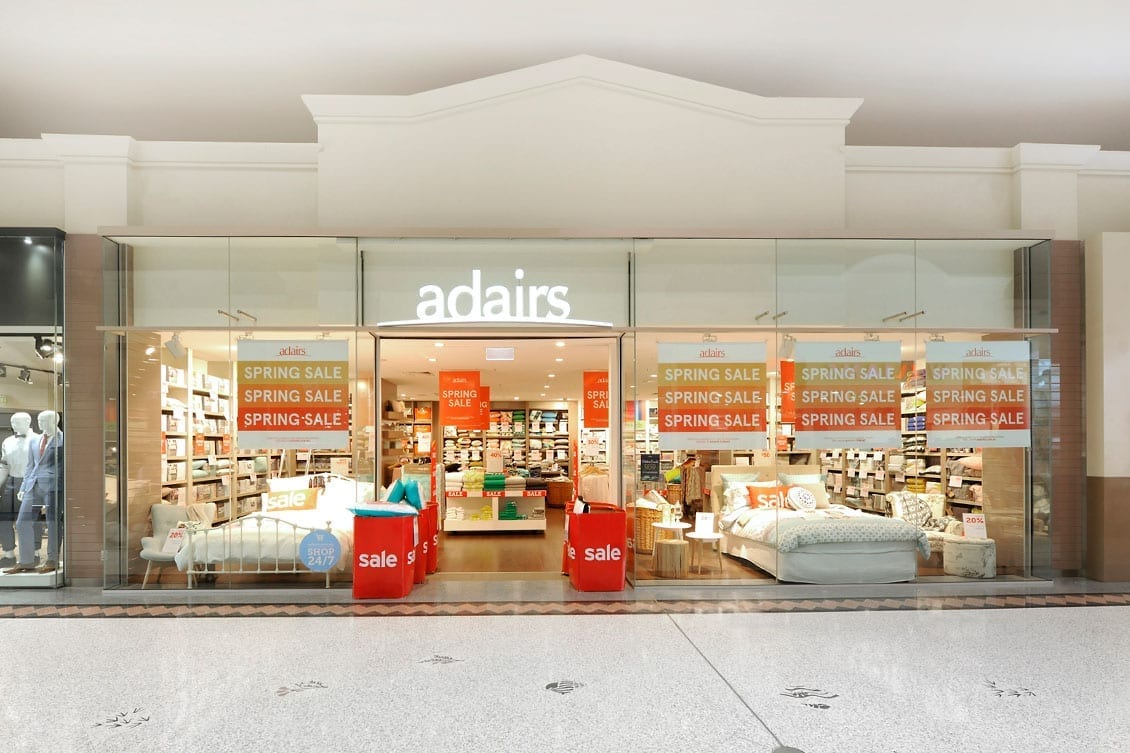
    Homewares business Adairs delivered its first profitable year in New Zealand in FY19, with work done on the local supply chain significantly assisting sales, along with improving brand awareness.

    New Zealand saw sales growth of over 25 percent during FY20.

    According to Adairs chief executive and managing director Mark Ronan, the lessons learned in New Zealand will assist the business as it looks to expand into further markets – when the right opportunity arises.

    On a group level, Adairs saw net profit slip despite sales and gross profit improving as a result of a weaker Australian dollar and the costs of a growing distribution network over the year to 30 June, 2019.

    Total sales increased 9.7 percent to A$344.4 million ($365.2 million), with Adairs’ online channel growing 41.7 percent during the year – now contributing 17 percent of overall sales.

    Despite relatively strong sales numbers, Adairs net profit fell 1.3 percent to A$29.6 million ($31.39 million).

    Ronan said the group results were attributed to an unrelenting focus on delivering excellent retail execution, and an understanding of what the business’ customers want both online and offline.

    Part of this understanding comes from the business’ loyalty offering, Linen Lovers, which grew 17 percent over the year. Linen Lovers members contributed 75 percent of all sales.

    According to Ronan, Adairs is not quite operating at best-practice in its omnichannel operations, which gives the business a lot of room for growth in the online space.

    Cost of doing business grew by A$15.2 million ($16.12 million) (, or 11 percent, due to efforts to restructure the business’ supply chain network in order to provide agile, the best-in-class capability to accommodate future demand.

    “We are addressing our short-term supply chain issues and have a clear process to finalize the long term solution,” Ronan said.

    “We see this as an opportunity to contribute to building and sustaining our competitive advantage. In the last 12 months, we have made strategic hires in key areas of our business, [and] we are in a strong position to deliver a great retail experience.”

    However, Ronan acknowledges that the current retail climate brings its own set of challenges.

    “While the macro environment is challenging, our strategies of product differentiation, range expansion, more inspiring and larger store formats, and an unwavering focus on customer service will all play a key role in growing both like-for-like and total sales in FY20,” Ronan said.

    During FY20, Adairs expects to open between four to six new stores across Australia and New Zealand, and forecasts total sales of between A$360 million and A$375 million ($381 million and $397.7 million) to deliver an EBIT of between A$43 million and A$46 million ($45.6 million and $48.79 million).

  • Shopee app Singapore’s most downloaded

    Shopee app Singapore’s most downloaded

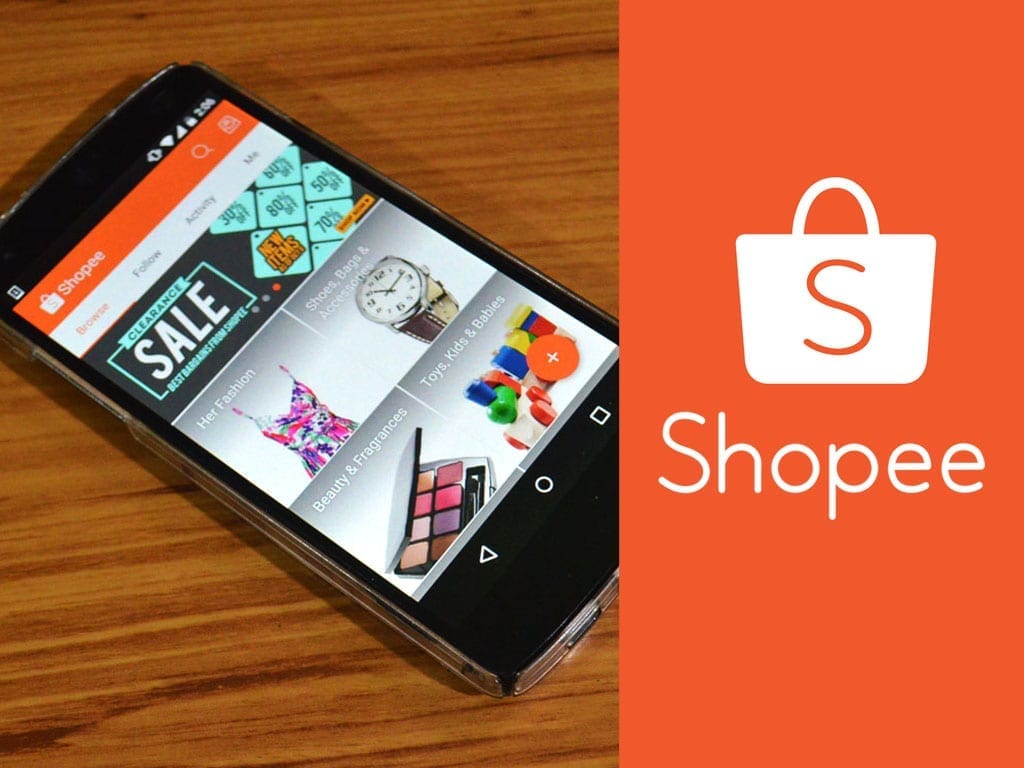
    The Shopee app has emerged as Singapore’s most downloaded shopping app.

    The Sea company platform had 2.8 million visitors per month on average during the second quarter, with an 11 percent increase compared to the previous quarter. It is currently the most-used app of its kind throughout the whole of Southeast Asia, while rival firm Lazada remains the most actively used e-commerce app within Singapore itself.

    “Apps by Alibaba such as Taobao and AliExpress remained prominent among Singaporean consumers probably due to the increased popularity of Chinese products and Chinese language proficiency in the country,” read a report by iPrice Group.

  • Tmall designers line up for New York Fashion Week

    Tmall designers line up for New York Fashion Week

    Alibaba Group’s B2C platform Tmall has announced its lineup of designers that will hit the runway at New York Fashion Week this September.

    In addition to the runway shows, Tmall will host a pop-up exhibition featuring cross-over collaborations riding the “China Cool” trend. Featured brand collaborations will include Chinese confectionery company Hsu Fu Chi and clothing brand Tyakasha; Chinese snack brand Qinqin and fashion brand Mukzin; Dove Chocolate and Hefang Jewelry; and home furniture brand Ziinlife and Chow Tai Seng jewellery.

    “The concept behind our ‘Tmall China Cool’ pop-up exhibition is a celebration of the design and creative powerhouse that China is becoming today. ‘China Cool’ is a trend we are seeing that blends the cutting-edge of fashion and innovation with a respect for authenticity and heritage,” said Tmall and Taobao marketing GM Bo Liu. “We have worked with both Chinese and international brands to pioneer new experiences and cross-over collaborations that are at the forefront of this trend and will be showcased in this New York Fashion Week exhibition.”

    The “Tmall China Cool” showcase will take place Wednesday, September 4 – the first day of NYFW: The Shows – and will feature a slate of Chinese designers including Peacebird, Threegun, RiZhuo and emerging designers Songta and I-am-chen.

    Tmall’s partnership with NYFW: The Shows aims to cultivate and showcase fashion talent and creative culture in China.

    “We are thrilled to be back at New York Fashion Week with another exciting line-up of Chinese design talent this year,” said Tmall Fashion GM Jessica Liu. “Tmall has always been a gateway to renowned international brands and retailers that are looking to access China. At the same time, we have empowered homegrown talent from China to grow their brands and develop their creativity and originality.

    “This year, we are also working with brands to leverage our new trend forecasting capabilities so they are able to strengthen their position as innovative brands and capture consumer interest. Today, the fashion scene in China is more vibrant than ever and we look forward to showcasing the spirit of innovation as well as the creative talent of our ‘Tmall China Cool’ designers at New York Fashion Week.”

  • Monocle opens its first travel store in Hong Kong

    Monocle opens its first travel store in Hong Kong

    Global media brand Monocle has opened its first dedicated travel-retail store, at Hong Kong International Airport.

    The shop is the first in a new rollout of airport-based outposts for the brand, with an emphasis on books, periodicals, travel essentials and Monocle’s full range of products and collaborations.

    The store was developed in association with Paris-based Lagardere Travel Retail, and is located at one of the airport’s popular retail destinations selling globally sourced essentials, accessories and apparel.

    “The launch of this new concept at Hong Kong International Airport comes at the perfect time for our sector,” said Monocle’s editor-in-chief and chairman Tyler Brule. “Airport news and shop formats have not been keeping pace with the retail industry in general, and this debut seeks to raise the game for both the print industry and customers.”

    The 190sqm stand-alone store retails the brand’s range of Monocle travel guides as well as special-edition products available only at Hong Kong International Airport.

    “Hong Kong is already one of our most important markets both for readers and brand partnerships,” added Brule. “In order to tailor this for the local audience, visitors and passengers connecting, we’ve developed a store that is calm, elegantly designed and stocked with good reads for the long haul, gifts for friends and clients at the other end and of course lots of accessories and fashion items for our core audience.”

    Monocle currently operates stores and cafe concepts in London, Zurich, M

  • Gong Cha secures private-equity investment to boost global expansion

    Gong Cha secures private-equity investment to boost global expansion

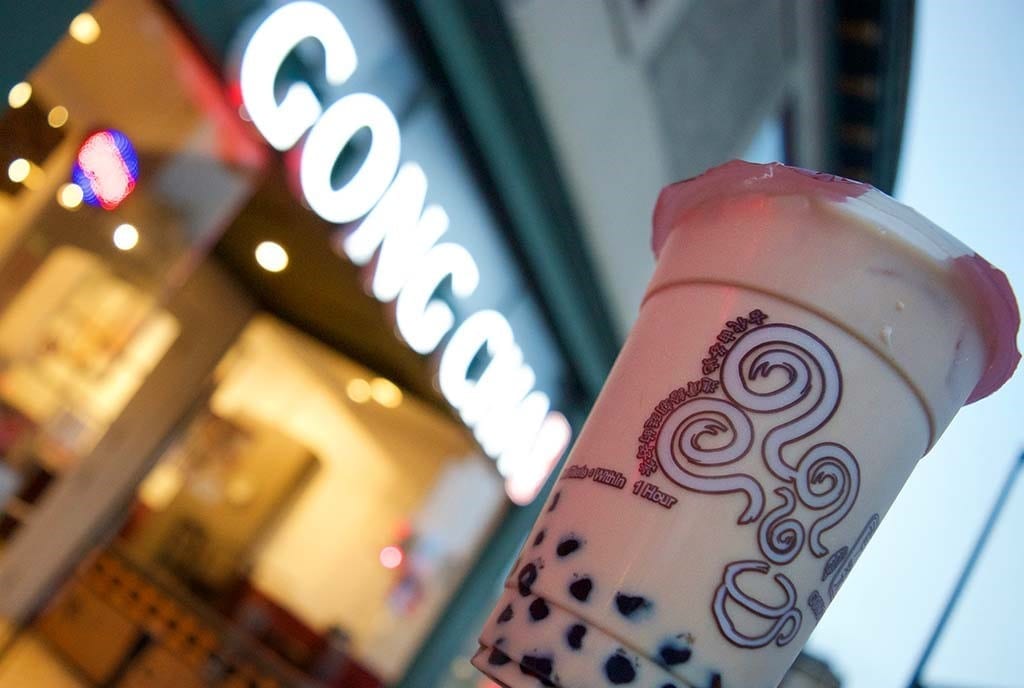
    International private equity company TA Associates will take an undisclosed stake in fast-growing bubble-tea chain Gong Cha.

    The investment is being made through TA Associates’ Hong Kong office, with settlement expected in early October. The value of the investment has not been revealed.

    Gong Cha’s South Korean operator will also participate in the capital raising.

    Gong Cha has more than 1000 stores in 17 countries, including South Korea, Japan, Taiwan, the Philippines, Malaysia, Mexico, Australia, Canada, Vietnam, the UK and the US. The company was founded in 2006 in Kaohsiung, southern Taiwan.

    Edward Sippel, an MD at TA Associates and co-head of Asia operations of TA Associates Asia Pacific, said his company’s involvement in the brand will help grow the Gong Cha brand in new and existing markets.

    “Gong Cha [is] a high-growth business that is among the world’s most-recognized tea brands. We are incredibly impressed with how successfully the management team has grown Gong Cha into such a profitable, global business. We will work closely with management in supporting the company’s franchise partners to further Gong Cha’s strong business model,” said Sippel.

    Gong Cha’s main offering, Taiwanese-style bubble tea, is sweet milk tea infused with pearl-shaped tapioca. The company also offers a variety of seasonal and specialty tea-based drinks. Through a primarily franchise model, Gong Cha reaches consumers through a variety of retail store formats, including urban and suburban stores, as well as take-out shops, mall-based stores and kiosks, often in high traffic areas such as train and metro stations.

    “We welcome TA Associates as investors in Gong Cha,” said Euiyeol Kim, CEO of the Gong Cha Group. “With its scale, large capital base and global footprint, TA is an ideal partner for Gong Cha at this stage in our growth. TA offers the truly deep global resources and experience that will help us further strengthen our market position and allow us to even more effectively build our leading global tea brand.”

    Peter Rodwell, newly appointed executive chairman of Gong Cha, said the brand’s success was the result of the management team’s persistent customer-centric focus on quality, innovation and service.

    “I am confident that with TA’s long history of building value in growing businesses, we are poised to bring Gong Cha’s quality tea products to many more consumers around the world.”

    Rodwell joins Gong Cha with more than 30 years of retail food-and-beverage and franchising, including leading McDonald’s expansion across Asia-Pacific and the Middle East.

    Michael Berk, an MD at TA Associates, said the global tea market has enjoyed steady growth over the past several years, and milk tea, including bubble tea, remains a staple beverage across Asia and increasingly around the world.

    “Globally, the tea market is estimated to be larger than that of coffee, with continued expected growth. Given these market dynamics, we believe that Gong Cha is very well-positioned to further expand the company’s presence and brand throughout the world.”

  • Giant Malaysia opens seven stores as it accelerates upgrade program

    Giant Malaysia opens seven stores as it accelerates upgrade program

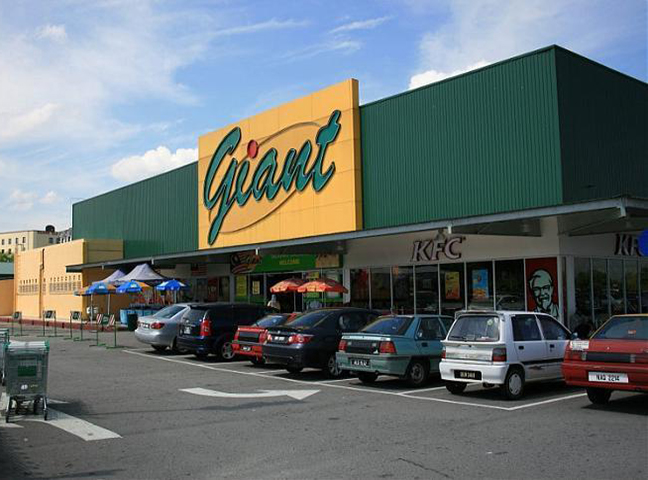
    Giant Malaysia opened seven new-generation stores on a single day last week as Dairy Farm International-owned GCH Retail upgrades the retail-grocery brand.

    Since May of this year, the company has upgraded 21 Giant stores in Malaysia, including 14 in the Klang Valley region of greater Kuala Lumpur. Friday’s openings were all in Johor.

    “The new concept was designed to create a modern shopping environment in our stores and more product diversity to better serve the needs and wants of the customers,” a spokesperson told Inside Retail Asia.

    “Showcasing an attractive systematic layout, shoppers will now find it easier to navigate their way through the hypermarket.”

    “The focus is on freshening up and lifting the brand, while the team works at improving the offer according to customer needs and preferences.”

    The seven Johor stores consist of Giant Hypermarket Plentong, Giant Hypermarket Leisure Mall, Giant Hypermarket Southern City, Giant Hypermarket Tampoi, Giant Superstore Kulai IOI, Giant Superstore Ulu Tiram and Giant Supermarket Perling Mall.

    The newly refurbished stores dispel the myth being propagated by some mainstream media in Malaysia that Giant is shrinking its store network or even preparing to exit the market. Giant has been in the country for more than 70 years and last year GCH Retail opened a RM116 million (US$27.6 million) fresh distribution centre to serve its Giant, Cold Storage, Jason’s Food Hall and Mercato banners.

    “The fresh new look of these stores are a testament to Giant’s commitment to constantly reinvent to provide communities with greater variety of fresh and quality products at the best value and cultivate a more sustainable society,” the spokesperson said.

    The new-format stores feature a bright and light environment, with vibrant colour schemes and bold category signage.

    The product range has been streamlined in each store to expand the fresh food offer and improve its quality.

    A Flat Price Zone features products set at a fixed price points of RM1, RM3, RM5, RM10 and RM15. An expanded Kids Zone features a wide variety of toys and stationery for children.

    The relaunched Giant stores will also feature an expanded range of electrical products comprising reputable brands and Giant Malaysia’s own-brand cookware and gadgets.

    ShopSmart! fills a gap

    Dairy Farm has also been rolling out its new minimarket format, ShopSmart! since March, which has a focus on fresh food and household essentials

    Six stores have already opened, with a seventh due to come online during the next few weeks.

    The format has been designed in response to changing customer preferences in Malaysia identified by GCH Retail, such as more frequent ‘everyday shopping’, smaller basket sizes and a desire for stores to be located in residential areas for consumer conveniences.

  • DFS says Changi Airport liquor and tobacco concession ‘not viable’

    DFS says Changi Airport liquor and tobacco concession ‘not viable’

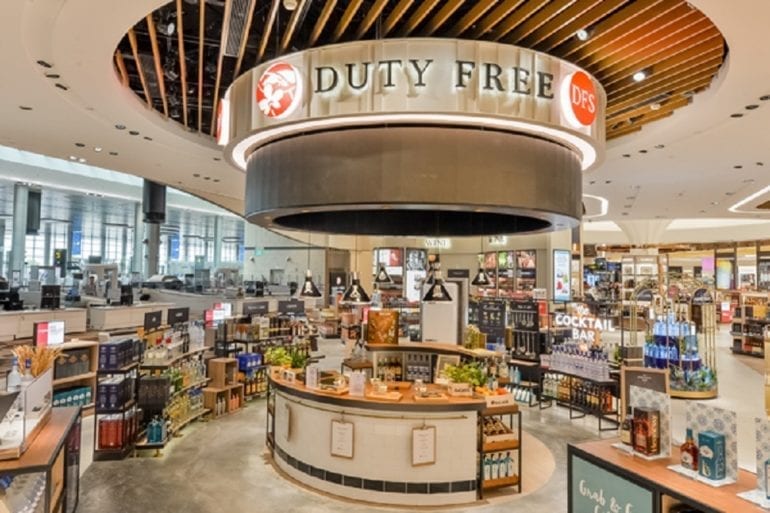
    DFS has explained its rationale for quitting its Changi Airport liquor and tobacco concession, saying remaining there was “not a financially viable option”.

    LVMH-owned DFS Group decided not to bid to retain its Changi concession which expires in July next year. It has held the concession for 40 years.

    Three rival companies have lodged tenders to take over the business.

    “Our decision not to bid was based on our unique understanding of the business environment as the current operator of this concession at Changi,” chairman and CEO Ed Brennan said in a statement issued today.

    “Specifically, changing regulations concerning the sale of liquor and tobacco, against a global context of geopolitical uncertainty, meant that staying in Changi was not a financially viable option.”

    He said that although the decision “is the right one for our business”, it was not taken lightly.

    “DFS has held the concession at Changi Airport since 1980, and during this time we have exceeded all expectations for what travel retail can offer in an airport environment. We are proud of our achievements and deeply appreciative of the efforts of many talented people who have contributed to our success.

    “We sincerely thank the Changi Airport Group for their past support, and extend our best wishes as they take the liquor and tobacco concession operations forward in partnership with a new operator,” said Brennan.

    DFS will continue to run a suite of luxury retail concessions at Changi, along with its downtown operations at T Galleria by DFS and its Singapore Cruise Centre business.

    The duty-free and travel retail giant’s exit from Singapore follows its vacation of the Hong Kong liquor and tobacco concession in December 2017 which at the time it indicated was not profitable.

  • Costco China opens first store in Shanghai

    Costco China opens first store in Shanghai

    US warehouse retailer Costco opened its first store in China today, against a background of an escalating trade war between the US and China and at a time the local economy is showing signs of slowing.

    The giant store will open in a suburb of Shanghai boasting a catchment of 2 million consumers and follows a four-year program by Costco to build brand awareness among local consumers through a presence on Alibaba’s Tmall Global.

    The company has a target of signing up at least 100,000 members to make the venture viable.

    Costco’s business model relies largely on the sale of memberships giving consumers the right to shop there, with tight margins on products and large pack sizes giving the brand a cost advantage over traditional supermarkets.

    Richard Zhang, Costco’s senior vice president for Asia, said the membership model was not foreign to locals.

    “Chinese consumers are ready to pay for a membership card that grants them an exclusive privilege to buy at a warehouse store, it’s not a new concept in the country,”

    Costco also takes encouragement in that – despite the failures of European hypermarket chains Carrefour, Tesco and Metro in the Chinese market – its US rival Sam’s Club, operated by Wal-Mart on a similar business model, has been trading there for 20 years.

    “A mature market saves us efforts in educating customers.”

    However Jason Yu, GM of Kantar Worldpanel China, is less bullish about Costco’s prospects there.

    “The Chinese market is very complicated and requires retailers to innovate and localise,” he said.

    Local retailers like Hema, Alibaba’s tech-enhanced food store network, are proving popular with consumers and can adapt quickly to changing consumer preferences.

    “Local retailers are reaching out to customers via all distribution channels while foreign retailers are not so flexible to adapt to new situations,” he said. “The old way of a large and all-inclusive hypermarket doesn’t work in China.”


  • Ride-Hailing Firm Grab Plans Major Investment In Vietnam

    Ride-Hailing Firm Grab Plans Major Investment In Vietnam

    Singapore-based ride-hailing firm Grab is set to invest “several hundred million dollars” in Vietnam where the company sees its next major growth market, just weeks after it unveiled a $2 billion plan in Indonesia.

    The proposed investment is the latest example of a top-notch regional brand deepening its commitment to Vietnam, one of Asia’s fastest growing economies. It also shows the eagerness of Grab, which has raised billions of dollars from investors, to put its cash to work.

    “We’re very excited about Vietnam. We see very similar characteristics to Indonesia,” Grab President Ming Maa told Reuters in an interview.

    Grab and rival Indonesia-based Go-Jek are evolving from ride-hailing app operators to become one-stop shops for services as varied as payments, food delivery, logistics and hotel bookings in Southeast Asia.

    Grab, with its app on more than 160 million mobile devices across eight countries, has said its Indonesia investment aims to build a next-generation transport network and transform how critical services such as healthcare are delivered.

    Like Indonesia, many middle class and young consumers in Vietnam are using apps and websites to access services, Maa said.

    “I would expect us to invest over several hundred million dollars into growing our Vietnam business,” he said without giving specific details on the investment.

    Vietnam ranks third or fourth among Grab’s top markets, said Maa, who joined the company three years ago from its major investor, Japan’s Softbank Group Corp, and a previous decade-long stint at investment bank Goldman Sachs.

  • Honda Develops New Front Airbag Technology

    Honda Develops New Front Airbag Technology

    The development and testing of the new airbag was led by engineers at Honda R&D Americas, Inc. in Ohio in partnership with Autoliv

    Jim Keller, President of Honda R&D Americas, Inc, said, “This new airbag technology represents Honda’s continuing effort to advance safety performance in a wider variety of crash scenarios and reflects the innovative thinking that our engineers are bringing to the challenge of reducing traffic injuries and fatalities.”

    Unlike conventional airbag systems that rely on a single inflatable compartment, the new system utilises four major components: three inflated compartments – a center chamber and two outward-projecting side chambers that create a wide base across the dash – along with a sail panel that stretches between the two side chambers at their outermost edge. Operating something like a baseball catcher’s mitt, the sail panel catches and decelerates the occupant’s head while also engaging the side chambers, pulling them inward to cradle and protect the head, mitigating the potential for injury.

    It is particularly beneficial in angled frontal impacts in which lateral collision forces can cause an occupant’s head

    Honda also is working to develop and deploy advanced passive safety and active safety systems that can reduce the severity of a collision or help avoid it entirely. In addition to passive safety systems such as airbags, seatbelts and advanced crash safety structures like the company’s Advanced Compatibility Engineering (ACE) body structure, Honda is aggressively deploying its Honda Sensing and AcuraWatch suites of safety and driver-assistive systems. The company has committed to making this broad suite of technologies standard on nearly all of its vehicles by 2022.

  • China’s Car Wreckage Cries Out For Consolidation

    China’s Car Wreckage Cries Out For Consolidation

    Chinese carmakers are involved in a slow-motion wreck. Falling sales hit Geely Automobile Holdings and Great Wall Motor harder in the first half than rivals partnered with foreign marques. Both companies have started seeking JVs, too. A better route to recovery would be industry consolidation, and soon.

    Domestic manufacturers are getting crunched from every direction. The withdrawal of government incentives last year caused customers to accelerate their purchases. Geely, whose parent company owns Volvo, blamed new emissions standards for its aggressive price cuts, and by extension a 40% fall in profit through the end of June. The bottom line at $9 billion SUV maker Great Wall shrank 60% for similar reasons. Beijing is also now slashing subsidies for electric vehicles, putting even more pressure on margins.

    Some sympathy might be expected from the central government, which considers autos a “pillar” industry. Yet Beijing is also aware the country has far too many car companies, and that too many of them rely too heavily on shared revenue from overseas JVs, which has crippled their export competitiveness. Sales of BMW models, for example, made up 90% of revenue at $5 billion Brilliance China Automotive, whose profit fell just 9% in the first half; Guangzhou-based GAC relies on its relationship with Toyota to compensate for slackening demand for its unfortunately named Trumpchi sedan.

    Local manufacturers are losing market share at home. It was down to 36% in July, after they ceded 3.9 percentage points from a year earlier. Even Geely and Great Wall, which had found some market traction for their own models, have started flirting with overseas rivals. The better ones, however, are mostly taken.

    Domestic mergers make more sense. Geely and Great Wall are up against mordant state-backed giants such as FAW, along with dozens of smaller rivals and hundreds of EV startups. Local officials stubbornly prop up weak manufacturers to preserve employment, which keeps them running but weak. The long-expected combination of FAW with Dongfeng and Changan, for example, has yet to happen. It’s time to start revving up these sorts of deals.

  • Hyundai Group Unveils New Integrated E-Scooter For Last Mile Mobility On Future Vehicles

    Hyundai Group Unveils New Integrated E-Scooter For Last Mile Mobility On Future Vehicles

    Speaking on the new concept, DongJin Hyun, head of Hyundai Motor Group Robotics Team said, “This is the vehicle-mounted personal scooter which could be featured in future Hyundai Motor Group vehicles. We want to make our customers’ lives as easy and enjoyable as possible. Our personal electric scooter makes first- and last-mile commuting a joy while helping to reduce congestion and emissions in city centers.”

    Research data by global consultancy McKinsey & Company has released data suggesting that the last mile mobility market is expected to grow to $500 billion by 2030. The new integrated e-scooter is another step in that direction. The e-scooter is mounted on a vehicle and is automatically charged using the electricity generated when driving. A key change since the 2017’s concept has been the shift from front-wheel drive to rear-wheel drive that was essential for enhancing safety and stability as it positions weight near the rear. In addition, the engineers have added a suspension set-up to the front wheel for a smoother ride on rough surfaces.

    Hyundai’s integrated e-scooter features a 10.5 Ah lithium-ion battery, which enables a top speed of 20 kmph and can travel up to 20 km in a single charge. The scooter is light with a weight of 7.7 kg that makes it highly portable, while its tri-folding design makes it light and compact. The scooter also features a digital display that puts out a host of information including the speed and battery status. The e-scooter is also equipped with LED headlights and two taillights for enhanced visibility at night. Hyundai is also looking to introduce regenerative braking on the scooter to increase the range by seven percent.

  • Android 10 release date confirmed: Here’s when Google will release it to Pixel phones

    Android 10 release date confirmed: Here’s when Google will release it to Pixel phones

    It seems that Android 10 will be officially released for Pixel phones on September 3, 2019. This will be the official debut of Android 10 on phones, but of course, it will take a bit longer for all the other Android manufacturers to update their devices.

    This piece of saucy info comes straight from the horse’s mouth – two independent Google Support agents have confirmed with us and a reader of ours that, yes, the next major software update will be released to Pixel devices in eight days’ time. Who knew that you could learn so much by simply asking…

    The update will most certainly arrive to all Pixel devices, including the Pixel 3/3XL, 3a/3a XL, as well as older troopers like the Pixel 2/2 XL. As a pleasant surprise, the original Pixel and Pixel XL, which were released all the way back in 2016, will also get Android 10 despite being outside of their two-year support window. That’s a neat bonus for the early adopters of Google smartphone lineup, which were promised two years of software updates and three years of security support.

    A change of heart at Mountain View

    It’s been merely a few days since we willy-nilly parted ways with Android’s sweet naming scheme of old. Forever gone are the dessert names that became a signature feature of the operating system. As a reminder, there have been a total of 14 dessert-theme Android releases. These are Android 1.5 Cupcake, Android 1.6 Donut, Android 2.0-2.1 Eclair, Android 2.2 Froyo, Android 2.3 Gingerbread, Android 3.0-3.2 Honeycomb, Android 4.0 Ice Cream Sandwich, Android 4.1-4.3 Jelly Bean, Android 4.4 KitKat, Android 5.0-5.1 Lollipop, Android 6.0 Marshmallow, Android 7.0-7.1 Nougat, Android 8.0-8.1 Oreo, and Android 9 Pie. Speculation about Android 10’s dessert name hit a wall as just few compatible sweets started with “Q”, the letter that was slated to grace 2019’s Android release.

    All we know about Android 10 so far

    Among the new features that will grace Android with the arrival of its next version are native support for foldable phones, 5G, Live Captions, Smart Reply, Suggested Actions, as well as improved security and privacy features. Other features that are worth mentioning are seamless background updates, improved suite of digital well-being and parental controls functionalities, and finally, the coveted dark mode.

    But when will my phone receive Android 10?

    As usual, it takes Android manufacturers some time to prepare the major Android software updates for their devices. Samsung, for example, usually takes three to four months to develop, test, and distribute the goods to its userbase. In case you’re using one of Samsung’s current or former flagships, then you’re in for a patient wait. Here’s when we expect some of the more popular Samsung phones to receive Android 10 with One UI 2.0:

    Galaxy S10+, S10, S10e Galaxy Note 10
    International Late December 2019 / Early January 2020 Mid-late January 2020
    US Unlocked February 2020 February-March 2020
    Verizon Late January 2020 February-March 2020
    T-Mobile Late January 2020 February-March 2020
    AT&T Late January 2020 February-March 2020
    Sprint Late January 2020 February-March 2020
  • Android users can now silence Google Assistant

    Android users can now silence Google Assistant

    Do you cringe when Google Assistant starts verbally running off at the mouth with an answer to your question? While it might be information that you need to know, it also might be a good time for a silent response. Thankfully, Google has come up with a solution.  A new section has been added to the support page for the Google Assistant that tells users how to turn off its speech output.

    Turning off the speech output will not affect the answers that you get from Google Assistant. You will see the responses on your phone, but they won’t be read out loud. To turn off the speech output of Google Assistant, touch and hold the home button on your Android device or say “OK Google” or “Hey Google.” When the Assistant box comes up from the bottom, tap on the compass icon on the bottom right of the screen. After that, tap on your profile picture or initial in the upper right corner of the display. Go to Settings > Assistant. From there, go to “Phone” and then “Voice and speech.” Tap Speech Output and a box will appear with two options. To shut Google Assistant up, select “Hands-free only.” To get the digital assistant’s voice to return, follow the above instructions again and when you get to the last box, select “On.”

    Apparently, many Android users are not able to find the “Voice and speech” section on Assistant. Well, first of all, the support page was just updated today so we assume that the update is only now rolling out. We were able to find it on our Pixel 2 XL running Android 10 beta 6. We should point out that Google did not note in the support page that this is a feature limited to Android 10, so if you’re running Android 9 or even Android 8, there is no harm checking to see if you can silence Google Assistant.

    Since typing in a question for the Google Assistant always results in a non-verbal response, the new feature comes into play only on inquiries that are spoken to the virtual digital helper.

  • Facebook reportedly working on a new app called Threads

    Facebook reportedly working on a new app called Threads

    In an attempt to catch up with Snapchat, Facebook is reportedly working on a new app called Threads, which will allow users to share their status, location, and other information with closest friends.

    The app will be designed as a companion app to Instagram is meant to let users share information with their “close friends” list on Instagram. The app is already being tested internally at Facebook, but the company declined to comment for the time being.

    Illustrated screenshots from Threads, the new messaging app from Facebook and Instagram have already been obtained by the media. Although they’re not captured in-app, some of the features are visible such as automatic sharing between users and the people on their “close friends” list on Instagram.

    Users will be able to opt in to automatic sharing, while the app will update the status of the user sharing information with their friends such as location, speed and more. Apparently, Facebook chose no to let the app share your actual real-time location, instead, it will notify your friends that you’re “on the move.”

    There’s also an option that will allow Threads users to update their status manually. However, sharing information is just a secondary focus, as the app’s core remains messaging. All messages from friends will appear in a central feed and there will be green dots showing which of your friends are active.

    Whenever one of your friends posts a story on Instagram, you’ll be able to see that within Threads. Also, the app has a camera that lets users capture photos and videos, which can be sent to close friends.

    Unfortunately, it’s unclear when and if Facebook will actually release Threads to the general public. The internal testing is meant to determine whether or not the app might be useful, so it will take some time before we’ll hear about it again; or not.