Author: Mei Ling Tan

  • Trade war, climate erode first-half Giordano sales

    Trade war, climate erode first-half Giordano sales

    The China-US trade war and unseasonably warm winter have been blamed for Giordano sales falling 11 percent in the first half of the year.

    Profit for the Hong Kong-headquartered apparel retailer was impacted even more, dropping 36.6 percent to HK$161 million (US$20.5 million) on revenue of $2.542 billion ($324 million).

    By market, sales in Mainland China fell 22 percent, in Hong Kong and Macau by 11.9 percent and in Taiwan by 15.2 percent.

    Giordano sales in the rest of Asia-Pacific – its largest single market accounting for 31.8 percent of revenue – were down a lighter 3.7 percent, with performances by country mixed.

    Indonesia stood out with an overall same-store growth of 2.8 percent for both Giordano and non-Giordano brands, and with operating profit increasing by 6 percent. Thailand continued to achieve stable growth, with operating profit advancing by 9.1 percent, attributable mainly to sales growth and improvement of gross margin by 1.5 percentage points from 63.7% percent to 65.2 percent, the company reported.

    Sales in Singapore and Malaysia declined by 13 percent and 8.4 percent, respectively, due to weak consumer sentiment and slow economic growth.

    In Mainland China, promotional activities were intensified to curtail falling sales and clear slow-moving stock, resulting in a 1.4 percentage-point decrease in gross profit margin.

    Chairman and CEO Peter Lau said a series of marketing programs and smart promotional activities have been launched to “galvanise customer traffic”. On the mainland, Giordano is focusing on developing its franchise business, opening 24 new stores in the first half.

    The Middle East business stabilized and rebounded, with operating profit improving by 36 percent.

    South Korea (a 48.5-per-cent joint venture under an independent management team) reported a slight decrease in sales, while its gross profit was almost flat. Net profit declined due primarily to increased marketing and logistics expenses.

    In terms of the company’s outlook, Lau said the trade war is “taking its toll” on consumer sentiment.

    “In addition, Hong Kong’s weakening retail sector continues to be exacerbated by social unrest. The global economic environment is becoming more uncertain, with signs of economic slowdown in many different parts of the world.

    “Singapore is proving challenging, although management has already taken steps to shake up the local management team and remains confident that the business can be improved. Malaysia and Taiwan failed to meet expectations in the first half, although the local teams have stabilized their businesses and are showing signs of turnaround through effective cost control and improved product mix and localized campaigns.

    “Our Middle East business is showing positive signs of recovery while our Southeast Asian markets, in particular, Indonesia and Thailand, have performed positively and will continue its momentum into the second half of 2019.”

    Lau said the company’s initiative to develop local e-commerce businesses within its existing markets will also continue, in order to offer customers a more comprehensive shopping experience and serve a wider local customer base.

    “This will require resilience and determination in the face of growing competition in this online domain, but we have sowed the seeds and will continue to pursue the opportunities that lie in this realm.

    “That being said, cost pressures remain within the industry as a result of increasing production costs in a number of traditional manufacturing hubs in the region, as well as increasing costs of front-line shop staff in a number of the markets we operate,” concluded Lau.


  • Coles claims former employee stole $1.9 million

    Coles claims former employee stole $1.9 million

    Coles is suing a former employee for allegedly stealing more than $1.9 million from the company.

    The supermarket claims that Aaron Baslangic, former head of strategic initiatives and B2B for Coles Online, submitted phoney invoices requesting payment to third parties, and in some cases faked the approval of his supervisor for payments that were above his authority limit.

    In documents filed with the Supreme Court of Victoria over the past two weeks, the supermarket said it has identified 13 questionable payments made to BMW Australia, the Autralian Taxation Office and other businesses from February to June of this year.

    The amounts range from $48,000 to $413,139. More than $1.5 million was paid to a business called Katana Services, whose assets were frozen by the Victorian Supreme Court on July 30, alongside Baslangic’s assets.

    Coles said it first discovered the questionable transactions during a review of payments prior to its migration to a new platform.

    “Irregularities were detected by our internal finance checks and we promptly obtained a freezing order from the Victorian Supreme Court,” a spokesperson for Coles told Inside Retail.

    The transactions caught the eye of Coles’ finance team because some were unsupported by invoices, some were supported by invoices sent from a personal email address for Baslangic and some were for amounts above Baslangic’s authority limit.

    Five of the 13 payments were for more than $75,000, which was Baslangic’s personal authority limit. Payments above this amount required the approval of his line manager Karen Donaldson, general manager of Coles Online.

    But while the accounts team received emails from Baslangic indicating Donaldson’s approval, Donaldson said in an affidavit that she had no prior knowledge of those emails and did not approve the payments.

    Cameron Newell, head of corporate business protection for Coles Online, said in an affidavit that he could find no emails from Baslangic to Donaldson requesting approval, or from Donaldson to Baslangic granting it, suggesting that Baslangic faked his supervisor’s go-ahead.

    Donaldson said she has worked closely with Baslangic since February 2017, when he was employed by Coles’ finance team and worked as a senior finance business partner with Coles Online. He was appointed head of strategic initiatives and B2B for Coles online on July 1.

  • Google Search update lets users find their favorite Podcasts easier than ever

    Google Search update lets users find their favorite Podcasts easier than ever

    The Search app is getting even more changes, Google announced earlier. This time all the changes are aimed at those who are often looking for podcasts to listen to via Search. Currently, there are more than two million podcasts on the web, which makes it harder to find the one you want.

    Luckily, the latest update makes searching for podcasts easier than ever. Starting today, those who search for a podcast about a specific topic on Google will get results in the form of playable episodes alongside web pages, news, images, and videos.

    According to Google, these results will be displayed based on the company’s understanding of what’s being talked about on a podcast, which will provide users to even more relevant info about a topic in audio format. Moreover, Google says that we’ll soon no longer need to use the term “podcasts” when we search to see episodes.

    But there’s more, as Google confirmed that the same feature will come to Google Assistant and Google Podcasts for web, which will allow users to ask the Assistant for podcasts about a certain topic.

    It’s important to mention that these new features will be available starting today, beginning with people using English in the United States.

  • Aldi growing three times as fast as competitors

    Aldi growing three times as fast as competitors

    Australians top priorities in grocery shopping are convenience, quality and pricing – with the latter surprisingly coming in third.

    Dunnhumby’s latest Australian Grocer Retailer Preference Index found that Woolworths is the go to “one-stop-shop” for wide product variety while rival Coles is the chosen grocery for promotions and rewards. However, discount grocer Aldi beats them both on price.

    “Aldi has built the strongest emotional connection with its customers by delivering consistently low prices, quality products and higher perceived ‘value’,”said Keri-Jane Jacka, commercial director ANZ, dunnhumby.

    “Further, our findings show Aldi customers are more likely to recommend the retailer to their friends and family and be sad if their nearest store closed.  This strong emotive response suggests that Aldi has really strong brand equity – a driver for long-term customer loyalty and continued success in the market.”

    Woolworths beats Coles as Australians’ preferred grocery retailer with an RPI score of 95 versus 91. However, Aldi is hot on the heels, described as an ‘accelerating threat’ with an RPI score of 69. The discount grocer is growing three times faster than its competitors, and can potentially double its market share in the next 10 years, dunnhumby said.

    “With Aldi outperforming on all price attributes and developing a real connection with its customers, in order to remain the preferred grocery retailers amongst shoppers, Woolworths and Coles must continue to invest in data-driven retail strategies to foster loyalty and build trust. They must offer lower prices across the board instead of focusing on discounts, and more convenient, easy shopping experiences that delight customers,”
    Jacka said.

    The index shows that the ‘big two’ supermarket giants, Woolworths and Coles, capture two-thirds of shopper visits. One third of shoppers buy at Woolworths, Coles and Aldi in the last month.

    The report found that Australian grocers face intense pressure from e-commerce and discounters that leverage customer data to engage and retain shoppers today. It’s the ‘new normal’ strategy for retailers to win and retain the modern shopper.

    “Retailers need to be far more strategic in their approach to pricing and promotions. To remain competitive, they need to think introspectively on how they can maximize personalization and create the most value for their customers by leveraging the huge amounts of customer data at their disposal,” Jacka said.

    Five primary customer pillars

    Dunnhumby reported that there are five primary customer pillars. These are convenience and quality; easy shopping experience; price; operations and drive time.

    It ranked the five retailers with Woolworths ahead of Coles. Aldi comes in third as the “dark horse in the race”, while IGA and 7-Eleven currently trailing.

    Convenience matters for Aussie shoppers

    Aussies value time so convenience, quality and easy-shopping experience are on the top of their priorities for overall preference driver. But for Woolworths and Coles customers, it is less important as long as they are satisfied with their items.

    Woolworths and Coles are the strongest on quality goods and convenience. IGA’s strongest in good customer service and clean stores. While Aldi offers also good quality products, but trails behind the two supermarket giants on convenience. 7-Eleven’s biggest issues are cleanliness and perishables, but the retailer wins in ready-to-eat items.

  • Auto Industry Slowdown Hits Lakhs Of Jobs

    Auto Industry Slowdown Hits Lakhs Of Jobs

    The slowdown in the auto sector has rendered an estimated three lakh and fifty thousand people jobless due to spiraling layoffs in the automobile industry. In Chennai’s Amabattur industrial estate the slowdown has crippled John Peter makes valve components. Over the last five months, his 8 lakh monthly turnover has dropped by ninety percent, to just one lakh. With a forty lakh private bank loan he has defaulted in repaying his monthly installment of around a lakh rupees. He has laid off 3 of his 13 workers. He has reduced the three-hour shift to one.

    He told NDTV “In today’s situation I’m neither able to pay salary for workers nor repay a loan. It’s so difficult. I don’t know what to do. Banks don’t listen when we say there is no business. They say they would come home and threaten us”.

    Chandrabose, one of his employees who used to earn Rs 18000 a month has already suffered a third of it as there is no overtime opportunity now. The father of two school-going children is now scared that the ax could fall on him soon. He says “I can live only if I have a job. Only if I have a job I can look after my family”.

    Not far away Andrew Ranjithkumar has decided to dump brake component manufacturing his family has been doing for 30 years. Orders from auto companies he says have fallen by seventy percent. Unviable, now he’s making parts for washing machines and home appliances. A third of his machines are also rusting for want of work. He said “There is no demand from the automobile sector. We are pushed towards home appliances as otherwise, we have to lay off people. We are unable to pay a salary”.

    This industrial hub with 2000 units employs around three lakh people. The industry has sought government intervention. N Sujeesh, President, Ambattur Industrial Estate Manufacturers’ Association added “We need a reduction in GST from 28% to 18 % and for subcontractors, small players from 18% to 5 %. The lending rate is high and we need to bridge the gap between interest on savings and lending rate”.

    Carmakers and industry bodies like SIAM, ACMA and FADA have been demanding to reduce the GST rates on passenger vehicles.

    With thirty-five thousand crore worth of unsold cars countrywide there’s an abnormal hike in dealers shutting down. The industry has estimated a loss of 3.5 lakh jobs from car manufacturers to component manufacturers. S E Palanivel Babu, MD of True Sai Works, a car dealer based in Salem has reduced his off -take by thirty-five percent. He says dealers with huge borrowings are collapsing.

    He also blames it on manufacturers thrusting vehicles on dealers. He believes “IN all developed countries market share is calculated on the end consumer. Only in India car market share is calculated on the basis of what manufacturers sell to dealers. This is a wrong way which leads to a wrong market share; the dealer is pressurized to hold more stocks and erosion of working capital in the long run”.

    Many in the industry hope the upcoming Diwali season could shift car sales to top gear for a turn around if the government swiftly intervenes.

  • Kathmandu lifts same-store sales in FY19

    Kathmandu lifts same-store sales in FY19

    Kathmandu has reported a 2.7 percent year-on-year increase in same-store sales in Australia in FY19, and a 3.9 percent decline in same-store sales in New Zealand year on year.

    Overall, group same-store sales grew 0.6 percent year on year in FY19, the outdoor retailer said in a trading update on its unaudited full-year results on Thursday.

    Total sales across the business grew 9.6 percent to $520 million (NZ$545 million) compared to the year prior, with Kathmandu seeing strong performance in Australia during the second half of the financial year.

    According to Kathmandu managing director and chief executive Xavier Simonet, this was due to strong winter sales in Australia, as well as the continued performance of footwear brand Oboz.

    US-based footwear brand Oboz, acquired in April 2018, is expected to see continued growth in FY20 and beyond, according to Simonet.

    The business expects to see net profit of between $52.9 million (NZ$55.5 million) and $54.3 million (NZ$57 million), based off of an EBIT of between $78.7 million (NZ$82.5 million) and $80.1 million (NZ$84 million).

    This is compared to last year’s net profit of $48.1 million (NZ$50.5 million) and $71.1 million (NZ$74.6 million).

    Kathmandu expects to release its audited full-year results in late September.

    Simonet has previously stated international growth remains a priority moving forward.

    Kathmandu appointed Amy Beck as president of its North American business in January of this year as part of this international push.

    “Kathmandu is on a journey of transformation,” Simonet said, noting that profit growth in the core Australasian business would be used to fund investment into future growth.

    “While we are focused on driving growth for our core Kathmandu business in Australia and New Zealand, we are also step by step diversifying our channels, brand and markets, particularly through Oboz which has delivered strong growth.”

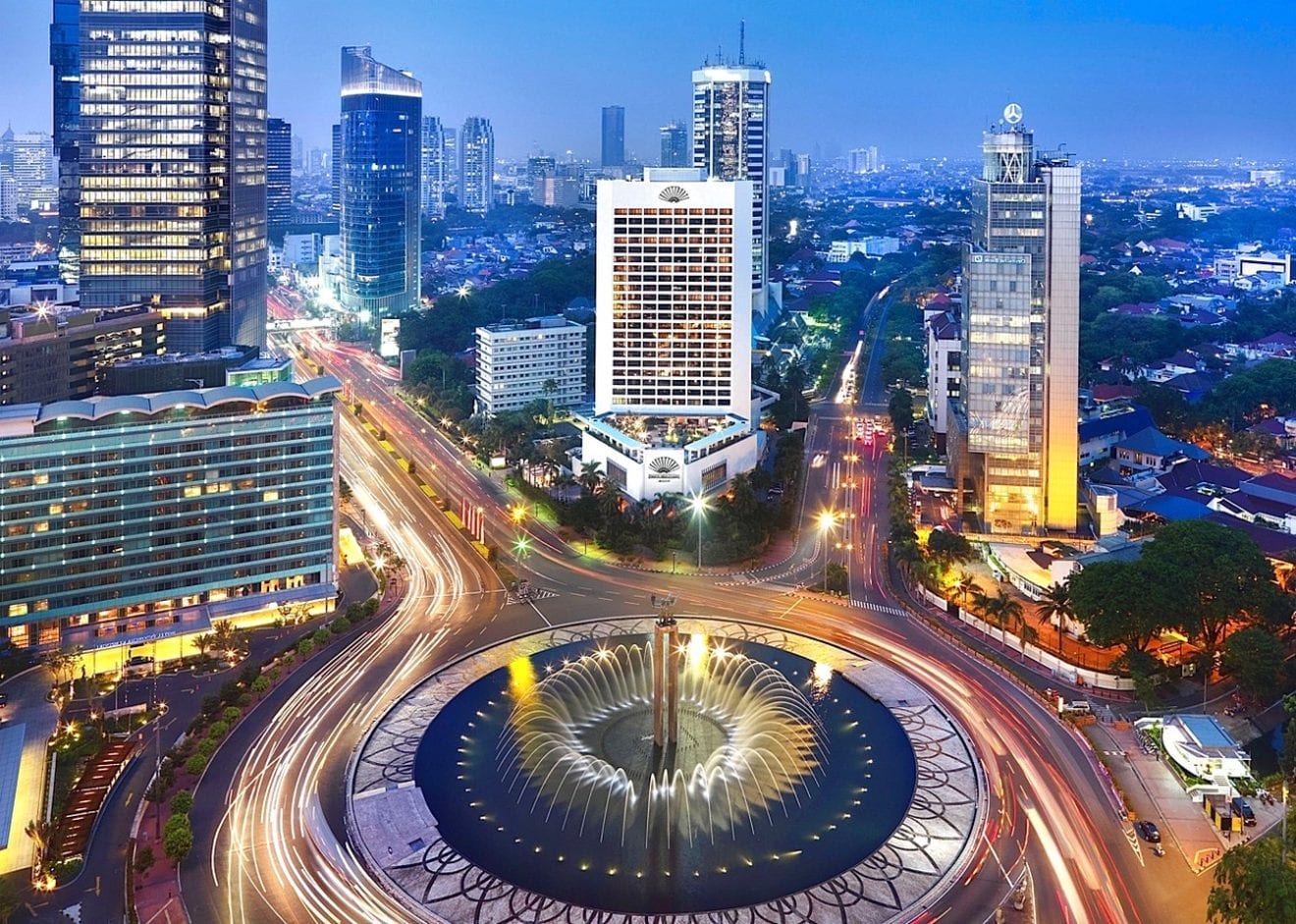
  • Retail sales in Indonesia decline

    Retail sales in Indonesia decline

    Retail sales in Indonesia declined 1.8 percent in June, compared with an annual growth rate of 7.7 percent a month earlier, a central bank survey showed on Thursday.

    The last decline from a year earlier was in January last year when retail sales also dropped 1.8 percent.

    The survey predicted retail sales would rise 2.3 percent on an annual basis in July, when the new school year begins.

  • Ecco is heading back to the Philippines

    Ecco is heading back to the Philippines

    Danish footwear brand Ecco is returning to the Philippines through a shop-in-shop concept at SM malls.

    The brand has launched spaces at SM Store Makati, SM Store Mall of Asia, and SM Megamall’s third floor Bridgeway Building. The openings are part of the label’s strategy to continue its expansion in the territory as more shop-in-shop formats and eventually, concept stores at select SM malls are being planned.

    Ecco operates in 87 countries at 2989 shops and shop-in-shops and  15,000 sales points globally. It remains one of the only major international shoe manufacturers to own and manage every step of the shoemaking process.

  • Australian dollar rises

    Australian dollar rises

    The Australian dollar has risen Thursday, buying 67.59 US cents from 67.11 US cents on Wednesday.

    Yesterday, the local currency hit a 10-year low of 66.77 US cents after New Zealand’s central bank cut the country’s cash rate by a larger than expected 50 basis points.

    The Aussie was trading as high as 67.83 US cents on Wednesday morning but fell more than 1.5 percent after the Reserve Bank of New Zealand cut its official cash rate to 1.0 percent in an attempt to reheat the country’s cooling economy.

    The Aussie’s biggest one-day decline since April dropped it more than one cent to as low as 66.77 US cents as RBNZ governor Adrian Orr spoke to media and said further cuts were possible.

    At 1335 AEST, the Australian dollar was worth 66.90 US cents, just above what had been its lowest level since March 18, 2009.

    The RBNZ’s move came a day after the Reserve Bank of Australia held the local cash rate at 1.0 percent but said it was prepared to reassess after weighing the impact of 0.25 percentage point cuts in June and July.

  • HSBC Singapore Expands Foreign Mortgage Solutions

    HSBC Singapore Expands Foreign Mortgage Solutions

    Responding to growing interest among clients, HSBC Singapore now offers mortgages for investment residential properties in five cities across Australia.

    HSBC Singapore is hoping to tap on the growing number of Singaporeans who plan on buying investment properties abroad with the launch of its first overseas mortgage solution, the bank announced on Thursday.

    HSBC International Mortgage will be offered in Singapore in either Singapore or Australian dollars for investment residential properties in and around Sydney, Melbourne, Perth, Brisbane and Adelaide, with other overseas destinations to be added over time.

    Successful applicants will get HSBC Premier status, which gives them access to a relationship manager in Singapore and Australia to facilitate the process, the bank said.

    We went with Australia as the first market for this solution given the close affinity that Singaporeans have for the country on the back of their business, education, holiday or familial ties. as a result of business, education, holiday and familial ties, Ranojoy Dutta, head of Retail Products, HSBC Bank (Singapore), said.

    The bank also highlighted its own Beyond the Bricks report from 2018, which indicated that one-third of mass affluent Singaporeans currently have overseas property investments, and 70 percent plan to buy investment properties abroad.

    Singapore’s real estate investment in Australia grew 141 percent in 2018 to $3.5 billion, despite skyrocketing property prices, according to Real Capital Analytics data. According to Knight Frank’s 2018 Wealth Report, Australia was the second-most popular destination for prime property purchases among wealthy Singaporeans.

  • Internet-Only Banks Closing Trust Gap

    Internet-Only Banks Closing Trust Gap

    Trust in tech firms entering the financial sector is strong and rapidly improving to close the gap with traditional banks in Asia Pacific where 77 percent already prefer accessing their banking services via digital channels.

    According to the research firm Forrester, banks continue to lead in trust rankings regarding consumers’ financial interest but tech firms are rapidly catching up. In India, for example, Google outranked banks as the most trusted company to act in their best financial interest. In another tech-savvy nation like mainland China, companies like Alibaba and WeChat were only slightly behind their traditional competitors.

    In addition, global tech giants, payment providers, e-commerce players, and even ride-sharing leaders are threatening the pole position of incumbents by providing simple, convenient, and more personalized digital experiences.

    Across all eight markets surveyed, the preference for digital channels dominated in banking as agreed by 69 to 79 percent of respondents in any given market. 78 and 76 percent of respondents in Hong Kong and Singapore, respectively, preferred digital channels for banking with the former ranking the lowest for branch preference (7 percent).

    Digital played dominance in banking is not so much replicated in the insurance sector where only between 32 and 59 percent of respondents in the various markets preferred digital channels. In markets like Singapore and Malaysia, agents were the most preferred channel as agreed by 46 and 41 percent of respondents, respectively.

    Consumers are more likely to engage with firms that prioritize helping them improve their financial well-being, said Dane Anderson, VP, research director, and regional manager at Forrester. We expect that customers will dynamically deconstruct their personal financial services ecosystems and reassemble them with newer and better players. Traditional institutions have several advantages but will be left behind if they do not transform faster to meet the challenge.

  • Cebu Pacific to assess Mati City flights when airport is ready

    Cebu Pacific to assess Mati City flights when airport is ready

    Budget Carrier Cebu Pacific is ready to assess the viability of flights to Mati City, the capital of Davao Oriental province, as soon as the development of the airport for commercial operations starts. Cebu Pacific Director for Corporate Communications Charo Logarta-Lagamon said in an interview last week that they have always been open to that opportunity.

    “Mati has always been on our radar. But as of now, there is nothing concrete yet given that the airport is not 100% done and there is still a lot of technicalities that need to be ironed out before we can use it for commercial flights,” she said. Ms. Lagamon noted that an online campaign a few years back indicated interest for Mati among travelers. “Mati is one of the choices of netizens. Obviously, there is some market but how big the market is and will that market be viable and sustainable, that is something we need to assess,” she said.

    Last month, Mati City Mayor Michelle Nakpil-Rabat said they are working on land ownership issues relating to the airport so that they can undertake the runway expansion and open it for commercial flights. Meanwhile, Ms. Lagamon said they continue to evaluate potential routes to and from Davao City while “beefing up our Cebu and Clark hubs.” “In fact, we are launching new routes on August 9,” she said.

  • Malaysia Facing Fintech Talent Shortage

    Malaysia Facing Fintech Talent Shortage

    As the historically conservative financial industry in Malaysia becomes increasingly open to fintech developments, a shortage of talent is seeing firms scramble for talent in a limited pool of candidates.

    Financial institutions in Malaysia can’t hire fintech talent fast enough to keep pace with the growing demands of consumers, according to recruitment specialist Hays.

    A lack of technical specialists means that across the board, employers in Malaysia are prioritizing hard skills over soft skills in their recruitment efforts, according to the 2019 Hays Asia Salary Guide. Banks and fintech firms alike are short of talent including software developers, cloud engineers, network engineers, cybersecurity engineers, project managers and data scientists.

    The survey said that 60 percent of hiring managers are more inclined to employ staff based on their technical aptitude. Hiring managers said the top technical skills they are looking for are statistical analysis and data mining (voted by 55 percent), project management (52 percent), and computer skills (44 percent).

    Digitalization has made strong inroads in banking, and banks and financial institutions are partnering with fintech firms to bolster know-your-customer (KYC) processes, anti-money laundering and digital identity management. Banks might also be gearing up for competition as virtual banking is fast becoming a reality for Malaysia – Bank Negara plans to issue licensing guidelines by year-end, or as soon as the industry regulations are finalized.

    The majority of those currently making their way into fintech in Malaysia are in the first 10 years of their career or straight out of education. However, a large amount of this demographic, the techies of the future, do not see the industry as one that is beneficial to their careers, said Hays consultant Ashraf Rafiuddin.

    As such, employers are using self-promotion and training to entice younger talent, and are also hiring candidates from outside the field, including those without an IT background. This increasingly open-door policy that has been seen in the past 12 months is expected to continue into the next year, Rafiuddin said.

  • Cebu Pacific offers P88 fare promo for domestic flights

    Cebu Pacific offers P88 fare promo for domestic flights

    Cebu Pacific early Thursday announced a seat sale promo for all domestic and international flights.

    Passengers can avail of the P88 one-way base fare for local flights while one-way base fare for international flights starts at P888.

    Booking period is only available from Aug. 8 to Aug. 9, the airline said.

    Travel period for promo flights are from Dec. 1, 2019 to April 30, 2020.

  • AirAsia may face fines for charging processing fees for card and online banking transactions

    AirAsia may face fines for charging processing fees for card and online banking transactions

    low-cost carrier AirAsia could still face fines for charging passengers additional processing fee for card and online banking transactions. This comes right after AirAsia Group CEO, Tan Sri Tony Fernandes had announced that the airline will scrap the processing fee beginning October 2019.

    The Malaysian Aviation Commission (Mavcom) had made it compulsory for all airlines in Malaysia to remove hidden charges such as card payment charges and administrative fee effective 1st June 2019. The amendments to the Malaysian Aviation Consumer Protection Code 2016 (MACPC) also require airlines to refund the passenger service charges, taxes, fees and charges prescribed under any written law for both refundable and non-refundable tickets if a passenger did not travel. Refunds must be reimbursed within 30 days and airlines are only permitted to charge a maximum of 5% processing fee if the ticket is non-refundable.

    It was also reported that the Mavcom will issue a show-cause letter to airlines on the violation of the MACPC and the commission will then determine if the airline has contravened the said provision. The commission highlights that it is compulsory for airlines to remove the processing fee and airlines must also disclose the final price of the airfare both at the point of advertisement and prior to the consumer purchasing the flight tickets.

    They added that the final price must include the base fare and all required charges to be paid to the airline, government-imposed taxes, fees as well as fuel surcharge. This, according to the commission, will eliminate hidden charges such as card payment charges and administrative fees.

    The regulator said that it has been a practice in the past where the price increases after selections are made due to additional charges that were not disclosed upfront. The Edge Markets had reported that it may seem that AirAsia and AirAsia X would be liable for contravening the MACPC as they continue to charge processing fees until 30th September 2019.

    As mentioned earlier, AirAsia charges card processing fee as high as RM12 per passenger per flight depending on the destination. This means a return ticket could cost as high as RM24 for processing fee and if you’re travelling in a group of four, that’s equivalent to RM96 for processing fees alone.

    When Tony Fernandes was asked if Mavcom had ordered AirAsia to remove the transaction fees, he denied it on Twitter.

    At the moment, AirAsia encourages its passengers to pay by BigPay prepaid Mastercard to enjoy zero processing fees for their flight tickets. It is also worth pointing out that Bank Negara Malaysia had decreed that merchants cannot impose surcharges for payments using debit and credit cards.

    The same report also highlighted that AirAsia had stopped charging a RM3 klia2 fee on passengers departing from klia2 after it was made illegal by Mavcom. According to AirAsia, the extra fee was to cover the huge amount of extra cost klia2 has created such as aerobridges and the SITA check-in/boarding systems. Although it wasn’t disclosed in AirAsia’s annual report, The Edge Markets estimated that the airline would have collected RM45.24 million from the RM3 fee based on the number of passengers carried by the group from Malaysia Airports Holdings Bhd’s 2018 annual report.