Author: Mei Ling Tan

  • Uniqlo, Coupang, Daiso weigh cost as Japan boycott grows

    Uniqlo, Coupang, Daiso weigh cost as Japan boycott grows

    Casual-clothing chain Uniqlo says its sales have been affected as the consumer boycott of Japanese goods intensifies in South Korea.

    Uniqlo, owned by Fast Retailing, will close a downtown Seoul store soon, but says this is due to a decision not to renew a lease rather than the Japan boycott as reported by Japanese news media.

    Uniqlo has close to 190 stores in South Korea where it sells around US$1.3 billion of clothes annually, accounting for 6.6 percent of its revenue.

    Meanwhile, the boycott is leaving some South Korean companies that some consumers have labeled as “Japanese companies” struggling to explain themselves.

    South Korean consumers are boycotting Japanese products from beer to pens in protest over Japan’s decision to impose restrictions on exports of key high-tech materials to its Asian neighbor. While Japan cited security concerns for the curbs, the move also been seen as retaliation after a South Korean court last year ordered Japanese companies to compensate Koreans who were forced to work for Japanese occupiers during World War Two.

    Japan has also removed South Korea from a list of favored trading partners.

    “It is not easy to clear up the misunderstanding as there are some complicated cases of stake relationships that are confusing even to consumers,” wrote D M Park of Korea Bizwire.

    For example, Daiso, a flat-priced household goods company run by Asung Daiso, has been dogged by constant attacks from some consumers saying it is a “Japanese company” since the beginning of the boycott campaign.

    Daiso originally started in May 1997 when Park Jung-won, a former office worker, opened a household goods store called “Asco Even Plaza” in Seoul. In November 2001, the company changed its name to Daiso Asung in cooperation with Daechang Co, a Japanese distributor of flat-price goods. Daiso is the Japanese pronunciation of Daechang. It later registered as a foreign-invested company under the Foreign Investment Promotion Act in March 2002.

    Currently, Park holds 50.02 percent of Asung HMP, the largest shareholder, while Japan’s Daechang Industrial holds 34.21 percent of the shares.

    The problem is that Japanese companies own more than 30 percent of the shares, and Japan also has more than 2900 stores of the same mutual, uniform price household goods company run by Daechang Industrial.

    “There is no relationship between Japan’s Daiso, Japan’s payment of royalties, personnel exchanges, nor participation in management except for equity investments,” stressed a representative of Asung Daiso.

    “Samsung Electronics also has a high foreign stake, but that does not make Samsung a foreign company,” the representative said.

    Coupang, a leading e-commerce company, also suffered from rumors that it was a Japanese company after Japan’s Softbank Vision Fund (SVF) made equity investments.

    Although Coupang, an unlisted company, has never made its exact stake public, industry sources estimate that SVF’s stake in Coupang will exceed 30 percent.

    Coupang responded quickly through its own promotional channel as such rumors spread quickly in the early days of the boycott and showed signs of affecting sales as well.

    “Foreign ownership of KB Financial Group is close to 70 percent, while foreign ownership of Samsung and Naver is also close to 60 percent,” Coupang explained.

    Coupang then laid out the similar logic of Daiso that high foreign investment in shares does not mean that a company is a foreign company, hoping to overcome impact from the Japan boycott.

  • Google Flights now guarantees refund for price difference

    Google Flights now guarantees refund for price difference

    In an attempt to make its Flights app more trustworthy, Google announced a couple of nifty new features that, hopefully, will offer users more peace of mind when they book a flight through the app.

    Up until now, Google Flights would show users whether prices for a flight route are high, low or typical. However, starting today, the app is getting a new feature that will show you the same insights for your exact itinerary. On top of that, for some flights, the app will be able to show you how the price has changed over the past few months.

    Google Flights will also notify users when it predicts the price may go up soon or won’t get any lower so that they can book their flights as soon as possible. And to give Google Flights more confidence when they book a flight, when the app predicts the price won’t decrease for select routes booked between August 13 and September 2, Google will guarantee the price won’t drop and will refund you the difference if it does.

    Yes, Google will monitor the price and if the price drops any time before your departure, you’ll receive an email to inform you once your flight takes off. According to Google, this feature is only available for select routes originating in the United States with domestic or international destinations.

    Google Flights is also getting some improvements when it comes to trips. Starting this week, the app will assist users with recommendations for the next steps after they booked a flight and received a confirmation in Gmail. These recommendations cover everything from searching for hotels to restaurants and other things to do.

  • Alibaba expands 88 VIP prestige loyalty program

    Alibaba expands 88 VIP prestige loyalty program

    Alibaba Group has rolled out an upgraded 88 VIP membership program, adding new perks and privileges to its prestige loyalty program.

    The new offerings range from discounts at more online flagship stores, memberships for Alibaba’s various services, and wider access to other platforms within the Alibaba ecosystem.

    This year’s package extends the 5-per-cent 88 VIP member discount to 300 brands on Tmall, adding to the 88 brands introduced when the club launched last year. Each 88 VIP member will also be automatically entitled to global travel membership with Alibaba’s travel service platform Fliggy, giving them additional benefits when booking international hotels and flights throughout the year.

    “The upgraded membership program demonstrates we are committed to enhancing the customer experience and delivering benefits that cover all aspects of our customers’ lives,” said Alibaba Group chief marketing officer Chris Tung.

    “Discounts on a wider range of brands and products and deeper engagement with the Alibaba ecosystem have helped us enhance customer loyalty, as well as strengthen our capabilities in cross-selling and generating consumer insights, benefiting customers and brands alike.”

    An 88 VIP member spends an average of RMB100,000 annually on services within the Alibaba ecosystem. These VIP members are often the first to discover what later become best-selling items on Alibaba’s platforms. Their purchases usually cover a wider range of categories than typical members. Moreover, these VIP members are more likely to have memberships on multiple services on Alibaba’s platforms.

    Launched in 2018, the 88 VIP program has created immense growth opportunities for both brands and merchants, according to Alibaba. For example, Marriott International, the global hospitality group that joined the 88 VIP program last December, has received twice as many hotel room bookings from 88 VIP members than from non-members. The land, a New Zealand dairy brand, has generated around 90 per cent of its sales on its Tmall flagship store from 88 VIP members.

  • Singapore retail sales slip in June

    Singapore retail sales slip in June

    Singapore retail sales – excluding motor vehicles – decreased by 2.7 percent in June, according to Statistics Singapore.

    The headline figure, which includes motor vehicles, was down 8.9 percent, reflecting the high volume of cars sold in June last year and a lower COE quota for May to July this year.

    Month-on-month, Singapore retail sales were down 0.4 percent, excluding vehicles.

    Online accounted for 5.5 percent of the S$3.5 billion in retail spending for June.

    Sales of furniture & household equipment declined 15.1 percent year on year, attributed to higher sales in the sector during last year’s Hari Raya festive season. Similarly, the computer & telecommunications equipment and watches & jewelry sectors reported sales down by 7.7 percent and 4.8 percent respectively, driven in part by lower demand for handphones and jewelry.

    Sales of medical goods & toiletries and of apparel & footwear both grew by 1.4 percent.

    Compared to the same period last year, sales of food & beverage services grew by 5.3 percent in June, estimated at $864 million, compared to $820 million in June last year.

    Sales by fast-food outlets grew by 10.6 percent compared to June last year, due partly to the opening of new outlets by some major fast-food chains. Food caterers, restaurants and other eating places (such as cafes)were up by between 3.2 percent and 5.7 percent during the period.

  • Shiseido to create Tory Burch beauty products

    Shiseido to create Tory Burch beauty products

    Global beauty firm Shiseido has entered into a long-term partnership to create and sell a range of Tory Burch beauty products.

    Shiseido will have an exclusive worldwide license to develop, market, and distribute Tory Burch beauty products.

    The agreement goes into effect on January 1 next year. The Tory Burch beauty products license will be managed by Shiseido Group’s Americas region headquartered in New York City. Through the partnership, Shiseido will provide Tory Burch with a global platform and dedicated resources to elevate its beauty business, cultivating opportunities as a multi-platform, global lifestyle beauty brand.

    For Shiseido, this partnership will expand its global fragrance portfolio and create further opportunities for collaboration.

    “Shiseido is on an exciting journey to achieve its long-term mission of ‘Beauty Innovations For A Better World’,” said Shiseido president and CEO Masahiko Uotani, “and we are honored to welcome Tory and the Tory Burch brand to the Shiseido family and pursue this mission together as partners.

    “Shiseido is dedicated to creating value for all of its partners and we are excited to share the benefits of Shiseido’s platform, R&D resources, technology portfolio and Centers of Excellence with the Tory Burch brand to help maximize its significant potential and opportunities for growth and development.”

    “There are great synergies between our companies,” said Tory Burch, the eponymous brand’s executive chairman and chief creative officer, “including a deep respect and connection to our customers, a passion to support women’s empowerment and an aligned long-term strategic vision.

    “We could not be more excited to build a global lifestyle fragrance and beauty concept in partnership with Shiseido, a realization of a long-time dream.”

  • Starbucks India Speeding up store rollouts

    Starbucks India Speeding up store rollouts

    Starbucks India plans to ramp up its store rollout. The global coffee chain opened 25 new stores in the last financial year and 30 new stores this year with local partner Tata Global Beverages – but plans to open a far greater number of new stores in the near future, according to Tata Starbucks CEO Navin Gurnaney, with an investment of more than US$6.4 – 7.1 million.

    “We spend anywhere between $213,000 and $284,000 to build a store,” said Gurnaney in an interview with the Business Standard. “We would not be being aggressive with our store growth if we didn’t see potential. We think the market is very strong. Excellence is always well received and we believe we have an excellent experience, partners and products. We are extremely bullish on India. India is one of the top five growing markets for Starbucks internationally.”

    Starbucks India stores serve an average of 270,000 customers per week, with 90 percent of their chosen beverages being coffee.

    “People don’t come to us just to buy a sandwich,” added Gurnaney. “It is always an accompaniment with a beverage. The coffee category has been growing with all groups of people and the millennials are certainly gravitating towards coffee. But not just millennials, it is also the 30 years something upwardly mobile, better traveled and better-educated people which are growing in India.”

    While there has been some speculation that Starbucks Tata is considering an acquisition of a rival brand, Gurnaney insisted that Starbucks India outlook is extremely optimistic, and that future plans are to be “thoughtfully aggressive”.

    Starbucks entered India with its first store in Mumbai launching in 2012.

  • Japan okays one shipment of material Samsung needs for its most advanced chips

    Japan okays one shipment of material Samsung needs for its most advanced chips

    The term Free trade has become an oxymoron. Just look at the mess that is taking place with the U.S. and China. As we’ve pointed out countless times, the tariffs that the U.S. is imposing on imports from China are import taxes that are paid by U.S. corporations. The latter can decide to eat some or all of the additional taxes lowering their profit margins or pass along the higher costs to U.S. consumers. China is retaliating by devaluing its currency, the Yuan. This makes Chinese goods cheaper to buy in the states but will force Apple to raise the price of the iPhone in China.

    This isn’t the only trade war going on. Japan and South Korea have been fighting since last October. That’s when a South Korean court ruled that South Koreans forced to work for Nippon Steel during World War II must be compensated for their labor. Calling the decision “unthinkable,” Japanese authorities said that the issue had already been decided when the two countries restored diplomatic ties in 1965.

    To retaliate against the court decision, Japan started restricting the export to South Korea of materials like fluorinated polyimide and resist, and high-purity hydrogen fluoride (HF). These are used in the production of chips used inside smartphones, and for smartphone displays, respectively. Beginning last month, companies looking to ship these materials to South Korean phone manufacturers like Samsung and LG need to apply for permission to do so. Receiving such approval could take as long as 90 days. That’s because Japan has removed South Korea from its “white list” of trade partners that have fast-track trade status. South Korea plans on discussing the removal of Japan from its “white list” but has tabled the matter for a future time. It does plan on tightening regulations on some of Japan’s exports into South Korea for materials used in other industries besides tech.

    For the first time since announcing the restrictions, Japan has approved a shipment of EUV photoresists to South Korea. Samsung uses this material to help it mask or map out designs on the silicon that ends up in chipsets. These show the placement of billions of transistors and EUV, or extreme ultraviolet lithography allows for more precise designs to be made. This leads to the design of more powerful chips that consume less energy. Japan controls as much as 90% of the global market for this material, so Samsung cannot simply move on to another country to source the EUV photoresist it needs.

    “Usually, we don’t announce each time we give export permission. However, the South Korean government has referred to our moves as an embargo on exports, which is unfair criticism.”-Hiroshige Seko, Japanese Industry Minister

    “Even if there are any gains, it will be short-lived. In the end, it is a game without winners, where everyone, including Japan itself, becomes a victim.”-Moon Jae-in, president, South Korea

    However, it doesn’t seem as though this approval changes anything between the two countries. A South Korean senior trade ministry official pointed out that Japan “approved only one out of a number of items,” and a presidential official said that  Japan’s actions “doesn’t mean that uncertainties have been completely removed for the other items.” While these materials can be used to produce smartphones, they also can be used to manufacture weapons.

    Apple iPhone models that sport an OLED display and those expected to be equipped with such a screen (iPhone 11, iPhone 11 Max) could be affected by this trade war. That’s because, as we’ve mentioned, high-purity hydrogen fluoride (HF) is used to produce smartphone displays. As one of the materials that Japan will no longer allow to be shipped to South Korea without permission, both Samsung and LG could face delays in obtaining it. And that could mean that Apple, which purchases its OLED panels for the iPhone from both South Korean firms, could find itself scrambling for this important part as production gears up for the 2019 iPhone models.

  • Changes force all Android reminders to go through Google Assistant

    Changes force all Android reminders to go through Google Assistant

    In addition, Google is now forcing all reminders to go through Google Assistant. Android users were once able to add a reminder or edit one through the Google app if Assistant was disabled. Now, if you try to do this, a prompt appears telling you to turn on Google Assistant since the virtual digital assistant “is ready to help you get things done.” You won’t be able to do anything reminder-wise unless Google Assistant is turned on. If you have your phone set to a language not supported by Google Assistant, you won’t be able to set reminders on the phone.

    Also changed is the user interface which is now done up in Material Design. The new UI eliminates the gray dividers, and the blue floating button is now in Google’s four-color plus sign. Each reminder includes a checkbox replacing a swipe. And reminders that are overdue will jump out at users thanks to a big red badge that says “OVERDUE” in caps. Additionally, the UI for creating a reminder no longer automatically asks you to choose a place where you want to be reminded. If you want the reminder to appear at a certain location, you will have to ask Assistant to “remind me to (fill in the blanks) when I get to (a specific location).”

    The changes have already hit our Pixel 2 XL and could very well be on your Android phone as well.

  • Nestle starts selling Starbucks-branded coffee in China

    Nestle starts selling Starbucks-branded coffee in China

    FMCG giant Nestle started selling Starbucks-branded coffee in Mainland China today, seeking to tap growth in a market where it says coffee consumption per capita remains low compared to global standards.

    Nestle last year paid US$7.15 billion for exclusive rights to sell the US chain’s coffees and teas globally and began selling Starbucks-labelled products in Europe, Asia and Latin America in February.

    The world’s largest food company will start selling 21 Starbucks-branded capsule and instant-coffee products on Chinese e-commerce platforms like Alibaba’s Tmall and JD, as well as to offices and hotels in tier-1 cities, both companies said.

    “We believe China is the most exciting market in general but especially for coffee because… per capita cup consumption is quite low as compared to Asia,” said Rashid Aleem Qureshi, Nestle’s CEO for the Greater China region.

    “Right now the overall soluble coffee [market] in China is growing between 3 to 5 percent a year and we believe that by bringing this exciting new business opportunity we should be able to grow faster than that,” he said, referring to a category that includes capsule and instant coffee.

    Nestle’s move comes as the Swiss company experienced slower first-half growth in China, its second-largest market, where other categories like mainstream baby foods have struggled compared to pricier options.

    China’s per capita coffee consumption is about six cups a year, compared to 400 in Japan and 300 in South Korea, Nestle said.

    The partnership with Starbucks would help Nestle add a premium coffee option to the range of products it already sells in China, such as Nescafe instant coffee range and Nespresso capsule coffees, Qureshi said.

    Starbucks China CEO Belinda Wong said the Nestle deal would open two new avenues to sell its products in China, where it has been investing heavily in its store network and delivery amid tougher competition from local startups.

  • Mophie’s new wireless pads will charge three Apple devices at once

    Mophie’s new wireless pads will charge three Apple devices at once

    Remember AirPower? The multi-device wireless charging pad was canceled by Apple in March 562 days after it was unveiled on September 12th, 2017. During that same event, Apple introduced the iPhone 8, iPhone 8 Plus and the iPhone X. AirPower was supposed to allow an iPhone, an Apple Watch and the AirPods wireless charging case to power up at the same time. While we might not see Apple unveil a similar accessory for some time, the Apple Store will soon start selling a pair of wireless chargers made by mophie. These products will be exclusive to the Apple Store.

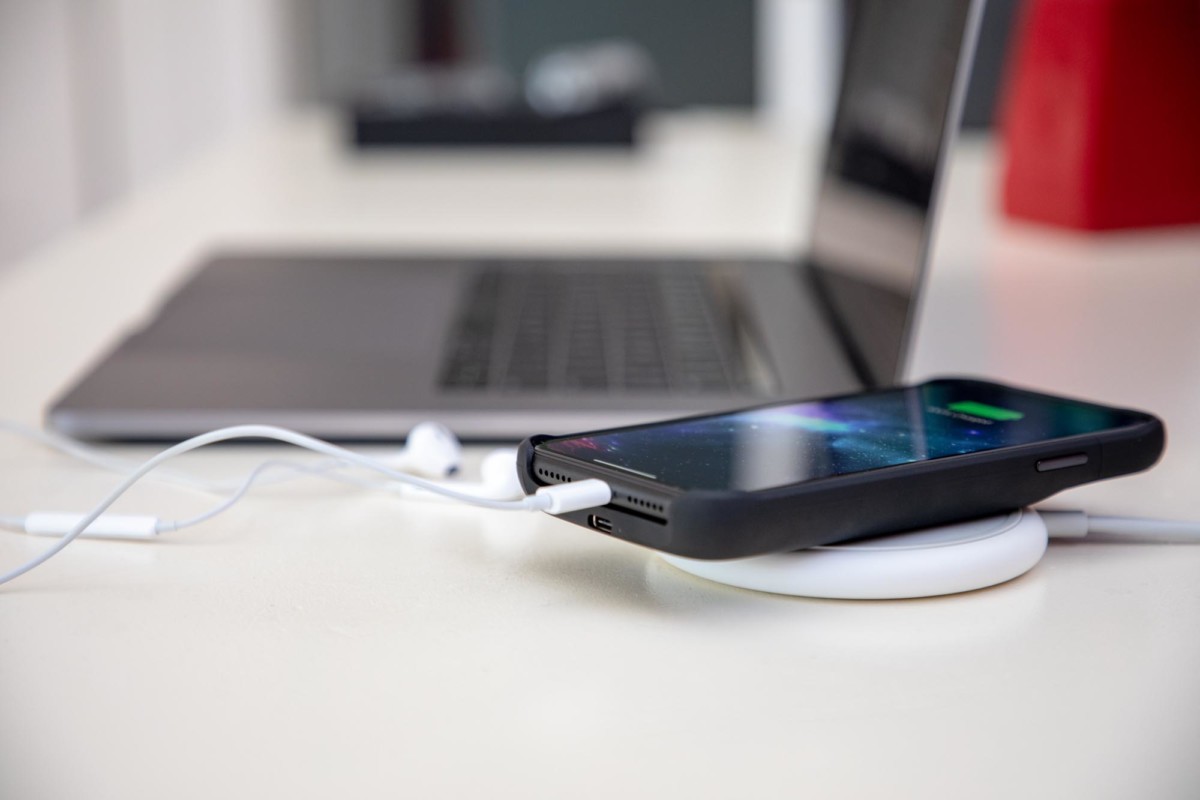
    Mophie’s wireless charging dual pad looks similar to the now-canceled AirPower, and while there are only two hot spots on the pad, an extra USB-A port on the accessory allows the user to charge an iPhone, an AirPods wireless charging case and an Apple Watch all together at the same time. The pad will charge at 7.5W and will be priced at $99.95.

    For $139.95, or $40 more, the Apple Store will sell the mophie 3-in-1 wireless charging pad. This has the two hot spots like the other model and an extra USB-A port for an Apple Watch. But it also includes an Apple Watch charging connector so that while you’re wirelessly charging the timepiece, it will be held at a perfect angle to use the smartwatch’s Nightstand mode. This pad also charges wirelessly at 7.5W.

    “The compact mophie Wireless Charging Pad conveniently recharges your compatible Apple iPhones and Wireless Charging Case for AirPods. Just place your iPhone or AirPods on the pad and a steady, efficient charge of up to 7.5W begins on contact. With the pad’s two fast charge spots and extra USB-A port, you can simultaneously charge your iPhone, AirPods, and connect your Apple Watch cable.”-Apple Store

    While listings for the mophie wireless charging dual pad and the 3-1 wireless charging pad appear on the Apple Store website, they are incomplete. Both are missing photos of the accessories and accompanying videos.

  • King Living launches showroom in Canada

    King Living launches showroom in Canada

    Australian furniture business King Living has opened its first showroom in Canada, continuing the brand’s global roll-out which has seen stores open in Shanghai, Singapore, Malaysia and New Zealand.

    Located in a newly renovated 1000sqm heritage building in shopping district South Granville, Vancouver, the showroom will offer sofa designs, dining ranges, contemporary bed and mattress ranges and outdoor collections.

    King Living chief executive Anna Carrabs said the Canadian launch is a key component to the furniture retailer’s global growth strategy – with Vancouver being the first of many more showrooms in the American region.

    “King Living has already expanded into the Asian market with showrooms in Singapore, Malaysia and Shanghai, which have proven to be very successful in the roll-out of King Living internationally,” Carrabs said.

    “Showrooms will always be a huge part of the King DNA. We want customers to see, feel, test, and get to know the pieces in the flesh. All our designs are investment pieces made to last, so the tactile experience a showroom offers will always be incredibly important.”

    According to Carrabs, the Australian reputation for quality goods has set them apart from international competitors and has been the driving force behind its global expansion.

    “One of our biggest challenges has been challenges has been ensuring we find the right location for our King Living showrooms,” Carrabs said.

    “It is so important that our stores reflect our core values and Australian way of life. It took a considerable amount of time to find our showroom in Vancouver.

    “We wanted to be part of the vibrant shopping district which features around great galleries and gourmet restaurants so now, King Living is right at home.”

  • Taiwanese bubble-tea brands caught in Hong Kong protest backlash

    Taiwanese bubble-tea brands caught in Hong Kong protest backlash

    Internet users on the Chinese mainland have blacklisted popular Taiwanese bubble-tea brands after a Hong Kong franchise urged solidarity with street protesters in the Asian financial hub.

    The online furore began when Yifang Fruit Tea, a maker of the tea-based drink, closed one of its Hong Kong shops for a day and put up a sign that said in Chinese: “Stand together with Hong Kongers”.

    Photos of the sign circulated on mainland social media this week, angering users who accused the firm of backing Hong Kong independence. Calls for a boycott spread to other Taiwanese bubble tea brands like Gong Cha, HeyTea, CoCo and A Little Tea.

    Yifang and the others were blacklisted by users of China’s microblog Weibo. A white list promoted “good” brands.

    “Rest assured, I won’t spend another cent on you. Yifang is rubbish,” a Weibo user named ProfiteroleK wrote in a comment that received more than 1500 likes.

    Hong Kong is facing its worst crisis since returning to China from British rule in 1997, as sometimes violent protests since June against a now-suspended extradition law have become a direct challenge to the city’s government and Beijing.

    Bubble tea was invented by Taiwan, a self-ruled island considered by Beijing as a renegade province. On the mainland, Weibo posts containing the hashtag “Taiwanese bubble tea shops” were read 350 million times in recent days.

    The run-in with Chinese social media users is another example of how companies can get caught in political issues.

    In January, Apple and Amazon were called out by a mainland state think-tank for “incorrect” Taiwan and Hong Kong references.

    The mainland franchisee of Yifang Fruit Tea said in social-media posts the company fired the part-time staff who put up the notice and permanently closed the outlet.

    However, Amigo Cheung, the brand manager of the Yifang franchise in Hong Kong, told Reuters by phone that nobody had been dismissed yet and no outlet had been shut.

    HeyTea and Gong Cha, on their social media accounts, affirmed their support for “One Country, Two Systems” or “One China”, in hopes of distancing themselves from the backlash.

    Fellow Taiwanese bubble-tea brands CoCo and A Little Tea could not be reached for comment.

    Taiwan President Tsai Ing-wen wrote in a Facebook post this week that “China’s political power has invaded into various nonpolitical areas,” citing tea as an example.

    “For people living in a society with freedom and democracy, we need to stay on high alert for issues like this,” Tsai wrote, along with a picture of a cup of ice fruit tea.

    Jennie, a mainland student studying at a Hong Kong university, said she had sympathy for protesting students but also felt caught in the middle.

    “Seeing the locals around disliking mainland people so much, I fear I’ll be driven out (from Hong Kong) by them in the future,” she told Reuters.

  • Google Maps AR navigation is rolling out in beta on Android and iOS

    Google Maps AR navigation is rolling out in beta on Android and iOS

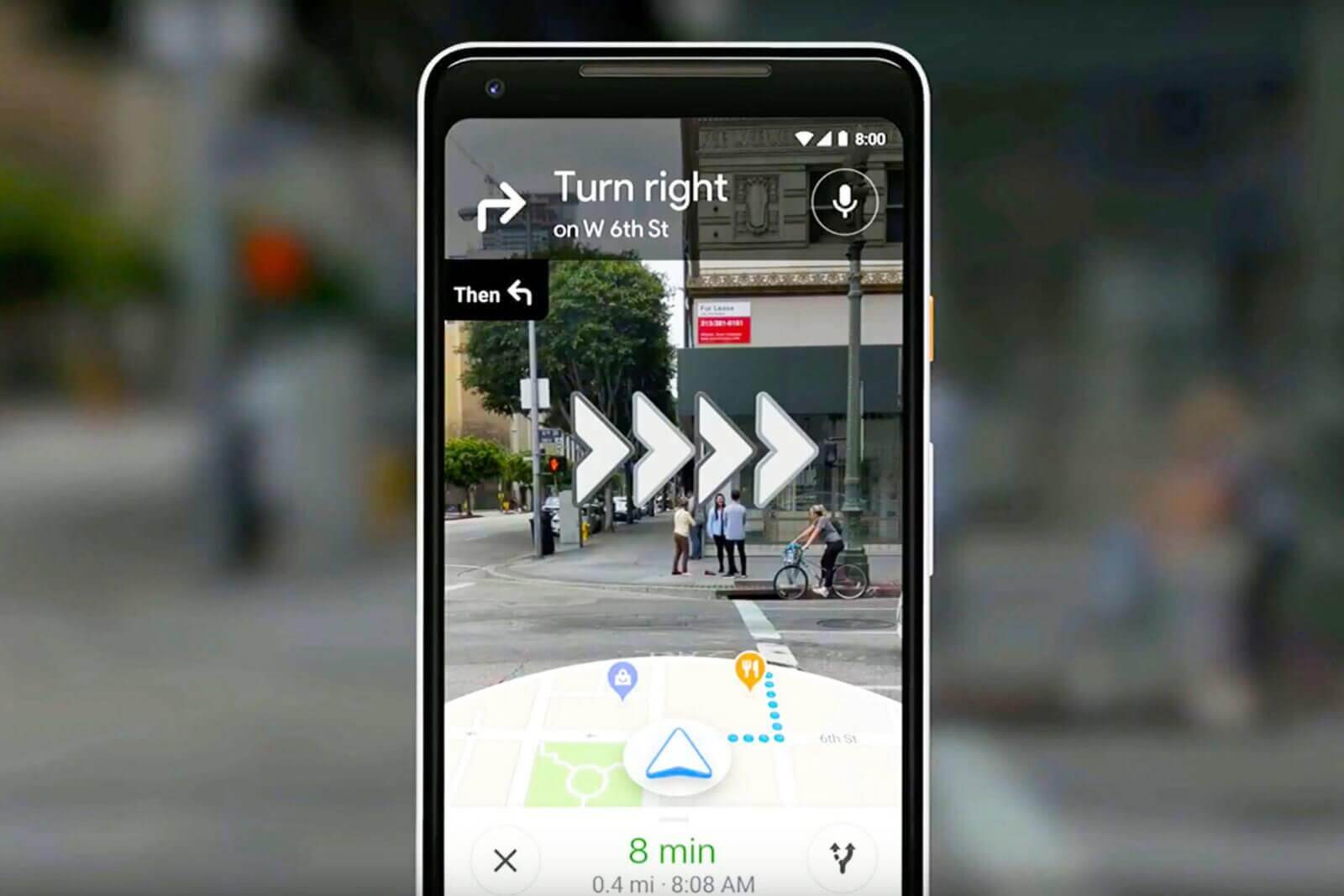
    Google Maps Live View—a new AR navigation mode that uses imagery from your phone’s camera—will be rolling out in beta on Android and iOS in the coming weeks. Live View takes advantage of your phone’s camera and Google Maps’ vast database to deliver a unique AR (augmented reality) navigation experience that layers the Maps interface over a real-time feed from the camera. It was previously demoed last year, and has been available to Google Local Guides level 5 and up, as well as Pixel phone owners, but it’s about te see a broader release later this month.

    To use Google Maps Live View, you’ll need a phone that supports ARKit, in the case of iPhones, and ARCore, in the case of Android devices. Of course, Live View is also going to be available only in regions where Street View is available, TechCrunch reports.

    To use Live View, you’ll need to tap the “Start AR” button and hold up your phone like a viewfinder. This brings up a screen that’s quite reminiscent of a video game, in that you’ll see the world around you, but with virtual elements (like arrows and signs) layered over your surroundings.

    To pinpoint your coordinates, Maps uses your phone’s rough GPS location and Street View’s vast image database to determine exactly where you are. To achieve this, the app takes a series of images, which have a known location, and analyzes them for key visual features (like the outlines of buildings and bridges), in order to create a large-scale index of these features. Then, to localize you, the system compares features in the database to imagery from the live camera feed. Using machine learning, it is able to discern between transient features, such as dynamic lighting and construction work, and the permanent features of the scene.

    Google warns that using Live View in Maps will lead to slightly increased battery and mobile data consumption. The feature is expected to roll out in beta on Android and iOS in the coming weeks.

  • First smartphone equipped with a 108MP camera is “coming soon”

    First smartphone equipped with a 108MP camera is “coming soon”

    Xiaomi’s phones, like the majority of handsets designed and made in China, aren’t sold in the states. But it always is a good idea to follow what is going on with these manufacturers because many times they are ahead of the field when it comes to new features and specs. For example, back in June, we told you that hidden code found in the latest MIUI (Xiaomi’s Android UI) Camera app revealed that a Xiaomi phone would possibly be among the first to use Samsung’s 64MP ISOCELL sensor. Samsung announced the 64MP ISOCELL Bright GW1 sensor back in May.

    While Realme is reportedly about to launch a phone sporting a 64MP rear camera later this month, Xiaomi revealed today that it will release its first device with a 64MP camera in the fourth quarter. This will be found on a handset with the Redmi brand; this is Xiaomi’s budget line. The 64MP GW1 employs the pixel-merging Tetracell technology to deliver “bright” 16MP snapshots under low-light conditions. The sensor comes with the ISOCELL Plus technology which reduces noise by “minimizing optical loss and light reflection.” It also has a technology known as Dual Conversion Gain (DCG) that optimizes performance and reduces noise in bright light by allowing the use of lower ISO settings. It also hikes the ISO setting under low-light conditions but does so to optimize the signal-to-noise ratio on photos shot in less-than-optimal lighting conditions.

    Xiaomi also announced that Samsung has broken the 100MP mark with a new 108MP sensor that will debut on an upcoming Xiaomi phone. It has the highest resolution of any smartphone camera sensor and can produce photographs carrying a resolution of 12032 x 9024. With 2x digital zoom, the sensor will still capture 27MP images. The size of the sensor will be the largest available on the market and this means that its “ultra-high light input (will be used) to deliver stellar images in low-light environments.”

    Back in March, chipmaker Qualcomm hinted that 64MP and 100MP+ sensors were in the works. This brings back memories of the megapixel wars that led Nokia to include a 41MP camera on the back of the Lumia 1020 back in 2013. Up until recently, the main focus (no pun intended) has been on the use of multiple sensors to improve the photographic experience on phones. Also, the addition of ultra-wide lenses and time of flight (ToF) depth sensors has seemingly replaced the number of MP in importance as far as consumers are concerned. Google’s image processing prowess helped turn the Pixel into one of the top (if not the top) smartphone brands for those who want their phone to take outstanding pictures. Up until now, Google has fought back against the higher MP and multiple sensor trends by placing a single 12MP sensor on the Pixel line. However, it appears that the Pixel 4 will be equipped with multiple cameras on the back.

    While many Americans might not be familiar with the Xiaomi brand, the company did launch the first smartphone to feature a 48MP camera earlier this year. That was the Redmi 7. In the U.S., the OnePlus 7 Pro features a 48MP primary camera on the back. And next up will be 64MP, which might not be found on a U.S. phone until after the first quarter of 2020. As for the 108MP sensor, don’t expect to find it on a phone sold in the states until 2021-2022.

  • New iMessage exploit allows hackers to hijack your iPhone by simply sending you a message

    New iMessage exploit allows hackers to hijack your iPhone by simply sending you a message

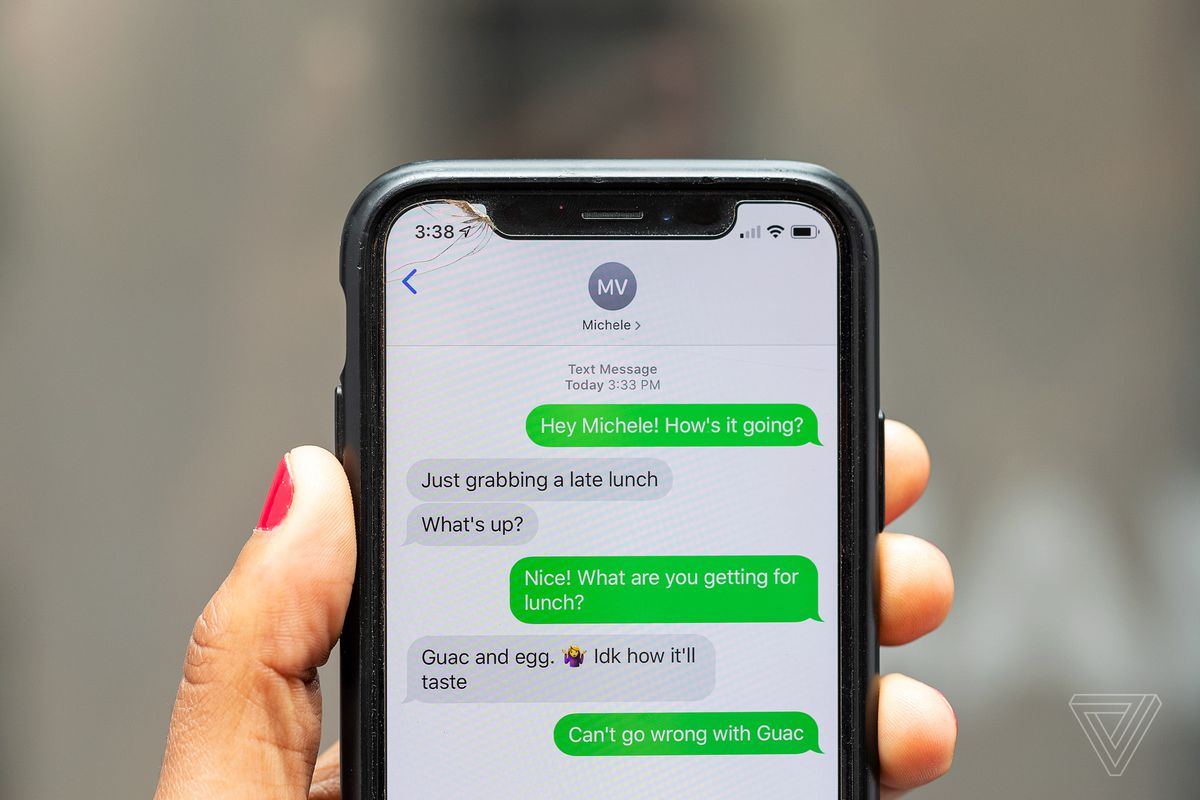
    A new, “interaction-less” bug in iMessage was recently discovered that could allow hackers to gain access to your iPhone. The exploit being interaction-less means that you don’t need to do anything—download any files or click any suspicious links—to get your device compromised. What’s even worse, you don’t even need to open the iMessage app for the exploit to work.

    At the Black Hat security conference in Las Vegas this week, Google Project Zero researcher Natalie Silvanovich showed off a number of these so-called interaction-less bugs in iMessage that could be used to gain remote access to an iPhone. Apple has already patched five of them, but there are a handful that are yet to receive the company’s attention.

    Following the recently uncovered vulnerabilities in WhatsApp, Silvanovich and her colleague Samuel Groß started investigating for similar exploits in SMS, MMS, and voicemail but found none. Then, they shifted their attention to iMessage and started reverse-engineering the app, which lead to some worrisome discoveries.

    According to the researchers, the vulnerabilities that they uncovered in iMessage are likely a result of the complex (and ever-expanding) nature of the app. Apple’s messaging client not only allows users to send each other files, voice messages, photos, and Animojis, but also has many integrations with third-party apps, like OpenTable and Airbnb. This makes securing every potential backdoor increasingly difficult, though the researchers claim that Apple is actually doing a good job.

    Silvanovich says that iOS has many security checks in place, but the bug she and Groß discovered takes advantage of the underlying logic of the operating system, which makes it possible to bypass the security net. A potential attacker could send a targeted iMessage with specific content in it that Apple’s servers would interpret in a certain way and send the target a message that would then automatically trigger the exploit, granting the attacker access to the phone.

    Interaction-less bugs are highly sought after in the hacking community, as they don’t require the target to do anything. The iMessage vulnerabilities discovered by the Google Project Zero members could fetch prices in the vicinity of “millions or even tens of millions” on the exploit market.