Author: Mei Ling Tan

  • Why Cebu Pacific plans to suspend flights to and from Guam in December

    Why Cebu Pacific plans to suspend flights to and from Guam in December

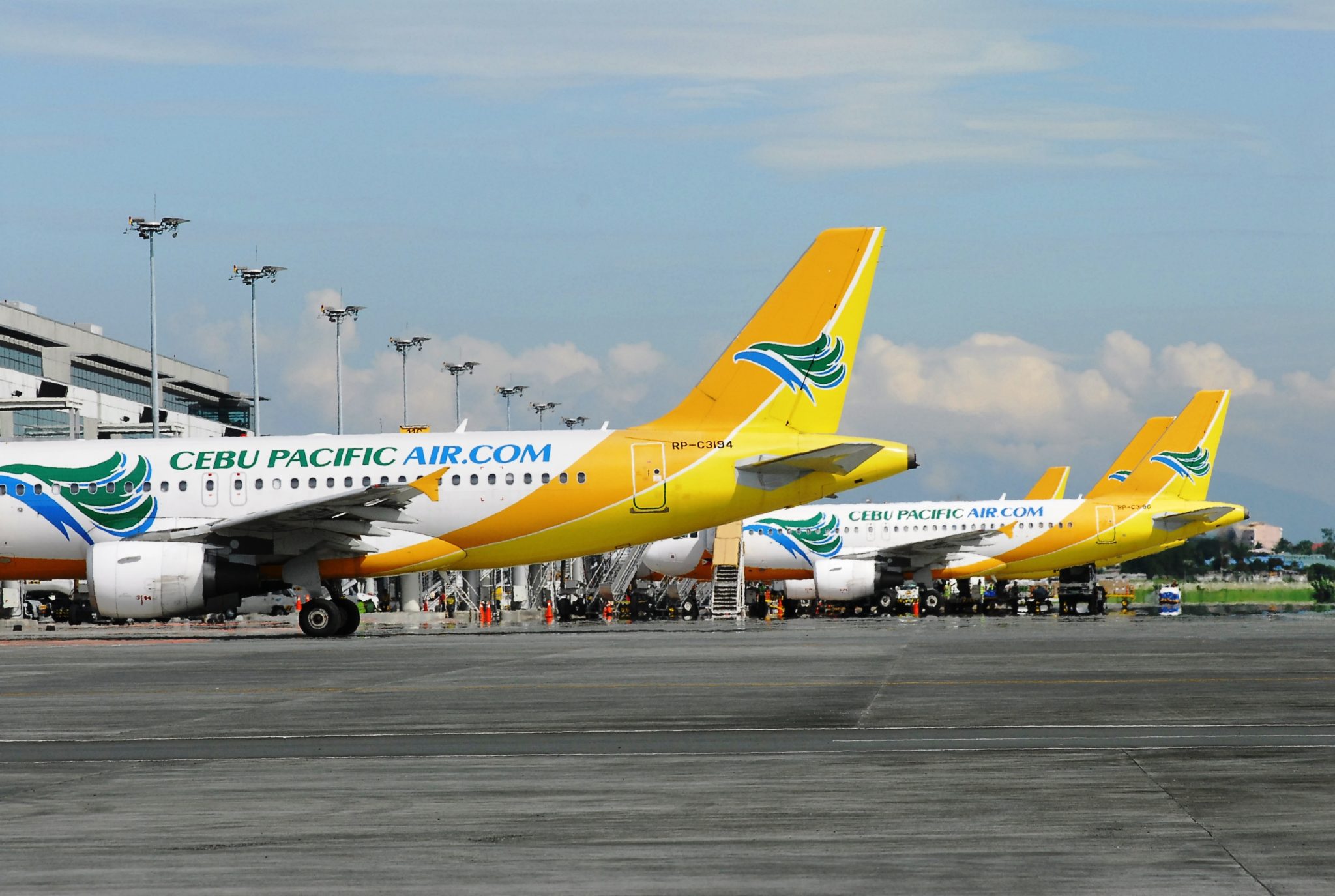
    Philippine-based low-cost airline Cebu Pacific will suspend its service to and from Guam in December, saying the Guam route “is no longer viable.”

    The last round-trip flights between Manila and Guam will be on Dec. 7, 2019, more than three years since Cebu Pacific’s March 2016 inaugural flight to the island. Cebu Pacific’s entry into the Guam market in 2016 was its first U.S. destination.

    With Cebu Pacific suspending its Manila-Guam service, travelers on the route will be down to two airlines to choose from: United Airlines; and Philippine Airlines.

    “The entry of Cebu Pacific into the market gave the traveling public more choices and a more affordable alternative to fly between these two destinations. However, despite all efforts, the Guam route is no longer viable,” Cebu Pacific said in a July 18 statement.

    Passengers affected by the suspension of the services to Guam are being notified, the airline said.

    To minimize the changes, affected passengers can:

    • re-book on earlier travel dates with Cebu Pacific;
    • get a full refund; or
    • place the full value of the ticket in a travel fund for future use.

    “With limited slots in Manila, Cebu Pacific will reallocate these slots and re-deploy the aircraft to routes where these can serve higher passenger demand,” Cebu Pacific said.

  • Walmart-owned Flipkart opens experience centre

    Walmart-owned Flipkart opens experience centre

    Indian e-commerce platform Flipkart has opened a physical furniture experience centre in Bengaluru.

    The Walmart-owned firm’s 1800sqft store will retail around nine furniture brands, and is likely to be followed by two more similar outlets in the country.

    “The furniture category has traditionally had a strong presence offline,” said VP of furniture, electronics and private labels Adarsh Menon, “because customers like to see and touch the products they are buying. We understand the requirements of customers and hence ‘FurniSure’”.

    Industry competitor Ikea launched in India last year, attracting extensive queues.

    Flipkart is also seeking to launch an offline supermarket.

  • Cebu Pacific targets 300 millionth passenger milestone

    Cebu Pacific targets 300 millionth passenger milestone

    Cebu Pacific, the Philippines’ largest airline, said Monday its goal was to fly a total of 300 million passengers by 2022, as it increases capacity and invests in digital tools to drive demand.

    The 300 million milestone can be reached 4 times faster than the 150 million passengers flown in 1996, 21 years after the Gokongwei-led carrier was founded, said its vice president for marketing and distribution, Candice Iyog.

    Cebu Pacific sees “accelerated growth” with the delivery of 12 new Airbus jets this year, president and CEO Lance Gokongwei earlier said.

    The two-fold challenge for Cebu Pacific is making bookings more convenient while handling online traffic, Iyog said.

    “As we continue to invest in brand new higher capacity aircraft, the challenge that we have for us now is flying our next 150 million passengers in just 5 years, 4 times faster than when we did it the first time around,” Iyog said.

    “So the first challenge really was, how might we make ourselves relevant by tapping into user shopping behavior. And then the second job to be done was addressing and improving the customer booking experience,” she added.

    To lure more passengers, Cebu Pacific said it would maximize online tools to make booking easier. It also introduced a “new crazy” seat sale strategy, offering seats in clustered destinations every 2 hours, Iyog said.

    Cebu Pacific currently operates 1 Airbus A321neo, 36 A320, 7 A321ceo, 8 A330, 8 ATR 72-500, 12 ATR 72-600 as of January 2019.

  • Huawei promo video explains why mobile gamers can’t wait for 5G

    Huawei promo video explains why mobile gamers can’t wait for 5G

    What is the first thing that comes to mind when you think about 5G? Most likely you think about the faster download speeds that have peaked thus far at over 2Gbps (according to AT&T). With these data speeds, users will be able to download an HD movie in seconds instead of minutes. New businesses and industries will spring up to take advantage of the speed of the new networks similar to how 4G LTE connectivity enabled the creation of the ride-sharing industry; the latter now has two billion-dollar companies in Uber and Lyft.

    Another advantage of 5G, one that you don’t hear about often, is low latency. Latency measures the time it takes you to get a response to information that you send. For example, if you’re playing a game and shoot the opponent, latency measures the lag between the time you fire the blast and the time you know whether you’ve succeeded in hitting your target. So 5G is obviously positive for those playing mobile games in the cloud.

    Today, Huawei released a promo video for its Mate 20 X 5G that not only shows the huge difference in speed between 4G LTE and 5G, it also mentions the reduction in latency. In fact, the clip claims that game players won’t experience any lag at all when this phone runs on a 5G network.

    The Mate 20 X 5G features a 7.2-inch AMOLED display sporting a 1080 x 2244 resolution. Huawei’s Kirin 980 SoC is under the hood and the device employs Huawei’s own Baloong 5000 5G modem chip. A triple camera setup is in the back (40MP primary + 8MP telephoto with a 3x optical zoom + 20MP Ultra-wide) and a 24MP selfie snapper is in the front. A 4200mAh battery keeps the lights on, and the handset supports the Huawei M-Pen.

    No, you’re not going to see this phone sold in the U.S., but the video does point out a reason why mobile game players in the states should be looking forward to getting 5G up and running in their city.

  • Groupe PSA Opens New Technical Centre In Chennai

    Groupe PSA Opens New Technical Centre In Chennai

    PCA Motors India, part of Groupe PSA today announced opening its new India Technical Centre (ITC) in Chennai, Tamil Nadu. The company says that the new technical centre will play a key role in the smoother and more efficient working of the employees of PSA India, in addition to boosting the capacity of the group to accelerate further in India. The new technical centre has come up in a specific building area, Chennai One, which is part of one of the Chennai Special Economic Zones (SEZ). Groupe PSA says the new facility has been designed and built in a frugal and efficient way, consistent with the spirit of scalability corresponding to the India project.

    Commenting on the launch, Emmanuel Delay, Executive Vice President & Head of India-Pacific, Groupe PSA, said, “The new India Technical Center [ITC] is an important step for the development of Groupe PSA in India, and is definitely an asset to grow the Group’s business in the India & Pacific region. This is part of our strategy to develop a global network of state-of-the-art technical centre, strategically positioned in India, to support a customer-oriented agenda. With the new centre, we’re focusing our investment in creating a cohesive work environment to accelerate our growth. This unified approach will improve the speed, efficiency and effectiveness of our employees while enabling us to address evolving consumer needs more quickly in the future. Our investment in ITC further emphasizes the importance of India to our global business.”

    Groupe PSA’s new technical centre will house departments of Research & Development, Programs and Projects, Global Purchasing Hub, Supply Chain, Process and Manufacturing Engineering, Quality, KD Excellence Centre and Product. In fact, going forward, the state-of-the-art centre will also house a workshop for styling, architecture and assembly of prototypes.

    Commenting on the launch, Eric Apode, Senior Vice President, PCA Motors India, said, “The new India Technical Centre is the next strategic step for Groupe PSA in India. It will allow the group to accelerate quickly its growth in India, through the development of new products and deployment of our strategy in and outside India. The area around our new centre is popular for housing dozens of international and Indian companies this gives the Groupe strong confidence of attracting Indian talent to the new ITC. The Monozukuri philosophy, the art of creating objects in an efficient and effective way is now taking shape with our new India Technical Centre, which will benefit group operations domestically and globally.”

  • Half of FamilyMart owners want shorter hours

    Half of FamilyMart owners want shorter hours

    FamilyMart Japan says almost half of its franchisees want to drop its signature 24-hour trading hours.

    The firm conducted a recent survey among its around 14,000 franchises in Japan, of which 48.3 percent said they want to operate shorter hours, citing the cost of late-night operations and labor shortages. Of those, 73.3 percent wanted reduced hours every day, while 26.3 percent said that reduced hours one day a week would be sufficient.

    The remaining stores indicated a wish to retain 24-hour operations to avoid a drop in sales.

    Given the unexpectedly high interest in reducing store hours, FamilyMart Japan president Takashi Sawada announced: “We’ll build a system to ensure profits at franchisees.”

    FamilyMart Japan currently has 24 stores experimenting with shorter daily operational hours and will increase that number to 700 from October. It will review its 24-hour policy next year.

  • Honestbee back on track with new CEO

    Honestbee back on track with new CEO

    Struggling grocery delivery company and grocer Honestbee has won another new lease on life with the appointment of a new CEO who has promised to revive the business with the support of investors.

    Details of the additional investment were not immediately clear.

    Ong Lay Ann took up the role without fanfare on July 15 from interim CEO and investor Brian Koo, who remains chairman. That followed the resignation of CTO and co-founder Jonathan Low four days earlier.

    Koo had taken over from Honestbee former CEO and cofounder Joel Sng in early May, clearing the way for fresh funding to be injected into the company by Koo’s investment vehicle.

    New appointee Ong has almost 20 years experience in IT, infrastructure, commodities and real estate. He has experience turning around failing companies, including Perth Precast in Australia which he rebuilt and listed via a reverse takeover.

    Low cofounded Honestbee in 2015 with partners Sng and Isaac Tay.

    “It is my privilege to have worked with some of the best talents during my time here,” he said in a statement confirming his departure.

    “The decision to leave Honestbee was made before Lay Ann had come on board. However, I have full confidence that Lay Ann will help Honestbee enter its next phase and recover from its recent setbacks,” Low said.

    So far this year, Honestbee has curtailed services, suspended operations or exited altogether markets including Thailand, Hong Kong, Japan, Indonesia, Taiwan and the Philippines.

  • JD takes stake in Beijing Digital Telecom

    JD takes stake in Beijing Digital Telecom

    Chinese online retail platform JD is acquiring 9 percent of Beijing Digital Telecom.

    The consumer electronics retailer, which operates from around 3000 physical stores throughout China selling predominantly phones and computers, will expand JD’s offline presence within the market, including lower-tier cities.

    The transaction value has not been disclosed, as it falls below the amount that requires public notification under US Securities and Exchanges Commission regulations.

    At the same time, Beijing Digital Telecom is entering a joint venture with a network-technologies developer and provider Suqian Jiashi, which is wholly owned by JD. The firm is investing RMB191 million (US$28.5 million) for a 49 percent stake, while Suqian Jiashi is putting in RMB 204 million ($29.6 million).

  • Huawei discount phone promotion leads to anger

    Huawei discount phone promotion leads to anger

    Huawei discount phone promotion has backfired causing shops to be shuttered and one indignant shopper arrested.

    The Chinese company promoted that its Huawei Y6 Pro 2019 model would be discounted from S$198 to $54 for consumers aged over 50 for three days beginning last Friday. But when hundreds of would-be buyers arrived at the company’s 27 stores across the island on Friday morning they were told stock had run out before opening hour, causing many to wonder if there was ever any stock in the first place, or the brand was adopting a bait-and-click tactic to get customers into stores. Instead of the $54 Y6, disappointed shoppers were offered another discount on a Huawei Mate 20, a promotion due to start on Saturday and since canceled.

    Police were called to some of the stores where angry customers were demanding Huawei stick to its promise. A woman, aged 53, was arrested for trespass after refusing to leave one store.

    A Huawei spokesperson said the ‘Sold Out’ signs were put up by store employees before opening time in response to seeing the long queues formed outside.

    “We are truly sorry to have disappointed those who have shown your support from early morning… Y6 Pro 2019 handsets have been sold out island-wide and have recorded an unprecedented surge of demand,” Huawei said.

    “The company would like to thank members of the public for their continued support and regrets the insufficient supply for the masses.”

    “How can it be that you are telling the public there is no stock before the store opens or the promotion starts?,” one customer asked. “Are you trying to fool people and make use of the nation’s 54th anniversary?”

    Huawei launched the promotion celebrate the generation of Singaporeans that made great contributions to the nation’s development, ahead of the country’s 54th National Day on August 9.

    The company did not reveal how many of the handsets were sold during the Huawei discount phone promotion or how many were available at each outlet.

  • Protests take their toll on Watsons outlets

    Protests take their toll on Watsons outlets

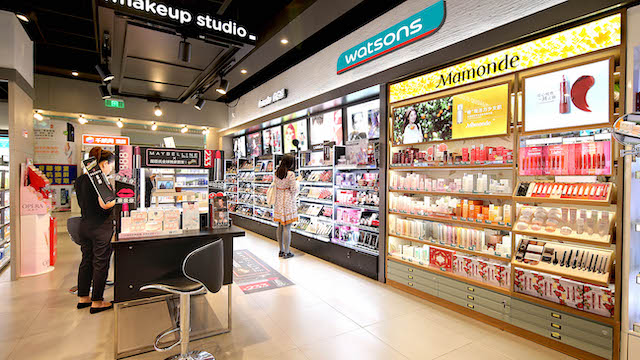
    Sales by Watsons stores located in areas affected by ongoing street protests have fallen markedly in both June and July. The protests have been ongoing since early June, largely confined to the island suburbs of Admiralty, Wan Chai and Causeway Bay.

    “Month-to-date July our sales have fallen by a double-digit [percentage] from the same period last year,” the chain’s MD Diane Cheung said during the launch of a diagnostic service at a Hong Kong store yesterday.

    “That said, last year’s comparison base was relatively high and given we achieved favorable first-half sales and that we expect openings of new and renovated stores in the second half, we believe we will fare better than the entire retail market for the full year.”

    Cheung said other factors were also impacting on the group’s sales, a reference to the changing demographics of mainland visitors and general economic uncertainty fuelled by the ongoing trade war between the US and China. However, Watsons stores located in the districts where most of the protests have occurred were worst affected.

    The Hong Kong Retail Management Association warned of the impact the protests were having on some of its members earlier this month.

    “Large-scale parade activities have caused individual stores to suspend business. Not only are the retail companies under pressure, so is the income of store employees,” the organization said in a prepared statement.

    AS Watson expects to open a net 20 new Watsons stores in Hong Kong by the end of this year, taking its network to 260. Globally the group opens a new store on average every seven hours.

  • Scale of Stanley hawker’s counterfeit goods business surprises Customs

    Scale of Stanley hawker’s counterfeit goods business surprises Customs

    Hong Kong Customs who raided a mobile hawker selling counterfeit goods in Stanley on Friday was surprised by the scale of the operation behind it.

    Some 6900 items of suspected counterfeit goods were seized, including clothing, caps, and shoes, with an estimated market value of $420,000.

    But what made this raid stand out was that it was the first-ever case detected of a single mobile hawker selling counterfeit items using multiple mobile-storage facilities.

    After raiding the single stall they discovered 13 storage facilities in nearby alleys linked to the stall.

    A 44-year-old female stall owner was arrested.

    The enforcement activity followed a tipoff alleging the sale of suspected counterfeit items at Stanley. After an in-depth investigation with the assistance of trademark owners, the raid was carried out.

    A Customs spokesperson said inspection and enforcement activity to combat the sale of counterfeit goods will be stepped up during the summer holiday.

    “Customs reminds traders to be cautious and prudent in merchandising since the sale of counterfeit goods is a serious crime and offenders are liable to criminal sanctions. Customs also reminds consumers to procure goods at reputable shops and to check with the trademark owners or their authorized agents if the authenticity of a product is in doubt.”

    Under the Trade Descriptions Ordinance, any person who sells, or possesses for sale, any goods with a forged trademark commits an offense. The maximum penalty upon conviction is a $500,000 fine and five years imprisonment.

  • DHL Supply Chain partners with Tetra Pak to implement its first digital twin warehouse in Asia-Pacific

    DHL Supply Chain partners with Tetra Pak to implement its first digital twin warehouse in Asia-Pacific

    DHL Supply Chain has successfully implemented an integrated supply chain solution for Tetra Pak’s warehouse in Singapore. This is the first smart warehouse for DHL in Asia-Pacific to deploy the digital twin technology, which involves using digital models to better understand and manage physical assets.

    “Tetra Pak is the world’s leading food processing and packaging solutions company serving the needs of hundreds of millions of people in more than 160 countries, and we are proud to play a part in their vision to make food safe and available everywhere,” said Jerome Gillet, CEO of DHL Supply Chain Singapore, Malaysia, Philippines. “By jointly implementing a digital solution to support Tetra Pak’s warehousing and transport operations, this collaboration is a great example for smart warehouses of the future to deliver agile, cost-effective and scalable supply chain operations.”

    Combining the Internet of Things (IoT) technology with data analytics, DHL Supply Chain created a smart warehouse solution for Tetra Pak by bridging its physical warehouse with a unique virtual representation that monitors and simulates both the physical state and behavior of the warehouse assets in real-time. With this digital twin solution, Tetra Pak can maintain 24/7 coordination of its operations to resolve issues as they occur, particularly those that involve safety and productivity.

    Warehouse supervisors can use real-time operational data to make informed decisions to reduce congestion, improve resource planning and allocate workload. Using IoT and proximity sensors on materials handling equipment (MHE), spatial awareness is enhanced, thus reducing potential collision risks. Controlled areas with restricted access are also monitored with management alerts.

    A DHL control tower monitors the flow of inbound and outbound goods to maintain time efficiency, ensuring goods are correctly shelved within 30 minutes of receipt, and delivery-bound goods are ready for shipment within 95 minutes.

    To reduce operational risks and improve safety, DHL Supply Chain has implemented a container storage management solution that minimizes the need for employees to handle heavy containers. All employees are also trained to work within newly introduced safety measures.

    “Innovation has always been at the heart of what we do at Tetra Pak,” said Devraj Kumar, director of Integrated Logistics, South Asia, East Asia & Oceania, Tetra Pak. “To keep the cogs of our operations turning seamlessly, it is vital that we have complementary warehousing and supply chain solutions that can meet the high demands of our customers. We are pleased with the successful implementation of this smart warehouse, and look forward to partnering with DHL Supply Chain to further enhance our productivity and maintain our high safety standards in our supply chain operations.”

  • AirAsia keeps improving flight services

    AirAsia keeps improving flight services

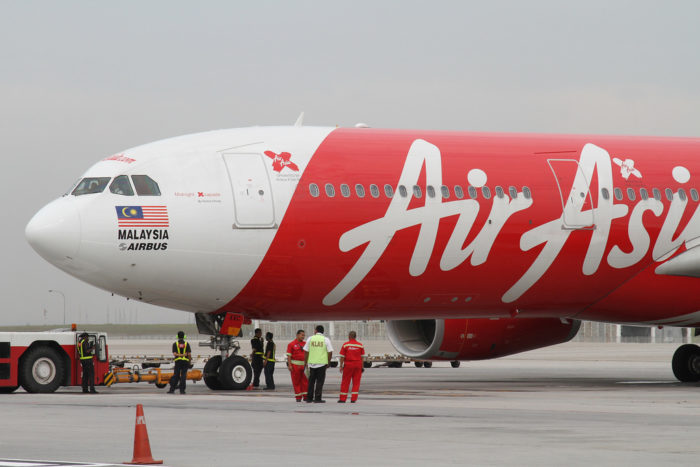
    AirAsia won for the 11th time at the prestigious Skytrax World Airline Awards as the world’s best low-cost airline during the Paris Air Show in Le Bourget, Paris, France, in the middle of June 2019. But despite the awards, it has never let itself get complacent.

    The airline keeps its commitment to continue increasing and improving its flight services for domestic routes and foreign routes, by being continually committed to providing low cost but quality flight services on all of the routes it serves.

    In July 2019, the airline launched three new routes from Jakarta to Sorong in West Papua, Lombok in West Nusa Tenggara and Semarang in Central Java. The new routes will start operating on Sept. 1 and will be served by Airbus A320 aircraft with a capacity of 180 seats. In June, AirAsia launched five new domestic routes. The five round-trip domestic routes are Jakarta-Lombok (11 flights per week), Bali-Lombok (seven flights per week), Yogyakarta Kulonprogo-Lombok (three flights per week), Bali-Labuan Bajo (seven flights per week) and Surabaya-Kertajati (three flights per week). AirAsia will start operating its flight services on the five new domestic routes from Aug. 1 onwards.

    In an effort to attract more passengers to the new routes, AirAsia is offering special prices, namely for Jakarta–Lombok starting from Rp 635,000, Bali–Lombok from Rp 243,000, Surabaya–Kertajati from Rp 626,000. All the prices are one-way but include tax and free baggage up to 15 kg.

    The flight tickets, which are offered at a price of Rp 2.49 million for Jakarta-Sorong, Rp 590,000 for Jakarta-Lombok and Rp 341,000 for Jakarta-Semarang, can be ordered at airasia.com and through the AirAsia application. The prices are only for one-way but include passenger service charge and free baggage up to a maximum of 15 kg. The prices are only available on flights booked until July 28, for flights from Sept. 1 until Oct. 26.

    Sorong is the largest city in West Papua and stands as a gateway to Raja Ampat, one of the most exotic and beautiful tourist destinations in Indonesia.

    In Lombok, where AirAsia has recently opened its new hub, travelers can enjoy a number of enchanting destinations, such as Bukit Merese, the Gili Islands, Tanjung A’an, Pink Beach and Mandalika.

    In Semarang, which is also known as the little Netherlands, travelers can trace its history through the old buildings mostly from the Dutch colonial era, while hunting for local delicacies along the exotic journey.

    Besides the route expansion, last month AsiaAsia also offered five million cheap tickets through its Big Sale 2019 program for various domestic and international destinations. The promotional tickets include those on favorite routes, such as Jakarta-Singapore at a price of only Rp 150,000, Medan-Penang from Rp 230,000 and Surabaya-Bali from Rp 359,000.

    The airline has also introduced a new standard of flight comfort with its Airbus A330neo, which will certainly change the public perception of long-distance flights. It will offer the best value of ticket prices for 30 long-distance destinations in 10 major markets of AirAsia Group.

    “Besides developing international connectivity to support the visit of foreign tourists to Indonesia, this year, as we promised, we are focusing on expanding our domestic routes, especially those to eastern Indonesia.,” said AirAsia’s president director Dendy Kurniawan recently during the ceremony to launch the new routes.

    Currently, AirAsia Indonesia operates a total of 292 flights per week from Jakarta to various domestic and international destinations, such as Kuala Lumpur, Penang, Bangkok, Phuket, Surabaya, Yogyakarta and Bali.

    Overall, AirAsia serves more than 700 flights per week on 38 direct routes from 15 cities of Indonesia for domestic and international routes. It has a fleet of more than 200 airplanes of the type Airbus A320-200 and Airbus A330-300 in six countries, namely Indonesia, Malaysia, Thailand, Philippines, India and Japan, with more than 140 international destinations in Asia, Australia, the Middle East and the US.

    “We’ll continue to be committed to providing low cost but quality flight services in Indonesia. We realize it through the principle of efficiency, innovation and operation digitalization. It is not just a marketing gimmick. It is part of our vision and mission to realize ‘Now Everyone Can Fly,” Dendy Kurniawan concluded.

  • AirAsia’s Tony Fernandes: ‘Too Many Leaders Stay Too Long’

    AirAsia’s Tony Fernandes: ‘Too Many Leaders Stay Too Long’

    The public nature of aviation means it tends to attract large-scale palace intrigue about executive leadership changes from employees, customers and other stakeholders and observers. With the industry typically having small margins and many uncontrollable events, it is easy to hope the executive change will improve the experience, hence calls for Bob Crandall to return to American Airlines.

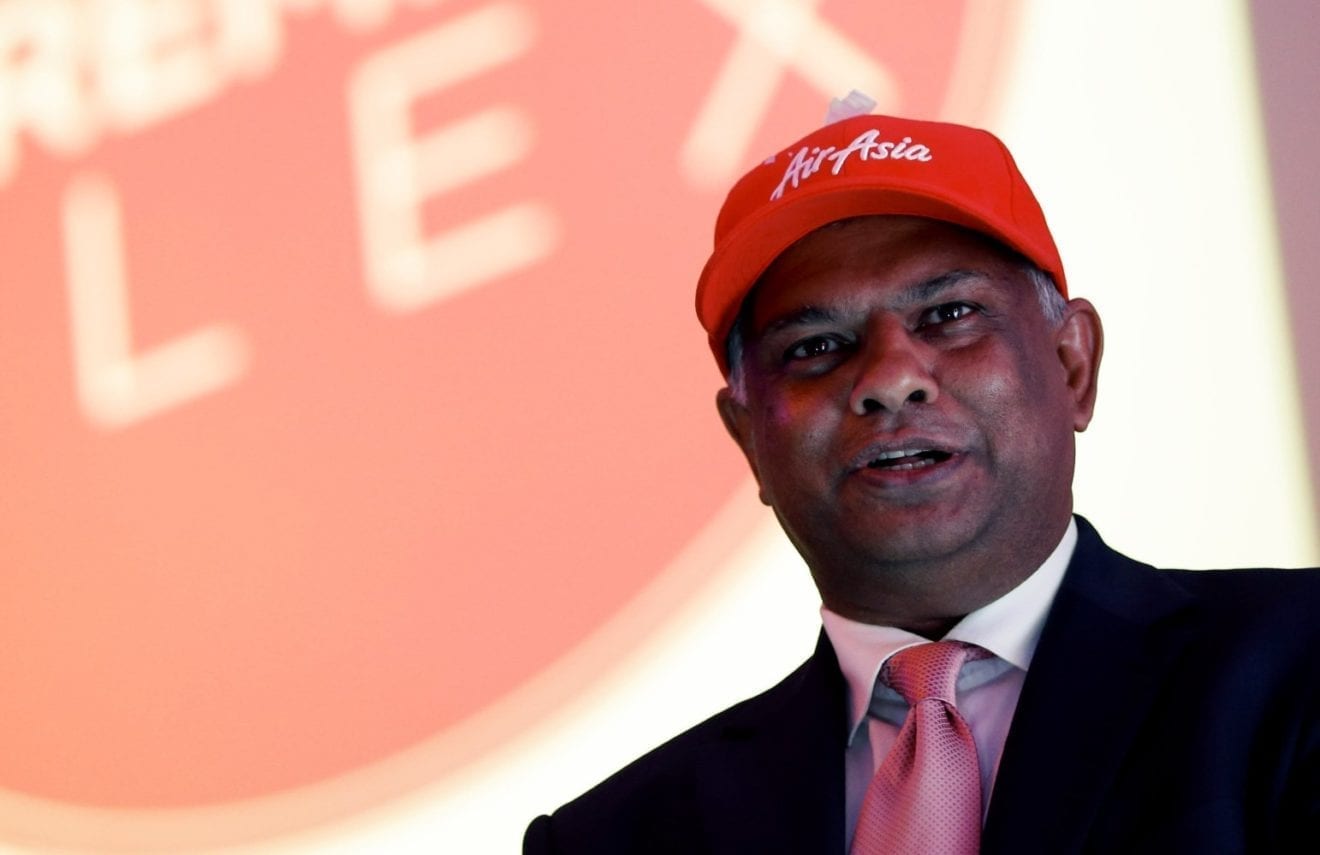
    Change can be a sensitive topic, but not to AirAsia co-founder Tony Fernandes. “Retirement is important,” he said at the Rise technology conference in Hong Kong this month. “Too many leaders stay too long. I think leadership needs to be refreshed.”

    His comments were not directed at anyone or prompted by any events, but leadership change discussion can come up often for executives.

    Emirates President Sir Tim Clark has spent most of his professional life at the Dubai giant, including almost 17 years as president. He is routinely asked of his future plans, not only because of his long tenure as president but also because that at 69 years old, he is above the government’s retirement limit of 65. The official retirement age is 60 for non-Emiratis but this can be extended up to 65, the government says.

    Clark is asked so often about retirement that he has talking points with the eloquence he is known for. “Time will knock on the door and this is a younger man’s business,” he said in 2018. That is similar to his 2015 comment that “It’s a younger man’s game.”

    He deflects to the owner – the Dubai government – and told Airline Ratings: “My succession will be determined by the shareholder.” He said, “I believe that the owner will have plenty of scope there.”

  • India’s Auto Parts Makers Warn Of 1 Million Job Cuts

    India’s Auto Parts Makers Warn Of 1 Million Job Cuts

    India’s auto parts industry could be forced to slash a fifth of its five million or so workforce if the slowdown in vehicle sales continues, the president of the country’s largest industry group for auto parts makers said. India’s auto industry is in the middle of one of its worst slumps. Passenger vehicle sales fell 18.4 percent in the first quarter, and monthly passenger vehicle sales in June fell by the biggest margin in 18 years. The slump has prompted automakers to cut production and automakers and parts makers to cut jobs.

    The drop in production “has led to a crisis like situation in the auto component sector,” Ram Venkataramani, president of the Automotive Component Manufacturers Association of India (ACMA), said in a statement late on Wednesday. “If the trend continues, an estimated 1 million people could be laid-off.”

    The slump in the auto sector, which accounts for nearly half of India’s manufacturing output, has been a major factor behind the slide in economic growth to a five-year low earlier this year.

    Speaking to NDTV about the present condition of the auto industry, Jagdish Khattar, former Managing Director, Maruti Suzuki said, “The employment related to the automobile industry, direct and indirect is 35 million, which includes transportation, insurance, finance, dealership network, service, spare parts and all that. So, it’s a huge employment and not couple of million. The total output is ₹ 8.30 lakh crore.

    He added further, “The impression is manufacturers are big names, the fact is 70-80 percent of the production of the components comes from small and medium industries. Two years back, we used to have 40 per cent diesel vehicles. Today it is less than 20. Rural areas used to have 30-40 per cent sales. The rural areas are distressed today. With Euro6, the industry has invested over a lakh and fifty thousand crore. However, Euro6 hasn’t even come yet and we are talking about electric vehicles. Euro6 will increase the prices of cars, and the Supreme Court has said that you have to take three years of insurance. I mean, everything has gone wrong as this industry is concerned. Yes, it is not the only industry, others have also been affected but this industry has a very major role to play in manufacturing, employment etc.”

    “If the government was to reduce GST, it will not make much of a difference. There are far too many things. The economy should grow, people’s confidence should grow. People are losing jobs. If I’m losing a job, am I going to buy a car? No, I’m going to wait for it,” he said. Khattar also pointed out congestion, pollution, parking charges as some of the other factors against people buying new cars.

    Venkataramani said investments in the auto sector have been frozen due to a lack of government clarity on its electric vehicles (EVs) policy. He said a government plan to speed up the rollout of EVs would raise India’s import bill and damage prospects for auto components manufacturers.

    Venkataramani also called for a cut in the goods and services tax for the vehicles and auto component sector.