Author: Mei Ling Tan

  • Uniqlo India set to open first three stores

    Uniqlo India set to open first three stores

    Uniqlo India is counting down to the launch of its first three stores in India.

    The Japanese fast-fashion retailer first announced plans to open in India in late 2017 and it has taken more than 18 months to secure necessary approvals, locations and prepare operations.

    The stores will open in Delhi-NCR, with the first 35,000sqft outlet due to start trading in three months’ time. The move is part of the brand’s global strategy to gain ground on rival brands Zara and H&M.

    “The opening of our first store, Uniqlo Ambience Mall Vasant Kunj, followed by a second and third store a little later represents a significant step in our company’s global strategy,” said Uniqlo founder and Fast Retailing chairman, president and CEO Tadashi Yanai.

    A Uniqlo India spokesperson added: “Given the size and fast growth of the Indian market, the launch will for the first time involve three separate stores to be able to offer LifeWear to as many people as possible”.

    “We have to do the best price point based on our quality,” said the firm’s head of research & development Yuki Katsuta. “I have confidence in our price and also our value. Of course, we know, maybe our price point is slightly more expensive than your local market. People feel that it’s a little bit more expensive to what they’re used to buying. But at the same time, we have confidence that once they buy it we don’t let them down.”

    Uniqlo India has been helped by the government’s relaxation of sourcing restrictions for single-brand retailers, which currently stand at 30 per cent mandatory local sourcing.

  • Indian fashion house Ritu Kumar looks to raise $20 million

    Indian fashion house Ritu Kumar looks to raise $20 million

    Indian apparel label Ritu Kumar is seeking a cash injection of up to US$20 million.

    The firm will branch into new retail segments such as home furnishings and accessories.

    “We are in the market this year looking for another injection, a larger injection than last time,” said Ritu Kumar MD Amrish Kumar. “Also, [private equity firm] Everstone is coming to the end of their cycle, so they will be looking for an exit sometime soon.”

    Everstone invested $14.5 million in Ritu Kumar five years ago. The firm currently operates 90 outlets under three designer labels.

  • Instagram tests hidden like counts in Australia

    Instagram tests hidden like counts in Australia

    Some Instagram users in Australia are no longer able to see exactly how many likes other users’ posts have received, after the social media platform expanded a test to hide like counts to more countries today.

    Instagram has been testing hidden like counts in Canada for the past 2.5 months, and on Thursday, the platform expanded the test to six more countries, including Australia and New Zealand.

    According to reports, users involved in the test can still see how many likes their own posts receive, but the number is not made public, unless they opt out of the test. Instead, posts show the usernames of one or two people, and say they and “others” have liked the post.

    The company, which is owned by Facebook, has said it is exploring whether hidden like counts will encourage users to pay more attention to the photos and videos being shared, rather than the number of likes a post receives.

    The change comes amid growing concern about the impact of social media on users’ mental health, especially young people. A recent study conducted with university students found that those who limited their total time on Facebook, Instagram and Snapchat to 30 minutes per day reported feeling less depressed and lonely.

    The head of Instagram Adam Mosseri recently told the Financial Times that ensuring safety and well-being on the platform is his “number-one priority”.

    In addition to hiding like counts, the platform is also exploring features to reduce bullying on Instagram, such as a new “nudge” feature that will warn users if they’re about to comment something hurtful, and an “away mode” that will enable users to take a break from the platform without deleting their account.

    The platform is also exploring ways to enable users to control how certain people interact with them without having to block them completely.

    But while these measures largely have been welcomed by users, it is unclear how they will impact the millions of businesses that use Instagram to share new products and offerings with consumers.

    Like counts not only give businesses a rough indication of how popular certain products or trends are, they are a key metric for influencers and the brands that hire them.

    An Instagram spokesperson said: We understand that this is important for many creators, and while this test is in exploratory stages, we are thinking through ways for them to communicate value to their brand partners.”

  • Plant-based meat market to surpass $320 million by 2025

    Plant-based meat market to surpass $320 million by 2025

    The plant-based meat market will rise from US$150 million in 2018 to over US$320 million by 2025, according to a 2019 Global Market Insights, Inc. report.

    Consumers are wanting more meat alternatives, such as those based on wheat, soy, pea, lentils or oats, as awareness about the health benefits of plant based options rises.

    Consumers are now more aware of the environmental problems and it has changed the way they buy, with plants requiring less water and space to grow.

    The 2019 Global Market Insights’ latest report showed that the pea-based meat market demand has significant gains at over 10.5 per cent by 2025.

    In 2018, ground meat wheat-based meat market size was at about $3 million.

    The report found that plant-based brands including DuPont, Amy’s Kitchen, Quorn Foods, Maple Leaf Foods, The Vegetarian Butcher, Impossible Foods and Gardein Protein are the key players in the market currently.

    Many companies are now planning to expand their products with alternatives to exotic red and white meat such as veal, turkey, quail, tune, rabbit, ostrich, venison and elk.

  • Starbucks China launches world-first Starbucks Now store

    Starbucks China launches world-first Starbucks Now store

    Starbucks China has opened its first Starbucks Now store – an express retail experience that integrates Starbucks physical and digital customer touch points.

    Centered in Beijing’s financial district, the Starbucks Now store is the company’s first express-retail format location. The service combines the signature Starbucks cafe environment with mobile order and pay and Starbucks Delivers customer experiences.

    “The Starbucks Now store is a testament to our unwavering commitment to delivering innovative customer experiences through new retail formats,” said Starbucks China Retail president and COO Leo Tsoi. “This new retail format and design approach provides us with a platform to offer customers a fast and convenient retail experience to suit their on-the-go lifestyle.”

    Customers entering the store are greeted by a Starbucks barista at an elevated concierge counter to assist with ordering or order pickup. They can choose from a menu of handcrafted beverage options tailored for the on-the-go customer along with an assortment of popular food items. Limited seating is available for customers who choose to stay and relax with their favorite food and beverages in the store.

    For delivery riders, a dedicated area for Starbucks Delivers orders enables fast pickup supported by baristas. Fulfilled Starbucks Now and Starbucks Delivers online orders will be placed in a secure in-wall system with a designated pickup portal associated with each order.

    The store will also have the ability to serve as a centralised dispatch centre for delivery orders within a certain radius, so Starbucks baristas at neighbouring cafes can focus on delivering service to in-store customers at those locations. During peak times, Starbucks Delivers beverage orders will be prepared by baristas from a central kitchen that is part of the Starbucks Now store.

    The company plans to open new Starbucks Now stores across high-traffic areas including business and transportation hubs as well as to new cities in China.

  • Positive outlook for Singapore retail leasing sector

    Positive outlook for Singapore retail leasing sector

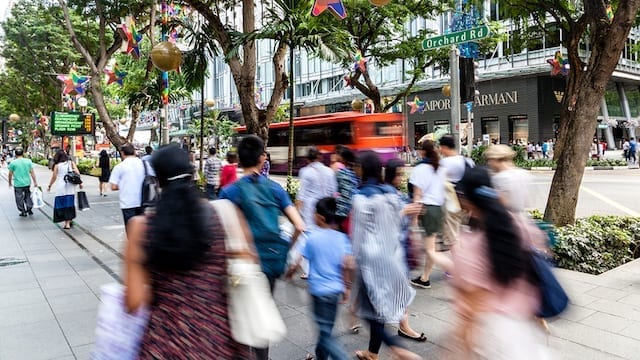
    Ongoing investment-sale activity for malls suggests a positive outlook for the Singapore retail leasing sector, reports Edmund Tie & Company – especially for properties well connected to public transport and offering experiential and activity-based retail options.

    In a report Q2 2019 Real Estate Times for the Singapore market, the property company projects islandwide rental growth will be mixed, ranging from a 2 per cent decline to a 2 per cent increase this year. The low supply pipeline from next year onwards is likely to provide some underlying support to occupancy rates and rental levels.

    Investment market 

    For the second consecutive quarter, investment transaction value (of properties valued above S$100 million) jumped more than 52 per cent quarter on quarter with two transactions totalling $961 million. The largest sale was Chinatown Point for $520 million to a foreign institutional investor.

    The net supply of space fell by about 78 per cent as fewer projects were completed. As such, islandwide occupancy declined slightly by 0.4 percentage points to 90.1 per cent in the first quarter, however, the opening of Funan mall with 325,000sqft net lettable area – with 95 per cent of space pre-leased – is not expected to significantly impact occupancy rates in the second quarter.

    Rental rates 

    Singapore retail leasing rates across the different market segments remained largely flat, as occupancy rates remained high for malls located in prime positions. Upper-storey retail in the Orchard Road/Scotts Road area likely fell slightly due to weakened tourist spending, while the prime malls in the suburban areas continue to attract major brand retailers and new-to-market brands.

    The net demand and supply for retail spaces in suburban areas slowed in the first quarter, with the occupancy rate down marginally.  Prime-located malls with easy transportation access and a diverse and well-managed tenant mix continued to perform relatively well.

    New openings included Cafe Amazon outlets at Jewel Changi and Jurong Point Shopping Centre, and Xing Fu Tang (a Taiwanese bubble tea chain) opened a permanent store at Century Square in the second quarter.

    New space supply pipeline 

    From the third quarter of this year through to 2022, some 1.1 million sqft of retail space is expected to come onstream, with the majority of that to be completed in the second half of this year. The largest will be the Paya Lebar Quarter mall of about 313,000sqft.

    The average annual pipeline of known projects from next year through to 2022 is less than 150,000sqft, which is substantially below the three- and five-year average.

  • Dean & DeLuca chief bullish about Asia

    Dean & DeLuca chief bullish about Asia

    The CEO of embattled food retailer Dean & DeLuca is promising a massive store rollout in Asia at the same time as unpaid suppliers suspend deliveries to the brand’s remaining US stores.

    Sorapoj Techakraisri, CEO of Dean & DeLuca’s Thai owner Pace Development, said this week US losses will stop by the end of this year, but it is hard to see the iconic New York-founded delicatessen brand surviving.

    The brand is being operated in three completely different formats currently: an upscale, gourmet deli-cafe concept in the US where its store count is now down to just four; a restaurant-cafe concept in Asian cities such as Bangkok and Manila; and a trimmed-down takeaway or dine-in format in airports, most through a joint venture with Lagardere Travel Retail announced last October, selling coffee, drinks and takeaway food for consumption on planes from tiny footprints like the one at Hong Kong International Airport.

    There is no similarity beyond the brand name between the New York stores and the Asian businesses, which are now operated as separate units.

    Techakraisri admitted in a phone interview that there were delays in payments to suppliers.

    “The lack of financial resources makes it very difficult for us to maintain the necessary investments to improve and keep our franchise competitive and attractive,” he said. He promised creditors would be paid and that he planned to invest more capital.

    Later, in Bangkok, he said: “We are adjusting the Dean & DeLuca [US] business to a more appropriate size by controlling expenditures both at its office and stores.” These measures have cut costs by 25 per cent he said, and would see overall losses halted by the end of this year.

    Techakraisri said the US stores would be revamped to improve sales.

    Visitors to the New York flagship store on Tuesday of this week were greeted by the sight of empty shelves and a sign apologising to customers for the store’s appearance and inconvenience to customers. Fresh-food shelves were mostly empty, covered in long black sheets made of cloth, according to Bloomberg.

    The company has also closed its futuristic Stage fast-food concept in Manhattan opened in 2017.

    Pace bought the company for US$140 million in 2014, including a network which at one point reached more than 30 stores in the US, and licensing agreements in 31 countries including South Korea, the Philippines, Singapore, Thailand and Middle Eastern markets. By May last year the US network was down to just nine stores and there are now just four remaining.

    The original store opened in Soho in 1977, earned the nickname “museum of fine food” It claimed to be the first retailer in the US to sell radicchio, balsamic vinegar and sun-dried tomatoes. But over time its exclusivity has waned – as one food writer observed this month: “You can buy extra virgin olive oil on Amazon now”.

    Suppliers were chasing large debts. New York bakery Elenis claimed it was owed $86,000 for the custom-designed cookies shipped to Dean & Deluca over the holiday period. It ended a 15 years of supplies in December 2017 over unpaid bills and after suing settled on a 50 cents in the dollar payment.

    “They told me repeatedly that the funds would be in my account the next day or that the check was in the mail and I was never paid,” said owner Eleni Gianopulos. “As a small vendor, it’s crushing.”

    Another creditor, Ceci Cela Patisserie of Manhattan, was offered settlement of 50 cents in the dollar before deciding to sue for more than $70,000 it claimed was owed.

    Many suppliers this month have shared documents with US journalists showing they are owed hundreds of thousands of dollars collectively and some have not been paid since February.

    An Asian renaissance?

    In Bangkok this week, Techakraisri was painting a very different picture of Dean & DeLuca’s prospects despite the ongoing challenges in the US.

    “We [have] set plans for Dean & DeLuca’s expansion in Thailand over the next three-to-five years, when about 100 stores will be opened, up from 11 currently,” he said in a press conference for Thai media, reported by The Nation. “About five new Dean & DeLuca stores will be opened locally this year.”

    The Dean & DeLuca Asia operations now comprise 65 per cent of the brand’s total turnover, the four remaining US stores accounting for just 35 per cent.

    Dean & DeLuca Asia (Thailand) reported sales of  Bt630 million (US$21 million) in the year to May, and Bt115.23 million ($3.84 million) in profit before interest, taxes, depreciation and amortisation. That was an improvement of 13.3 per cent over the previous year. Those sales figures, however, appear to be a mix of company-owned store sales (in Thailand) and franchise revenues from overseas operators.

    Dean & DeLuca Inc (which runs the US business) has been losing an estimated $1.3 million a month – far more than the Asian business profits can cover.

    Techakraisri says despite the US woes, the company has boosted its global store network from 42 store in six markets at the time of the purchase in 2014 to 77 today in 11 markets outside the US.

    He says the company plans to launch Dean & DeLuca stores in five more “major Asian markets” during the next two years or so: China, India, Indonesia, Hong Kong and Taiwan.

    It is not clear how many of those will be airport stores operated under the Lagardere partnership, which at the time of the announcement promised 150 stores within five years.

  • Lee Hwa’s JewelPlay opens at Bugis Junction

    Lee Hwa’s JewelPlay opens at Bugis Junction

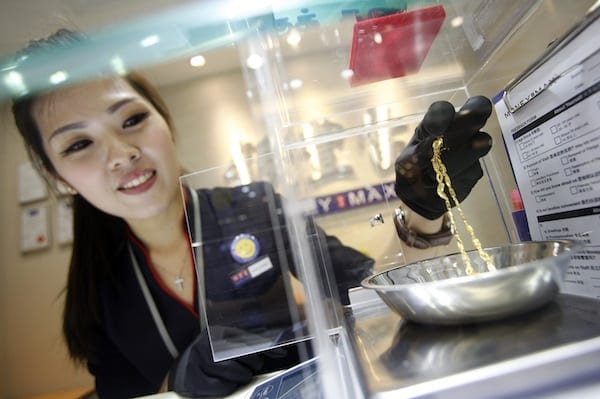
    Lee Hwa’s JewelPlay concept has opened at Bugis Junction, promising personalised jewellery and services for weddings.

    Targeting millennial couples and fashion-forward shoppers, the 880sqft concept store features interactive touch-points and spaces geared to showcasing the brand’s bridal jewellery collection, Lee Hwa Romance, as well as its extensive multi-wear series catered to the young and the young-at-heart.

    “Besides the trendsetting multi-wear jewellery for daily wear, we observed a growing demand among young couples,” said Mavis Toh, business director of Lee Hwa Jewellery.

    “We want to be a part of every couple’s unique love journey, from couple bands, to proposal ring, wedding bands, bridal jewellery, and anniversary gifts.”

    She says Lee Hwa’s JewelPlay boutique is providing an engaging space for couples to “revel in the experience and celebrate their love story together”.

    The store features a JewelPlay Mirror in front of which people can try on jewellery for Instagrammable photographs.

    In the ‘Love Cove’ customers can receive a private consultation with a boutique staff member to explore creative bridal styles and personalisation.

    Lee Hwa’s JewelPlay carries the widest selection of bridal jewellery among all of its stores, which includes global jewellery brands such as Destinee, Forevermark and Niessing as well as customisable wedding-band collections such as Ensemble Collection, Niessing Configurator, and Furrer Jacot Ringdividuell.

    Couples can design their own jewellery Lee Hwa Jewellery’s My Personal Designer service.

    Lee Hwa’s JewelPlay has launched a store-exclusive collection to celebrate the boutique’s opening.

  • South Koreans boycott Japanese products

    South Koreans boycott Japanese products

    A boycott campaign against Japanese products and services is becoming a nationwide movement and extending into travel.

    The boycott started after Japan imposed trade restrictions against South Korea. Amid the boycott, a series of statistics show that the number of reservations for trips to Japan has dropped significantly.

    Hana Tour, the nation’s leading travel agency, reports that the number of new reservations for three-day trips to Japan from July 8 to 10 dropped to an average of 400 per day.

    The figure is down one-third, considering the average number of people booking a new trip to Japan through the company is around 1200 per day.

    However, Hana Tour reported that the number of cancellations, where customers retrack their reservation, remained the same.

    “Up until last week, the number of customers making reservations to Japan was similar, but this week the number declined sharply,” a Hana Tour official said.

    Another travel agency, which requested anonymity, also said that reservations for trips to Japan had been declining compared to typical levels since late last week.

    Those who considered travelling to Japan for the summer vacation season are changing their destinations to other countries. The decision is part of the aftermath of the boycott, a travel industry source said.

    “However, those who had booked trips to Japan in advance seem to be reluctant to cancel because of the huge burden of cancellation fees,” added the source.

  • SMCP launches Sandro on Farfetch

    SMCP launches Sandro on Farfetch

    Fashion group SMCP is to launch its Sandro brand on Farfetch.

    The Chinese-controlled, French-based affordable luxury retailer says the 13 million-plus clients per month around the world that Farfetch attracts will be an ideal partner to enable Sandro to address a wider, premium customer base.

    “We are delighted with this new partnership with one of the major digital players of the luxury sector,” said Sandro CEO Isabelle Allouch.  “We are convinced that having our products on Farfetch will contribute to Sandro’s digital expansion across the globe, positioning it as a high-end luxury brand and enhancing its worldwide visibility and awareness.”

    She said the partnership marks a key milestone in the global roll-out of SMCP’s digital strategy, bringing together online and offline shopping.

    “It perfectly complements the group’s growing digital presence alongside the successful global deployment of our own websites, and further diversifies its digital sales channels, enabling the group to reach more than 190 countries across the world.”

    The partnership comes just three months after the announcement of a landmark partnership with JD.

  • Prada to phase out virgin nylon

    Prada to phase out virgin nylon

    Luxury Italian fashion brand Prada has launched six bags made from regenerated nylon, as the first stage in a plan to phase out virgin nylon during the next two years.

    In a project dubbed ReNylon, Prada will replace virgin nylon in its collections by using regenerated nylon yarn called Econyl.

    The first products made with Econyl are a belt bag, shoulder bag, tote bag, a duffle and two backpacks.

    The company will replace all the virgin nylon it currently uses with Econyl recycled nylon in the next two years.

    “Our ultimate goal will be to convert all Prada virgin nylon into ReNylon by the end of 2021,” said head of communications at Prada, Lorenzo Bertelli.

    Prada has collaborated with Italian textile yarn producer Aquafil on the project, a manufacturer with more than 50 years experience in producing synthetic textiles.

    The resulting material, Econyl, is produced through a process of depolymerisation. It can be recycled an indefinite number of times with no loss of material quality.

  • Luk Fook sales drop 10 per cent as trade war bites

    Luk Fook sales drop 10 per cent as trade war bites

    The trade war between the US and China has been partially blamed for a 10 per cent fall in Luk Fook sales.

    In a quarterly sales update, the Hong Kong-listed jewellery retailer said a relatively higher base in the comparable period also contributed to the decline.

    First-quarter same-store Luk Fook sales were down 10 per cent with the overall same-store sales of gold products down 19 per cent. Gem-set jewellery sales rose 4 per cent.

    In Hong Kong and Macau, sales of gold products fell by 20 per cent while gem-set jewellery sales rose 6 per cent.

    “The favourable sales performance of lower-value items resulted in a double-digit drop in the average selling price of gem-set jewellery products,” said chairman and CEO Wai Sheung Wong. “However, due to the remarkable increase in sales volume, the same-store sales of gem-set jewellery products still recorded positive growth given a high base.”

    Sales on the mainland fell 7 per cent, with gold products down by 4 per cent and gem-set jewellery down by 7 per cent. However, mainland licensed shops recorded a low single-digit same store sales growth.

    Luk Fook added a net 35 new Lukfook stores in the mainland during the quarter. As at June 30, the company operated 1861 worldwide, 1790 of those on the mainland.

  • Warehouse gears up for e-commerce launch

    Warehouse gears up for e-commerce launch

    New Zealand’s biggest retailer is in the final stages of launching an e-commerce site, according to media reports.

    The Warehouse Group, which operates The Warehouse, Warehouse Stationery, Noel Leeming and Torpedo7 stores, is reportedly planning to launch an online-only offering called TheMarket next month.

    The website, which is currently accessible in beta form at www.themarket.com/nz, advertises a wide range of product categories, including men’s, women’s and kids’ clothing, homewares, health and beauty, toys and games, electronics, sports and more, and in-demand brands, including Billabong, P.E Nation, Cooper St, Matchbox and Kevin Murphy.

    The range would put TheMarket in competition with cross-border e-commerce players, such as The Iconic and Asos, which have localised their offerings to the New Zealand market, where online shopping currently makes up just 8.1 per cent of total retail spend, according to the latest NZ Post report.

    Like The Iconic and Asos, it seems TheMarket will operate as an online marketplace, where brands pay a fee to sell products directly to customers via the platform. On the website, TheMarket says it will provide access to 3.5 million active customers, localised customer service and last-mile delivery and return network.

    TheMarket will offer customers a subscription option that would wipe the delivery on all orders.

  • India’s Ferns N Petals launches in Singapore

    India’s Ferns N Petals launches in Singapore

    Indian flower-and-gift retailer Ferns N Petals has launched in Singapore, planning to offer gift deliveries for special occasions.

    The company hopes Singapore will provide it with an opportunity to grow awareness and increase its customer base across Southeast Asia.

    Customers can place orders from the website already, with a mobile app to be launched soon.

    “Expansion is the ultimate aim of a business and for us at Ferns N Petals. The vision is to expand across Southeast Asia and the Middle East,” said Pawan Gadia, CEO, retail & online at Ferns N Petals.

    “After making our venture profitable in the UAE, we are now eyeing the Southeast-Asian market, starting with Singapore.”

    With 25 years of experience, Ferns N Petal has more than 330 retail outlets across India and the UAE.

  • Asos shares tumble as growth slows

    Asos shares tumble as growth slows

    Online fashion-retailer Asos reported sales growth beneath expectations for the four months to June, spooking investors and causing its share price to tumble 13 per cent overnight.

    That was despite a 14 per cent increase in sales in what CEO Nick Beighton described as a more competitive market.

    The slowdown has been attributed to operational changes, essential for the retailer to continue expanding internationally.

    “Asos is capable of a lot more,” said Beighton. “We have identified a number of things we can do better and are taking action accordingly. We are confident of an improved performance in the second half and are not changing our guidance for the year.

    “We are nearing the end of a major [capital expenditure] program. Whilst this has inevitably involved significant disruption and transition costs, the global capability it now provides us gives us increased confidence in our ability to continue to capture market share whilst restoring profitability and accelerating free cash flow generation,” he said.

    Sofie Willmott, lead analyst at GlobalData, said Asos has been able to deliver consistent double-digit top-line growth in recent years due to increased warehouse capacity and improved logistics processes, and the changes being made to US and EU distribution centres are vital to facilitate long-term growth in these key markets.

    “Asos will need to focus on winning back disappointed shoppers by bolstering its marketing efforts. Though this may need to include discounts, by recovering customers quickly they will not be lost forever.”

    She said Asos continues to innovate and introduce new tools to drive conversion and adapt to its demanding young shopper base, such as its recently added responsible filter.

    “However despite strong UK growth, with 62.6 per cent of retail sales coming from international markets, a robust UK performance is not enough to protect top line results.”

    “The future remains bright for Asos. The retailer’s agility and willingness to change to remain relevant to its customer base will help it to continue gaining market share both at home and abroad.”

    Beighton said the global online fashion market is worth more than £220 billion and growing fast.

    “We now have the tech platform, the infrastructure, a constant conversation with our growing customer base who love our own great product and the constantly evolving edit of brands we present to them. We believe that ultimately there will only be a handful of companies with truly global scale in this market.

    “We are determined that Asos will be one of them.”