Author: Mei Ling Tan

  • Luckin Coffee plans expansion into India and Middle East

    Luckin Coffee plans expansion into India and Middle East

    China’s Luckin Coffee wants to expand into India and the Middle East.

    The company has signed a memorandum of understanding to create a joint venture with Kuwait-based Americana Group which will open stores across the Greater Middle East and India. No further details have been released, according to Reuters.

    Luckin, which sells coffee by app from a fast-growing network of stores and pick-up points across China’s main cities, raised US$561 million by listing in the US in May. It says it will open 2500 stores this year.

    Americana Group operates 1800 restaurants and 29 restaurants and food factories in the Middle East. It has franchises for a raft of fast-food and quick-service restaurant brands including KFC, TGI Fridays, Pizza Hut, Hardees, Baskin Robbins, Costa Coffee, Krispy Kreme, Red Lobster, Grand Cafe, Maestro, Longhorn Steakhouse and Chicken Tikka.

    It operates in 20 markets and boasts a payroll of 60,000. Besides the Middle East, the company has KFC and Pizza Hut stores in Kazakhstan and KFC stores in Morocco.

    “This collaboration represents Luckin Coffee’s first step toward bringing its leading products from China to the world,” said Luckin Coffee founder and CEO Jenny Qian Zhiya in a statement.

    Earlier this month, the hitherto coffee-focused company announced it would launch a tea brand, Xiaolu.

  • Germany’s Continental, Jungheinrich Hit Brakes As Auto Sector Slows

    Germany’s Continental, Jungheinrich Hit Brakes As Auto Sector Slows

    A slowing auto sector prompted profit warnings from supplier Continental and paint systems producer Duerr late on Monday.Jungheinrich also lowered its outlook citing a downturn in the forklift truck  sector. It marked a fourth profit warning from Continental in 16 months, while French rival Faurecia on Tuesday stuck to its guidance. “The main reason is the continued decline in the global production of passenger cars and light vehicles,” Continental said, adding that car production will likely drop by 5% rather than remain flat.

    Despite the negative news Continental shares were up 4.6% at 0925 GMT.”The market is telling us that in the short run, the worst has been priced in,” said Evercore ISI analyst Arndt Ellinghorst.

    “The magnitude of the cut is worse than we were expecting and bodes poorly for the remainder of earnings season and 2020 outlooks.”

    Continental is due to release earnings on August 7.

    Duerr, which produces woodworking equipment and paint systems for the auto industry, said lower payment receipts from the auto sector had eaten into its free cashflow in the first half.

    The company, which is due to release first-half results on August 7, said its EBIT margin guidance of 7%-8% for 2020 is under review.

    Jungheinrich said there had been a sharp drop in customer investment.

    “This is due to the gloomier macroeconomic environment and the related current developments in the market for material handling equipment,” said Jungheinrich, which is due to release results on August 8.

  • LG to supply flexible OLED displays for the iPhone XII in 2020

    LG to supply flexible OLED displays for the iPhone XII in 2020

    LG is being fast-tracked to become Apple’s second OLED display supplier for the iPhone XII models in 2020, breaking Samsung’s current monopoly. The E6 line in its Korean factory has reportedly been cleared for operation, and Apple hoped to get whatever quality yield LG can muster.

    Those would increase the average selling price of LG’s displays by 10% which is not an insignificant amount as far as these things go. Unfortunately, the number of OLED panels with the needed quality that LG’s conveyor belts are currently able to churn out is not very large.
    So far, LG panels have been used for repairs of the new iPhones, and with the inauguration of the E6 plant we might see some of the top quality batches make it in the 2019 iPhones. LG apparently won’t be fully ready to supplement Samsung before the 2020 crop, however. According to Jeong Seo-hee, chief financial officer of LG Display:
    In any case, with the help of Apple’s credit lines, LG should quickly be able to ramp up production, as the team from Cupertino is in a desperate need of at least one more OLED screen supplier to avoid the monopolistic prices that Samsung is charging.
    Rumors pegged an iPhone X panel to cost about $100, or about a third of the handset’s bill of materials, and we can only guess how much Samsung charges for the 6.5″ iPhone XS Max display, given that its Apple Repair charge alone comes up to $329.
  • AirAsia X opens up on Hawk-less pair of A330neos

    AirAsia X opens up on Hawk-less pair of A330neos

    When the first AirAsia X Airbus A330neo was unveiled at the Paris Air Show amid much discussion about Airbus’ ‘sub-economy’ ultra-narrow seating strategy, two surprises awaited on board — or, rather, didn’t await.

    At last year’s Farnborough Air Show, AirAsia X Group Chief Executive Officer Kamarudin Meranun (now chairman of AirAsia) confirmed to Runway Girl Network that the airline planned to take Mirus’ Hawk long-range version and Collins’ Minipod for its A330neos. Yet on board the two seating products were neither of those.

    It turns out this first aircraft is one of a pair of leased jets from Avalon that Thai AirAsia X is taking earlier than the hundred that will come directly from Airbus. “AirAsia currently has 66 Airbus A330neo aircraft on order. In addition, AirAsia’s fast-growing long-haul affiliate AirAsia X Thailand will take delivery of an additional two leased aircraft in the coming months,” AirAsia X Group CEO Nadda Buranasiri explained to RGN.

    The airline’s head of group communications later followed up to confirm that those 66 aircraft are firm orders, with the additional 2018 Farnborough Air Show order of “34 currently MOU [Memorandum of Understanding] and under review”.

    Mirus confirmed to RGN that the seat on the Avalon aircraft was not the long-range version of the short-range Hawk seat that AirAsia uses on its Airbus A320s, and Buranasiri confirmed that “The two Airbus A330neo aircraft on lease from Avolon have been fitted with the Zodiac UK Aura Lite in Premium Flatbed and Geven Piuma AQ in economy.”

    But Buranasiri also flagged potential evolution in AirAsia X’s passenger experience. “The seating and cabin configuration for AirAsia’s Airbus A330neo aircrafts on order is subject to change. We are currently reviewing cabin space and configuration options on the new Airbus A330neo. This includes options for a new premium and economy class seat.”

    AirAsia X’s Thai operation will put its first A330neo into service at the end of July, with routes expected to include Japan, Korea and Australia, although schedules have not yet been published.

    But starting next year, more A330neos will arrive with AirAsia X, and the company has been expansive with its promises of “new and exciting destinations such as to Eastern Europe and North Asia”, according to Buranasiri.

    Within Europe, the airline previously flew to London Gatwick and Stansted as well as Paris Orly with elderly A340-300 aircraft, but with both countries charging relatively high departure tax rates, and costs higher in Western Europe, an Eastern Europe strategy could make good sense for AirAsia. Indeed, a partnership with an airline like Wizz Air to provide feed on the European end of the longhaul flight would make much sense.

    “Our current network strategy is focused on medium haul — five to nine hours — meaning nine-abreast is a comfortable option. Nine abreast on the A330neo gives very similar levels of personal comfort for each guest even compared to other aircraft options with full service carriers,” Buranasiri argued, and with AirAsia’s reasonable legroom combined with the decision of many full service airlines to go nine-abreast on their 787s and ten-abreast on their 777s, this is a fair suggestion.

    More crucially, perhaps, “Nine abreast on the A330neo drives the aircraft economics to allow us to maintain the lowest CASK [cost per available seat kilometre] and therefore deliver the lowest fares to our guests. This brings more guests the opportunity to fly and this mission will continue for our long haul market strategy,” Buranasiri said.

    Given that the passenger experience will be relatively similar to its existing widebody fleet, the efficiency of the A330neo AirAsia X expects is impressive. “The aircraft will reduce our fuel burn by 11% on every trip, and with extended range help us to open up new and exciting destinations,” compared with the existing A330ceo fleet, Buranasiri said.

    AirAsia X has always been very up front about what it offers, and with one-way fares for the 6h20m Bangkok to Tokyo even a few days out at an impressive 79€ (US$89), AirAsia X’s simple way to purchase a second seat for passengers who would want or need to, and the angled lie-flat seats up front at around a 3-4x multiplier of economy, it’s hard to criticize the value for money of its ultra-narrow seats — whoever makes them.

  • China’s BAIC Buys 5% Daimler Stake To Cement Alliance

    China’s BAIC Buys 5% Daimler Stake To Cement Alliance

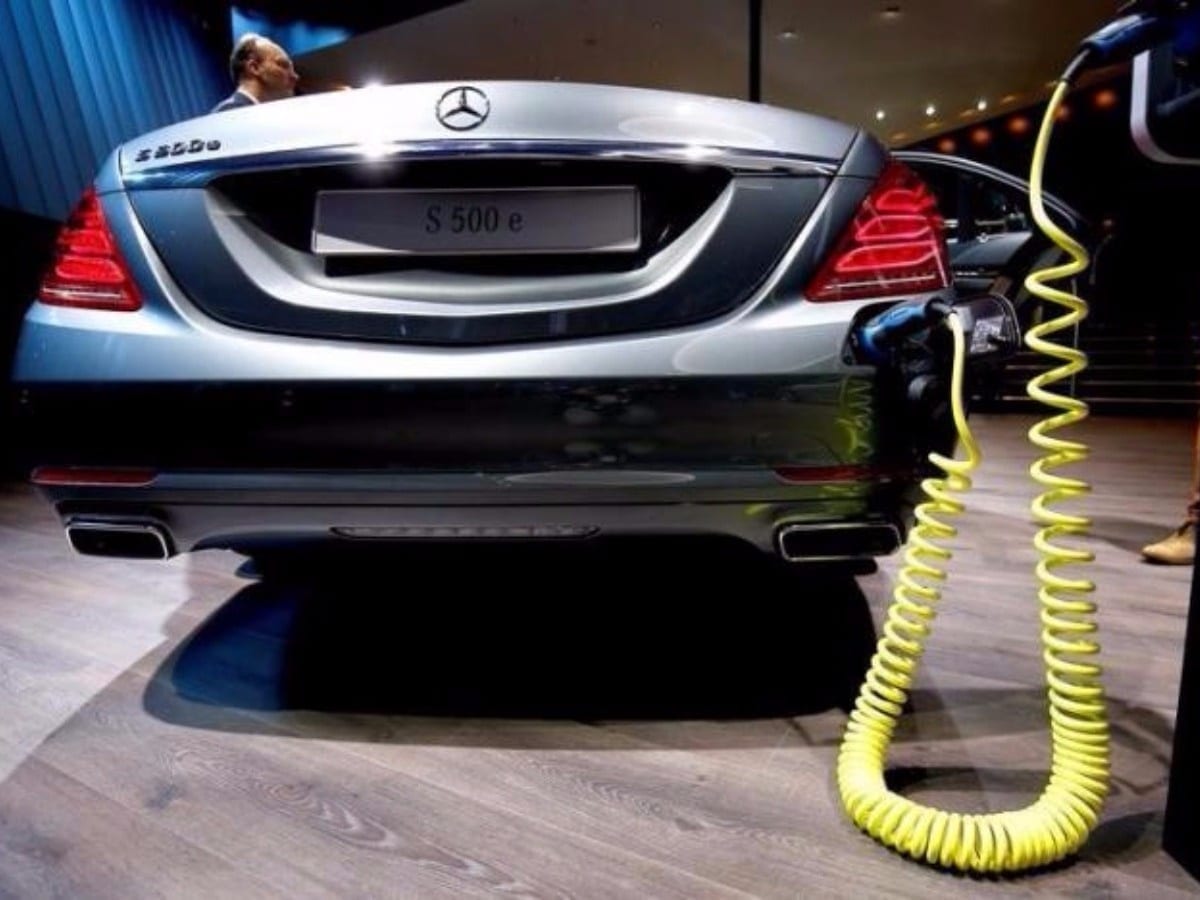
    China’s Beijing Automotive Group Co Ltd (BAIC) has bought a 5% stake in Daimler, cementing their long-standing alliance after China’s Geely emerged as a potential rival by also taking a stake in the German automaker.

    BAIC has been Daimler’s main partner in China for years, operating Mercedes-Benz factories in Beijing through Beijing Benz Automotive.

    But last year Li Shufu, the chairman of Zhejiang Geely Holding, bought a 9.69% stake in the German company with the aim of forging an alliance to develop electric and self-driving cars.

    “This step reinforces our alignment with, and strong support for, Daimler’s management and strategy,” BAIC chairman Heyi Xu said on Tuesday.

    Reuters reported in May that BAIC was seeking to buy a stake of up to 5% in Daimler as a way to secure its investment in Beijing Benz Automotive.

    Daimler, which since 2013 has held a stake in BAIC’s Hong Kong-listed unit, said it welcomed BAIC’s investment.

    “The purchase of Daimler shares by BAIC will strengthen the cooperation between BAIC and Daimler,” said Jefferies analyst Patrick Yuan.

    “From this point of view, the possibility of Daimler increasing its stake in the Beijing Mercedes-Benz joint venture will be greatly reduced, which will benefit the shareholders of BAIC’s listed companies.”

    Shares in Daimler rose by more than 2.5%, while BAIC’s listed subsidiaries, BAIC Motor Corp and BAIC BluePark New Energy Technology, climbed by more than 3% and 5% respectively after the news.

    The high cost of electric car batteries has made it hard for automakers to build affordable zero-emissions vehicles, leading several of them to strike alliances with Chinese partners.

    Stuttgart-based Daimler in March agreed to build the next generation of Smart-branded city cars together with Geely, which is based in Hangzhou.

    Daimler has reassured BAIC that any new industrial alliances involving Mercedes and a Chinese partner would only happen after a consensus is found with BAIC.

    Geely declined to comment on the BAIC-Daimler deal but referred to past statements which said it was committed to long-term investment and healthy collaboration with Daimler.

    Daimler shares have lost about 30% of their value since Li Shufu disclosed his stake, hit by a string of profit warnings linked to a slowing auto market and diesel emissions costs.

  • Japanese retailer Daiso Launching in New Jersey

    Japanese retailer Daiso Launching in New Jersey

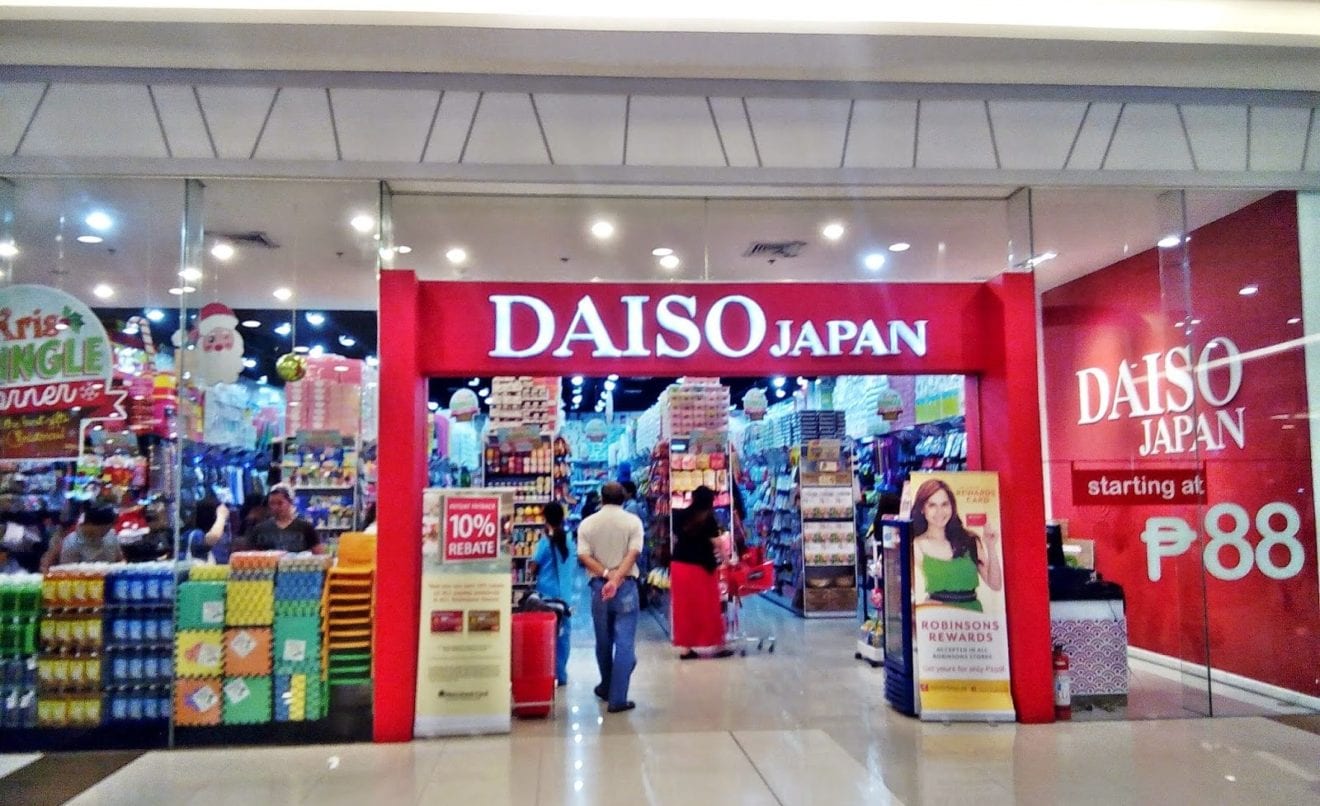
    Budget Japanese retailer Daiso will launch its first New Jersey store in Edgewater.

    The store will open on August 3 as the second Daiso store in the Tri-State area. Daiso is quickly expanding its presence on the East Coast, with this location opening within just five months of the very first store in Flushing, New York last March. Three more Daiso stores are scheduled to open in the area this year.

    The 7000sqft Daiso New Jersey store will feature products and styles including back-to-school, entertaining and organising supplies, and thousands of products including kitchenware, beauty supplies, stationery, gift wrap, greeting cards, electronics accessories, unique gift items, snacks, and party goods.

    Daiso Japan averages 10 to 20 new store openings globally every month.

  • AirAsia launches three new routes for Jakarta flights

    AirAsia launches three new routes for Jakarta flights

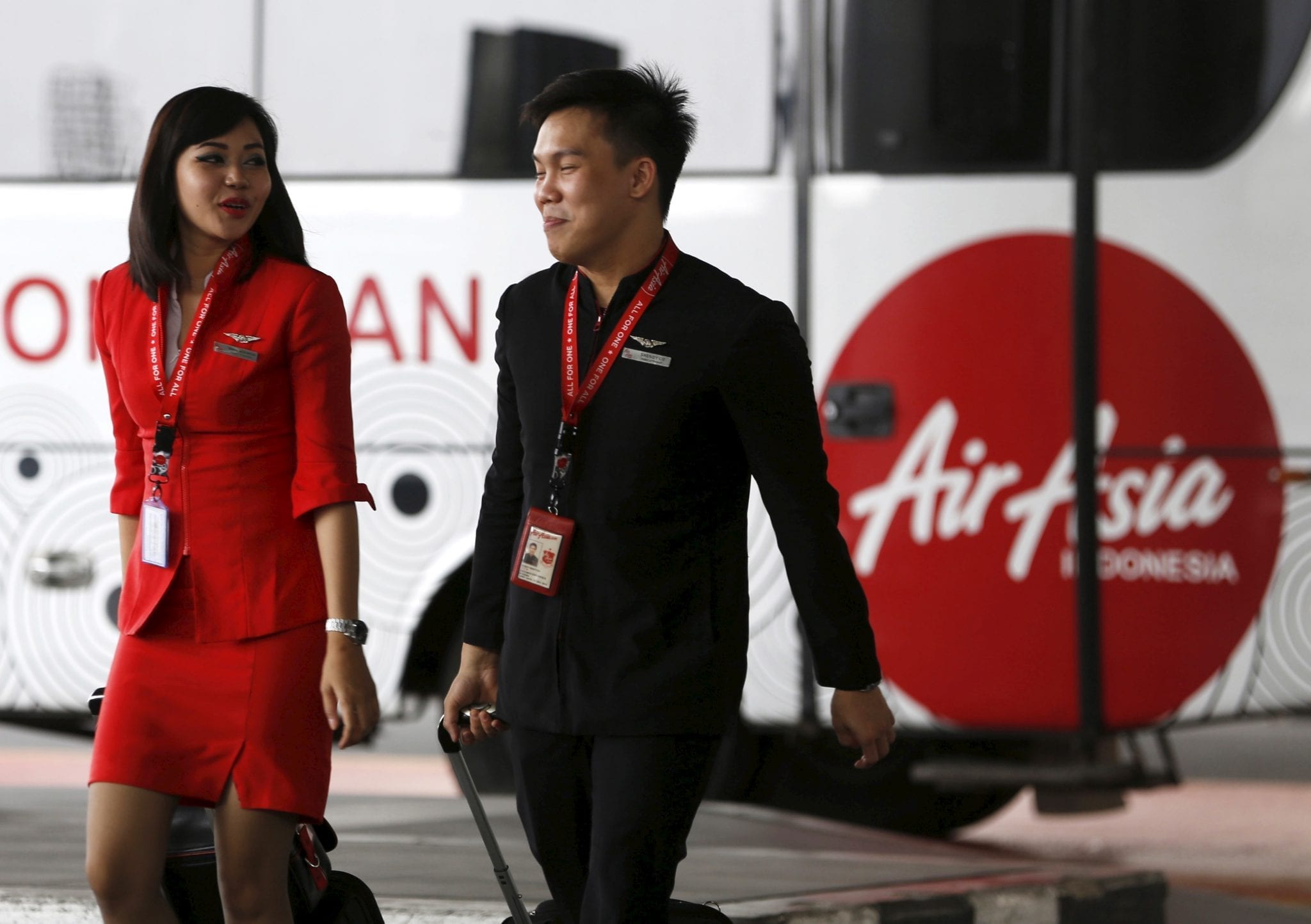
    Low-cost carrier AirAsia is launching three new routes for direct flights from Jakarta to Sorong, West Papua; Lombok, West Nusa Tenggara; and Semarang, Central Java. These flights will start operating on Sept. 1 using the Airbus A320 plane with a 180 seat capacity.

    The airline is offering a special price for a one-way ticket for these flights starting from Rp 2.7 million (US$193.97) for Jakarta – Sorong, Rp 634,000 for Jakarta – Lombok, and Rp 341,000 for Jakarta – Semarang. All of these flights are available through airasia.com or the AirAsia mobile apps. The offer is available starting from July 20 to 28 for flights from Sept. 1 to Oct. 26.

    AirAsia Indonesia CEO Dendy Kurniawan said that his company was currently focusing on expanding its domestic and international routes.

    “We showed our commitment to provide affordable and high-quality flights through this offer,” Dendy said through a written statement.

    According to Dendy, the ticket includes 15kg checked baggage for passengers.

    “We hope that our service will be able to boost economic growth, especially in tourism,” Dendy said.

  • Alibaba’s flash sale and marketing platform Juhuasuan has launched

    Alibaba’s flash sale and marketing platform Juhuasuan has launched

    Alibaba’s flash sale and marketing platform Juhuasuan has launched an upgraded version of Jutudi, a digital initiative to help Chinese farmers optimise their supply chain and offer consumers better deals.

    Juhuasuan is Alibaba’s sales and digital marketing platform, enabling brands and merchants to broaden their reach to consumer segmentations across China through online and offline campaigns. Brands design and hold flash sales through the platform, using analytics and recommendations powered by Juhuasuan, to identify the most preferred product assortment for targeted regional consumers. It also offers a group-buying option to offer limited-time best deals to consumers.

    The Jutudi initiative first debuted in 2014, allowing consumers to become “virtual farmers” by “purchasing” a small plot of land online from the growers. The farmers would ship the produce to the consumer when the crop ripened. The new Jutudi moves to help boost farmers’ digital competitiveness, offering farmers and cooperatives science-backed analytics to improve their crop and supply chain management.

    Currently, 20 different cooperatives from a dozen provinces around China have joined the initiative. The plan is to widen the reach to at least 1,000 farming cooperatives within two years.

    “Going beyond flash sales and promotional campaigns, the new Jutudi offers the farmers a solution that taps into the Alibaba digital economy, giving farmers broader opportunities to move their produce,” said Tmall and Taobao marketing GM Liu Bo. “Supported by the entire Alibaba ecosystem, Jutudi uses the algorithm from Alibaba Cloud to help farmers plan their crops and harvest. Our smart-logistic network, Cainiao, offers expedited delivery services to ensure freshness. Moreover, consumers can take advantage of flash sales on Juhuasuan to get the best bargains.”

    One example is peaches from Hubei Province – by collaborating with Juhuasuan, peach growers there sold 100 tons of fresh peaches within just two hours last month. The performance encouraged the farmers to embrace other digital tools offered by the Alibaba ecosystem, such as leveraging Alibaba Cloud’s AI technology to standardise their crop management. As a result, costs for the farmers decreased by 10 per cent.

    Juhuasuan further boosted the region’s value chains by connecting the peach growers to Three Squirrels, a China-based food conglomerate and snack maker that turned fresh peaches into popular dried fruit snack packets to be sold on Taobao and Tmall.

    Based on Juhuasuan’s flash sale and collective buying model, Jutudi lets consumers pre-order agricultural products before the harvest. The platform works directly with the cooperatives or the farmers. By bypassing the middlemen and traditional wholesalers and distributors, subsequent savings are passed on to consumers. For many items, the discounts can be 30- to 50-per-cent lower than regular prices.

    For farmers, the pre-sale model confers a higher degree of certainty that at least a portion of their crop will be sold. Once orders have been locked down, the farmers can harvest and pick fruits or vegetables according to the orders they’ve received. This can help prevent surpluses or shortages, and also reduces cost. Another benefit of the model is that consumers can always get fresh, in-season produce. According to the platform, the farm-to-table journey time can be as short as 48 hours once the order has been placed.

    Harnessing consumer insights from Tmall and Taobao, as well as data from Alibaba Cloud, Jutudi can boost farmers’ ability to forecast what would be popular in the coming year and approximately how much to plant to meet future demand. Traditionally, farmers plan their crop based on sales of the previous season. This often incurs the risk of overproduction or underproduction. However, by using data and scientific insights provided by Jutudi, farmers can more accurately predict the next hot items. Such predictions are especially crucial for farmers of specialty crops to capture niche market share.

    An example is the pumpkin growers in desert areas of Gansu province. Based on data and shopping trends provided by the platform, farmers now know through some light processing, they can turn the whole pumpkins into easy-to-carry microwave meals targeting office workers. The explosive popularity of these pumpkin meals have encouraged pumpkin farmers to double their crop area from the current 396 acres in preparation for next year’s sales.

    Juhuasuan has successfully promoted an array of agricultural products. In the past six months, through flash sales, 330 tons of lychees from Hainan Province, 165 acres of fresh roses and 3 million mandarin oranges from Yunnan Province were completely sold out within 72 hours.

  • World AI Leaders from Dell Technologies, Rolls-Royce and Kryon, among others, discuss AI Strategies in Singapore

    World AI Leaders from Dell Technologies, Rolls-Royce and Kryon, among others, discuss AI Strategies in Singapore

    Given its infrastructure capacity, education system and investor-friendly laws, Singapore has all the right ingredients to nurture a robust AI ecosystem that could be the cornerstone for the small island’s economic upswing. According to a recent report by Accenture, AI could add up to US$215 billion in gross value across 11 industries in Singapore by 2035. With the Singapore government’s vehement efforts to foster initiatives in the AI space, the nation was the ideal location to host the 9th edition of the global World AI Show series that had hit the ground running for the second time in Singapore on 24 July 2019. The show was organised by international business events and consulting firm, Trescon.

    “Singapore is one of the top locations for AI and Robotics investments. Our mission was to fuel Singapore’s AI startup ecosystem by bringing in some of the world’s best AI innovators, solution providers, startups and investors to foster business opportunities for the Singapore government as well as regional and international companies”, said Mohammed Saleem, CEO of Trescon.

    300+ top industry leaders from the AI community came together to share their insights on how AI is transcending as a core enabling technology that can power multiple sectors.

    Top speakers for the event included Dr Terence Hung, Chief of Future Intelligence Technologies, Rolls-Royce Singapore Pte Ltd; Sutowo Wong, Director, Analytics & Information Management Division, Data Analytics Group, Ministry of Health; Dragana Beara, Portfolio Messaging Director, Asia Pacific and Japan, Dell Technologies; Prof Nadia Magnenat Thalmann, Director (IMI), NTU, Singapore and Founder & Director, Miralab of University of Geneva, Switzerland and Guido Jouret, Chief Digital Officer of ABB among other top speakers.

    In her keynote speech, Dragana Beara quoted, “Most of the AI development right now is done to create collaborative AI to augment us and give us an ability to leverage our humanity. Everything tedious, difficult or that we are not good at, like computing or getting insights from huge data sets is something we are going to outsource to the AI system.”

    The show also featured a workshop session from Warren Ledingham from Kryon who took the audience through a technical deep-dive session on ‘How to Save 80% of Your Automation Implementation Time’, and an almost human-like Robot interaction between Professor Nadia Magnenat Thalmann and her female humanoid social robot Nadine, that can remember past conversations.

    The global pitch competition for startups in the future-tech space, Startup Grand Slam, was the highlight of the show. Opu Labs, Inc, a digital solutions provider for skin health analysis won the Startup Grand Slam pitch competition and Trsts as runner-up.

    World AI Show – Singapore 2019 was sponsored by Lead Partner, Dell Technologies Platinum Partner, Kanerika; Workshop Partner, Kryon; Gold Partner, Darktrace, Silver Partner, DDN Storage; Badge Partner, QualityKiosk Technologies, Premier Bronze Partner, ADVANCE.AI


  • Former Citigroup MD James Perry joins Zilingo as the Company’s First CFO

    Former Citigroup MD James Perry joins Zilingo as the Company’s First CFO

    Leading fashion technology platform Zilingo announces today the appointment of James Perry as its first Chief Financial Officer (CFO). The former Managing Director and Head of Technology Investment Banking for Asia Pacific at Citigroup has over 20 years of experience in corporate finance, having helped clients raise over US$150 billion, including 40 IPOs in the US and Hong Kong; and advised technology companies on over US$80 billion in M&A transactions across six continents.

    Earlier this year, Zilingo closed a US$226 million Series D funding round and the company has seen a meteoric rise over the last few years on the back of its technology platform that powers the fashion value chain end to end and provides fashion business with unprecedented access to the technology and services needed to scale efficiently.

    As Zilingo continues its growth in markets including the Philippines, Indonesia, Australia and the US, James will be part of the experienced management team that drives the business to scale rapidly and sustainably.

    Ankiti Bose, Chief Executive Officer and co-founder, Zilingo commented:

    “We are thrilled to welcome James into our leadership team as we expand our horizons and take the company global. It’s a very exciting time for us.”

    James Perry, Chief Financial Officer, Zilingo said:

    “I’m excited to join the Zilingo team. I have seen hundreds of technology companies over my years in banking, Zilingo stands out as an innovator bringing technology and transparency to an industry that has changed little since the industrial revolution. Zilingo is led by one of the most energetic and visionary teams I’ve come across and I look forward to being a part of this journey.”

  • Tinder swipes left on the Google Play Store’s payment platform

    Tinder swipes left on the Google Play Store’s payment platform

    Dating app Tinder has a UI designed to allow users to make quick decisions on whom to meet. In fact, it has become part of pop culture. Swiping to the right on a profile indicates that you are interested in that person while swiping to the left means that you have no interest. According to Bloomberg, which cited research done by Macquarie analyst Ben Schachter, Tinder’s parent company is swiping left on the Google Play Store’s in-app subscription platform. Similar to music streamer Spotify’s complaint against Apple, Tinder’s parent company, the Match Group, objects to Google taking a 30% cut of in-app revenue generated in its app storefront.

    Spotify took its complaint to the European Union’s competition commission which has opened an antitrust investigation against Apple. But there is a huge difference between iOS and Android. Those using the former are essentially forced to use the App Store while Android users can easily sideload apps. That could be the difference between being called a monopoly or just an opportunist.

    Apple responded by noting that the 30% cut that Spotify CEO Daniel Ek keeps mentioning actually drops to 15% after a year. As a result, Apple claims that a cut of 15% is being applied to only 680,000 Spotify members. These are subscribers who upgraded from the free tier to the premium tier of service between 2014-2016. After that time period, Spotify stopped allowing iOS users to upgrade through Apple’s in-app payment system (iAP). Instead, payments for upgrades must be through Spotify’s website.

    Similarly, those using Tinder are being asked to enter their credit card information directly into Tinder’s own payment platform. While Tinder is free, you are limited to 100 right swipes a day. With Tinder Plus and Tinder Gold, you get unlimited swipes and a few other perks as well. Tinder Gold also allows users to see who has swiped right on their profile. The latter costs $12 per month for a six-month subscription or $10 per month for a year’s subscription. And Match Group has included an ingenious plan to keep subscribers wedded (see what we did there) to its own platform. After the first payment is made through Match Group, every subsequent payment will automatically take subscribers to the platform bypassing the Google Play Store’s payment system.

    If all of this sounds familiar, and for reasons other than Spotify’s complaints against Apple, it could be that what is happening with Tinder reminds you of what Epic Games did with Fortnite. One of the most popular video games ever, Fortnite had to be sideloaded from Epic Games’ own website to be installed on Android devices. This was done to avoid the 30% cut of revenue that Google would have taken on in-app subscriptions.

    More companies are looking to avoid both the App Store and Google Play Store in-app payment systems. Last December, Netflix stopped allowing new and returning subscribers using iOS to pay for their subscriptions using the App Store. And even Apple’s own customers are concerned that the tech giant is forcing them to pay more for apps because of its 30% cut. In fact, a large number of iOS users are part of a class-action suit that claims Apple’s role as a monopoly is forcing them to pay more for apps. The U.S. Supreme Court ruled in May that the suit can continue. Apple argued that it merely distributes apps sold to iOS users by third-party developers. That position helped it win a unanimous verdict from the United States Court of Appeals for the Ninth Circuit, in San Francisco. But the Supreme Court decided that Apple is actually more than just a distributor of apps and cited the contracts it signs with these developers as proof of that.

    Both Google and Apple argue that they are providing a high-profile storefront for developers to sell their apps and that they aren’t being unreasonable for asking them to make contributions to the eco-systems that allow their apps to thrive.

  • Render shows that Vivo could be taking the next step toward a full-screen design

    Render shows that Vivo could be taking the next step toward a full-screen design

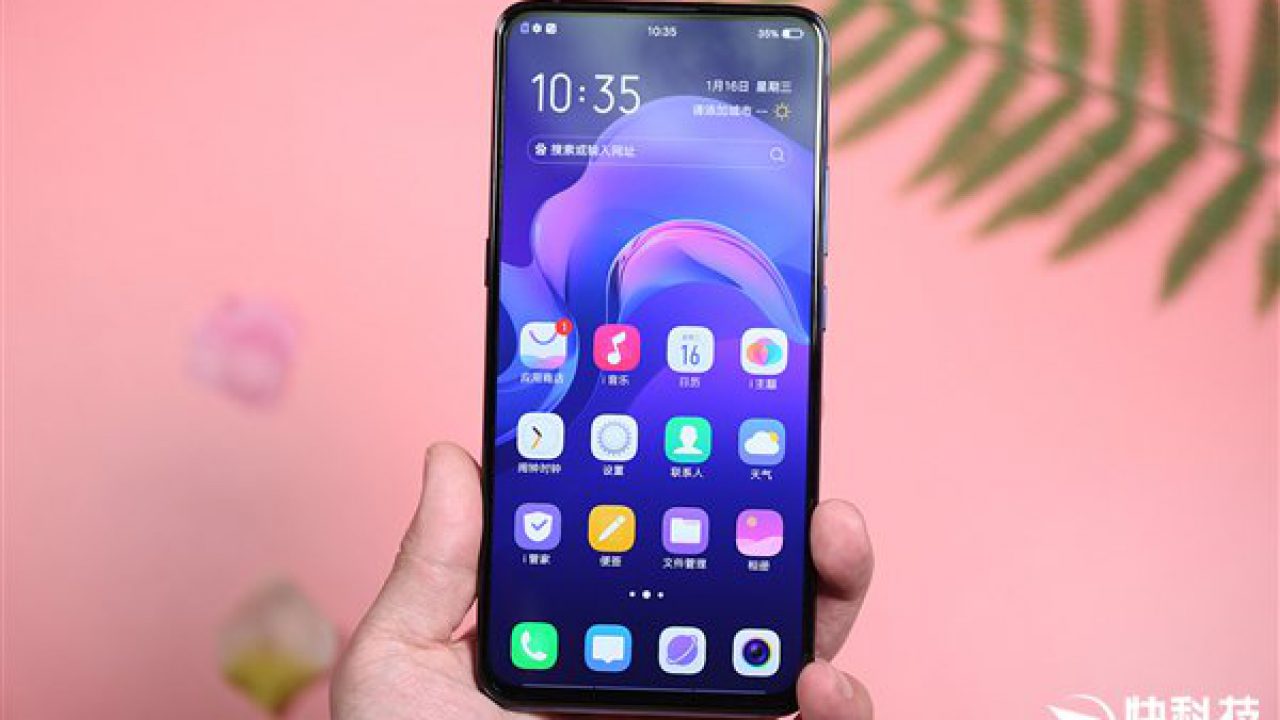
    Ever since phone manufacturers started to find alternatives for the placement of the selfie camera on their phones, the industry has been moving toward the Holy Grail; a 100% screen-to-body ratio. Former Apple design chief Sir Jony Ive admitted a few years ago that he wanted an iPhone that looked like a single sheet of glass. First, he states that earlier this year Samsung canceled a project called Full-Display 2.0. The team working on this project was trying to develop a phone that was all screen without a notch, punch-hole or a cutout.

    This decision, according to Ice Universe, was a “serious mistake” on Samsung’s part. Why? Because manufacturers in China have been working toward the goal of producing a phone sporting a full-display. And it would appear from a render that was included in the tweet, that Vivo is going to take the next step toward releasing a full-screen phone with the Vivo NEX 2. The render shows a phone with curved edges with no side bezels or side buttons.  There is an extremely thin bezel at the top and a small chin at the bottom. Since the original NEX featured a pop-up selfie camera, we can expect more of the same with the sequel. Or perhaps there is an in-display camera.

    Even though Vivo isn’t expected to sell the NEX 2 in the states, it is important to see what some of the innovative Chinese manufacturers are doing. That’s because a phone doesn’t have to be sold in the U.S. to start a new design trend. For example, the 2016 Xiaomi Mi Mix and its edge-to-edge display influenced the designs of some phone manufacturers who do sell their devices in the states.

    With in-display fingerprint scanners already here and in-display selfie cameras on the way, it might not be terribly long before we see a handset with a screen-to-body ratio approaching 100%.

  • Leaked photo shows Nokia feature phone running a special version of Android

    Leaked photo shows Nokia feature phone running a special version of Android

    Do you remember the last feature phone you owned before getting a smartphone? Once you purchased a smartphone, you figured that you would never consider buying a feature phone again. But suppose you could purchase such a device powered by Android? 9to5Google posted a photograph today that it received from an anonymous source. The image shows a device that resembles a Nokia feature phone running the Android operating system. The phone doesn’t use a touchscreen for navigation and relies instead on a d-pad, number keys and some other buttons (how could we have been so primitive back then). There is no app switcher on the device.

    The handset was created by Nokia. Some of the markings on the number keys seem to dovetail with ones used on earlier Nokia phones. The home screen features a microphone icon near the top of the display; while this is indeed Google’s microphone icon, it isn’t clear whether it will be used to make requests of Google Assistant or to ask questions to Google Search. Some app icons can be seen on the bottom of the display for the camera, Chrome Browser, and YouTube. There is also an unknown icon showing white arrows in a green circle, one pointing right and the other left. A yellow flap can be seen on the left side of the circle. The square in the middle is most likely the app drawer; navigating to that icon will show you all of the available apps on the phone

    On the upper part of the display from the center to the right corner is the status bar that shows the status of the network being used (4G in this case), a signal strength bar, battery indicator and the time. On the bottom, there are three options, “Alert,” “Select,” and “Settings.” The first option might be used instead of the non-existent pull-down notification shade to receive notifications and alerts. The photo also shows that the phone is hidden under a rubber case. Ironically, Android was originally developed for non-touchscreen handsets. The word is that when then Apple-CEO Steve Jobs unveiled the original iPhone in January 2007, developers quickly changed paths and turned Android into an operating system for touchscreen phones.
    There is no indication when (or even if) such a phone will be produced. Without having to power a large touchscreen, battery life would probably be stellar, even with a much smaller capacity battery than what you might find on what passes for a low-end Android phone these days (actually, some budget Android phones, like the Moto G7 Power, possess large batteries). And the price would most likely undercut any touchscreen Android phone available today.
    HMD Global, which has the right to use the Nokia name on mobile phones through 2024, brought back the popular Nokia 3310 feature phone in 2017. The original was one of the best-selling phones of all time with sales of 126 million units. The newer version of the phone had some updated specs including a 2.4-inch color screen, a 2MP rear camera, and a microSD slot. And while the battery sports a rather low capacity of 1200mAh battery, on a feature phone like the Nokia 3310, that is enough to keep the device running for a long time between charges.
    This might be something that will appeal to those seeking a backup phone or a cheap phone for the kids. And since it will run on Android, it should have a lot more functionality than that LG Dare you used to carry around.
  • Verizon launches its fifth 5G device in its fifth 5G market

    Verizon launches its fifth 5G device in its fifth 5G market

    Verizon is taking another small step today towards a nationwide 5G coverage dream that continues to seem so annoyingly distant by expanding the list of cities embracing the next standard in mobile connectivity to five. As expected, St. Paul, Minnesota is joining Denver, Chicago, Minneapolis, and Providence, but fret not, as this sluggish rollout is about to substantially speed up.

    Big Red is not giving up on its rather ambitious goal of spreading the 5G love to “more than” 30 cities by the end of the year, although some of those locations remain under wraps and there are no words on future release dates. It’s also important to highlight Verizon’s “true” 5G Ultra Wideband network is only accessible in certain parts of the five aforementioned cities for the time being.

    As far as St. Paul is concerned, the new ultra-low latency and insanely high download speeds are available in “parts” of Downtown, Lowertown, and West Seventh neighborhoods “around” landmarks including the Minnesota Children’s Museum, the Minnesota Museum of American Art, the Fitzgerald Theater, Cathedral Hill Park, and the Alexander Ramsey House. That doesn’t exactly sound impressive, but it’s a start.

    Besides, the nation’s largest wireless service provider promises your 5G device will be able to seamlessly switch to 4G LTE connectivity where a 5G signal is out of reach. Speaking of devices, the Inseego 5G MiFi M1000 hotspot is exclusively available for Verizon subscribers starting today at an outright price of $650.

    This is the fifth 5G-enabled gadget released by Verizon, targeting both businesses and everyday consumers. The ultra-advanced hotspot allows up to 15 devices to connect simultaneously, supporting “near real-time” virtual reality and augmented reality experiences, as well as 4K and 8K video streaming with “near real-time downloads and virtually no buffering delays.”

    If $650 feels a little rich for your blood, you can get that price point down to $499.99 with a two-year contract or pay $27.08 a month for two years. Don’t forget you also need to pay a little something extra on your monthly plan to actually get 5G access.

  • App adds Google Assistant functionality to your Samsung Galaxy Watch

    App adds Google Assistant functionality to your Samsung Galaxy Watch

    So let’s say that you’re currently rocking the Samsung Galaxy Watch and you’re not happy with the virtual assistant on the timepiece. After all, Bixby is an acquired taste. And since the watches are running Tizen, well the Google Assistant is out. Or is it? According to Android Police, the GAssist.net app can help you put much of the Google Assistant’s functionality on your Tizen powered timepiece. You will need to visit the Galaxy Store to load the app on your watch and the Google Play Store to load the companion Android app on your phone.

    Installation is a bit complex It will require you to store on your phone a file generated from the Google Cloud Platform website. A YouTube video was created to show you how this is accomplished. You can find that video in the slideshow at the bottom of this article. Once that is done and the correct apps are stored on the watch and phone, the apps themselves will guide you through the remainder of the setup.

    Keep in mind that you won’t be able to access the Assistant by saying a hot word. Activation is accomplished by opening the app and tapping on the word ‘Listen.’ You also can’t use the app to control other functions on the watch, like timers and alarms. But you can use it to handle the requests and demands that you would normally turn over to Google Assistant including turning on or off smart appliances and get the weather. Some Reddit posters say that it opens faster than Google Assistant does on Wear OS devices. And you can allow your watch to receive personal results on the GAssist.net app (after installation of course) by opening Google Assistant on your phone and clicking on the icon at the bottom left of the screen. From there, click on your profile at the top right of the display. Tap on the Assistant tab and scroll down to Assistant devices. You should see a listing for Galaxy Watch. Tap on it and allow personal results.

    The Samsung Galaxy Watch Active 2 could be introduced during the same August 7th Samsung Unpacked event that will unwrap the Galaxy Note 10 line. The device will come with an electrocardiogram (ECG) monitor, although that feature requires FDA approval which might not come until the middle of 2020.