Author: Mei Ling Tan

  • Carrefour China business Sold

    Carrefour China business Sold

    Suning is to buy an 80 percent controlling stake in Carrefour China for €620 million (RMB 4.8 billion).

    The first Carrefour China supermarket was opened in 1995 when the French company was one of the first foreign retailers to enter the market. Currently, it operates 234 outlets – 210 large-format hypermarkets and 24 convenience stores. Net sales for its last full year were €3.6 billion (RMB 28.5 billion) and pre-tax profit €66 million (RMB 516 million).

    Just last month, Carrefour executives denied the business was for sale, but financial media have been reporting what turned out to be markedly accurate reports of negotiations this year.

    Suning’s purchase follows the acquisition of 37 Wanda department stores earlier this year, which will be converted to Suning.com branding.

    The company says it will use its smart-retail expertise to digitalize Carrefour China’s existing store network to create a “leading innovative supermarket shopping experience”.

    “In the future, we expect to open up the access for Suning’s various business models, such as household-electronics sales, Redbaby, JIWU, Suning Financial Services, SuFresh and Suning Xiaodian’s immediate delivery, [and] to get into Carrefour China’s stores located in the central business and living areas of Chinese first- and second-tier cities,” said Tian Rui, VP of Suning.com.

    “It will help us better meet more consumers’ needs due to strengthened core capabilities achieved by store innovation. With 400 million registered customers of the company’s retailing segment, Suning.com’s users-ecosystem will complement Carrefour China’s membership system, fully improving the customer value.”

    He said that by connecting the more than 6000 Suning Xiaodian stores with Carrefour China’s outlets, Suning’s ‘last-kilometre home-delivery service will be able to serve more consumers with lower cost but higher efficiency.

  • BMW X1 Faceflift Makes World Debut In Munich

    BMW X1 Faceflift Makes World Debut In Munich

    The youngest SUV in the BMW family has received a comprehensive update and despite being the smallest, it doesn’t look like one. The current generation BMW X1 surprised us with its grown proportions and bold styling and even car enthusiasts confused it with the X3. The new 2020 facelift model builds upon that with clear and prominent revisions made to its face and rear. It looks more dominant sporting larger kidney grilles which merge in the center. The new Adaptive LED headlamps to include sharper light iconography and the bumper along with integrated LED foglamps also houses larger air intakes. The rear end of the X1 also looks stylish. For instance, the new inlay in the body-color rear apron adopts the car’s main body color.

    The driver side wing mirror projects two-tone LED X1 image when the car is unlocked. The new BMW X1 also gets three new body colors- Jucaro Beige metallic, Misano Blue metallic (exclusively for the M Sport model) and the ultra-exclusive BMW Individual Storm Bay metallic along with four new wheel designs. The 2020 BMW X1 Facelift will be offered in three variants- the base X Line, Sport Line and M Sport. The BMW X1 M Sport gets lowered stance, thanks to the M Sport suspension and BMW Individual High-gloss Shadow Line trim gets additional features along with the M Aerodynamics package.

    On the inside, the cabin is finished in high-quality materials and it continues to get contrast stitching on the instrument panel which is finished in black on its upper section and adopts the color of the interior upholstery lower down. The contrast stitching is available for the xLine, Sport Line and M Sport models only. Moreover, the floor mats also gain colored edging and contrast stitching for the edging and customers will get a choice of three upholstery options. There is also a 6.5-inch screen which is standard while customers can also opt for an 8.8-inch or 10.25-inch touch screen which can be operated using the BMW iDrive Controller or voice control and gets built-in navigation. The latest version of BMW’s connected drive is also standard on the new X1. Moreover, the rear seats can be folded down in three sections (40:20:40) and can slide forward by up to 13 cm, however, that is optional. Features such as automatic tailgate operation and Comfort Access are optional as well.

    The new BMW X1 line up will get 16 engine and transmission options globally which will include a range of three-cylinder and four-cylinder engine options. The BMW X1 sDrive16d which is powered by the 1.5-liter three-cylinder engine will be available with either a manual six-speed gearbox or a seven-speed dual-clutch transmission and will develop 114 bhp and 270 Nm of peak torque. The xDrive 25d diesel will get the 2.o-litre, four-cylinder engine which puts out 228 bhp and 450 Nm of peak torque will be mated to an eight-speed auto transmission as standard and will clock triple-digit speed in 6.6 seconds. Finally, the petrol BMW X5 xDrive 25i will use the 2.0-liter, four-cylinder engine which puts out 228 bhp and 350 nm of peak torque and is also mated to an eight-speed auto transmission as standard. It’s 0.1 seconds quicker to 100 kmph than its diesel counterpart and clocks triple-digit speed in 6.5 seconds.

  • Google announces customers can now use PayPal with Google Pay

    Google announces customers can now use PayPal with Google Pay

    Google has just announced it has expanded its partnership with PayPal to provide merchants with more ways to accept payments online. Starting next week, Google Pay will benefit from PayPal integration in all 24 countries where customers can link their PayPal account to Google Pay.

    Merchants that enable PayPal as a payment method on their Google Pay integration will allow consumers to seamlessly check out on their website or app. Basically, users will no longer have to sign in to PayPal when they use it with Google Pay once they link their PayPal account.

    With the new option, customers will be able to switch between debit cards, credit cards, their PayPal account, and more just by choosing Google Pay at checkout.

    Enabling PayPal integration in Google Pay will let merchants keep all the benefits they currently have, including the ability to receive payments directly to their PayPal Business Account within minutes, no minimum processing requirements, as well as seller protection on select transactions.

    Now, if you’re a merchant who can’t wait to enable the option to pay with PayPal in Google Pay, there are a couple of things that you need to do before customers can use the new feature. However, instead of going too technical, we’ll just redirect you to Google’s developer blog, which has all the information needed to enable PayPal in Google Pay.

  • Porsche Recalls Cars Worldwide Due To Faulty Transmission Unit

    Porsche Recalls Cars Worldwide Due To Faulty Transmission Unit

    Volkswagen’s sports-car brand Porsche has to recall almost 340,000 Cayenne and Panamera vehicles due to problems with their automatic transmission, the German company said on Tuesday.

    A Porsche spokesman said the cars might roll when parked due to a potentially fragile part in the connection between the gear lever and transmission.

    Almost 100,000 of the affected vehicles, which date back to 2002, are in the United States and almost 25,000 in Germany.

  • Shopee on top of the 10 m-commerce players in Vietnam

    Shopee on top of the 10 m-commerce players in Vietnam

    Shopee heads the list of the top 10 m-commerce players in Vietnam for the first quarter of this year.

    The findings were released in a ranking by Iprice Group and App Annie Intelligence, which ranked shopping apps according to the number of monthly active users. It noted that mobile shopping is quickly becoming an important feature of e-commerce business in Vietnam.

    According to Google and Temasek’s report last year on the Southeast Asian ‘e-conomy’, more than 90 per cent of Southeast Asians are now connecting to the internet primarily through their smartphones, making this region one of the most mobile-first globally.

    Iprice Group also noted that during last year’s Singles’ Day, the rate of consumers accessing its e-commerce platform by mobile has risen rapidly from 62.5 per cent in 2017 to 80.4 per cent last year.

    Facing these customer behaviour trends, online retailers in Vietnam are now scrambling to improve and promote their mobile apps. Shopee, in particular, has invested a lot on campaigns to attract consumers to its app.

    “Shopee has focused on mobile from the beginning and built its user interface around it,” read an assessment report by marketing research agency Econsultancy last year. “This made users’ mobile shopping experiences faster and more intuitive – users can buy or sell their items in less than 30 seconds – allowing Shopee to capture a large group of mobile users in Southeast Asia and Taiwan.”

    Ranked number two of the top 10 e-commerce players in Vietnam is Shopee’s biggest regional competitor Lazada. This is perhaps a more surprising result, as according to Iprice Group’s previous report, which ranked Vietnamese e-commerce companies based on average website traffic, Lazada’s monthly traffic has been on a decline that puts them in third place behind Shopee and Tiki.

    However, when it comes to mobile, the e-commerce giant is now shifting to put a bigger emphasis on mobile shopping.

    Ranking in the top five behind Shopee and Lazada are apps from three local e-commerce platforms: Tiki, Sendo and Adayroi. These three companies also have been achieving positive results in terms of average website traffic for the recent quarter, making them worthy opponents for the two regional companies.

    Behind this top five in the ranking are AliExpress, Amazon, eBay, and Alibaba – all of which are currently not officially operating in Vietnam.

    Lotte.vn – the South Korean hypermarket group’s local subsidiary – rounded out the top 10 m-commerce players in Vietnam rankings.

  • Razer Partners Visa In Expanding Payment Network

    Razer Partners Visa In Expanding Payment Network

    Up to 60 million users of Razer’s mobile wallet, Razer Pay, will be able to try out the newly-developed virtual prepaid solution by Visa for making payments wherever Visa is accepted without the need for a bank account or a credit card, both companies announced on Monday

    We want to make sure that we are able to introduce the benefits of mobile and digital payments to [the under-banked and under-served population in Southeast Asia], in order to bring them up to the formal financial system, said Chris Clark, regional president of Visa Asia Pacific, in a statement.

    The new Visa prepaid service will be available in Southeast Asia next month, starting from Malaysia and Singapore where Razer Pay is already available. The service will then be expanded to other countries including the Philippines, where the launch of Razer’s e-wallet is in the pipeline, said Limeng Lee, Visa’s chief strategy officer. «Fintech is the extension of what we have been doing. We’re currently focusing on Southeast Asia where we see massive opportunity. There’s a huge youth demographic and a lot of them are gamers… and these are usually the early adopters of new technology,» Lee said.

    Southeast Asia’s mobile payments landscape grew rapidly in recent years, driven by high mobile penetration rates and the popularity of mobile services. In particular, Vietnam saw the highest growth globally in mobile payments use last year, with six Southeast Asian countries, including Singapore and Malaysia, in the top 10 markets for the shift to mobile, according to a survey by PwC in April this year.

  • Singapore’s Paradise restaurant group plans APAC expansion

    Singapore’s Paradise restaurant group plans APAC expansion

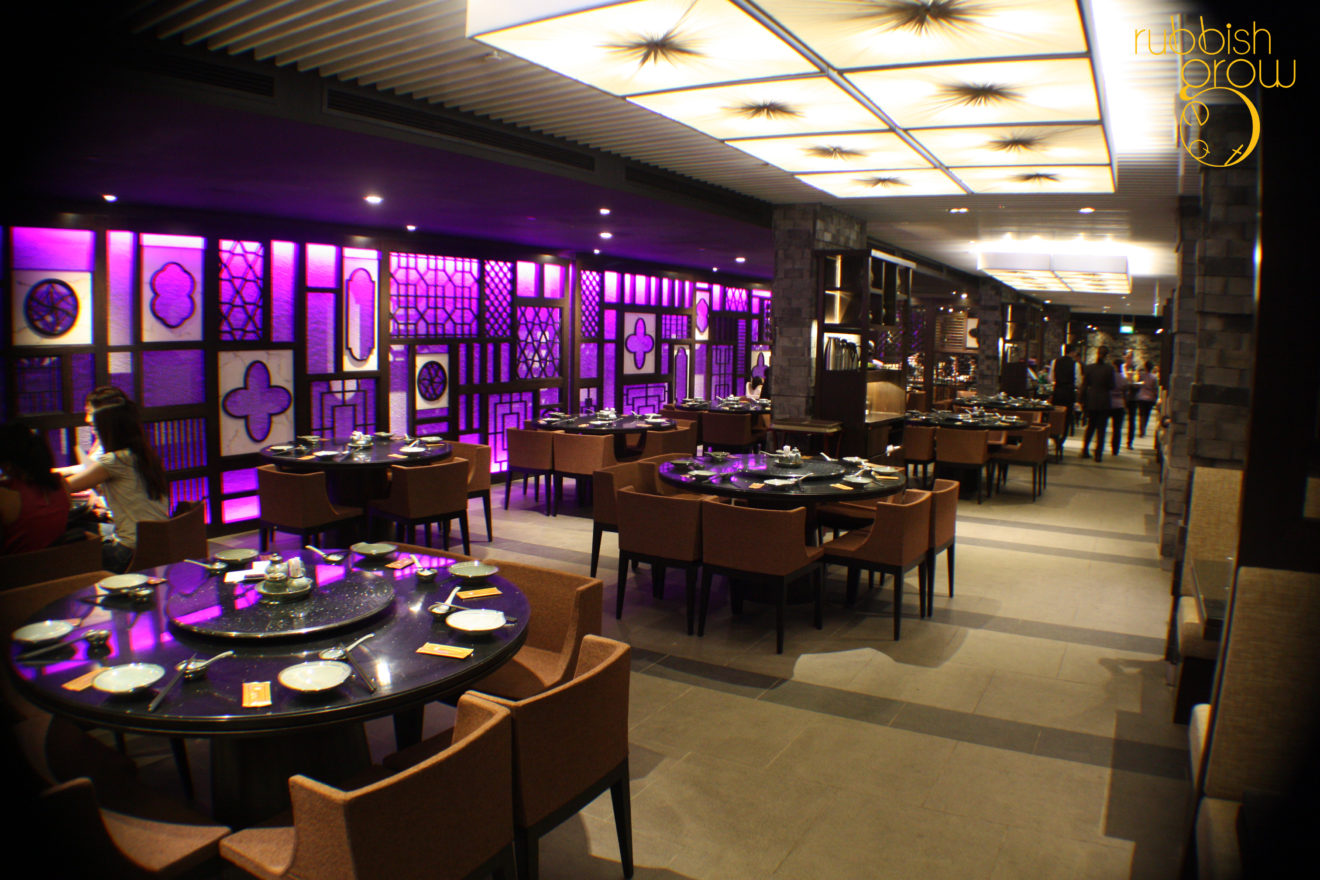
    Paradise restaurant group plans to open its 150th outlet worldwide by 2021, with an initial focus on Singapore.

    The company has opened 10 outlets in Singapore since January, include three at Jewel Changi Airport, and branches at Westgate, Wisma Atria, and The Star Vista. This year, a Paradise Dynasty outlet will be opened at Funan, and a Canton Paradise Tea House restaurant at Junction 8.

    The Paradise restaurant group’s brands include Seafood Paradise, Paradise Inn, Taste Paradise, Paradise Dynasty, KungFu Paradise, Paradise Pavilion, One Paradise and Canton Paradise. It already has outlets in Singapore, Malaysia, Indonesia and China.

    “Since 2016, we have been on the lookout for expansion opportunities,” said Joyce Lao, Paradise’s head of business development.

    “We have opened an average of 20 outlets a year, both locally and overseas, since then. But this year, our focus will be on Singapore, to gain a bigger foothold in the food and beverage industry here.”

    The chain will be rolling out more “quick-service” restaurants where customers order from a menu pad and pay at the counter.

    Paradise restaurant group plans to develop technology in its cooking process, such as a central kitchen where ingredients can be cut and prepared; a noodle-cooking machine with a timer.

    “Some processes cannot be replaced because we do not want to compromise on taste or service standards. We still believe in the human touch,” said Lao.

    The group also plans to expand into non-Asian countries, starting with Los Angeles in the US by the end of the year.

  • E-commerce sales up in New Zealand with 16 per cent last year

    E-commerce sales up in New Zealand with 16 per cent last year

    New Zealand consumers spent $4.2 billion online last year, a 16 percent increase in 2017, according to the latest e-commerce report from NZ Post.

    This compares to just 2 percent annual growth in bricks-and-mortar shopping, the postie said in a statement released last week.

    The rise in spending was driven by Kiwis shopping online more often, with consumers hitting the ‘buy’ button 22 times each.

    Last year also saw the emergence of ‘super shoppers’ – with nearly 10 percent of the 1.8 million Kiwis who shopped online last year spending over $9000.

    The report found that spending with New Zealand online stores grew nearly twice as fast as spending with international online stores, though roughly a third of the dollars consumers spent online in 2018 overall went overseas.

    Around 12 percent of online shoppers used to buy now pay later methods, such as Afterpay, last year – with younger users and women being the majority of users.

    The most prominent online shoppers in New Zealand are women aged between 30 and 45 who live in rural areas, NZ Post found.

    “NZ Post is delivering well over half of all parcels bought online in New Zealand and we’re proud to be integral to that moment of joy when your online shopping parcel arrives,” Bryan Dobson, NZ Post’s chief marketing officer, said.

  • Telegram update adds location-based chats

    Telegram update adds location-based chats

    What not as popular in the U.S. as it is overseas, the Telegram messaging app offers end-to-end encryption and no limits on the number of people you can chat with or broadcast to at one time. It’s no wonder that protesters of all types outside of the states love to use Telegram. And today, the company announced some changes that will be found in version 5.8 of the messaging app.

    You’ll notice that all new chats have a new button on the top of the screen that says “Add to Contacts.” This feature will allow you to quickly add to your Telegram contacts list a person who has sent you a message on the platform even without knowing their phone number. Another option also available at your fingertips will let you block someone who has sent you a message. And let’s say you’re at a party and want to add someone who you’ve just met to your contacts list. Going to Contacts > Add People Nearby will allow you to exchange information with another Telegram user as long as they are standing right next to you (and have the same feature open on their phone).

    The People Nearby section allows you to find location-based group chats and even create one. As Telegram notes, “This update opens up a new world of location-based group chats for anything from conferences, to festivals, to stadiums, to campuses, to chatting with people hanging out in the same cafe.” The latest version of the app lets you transfer ownership of a group or channel to another Telegram user and toggle on or off message previews for specific chats using the Notable Exceptions feature.

    Those using Telegram on an iOS device can now open the Appearance page to see what a new theme will look like before they apply them. After installing version 5.8, iOS users can choose which icon they want on the home page from four different options. And Telegram users with the iPhone or iPad can arrange to open chats hands-free using Siri shortcuts.

    The new update just hit the Telegram app on our Pixel, so keep your eyes peeled for version 5.8 rolling out now. Telegram can be found in the App Store for iOS or the Google Play Store for Android.

  • IMF head warns fintech could disrupt world’s financial system

    IMF head warns fintech could disrupt world’s financial system

    International Monetary Fund (IMF) Managing Director Christine Lagarde warned on Saturday that the increasing presence of technology giants using big data and artificial intelligence could cause a significant disruption to the world’s financial system.

    The rapid development of financial technology (fintech) has increased access to cheap payment and settlement systems for low-income households in emerging countries where traditional banking networks are scarce.

    But it has raised concern about the increasing dominance of big technology firms in mobile payments, which could force global policymakers to rethink the way they regulate the banking system and ensure financial settlements are executed safely.

    “A significant disruption to the financial landscape is likely to come from the big tech firms, who will use their enormous customer bases and deep pockets to offer financial products based on big data and artificial intelligence,” Lagarde told a symposium on financial technology held on the sidelines of the G20 finance leaders’ meeting in Fukuoka, southern Japan.

    While such innovation may help modernize financial markets, they could make the financial system vulnerable such by putting payment and settlement systems under the control of a handful of technology giants, she added.

    “This presents a unique systemic challenge to financial stability and efficiency, and one I hope we can touch on during the G20, and address in a cooperative and consistent fashion.”

    Lagarde said China presents an example of the trade-off between benefits and challenges posed by financial technology.

    “Over the last five years, technology growth in China has been extremely successful and allowed millions of new entrants to benefit from access to financial products and the creation of high-quality jobs,” she said. “But it has also led to two firms controlling more than 90% of the mobile payments market.”

    Addressing the pros and cons of financial innovation is among topics of debate at the two-day meeting of Group of 20 finance ministers and central bank heads that began on Saturday.

  • South Korean love hotels business booming and expanding

    South Korean love hotels business booming and expanding

    Yanolja’s gentrification of South Korean love hotels has brought the company a valuation of more than $1 billion from investors keen to capitalise on the globalisation of a novel approach to short-stay accommodation, its chief executive told Reuters.

    The budget hotel and online booking platform operator reached the valuation having secured $180 million from US peer Booking Holdings Inc and Singapore sovereign wealth fund GIC Pte Ltd, Yanolja confirmed on Tuesday.

    It aims to conduct an initial public offering (IPO) as early as next year, CEO Kim Jong-yoon said in an earlier interview.

    “I can proudly say we transformed the industry,” he said.

    Yanolja’s emergence coincides with a time of flux among hoteliers, as legislators are at loggerheads with market disruptors such as Airbnb Inc – through which private home owners can let rooms for short-term stay – while a government campaign to reduce working hours promises to free up more leisure time for short breaks.

    Love hotels have occupied a peculiar space in the broader market, offering privacy for as little as a few hours at minimal cost for, for instance, young couples living with their parents.

    Popular association with extramarital affairs, prostitution and hidden cameras, however, has sullied their reputation, exacerbated by their often garish decor and low-key lighting.

    Yanolja – meaning “Hey, let’s play” – sought to dispel any stigma with its bright, modern franchised love hotels, targeting millennial couples but also budget tourists seeking short-term accommodation.

    “Previously, many people were not able to go to love hotels out of embarrassment,” Kim said. “But we’ve drawn in guests even for travel. That’s the biggest change.”

    The firm, which began as an online search portal for love hotels, also lists hotel, pension and guest house rooms on its website at prices ranging from 50,000 won ($41.86) a night at budget hotel Ben-Hur to 200,000 won at five-star Hyatt.

    It has entered a strategic partnership with Booking whereby the latter’s Agoda brand can list Yanolja accommodation, while Yanolja customers will be able to book worldwide through Agoda and other Booking brands, Yanolja said in a Tuesday statement.

    Booking and GIC were not immediately available for comment.

    “It’s a unique example which breaks away from the traditional notion of love hotels,” said tourism professor Lee Hoon at Hanyang University in Seoul.

    “But the domestic market is not big enough. Yanolja can survive only if it goes global and scales up,” Lee said.

    Yanolja aims to expand in hotels in Southeast Asia where it invested $15 million in ZEN Rooms last year, bringing it into competition with Indian budget hotel operator Oyo, backed by Airbnb and Japan’s SoftBank Group Corp.

    “We are very keen to go global,” said Kim.

    Yanolja was founded in 2005 by former love hotel housekeeper and valet Lee Su-jin, whose search portal evolved into an advertising platform for love hotel operators seeking to replace customers lost after the 2004 passing of an anti-prostitution law.

    A decade later, Yanolja claimed to be the first company to offer a reservation platform for mobile phones for its own and others’ love hotels, a major shift in an industry which relied on walk-in customers.

    The platform allowed it to expand its target guests to shoe-string travellers from home and abroad, in a country where Airbnb-type options are limited to foreign guests. Listings later ballooned as hoteliers turned to Yanolja to fill rooms after a political dispute caused a drop in Chinese demand.

    South Korea’s online travel sales nearly doubled in five years through 2018 to $21.8 billion, showed Euromonitor data provided to Reuters. Sales by mobile made up nearly half of the total, the third-biggest proportion globally, Euromonitor said.

    Yanolja’s revenue nearly doubled to 188.5 billion won last year, from a year earlier, but the firm is still losing money on a consolidated basis, said CEO Kim. It aims to sell shares in an IPO by 2022 at the latest, he said.

    Yanolja plans to increase offerings and raise efficiency through technology such as artificial intelligence and the internet of things, in a hotel industry Kim deemed conservative.


  • New Flagship SUV From Audi Reveiled

    New Flagship SUV From Audi Reveiled

    The new Audi SQ8 breaks cover! It is the new flagship SUV from Audi and it gets a massive 4.0-liter V8 turbo-diesel engine with a 48-volt mild-hybrid technology. The V8 pumps out a mind-boggling 900 Nm of peak torque. The SUV gets an 8-speed automatic gearbox. Audi hasn’t revealed the power figures yet. The Audi SQ8’s 48-volt mild-hybrid makes up to 10 bhp under braking lets the SQ8 coast for up to 40 seconds without the engine being active, at speeds between 55 kmph to 160 kmph. Also, the diesel engine turns of one of the two turbo-chargers at city speeds to increase the efficiency as well. The Audi SQ8 has a 0-100 kmph sprint time of 4.8 kmph and a top speed of 250 kmph which is electronically limited.

    Built on the Volkswagen Group’s MLB platform, the Audi SQ8 can also be specified with an optional suspension package which also includes a sport differential and an adaptive air suspension. The air suspension can adjust the ride height of the SQ8 by up to 90 mm. The other feature is the electromechanical active roll stabilization which reduces body roll when cornering hard. Audi also offers all-wheel steering as an option on the SQ8.

    As far as looks are concerned, the Audi SQ8 gets a new grille with a silver frame along with re-designed air inlets. The rear end of the car gets a new diffuser in black color and gets quad exhaust tips. The cabin gets Alcantara leather upholstery along with ‘S’ logos embossed on the seats and stainless steel pedals. The Audi SQ8 also gets two touchscreens and the Audi Virtual Cockpit with displays specific to the SQ8.

  • Lexus’ Safety System+ To Be Standard In All Cars In The US From 2020

    Lexus’ Safety System+ To Be Standard In All Cars In The US From 2020

    Collisions that result in injury can often be caused by a delay in a driver’s recognition of the situation and his or her ability to react accordingly. In a move to help prevent such accidents before they happen, the Lexus Safety System+ will be a standard feature in all US Lexus vehicles starting with the 2020 model year. Designed to help protect drivers, passengers and pedestrians, the Lexus Safety System+ is an integrated suite of four advanced active safety packages anchored by automated pre-collision warning and braking.

    David Christ, group vice president and general manager, Lexus Division said, “We are working toward preventing crashes before they happen. That’s why we have developed some of the most advanced safety features on the road today, and now those systems will be standard equipment on every model we sell.”

    The Safety System+ will come with Pre-Collison System with Pedestrian Detection, a system which is engineered to help detect a preceding vehicle or a pedestrian in front of the Lexus under certain conditions. Should the system detect a pedestrian or a potential frontal collision, it’s designed to activate an audible and visual alert while automatically preparing Brake Assist for an increased braking response. If the driver does not break in time, the system is designed to automatically begin braking before impact and, in some cases, can even bring the vehicle to a stop.

    There will also be Lane departure alert which will utilize a high-resolution camera to monitor visible lane markings and determine the vehicle’s position within a lane. If an inadvertent lane departure or potential departure due to swaying is detected at speeds above 51 kmph, the system attempts to alert the driver with audio and visual warnings and steering wheel vibrations. Then there are the Intelligent High Beams which provide added visibility for the Lexus driver as well as other motorists, Intelligent High Beams offer added illumination to help keep the driver focused on the road. When the road ahead is clear, the system defaults to high-beam mode, then temporarily switches to low beams when it detects the headlamps or taillamps of vehicles ahead.

    And finally, there’s the dynamic radar cruise control which uses radar and camera technology to help maintain a preset speed and following distance from the vehicle ahead. If driving at highway speeds and the road ahead clears, the vehicle returns to its preset speed.

  • Vietnamese e-commerce platform Tiki set to raise US$100 million

    Vietnamese e-commerce platform Tiki set to raise US$100 million

    Vietnamese e-commerce platform Tiki is raising another US$100 million from a Northstar Group-led funding round.

    The deal, was initially aiming for $75 million, but has been scaled up with support from Tiki’s current Korean backers, and may pull in as much as $150 million if certain KPIs are met.

    Tiki, which acquired competing platform Lazada last year, is now Vietnam’s second-largest e-commerce player after Shopee. It attracted a $44 million investment from Chinese industry partner JD early last year, and recently extended its national logistics operations in partnership with Vietnamese firm Unidepot.

    “Supply chain is a billion-dollar industry in Vietnam with surprisingly rapid growth,” said Tiki CEO Tran Thai Son. “However, Vietnam’s supply chain has not achieved its peak efficiency. For example, for an order worth 100,000 dong, logistics costs can be up to [25,000] dong.”

    Tiki’s infrastructural investments have seen the firm accumulate losses of around VND1 trillion ($43.3 million) over recent years.

  • Vietnam’s Vingroup new factory to produce 125m smartphones

    Vietnam’s Vingroup new factory to produce 125m smartphones

    Vingroup JSC, Vietnam’s biggest listed firm by market value, said on Monday it has started work on a second smartphone factory with a capacity to produce 125 million units a year.

    The new factory in the capital, Hanoi, will vastly increase Vingroup’s current capacity of five million units at its facility in the northern city of Haiphong, the conglomerate said in a statement.

    Construction is expected to be completed by early 2020 and the jump in capacity will help the company meet orders from Europe and the United States, Vingroup CEO Nguyen Viet Quang said in the statement.

    “After a period of deploying and participating in the smartphone manufacturing industry, our products have been positively received by the market,” Quang said.

    “We received many processing orders from major partners in Europe and the United States. That’s why we have invested in a factory with 25 times the capacity of our current factory in Haiphong, to meet with domestic and international demand,” he added.

    A company spokesman declined to provide the names of the European and US partners.

    Vingroup launched its smartphone brand, Vsmart, in December last year, seeking to win market share from popular brands Samsung and Apple in Vietnam, which has a population of 95 million people.

    Vsmart phones use chips from Qualcomm and run Google’s Android operating system, and went on sale at a price of 3.39 million dong ($145) to 6.59 million dong ($282).

    In March, the company began selling Vsmart phones in Spain and planned to expand into other European markets. Its phones went on sale in regional neighbour Myanmar last month.

    It is part of a diversification strategy that has seen Vingroup, once focused on real estate and retail, become Vietnam’s first fully-fledged domestic carmaker in 2018.

    Electronics is a vital part of Vietnam’s economy as firms such as Japan’s Sony Corp and South Korea’s LG Electronics and Samsung Electronics reorganise production in the face of slumping global demand.

    Samsung said in December it will close one of its mobile phone plants in China as it focuses on low-cost countries like Vietnam, where it is the largest single foreign investor.

    In April, LG Electronics said it would stop making smartphones in South Korea and move production to Vietnam.

    South Korean chips-to-energy conglomerate SK Group said last month that it had agreed to buy 6.1% of Vingroup for $1 billion as it expands its investments in Vietnam.