Author: Mei Ling Tan

  • Daniel Wellington launches Moments of Hygge pop up Store

    Daniel Wellington launches Moments of Hygge pop up Store

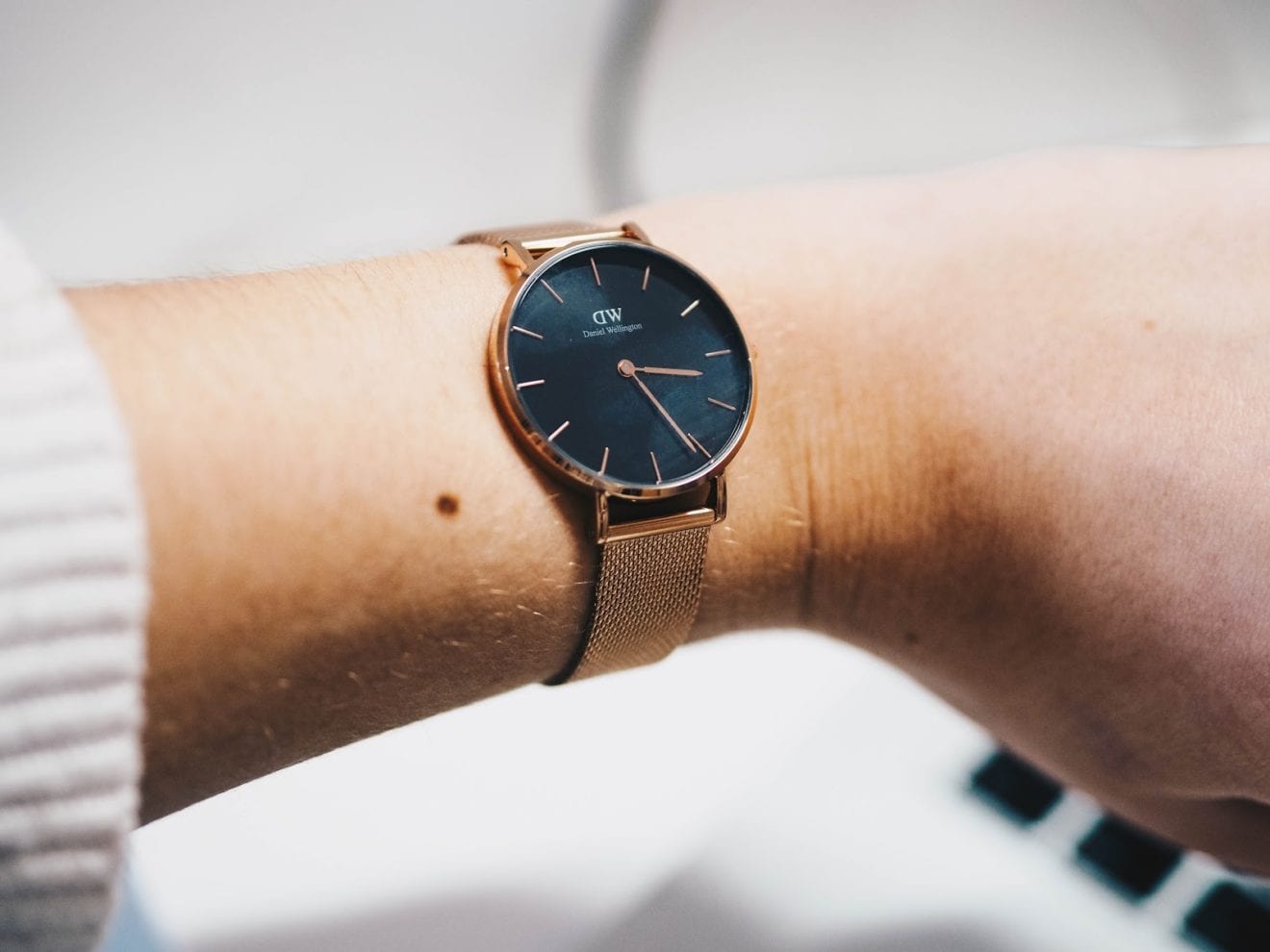
    Fashion timepiece maker Daniel Wellington has launched a pop-up in Doota Duty Free, downtown Dongdaemun in Seoul.

    The Doota X DW pop-up “DW Moments of Hygge” will be open through to July 31, designed to “celebrate the small moments of happiness in life”. The opening is timed to coincide with the release of a classic watch and bracelet with red accents to reflect the colour that represents happiness in the Chinese culture, and will feature a number of customer exclusive offers at the location.

    The store is inspired by the Scandinavian Hygge philosophy, which espouses seeking happiness and contentment in moments of cosiness and pleasure in simplicity. A press release released by the firm quotes author Meik Wiking’s The Little Book of Hygge with “Hygge … is about being with the people we love. A feeling of home. A feeling that we are safe, that we are shielded from the world and [we] allow ourselves to let our guard down.”

    The pop-up is serving ice-cold cold-brew coffee in artisanal glass flasks, paired with a traditional honey cinnamon “yakgwa” cookie, a Korean treat.

  • India Circus parent eyes 10-fold growth

    India Circus parent eyes 10-fold growth

    India Circus, the design and lifestyle brand owned by Godrej & Boyce home decor,  is anticipating growth by a factor of 10 by next year, according to company management.

    The firm aims to surpass revenues of ₹300 crore (US$43.12 million) within that time.

    “Our current revenue is ₹35 crore ($5.03 million) and we are working towards achieving a ₹300 crore revenue by 2020 and ₹700 crore ($100.62 million) by 2025,” said India Circus founder and executive director Krsnaa Mehta.

    He added that the firm will rapidly grow its online and offline businesses to drive the growth. Sixty percent of the firm’s revenues are from online.

    “Currently we have five stores in total, two in Mumbai, one each in Chennai, Bengaluru and Kolkata,” said Mehta. “We are looking at a company owned, the company operated and franchise model to expand our presence across cities. Our aim is to have 40 stores by 2020, which is almost over one store per month.”

    The firm also has eyes on global expansion and has retailed in Mauritius, Singapore and Qatar as well as in Europe via the West Wing Group. It plans to be globally accessible online within five years.

    “Licensing and royalties are one of the clearest whitespaces for us,” added Mehta. “We want an omnichannel presence. Currently, we are looking at marketplaces and premium partnerships with online players like Amazon, Myntra, Jabong, Pepperfry and other players in the space.”

  • Tata Tigor Subcompact Sedan Gets Two New AMT Variants

    Tata Tigor Subcompact Sedan Gets Two New AMT Variants

    Tata Motors today announced introducing two new AMT (automated manual transmission) variants for its popular subcompact sedan, Tata Tigor. So, in addition to the existing XZA, now the Tigor sedan will also come with a mid-level automatic XMA option and a top-of-the-line XZA+ variant. With this, save for the base model XE, all the variants of the Tata Tigor now come with the option of an automatic (AMT) variant. The XMA and XZA+ variants are priced at ₹ 6.39 Lakhs and ₹ 7.24 Lakhs, (ex-showroom Delhi), respectively.

    Commenting on the launch of the new variants, S N Barman, VP, Sales, Marketing & Customer Support, Passenger Vehicles Business Unit (PVBU), Tata Motors, said “In a constant effort to maintain our growth momentum, we continuously introduce advanced technologies in our products, fill white spaces and offer exciting product interventions to meet the growing aspirations of our customers. This strategy also includes continuously expanding and strengthening our automatic portfolio. We are confident that our customers will appreciate the perfect combination of practicality and convenience these new additions have to offer.”

    Both the Tata Tigor XMA and XZA+ variants will be available only in petrol options, powered by Tata’s tried and tested 1.2-litre Revotron engine. The 1199 cc, three-cylinder petrol engine is tuned to churn out 84 bhp and develop 114 Nm of peak torque and comes mated to a 5-speed manual gearbox, in addition to the optional AMT unit. The diesel variants, of course, get the 1.05-litre Revotorq 3-cylinder oil burner, making 69 bhp and 140 Nm torque, with the 5-speed manual unit as standard. However, Tata Motors has already confirmed that the engine will not make the shift to BS6, the more stringent emission norms that are set to kick in from April 1, 2020.

    As for features, being based on the XZ+ variants, the new XZA+ will come with all the bells and whistles like – the 7-inch touchscreen infotainment system with Apple CarPlay, Android Auto, along with an 8 speaker sound system by Harman, 15-inch diamond cut alloy wheels and auto-fold ORVMs with integrated LEDs. This is in addition to the dual chamber projector headlamps with chrome finish. The new Tata Tigor XMA variant will share its features-list with the mid-level XM trim, and features common to both variants include – driving modes, a Harman tuned music system with Bluetooth connectivity, reverse parking sensors, and foldable rear armrest with cupholders. Safety features like Dual Airbags, Anti-lock brakes, Electronic brake-force distribution, Corner Stability Control, reverse parking sensors, speed-dependent automatic door locking and engine immobilizer are also on offer.

  • Niti Aayog Recommends Sale Of Only Electric Cars From 2030

    Niti Aayog Recommends Sale Of Only Electric Cars From 2030

    In another ambitious move, Niti Aayog has proposed that only electric vehicles should be sold in the country after 2030. Government’s think tank had earlier suggested banning all conventional three-wheelers and two-wheelers which are equipped with engines of up to 150 cc. According to Times Of India report, the committee has forward a cabinet note asking to assign roles to different ministries. Ministry of Road Transport And Highways (MoRTH) has been asked to work on a new framework to phase out the sale of diesel and petrol vehicles by 2030.

    That said, the proposal penned down by Niti Aayog is not only limited to vehicles and also talks about the infrastructure to push their sales. It suggests starting an e-Highway program with an overhead electricity network to facilitate operation for long distance trucks and busses. However, it has suggested piloting the project with selected National Highways which is likely to begin with the upcoming Delhi-Mumbai Expressway. Along with the electrification of national highways, Niti Aayaog has also proposed local manufacturing of 50 GWh batteries by 2030.

    In a bid to meet the target, Niti Aayog has also proposed extending financial incentives like cash subsidy on the basis of overall domestic value addition per kilowatt hour (KWh) which will be around Rs 8000 crore. If domestic manufacturing of batteries can be made possible, the maximum cash subsidy will go up to ₹ 2000 crore for up to 20 GWh per firm which will be for just one KWh for total value capture. The think tank is also planning to procure 10 lakh direct and indirect job opportunities if the proposal is implemented.

  • Porsche Macan Facelift Bookings Open In India

    Porsche Macan Facelift Bookings Open In India

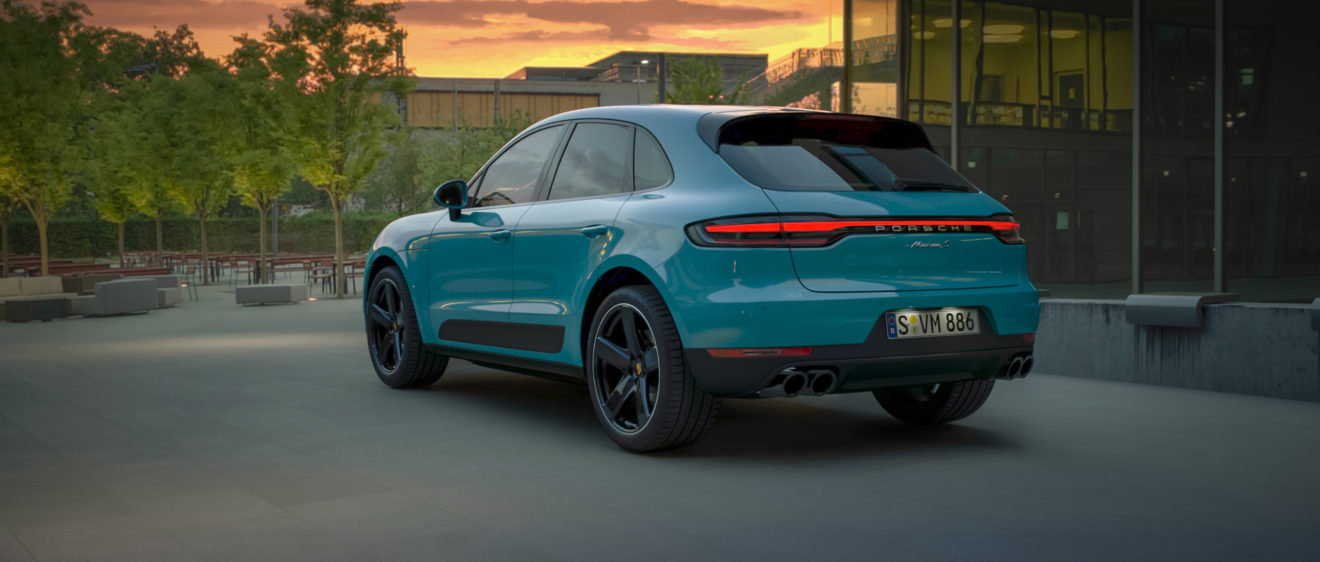
    Porsche India has opened bookings for the Macan facelift in India and it’s all set to be launched in the country in July this year. First launched in 2014, the SUV was long overdue for an update and it’s finally here. The 2018 Porsche Macan facelift comes with updated styling that has been inspired by the new-generation Cayenne, which is also set to go on sale in India later this year. In addition to cosmetic changes, the facelifted Macan also comes with a host new and updated features, which Porsche claims, offers enhanced comfort, connectivity and driving dynamics.

    Visually, the 2018 Macan retains the signature Porsche DNA and is equipped with a host of premium features, both on the outside as well as inside. The front section of the SUV has been redesigned, giving it wider facial features and LED headlights that come as standard, while the rear section is a bit sleeker now and features a three-dimensional LED tail light strip, also a standard fitment. However, if you want something even more high-tech, then the company also offers its ‘Porsche Dynamic Light System Plus’ (PDLS) with adaptive light distribution, as an optional extra. The SUV now also comes in four new exterior colour options – Miami Blue, Mamba Green Metallic, Dolomite Silver Metallic, and Crayon. It also comes with new 20- and 21-inch wheels with an array of customisation option.

    The cabin has also been updated, which now gets new interior packages with more with customisation option. The revised dashboard now features an 11-inch touchscreen display for the new Porsche Communication Management (PCM), the air vents have also been redesigned and also repositioned, and the SUV now also gets the GT sports steering wheel similar to the 911. The mode switch plus Sport Response Button have been integrated into the steering wheel, and are offered as part of the optional Sports Chrono Package. The Macan is equipped with a Connect Plus module, making every vehicle fully networked as standard, while the new Offroad Precision App can record and analyse off-road driving experiences in the model.

    The existing 3.0-litre engines in both petrol and diesel versions of the Macan will make its way on the car, possibly power boost across the entire range. The base model will be uprated to about 300 bhp, the Macan S is expected to offer up to 355 bhp, while the top-end Macan Turbo is likely to offers 434 bhp in the facelifted model.

  • Nvidia Boosts Self-Driving AI Business With Volvo Trucks Deal

    Nvidia Boosts Self-Driving AI Business With Volvo Trucks Deal

    Sweden’s AB Volvo is joining forces with Nvidia to develop artificial intelligence used in self-driving trucks, in a boost for the U.S. chipmaker that was ditched by Tesla last year. The agreement announced on Tuesday by Nvidia and Volvo, the world’s second-biggest truckmaker after Daimler, is a long-term partnership spanning several years. Work will begin immediately in Gothenburg, Sweden and Santa Clara, California. Volvo, which demonstrated its first autonomous truck last year, said the partnership would develop a flexible, scalable self-driving system, which is planned to be used first in pilot schemes before commercial deployment.

    “The resulting system is designed to safely handle fully autonomous driving on public roads and highways,” Volvo said in a statement. Nvidia, known for its powerful gaming graphics chips, has been aggressively expanding into the automotive sphere, where trucks – with their regular routes that are easier to automate than cars navigating traffic – may lead the way in self-driving.

    Potential demand is strong in the United States in particular, where a shortage of truck drivers has been pushing up freight costs. Together with Intel, Nvidia dominates the fast-growing AI chip market.Nvidia, which has previously announced technology partnerships with automakers including Volkswagen, Mercedez-Benz and Toyota, said it was thrilled to team up with Volvo.

    “The latest breakthroughs in AI and robotics bring a new level of intelligence and automation to address the transportation challenges we face,” said Nvidia Chief Executive Jensen Huang.

    Volvo said last week its self-driving truck, “Vera”, would begin transporting goods from a logistics center to a port terminal in Gothenburg in collaboration with logistics firm DFDS, in a first step toward operations on public roads here.Nvidia’s so-called Drive Constellation chips often power the machine learning used to refine self-driving car software algorithms inside data centers, and the company has also been working to build its Drive chips into cars. Automotive chips accounted for $641 million of Nvidia’s $11.7 billion in revenue in its most recent fiscal year.

  • Domino’s To Use Self-Driving Vehicle To Deliver Pizza

    Domino’s To Use Self-Driving Vehicle To Deliver Pizza

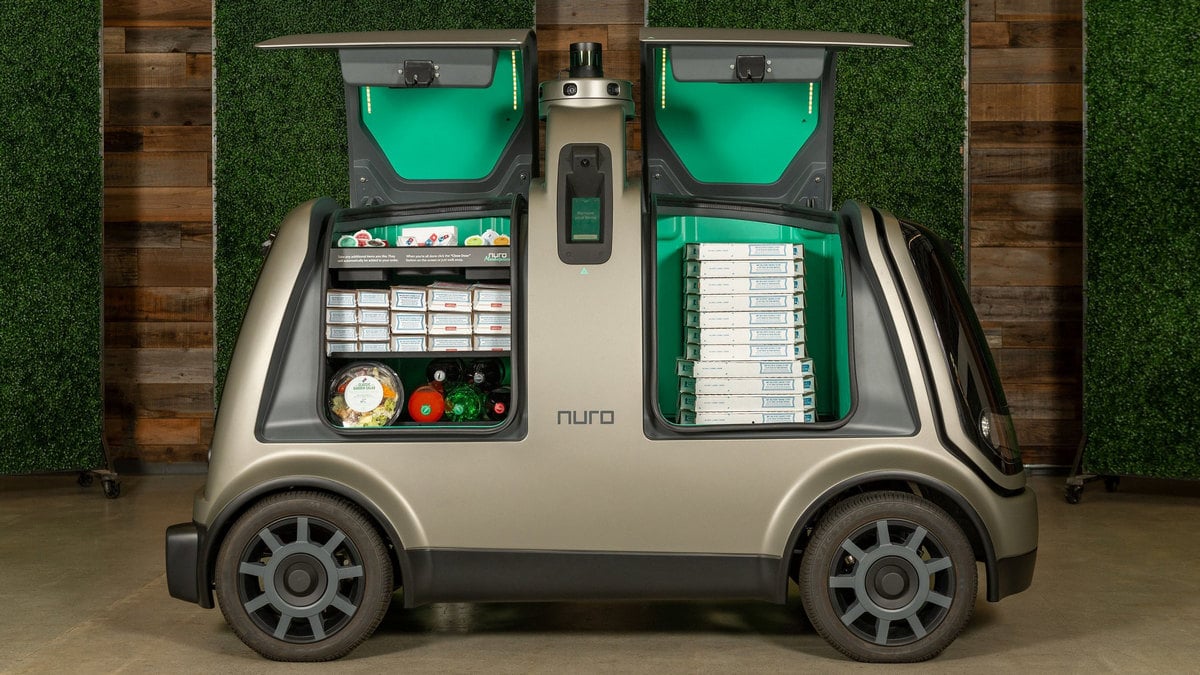
    Domino’s Pizza and Nuro, a robotics company have partnered to bring out an autonomous pizza delivery unmanned vehicle known as the R2. Dominos will use Nuro’s unmanned fleet to serve select Houston Domino’s customers who place orders online. This partnership will expand Nuro’s autonomous delivery operations, which have been running in the Houston metro area since March 2019.

    Select customers who order online from one of Domino’s participating stores will have the opportunity to use Nuro’s autonomous delivery. Once they have opted in, customers can track the vehicle via the Domino’s app and will be provided with a unique pin code to unlock the compartment to get their pizza.

    Kevin Vasconi, Domino’s executive vice president and chief information officer, said, “We are always looking for new ways to innovate and evolve the delivery experience for our customers. Nuro’s vehicles are specially designed to optimize the food delivery experience, which makes them a valuable partner in our autonomous vehicle journey. The opportunity to bring our customers the choice of unmanned delivery experience, and our operators an additional delivery solution during a busy store rush, is an important part of our autonomous vehicle testing.”

  • New feature in iOS 13 could save money

    New feature in iOS 13 could save money

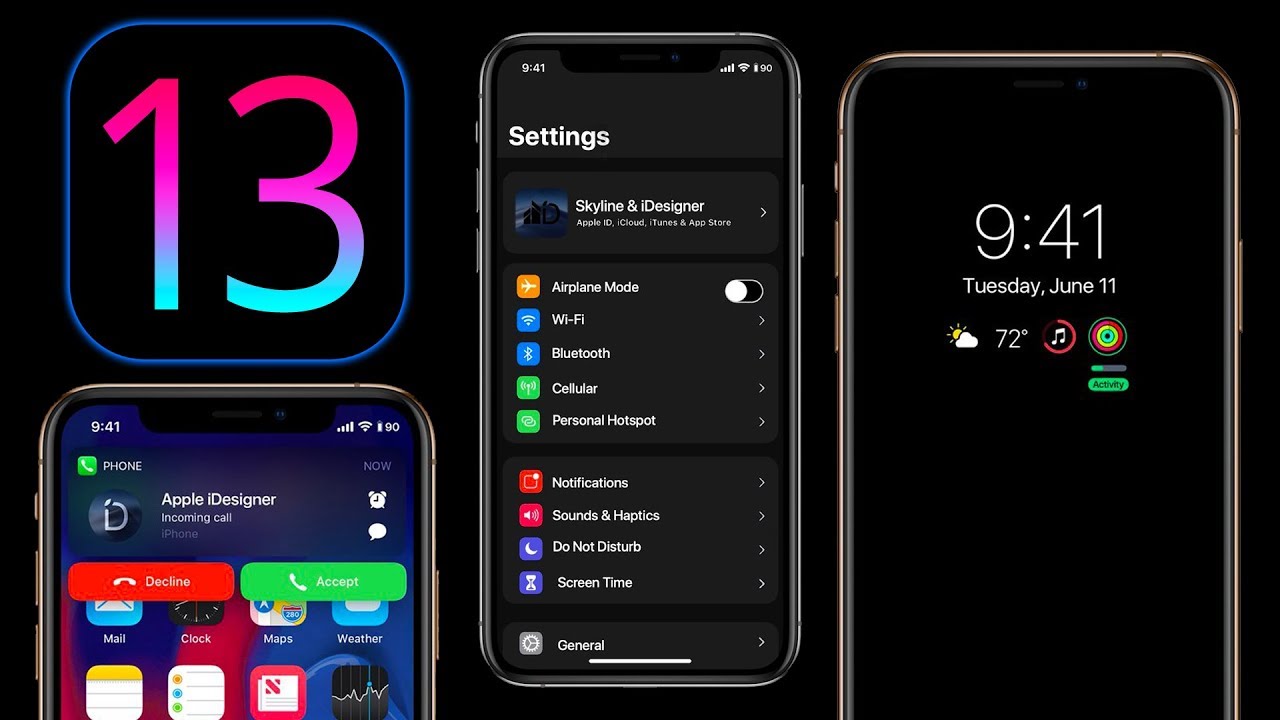
    Ever delete an app from your iOS device, not realizing that you’re still paying a monthly fee to use it? It appears that Apple feels your pain. In iOS 13, if you delete an app, you will see a pop-up reminder if you have an active subscription to that app. A screenshot taken from an iPad running the second beta preview of iOS 13; the pop-up reminder can be seen on the screen asking, “Do you want to keep your subscription for this app?”

    The reason why this feature comes in handy is because you might delete an app and forget that you re paying a monthly subscription fee to use it. If you don’t cancel the subscription, you’ll continue paying monthly for a service that you no longer want. And to make sure that you don’t get charged for another month, the pop-up message tells you the next date when your credit card will be automatically used to renew the subscription. Of course, you can cancel your subscription no later than the day before your renewal date. The reminder also notes that if you delete the app but keep the subscription, the service can still be used on other devices.

    So let’s say that you subscribe to Hulu, paying $5.99 a month. You’re going through your iOS device and decide to delete the app, forgetting that you’re making that monthly payment automatically. If Apple keeps this new feature, before you tap that button to uninstall the app, you will see the pop-up reminding you that if you’re really cutting ties with the service, you might want to cancel your subscription. And the reminder also includes a link that takes you to your iOS subscriptions.

    Even though the iPad will have its own OS later this year, we would imagine that this feature will most likely be available for both iOS and iPadOS.

  • Apple Watch cuts more ties with the iPhone in latest watchOS 6

    Apple Watch cuts more ties with the iPhone in latest watchOS 6

    VentureBeat’s Jeremy Horwitz discovered something interesting on his Apple Watch when he installed watchOS 6 Developer beta 2 on the device. There are indications that with the latest watchOS build, the wearable will be able to directly load OTA updates without having to go through an Apple iPhone. It’s another cut in the umbilical cord that connected the Apple Watch to the iPhone when the timepiece was first released in 2015. If you’re running the latest Developer beta of watchOS, you can see how the timepiece can run OTA updates through the settings menu by going to Settings > General > Software Update.

    The first cut in the cord came with the release of the Apple Watch Series 3 (GPS + Cellular), which allowed users to make and take calls, reply to messages and receive notifications on the device even if they left their iPhone at home. Before the latest beta update, Apple Watch users needed to open the Watch app on their iPhone in order to complete the updating process.

    So this seems to be good news for those fighting for the independence of the Apple Watch. We say “seems” because for now, even if you install a software update directly from your smartwatch’s settings menu, you have to read and accept the watchOS terms and conditions from your iPhone before starting the update. That seems a little contradictory for a feature that is designed to wean Watch users off their handsets, so we have our fingers crossed that this is something that will be figured out before the final version of watchOS 6 is disseminated.

    When updating directly from the Apple Watch, the timepiece needs to be connected to Wi-Fi and resting on its charger. Once the battery is charged up to the 50% level, the update will begin.

    The next build of watchOS will feature new watch faces. Many new watch faces, according to Apple. In fact, the company says that there will be “more new faces since the very first Apple Watch.” The big news, of course, is that there will be an App Store for the Apple Watch that will host independent apps for the device. And Apple is adding some new apps for the wearable including Audiobooks, Voice Memos, and Calculator. The new Trends feature will allow Apple Watch users to get a longer-term view of their activity stats ranging from a 90-day look to a full year. If the trend shows a healthy increase in activity, that will be good for a user; if the trend shows that the Apple Watch owner is slacking off, the timepiece will pass along some hints on how to get back on track.

    The update will also alert someone if they are in danger of damaging their hearing because of some loud surrounding noises. This is done by having the microphone on the Apple Watch turn on every now and then to measure ambient sounds. If the sound registers over 80dB, the Apple Watch will show a warning. The update to watchOS 6 will also include a setting allowing your timepiece to “chime” at the top of each hour while the Taptic engine will produce a vibration at the same time. And lastly, with the latest build of Apple’s smartwatch operating system, women will be able to track the time every month when they are most fertile and more likely to get pregnant. This is actually good news for Apple. The more children that are born in homes where Apple products are prevalent, the more future customers the company can count on.

  • Samsung to reportedly unveil the Galaxy Note 10 line

    Samsung to reportedly unveil the Galaxy Note 10 line

    According to CNET, a source familiar with Samsung’s plans says that the unveiling of the Samsung Galaxy Note 10 and Galaxy Note 10 Pro will take place on August 7th. It will occur during Samsung’s next Unpacked event to be held at Brooklyn’s Barclays Center, home to the NBA’s Brooklyn Nets. It also is the location where Samsung introduced the Galaxy Note 9 last year. This year, we expect to see four models introduced including the 4G LTE Galaxy S10 and Galaxy S10 Pro, and the 5G versions of the same units.

    The “standard” Samsung Galaxy Note 10 (SM-N970) is expected to carry a 6.3-inch curved AMOLED display. The version sold in the states will be powered by the Snapdragon 855 Mobile Platform with the Exynos 9825 chipset under the hood almost everywhere else. A triple-camera setup is likely to be found on the rear of the device consisting of a 12MP wide-angle camera, 12MP telephoto camera, and a 16MP Ultra-wide camera. A 3400mAh battery will supply the power and there will be an ultrasonic in-display fingerprint scanner. The standard 4G LTE Galaxy Note 10 is expected to be priced in the range of $1,100-$1,200. The 5G version of this phone will be model number SM-N971.

    The Samsung Galaxy Note 10 Pro (SM-N975) will carry a curved 6.7-inch AMOLED display, and have a Time of Flight (ToS) sensor in back beside the three cameras found on the standard model. This sensor measures how long an infrared light takes to bounce off a subject and return to the phone, allowing the device to compute more accurate depth information for the bokeh effect and for face mapping. An ultrasonic in-display fingerprint scanner will be on board, and the Galaxy Note 10 Pro will be equipped with a 4500mAh battery along with a 25W fast charger. The 5G version of this phone (SM-N976) has appeared on the Geekbench benchmark site twice with one of the units apparently heading to Verizon (SM-N976V). This model was equipped with the Snapdragon 855 SoC and included 12GB of RAM. The international version (SM-N976B) had the Exynos 9825 under the hood and 8GB of RAM.

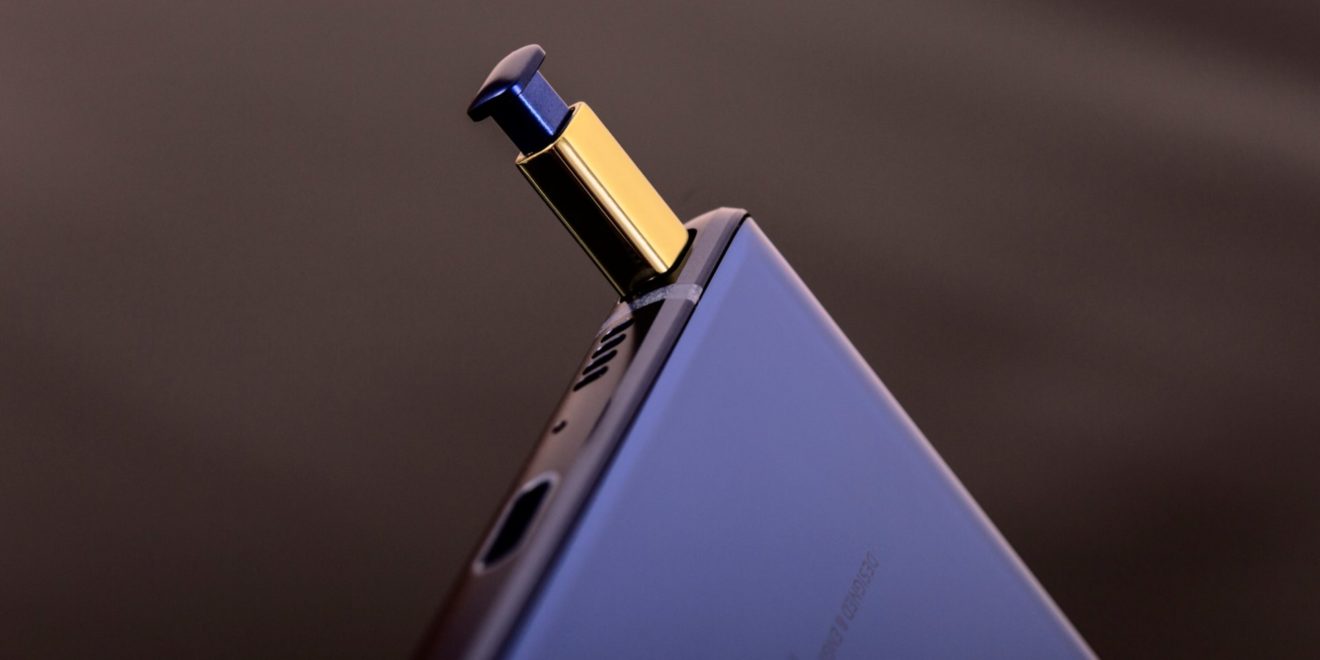
    All four models will come with the S Pen. Last year, following a number of rumors, Samsung added Bluetooth LE support to the stylus allowing it to be used as a remote shutter for the Galaxy Note 9’s camera and as a tool to remotely control streaming media. This year, things have been quiet on the S Pen front so we don’t expect to see drastic changes here. Additionally, none of the four units will have a 3.5mm earphone jack nor will they have a Bixby button. And in an interesting design, the rear cameras will be mounted vertically along the left side of the rear. Last year’s model used a camera housing that was placed horizontally on the phone’s back panel. The Galaxy Note 10 line uses Sammy’s Infinity-O display; this means that punch-holes are used for the phones’ selfie snappers.

    From the looks of things, it appears that the Galaxy Note 10 will be introduced before the release of the Galaxy Fold. Considering that the latter was due to be released on April 26th, this was not expected. AT&T and Best Buy have canceled pre-orders for the foldable device, and Samsung has too unless it was expressly told not to by its customers; some of these consumers, willing to shell out $1,980 for the Galaxy Fold, might decide to save some money and purchase a Galaxy Note 10 model instead.

    So for now, if you’ve been looking forward to the unveiling of the Galaxy Note 10, you should circle August 7th on your calendar. Last year, two weeks separated the August 9th unveiling of the Galaxy Note 9 and its launch on August 23rd. With that in mind, the Galaxy Note 10 could launch this year on August 21st.

  • Pokemon GO drops support for older Android smartphones

    Pokemon GO drops support for older Android smartphones

    Niantic, developer of Pokemon GO smash hit, has just announced it will discontinue support for older Android smartphones after July 1, 2019. There’s no reasoning behind the decision, so we can only guess that the numerous updates the team plans to deliver in the coming months will probably make the game unplayable on older smartphones.

    The bottom line is Pokemon GO may stop working on smartphones running Android 4.4 KitKat after July 1, or those using these devices won’t be able to download any new updates for the game going forward.
    We can’t see people upgrading their phones just to be able to play Pokemon GO, but we also have no idea how many players will be affected by Niantic’s decision to discontinue support for Android 4.4 KitKat smartphones.

    Pokemon GO is not the only game developed by Niantic that will be discontinued on the older smartphones. The company announced that the same applies to their other AR game, Ingress. The only recommendation coming from Niantic is to update the operating systems to Android 5 or above for uninterrupted access these two game, and that’s what we’re recommending as well if you still want to play Pokemon GO or Ingress.

  • Line Friends Enters Hollywood

    Line Friends Enters Hollywood

    Global character brand Line Friends opened its second and largest official US store last Saturday.

    The new Los Angeles store on Hollywood Blvd, which offers interactive photo zones and signature character merchandise, attracted more than 18,000 visitors on opening weekend. It features a large-scale retail space with a wide array of photo zones and Instagram-ready displays.

    “As we continue to win the hearts of millennials all over the world, we are excited to have successfully opened our second and biggest Line Friends store in Hollywood, the intersection of pop culture and tourist attractions,” read a statement issued by the company.

    “As part of Line Friends’ growing global presence, the Hollywood store is a key milestone for the company in diversifying its business, aiming to be a global creative studio and continuing to expand into the US market.”

    Line Friends features characters which were originally created for use as stickers for the mobile messenger application Line, by Naver, and its 200 million active users worldwide. With Brown & Friends at its heart represented by Brown Choco, Cony and Sally as signature characters, the company is continuously creating and introducing new Intellectual Properties like BT21 and Roy6, in addition to Running Man and Usamaru.

    The Los Angeles store comes after the successful 2017 opening of the Line Friends flagship store in Times Square – which more than 300,000 locals and tourists visited during opening week – and the Line Friends pop-up store in Hollywood last year, which drew more than 15,000 visitors.

  • Costco China to launch in August

    Costco China to launch in August

    US-headquartered warehouse-club retailer Costco Wholesale will open its first physical store in Mainland China in August.

    Costco China’s first location will be in Shanghai’s Minhang district, offering memberships to family and corporate consumers at RMB299 (US$43). The firm’s membership strategy has been largely successful in most markets, with an 88-per-cent renewal rate globally.

    “Costco is good at building a loyal shopper base through its paid membership program with low prices and a select number of stock-keeping units,” said Kantar Worldpanel China GM Jason Yu on Costco China’s debut. “The question is whether they can replicate this in China easily.”

    The group will prove strong competition for Walmart China’s Sam’s Club, a premium goods retailer targeting high-end buyers and which has been accelerating store expansion for the past two years, with a target of reaching 40 locations in the territory by next year.

    Costco now has 773 warehouses worldwide and operates e-commerce sites in several international markets.

    Costco has also announced plans to launch in New Zealand, with the first store scheduled to open in 2021.

  • Australian barista Paul Bassett Expanding Coffee Bussiness

    Australian barista Paul Bassett Expanding Coffee Bussiness

    A decade after launching in South Korea, Australian Paul Bassett plans to make the most of a “positive evolution” in the local coffee culture, expanding his brand partnership with a local dairy company.

    Paul Bassett teamed with Maeil Dairies Co to launch a coffee brand named after him in 2009 – just at the time local consumers were starting to embrace specialty coffee. Their vision was to target the growing high-end coffee market.

    “Driven by a lot of curiosity for specialty coffee, the overall (Korean coffee) market has grown in the past 10 years and specialty components within the market showed some real healthy growth,” the 2003 World Barista Champion said in a recent interview.

    “I think it was the timing when we opened the (first) store and the location of the store was quite important. Had we been here 20 years ago, I am not sure.”

    South Korean’s craze for coffee has been described as dramatic in recent years. Starbucks and other premium coffee brands have sprawled into every corner of the nation’s big cities.

    South Korea’s coffee market was estimated at US$9.85 billion last year, and the specialty sector of the market is still growing.

    When Paul Bassett opened its first location in a department store in the affluent Gangnam district in 2009, it made a splash in the sector with a differentiated product lineup beyond typical Americanos and lattes.

    The brand made a name for itself with lungos, an Italian-style short black coffee with more water, a rather nascent item at the time. Lungos are weaker than espressos with additional hot water but more bitter than Americanos.

    Paul Bassett outlets, operated by M’s Seed Co, a wholly owned unit of Maeil Holdings, have also proven popular due to a variety of latte items and ice creams, with milk provided by Maeil Dairies.

    For example, its ice cream latte, similar to Italian espresso-based affugatos, is also a hit at the coffee house.

    Bassett said he has been deeply involved in selecting beans, deciding on the blending ratio and roasting profile, quality checks and product development. Baristas at Paul Bassett stores extract espresso and make drinks according to his manual.

    The 41-year-old barista says he works as a “gatekeeper of quality” to maintain quality and consistency of beans and other drinks at 96 stores, mostly located in the Seoul metropolitan area.

    “We can go into one store in one location and have the same result and same experience in all of the locations,” he said. “It’s a challenge, but it’s one of the things that is really important to us.”

    Starting with 500 million won in sales in the first year, Paul Bassett posted 93.8 billion won in sales in 2018 and aims to double the number of outlets to 200 by next year.

    Without a doubt, local coffee brands like Paul Bassett still lag far behind Starbucks. The US coffee giant generated 1.5 trillion won in sales last year and currently runs 1290 stores in Korea.

    Still, Bassett is optimistic about his brand’s further expansion on the back of a rising appetite for specialty coffee and its royal customers. To fuel growth, the barista, who makes regular visits to Korea to check the menu and train baristas, said he will work with the M’s Seed to educate South Koreans about the origin of beans and the chemistry behind coffee.

    Once consumers know every cup of coffee can tell a story from farms from Ethiopia, Guatemala and Brazil, they will crave specialty coffee more than blended coffee, he said.

    Growing up in a family that runs a restaurant in Australia and having found his true passion for coffee during his trip to Italy 20 years ago, Bassett says he wants to contribute to the Korean coffee culture.

    “I have a very intimate and personal relationship with coffee. I’ve been able to develop an understanding of coffee through so much experimentation that I understand all the little inputs and how they can impact taste,” Bassett said.

    “I feel like the journey has brought me to where I am now.”
  • Gentle Monster launching kids collection

    Gentle Monster launching kids collection

    Gentle Monster Kids makes its debut in Singapore at its Marina Bay Sands flagship.

    Inspired by young creators and “little kids with big dreams”, the collection includes six designs: Chapssal, Eastmoon, Jackbye, Newturtle, Peggy, and Ribbon.

    The Chapssal tortoise cat-eye frames feature narrow, UV protection lenses with raised corners, etched with the Gentle Monster logo.

    These designs are shrunken versions of the brand’s signature pieces from its 2019 range, and are made through a campaign that features Coco Pink Princess, an eight-year-old Instagram style icon from Japan.