Author: Mei Ling Tan

  • Global personal luxury goods market growth endures

    Global personal luxury goods market growth endures

    Global personal luxury goods market growth has reached a “new normal” pattern, following back-to-back years of strong performance in 2017 and 2018, according to the luxury goods industry advisory service Bain & Company.

    Last year, 6 per cent global growth* led to €260 billion (US$292 billion) in sales, which is expected to balloon to €271–276 billion ($304.3–310 billion) this year, registering an expected 4-per-cent to 6-per-cent growth at constant exchange rates.

    According to Bain, the growth has been driven primarily by the acceleration in domestic spending of mainland Chinese consumers and an increase in European tourism, which, despite socio-political turmoil in countries like the UK and France, fuelled positive growth in the region through last year’s holiday season.

    Meanwhile a temporary weakening of consumer confidence in North America, as well as a decrease in traffic to malls and department stores, negatively impacted personal luxury spending during last year’s holidays stateside.

    The findings were part of the Bain Luxury Goods Worldwide Market Study, Spring 2019 presented this week in collaboration with Fondazione Altagamma, the Italian luxury goods manufacturers’ industry foundation.

    “This year looks to be on par with our new normal of growth in the market,” said Bain & Company partner and lead author of the study Claudia D’Arpizio. “China continues to dominate the luxury scene. Elsewhere we are continuing to see geopolitical uncertainty shape and reshape tourism spending patterns, with Chinese consumers choosing to spend domestically with more frequency. Overall we are seeing moderate growth in most markets.”

    The report showed that mainland Chinese consumers are demonstrating a strong preference for purchasing luxury goods at home thanks to price harmonisation, consumer-centered strategies, and governmental initiatives. Solid consumer confidence and willingness to buy, especially among young generations, are expected to drive year-over-year growth of 18–20 per cent* in the region.

    Japan remains an exclusive and attractive market for luxury brands, with forecasted growth of 2–4 percent* in 2019. Tourist spending is expected to rise ahead of the Tokyo Olympics in 2020, with Chinese consumers already confirming their interest in the area.

    Across the rest of Asia the outlook is positive, apart from Hong Kong and Macau, which continue to lose out to Mainland China. Bain & Company asserts that the luxury market in the region is set to grow by 10–12 percent*. An expanding middle class with increasing disposable income is fueling growth in Indonesia, Philippines and Vietnam, while sustained growth in South Korea is the result of local consumers and a mild rebound of tourism.

    The rest of the world is expected to be flat or see a slight decrease of 2 per cent*, with the Middle East remaining stagnant as domestic consumer spending begins to flow outside of the region.

    “We expect stable growth in 2019,” said D’Arpizio.  “But under the surface of this new normal, the future of luxury is taking shape with a number of key characteristics, including Chinese Generation Z, access, ownership, sustainability and social responsibility, the impact of digital across the entire value chain, preference for luxury experiences over products, and consumer networks as a new measure of value.”


  • China to become world’s largest grocery market by 2023

    China to become world’s largest grocery market by 2023

    China is set to overtake the US to become the world’s largest grocery market by 2023 in value terms, according to new forecasts.

    Studies from international researcher IGD Asia have shown the country’s total market size will reach RMB11.0 trillion (US$1.8 trillion), more than Asia’s next four largest grocery markets (India, Japan, Indonesia and South Korea) combined.

    “China will not only retain its position as Asia’s largest grocery market by 2023, it will also overtake the US to become the world’s largest,” said IGD head of Asia Pacific Nick Miles. “The market is expected to have a CAGR of 5.5 per cent, on par with Sri Lanka and Thailand, but slower than markets such as India, Vietnam, Indonesia and the Philippines, where the economy is growing faster.

    “Less than half of grocery sales in China currently go through traditional trade and as the market continues to mature, we expect traditional trade to continue losing share to modern trade. As the total market size expands, traditional trade will still grow, but at a much slower pace over the next five years (forecast CAGR of 0.8 per cent), compared with the growth rate of modern trade (forecast CAGR of 8.5 per cent).”

    Development of modern trade in China over the next few years will be largely driven by ongoing store expansion, according to IGD’s research, as well as strong performances from the online and convenience channels.

    “Convenience will be the fastest-growing physical store channel, driven by Alibaba and JD transforming traditional mom-and-pop stores, retailers opening smaller format stores and both local and overseas players expanding their networks through partnerships,” said Miles. “Online and offline integration will drive online growth. As the fastest-growing channel, we forecast online to contribute up to 11 per cent of sales in 2023.”

    Hypermarket share will decline

    Meanwhile, IGD forecasts that hypermarkets will see their share of China’s total grocery retail market reduce from 22 per cent last year to 18 per cent in 2023, while the market share of supermarkets will remain steady, close to 20 per cent.

    IGD research has also found that China’s leading grocery retailers will grow at varying rates to 2023. E-commerce giants such as JD and Alibaba are set to see significant growth from both online and offline channels and become the second- and third-largest grocery retailers in China respectively. Meanwhile, retailers with nationwide networks such as Sun Art, Yonghui, Walmart, CRV and Carrefour will benefit from ongoing expansion, partnerships with e-commerce and tech companies, improved efficiencies, and investment in small formats. Regional players such as NGS and Wumart will continue to focus on profitability.

    “With such strong market growth to 2023, trading in China has vast potential, whether supplying directly to physical stores or via online marketplaces,” concluded Miles. “However, there are huge changes taking place that suppliers need to consider. Online giants are reshaping China’s retail landscape with their strong logistical and technical capabilities, so suppliers should understand this new path of purchase and design meaningful ways to reach their shoppers. Expansion through local partners will also remain a key route to market in China, so customer strategies must take into account the strong alliances forming between e-commerce players and bricks and mortar retailers.

    “There’s also a huge RMB1.7 trillion ($245.57 trillion) growth opportunity in convenience and online in the next five years, which can be captured by understanding trends and retailer strategies and allocating resources accordingly. But we would also urge suppliers not to neglect traditional trade, which will still account for about one-third of FMCG sales in 2023. As the channel modernises, it will provide new ways to reach new shoppers.”

  • Bunnings to have full e-commerce offer by Christmas

    Bunnings to have full e-commerce offer by Christmas

    Bunnings managing director Michael Schnieder has announced he expects the homewares and DIY retailer will have its e-commerce operations online and fully operational nationwide before Christmas 2019.

    The business has trialled a more limited online offering in select locations, but has previously stated it would roll-out a more robust offering by September 2020.

    “We believe that, done right, our click and collect offer will be rolled out across Australia by Christmas – well ahead of schedule,” Schneider said.

    “This follows the successful introduction of click and collect in Tasmania in April. We’ve been really delighted with the progress and customers’ response to the offer.

    “This is a real testament to our team, who have worked hard to make this happen, ensuring we are building an offer that delivers choice and convenience when it comes to how people want to shop with us.”

    Schnieder also indicated that he expects lower interest rates and the Coalition’s incoming tax cuts to spur customers into spending, delivering some relief in a difficult retail environment – one which NAB chief economist Alan Oster said fallen to levels not seen since the GFC.

    Bunnings has the fourth most visited shopping and classifieds website in Australia, but only enabled online ordering of select items in June of 2018.

    The DIY retailer has previously said it will shift some of its focus toward first-time DIY customers to target the “next generation of customers”.

    The trends of high-density living and long-term renting have informed the business’ products moving forward, as opposed to its more traditional large-scale renovation focus.

  • Yamaha Electric Scooter With Removable Batteries Unveiled

    Yamaha Electric Scooter With Removable Batteries Unveiled

    Yamaha has just revealed its new EC-05 electric scooter, and it features removable batteries for easy re-charging and to swap out the drained battery with a fully charged battery. The Yamaha EC-05 is the result of Yamaha’s partnership with Taiwanese electric motorcycle manufacturer Gogoro. Last year, the two brands formed a partnership with the goal of incorporating Gogoro’s electric powertrain into a Yamaha electric scooter, and that is what the Yamaha EC-05 seems to be. The EC-05’s design has been worked on by Yamaha, but the powertrain and technical workings are almost all developed by Gogoro.

    So far, the specifications of the Yamaha EC-05 have not been revealed, but Yamaha has released a teaser video of the new electric scooter. The EC-05 is expected to have a top speed of around 90 kmph, and will likely have a range of around 100 km with two Gogoro battery packs. Right now, the Yamaha EC-05 will only be available in Taiwan, since Gogoro already operates more than 1,000 battery exchange stations, so the charging and swapping infrastructure is already established. The EC-07 is likely to come with two swappable 2170 lithium-ion batteries, with one battery to be rented, which means it can be exchanged at recharging stations across the country, while the other remains in the scooter. The primary battery is also removable, to be charged at home, or elsewhere.

    The Yamaha EC-05 is expected to hit the Taiwanese market sometime in August 2019, but there’s no news at this stage if the electric scooter will be sold in international markets. Gogoro is reportedly exploring partnerships, indicating that the EC-07, and other electric scooters from the Taiwanese brand, will be introduced in other international markets, sooner than expected. It’s still early to say with any certainty though if India Yamaha has any plans of introducing any electric scooter in India.

  • First Glimpse of the new Apple Taiwan store

    First Glimpse of the new Apple Taiwan store

    Apple Taiwan will open its second retail location – the new Xinyi A13 store – in Taipei tomorrow.

    In a nod to the brand’s Chicago flagship, the new store’s glass exterior and distinctive roof house a two-storey retail area with two marble composite staircases leading downward to an underground level.

    Taiwanese singer-songwriter Eve Ai will perform at the opening, kicking off a six-week “Stage for Creativity” initiative that will see local artists and creators featured at the venue.

    Apple’s first official store in Taiwan opened in the Taipei 101 mall, although the majority of its products are sold via its online channel and through local authorised resellers. Around 4 million people have visited Apple Taipei 101 since its launch.

  • China sales Profit Down for Lululemon Athletica

    China sales Profit Down for Lululemon Athletica

    Lululemon Athletica has reported a massive 70 per cent growth in first-quarter China sales, part contributing to a stellar performance globally.

    Both sales and profit exceeded the company’s forecast and analysts expectations. Sales of its relatively new men’s range grew 26 per cent proved another highlight.

    “Our guests responded well to both our men’s and women’s assortments,” CEO Calvin McDonald told analysts on a conference call after the results were released.

    “They engage with us across channels as our store and digital businesses were both strong and our brand continues to resonate well in our core North American market, as well as in Europe and Asia Pacfiic.”

    Earnings surged 28.5 per cent in the quarter to May 5, reaching to US$75.2 million, on sales up 20.4 per cent to $782.3 million. However those figures were boosted a little by a shift in the calendar. Taking that into effect, and on a same-store basis, sales rose 14 per cent.

    Sales in Asia rose 40 per cent, led by China’s 70 per cent gain. The Canadain company opened its first stores in three new Chinese cities during the quarter: Shaanxi, Xi’an and Chongqing. It plans to add as many as 12 more to its network this year.

    Lululemon also relaunched its Chinese website to complement its presence on Tmall and WeChat and websites in Japan and Korea were also launched.

  • Sulwhasoo launched on Lazada

    Sulwhasoo launched on Lazada

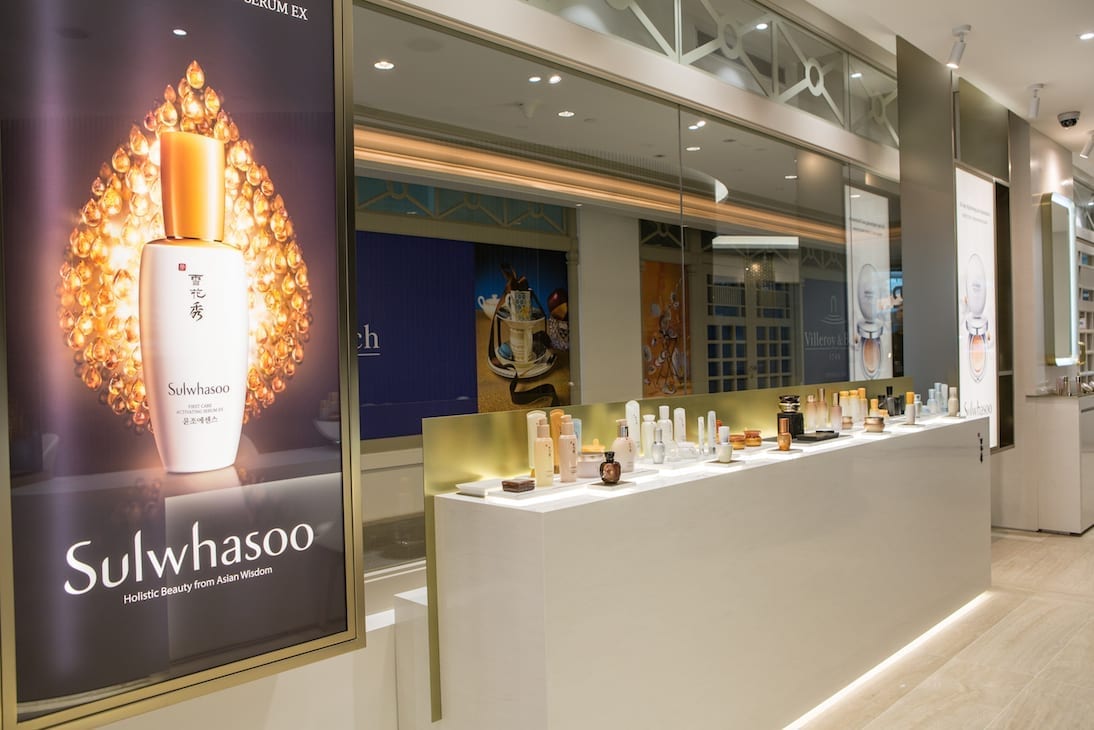
    Amorepacific’s luxury skincare brand Sulwhasoo has launched on Lazada.

    The partnership marks the brand’s expansion into the Southeast Asia e-commerce market.

    With this Lazmall store, shoppers in Indonesia, Malaysia, Singapore, Thailand and Vietnam can access Sulwhasoo’s range of beauty products.

    “The influence of South Korean beauty trends and culture in this region is undeniable, and we are pleased to bring one of Korea’s top skincare brands Sulwhasoo online with Lazada – reinforcing our leadership in the beauty category and in serving our female customers,” said Lazada Group president Jing Yin.

    The South Korean beauty-and-cosmetics conglomerate is already leveraging Lazada’s platform for distribution of four key brands including Laneige, Mamonde, Innisfree and Etude House. These brand stores are housed on LazMall, a place for shoppers to get directaccess to international and local brands, top-rated online brands and authorised brand distributors.

    “Lazada is the region’s e-commerce leader, particularly in the beauty space, and the best possible partner to take our business online in Southeast Asia,” said Mina Kim, senior VP of Sulwhasoo at Amorepacific.

    “We hope to bring Sulwhasoo’s value of Asian beauty to more customers and help them experience our unique beauty solutions in a new way.”

  • Alibaba Files Hong Kong Listing

    Alibaba Files Hong Kong Listing

    Chinese multinational conglomerate holding company Alibaba Group has filed confidentially for an initial public offering in Hong Kong, Bloomberg reported on Thursday, citing people familiar with the matter.

    Previously reported that the group was mulling a secondary listing to diversify funding sources amid escalating U.S.-China tensions over trade and tech, which has accelerated the drive for Chinese technology companies towards more self-reliance on domestic supply chains, technology, and funding.

    The firm had chosen China International Capital (CICC) and Credit Suisse to lead its Hong Kong share sale.

    Alibaba’s 2014 U.S. initial public offering was the world’s largest-ever stock market flotation, raising a record $25 billion. Hong Kong lost out on the listing because its rules back then did not allow for Alibaba’s corporate structure, which gives founding partners control over board appointments, as opposed to shareholders.

    However, Hong Kong Exchanges and Clearing changed its rules last year to allow «innovative companies» from China with listings elsewhere to do a secondary listing in Hong Kong, even if their voting rights structures did not comply with local standards.

  • Cheaper Sensors Could Speed More Self-Driving Cars To Market By 2022

    Cheaper Sensors Could Speed More Self-Driving Cars To Market By 2022

    The first heavily automated mass-market vehicles for consumers could go on sale as soon as 2022, if one or more vehicle manufacturers adopt a new sub-$500 lidar sensing package being developed by Silicon Valley startup Luminar.The tremendous cost of lidar – prices for individual sensors currently range from about $6,000 to more than $100,000 – is one of the big stumbling blocks to the wide rollout of self-driving vehicles, whether in commercial delivery and robo-taxi fleets such as those being developed by Ford Motor Co and General Motors Co, or in passenger vehicles aimed at consumers.

    Luminar has developed a low-cost lidar platform that bundles hardware and software and is being tested by several automakers, according to Austin Russell, Luminar chief executive officer and founder.

    The company’s new Iris system will be offered in two versions, one that will enable hands-free “freeway autonomy” and a less expensive version that will enable some automated functions, such as automatic emergency steering and braking. The first is designed to sell for under $1,000 at higher production volumes, while the second, which is intended to plug into manufacturers’ advanced driver assistance systems (ADAS), is expected to sell for under $500, Russell told Reuters.

    Manufacturers and suppliers are increasingly skeptical about the speed of adoption of fully automated self-driving systems, because of both their high cost and complexity. In the meantime, they have begun focusing on deploying more ADAS features, which share components, but cost much less and can generate much-needed revenue to help defray the cost of developing full self-driving systems.

    Lidar-driven ADAS “can be more easily monetized by the manufacturers (and) more easily implemented today” than fully automated systems, said Steve Lambright, vice president of marketing for lidar startup AEye, which is developing components for both types of systems.

    In the meantime, a long-predicted shakeout in the lidar sector has yet to materialize, judging from a recent flurry of investments and acquisitions, even though the industry has yet to embrace a single lidar technology.

    Israeli startup Innoviz, backed by suppliers Aptiv Plc and Magna International Inc , just closed a Series C round of funding and has raised a total of $252 million – more than any of its rivals – with new money from SoftBank Ventures Asia and several large Chinese investors.

    A new player, North Carolina-based Sense Photonics, this week closed a Series A round and has raised more than $43 million, with backing from corporate investors Samsung Ventures and Shell Ventures.

    Aurora, a Silicon Valley self-driving startup backed by e-commerce giant Amazon.com Inc and automaker Hyundai Motor Co , recently acquired Montana-based lidar startup Blackmore.
  • Rimowa unveils an Alex Israel pop-up at Lane Crawford

    Rimowa unveils an Alex Israel pop-up at Lane Crawford

    Premium luggage retailer Rimowa will showcase its newest special edition collection – created in tandem with LA-based contemporary artist Alex Israel – at a temporary pop-up store at Lane Crawford in Hong Kong.

    The Rimowa x Alex Israel pop up will be open until tomorrow, marking Rimowa’s first-ever collection of colour-graded suitcases produced with an anodisation process that characterises the signature look of the collection.

    Inspired by the designs, the pop-up features vibrant colours, a photo-op mirror room, sticker walls, and a colourful handmade ice pop bar designed to exude a “quintessentially Los Angeles vibe”.

    For the Rimowa x Alex Israel collaboration, Israel has reimagined the suitcases in colours based on the LA sunset, drawing directly from the palettes of his “Sky Backdrop” and “Untitled (Flat)” paintings, while using new printing techniques to transfer his signature hues onto aluminum.

    Based on the brand’s Rimowa Original Cabin Plus, the collection features two versions of the signature Rimowa x Alex Israel luggage in two distinct colour gradient palettes. The designs feature vibrant, colour-matching wheels and details, custom luggage lining, and a set of luggage tags featuring the artist’s multi-coloured profile. It also includes a special edition luggage sticker set featuring graphic illustrations of iconic LA landmarks and Israel’s artworks.

  • Singapore Airlines and the art of airline management

    Singapore Airlines and the art of airline management

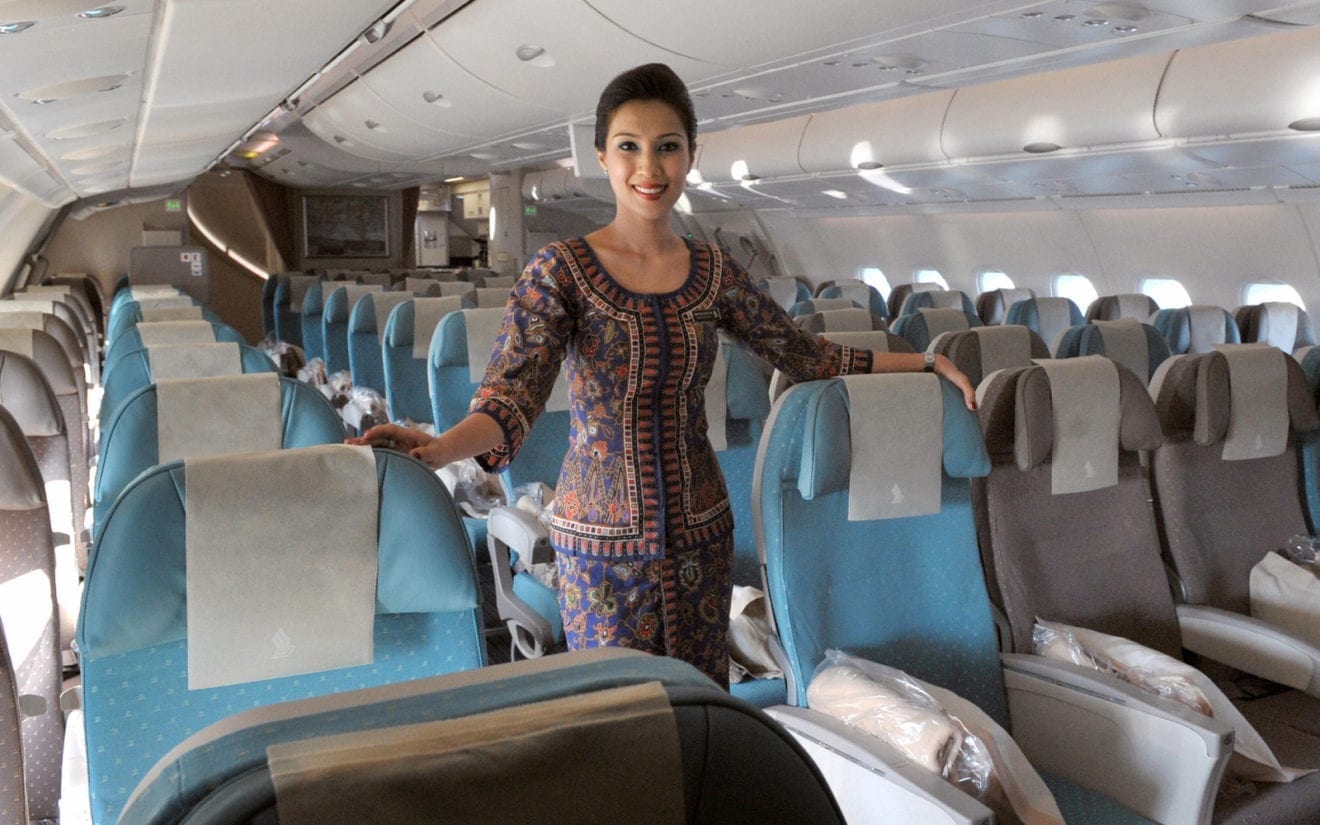
    Airlines compete to provide the best flying experience to passengers, in terms of safety, comfort, punctuality, hospitality and meals provided on-board. If you are a business or first-class traveller, you get that extra care and attention from the cabin crew. But behind those services are various training programmes, joint ventures with multiple organisations and immense planning.

    A look at what happens behind the scenes of one of Asia’s best airlines, Singapore Airlines.

    As safety of passengers hinges on the expertise of pilots, most pilots undergo recurrent/refresher training programmes at least twice a year.

    All the pilots from Singapore Airlines, who operate Airbus fleet, are trained in the Airbus Asia Training Centre (AATC) — a joint venture between Singapore Airlines (45 per cent) and Airbus (55 per cent). AATC, located in Singapore, trains about 6,000 pilots every year from 60 different airlines.

    Depending on the qualifications and experience of the pilot, the training programme at AATC spans between three days and one month. The three training technologies used in AATC include interactive training applications such as Airbus Cockpit Experience (ACE), Airbus Pilot Transition (APT) and Full Flight Simulators (FFS).

    ACE replicates the airplane’s cockpit either on a laptop or a tablet from which the pilot learns about aircraft systems and procedures, digitally. The APT is a fixed cockpit set-up that gives an idea about the position and functioning of an Airbus cockpit.

    And FFS simulates the aircraft and the environment in which it flies. It allow pilots to be trained in scenarios, such as take-off, landing, emergency landing and water landing; it may not be possible for pilots to undergo training in a few of these on a real aircraft.

    Behind Singapore Airlines’ in-flight meal, there’s enormous planning on the quantity and quality of meals, menus and meal specification for each class, raw material requirements, introduction or inventory of kitchen equipment, timely delivery and managing food waste.

    To meet the meal requirements for flights departing from Singapore, the Airlines has outsourced these catering services to SATS — the chief ground-handling and in-flight catering service provider at Singapore Changi Airport. SATS, in Singapore, prepares 120,000 meals per day.

    SATS operates with a team of food technologists, dietitians and culinary chefs who work together to develop various menus. Singapore Airlines, on its part,develops meals for the premium cabin classes, in association with celebrity chefs, including Alfred Portale from New York and Sanjeev Kapoor from India.

    Then, the ‘Think Lab’at SATS conducts various tests essential to the product’s development process. Further, the new items are tested in a simulated cabin, that recreates in-flight conditions when it is cruising at 30,000 ft. This is to assess the actual in-flight experience of the food, as our taste buds work differently at different altitudes. To prepare and process the meal, SATS uses new technologies such as omelette vending machine and a rice line that is capable of cooking varieties of rice — Jasmine rice, Japanese rice, Indian basmati rice and flavoured chicken rice.

    Recently, SATS also invested in a pasteurisation and sterilisation technology that can supposedly extend the shelf life of freshly cooked food from two to 90 days.

    Apart from food technologies, SATS is also making use of other scientific advancements, robots within its premises to carry food from one destination to another.

    At Singapore Airlines Training Centre, one can see well-groomed girls and boys training for cabin services, security and emergency evacuation drills at various aircrafts’ cabin mock-ups for first, business, premium economy and economy classes.

    The cabin crew are given training in activities that are construed as trivial, such as arranging news-papers, selecting appropriate glasses for each variant of beverage and serving meals of various cuisines — Indian, Chinese and Japanese. For instance, placing chop-sticks appropriately in Chinese and Japanese meal trays.

    One facility that catches everybody’s attention during a visit to this training centre is the wide swimming pool forsimulating water conditions, should the aircraft have an emergency landing on water. Training for newly-inducted Singapore Airlines’ cabin crew takes over 15 weeks.

  • After updating its app for Premium members, Spotify goes down

    After updating its app for Premium members, Spotify goes down

    Is this the day the music died? It is if you’re a Spotify member as the music streamer has been down since 8:22 am EDT this morning. 80% of the complaints they received have something to do with the inability of users to stream music, 14% say that they can’t use the Spotify website, and 5% can’t use Spotify on a Sonos smart speaker. The number of complaints rose from one to a peak of 3,448. The outage map shows serious issues in the upper northeast of the country, most of California and parts of Texas and Florida.

    In addition, Spotify announced that the outage has nothing to do with today’s announcement of a redesigned feature for Premium users. The Your Library page now allows you to tap or swipe to see the new tabs offered for Music and Podcasts. Tapping the Music tab takes you right to the Playlists section where all your playlists will be, including a new one called Liked Songs. The latter includes tunes that you have tapped the “Like” button for. The Artists section lists the artists that you follow, and you can add a new one to the list by going to the artist’s page and tapping on the “follow” button. When it comes to any albums found in that section, tapping the heart icon will save it to the Album section so you can quickly find it to hear again at a future time. You can add all of the songs on a particular album to your Liked Songs playlist by clicking on the three-dot menu and selecting “Like all songs.”
    Selecting the Podcast heading will reveal the Episodes section from where you can discover new podcasts to listen to or finish listening to ones that you’ve started. Move further down the screen and you’ll find new episodes of the podcasts that you follow. The Downloads section includes podcast episodes that you’ve, well, downloaded. These podcasts can be played while offline. Lastly, the Shows section allows you to manage the podcasts you follow and check out older episodes.
    The redesign has already been available to those using the ad-supported free version of the service. Premium subscribers will start seeing the change in the Spotify app starting today.
  • HSBC Bolsters Asia Technology M&A Team

    HSBC Bolsters Asia Technology M&A Team

    HSBC Holdings has hired Jeremy Choy to head its Asia Technology Mergers & Acquisitions (M&A) team, a Hong-Kong based role that will also see him work with technology companies in areas such as initial public offerings and financing, Bloomberg reported, citing unnamed sources close to the matter.

    Choy, who is expected to start in his new role as early as next week, joins HSBC from boutique investment bank China Renaissance, where he worked for 4 years, most recently as managing director and head of M&A. He will report to Rajeev Sahney, the bank’s head of Asia-Pacific advisory and corporate, Bloomberg said.

    According to his LinkedIn profile, Choy also worked for J.P. Morgan’s North Asia M&A team for 4 years, was an M&A advisor at PacBridge Capital Partners for 2 years, and worked for Goldman Sachs for 5 years.

    Bloomberg reported that the volume of technology, telecommunications and media deals in Asia-Pacific is down 47 percent from the year before.

    However, it noted several large deals on the horizon, including the sale of a major stake in gaming company Nexon Co. and a potential share sale in Hong Kong by Chinese internet giant Alibaba Group.

  • Gojek to Be Integrated Within DBS’ PayLah

    Gojek to Be Integrated Within DBS’ PayLah

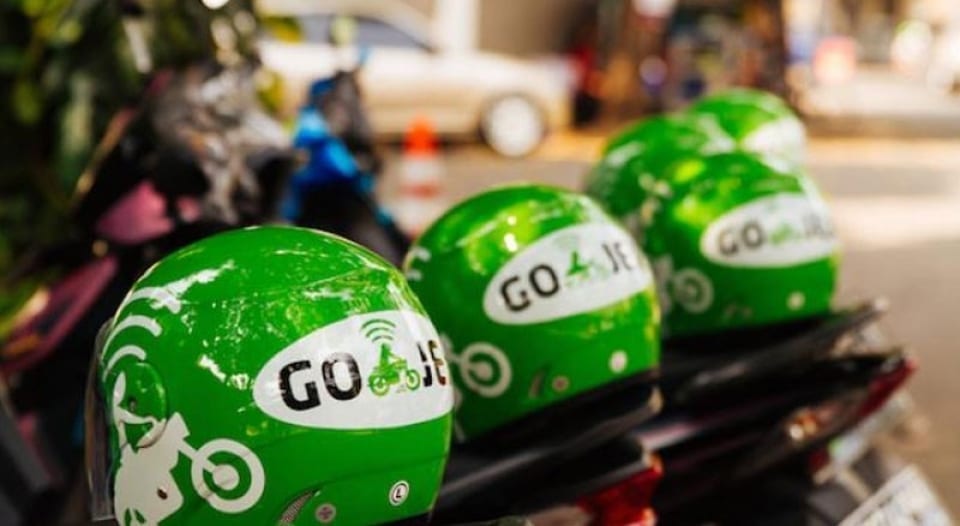
    Users of DBS Bank’s PayLah! app over the next few months will find Gojek integrated within its app, both companies said on Thursday. In addition, Gojek customers can now pay with PayLah.

    As part of its partnership with the Indonesian ride-hailing firm, DBS Bank’s payment feature has been made available in the Gojek app for both iOS and Android users in Singapore, both companies announced on Thursday.

    Through integrating DBS PayLah! in the Gojek app, our riders will have greater flexibility to choose their preferred payment methods, which allows for a more seamless travel and payment experience with every ride, said the general manager of Gojek Singapore, Lien Choong Luen, in a media statement.

    Gojek customers will be able to add DBS PayLah! as a preferred payment method for their rides after a one-time authorization and set-up. According to Gojek, about 35 percent of its daily ride-hailing transactions are paid for in cash.

    This presents an opportunity for DBS and Gojek to encourage users to adopt digital payments, the companies noted.

    As Indonesia is a key growth market for DBS, DBS and Gojek are now exploring collaboration opportunities in Indonesia, including cross-marketing initiatives. Ride-hailing company Gojek is headquartered in Indonesia, where DBS has more than 460,000 digibank customers.

    Following the success of DBS and Gojek’s partnership in Singapore, where Gojek recently celebrated their 10 million-trip milestone, we have also entered the next phase of our partnership in Indonesia, said Shee Tse Koon, DBS country head for Singapore.

  • AirAsia Philippines delivers world-class flying at low fares

    AirAsia Philippines delivers world-class flying at low fares

    Challenging the common impression that customers get what they pay for in patronizing low-cost carriers (LCC), AirAsia Philippines redefines the flying experience with an uncompromising commitment to world-class safety standards and passion in delivering top-notch service without the hefty price tag.

    AirAsia Philippines is part of the AirAsia Group, which includes AirAsia Malaysia, Thailand, Indonesia, India and Japan. AirAsia Philippines operates a fleet of 23 aircraft out of four hubs servicing seven domestic destinations and 18 international destinations, in line with the group’s vision to be the “wings” that enable people to reach their dream destinations.

    “Having established ourselves as an LCC when we introduced all-in fares, we now want to be known for having the best service,” says Captain Dexter Comendador, AirAsia Philippines CEO.

    AirAsia Philippines commenced operations locally in 2012 with two new planes. With the acquisition of local airline Zest Airways the following year, AirAsia Philippines’ fleet became 13. Backed by its parent company, which boasts a total fleet of 252 aircraft and more than 140 destinations in 25 markets, AirAsia Philippines is set to raise the benchmark in the aviation industry, particularly the LCC segment.

    The company constantly pursues initiatives to provide customers a hassle-free experience. For example, AirAsia Philippines relinquished the use of jet bridges and instead uses steps for boarding and disembarking passengers. By doing this, the airline has been able to keep turnaround time to 25 minutes – one of the quickest in Asia. Foregoing the use of expensive jet bridges also allows AirAsia Philippines to pass on cost savings to customers, resulting in more economical fares.

    Tapping technology to offer a seamless customer experience, AirAsia has overhauled its website and mobile app and even launched a chatbot named AVA (AirAsia Virtual Allstar). Powered by artificial intelligence, the chatbot is well-versed in English, Thai, Malay, Indonesian, Vietnamese, Korean and Chinese, and responds to queries instantly. As part of the AirAsia network, AirAsia Philippines has allowed customers to use AVA to manage their flight needs since March this year.

    AirAsia Philippines also takes a proactive role in creating hubs in the Philippines, connecting them to the whole AirAsia network. The airline now has hubs in Manila, Cebu and Kalibo. Outside Manila, AirAsia Philippines is launching new flights, and will soon fly directly to Macau, Kunming, Chengdu, Hangzhou and Taipei from its Kalibo hub.

    As it seeks to relocate its headquarters to Clark, Pampanga, AirAsia Philippines hopes to develop the former airbase as its next hub. It also aims to establish hubs in popular tourist destinations such as Bohol and Palawan.

    “Our vision is to be the No 1 LCC in the Philippines. We also want to be the employer of choice for aviation industry professionals,” Comendador says.