Author: Mei Ling Tan

  • Ikea Thailand opens full E-commerce store

    Ikea Thailand opens full E-commerce store

    After two years of planning, furniture and homewares retailer believes it can match a physical store experience.

    Ikea Thailand has launched an online store, with a view to matching the journey and impression customers experience at a physical Ikea shop.

    “We see the potential – it is a potential in Thailand for Ikea,” said deputy retail manager for Ikea Thailand, Singapore and the Philippines, Lacia Sherlock. “We have only been accessible within Bangkok so far, and now we will be accessible for people from across the country.

    “The delivery prices need to be affordable and all the services need to be accessible for consumers living outside of Bangkok, so that they are able to get the assembly or whatever they need.”

    According to Sherlock, the new e-commerce platform, which is already available in Malaysia and Singapore, now covers the whole of Thailand. It took about two years to develop based on studies of market demand and building the necessary infrastructure.

    “We are pleased to now be able to provide this access to Thais. We have been wanting to do this for a long time, along with providing them with a superior experience and inspiration through both of our two Bangkok stores,” said Sherlock.

    Ikea is aiming to hit 17,000 online orders this year within the territory.

  • Foodstuffs to open self-checkout-only store

    Foodstuffs to open self-checkout-only store

    Foodstuffs is opening a self-checkout-only grocery store called Pams Pantry – an extension of its Pams private label range.

    The store, which will open in Amberley, North Canterbury, in July will primarily stock Foodstuffs’ Pams, Pams Finest and Value private labels.

    According to Foodstuffs South Island general manager of retail Tim Donaldson, the store will offer ease, convenience and great value to customers.

    “There’s something else new. The store will be 100 per cent self-checkout, freeing up our team members to help customers get what they want, how they want it,” Donaldson said in a statement.

    “There will still be an opportunity to catch up on local gossip and news with our people, but these customers who love the ability to get in and out quickly with no fuss will enjoy the ease of self-checkout.”

    The concept store is serving as a trial, and if things go well, it will lead to a broader rollout into other parts of New Zealand.

    Donaldson said he has long had this project in mind, and is looking forward to seeing how customers respond to the self-service experience.

    “When the opportunity came up to revisit one of our Four Square stores, we wanted to do something very different for customers,” Donaldson said.

    “Aside from the fact we get to celebrate one of New Zealand’s most iconic grocery brands, Pams, we also have the chance to create a new, one-of-a-kind shopping experience for our customers in Amberley.”

  • Qualcomm might be able to continue its anticompetitive chip selling policies

    Qualcomm might be able to continue its anticompetitive chip selling policies

    Last month, Judge Lucy Koh finally issued a ruling in a case that could force Qualcomm to change the way it does business. The case, known as the FTC (Federal Trade Commission) v. Qualcomm was originally heard during a ten-day period at the beginning of this year. With no jury seated, the FTC essentially put Qualcomm’s business practices on trial in front of the judge. Qualcomm’s “no license, no chips” policy, the collection of royalties based on the retail price of a phone, and its refusal to license its standard-essential patents were some of the company’s anticompetitive behaviors that were brought up by the FTC.

    Qualcomm has asked for a stay of the ruling so that it can appeal it, although Judge Koh has yet to make a decision on the request. The chip maker points out that if it starts renegotiating contracts as ordered by Judge Koh and then wins on appeal, it might not be able to reverse these deals once again. And Reuters reports that an FTC official thinks that Qualcomm has a good chance at overturning the ruling. FTC Commissioner Christine Wilson, appointed by President Donald Trump, wrote in the Wall Street Journal last week that the ruling against Qualcomm “radically expanded a company’s legal obligation to help its competitors,” and was based on a flawed 1985 Supreme Court decision (more on that later).

    Wilson’s op-ed might give Qualcomm an idea on how to win an appeal of Koh’s decision, according to several antitrust attorneys. Others believe that the appeals courts will find it hard to overturn Koh’s ruling, which some say was based on the judge’s strong fact-finding abilities and her determination about the credibility of those who testified before her.

    The aforementioned 1985 Supreme Court decision ruled that a company that drops a business arrangement that has proven profitable over time could be guilty of violating competition law. How does this relate to Qualcomm? The company once licensed its standard-essential patents to rival chip firms. These are patents that manufacturers need to license to make sure that their products are in compliance with technical standards. As a result, they must be offered to rivals on a fair, reasonable and non-discriminatory (FRAND) basis. In the early 2000s, Qualcomm stopped offering these patents to other chip makers and only licensed them to smartphone manufacturers.

    During the trial, the company denied that it had ever offered full licenses to other chip makers and says that if forced into doing so by Koh’s decision, it would be a new business arrangement, not the resumption of an old one. And that dovetails with Wilson’s op-ed in the Journal in which she wrote that Koh’s decision means that if a company sells a product to a competitor, it would have to sell every product it makes to every competitor or else be charged with violating antitrust law. The FTC commissioner also said that Judge Koh misapplied the 1985 Supreme Court decision.  University of Southern California law professor Jonathan Barnett agrees with Wilson and says that the Supreme Court ruling was supposed to be “very narrow.” He says that there is a good chance that Qualcomm will be able to reverse Judge Koh’s ruling.

    Many investors are hoping the same thing. On April 15th, the day before Qualcomm and Apple reached a settlement on their legal issues, Qualcomm’s shares closed at $57.18. Following news of the settlement, the stock soared peaking on May 1st at $89.29. The day before Judge Koh released her decision, Qualcomm’s shares had already declined to $77.75. Following the ruling, the stock dropped to $65.37. The company’s shares closed last week at $66.82.

  • AirAsia Philippines adds flights to Taiwan in August

    AirAsia Philippines adds flights to Taiwan in August

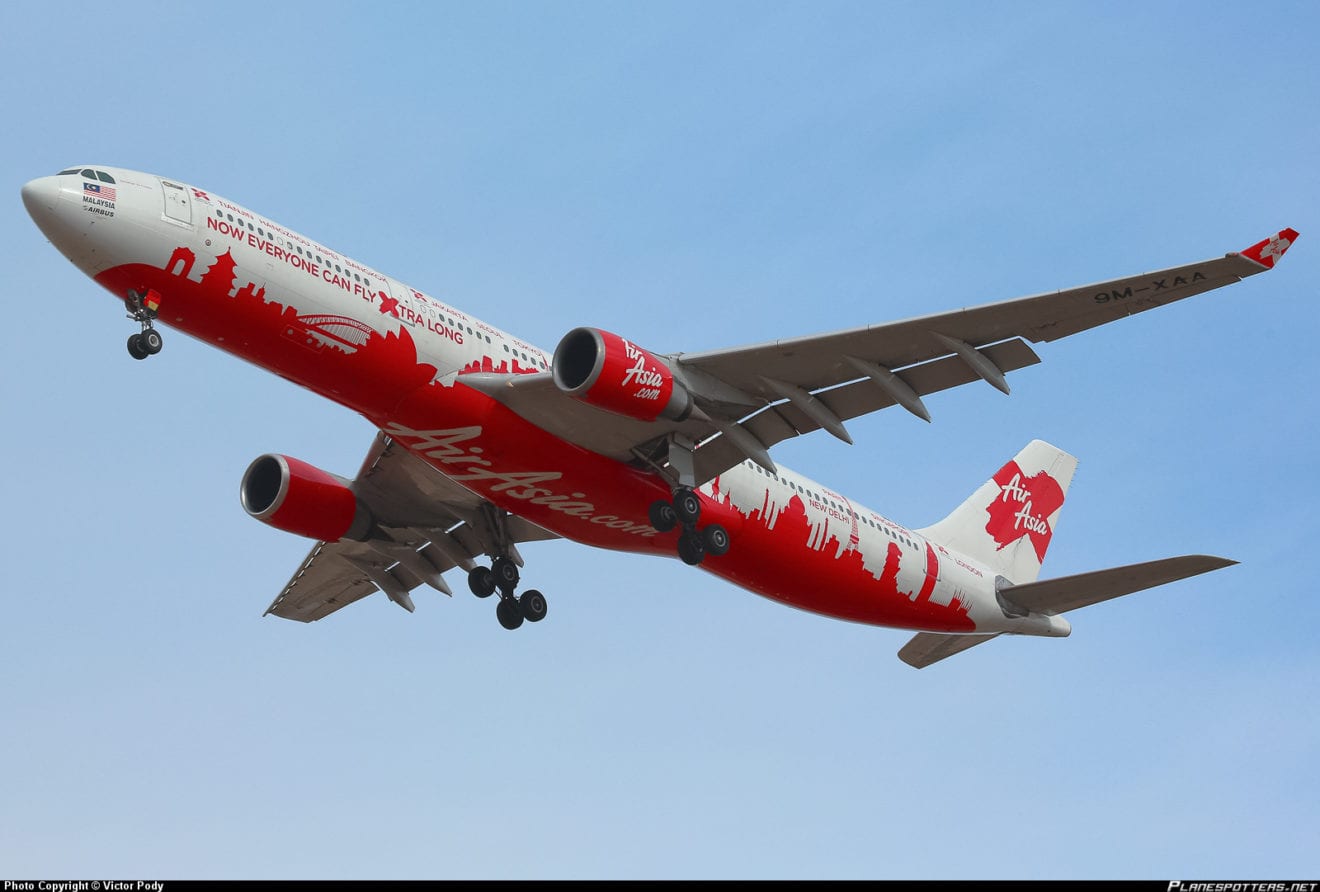
    Air Asia Philippines will start adding new routes to link the Philippines with southern Taiwan by August. The low-cost carrier said in a statement it will open flights from Clark and Cebu to Kaohsiung, Taiwan by Aug. 1, making it the first local airline to offer direct flights between the cities.

    “The Philippines continues to be one of the top holiday destinations for Taiwanese. As the only Philippine airline to connect Cebu and Clark directly to Kaohsiung, we are pleased to be able to contribute to Philippine tourism and bring Cebuanos and Kapampangans closer to southern Taiwan as well,” AirAsia Philippines President and Chief Executive Officer Dexter M. Comendador was quoted as saying.

    AirAsia will have thrice weekly flights for both the Clark-Kaohsiung route and the Cebu-Kaohsiung, and thrice weekly returning flights to the same local hubs, all available every Tuesday, Thursday and Saturday.

    The carrier said Kaohsiung will be the 10th international destination it is opening in 2019, boosting its growing flight network from Cebu and Clark.

    Excluding Kaohsiung, AirAsia flies from Cebu to 12 domestic and international destinations, namely: Manila, Clark, Davao, Cagayan De Oro, Puerto Princesa, Caticlan, Kuala Lumpur, Singapore, Seoul, Shenzhen, Macau and Taipei.

    From Clark, it also flies to nine domestic and international destinations, namely: Cagayan de Oro, Tacloban, Puerto Princesa, Cebu, Davao, Iloilo, Caticlan, Seoul and Taipei.

    Its operator Philippines AirAsia, Inc. reported a 12% growth in profit after tax to P424.5 million during the first quarter, driven by a 27% increase in revenues at P6.68 billion.

    The carrier saw a 23% jump in passengers during the January to March period at 1.97 million, and its load factor inch up to 91% from 87% last year.

    Philippines AirAsia will be adding three new aircraft this year as part of a group-wide fleet expansion program that aims to grow its fleet to 535 aircraft by 2028 across the six countries where AirAsia Group Berhad operates.

  • Online retail sales slows down last Month

    Online retail sales slows down last Month

    Online retail sales fell 3.8 per cent month on month in April, after a less than stellar March, according to the National Australia Bank’s monthly Online Retail Sales Index.

    The result is consistent with a general slowdown in retail observed by NAB, while the result itself is up 1.7 per cent on a year on year basis.

    “This month, both online retail and broader cashless retail series indicated very weak retail conditions,” NAB chief economist Alan Oster said.

    “While year-on-year growth in online sales has also slowed considerably in recent months, these comparisons are made to a period of elevated sales in 2018, with major new merchants to Australia, and also pre-GST exemption effects.”

    While all categories suffered a contraction in sales during April, games and toys suffered least with only a 0.2 per cent reduction in sales, while takeaway food fell 8.6 per cent – the steepest drop.

    International retailers outperformed domestic retailers on a monthly basis, with international retail enjoying a 0.7 per cent increase in sales, compared to the 4.4 per cent fall in domestic trading.

    However, NAB identifies a considerable weakness in international online sales on a year-on-year basis, most likely owing to the change in how GST is calculated and charged.

    “Tasmania, with about 2 per cent of online sales, was weakest in April after leading growth in March,” Oster said.

    “New South Wales, Victoria and Queensland represent over three quarters of the online market in Australia by sales value. Of these larger sales states, Queensland was strongest over the year.”

  • Apple’s new Reminders app dark theme leaks out

    Apple’s new Reminders app dark theme leaks out

    Google slowly introduced us to the systemwide dark mode in Android Q by painting its own apps in morbid colors on a piecemeal basis. It brushed over the Phone app, Contacts, Calendar, Keep notes, you name it.

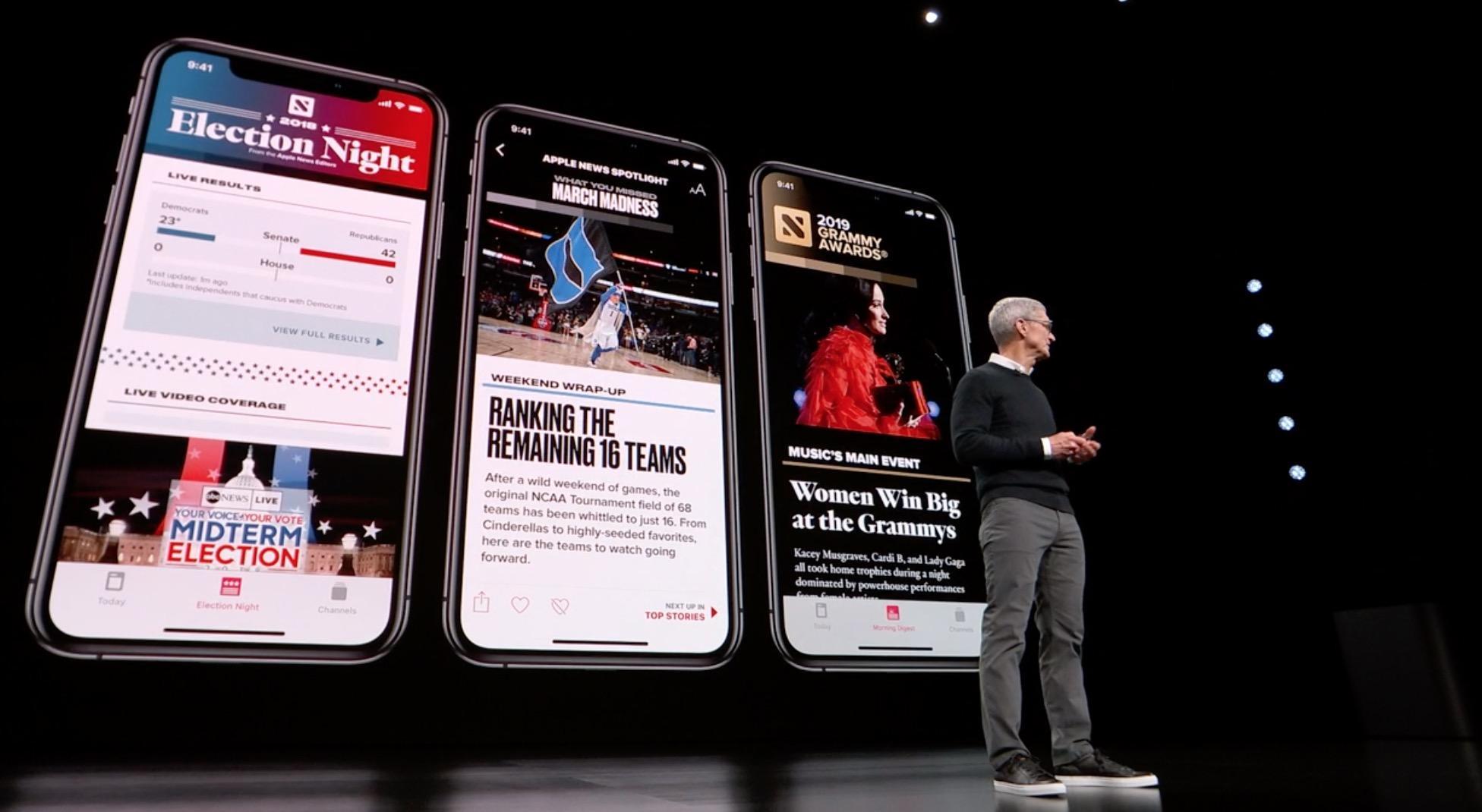
    Apple, however, will be going all out with the iOS 13 dark mode, it seems, theming the launcher, toggles and system settings, as well as its stock apps. While we already rendered what dark mode would look like on iOS, based on some leaked info, we now have a real preview of one Apple default app’s dark theme.

    The difference with the current rendering of the Reminder app is pretty striking, yet in sync with the dark theming that has been sweeping the industry lately, and now Apple is following suit with its own take on the matter. Gawk at what’s about to be unveiled just a few short hours from now.

    Apple’s Worldwide Developers Conference (WWDC) 2019 takes place June 3-7 in San Jose, and starts with a keynote later this morning at 10 AM Pacific Time where a bunch of new software updates – iOS 13, watchOS 6 and tvOS 13 – are to be introduced.

  • Huawei reassesses goal of overtaking Samsung

    Huawei reassesses goal of overtaking Samsung

    Huawei has made no secret of its plans to overtake Samsung as the world’s largest smartphone manufacturer by the first quarter of 2020. But in light of its recent US trade ban, the company is reassessing its goal.

    According to Honor President Zhao Ming, Huawei is currently looking into the possibility of adjusting its internal goals. He says it’s still “too early” to say whether or not the Chinese company is capable of achieving the goals it currently has set, although things aren’t looking too good.

    Per sources familiar with the matter, Taiwanese manufacturer Foxconn that also assembles iPhones and Xiaomi devices recently shut down Huawei production lines. This happened because the company suddenly reduced its orders for new phones in light of weakened demand due to the US ban.

    It’s unclear at this point if Huawei’s production cut is temporary or long-term, but the request could negatively impact Foxconn. After all, the latter reportedly hired lots of new workers earlier this year in order to cope with the growing demand for Huawei’s smartphones.

    On a related note, analyst Ming-Chi Kuo recently forecast a significant drop in sales for Huawei this year. The best-case scenario, which involves launching an Android replacement at some point in the near future, would see Huawei ship between 240 and 250 million smartphones by the end of the year, down from the previous estimates of 270 million devices. However, if the company fails to release an in-house OS by the end of the year, Huawei’s shipments could fall to just 180 million devices.

  • Huawei to sell subsea cable business

    Huawei to sell subsea cable business

    Huawei is reportedly planning to sell its subsea cable business according to a buyer’s filing.

    Made on 31 May 2019 to the Shanghai Stock Exchange, the filing showed that Hengtong Optic-Electric Co, an optical telecoms network vendor, had signed a letter of intent with Huawei Technologies to buy its 51% stake in Huawei Marine Systems.

    Through no price was given, the deal is set to be financed through a combination of cash and shares.

    The news comes weeks after President Trump issued an executive order on “information and communications technology and services supply chain” which gives him and the rest of the US government unprecedented power to ban any business dealing. The order bans Huawei from buying technology from any US company without a license from the US government.

    A few days after the order was issued, the US government then relaxed its embargo on Huawei until 18 August. The Department of Commerce (DoC) issued a temporary general license which sets out limited exclusions to the order giving operators time to get their plans in order.

    “The temporary general license grants operators time to make other arrangements and the Department space to determine the appropriate long term measures for Americans and foreign telecommunications providers that currently rely on Huawei equipment for critical services,” said Secretary of Commerce Wilbur Ross. “In short, this license will allow operations to continue for existing Huawei mobile phone users and rural broadband networks.”

    It has been rumored that the sale of Huawei Marine is happening because the company is now facing stronger scrutiny, which may affect its ability to win new business.

    Speaking to the FT, Fergus Hanson, head of the International Cyber Policy Centre at the Australian Strategic Policy Institute, said, “It’s becoming a more difficult environment when trying to negotiate deals to build cables because [Huawei] is so much in the spotlight.”

  • BT chooses Juniper Networks to unify services for cloud initiative and 5G future

    BT chooses Juniper Networks to unify services for cloud initiative and 5G future

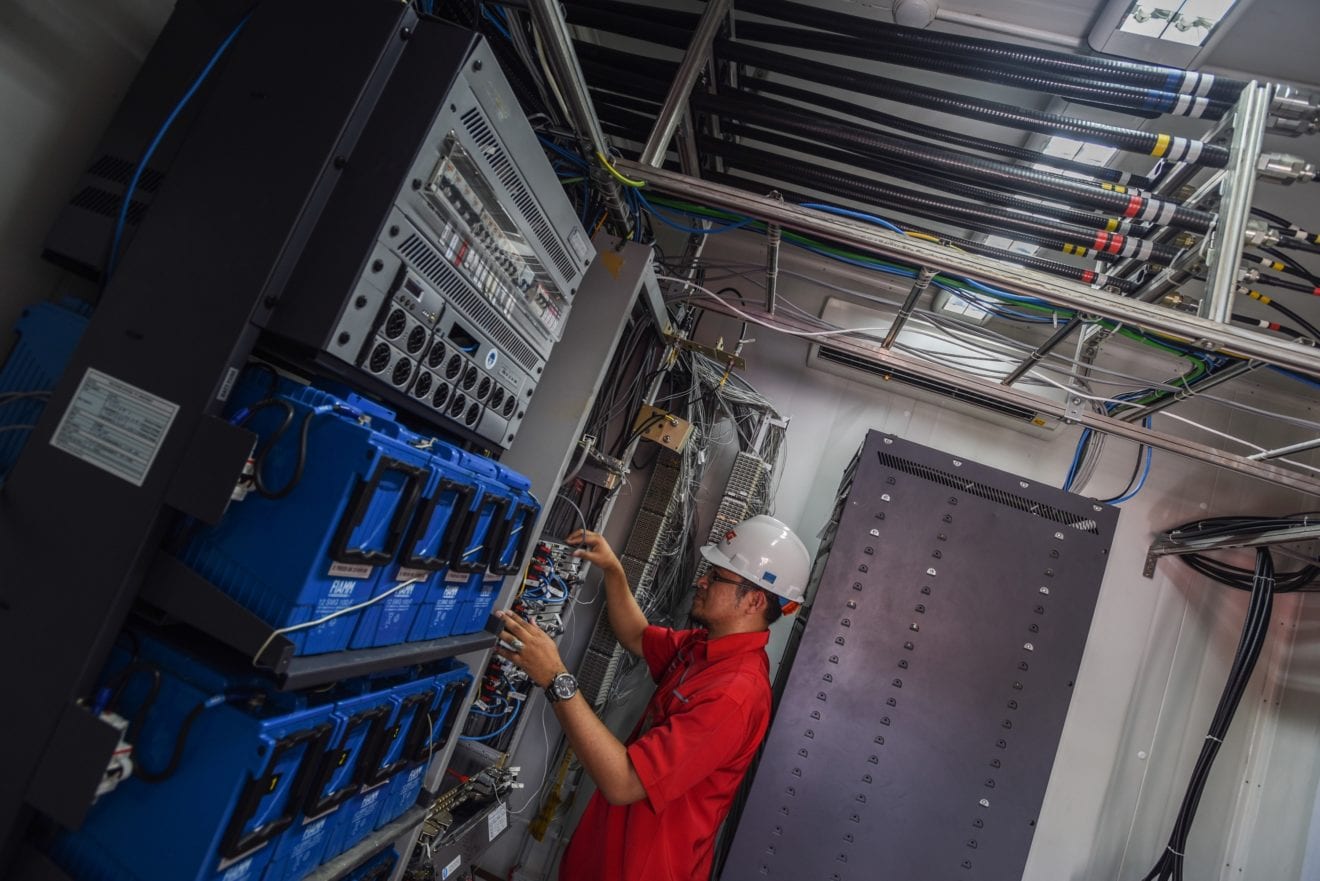
    BT will develop its 5G capabilities further after striking an agreement with Juniper Networks. The network developer will support BT in the delivery of its Network Cloud infrastructure initiative, which will allow various lines of its business on a single platform.

    A more flexible, virtualised network infrastructure will allow the biggest British telco to create new converged services for mobile, Wi-Fi, and fixed networks.

    It will also bring about a range of new applications that evolve services such as internet access, TV and business network functions.

    After EE, BT’s subsidiary, launched 5G in the UK on May 22, Guillaume Sampic, enterprise strategy director at BT, said that the benefits of 5G to businesses in terms of latency, speed, reliability and volume will “be a step change” from 4G.

    Commenting on the Juniper Networks agreement, Neil McRae, chief architect at BT, said: “BT is a global leader in ultrafast services, with growing demand from our ultrafast broadband services and ultrafast 5G services and has the perfect opportunity to combine several discrete networks into a unified, automated infrastructure.

    “This move to a single cloud-driven network infrastructure will enable BT to offer a wider range of services, faster and more efficiently to customers in the UK and around the world.”

    The Network Cloud infrastructure initiative will integrate seamlessly with BT’s other partners and solutions to move it closer to an automated and programmable network, which will benefit services such as ISP, TV, IT and its voice, mobile core, radio access and internal applications.

    BT is investing in a range of Juniper solutions across various tenants within the BT network, including a dynamic end-to-end networking policy and control for telco cloud workloads using Contrail Networking, cloud operations management using AppFormix and a scalable and flexible spine and leaf underlay fabric using the QFX Series.

    “As a renowned global service provider, BT is a shining example of how to evolve networks to become more agile,” said Bikash Koley, CTO, Juniper Networks. “By leveraging the ‘beach-front property’ it has in central offices around the globe, BT can optimise the business value that 5G’s bandwidth and connectivity brings.

    “The move to an integrated telco cloud platform brings always-on reliability, along with enhanced automation capabilities, to help improve business continuity and increase time-to-market while doing so in a cost-effective manner.”

    Capacity recently spoke with Juniper Networks to learn more about its cloud-based SD-WAN solution and how differs from the competition.

  • Walmart hires former Amazon executive on new role

    Walmart hires former Amazon executive on new role

    Retail giant Walmart has hired former Amazon exec Suresh Kumar as its new chief technology officer and chief development officer as it aims to compete more with other tech savvy retailers.

    Kumar, who will take on the newly expanded role on July 8, has held senior positions in Google, Microsoft and Amazon. He has recently been working at Google where he serves as vice president and general manager of display, video, app ads and analytics and before that, he was corporate vice president of Microsoft’s cloud infrastructure operations.

    Before he joined Microsoft, Kumar was with Amazon for 15 years, holding several roles including vice president of technology for retail systems and operations and head of Amazon’s retail supply chain and inventory management systems.

    He will report to company CEO Doug McMillion and will be based at the company’s Sunnyvale, California office.

    According to Walmart, Kumar is joining the company at a time when it is rapidly transforming its customer and associate experiences.

    “The technology of today and tomorrow enables us to serve our customers and associates in ways that weren’t previously possible. We want to take full advantage of those opportunities,” McMillon said.

    “Suresh has a unique understanding of the intersection of technology and retail, including supply chain, and has deep experience in advertising, cloud and machine learning,” he said. “And, he has a track record of working in partnership with business teams to drive results.”

  • AirAsia to Expand E-Commerce Beyond Selling Plane Tickets

    AirAsia to Expand E-Commerce Beyond Selling Plane Tickets

    AirAsia Group, Southeast Asia’s largest budget carrier, wants to sell more than cheap flight tickets. AirAsia is talking to potential partners to build an e-commerce app that it wants to see overtake the size of its airline business, Group Deputy Chief Executive Aireen Omar said in an interview. The carrier, which is seen getting about 1 billion ringgit ($240 million) revenue a year from its AirAsia.com website, expects to earn 20 times more as it expands into an app that will offer lifestyle goods and services.

    “This will be bigger than the airline itself,” Aireen said at her office at the Kuala Lumpur International Airport. “There’s a lot you can do in just one app and that’s what we are trying to do with our travel and lifestyle app.”

    The budget airline, which carries 100 million passengers annually, is bolstering its digital capability to tap a regional e-commerce market that’s set to increase threefold to $240 billion by 2025, CEO and Founder Tony Fernandes said last month. Premium carriers Singapore Airlines Ltd. and Cathay Pacific Airways Ltd. are already turning to onboard duty-free sales to boost revenue, while AirAsia’s app will also offer everything from hotel bookings to beauty products and dinner vouchers.

    AirAsia, which announced a special dividend of 90 sen a share Wednesday, climbed 8% as of 4:14 p.m. in Kuala Lumpur. The shares rose as much as 16% earlier, the steepest gain since 2004.

    The digital business is likely to be spun off in the near future, Aireen said, without giving details.

    Fernandes has slowly but surely prepared the company to focus on this digital drive. AirAsia has sold aircraft parked in leasing companies and disposed a stake in its ground-handling operations. He also restructured the company to have an investment holding group as its publicly listed entity and separated the Malaysian airline business.

    The moves come as the budget carrier grapples with rising risks to its airline business, from the closing of holiday destination Boracay island and natural disasters in Indonesia last year, as well as Malaysia’s clampdown on price surges during high season.

    Meanwhile, Brent has gained almost 30% this year, increasing costs for airlines from Singapore Air to Deutsche Lufthansa AG, which posted lower first-quarter profit partly due to higher oil prices. AirAsia’s net income slipped 92% in the three months through March from a year earlier, it said in a filing on Wednesday.

    The company realized about three years ago that it’s rich with consumer data that a lot of people would want access to, Aireen said. It plans to use the data to market goods and services in a targeted way and provide Internet connection on all its planes to sell products to passengers during the flight.

    The new app will eventually consolidate its current AirAsia BIG Loyalty program, which already partners with vendors from Nike Inc. to Sephora to give special offers and discounts.

  • GMS selected as an international A2P SMS partner

    GMS selected as an international A2P SMS partner

    Global Message Services (GMS) has been chosen as an international application-to-person (A2P) messaging hub and managed services partner with the UAE’s du.

    The partnership will see the global messaging provider, which since 2006 has expanded globally with a current reach of 900 mobile operators, secure du’s network and manage its inbound international A2P SMS traffic.

    “Connectivity and communication are core pillars of our operations and we are always in a constant drive to explore ways to improve the quality of service delivery for our end customers,” said Hany Aly, executive vice president of enterprise business at du.

    “We are happy to partner with GMS in effective monetisation of international A2P traffic. Ultimately, the benefits will be plentiful for both du and GMS with the monetisation of our SMS channels and we look forward to building our expertise and trusted solutions in this field as our partnership ensues.”

    du’s intention to improve service quality and unlock new revenue streams was perfectly in line with GMS’s ambition to extend its global monetisation footprint.

    Successful achievement is preceded by conducting a deep analysis of the legal, technical and commercial environments, identifying weak spots which need to be eliminated and implementing the necessary steps to secure the network. In line with this, du and GMS have established direct connectivity over Signalling System No.7 (SS7).

    SS7 connectivity offers an edge over other technologies in that it is of very high quality, speedy and most importantly, offers complete transparency, providing correct delivery reports to the traffic generator (enterprise) for all messages and thereby giving the full picture to both the enterprise and the MNO.

    “du stands out for its approach and attention to detail, and GMS has the exact same vision on doing business. We believe that GMS’ expertise will enable du to maximise its messaging business and achieve steady revenue growth,” added Iurii Makarenko, managing director of GMS (pictured).

    GMS multi-channel messaging platform, Hyber, allows enterprises to deliver messages across different channels worldwide: SMS, Push, OTT messengers, email, etc. GMS is Viber’s official partner.

  • Alibaba’s 618 Mid-year Shopping Festival targets Specific China Regions

    Alibaba’s 618 Mid-year Shopping Festival targets Specific China Regions

    Alibaba Group has launched this year’s 618 Mid-year Shopping Festival from Taobao and Tmall, allowing brands and merchants to tap into China’s less-developed regions with 1.5 million new products and multiple promotions.

    This year’s festival aims to engage customers in emerging cities, counties and villages across China. To do so, Taobao and Tmall are boosting promotional resources to elevate excitement and help brands reach this rapidly growing market. Altogether, more than 200,000 brands and retailers will participate in the shopping event.

    The shopping event officially started on June 1 and will continue though June 18. Within the first hour, from midnight to 1am, gross merchandise volume (GMV) exceeded that of the first 10 hours last year. And at 11.23am, less than 12 hours after the start, total GMV surpassed last year’s full-day figure.

    Branded products are so far proving extremely popular. Top brands like Apple, Xiaomi, Haier, Aux, Midea, L ‘Oreal, Lancome, Nike and Adidas each notched more than RMB100 million in sales in the first hour. Among them, Apple sold over RMB100 million worth of products in two minutes and 45 seconds, while Midea and Nike both hit that mark in four minutes.

    “In addition to rising discretionary spending, consumers in China’s less-developed regions are becoming more-sophisticated shoppers who are looking for lifestyle upgrades,” said president of Taobao and Tmall Jiang Fan. “This increased consumption potential could mean bright prospects for our merchants. People in these areas might have less access to physical shopping facilities than those in big cities, and this year we are working closely with our partners to address their needs and offer them the same good quality products on our platforms with innovative and fun programs.”

    The number of people living in smaller cities and rural areas accounts for nearly 70 per cent of China’s total population, according to Chinese market-research firm Analysys. These consumers are catching up with first- and second-tier markets in valuing quality over price. Tmall’s figures also show that more than half of the sales generated on its Luxury Pavilion comes from customers outside China’s first- and second-tier cities.

    In view of this trend, Taobao and Tmall are leveraging Alibaba Group’s ecosystem and technology and an array of marketing channels and tools to build momentum from early June. Key initiatives to offer opportunities in fast-growing markets and enhance customer engagement include:

    Tmall product debuts – About 1.5 million products will debut on Tmall during the festival with customers enjoying heavyweight promotional offers on these items. Many were developed by brands on an accelerated cycle, thanks to consumer insights provided by Tmall. In addition to deals on the 1.5 million new products, brands are offering millions of other products at a discount. All products are available to consumers nationwide, but brands are paying special attention to the needs and desires of customers in lower-tier Chinese cities.

    Flash Sales – Alibaba’s flash sales channel, Juhuasuan, allows brands to offer deep discounts to reach new customers in fast-growing markets. Juhuasuan will organise dozens of 618-themed group-selling campaigns featuring must-buy items recommended by brands. Statistics show that Juhuasuan is a tried-and-true channel for brands to attract first-time buyers. Since last year, 80 per cent of the transactions for branded goods through Juhuasuan were from new customers, and nearly half were from lower-tier cities.

    Taobao Livestreaming – Few marketing tools have proved more effective than livestreaming for brands to introduce and recommend 618 products to potential consumers in less-developed regions. Last year, sales generated by Taobao Livestreaming exceeded RMB100 billion. This year, US brands, including Stadium Goods, the streetwear and sneaker resale store backed by LVMH Luxury Ventures; Korean beauty brands, like Laneige and Innisfree; and Japanese cosmetics brands Shiseido will host livestreams for 618.

    Daily Deals – This channel on the Taobao app provides special offerings directly from manufacturers and is highly popular among consumers from less-developed areas in China. Equipped with insights from consumer preferences and behaviors, manufacturers are able to adjust their production processes on a real time basis to meet consumer demands. These manufacturers will introduce 100,000 promotional items for the 618 celebration.

    With a reach of 654 million annual active consumers in China, strong technical support and in-depth market knowledge, Alibaba’s ecosystem is offering a strong growth potential for brands.

    Alibaba Group’s annual results this year reflect that growth potential, with more than 70 per cent of the more than 100 million new active users added during the year ended March 31, 2019 coming from less-developed cities.


  • Prada reveals ‘Code Human’

    Prada reveals ‘Code Human’

    Chinese artist Cao Fei has entered into a collaboration with Prada on a special project, “Code Human”, starring Chinese idol Cai Xu Kun to showcase the Prada Fall/Winter 2019 menswear collection.

    The project, which explores “the meaning of iconography, idolatry, fandom and adoration in our super-media age”, is part of a long-standing program of cross-media Prada campaigns and projects spanning the fields of design, architecture, cinema, and art. Prada continues in this campaign to collaborate with leading creative practitioners to explore the intersection of different cultural disciplines and experiences.

    “Upon reflection, nobody is as crazy as Miuccia Prada to think of this pairing, asking a Chinese artist to photograph a Chinese ‘idol’,” said Cao Fei. “I was excited for many days afterward I received the proposal, not only because of Cai Xu Kun, but about the project itself, to have this opportunity to plumb these cultural depths, using a real-life ‘idol’ to communicate with the tens of millions of followers behind him. As an artist, you cannot ignore those who stand behind him. How should I represent somebody else’s idol?”

    “Code Human” debuted on June 1 to coincide with Prada’s Spring/Summer 2020 fashion show in Shanghai.

  • Pic’s Peanut Butter lands in Amazon stores

    Pic’s Peanut Butter lands in Amazon stores

    New Zealand food brand Pic’s Peanut Butter is one of the brands involved in Amazon’s ‘Clicks & Mortar’ initiative, which launched this week in the UK.

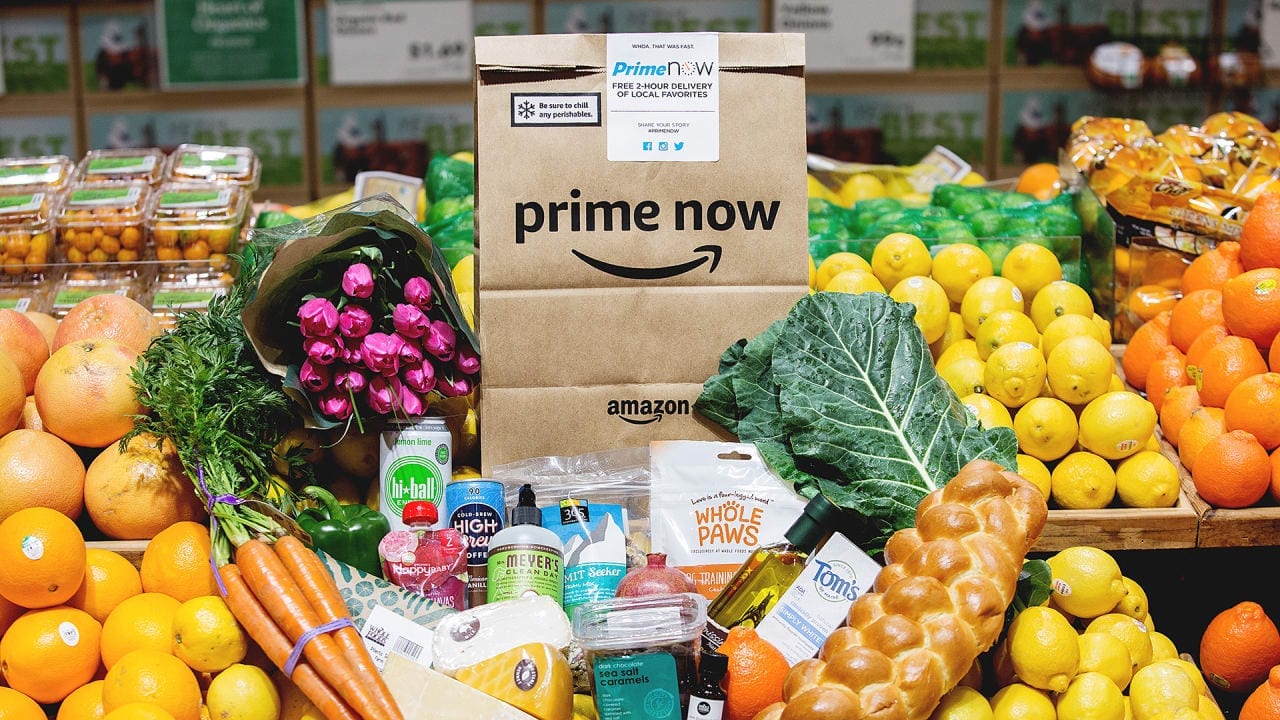
    The e-commerce giant is rolling out pop-up shops across the UK, giving small online business brands the opportunity to reach the high street market.

    More than 100 small online brands will be sold across the UK with pop-up shops set to open in Wales, Scotland, the Midlands, Yorkshire and the Southeast.

    The first pop-up store has opened in St. Mary’s Gate, Manchester, selling the wares of 12 businesses, including Pic’s Peanut Butter.

    According to Amazon, the year-long pilot programme will explore a new model to help up-and-coming online brands grow their high street presence. Independent research on the success of the pilot will be submitted to the British government, following the call for new ideas to develop the Future High Streets strategy.

    “Small businesses are one of our most important customer groups, and we’re thrilled to work with Enterprise Nation to design a comprehensive package to help entrepreneurs across the UK grow their businesses, both in-store and online,” said Doug Gurr, UK Amazon country manager.

    “From giving up-and-coming online British brands the chance to experience physical retail, to funding the training of full-time apprenticeships and helping to increase SME exports, Amazon is committed to supporting the growth of small businesses – helping them boost the economy and create jobs across the UK.”

    The project, in partnership with small business support group Enterprise Nation, Amazon, Direct Line for Business and Square Amazon will help create over 150 full-time apprenticeships at small online businesses through a new £1 million SME Apprenticeship Fund, while the Amazon Academy training programme will provide free digital training to help grow their sales and boost exports.