Author: Mei Ling Tan

  • Google just says no to marijuana apps

    Google just says no to marijuana apps

    While more states are passing laws legalizing marijuana, Google is trying to make it harder for smokers to connect with sellers. Earlier this week, the company announced that it will no longer allow apps in the Google Play Store that “facilitate the sale of marijuana or marijuana products regardless of legality.” In other words, even in states where weed is legal, Google will ban these apps.

    This new policy is now listed in the Google Play Store Developer Center website and gives three examples of violations. These include allowing users to order marijuana through an in-app shopping cart feature; assisting users in arranging the delivery or pick up of marijuana; and facilitating the sale of products containing THC. Before Google updated the page, there was no policy specifically related to marijuana apps.

    “These apps simply need to move the shopping cart flow outside of the app itself to be compliant with this new policy. We’ve been in contact with many of the developers and are working with them to answer any technical questions and help them implement the changes without customer disruption.”-Google

    At the same time, Google promised to make the Google Play Store safer for children and families. In a blog post made Wednesday, the company wrote “At Google Play, we’re committed to providing a positive, safe environment for children and families. Over the last few years, we’ve helped parents find family-friendly content through the Designed for Families program and empowered them to set digital ground rules for their families with Family Link parental controls.” And that apparently means making the Play Store weed-free.

    Back in 2015, we told you the names of some of the apps that smartphone owners could use to find the nearest dispensary. But thanks to Google’s new policy, that has all gone up in smoke.
  • Singapore launches the Smart Nation Innovations Week

    Singapore launches the Smart Nation Innovations Week

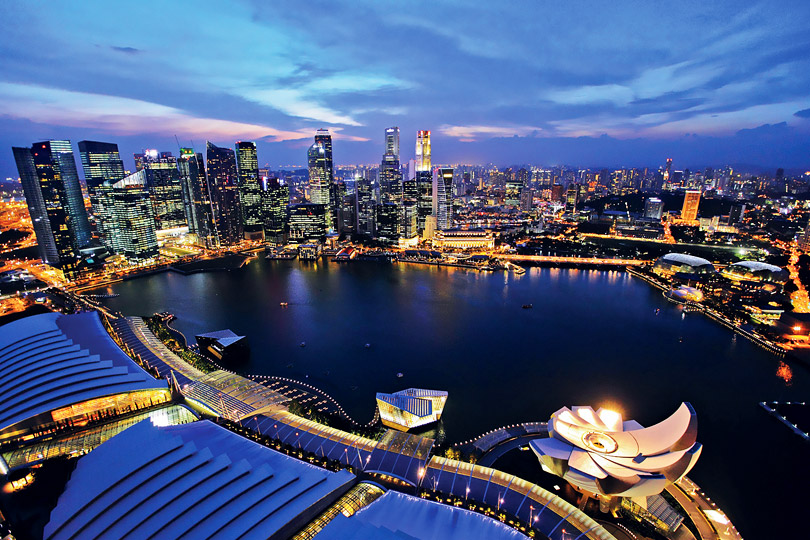
    The Smart Nation Innovations Week 2019 kicks off today in Singapore, where local and international attendees will share and learn about the impact of technology and innovation on business, economy, government and society.

    The Ministry of Communications and Information (MCI) and Infocomm Media Development Authority (IMDA), together with Smart Nation and Digital Government Office (SNDGO), GovTech and in partnership with Unbound, will host the Smart Nation Innovations Week (SNI Week) from 24-28 June 2019. The event will see more than 15,000 global government and industry leaders convene in Singapore to discuss challenges and opportunities in a digital age.

    Singapore’s Prime Minister Lee Hsien Loong is the Guest of Honour at The Smart Nation Summit, an annual by-invitation only forum aimed at facilitating impactful conversations among senior leaders and stakeholders from governments and businesses on the policies, strategies, technologies and mindsets needed as the global digital economy accelerates its growth. PM Lee will participate at the closing dialogue of the Summit and Minister for Communications and Information, Mr S Iswaran will speak at the opening of the Summit.

    Themed “Digital as Usual”, the Smart Nation Summit is a constituent event of SNI Week and will bring together a thousand delegates from around the world, including industry leaders and ministers, to discuss thought-provoking topics that interrogate the intersections across sectors (economy-government-society), geographies (East-West though Southeast Asia) and time (future-present) in this digital age. The Summit will shine the spotlight on Asia’s transformation, tensions between technology, security and trust – how they all come to bear in the services sector, and call for new leadership in a digital-as-usual age. SNI Week also includes events such as the Straits Digital Exchange (SDE) and the Digital Government Exchange (DGX).

    Following the Smart Nation Summit on 26 June, the Innovfest Unbound festival returns to Singapore for its fifth and largest-ever edition as the anchor event of SNI Week on 27-28 June 2019. As one of Singapore’s key event platforms connecting technology entrepreneurs, brands, investors, businesses and thought leaders for growth and partnership opportunities, this year’s conference will attract more than 15,000 participants, feature over 350 exhibitors, and more than 400 speakers. Minister for Communications and Information Mr S Iswaran will be the Guest of Honour at Innovfest Unbound and deliver the opening speech.

    IMDA will also be presenting two new panel discussions – Services 4.0 and Trusted AI. A high level panel will convene on 28 June 2019 to discuss topics on building trusted AI ecosystems, with Senior Minister of State Mr Janil Puthucheary delivering the welcome address for the day. A select list of promising local digital companies will be featured at IMDA’s Tech Alley and booths as well.

  • Changi Airport liquor & tobacco concession Open

    Changi Airport liquor & tobacco concession Open

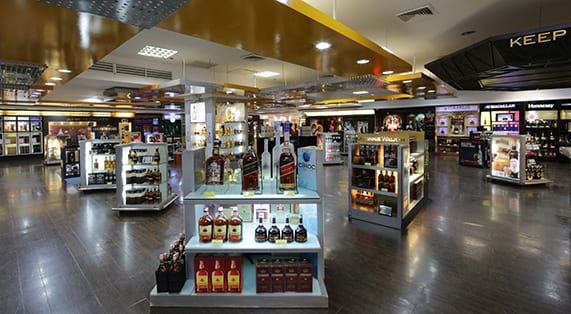
    The Changi Airport liquor & tobacco concession is up for grabs after DFS Venture opted not to proceed with a two-year extension.

    Changi Airport Group (CAG) will launch a tender for the concession on June 4, covering 18 stores, spanning more than 8000sqm of retail space across the airport’s four terminals. It will run for six years from June 9 next year.

    CAG is seeking a strong partner with retail concepts to augment the passenger experience for the liquor and tobacco concession.

    From store design and product range, to in-store activations and e-commerce strategy, the retailer should put forth a robust and compelling proposal, leveraging new technologies and innovations, to elevate travel retail at Changi, CAG said.

    The Changi Airport liquor & tobacco concession will serve more than 66 million international travellers who pass through Changi Airport annually.

    “We look forward to new retail concepts to take the liquor & tobacco concession to new heights,” said CAG VP for commercial, Lim Peck Hoon.

    “Changi is fully committed to growing with our concession partners through impactful innovation and effective collaboration. There will be a wealth of opportunities for the liquor & tobacco partner to showcase its offerings to Changi’s global audience, delivering revolutionary best-in-class retail experiences, to build and grow its business.”

    Interested retailers will be required to attend a compulsory tender briefing and site visit scheduled on June 25. The deadline for submissions is August 5.

  • Philippines, Vietnam lead FMCG sales growth in Asia

    Philippines, Vietnam lead FMCG sales growth in Asia

    The Philippines and Vietnam led Southeast Asian FMCG sales growth last year, according to a report by market research company Nielsen.

    In What’s Next for Southeast Asia, Nielsen reported that Vietnam’s FMCG sales growth reached 5.2 per cent, second in Southeast Asia behind the Philippines’ 8.7 per cent.

    Global FMCG sales growth was only 3.4 per cent, but Asian markets benefited from buoyant economic factors and strong consumer confidence.

    In Vietnam, consumers are making more frequent shopping trips for everyday needs, with Nielsen’s data showing the average shopper visited a convenience store 4.5 times per month last year – that’s three times the frequency of 2010.

    “We’ve been seeing solid growth in the convenience and mini-market channels across Southeast Asia for some time now, but over the past year or so that growth has really hit fever pitch,” said Vaughan Ryan, Nielsen’s MD Southeast Asia.

    “Consumers throughout the region are living increasingly fast-paced lives, and this lifestyle shift is driving increasing demand for on-the-go offerings.”

    Vietnam’s local retailers are taking advantage of the trend. Vingroup has launched the first virtual store chain in the country, which allows users to shop by scanning QR codes on large banners in public areas as well as printed catalogues.

    Subsidiary VinCommerce, which owns the VinMart+ convenience store chain, recently acquired a rival c-store chain Shop&Go,which it plans to convert to its own banner. Vietnam retail is forecast to record double-digit growth from this year to 2024.

  • Apple purges iTunes pages on the eve of its demise

    Apple purges iTunes pages on the eve of its demise

    Apple’s arguably most hated piece of legacy software – iTunes – may be killed today at the WWDC keynote, reported Bloomberg over the weekend, and the interesting part is that it won’t be renamed to something else, but different modules will be taking its place instead.

    The iTunes syncing and download service is a relic of the past anyway, and will be phased out as Apple’s CEO Tim Cook will be announcing a move away from the iPhone as the centerpiece of the company’s strategy.

    The Apple Watch will reportedly gain more independence from the iPhone, the iPad will be getting new software that will aim to close the gap with laptops, and Apple will be pushing its new healthcare solutions, according to the report. Anything but the iPhone.

    The transition might not be finished for a couple of years, but this is the strongest push Apple has made toward the unification of its two platforms. Apple and developers can put more effort into one version of things instead of having to build everything twice.

    With Watch OS 6, the company is eventually going to introduce a dedicated App Store, compartmentalize messaging, and add stock utility apps of the everyday type like a calculator or a voice recorder that will make you keep the iPhone in your pocket for longer while using the Watch.

    One of the slower and more cumbersome to use of Apple’s legacy software, the jack-of-all-trades-master-of-none iTunes will be replaced with apps that now duplicate its functionality. Instead of using it for watching videos, or listening to music and podcasts, Apple’s new Music, TV, and Podcasts apps for the Mac will be taking over. What about shuttling files to and from and managing the phone, though, what iTunes used to do?

    Well, those functions will reportedly be taken over by the new Music app, of all things. Apple even started purging the iTunes accounts on Instagram, Facebook and the like, indicating the ancient software’s imminent demise. Good riddance?

  • Museum of Modern Art Hong Kong store planned to Open

    Museum of Modern Art Hong Kong store planned to Open

    New York’s Museum of Modern Art will open a Design Store in Hong Kong.

    The Museum of Modern Art Hong Kong store will open in the new K11 Musea art mall. It will be the largest in Asia following two locations in Japan.

    The 6000sqft retail store, which celebrates innovative design in products from around the world and serves as a platform for emerging artists and designers, will showcase works from leading Hong Kong artists such as Kaws and Yayoi Kusama. Every product at the store is exclusive and undergoes a series of eight criteria filters to ensure a strong fit with Moma’s vision of good design.

    K11 Group founder Adrian Cheng, who was recently named the first Council of Fashion Designers of America global ambassador, is a board member of Moma and led the introduction of the store in Hong Kong.

    The Museum of Modern Art Hong Kong store will open in August.

  • HMV stock to be Sold

    HMV stock to be Sold

    The liquidator of collapsed music chain HMV has backed away from a retail sale of the company’s inventory. Liquidator Wong Sun-keung, a partner at accounting firm Vision AS, said the administrative costs of launching such a sale – especially the rent – would take too large a chunk out of the takings.

    While the inventory of the collapsed chain has a ticket value of HK$9 million, a ‘fire sale’ of stock would realise as little as $1 million – before rent and staff costs were taken into account.

    A creditors committee decided at a meeting last week to call tenders for the complete sale of the stock – an estimated 100,000 CDs, DVDs and vinyl records retrieved from stores shut last December and currently stored in shipping containers.

    “We will sell all the remaining stocks in one go,” Wong said.

    “Only if the tender offers were too low would we consider a liquidation sale. But now we prefer to use a tender to sell the remaining stock, because it’s simpler and we believe we can get a better price,” Wong said.

    A liquidation sale of stock became inevitable after two white knight investors walked away last month due to legal issues relating to the continued use of the HMV brand in any new entity.

  • CAE signs new deal with AirAsia in the Philippines

    CAE signs new deal with AirAsia in the Philippines

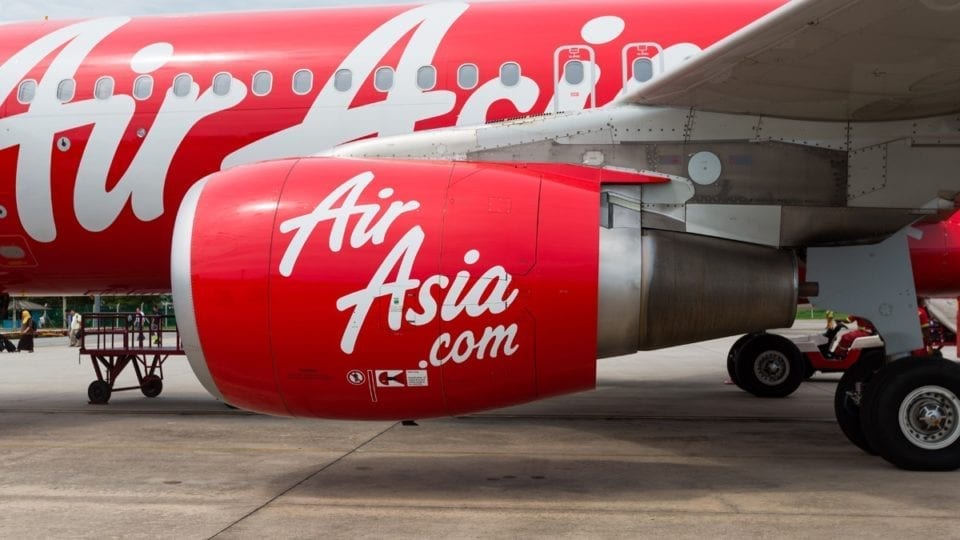
    CAE has signed a new five-year training agreement for AirAsia’s A320 pilots in the Philippines, extending the use of the CAE Rise training system to a third AirAsia affiliate.

    Through the new agreement, announced at the International Air Transport Association (IATA) Annual General Meeting (AGM), CAE will continue to provide initial training for the airline’s pilots and will soon undertake recurrent training at CAE Clark – Philippine Academy for Aviation Training (PAAT) in the Philippines, starting in July 2019.

    “AirAsia has embarked on a mission to digitise every aspect of their business and by implementing the CAE Rise™ training system they are better able to train and develop their pilots using real-time insights alongside a new level of training data analytics,” said Nick Leontidis, CAE’s Group president, Civil Aviation Training Solutions. “Just recently AirAsia extended the use of the CAE Rise™ training system on the Airbus A330 platform and it’s an honor to see them extend this training system on the Airbus A320 platform with a third airline affiliate.”

    Earlier this year CAE announced the signing of a five-year training agreement for AirAsia’s long-haul pilots, extending the use of the CAE Rise training system to AirAsia’s long-haul affiliate, AirAsia X on the Airbus A330 platform.

  • Toyota’s Domestic Sales Down By 7% In May

    Toyota’s Domestic Sales Down By 7% In May

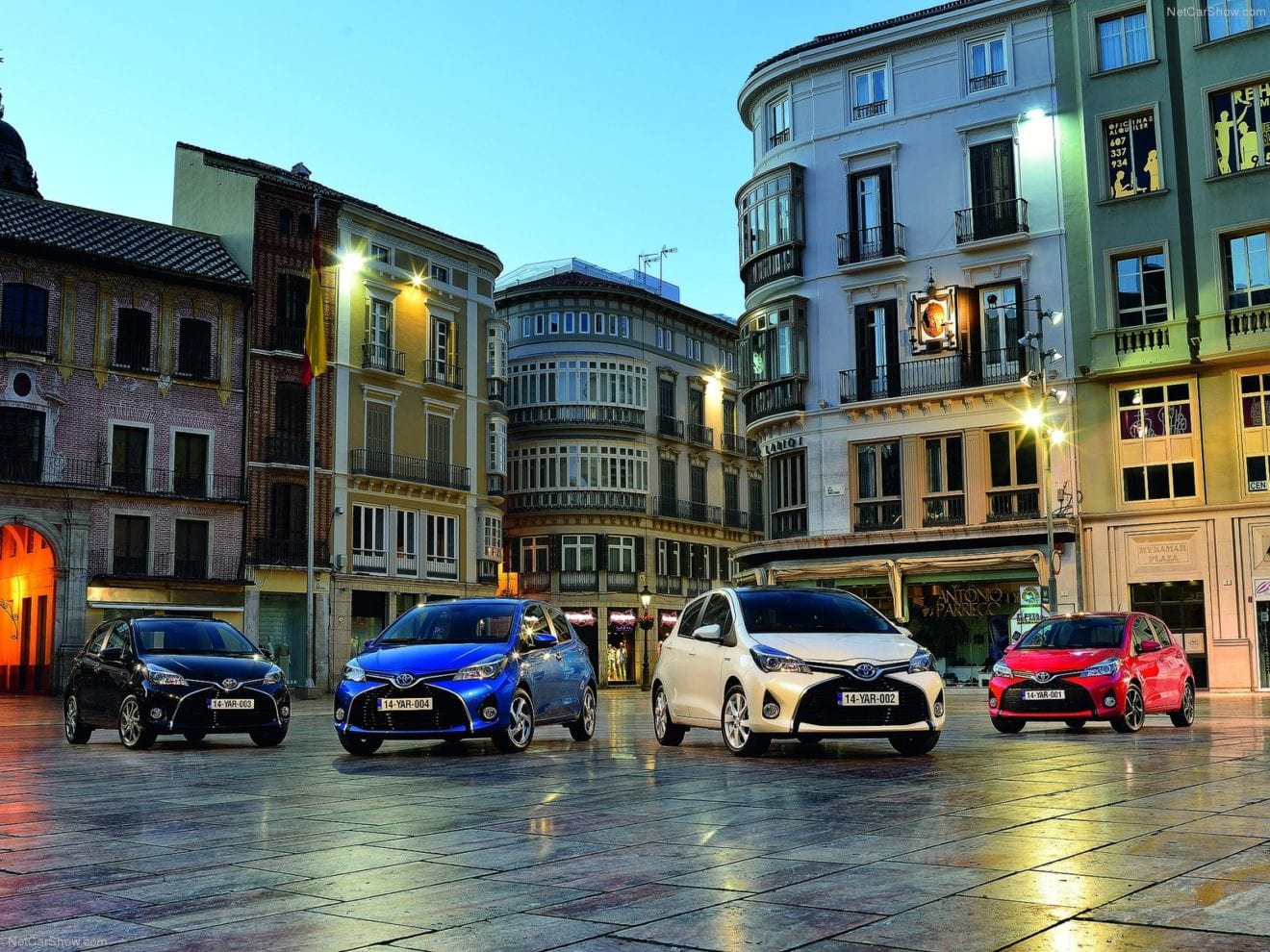
    The downward trend in the automotive industry continues in May 2019 as well. Toyota Kirloskar Motor announced its sales figure for the month of May and it has sold a total of 12,138 units in the domestic market, which was a de-growth of 7 per cent as compared to the same period last year. The company exported 928 units of the Etios series this month thus bringing the company’s total sales to 13,066 units. In comparison, Toyota Kirloskar Motor sold a total of 13,940 units in May 2018 thus registering a decline in sales of 6 per cent.

    N. Raja, Deputy Managing Director, Toyota Kirloskar Motor said, “The customer demand had witnessed a continued slowdown before the election results. Customers have been cautiously spending which has led to sluggishness in the domestic auto sales. Added factors like liquidity tightening, high insurance costs, increase in fuel costs have also weakened the retails.”

    However, he says that there is an increase in customer walk-ins post the election results announcement which would brighten the sales in upcoming months.The company is all set to launch the Glanza in India on June 6, 2019 and this would mark the company’s entry into the premium hatchback segment. The company thinks that the slowdown will soon be gone and things will look bright for the automotive industry.

  • Hong Kong retail sales felt Last Month

    Hong Kong retail sales felt Last Month

    Hong Kong retail sales fell by 4.5 per cent in April, contributing to a 2 per cent decrease in year to date.

    Worse, the Census and Statistics Department said that after netting out the effect of price changes year on year, Hong Kong retail sales fell 5 per cent year on year, following a 0.8 per cent fall in March and contributing to a 2.3 per cent decline year to date.

    “The larger year-on-year decrease recorded in April reflected the still-cautious consumption sentiment amid external uncertainties, but was also partly due to the late arrival of the Labour Day holidays in the Mainland (which fell in early May this year but straddled between April and May last year), which has led to a notable deceleration in the growth rate of visitor arrivals,” a government spokesman said, commenting on the data.

    He said that in the near term, consumption sentiment will continue to be affected by various external uncertainties, though the sustained expansion in inbound tourism and the largely stable local labour market should provide support to retail sales business. In other words: it may be too soon to start panicking.

    Predictably, the jewellery, watches and luxury goods sector performed the worst, sales down 11.4 per cent in April. Apparel, the second greatest contributor to the figures, slipped by a more modest 2.2 per cent, with cosmetics down 6 per cent, department-store sales down 4.3 per cent and electrical goods by 13.7 per cent. Sales of footwear and accessories fell 5.4 per cent, furniture by 0.4 per cent; books, newspapers, stationery and gifts by 7.5 per cent; Chinese drugs and herbs by 5.7 per cent, and optical shops by 7.8 per cent.

    On the positive side, supermarket sales rose by 1.1 per cent; food, alcohol and tobacco by 0.8 per cent and fuels by 3.3 per cent.

  • King Power Bangkok airport retail monopoly to stretch longer

    King Power Bangkok airport retail monopoly to stretch longer

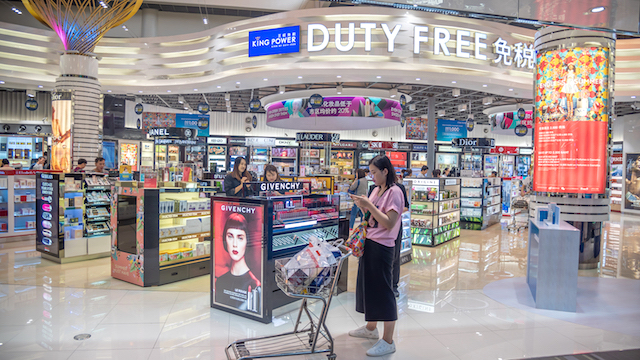
    Hopes of opening up the duty-free and retail monopoly at Bangkok Suvarnabhumi airport have been dashed after Airports of Thailand (AOT) announced the incumbent operator had lodged the highest bid to retain the business.

    While still subject to final ratification by the AOT board, King Power has effectively bought a monopoly on duty-free business at the airport for another decade.

    King Power Duty Free has held the rights since the airport opened in 2006, and was competing to continue when the current contract expires next year through until 2031.

    “The company that scored the highest is King Power Duty Free Company and the winner offered the highest return than what AOT has received before and higher than AOT estimate (sic),” said Wichai Bunyu, senior executive VP at AOT, in a statement.

    Two rival bidders were hoping for a share of the action in what is a lucrative monopoly with prices unmonitored or regulated. The losing bidders were a joint venture between Bangkok Airways and South Korea’s Lotte, and another involving Royal Orchid Hotel Thailand, Empire Asia Group and a subsidiary of World Duty Free Group.

    Leading Thai retail business Central Group and Minor International did not submit bids before the deadline.

    Having selected the winning bidder, the appointment process is a mere formality, subject to ratification of AOT’s remuneration committee next week. According to Reuters, that will decide the technical score and revenue King Power would share with AOT before the board of directors officially approves the winner on June 19.

    The Thai government had ordered a review of duty-free auction period amid monopoly concerns after more than a decade of dominance by King Power. But that apparently had no effect.

    The winning bidders to operate duty-free shops at Chang Mai, Hat Yai and Phuket airports were expected to be released today (June 3) with King Power almost certain to win those contracts as well.

  • A&W Singapore opening second outlet

    A&W Singapore opening second outlet

    American fast-food chain A&W Singapore will open second outlet in Ang Mo Kio Hub in July.

    The outlet at AMK Hub’s basement will span 2812sqft and seat up to 142 diners.

    Unlike the Jewel Changi outlet, the AMK one will be ‘family-oriented’ and more flexible to accommodate larger groups of diners.

    There will also be a counter for customers to watch waffles being made, and a selfie corner to satisfy millennials.

    A retail section will sell merchandise such as t-shirts, caps and pins will be set up.

    “The A&W brand is something people remember from childhood,” A&W international manager for business development Sally See said.

    “We see baby boomers taking their children to the Jewel outlet. With the AMK Hub outlet, we hope they can relive those memories of the time when A&W used to be in Ang Mo Kio.”

    Initially, the new store will trade during normal mall hours but it will eventually be open 24-seven.

    The menu will feature A&W signature items, and will expand to include breakfasts as well.

    More A&W Singapore stores are scheduled to open from the second quarter of next year with the Tampines and Jurong areas targeted.

  • Huawei’s troubles could hurt the entire smartphone market

    Huawei’s troubles could hurt the entire smartphone market

    After putting on a brave face for the last few weeks and insisting the Chinese company is prepared for whatever US President Trump might throw at it down the line, Huawei has finally acknowledged its incredible recent rise through the ranks of the world’s largest smartphone vendors is likely to slow down.

    But while Apple, Samsung, and Xiaomi are expected to derive important gains from Huawei’s global losses, Canalys is taking a look today at another big potential loser in this extremely complicated equation. The research firm thinks the entire smartphone industry will be hurt by “uncertainties surrounding the US/China trade talks, the US Executive Order signed on 15 May and subsequent developments.”

    Although it’s obviously impossible to project the long-term repercussions of current tensions between the US and Chinese governments, as “subsequent developments” remain up in the air, Canalys is already reducing its 2019 smartphone shipment forecast to 1.35 billion units. That would represent a decrease of 3.1 percent from last year’s total, which in turn marked a worrying decline for an industry that was used to steady, impressive growth until not long ago.

    That essentially stopped when manufacturers got into a rut, failing to innovate like before and convince people to upgrade from their awesome high-end handsets to eerily similar and only slightly awesomer new flagships. With the advent of 5G connectivity and increasingly bolder designs pursuing the foldable and bezelless dreams, analysts are now widely expecting a (slow) recovery of global smartphone sales.

    But if Canalys is right, we may have to wait until 2020 for a boost in shipments. Specifically, this year’s 1.35 billion units are projected to rise to 1.39 billion for a sequential growth of 3.4 percent after consecutive declines of 4.5 and 3.1 percent in 2018 and 2019 respectively.

    Of course, this year’s total is exceptionally volatile and tricky to forecast, greatly depending on whether or not Huawei will ultimately be allowed to continue doing business with US companies. The current assumption is that “restrictions will be imposed stringently” on the Chinese vendor at the end of Trump’s 90-day reprieve, hampering its overseas potential for “some time.”

  • Reebonz launches buy-back guarantee Program in Thailand

    Reebonz launches buy-back guarantee Program in Thailand

    Online luxury marketplace Reebonz has launched a guaranteed buy-back program in Thailand.

    The service, which applies to leather goods and jewellery, gives customers a guaranteed price that the company will pay to buy back products initially sold on its platform.

    Customers will be offered currency, called Reebonz Credits, that can be used for future purchases on the platform.

    Pre-owned jewellery from selected brands such as Chanel, Harry Winston, Hermes, and Christian Dior, among others, will be eligible.

    Daniel Lim, Reebonz co-founder and CPO, said the company hopes to further expand its services across new geographies and categories, giving customers even more ways to engage with the brand. “We truly believe we can be a one-stop ecosystem for everyone’s luxury needs.”

    The guarantee is now available in Singapore, Hong Kong, Taiwan, Malaysia, Australia, Indonesia, and the US.

    Headquartered in Singapore, Reebonz is a C2C platform that allows customers to buy and sell their pre-owned items to a community of more than 5.5 million members.

  • Lush Tokyo store marks beauty brand’s largest In South East Asia

    Lush Tokyo store marks beauty brand’s largest In South East Asia

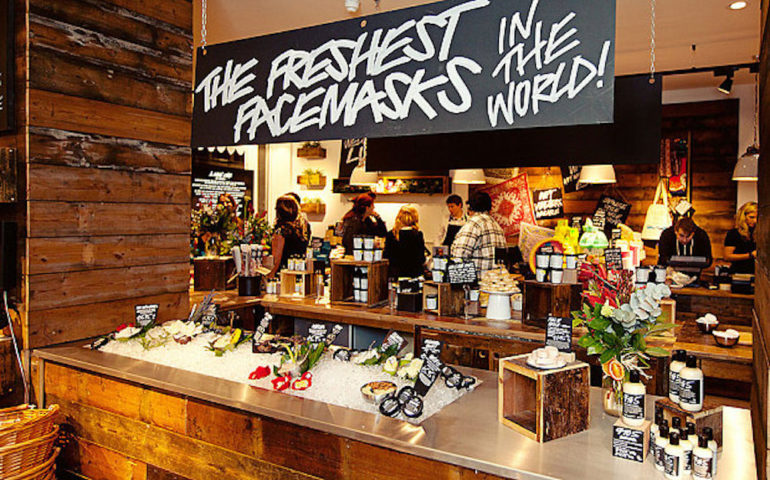
    The new Lush Tokyo store opened on Saturday is its largest yet in Asia, a three-storey, 1240sqm flagship. Billed as “a global destination, with a curation of the best of Lush as you know it,” the Lush Shinjuku store is housed in the southeast wing of Shinjuku Station, the world’s busiest railway hub. From the outside, it is hard to miss: a towering four-storey 1024cm x 352cm LED screen dominates the street frontage (the building’s fourth floor will house back-office functions for now).

    Inside, Lush Tokyo promises an “experiential, imaginative retail space showcasing Lush’s innovation in technology, with exclusive product drops, and new ways to shop”.

    Digital screens feature throughout the retail space, as well as projection installations, positioned to communicate key messages through visual content and designed to overcome language barriers.

    Coinciding with the store’s opening is the release of an upgraded Lush Labs app for Android and iOS featuring English, Korean, Japanese and Simplified Chinese. Visitors can use the app’s scan function to browse product information while in store, at home and even in the store’s digital ‘shoppable window’ which will be active 24 hours a day for customers and passers-by to scan and shop curated collections and product drops.

    Lush says using lens technology, via the app, to demonstrate products and product information is a step towards minimising packaging and reducing water wastage by showcasing products through videos.

    The content placed in windows and on the giant screen “will reflect the mood of Shinjuku at that time and aims to capture the attention of passers-by and commuters”. It will showcase Lush’s values, campaigns and creativity.

    Lush says the ambience of the new store aims to change the customer’s mood, whether it is a skin consultation, spa treatment or something sensory to speed you up or slow you down.

    “Products, treatments and experiences with benefits beyond the body exist here and build in intensity as customers move through the floors. Each floor offers an uplifting, interactive and playful space that promotes exploration and creativity with benefits beyond the body through different materials, lighting, products, content and merchandising to set the tone and spark joy.”

    The second floor offers what Lush describes as “a surreal sensory experience using colour therapy and generative art inspired by bath art to create an interactive digital mood”.

    “Innovative use of technology heightens the senses and plays with mood, data from sensors that map customer position and movement will be used to activate sounds from within the displays. This is just one way the shop can respond to individual customers, creating targeted experiences filled with surreal moments.”

    The new Lush Tokyo store opened its doors on Saturday, June 1. A spa planned for the third floor will open within the next few months and the company says it is evaluating using some of the fourth-floor space for customer engagement as well.