Author: Mei Ling Tan

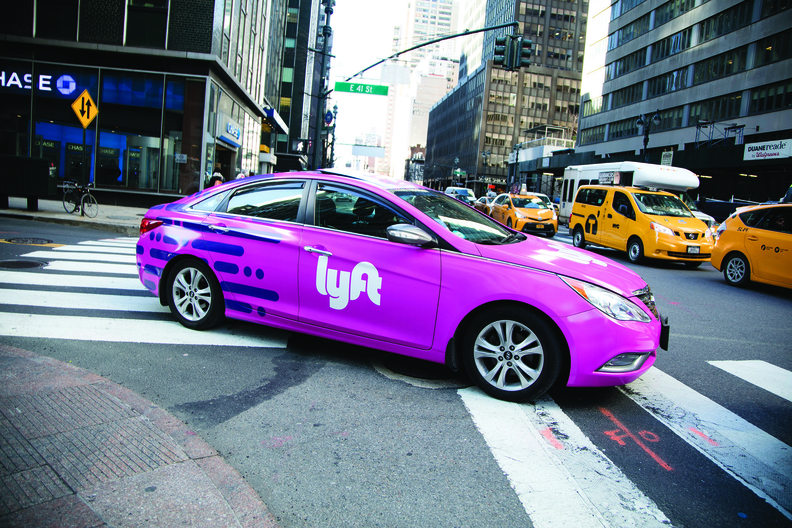
  • Lyft is vastly improving rider safety with in-app emergency assistance

    Lyft is vastly improving rider safety with in-app emergency assistance

    Ridesharing apps like Uber and Lyft can be incredibly convenient in this day and age, but unfortunately, using these services is not always 100 percent safe, as proven by multiple reports of sexual abuse in the past few years committed by improperly vetted drivers and even the shocking recent murder of a college student who got into the wrong car.

    Fortunately, both Uber and Lyft are ramping up their efforts to improve rider safety and peace of mind, at least when they’re not busy making it easy for people to tell drivers to keep their mouth shut. Lyft’s latest “investment in safety” includes several new features and programs designed to educate all members of this ridesharing “community”, as well as prevent vehicle mix-ups, and most importantly, help users in danger get quick emergency assistance.

    The latter goal will be achieved (hopefully) with an in-app option providing direct 911 access without actually having to type the numbers or exit Lyft. This emergency assistance, or panic, button should have long been a thing for riders, rolling out to the drivers app first last year. Uber has had the safety-enhancing feature for about a year too, so Lyft is a little late to the party with today’s announcement of a public launch in the “coming weeks.”

    Meanwhile, license plate visibility has already been increased in the Lyft app for “many riders”, with availability set to expand in the “coming months” to ensure that gruesome recent incident that indirectly brought Uber loads of negative publicity will not repeat itself on the rival platform.

    Aside from paying more attention to the license plate of your Lyft, you should really provide additional information and context for your bad driver ratings. To make sure that will be the case going forward, the company is implementing mandatory secondary feedback. In other words, you will no longer be allowed to rate your ride under 4 stars without also leaving a comment explaining your grade.

    Lastly, Lyft is planning to make sexual harassment prevention education available to all users sometime “this year” with an aim of ensuring a “welcoming, inclusive, comfortable, and safe” environment for everyone. That’s certainly a noble goal… unlikely to be achieved anytime soon.

  • SES Networks to provide connectivity luxury cruise ships

    SES Networks to provide connectivity luxury cruise ships

    SES Networks has won a deal to provide high-speed satellite broadband services for a fleet of luxury cruise ships in the Asian market.

    The Luxembourg-based satellite operator has signed a contract to provide its Signature Cruise Solution to Dream Cruises, a subsidiary of Hong Kong’s Genting Cruise Lines.

    Dream Cruises will use the connectivity solution for its cruise ship fleet, consisting of the World Dream, Genting Dream and newly-launched Explorer Dream.

    The solution has already been implemented onboard World Dream and Explorer Dream, and will be introduced on Genting Dream in September.

    It uses SES Networks’ O3b constellation of medium earth orbit (MEO) satellites, with backup from its geostationary fleet for added network resilience, as well as a suite of managed services.

    “Today’s cruise passengers demand excellent connectivity even when they are traveling on the high seas,” Dream Cruises president Thatcher Brown said.

    “As part of our efforts to provide our guests with the best possible services and amenities on board our ships, we partnered with SES Networks because of their high-speed capability to deliver a terrestrial broadband-like internet experience in some of the most challenging of conditions.”

  • Japanese, Taiwanese cellcos suspend Huawei device sales

    Japanese, Taiwanese cellcos suspend Huawei device sales

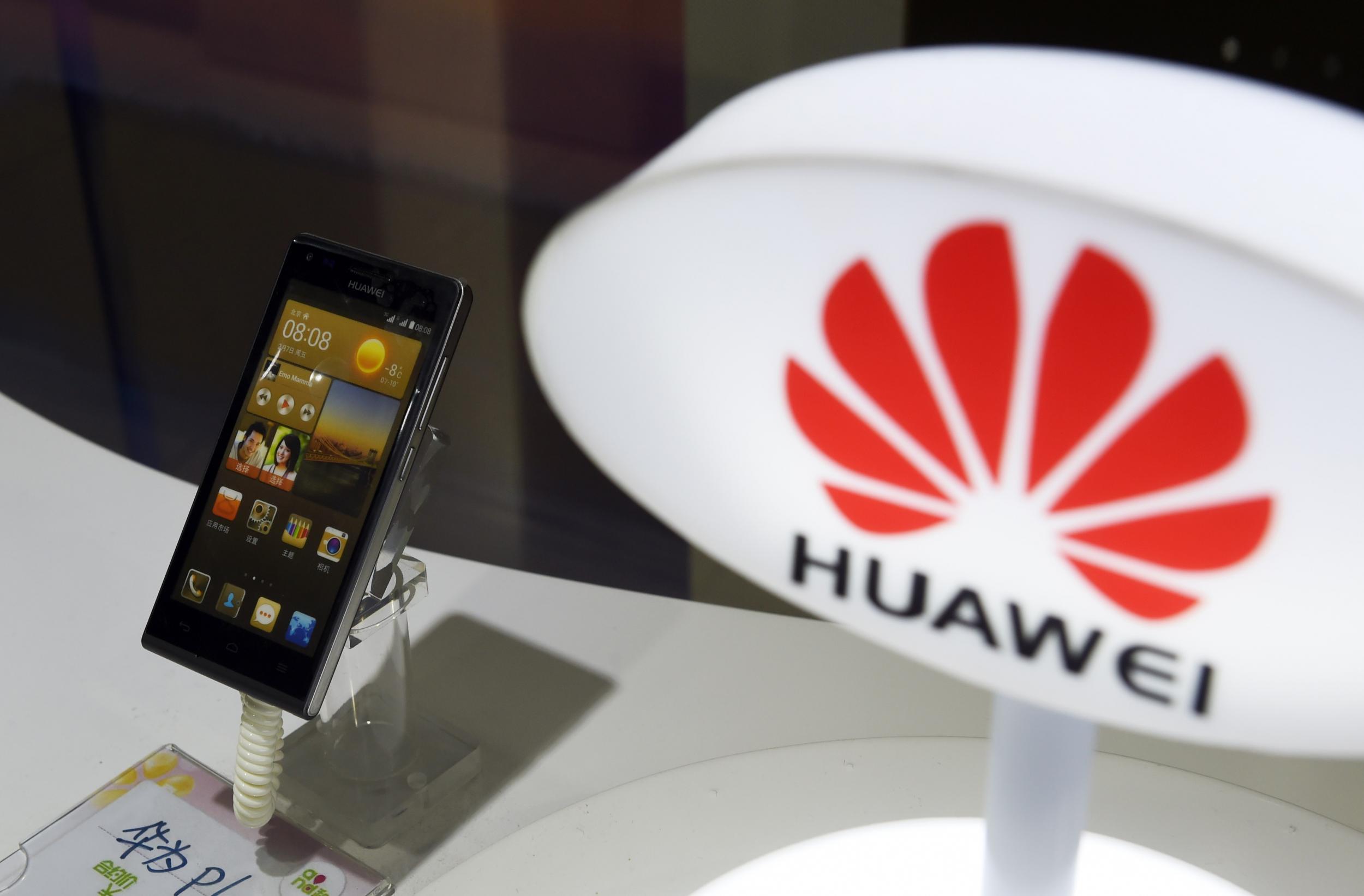
    The first crop of Asian operators have responded to the US trade ban on Huawei and its implication for Huawei’s access to the Android OS by freezing sales of new Huawei devices.

    Japan’s KDDI and SoftBank have both revealed plans to postpone the planned launch of Huawei’s new range of smartphones, which had initially been scheduled to launch this month.

    Meanwhile NTT Docomo has announced it will stop taking orders for the new devices, but has not yet announced plans to suspend the scheduled launch of a new high-end Huawei handset.

    But Huawei has insisted it will continue offering services and support for its existing products in Japan without disruption despite the decision.

    Meanwhile, in Taiwan, Chunghwa Telecom and Taiwan Mobile have both revealed they plan to stop selling Huawei devices after their current stocks sell out. The operators no longer intend to launch the latest crop of Huawei devices.

    The US Commerce Department last week officially added Huawei to the list of companies covered by president Donald Trump’s executive order declaring a state of emergency. The presidential declaration gave the government powers to regulate commerce by prohibiting US companies from trading with foreign companies deemed to present a national security threat.

    This decision has prompted a number of key Huawei suppliers to announce they will stop trading with the vendor – including Google, which said it will comply with the order and cut off Huawei’s access to Android.

    The Commerce Department has subsequently issued a 90-day reprieve allowing companies to continue trading with Huawei, but only to provide products and services required to maintain existing solutions.

    But Huawei will still be prohibited from using all but the open source version of Android in new devices and risks losing access to Google’s suite of services for even its existing devices after the 90-day window.

    Huawei has contingency plans in place such as its own operating system, which it has been developing for some time and promises at least some compatibility with Android apps, as well as its own app store.

    The Chinese vendor has repeatedly denied any suggestion that the Chinese government could use its equipment to spy on foreign nationals.

  • BukaGlobal boosts its regional expansion Growth

    BukaGlobal boosts its regional expansion Growth

    Indonesian e-commerce platform BukaGlobal has launched in Singapore, Malaysia, Brunei, Hong Kong and Taiwan.

    Developed by Bukalapak, the platform will connect 4 million Indonesian sellers to the global market. At the moment, products sold on the site include health and beauty items, pantry lines and handicrafts from only qualified sellers in Jakarta and Tangerang. More sellers are set to join progressively.

    Customers in five countries can order products starting from 500gm with delivery time usually six to 11 days, depending on the destination.

    “We want to break down barriers that hinder young and small entrepreneurs from competing on a global playing field, primarily on access, infrastructure, and connectivity,” said Fajrin Rasyid, Bukalapak’s co-founder and president.

    “With BukaGlobal, Indonesian products are readily accessible by consumers anywhere in the world through a fast and reliable platform.”

    Fajrin said Bukalapak chose Singapore and the other four markets as there are many Indonesians there and the people in these countries understand Indonesian culture.

    The firm is working with Singapore startup Janio for end-to-end cross-border logistics.

  • Natura and Avon announce Major merger

    Natura and Avon announce Major merger

    Brazilian parent of Aesop and the Body Shop to take over 130-year-old Avon business.

    Cosmetics firm Natura is acquiring Avon Products in an all-share transaction, creating one of the world’s largest “pure-play” beauty groups.

    The combination of Natura and Avon will create as a multi-brand and multi-channel beauty group with direct connections to consumers on a daily basis. Going forward, the group will hold a strengthened hand in relationship selling through Avon’s and Natura’s more than 6.3 million consultants and representatives; a global footprint through 3200 stores, as well as an expanded digital presence across all companies.

    The combined group is expected to have annual gross revenues of more than US$10 billion, more than 40,000 associates, and a presence in 100 countries.

    “We have always looked at Avon with respect and admiration,” said Natura cofounder Luiz Seabra. “Natura was founded on its passion for beauty and relationships, and today’s transaction creates a major force in the direct-to-consumer space. Direct selling was a social network before the word even existed, and the arrival of technology and globalization only multiplied opportunities to connect with consumers in a meaningful way.

    “The peer-to-peer sales model is evolving towards social selling and the power of digital allows the group to go beyond providing products and advice, and advances women’s empowerment, through financial independence and enhanced self-esteem. We believe that business can be a force for good and together with Avon, we will amplify our pioneering efforts to bring social, environmental and economic value to an ever-expanding network,” said Seabra.

    Avon and Natura both reach customers through a force of independent, primarily female micro-entrepreneurs, who act as brand ambassadors and beauty advisors.

    Natura expects the combination to result in target synergies estimated at $150 million to $250 million annually, some of which will be reinvested to further enhance capabilities in digital and social selling, research and development and brand initiatives and to continue to grow the group’s geographic footprint.

    “Following the acquisitions of Aesop in 2013 and The Body Shop in 2017, Natura is taking another exciting, decisive step to build a global, multi-brand, multi-channel, purpose-driven group,” said Natura executive chairman Roberto Marques. “Together we will enhance our growing digital capabilities, our social network of consultants and representatives and leverage our global store footprint and distinctive brands, connecting, touching and influencing millions of consumers with different profiles daily, making our group unique and creating a formidable platform for growth.”

    “This combination is the start of an exciting new chapter in Avon’s 130-year history,” said Avon CEO Jan Zijderveld. “It stands as a testament to the progress of our efforts to ‘Open Up Avon’, and we believe it will allow us to significantly accelerate our strategy and further expand into the online channel. Over the past year, we have started a transformation to strengthen Avon’s competitiveness by renewing our focus on Her, simplifying our operations, and modernizing and digitizing our brand. Together with Natura, we will have broader access to innovation and a portfolio of products, stronger e-commerce, and digital platform, and improved data and tools for representatives to drive growth and enhance value for shareholders.”

  • DBS launches digital payments Singapore pre-schools

    DBS launches digital payments Singapore pre-schools

    Singapore bank DBS has developed a mobile payment platform that aims to allow parents in Singapore to purchase uniforms, pay for field trips and sign up for extra-curricular classes for their pre-school children.

    DBS has partnered EduTech company, LittleLives, to enhance the latter’s app-based pre-school management system with real-time payment features. The app is used by one in three pre-schools in Singapore to update parents on their child’s development.

    In Singapore, the early childhood education sector is still dependent on cash despite school fees being paid via GIRO or Child Development Accounts (CDA). For example, when paying for excursions, school uniforms or learning resources, parents often make payments using cash or checks and the school then makes arrangements to pay third-party vendors.

    With payment functions built into the LittleLives app, pre-school operators can save up to 40 manhours per month on administrative tasks such as payments reconciliation, allowing them more time to engage with parents and their children. This addresses a recent DBS survey that revealed that one in four SMEs are looking to develop their digital business capabilities to improve productivity.

    The LittleLives app is used by over 750 pre-schools in Singapore. The app can now enable pre-schools to generate invoices and parents to make payments through PayNow and DBS PayLah. Receipts will be generated automatically after payments are made. With access to real-time payment reports such as daily settlement and auto-reconciliation, pre-schools can better manage their finances more accurately and securely.

    “Many young parents are time-strapped and juggling multiple responsibilities at work and at home. By enabling parents to conduct payments on the go, quickly and safely, they have more time to nurture and care for their children,” said Sun Ho (pictured, right), founder of LittleLives.

    “Partnering a powerhouse like DBS will help us create a super app that will transform how pre-schools are managed. LittleLives can then create an amazing childhood education experience for both children and parents,” she said.

    DBS and LittleLives have plans to roll out this payments gateway to other markets such as Brunei, Cambodia, China, Malaysia and Vietnam. This is made possible with DBS IDEAL RAPID, an API-enabled solution, that allows the bank and its partners to scale their services quickly and seamlessly.

  • Gameloft reveals new LEGO-themed team-battle RPG for Phones

    Gameloft reveals new LEGO-themed team-battle RPG for Phones

    LEGO fans rejoice, as Gameloft has just announced a brand new RPG for Android and iOS set in the LEGO universe. Originally teased back in December, LEGO Legacy: Heroes Unboxed will be released this fall, but it will be regularly shown to fans until then at various events.

    According to the French studio, this is the first ever LEGO game of this genre and it’s meant to bring to life 40 years of LEGO Minifigure history and universes in a fun and epic way. Apparently, LEGO Legacy: Heroes Unboxed is set in a completely new LEGO world, as players will have to collect classic and modern LEGO minifigures and sets with which to create new parties and engage in team battles and adventures.

    LEGO Legacy: Heroes Unboxed is built to bring the enjoyment and fun that you once had, or still have, with LEGO toys. We are excited to see these authentic and original LEGO characters from all eras come to life. We have been putting all our efforts, art and craft into this game as we want to delight all LEGO fans, whether their mini-figures are tucked away in the attic or proudly shown in the living room.

    Naturally, the game will include iconic, fan favorite universes, recreated with stunning detail to cater to players of all ages. The developers also promise to keep everything included in the game faithful to the LEGO franchise. In order to do that, the folks at Gameloft studied vintage instruction manuals to try to recreate every detail that makes the LEGO experience so memorable.

    LEGO Legacy: Heroes Unboxed will probably be available for free, but we expect it to be heavy on the in-app purchases. Gameloft’s new LEGO mobile game shapes up to be quite interesting, so let’s hope their monetization system won’t be too intrusive.

  • 2 in 3 cellcos plan to deploy 5G within 18 months

    2 in 3 cellcos plan to deploy 5G within 18 months

    Mobile service providers anticipate significant new revenue opportunities from the coming deployment of high-speed 5G networks and a host of new IoT-driven use cases

    According to a new survey fielded by the Business Performance Innovation (BPI) Network, in partnership with A10 networks, but they also believe much-improved security will be essential to realizing that potential.

    The new study report, “Securing the Future of a Smart World,” demonstrates that carriers are moving decisively toward 5G commercialization and that security is a top concern.

    • 67% will deploy their first commercial 5G networks within 18 months and another 20% within two years
    • 94% expect growth in network traffic, connected devices and mission-critical IoT use cases to significantly increase security and reliability concerns for 5G networks
    • 79% say 5G is a consideration in current security investments

    “Mobile carriers anticipate significant revenue opportunities and exciting new use cases as they move forward with their 5G deployments. However, the industry also recognizes that 5G will dramatically raise the stakes for ensuring the security and reliability of these networks,” said Gunter Reiss, vice president of A10 Networks.

    “New mission-critical applications like autonomous vehicles, smart cities, and remote patient monitoring will make network reliability vital to the safety and security of people and businesses. Meanwhile, dramatic increases in traffic rates and connected devices will significantly expand the attack surface and scale for cybercriminals.”

    Operators still have a significant amount of work ahead to fortify their networks for the coming of 5G. For example, while more than 80% of mobile operator respondents say they will need to upgrade Gi/SGi firewalls at the core of their networks, only 11% have completed the implementation of new Gi/SGi firewalls.

    Realizing the potential of full-scale 5G networks requires major investments by carriers—and payback on that spend is a crucial issue for the telecommunications industry. Operators see significant opportunities to increase revenues and innovate new business models.

    The top-three benefits derived from 5G

    • 67% – Overall growth in the mobile market
    • 59% – Better customer service and satisfaction
    • 43% – The creation of new 5G-enabled business models

    Top drivers for 5G

    • 61% – Smart cities
    • 48% – Industrial automation and smart manufacturing
    • 39% – High-speed connectivity
    • 35% – Connected vehicles
    • 37% – Fixed wireless

    Assessing 5G security needs

    Chief among security concerns are core network security and DDoS protection.

    • 63% – Advanced DDoS protection the most important security capability needed for 5G networks.
    • 98% of respondents said core network security was either very important (72%) or important (26%) in 5G build-outs.
    • 79% have or will upgrade their Gi/SGi firewalls
    • 73% have or will upgrade their GTP firewall

    “Operators overwhelmingly understand the importance of upgrading security in a more connected and smart world,” continued Reiss.

    “Now it’s time to take decisive action. Carriers need to move ahead aggressively with their plans to upgrade legacy DDoS protection and consolidate security services at the core and edge of their networks to address the growing concerns. A10 Networks 5G security solutions including Gi/SGi firewall, GTP firewall and AI-based DDoS protection enable operators to secure and scale their networks now and protect against the massive cyber threat coming with 5G.”

  • Verizon Media unveils Hong Kong expansion plans

    Verizon Media unveils Hong Kong expansion plans

    Verizon Media has announced an aggressive expansion program for Hong Kong for the next 180 days and the year ahead, including the expansion of its Yahoo Studio in the market.

    The studio will be equipped with audio-visual production equipment for creating HD videos with virtual settings and advanced motion capture capabilities to deliver broadcaster grade production.

    The studio produces Yahoo TV live programs including celebrity talk shows and Engadget Updates.

    “The new studio can unleash video creativity, enabling us to produce more live programs, HD videos with 3D virtual settings, and e-commerce shows,” said Lorraine Cheung, head of audience at Verizon Media. Live programs include finance, tech, lifestyle, and entertainment programs.

    Cheung said the company will unveil its first virtual character this July. The virtual character will not only be a Yahoo KOL but also a co-host of Yahoo’s homegrown TV programs. “The character aims to enhance overall user experience via more fun interaction, turning media into a two-way conversation.”

    In addition, Verizon Media is bringing its new Yahoo Rewards membership program to Hong Kong. The program will allow users to earn points with their daily online engagement such as polling, following groups, e-shopping, and content consumption on Yahoo App.

    The company plans to roll out a Good Deeds Good Life campaign to the app, which will allow users to earn points by engaging in social causes that benefit the community.

    Verizon Media recently unveiled a first-of-its-kind virtual reality advertising offering for demand-side platform users, which aims to help advertisers seamlessly extend existing display and video assets into VR environments.

    “We see huge potential in AR and VR technology on improving engagement of ad and branded content. Our focus is to introduce the technology and facilitate the market adoption.” Verizon Media Hong Kong senior director for APAC ad creative technology Roger Li said.

    Verizon Media, a division of Verizon, was renamed from Oath in 2019. “The purpose of Verizon Media is to transform how people stay informed and entertained, communicate, and transact,” said Rico Chan, managing director of Verizon Media Hong Kong, Japan and INSEA. “The company’s priorities include growing our member-centric ecosystem, building brands B2B customers love and trust, as well as videofy our brands and platforms.”

  • Arm cuts ties with Huawei

    Arm cuts ties with Huawei

    In the latest development in the ever-churning Huawei news cycle, chipmaker Arm is suspending business with the Chinese vendor to comply with the US restrictions.

    The BBC reported Wednesday that Arm sent out a company memo that said its employees must discontinue “all active contracts, and any pending engagements” with Huawei and its subsidiaries. The memo also said that Arm’s designs contained “U.S. origin technology,” which it believes is affected by the Trump administration’s ban.

    Losing Arm’s technology would be a big blow to Huawei in the smartphone sector. Huawei, currently the second-largest smartphone vendor behind Samsung, uses Arm’s mobile device processors as the key element of its smartphones.

    “Arm is complying with the latest restrictions set forth by the US government and is having ongoing conversations with the appropriate US government agencies to ensure we remain compliant,” according to Arm’s statement.

    “Arm values its relationship with our longtime partner HiSilicon (Huawei’s chip arm), and we are hopeful for a swift resolution on this matter.”

    Last week, the Trump administration blocked Huawei from buying goods made from 25% or more of U.S.-originated technologies or materials, and previously accused the world’s largest telecommunications vendor of being a spy for the Chinese government via backdoors in its telecom gear.

    On Tuesday, the US Department of Commerce’s Bureau of Industry and Security (BIS) announced it would allow some companies to continue to do business with Huawei under specific conditions. The BIS said it would issue a temporary general license (TGL) to Huawei and its 68 affiliates to authorize some U.S. telecom companies to continue to engage in export transactions with Huawei for the next 90 days, which took some of the immediate heat off of Huawei.

    Google had announced that it would no longer allow access to software updates for its Android operating system and apps that are used in Huawei’s smartphones and tablets, but reversed course after the BIS decision was announced.

    In other Huawei news, Panasonic said on Wednesday that it would stop shipments to Huawei of some of its components, but that won’t have as big an impact as losing Arm.

    Huawei said its own operating system for smartphones and tablets would be operational this fall, but would only use it if the company no longer has access to Google’s Android and Microsoft Windows’ operating systems.

  • Valve launches Steam Chat app for Smartphones

    Valve launches Steam Chat app for Smartphones

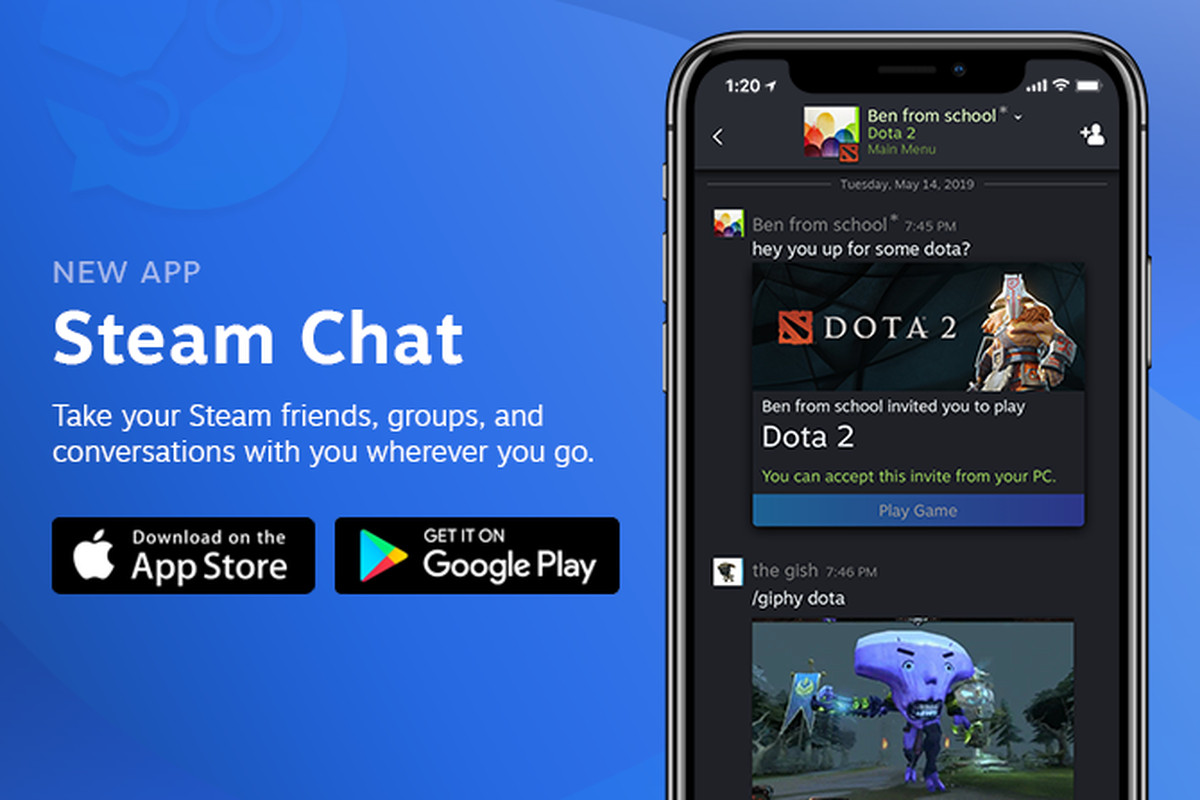
    After bringing Steam Link app to gamers and the option play all games from their Steam library on mobile phones, Valve releases another app that’s meant to modernized Steam chat experience. The new Steam Chat mobile app is now available for free on both Android and iOS platforms via Google Play Store and App Store.

    Among the many features it offers, it’s worth mentioning the customizable notifications, which will prevent users from missing a message or game invite. These notifications can be customized per friend, group chat, and chat channel.

    Obviously, you’ll be able to see who’s in game or online before you start chatting with your Steam friends. Furthermore, Valve promises a rich experience thanks to higher fidelity links, videos, tweets, GIFs, Giphy, Steam emoticons, and more.

    The Steam Chat mobile app will also allow users to add new friends on Steam with a link. You’ll just need to generate an invite link to send via text or email. Last but not least, the app features support for group chats.

  • U Mobile contracts Nokia for Single RAN deployment

    U Mobile contracts Nokia for Single RAN deployment

    Malaysia’s U Mobile has contracted Nokia to help the operator expand the delivery of mobile data services across the nation.

    Under the three year agreement, U Mobile will deploy a Nokia Single RAN network at greenfield locations across Malaysia, as well as microwave and IP-based mobile transport technologies.

    The deployment will enable U Mobile to end its reliance on RAN sharing agreements by extending its own footprint across Malaysia.

    Both companies also plan to collaborate on a live 5G network trial later this year aimed at demonstrating enhanced mobile broadband capabilities, as well as 5G use cases such as VR streaming and e-sports.

    “U Mobile has been aggressively expanding our network across Malaysia in our drive to bring our customers a superior experience. We are delighted to be able to leverage on Nokia’s expertise in our network expansion journey,” U Mobile CTO Woon Ooi Yuen said.

    “We are of course also looking forward to working with Nokia as part of our Road To 5G Strategy. We have in our plan to conduct several 5G live trials with Nokia later this year for various use cases. Currently, we already have in place Nokia’s AirScale base stations which are 5G-ready and hence, ready for trials.”

  • Mislatel cleared to receive congressional franchise

    Mislatel cleared to receive congressional franchise

    China Telecom backed joint venture Mislatel Corporation has been cleared to secure a congressional franchise to become the Philippines’ third mobile player.

    Mislatel, the joint venture established with businesses owned by Philippines tycoon Dennis Uy, has received congressional approval to acquire the franchise owned by Mindanao Islamic Telephone Co.

    The National Telecommunications Commission will now make preparations to issue a certificate of public convenience and necessity and an allocation of spectrum for the operator. The allocation is expected to be complete by mid-June.

    But Mislatel will first be required to pay a 25.7 billion peso bond, which it will need to forfeit if it does not meet its rollout and other commitments to the government.

    These commitments include achieving 84% population coverage within five years, and reaching a minimum average internet speed of 27Mbps within the first year of operations, increasing to 55Mbps after this time.

    Mislatel won the selection process to become the market’s third major player in November last year. But the company was recently forced to postpone its planned launch date in early 2021 due to delays receiving the congressional franchise.

  • Spar International to expand into China

    Spar International to expand into China

    Grocery retail franchise Spar International will open more than 150,000sqm of retail sales space in China this year.

    The firm’s store-development plans include compact hypermarkets and a “new generation” of supermarkets in Northern and Southern China.

    Spar International, which operates more than 13,000 stores in 48 countries worldwide, is coming off a strong financial year with global sales of €35.8 billion (US$40 billion). The group launched 335 new locations last year, and entered four new countries.

    “Our strong network of Spar partners and supply chains across four continents gives the brand a competitive advantage in an increasingly global marketplace,” said Spar CEO Tobias Wasmuht, “while our multi-format strategy allows us to respond to changing customer needs.

    “Our continuous compound annual growth of 5.2 per cent over the last three years creates a strong platform to build from for the future and indicates that our ‘Better Together’ strategy, launched in 2016, continues to deliver for the organisation, our partners and our customers.”

    The Spar brand is present in seven Asia Pacific territories, with €1.96 billion ($2.2 billion) in sales achieved from 573 stores last year. Spar China’s footprint accounted for 830,043sqm and sales of €1.5 billion ($1.67 billion) during the financial year, with particularly strong growth in the Shandong and Guangdong provinces. The firm’s Thailand operations expanded to 45 stores and recorded a sales growth of 96.2 per cent.

  • Android Q will support wide-color gamuts

    Android Q will support wide-color gamuts

    Google announced that Android will be gaining system-wide support for wide color gamut images starting with Android 10 Q. The next version of Android will allow you to capture, view, and easily share pictures with wide color gamuts. This will introduce more richness in terms of color reproduction compared to the standard sRGB color space.

    All things considered, Android’s adoption of wide color gamuts comes across as a rather logical move that reflects on the advancements we’ve witnessed in imaging technology, in terms of both camera and display improvements. As more and more devices these days come along with screens excellently-calibrated to the sRGB standard, but also support wider gamuts, supporting these more realistic color spaces right off the bat in stock Android signals an important milestone for Android as an operating system and its gradual shift towards quality-of-life enhancements.

    At Android, we have been working to make wide color photography happen end-to-end, e.g. more bits and bigger gamuts. This means, eventually users will be able to capture the richness of the scenes, share wide color pictures with friends and view wide color pictures on their phones.

    What color spaces are we talking about? Android Q will most certainly support Display P3 and Adobe RGB, with the door being left ajar for other wide-color gamuts as well.  Of course, developers will have to update their apps and make sure they support wide-color gamut content once Android Q launches this summer, and in order to ease up this change, the company has rounded up a few do’s and don’ts of adapting to wide color gamuts. Probably the most important requirement is that apps should never assume an sRGB color profile of any external image it gets and should check the ICC color profile embedded in the image file.

    Of course, not every app would end up adopting wide-color gamuts, and Google advises that developers at least be color-correct, meaning that they should take the necessary steps to decode wide-color images to sRGB.

    You can test if your device is Display P3 compatible by opening out this image – if you see a faint Android logo, your display supports the Display P3 color space; otherwise, if you see a solid red square, then either your device or your browser is not compatible. Some devices that should display the image correctly are Apple’s latest iPhones, which will do that straight in the browser, while others like Samsung’s Galaxy S10 series will only do that if you download the image and view it in the stock gallery. You can also check out this website for more comparison images.