Author: Mei Ling Tan

  • Another Bangkok riverside mall in Development

    Another Bangkok riverside mall in Development

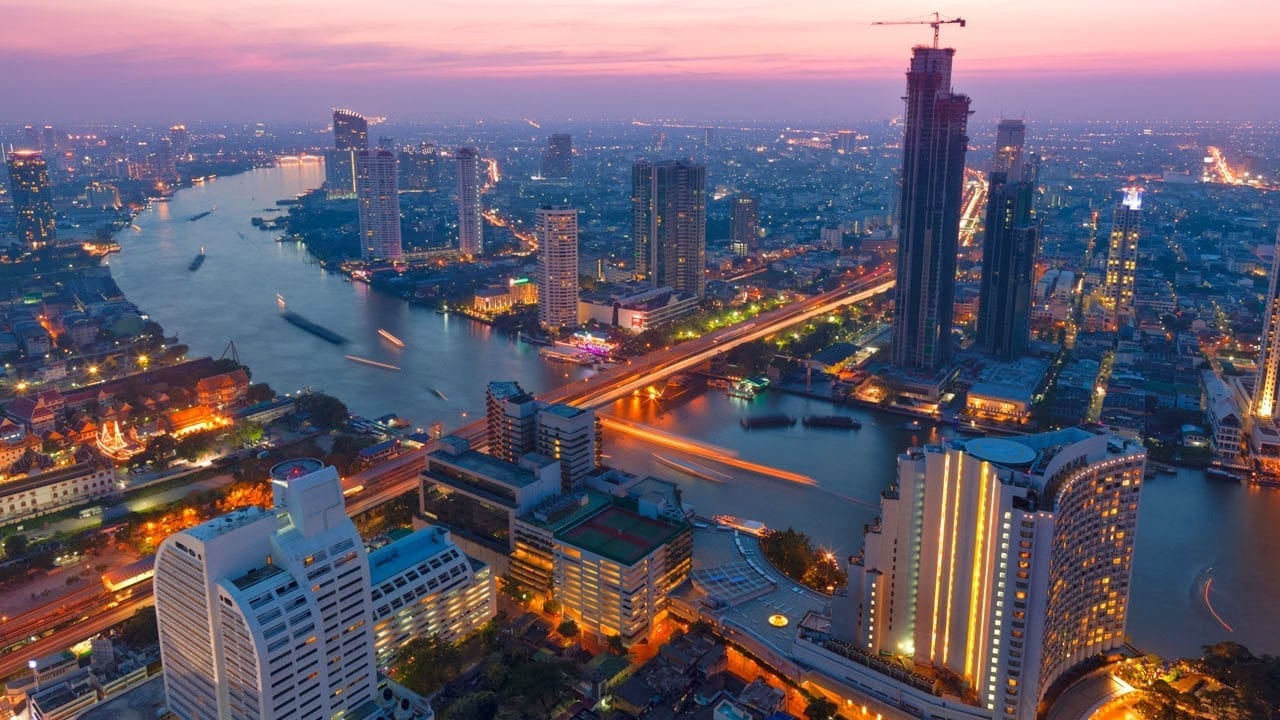
    Another Bangkok riverside mall is in the early stages of planning after the Port Authority of Thailand (PAT) said it will develop Klong Toey land it no longer needs.

    The land is located at the Klong Toey port, not far from Bangkok’s CBD where the authority currently has about 900 rai 1.44 million sqm. PAT says it plans to use only about half that area in the future and will hand the balance over to a developer to create a landmark on the Chao Phraya River.

    The 400 rai which has become available will house retail space, a business centre and other commercial space, according to PAT director-general Kamolsak Promprayoon.

    “It will be something like IconSiam,” he said. “The format will basically be a large business city with the goal of becoming a new landmark and tourism centre in the capital that offers convenient links to river-based tourism.”

    A private company has been appointed to conduct a feasibility study on the plan.

    Meanwhile, the Thai government is preparing to progressively evict about 12,500 families who are illegally occupying a nearby area, commonly referred to as the Klong Toey Slum. According to the Bangkok Post, the government has allocated four 25-storey apartment buildings to house the people in 6144 apartments, measuring just 33sqm each.

  • Dairy Farm adds Starbucks Thailand

    Dairy Farm adds Starbucks Thailand

    Hong Kong operator to partner with local investor, almost doubling its store network overnight.

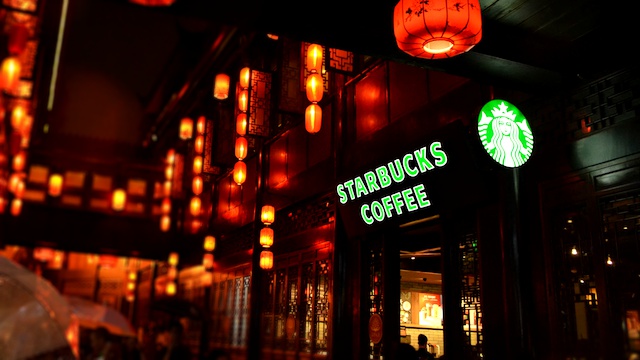
    Dairy Farm subsidiary Maxim’s is about to add Thailand to the list of markets it operates Starbucks cafes.

    Maxim’s has partnered with a local subsidiary of Singapore-headquartered Fraser & Neave (F&N) to acquire Starbucks Thailand Ltd from the US parent company. F&N, listed in Singapore, is controlled by Thai Beverages, in turn controlled by Thai billionaire Charoen Sirivadhanabhakdi.

    Under the joint venture, Maxim’s Caterers will oversee the retail operations and new store development in Thailand, with F&N apparently taking more of an investment role and fulfilling local company ownership requirements under Thai laws.

    Financial details of the sale were not disclosed, but one US media channel, citing confidential sources, reported the deal was worth about US$500 million.

    “The acquisition allows F&N to leverage Maxim’s long-standing partnership with Starbucks and its extensive experience in running Starbucks stores in multiple markets as well as other food and beverage retail outlets, to grow Starbucks Thailand’s fast-expanding footprint of 372 Starbucks stores,” said F&N in a statement.

    Maxims, through its subsidiary Coffee Concepts, already operates more than 400 Starbucks stores in Hong Kong, Singapore, Vietnam, Macau and Cambodia.

    “This is a significant move for our company,” said John Culver, group president, Starbucks international, channel development and global coffee and tea.

    “We are pleased to transition the Thailand business to Maxim’s Caterers Limited and F&N Retail Connection Co, with their focus on accelerating new store development to realise the full potential of this important market.”

    “We look forward to leveraging our expertise and deep understanding of the Starbucks culture and brand to build on the unparalleled service, craft and passion of our Thai partners (employees) which will propel the business for the future,” said Michael Wu, chairman and MDof Maxim’s Caterers Limited. “We look forward to continuing to deliver the unique Starbucks Experience to Thai customers as we grow.”

    “This acquisition provides an interesting strategic opportunity for F&N to enter and participate in the fast-growing premium retail coffee market in Thailand, one of F&N’s three significant core markets,” said Koh Poh Tiong, F&N’s chairman. “We believe that adding Starbucks Thailand, with its store footprint and its position as a well-recognised coffee retailer in Thailand, will strengthen our competencies in the on-premise sector and elevate our capabilities in directly engaging consumers, in the long term,” he said.

    Starbucks Thailand was launched in 1998.

  • Starbucks China opens First Signing Coffee Store in Guangdong

    Starbucks China opens First Signing Coffee Store in Guangdong

    Starbucks China has opened its first Signing Store, staffed entirely by deaf or hearing-impaired people.

    The store is in Guangzhou, in Guangdong Province which is home to about 4 percent of China’s deaf population. It is Starbucks’ third Signing Store, following outlets in Washington DC and Malaysia.

    Sign language symbols are printed on umbrellas in front of the store, and there are indicators throughout the store. Deaf baristas will wear aprons with the word “Starbucks” embroidered in sign language.

    The store is equipped with a customized ordering system. Customers and partners will be able to communicate using notepads and two-way digital displays. For customers new to sign language, there will be a dedicated area for customers to write down their orders on an electronic board and wireless vibrating pagers will notify customers when their orders are ready.

    The cafe also features exclusive artwork and unique merchandise designed by deaf artists.

    The initiative aims to offer employment and career-advancement opportunities for the deaf and hard-of-hearing community as well as “a welcoming hub for those passionate about improving accessibility and experiences for all”. It is located near the Guangdong Disabled Association and Guangdong Deaf People Association.

    “Starbucks is committed to creating equal opportunities for everyone, as well as a unique third-place experience that addresses a wide range of community needs,” said Belinda Wong, CEO of Starbucks China. “The new Signing Store is an example of how we are building inclusive environments and careers for our partners.”

    Store staff, who have been recruited from across China, are fluent in Chinese sign language.

    To create an inclusive environment and encourage customers to learn more about the deaf community, the store will also offer sign-language lessons and coffee workshops in sign language.

    “The Guangdong Deaf People Association is proud to partner with Starbucks to provide training and opportunities for the deaf and hard of hearing community,” said Yitao Fan, vice chairman, China’s Deaf People Association and president of Guangdong Deaf People Association. “Thanks to Starbucks, deaf partners are empowered to develop their careers in a vibrant and supportive environment, while the store provides a strong platform to drive societal awareness around deaf culture and the needs of the community.”

  • Basao delivers ‘sineculture’ at Star Street

    Basao delivers ‘sineculture’ at Star Street

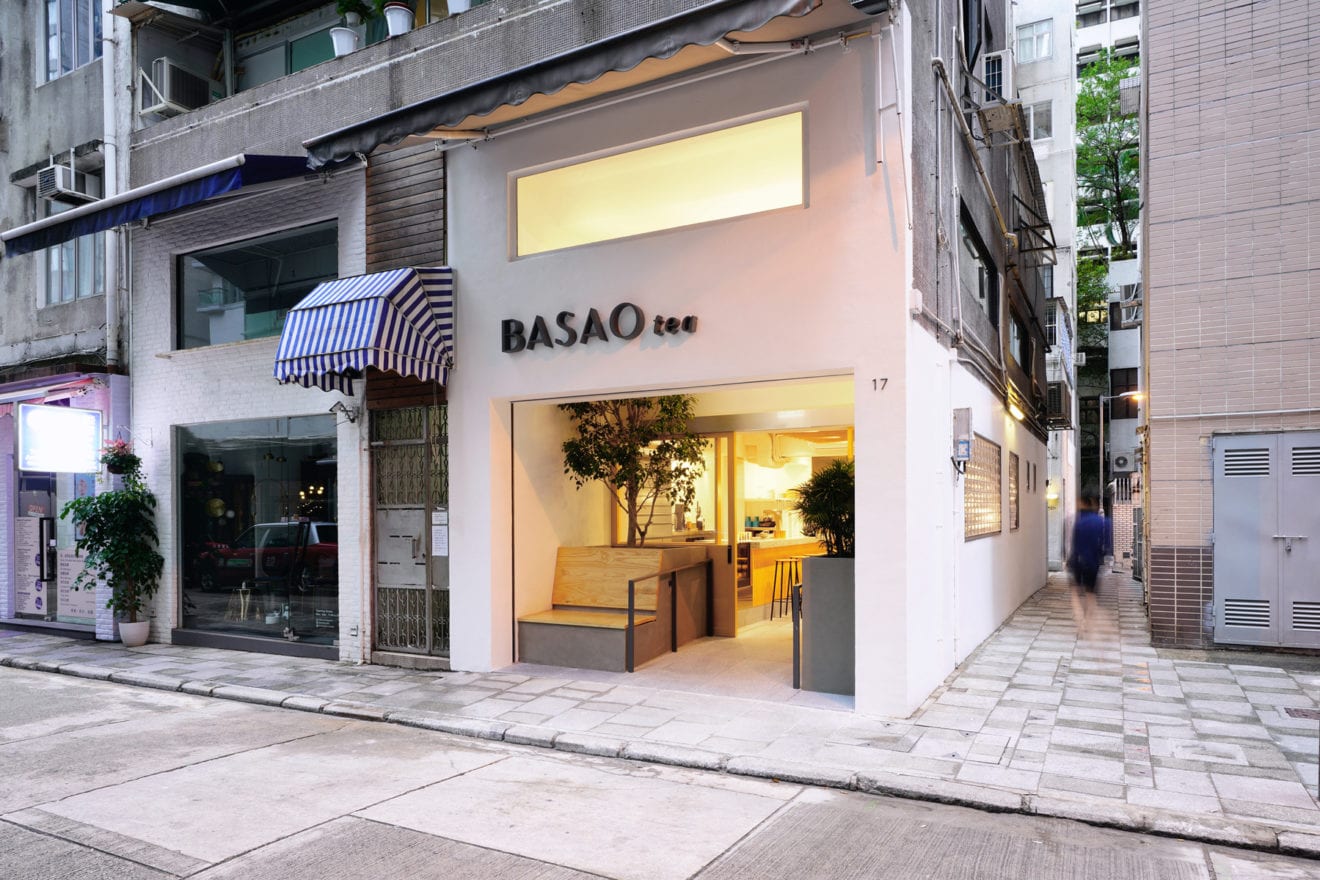
    Homegrown Hong Kong fine-tea brand Basao was launched online four years ago. Now the fast-growing brand has opened its first physical retail outlet on Moon Street, in Wanchai’s hip Star Street foodie precinct.

    Since 2015, Basao has been attracting a growing following for its teas, which appeal for not only their fine taste, but their holistic health benefits. The teas are handpicked by partner growers in Mainland China, Taiwan, Nepal, India and Japan.

    “We believe tea appreciation will evolve in the same way as drinks like coffee, wine and craft beer,” explains founder COO Oliver Ma. “They have all started reaching a new generation of discerning enthusiasts in recent years and I think tea is ready for a very similar experience. Interesting times are brewing for long overdue respect and admiration of this ancient craft.”

    Basao tea is named in honour of an 18th century Japanese Buddhist monk with the slightly different nickname of Baisao, or “old tea seller”, who became famous for travelling around Kyoto selling tea.

    Ma says Basao is now similarly admired for pioneering a “modern holistic era of sineculture,” (the science of everything relating to tea), working closely with small artisan growers across Asia, promoting sustainable, eco-friendly cultivation and production of highest-quality tea without chemical pesticides.

    “Our tea engineers advocate the holistic ecology and craft of tea as an art, not just a mere commodity, connecting personally with our partner growers from cultivation and picking to brewing, packaging and fair trade,” he says.

    A diverse tea range extends from Basao’s collection of black tea, green tea and oolong brewed by experienced tea masters, through to chilled bottled tea, Japanese matcha, traditional blends and Chajito specialties.

    Hitherto sold only online, now these brews can be tried and purchased at the new Basao tearbar. Visitors to the store are greeted by a bright white and warm-wood interior in a laid-back venue with a bar where tea masters explain their brews.

    Workshops are held at the cafe, conducted by renowned Hong Kong tea master Katherine Yu Man-sum, a protege of tea pioneer Master Yeung Chi-sum in the 1980s, and founder a tea appreciation course called Teaism, teaching Cha Tao (The Way of Tea), at the Jockey Club Creative Arts Centre.

    Basao’s single-origin, clean-grown signature authentic loose leaves are highlighted by black teas including Lingia Second Flush, a coppery summer tea from Darjeeling’s Golden Valley in the Himalayan foothills of India, with a spicy mineral flavour and hints of tangerine and waffle cone; sweet and refreshing Seaside Honey from the Kararuan Coast of southeastern Taiwan; and Traditional Smoky Bohea from the home of China’s Wuyi Mountain smoked black teas located in the highlands of northern Fujian in China.

    Among the oolongs are sweet, crisp and floral Gardenia Dancong from Phoenix Mountain, Guangdong; and slightly sweet Red Heart Tieguanyin from Anxi, Fujian China Spring, with a hint of daisy, lily and dry-wood aroma; and honey and jasmine flavour.

    Headlining the Japanese green tea offer is sweet and savoury Wazuka Sencha green tea with a unique fresh spinach flavour and light, delicate finish from the legendary plantations of Wazuka, near Kyoto.

    Cold brew teas also include Nitro Cold Brew, Cold Brew and Fruit-Infused Nitro Cold Brew, steeped in cold water, rather than brewed, for a sweeter, milder, low-caffeine, low-tannin option high in vitamin C.

    Also launched is First Crush Kombucha, an ancient, refreshing cure-all elixir that is naturally bubbly and deliciously sweet and tart, crafted from Lingia First Flush in a new partnership with local Kombucha brewery Taboocha.

    Basao’s teabar also serves desserts incorporating its signature teas, with a menu including Homemade Tea Cake Roll, Basao Tea Ice Cream, Tea Crystal, and Belgium Waffle, with Basao homemade tea syrup.

    The Basao teabar is located on the ground floor of 17 Moon Street, open daily from 11am to 8pm.
  • Waze is getting a new celebrity voice for driving directions

    Waze is getting a new celebrity voice for driving directions

    If you’re a long time Waze user, then you’re probably familiar with the app’s habit to bring in celebrities to give you driving directions. Of course, if you haven’t tried out the popular navigation app yet, this is a great chance to give it a go since the hip hop musician DJ Khaled is going to give you all the warnings about hazards and advises while you’re driving.

    Starting May 22 and until June 30, Waze users will be able to set DJ Khaled as the new navigation voice for the app. Aside from lending his voice to Waze, DJ Khaled will also provide drivers with precious advises like “Stay focused,” “Don’t play yourself,” and “The top’s off the Mayback!”

    We are beyond excited to launch the DJ Khaled voice in partnership with our friends at Deezer. DJ Khaled has one of the most recognizable voices in the industry and is beloved by many of our 115+ million users around the world, so we can’t think of anyone better to safely and entertainingly guide Waze drivers on their journeys.

    Obviously, you’ll be getting DJ Khaled’s voice on both Android and iOS versions of the app, so regardless of what smartphone you’re using, make sure to head to Settings / Voice Directions, and select DJ Khaled to be blown away.

  • Apple agrees to notify users when iOS updates impacts performance

    Apple agrees to notify users when iOS updates impacts performance

    Following the last year debate about whether or not Apple should have informed consumers that some of its updates will slow down their iPhones, the UK Competition and Markets Authority kicked off an investigation to learn more about the matter.

    The investigation only started after Apple admitted that the iOS update it pushed in late 2017 throttled down the performance of older iPhones. Fast forward more than one year and it looks like the UK government and Apple have found common ground. Apple has officially agreed to notify consumers when an iOS update will affect the performance of their iPhones.

    To ensure compliance with consumer law Apple has formally agreed to improve the information it provides to people about the battery health of their phones and the impact performance management software may have on their phones.

    The official statement on UK government’s website also mentions that Apple has agreed to provide easily accessible information about battery health and unexpected shutdowns, which the company has already done, along with guidance on how iPhone users can optimize the health of their phone’s battery.

    Everything that Apple agreed to applies both for current and future iPhones. In case any of the commitments made by Apple will be breached at any time in the future, the company could be sanctioned by the CMA (Competition and Markets Authority).

  • Google Drive users on a discontinued plan

    Google Drive users on a discontinued plan

    It’s getting harder and harder to complain about running out of storage space on today’s high-end and even mid-range smartphones, especially if you also add in an ultra-affordable or insanely hefty microSD card. At the same time, it’s generally a good idea to back up some of your most precious stuff in the cloud, where storage has gotten cheaper and cheaper in recent years as well.

    For instance, the 2018-released Google One subscription service provides two whole terabytes of digital hoarding room at a monthly fee of only $9.99 or an even more reasonable price of $99.99 per year. A couple of lower-cost options can hook you up with a 100 or 200 gig cache for $1.99 and $2.99 a month respectively (or $19.99 and $29.99 a year), while every free Google account gets a 15GB storage allotment to use across Google Drive, Gmail, and Google Photos platforms.

    This is all extremely well and good, but you know what can be better? Even more free cloud storage, which is exactly what subscribers on a discontinued Google Drive plan are reportedly receiving. Basically, instead of forcing users to upgrade from a $5 a year subscription that’s no longer a thing to one of the aforementioned $20, $30, or $100 plans, Google is letting people keep their digital depositories without ever needing to pay a dime.

    We’re obviously not talking about a great deal of storage space, but 20 gigs for free is certainly nothing to sneeze at, especially when you combine that number with the entry-level 15GB allotment. That’s right, these lucky Google Drive users will get a grand total of 35 GB of space in the cloud at no monthly charge whatsoever going forward. Unfortunately, if you weren’t subscribed to the grandfathered $5/year plan, there’s nothing you can do to take advantage of a similar special offer.

  • Samsung Galaxy S10 update adds Night mode improvements

    Samsung Galaxy S10 update adds Night mode improvements

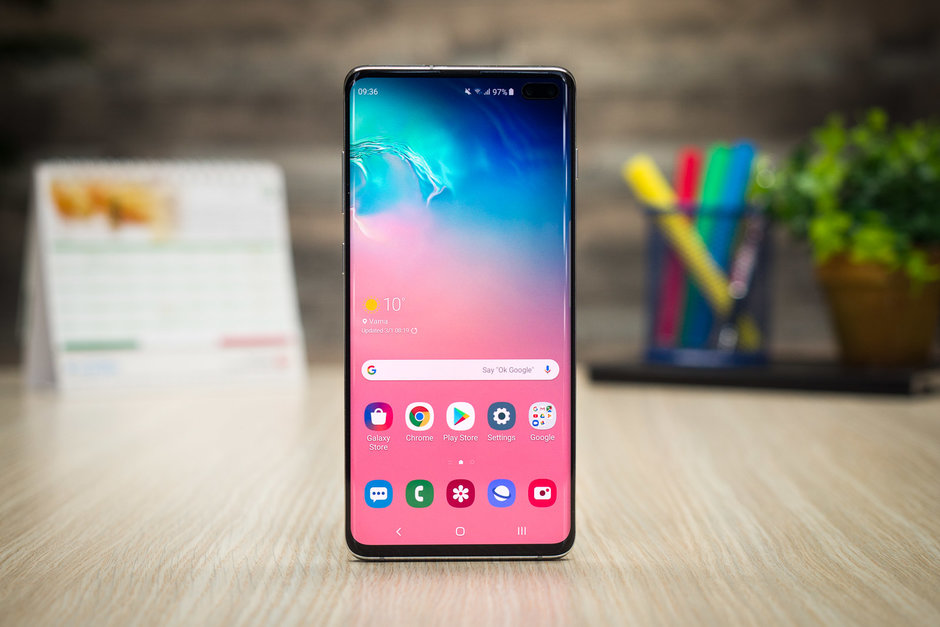
    Samsung continues to improve the Galaxy S10 family with important new features and additional functionality. The upcoming update focuses on camera enhancements by adding a couple of nifty new features, as well as improvements to the phones’ performance when taking night shots.

    As the title says, it appears that the Galaxy S10’s decent Night mode has just been upgraded to very good. According to SamMobile, the May security update improves the Night mode by allowing users to take much cleaner pictures in low-light conditions.

    The differences are quite important as the update reduces noise that sometimes appears in night pictures. Moreover, Galaxy S10 users will now be able to use the Night mode with the ultra-wide camera, and even though noise still pops up in pictures taken with it, they are brighter and more detailed.

    Another important improvement is the fact that you can take Live Focus photos with the telephoto lens, something that was only possible with the Galaxy S10 5G. The new addition will allow users to take bokeh pictures of large objects much easier.

    Now, the update is currently being deployed in Switzerland as May 2019 security patch, but all three Galaxy S10 units should receive it worldwide in the coming days. We don’t have a release date for the United States, so you’ll just have to hope it will be rolled out sooner rather than later.

  • Google faces a huge fine for violating privacy rules

    Google faces a huge fine for violating privacy rules

    Last year, the European Union adopted the General Data Protection Regulation (GDPR) designed to boost privacy rights in the union. Under this regulation, companies in the EU cannot use a consumer’s personal data without informed, explicit consent. A company found to have violated the GDPR can be socked with a fine as large as 4% of the company’s prior year global revenue.

    With Google’s European headquarters based in Ireland, the company is now being investigated for GDPR violations by the Irish Data Protection Commissioner (DPC). The genesis of the complaint is interesting. The developers of an app called Brave Browser were among those claiming that Google is not playing by GDPR rules when it collects personal data for advertisers. When someone using the Browser visits a website, the app’s developers state that personal information belonging to the user is sent out to hundreds of companies without the user’s knowledge. These companies use this data in order to place bids to place targeted ads.

    “We will engage fully with the DPC’s investigation and welcome the opportunity for further clarification of Europe’s data protection rules for real-time bidding. Authorized buyers using our systems are subject to stringent policies and standards.”-Google

    If Google is found to have violated the GDPR, it could be fined as much as $5.52 billion based on the company’s 2018 global revenue of $138 billion. And Google is not the only tech firm under investigation by the DPC. As it turns out, Ireland is where many tech giants hang their hats in Europe and 17 tech firms are under investigation there for possible GDPR violations. Among them are Apple, Twitter, LinkedIn, Facebook and some of its units including WhatsApp.

  • WhatsAp will start having ads starting next year

    WhatsAp will start having ads starting next year

    Facebook is a for-profit organization and some form of ads inside WhatsApp has been inevitable since the day it bought the messaging platform. Now, after previously confirming plans for monetization, the social media giant has announced that WhatsApp ads will begin rolling out in 2020.

    Corroborating previous information, it was confirmed during the annual Facebook Marketing Summit that the first ads will be implemented into the Instagram Stories-like Status feature. Like regular posts, the ads will occupy the entire screen, but rather than displaying the contact’s name WhatsApp will showcase the name of the company. Also, a swipe uplink will be included.

    It’s unclear at this point if Facebook has any further plans for advertisements within WhatsApp, but eventually, the company could introduce smaller alternatives that display between chats on the conversations list.

    In order to boost the usefulness of WhatsApp Business, it was also announced that new ads which link directly to these accounts will soon be making their way over to both Facebook and Instagram. While on this topic, it’s also worth pointing out that WhatsApp Business users will soon be able to benefit from “richer message formats” which involve pairing images or PDF files with a short piece of text. Eventually, when messaging about products, users will also be able to view the product within WhatsApp and then access the entire catalog.

  • Hyundai Kona Electric India Launch Details Out

    Hyundai Kona Electric India Launch Details Out

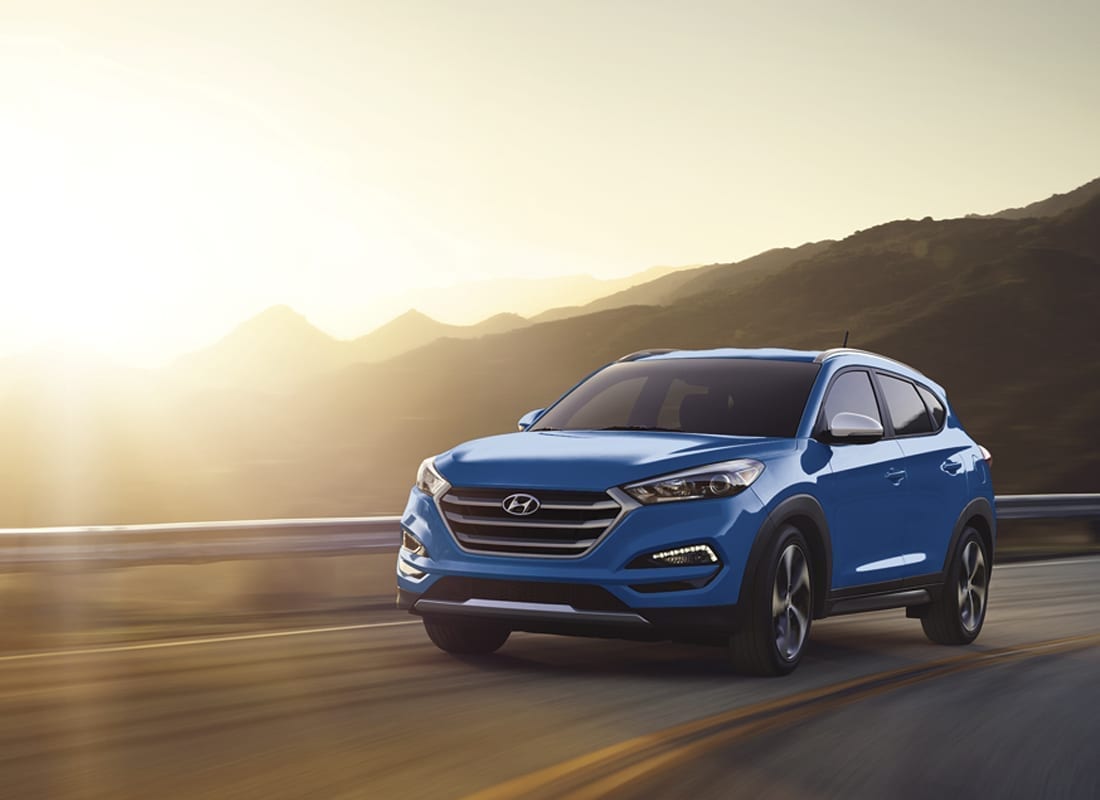
    After bringing in its contender for the subcompact SUV segment – the Venue, Hyundai India is all set to bring in another SUV into the country and this time around it will a product that will launch the company’s electric product offensive. Yes, the Kona Electric all set to be launched in India on July 9, 2019 and the Korean carmaker will have its widest SUV product line-up in India with the addition of two new models this year. Hyundai’s SUV line-up in India will include Venue, Creta, Kona ev, and the Tucson which is scheduled to get a facelift in the second half of this year. Hyundai has already confirmed that it will be manufacturing its upcoming Kona electric locally in India at its Chennai plant. The latest development is the upshot of the company’s plans to invest in India a part of which will go towards the development of an assembly line for the Kona Electric.

    The main purpose of producing the Kona Electric locally is to keep the pricing aggressive in a bid to make it a viable offering for the prospective customers. Hyundai had earlier shared that it wants to keep the Kona comparatively affordable for car buyers. Hyundai will channel the rest of the investment in the manufacturing of other car models and development of new technologies and machinery. Moreover, the investment will add 1500 more jobs in India.

    The Hyundai Kona electric can go up to 350 km on a single charge which takes about 30 minutes through fast charging. Globally, the Kona Electric is offered in two iterations- one which is equipped with a 100 kW motor and the other with a 150 kW motor. While the former motor produces 134 bhp, the latter churns out 201 bhp. Both the motors are mated to electronic transmission. Moreover, it is equipped with upmarket features like an 8.0-inch infotainment system which supports smartphone connectivity, auto-headlamps rain sensing wipers and more.

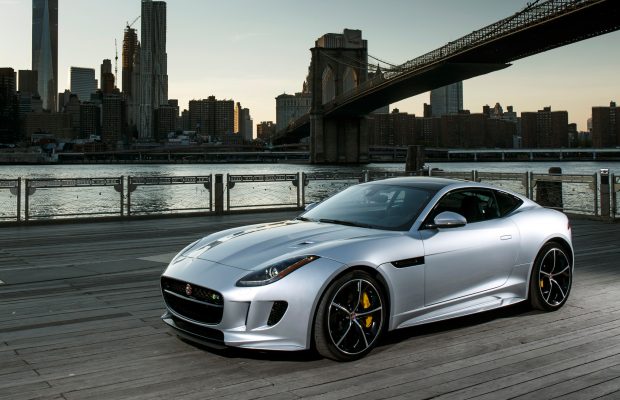
  • After World Car Of The Year, Jaguar I-Pace Wins Powertrain Awards

    After World Car Of The Year, Jaguar I-Pace Wins Powertrain Awards

    Jaguar has been riding a wave of success at car award shows all across the globe with its all-electric offering the I-Pace. It was the only car that won three categories at the World Car Awards 2019 and now has won three more at The International Engine + Powertrain Of The Year Award. It has won the best electric powertrain, best new engine and the 345 bhp to 444 bhp category awards. A panel of 70 expert motoring journalists from 31 countries evaluated the powertrain on several parameters including performance, driveability, energy efficiency and refinement.

    Speaking about the achievement, Ian Hoban, Powertrain Director, Jaguar Land Rover, said, “We’ve used all the benefits of state-of-the-art battery and motor technology to create a world-class electric vehicle. As well as zero emissions, the all-electric powertrain delivers an ideal balance of performance, refinement, and range, together with outstanding responsiveness, agility and day-to-day usability. I-PACE is a true driver’s car and above all a true Jaguar. We set out to make the world’s best all-electric performance SUV: these awards reflect that, and are fitting recognition for what the engineering team has achieved.”

    The Jaguar I-Pace is powered by a 90 kWh lithium-ion battery that delivers a range of 470 km (WLTP) and can charge from 0-80 percent in 40 minutes using a 100 kW DC charger. It is driven by two electric motors mounted on each axle which puts out 394 bhp and 696 Nm of peak torque. The motors are compact and light and along with the transmission weigh just 78 kg. This favors the I-Pace lightweight which in-turn helps it to clock triple digit speeds in just 4.5 seconds.

    It has won 66 global awards since it was revealed little more than a year ago, including the 2019 World Car of the Year, World Car Design of the Year, World Green Car, European Car of the Year, and German, Norwegian and UK Car of the Year.

  • Ford Partners With Robots Maker Agility Robotics In Mobility Service Push

    Ford Partners With Robots Maker Agility Robotics In Mobility Service Push

    Ford Motor Co said on Wednesday it is partnering with walking robots maker Agility Robotics to assist self-driving delivery vans to drop packages at the doorsteps of people’s homes. Ford’s move into robotics comes as the No.2 U.S. automaker looks to expand into autonomous driving and mobility services. The company, which launched a self-driving pilot with delivery partners including Domino’s in Miami last year, said Agility Robotics’ two-legged robot, Digit, is capable of lifting packages that weigh up to 40 pounds.

    The robot can walk up and down stairs and through uneven terrain, while maintaining its balance after being bumped, Ford said bit.ly/2Jy47T5.

    “It’s not always convenient for people to leave their homes to retrieve deliveries,” Ken Washington, Ford’s chief technology officer, said.

    “If we can free people up to focus less on the logistics of making deliveries, they can turn their time and effort to things that really need their attention.”

    In 2017, Ford bought Argo AI, a Pittsburgh-based self-driving startup, but with spiraling development costs for autonomous cars in recent years, the company and other carmakers have sought alliances and outside investors.

  • Mercedes-Benz’s Heated Seatbelts Encouraging Customers To Put Them On

    Mercedes-Benz’s Heated Seatbelts Encouraging Customers To Put Them On

    Seatbelt is the first safety feature in a vehicle which plays a crucial role in saving the life of the occupants in case of a collision. It keeps the body static and prevents it from coming into contact with the surface which can leave the passengers wounded. Over the time, we have seen technological developments in this area like the active pretensioners which grip the body even when you drive beyond a certain speed and obviously while sensing a collision situation.

    However, it goes without saying that all of it will come into play only when it’s hooked and the latest development aims exactly at improving the practice of putting on the seatbelt. Mercedes-Benz is testing heated seatbelts in its prototype and interestingly it looks very much like an usual seatbelt. It has heated tubes inserted in the fabric to keep it warm. It operates in conjunction at same temperature level as the heated seats and armrests we have seen in Mercedes-Benz top of the line Models.

    The Stuttgart based carmaker says that this would encourage its customers to fasten the seatbelts as they would love to be in a soothing temperature. The technology is even more relevant for cold regions where low temperature is actually an issue. Even in central, Eastern and Northern parts of India where temperature hits extreme low in winters, such technology will go in favour of adopting the practice of putting on the seatbelts. In India, where wearing seatbelt is a rarity and people in metro cities only do because of the law enforcement, such technology could actually help in making the practice more common.

  • Prosecutors Fine Bosch 90 Million Euros For Illicit Emissions Software

    Prosecutors Fine Bosch 90 Million Euros For Illicit Emissions Software

    Automotive supplier Bosch has agreed to pay a 90 million euros ($100.21 million) fine for lapses in supervisory duties which enabled carmakers to engage in emissions cheating, German prosecutors in the city of Stuttgart said on Friday.

    Privately-held Bosch, the world’s biggest automotive supplier, delivered around 17 million technical devices equipped with engine management software, including tools that allowed carmakers to manipulate emissions tests, prosecutors said in a statement.

    Bosch has accepted the fine and will not appeal the decision, they added.

    Volkswagen used the software provided by Bosch to help the carmaker mask illegal pollution in diesel-engined vehicles.

    Volkswagen has borne the brunt of penalties and fines for emissions cheating since carmakers, rather than suppliers are responsible for certifying that cars meet clean air rules