Author: Mei Ling Tan

  • Alibaba Acquires 104 million monthly Active Users

    Alibaba Acquires 104 million monthly Active Users

    Alibaba Group added 104 million monthly active users to its Chinese online retail marketplaces during the year to March 31.

    That stellar growth, driven by successful user-acquisition programs such as referrals through the Alipay app, took the total to 721 million. At the end of last year, the figure was 654 million, while quarter-on-quarter growth was 22 million.

    A standout feature of the growth is that Alibaba is cutting through into lower-tier, less developed cities which accounted for 70 percent of user growth last quarter.

    The figures were included in the company’s annual results, which, as reported earlier, included revenue growth of 51 percent during the year to March 31 to US$56.2 billion and net income up 31 percent to $13.1 billion.

    Chinese marketplaces recorded total gross merchandise volume (GMV) of $853 billion last year, up 19 percent on last year, which keeps the company on track to achieve its US$1 trillion total GMV target by the end of 2020.

    The company said its Taobao platform continues to grow fast. This year, a new interface was launched aimed at improving the user experience through content innovation and intelligent personalized recommendations.

    “It delivers a customized shopping experience by segmenting users based on behavior data and providing them with more recommendations to enhance product and content discovery,” the company said in a statement. “The new interface also includes Taobao’s innovative content, such as curated posts, short-form videos, and live-broadcast events. These initiatives drove strong growth in user engagement, purchase conversion, and annual active consumers.”

    Meanwhile, Alibaba’s mainstay Tmall is gaining wallet share and growing faster than the sector average, the company said.

    The growth of physical goods GMV, excluding unpaid orders, accelerated to 33 percent year-on-year in the quarter to March 31, compared to 29 percent in the previous quarter.

    “This robust growth was driven primarily by a strong performance of fast-moving consumer goods (FMCG), apparel, electronics, and home furnishing categories during the March quarter.”

    Its premium Luxury Pavilion channel boosted its brand lineup to more than 100 luxury brands, all of which have also opened Tmall flagship stores

  • Amazon Helps Deliveroo with $835m in funding round

    Amazon Helps Deliveroo with $835m in funding round

    Deliveroo on Friday announced it is looking to raise US$575 million ($835 million) in a Series G funding round, bringing its total investment to date to US$1.53 billion ($2.22 billion).

    Amazon is set to be the largest investor in the round, alongside existing investors T. Rowe Price, Fidelity Management and Research Company and Greenoaks.

    The food delivery company said it will use the capital to grow the tech team at its UK headquarters, expand its delivery reach to add new customers and continue to innovate its delivery-only kitchen concept, Deliveroo Editions.

    The company also plans to develop new products to give customers a more personalized experience, increase support for its restaurant partners and provide riders with new tools for flexible and well-paid work.

    “This new investment will help Deliveroo to grow and to offer customers even more choice, tailored to their personal tastes, offer restaurants greater opportunities to grow and expand their businesses, and to create more flexible, well-paid work for riders,” Will Shu, founder, and CEO of Deliveroo, said in a statement about the funding round.

    Shu said he was looking forward to working with Amazon.

    “Amazon has been an inspiration to me personally and to the company, and we look forward to working with such a customer-obsessed organization.

    The company said the investment will benefit restaurants, by helping them grow their business, and riders, by giving them more work. Deliveroo has been a leader in offering perks and protections in the emerging gig economy.

    Deliveroo in Australia last year partnered with Whitelion to help long-term unemployed young people to work and collaborated with Open Classrooms to give riders free access to hundreds of online courses for professional development.

    “We’re impressed with Deliveroo’s approach, and their dedication to providing customers with an ever increasing selection of great restaurants along with convenient delivery options,” said Doug Gurr, Amazon UK country manager.

    “Will and his team have built an innovative technology and service, and we’re excited to see what they do next.”

  • Parkson Retail to open store above Chinese railway station

    Parkson Retail to open store above Chinese railway station

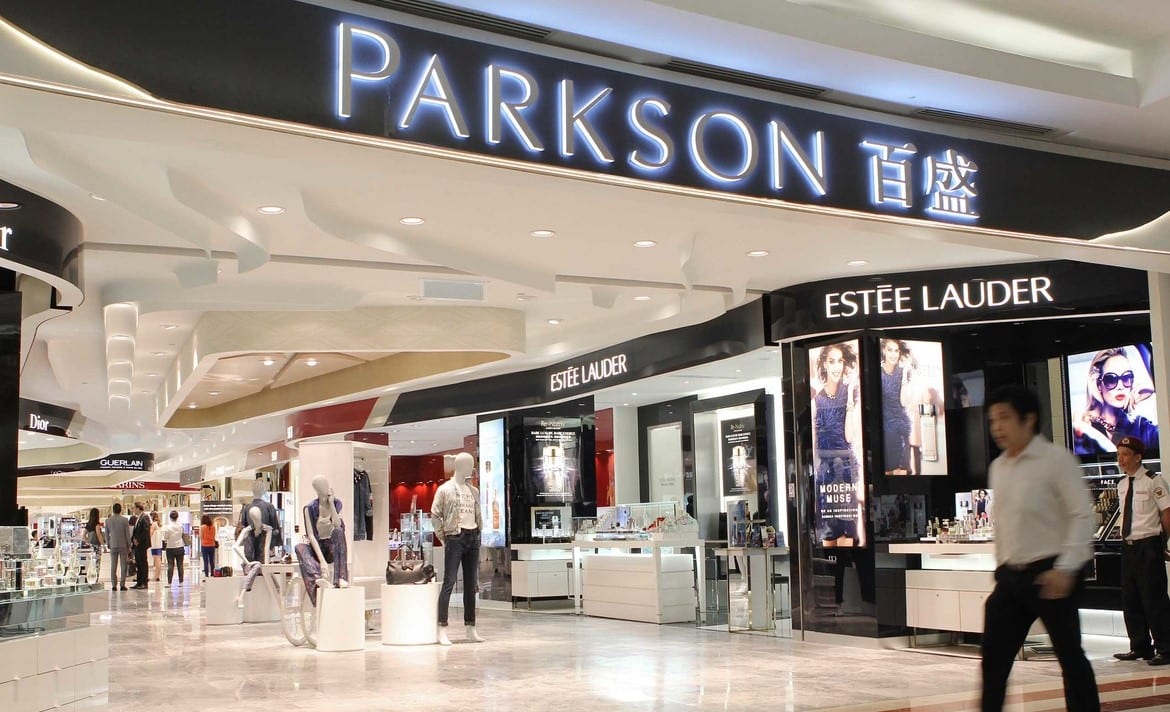
    Parkson Retail Group is preparing to occupy a complex above Nanjing Railway Station in Chinese Jiangxi.

    The group, a Hong Kong-listed firm controlled by Malaysian Parkson Holdings Bhd, won its US$6.1 million bid for the tenancy of buildings above the Bayi Guan Station of the Nanchang Rail Transit Line 1 in the city.

    The 12-year tenancy will allow a 42,903sqm retail space for the firm, although no formal agreement on the tenancy has been signed as of yet.

    A statement from the firm read: “The tenancy, if materialised, may constitute a discloseable transaction for PRGL,” given its alignment with the firm’s development strategy for the province.

  • NBTC finalizes terms of 700-MHz auction

    NBTC finalizes terms of 700-MHz auction

    Thailand’s National Broadcasting and Telecommunications Commission has finalized the proposed terms of next month’s 700-MHz auction, and has briefed the prime minister on the progress with the sale.

    The regulator plans to commence the sale of three slots of 700-MHz spectrum on June 19,.

    The three slots will each have a base price of 17.584 billion baht ($555.05 billion) for 10MHz of bandwidth, which can be payable in up to 10 installments.

    Last month the NBTC announced relief measures for the three owners of 900-MHz licenses by agreeing to split the license fees into 10 installments instead of the current four. But a condition of taking advantage of the larger number of installments will be purchasing one of the 700-MHz slots.

    According to the report, the three 900-MHz license holders – AIS, TrueMove and dtac – have expressed an interest in taking advantage of the relief measures, but are waiting on more terms of the 700-MHz allocation before making a decision.

    But True Move has previously indicated it does not plan to take part in the 700-MHz auction, although it has been pushing for an extension on its 900-MHz license payments.

    Proceeds from the sale will be used to compensate six digital TV broadcasters which have agreed to return their licenses to the regulator.

    A public hearing on the draft terms of the 700-MHz allocation will be held next week.

  • Burberry’s new creative director already showing positive impact

    Burberry’s new creative director already showing positive impact

    New creative director already making a difference says analyst after stable sales reported. The high-profile appointment of Burberry’s new creative director Ricardo Tisci appears to be paying off after the company reported comparable revenue up by 2.3 percent for the last financial year.

    That figure excludes a decline in the wholesale beauty business which transferred to a licensing model last year with the inclusive sales figure down 1 percent. Total sales were £2.72 billion.

    “The buzz surrounding Ricardo’s appointment has paid off,” observed Chloe Collins, senior retail analyst at GlobalData.

    “With his first collections, which started dropping into stores in February, receiving widespread praise and achieving double-digit percentage growth on the year, it has given the brand a much-needed refresh as it ran the risk of becoming outdated and repetitive,” she said.

    “His dark grungy styles previously seen at Givenchy have provided a welcome update to Burberry’s classic tailoring and neutral tones, with the brand also given a new modernized monogram logo, however, it must be careful to not lose the traditional British heritage it is famous for.”

    In Asia, the Americas, Europe, the Middle East and Africa, sales rose in the low single digits, making the company’s UK home market the star performer in the mid-single digit percentage range, largely due to increased tourist spending.

    Burberry CEO Marco Gobbetti said sales would have been higher had the company had more product in stores at the end of the financial year.

    “We need to get the products in the stores to start to see the reaction of customers,” he said.

    In the year ahead, the company plans to refurbish about 80 of its flagship stores and close about 38 smaller boutiques in secondary locations.

    The company reported a 6 percent decline in operating profit to £438 million pounds, largely caused by foreign exchange movements and investment in new products.

    Meanwhile, the brand’s digital offer has improved through increased reach through social media, and greater use of influencers among other factors, said Collins.

    “Burberry must continue to invest in technology and marketing to build its online sales further, and find a way to import these innovations into its store portfolio,” she said.

  • Rapyd Hires Senior Execs From PayPal Singapore

    Rapyd Hires Senior Execs From PayPal Singapore

    Strategic hires follow the digital payments firm’s $40-million series B funding round in February. Silicon Valley-based fintech-as-a-service platform Rapyd has hired Richard Oh as its APAC Senior Director of Network Management and Larry Lee as Senior Director of Network Growth and Optimization, the firm announced in a statement.

    Oh and Lee, who have four decades of experience in the industry between them, join from PayPal. Both will be based in Singapore, where they will support the firm’s strategy to expand operations and infrastructure in Asia Pacific.

    Richard and Larry join Rapyd at an inflection point of our global growth, and their expertise will be essential as we build out the Rapyd Global Payment Network,» said Joel Yarbrough, Rapyd’s VP, Asia Pacific.

    Rapyd bundles a range of digital payments-related services for businesses, including funds collection, funds payouts, currency transfers, ID verification and card issuing.

    The hires come some three months after the announcement of the firm’s successful $40-million series B funding round led by payments giant Stripe and General Catalyst, one of Stripe’s biggest backers. This brings the total amount raised by Rapyd, which was founded by Arik Shtilman in 2015 and started business in 2017, to $60 million.

    In Wednesday’s statement, Rapyd said it plans to significantly expand its network capabilities and use cases in 2019 and 2020, extending its disbursement, compliance, foreign exchange management, and issuing solutions.

    Oh was responsible for building the backbone of the payment of PayPal’s business, expanding its payment and disbursement capabilities across Asia Pacific, Latin America, and the emerging markets. He also worked for eBay, where he was part of the company’s core payments and partnerships team.

    Lee also joins Rapyd after working at PayPal and eBay, where he held key responsibilities including geographic expansion, cross border trade, partnerships, regulatory licensing, financial operations, and corporate structure and governance. He was most recently director of International Licensing at PayPal, where he helped develop market entry strategies and was responsible for a portfolio of payments and e-money licenses for the international business.

    In Singapore, Rapyd has partnered OCBC Bank to enable real-time bank payments for local consumers and online retailers. The partnership leverages PayNow, Singapore’s national peer-to-peer funds transfer service, to allow the bank’s customers to make real-time bank transfers using the OCBC Pay Anyone app.

  • DBS Partners With Edutech Company To Enhance App

    DBS Partners With Edutech Company To Enhance App

    DBS has partnered with a local edutech to enhance its app-based management system with real-time payment features. Over 160,000 parents in Singapore will soon be able to purchase uniforms, pay for field trips and sign up for extra-curricular classes for their pre-school children through a mobile payment platform gateway developed by DBS. The bank has partnered with EduTech company, LittleLives, to enhance its app-based pre-school management system with real-time payment features.

    By building payments capabilities into the app, we have made banking invisible and seamless so pre-school operators can channel their energy and resources back into building their business, said Joyce Tee, Group Head of SME Banking at DBS Bank at the official launch of the app on Thursday, with Minister for Education Ong Ye Kung as the Guest of Honour.

    In Singapore, the early childhood education sector is still dependent on cash despite school fees being paid via GIRO or Child Development Accounts (CDA). For example, when paying for excursions, school uniforms or learning resources, parents often make payments using cash or cheques and the school then makes arrangements to pay third-party vendors.

    Eliminating these payment pain points is the first step in digitalizing payments in the early childhood education sector, DBS said. With payment functions built into the LittleLives app, pre-school operators can save up to 40 manhours per month on administrative tasks such as payments reconciliation, allowing them more time to engage with parents and their children.

    Used by over 750 pre-schools in Singapore, the Little Lives app can now enable pre-schools to generate invoices and parents to make payments through PayNow and DBS PayLah!. Receipts will be generated automatically after payments are made. With access to real-time payment reports such as daily settlement and auto-reconciliation, pre-schools can better manage their finances more accurately and securely.

    Many young parents are time-strapped and juggling multiple responsibilities at work and at home. By enabling parents to conduct payments on the go, quickly and safely, they have more time to nurture and care for their children, said Sun Ho, founder of LittleLives.

    DBS and LittleLives have plans to roll out this payments gateway to other markets such as Brunei, Cambodia, China, Malaysia, and Vietnam, by tapping on its the bank’s own API-enabled solution.


  • Australian dollar strengthens

    Australian dollar strengthens

    The Australian dollar has risen Friday, buying 68.88 US cents, from 69.13 US cents on Thursday. Australia’s unemployment rate rose in April to the highest in eight months while full-time jobs fell, ABS data showed on Thursday, cementing views the central bank may be forced to lower rates soon to stimulate the economy.

    Yesterday, the Australian dollar skidded 0.4 percent to 68.91 US cents, the weakest since early January when a currency “flash crash” briefly sent the Aussie to 67.43 US cents.

    Financial markets are implying an almost 60 percent chance the Reserve Bank of Australia will ease policy next month.

    The RBA is closely watching the employment report for clues on monetary policy, as it is counting on labor market strength for a long-awaited pick up in wage growth and inflation amid a continuing slide in property prices.

    Thursday’s figures showed 28,400 new jobs were created in April, surging past expectations for a rise of 14,000.

    But in an unwelcome sign, all of the increase was led by part-time work, with full-time declining 6,300.

    Jobs are being created at a brisk annual pace of 2.6 percent, much faster than the 1.6 percent rise in population but that is still not enough to meet with surging labor supply.

    The unemployment rate rose for a second straight month to 5.2 percent, when analysts had expected 5.1 percent, as the participation rate climbed to 65.8 percent indicating more people went looking for work.

    More worryingly, forward-looking indicators of labor demand are now pointing to emerging weakness.

    The National Australia Bank monthly employment index slipped last month, dragging down the Composite Employment Index to 51.4, the lowest reading since September 2016, from 53.4 in March.

    A job index by Westpac has also turned down, suggesting that employment growth should slow to about two percent in the July-September period.

    With the jobless rate inching up, lukewarm consumer prices and sputtering economic growth, the RBA will likely cut rates from a record low 1.50 percent.

  • Major Update to mobile YouTube app makes life easier

    Major Update to mobile YouTube app makes life easier

    A server-side update is being sent out to the mobile YouTube app. It doesn’t contain a major change, but for those who like to view streaming YouTube videos in fullscreen (which is done by holding the phone in landscape orientation), it does help correct a minor annoyance.

    Before the update, let’s say you were viewing a video in landscape mode and wanted to share it with someone, or give it a thumbs up or down, or even add the video to a playlist. You would have to make the switch from landscape to portrait in order to find the appropriate icon to tap on. Then, when ready to view another video, you would have to turn the phone back to landscape mode. But the powers that be at Google recognized the inherent dangers involved when a phone owner keeps changing the orientation of his device; such a move can lead to a fumble resulting in the handset kissing the asphalt or another hard surface. It is also just plain inconvenient.

    Still, it isn’t a big deal, but as Android users know, Google loves to correct minor pain points. So the update adds the bar containing the thumbs up, thumbs down, share and save icons to the YouTube UI in the landscape. To view it, simply scroll up on the screen in fullscreen mode. You will see three recommended videos overlayed on top of the screen, and directly underneath is the bar with the aforementioned icons. Note that the up and down thumbs still show how many times a video was “liked” or “disliked.”

    >The change appears on version 14.18.56 of the YouTube app for Android. Not only might it save you from dropping your phone (even surehanded NFL running backs fumble the ball without contact every now and then), over the course of a year it just might save you a few minutes of time.

  • Instagram’s standalone Direct app is Obsolete

    Instagram’s standalone Direct app is Obsolete

    Facebook has a habit of frequently testing changes (both big and small) for its extensive library of crazy popular social networking services, but while most new features added to Instagram tend to stick, enriching the app’s functionality or expanding its reach, others never get to see daylight or move past the public testing phase.

    Instagram Direct is part of the latter category, reportedly “going away” some time “in the coming month” after making a limited global debut way back in December 2017. This was actually a standalone app rather than something built directly into the main Instagram interface, but technically, the thing never got a proper, wide-scale release. Instagram (or rather Facebook) also didn’t do much to promote the service, which essentially cloned one of the core features of arch-rival Snapchat.

    Namely, Instagram Direct was largely focused on enabling message exchanges between users, with Instagram friends instantly added to one’s list upon signing up and, of course, support for fun face filters to spice up your photos and videos. If that sounds useful in any way, fret not, as Instagram Direct conversations will automatically move to the main Instagram app, where you’ll be able to continue enjoying the same messaging features as before. After all, private messaging has been supported by Instagram since 2013.

    As the company was quick to highlight in a short statement after the imminent death of the standalone Direct experience ironically started making the Twitter rounds, Instagram Direct will remain the “best place for fun conversations with your friends.” Just not in a separate app, whose tests are being “rolled back” after merely exceeding a million Android installs in Google Play and receiving largely mediocre iOS user reviews.

  • Hyundai India Ties Up With ALD Automotive India

    Hyundai India Ties Up With ALD Automotive India

    Hyundai Motor India has announced a collaboration with ALD Automotive India to provide its cars on lease. Hyundai aims to make car owning experience more economical and is targeting to provide its cars on lease to salaried individuals, working professionals, small and medium enterprises, corporates and public sector. In the first phase, the Korean carmaker has started its operations in Delhi-NCR, Mumbai, Chennai, Hyderabad, and Bangalore.

    Speaking on the Hyundai’s lease offering S.J. Ha, Executive Director, Sales &Marketing, Hyundai Motor India said, “Indian automotive industry is at the cusp of transformation. As a smart mobility solutions provider, we at Hyundai understand the needs of our evolving customers and are committed to making ‘Shared Mobility’ accessible. The vehicle leasing business is rapidly picking pace in India and offers great prospects. We are extremely happy with our collaboration with ALD Automotive and together we will leverage our strengths to create Unique, Smart and Brilliant ownership experience for our customers.”

    Commenting on the same development, Suvajit Karmakar, Chief Executive Officer & Whole-time Director, ALD Automotive India said, “We are extremely proud and excited to announce this partnership with Hyundai. I am confident that this association will make us explore newer product and service offerings and take Car Leasing to the next level in the Indian car market. This will further reinforce our position as a leader and we look forward to a mutually beneficial relationship with Hyundai.”

    Hyundai will provide its entire product line-up on monthly lease rent. The benefits of leasing to the customers include no upfront cost, no financial risk, efficient tax management, easy upgrade and no maintenance and insurance hassles. The leased vehicle will be available for a minimum period of two years going up to five years depending on the city and model.

  • Honda Files Patents For Variable Riding Position

    Honda Files Patents For Variable Riding Position

    Honda has filed a series of patent applications in Japan for what seems to be a new technology offering two different riding positions on the same motorcycle. The patent images show a Honda CBR1000RR which can have two different riding positions – an aggressive and sporty riding position, as well as a more upright and relaxed riding position. The key elements in the technology are the ability to move the bars and the screen, which provides the ability to raise the handlebars from the normal clip-on height because they are attached to extended tubes that run parallel with the fork legs.

    According to the patent application, the position can be changed by the press of a button. Also movable is the windscreen, which is also a simple operation. The top section of the front fairing is attached to a scissor-style frame that easily allows the rider to move the screen upward and into a more vertical position, if needed, for a more touring friendly riding position from an aggressive, sporty riding position. What is clear from the patent drawings is that this is not a complex mechanism that will require a ground-up re-engineering of the bike.

    It’s still not clear whether Honda will actually introduce a future CBR1000RR Fireblade with this new innovative technology, or if there will be an altogether new model which will showcase this variable riding position. Either ways, expect some sort of concept bike which Honda is likely to display, either later this year, or at one of the motorcycle shows next year which will showcase this unique new feature.

  • India’s handset market slumps 25% in Q1

    India’s handset market slumps 25% in Q1

    India’s mobile device market slumped 25% year-on-year during the first quarter of 2019 due to a collapse in the feature phone segment, according to CyberMedia Research (CMR).

    The research firm estimates that feature phone shipments shrank by around 49% during the quarter, while smartphone shipments grew by 10%.

    4G-enabled handsets represented 66% of total devices shipped during the quarter, with 2G-only devices accounting for the remainder.

    “The overall market decline was on expected lines for Q1 2019. The above industry average stock build-up at the end of the previous quarter resulted in lower shipments. Also, the recent change in eCommerce rules in India impacted the online dependent players,” CMR Industry Intelligence Group lead analyst Narinder Kumar said.

    Samsung led the overall mobile market during the quarter with a 22% market share, but China’s Xiaomi led the smartphone market with a 30% share to Samsung’s 27%. Xiaomi also continued to rule the low-cost segment for devices below 7,000 rupees with a 41% market share, while Samsung topped the mid-range 7,000 rupees to 25,000 rupee segment.

    The top five leaderboards was rounded out by LYF (13% market share), Vivo (6%) and Lava (6%).

  • AirAsia 3.0 to help save cost and enhance revenue

    AirAsia 3.0 to help save cost and enhance revenue

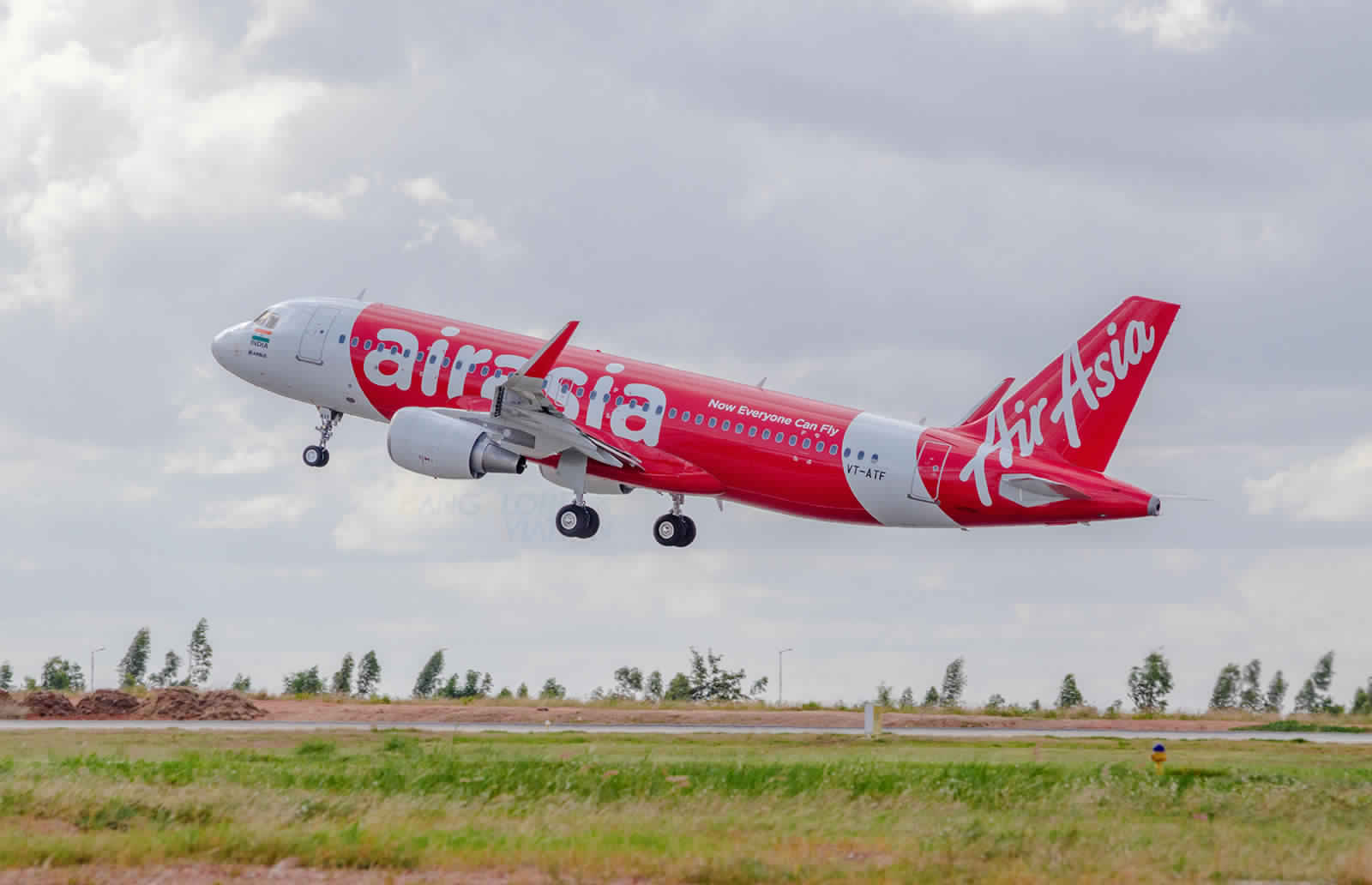
    After two years of working closely with Google and other data companies, AirAsia expects cost savings and revenue enhancement beginning next year. Group CEO Tan Sri Tony Fernandes told a group of analysts during AirAsia 3.0 investor day that he expected about 4% less fuel burnt after crunching numbers and using the right aircraft for specific routes. With hundreds and hundreds of other fuel initiatives including spare parts, he is looking at 10% to 15% cost savings by the end of 2020.

    All these initiatives to save costs and enhance revenue are part of the airline’s move towards digitization, which also allows it to be creative in its delivery and offering as well as personalize and segmentize its product offerings. This is made possible by analyzing all the data that it has.

    “On the revenue side, with all the rich data we have, we are able to serve customers better in terms of personalizing all that. We have never done promos, as we normally send e-mails, but now we will be much more proactive in filling up the planes.

    “We also now have the ability to dynamically adjust fares on the spot and all this will help us maximize revenue and save costs,’’ he added.

    As part of the AirAsia 3.0 initiative, the plan is to make the entire journey nicer and comfortable for the traveler while various new initiatives will be introduced.

    An analyst said in a report the AirAsia 3.0 plan would solidify the airline’s business via predictive maintenance, which would result in cost savings by FY20. It will enhance the online user experience by transforming AirAsia.com into all-in-one travel and lifestyle marketplace, facilitated by its mobile payment facility BIGPay.

    The carrier’s cargo arm would cover more networks while eliminating the layers in air cargo fulfillment process, the analyst said.

    Another research house said it “does not expect material earnings contribution in the near term from the implementation of the new business platforms.’’

    A foreign brokerage added that “near-term losses from these new initiatives, which are likely to drag already-thin margins in the core airlines business.’’

    AirAsia, according to Fernandes, has come a long way and was the first to revolutionize the way people travel low cost and used the Internet to sell tickets. But that did not come without skepticism and ridicule.

    Eighteen years on, AirAsia is Asia’s largest low-cost carrier that prides on online options to reach out to travelers. It has flown more than 500 million people and has 260 planes on leaseback arrangements to save cost. Ancillary income accounted for 9% of revenue back in 2008 but now it makes up 21%, or RM2bil, of revenue.

    Fernandes still sets sights on China and is working with a new partner to return to Vietnam. He is also bullish that AirAsia’s Indonesian and Philippine operations will be profitable soon.

    AirAsia group is expected to release its first-quarter 2019 results on May 29. A local research house has forecast core net profit of RM147mil (minus 59% year-on-year).

    “Management has done a good job to retain high load factors in first-quarter 2019. However, yields were exceptionally challenging in Malaysia, India, and Thailand due to softer consumer demand and stiffer competition.

    “We are also concerned on the group’s financial year 2019 growth plan to deploy a net addition of 18 aircraft. There has been no aircraft addition in first-quarter 2019, which implies that all the aircraft will be deployed in the subsequent quarters. We deem this as excessive under the current market conditions,” the research house said.

  • AirAsia Opens Jakarta-Phuket Route

    AirAsia Opens Jakarta-Phuket Route

    “Currently the traveling trend continues to increase especially in the youth market, hence demand to open unique routes is increasing as well,” said AirAsia Indonesia president director Dendy Kurniawan.

    Phuket is one of Thailand’s biggest islands in the southern side and boasts various destinations, such as Phi Phi Island, Big Buddha statue in Chalong and Phuket Old Town. The carrier is currently offering promotional fares from Rp 583,000 (US$40.35) one way that can be booked until May 26 for a travel period between July 2 and Oct. 25.

    Other direct flights served by AirAsia from Thailand to Indonesia are Jakarta-Bangkok, Medan-Bangkok and Denpasar-Bangkok.