Author: Mei Ling Tan

  • Fendi Open Flagship Store in Queensland

    Fendi Open Flagship Store in Queensland

    Italian fashion house Fendi unveiled its first flagship store in Queensland on Thursday, becoming the latest in a series of global luxury brands to set up shop in the Sunshine State.

    The store, located in Vicinity Centres’ QueensPlaza shopping center in Brisbane, features high-end details such as stone walls, marble inlay and gold accents throughout. It is the brand’s 7th location in Australia.

    Fendi is the latest international luxury brand to arrive at QueensPlaza in recent months, following the addition of Saint Laurent earlier this year and Dior at the end of 2018. The shopping center now offers 10 luxury brands, including Chanel, Zimmermann, Scanlan Theodore and Camilla, capping off a $36 million development by Vicinity.

    Earlier in the week, QueensPlaza also welcomed the new luxury dining venue Stanton Cafe and Bar. Seating 180 and offering breakfast, lunch and dinner, the restaurant is an Instagram-worthy hot spot overlooking Queen Street Mall and with views of the CBD.

    Designed by award-winning interior designer Melissa Collison, the restaurant features an eclectic style with 1940s chandeliers, antique furniture, hand-woven Persian rugs, and bespoke wallpaper. Hatted head chef Daniel Jones and Dean Blanchard and their team oversee the menu.

    In addition to offering shoppers a place to relax, Stanton Cafe and Bar will also be hosting a range of masterclasses to educate and entertain, with topics ranging from champagne tasting to Napoli pizza making and barista classes.

    Customers can also download an app that they can use to place their food or coffee order before they arrive and pay for their order.

  • Zara’s local profit after E-commerce Launch

    Zara’s local profit after E-commerce Launch

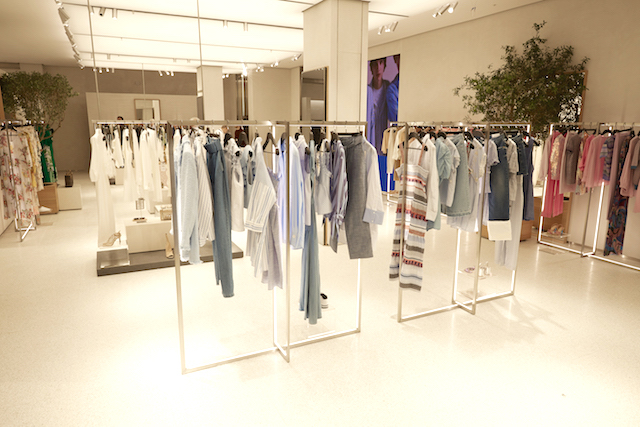
    Inditex Group’s Australian business, Group Zara Australia, posted a 35 percent increase in net profit for the year ending January 31, 2019, lifting the figure from $8.9 million to $12 million, according to documents lodged with the Australian Securities & Investments Commission.

    This came off the back of strong sales growth, with Zara’s full-year revenue in Australia grew 10.5 percent to $311.7 million, up from $282 million in the previous corresponding period.

    This is due in part to the launch of Zara’s local e-commerce site in Australia and New Zealand in 2018, which opened up a new sales channel for the business and gave more customers the ability to shop with the fashion brand.

    Zara’s parent company Inditex launched online stores in a further 106 markets in November last year, which led to a group-wide online sales increase of 27 percent to $5.19 billion (€3.2 billion) – contributing 12 percent of group net sales for the year.

    Zara had 21 stores in Australia on January 31, 2019, including 19 Zara and two Zara Home stores.

    In a statement about its full-year earnings, Inditex highlighted the growing risk fast fashion brands face of being perceived by stakeholders, including customers, employees, shareholders, suppliers and society in general, as unsustainable.

    The retail giant noted that it was ranked as the ‘most sustainable company in the global retailing industry’ by the Dow Jones Sustainability Index for the third straight year based on the progress it has made in its environmental strategic plan and laid out various initiatives it is undertaking to lessen its impact on the planet.

    These include gaining greater control over the materials used in the creation of its products, reducing the amount of water used in its supply chain and using energy efficiently.

    Additionally, in September of last year, Inditex piloted an at-home pick-up service for recycled garments in China, an initiative that is already operating in Spain, though has yet to make it to Australian shores.

    Inditex is far from the only fashion retailer tackling the issue of sustainability. The Iconic recently launching Considered, an initiative that allows customers to more easily filter products based on their own personal values, such as sustainable materials, eco-production, fair production, animal-friendly, and community engagement.

    Swedish fashion retailer H&M has also committed to add more information to its website to allow customers to understand where its products come from – a move to create greater product transparency.

  • DBS Chief Information Officer Retires

    DBS Chief Information Officer Retires

    DBS’ Chief Information Officer and Head Of Group Technology and Operations, is leaving the bank.  DBS has confirmed that its group head of technology and operations David Gledhill is departing effective from 1 August. He will return to the United Kingdom, according to his announcement on LinkedIn. The 57-year-old is a British citizen calls his departure a soft Glexit.

    After 29 years in Asia and 11 years at DBS, we decided it’s finally time to move on and replant our roots back in the U.K. So, after almost two years of planning, today we announced my retirement from DBS, and the Packers moved in at home,» Gledhill said in a LinkedIn post.

    Gledhill said he will stay connected with DBS in a part-time advisory role. Also an independent director with Singapore Airlines, Gledhill said he will also be back in Singapore every three months. Before joining DBS in 2008, Gledhill worked at J.P. Morgan for 20 years, holding senior regional positions in technology and operations.

    A DBS spokesperson said that Gledhill has been a leading figure in the bank’s transformation. He has been responsible for standardizing the bank’s systems, creating reliability and resilience, and most recently, taking DBS down the path of agile and cloud.

    Gledhill will be succeeded by Jimmy Ng, who has been deputy group head of technology and operations at DBS since January 2018. Having joined DBS in 2009, Ng started his career briefly as a system analyst in Singtel before joining the technology audit function in J.P. Morgan.

    He subsequently worked in various functions including operations, risk management and product control at ABN Amro.

  • Restaurant Brands International eyes massive China expansion

    Restaurant Brands International eyes massive China expansion

    Restaurant Brands International, parent of the Burger King, Tim Hortons and Popeyes Louisiana Kitchen brands, is eyeing significant expansion in China despite current trade tensions.

    The firm is aiming to surpass 40,000 locations in the territory within 10 years, making the firm one of the world’s largest restaurant chains.

    “Our view is that we want to be there, and we will be there for the long term,” said company CEO Jose Cil. “It’s an amazing consumption market, growing tremendously.”

    The firm is making its intentions known in an atmosphere of a deteriorating trade relationship between China and the US. Before tensions heightened last week, China was already on track to experience its worst GDP growth in 29 years.

    Restaurant Brands is aiming to launch 1500 Tim Hortons locations within China within the next decade as the brand’s growth is slowing in its home Canadian market. There are currently just four Tim Hortons in the territory, compared to more than 1000 Burger King restaurants.

  • Japan to create 10b 14-digit mobile numbers by 2021

    Japan to create 10b 14-digit mobile numbers by 2021

    Japan’s communications ministry plans to create around 10 billion 14-digit phone numbers in anticipation of the 5G era.

    The 14-digit numbers starting with the code 020 will be introduced by 2021 at the latest.

    The current stock of 11 digit mobile numbers is expected to run out as early as the 2022 financial year.

    In response, a panel of experts has proposed to introduce the new numbers once the necessary preparations are complete, and Japan’s big three mobile operators NTT Docomo, KDDI and SoftBank have agreed to the proposal.

    Now the ministry has announced it will draft a report on the matter as early as June and aims to complete a ministerial ordinance by the end of the year.

    New numbers will be allocated to the operators early if they complete the necessary upgrades ahead of schedule, the report states.

    Japan currently uses 11 digit numbers starting with 090, 080 and 070 for mobile phones, and with 020 for IoT devices.

  • J.P. Morgan Invests In Indian Fintech

    J.P. Morgan Invests In Indian Fintech

    J.P. Morgan has invested in a fintech player in the business payments based in India.  To help its clients experience clearer electronic invoice presentation and quicker reconciliation, the U.S. financial group invested an undisclosed sum in India-based Global PayEx, a player in the Electronics Invoice Presentment & Payment (EIPP) and business-to-business (B2B) payments space.

    «At J.P. Morgan, we continue to invest in innovation to help our clients optimize and simplify their payment operations,» said Sridhar Kanthadai, Head of Wholesale Payments for the Asia Pacific at J.P. Morgan in a media statement on Monday.

    The investment by J.P. Morgan extends the fintech’s footprint in the Far East, Middle East, Europe, and the United States, said Brij Sharma, CEO, Global PayEx. Its cloud-based platform – Freepay – facilitates the electronic sharing of invoices, handling of payments and comprehensive management of transaction information between B2B buyers and sellers.

    Operational for more than three years, Freepay improves working capital efficiency by digitizing all processes in the order-to-cash cycle such as invoicing, dynamic credit and trade terms support, credit/debit notes, instantly applicable cash discounts, full document support for payment decisions including ePoD, and analytics-driven dunning.

  • Startup Offers Bank Cash Points as ATMs

    Startup Offers Bank Cash Points as ATMs

    A Singapore fintech turns brick-and-mortar shops into alternative ATMs, potentially saving banks millions of dollars in maintaining their cash logistics. Banks can now tap on SoCash’s apps and existing brick and mortar point-of-sales to save on the huge costs associated with maintaining ATMs and the physical circulation of cash.

    So let’s say there are 3,000 ATMs in Singapore and they hold anywhere between S$150,000 to S$200,000 overnight. That’s a minimum of S$450 million of liquidity that is stuck in these machines, says SoCash founder Hari Sivan.

    The inefficiencies of leaving cash in ATMs has been bugging Singapore’s banks, which typically spend $200 million a year on ATM maintenance, logistics, insurance, counting and cleaning cash, and other expenses just to maintain the circulation of physical cash, the fintech firm estimates.

    With SoCash, banks pay only a transaction fee and a platform fee. Currently, banks using SoCash’s service include DBS, POSB, Standard Chartered and ICBC. With cash points set up in 1,300 locations in Singapore, the startup processes close to 200,000 transactions per month.

    Retailers are paid a fixed fee per transaction by SoCash, letting them tap on the store’s pool of cash earnings to generate a revenue stream while saving themselves the hassle of having to deposit their cash earnings at a physical branch, Sivan explains.

    This cash withdrawal service also helps the participating shops to generate walk-ins and push in-store promotions on the app’s platform.

    Once a user opens the Socash app, scans a QR code and inputs the withdrawal amount,  he or she can collect the cash from the cashier at a chosen cash point, such as a 7-Eleven. The user’s bank account is then debited while the retailer’s account is credited by the participating bank.

    Sivan, who spent about 13 years in the banking industry, is planning its Series B fundraising round in the next few weeks.

  • UOB Outlines Growth Priorities

    UOB Outlines Growth Priorities

    Amid rising global trade tensions and concerns over a synchronized global slowdown, UOB wants to focus on three areas for growth. UOB wants to focus on regional connectivity, ecosystem partnerships, and strong balance sheet/quality earnings to harness growth, the bank said at its Corporate Day held in Singapore on Wednesday.

    In such an environment, it is even more important that we focus on the fundamentals and not lose sight of our main objectives, UOB’s chief executive Wee Ee Cheong underlined.

    In his keynote address, he added that with rising global trade tensions and concerns over a synchronized global slowdown, it was essential that the bank focused on its key priorities.

    At UOB, this rests on our consistent approach of putting our customers at the center, he said. The Corporate Day covered how UOB will continue to build on its regional operating model, to invest at scale in digital and new technology, to equip its people for the future and to drive productivity and performance.

    Currently, the bank has more than 40 percent of group operating profit derived outside of Singapore. Of this, close to 80 percent comes from operations in Southeast Asia and Greater China. «We expect these numbers to go up as we strengthen our regional connectivity, collaborate in win-win partnerships to tap intra-regional flows and the region’s rising affluence for growth,» Wee added.

    Southeast Asia has the third largest population globally, after China and India. The region also has a young population, with 384 million people below 35 years old.

    Given Southeast Asia’s prospects, the bank will continue to make significant investments in developing its digital capabilities to make banking simpler, smarter and safer across all its network. «Throughout the region, we have invested in an omnichannel approach: engaging our customers across a range of touchpoints that best suit them – offline or online, physical or digital or a combination. This is because we know that digital is not the only way that our customers want to be served,» Wee said.

    The impact of UOB’s omnichannel approach is enhanced by the ecosystems which the bank has forged with like-minded partners for the customer’s benefit.

  • OCBC Eases Digital Onboarding With Instant Approvals

    OCBC Eases Digital Onboarding With Instant Approvals

    The bank’s consumer banking products can now be applied for, approved and used instantly. OCBC Bank is making getting a card or loan more accessible and convenient by enabling digital applications and instant approval and use of its key consumer banking products. The bank said that by leveraging national data repository MyInfo as well as its own real-time digital KYC and credit assessment systems, it can offer customers bank cards, OCBC ExtraCash personal loans, and OCBC EasiCredit lines instantly.

    This is a natural progression of our pursuit of the new digital – to provide instant, embedded and frictionless access to all our products and services for the convenience of customers, enabling them to start a banking relationship with us seamlessly and instantly, Dennis Tan, OCBC Bank’s Head of Consumer Financial Services Singapore, said in a statement.

    He added that the bank would extend instant approval to secured lending products such as home and car loans in the near future.

    This is the latest in a series of digital innovations OCBC Bank, Singapore’s longest-established bank, has rolled out to enable instant, hassle-free and secure access to its core products. According to the bank, OCBC 360 accounts have grown three-fold since digital applications and instant approvals were allowed for bank accounts in June 2018, with one in three OCBC 360 accounts now acquired digitally.

    I expect that one in every two OCBC Bank customers to be on-boarded digitally by 2020, Tan said.

    To apply for a banking product, one should select the «Use MyInfo» option, log in using SingPass and allow OCBC to retrieve personal details, such as proof of income and home address. There is no need to submit any additional documentation – the customer only needs to review the pre-filled fields of the application form and submit it for instant approval.

    According to the bank, its agents acquire the majority of their customers at public roadshows, so digitalizing card applications is crucial in alleviating customer pain points, which include the hassle of paper applications, waiting days for approval and receiving the physical card.

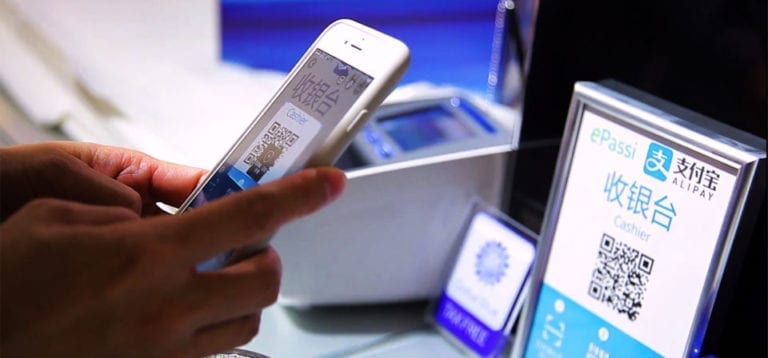
  • Apple Pay focussing on wider NFC adoption

    Apple Pay focussing on wider NFC adoption

    Apple has been trying to replace your wallet with your iPhone for years now. Despite the relatively wide adoption of Apple Pay (at least in the States), however, it’s still not abundant enough to make you think twice about leaving your wallet at home. One of the main reasons for that is that Apple, in its typical fashion, has restrained the things developers can use the available hardware and software for. But it seems that might be changing very soon.

    Apple recently announced changes coming to the way NFC can be used on its iPhones in combination with Apple Pay during a conference for electronic transactions. Called Transact, the conference was held in Las Vegas in late April and was host to a rare Apple presentation that’s not during one of the company’s own events.

    Apple is looking to make it easier for businesses to integrate NFC payments into the Apple Pay ecosystem. To do that, it is going to allow its Core NFC framework to work with multiple NFC formats. Currently, Apple only supports one format called NFC Data Exchange Format. Three new formats are expected to be added with the release of iOS 13. These changes, among many others, will likely become official during Apple’s Worldwide Developers Conference 2019 that starts on June 3.

    But NFC formats don’t matter to users, they care about what that means for the way they use their devices. There will be some noticeable improvements in that area if Apple’s plans come to fruition. The company’s goal is to make paying for almost everything as easy and convenient as possible. Let’s take a look at what’s its vision.One example given at the presentation was the so-called micro-mobility, which is a fancy term for all the scooter-renting services like Bird and Lime. Right now, each of those comes with its own app that you can use not only to locate a scooter but mostly to pay for your time using it. Needing an app and an account adds friction, as experts call it, which reduces the number of people that use the service. Apple is working in cooperation with some of these companies to remove that extra step. In the future, tapping on the NFC chip of the scooter will allow you to rent it straight from Apple Pay. This will not only make it easier for non-frequent users to rent scooters but will also improve security, as you’re not sharing payment information with yet another entity.

    And then there are parking meters. The ones that allow mobile payments come with their own app as well. Similar to the scooter approach, Apple aims to cut out the unnecessary step of installing and logging into various apps (companies still get their money, after all) by handling everything within Apple Pay. The same technology can be applied to almost anything, from vending machines to public transport and all sorts of venues that you need to pay to get into.

    But NFC is not only useful for payments, but it can also carry all sorts of information. A few companies are already partnering with Apple to streamline the sign-up process for their loyalty programs by using NFC instead of paper forms people need to fill out.

    Once the ball starts rolling, we’ll likely see more and more businesses joining Apple’s initiative. This move will strengthen its ecosystem and tie down iPhone users to the brand even more than they already are. Hopefully, it will also nudge Google to put more effort into its own Google Pay.

  • Alibaba buys into furniture chain Macalline

    Alibaba buys into furniture chain Macalline

    Alibaba has invested US$640 million in Red Star Macalline Group, the largest furniture retail chain in China. Signalling a renewed interest in the home improvement business, Alibaba made the investment in the form of convertible bonds issued by Macalline’s controlling shareholder. The transaction will see Alibaba taking a 10 per cent shareholding of Macalline’s Shanghai listing if fully converted. Alibaba has also taken 3.7 per cent of Macalline’s Hong Kong-traded shares.

    The investment will see emerging cooperation in the furnishings business between the two parties, a move that follows several other plays into the lucrative sector by the e-commerce giant.

    Macalline currently has 364 stores in almost 200 cities.

  • Huawei is now looking to capture the 5G chipset market

    Huawei is now looking to capture the 5G chipset market

    While Huawei and 70 of its affiliated companies now need U.S. government approval to buy parts from the U.S., the company doesn’t have to worry about accessing SoCs from San Diego based Qualcomm. That’s because Huawei designs its own chips for the firm’s high-end handsets. The next such chip, the Hi-Silicon Kirin 985, is due out in the second half of this year. The Kirin 985 is designed for Huawei’s 4G LTE phones. However, the chip can be outfitted with Huawei’s own Balong 5G modem; this will allow phones powered by the Kirin 985 to connect to mobile 5G sub 6GHz networks.

    The Kirin 985 chipset with the 5G Balong modem will first appear on the Huawei Mate 30 line due out in the fourth quarter of this year. The chip will be manufactured by TSMC using the 7nm+ mode, with trial production runs scheduled for this quarter. By the third quarter of this year, the Kirin 985 should be rolling off of TSMC’s assembly lines in volume.

    Following the release of the Kirin 985, Huawei is expected to introduce 5G SoCs that comes with an integrated 5G modem. These chips are expected to roll out sometime between late 2019 and early 2020. Early next year, Huawei is also planning on offering chips that will be used on smartphones supporting mmWave 5G connectivity. The latter uses very high-frequency radio signals in the 24GHz to the 90GHz range. While mmWave 5G speeds could be faster than those achieved over sub 6GHz airwaves, the wavelengths are shorter. As a result, it will take less time to build out a nationwide 5G network using sub 6GHz. This is why T-Mobile expects to be first in the states with a coast-to-coast 5G platform next year using sub 6GHz only.

    Huawei’s Hi-Silicon unit plans to compete with Qualcomm to become one of the top two suppliers of 5G SoCs to phone manufacturers. The report notes that MediaTek will have a 5G chipset for sub 6GHz smartphones before the end of this year. It also expects Apple to design a 5G SoC in time for the launch of the 2020 iPhone models.

    Huawei’s road map is not unique. Other global chip designers are said to be creating chipsets for mobile devices that can be produced with a 4G or 5G modem chip as the slow migration from 4G to 5G begins. These firms will start offering 5G SoCs with integrated 5G modem chips as well as chips supporting mmWave 5G next year.

    Interestingly, Huawei offered to sell Apple its Balong 5G modem chip last month. This came at a time when Apple was unsure about which company it would source the component from. Due to its legal battles with Qualcomm, Apple appeared committed to using 5G modem chips that were being developed by Intel. Still, there were questions about whether Intel could deliver them in time for a 2020 launch, which led Apple to talk with Samsung and MediaTek. Finally, the company reached a settlement with Qualcomm that included a multi-year supply deal for the chipmaker’s 5G smartphone modem.

    Huawei’s first 5G phone, barring any Galaxy Fold-like delays, will be the Mate X. This is a foldable phone that folds out instead of in like Samsung’s device does. The Mate X will use the same Kirin 980 SoC found on the current P30 line but will include a 5G Balong 5000 modem chip. The $2,600 device will probably not be seen in the U.S. since President Trump is expected to sign order soon that will ban Huawei products from entering the states.

  • E-commerce Boom in Vietnam: The Rising Tiger

    E-commerce Boom in Vietnam: The Rising Tiger

    Vietnam can be truly called a land of opportunity for domestic and foreign e-commerce companies. Its young population, high Internet penetration rate and rising smartphone penetration rates play the key role here, making the country one of the most promising for e-commerce activities in the region.

    South-East Asia’s Surge in E-commerce

    According to the report Asia-Pacific B2C E-Commerce Market, over one half of total global online retail sales happens in the Asia-Pacific region. Based on the analyses it is concluded that over 50% of all the online shopping for retail goods and services takes place in the Asia Pacific region, and South-East Asia accounts for about 40% of the e-commerce market of the region.

    Southeast Asia is definitely a new big e-commerce hit, and the region is currently a very attractive market for big players involved globally in the e-commerce sector and smaller local companies. At a reflection point of Internet penetration and mobile devices rapid spread, the population of Southeast Asia is quickly adapting its behaviors to take advantage of new purchasing products and services online opportunities.

    According to the latest e-Conomy Southeast Asia 2018 report from Google and Singapore-based Temasek, the digital economy in Southeast Asia is on track to hit $240 billion by 2025, which is $40 billion more than previous estimates. The key factors are the most engaged mobile internet users in the world, as well as industries like ecommerce, online media, online travel and ride-sharing, which grew at never-before-seen rates.

    Flourishing Market

    There are currently 35.4 million e-commerce users in Vietnam, with an additional 6.6 million users to be shopping online by 2021. These 42 million e-commerce users will represent 58% of the total population. That’s why there is no wonder that throughout the last 5 years Vietnam is showing a constant rise in percentage of online shopping transactions.

    E-commerce market value in Vietnam from 2014 to 2020 (in billion U.S. dollars)

    Vietnam e-commerce Association (VECOM) reported that Vietnam’s e-commerce

    growth rate of some specific areas is explosive. For the online retail area, information from thousands of e-commerce websites showed that revenue growth rate in 2017 increased by 35%. For the payment area, the national Payment Corporation of Vietnam (NAPAS), in 2017, the volume of online domestic card transactions increased about 50% compared to 2016, while transaction value increased to 75%. For the online marketing area, the growth rate of some affiliate marketing companies in 2017 reached from 100% -200%.

    Vietnam’s e-commerce market has witnessed high growth rate since 2013, with online sales increasing from US$2.2 billion in 2013 to US$6.2 billion in 2017, averaging an annual growth rate of 20%. Little surprise there, as affiliate marketing sales constituted about 15% of the total sales, which sounds quite intriguing. About 80% of local brands rely on affiliate programs.

    The most popular products sold online included clothing, footwear and domestic (59%), electronic devices (47%), and household appliances (47%), among others, while payment and delivery methods have been used flexibly by enterprises.

    Moreover, the government has stepped in to try and usher in a new era of commerce. Vietnam’s legal framework and policies, especially Decree No.52 on e-commerce, have played a key role in creating favorable conditions for high growth rate of the retail e-commerce market.

    The decree aims to ensure fairness between e-commerce and traditional commerce, of which enterprises operating in e-commerce must comply with laws and regulations in equal to that of traditional one.

    Local Players Hit It Big

    Vietnamese e-commerce platforms Tiki, Thegioididong and Sendo entered the list of ten most visited sites in Southeast Asia by iPrice Group. Tiki, Thegioididong and Sendo ranked sixth, seventh and eighth, respectively, by average monthly web traffic. The top two leading positions took international corporations Lazada and Shopee, respectively.

    According to iPrice’s data on the Vietnamese market, Tiki, Thegioididong and Sendo made huge improvements in 2018 leading to attracting both user traffic and investment.

    Tiki is the fastest-growing retail company in Vietnam and has all the chances to be an industry winner. Their monthly website traffic increased by 80% within only six months, which took them from the fourth highest position among e-commerce websites in Vietnam to second place by December and the first place by monthly visits in April 2019, leaving international corporation Lazada on the second place.

    Similarly, Sendo.vn also grew by 55% in monthly website traffic within a period of six months and maintained a healthy fifth place in Vietnam, one rank behind Thegioididong. No wonder, it’s affiliate program is also one of the most rewarding in terms of revenue for the publishers.

    The most surprising entry to this list was Thegioididong. With focus on only one product category – electronic devices, the retail company still managed to gain an average of 29 million visits per month, according to the report.

    Although the leaders of the market are still Lazada and Shopee, which operate successfully in multiple markets, the three Vietnamese e-commerce companies’ inclusion is very remarkable, and is definitely a strong evidence of the size and potential of e-commerce in Vietnam.

    Affiliate Marketing Opportunities

    E-commerce success brings also a bunch of great affiliate-marketing offers. Sendo is definitely one of the most attractive ones. Up to now, more than 80,000 shops have been operating on Sendo.vn, offering a diverse range of products with over 5 million products from clothes to tech accessories. In 2018, Sendo.vn, the e-commerce subsidiary of FPT Corporation, also received $51 million from the Japanese SBI Holdings and other investors. After several effective improvements backed by investments, it is not hard to assume the retail will keep growing for sure.

    Besides from solely local market players, big international companies such as Lazada or Shopee are definitely still in the top in terms of revenue.

    Lazada is the pioneer e-commerce store in Southeast Asia. Present in Indonesia, Malaysia, Philippines, Singapore, Thailand and Vietnam it brings over 135,000 local and international sellers and more than 3000 brands online to serve more than 560 million customers which are increasing by the day. To counter Shopee’s expansion in Southeast Asia, Alibaba decided to invest another US$2 billion in Lazada to improve the company’s competitiveness, which actually gained the goal.

    Anyone who wants to eat a piece of pie and promote the Vientamese e-commerce giants like Lazada, Shopee, and Sendo, can join their official affiliate programs at Indoleads.com, one of the leading affiliate networks in Asia-Pacific.

    Investing paradise

    Vietnam is a true hotspot for investors from around the world. The burgeoning eCommerce market in Vietnam has attracted major investors from Japan, Germany, the United States, Korea, China, and Singapore. With six companies invested in Vietnam’s eCommerce market (BEENOS, CyberAgent Ventures, econtext Asia, SBI Holdings, Sumitomo Corporation, Trancosmos), Japan tops the list of foreign countries with the highest number of investors in Vietnam. In 2017, Japan invested a total of $9.1 billion in Vietnam, taking over Korea ($8.5 billion) and ranked as the largest foreign direct investment (FDI) country in Vietnam. The largest investors in Vietnam’s eCommerce market also include tech giants, venture capital firms and investment companies such as Alibaba, Tencent, Temasek Holdings, Dragon Capital and IDG Ventures Vietnam. Besides, Germany and the US are two countries outside of Asia that are actively invested in Vietnam’s eCommerce market.

    Forecasts

    With an explosive 33% compounded annual growth rate over the past two years, Vietnam ranks high among the fastest-growing e-commerce markets in the region. Its market has a great potential and it has already proved it within the last couple of years, so there is definitely no point in being skeptical. Based in the US Frost & Sullivan consulting firm forecasted that the E-Commerce market in Vietnam will reach a value of $3.7 billion by 2030. According to the Department of E-Commerce and Digital Economy, by 2020 an average online spending per person will reach US$350 annually.

    This e-commerce surge might be a great opportunity for many international and local players, as well as affiliate marketers. Indoleads.com, one of the leading affiliate platforms in South-East Asia, has an access to 500+ direct affiliate programs from over 60 countries around the globe that opens up a geography for local players to Asian, Brazil, US, UK markets.

    The key point of success of such worldwide e-commerce leaders like Zalora, Americanas, Amazon, Shein, Ssence, AliExpress, Lazada, Shein, Tokopedia, is affiliate sales. Register at Indoleads.com as a publisher to be a part of these top affiliate programs.

     

  • Kerry Logistics Extends into Coffee Trading and Distribution

    Kerry Logistics Extends into Coffee Trading and Distribution

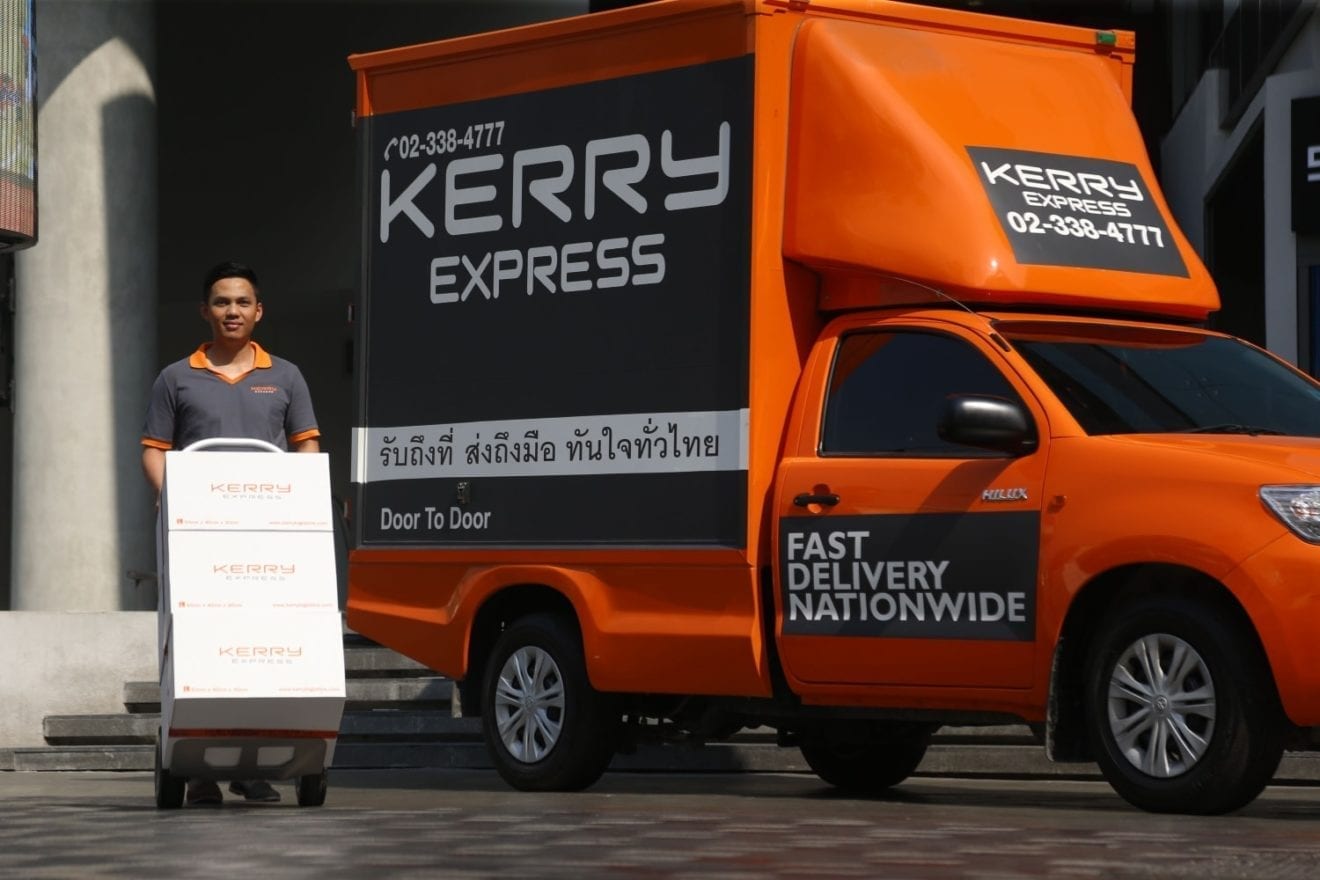
    Kerry Logistics Network Limited (‘Kerry Logistics’; Stock Code 0636.HK) announced the establishment of Kerry Coffee (Hong Kong) Limited (‘Kerry Coffee’) to extend its business into the trading of coffee and related products, as well as to further deepen its partnership with Italian coffee group illycaffè.

    Kerry Coffee will be the sole distributor of illycaffè’s complete product range in Hong Kong and Macau, including the iperEspresso coffee machines, capsules, coffee beans, and other coffee-making equipment and accessories.

    Kerry Logistics has been enjoying a partnership with illycaffè since 2017, providing total integrated logistics solutions for illycaffè and acting as the sole distributor of iperEspresso coffee machines and capsules in Hong Kong.

    The launch of Kerry Coffee will consolidate illycaffè’s entire product selection under one operator in Hong Kong to facilitate brand building and market penetration.

    It will also mark the expansion of Kerry Logistics’ food services business to capitalise on the growing coffee culture in the territory.

    Robert Berger, Executive Director – Fashion & Lifestyle of Kerry Logistics (Hong Kong), said, “We are thrilled to take our collaboration with illycaffè a step further.

    “The establishment of Kerry Coffee and the consolidation of illycaffè’s full product range under the new company will enhance the cost-efficiency of the sales and distribution operation, and enable illycaffè to increase its market share and brand recognition in Hong Kong and Macau.

    “The development also enriches Kerry Logistics’ food services business and allows greater product diversification to serve HORECA and club customers in Hong Kong and Macau.”

    Embodying the distinctive coffee culture in Italy, illycaffè is one of the world’s most global coffee brands.

    Kerry Coffee will provide total logistics solutions, sales, and marketing to ride on the flourishing coffee culture in Hong Kong and Macau, solidify the market position of the illy brand and establish Kerry Coffee as a major player in the coffee market.

  • Ducati First Quarter 2019 Sales Up Worldwide

    Ducati First Quarter 2019 Sales Up Worldwide

    Ducati has reported a five percent increase in sales worldwide in the first quarter of 2019. In all, Ducati delivered 12,541 motorcycles in the period from January to March 2019, compared to 11,949 motorcycles moved in the first quarter of 2018. And that’s not all; most segments from the Italian manufacturer showed growth in the first quarter, but the Hypermotard and Multistrada range showed the most growth, with sales increasing 18.6 percent. With 4,113 units sold in the first quarter, the Hypermotard and Multistrada are the company’s bestselling models.

    The Ducati Scrambler range continues to be a major revenue generator for the firm and already accounts for more than a quarter of Ducati’s overall sales. And in Q1 of 2019, sales of the Scrambler range shot up just short of 15 percent. Sales in the naked line-up, which includes the Monster and Diavel family, dipped slightly from 2018, by 1.13 percent. The Ducati Diavel 1260 has been introduced in 2019, but that hasn’t seemed to have enthused sales in the segment so far.

    Ducati’s superbike sales have dipped slightly, despite the introduction of the Panigale V4 line-up, and recorded a slip of 13.5 percent compared to the first quarter of 2018. In all, Ducati sold almost 600 more units in the first quarter of this year. With a naked V4 in the making, it remains to be seen how the upcoming new model will be received by the market. Based on the sales trend in the first quarter, it appears the neo-retro models in the Scrambler line-up will continue to be an important segment for Ducati, and could well display more volumes as the year progresses.