Author: Mei Ling Tan

  • China Mobile International launches iSolutions

    China Mobile International launches iSolutions

    China Mobile International has launched a new cloud network integration solution in Hong Kong designed to provide multinational enterprise customers with self-service deployment capabilities.

    The new iSolutions offering will also allow customers to manage all their cloud and network products on a single platform for enhanced visibility, accessibility and manageability.

    It will allow customers to self-deploy and manage cloud network products from major providers including Microsoft AzureGoogle Cloud, Alibaba Cloud, Huawei Cloud, Tencent Cloud, Baidu Cloud Engine and UCloud.

    The solution initially covers 60 Cloud Connect points of presence across 47 cities worldwide to enable the management of global cloud and network products from the one platform.

    Customers will be able to use the platform to purchase new cloud services and deploy them within seconds, track and monitor service status and usage, troubleshoot problems and manage the product lifecycle.

    The iSolutions Cloud Network Service leverages China Mobile International’s global footprint to provide 99.99% guaranteed uptime, and the operator’s fiber infrastructure in China to provide value-added services.

    “Our cloud service provider partners represent the highest level of service in the global cloud market. CMI has recently increased its investment in cable systems, PoPs and data centers,” China Mobile International CEO Dr Li Feng said at the launch event in Hong Kong.

    “In collaboration with the world’s finest cloud service providers, we will leverage our combined advantages to provide global enterprises with a one-stop carrier-grade cloud-network solution and customizable attentive professional services.”

  • Carrefour China Sale not on the Agenda

    Carrefour China Sale not on the Agenda

    Carrefour has denied business media reports it is considering selling all or some of its Chinese retail business.

    According to an article, quoting “people familiar with the matter”, the French retail giant is mulling options for the future of the Carrefour China business where sales fell 10 percent last year to €3.6 billion.

    Carrefour “is working with an adviser and has begun reaching out to potential suitors”. Its sources asked not to be identified because the deliberations are private.

    However, a spokeswoman for Carrefour responded saying a sale of the business is “not on the agenda.”

    Analysts estimate the Carrefour China business could fetch about US$1 billion if it was sold in total, however, options being considered to include selling a share to a local partner – or do not sell any of it. No final decision has been made as yet.

    The first Carrefour China supermarket was opened in 1995 when the French company was one of the first foreign retailers to enter the market. Since then it has opened about 245 stores, mostly large-format hypermarkets.

    In March, Carrefour reported its Chinese business had boosted profit 11-fold to €45 million.

    “China is a retailing laboratory for the world,” said Thierry Garnier, president and CEO of Carrefour China at the time. “For Carrefour, China is a specific market that has helped us to learn and to understand the future.”

    And last month the company said it was partnering with local electronics retail Gome to open stores-in-stores in Carrefour hypermarkets selling electrical goods after a successful trial in 11 stores.

  • South Korean retail sales surged during Holidays

    South Korean retail sales surged during Holidays

    The unprecedented extension of the Japanese Golden Week holiday to 10 days has seen a surge in tourists visiting South Korea.

    The holiday was extended to mark the enthronement of Crown Prince Naruhito from the usual April 29 to May 5 period.

    Duty free businesses saw big jumps in sales during the period compared to the previous year. Lotte Duty Free in Sogong-dong saw a 45 per cent sales increase, while Shinsegae Duty Free in Myeongdong saw an 80 per cent year-on-year increase.

    Hotels in the main commercial districts of Seoul also saw double-digit occupancy boosts during the period above Golden Week figures for last year.

    Tourism from China was also up 25 per cent during the period, although this rise was lower than in the first four months of this year.

  • Connected wearable shipments to hit 239m in 2023

    Connected wearable shipments to hit 239m in 2023

    Global shipments of connected wearables are forecast to grow from 116.8 million units in 2018 to reach 238.5 million units in 2023, representing a CAGR of 15.4%, according to research firm Berg Insights.

    Bluetooth will remain the primary connectivity option in the coming years.

    A total of 67.7 million of the wearables sold in 2023 are forecast to incorporate embedded cellular connectivity, mainly in the smartwatch and telecare and medical device categories.

    The connected fitness & activity tracker segment is led by China’s Xiaomi, which has been successful with its Mi Band fitness tracker. Fitbit, a pioneer in the segment, is still also among the largest vendors in the segment along with Huawei and Garmin.

    In 2018, shipments of connected fitness & activity tracker reached 65 million units.

    This product category is now facing fierce competition from smartwatches that in most cases include activity tracking features. Apple entered the connected wearables market in the second quarter of 2015 and quickly became the leading smartwatch vendor.

    In 2018, Apple accounted for almost half of the total 45.5 million smartwatches sold during the year.

    “Apple continues to hold a firm grip on the smartwatch market and is at the forefront of innovation in the industry,” says Martin Bäckman, IoT Analyst at Berg Insight. The competition has responded with increasingly capable and attractive devices from Wear OS vendors including Fossil, LG, and Huawei as well as from vendors betting on other platforms such as Fitbit and Samsung.

    The smartwatch segment is expected to surpass fitness & activity trackers and become the largest device category within wearable technology in terms of shipments in 2021.

    “Technology advancements, increased consumer awareness and wide availability of devices in different price segments will enable smartwatches to reach shipments of 117.7 million units in 2023,” concludes Bäckman.

    Sales of smart glasses and head-mounted displays have so far been modest, but promising use cases in professional markets as well as in niche consumer markets will enable it to become a sizeable connected wearable device category in the next five years.

    A number of vendors including Daqri, ODG, Epson, Google, Microsoft, Kopin and Vuzix are active in the segment. Standalone VR headsets from companies such as Oculus and HTC aimed for the consumer market are gaining traction and accounted for a large share of the total 1.5 million devices shipped in the segment during 2018.

    Berg Insight forecasts that shipments of smart glasses and head-mounted displays will reach 11.9 million units by 2023.

    Annual shipments of medical devices and mobile telecare/mPERS devices are forecast to grow from 1.8 million devices in 2018 to 6.9 million devices in 2023. The segment includes wearables such as cardiac rhythm management devices, ECG monitors and mobile telecare devices.

    Finally, annual shipments of wearables not covered by the above product categories such as authentication and gestures devices, smart rings, wrist-worn computers and scanners, smart jewelry and connected prosthetics are predicted to grow from 3.0 million units in 2018 to reach 13.0 million units in 2023.

  • StarHub launches SD-WAN solution through ngena

    StarHub launches SD-WAN solution through ngena

    Singapore’s StarHub has announced an innovative SD-WAN solution through its partnership with the Next Generation Enterprise Network Alliance (ngena).

    The new solution is designed to meet the needs of multinational companies choosing to set up a global or regional base in Singapore, as well as local companies looking to expand into overseas markets.

    The fully managed SD-WAN service offers robust network connectivity, the ability to scale and a global reach.

    As one of the current 24 partners of ngena, StarHub is connected to a single global network through a common platform that integrates all alliance partners’ networks. This allows the telco to offer end-to-end managed SD-WAN services to promptly serve enterprises with geographically distributed operations.

    “Networking capabilities are crucial to the success of enterprises in the digital era, keeping business operations running and enabling employees to be productive. We are very pleased that with our partnership with ngena, our customers can benefit from StarHub SD-WAN, a global network connectivity service that is secure, stable, scalable and easy to use while they depend on StarHub for local support,” StarHub chief of enterprise business Dr Chong Yoke Sin said.

    As a result, they can realize real gains in increased productivity and lower IT costs as well as enjoy the ease of dealing with one service provider. We are also excited to enable our alliance partners to offer reliable, high-speed, and secure data connectivity services for their customers with Singapore-based operations.”

  • McDonald’s looks to create pipeline of property talent

    McDonald’s looks to create pipeline of property talent

    With $500 million to be spent on new restaurants and refurbishments over the next three years, McDonald’s Australia has established a new property graduate program to create a pipeline of future property leaders within the organisation.

    The fast food chain recently announced the names of the program’s first successful applicants, and it is currently accepting applications for the 2020 intake. Applications close on Sunday, May 12.

    The two-year program provides training in relevant fields, including real estate, construction, design and asset management, and hands-on guidance from experienced mentors in McDonald’s national development team, which maintains a portfolio of over 980 restaurants across Australia.

    Tom Veale, development director of the southern region at McDonald’s Australia, told Inside Retail the program is an important part of the fast food chain’s commitment to new restaurant growth.

    “McDonald’s is committed to new restaurant growth and we wanted to create an opportunity for young talent to come in and grow with our business, developing future property leaders,” he said.

    At a time when many retail and hospitality businesses are looking to “right-size” their store footprints, talented property leaders may very well be a competitive advantage.

    “McDonald’s prides itself on developing and promoting talent and we have so many great people in the system to learn from to give graduates a great kick start to their career,” Veale said.

    “Training graduates allows us to set up a strong pipeline for future success, creating the business leaders of tomorrow.”

    Besides its new property graduate program, McDonald’s Australia also offers a Diploma qualification through its management development program and Certificate II and III in Retail Services.

    “Macca’s is a starting point into the work force for so many young people and, in many instances, turns into a long-term career,” Lisa Althorpe, director of people and culture at McDonald’s Australia, said.

    “Our aim is to set youngsters up with skills for life and a great foundation that gives them the opportunity to build a great career, whether that’s with McDonald’s or externally.”

    Participants in the property graduate program will have the opportunity to continue in a permanent role within McDonald’s Australia upon completion.

    McDonald’s Australia was recently highlighted as a standout performer in the company’s announcement of its Q1 earnings. McDonald’s CEO Steve Easterbrook reported a 5.4 per cent increase in the company’s global comparable sales, and US$4.96 billion (A$7.09 billion) in revenue.

    This reflected the global company’s 15th consecutive quarter of comparable sales growth, but it was 20th consecutive quarter of comparable sales growth for McDonald’s Australia, Easterbrook pointed out.

    He attributed the business’s success to its pioneering initiatives, such as McCafe, which was born in Melbourne in 1993 and is now available in countries all around the world, and delivery via Uber Eats.

    A spokesperson for McDonald’s Australia told Inside Retail the focus has always been on running great restaurants and providing customers with the best possible dining experience.

    “We do this by getting the basics right and innovating in ways our customers want, including through delivery and digital,” the spokesperson said.

    “We’re a customer-driven business; everything – from the food we serve, to the design and facilities in our restaurants – is in response to their needs and is focused on providing the best possible dining experience.

    “We will continue to expand our delivery and digital offerings, as well as grow by investing approximately $500 million in new restaurants and refurbishments over the next three years.”

  • JD.com Closes Australian branch Store

    JD.com Closes Australian branch Store

    Chinese online marketplace JD.com has closed its local branch after only 15 months in the market.

    The e-commerce giant launched its Australian office in Melbourne in February 2018, after its competitor Alibaba opened an office in Melbourne in 2017.

    At the time, the opening was seen as a way for JD.com to work more closely with the Australian and New Zealand brands on its platform, and to pitch its business to new brands looking to expand into China.

    A JD.com spokesperson confirmed that the online marketplace is integrating its Australian office into the business in China. The spokesperson said the move didn’t reflect the business’s performance in Australia, nor the region’s importance.

    The retailer’s head of Australian operations Patrick Nestrel is no longer with the business, likely in an effort to ensure management in China is able to fully integrate Australian operations.

    The online retailer is set to report its first-quarter sales results on May 10. It has had a difficult few months recently after founder Richard Liu was arrested in September 2018 in the US for sexual misconduct. He was not charged.

    In April, the Chinese university student who accused Liu of misconduct filed a civil lawsuit against him.

  • Cat Opening First Australian Store

    Cat Opening First Australian Store

    Global workwear brand, Cat, will open its first flagship store on Australian soil this weekend, on Saturday, May 11, at Pacific Werribee shopping centre in Victoria, according to owner Accent Group.

    For a brand that is all about “being on the tools” it was important to create a physical space that reflects the brand’s dedication to Australia’s trade business, according to Accent Group chief executive officer Daniel Agostinelli.

    “We’re committed to growing our local offering to be a leading player in the Asia-Pacific region,” Agostinelli said, noting that Cat was one of the group’s most successful brands.

    The grand opening will offer a free in-store barber service, as well as coffee and donuts to new members, and exclusive gifts for the first 20 visitors to walk through the doors on Saturday and Sunday.

    This is the first standalone store for the brand, though it has traded online and through retail partners, including The Athlete’s Foot, which is also owned by Accent Group, Totally Workwear, Shoes2U and The Hardware Store.

    Wesfarmers has also invested recently in the workwear space, with its commitment to a partnership with custom workwear brand ONTHEGO.

    The partnership initially involved the brand being offered through Officeworks’ website, but has since been expanded to include in-store kiosks at several Officeworks sites, allowing customers to create their own workwear on the spot.

  • Alibaba and Bailian JV Ego stores Debut

    Alibaba and Bailian JV Ego stores Debut

    Take a look inside the first of 500 fresh-food and convenience stores planned by Alibaba and Bailian, which has opened in Shanghai. The fruits of Alibaba’s joint venture with Bailian Group are on show in Shanghai where the first of 500 Ego stores planned this year is now trading.

    According to mainland media reports, the joint venture has leased space for up to 30 outlets under the Ego brand already. Two formats are planned – larger central stores with footprints of between 300sqm and 500sqm, and smaller satellite stores of about 100sqm.

    Analysts say the Ego format – the stores are bannered Ego 逸刻 (which translates to Escape) – will bring together the back-end expertise of Alibaba Group with Bailian’s brick-and-mortar convenience experience.

    Bailian and Alibaba announced their strategic cooperation in February 2017 jointly creating what they described as a “New Retail, new consumption, new future” concept. They pledged to work together to use big data and internet technologies in areas including efficient supply chain integration, customer membership systems, seamless payment interconnections, and logistics synergy.

    “More than two years after Alibaba’s RMB1 billion deal with Bailian Group, we can finally see some fruits of this collaboration,” observed China-based entrepreneur, speaker, coach, and author Dr Mirko Wormuth, who posted these accompanying photos on LinkedIn.

    About two-thirds of the Ego store area is dedicated to fresh or hot products, including coffee, baked bread, and hot meals. The remaining space sells bottled and packaged foods.

    The first store in Shanghai is equipped with three self-checkout machines, in addition to Alipay checkout, and encourages consumers to pay by Bailian wallet.

    The fruits of Alibaba’s joint venture with Bailian Group are on show in Shanghai where the first of 500 Ego stores planned this year is now trading.

    According to mainland media reports, the joint venture has leased space for up to 30 outlets under the Ego brand already. Two formats are planned – larger central stores with footprints of between 300sqm and 500sqm, and smaller satellite stores of about 100sqm.

    Analysts say the Ego format – the stores are bannered Ego 逸刻 (which translates to Escape) – will bring together the back-end expertise of Alibaba Group with Bailian’s brick-and-mortar convenience experience.

    Bailian and Alibaba announced their strategic cooperation in February 2017 jointly creating what they described as a “New Retail, new consumption, new future” concept. They pledged to work together to use big data and internet technologies in areas including efficient supply chain integration, customer membership systems, seamless payment interconnections, and logistics synergy.

    “More than two years after Alibaba’s RMB1 billion deal with Bailian Group, we can finally see some fruits of this collaboration,” observed China-based entrepreneur, speaker, coach, and author Dr Mirko Wormuth, who posted these accompanying photos on LinkedIn.

    About two-thirds of the Ego store area is dedicated to fresh or hot products, including coffee, baked bread, and hot meals. The remaining space sells bottled and packaged foods.

    The first store in Shanghai is equipped with three self-checkout machines, in addition to Alipay checkout, and encourages consumers to pay by Bailian wallet.

  • EBay orders Shipped Faster

    EBay orders Shipped Faster

    New data from Juniper Research predicts consumer interaction with chatbots in retail will reach 22 billion by 2023.

    The figure represents a sharp increase over an estimated 2.6 billion interactions this year.

    According to the new research report “AI in Retail: Segment Analysis, Vendor Positioning & Market Forecasts 2019-2023”, chatbots in retail will enable effectively automated customer interactions for both online and offline vendors.

    A crucial enabler of this development will be improvements in NLP (Natural Language Processing), which will dramatically reduce the failure rate of chatbot interactions, by making them more natural and valuable for customers.

    Juniper anticipates that retailers who do not adopt chatbots will face strong challenges from more technologically-adept disruptors, who will use chatbots as an extension to the crucial omnichannel retail experience.

    The research also found that chatbots used for customer service have a strong potential to reduce costs; with deployments realizing annual savings for retailers of US$439 million globally by 2023, up from just $7 million this year.

    These potential savings will act as a key “pull” factor, given the margin pressure that many retailers are presently feeling.

    “By embracing automated customer service with chatbots, retailers can act in a more flexible and efficient way,” explained research author Nick Maynard. “The wider retail market means that chatbots are no longer a luxury, they are essential.”

    Meanwhile, sales resulting from interaction with chatbots in retail will reach $112 billion by 2023, up from $7.3 billion this year; representing an annual growth rate of 98 percent.

    The research found these sales will largely be a result of migration from other channels, rather than a new revenue stream. Accordingly, the research emphasized that while retailers must adopt chatbots for ease of use (and to reduce consumer churn), their return on investment will come from efficiencies, rather than net income.

  • Pricing Tactics to Boost Sales in E-Commerce

    Pricing Tactics to Boost Sales in E-Commerce

    More than 80% of the purchasing decision depends on price. Especially in the ultra-fast e-commerce arena where businesses showcase and change their prices every 3 to 6 hours. But before changing prices out of the blue you must know that there are certain conditions to do that. Decrease your prices to very low and you’ll leave a lot of money on the table raise them up high and you’ll end up hunting flies.

    The Importance of Pricing

    Let’s start by going through each insight down below to understand why pricing needs more attention ever than before.

    • 90% of consumers invest their time to hunt the best online deals.
    • 80% of “first-time” consumers say it’s important to be able to see and compare prices from different sellers.
    • 70% of consumers believe they’ll get a better deal online than in brick&mortar stores.
    • 50% of consumers will purchase products left in shopping carts if those products are offered at a lower price.

    As you can see pricing is very, very important.

    Let’s get into some tactics on how you can approach pricing to increase your profits margins and sales numbers.

    Charm Pricing

    Have you ever heard about the power of 9s? That is the strategy, where you end a price with a “9” instead of a “0” on the price tag. This is a very common tactic especially in physical stores, but you may also come across it in online stores as well.

    Here’s why! Our brain perceives $50.00 and $49.99 as different values. According to consumer perception, $49.99 seems closer to $40.00, which is cheaper than $50.00 and product prices ending with a “9” are considered “the” deal to not miss.

    Prestige Pricing

    This is suitable for high-end, luxury, emotion-triggering products, where you should apply round prices such as $500, $750, opposite of charm pricing. Setting round prices on products which evokes emotions converts better.

    A study by Kuangjie Zhang and Monica Wadhwa, claims that “A rounded price ($100.00) encourages consumers to rely on feelings when evaluating products, while a non-rounded price ($98.76) encourages consumers to rely on reason. When a purchase is driven by feelings, rounded prices lead to a subjective experience of feeling right,”

    Bundle Pricing

    This psychological trick makes online shoppers search for getting an extra item with the purchased product at the same price. This presents a golden opportunity for the wise e-commerce seller. To reduce this pain and encourage online shoppers to buy your products, use bundling, set your prices accordingly and get these customers to reach deeper into their pockets.

    For example, Amazon has an advanced bundling strategy; it always suggests two or three related items that you may want to purchase at the same time. Most of the online shoppers jump onto these types of offers because they’re amazed by the simplicity of purchasing them all at the same time. Bundle two or three items together with a single price set an adequate discount, and you can start selling less-popular items.

    What’s Next?

    All of the tactics above are some part of the common approaches laid out from the people of Prisync. To learn more about other pricing strategies take the time to read most of their blog posts. When you’ve successfully implemented a strategy, you’ll either address your customer’s emotions or logic. Either way, you will start winning and boosting your conversion rates, sales, and eventually revenue. And if you want to automate that, we recommend you start using a pricing software sooner before its too late.

  • BMW Group Plans To Launch 25 Plug-In’s

    BMW Group Plans To Launch 25 Plug-In’s

    Since 2013, BMW has been in the game of electric cars and it was then that the company envisioned the future of electrification in automobiles. The ‘i’ brand has been very successful right from the i3 all-electric car to the i8 plug-in hybrid. And now, BMW is looking to expand that portfolio and bring in a lot more cars for its customers. The company announced at an investor meeting that it is going big on its electrification plan. The company plans to launch 25 Plug-In hybrids and 12 All-Electric cars by 2025. Over the next couple of years, the company will focus on bringing out plug-in hybrid versions of its existing models.

    Back in 2017, deliveries of electrified vehicles for BMW jumped by 65.6 percent to 103,080 units. Considering the strong growth it has seen in this space, the BMW Group announced that it will spend more on research and development in 2018. The company spent 6 billion euros in 2017 and that figure jumped to 7 billion in 2018.

    The company met its target of selling 1,40,000 EVs worldwide and has already sold 4 lakh electrified cars across the globe. The company is eyeing the 5 lakh unit sales milestone in 2019. The surge in sales will be helped by the introduction of new products and these will include all-electric BMW iX3, the new i4, and MINI. The BMW Group already manufactures electrified vehicles at ten production facilities.

    In 2019, Plant Oxford will join this list with the start of production of the fully-electric MINI. The BMW i4 is just one of the 25 electrified models that the BMW Group intends to bring to market by 2025. Half of these models will be fully electric. Powered by the fifth generation of battery and drivetrain technology, from 2021 the BMW Group will of offer all-electric vehicles with a range of up to 700 kilometers and plug-in hybrids with an electrical range of up to 100 kilometers.

  • Coach Hong Kong Best Employer To Work for in Asia

    Coach Hong Kong Best Employer To Work for in Asia

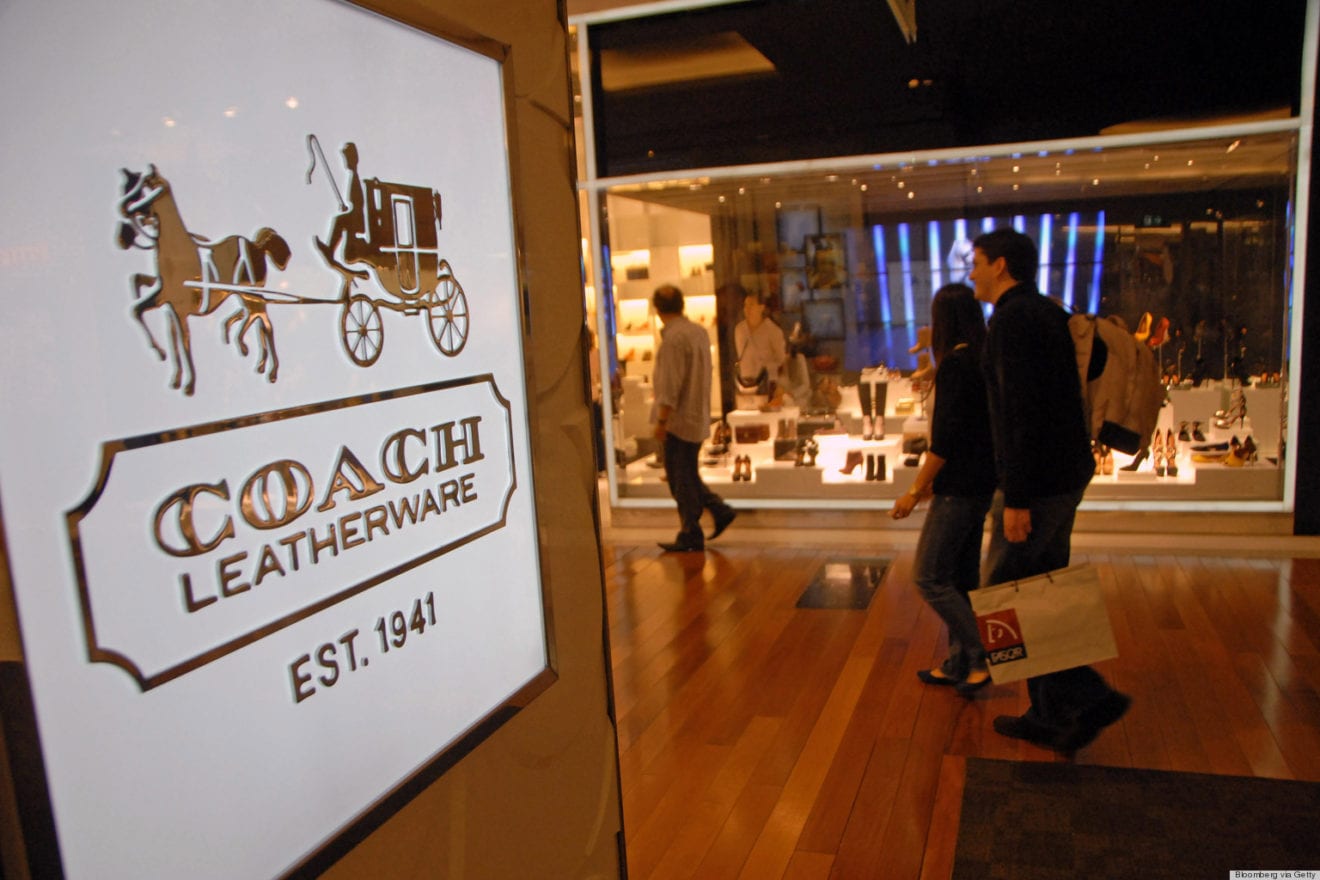
    Luxury leather goods retailer Coach Hong Kong has been awarded the “Best Company to Work for in Asia 2019” by HR Asia magazine.

    The award recognises companies that possess “remarkable levels of employee engagement, corporate culture and employer branding”. The selection process covers a comprehensive assessment of participating organisations’ talent strategies, employee engagement and leadership effectiveness. Employees are invited to provide ratings and opinions on their employers to help select the winner.

    Coach Hong Kong was awarded the accolade after it was judged by an independent panel of industry experts, academics and journalists.

    “As a core brand under Tapestry, Coach adheres to the values of optimistic, innovative and inclusive,” said Coach Hong Kong, Macau and Taiwan GM Damien Tonneau. “We are committed to helping our employees grow and provide an engaging work environment that celebrates innovation and inclusiveness. We empower passionate people to fulfill their dreams with a digital-centric talent strategy.”

    “We see talent as our most valuable asset, and they are at the forefront of our customer service,” said Coach and Tapestry Asia Pacific VP and head of HR Janet Zhong. “The award fully recognizes our HR and talent strategy and business growth in the region. We are immensely proud of how we implement new ideas, tools, and systems to empower our managers and employees, offer robust learning and development programs, and exciting opportunities for career advancement.

    “Looking ahead, we will continue to evolve our HR transformation journey to support Coach’s brand strategy; focus on building a critical talent pipeline and continue to thrive with great stamina and offer a dynamic environment celebrating personal growth and success for all our employees,” she added.

    Coach Hong Kong has 19 directly operated stores and nearly 340 employees.

  • Retailers trust Mobile Device Data for Retail Network planning

    Retailers trust Mobile Device Data for Retail Network planning

    Retailers have found a new way to conquer the challenge of limited data availability in many Asian markets by using Mobile Device Data.

    Yes, location-powered Mobile Device Data is the latest and most powerful tool for analyzing customer origins and movement patterns.

    With both population growth and growing disposable incomes, as well as an appetite for many retail formats, numerous Asian countries are becoming increasingly attractive for global retailers. But the Asian market is both enormous and very diverse, so customer profiling is essential for any retailer wanting to target its growth strategy to the most lucrative opportunities.

    Enter Mobile Device Data – the new frontier in the trade area, customer analysis and retail network planning.

    Mobile Device Data as a technology can be used to cost-effectively deliver a range of network planning functions, including:

    1. Understanding population densities and movements at a small area level, for both daytime and evening populations
    2. Identifying gaps for new business opportunities
    3. Forecasting trade area overlaps and sales cannibalization
    4. Creating targeted local store marketing and advertising opportunities.

    Increasingly retailers are moving to cloud-based mapping tools like GapMaps to help them make the best possible decisions in a data-driven, cost-effective manner. Instead of running customer origin surveys, which can incur huge costs and chew up lots of time for data entry, fieldwork and analysis, retailers are now looking for location intelligence platforms which are dynamic, global, flexible and cost-effective. Most importantly, Mobile Device Data can also generate more accurate results, drawing on massive volumes of customer data collected over years, rather than a small sample survey conducted over a few weeks.

    That’s exactly what GapMaps offers. GapMaps is a global platform which is leading the way in Mobile Device Data analysis. The platform has successfully integrated device data as a new layer on its network mapping platform, providing deep insights into customer visitation patterns and movements during both daytime and evening. The GapMaps technology has been successfully used in many countries by a number of leading global retailers in quick service restaurants, fast food, cafes, petrol retailing, health and fitness, child care and many other sectors. The platform is also widely used by many developers in these various sectors.

    Where can you use GapMaps Mobile Device Data?

    GapMaps can help any client analyse Mobile Device Data for any location in the world where mobile phones are extensively used.

    Many GapMaps clients in India, Indonesia, Hong Kong, and Taiwan are already using Mobile Device Data to define trade areas. The following example shows the mobile device density during the day in New Delhi, India.

    The data can be used for any location that attracts significant numbers of visitors, be it an individual retail store or shopping centre, quick service restaurant, gymnasium, sports arena, museum, entertainment venue or tourism precinct.

    Real-time, large scale, and cost-effective Mobile Device Data

    Harnessing GPS information based on mobile phone activity at and around any selected location, the data are collected from mobile phones (devices) via one or more of hundreds of popular apps. These apps collect the data and feed it back to a central collection point.

    GapMaps founder and managing director, Anthony Villanti says: “Mobile Device Data is a game changer in terms of how retailers can substantiate network planning decisions and model their catchment areas. Mobile devices observed in specific locations, such as a retail store, can be linked with their common evening and daytime locations, such as ‘home’ or ‘work’, for example. When the data is visualized in the GapMaps platform, it’s a really effective tool.”

    Mobile Device Data offers the powerful combination of being real-time, Big Data, continual, flexible, easily replicable across locations or time periods, and cost-effective, because

    1. The observations are time stamped and therefore any period of analysis can be selected.
    2. The analysis can be easily repeated for multiple time periods and multiple locations. There are no limits.
    3. Any site or location can be analyzed, including any competitor sites – no permissions are required.

    The data is easily deployed via the user-friendly GapMaps platform, enabling insightful analysis (both tabular and pictorial) to be conducted and presented by any user – no technical expertise is necessary.

    Combining such Mobile Device Data with demographic, government and industry statistics in India, Indonesia, Hong Kong, Taiwan and other countries throughout Asia, GapMaps can be used to inform and guide network strategy. It is already being used by hundreds of companies across a wide range of industries – from childcare and fast food to fitness, cafes, aged care, fashion retailing, entertainment destinations, financial services and more.

  • PLDT taps Panlilio as chief revenue officer

    PLDT taps Panlilio as chief revenue officer

    PLDT announced Alfredo S. Panlilio (AI) will return to the Philippines telco as chief revenue officer of both PLDT and its mobile unit Smart Communications, starting July 1, 2019.

    Panlilio (pictured) currently serves as senior vice president of customer retail services group at the Manila Electric Company (Meralco).

    He first joined PLDT as SVP for the telco’s corporate business group in 1999 and was later tasked to head PLDT’s carrier business group before he joined Meralco in 2010.

    Panlilio will replace Ernesto R. Alberto (Eric), who is set to step down from his post as PLDT and Smart CRO, effective June 30.

    “We would like to thank Eric for his 16 long years of service and loyalty. Under his watch, PLDT Enterprise rose to become the leading force that it is in the market today,” said Manuel V. Pangilinan, chairman and chief executive officer of PLDT and Smart.

    Enea has tapped former Ericsson executive Jan Häglund as its new CEO.

    Häglund was chosen to lead the company late 2018 to succeed Anders Lidbeck, who becomes chairman of the board, Enea said in a statement.

    Haglund brings to the table 25 years of experience in the telecoms industry. Prior to joining Enea, he was head of Ericsson’s product portfolio and R&D for digital services.

    Anders Lidbeck, chairman of Enea said Häglund will help Enea strengthen and develop its position as a reference supplier and trusted partner.

    “[Häglund’s] wide-ranging experience across many disciplines at Ericsson will benefit Enea and our continued expansion,” he said.