Author: Mei Ling Tan

  • APJxC to produce 33.8 zettabytes of data by 2025

    APJxC to produce 33.8 zettabytes of data by 2025

    Seagate Technology recently released a white paper with IDC on the growing datasphere in Asia Pacific including Japan, but excluding China (APJxC).

    This is following the launch of IDC’s global White Paper, The Digitization of the World – From Edge to Core, sponsored by Seagate Technology, which examines how much new data is created and replicated each year and the impending shifts to the global data model by 2025.

    Top findings from the regional paper include:

    • Data created in the APJxC regions will increase from 5.9ZB in 2018 to 33.8ZB in 2025.
    • The APJxC Datasphere is one of the fastest growing Datasphere regions, growing at a 2018–2025 CAGR of 28.3% compared with a gloabl rate of 27.2% and a U.S. growth rate of 23.6% over the same time period.
    • Entertainment-related data is growing at a faster pace than most other regions, expanding at a rate of 23% compared with a global average of 20% for 2018–2025.
    • The number of online users in the region participating in entertainment-related activities is growing faster than the global rate — 7.2% compared with 4.6% for 2017–2022, which will increasingly happen on the go on mobile devices.
    • Storage utilization in APJxC will grow from 0.5ZB in 2018 to 2.3ZB in 2025, even though not all data created will require permanent storage.
    • By 2025, 58% of data storage will take place in the public cloud compared with 22% in 2018 – largely driven by the growing number of internet users in the region, which drives use of the cloud not only by users but also by enterprises as they race to keep up with user demands.

    As such, the percentage of data in the APJxC Datasphere emanating from or replicated in the edge will increase from 12% to 20% of the region’s total Datasphere — as data is delivered to endpoints and as IoT devices increasingly drive processing and analytics closer to the point of origin of the data itself.

    This unprecedented data growth combined with the pressures of deriving value from data for digital transformation will create imperatives for IT and business organizations across all regions over the next decade. Enterprises must develop a fitting data storage and management and capitalization strategy and drive a new level of engagement with consumers using data-informed services and products.

  • Kerry Logistics Appoints Martin Stoekenbroek as MD for EMEA

    Kerry Logistics Appoints Martin Stoekenbroek as MD for EMEA

    Kerry Logistics Network Limited has appointed Martin Stoekenbroek as its new Managing Director – Europe, Middle East, and Africa (EMEA) with effect immediately.

    Based in Amsterdam, The Netherlands, Stoekenbroek will lead Kerry Logistics’ international freight forwarding business in the EMEA region and be in charge of its strategic development, focusing particularly on strengthening Kerry Logistics’ foothold and business portfolio.

    With over 30 years of extensive experience in the industry specializing in EMEA and global roles, Stoekenbroek brings a wealth of supply chain knowledge, insights, and expertise to Kerry Logistics.

    He was the Senior Vice President Global Air Freight of Geodis prior to this appointment and has previously worked for top industry players including Wilson Logistics and TNT Freight Management.

    Mathieu Biron, Managing Director – Global Freight Forwarding of Kerry Logistics, said: “We warmly welcome Martin to our team.

    “Having built his career in logistics within the EMEA region for decades, Martin possesses an in-depth knowledge of our business in the region and a thorough understanding of the changing conditions of our industry.

    “He will be a vital part of our ongoing global expansion, providing visionary guidance as we realize our long-term strategy.”

    Commenting on his new appointment, Stoekenbroek said: “Kerry Logistics has been going from strength to strength through its worldwide expansion.

    “I am honoured to have the opportunity to apply my knowledge and experience to lead a strong team and help to propel the Group’s further development in the EMEA region.

    “At a time when the global supply chain is in flux, I look forward to contributing to Kerry Logistics’ progress and overcoming challenges to reinforce its position as a leading logistics partner connecting EMEA to the rest of the world.”

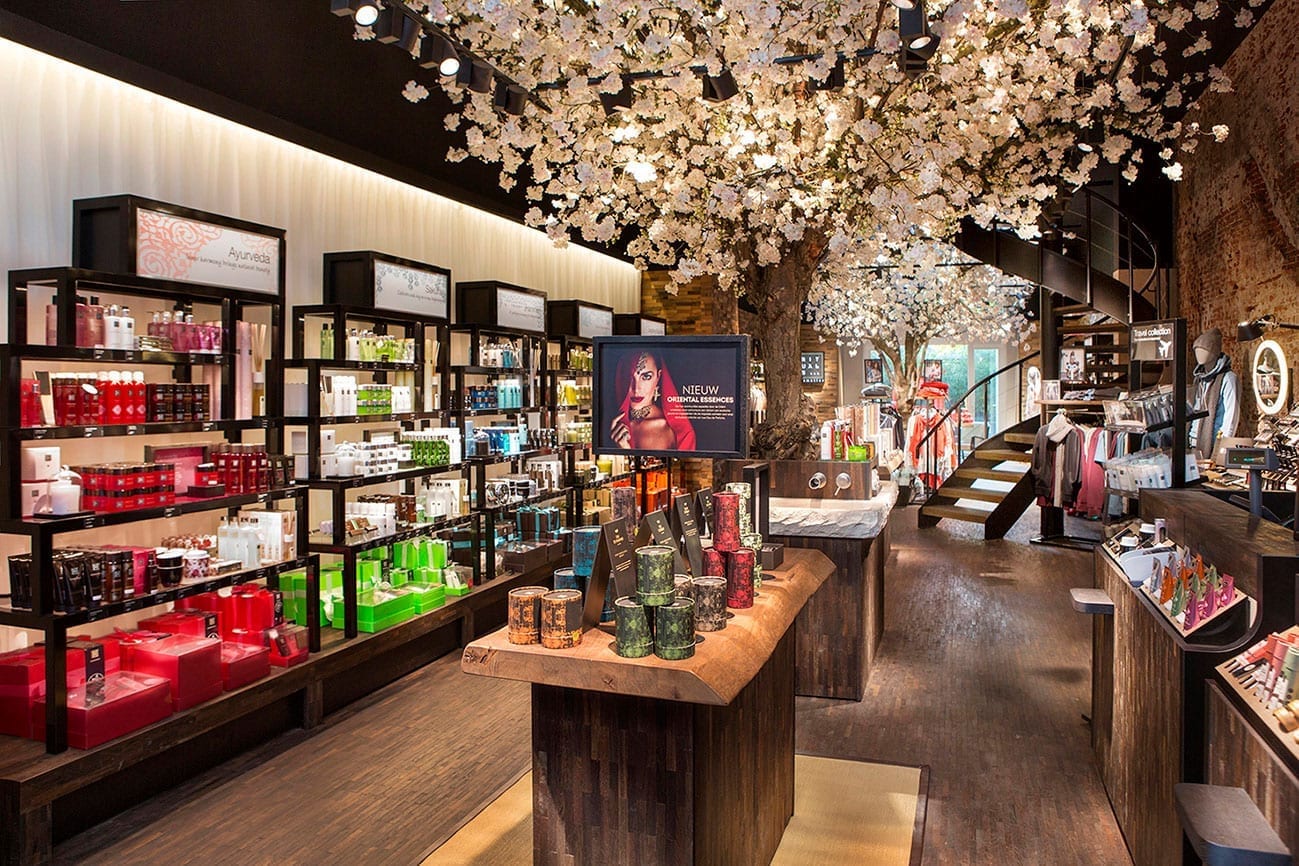
  • Rituals Hong Kong Store About To Open

    Rituals Hong Kong Store About To Open

    The first standalone Rituals Hong Kong store is slated for opening in July as the Dutch cosmetics retailer ramps up its presence in Asia.

    The company has promoted business development manager of travel retail, Marjet de Vlieger, as head of travel retail Apac. She will take up the newly created role on July 1 and relocate to the city in January. A Rituals Hong Kong office and warehouse are set to open next month.

    Until now, Rituals has only been sold in the region through concessions, including one at the T Galleria by DFS stores on Kowloon’s Canton Road. But that is about to change. Along with the Hong Kong store, the first in Asia, Rituals plans 10 new points of sale in the region, including a debut in South Korea.

    “Opening the Hong Kong office and warehouse facility is a major investment and steps forward as we look to convert the Asia opportunity,” said Rituals director of travel retail Neil Ebbutt.

    “For Rituals, travel retail is leading the way in building the brand’s presence in Asia, which not only shows the power of the channel but also allows airports and retailers to better differentiate themselves by being the gateway into the Rituals world.

    “Our vision is to build a truly global lifestyle brand and we’re ready to capitalize on this travel retail-first approach,” he said.

    Rituals has a five-year plan to build sales across Asia encompassing travel retail, standalone stores, and e-commerce. It will seek partnerships with airlines and hotels through a network of distributors.

  • Motorola One Vision leak reveals new color option

    Motorola One Vision leak reveals new color option

    We’ve known for a while that Motorola is gearing to release another Android One phone under the name Motorola One Vision. Today, another leak gives us a glimpse at a new color option, which the One Vision will be available in at launch.

    As per earlier leaks, the Motorola One Vision will sport a sizable 6.2-inch display with a 21:9 aspect ratio and a small punch-hole selfie camera in the upper left corner. Around the back, the renders reveal, a dual-camera setup with a 48-megapixel sensor will be taking care of video and stills. There’s no word yet on what function the second camera will serve, though it could very well be used for depth sensing.

    Under the hood, the One Vision is set to be Motorola’s first smartphone that employs a Samsung processor. Specifically, the Exynos 9610, which was recently used in the Galaxy A50, and is about on par with the Snapdragon 660, performance-wise. The Samsung CPU is said to be accompanied by 3 or 4 GB of RAM and a 3,500 mAh battery.

    The newly-leaked renders also reveal a blue color option for the Motorola One Vision, in addition to the brown shade, which was shown in earlier leaks. The phone is slated to make its official debut at an event held in São Paulo, Brazil on May 15th.

  • Tigerlily launches local e-commerce Platform

    Tigerlily launches local e-commerce Platform

    Resortwear brand Tigerlily is expanding further into New Zealand. It has just unveiled a New Zealand-specific e-commerce site, and will soon open a new store at the upmarket Newmarket precinct, which is currently undergoing redevelopment.

    The Newmarket Tigerlily physical store will feature the brand’s new store design, which came into play around six months ago.

    “Our stores used to be a real habitat, almost like lifestyle stores in that they were created to look like a bazaar – there was lots of furniture and loads of things on the walls,” explained Gareth Connolly, merchandise and supply chain director at Tigerlily.

    “Now we’ve done some decluttering – we wanted the product to be a hero. The Sydney Westfield store is a lot cleaner than what you may have seen before. Now, we embellish stores with just a beautiful living palm tree, instead of a bird cage and map of the world. It’s got a cleaner atmosphere … you’re not distracted by the rug, cushions and maps. It’s just about telling people that this is what we sell – not furniture.”

    Capturing the customer

    Meanwhile, the brand is also working on increasing its omnichannel presence in Australia, with plans to introduce several new services to customers, including click-and-collect, ship-from-store, endless aisles and floor-to-door.

    According to Connelly, floor-to-door is available for customers who enter a Tigerlily shop but find that the item they want is not available in-store in their size. It can be sent to them instead.

    “I don’t think Australians have done click-and-collect that well yet, but that’s the next thing we’re working on. We want to make sure there’s no reason for a customer to not get a product tomorrow,” he said.

    “If there’s not a particular item in our Bondi store for our customer, we’ll get it to her somehow. That’s an expectation created internationally and we’re not that good at it because we’re such a big country. Getting something from Sydney to someone to Perth is hard, but doing floor-to-door or ship-from-store will make things easier for us.”

  • Telesat completes 5G backhaul demo over LEO satellite

    Telesat completes 5G backhaul demo over LEO satellite

    Satellite operator Telesat, Vodafone Group and the University of Surrey in the UK have successfully completed the world’s first 5G backhaul demonstration using a low earth orbit (LEO) communications satellite.

    The successful trial demonstrates that LEO satellites can provide effective backhaul transport for mobile operators, including for 5G services, the participants said.

    During the live test last month, Telesat’s Phase 1 LEO satellite connected to the University of Surrey’s 5G testbed, with the support of specialist Vodafone engineers.

    The satellite-delivered a round trip latency of between 18-40ms, which is among the lowest latency recorded for a satellite connection.

    The backhaul was used to support video chat, web browsing and simultaneous streaming of up to 8K video, as well as 4K video transferred to the edge of the 5G network.

    “Providing cost-effective, high-performance backhaul services to MNOs seeking to extend their 4G and 5G networks is an important market for Telesat’s LEO program,” Telesat LEO VP Erwin Hudson said.

    “Telesat is collaborating with leading customers like Vodafone, who are experts in their markets, to perform tests and demonstrations on our Phase 1 LEO satellite that help us optimize the design of our LEO system to most effectively meet their future requirements.”

  • Hong Kong Restaurant Profits Rise

    Hong Kong Restaurant Profits Rise

    Retail sales may be down but Hong Kong restaurant sales rose by 3 percent in the first quarter of this year.

    The Census and Statistics Department (C&SD) provisionally estimates the value of restaurants receipts at HK$31.5 billion, while the value of purchases by restaurants increased by 3.1 percent to $10 billion.

    After netting out the effect of price changes over the same period, the provisional estimate of restaurant receipts rose by 0.5 percent compared with a year earlier.

    By comparison, Hong Kong retail sales for the quarter fell by 1.2 percent.

    Analyzed by restaurant type, Chinese restaurant sales decreased by 0.6 percent in value and by 2.7 percent in volume. Total receipts of non-Chinese restaurants increased by 4.8 percent in value and by 2.4 percent in volume. Fast food shop sales rose by 5.8 percent in value and by 2.8 percent in volume.

    Sales in bars rose by 2.6 percent in value and by 0.4 percent in volume, while “miscellaneous eating and drinking places” saw sales rise by 11.2 percent in value and by 7 percent in volume.

    C&SD also released figures for restaurant receipts and purchases for each month during the quarter. Receipts rose by 6.7 percent in January, by 0.8 percent in February and by 1.4 percent in March, compared with the same months last year.

    However, after factoring in inflation, it estimated restaurant sales rose by 3.8 percent in January but decreased by 1.3 percent in February and by 1 percent in March.

  • HSBC Gets New Trade Finance Head from OCBC

    HSBC Gets New Trade Finance Head from OCBC

    The move comes as HSBC Singapore looks to strengthen its regional coverage and increase its headcount across its entire business by more than 10 percent over a three-year period from 2018.

    HSBC Singapore on Monday announced the appointment of Tze Tze Lee as the bank’s head of product and propositions, a new position created within the bank’s global trade and receivables finance (GTRF) team.

    Lee began her new role on April 29 and reports to GTRF country head Iain Morrison and Sanjay Tandon, the Asia-Pacific head of product and propositions.

    According to her LinkedIn profile, Lee was previously head of Trade Finance Product Management at OCBC Bank, where she worked for two and a half years. Prior to that, she spent five years at Swedish commercial group Skandinaviska Enskilda Banken, where she was responsible for its product management of Cash Management and Trade Finance business. She was also employed by DBS Bank for 11 years, including as head of supply chain financing.

    HSBC Singapore recently completed a live and fully digitised trade finance transaction on a scalable blockchain platform and a fully digitised end-to-end trade finance transaction.

  • Singapore’s IMDA consulting on 5G policy framework

    Singapore’s IMDA consulting on 5G policy framework

    Singapore’s Infocomm Media Development Authority (IMDA) has launched a public consultation on the appropriate regulatory framework for 5G, with the goal of enabling commercial deployments by 2020.

    The regulator is seeking feedback from the telecommunications industry and the public on the best approach to 5G spectrum allocation, the baseline requirements for spectrum winners and driving the development of the broader 5G ecosystem.

    IMDA plans to allocate the 3.5-GHz and the 26-GHz to 28-GHz frequency bands as the initial 5G bands during the first wave of spectrum allocations, the regulator said. The regulator says this will be sufficient for at least two nationwide 5G networks.

    The initial allocation is expected to involve a call for proposal process, whereby mobile operators submit detailed proposals on nationwide 5G deployment plans.

    The proposals will be assessed based on factors including ability to meet baseline requirements such as rollout and performance targets, and the applicant’s financial capacity to roll out the proposed 5G networks.

    Finally, the IMDA has proposed to work with the industry to support the development of innovative 5G use cases, as well as 5G engineering manpower.

    “This public consultation is an important step in IMDA’s plans to launch 5G mobile networks and develop a vibrant 5G ecosystem in Singapore,” IMDA chief executive Tan Kiat How said.

    “I encourage interested parties to share your views with us. These insights will guide our regulatory approach and industry development efforts in ensuring Singapore’s connectivity infrastructure remains globally competitive in support of our Digital Economy ambitions.”

  • Indonesian Retail Sales Down Last Month

    Indonesian Retail Sales Down Last Month

    Indonesian retail sales grew by 10.1 percent in March following a 9.1 percent increase in February, according to central bank survey data.

    The strong March performance was underpinned by sales of apparel along with automotive parts and accessories.

    However, the bank’s survey predicted that Indonesian retail sales growth will rise by a more modest 5.7 percent in April, the same figure it projects for the full year.

  • Royal Enfield Recalls 7000 Bullet Motorcycles Over Faulty Brake Caliper Bolt

    Royal Enfield Recalls 7000 Bullet Motorcycles Over Faulty Brake Caliper Bolt

    Chennai-based motorcycle maker Royal Enfield has announced a recall for 7000 units of the Bullet range of motorcycles. The recall affects the Royal Enfield Bullet and Electra 350 and 500 variants that were manufactured between March 20 and April 30 this year. The recall is related to an issue of a faulty brake caliper bolt that failed to meet the required torque quality to standards, according to Royal Enfield and the recall is a proactive measure given the importance of the part concerned.

    Royal Enfield further stated that corrective actions will be carried out on the affected motorcycles under the recall. Customers will have check whether their bike falls under the affected vehicles and need to get in touch with their nearest company authorized service center. The corrective measures will be done by the service center free of cost.

    The Royal Enfield Bullet series is one of the oldest motorcycles to be sold from the manufacturer and retains the retro element in today’s modern-classic era. The Bullet 500 draws power from the 499 cc single-cylinder engine tuned for 27 bhp and 41 Nm of peak torque, while the Bullet 350 uses the 346 cc single-cylinder engine with 19 bhp and 28 Nm of peak torque. Both units are paired with a 5-speed gearbox. Both bikes were updated with the now mandatory ABS safety tech earlier this year to keep up with the new norms. The company is also working on the BS6 versions of its motorcycles, which could see the Bullet series receiving a new powertrain next year.

  • Tata Offers Emergency Service Support For Fani Cyclone-Affected Customers

    Tata Offers Emergency Service Support For Fani Cyclone-Affected Customers

    Tata Motors has announced initiating a special emergency service support for Tata vehicle owners who were affected by the untimely Fani cyclone in Odisha. The carmaker is offering free towing service to all Tata Motors vehicles that might have been damaged as a result of the unprecedented rains and strong winds in the state. Tata customers in the affected area can call Tata Motors Roadside Assistance to get their vehicles towed to the nearest Tata Motors authorized service center.

    Speaking on this initiative, Subhajit Roy – Senior General Manager & Head Customer Care (Domestic and International Business), PVBU, Tata Motors, said, “We are deeply saddened by the devastating effects of Cyclone Fani that has struck Odisha and its neighboring states. We at Tata Motors are extending prompt services across Odisha to give our customers the much-needed respite. We are currently offering free as well as discounts on services on Tata Cars across the state’s cyclone-hit areas to provide our customers utmost care.”

    In addition to that, the company will also offer special discounts and offers to customers with cyclone-affected cars. This currently includes – 50 percent discount on the spare parts on customer liability, a 50 percent discount on the labor on customer liability, and the provision of exclusive towing trucks till the situation betters. Furthermore, the company has ensured the availability of special call center executives who are fluent in the regional language for seamless communication.

    Tata Motors Roadside Assistance can be contacted at 1800 209 7979

  • Mastercard to Expand Footprint in India

    Mastercard to Expand Footprint in India

    The payments giant is set to make India a vital node in its global infrastructure, which will serve other markets including Southeast Asia.

    Mastercard will invest $1 billion into its India operations as part of a five-year expansion plan, which is aimed at converting the country into a global technology node, its second after the United States, the firm announced on Monday.

    There is a very large presence that Mastercard has built, and now, after having seen the last five years, we are very bullish on the overall Indian economy and what the future looks like, and clearly very excited about the digital payments ecosystem and payments ecosystem in general,» Ari Sarker, co-president, Asia Pacific at Mastercard told.

    About $350 million will go towards setting up a new payments processing center, which is expected to open in the next 18 months and create additional employment for 1,000 people.

    The node will do more than just authorization and processing, handling tasks such as circuit switching for ATMs, prepaid and PoS, e-commerce, and services like fraud mitigation, tokenization, and authentication. It would also be used to balance the processing load between the U.S. and India, and would likely serve other markets, including Southeast Asia and Asia-Pacific.

    The firm has invested $1 billion in India in the previous five years as it built up its India workforce from 30 in 2014 to 2,000 today. It is the firm’s second-largest globally after the U.S. in terms of the size of its workforce.

  • HTC’s First Smartphone this Year Soon to Arrive

    HTC’s First Smartphone this Year Soon to Arrive

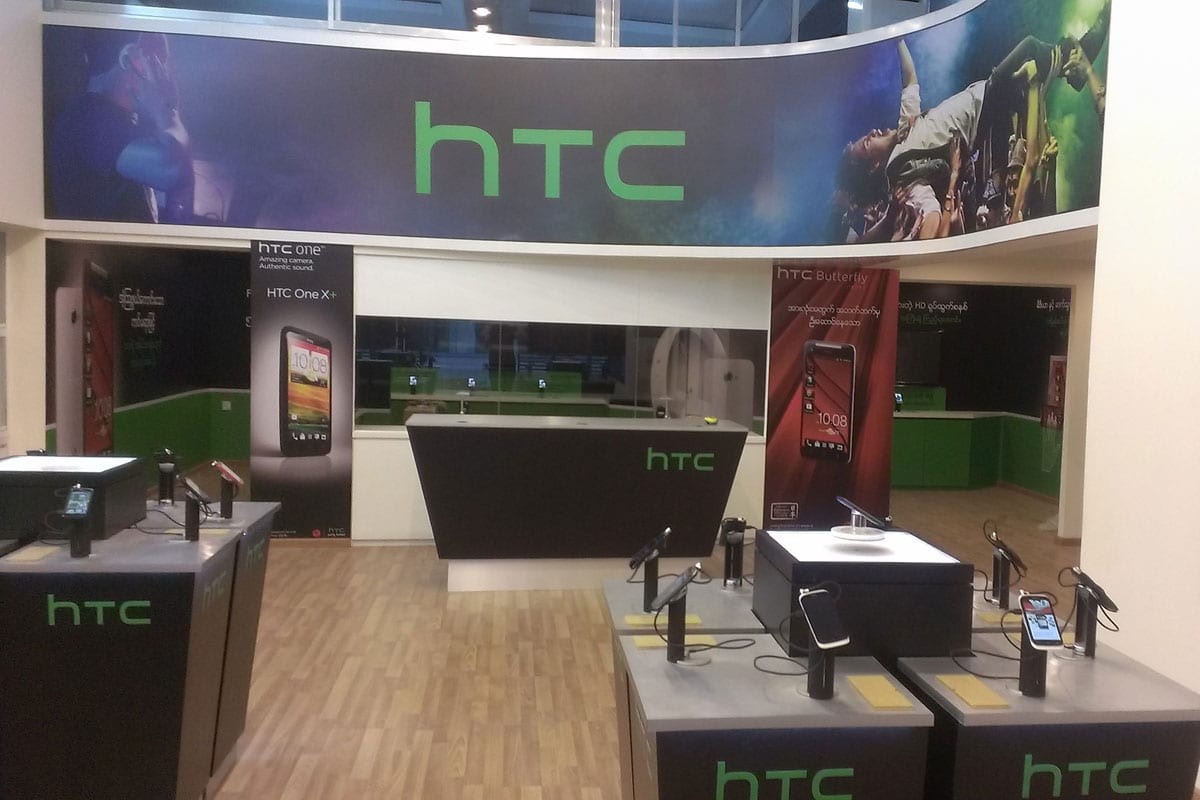
    Back in 2014, when the brand was riding high due to the success of the One (M8), HTC released a total of 30 smartphones. As its struggles began to sink in, this figure dropped and by 2016 HTC was launching just 16 devices per year. Throughout 2018, the company scaled back its business even further with just 7 releases and this year it’s nowhere to be seen, but that could soon change.

    A mysterious HTC smartphone was recently benchmarked under the name ‘HTC 2Q741.’ It’s unclear at this point what kind of features the device will offer, but the Geekbench listing does reveal the presence of MediaTek’s Helio P35 on the inside.

    Combined with 6GB of RAM, this chip scored 897 points on the single-core test and a respectable 4385 points on the multi-core assessment. These results put HTC’s offering on par with rival Snapdragon 630-powered devices such as the Xperia 10 or Nokia 6.1 but behind Snapdragon 632-powered models like the Moto G7 and Moto G7 Power.

    HTC is yet to confirm when this unnamed model will be released, but the Taiwan-based brand is reportedly developing two other models at the moment too. These include a 5G flagship for the second half of the year and an upper-midrange device powered by Qualcomm’s Snapdragon 710.

  • APAC leads global convenience sector

    APAC leads global convenience sector

    The Asia-Pacific region is the largest and fastest-growing region in the global convenience market, according to a new report by GlobalData.

    The research firm forecasts a compound annual growth rate of 10.6 per cent over the 2017-2022 period, due to local retailers increasing focus on store modernisation, the inclusion of technology, and a shift in consumer spending encouraging an investment in the channel.

    International retailers are beginning to see the necessary changes, GlobalData retail analyst Honor Strachan said, but their efforts are far from the transformation seen in Asia.

    “In a bid to attract new customers and prevent shopper desertion as the market becomes more competitive, convenience retailers are …refurbishing stores to incorporate new ranges (fresh, organic, and free-from are all gaining shelf space),” Strachan said.

    “[As well as] new concepts such as food service, mobile charging points and online purchase collection desks to help drive footfall, average basket size and customer satisfaction.”

    Strachan adds that these changes benefit store sales and profitability in a time that retail space is becoming more and more expensive, and margins come under pressure for inflation and discounting.

    7-Eleven is one such chain, having invested heavily into innovating its convenience offering over the last few years in order to get ahead of the competition – opening unstaffed stores in the region, as well as focusing on improving its delivery service in more populated areas.

    According to 7-Eleven chief executive Angus McKay, customers today want a different retail experience from what has long been expected from convenience chains.

    “You have to be patient and really be on your game and know what the customer wants, and be prepared for them to change their minds,” McKay previously told Inside Retail.

    “We’re investing in becoming better retailers.”